An Interview with Karen Aldous, author of One Moment at Sunrise

sunrise

You know, I love being a blogger, because I get to interview all kinds of wonderful people and I’m delighted to welcome Karen Aldous to Linda’s Book Bag today to tell me about her writing and her latest book One Moment at Sunrise. One Moment at Sunrise was published by Carina in e-book and is available for purchase here.

One Moment at Sunrise

sunrise

Nothing will ever be the same again…

Evie Grant has spent two years hidden away in a quiet French village, longing to escape her beautiful villa with its blue-shuttered windows. Maybe this summer, the father of her child will keep his broken promises and return to whisk her away to another life. One way or another, Evie’s determined to stop feeling like his dirty little secret…

Yet when a mysterious stranger almost knocks Evie off her bicycle early one morning, her world begins to change in ways she never expected. Embarking on a painful journey of self-discovery, Evie begins to face her darkest fears and rebuild her fragile dreams. But can she ever truly break free from her gilded cage and learn to love again?

An Interview with Karen Aldous

Hi Karen. Thank you so much for agreeing to answer some questions on my blog about your writing  

Firstly, please could you tell me a little about yourself?

Hi Linda, it’s a pleasure, thank you so much for featuring me on your lovely blog. I am tucked away in a village in Kent with hubby and most of my family and friends close-by. When I’m not writing, much of my time is spent with them; I’m so lucky to have four gorgeous grandchildren who I adore, along with my rather large yellow Labrador who loves taking me for walks. My other passion is travel, Europe being a particular favourite.

When did you first realise you were going to be a writer?

It finally dawned on me when I was in my late teens. I’d always had a penchant for pens, pads, typewriters and stationery, writing poetry and regularly writing letters to pen friends. I was also one to take myself off to the library after school when I was a junior, but reading novels on my commute to work each day created the biggest itch and I began writing short stories, even attempted a novel (an outline and four chapters), but I never had the confidence to send anything out.

(I think an awful lot of bloggers are addicted to notebooks and stationery too!)

How much did joining the Romantic Novelist New Writers Scheme affect your writing?

When my mum was terminally ill, it made me realise how limited time really was. I made up my mind that I was going to write the novel I’d always promised myself and try to get it published. From subscribing to writing magazines, I’d learned of the scheme and after completing the first chapters of my novel, I applied to the scheme and was successful. I had eight months to complete it. The following day I also enrolled in a local creative writing class and discovered many like-minded writers, some of whom were also on the scheme. It was as though the classes were made for me and when I received an encouraging report from the RNA NWS, I immediately began editing my first three chapters and entered them into a Writing Festival competition. Although I didn’t win, it led me to a meeting with an editor who liked it, and asked for more. That’s how I received my publishing contract. I believe joining both of these organisations were instrumental in their help and support; drumming up my own belief whilst giving publishers and agents the signal you are seriously committed to your writing.

To what extent do you think studying psychology has impacted on your writing?

First and foremost, studying for the degree really boosted my confidence. Graduating with a BSc Honours was a huge achievement for me. Because my parents were not great believers in further education, I was expected to find a job at sixteen which I did, then married at nineteen, children at twenty-two. As my children grew, I began exploring my own path. The course I chose tied in with my fascination for people and understanding behaviour differences, the why’s and what lies beneath. It gave me a deeper insight into individuals’ psychological make-up. I would say it has created quite an impact on my writing particularly when creating my characters and understanding their motivations as well as providing confidence within myself as a writer.

If you hadn’t become an author, what would you have done instead as a creative outlet?

I’d like to think either photography or being a musician. I enjoy taking photographs and invested in a brilliant camera a few years back which I’m still learning to use effectively. Predictably, I love to capture beautiful scenery such as lakes surrounded by mountains like those of Lake Leman in Switzerland or Lake Como in Italy but I also love to capture faces or profiles close-up, particularly my grandchildren. There’s something magical about catching expressions. And music. I used to play in a band and I love the lift you get from playing ensemble and in harmony. Although I’m a crap singer, I often sing to the grandchildren and they love it, (well they laugh and join in) but such fun!

France features quite heavily in your novels. Why have you chosen this particular location?

Put simply, France provides me with so much inspiration. Particularly the south of France. The beauty of much of its landscape, the language and culture, the food and wine, and of course, the ambience. From tiny scenic villages to thriving cosmopolitan towns, it has everything I could want as a writer and I could feed off it for years. I would love a base there and have easy access to Italy, Switzerland and Greece, my other favourites. I find these destinations relaxing whilst enticing in so many ways. Wherever you stay in Europe, there is so much history, people and places to visit you could never be short of material for novels.

How do you go about researching detail and ensuring your books are realistic?

Naturally, I visit a location to experience it for myself before I write or it has inspired me to go there. Sometimes, I might discover something which is a real surprise. For example, my latest book, One Moment at Sunrise, was inspired when visiting the Canal-du-Midi. However, as soon as I began researching more about the canal, visiting sites and museums etc., once home, I found an un-notable mention about Pyrenean mountain woman being involved with its construction. I just had to dig out more. I discovered an academic work which provided so much relevant evidence and material to suggest that Paul-Pierre Riquet, the visionary responsible for its success, had employed peasant woman for their numerous methods of channelling water in the mountain regions but, from this research discovered these women’s names had been taken off the payroll and have never been credited for their significant input.

Which aspects of your writing do you find easiest and most difficult?

The aspect I find easiest is ideas. The hardest is in the execution and how those ideas are going to be portrayed and written. As my writing has progressed I’ve found that I’m fascinated by women in history and what they’ve achieved and I find I want to include them. I also find myself reading so many beautiful writers that I want to improve my writing too and all the time I find I’m challenging myself to expand my knowledge on all fronts.

What are your writing routines and where do you do most of your writing?

I prefer to write in the mornings and evenings where possible. I think the mornings is when my mind is freshest but evenings when I can escape to my study and find the quiet to get into the zone.

When you’re not writing, what do you like to read?

My favourite books usually have a strong setting and historical elements such as Victoria Hislop’s The Island, Rosanna’s Ley’s The Villa, Leah Flemming’s The Girl Under the Olive Tree, Dinah Jeffries’ The Tea Planter’s Wife, Erica James’ The Dandelion Years, Elena Ferrante’s  My Brilliant Friend. I also enjoy dual time lines like Iona Grey’s Letters to the Lost, Kath McGurl’s The Pearl Locket and, psychological fiction such as Lisa Hall’s Between You and Me.

(Oh! Fabulous books there Karen. I’ve read all your choices or got them on my TBR.)

The covers of your books have exactly the kind of image that attracts me as a reader. How much involvement have you had in their creation?

Aww thank you, the cover designers are amazing but I have little input apart from the story itself. I leave it to the experts.

The title of your latest novel, One Moment at Sunrise, suggests that life can be affected in an instance. How far do you believe this to be true?

An interesting question, Linda and I would say I think there are moments in our lives which ignite something within us. As stated earlier, when at the hospital with my mother; that moment I had when reality hit that life is actually rather short and we are all volatile, and if I was going to get my novel published I would have to change some things. It was a catalyst to change. Also, when I discovered I was having twins at twenty weeks during my second pregnancy, I remember the moment even now. I had been worried sick about how we were going to manage financially having a ten-month old son already, so I was forced to think differently and creatively to manage. Having experienced such moments, I must be confident that we can be affected in an instance.

(I can empathise with that entirely, Karen. In the last ten months my husband has had cancer, my father has suffered a massive stroke and my great niece, Emma Faith, was still born at full term so I accept entirely that we need to make the most of our chances.)

If you could choose to be a character from one of your novels, who would you be and why?

Oh don’t do this, it’s like choosing one of your children! Ok, I’ve come back to this because I think Evie in One Moment at Sunrise has much more potential as a person and as a writer, developing film scripts. I would love to see where she heads next. It would certainly be a dream for me to see something I wrote on the big screen.

If One Moment at Sunrise became a film, who would you like to play Evie and why would you choose them?  

Either a younger Reese Witherspoon or a blonde Gemma Arterton. They are both stunning but they have a vulnerability about them like Evie. And those mischievous eyes, I’m thinking humour and seduction. Evie is also very bright albeit a little naïve in that she likes to please. I think both these actresses could pull off that quality.

If you had 15 words to persuade a reader that One Moment at Sunrise should be their next read, what would you say?

Evie has everything; successful man, a house, beautiful daughter, so why is she so unhappy?

(Good question – we’ll all have to read One Moment at Sunrise to find out.)

Thank you so much, Karen, for your time in answering my questions.

My pleasure, Linda. Thank you.

About Karen Aldous

karen-aldous-author

Karen Aldous enjoys village life on the edge of the north-downs in Kent with easy access to the buzz of London. Not only does she love the passive pleasures of reading and writing, she also craves the more active pursuits with her family and friends such as walking, cycling and skiing especially when they involve food and wine!

You can follow Karen on Twitter, find her on Facebook and Pinterest and visit her website.

You can find all Karen’s wonderful books here.

image001

An Interview with Oliver Cable, author of Fresh Air and Empty Streets

better-cover

When we were married my husband and I had our honeymoon in Paris and we retuned for our silver wedding anniversary. Oliver Cable has recently written Fresh Air and Empty Streets set in that very city and the cover alone evokes many memories for me. As a result, I had to ask Oliver to tell me a little bit more about Fresh Air and Empty Streets.

Fresh Air and Empty Streets was published on 29th July 2016 and is available for purchase in ebook here.

Fresh Air and Empty Streets

better-cover

Fifteen years ago, Alexander left his wife and small child behind to pursue the life of an artist in Paris. Now all grown up, Felix travels to Paris to meet his elusive father. On a journey through smoky jazz bars, artists’ studios and along the banks of the Seine, Felix discovers more and more about Alexander, calling into question his long-held beliefs.

An Interview with Oliver Cable

Hi Oliver. Thank you so much for agreeing to answer some questions on my blog about your writing and Fresh Air and Empty Streets in particular.

Firstly, please could you tell me a little about yourself?

I’ve had a pretty international upbringing. I grew up in Holland but have spent time living in France and Malaysia too. For now, I’m in London. I’m 26.

When did you first realise you were going to be a writer?

Only after I’d been one for a third of my life! I wrote my first poem at the age of 14 but it was always a case of just writing individual pieces when inspiration struck, rather than any concerted effort to write. I followed a Creative Writing course at the University of East Anglia and made a promise to continue writing. Two years later, Fresh Air and Empty Streets was published.

When you’re not writing, what do you like to read?

I read literary fiction on the whole. Master writers and master storytellers: Jack Kerouac and Haruki Murakami are two whose styles I admire. There’s so many classics that I can’t keep up with the new styles.

Does that put you at a disadvantage as a writer?

I don’t think so – I write what I want to write, not necessarily what’s selling.

If you hadn’t become an author, what would you have done instead as a creative outlet?

I love painting and music as two forms of expression, and by music, I mean jazz in particular. I think that’s why the two play just a major part in Fresh Air and Empty Streets. I drum, but I’d love to learn double bass or saxophone. It may be too late now.

(No, it isn’t Oliver! It’s never too late to try something new!)

one book.jpeg

How and why did you choose Paris for the setting of your novella Fresh Air and Empty Streets?

On a trip to Paris with two friends (one of whom ended up painting the cover), a number of plot elements floating around in my head just fell into place, with the city as a natural backdrop. On one hand, it’s true to Paris, while on the other; it’s a Paris I hope once existed.

How did you go about researching detail and ensuring Fresh Air and Empty Streets is realistic?

I wrote intensively during that first trip, and drew heavily on those notes (scribbled notes of life from our days in the city) in writing the first draft. When I reread it, I realised the piece needed some accurate descriptions of Paris. So I booked a flight and an Airbnb, sat down and wrote what I saw.

Which aspects of your writing do you find easiest and most difficult?

Descriptions are my forte. A number of readers have commented on how poetic the descriptions are in the novel. It’s what happens when a poet becomes a novelist, I suppose.

What I found hardest (and this is more during the editing than the writing process), was knowing when the piece was ready. I went through it at least six times after I’d finished writing it, changing bits every time I went. At what point can you then say the book is finished? It’s procrastination coupled with fear – as long as you’re still editing, they can’t criticise. At some point you just have to say enough is enough and move onto the next stage. Reading back, there’s still bits I’d edit. But can a piece ever really be finished?

(I think that’s often something writers struggle with – the letting go of their work.)

multi

What are your writing routines and where do you do most of your writing?

My writing routine was a little unorthodox, in that I wrote the whole thing in a month alongside a full-time job. So my life looked like: wake up early, write for an hour, go into work, write on my lunch-break, come home, eat dinner, write for an hour, sleep, repeat. I mainly wrote at my desk in my room, but my office has meeting rooms with great views across the Thames for my lunchtime sessions. Wrong city perhaps, but it certainly helped me write.

Why did you decide to publish a novella rather than a full novel in Fresh Air and Empty Streets?

I didn’t ever really decide to! It was only when I was submitting to agents that the term ‘novella’ was used to describe it. They suggested extending it, but for me the story was finished. To add any more would be superfluous.

The cover of Fresh Air and Empty Streets reminds me so much of the paintings to be found in Paris where the book is set.  How did that image come about and what were you hoping to convey (without spoiling the plot please!)?

The process of creating the cover took almost as long as the writing of the novel itself. It started off as a picture of a street that I took one morning. To cut a long story short, Ron, who was on that initial trip to Paris, painted it, and Mark Ecob took the painting and designed a beautiful cover for the book.

The painting mirrors the whole feel of the book: an artistic life.

(I think it’s certainly very evocative of Paris.)

If you had 15 words to persuade a reader that Fresh Air and Empty Streets should be their next read, what would you say?

Art, jazz and Paris. A hundred readers before you have flown through it in a day.

Thank you so much, Oliver, for your time in answering my questions.

About Oliver Cable

bio-pic

Oliver Cable was born to English parents in Holland and currently lives in London. As a result, he’s not entirely sure where he’s from. In the ten years since writing his first poem, he’s written short-form poetry and prose, inspired and influenced by jazz, travel and the absurdity of daily life. After following a Creative Writing course at UEA, he turned his hand to writing longer pieces, but to this day still enjoys a good four-line poem. Fresh Air and Empty Streets is his debut novel.

You can find out more about Oliver by following him on Twitter.

The Christmas Promise by Sue Moorcroft

christmass-promise

I am thrilled to be part of the launch celebrations for The Christmas Promise by Sue Moorcroft. The Christmas Promise was published yesterday, 6th October 2016, by Avon Books, an imprint of Harper Collins, and is available in e-book and paperback from your local Amazon site and by following the publisher links here.

Sue Moorcroft has previously been kind enough to give an interview to Linda’s book Bag which you can read here. Today, Sue has provided a highly thought provoking guest blog on the dangers of over-sharing.

As part of the celebrations for The Christmas Promise, I’m not only reviewing but I’m making my own promise too:

final-bloody-thing

The Christmas Promise

christmass-promise

For Ava Bliss, it’s going to be a Christmas to remember …

On a snowy December evening, Sam Jermyn steps into the life of bespoke hat maker Ava. Sparks fly, and not necessarily the good ones.

Times are tough for Ava – she’s struggling to make ends meet, her ex-boyfriend is a bully, and worst of all, it’s nearly Christmas.

So when Sam commissions Ava to make a hat for someone special, she makes a promise that will change her life. She just doesn’t know it yet…

Over-sharing Can Be bad For You

A Guest Post by Sue Moorcroft

Has anybody shared anything of yours without your permission? I don’t mean taken a bite from your Mars Bar or borrowed your best dress for a date. I mean taken an image of you and posted it on social media? It’s a situation I use in The Christmas Promise, combined with a vengeful ex-boyfriend.

Celebrities come up against this issue all the time. They’re out having a particularly junky junk-food meal with their kids; they’re having a row with their partner in a park; they’re letting their cellulite wobble on a beach … and somebody takes a picture on their phone. Time was, the person taking the pic would have hoped to make money out of it by selling it to the tabloid press (and maybe they still do that) but by far more common is that they simply set it free in the wilds of social media.

Before they know it the celebrity’s trending with a hashtag before their name because the image has awoken some emotion in people: sadness, laughter, resentment, schadenfreude, anger. It has been retweeted, it has been captioned, opinion has been passed. It’s been made into a meme or is the subject of blogs.

This may come with the territory for celebrities, who know that fame has its downsides. And no publicity’s bad publicity, right? Hey, their publicity department might even have helped this to happen as ‘going viral’ can be a publicity dream.

But what if you’re not a ‘’sleb’? What if you feel safe to sun yourself in your bikini in a private garden and your friend takes a pic showing your stretch marks and varicose veins in glorious detail, the chilled wine’s so refreshing that you’ve drunk a bottle each so you’re howling with red-faced laughter and her camera-work’s shaky.

And what seems absolutely hilarious to your friend at that moment … is to post that image on social media.

What?

You begin to sober up. Seriously? She didn’t really just do that, did she? She did. And she’s tagged you so it will appear on your timeline and all your friends can see it. All her friends can see it. Friends from both accounts begin sharing it and all their friends can see it. Your colleagues. Your kids, nieces and nephews. Maybe even some of your clients/customers/students/lecturers.

You make your friend delete it instantly and you do the same. Your friend’s full of shamefaced apologies. You vow never to get yourself in that situation again.

But once that image is up on the internet it has gone from your control.

All you can usefully do is wise up for the future by combing through your settings for useful features.

  • Limiting your posts to ‘friends’ can slow the spread of material through your account but even then, is having your boss as a social media friend such a good idea?
  • You can untag yourself from pictures you hate so anybody searching your name or your timeline won’t stumble across them.
  • Changing your settings so that you have to approve tagged posts before they appear on your timeline can keep your own timeline from being sullied by the bad stuff.
  • Selecting ‘private’ in settings wherever practicable is a good baseline from which to work. Social media’s default setting is rarely private but it doesn’t take long to make manual changes that will make you more comfortable.
  • Remembering that you have the power to block people and report them can save you anguish. Do it if you feel the need!

It’s wise, of course, not to make yourself vulnerable in the first place (especially to that hopefully mortified friend) but so many hands hold camera phones every day that images are bound to go astray. Just look at the trouble Ava gets into in The Christmas Promise! #MyPromise is that the situation seriously gets away from her.

My review of The Christmas Promise

When her ex-boyfriend won’t take no for an answer, her finances are at rock bottom and her least favourite time of the year, Christmas, is looming, Ava thinks life can’t get much worse. She’s wrong.

I cannot believe that The Christmas Promise is my first Sue Moorcroft book. Am I mad? Chick-lit, women’s fiction, romance, call it what you will, The Christmas Promise is the perfect embodiment of fabulous story-telling and I utterly adored it.

Firstly, The Christmas Promise deals with topical and moving themes of finance, health and the abuse of social media so that there is a depth and quality to the writing I wasn’t expecting. I actually learnt a lot from reading this book. The quality of research that has gone in to the theme of millinery, for example, is so impressive and enhances the experience of reading, but it is the salutary lesson about the use of social media that really packs a punch. Those who read this book might just find themselves safer online – and know what to do if things go wrong.

The characterisation in The Christmas Promise is wonderful. I loved Ava and Sam especially, but even the smallest supporting character felt very real so that it was as if I was reading about people I knew. I even shed a tear over Wendy. If I said I wouldn’t mind meeting Sam in a darkened room you’ll know what I mean. The romantic passages were just lovely and very natural and sensual so that I could imagine myself as Ava.

The plotting is incredible. I felt as if I couldn’t bear what was happening to Ava and yet I was transfixed and couldn’t stop reading on. My heart went out to Ava, Wendy and even the awful Harvey in some ways because Sue Moorcroft has presented their lives and actions so convincingly. Just when I thought there was a resolution to their problems, off we went again so that The Christmas Promise was exciting as well as emotionally satisfying.

The Christmas Promise is a wonderful read, and not just at Christmas. I can’t recommend it highly enough.

About Sue Moorcroft

DSC_3507

Award winning author Sue Moorcroft writes contemporary women’s fiction with occasionally unexpected themes. The Wedding ProposalDream a Little Dream and Is This Love? were all nominated for Readers’ Best Romantic Read Awards. Love & Freedom won the Best Romantic Read Award 2011 and Dream a Little Dream was nominated for a RoNA in 2013. Sue’s a Katie Fforde Bursary Award winner, a past vice chair of the RNA and editor of its two anthologies.

Sue also writes short stories, serials, articles, writing ‘how to’ and is a creative writing tutor.

You can find out more about Sue on her website, blogGoogle+LinkedInGoodreadsTake Five AuthorsFacebook and her Facebook author page. You can also follow Sue on Twitter. There’s more with and from Sue by following the #MyPromise and with these other bloggers too:

blog-tour

The Influence of Reading on Writing, A Guest Post by Anne Coates, author of Dancers in the Wind

Dancers in the Wind_small

I love featuring authors I’ve met and I was fortunate to meet lovely Anne Coates and her wonderful publisher Matthew Smith from Urbane Publications at a recent event. Anne’s book Dancers in the Wind will be released in e-book and paperback exactly a week from today on 13th October 2016 and is available from Urbane, Amazon, Waterstones and all good book sellers.

As I was chatting with Anne we were talking about books in general and I asked if she would like to write for Linda’s Book Bag about the books from her past that have led her to being a writer. Luckily she agreed.

Dancers In the Wind

Dancers in the Wind_small

SHE IS HUNTING FOR THE TRUTH, BUT WHO IS HUNTING HER?

Freelance journalist and single mother Hannah Weybridge is commissioned by a national newspaper to write an investigative article on the notorious red light district in Kings Cross. There she meets prostitute Princess, and police inspector in the vice squad, Tom Jordan.

When Princess later arrives on her doorstep beaten up so badly she is barely recognisable, Hannah has to make some tough decisions and is drawn ever deeper into the world of deceit and violence. Three sex workers are murdered, their deaths covered up in a media blackout, and Hannah herself is under threat. As she comes to realise that the taste for vice reaches into the higher echelons of the great and the good, Hannah realises she must do everything in her power to expose the truth …. and stay alive.

On Reading and Writing

A Guest Post from Anne Coates

My mother was such a huge influence in my life as she taught me to read before I started school. Oscar Wilde featured early in my life when an older cousin passed on an audio recording of The Happy Prince, which came with a book of beautiful illustrations. I can still recall the thrill I felt every time the narrator said, “Turn the page”. I took great pleasure in introducing my own daughter to his children’s stories and I still get a lump in my throat reading the conclusion of The Happy Prince.

Enid Blyton’s Secret Seven and Famous Five series were staples in my childhood. Maybe it was The Mystery of the Pantomime Cat that engendered my love for crime. While at primary school, I had a “secret” club, which met in our garden shed. We went off on our own “adventures” one of which led to a crime – or did it? I’m still trying to work that perplexing memory into a story.

Our home wasn’t filled with books but my mother filled it with a love of reading and we visited the library every week and borrowed the maximum number of books. She set the example of sitting reading for hours… I read everything I could lay my hands on. Any money I was given for birthdays and Christmas was spent on books. I loved the idea of creating my own library.

Having read the Chalet School books I was delighted a few years ago, to find myself in a hotel, which once was the farmhouse where author Elinor M. Brent-Dyer wrote. I also was a devotee of the Anne of Green Gables and What Katy Did series and like many girls who grew up to become writers I identified with Jo in Little Women.

Alice in Wonderland has always had a special place in my heart as my mother read it to me. Her readings were always captivating performances and this continued when she read to my daughter. I also studied Alice during my degree and I have loved seeing all the various and creative interpretations on TV, cinema and theatre since then.

Just after I had hit my teens, I was seriously ill with double pneumonia and pleurisy. When I was well enough to read, I borrowed my mother’s copy of Gone With The Wind – probably not the best choice as so many characters died of … pneumonia. The Regency romances of Georgette Heyer were far less disturbing on that score.

I had a long period of reading nothing but sci fi and then horror. Dennis Wheatley’s The Devil Rides Out still haunts me – garlic and a crucifix accompany me everywhere. Not really – I carry a gun with the silver bullet.

Which leads me nicely into crime.  There’s something about everyday minor crimes, which escalate into something far more sinister that fascinates me. A twist of fate and lives are irrevocably changed. One of my favourite Robert Frost poems, which I was introduced to at school, is “The Road Not Taken” and this encapsulates the way I begin writing – taking a germ of an idea, a scene or an encounter and then ask “what if..?”

About Anne Coates

simonlaunch12A 2 (1)

Anne Coates is a freelance editor and author. While editing and abridging other peoples’ novels and non-fiction, she has contributed short stories to magazines like Bella and Candis and wrote two novels that never saw publication. One afternoon she re-read the second one, saw its potential and rewrote it, restructuring the narrative and adding and subtracting scenes. This work became Dancers in the Wind to be published by Urbane Publications on 13 October, 2016.

Some of her short stories appear in two collections: A Tale of Two Sisters and Cheque-Mate and Other Tales of the Unexpected both published as e-books by Endeavour Press. Anne has also written seven non-fiction books ranging from a history of Women in Sport (Wayland) to Applying to University (Need To Know) and Living With Teenagers (Endeavour Press).

Anne lives in London with three cats who are all rather disdainful of her writing as they have yet to appear in her fiction although a dog has!

You can follow Anne on Twitter and visit her website.

Giveaway: Christmas at the Dog and Duck by Jill Steeples

christmas-at-the-dog-and-duck

I’m delighted to be spotlighting Christmas at the Dog and Duck by Jill Steeples which was published in e-book by Aria on 1st October 2016. Christmas at the Dog and Duck is available for purchase here.
To celebrate Christmas at the Dog and Duck I have three e-copies to give away at the bottom of this blog post and you can read an extract to get you into the Christmas spirit.

Christmas at the Dog and Duck

christmas-at-the-dog-and-duck

Ellie Browne has left behind her high-flying job in London to return to the charming Buckinghamshire village of Little Leyton. Working shifts at The Dog and Duck and running her own doggy-day-care business, Ellie’s looking for a much simpler way of life and a good old fashioned Christmas.

But Little Leyton’s landscape is changing; Johnny Tay, Ellie’s ex, wants to pick up where they left off; sultry property developer Max Golding, has moved into the village and is ruffling feathers; and rumour has it that the pub, which holds a special place in Ellie’s heart, might be sold. Suddenly, life’s looking a whole lot more complicated…

Can Ellie juggle her emotions and commitments in time to celebrate Christmas?

An Extract from Christmas at the Dog and Duck

‘There you go my lovely. These are for you, Ellie.’

It was the start of my shift the next day and Polly Samson from the flower shop next door was standing in front of me holding a bunch of assorted beautiful blooms.

‘Wow! They’re stunning. Thank you.’

‘No problem. I hate to see any flowers go to waste and I know you’ll find a good use for them.’

I took them from her, found a vase and placed them in the fireplace, standing back for a moment to admire them.

‘Perfect! I was going to take them home with me, but I think they’ve found their rightful place there, don’t you?’

I loved the quiet of the early evenings in the pub when I had the opportunity to potter and chat properly with any customers who popped in. Often, later in the evening, I was too busy to even draw breath so I always made the most of the quiet times when I could.

I plopped some ice into a glass, poured in some orange juice and handed the drink to Polly. Immediately she took a long sip, her eyes brightening as the refreshment hit the desired spot.

‘So no regrets then?’ she asked. ‘About coming back here? I should imagine life in Little Leyton must seem tame after living in London for so long.’

Polly was a friend who I’d known since my schooldays. We hadn’t been close back then; she’d been in the year above me and we’d mixed in different circles, but recently, with her working next door, we’d got to know each other better and had grown much closer as a result.

‘It’s different, I’ll give you that, but this is very definitely my home. Where I belong. I love the sense of community here. You don’t really get that in London. Or else I didn’t find it. My life seemed to consist of early starts, long days and late nights. It’s only now that I’m away from it that I realize how burnt-out I was. I’d gone straight from university into my job, doing my accountancy exams at the same time, and it was really pressurized. Losing my job like that, so suddenly, was devastating, but in some ways I see it as a blessing now. It’s given me the chance to step back from it all and decide what I want to do next.’

Polly nodded, taking another sip from her drink. She wriggled her shoulders and exhaled deeply, the tensions of her day seeping from her body. ‘Well I hope you’re here to stay now, Ellie? I do love having you around. You’ve brightened up this place that’s for sure.’

Such a lovely thing for Polly to say. She was tiny in stature, but had a huge heart. With her blonde hair cut into a swingy bob and bright blue eyes that shone keenly as she spoke, my mood always lifted just at the sight of her. With her being only next door, I often popped into her shop before or after a shift to have a natter and a cup of coffee. I’d perch my bottom on one of the stools behind her counter and watch transfixed as her fingers tended her flowers, creating pretty bouquets and baskets with expert ease.

‘I’m not sure how long I’ll be around,’ I told her now. ‘I love working here and doing the dog-sitting, but I don’t see either of them as long-term careers. I’ll probably have to go back into accountancy at some stage, it would be a waste of my degree otherwise.’

Which was absolutely true, so why, as I said the words aloud to Polly, did I wonder, not for the first time, if I really wanted to pick up that lifestyle again. Thinking about it, I’d been feeling the strain for months and a stirring of disquiet rumbled in the depths of my stomach as I wondered if the career I had chosen, the one I’d worked so long and hard for, was really meant for me after all.

‘So you didn’t leave anybody behind in London then?’ Polly shifted her bottom on the stool – they weren’t the most comfortable seats in the world – and the corners of her mouth twisted in an enquiring smile.

I tilted my head, deliberately misunderstanding the question.

‘I wondered if it might have been a man that brought you back here. If you weren’t trying to escape a broken heart?’

‘Ha! No,’ I sighed. ‘Four years in London and I don’t think I could have had more than a couple of dates.’

‘Really?’ Polly’s mouth gaped open. ‘And I thought my love life was in the doldrums.’

About Jill Steeples

jill-steeples

Jill lives in a small market town in Bedfordshire with her husband, two children and a high maintenance English Pointer called Amber.

When she’s not writing, Jill loves spending time with family and friends, and enjoying books, films, musical theatre, walking, baking cakes, eating them and drinking wine.

You can follow Jill on Twitter, visit her website and find her on Facebook.

There’s more with these other bloggers too:

dogduck-blog-tour-banner

Giveaway

christmas-at-the-dog-and-duck

To enter for a chance to win one of three e-copies of Christmas at the Dog and Duck, click here. Ends UK midnight on 13th October 2016.

Publication Day Extract from The Taken by Casey Kelleher

the-taken-kindle

I’m very pleased to be part of the launch day celebrations for The Taken by Casey Kelleher. The Taken is published today, 5th October 2016, by Bookouture and is available for purchase in e-book from Amazon UK and Amazon US.

To celebrate The Taken‘s release today I’m delighted to bring you an extract from the book.

The Taken

the-taken-kindle

When you’ve lost everything, you’ll do anything to survive.

Saskia Frost’s world is blown apart when her dad dies. Without any family, she’s on her own now and up to her eyeballs in her father’s debts. He owed a lot of money to some very dangerous men – Joshua and Vincent Harper. Before long, aspiring ballerina Saskia finds herself lap-dancing in a London club to survive. A club run by the infamous Harper brothers. Saskia is now their property and they’re going to make her pay every penny back.

Teenager Lena Cona has fled a cruel and controlling marriage. She arrives in England with her newborn daughter, desperately relying on strangers for help. But she soon learns that not everyone can be trusted as she finds herself caught in the clutches of Colin Jefferies, a twisted individual obsessed by his own sinister secrets. As the sickening truth is revealed, Lena is forced to fight for her life – and her baby’s.

When their worlds collide, Lena and Saskia form an unlikely friendship. But with the terrifying Harper brothers on their tail, as well as Lena’s vengeful and violent husband, can they escape with their lives?

An Extract from The Taken

Prologue

Albania: One year earlier

‘Tariq?’

Whimpering, Lena Cona looked down at the ground to where her brother lay.

The two men were shouting now, their voices angry, intimidating.

She tried to comprehend what they were saying, but their jumbled words were muted, merging into background noise as her ears began to ring loudly, a high-pitched screech filling her head.

She was in shock.

Unable to think straight, Lena tried to move, but she couldn’t.

Her legs were shaking, but her feet felt weighed down, as if her shoes were filled with lead.

She was afraid. Paralysed to the spot, all she could do was stare; her eyes fixated on the thick stream of blood that oozed out from the gash at the back of Tariq’s head.

He’d been hit.

The taller of the men had whacked him around the head with the butt of his gun.

They had a gun!

Panic ripped through her at the sudden realisation.

Lena tried to shout out; opening her mouth, a strained squeak barely louder than a whisper was the only noise that crept out.

‘Get in the car.’

The man pointed his gun at her now. Aiming it straight at her. His words were devoid of emotion, reflecting the same vacant hollowness that she could see in his eyes.

Stepping closer, he shoved the barrel against Lena’s chest.

‘Now!’ This time he bellowed, his face twisting in anger as he pushed the gun harder against her skin.

Lena could see his finger hovering threateningly over the trigger. This wasn’t an empty threat. She knew he was dangerous, but still she couldn’t move.

A few minutes ago she and her brother had been laughing and joking together.

Tariq had been walking her home from school.

That was her parents’ order: that her brother would walk her to and from school every day.

Lena had thought her parents were overreacting. Of course there were risks, but they didn’t apply to her, surely. Now she’d realised she’d been stupid, naïve. She remembered, with increasing terror, Néné’s harrowing tales of girls from Shkodër being snatched. Abducted and taken to the city’s main port, Vlorë, before being shipped off on speedboats across the Adriatic Sea, never to be seen again.

Her parents had pleaded with her to stay at home, to accept the traditional life of a normal Albanian girl just as many of her peers had done, but Lena was anything but normal.

Strong-willed. Defiant. Unlike most of the other girls in her class who had left school at the age of twelve or thirteen due to the pressures that their families had bestowed on them, Lena had refused to follow suit, insisting on completing her education. Why should she be penalised just for being born female? Why should she submit to a life doing what was expected of her? Instead, adamant to remain, schooled in a classroom of eleven boys, Lena had strived to be top of her class.

Not only had Lena excelled in mathematics, but she was also fluent in English. Her teacher had been impressed. He had told Lena that she had mastered the language so well that, eventually, she’d be able to teach it herself.

Lena had loved that idea. Travelling the world, working as a teacher or a translator. Practising daily, she’d even started to educate her parents and her brother. Just the basic words of salutation, or naming the food they ate.

She wanted to learn as much as she possibly could, so that, one day, she could have more than just what her parents had chosen for her. She didn’t want to be stuck here in Albania as just somebody’s wife, or somebody’s mother.

It may have been enough for Néné, but it would never be enough for her. Lena wanted so much more: to be treated as an equal; to experience the same opportunities and freedom that her brother had.

Unwilling to back down, she’d argued so intently that her parents had finally given in; insisting, in the end, that if Lena must continue with her schooling until she was nineteen then she could, on the condition that Tariq chaperone her.

Only now it seemed that fate had played out a cruel hand. Staring down at him she could see that Tariq was hurt, maybe dead.

And it’s all my fault, a voice screamed in Lena’s head.

‘Help me! Please, somebody?’ Shouting hysterically, Lena finally found her voice as she prayed that someone would come to her aid.

‘Help me, please… ’

Lena caught the gaze of a woman across the road, her eyes pleading with her to help her, but all that stared back at her was the woman’s fear. With an apologetic look, the woman put her head down and kept walking, pretending that she hadn’t seen.

Crying now, desperate, Lena scoured the street, looking for anyone that might help her, but the dusty road was almost deserted. School had finished; people were already indoors, evading the mid-afternoon scorching heat.

A single car passed by. Slowing down, the people inside stared out from behind the glass windows, but they didn’t stop to help her. They didn’t dare.

‘Pick her up,’ the taller man shouted now, directing the shorter man.

He did as he was told: grabbing her roughly from behind, clamping his hand over her mouth to mute her cries.

Lena saw their car. It was a battered-looking bright blue Mercedes, covered in flaky patches of orange rust. The back door was wide open; the engine running.

They are going to take me?

Gripped with fear, Lena dug her heels into the dry mud, trying her hardest to resist as one of the two men tried to grab at her feet, but it was no use. The men were much stronger than her.

Overpowering her, they lifted her off the ground, hauling her over to their car.

A hand came from behind her, clamping tightly across her mouth, making her gag for breath. Silencing her. Lena struggled to break free but her attempts only caused the men to hold on to her tighter.

‘Stay still, you stupid bitch!’

The man’s voice was commanding. He was losing patience. The sternness of his tone indicated that he’d had enough of her not complying. ‘Do as you are told, or you will be punished.’

Punished?

Lena twisted her head back to where her brother lay sprawled out on the ground, motionless.

Hadn’t they punished her enough already?

She had no idea who they were or what they wanted. All she knew was that she couldn’t let them take her.

Her brother needed her. Despite feeling helpless, Lena couldn’t just leave him like this.

Kicking and clawing at the men like a wildcat as they tried to force her onto the back seat, her body convulsing, Lena fought to break free from her abductors.

If she got inside this car, maybe she’d suffer the same fate as all the girls before her.

She had to fight.

Kicking out her heel, her foot connected with the shorter man’s face. She startled him, just enough for him to lose his footing and his grip. Stumbling, he dropped her legs. But her small victory was short-lived.

A massive thud exploded at the back of her skull. The almighty blow from the man behind her immobilised her in an instant.

‘I warned you.’

Lena flopped forward like a rag doll.

She felt the man grab at her roughly, breaking her fall just before she hit the ground.

She felt herself being lifted up, thrown into the back of the car. She was dizzy, her head pounding.

A sharp burn of her scalp as the man seized a fistful of her long auburn hair. Wrapping it around his fist, he twisted her around to face him.

He was just inches away from her now; his face almost touching hers. He was so close that she could smell his stale rancid breath, see the glistening beads of sweat forming on his forehead. His face was puce from the heat and the struggle to get her into the car.

Still woozy from the blow she’d received to the back of her head, she tried to focus. Her vision blurred; she was surprised at how young her abductor looked. She had expected someone older. This man looked only a few years older than Tariq. No more than twenty, she guessed.

‘So, you think you’re a wild one huh?’

The man’s steely grey eyes flickered then, and Lena thought that she saw the tiniest hint of amusement behind them as he yanked at her hair even harder, ripping a clump from her scalp as he did so. The pain so acute, it forced Lena alert once more.

‘Well, it won’t take me long to tame you.’

Lena kept eye contact. Refused to let him see her pain; she stared back at him with nothing but pure contempt.

‘Stupid little girl.’

He punched her again, this time his fist locking hard with her cheek, her neck snapping back, her head smacking against the window behind her.

Slumped in the car now, Lena had nothing left. She was exhausted; her body weak and broken.

‘Tie her up,’ the man commanded, as the shorter of the men slid in beside her.

The man did as he was told. He bound her legs together tightly with coarse brown rope before wrapping thick black strips of tape firmly around her wrists. He was obviously taking no more chances with her.

The car began to move.

Petrified, Lena sat slumped in silence as she stared out of the window. Her gaze fixed on Tariq’s body, motionless, on the ground.

Move! Please, let me know that you’re okay?

Only Tariq didn’t. He remained completely still, lifeless, as the car continued off into the distance.

Lena watched until her brother was completely out of sight. All hope from her now gone.

She could feel the stream of blood pouring from her nose; the metallic taste mixed with the saltiness of her tears, filling her mouth.

Silent tears ran down her face as she wondered what fate was ahead of her.

She thought of Néné’s words once more.

About those girls. About what happened to them after they were taken.

How they were trafficked around Europe like cattle.

Her mother hadn’t been able to bring herself to tell her young daughter why the girls had been taken, but Lena knew. Rumours in Shkodër were rife. People in the village had spoken of how the girls that were taken were used for sex. Forced to earn money for men in ways so disgusting it was almost unimaginable to Lena.

Except maybe now she didn’t have to imagine it.

Maybe she was destined to experience the horror of it all herself, first hand.

Lena sobbed as she thought how she should have listened to her parents.

They only wanted the best for her, to keep her safe, but she’d been so foolish, so pig-headed. She’d put Tariq in danger.

These men were savages, animals.

Capable of anything.

Resting her head on the window as the car made its way out of Shkodër, out towards the rural mountains of the countryside, Lena closed her eyes and said a silent prayer.

She had no idea what fate lay ahead of her, but one thing she knew for certain, her nightmare was only just beginning.

About Casey Kelleher

caseymainpic


Born in Cuckfield, West Sussex, Casey Kelleher grew up as an avid reader and a huge fan of author Martina Cole.

Whilst working as a beauty therapist and bringing up her three children together with her Husband, Casey penned her debut novel Rotten to the Core. Its success meant that she could give up her day job and concentrate on writing full time.

You can find out more by visiting Casey’s website, finding her on Facebook and following her on Twitter.

A Mini-Interview with Decima Blake, author of Hingston’s Box

hingstons-box

Having been an Engish teacher in a former life and an inspector very often responsible for inspecting child protection, I was fascinated to discover Decima Blake, debut author of Hingston’s Box, was positively influenced by her English Literature teachers at school. When I realised too that Decima is donating part of the royalties of Hingston’s Box to a charity supporting child victims of crime I had to invite her on to Linda’s Book Bag to find out more.

Hingston’s Box was published by Pegasus Publishers on 29th September 2016 and is available for purchase in paperback from Amazon and directly from the publisher.

Hingston’s Box

hingstonsbox-multi

Since investigating the disappearance of fifteen-year-old twin boys, Hingston – a young, talented Detective Sergeant, has been tormented by night terrors. On waking, he remembers a vast, golden meadow that glows with warmth and carries the sound of rapid footfalls and trouser legs pushing through grasses. A curly haired boy runs tirelessly through the meadow. The promise of adventure is lost when the sickening ache of death seeps into Hingston’s bones. Feeling suffocated and tortured, melodic chimes calm him and his panic subsides.

Signed off and leaving the office, a key inexplicably falls from Hingston’s investigation file. Intrigued, he takes it with him, escaping London for Dartmouth where his investigative race begins. Stalked by a challenging elderly woman and hindered by his boss, his determination to solve the case draws him into the supernatural world that connects a murderous past to the present.

A Mini-Interview with Decima Blake

Decima, what are your views on the importance of literature in children’s lives?

I very much like the quote by author George R.R. Martin: “A reader lives a thousand lives before he dies. The man who never reads lives only one.” I believe this sums up the importance of literature in children’s lives. The more literature children and teenagers can read, the more equipped they may be when tackling issues in their own lives as young adults. In the same respect, books can equally serve as an invaluable insight for adults into the lives of today’s young people and the unique challenges they face.

When I think back to the literature I studied at secondary school, I relive the swathe of disappointment that passed over me whenever the title was not to my liking. I remember the dog-eared books and play scripts; the immaculately inscribed annotations contained therein and in contrast, the sporadic distractions penned by others in the margins.

On reflection, I’m pleased I studied Shakespeare’s Julius Caesar instead of Romeo and Juliet. I’ve found its exposure of political shenanigans more educational than I had appreciated aged thirteen. And despite the quality of the copy (which mattered a lot at that age), all of the texts I studied over those seven years actually delivered something positive to me: they broadened and altered my perspectives on life.

I absolutely loved A Level English Literature. Whilst I studied texts that were not always my first choice, each of them introduced me to new issues, points of view and social dilemmas. Collectively, they taught me about people in depths I could not have learnt from history books, documentaries and films alone. Most importantly for my crime writing, I learnt how to analyse themes, plots and subplots, and how to investigate characters. I applied these techniques in reverse whilst writing Hingston’s Box.

What books did you enjoy as a teenager?

Some of the most memorable books I enjoyed were Captain Corelli’s Mandolin by Louis de Bernières, Catch 22 by Joseph Heller, The Turn of the Screw by Henry James and A Walk in the Woods by Bill Bryson.

How were you inspired by your teachers?

My teachers were motivational and passionate about English Literature. They set a high standard and taught us well by giving their time, providing written and verbal constructive criticism and encouraging the students to help each other. We had some fantastic in depth discussions and debates in the classroom, particularly about William Blake’s Songs of Innocence and Experience, and World War 1 poetry and literature. The most important skill I learnt was that of comparison and analysis, in particular of themes and characters. It was this that inspired me to weave different themes and ideas throughout Hingston’s Box that I hope can be debated and analysed by readers.

Why did you include a focus on child exploitation in your novel Hingston’s Box?

Working with eleven to sixteen-year-olds in a secondary school made me realise how vulnerable young people are and how quickly things can go wrong. We have seen through the media, particularly over the past four years, how many young people’s lives have been changed or lost due to crime, exploitation, drugs or abuse. I’m passionate about child victims of crime and therefore put them at the centre of my novel.

Hingston’s Box raises awareness of all children’s vulnerability to exploitation. I’ve aimed to illustrate by comparison of a Victorian crime with the present, how easily children are targeted by those who intend to cause them harm and that the motives for and the methods of exploitation don’t really change.

A percentage of royalties from the sale of Hingston’s Box will be donated to the charity Embrace Child Victims of Crime. For information about the important support they deliver, please click here.

About Decima Blake

decimablake

Decima Blake, has a long-standing interest in child protection having worked with teenagers, she is deeply passionate about child victims of crime. In writing Hingston’s Box, Decima drew on her love of classic English murder mysteries and ghost stories. Her interest in English Literature was ignited by two highly motivational teachers who made her A Level studies enjoyable, character forming and invaluable to her future endeavours.
Hingston’s Box raises awareness of the vulnerability of all children to exploitation. A percentage of royalties will be donated to the charity Embrace Child Victims of Crime.

You can follow Decima on Twitter.

Coming of Age, a Guest Post by Barbara Lorna Hudson, author of Timed Out

cover-to

As an aspiring writer of a particular age, I’m delighted to be featuring Barbara Lorna Hudson whose novel Timed Out was published by Driven Press on 16th April 2016. Barbara has written a lovely guest post for Linda’s Book Bag all about the fact that coming of age is not chronologically time bound so maybe there’s time for my own novel yet!
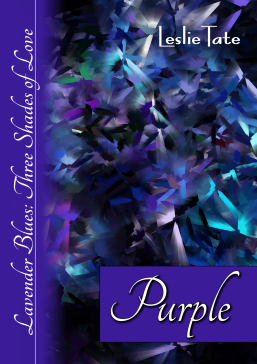
Timed Out is available for purchase in e-book and paperback by following the links here.

Timed Out

cover-to

Jane Lambert thinks she may have made a mistake putting her work ahead of love and family for so long. She’s left wondering what to do with her life now that she has retired.

Taking note of the sentiment from one of her retirement cards-Retirement is NOT the end. It’s a new beginning – she decides it’s about time she looked for love again, and places a lonely hearts advertisement. Jane embarks on her new life, suffering disappointments and learning hard truths about herself, while never losing her gift for self mockery or her eye for the absurd.

Timed Out is a contemporary “coming-of-age” novel about different kinds of love and the search for a meaningful life.

Coming of Age – At Any Age

A Guest Post by Barbara Lorna Hudson

“Perhaps that sums it up – this story to date, that is. The mistakes, the missed clues, the silly pride, and all the self-pity. And finding love in unexpected places.” (Timed Out)

Timed Out, published in my seventies, is a ‘coming of age’ story in two senses. My character Jane Lambert is sixty when the novel opens and over seventy when it ends. The title refers both to Jane’s use of a computer to seek a partner, and to her fear of running out of time to sort out her life.

In English, the expression ‘coming of age’ has taken over from ‘Bildungsroman’ to describe a novel recounting the spiritual or emotional development of its protagonist. Usually the character is a child or young person at the start and a young adult at the end (e.g. Great Expectations, The Adventures of Huckleberry Finn), and has learned and changed a lot along the way. Jane learns a great deal about herself and other people in the course of her journey through her retirement years. She discovers painful truths, but new pathways to happiness as well. Perhaps not all of us are able to do this after we reach sixty – or fifty – or forty, even – but I am sure that many can. ’Coming of age’ is not just for the young.

Not only did the fictional Jane Lambert experience a late-life coming of age. So too did her author. Like many another first novel, Timed Out had its origins in memoir or autobiography. No sooner had I unwrapped my presents and eaten and drunk my way through several retirement parties than I found myself wondering ‘Now, what is the point of me?’ I was single, lonely, and still healthy. Time to take stock and time to decide how best to use the years that remained. I wondered again about the Big Questions and about what I could do to make myself feel worthwhile again.

Jane and I both did Internet dating, with rather different results – and both got some happiness and some heartache from it.

Jane continued to be a wobbly agnostic, experiencing ‘religious moments’, re-examining the arguments against the existence of God. A number of older people have told me that these issues, ignored while they were focused on family and career, re-emerged when they ‘had time to think’ upon retiring. (This strand in Jane’s story is not something I myself lived through in my sixties, rather it reflects my experience as a much younger woman).

Timed Out recounts Jane’s struggles to find what she seeks and I will not reveal the outcome and what she learns. Suffice it to say that she is a different woman by the end of the novel.

As for me? I gradually reinvented myself as a writer of fiction. In the course of my re-education, I learned a lot more about myself both as a writer and as a person. And in the months since this novel was published, I have learned a lot more: that the best thing – the thing that makes me happiest – is finding that my Jane’s story has resonated with someone or given them pleasure. And I have learned some humility too – now, when I study the authors I most admire, I can better appreciate the effort and the genius needed for their kind of writing. I know now how hard it is. And how worthwhile.

That’s my own ‘coming of age.’ So far. Maybe there will be more.

(I’m sure there will Barbara. Thanks so much for such an inspiring piece.)

About Barbara Lorna Hudson

barbara

A farmer’s daughter from Cornwall, Barbara Lorna Hudson studied at Newnham College, Cambridge. She started out as a psychiatric social worker before becoming an Oxford tutor. She is an Emeritus Fellow of Green Templeton College, Oxford After many publications in social work, psychiatry, and psychology, she has re-invented herself as a fiction writer over the last few years. Barbara has published over twenty short stories and been listed in several short story competitions.

The first draft of Timed Out (written during a University of East Anglia Certificate Course) won first prize in the Writers’ Village Novel Competition and it was on the short list for the Exeter Novel Prize.

Barbara belongs to a writers’ group run by Blackwell’s Bookshop and The Oxford Editors, and she is also a regular performer at a story-telling club.

You can visit Barbara’s blog and follow her on Twitter.

Publication Day Interview with Sara Bailey, author of Dark Water

dark-water

I love a psychological thriller and so I’m delighted to welcome Sara Bailey, author of Dark Water, to Linda’s Book Bag. Dark Water is published today 3rd October 2016 by Nightingale Editions, an imprint of Blackbird Books. Dark Water is available for purchase on Amazon and from Waterstones.

To celebrate Dark Water’s publication day, Sara kindly agreed to be interviewed.

Dark Water

dark-water

When Helena returns to her childhood home in Orkney to care for her father after a heart attack, she is forced to face memories that she has spent half a lifetime running from.

Still haunted by the disappearance of her best friend, the charismatic Anastasia – who vanished during a daredevil swimming incident – Helena must navigate her way though the prisms of memory and encounter not only her ghosts but also her first love, Dylan, the only one who can help her unravel the past and find her way back to the truth of what really happened that night.

Sara Bailey’s haunting and lyrical debut: a psychologically intense portrait of adolescent yearning and obsession, set in the beautiful Orkney Islands.

An Interview with Sara Bailey

Hi Sara. Thank you so much for agreeing to answer some questions on my blog about your writing and Dark Water in particular.

Firstly, please could you tell me a little about yourself?

An insomniac who is afraid of flying – apparently the two are connected, but don’t ask me how.

Dark Water is your debut novel. What made you choose to write a psychological narrative?

I don’t think I set out to write a psychological narrative. The book began as an exercise in remembering a past and distorting it. The first draft was all in third person and it wasn’t till I found Helena’s voice the psychological elements emerged.

To what extent do you think adults are shaped by their teenage years like Helena?

Hugely. I think we carry that teenage baggage around with us for the rest of our lives unless we find a way of resolving it. There’s so much angst going in in those years – it doesn’t just go away once you hit 20. I think we get better at disguising it, but events that happen in those years shape the adults we become.

Friendship in various forms underpins Dark Water. How important are friends in your own life and to what extent have they been included as characters in Dark Water?

Friends are very important. Although I’d have to say I’m not someone who talks to friends daily or even goes out with them a lot. My best friends are ones I sometimes don’t speak to for months or even years, but we pick up where we left off. As for using them as characters in Dark Water – no. There are elements of people I’ve known, I might take the eyes of one or the way another moves or speaks, but characters take on their own identity as you write, so often those early start off points get written out or lost as the work develops. I’ve skewed some of the nick names from ones I know for the Orcadians – nick names are very common up here and often have a story behind them, sometimes they’re even passed on from father to son.

How far have you always been fascinated by water and why did you choose Dark Water as your title (without giving away the plot if possible please)?

That’s interesting because the title of the book came right at the end. And actually I didn’t choose it. The book has had several titles and none of them really stuck. It wasn’t till talking about drowning and divers with my husband (he used to dive) that the title suggested itself and then it just wouldn’t go away. If the book is about anything it’s about that moment of not knowing which way is the right one – which truth is real?

Not sure if I am fascinated by water – it’s important to me to live near water though, so an island is pretty well my perfect location.

The Orkneys are the setting for Dark Water. Why did you choose that location in particular?

Orkney had a huge influence on me as a person. I came here when I was ten on a family holiday (we stayed in Rousay). It was clear my parents loved it. So when, a year later, Dad got a job up here, we moved. I was at boarding school for a while then moved to the local school. My teenage years were spent here and even when I left I knew I would come back one day. It gets into your bones and it’s home for me.

In Dark Water Helena goes back to her childhood home and I know you went beck there to write the novel. What advice would you give to readers thinking of completing a similar journey?

I don’t think I’d give advice on this. It was right for me at the time, couldn’t say for anyone else.

You have a Ph.D in Creative and Critical Writing. Was this a help or a hindrance in writing your debut novel? 

Difficult to answer. If you’d asked me just after I finished the Ph.D, I’d have said it was a hinderance and destroyed my confidence. However, in hindsight, I can see that it made me stronger and was a fantastic opportunity to explore my writing in ways I would never have done otherwise. I was lucky to get the input of some incredible people along the way. I think anyone wanting a Ph.D in any subject has to think carefully about what it is they are after. The floppy hat isn’t enough, because it gets really tough at times and you need to keep going.

Dark Water explores obsession. Do you have any obsessions in your own life?

Hahah – no I don’t think so, chocolate maybe.

(Not a bad obsession in my opinion Sara!)

When did you first realise you were going to be a writer?

When the first copies of the book arrived this week. Up until then all I knew was I wanted to be a writer, but I hadn’t actually really thought of myself as one. Then the book arrived this week and I realised that’s what I am now – a writer (does that make sense?)

(Complete sense. I think it’s that moment when the realisation hits home that others think you’re a writer too.)

If you hadn’t become an author, what would you have done instead as a creative outlet?

No idea – my family are all good artists but I can barely draw stick men, I can’t sew and my knitting is terrible. I like to bake, so maybe I’d have made a lot of cakes.

How do you go about researching detail and ensuring your books are realistic?

Different research methods, depending on what it is I’m looking into. I might google it or check with an expert, or go to the library. I purposely moved bits of Orkney around to fit with the story, so there are inaccuracies geographically – the graveyard is not as close to the Italian chapel as it appears in the book is one example. Also, some buildings have been renamed and shifted. I didn’t want to use the real names of hotels for instance. It is, after all, a work of fiction and I think that’s OK.

Which aspects of your writing do you find easiest and most difficult?

It’s all like pulling teeth. Although having said that, when the writing is going well, it’s wonderful and feels easy. The difficult bit is always sitting down and getting on with it.

(Haha – the typical writer procrastination!)

What are your writing routines and where do you do most of your writing?

I try to write in the mornings as I’m at my most awake then. Afternoons are hopeless, as soon as I sit down to write I’ll want a nap, so I try to avoid sitting at my desk in the afternoons and do other practical things then.

I write upstairs in our house, where we have amazing views from all the windows. I tend to write on my laptop, sitting on the sofa looking out of the window, which sounds very Barbara Cartland, but really isn’t! (Not a pink robe in sight, honest!). Editing and teaching work is all done at my desk which faces the wall so I’m not distracted.

view

View from house

(Those are very distracting views.)

When you’re not writing, what do you like to read?

I read a lot and all different things. At the moment I’ve just finished reading Moondance by Diane Chandler (from same publishers) and Susie Kelly’s Swallows and Robins (hilarious). If I wake in the night (which I do frequently) I’ll read something soothing like Georgette Heyer (my secret indulgence).

Do you have other interests that give you ideas for writing?

I don’t know about other interests giving me ideas, but I do walk and that gives me space and time to think.

Dark Water has a very atmospheric cover. How did that image come about and what were you hoping to convey (without spoiling the plot please!)?

I’m so glad you like the cover. We had a fantastic designer, who had a very detailed brief and who was sympathetic to the ideas in the book. We had a variety of ideas to choose from and all had different favourites but this was the one that we all immediately liked and when it was mocked up it became obvious that it was the one.

If you could choose to be a character from Dark Water, who would you be and why?

I couldn’t possibly say! LOL

If Dark Water became a film, who would you like to play Helena?  

Edie Campbell  has the right look. Otherwise someone like Gemma Arterton.

If you had 15 words to persuade a reader that Dark Water should be their next read, what would you say?

Tricky….  If you’re still haunted by the relationships you had as a teenager, you’re not alone.

Thank you so much, Sara, for your time in answering my questions.

About Sara Bailey

sara-bailey

Dr Sara Bailey is a writer, consultant and lecturer who has been working with authors and screenwriters for many years, in Richmond-upon-Thames, Winchester and Southampton. She has a PhD in Creative and Critical Writing from Bangor University. Her first book was published by Bloomsbury in 2013, Writing the Horror Movie, which she co-authored whilst hiding behind a cushion. Recently she has returned to her home of Orkney, the setting of her debut novel, Dark Water.

You can follow Sara on Twitter, find her on Facebook and visit her website.

You can find out more with these other bloggers too:

dark-water-tour-poster-1


The Adventures of Austin the Cornish Miner: The Morgawr and the Bad Knockers by Karen M. Hoyle

the-morgawr-and-the-bad-knockers

I’m delighted to be part of the launch celebrations for Karen M. Hoyle’s latest children’s book The Adventures of Austin the Cornish Miner: The Morgawr and the Bad Knockers which is the second in the series. The Adventures of Austin the Cornish Miner: The Morgawr and the Bad Knockers will be published by Clink Street on 18th October 2016 and is available for pre-order here.

Today Karen M. Hoyle has written a brilliant guest piece about Cornwall, the setting for The Adventures of Austin the Cornish Miner: The Morgawr and the Bad Knockers.

The Adventures of Austin the Cornish Miner

Book Two: The Morgawr and the Bad Knockers

the-morgawr-and-the-bad-knockers

Spirited and adventurous children’s book series follows the adventures of a Cornish tin miner and his magical friends.

Two naughty Knockers -grubby trolls who wear miners boots and eat pasty crusts for those of you who don’t know- have been stealing from their community. With no-one else to turn to, it is up to Austin to help his friends out and bring the thieves to justice. However, things take a dangerous turn when the knockers take something explosive and Austin is forced to embark on a very different adventure which will take him underground through perilous tunnels and out into the wild sea.

With the help of new friends, in the shape of sea serpents and Bramble, a female knocker who used to be a wrestling champion, Austin finds himself in a race to save the lives of the magical underground world- but will he succeed? Enjoy the ride as the Cornish coast provides another dose of adventure and magic that children and adults alike with enjoy and remember for years to come.

The Magical attraction of Cornwall

A Guest Post by Karen M. Hoyle

We all know about Pixies and possibly about sea serpents. We all know Cornwall has beautiful blue waters and white sandy beaches with rugged dark coastline that can both be stunning and menacing. But what is magical? – the location?, the myths and stories? or the freedom to allow the imagination to run wild?

Tin mines have always had magical stories attached to them, and in Cornwall I grew up with all the stories passed down through my family and told at school. Nowadays the stories are less well known so eleven years ago I set out to create a series of children’s books that incorporated the old magical stories of mining and magical creatures but that added a modern twist of excitement and readability that young readers and parents would enjoy.

Cornwall is the perfect backdrop for magic of all forms for children to experience and enjoy. The Adventures of Austin the Cornish Miner series of books for for children is based in real Cornish locations. Children and parents can actually visit the Morgawr Mile on the Roseland Peninsula looking out to sea looking for sea serpents, or they can walk the cliffs from St Agnes down towards Cape Cornwall and take in all the caves and wheal houses of the books. I can easily imagine a mother and child looking down into the dark mine below Wheal Coates Tin Mine and the child can imagine Deffler and all his Knocker friends living down below, while mum is probably thinking more of Aiden Turner sweating at a rockface.

I have found that I have had a significant response from Cornish parents who had almost forgotten stories of Knockers, Pixies, Sea Serpents and myths from around Cornwall. I did a book a signing recently and the parents were saying that they were reading the books and enjoying them as much as the children and it made a change from unreal computer games about magical creatures when they could tell their children about the magic just outside their front doors or at the end of their gardens. Maybe one day an ‘Austin Trail’ may come from Visit Cornwall or the National Trust incorporating the book locations, myths and stories and be a real life Pokémon Go style adventure. #AustinTrailForCornwall – lets get the ball rolling.

Mining itself in Cornwall is part of Cornwall’s heritage and part of the curriculum of local learning for Primary Schools. I have deliberately brought in details about mining that are educational. What mines look and smell like, how miners accessed the mine tunnels, the distance the mines could go and the structure of tunnels underground. I have also brought in how the tunnels could go out to sea and how the mining industry was hard work and communities often had very little money. The tools that miners used are part of the detail as is the important fact that miners ate pasties and that led to a whole magical world underground with Knockers, Pixies and magical stones.

Cornwall is magical whatever way you choose to experience it, either as an adult or as a child. Worldwide tourists are flocking to Cornwall for Poldark, Doc Martin, Rosamund Pilcher and why not bring that experience for children in the magical world of The Adventures of Austin The Cornish Miner and all his magical friends and travels.

My Review of The Adventures of Austin the Cornish Miner: The Morgawr and the Bad Knockers

I will say first off that I think it would be best to read the first book in the series, The Adventures of Austin the Cornish Miner: The Rescue of the Dweeble Stone, in order to understand how Austin and the Knockers first met (though that would be no hardship).

This is a lovely story drawing on the folk history of Cornwall and there is a real sense of pride in the area that comes through very strongly.

I think younger children having the book read to them, and older ones reading it for themselves, would enjoy the exciting events and the idea of encountering characters like Deffler.

The bad Knockers, Marky and Greggor, serve to provide a good moral message and the way in which they are dealt with by the rest of the mine dwelling folk is a great example to youngsters of how they should treat others and expect to be treated in return.

The story is well illustrated so that readers of all ages have an enhanced experience. I loved the image of Marky and Greggor with their head torches of lit candles as they carry the dynamite keg.

I think Karen M.Hoyle has, if you’ll pardon the pun, hit a rich seam of themes and local folklore to explore and applaud her bringing the Cornish world to a younger audience.

About Karen M Hoyle

karenmhoyleauthor

Karen M Hoyle was born in Newquay, Cornwall and grew up with Cornish magical tales all around her. A writer through her career in public relations, Karen wrote her first book The Adventures of Austin the Cornish Miner The Rescue of The Dweeble Stone in 2004. The book stayed in a moving box for eleven years before resurfacing and finally being published in 2015.

dweeble

Karen has also written poetry, winning a poetry competition aged 13 which is now showcased at the British Museum. Karen now sees writing as a fundamental part of her future and mixes children’s writing with writing books and blogs related to her profession. Karen continues to live in Cornwall with her writing companion Bailey the Cocker Spaniel who likes to delete items from Karens laptop when bored.

You can find out more by following on Twitter and visiting the book’s website and Facebook page. There’s more too with these other bloggers:

karen-hoyle_banner