

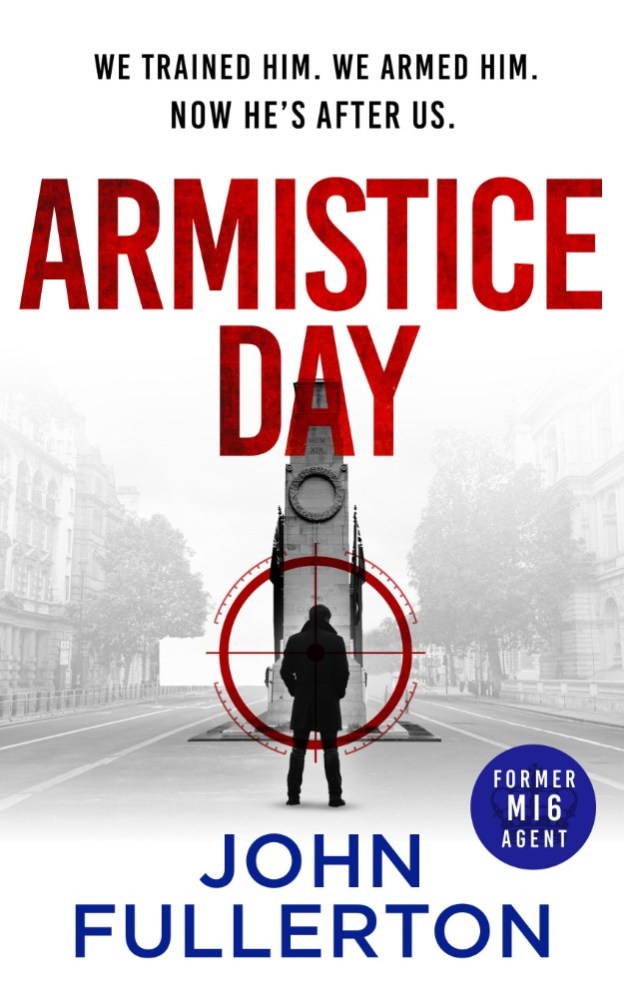
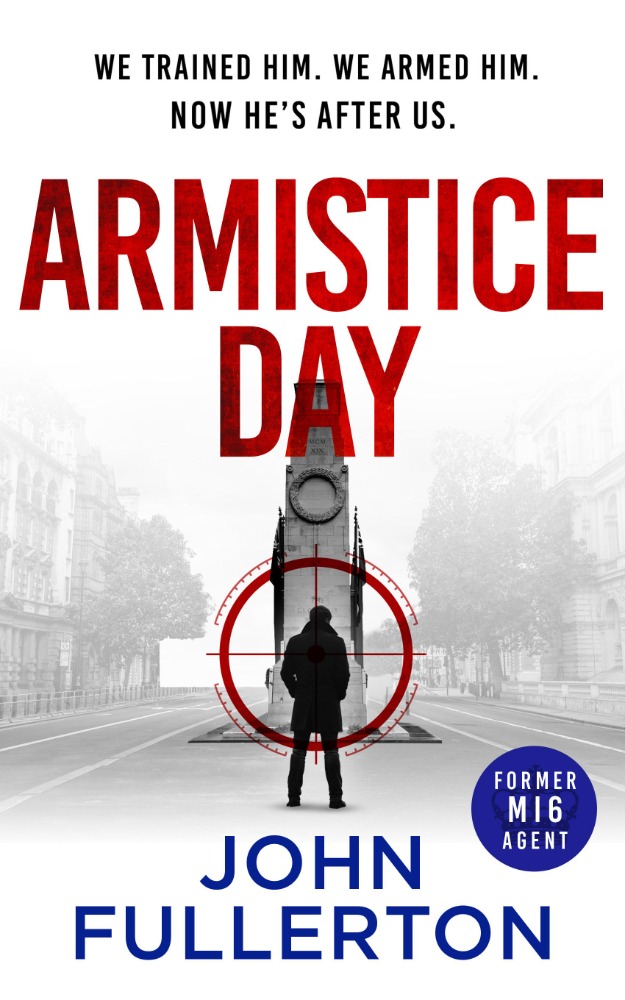
It’s my pleasure to welcome back John Fullerton to Linda’s Book Bag today to chat with me all about his new novel Armistice Day. I’m delighted to begin the blog tour and my thanks go to both John, and to Anne of Random Things Tours, for inviting me to take part.
You’ll find other posts featuring John here on the blog. Let’s find out what John told me about his new book:
Staying in with John Fullerton
Welcome back to Linda’s Book Bag John and thank you for agreeing to stay in with me once more.
Delighted to be invited.
Tell me (though I have a pretty good idea!) which of your books have you brought along to share this evening and why have you chosen it?
Armistice Day, my latest thriller. It’s a complete break from my earlier Cold War spy trilogy. It’s contemporary, with a new set of characters and issues. The ‘us’ versus ‘them’ isn’t quite what it was; issues of loyalty and duty have become more diffuse and complex.
Sounds fascinating and as it’s out today, Happy Publication Day. How did you choose the title?
The action begins at the Cenotaph in London on Armistice Day, which is always marked by two minutes’ silence at the 11th hour of the 11th day of the 11th month, commemorating the civilian and military dead of two world wars.
That makes sense. What gave you the idea for Armistice Day?
I suspect I’m not alone in beginning with a ‘what if?’ I have the digital equivalent of a drawer full of failed and incomplete ‘what if’ manuscripts. Sometimes it works, sometimes it doesn’t.
I think life is like that too John!
I don’t plan. If I know what’s going to happen, I get bored and stop. My ‘what if’ has to keep me engaged, let alone the readers. After all, like most writers of fiction, I write for myself.
So what triggers a ‘what if’ manuscript?
I might overhear a remark in a pub, or spot something odd on the streets. In this instance, it was a quick look at the newspapers, and a couple of photographs of last year’s Armistice Day parade. It showed politicians parading in black, with their Flanders poppies, trying to look serious and respectful towards the fallen. What a parcel of rogues, I thought. What if…?
Hmm. Given some recent commemorative events with rogues I have a feeling Armistice Day might be more pertinent than you originally envisaged!
What can we expect from an evening in with Armistice Day and who or what else have you brought along and why?
I’d like to introduce two friends of mine from Armistice Day. First, the laconic Bridie Connor, talented director of counterintelligence and security at the Secret Intelligence Service, a woman who’s broken through the ramparts protecting the ruling cabal of white, male, privately educated officers who have so long dominated her Service.
Second, Septimus Brass, senior investigator from the National Crime Agency. He’s no Jack Reacher, but an introvert, someone underpaid and overworked who chips away quietly but insistently at corruption and crime in high places without drawing attention to himself.
It sounds very much to me as if both those characters are much needed John! They are very welcome. I think Armistice Day sounds just the book we need in today’s world and I hope it’s a huge success. You get Bridie and Septimus settled and I’ll give readers a few more details:
Armistice Day
We trained him. We armed him. We sent him off to war.
Now he’s coming for us.
During the two minute silence on Armistice Day, a sniper hidden in a building opposite the Cenotaph guns down the prime minister, the leader of the opposition and two ministers. He escapes, disguised as a police officer.
In charge of the manhunt is Bridie Connor, laconic head of counter-intelligence at the Secret Intelligence Service. Reporting to her is Septimus Brass, National Crime Agency investigator.
Their adversary turns out to be neither terrorist nor foreign agent but a vengeful British ex-special forces soldier.
Septimus has just one question: why?
A compelling novel of love, betrayal and revenge.
Armistice Day is published today, 28th June 2024 and is available for purchase through the links here as well as from Amazon.
About John Fullerton

John Fullerton worked during the Cold War as a ‘contract labourer’ in the role of head agent for Britain’s Secret Intelligence Service, also known as MI6, an episode that triggered an interest in spy thrillers. As a newspaperman, freelance journalist and Reuters correspondent, he has lived or worked in 40 countries and covered a dozen wars. The latter have provided settings for his novels, including Beirut, Kandahar and Sarajevo. He lives in Scotland.
For more information, follow John on Twitter/X @fictionarrative or visit his website. You’ll also find John on Facebook.
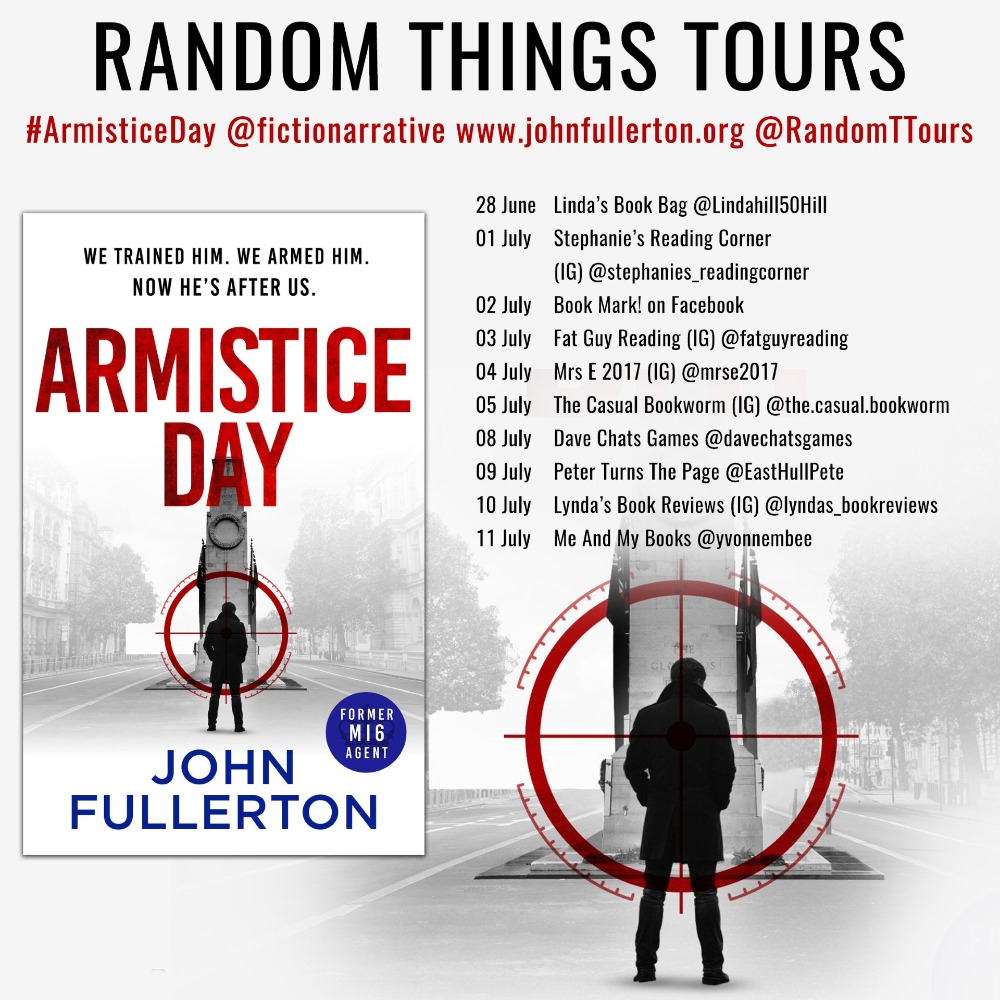
There’s more with these other bloggers too:






 Linda's Book Bag