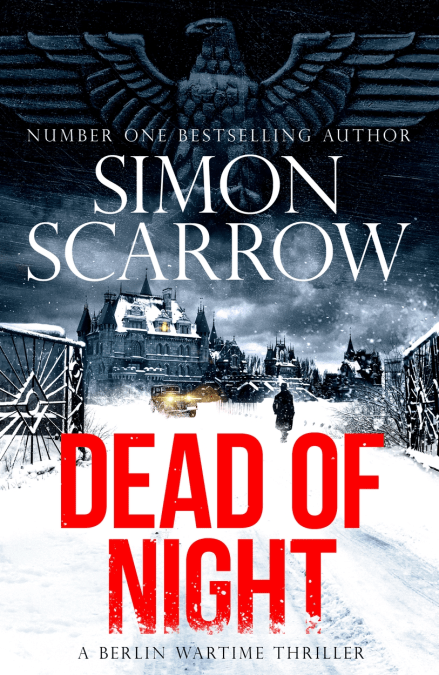
It’s an honour today to host a blog tour extract from Dead of Night by Simon Scarrow. My enormous thanks to Jessica Hunt and Sophie Ransom for inviting me to participate in the tour and for sending me a copy of Dead of Night which I cannot wait to read. Dead of Night is part of the Berlin Wartime Thriller series.
Published by Headline today, 2nd February 2023, Dead of Night is available for purchase through the links here.
Dead of Night
BERLIN. JANUARY 1940.
After Germany’s invasion of Poland, the world is holding its breath and hoping for peace. At home, the Nazi Party’s hold on power is absolute.
One freezing night, an SS doctor and his wife return from an evening mingling with their fellow Nazis at the concert hall. By the time the sun rises, the doctor will be lying lifeless in a pool of blood.
Was it murder or suicide? Criminal Inspector Horst Schenke is told that under no circumstances should he investigate. The doctor’s widow, however, is convinced her husband was the target of a hit. But why would anyone murder an apparently obscure doctor? Compelled to dig deeper, Schenke learns of the mysterious death of a child. The cases seem unconnected, but soon chilling links begin to emerge that point to a terrifying secret.
Even in times of war, under a ruthless regime, there are places in hell no man should ever enter. And Schenke fears he may not return alive . . .
An Extract from Dead of Night
(From The Prologue)
Berlin, 28 January 1940
‘There were handshakes and farewells as the couples parted, the Schmeslers hurrying down the stairs into the station. They reached the platform just as the northbound train pulled in. Doors clattered open and shut as passengers alighted or boarded; the guard blew his whistle. The train jolted into motion and Schmesler and his wife nearly lost their balance as they made for an empty space on one of the benches. It reminded them both of an evening when Schmesler had invited Brigitte out after they’d first met. The motion of the train had thrown them against each other and he had instinctively put his arm around her to stop her from falling. It had broken the ice and they had laughed nervously. Now they smiled at each other in delight at the unbidden memory of that night.
Conversation was difficult on the U-Bahn trains, and in recent years people tended to be careful of what they said in case an inadvertent comment attracted the attention of an informer. The two of them held hands and sat in silence, counting off the stops until the train pulled into their station in the Pankow district. Stepping out of the carriage, they walked quickly through the cold, dark streets of the smart residential neighbourhood until they reached their home. It was a modest two-storey building dating from the middle of the last century. Schmesler had acquired it three years earlier from its Jewish owners, the Frankels. He had studied at Berlin University with Josef Frankel, and they had once been close friends. After the Nazis had come to power, the friendship was no longer advisable and they had kept their distance, socialising in secret. With Frankel no longer able to operate his business, he had left Germany with his family as restrictions tightened around the country’s Jewish community. He had sold his house to his good friend Schmesler for a bargain price, and taken what little capital he had in order to make a new life in New York. However, the family had been forced to leave behind a younger daughter, Ruth, when they had failed to find her birth certificate, and now that war had broken out, she was trapped in Berlin.
The couple climbed the steps from the street and scraped the snow from their shoes on the iron bar next to the covered porch. Schmesler unlocked the front door, and they stepped inside and closed it before turning on the lights, so as not to provide an excuse for the local block warden to fine them for breaching blackout regulations.
It was cold enough indoors to require them to keep their coats and gloves on, and only their hats were hung on the stand beside the door. Schmesler kissed his wife on the forehead.
‘You go on up to bed. I’ll be along a bit later.’
‘Work?’ She sighed.
He nodded. ‘We’re short-handed at the centre, thanks to conscription.’
‘Did they have to take all your assistants?’
‘In time of war, the army needs all the doctors it can find, my love.’
Brigitte shook her head. ‘War . . . So much for the Führer’s claim of being a man of peace.’
Schmesler instinctively glanced round before he could catch himself, and smiled guiltily as he responded. ‘Make sure such words stay at home. Be careful who you share your doubts with.’
‘I would hope I’d be safe speaking my mind to my husband of twenty years.’ He winked at her. ‘You never know . . .’
‘Oh, you!’ She pinched his cheek.
‘Give the Führer a chance, Brigitte. Now that Poland is obliterated, there is no reason for France or Britain to continue the war. We may have peace by the time spring comes. Hold on to that hope, eh? Now, to bed with you, before I tell the Gestapo you are sharing un-German propaganda.’
He watched as she climbed the stairs to the galleried landing, turned on the light and disappeared from view. Then, making his way to the parlour, he sat in the chair in front of the stove and opened the hatch. The heavy iron was still warm, even through the thickness of his gloves, and he saw a dim glow within. When he opened the vent, the heat intensified and smoke curled up. Taking some kindling, he arranged it over the first small flames to flicker into life. He waited until there was a healthy blaze before he added some split logs and shut the hatch. Already he could feel the warmth radiating from the ironwork, and he let it seep into his body, smiling with contentment.
He glanced at the desk beneath the blackout curtains. There was a briefcase sitting there that contained a folder of reports awaiting his attention. He had been putting off the moment all day at the office, and now again at home. It could be delayed no longer. He eased himself to his feet and crossed to the small side table where he kept a decanter of brandy and some glasses, and poured himself a generous measure. Then, settling in the leather desk chair with the warmth of the fire at his back, he opened the case and took out the file. Reaching for a pen, he flicked open the cover and glanced over the first report, considering the hand-written recommendation at the bottom. His right hand moved, and the nib hovered over the report. He hesitated, then knocked the brandy back, feeling the fiery liquid surge down his throat. Setting the glass down with a rap, he marked the final box on the page with a ‘+’, moved the sheet to the side and considered the next document.
The clock on the mantelpiece marked the passage of time with a steady tick tock. Every so often, Schmesler stirred to place another log in the stove as he worked late into the night processing the documents into two piles: one for those marked in the same way that the first report had been, and a smaller pile where he had left the box empty and merely signed the report instead.
Upstairs, his wife slept alone in her thick nightdress beneath several layers of covers. She lay on her side, breathing deeply, sleeping in a dreamless and untroubled state until the early hours of the morning, when a sharp crack sounded from downstairs and jolted her awake. For a few heartbeats she was not sure if she had imagined the sound. She reached under the covers to where her husband usually lay, but he was not there, and the bedding was cold and clammy. She waited for several minutes, listening for further sounds before she stirred. Turning on the bedside lamp, she squinted at the sudden brightness as she looked at the alarm clock. Just past three o’clock. An absurd hour for her husband to still be working.
She swung her legs from under the covers and slid her feet into her slippers before making for the top of the stairs. ‘Manfred,’ she called out. ‘Manfred . . .’ She waited for a response, but there was silence, and she tutted irritably as she descended the stairs and made for his study. As she opened the door, warm air washed over her, and with it came the acrid odour of gun smoke. ‘Manfred . . . ?’
She did not see her husband immediately. There were papers scattered across the desk and on the floor nearby. The chair lay on its side, and an outstretched arm projected from behind it. A short distance from the curled fingers of the hand lay the dark shape of a pistol.
****
Isn’t that brilliant? I’m thrilled to have Dead of Night on my TBR and can’t wait to read it.
About Simon Scarrow
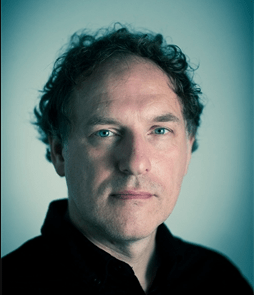
Simon Scarrow is a Sunday Times No. 1 bestselling author. His books – which have sold over 5 million copies – include his Eagles of the Empire novels featuring Roman soldiers Macro and Cato, most recently Death to the Emperor, The Honour of Rome, The Emperor’s Exile and Traitors Of Rome, as well as Blackout, the bestselling first novel in the Berlin Wartime Thriller series, and many more.
Simon lives in Norfolk with his wife.
For further information, visit Simon’s website, follow him on Twitter @SimonScarrow or find him on Facebook.
There’s more with these other bloggers too:












 Linda's Book Bag