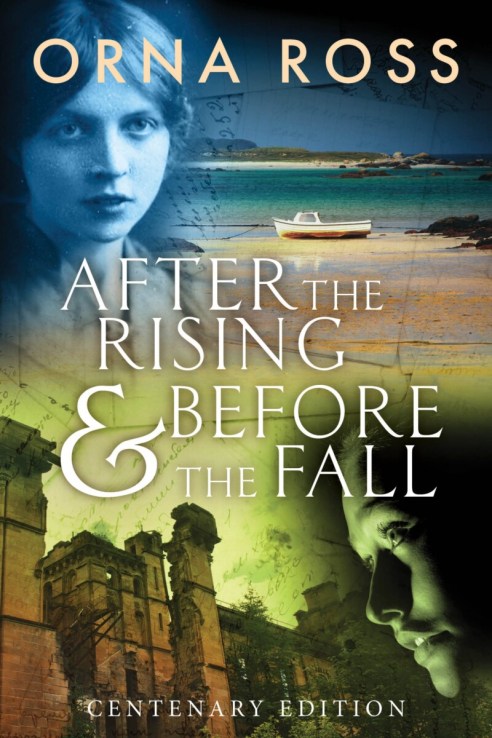
I’m thrilled to be able to share an extract from After the Rising & Before the Fall by Orna Ross with you as part of the blog tour today. My huge thanks to Kayleigh Brindley for inviting me to participate.
After the Rising & Before the Fall is available for purchase here.
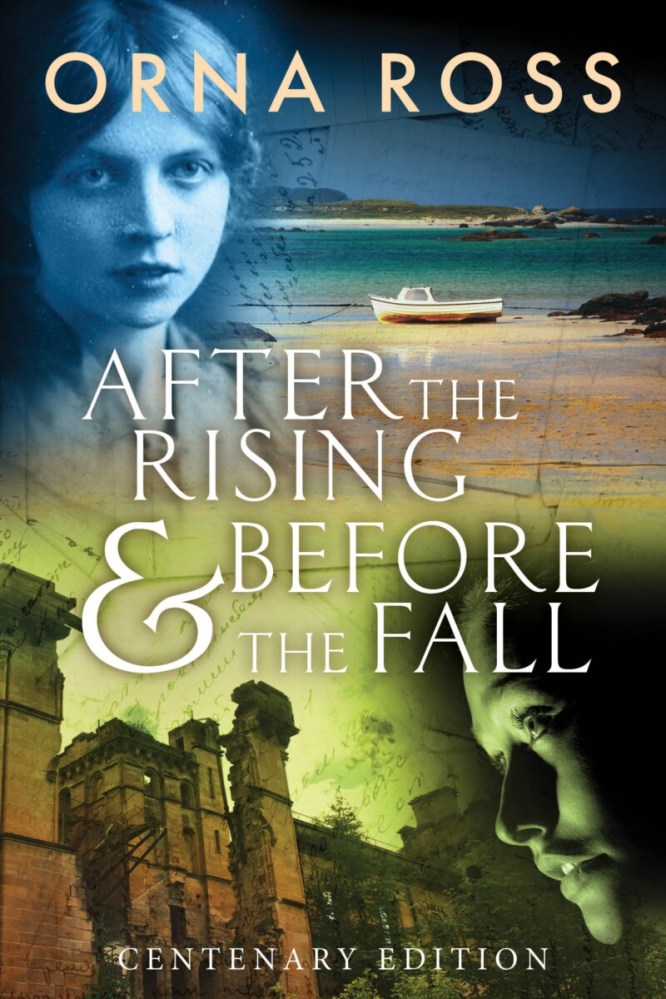
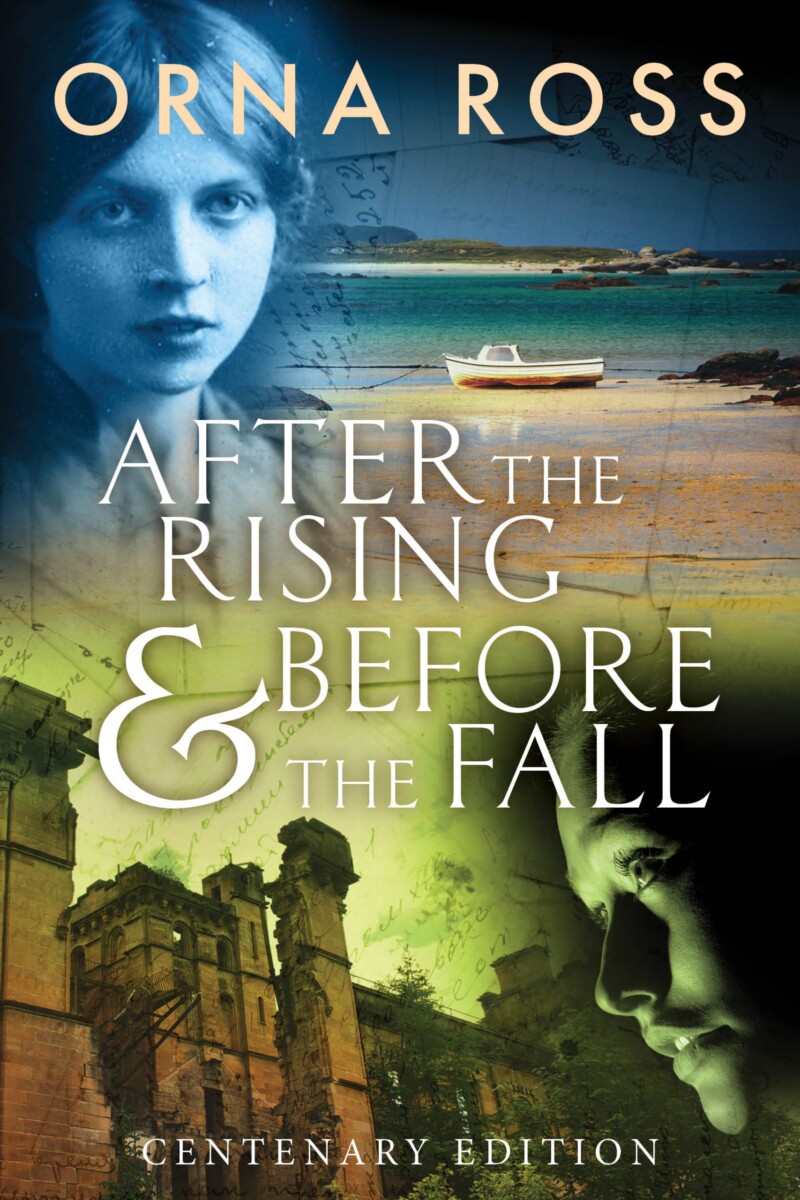
After the Rising & Before the Fall
This is a special edition of Orna Ross’s first two novels in The Irish Trilogy.
—
In 1923, Dan O’Donovan, a young soldier, was lured to his death in the notorious sinking sands that surround the small Irish village of Mucknamore.
Now, in 1995, Jo Devereux has returned home to Ireland, needing to know more about this “War of The Brothers” and the secrets that haunted her childhood.
Jo’s life in California has come to a full stop and she knows that if she wants to move forward, she’s going to have to go back.
Settling down in a makeshift shed overlooking the ocean with a suitcase of old family letters and journals, Jo uncovers astonishing truths about Dan’s death. Truths about her mother and grandmother that have ricocheted across four generations and are igniting again the passionate conflicts of her youth, bringing her back into contact with Rory O’Donovan, Dan’s great-nephew.
As Jo negotiates a shifting landscape of love, loss and revenge, she begins to question everything she thought she knew about her family – and her own choices.
An Extract from After the Rising & Before the Fall
Chapter 1
The thick double door beneath the sign – Parle’s Bar & Grocery – is shut. A For Sale board juts from the side wall, with a Sale Agreed banner across it. The blinds are down, as if the house, too, has closed its eyes and died.
That’s all I have time to notice as my taxi whips past. I can’t tell the driver to slow down, as I have already given him instructions to hurry. I look back as we pass. Nothing about it has changed, I don’t think, yet it looks different. Lesser.
Then the road swerves and it is gone, disappeared by the bend.
We fly past the post office, and Lambert’s farm, and the two-roomed schoolhouse where I learned to read. “That’s it!” I have to say, before we pass it. “That’s the church there.”
The car screeches to a stop, bidding goodbye to my hopes of a discreet arrival. Heads huddled around the door turn to look. I should have known the crowd would be spilling out of the church. My mother was the proprietor of Parle’s, the village shop and pub. The village hub. It was always going to be a big funeral. The years peel away and I’m instantly laid bare.
But the driver is out of the car, taking my suitcase from the trunk, opening my door saying, “Here we are, so,” in his strong Wexford accent.
I will do this well. The vow that seemed so potent yesterday in my apartment in San Francisco, feels puny now. Doing it well doesn’t necessarily mean going into that church, does it? I’m so late. Wouldn’t it be more discreet to shrink back into the seat and wait it out, catch Maeve later, on her way home? Or, even better, go back into Wexford town, lie low for today, return tomorrow, when all the fuss is over?
Catch yourself on! I admonish myself in the local lingo. You’re not an over-sensitive child now, you’re a 38-year-old woman. A magazine writer. An apartment-owner. A car-driver. Get in there! As I psyche myself, I’m putting on my sunglasses to protect me from the staring eyes. I’m taking out the clasp to let my hair fall forward, a veil of sorts. I’m taking a breath so deep it hurts.
And yes, I’m stepping out of the car onto Mucknamore soil for the first time in twenty years.
The heat is unseasonably sultry. Surely Ireland is never this hot? The air feels thick, hardly like air at all, and the nausea that’s been plaguing me all the way down here growls again. I walk through the open gates of the little church yard. Here I am, folks, the entertainment of the day, the happening that you’ll pass, one to the other, whenever Mrs D.’s funeral is recalled.
As I fix my stare beyond their curious eyes, it collides with the door of the black hearse, open like a mouth. It draws me towards it, inexorable.
I draw nearer. People begin to recognise that it’s me. One voice says, “Hello Jo. Welcome home.” Another, “Sorry for your trouble.” Then there is a general murmur of greeting and sympathy. I nod acknowledgement.
“Yes, Jo, welcome home,” says another man, turning the greeting to a snigger. I know his face, one of the Kennedys, who always used to mock me from his high stool at our bar counter.
At the door, they part to let me through and I walk towards words I haven’t heard for a long, long time: “Giving thanks to you, His Almighty Father, He broke the bread…”
The priest is a bald as a Buddhist, a big man, a performer, wallowing in emphases and pauses. “…gave it to His disciples and said…”
Two other clerics in purple robes stand behind him and the congregation is on its knees, heads bowed. It is the Consecration, the holiest part of the Mass. The quietest part of the Mass. Which makes the click of my heels on the tiles sound louder than it should.
People turn and nudge each other, loosening the holy silence. As whispers begin to swirl in my wake, Father Performer senses the loss of his audience and looks up. Seeing me, his eyes narrow, two specks of stone. Again I’m gripped by the urge to flee, but the pull of my mother’s coffin sitting there on the trolley between us, all polished wood and burnished trimmings, is stronger. It is covered in glossy flowers. Funeral flowers, grown to be cut, already dying
I walk on.
The priest stops the ceremony and stands with his hands together in the prayer position, a column of forbearance. The other two clerics behind him imitate the pose, censuring me with that loaded, condescending silence they must get taught at religious school.
I am almost at the top pew, where my family is sitting. I can see Maeve now, looking thin, too thin, almost gaunt. She follows the eyes of the priest, turns to see what’s causing the disruption and when she finds it is me, pure exasperation breaks across her face. Now, Jo? it says, before she turns her head on its long, elegant neck away from me, back towards the altar. Now?
I don’t blame her. It must look so careless, so uncaring, to crash in like this, turning our mother’s funeral into the latest act in the long-running Parle drama. And my sister will be grieving Mrs D.’s death sorely. I don’t want to add to that.
At the same time I do blame her. I blame them all – Maeve, Mrs D., Daddy, even Granny Peg. These scenes I bring upon the family are never just my doing, though I get the starring role. They all play their part, though they live and die pretending the stage is not even there.
That girl standing between Maeve and her husband Donal must be Ria, my eight-year-old niece. She stares at me with Maeve’s eyes from behind a veil of red hair not unlike my own. Her expression tells me she has heard all about her Auntie Jo.
She and Donal push down to make a place for me but Maeve, in one of her childish gestures, kneels firm. I squeeze into the pew.
The priest begins again: “Heavenly Father, you gave your only son…”
The wood is hard against my kneecaps. The smell of incense sends another wave of nausea undulating but I kneel and stand and sit through the half-forgotten rites waiting, as I have waited out so many a day in Mucknamore, for it to be over.
Why am I here? All the way back – through the black night flight from San Francisco, in the taxi from Dublin Airport to Connolly Railway Station, through every chug of the rickety three-hour trip down south, and in the final cab ride from Wexford town out here to Mucknamore – I’ve been nursing the same question: why?
Why, when I spent twenty years not making this journey, when I had left it so late that I was unlikely to arrive on time anyway, had I nonetheless organised a last-minute ticket? Why did I feel I had to come?
And it wasn’t just me. Why had Maeve, who so long ago gave up trying to get me back to Mucknamore while our mother lived, made such frantic efforts to contact me once it was clear she was dying?
Why does death demand such attentions?
What would Maeve say if she knew I had heard the first words of her first frantic message last Friday? That I was halfway out my apartment door when stopped by my telephone’s ringing and that I stood in the open doorway, letting the answer-machine pick up the call? That as soon as I’d heard her first words, “Hello, Jo, it’s me. It’s about Mammy…”, I had answered aloud. “No Maeve, sorry. Not tonight,” and slammed the door on the rest.
If I had waited for her next words (“It’s bad news. I think you should come home…”), or if I had called her back later that evening, or even the following morning, I might have got back to Ireland on Saturday or Sunday morning. I might have been in time.
But in time for what, I ask? To visit the hospital and be confronted with a new Mrs D.: twenty years older, weak and wretched, dying? To snatch a few words from her, say something myself, then watch her go? What difference would that have made?
I know how Maeve imagines the scene: our mother looking up to see one of her girls ushering in the other, meaningful looks passing between us all, a clasping of hands and forgiveness all round. Then the two daughters together, watching her die, smiles and tears ushering her out of the world.
No, Maeve, too much was left to curdle for too long. No words, not even deathbed words, would have been strong enough to hold it all.
No. It was better the way it happened. Believe me.
The organ springs into sound for the last time and an elderly voice begins a quavering ‘Ave Maria’. I look up to the balcony: it is Mrs Redmond, my mother’s friend, chins a-wobble. While she struggles with the top notes, an undertaker steps up to release the brake and glides the coffin down the aisle. Maeve is crying, curling her sobs into her husband.
Outside, the heat crawls over us. Maeve is immediately engulfed by sympathizers, a wall of backs around her. Seeing me alone, Donal steps across and bends to bestow a kiss on my cheek. “So,” he says in that cod-sardonic tone he affects. “The prodigal returns.”
I have met Donal only a handful of times in the many years he has been married to my sister. When they were first engaged, Maeve brought him to meet me in London and that first encounter has always stayed with me: how he enfolded her as the two of them sat opposite me in the restaurant, her hand heavy with his ring.
“How is Maeve doing?” I ask, ignoring the jibe.
“Wearing herself to a frazzle. Your mother had very definite ideas about this funeral and Maeve, being Maeve, is carrying them out to the nth degree.” This time the scorn’s unmistakable. Maeve always claimed that Donal and Mrs D. were fond of each other, but when it comes to family relationships, my sister is prone to whitewash.
“Is she annoyed with me?”
“Your mother wanted to see you and Maeve promised her she’d track you down. When she wasn’t able to…Well…”
I can’t give him the response that leaps into my mind and find I can’t think of anything to say instead. Maeve is the single thing we have in common; communication is strained when she is not with us. Just as the silence is stretching towards awkwardness, we are rescued by a loud shriek.
“Ahhh,” says Donal, turning. “Our keening friends again.”
At the church door are four young women in costume, made up to look old, with black wrinkles painted across their foreheads and around their eyes and shawls drawn up over grey wigs. I resist the impulse to cover my ears. “Keeners? What the…?”
“Professional mourners, one of your mother’s many special requests. She left pages of instructions, practically a guidebook. How To Have A Good Old Irish Send-Off. We had a wake last night, complete with those four weeping and wailing and flinging themselves on the floor.”
I look across at my sister, explaining to everybody what the sideshow is about and wonder how she can bear it. While planning all this, Mrs D. would have been imagining her celestial self scrutinizing proceedings from above, watching and weighing who did what so she’d know how to treat them when they eventually caught up with her. She wouldn’t have been thinking about Maeve at all.
I feel a hand on my back and turn to see Eileen standing there with her husband, Séamus.
“Jo,” she says. “Jo, I’m so sorry.”
Eileen worked in our shop while we were growing up and lived with us until she married. I let her hold me. Her hug seems to give the others permission to approach and now people I haven’t seen for years are coming across to grab my hand.
Faces I remember, names I’ve forgotten. Names I remember, faces I’ve forgotten.
My mother was a great character, they tell me. She was gone to a better place. God would give me comfort.
Only one old woman tells me anything that sounds like the truth and she gets herself dragged away by the arm for it. “Who are you?” she says. “I never heard Máirín mention you at all.”
Then, out of the mass of well-wishers comes a particular hand and a particular voice, one I do know.
“Jo,” he says, and my heart skips in recognition as I take the proffered hand. A second one comes to encircle mine in warmth and then he is there in front of me. Rory. Rory O’Donovan. All of him, looking down on me, our hands conjoined.
I had thought about Rory on the journey back, of course I had, and had planned my opening lines and the airy way I would deliver them, but in my imaginings, we met on the beach. Or on the village street. Not here, at my mother’s funeral, the last place I would expect to find him, or any O’Donovan. Not here, in front of everybody. Not here.
“How are you, Dev?”
Dev. His old name for me. Extra weight has loosened his jawline. He is still the picture I have held in my head but blurred at the edges, like a photograph out of focus. His hair is gone, his long, black, beautiful hair. It used to flow down his back, soft and shiny as night-water. I used to sink my face in it, loop it through my fingers, knot it around my naked neck. All gone. Shorn and thinning and greying now: any man’s hair. And he wears a suit, any man’s clothes.
I look for what I used to know.
“I’m sorry for your trouble, Jo,” he says, the conventional phrase again but in his voice, low and concerned, it sounds different. “But oh, it’s good to see you.”
The keeners choose that moment to raise their wailing to a higher pitch and he waggles his eyes at them. It is a look to share: confident of my amusement. Just like the old days, us against our families.
A deep flush begins at the base of my neck and tracks slowly up my face. I panic, point across at the undertaker slamming the hearse door shut.
“I have to go!” I say and that’s what I do, almost running from him, decamping back to Donal who stands with Ria near the hearse. It’s the shock, I tell myself as I flee. The suddenness of this new Rory sprung upon me when my mind was on Mrs D. and Maeve and everything else.
But I know that’s not it. I know it’s Mucknamore. Not even back an hour and already I am regressing, the work of twenty years coming undone.
Donal explains that we are to stand behind the hearse and lead the cortège down to the old cemetery. Only when he says this do I look across and realise: my father’s grave lies flat and undisturbed.
“Let me guess: another special request?”
“Yep. She’s to be buried with her own family.”
Not with Daddy. I’m surprised she braved the scandal of that, dead or alive.
“And according to the grand plan, we all have to walk there.”
To the old cemetery? That’s down almost as far as Rathmeelin, the next village up the coast. In this heat? I doubt I’ll be able to make it. But now Maeve’s bustling across, aggravated-big-sister expression in place.
“Am I supposed to say, better late than never?” she asks me, her kiss failing to connect with my skin.
“I’m sorry, Maeve,” I say. “Really, I am. I didn’t get your messages until last night and…”
“Honestly, Jo, you’re impossible. Why do you have an answering machine if you don’t bother taking your messages?”
I say nothing. Usually, I do pick up my messages as soon as I come in the door of my apartment, but these past days have not been usual.
“And couldn’t you have let us know you were coming? Where were you when I rang, anyway?”
“Out.”
“Out?”
What do I mean, out? She had rung at all hours of the day and night, left four or five messages on my machine.
Her red-rimmed eyes are ringed with black, circles gouged deep by distress, so I let her scold me, always one of her favourite occupations, without argument or interruption. It’s a relief when the undertaker slides across and whispers in her ear and she moves away again to line us up in the order Mrs D. dictated. Father Doyle and two of the keeners are to go in front of the hearse, the other two priests and the other two keeners immediately behind, then us. Was I expected when Mrs D. made her plans, I wonder?
“Ria!” Maeve calls, with that voice that mothers use to address their children when they have an audience. “Just there, love, beside Daddy.”
The black car slips into gear and rolls out the gates. The keeners lift the pitch of their noise another notch, and start to hold their notes for longer. The only words I recognise are the lamentation of the refrain: Ochón agus ochón ó. They are a troupe of actors, Maeve explains in whispers as we begin our march. Mrs D. must have been planning the event for months. Years, maybe.
We trudge down the village main street, making slow progress past the two-roomed national school; past Lamberts’ little farm, still the same stench of dung mingled with sea salt; past the post office, green An Post stickers plastered all over its window. Rounding the curve in the road, I see our house. Mrs D.’s house. Bar and grocery in front, bedrooms above, living rooms and kitchen behind. When we reach it, the undertaker stops the hearse outside the front door, turning off the engine for two minutes’ silence. The keeners drop quiet and now we can hear the sea.
Mrs D.’s house. Just a front-room bar and shop, but in her world it made her someone. A home that was bigger than most others around and a business that was central to the life of the village. So central, in her mind, that when she talked about the shop, she gave it the name of the village itself.
“Mammy’s talking about selling Mucknamore,” Maeve had said on the phone a while back. “This time I think she really means it.”
And this time she really did. The ‘For Sale’ sign went up on the dwelling that had defined her for 76 years and quickly attracted an offer but before she had time to finalise the deal, she died.
Dead, Mrs D. that is what you are. But how can that be?
How can it be over?
After one hundred and twenty blessed seconds of silence, the keeners recommence their lament and we move off again, up the gently rising hill towards Rathmeelin. It’s fresher up here, with a small breeze blowing off the sea, and we can see the curve of the sandy causeway that joins Coolanagh Island to the mainland.
As a child, I used to see the island as a giant head. The Causeway was its neck, the jutting bit to the west its nose, the small inlet beneath its mouth, and the marram grass of the dunes its spiky hair. Around it, on the three sides visible from here, are treacherous, waterlogged sands, that have inspired a lot of folklore and legend. Quicksand. It gleams at us now, flat and apparently innocent, in the almost-midday sun.
We pass the old police barracks, once a burnt-out husk, now a holiday-apartment block with landscaped gardens and balconies facing the sea. We pass a higgledy-piggledy line of bungalows, each built without any awareness of its neighbour, like a row of crooked teeth. Then the buildings stop, the road narrows and we are in a country lane that hugs the coast.
The sun bleaches the hedgerows to grey and seeks out white skin to burn. My nausea now is a squirming mass, thick and threatening. I no longer respond to Maeve’s whispers. I must concentrate on my breathing and focus only on the way ahead. Slowly, slowly, on we tramp until, at last, we can see the cemetery, a patchwork of crosses and slabs of stone staring over a low wall at the sea, closed now to anybody who does not already have a plot inside.
Mrs D.’s open grave is there, waiting for us, and beside it a pile of earth, surface cracking as it dries in the sun. Three Celtic high crosses stand sentry over the hole in the ground. The smallest, newest one belongs to Auntie Norah: ‘Norah Anne Teresa O’Donovan. 1900 to 1987. Ar Dheis Dé Go Raibh A Anam.’ May Her Soul Be With God.
Granny Peg would have chosen this inscription for the woman who was not really our aunt at all but her closest friend. And Norah must have chosen to be buried here with Gran instead of with her own people, the O’Donovans.
The middle-sized gravestone, with the open hole gaping beneath, commemorates the Parle family – Granny Peg, Granddad, Gran’s parents. Soon, Mrs D.’s dates and details will be carved beneath theirs.
And the third, most ornate stone is dedicated to the man that made the Parles what we are. Uncle Barney, Gran’s brother. Uncle Barney who made what Gran used to call “the ultimate sacrifice”, meaning he died for Ireland. This tall Celtic cross was erected by his old IRA comrades, its inscription in the old Gaelic alphabet, illegible to me and anyone except a handful of scholars.
A terrible thought strikes me. I whisper to Maeve. “Mrs D. hasn’t asked for any IRA palaver for the burial, has she?”
Granny Peg, I knew, had had a full Irish Republican burial when she died: tricolour flag draped across the coffin, volleys from old IRA guns fired into the air as they lowered her down, report in the local paper…
“Oh no, nobody does that any more,” Maeve whispers back, eyes to the crowd. “Not since things got so bad in the north.”
The priest and the keeners have joined us by the graves and now the keening starts up again. We must stand straight and wait while the long string of people trudges in and gathers round. Father Doyle’s face makes his feelings clear: he has no choice but to indulge these eccentric requests – the deceased was one of his keenest patrons – but he does not have to approve. The noise strikes at my temples in time with my blood. Shut up, beats the pulse. Shut up. Shut up.
Finally, at the height of the lamentation, they do, stopping abruptly and stepping back into the crowd.
Silence reverberates. A lone pair of hands starts to applaud, the claps faltering as it becomes obvious that nobody else is going to join in. As Father Doyle begins to pray in the name of the Father, the Son and the Holy Spirit, I spot Rory close by and, behind him, the entire O’Donovan clan. All of them: Paddy and Brendan and Martin and Joan and Mary and Kathleen and Benny and their assorted spouses and children. I’m so surprised to seem them all here, at a Parle funeral, that it takes me a moment to register the woman who must be his wife – a tall and elegant blonde – holding two little hands that belong to the boy and girl who must be his son and daughter.
I feel sick. It’s physical, nothing to do with seeing this perfect family portrait. I’ve had twenty years to accept that while Rory O’Donovan may have been the love of my life, the one who spoiled me for everyone else, I did not mean the same to him.
He long ago moved on, to marriage, fatherhood and children: my sister had told me all about that when it happened.
And good for him. Why not? Whatever I wanted to do with my life – and I will admit that at 38-years-old, I’m a little tardy with the answer to that question – I do know, I’ve always known, what I don’t want. It’s a list that seems to include lots that’s desirable to others: cars, careers, big houses in the suburbs, weekly trips to the mall, televisions, face-lifts…And tip-top, first and foremost, outright number one on the list of Things That Jo Devereux Does NOT Want is marriage and two kids in Mucknamore. With Rory O’Donovan, or anyone else.
Nausea twists again. And again. I try to beat it down, but this time pressure is swelling up into my nose and ears and I know it’s going to come. My middle constricts; my head fills with the sound of somebody wailing. Father Doyle looks up from his missal, annoyance all over his face now. This is not what was agreed, this is supposed to be his time. He should have recognised that this sound is different, rawer than the ritual cries of professional keeners. Me.
I try to stumble away, floundering in the only direction free of people, and find I’m walking towards Mrs D.’s open grave. I can see the questioning faces of the crowd but it is as if they are behind a gauze. The cool earth-hole beckons and as I pitch towards it, a male voice calls out my name, “Jo!” and two strong arms shoot out. My body recognises him, sways towards him, but as it does my stomach erupts and I find I’m spurting vomit over his shoes. I try to apologise but the next wave is surging up. “You’re all right, Jo,” he says. “You’re all right.”
Oh, but I’m not. Again and again it comes, sick pooling on the grass around our feet. He holds me throughout – what must his wife be making of that? – and when the heaving stops he places a handkerchief into my shaking hands. I wipe my mouth and try to speak but my lips won’t move and when I step away from him in an effort to stand on my own, the world comes rushing in through my ears, spinning me into a vortex of blackness.
Rory O’Donovan takes hold of me again and I sag, letting unconsciousness carry me off.
****
I think this is just brilliant Orna. It certainly makes me want to read on.
About Orna Ross

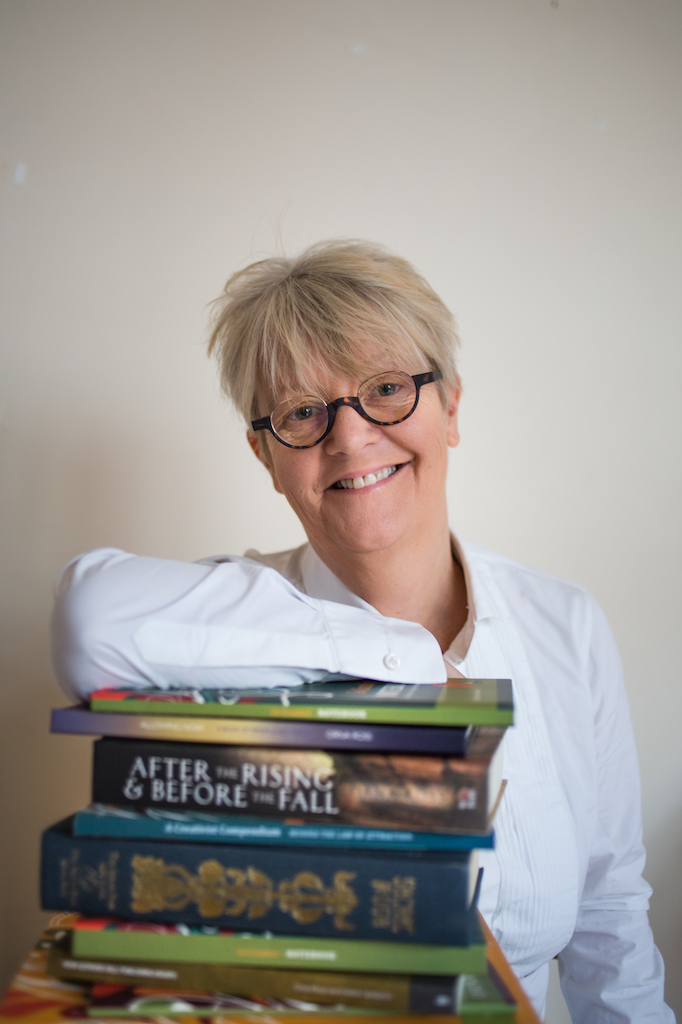
Orna Ross is a bestselling and award-winning independent author. She writes historical fiction–mostly multi-generational murder mysteries–inspirational poetry and, as Orna A Ross, creative and publishing guides for authors.
Born and raised in Co. Wexford, in the south-east corner of Ireland, she now lives in London and in St Leonard’s-on-Sea, in the south-east corner of England. In 2012, she founded the award-winning non-profit organization, the Alliance of Independent Authors (ALLi), with her husband and business partner.
For further information, follow Orna on Twitter @ornaross, find her on Facebook and Instagram or visit her website.
















 Linda's Book Bag