Professor Wooford McPaw’s History of Astronomy by Elliot Kruszynski

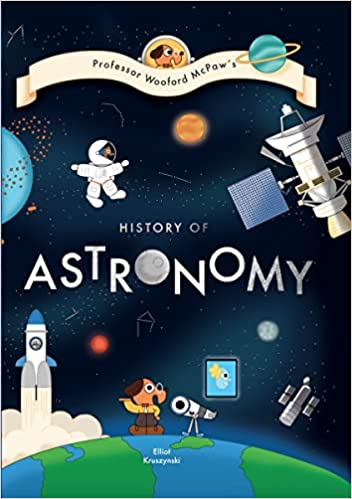
One of the joys of blogging is that I never know quite what is going to arrive in my post box, and recently I was delighted to find a copy of the children’s book Professor Wooford McPaw’s History of Astronomy by Elliot Kruszynski.

I’ve previously reviewed another of Elliot’s books, Special Delivery, here.

Professor Wooford McPaw’s History of Astronomy by Elliot Kruszynski was published by Cicada Books on 5th May and is availale for purchase in all good bookshops and online including here.

Professor Wooford McPaw’s History of Astronomy

This second book in the Wooford McPaw series takes on the subject of the cosmos and everything within it. In his distinctively humorous, somewhat subversive tone, Elliot Kruszynski (in the guise of the Prof) looks at how our understanding of our place within the universe has evolved from the days of Ancient Greece, to the discoveries of Copernicus and Gallileo, through to Newton and then to Einstein and Hawking. In and amongst these stories, we find out about how the universe may have been formed, the birth and death of stars, different types of galaxies, our own solar system and the mysteries of dark matter and dark energy.

Krusysnki’s comprehensive but easily understood texts are brought to life in comic-style panels with plenty of dialogue and discussion bringing the subject alive, and providing a refreshingly new take on the broadest of all subject matters!

My Review of Professor Wooford McPaw’s History of Astronomy

A dog professor explains astronomy!

I can’t review History of Astronomy without first commenting on the super quality of the hardbacked book. It’s beautifully produced with a thick, robust cover that would make it ideal for home or classroom use. The illustrations that accompany the text are bright, colourful and strike just the right balance between cartoon style and maturity for a reader aged 7-11.

The text is perfectly balanced to image so that there isn’t an overwhelming amount to read, but that said, my goodness is this book packed with facts and there’s an excellent and useful glossary at the end. History of Astronomy covers 5BC to the present day and even looks into the future with possibilities for astro-physics giving all kinds of useful information and catalysts for further study and research. I can imagine children’s imagination being so captivated by History of Astronomy that they become obsessed with the subject and the book would be a fabulous addition to KS2 classrooms. It could support science and technology as it is, but equally literacy is enhanced as vocabulary is challenging but made accessible. History projects might spring from the mentions of the Ancient Greeks, Newton and Einstein for example. At the risk of sounding sexist, I think History of Astronomy could be just the book to engage boys in reading too. I loved the fact there is a simple game to play at the end of the book too so that children could share this in peer reading and have fun at the same time. There’s also some very witty retorts from Professor Wooford McPaw’s sidekick Teley that add to the fun aspect.

History of Astronomy is a smashing children’s book. Not only did I enjoy reading it, I learnt new things too. What could be better than that?

About Elliot Kruszynski

Elliot Kruszynski is a London-based writer and illustrator who has worked with clients including the New York Times, Air BnB, Camden Brewery and Deliveroo. He illustrated and designed Bleep Bloop and Spot the Bot (Laurence King, 2019) and has two books in development with Walker/Candlewick (titles TBC).

You can follow Elliot on Twitter @EKruszynski and Instagram.

Place and Belonging: A Guest Post by Ruth Druart, Author of While Paris Slept

Sometimes there’s a book that calls to me completely but somehow I simply haven’t had time to read it. Such is the case with Ruth Druart’s While Paris Slept. Now with Ruth’s next novel The Last Hours in Paris heading our way in July I simply had to invite Ruth onto Linda’s Book Bag. I’m thrilled Ruth agreed to come and has provided the most brilliant guest post about place and belonging.

Before I share that post with you, let me give you some details about Ruth’s  books:

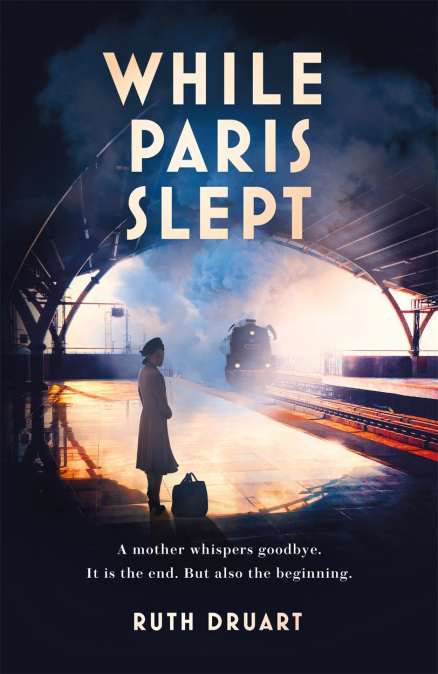
While Paris Slept

Paris 1944
A young woman’s future is torn away in a heartbeat. Herded on to a train bound for Auschwitz, in an act of desperation she entrusts her most precious possession to a stranger. All she has left now is hope.

Santa Cruz 1953
Jean-Luc thought he had left it all behind. The scar on his face a small price to pay for surviving the horrors of Nazi Occupation. Now, he has a new life in California, a family. He never expected the past to come knocking on his door.

On a darkened platform, two destinies become entangled. Their choice will change the future in ways neither could have imagined…

Published by Headline Review, While Paris Slept is available for purchase in all formats through the links here.

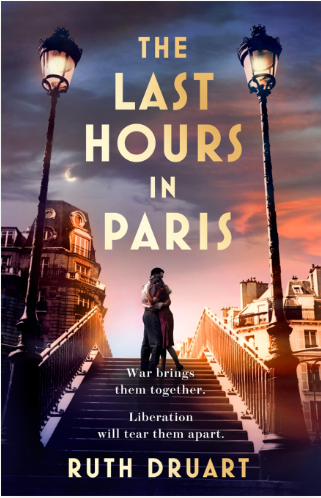
The Last Hours in Paris

Paris 1944. Elise Chevalier knows what it is to love…and to hate. Her fiancé, a young French soldier, was killed by the German army at the Maginot Line. Living amongst the enemy Elise must keep her rage buried deep within.

Sebastian Kleinhaus no longer recognises himself. After four years spent fighting a war he doesn’t believe in, wearing a uniform he despises, he longs for a way out. For something, someone, to be his salvation.

Brittany 1963. Reaching for the suitcase under her mother’s bed, eighteen-year-old Josephine Chevalier uncovers a secret that shakes her to the core. Determined to find the truth, she travels to Paris where she discovers the story of a dangerous love that grew as a city fought for its freedom. Of the last stolen hours before the first light of liberation. And of a betrayal so deep that it would irrevocably change the course of two young lives life for ever.

The Last Hours in Paris will be published by Headline Review on 7th July and is available for pre-order through the links here.

Place and Belonging

A Guest Post by Ruth Druart

Place. Identity. Sense of belonging. Home. These words speak to all of us, but especially to those who have been displaced, voluntarily or not. Personally, I only started to think about these concepts, when I left my home country at the age of twenty-three. It was supposed to be temporary move, but I ended up staying in France, pursuing a career in international education and raising three boys.

Bringing up children in a culture that is not your own brings its own challenges, and although France is only across the water from the UK, I soon discovered many differences that I hadn’t been expecting. Most of them were, at the worst, frustrating and bewildering, but the hardest for me to adapt to was the French system of education, yet I put my own children through it. I came to the conclusion that it was more important for them to have a sense of belonging to the country in which they were growing up, and so rather than send them to an international school, such as the one where I was teaching, they attended local French schools. I sometimes wondered how they may have developed differently if they’d grown up in the UK, and it made me think about how much culture forms part of our identity. This idea inspired me to write my first novel, While Paris Slept. I wanted to write about a child who was thrown from one culture into another, and how this disrupts his sense of identity and his sense of belonging.

Teaching in an international school, where students come from all over the world and often move every three years, gave me the ideal opportunity to explore these ideas further. I started a Masters in International Education with Bath University, focusing on Third Culture Kids (TCKs) and their sense of belonging – a TCK is someone who has been brought up with more than one culture. Through interviews with students at my school and other TCKs (aged 11-15), I discovered they do have a strong sense of belonging, though it might not be the same as that of a monocultural child. They may not feel they belong to one particular country; in fact, they may feel close ties to more than one country, and have trouble naming one as home. For these people, the question, ‘where do you come from?’ is not a simple one. Primarily, their sense of belonging is more towards people; foremost their families, and then to the international community as a whole – to other people like them. For example, a Japanese/Hungarian person might form a connection with a French/Spanish person. This theme of sense of belonging comes through in While Paris Slept as the characters question their sense of home and what it really means. Is it a place, or is it the people we love? And who’s to say you have to name only one country as your home? Having both British and French nationalities now, I don’t feel any less British than I was before, but I do have another culture and country where I feel at home, and I find this enriching. Only when I had to learn another language, did I truly come to fully appreciate my mother tongue. What a delight to be able to express myself perfectly and to be understood! If I hadn’t had this experience, I’m not sure I would have written a book at all. I think I had to experience culture shock first hand to be inspired to write about it. After having struggled during my first years in France, I wanted to portray this feeling of ‘unbelonging’ through a child’s perspective in While Paris Slept.

Sam, who’s grown up in America and only speaks English, is suddenly thrown into Le Marais, the Jewish quarter of Paris, at the tender age of nine. He doesn’t speak the language or understand the culture, and his parents struggle as they watch him flounder and suffer, but do they love him enough to put his happiness before their own? This is the question at the heart of the book. The main theme is parental love, though the story also touches on sense of identity and the importance of place and home. I wanted the reader to experience a foreign country through this boy’s eyes, to be in his head, as he struggles with culture shock and a sense of alienation. I also wanted the reader to empathise with Sam’s parents who gave him up, then survived Auschwitz and desperately want their child back.

The story reaches a resolution years later when Sam is older and wise enough to see things with a more rounded perspective, and comes to realise that ‘home’ can mean more than one place, more than one country, and even more than one set of parents.

****

That’s wonderful Ruth. Thank you so much. I have a feeling that even when we’re ‘home’ we can experience ‘unbelonging’ too. You’ve made me even more determined to get While Paris Slept to the top of my TBR pile and I can’t wait to get my hands on The Last Hours in Paris too!

About Ruth Druart

Ruth Druart grew up on the Isle of Wight, moving away at the age of eighteen to study psychology at Leicester University. She has lived in Paris since 1993, where she has followed a career in teaching. She has recently taken a sabbatical, so that she can follow her dream of writing full-time.

For further information, visit Ruth’s website, follow her on Twitter @RuthDruart or find her on Facebook and Instagram.

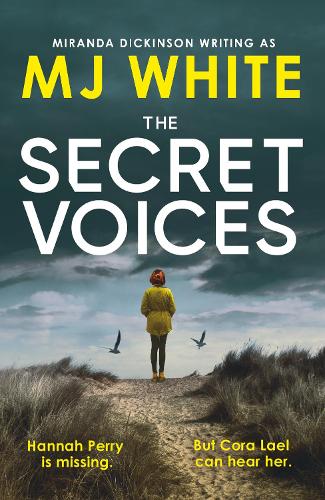
The Secret Voices by M J White

A little while ago I reviewed The Start of Something by Miranda Dickinson for My Weekly in a a post you’ll find here. Now Miranda is back with a brand new name, M J White, and a brand new genre in The Secret Voices. I’m thrilled to be reviewing The Secret Voices for My Weekly today.

I also reviewed Miranda’s Our Story here on Linda’s Book Bag and it was one of my books of the year in 2020.

Published by Canelo’s imprint Hera on 28th April 2022, The Secret Voices is available for purchase through the links here.

The Secret Voices

They said they’d keep me safe.

They said, ‘It’s okay, Hannah. You know you can trust me.’

They lied.

When eight-year-old Hannah Perry goes missing in the small Suffolk village of St Just, the community is rocked. Heading up the investigation is Acting DS Rob Minshull, but he’s out of his depth in a case that seems to mirror the disappearance of a young boy, seven years ago. That search ended in unimaginable tragedy…and Minshull is praying that history won’t be repeated.

But with an investigation full of dead ends, and a kidnapper taunting the police with sinister deliveries of Hannah’s belongings and cryptic notes, the young girl’s life hangs perilously in danger.

Until Dr Cora Lael enters the picture. A psychologist with a unique ability, Cora’s rare gift allows her to sense emotions attached to discarded objects. When she is shown the first of Hannah’s belongings, she hears the child’s piercing scream.

With few leads on the case, could Cora prove Hannah’s only hope? And as time runs out, can they find Hannah before history repeats itself…?

A twisty, original and utterly gripping detective thriller that fans of James Oswald and LJ Ross will love. Don’t miss the crime thriller debut from the bestselling women’s fiction author, Miranda Dickinson.

My Review of The Secret Voices

My full review of The Secret Voices can be found on the My Weekly website here.

However, here I can say that The Secret Voices is a highly unusual, fresh and engaging approach to a police procedural story that hooks in the reader through Dr Cora Lael and leaves them wanting the next book in the series – now! I thoroughly enjoyed it.

Do visit My Weekly to read my full review here.

About MJ White

MJ White is the pseudonym of bestselling author Miranda Dickinson, author of twelve books, including six Sunday Times bestsellers. Her books have been translated into ten languages, selling over a million copies worldwide. A long time lover of crime fiction, The Secret Voices is her debut crime series. She is a singer-songwriter, host of weekly Facebook Live show, Fab Night In Chatty.

For more information, follow M J White on Twitter @MJWhite13

Miranda on Twitter @wurdsmyth, on Instagram or find her on Facebook. You can also visit her vlog and website.

Staying in with David Lui

The plan today was to be walking Three Shires Head on the Derbyshire/Staffordshire border whilst away in our motorhome. Covid has had other ideas. However, every cloud has a silver lining and I’m delighted to welcome David Lui to Linda’s Book Bag far sooner than anticipated as a result! David is staying in with me to tell me about his debut novel.

Staying in with David Lui

Welcome to Linda’s Book Bag David and thank you for agreeing to stay in with me.

Thanks so much for inviting me! I’m excited for this staying in.

Tell me, which of your books have you brought along to share this evening and why have you chosen it?

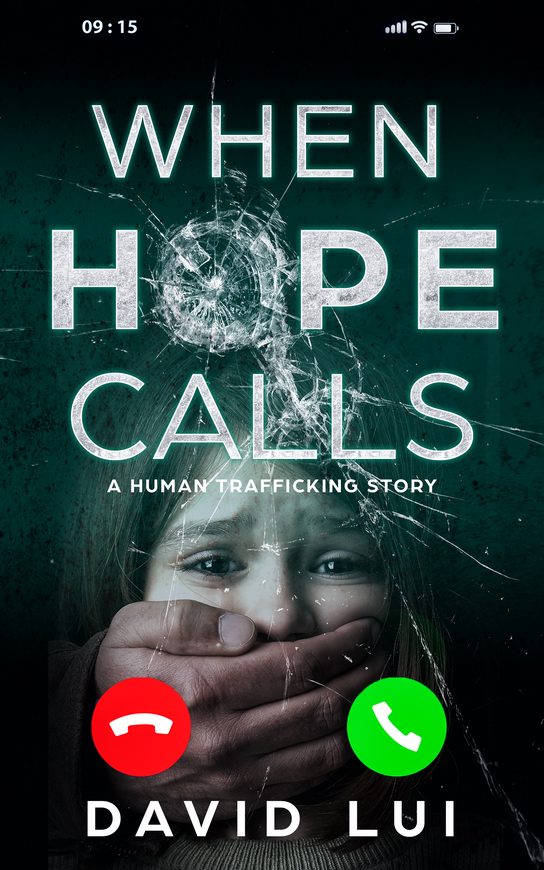
I’ve brought my first novel, When Hope Calls, which is the first in a series about human trafficking. It’s a heavy topic, I know, but one that I believe still needs a voice in the literary world. The reason I chose this book is because, after five years of publication, I still believe in the power of awareness; that if everyone could be aware of the global issue of human trafficking and modern slavery, something can be done about it.

I think you’re right David and books really do have the power to bring difficult topics to the world’s attention. 

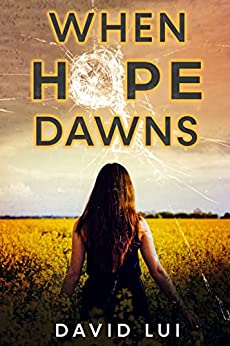
Another reason I’ve chosen to bring this book is because the third book in the series, When Hope Dawns is just out in the US and scheduled to be released in the UK on 15th May, so I’m very keen to share it with the world!

What can we expect from an evening in with When Hope Calls?

I’d say that’s a tough question to answer! Based on reader reviews, I’d say you could expect suspense, thrills, anticipation, frustration, grief, and even anger. Hope and hopelessness, that’s the tightrope you might find yourself on as you read When Hope Calls. As you see the criminal underworld from the eyes of a kidnapped child, and then from the perspective of her rescuers, readers often have to come to terms with their own beliefs about social justice and privilege.

That sounds brilliant. I love a book that makes me challenge my perceptions.

Like any flight to a worthy destination, I’d say, expect turbulence. Trust me, it’ll be worth it!

I think it will! What else have you brought along and why have you brought it?

I’ve brought a guest post all about the power of fiction!

Oo. Go ahead then!

The Power of Fiction

It is often said that art imitates life. But what about the other way around? Can life imitate art? The simple answer is yes. This is especially true when it comes to fiction. Fictional stories can have a real impact on the people who read them. They can influence how we see the world and how we interact with others. Sometimes, they can even change our lives for the better. The stories we read have a profound effect on our lives. We learn behaviour, attitudes, and beliefs from the characters in fiction. These fictional characters can also change us for the better.

Fiction offers a multifaceted take on how the world is like, much like a beautiful kaleidoscope. When most people think of ways to learn about the world, they think of textbooks and documentaries. But what about novels and stories? Fiction can offer a different perspective on how the world can be, and it’s often more interesting than non-fiction. For example, in the novel The Catcher in the Rye, Holden Caulfield is a teenager who is kicked out of school and ends up living on his own. Through his eyes, we see the world in a different way than we would if we were reading a textbook on teenage delinquents. We see the beauty in small things, and we understand Holden’s thoughts and feelings better than if we were just given facts about him. Stories catch our imagination, and in teen lingo, they catch our feels. The world comes alive through fiction, whether it’s books or movies or TV shows.

Fiction offers audiences a window into another person’s world. At the same time, it offers a new lens to see our own character in all its beauty and ugliness. We may see ourselves (all too often) as the protagonist, the hero, fighting for the lowly, overcoming mountainous challenges, triumphing over the villain. This personal association is empowering, to the point of granting us the resolve to make real changes in our daily lives. The movie The Secret Life of Walter Mitty comes to mind, where a man living a nondescript 9-to-5 life goes on the craziest life-changing adventure in pursuit of a photojournalist. As strange as it sounds, that movie was like a wake-up call for me, reminding me that adventure is always, always just a decision away, no matter how entrenched I was in a mundane lifestyle. The revelation was nothing short of invigorating, and I’ve heard similar stories from people who have read my book When Hope Calls, which ends with a direct call to action. I’d like to think that, by extension, any impact my readers make on the world for good can be attributed to, you guessed it, my works of fiction.

Last but not least, fiction breaks through walls of what can or cannot be. Works of fantasy, adventure, action, thrillers, romance, even horror…they expand what we define as the realms of possibility. Who told us what cannot be done, or how things should be? Chances are, we were taught from textbooks, from works of nonfiction. I’m not against facts and figures, but there is a huge difference between learning about the world, and accepting the world as it is. Fiction gives us a sledgehammer against conformity, against convention, against the unjust systems that remain in society. Fiction is power, because so long as we can imagine a better future, we can hope and fight for a better future.

In that sense, life not only imitates art–life kneels to art, realising that true power to change lies in the imagination of every single consumer of fiction.

In summary, there is no question about whether fiction can impact real lives. In fact, might I be so bold as to say, fiction can define and redefine lives. From the bedtime stories of our childhood days, to the doorstoppers that keep us up at night, fiction comforts us, transports us, saves us, empowers us. Fiction can be friend or foe, building us up or tearing us down, sentence by sentence, word by word.

Take all that as you will, but know this: You can take it, anytime you wish, anywhere you find yourself. The power is in your boundless imagination.

That’s absolutely brilliant David. Thank you so much for sharing those thoughts with us. I do agree that the emotional element of fiction can affect us far more deeply than the more rational approach of non-fiction. Thank you so much for staying in with me and sharing your thoughts and telling me about When Hope Calls. I’ve thoroughly enjoyed it.

When Hope Calls

Based on a true human trafficking story, this gripping novella tells the impossible rescue story of a humanitarian organization that receives a call from a mysterious girl named Mya, telling them she had been kidnapped.

They don’t know who she is. They don’t know where she is. All they have is a phone connection.

Every clue draws them closer to her rescue…or pushes them to desperation.

Within the next twelve hours, they must each be tested to their limit.

The clock is ticking, the odds are against them…will they be able find Mya?

When Hope Calls is available for purchase here.

About David Lui

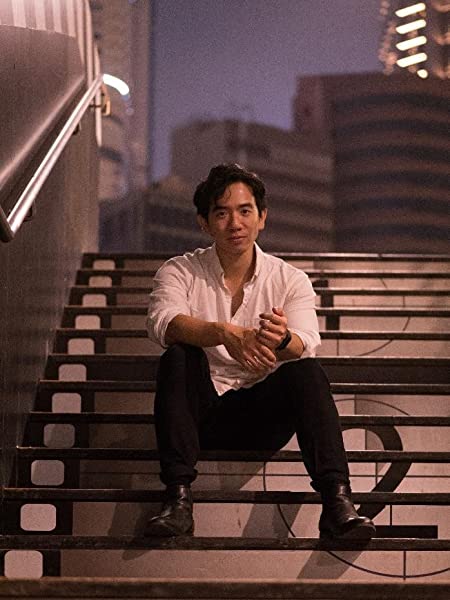
David Lui is a psychologist and writer based in Sydney. In both his practice and writing, he is dedicated to fighting modern slavery and human trafficking.

You can sign up to David’s newsletter here for further information and find him on Facebook.

Franklyn : No Ordinary Fox by Nick Jones

Regular readers of Linda’s Book Bag will know just how much I enjoy children’s books and I’m delighted to review one of their latest, Franklyn: No Ordinary Fox by Nick Jones. My enormous thanks to Nick for sending me a copy and for his patience in waiting for a review. Now, instead of putting out a review today, I should be off in Bryan the motorhome. So, there are some benefits of having holidays cancelled when you get Covid. You can fit in another book instead!

You’ll find my review of Nick’s One Night in Bear Town here and of Sarah’s Shadow here.

Published on 3rd March 2022 by Franklyn Financial Management , Franklyn: No Ordinary Fox is available for purchase here.

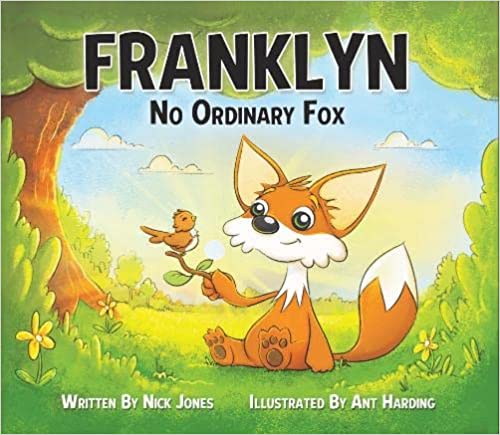
Franklyn: No Ordinary Fox

Franklyn is not like other foxes. He eats nuts and berries, is kind to all animals and would never knock your bin over!

Sadly, the other foxes don’t like his differences, and one day the local bully, Mitchell, forces him to leave town.

Franklyn’s one friend, Florence, is sad to see him go and worries that she’ll never see him again. But she won’t be worried for long – after all, Franklyn is no ordinary fox!

My Review of Franklyn: No Ordinary Fox

Franklyn: No Ordinary Fox is quite lovely. As I always expect from a book by Nick Jones, it has wonderful illustrations that are utterly charming and perfect for the target age group being child-like and engaging without being childish. The natural colours of browns and greens fit the environmental aspect of the story and the balance of text to image means younger or reluctant readers won’t be daunted by huge tracts of written word. In a similar manner to the illustrations, the language of Franklyn: No Ordinary Fox is pitch perfect. There’s challenging vocabulary that increases literacy but it is accessible through the context and illustrations.

As well as being a charming story in its own right, Franklyn: No Ordinary Fox has wonderful themes that educate children in a subtle and effective manner. It allows children to engage with nature and the environment as they learn about urban foxes and how they survive in the human world. It affords bullied and vulnerable children to identify with the concept of being bullied and with true friendship as Franklyn and Florence find friendship and happiness. Nick Jones also explores co-operation as Franklyn works with the rabbits and he shows just how much stronger and happier we are if we are kind and work with others rather than against them. There are hints of sustainability too, such as when Florence’s gifted plant from Franklyn becomes home to the chrysalis, so that I can imagine all kinds of projects springing from reading this book. I’d love to see children sowing seeds from the fruits they eat and seeing what happens for example, just like Franklyn does.

And Franklyn must be acknowledged for being a fantastic role model. He doesn’t rise to provocation from Mitchell, but responds with a smile and equanimity that diffuses difficult situations. His difference is celebrated in the book, giving status to children who themselves feel as if they don’t quite fit in. Indeed, I think the lessons of Franklyn: No Ordinary Fox are relevant to all of us – not just the children who are the target audience for the book. We could all do with using a smile in the face of aggression sometimes!

Franklyn: No Ordinary Fox is another smashing addition to Nick’s writing. I really recommend it.

About Nick Jones

nick jones

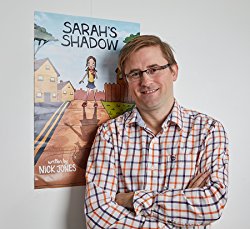
Nick Jones is an award-winning children’s author based in Congleton, Cheshire.

His first children’s picture book, Sarah’s Shadow, was published in December 2017. In 2018 the book won Best Picture Book in the international Readers’ Favorite book awards. It also received an honourable mention in the Purple Dragonfly Awards’ ebooks for children aged 6+, and Runner-Up in the Book Excellence Awards.

His second children’s picture book, One Night in Beartown, was published November 2020 and is set in Congleton where Nick lives. Inspired by the Bearmania event that took place in 2011, the story follows a bear-obsessed little girl who has a magical night to remember when her teddy bear Berisford, a bear statue and the Bearmania painted bears all come to life.

In December 2021 Nick published his third picture book, One Christmas in Beartown. Book critic Linda Hill gave the book five stars, saying: “One Christmas in Beartown is a wonderful story of how friendship can help us face our fears.”

Nick’s fourth book, Franklyn – No Ordinary Fox, was published in 2022 by Franklyn Financial Management. Nick also owns children’s book publishing company Full Media, which publishes his books and those by other children’s authors such as Emma Sandford, Jocelyn Porter and Izzy Rees.

You can follow Nick on Instagram and Twitter @nickjonesauthor and find out more on his website.

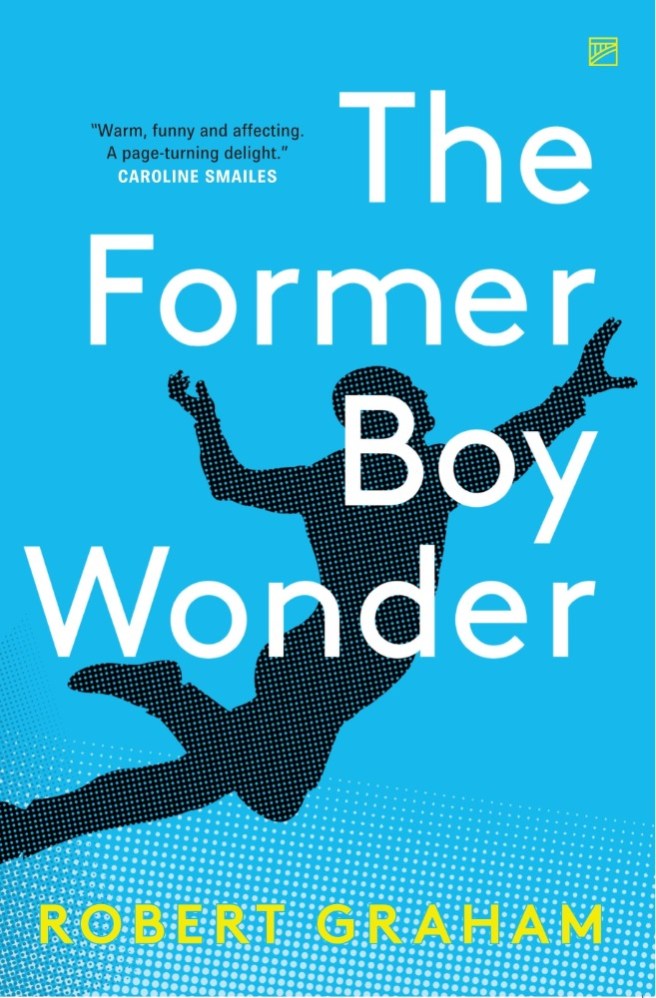
You and Your Son: A Guide For Fathers – A Guest Post by Robert Graham, Author of The Former Boy Wonder

Although I haven’t had time to read the book, I’ve heard such brilliant things about The Former Boy Wonder by Robert Graham, that I simply had to invite him onto Linda’s Book Bag. Luckily Robert agreed to share a guest post with us all today. I’m not a parent but my goodness Robert’s words sound like the sons of my friends!

The Former Boy Wonder is available for purchase here.

The Former Boy Wonder

The Former Boy Wonder is a bittersweet comedy that takes a sidelong look at first love, fathers and sons, and fidelity. With an irresistible plot and an impeccable sense of place and time, Robert Graham asks if it’s ever too late to grow up.

It’s a rainy August in Manchester and music writer Peter Duffy’s life is falling apart. He’s knocking on fifty, his career is flatlining, his marriage is failing, and his teenage son barely speaks to him. And then a friend from university days invites him to a party at the manor house where he met his first love, the dazzling Sanchia Page.

All the old gang are going to be there, and although it’s a long shot, maybe she will, too, which wouldn’t be helpful. Or would it?

*

You and Your Son: A Guide For Fathers

  1. An Adventure In The Big Wide World

Say your son is 4 and you invite him on an adventure in the big wide world. He will turn away, flee to his mother and hug her legs. His mother will look at you and shrug – a this-is-the-way-the-world-works shrug. Your feelings will be hurt. Man up.

  1. Cycling For Sons

Maybe your son is 5. Think about offering to teach him to ride a bicycle. It is possible he will say no. You might have to persuade him. Plan to not bring him back bruised and bleeding. His mother might not like that. Ask him if he would like to learn how to ride a bicycle. He will say, ‘No.’

  1. The Lure of the Multiplex

Your son is 6. Lower your sights and offer to take him on a trip to the cinema. Suggest Frozen. He will snort like a horse. Ask him instead if he would like to see Avengers: Endgame. He will say he would. His mother will say he would not. You will ask her why. She will look at you as if you are an idiot. Prepare to be an idiot. If not now, then soon.

  1. The Mystery of the Xbox

Now your son is 12. Buy him an Xbox. Make sure he keeps it downstairs and not in his bedroom. He will sit on the sofa wearing a headset and talking to himself. You do not know what is going on. Ask your wife. He is playing a game with his friend, she will explain, who is sitting on a sofa in his home, apparently talking to himself, too. You sort of understand this. He is playing a zombie game. You are not quite sure what a zombie is.  You will ask your son if he would like to play a FIFA game with you. He would not. You win him round, but soon realise that you have made a horrible mistake because a) you are not as quick-witted as you imagine you used to be and b) your fingers and thumbs are as much use to you as uncooked sausages. The game will quickly end. He will emit one of his speciality groans: The Despairing Moose.

  1. Everything You Need to Know About Zombies

Perhaps your son is 13. Now he likes The Walking Dead. You still don’t know what a zombie is. You ask him. He releases another signature groan: The Recently Crippled Hyena. If he is in bed one night, and your wife is out with a friend, do some research: watch an episode of The Waking Dead. It will not take long to know enough about zombies.

  1. Death Comes To Us All

You have been told that 14 is a difficult age, Even so, you hope for the best. Your father dies. With your son and his mother, you are driving to the funeral. You broach the subject of death. You say to your son that losing a loved one is hard. He will ask you when you are going to die. Release the authentic moan of the zombie. You have earned it.

  1. The Problem With Punk Rock

You buy your 15-year-old son an electric guitar. You forget that he will need an amplifier, which could go badly. You buy him the amplifier anyway. What’s the worst that could happen? One of the worst things that will happen is that he will play “Pretty Vacant”. About a hundred times a day, not necessarily in time, not necessarily using the right chords. Blame yourself: you were the one who bought him the guitar – and the amplifier. Complain to his mother about the noise. She will blame you: you were the one who played him records by the Sex Pistols, The Damned and The Clash. And all those other punk bands. Remember the wise words in one of your books on bringing up boys: your son needs to see you fail. You have failed. Feel good!

  1. You Are An Idiot

Your son could well be 17. He may be thinking about going to university – and doing a degree in Star Trek Studies. Say other options are available. History, for example. He will ask you if you are an idiot; what good would a degree in history be? You could tell him, but do not. He will say he is also looking at a course in Theme Park Management. You will ask him if he would be interested in an apprenticeship. He will emit the sound of The Expiring Chainsaw and tell you you are an idiot.

  1. Return to the Multiplex

Your son is 17, almost a grown-up. You think you should ask him if he wants to go and see a grown-up film with you. He gives you The Death Stare. You suggest a film. You say it is for grown-ups. You think this will flatter him into coming. Your conversation may go like this. Son: Is it about relationships? You: It is, but it’s funny. Son: So it’s a romcom. You: It’s funny but also sad. There’s a word for it. Son: Pathetic?

  1. The Power Of A Father’s Words

In your study of your role, you have learned that affirmation is key. The power of a father’s words to his child is immense: you can speak positive truths into your son’s life and give him confidence in who he is. You will say, ‘I’m always so proud of you, you know. ’He will say, ‘Shut up. ’You will remember the wise words of Spider-man’s Uncle Ben: With great power comes great responsibility. Be responsible. Instead of verbally abusing him, laugh as if you think what he said was funny. None of this is funny. Contemplate your mortality.

***

Isn’t that just brilliant? It’s made me even more determined to read The Former Boy Wonder just as soon as I can!

About Robert Graham

Robert Graham is the author of the novel Holy Joe; the short story collections The Only Living Boy and When You Were a Mod, I Was A Rocker; and the novella A Man Walks Into A Kitchen. His play about fans of The Smiths, If You Have Five Seconds To Spare, was staged by Contact Theatre, Manchester.

He is co-author, with Keith Baty, of Elvis – The Novel, a spoof biography; and, with Julie Armstrong, Heather Leach, Helen Newall et al, of The Road To Somewhere: A Creative Writing Companion; Everything You Always Wanted to Know About Creative Writing; and How To Write A Short Story (And Think About It).

Robert grew up in Northern Ireland and for most of his adult life has lived in Manchester. He teaches Creative Writing at Liverpool John Moores University.

For further information, visit Robert’s website. and follow Robert on Instagram.

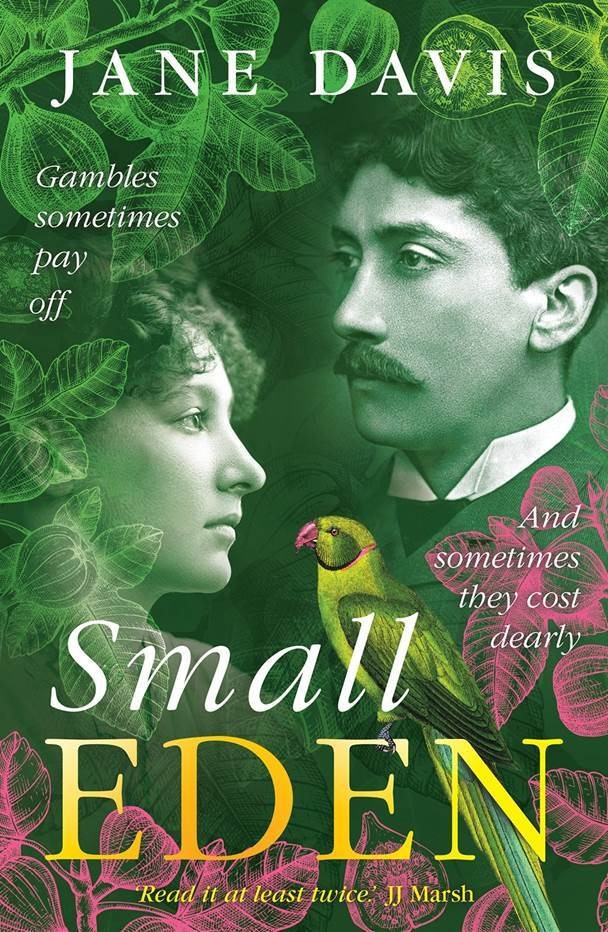
Who lives in a house like this?: A Guest Post by Jane Davis author of Small Eden

Having been so tied up with my local literary festival, I am devastated that I simply haven’t had time to read Small Eden by Jane Davis because I think it sounds exactly the kind of book I adore. In fact all Jane’s writing appeals to me. However, having learnt that Jane actually lives in the house that is the setting for Small Eden I simply had to invite her to tell us all about it and I’m delighted to share that guest post today.

Jane also appeared here on Linda’s Book Bag almost four years ago when we stayed in to chat about her novel Smash All the Windows.

Small Eden was published on 30th April 2022 and is available for purchase here.

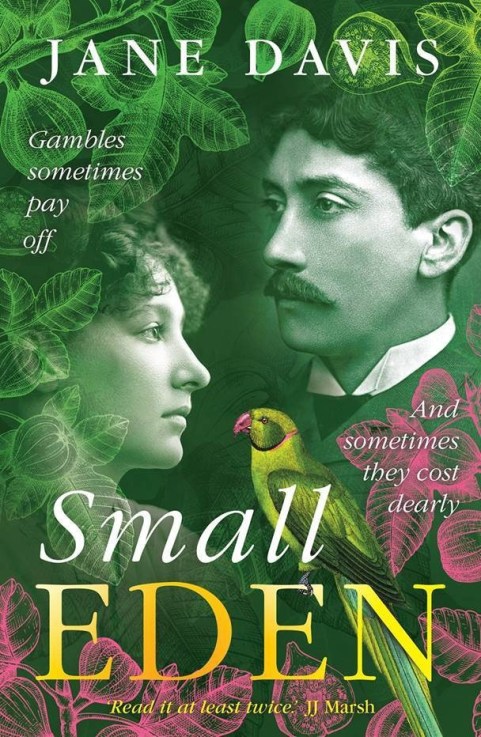
Small Eden
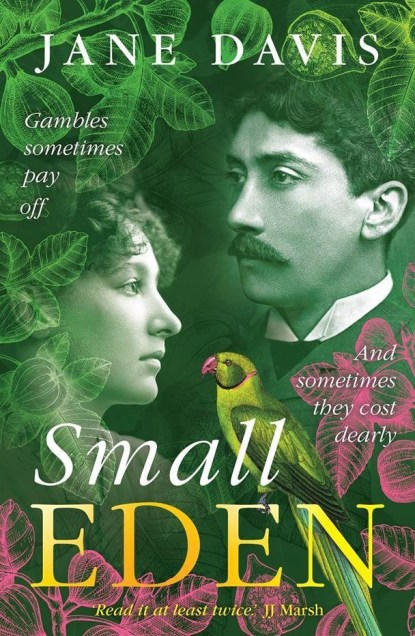
A boy with his head in the clouds. A man with a head full of dreams.

With an eye for precise detail balanced by a sweeping imagination, this beautifully constructed book is built on deep foundations.’ – JJ Marsh, author of the Beatrice Stubbs Series

1884. The symptoms of scarlet fever are easily mistaken for teething, as Robert Cooke and his pregnant wife Freya discover at the cost of their two infant sons. Freya immediately isolates for the safety of their unborn child. Cut off from each other, there is no opportunity for husband and wife to teach each other the language of their loss. By the time they meet again, the subject is taboo. But unspoken grief is a dangerous enemy. It bides its time.

A decade later and now a successful businessman, Robert decides to create a pleasure garden in memory of his sons, in the very same place he found refuge as a boy – a disused chalk quarry in Surrey’s Carshalton. But instead of sharing his vision with his wife, he widens the gulf between them by keeping her in the dark. It is another woman who translates his dreams. An obscure yet talented artist called Florence Hoddy, who lives alone with her unmarried brother, painting only what she sees from her window…

Life as it is, in all its terrible beauty.’ – Jean Gill, author of Historical Fiction series The Troubadours Quartet

Who lives in a house like this?

A Guest Post by Jane Davis

Some writers take expensive research trips. Not this one. For my tenth novel, Small Eden, I took as my inspiration the house I have lived in for the past twenty-two years. It is not the first time I have written about my house. In the first chapter of An Unknown Woman, I burnt it to the ground. Known locally as ‘the gingerbread house’ it is a house that seems to demand to be written about.

When we set about looking for a property, we drew up a checklist. There was an upper price limit. A minimum number of bedrooms. It had to be within walking distance of a train station with links to London. It had to have off-street parking. Gardens, front and back.

These were the days before Rightmove and Zoopla. What you did was register with the estate agents located in the area you had stuck a pin in, and keep an eye on ads in the local papers.

***

“In the end, Robert selects his winning entry on the strength of the drawings for the buildings. The land he has come to know, but the nature of the structures he might lay foundations for has evaded him. Here they are. A charming T-shaped cottage will sit on a raised area to the left of the gardens: a chimney at its heart, steep roofslopes, dormer windows facing north and south and deep overhanging eaves to offer shelter from the elements. Occupied by a gardener-cum-manager, it will double as his ticket office. There is to be a splendid half-timbered pavilion where refreshments will be served to those watching the tennis, an ornate glasshouse and a wrought-iron aviary. Although the buildings will be set wide apart, common design elements will lend the scheme a symmetry, a flow.”

***

Our appointment at Rossdale was not with an estate agent but with the vendors, a couple who had decided to retire – somewhere on the south coast, I forget. We arrived in separate cars, having both driven straight from work. I noticed immediately that the road was a cul-de-sac, because I had grown up in a cul-de-sac and recognise that sense of enclosure and safety. I also noticed that the cottage was completely different from any of the houses around it. Victorian railway workers’ cottages at the end of the road gave way to pairs of semi-detached houses dating from the late 1920s and detached bungalows which seemed to have been built later. We stood outside, under the covered porch, with its Victorian black and white tiles and looked up at the struts under the eaves. There was (and still is) no doorbell. We knocked.

***

“Approached via a broad, verdant expanse and a stepped path, the cottage stands alone, to the left of centre of the gardens. As Robert surveys the scene, it strikes him how right it looks. He stands under the eaves and flattens his hands to the brick walls – solid and true, he has made them a reality. He cranes his neck to better examine the wooden struts, each exactly as it ought to be. It isn’t just that the building is perfectly proportioned, though that must be part of it. From the sheltered porch with its black and white tiles – perhaps a bench should go here – he can visualise the rest; the tennis courts are already marked out, the concrete slab on which the pavilion will sit has been poured. And there is the beginning of the path that will meander through the alders and oaks, where his Thomas and his Gerrard will stumble on hidden sculptures.”

“Mr Cooke?”

Caught up in thought, Robert hadn’t heard anyone approach. The speaker is a woman in middle age. His first impression is that there’s something of Mrs Dwyer about her. “Good day to you, madam.”

“Mr Reynolds said I might take a look inside.”

“Am I speaking to Mrs Reynolds?”

“For my sins. That is, being Mrs Reynolds, not speaking to you.” She’s endearingly nervous.

He alters his view of Frank to accommodate the person standing in front of him. “I’m delighted to meet you at long last. Shall I show you around?”

“Thank you all the same, but I doubt I can get lost.”

***

The entrance hall had standing space for four adults, but only just. “The house talks to us,” the wife told us. She did most of the talking, as I recall. The husband was on hand mainly to agree. And despite wanting to retire elsewhere, she seemed to be under its spell. They had brought three boys up in the cottage, the wife told us as she led us upstairs. (Dark brown stair carpet, anaglypta wall paper.) Exactly where they put them, I wasn’t quite sure, because both of the bedrooms had sloped ceilings. I struggled to imagine where you might put bunk beds. “I don’t need to sell the house to you. It will sell itself,” she said as she opened a door into a triangular-shaped cupboard, which turned out to be the upstairs toilet. “The ‘main’ bathroom is downstairs,” she explained, and so it was, accessed through the kitchen, a room big enough for a shower, basin and toilet, but only just. The sitting room and dining rooms were smaller than the rooms in my flat, which formed the ground floor of a substantial Edwardian property. But this was a house. A detached house.

The garden had clearly been loved. I was what I call a proper English cottage garden, secluded, with trees to the left, and at what appeared to be the end of the garden, and a garage to the right. There was a pond filled with koi carp and an aviary filled with canaries, a greenhouse. Through a rose-covered arch was the final twelve feet of garden where we found a climbing frame, evidence of the three boys who spent their childhoods here.

I asked about the history of the place. The wife showed us a reproduction of a woodcut depicting Edwardian ladies playing a game of double in front of the cottage. In the background is a tower which is clearly part of St Philomena’s school, originally a grand manor house built in the early eighteenth century by Edward Carleton. She told us that they had bought the house from a retired sea captain who told them it was the gatehouse for the estate, and this was certainly the received wisdom, but it didn’t ring true. Even before we moved in, the house was speaking to us.

It was utterly charming and completely impractical and the surveyor’s report highlighted a number of issues that were going to cost a small fortune to fix. But it did have off-road parking, and so we bought it.

Some time after moving in, we joined a guided tour of St Philomena’s manor house, its hermitage and the water tower. We asked the guide – a local historian – about the possibility that our cottage was the original gatehouse for the estate and were told no. But he was intrigued enough by what we said to do some research of his own, and what he had to tell us was far more interesting. It was built (as far as he was able to ascertain) by a Mr E Cooke as the ticket office for pleasure gardens which opened at the turn of the century. What led a man to embark on such an endeavour after the last of London’s pleasure gardens had failed isn’t written in any history books. It is clear from Ordnance survey maps that Mr Cooke didn’t give up easily. There was a gradual selling off of plots, the creep of housing, the loss of a stand of trees. My instinct was that something in his past had driven him, something personal, and it was that same thing that made him so reluctant to let go of his dream. Of course, had our research been more successful, there would have been no story to write.

*****

Oh my word! Thank you so much Jane. You’ve made me determined to read Small Eden. I need to find out more after that wonderful guest post.

About Jane Davis
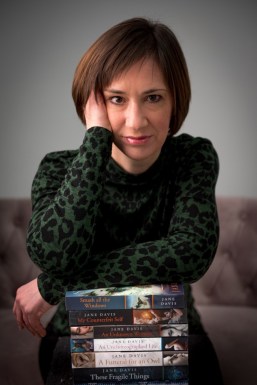
Jane Davis’s first novel, Half-Truths and White Lies, won a national award established with the aim of finding the next Joanne Harris. Further recognition followed in 2016 with An Unknown Woman being named Self-Published Book of the Year by Writing Magazine/the David St John Thomas Charitable Trust, as well as being shortlisted in the IAN Awards, and in 2019 with Smash all the Windows winning the inaugural Selfies Book Award. Her novel, At the Stroke of Nine O’Clock was featured by The Lady Magazine as one of their favourite books set in the 1950s, selected as a Historical Novel Society Editor’s Choice, and shortlisted for the Selfies Book Awards 2021.

Interested in how people behave under pressure, Jane introduces her characters when they are in highly volatile situations and then, in her words, she throws them to the lions. The themes she explores are diverse, ranging from pioneering female photographers, to relatives seeking justice for the victims of a fictional disaster.

Jane Davis lives in Carshalton, Surrey, in what was originally the ticket office for a Victorian pleasure gardens, known locally as ‘the gingerbread house’. Her house frequently features in her fiction. In fact, she burnt it to the ground in the opening chapter of An Unknown Woman. In her latest release, Small Eden, she asks the question why one man would choose to open a pleasure gardens at a time when so many others were facing bankruptcy?

When she isn’t writing, you may spot Jane disappearing up the side of a mountain with a camera in hand.

You can find out more on Jane’s website, on Facebook and Pinterest and you can follow Jane on Twitter @janedavisauthor.

You’ll find all Jane’s books here.

Chatting with Lizzy Barber about Out of Her Depth

It’s an absolute pleasure to welcome the fabulous Lizzy Barber to Linda’s Book Bag for the blog tour for Lizzy’s Out of her Depth. I’m thrilled that Lizzy has agreed to stay in with me to chat about her book. My huge thanks to the team at EdPr for inviting me to participate and sending me a copy of Out of her Depth. Let’s find out more:

Staying in with Lizzy Barber

Welcome to Linda’s Book Bag Lizzy. Thank you for agreeing to stay in with me.

It’s lovely to meet you – or, as they say in Italy, piacere!

Tell me, as if I didn’t know, which of your books have you brought along to share this evening and why have you chosen it?

I’ve brought Out of Her Depth, my sun-drenched psychological thriller about first love, toxic friendships and alleged murder set against the gorgeous backdrop of Florence.

I love a psychological thriller. What can we expect from an evening in with Out of Her Depth?

I hope you will get sucked into to the world of privilege, back-stabbing and bed-hopping as much as my protagonist, Rachel.

Oo. That sounds brilliant. I love the setting too.

Atmosphere is so important to me as a writer, and I want you to be transported to the heat of the Tuscan hills and pulled along by the dark narrative. It really is a perfect Summer read.

What else have you brought along and why have you brought it? 

I am a huge fan of a dinner party, especially one with a theme – so I think here we’re going to have to go all out Italian here. I’m a keen cook (when I’m not writing, I work in restaurant brand and marketing), so I would bring along my pesto recipe, and some homemade schiacciata all’uva, a Tuscan focaccia stuffed with grapes.

Oh. Now you’re my kind of guest Lizzy! You can come again. But why Florence and Italy at the heart of Out of Her Depth?

I grew up spending every Summer in a small town on the Tuscan coast and lived in Florence for a stint when I left school (the experience of which inspired Out of Her Depth), so Italian food is close to my heart. Of course, we’d have to top the evening with some negronis (don’t worry, I’ll pre-batch them and bring them in a flask), and tail it with cantuccini biscuits dipped in Vin Santo, a sweet Italian dessert wine. If the weather’s nice, maybe we can even dine al fresco? Salute!

Salute indeed! Thanks so much for being here Lizzy to tell us a bit about Out of Her Depth. I think it sounds a perfect beach read and I’m delighted to have it on my TBR.

Now, you serve up the food on the patio and I’ll give Linda’s Book Bag readers a few more details:

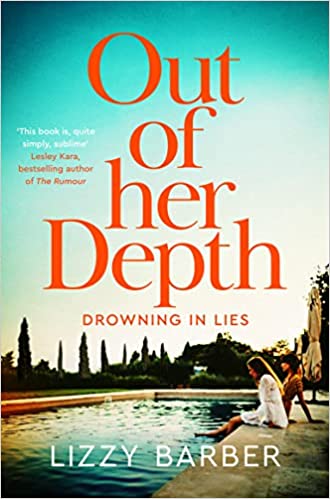
Out of her Depth

Patricia Highsmith meets E. Lockhart in Out of her Depth – a simmering summer thriller about the choices you make as a teenager, and what happens when they go horribly wrong.

There are summers that could change your life.
There are summers that could end it.

Meet Rachel.
An unassuming young woman from a quiet London suburb.

Picture the scene:
A summer job at the beautiful Villa Medici in the Tuscan hills.
A group of glamorous teenagers, used to a life of privilege.
Lavish parties, heady sun-soaked days, backstabbing and bedhopping.

Until someone goes too far.
And nothing will ever be the same.

Published by Pan MacMillan on 28th April 2022, Out of her Depth is available for purchase through the links here.
About Lizzy Barber

Lizzy Barber, author of Out of her Depth, is a London-based author living in Islington with her husband George. She read English at Corpus Christi College, Cambridge.

She has worked in acting and film development, and has spent the last eight years working in the restaurant business with her brother Jamie, heading up their brand and marketing department. They have a small group of restaurants in Mayfair: Haché, Hush and Cabana.

You can follow Lizzy on Twitter @ByLizzyBarber and Instagram or visit her website for further information.

There’s more with these other bloggers too:

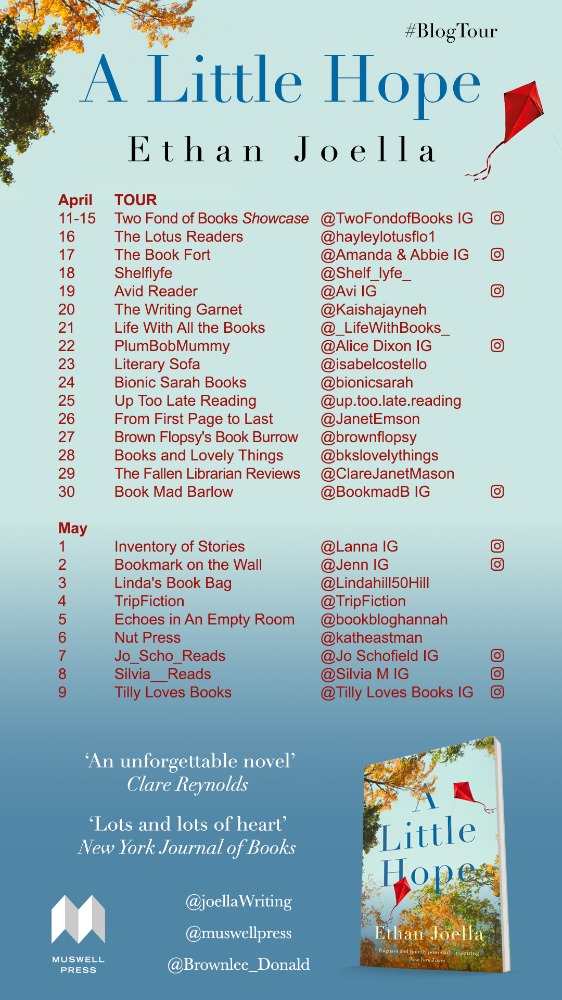
A Little Hope by Ethan Joella

My enormous thanks to Fiona Brownlee for inviting me to participate in the blog tour for A Little Hope by Ethan Joella. I’m delighted to share my review as part of the tour today.

Published by Muswell Press on 28th April 2022, A Little Hope is available for purchase through the links here.
A Little Hope

A powerful debut from a gifted new voice, Ethan Joella’s writing has been compared to that of Anne Patchett, Elizabeth Strout and Matt Haig.

Set in an idyllic Connecticut town over the course of a year, A Little Hope follows the intertwining lives of a dozen neighbours as they confront everyday desires and fears: an illness, a road not taken, a broken heart, a betrayal.

Freddie and Greg Tyler seem to have it all: a comfortable home at the edge of the woods, a beautiful young daughter, a bond that feels unbreakable. But when Greg is diagnosed with a rare and aggressive form of cancer, the sense of certainty they once knew evaporates overnight. Meanwhile, Darcy Crowley is still coming to terms with the loss of her husband as she worries over her struggling adult son, Luke. Elsewhere, Ginger Lord returns home longing for a lost relationship; Ahmed Ghannam wonders if he’ll ever find true love; and Greg’s boss, Alex Lionel, grapples with a secret of his own.
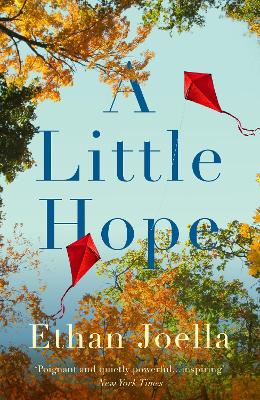
 Celebrating the grace in everyday life, this powerful debut immerses the reader in a community of friends, family, and neighbours and identifies the ways that love and forgiveness can help us survive even the most difficult of life’s challenges.

My Review of A Little Hope

A story of interconnected people.

I don’t actually want to review A Little Hope because I lack the skills to say what a wonderful book it is and I fear sullying the quality of Ethan Joella’s writing. A Little Hope is, quite simply, astonishingly good. I loved this book unreservedly.

A Little Hope is like the most perfectly curated set of exquisite short stories I’ve ever read and yet it’s completely coherent as a single narrative too. Ethan Joella knows with exceptional, breath-taking, ability how the quiet moments are the most profound; how one word can convey a thousand meanings; how the brush of a hand can mean the difference between hope and despair so that reading this book truly is life affecting.

There’s quite a large cast of characters and usually my heart sinks at trying to keep everyone in my head when there are several people to read about. Not so in A Little Hope. I found myself so completely drawn in to the narrative that it was as if I’d known everyone all my life. I related to some, such as Greg and Iris, more than others because their experience mirrors that of people in my own life, but even those like Luke were fantastically clear, knowable and vivid. I experienced every emotion they experienced in a read that is a celebration of humanity in all its triumphs, failures and reality.

Ethan Joella explores emotion and human reaction to the ordinariness of life so beautifully. He illustrates how we are not simply the result of our experiences, but that we have power to choose how to respond to those events, and, even when our decisions might be erroneous, there is always hope. What A Little Hope does is to make the reader feel connected to others in a sublime and humane manner that I found completely compelling.

A Little Hope isn’t a book to read. It’s a book to experience with every emotional fibre of your being. Ethan Joella’s writing is sparse, mesmerising and deeply, deeply affecting so that I’m not entirely sure I’ll recover from reading A Little Hope. Don’t miss it.

About Ethan Joella

Ethan Joella teaches English and psychology at the University of Delaware and leads community writing workshops. His work has appeared in River Teeth, The International Fiction Review, The MacGuffin, Delaware Beach Life, and Third Wednesday. Lives in Rehoboth Beach, Delaware with his wife and two daughters.

You can follow Ethan on Twitter @JoellaWriting, find him on Instagram or visit his website. There’s more with these other bloggers too: