Telling Tales Out of School by Chris Lowe

I cannot begin to tell you what an important blog post this is for me. You see, the author of Telling Tales Out of School, Chris Lowe, was my head teacher at Prince William School (PWS) in Oundle where I attended until 1979. And as Chris reminded me recently in an email, I was the first PWS student to go off to university to read English so both Chris and the school have a very special place in my heart. (Chris also said he remembered me as a ‘rather engaging teenager’ but I don’t know how true that is!) Those who know me well will be aware that I still see my English teacher of the time, John Rhodes, very regularly too as he had such an influence on my life.

That makes Telling Tales Out of School special enough, and this weekend sees me attending the fiftieth anniversary of my old school’s incarnation after the comprehensive system was brought in to education in England.

However, the most important aspect of Telling Tales Out of School is that all proceeds from the book go to charities enhancing the lives of young people. In particular, Telling Tales Out of School supports the James Rutterford Trust. The James Rutterford Trust was set up in memory of a former PWS student tragically killed in a car accident. It was one of the trustees, Jenny Blount (tour de force behind this weekend’s reunion and my former French A’Level teacher with whom I still keep in touch) who invited me to review Telling Tales Out of School. I could not have been happier to do so.

It’s not just me reviewing Telling Tales Out of School. Here are a couple of folk Chris also taught, whom you might just recognise, sharing their thoughts:

Former PWS student Nev Fountain, writer for the BBC Dead Ringers and Have I got News for You and News Quiz, and also staff writer on Private Eye:

The ultimate survival guide for Teachers.  Funny and Informative.  A titter on every page! 

And a comment from Colin Sell, the pianist on the BBC long-running panel game spoof I’m Sorry I Haven’t A Clue:

Telling Tales Out Of School is full of splendid anecdotes of pupils and teachers told by a Man Who Has Been There. Chris Lowe’s Telling Tales Out of School is an enduring, chucklesome treat for anybody who’s ever been to school – in any capacity. A bedside, witty, dip-into-it must!

Telling Tales Out of School is available for purchase here.

Telling Tales Out of School
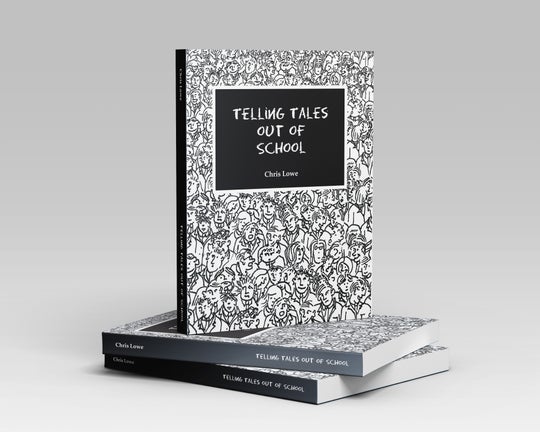
Chronicling the tales he had collected throughout his career in education started as a lockdown pastime for Chris Lowe. The end result is Telling Tales Out of School: fifty tales to mark the fiftieth anniversary of Prince William School, Oundle. The Tales are all based on true events or stories told to Chris by fellow teachers: stories about growing up, about learning, teaching and coping together.

All proceeds from sales of the book will be donated to the James Rutterford Trust, which is targeted at families who need financial support to enable their children at PWS to take part in school activities, school trips, to provide equipment to aid their study or to support out-of-hours school activities.

Please visit tellingtales.bigcartel.com for more information about the project and to buy Telling Tales Out of School.

My Review of Telling Tales Out of School

A collection of fifty school based stories.

What fun Telling Tales Out of School is. I read the stories in the order they are presented and although they have a unifying Chaucerian style pub chat between Marcus Brampton and his friends in the telling, they would equally well reward dipping into at random because they stand alone and create memories in the reader of their own school experience. Indeed, much of my own teaching past was brought back to life vividly through these tales, as were some of the youngsters I’ve taught, giving a universality to the book. Telling Tales Out of School is a book that will appeal to anyone who has had any contact with education in any form!

I loved the style employed by Chris Lowe in Telling Tales Out of School. There are literary references that I enjoyed spotting but this is by no means an ‘exclusive’ book only for those with a literary background or who attended the author’s school. Rather, the style is flowing and engaging and the more memorable and appealing characters are the rogues and miscreants (not just the students either) between its pages. The authorial voice is very reminiscent of P.G. Wodehouse, especially in the direct speech which has the effect of bring characters to life incredibly vividly. There’s so much humour here that I found myself snorting aloud at some of the incidents and comments and again having memories of my own school life and teaching career brought flooding back. This has the effect of making Telling Tales Out of School both entertaining and incidentally quite poignant because it reminds the reader of who they were, their past life and of people and moments they had forgotten.

There’s a visual quality to Telling Tales Out of School that I hadn’t expected. When I picked it up I wasn’t aware that there would be cartoon style drawings by Chris Ellard and Steve Lancaster that are as witty and appealing as the text and complement it perfectly. However, it is the writing that creates images in the reader’s mind so evocatively and I’m not sure I’ll be able to look at a pantomime style donkey in quite the same way again! Indeed, I think Telling Tales Out of School would make a fantastic set of short television plays because there’s humour, action and fabulous dialogue just begging to be used.

Wit and humour aside, Telling Tales Out of School has a more profound impact too. Not only does it support a charity, the James Rutterford Trust, but Chris Lowe’s tales illustrate our need for human connection, showing how false assumptions and preconceptions can be wide of the mark. Here, through the persona of Marcus, the reader is gently taught that compassion, understanding and not a little wiliness and cunning can go an awful long way in improving the lives of others. I finished Telling Tales Out of School most royally entertained, but also somewhat humbled and moved. In a curious way reading Telling Tales Out of School has restored my faith in human nature.

Telling Tales Out of School is a smashing meander down each reader’s individual memory lane and I thoroughly enjoyed it. I really recommend it.

About Chris Lowe
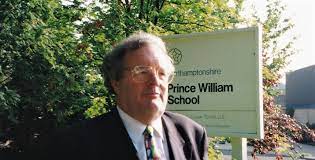
When Chris Lowe retired in 1999 after 29 years as principal of Prince William School, a profile in the Times Educational Supplement said he was the longest serving secondary head of a single school in the country, and “might also be the most famous head in the world”.

During his career, Mr Lowe sat on the board of the Royal Opera House, was president of the UK Secondary Heads Association, and visited 43 countries as one of the founders of the International Confederation of Principals. He was awarded a doctorate, a fellowship, a professorship in Australia, and a CBE by the Queen.

You’ll find Telling Tales Out of School on Twitter @TalesPws and Instagram.
Staying in with Alan Jones

All kinds of books are brought to my attention and it grieves me that I simply cannot read them all. This is exactly what has happened with Alan Jones’s latest novel as I’ve been hearing fantastic things about it from my fellow bloggers. As a result I simply had to ask Alan to stay in with me to chat about the book and I’m thrilled to have it on my TBR. Let’s hope it’s not too long until I can read it. Here’s what happened when Alan dropped by:

Staying in with Alan Jones

Welcome to Linda’s Book Bag Alan and thank you for agreeing to stay in with me.

Thanks a million for having me over, Linda.

Tell me, which of your books have you brought along to share this evening and why have you chosen it?

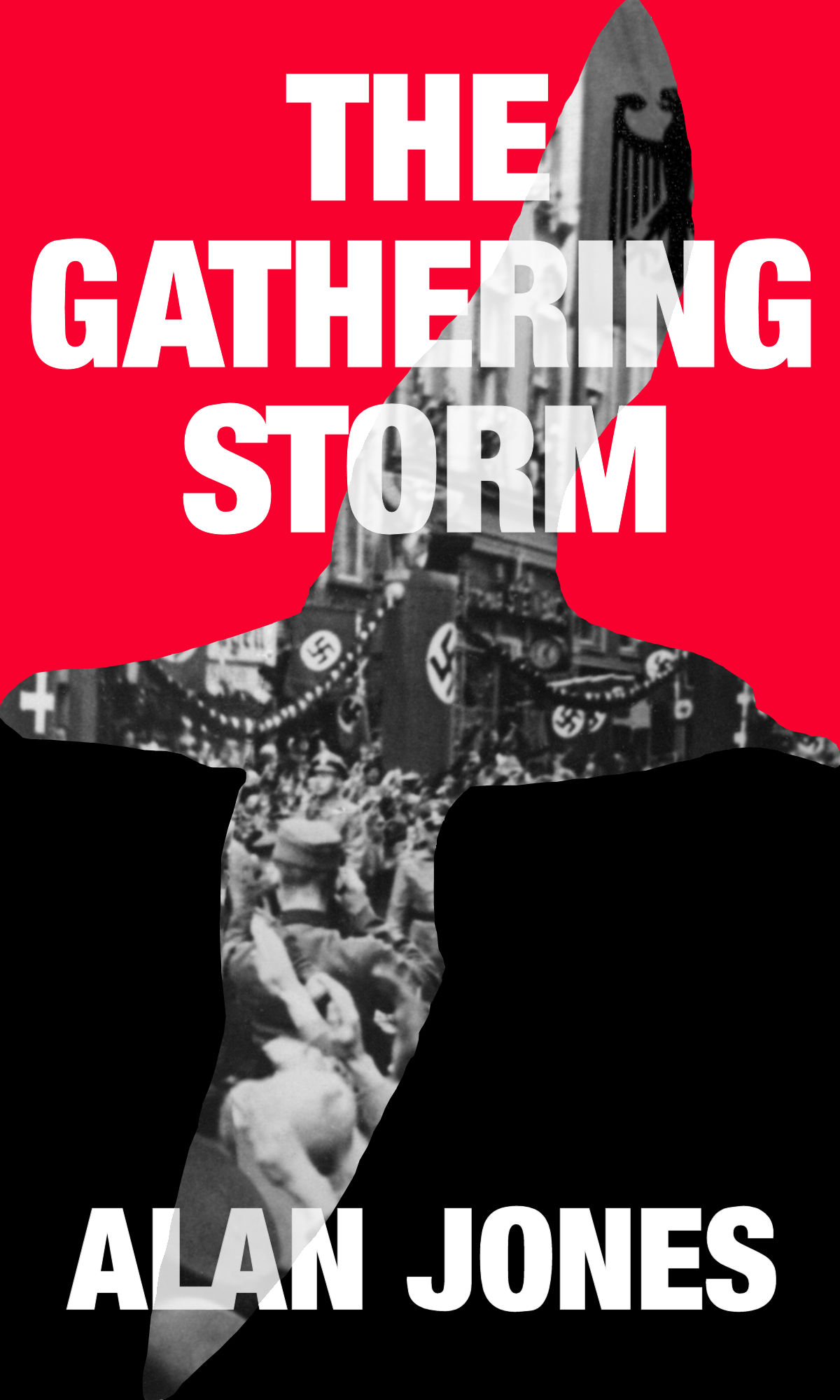
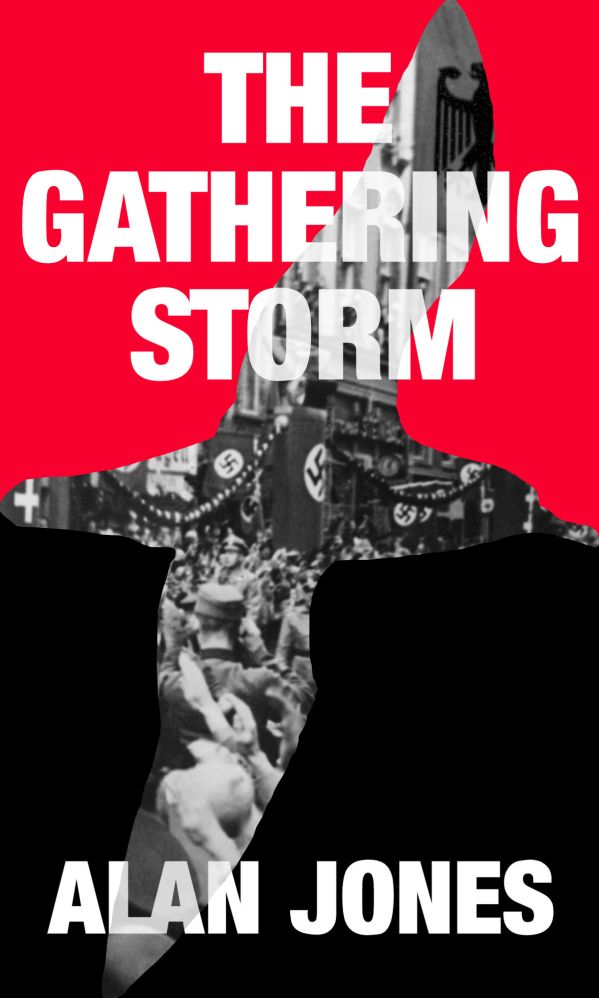
I’ve chosen to bring along The Gathering Storm, the first book in The Sturmtaucher Trilogy published on the 19th of August 2021 as an eBook, with a paperback to follow early in 2022. It is a Holocaust story based in the naval city of Kiel in Northern Germany.

Why have I chosen it? It’s a completely new genre for me and is the first part of a story that has been five years in the making, and by far the most heavily researched of the books I have written so far.

I’ve been fascinated and horrified in equal measure by the Holocaust since reading ‘Diary of a Young Girl’ by Anne Frank as a ten or eleven year old and, although I’ve read extensively about this most terrible period in history, the deeper I researched, the more I realised I didn’t know.

Oh I understand that completely Alan. The era fascinated and horrifies me in equal measure. It was Anne Frank’s writing and visiting her hiding place in Amsterdam that hooked me too.

I’d also wanted to write a book that involved sailing, and the sea, and the germ of an idea came to me when I searched for locations for the story and found that, not only was Kiel the biggest German Naval base, but it was also the centre for German sailing, and would host the Olympic sailing events in 1936.

Five years later, and a lot of things have happened during that time; I retired after 38 years as a mixed-practice vet, I acquired four beautiful grandchildren, I became an RNLI lifeboat coxswain, and I have written a trilogy that I am very proud of, no matter how successful it is.

Goodness me. You don’t hang about do you? How fabulous to include sailing in your writing when it’s part of your new life.

What can we expect from an evening in with The Gathering Storm?

It will be a sombre evening; the slow erosion of the rights of Germany’s Jews and the cruel indifference of their fellow citizens can make for uncomfortable reading, but you will get to know two German families intimately, affected by the National Socialists’ abhorrent policies in very different ways – The Kästners, a successful military family who prosper under Nazi military expansion and economic prosperity, and the Nussbaums, a Jewish family who work for them as domestic servants, who find life increasingly strained.

Actually, Alan. I think The Gathering Storm illustrates just how little we have learnt from history. Events in recent history seem to me to bear an uncanny and uncomfortable similarity.

You can expect a bit of sailing – it is what the Kästner family do in their free time, and also a smattering of German well-to-do society, of ladies who lunch and host charitable events to help the poor, of lakeside houses and grasping, self-serving politicians. There’s fascism, and hate, and a nation consumed by its place in the world but also Jewish communities, who try and stick together and help each other.

This sounds utterly fascinating. I love social history and I know I’ll be totally engaged by The Gathering Storm when I finally get round to reading it.

And there are one or two individuals who see the wrong in what is happening, and stand up for the dispossessed, no matter the danger to them or their families.

I always wonder what I might do in a similar situation. I fear I might not be as brave…

What else have you brought along and why have you brought it?

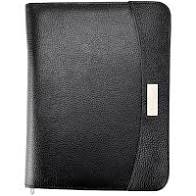
I’ve brought some Bratwurst, Bratkartoffeln and Sauerkraut, a hearty German dish of sausages and fried potatoes with pickled cabbage, some Rugelach for dessert, and a few bottles of German beer and a bottle of Schnapps to wash it down, and a large black folio containing just some of the maps, charts, and documents that I used so extensively during the writing of the book.

Hmm. I think I might need that beer as I’m not very keen on Sauerkraut…

Once we’ve eaten, I’ll apologise for being a map nerd, obsessed with documents and old newspapers, then I’ll open the folio and I’d lay out in front of you the beautiful wartime maps and 1930’s charts, and some of the key documents that starkly illustrate the descent into horror that brought Europe to its knees in the decade the National Socialists were in power.

Oh, no need to apologise (except for the sauerkraut) as I love all this kind of history.

I’ll show you the telegram sent to police forces around Germany about Kristallnacht, the minutes of the Wannsee conference where Himmler, Heydrich and Eichmann revealed their ‘Final Solution’, and a wall chart showing the various permutations of Jewishness as prescribed by the Nuremberg Race Laws.

Isn’t it sobering to see ‘man’s inhumanity to man’ so vividly?

The maps will be equally sobering, despite the Schnapps. The street plan of Kiel, showing Gestapo headquarters, the town hall and square, bedecked by Nazi flags, and the shipyards that produced warships and U-boats in incredible number for the Third Reich. There’s the war maps, the maps of the Greater Germany showing the German Reich rapidly taking grip of most of Europe.

In contrast, the sea charts reveal the Kästner’s yachting playgrounds, of trips to Danish ports and the Frisian islands in the North Sea, where the happenings at home can almost be forgotten.

I’ll show you the newspapers, German and British, a narrative of newsprint that documents the war years, and those leading up to it.

And when we’ve finished, we’ll pray that nothing like it ever happens again.

We will indeed Alan although sadly I don’t think those prayers are being answered. Thank you SO much for staying in with me to chat all about The Gathering Storm. I think it sounds fabulous and cannot wait to read it. Now, you pour the Schnapps, open your folder, and I’ll give blog visitors a few more details about The Gathering Storm:

The Gathering Storm

The Gathering Storm: Book 1 in the Sturmtaucher Trilogy, a powerful and compelling story of two families torn apart by evil.

Kiel, Northern Germany, 1933. A naval city, the base for the German Baltic fleet, and the centre for German sailing, the venue for the upcoming Olympic regatta in 1936.

The Kästners, a prominent Military family, are part of the fabric of the city, and its social, naval and yachting circles. The Nussbaums are the second generation of their family to be in service with the Kästners as domestic staff, but the two households have a closer bond than most.

As Adolf Hitler and his National Socialist Party claw their way to power in 1933, life has never looked better for families like the Kästners. There is only one problem.

The Nussbaums are Jews.

The Sturmtaucher Trilogy documents the devastating effect on both families of the Nazis’ hateful ideology and the insidious erosion of the rights of Germany’s Jews.

When Germany descends ever deeper into dictatorship, General Erich Kästner tries desperately to protect his employees, and to spirit them to safety.

As the country tears itself apart, the darkness which envelops a nation threatens not only to destroy two families, but to plunge an entire continent into war.’

Published on 19th August 2021, The Gathering Storm is available for purchase here.

About Alan Jones

Alan Jones is a Scottish author with three gritty crime stories to his name, the first two set in Glasgow, the third one based in London. He has now switched genres, and his WW2 trilogy will be published from August to December 2021. It is a Holocaust story set in Northern Germany.

He is married with four grown up children and four wonderful grandchildren.

He has recently retired as a mixed-practice vet in a small Scottish coastal town in Ayrshire and is one of the coxswains on the local RNLI lifeboat. He makes furniture in his spare time, and maintains and sails a 45-year-old yacht, cruising in the Irish Sea and on the beautiful west coast of Scotland. He loves reading, watching films and cooking. He still plays football despite being just the wrong side of sixty.

His crime novels are not for the faint-hearted, with some strong language, violence, and various degrees of sexual content. The first two books also contain a fair smattering of Glasgow slang.

He is one of the few self-published authors to be given a panel at the Bloody Scotland crime fiction festival in Stirling and has done two pop-up book launches at previous festivals.

He has spent the last five years researching and writing the Sturmtaucher Trilogy.

To find out more, visit Alan’s website, follow him on Instagram and Twitter @alanjonesbooks, or find him on Facebook.

All The Names Given by Raymond Antrobus

My enormous thanks to Alice Dewing at Picador for sending me a copy of All The Names Given by Raymond Antrobus in return for an honest review.

I was delighted to receive All The Names Given as I previously reviewed (here) Raymond Antrobus’ Perseverance when I was a shadow judge for The Sunday Times/University of Warwick Young Writer of the Year Award in 2019. You can read about that experience here. Perseverance won the award in 2019.

All The Names Given is published by Pan Macmillan imprint Picador today, 2nd September 2021, and is available for purchase through these links.

All The Names Given

Raymond Antrobus’s astonishing debut collection, The Perseverance, won both Rathbone Folio Prize and the Ted Hughes Award, amongst many other accolades; the poet’s much anticipated second collection, All The Names Given, continues his essential investigation into language, miscommunication, place, and memory. Beginning with poems meditating on the author’s surname – one which shouldn’t have survived into the modern era – Antrobus then examines the rich and fraught history carried within it. As he describes a childhood caught between intimacy and brutality, sound and silence, and conflicting racial and cultural identities, the poem becomes a space in which the poet can reckon with his own ancestry, and bear witness to the indelible violence of the legacy wrought by colonialism. The poems travel through space, shifting between England, South Africa, Jamaica, and the American South, and move fluently from family history, through the lust of adolescence, and finally into a vivid and complex array of marriage poems — with the poet older, wiser, and more accepting of love’s fragility.

Throughout, All The Names Given is punctuated with [Caption Poems] partially inspired by Deaf sound artist Christine Sun Kim, which attempt to fill in the silences and transitions between the poems, as well as moments inside and outside of them. Direct, open, formally sophisticated, All The Names Given breaks new ground both in form and content: the result is a timely, humane and tender book from one of the most important young poets of his generation.

My Review of All The Names Given

A volume of forty poems.

My word. All the Names Given may be a slim volume but it packs the kind of punch that leaves the reader reeling. Both personal and political, intimate and global, these poems by Raymond Antrobus illustrate perfectly how history and the present impact the individual so that I felt all manner of emotions in reading them. The poet has made me understand my privileged life and to appreciate it much more clearly.

As well as being emotionally moved, I was educated by All the Names Given. Reference to a painting in Plantation Paint, for example, had me scurrying off to research the image so that the resonance of these poems reaches far beyond their reading. I’m sure too, that the more time the reader spends with Raymond Antrobus’s words, the more there is to be gleaned and appreciated. I loved the quotations from other writers that gave the poems an added interest. Again, I discovered writers like poet Christopher Gilbert whom I hadn’t encountered before. Indeed, after I’d read the collection, I found the ‘NOTES ON THE POEMS’ included at the end afforded me all kinds of new pleasures to explore further.

I thoroughly appreciated too, the poetic techniques used by the Raymond Antrobus. Enjambement illustrates how the links with history run through the present. Rhetorical questions show the reader that answers still need to be found to the questions of identity and race, as well as the attitudes to them.  The asides or Caption Poems in square brackets added auditory depth that I found especially effective coming from this hearing impaired writer. White space is used so judiciously that it provides pause to allow the reader to absorb meaning, and its contrast with the written word intensifies the poetry until what is left unwritten becomes just as affecting as what is written. I thought these techniques worked so effectively because they seem natural and unforced; organic rather than self-consciously crafted.

However, although the references to different locations also add depth and colour to the writing, the poetic techniques are skilful and the historical, geographical and literary references are fascinating, what is most affecting about All The Names Given is the sense of Raymond Antrobus the man. He takes the reader through a kind of potted history of his life, from the cursing of his mother under his breath as a boy to marriage, so that All The Names Given feels as if the reader has been given privileged access into the mind of the poet, watching him change and evolve as the poems are read.

I thought All The Given Names was both brutal and tender, personal and universal so that Raymond Antrobus has included something for every reader in this collection. Indeed. I thought it was excellent.

About Raymond Antrobus

raymondantrobus_creditcalebfemi_preferred

Raymond Antrobus was born in Hackney to an English mother and Jamaican father. He is the recipient of fellowships from Cave Canem, Complete Works III and Jerwood Compton Poetry. He is one of the world’s first recipients of an MA in Spoken Word Education from Goldsmiths, University of London. Raymond is a founding member of Chill Pill and Keats House Poets Forum. He has had multiple residencies in deaf and hearing schools around London, as well as Pupil Referral Units. In 2018 he was awarded the Geoffrey Dearmer Award by the Poetry Society (judged by Ocean Vuong).

The Perseverance (Penned in the Margins, 2018), was a Poetry Book Society Choice, the winner of the Rathbones Folio Prize and the Ted Hughes Award, and was shortlisted for the Griffin Poetry Prize and Forward Prize for Best First Collection.

For more information visit Raymond’s website. You’ll also find him on Twitter @RaymondAntrobus, Facebook and Instagram.

The Dark by Emma Haughton

Although I’m trying hard not to take on new blog tours because my TBR is threatening to bury me, I simply couldn’t resist taking part in this one for The Dark by Emma Haughton as I’ve visited Antarctica where the book is set. My enormous thanks to Jenny Platt at Hodder for inviting me to participate. I’m delighted to share my review of The Dark today.

Published by Hodder on 19th August 2021, The Dark is available for purchase through the links here.

The Dark

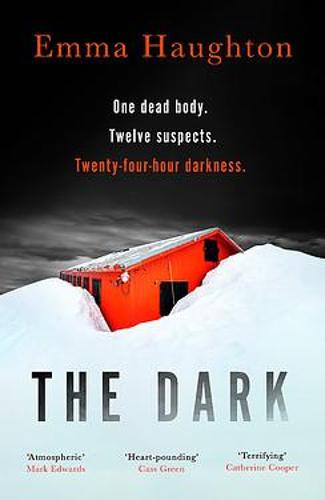
In the most inhospitable environment – cut off from the rest of the world – there’s a killer on the loose.

A&E doctor Kate North has been knocked out of her orbit by a personal tragedy. So when she’s offered the opportunity to be an emergency replacement at the UN research station in Antarctica, she jumps at the chance. The previous doctor, Jean-Luc, died in a tragic accident while out on the ice.

The move seems an ideal solution for Kate: no one knows about her past; no one is checking up on her. But as total darkness descends for the winter, she begins to suspect that Jean-Luc’s death wasn’t accidental at all.

And the more questions she asks, the more dangerous it becomes . . .

My Review of The Dark

Kate’s the new doctor at the research station in Antarctica.

I thoroughly, thoroughly, enjoyed The Dark. Emma Haughton has created an atmospheric, claustrophobic thriller that twists and turns in a chilling locked room style narrative. Despite the modern setting of an Antarctic research station that gives it a fresh appeal, The Dark has all the best hallmarks of traditional crime fiction so that it belongs very firmly within that body of work.

The sense of place is magnificent. The darkness, the relentless nothingness of the continent and the literal and metaphorical cold add a sense of danger and fear from the first page to the last that intensifies the reader’s own anxieties as they read. The Dark becomes chilling on many levels!

With the small number of characters that contracts as deaths occur, there’s a further sense of claustrophobia and Kate’s first person account heightens the intimacy of the narrative so that, despite the remoteness of the setting, The Dark feels very personal and immediate. I didn’t always agree with Kate’s attitudes and behaviour but because of Emma Haughton’s skilled characterisation,  I still wanted her to triumph, be accepted and, above all else, escape being murdered! What I enjoyed so much was that I guessed the killer’s identity several times – until, of course, they became a victim, thereby wrong-footing me and adding to my engagement with the writing.

I found the plot fast paced and exciting, but as well as a completely engaging and entertaining story in The Dark, Emma Haughton makes the reader wonder just how they might cope in a similar setting. She weaves in themes of human interaction and relationship that could quite easily be studied in the very setting of the book, giving it an extra authenticity too. Add in addiction, truth and lies, guilt and forgiveness, authority and abnegation amongst other themes and The Dark becomes even more interesting and multi-layered. The narrative works brilliantly on so many levels.

I found The Dark deliciously menacing from the first line. It is a cracking thriller and I recommend it completely.

About Emma Haughton

Emma Haughton grew up in Sussex, studied English at Oxford and worked as a journalist for several national newspapers, including The Times Travel section. Emma has written several non-fiction books for schools as well as YA thrillers. This is her first crime novel.

For further information, follow Emma on Twitter @Emma_Haughton and visit her website. You’ll also find Emma on Instagram.

There’s more with these other bloggers too: