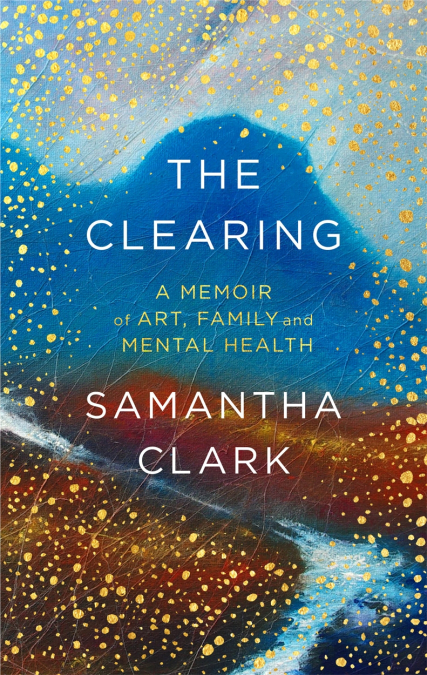
The Clearing by Samantha Clark

When Samantha Clark got in touch to tell me about her memoir The Clearing, I was stunned by the beauty of the book’s cover and intrigued by the link between Samantha’s writing and art to the extent that I simply had to feature The Clearing here on Linda’s Book Bag. I’m thrilled that Sam has provided an extract from her book along with a fabulous piece of her artwork for me to share today. My enormous thanks to Sam for a copy of The Clearing in return for an honest review too. I am delighted to share my review of The Clearing alongside Sam’s pieces.

Published by Little Brown, The Clearing is available for purchase in ebook and hardback, with paperback pre-order through the links here. The Clearing will be released in paperback on 4th March 2021.

The Clearing
This house has been a regular presence in my life for as long as I can remember. My heart has sunk a little every time I walk in . . .

Samantha Clark enjoyed a busy career as an artist before returning home to Glasgow to take care of the house that her parents had left behind. Moving from room to room, sifting through the clutter of belongings, reflecting on her mother’s long, sedated years of mental illness and her father’s retreat to the world of amateur radio and model planes, Samantha began to contemplate her inheritance.

A need for creativity and a desire for solitude had sprung up from a childhood shaped by anxiety and confusion. Weaving in the works and lives of others, including celebrated painter Agnes Martin and scientist of dark matter Vera Rubin, The Clearing is a powerful account of what we must do with the things we cannot know.

An Extract from The Clearing by Samantha Clark

There is one room here that I have not entered for a long time. When he retired from his forty-five years as an engineer with the BBC, this room became my father’s retreat and I did not intrude. I take a deep breath and pause, my hand on the doorknob, remembering my recurring dreams of this moment, dreams in which I open the door to find Poppy, the much-loved dog of my teenage years, waiting patiently, starving and forgotten for decades, staggering to her feet to greet me lovingly, dreams from which I waken with a guilty, tender grief that sits upon me all day. Softly, I push, and go in. The chilled air smells of rubber cement and 3-in-1 oil. I tread carefully, sliding over magazines, envelopes and discarded shoes. Nearest the door lie bits of old tents, coils of rope, canoe paddles, oilskins, a canvas rucksack now stiff with mildew. Next to it, propped against the wall, are several cumbersome and mysterious structures of copper pipe, wire and dowelling, over six feet long and half as broad.

Working my way further in I reach my father’s workbenches by the window. As I look around me, the clutter covering every surface begins to differentiate into recognisable objects: a radio transceiver, a Morse key screwed to the benchtop, Bakelite headphones, an ancient, yellowed BBC Micro computer, dog-eared copies of Practical Wireless magazine, padded envelopes spilling electronic components that look like beetles or sweets, enormous valves retrieved from decommissioned TV transmitters, crocodile clips and voltmeters, oscilloscopes and signal generators, batteries of every conceivable shape and size. The carpet by my feet is littered with tiny slivers of balsa wood, drops of solder, bits of plastic insulation stripped from electrical wire. My father’s amateur radio licence is pinned to the wall, showing his call-sign: GM3 DIN. There are two sets of plastic walkie-talkies, the packaging still unopened. Face down on a 70s brown vinyl office chair lies a loudhailer, half-dismembered, spewing wires.

Stacked on the bookshelf are manuals on UHF/VHF radio and building home-made antennae. The titles read Out of Thin Air, Devoted to Low Power Communication. Just so. Everything in this room is devoted to communication. But only at a distance. Only with strangers. While I was busy making my own adult way in the world, and while my mother, folded unreachably inside her illness and drowsy with medication, slept in her chair through decades of television, my father must have sat in here for hours with his headphones on, listening for voices riding carrier signals bounced off the troposphere, ghost voices sizzling through the static, transmitting little himself save a few pips of Morse to distant strangers known only by their call-signs.

The objects propped by the door, constructed from copper pipe, broomsticks and spirals of thick copper wire are, I now realise, home-made antennae. These ramshackle assemblages are, it seems, capable of picking up radio signals from the other side of the world, if conditions are right. With these antennae my father listened to the ether, for messages it might bring him.

I pick up a handheld transceiver from my father’s workbench, black and heavy, with a stubby rubber aerial like one of those early mobile phones, and switch it on. Unexpectedly, its battery still holds some power. The tinny speaker crackles to life then gives off a steady fizz of white noise – cosmic microwave background radiation, a signal emitted uniformly across the universe at the same wavelength, the sound of photons from the Big Bang still cooling after fifteen billion years. I listen for a while, hoping that the soothing and miraculous sound of the beginning of the universe will steady me for the task ahead, but I find myself thinking about electronic voice phenomenon, when the dead are said to be heard speaking to us through the interference, and, spooked, I switch it off again. But I can’t resist a mawkish ‘Bye Dad. Ten four. Over and out,’ as I do. Just in case.

*

I love this image Sam has shared too. She made it to convey her father’s passion for amateur radio, and it has so much relevance and resonance if you’ve read The Clearing:

 The Listener
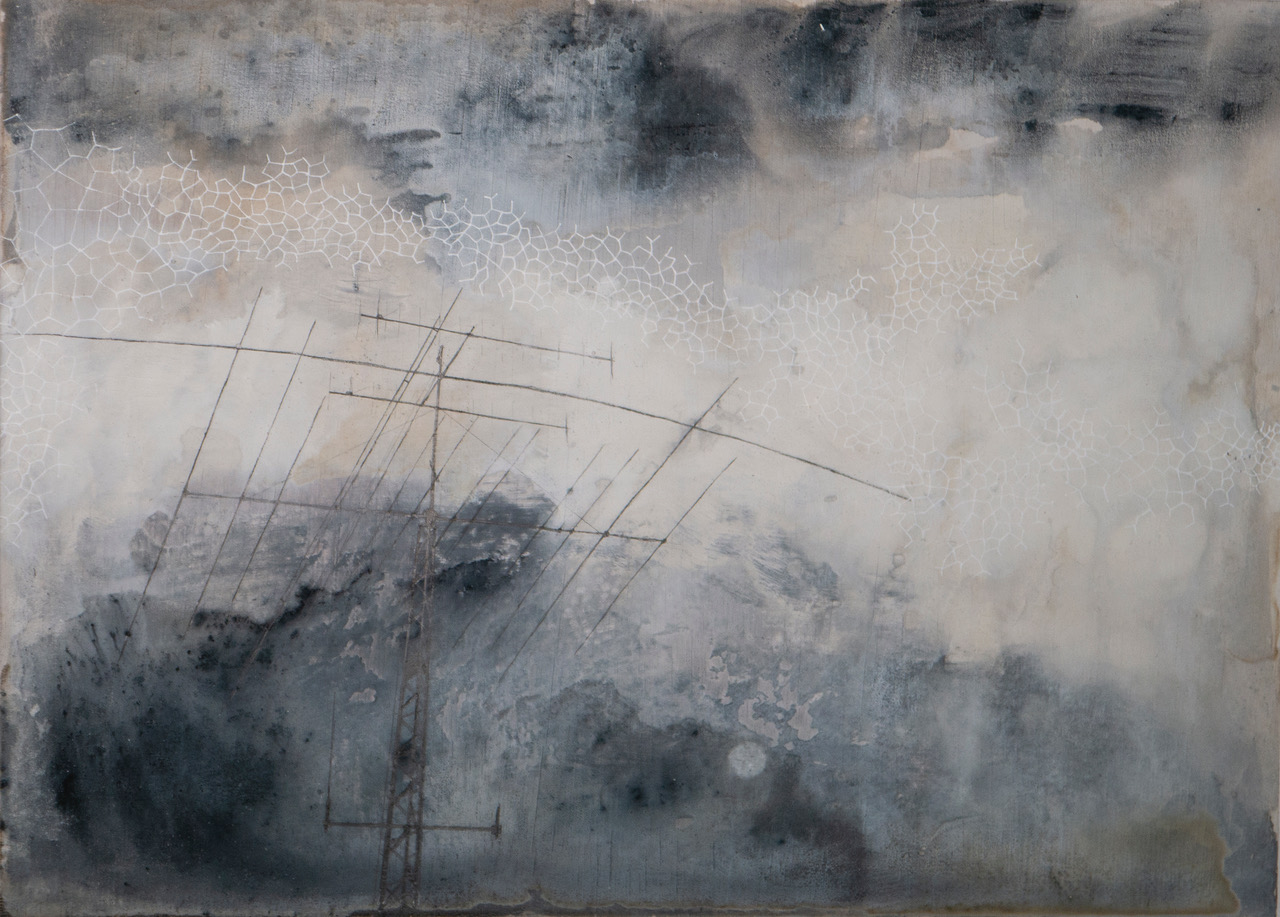
Samantha Clark, 2019, gesso, graphite and gouache on pine board.

Having read The Clearing, I keep returning to this image and looking for the qualities of grey, the light between them and the swirl of emotion I have discovered in the book. Each time I do so, there is more to discover.

My Review of The Clearing

I hardly know where to begin to review The Clearing. It is, quite simply, fabulous. The strapline to The Clearing claims it is ‘A memoir of art, family and mental health’ and whilst that is true, Samantha Clark’s writing is so very much more. The Clearing is science and self-discovery. It’s nature in all meanings, alongside nurture and spirituality. It is philosophy and entertainment. It is art, history and travel. In under 200 pages, Samantha Clark has written as multi-layered and beautiful a text as I have ever encountered. I feel privileged to have read it.

It’s difficult to review plot in a memoir, although one would usually expect quite a linear approach. As the title suggests, this is a book predicated on the author clearing out her parents’ home after their death. A literal clearing. And yet it isn’t. As Samantha Clark describes this physical clearing she spellbindingly weaves in her memories, both real and imagined, as well the subjects I’ve mentioned above, blending them with the clearing of her guilt at her relationship with her parents, her mother especially, and she shows just how there is a clearing, a space, in the most unexpected places where both she and her reader can find meaning and peace. Reading The Clearing is just glorious. It’s a kind of literary Japanese kintsugi that transports the reader into a realm of possibility even where there is grief and bleakness.

I found the visual quality of Samantha Clarks descriptions simply thrumming with meaning and emotion. Her attention to detail, her ability to unite the abstract and concrete together into something that is simultaneously ethereal and tangible, I found completely stunning. In The Clearing the invisible souls of the author’s parents, of herself and of humanity at large, fill the pages until the reader feels almost as close to the events she describes as the author herself. Many, many times I found Samantha Clark’s intensely personal writing created passages in The Clearing that expressed what I had indistinctly felt but had never been able to articulate for myself, so that reading this book was a kind of catharsis or clearing for me too.

It is impossible to define The Clearing. It is beautiful, literary and cerebral and yet it is accessible, personal and moving.  I found it educational, hypnotic, mesmerising and emotional. I thought The Clearing was sublime and one of the best books I have read this year. Don’t miss it.

About Samantha Clark
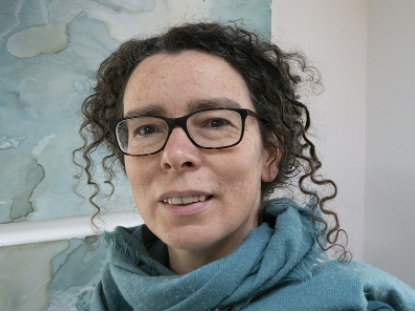
Samantha Clark has been a practising visual artist for many years, working across a range of media, including video, installation, drawing, photography and text, and her writing has emerged from this long creative evolution. Sam originally studied Fine Art at Edinburgh College of Art, Belgrade Academy of Fine Art and the Slade School of Fine Art (UCL), and has taught at Edinburgh College of Art, Tasmanian School of Art, and the University of the West of Scotland. She has an MA in Values and Environment from the University of Central Lancashire and has published in several academic journals on environmental philosophy and eco-art. She currently teaches at the University of the Highlands and Islands and online, and lives on Orkney.

You can follow Sam on Twitter @sam_clark_art or visit her website for further information. You’ll also find Sam on Instagram and Facebook.

Staying in with Sarah Mallory

Here on Linda’s Book Bag I feature all manner of books from all kinds of publishers, but in almost six years of blogging I’ve rarely featured one from a Mills and Boon author. I decided it was high time I rectified that omission and with a brand new series under way, I invited Sarah Mallory to stay in with me to chat about it. Luckily Sarah agreed to join me.

Staying in with Sarah Mallory

Welcome to Linda’s Book Bag SarahThank you for agreeing to stay in with me.

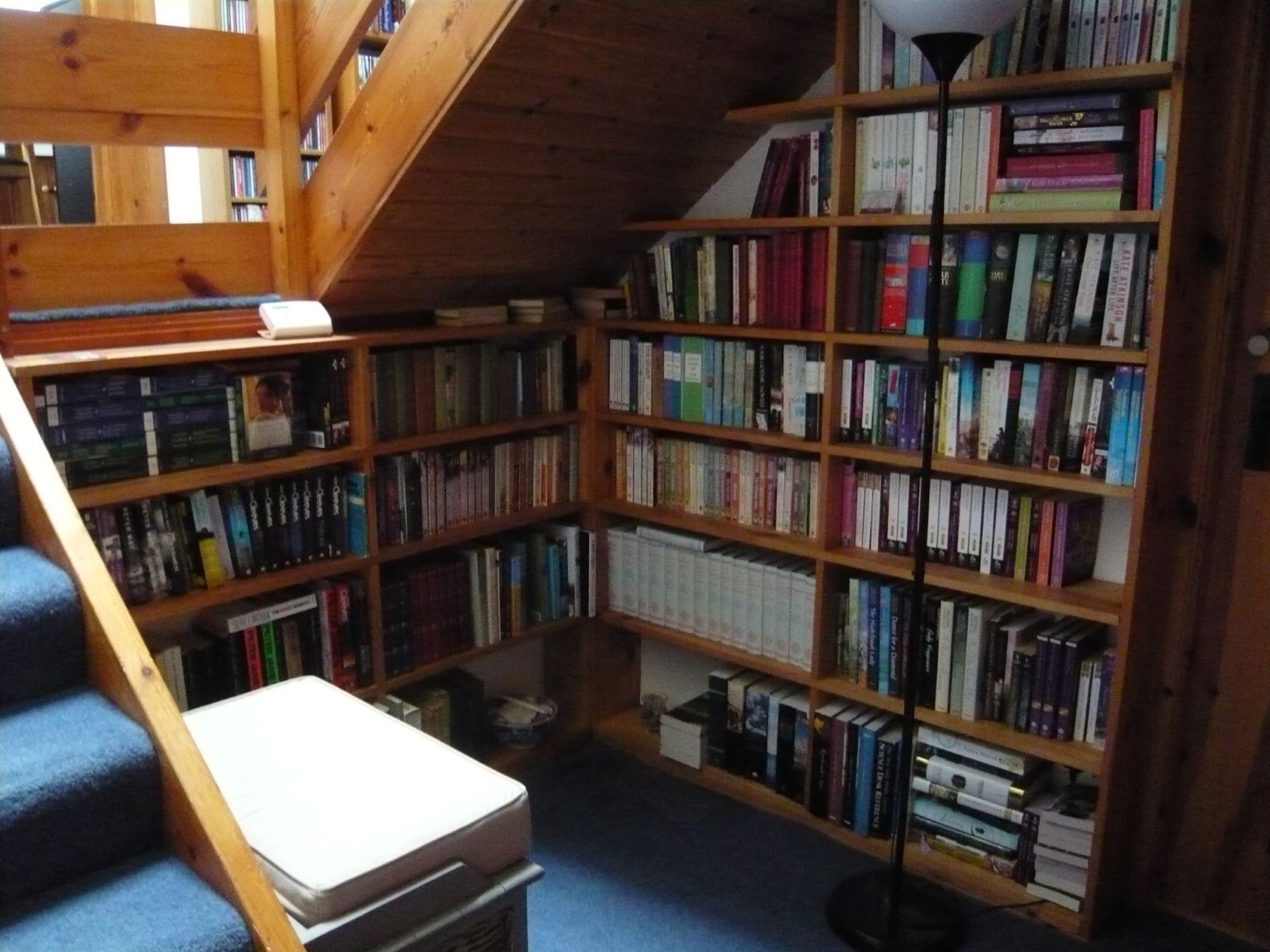
Thanks for asking me – always a pleasure to meet up and natter 😊. And since I have only recently moved into my current home, I thought I’d share with you one of the things that persuaded me this was the house for me… this little area of bookshelves hidden away under the stairs – it’s where I keep old and much-loved books that I like to return to again and again.

Oh my goodness. That is just fabulous. I’m very jealous.

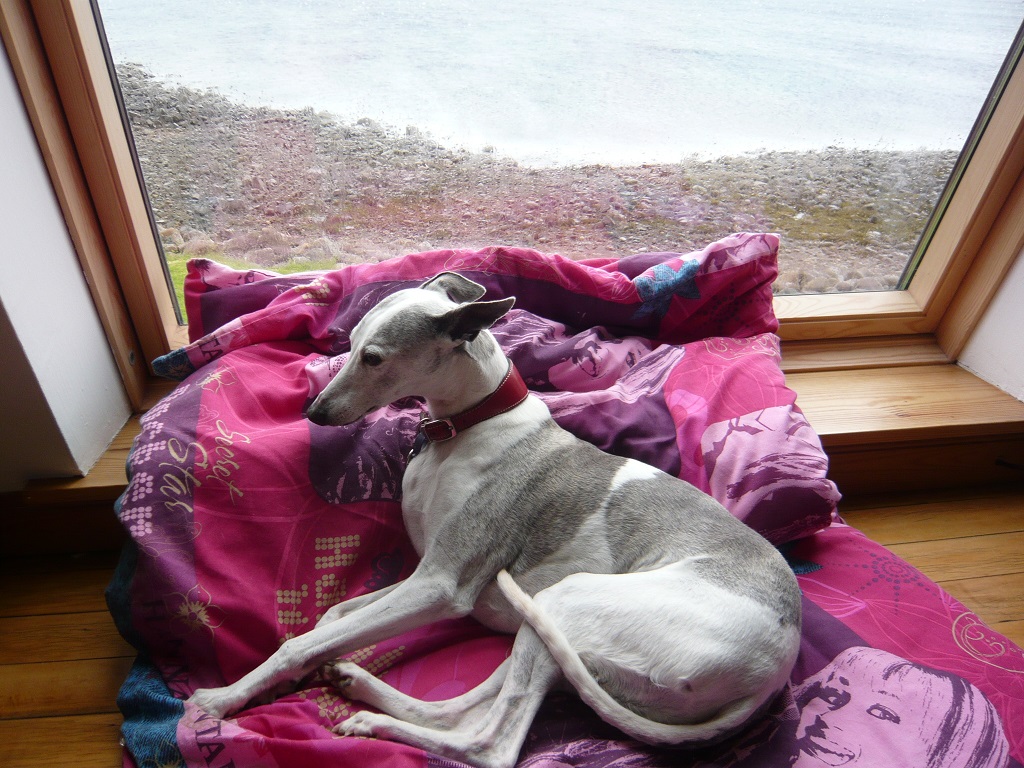
And I hope you like dogs, because I have brought my faithful companion, Willow.  He is a whippet, and although he loves to run he is sooo lazy, and lies in my office for hours while I write.

Willow is very welcome too Sarah. I hope he won’t be fazed by all the cat ornaments and pictures here!  So, tell me, which of your books have you brought along to share this evening and why have you chosen it?

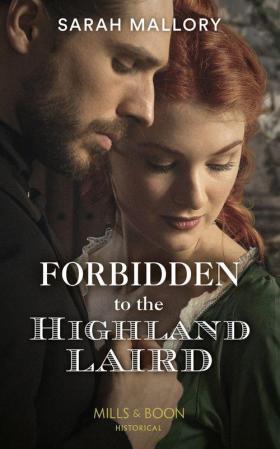
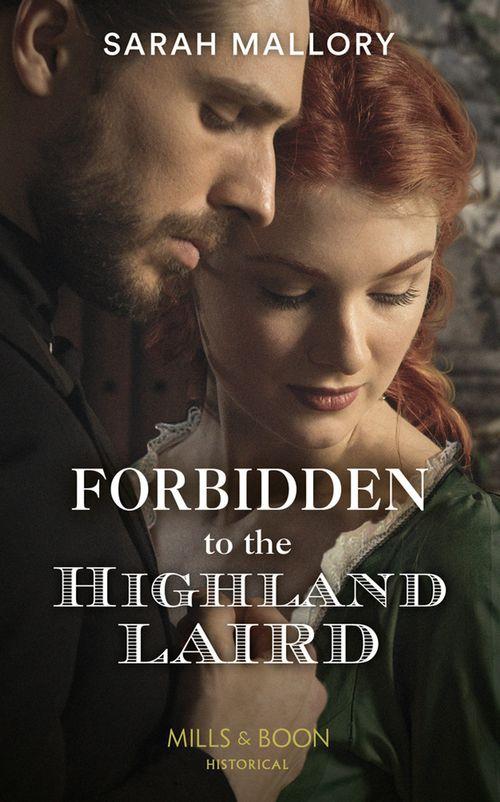
This is Forbidden to the Highland Laird. It is my first ever Scottish Highland romance and has just been published by Harlequin/Mills & Boon. I chose this book because writing it was a project very close to my heart. You see, I moved to the Scottish Highlands a couple of years ago, and immediately found myself inspired by the landscape and the culture. I have been itching to write something set here ever since. And this is only the first….

Oo. I like the sound of this. We’ve just bought a motorhome and the Scottish Highlands are on our list of places to visit. What can we expect from an evening in with Forbidden to the Highland Laird?

Ooh, romance, adventure, hopefully a few smiles! I have been writing Regency and Georgian romantic adventures for years, both as Sarah Mallory and Melinda Hammond (my alter ego and original pen name. All my Melinda Hammond books and short stories are self published) but this is my first novel set in the Scottish Highlands, and it has been a whole new learning curve!

It must be quite confusing having two names Sarah! Tell me more about Forbidden to the Highland Laird.

First and foremost it is a romance, but with a rich historical background. The Scottish Highlands in the early 18th century were a world away from Georgian Edinburgh or London, where the Enlightenment, the Age of Reason, was bringing new ideas about science, education and all aspects of life. Life in the Highlands was still very much dependent upon the clan system. Family and kinship were very important

There was a rich culture of music and story-telling that continues to this day. It was listening to a traditional Scottish harpist that was the first inspiration for my story and for Ailsa, my heroine.

Here is the moment Logan first sees Ailsa:

They had left Ardvarrick land and were travelling through thick woods when he heard it, a bright tinkling sound that at first he thought was water in the burn, but as they moved on the sounds grew louder. He recognised a melody. Someone was playing a harp, the sweet, clear notes carrying to him on the slight breeze. The path continued through the woods, but to one side the pines thinned out and the ground fell away to the edge of a loch whose waters reflected the clear blue of the sky. And sitting on the rocks at the side of the loch was a young woman. Logan silently waved to his men to stop. From the shelter of the trees he watched her playing the harp, the sun glinting off the silver strings as they moved beneath her fingers. It was a very agreeable picture and her appearance was much in keeping with the surroundings. Her kirtle and cape echoed the varied greens of the lush grass while her long hair was reddish brown and gold, like the autumn moors and the bracken that covered the hill slopes on the far side of the loch

Right. That’s it. I’m packing up the motorhome and am on my way! Wonderful description Sarah!

The harp, or clàrsach, was one of the earliest musical instruments and there is a fine example of an early Harp belonging to Mary Queen of Scots in the National Museum of Scotland, Edinburgh and I based Ailsa’s harp on this one.

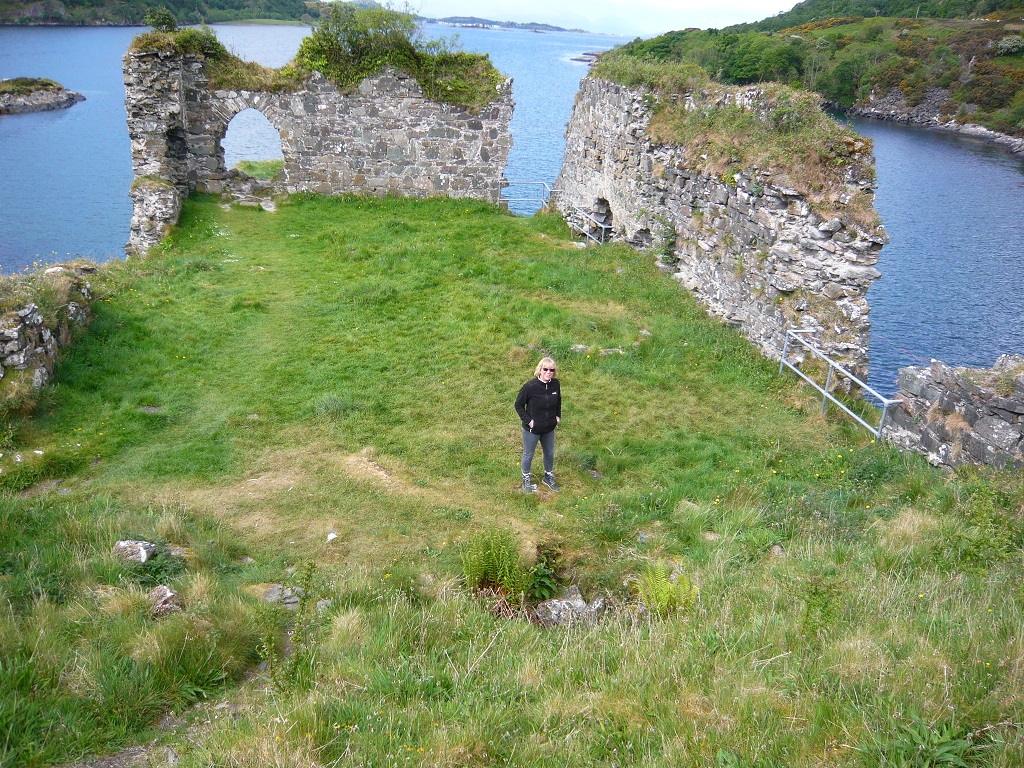
Another moment of inspiration came when I visited Strome Castle, although there is very little left of it now. I know there are many much more impressive castles around Scotland and I have visited lots of them, but when I stood within the remaining walls of Strome Castle and looked out over Loch Carron I immediately pictured someone imprisoned here. The book was little more than a vague idea at that stage, but scenes were beginning to emerge, and it was turning into a cracking adventure!

That scene made it into the book, and here is a small snippet from it:

When Ailsa woke again the moon was rising and relieving the darkness with a grey-blue light. The scratchy plaid that acted as her blanket was pulled up around her face and smelled even more malodorous. Her nose wrinkled. These plaids were worn by men for days on end. During the day, half of it was fastened with a belt around the waist as a kilt and the rest thrown over the shoulder, to be used as a cape in bad weather. At night it could be wrapped around its owner if they were obliged to sleep in the open. No wonder, then, that it smelt so bad.

She sat up suddenly, her mind racing. Dragging the makeshift blanket from the bed, she pulled the edge of it through her fingers, counting the lengths. It was what, four, five yards long? She tugged at the woven material. Could she trust it?

Ailsa dragged the plaid across to the window, where she took one of the ends and forced it several times over the spike where she had tied her petticoat. Then she bundled up the rest and threw it out of the window. The paid dangled down, shifting slightly in the breeze. It stopped several feet short of the narrow grassy verge. It was impossible in the gloom to work out just how far from the ground it ended. She would have to let go and hope she did not break a bone when she landed.

A sudden laugh shook her. What was she thinking? It was most likely she would lose her grip while climbing down and tumble to her death. She should worry about the final drop if and when she reached it. And even if she did survive the fall, she could not swim. She would have to make her way over the jagged rocks and hope the water was not too deep for her to wade through it and reach land. Another problem that must wait until it arose.

Hitching up her skirts, she scrambled on to the window ledge.

You can’t just stop there Sarah. I need to know what happens next. Thank goodness I have a copy of Forbidden to the Highland Laird waiting to be read.

What else have you brought along and why?

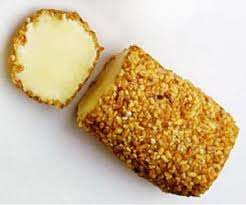
I thought I’d treat you to some of the food my characters might have eaten. First there is Caboc, reputed to be Scotland’s oldest form of cheese. It is a rich cream cheese, formed into a log shape and rolled in oatmeal. I’ve also brought oatmeal bannocks to eat with it. Afterwards there is a favourite of mine, Cranachan – Scottish raspberries gently folded into whipped cream and honey, along with toasted oatmeal that has been steeped in, what else, whisky.

And to wash it down? Well for those who aren’t driving I have brought Uisge Beatha, which is the Gaelic for whisky. Slàinte mhath!

I’m not a big drinker of spirits Sarah but I am VERY fond of cheese and Cranachan. You get the plates and serve up some of the food and I’ll tell everyone a bit more about Forbidden to the Highland Laird. Thanks so much for staying in with me tonight to chat all about it.

Thanks for having me Linda.

Forbidden to the Highland Laird

A Scottish beauty…

Lures the Laird to sin!

Exchanging elegant Society balls for clan wars, Logan Rathmore has returned to Scotland as the new Laird of Ardvarrick. Peace is within grasp when he meets musician Ailsa McInnis from a rival clan. Her stubborn pride and innocence fascinate him – but with her now under his protection, he must do nothing to abuse her trust. The fragile peace is dependent on his being able to resist the forbidden temptation she presents…

Published in ebook by Mills and Boon on 26th November 2020, Forbidden to the Highland Laird is available for purchase through these links.

About Sarah Mallory

Sarah Mallory writes Historical romantic adventures. She lives high on the moors in West Yorkshire, England, where she finds inspiration in the spectacular scenery. She has written over 20 books for Harlequin and won the Romantic Novelist Association’s RoNA Rose award in 2012 and 2013 for her Sarah Mallory novels.

Sarah is also the award-winning author Melinda Hammond.

You can follow Sarah on Twitter @SarahMRomance. You can also visit her excellent website and find her on Facebook.

Monster Dance from @madeleine_tales

My grateful thanks to Hannah Svensson at Madeleine Editions for sending me a copy of the children’s book Monster Dance in return for an honest review. I was intrigued by a book for children that indirectly references Covid 19, some of the profits from which go towards purchasing PPE for health workers around the world, and that has a range of interactive resources to accompany it.

Monster Dance is published by Madeleine Editions. There’s an interactive app to accompany Monster Dance here too.

Monster Dance

Meet Maurice, an endearingly melodramatic dog, and Charlie, an artistic little girl, as they take on a world that’s suddenly gone topsy-turvy.

This picture books app for kids with read-aloud, music and moving pictures is available on Apple and Android.

English, Mandarin (and other languages on the way).

For every book sold through July 20, 2021, Madeleine Editions will donate 3 PPE masks to be purchased and distributed by DonatePPE.org to arm healthcare heroes around the world. Madeleine Editions has also donated copies of the book to children’s hospitals around the world.

My Review of Monster Dance

Maurice the dog is finding life has changed.

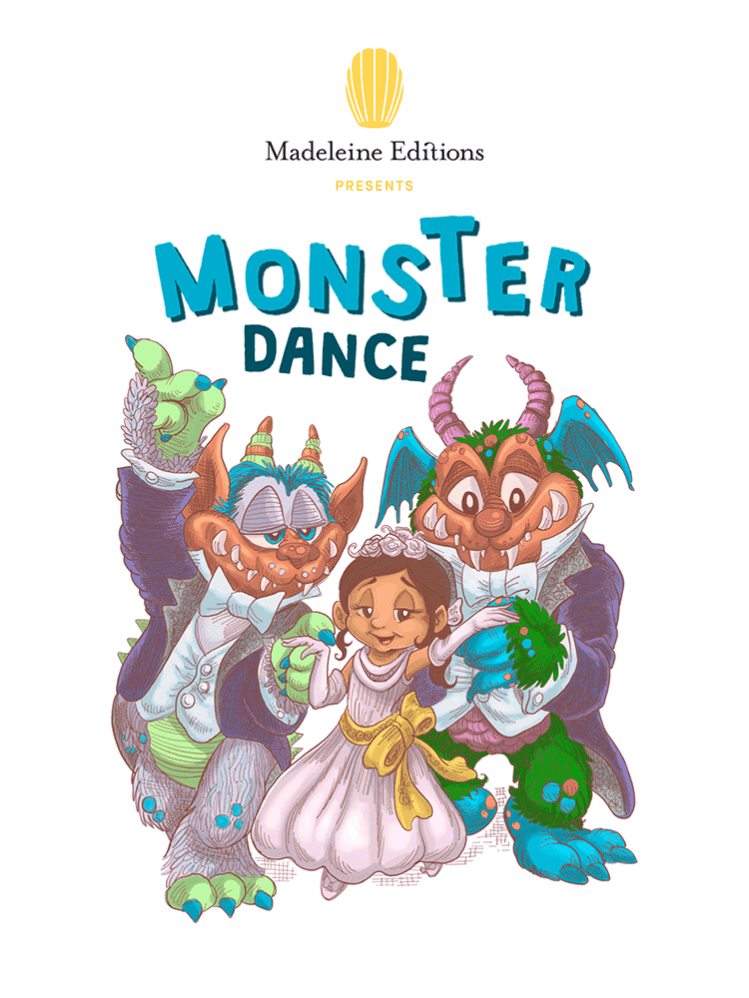
Initially I was uncertain of the concept of a monster lurking in the background, wondering if children might find it too scary a concept, but actually, Monster Dance is a positive and helpful story that both reassures and teaches children how to cope in these difficult times. This concept is enhanced by the delightful illustrations from Guy Gilchrist (of Muppet illustration fame) that have a style accessible for young children. You’ll find sample Monster Dance pages here. The physical book is beautifully presented with a perfect balance of text to illustration and a very robust cover that will endure much handling and use.

With Maurice scared and frustrated by a monster that has left him more confined to home, it is Charlie who helps him realise this is a small monster that can be fought and controlled by some simple steps like proper hand washing and keeping your distance. Charlie explains how taking such precautions isn’t being scared but is brave instead.

The beauty of Monster Dance is the range of alternative activities children might try instead of being in large groups in the park. There are foreign languages to explore, dressing up to do and artistic activities to carry out for example.

However, even better with Monster Dance is the interactive support material that goes with it. I really recommend heading to the Madeleine Editions Monster Dance website to find out more for yourself. It might be just what you and your child need to cope in these uncertain times.

In the Sweep of the Bay by Cath Barton

My grateful thanks to Emma at Damppebbles Blog Tours for inviting me to participate in the launch celebrations for In the Sweep of the Bay by Cath Barton. I’m delighted to share my review today.

Published by Louise Walters Books on 23rd November 2020, In the Sweep of the Bay is available for purchase directly from the publisher, Amazon UK, Amazon US, Kobo, Foyles and the Book Depository.

In the Sweep of the Bay

This warm-hearted tale explores marriage, love, and longing, set against the majestic backdrop of Morecambe Bay, the Lakeland Fells, and the faded splendour of the Midland Hotel.

Ted Marshall meets Rene in the dance halls of Morecambe and they marry during the frail optimism of the 1950s. They adopt the roles expected of man and wife at the time: he the breadwinner at the family ceramics firm, and she the loyal housewife. But as the years go by, they find themselves wishing for more…

After Ted survives a heart attack, both see it as a new beginning… but can a faded love like theirs ever be rekindled?

“A tender and moving study of a marriage” Alison Moore, author of the Booker short listed The Lighthouse.

My Review of In the Sweep of the Bay

Not having read the blurb for In The Sweep of the Bay, I hadn’t realised it is a novella, but I think the length and structure of the book is perfect for its content. I found it a moving and engaging read that drew me in and brought alive the characters between its pages.

Cath Barton has a deft touch in conveying setting. Her descriptions are frequently quite poetic so that the reader can visualise clearly place and detail, and I found the hook of Morecambe and its statue of Eric Morecambe a really clever and effective device, partly because of the underpinning theme that we can indeed choose to bring sunshine into our lives and those of other people – or we can stubbornly refuse to do so. Ted and Rene’s marriage is a bitter-sweet relationship and reading about them had the impact of making me tell my own husband how much I love and appreciate him, because Cath Barton made me question whether I had done so, or had just assumed he knows, in recent times. I think books like In The Sweep of the Bay that affect me personally are some of the most rewarding to read.

In fact, what I enjoyed most about In The Sweep of the Bay was Cath Barton’s wonderful understanding of human lives and relationships. Set against authentic historical eras, she presents the daily lives of Ted and Rene with such compassion that my heart went out to them both as if they were real people. The way their marriage is stretched yet endures is, I feel, reflective if do many post war marriages and I believed every word about their love, their disappointments and their loss of intimacy. I thought this was hugely poignant.

In the Sweep of the Bay is an intimate portrait of a marriage that is incredibly touching, but also an authentic socio-economic history that I found fascinating. So much is packed into this novella that I recommend it most highly. It’s a super read.

About Cath Barton

Cath Barton lives in Abergavenny. She won the New Welsh Writing AmeriCymru Prize for the Novella in 2017 for The Plankton Collector, which was published in September 2018 by New Welsh Review under their Rarebyte imprint. She also writes short stories and flash fiction and, with her critical writing, is a regular contributor to Wales Arts Review. In the Sweep of the Bay is her second novella.

For more information, visit Cath’s website and follow her on Twitter @CathBarton1.