Shades of Violet: A Guest Post by Leslie Tate

cover

It’s a welcome return to Linda’s Book Bag by Leslie Tate, author of Violet as Leslie has previously written for the blog alongside my review of his writing here. Today Leslie explores how his writing emerges in a fascinating insight into the writing process as he celebrates publication day for Violet.

Violet is available for purchase here. The e-book of Violet is available here. You’ll also find Leslie’s writing on Amazon.

Violet

cover

The passionate, late-life love of Beth and James begins in 2003 on a blind date in a London restaurant. Attracted by James’s openness, Beth feels an immediate, deep connection between his honesty and her own romantic faith. From then on they bond, exchanging love-texts, exploring sea walks and gardens and sharing their past lives with flashbacks to Beth’s rural childhood and her marriage to a dark, charismatic minister.

Telling stories runs in Beth’s family, so she keeps up with her friends, following their efforts to find love in a soulless, materialistic world. But Beth’s own passion for giving and commitment is pushed to the limit as she and James struggle with her divorce problems, each other’s children, and life-threatening illness. In the end, tested by pain, they discover something larger than themselves that goes beyond suffering and loss…

Shades of Violet

A Guest Post by Leslie Tate

When I interview authors on my blog https://leslietate.com/ I want to find out what lies behind their latest book So I avoid exchanges about sales or promotion, asking them instead about the process of writing. One of the questions I ask is, ‘Can you tell me about the beginning, growth and development your book?’ Applying the same question to Violet, my latest novel, I came up with the following three-part answer.

1. Beginnings

I don’t plan my novels. I’ve never felt able to find an anecdote that translates neatly into a finished story. So I set off writing Violet knowing only that it was about a late-life love affair. I’d a picture in my head of meeting my wife, Sue Hampton, in a West End restaurant, and I used that as my guide. I wanted to capture the fragile immediacy of our first encounter, how important it was, and how quickly it all happened. Beth and James are not like us, so their words and acts were largely imagined, but the feelings they experience were based on ours.

My first few pages are usually the most autobiographical. After that the characters take over and the ‘me’ in the story narrows down to a few borrowed details.

So here are a few examples of real-life borrowings, taken from Violet:

Before our meeting, Sue and I exchanged numerous letters and talked for hours on the phone.

On the day I had difficulty finding the restaurant.

Like Beth in the book, Sue turned up very early.

But the 3½ hours of intense table talk that followed between us wasn’t going to work in a novel. It was too static and far too long-winded. Even cut, it wouldn’t hold the reader. So I said goodbye to Sue and Leslie and allowed Beth and James to take over.

But I did want to capture the power of the experience. This was the story of two experienced adults diving in and going through a sea change. Translated into fiction, that meant taking risks. So James oversteps the mark, drinking from a glass smeared with Beth’s lipstick, plays mime games, and invites Beth, in the middle of the restaurant, to dance.

You can read this section of the book, together with a commentary describing how it was written, here.

I was aware that I was pushing it in the restaurant scene. Of course Beth and James have already had contact, making them more open, but for weeks after writing it I kept revising and re-reading to check for plausibility. In the end it seemed to work, mainly, I believe, because the mind in the act of reading takes things for granted and often jumps ahead.

As an author, I use the selective nature of the novel to foreshorten time and work the changes. The remote is in my hands and I can press ‘hold’, ‘rewind’ or ‘fast forward’. I can also change channels. So the restaurant scene moves quickly from the nervous reality of a conventional first meeting to a lover’s dream. And the dialogue is twofold, mixing short and meaningful quips with going in deep. Everything is imagined: so Beth and James come out with things we’d all like to say but usually keep shtum, while the reported conversations blend author-talk with voices in the head. The aim is to surprise and take a view on life, but not to break the spell.

2. Growth

Once I have a start, the discoveries begin. Mostly I find my direction by writing it, but I also have a long-term feel for what I’d like to happen. If the two are at odds, then the short-term wins. So starting Violet with Beth and James meeting at 50 meant I had to find a way to tell their full stories. I’d thought I might be able to flashback during the restaurant scene but found, in the end, I needed to give them separate treatment. And that meant, in James’s case, telling his backstory through his letters to Beth. In her case I began from birth in close third person, using her own juvenile stories to show how she’d changed.

So the book became layered, moving back and forth between present-day romance and Beth’s failed marriage to a born-again minister. At the same time I had an underlying feeling that the story was developing in a direction I had to follow…

3. Development

Two things happened when I’d finished the book:

  1. a) Despite my resistance, the old, old tale that unconditional love has no place in an uncaring world took over.
  2. b) My wife and author, Sue Hampton, had already noticed that three of the main characters in the trilogy had traits in common. So during the writing of Blue (the novel before Violet) we drew up a family tree. This required me to write in passages connecting Matthew Lavender in Purple to Richard Lavender in Blue and to James in Violet.

These changes were structural. They showed me that a book is never finished. And of course there’s a ripple effect, every minor change has its repercussions, and it’s always possible to add in links and connections to improve the flow.

In the end, a novel is complex. It has to be so since people and the world can’t be easily summed up. In Violet I tried to reflect that complexity by writing in both third and first person and by including letters, stories and Beth’s diary. But the central idea is simple: boy meets girl in later life, they fall for each other, but have to cope with misfortune. In the words of the blurb: ‘The passionate, late-life love of Beth and James begins in 2003 on a blind date in a London restaurant. Attracted by James’s openness, Beth feels an immediate, deep connection between his honesty and her own romantic faith. From then on they bond, exchanging love-texts, exploring sea walks and gardens and sharing their past lives with flashbacks to Beth’s rural childhood and her marriage to a dark, charismatic minister.

Telling stories runs in Beth’s family, so she keeps up with her friends, following their efforts to find love in a soulless, materialistic world. But Beth’s own passion for giving and commitment is pushed to the limit as she and James struggle with her divorce problems, each other’s children, and life-threatening illness. In the end, tested by pain, they discover something larger than themselves that goes beyond suffering and loss…’

Thanks so much for this Leslie. It’s a fascinating insight into how your writing takes shape. All the very best with Violet.

About Leslie Tate

jEMMA leslie-6

Leslie Tate studied Creative Writing at the University of East Anglia and has been shortlisted for the Bridport, Geoff Stevens and Wivenhoe Prizes. He’s the author of the trilogy of novels Purple, Blue and Violet, as well as his trans memoir Heaven’s Rage, which has been turned into a film. Leslie runs a mixed arts show in Berkhamsted, UK, where he lives with his wife, multi-talented author Sue Hampton. On his website he posts up weekly creative interviews and guest blogs showing how people use their imagination in life, in many different ways.

To find out more about Leslie Tate, visit his website, find him on Facebook and follow him on Twitter.  On Leslie’s website you will also find weekly interviews and guest blogs by writers, artists and musicians, as well as Leslie’s own writings.
An Extract from The Neighbors by Hannah Mary McKinnon

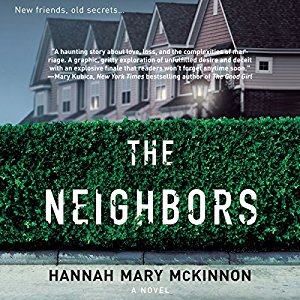
The neighbors

Although I love my physical books, one of the joys of electronic ones is that books not yet out in the UK are still available to me as a reader. One such book is the brand new The Neighbors by Hannah Mary McKinnon. Although I haven’t had chance to read The Neighbors yet, I do have an extract to share today.

The Neighbors is available for purchase here.

The Neighbors

The neighbors

Abby looks forward to meeting the family who just moved in across the street – until she realizes they’re the one couple who could expose her deepest secrets.

After a night of fun back in 1992, Abby is responsible for a car crash that kills her beloved brother. It’s a mistake she can never forgive, so she pushes away Liam, the man she loves most, knowing that he would eventually hate her for what she’s done, the same way she hates herself.

Twenty years later, Abby’s husband, Nate, is also living with a deep sense of guilt. He was the driver who first came upon the scene of Abby’s accident, the man who pulled her to safety before the car erupted in flames – the man who could not save her brother in time. It’s this guilt, this regret, that binds them together. They understand each other. Or so Nate believes.

In a strange twist of fate, Liam moves into the neighborhood with his own family, releasing a flood of memories that Abby has been trying to keep buried all these years. Abby and Liam, in a complicit agreement, pretend never to have met, yet cannot resist the pull of the past – nor the repercussions of the terrible secrets they’ve both been carrying….

An Extract from The Neighbors

“HELP.”

The faint voice floated toward me. Gliding smooth as a paper airplane from somewhere in the midst of the fog swirling through my brain. Orange lights flashed in a steady rhythm and—

“Please.”

I wondered if I’d uttered the words, but I hadn’t moved my lips. Hadn’t moved at all. Couldn’t. It hurt too much. Ev­erything hurt too much.

Moments passed, and I tried to string together the few wispy fragments my mind allowed me to cling to. My arms, chest and legs were pressed against something hard and uncomfortable—the ground, not my soft bed—but the rea­son why I found myself in that position escaped me entirely. And I was too exhausted to care.

A breeze softly brushed across my cheek. The pavement beneath me felt warm, and despite the distinct taste of rust invading my mouth, I could smell freshly cut grass. Hadn’t I been—

“Help me, Abby.”

The voice was too low to be mine. A man’s then—it had to be. Why wouldn’t he let me sleep? My eyes felt heavy and impossible to open, so I let my thoughts start pulling me away, ever so slowly, to the deliciously inviting state of un­consciousness.

“Abby.”

Rest would have to wait. Against my better judgment I raised my head, each millimeter expending energy I didn’t think I had and causing pain to shoot through every part of my body like a thousand burning hot pins. I tried, but my legs and lower back stubbornly refused to budge even the ti­niest amount, as if I’d been nailed to the ground.

I forced my eyes open.

And I saw him.

“Tom.” My own voice this time, barely a whisper. “Tom.” A little stronger, louder.

My brother lay a few meters away in what had been my blue Ford Capri, but which was now an upturned carcass of broken glass and mangled steel. The flashing of the hazard lights illuminated Tom’s bloody face and body every few sec­onds, a perverse freak show. He hung upside down. Unlike me, he was still in the car, somewhere between the front and back seats, his arms and legs bent at impossible angles. Eyes wide and glazed. Staring at me. Desperate. Begging.

“Abby,” he said once more, and I watched as he attempted to lift his arms, tried to reach for me. “I can’t get out.” Tears rolled up his forehead, mixing with a steady stream of blood from the deep gash above his eye that looked like a second mouth. “I can’t get out.”

(Now I really do need to read the rest of The Neighbors!)

About Hannah Mary McKinnon

hannah

Hannah Mary McKinnon  was born in the UK and grew up in Switzerland. Unsurprisingly she loves chocolate, mountains and cheese, and books, of course.

After an (early) mid-life crisis, Hannah found herself in her forties and one morning decided to follow her oldest passion; she started writing and never wanted to look back.

Hannah’s first novel, Time After Time, a lighthearted, romantic read, was published by HarperCollins AVON in June 2016. Her second novel, The Neighbors is a domestic suspense story, and will be published by MIRA in North America in March 2018.

You can find out more by visiting Hannah’s website or following her on Twitter @HannahMMcKinnon or Instagram @HannahMaryMcKinnon. You’ll also find Hannah on Facebook.

Staying in with Rook Winters

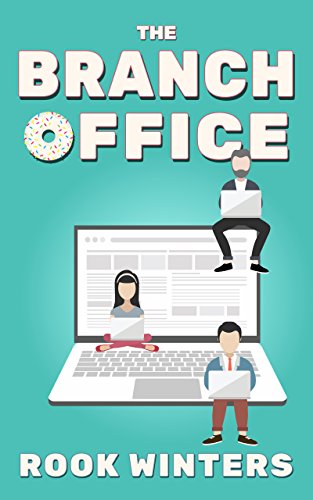
Branck office

I love tea and when I hear that an author loves tea too I just have to ask them onto Linda’s Book Bag. It gives me great pleasure, therefore, to be staying in today with fellow tea drinker Rook Winters!

If you’re an author who’d also like to stay in with me to tell me about one of your books, please click here for more details.

Staying in with Rook Winters

Welcome to Linda’s Book Bag, Rook and thank you for agreeing to stay in with me.

Tell me, which of your books have you brought along to share this evening and why have you chosen it?

I’ve brought The Branch Office, my first novel. I figured the technical books I wrote for programmers might be a bit boring for a night in.

Branck office

(Oh, I don’t know. Er…, yes, you’re right. The Branch Office sounds much better!)

What can we expect from an evening in with The Branch Office?

I usually tell people it’s a blend of humour, despair, satire, and 80s nostalgia. At the centre of the story is a band of co-workers at a tech company. Anyone who’s worked in an office has experienced loads of bizarre habits and absurd behaviour, but the tech industry takes it to a new level, which makes it a fun backdrop for a novel.

(Having worked in a local authority open plan office I can heartily agree – though I hope the bizarre behaviour wasn’t my own…)

Don’t worry, though, the book’s not twenty-five chapters of people sitting around talking in an office. That would be a bit tiresome.

It’s a modern-day setting but one of the characters is obsessed with the 1980s. I grew up in the 80s and 90s, so it was a bit of personal indulgence to weave in some of my favourite things from that time into the story. In the book, it’s tacitly tied to the psychological baggage of the character, but for readers it’s been a fun way to reminisce a little. Well, those who remember the 80s at least.

(I remember them well Rook – I’m not quite as old as I look!)

What else have you brought along and why?

donuts

A few things. I have a box of doughnuts, which is a must-have treat when talking about The Branch Office. The first doughnut shows up on page 2. This will save a doughnut run later in the evening when the inevitable cravings set in.
(Oo. Haven’t had a doughnut in years. You can stay in with me again!)

I also have a few bottles of craft beer for Beer 30, an end of the week tradition for the characters in the book. They normally tap a keg but that seemed a bit excessive for an evening in.

(I think we could give it a go though…)

softball

The company softball team is a fun element in the book, so I brought a softball. Might be a good idea to hide it once the beer’s out, though, so we don’t risk breaking a lamp or something.

(I quite agree. Especially with my sight problems and non-existent hand/eye coordination. I’d like some of my home left intact after you’ve left.)

Thanks so much for staying in with me to introduce The Branch Office Rook. I’ve really enjoyed our chat – and the doughnuts!

The Branch Office

Branck office

A novel that is part tribute and part lampoon of office life. You’ll nosedive into absurd behavior, quirky personalities, Silicon Valley excess, 80s nostalgia, personal loss, frustration, unrequited infatuation, company softball, and, of course, doughnuts.

Luke is young and stuck at the bottom of the career ladder but he doesn’t intend to stay there. The grizzled programmer in the next cubicle has been working on the same software for decades and just wants to stay off the radar of the executives.

Unfortunately, the corporate agenda is at odds with their hopes and dreams, and you know what they say about sticking your neck out too far…

The Branch Office is available for purchase here.

About Rook Winters

Rook

Rook Winters has worked as a software developer, corporate trainer, and technical writer so he is well-acquainted with the ups and downs of spending day after day in an office. His first novel, The Branch Office, isn’t autobiographical but it taps into the humor and despair of office life in a way that’s only possible after spending thousands of days in the land of cubicles.

Rook is also the author of several short stories based on the same characters in The Branch Office.

You can follow Rook on Twitter @RookWinters. You’ll also find him on Facebook and Goodreads and can visit his website.

An Extract from Learning to Love the Girl in the Mirror by Helena Grace Donald

Girl cover

I don’t think I know a female who hasn’t had some form of anxiety about their appearance at least once in their life. Consequently, it gives me great pleasure to be part of the launch celebrations for Learning to Love the Girl in the Mirror by Helena Grace Donald.

Learning to Love the Girl in the Mirror will be published on 13th April and is available for pre-order here.

Learning to Love the Girl in the Mirror

Girl cover

This book is for every girl who has ever looked in the mirror and criticized her own reflection; for every girl who has ever compared herself negatively to others; for every girl who has ever thought of dieting; and for every girl who is already struggling with negative body image issues and unhealthy eating habits.

Learning to Love the Girl in the Mirror is a “must read” for any teenage girl. It’s packed full of self-empowering and self-loving tools that will leave you feeling Supergirl confident.

In a world where advertising, celebrity culture and social media reign, it’s becoming more and more common for young girls to have some form of negative  body issue or eating disorder. This is not only harmful and dangerous on a personal level, it’s also destructive and disempowering for womanhood as a whole, and it’s got to STOP now!

This is Helena’s brutally honest story of how she overcame the battle with her own body and went from miserable and self-hating to absolutely loving the skin she’s in! Still in her early twenties, Helena completely relates to her fellow young women in the most loving and supportive way. Helena’s mission is to inspire young women that it is possible to love and appreciate your body in a completely healthy way. This book is packed full of the tools that will help any young girl to do exactly that.

An extract from Learning to Love the Girl in the Mirror

Say Goodbye to Little Miss Critical

Do you have a Little Miss Critical in your life? I bet you do. We all do! Does yours just visit from time to time, or has she moved in permanently? Mine used to pop in occasionally in my early teens, but as the pressures of teenage life increased, her visits became more and more frequent until, finally, when I was about 16, she stuck to me like glue and wouldn’t leave. She came everywhere with me.

Every morning she was there, waiting for me at the bathroom mirror:

“You’ve got another disgusting, humongous spot on your chin!”

She would stand right next to me, criticizing my reflection in the bedroom mirror as I got dressed:

“That skirt is waaay too tight! You’ve put on weight again!”

 She was with me at school, comparing me negatively to other girls she thought were slimmer or smarter or more social than I was:

“How come Emily can have a perfect figure and you can’t?”

 And she was there at every mealtime, whispering threats in my ear about the weight I might put on if I ate what was on my plate:

“That pizza has a gazillion calories. If you eat that you’ll be a big fat pig!”

She thought her job was to make me and my life “perfect,” and she tried to do it by pointing out all the ways I fell far short of “perfection.” One of her favourite things to do was to scrutinize my body, looking for flaws. She would squeeze my tummy and pinch any fat she could find, making tears well up in my eyes. When I walked, she would hold an imaginary mirror behind me to make me conscious of the size of my butt, the way my thighs rubbed together, and the cellulite she said was beginning to appear on the backs of my legs. Her sarcastic and hurtful comments echoed in my head, telling me that I was not good enough the way I was and that I would never be successful at what I wanted to do until I was  skinnier.
Because of her, I put more and more pressure on myself to be the perfect size, the perfect student—the perfect everything. I tried weight-loss plans, diets, detoxes, and I even fantasized about having cosmetic surgery to slim my hips and thighs when I would be older. As far as Little Miss Critical was concerned, I would only be good enough when I had a “perfect” body, perfect grades, and a perfect life. The more powerful she became, the unhealthier my obsession with my weight became.

Eventually, I reached a tipping point when I felt like the only way I could cope with her constant criticism and put-downs was either to starve myself or throw up my meals. In the end I did both—often in the same day. Looking back, I can see that I was really struggling to gain some control over my life and my body while simultaneously maintaining my image of having it all together. Some days I would try to see how long I could push myself without eating, then I would feel so hungry and anxious that I would stuff myself with food in an attempt to numb the pain and anxiety I was feeling. I’d do this until my stomach was about to explode—and then I’d emotionally release it all by throwing up.
I hid this from everyone. It was my shameful secret. I used to excuse myself from the family dinner table, run the bathroom taps so that nobody would hear me, throw up whatever I’d eaten, and then return to the table as if nothing had happened. I counted calories throughout the day, and Little Miss Critical always had something to say about everything I ate. Don’t get me started on how harsh she could be if I ate anything that she perceived to be indulgent!

About Helena Grace Donald

Helena Grace Donald is the founder of Girl Unfiltered. Her mission is to inspire girls to love and value themselves so that they feel empowered as they journey into the wonderful world of womanhood. Still in her early twenties, Helena relates easily to teenage girls and truly understands what it feels like to be in their shoes. She grew up in England and currently lives in Los Angeles where she leads a happy and creative life; acting, writing and raising awareness through public speaking.

You can follow Helena on Twitter @Helena_G_Donald and visit her website.

There’s more with these other bloggers too:

Blog Tour Week 1

Staying in with Kaye Newton

How-to-get-your-Screen-Loving-Kid-to-Read-books-for-pleasure

Regular readers of Linda’s Book Bag know I frequently refer to my previous life where I worked to try to promote reading and literacy as an English teacher, adviser, consultant and inspector, so it gives me enormous pleasure to welcome Kaye Newton to stay in with me today because I think Kaye is probably a woman after my own heart!

If you’re an author who’d also like to stay in with me to tell me about one of your books, please click here for more details.

Staying in with Kaye Newton

Welcome to Linda’s Book Bag Kaye. Thank you for agreeing to stay in with me. Tell me, which of your books have you brought along to share this evening and why have you chosen it?

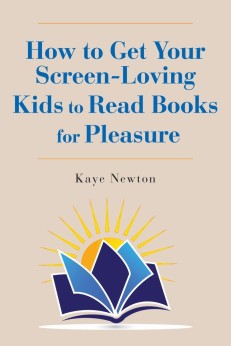
Linda, thanks for hosting me! I’ve brought along How to Get Your Screen-Loving Kids to Read Books for Pleasure.  I thought parents would be interested in practical advice on how to get children to put down the smartphones and gaming consoles and pick up books.

How-to-get-your-Screen-Loving-Kid-to-Read-books-for-pleasure

(My former life means I love the sound of this one!)

What can we expect from an evening in with How to Get Your Screen-Loving Kids to Read Books for Pleasure?

The first part of my guide delves into why parents (and grandparents, aunts, uncles, and godparents) should care if kids read long form sentences found in books and articles. (Research shows reading can reduce stress levels, help kids sleep better, and improve school performance.) I compare of the pros and cons of electronic eBooks versus paper books and write about what motivates kids to read books. There is also discussion of whether the reading experts count graphic novels, manga, and chat fiction, which kids read on their phones in text format, as “real” reading.

(That sounds fascinating.)

The second part of my book details how to carry out a revitalizing reading project with your family. Here I share lists of books that hook kids of all ages, how to use reading rewards, family book clubs, how to find a reading buddy for your kid, and ways to make the assigned school reading more interesting. I also detail what worked and didn’t work for my family when I tested the reading experts’ advice.

(I’m sure many parents will love these practical tips Kaye.)

Fortunately, my guide has been well received and thought I’d share one of my favorite reviews on Amazon:

This wonderful book is an essential resource for every parent/caregiver. Period. Even non-book loving adults need to get this information. In How to Get Your Screen-Loving Kid to Read For Pleasure, Kaye Newton has created an intelligent, quietly funny and superbly well-written guide to help parents (and other people who like /have kids: grandparents, aunts, caretakers, etc.) gently steer their offspring toward a true appreciation of reading.

(What a smashing review. I think some of Linda’s Book Bag Readers might try your guide with other adults as well as their children as many fellow bloggers tell me their spouses don’t read. Mine does, fortunately!)

What or who else have you brought along and why?

I have brought along my thirteen-year-old son Eddie. Eddie is still enamored with his Xbox One but now also reads books for pleasure. I thought we could share how this works.

(Great idea. Authors have brought all kinds of things with them to stay in but never a child before!)

Librarians, teachers and parents report that one of the best ways to hook kids on reading is to find books about their current passions. When trying to get Eddie excited about reading, my husband and I leverage two of his main interests – video gaming and watching Stranger Things, a scary TV show.

Kaye: So, Eddie, tell Linda about two of your favorite recent reads.

Eddie: “Ready Player One” is good. A kid searches for a fortune through a virtual reality game.  It’s got a lot of action.

Kaye:  That’s coming out as movie soon, isn’t it? And we all know that it’s always better to read the book before the movie! (Eddie looks askance. Short silence ensues.) How about another suggestion? (Medium length silence) How about the series that you are reading right now? The creators of Stranger Things said they are big fans of this author.  .  .

Eddie: Oh yeah. Stephen King’s “Gunslinger.”  It’s a western fantasy.

Kaye: And what got you to actually pick up this book and read it?

Eddie:  The Stranger Things writers are the G.O.A.T. * I saw online that they like Stephen King, so he’s got to be good.  And you told me that I have to read a book if I want screen time.

Kaye: True enough. Linda, what currently works for us is earning screen time. After Eddie reads for 45 minutes, he gets 45 minutes of screen time.  I notice that when Eddie reads a book that hooks him, he voluntarily reads for longer than 45 minutes. It’s human nature to get caught up in a good story, and when that happens reading sells itself.  Your child starts to think of himself as a reader and will continue to consume “readalikes” found on sites like Goodreads.

*Greatest of All Time

(How brilliant. I love this concept. And I’m glad you explained G.O.A.T. as I think I must be getting old and out of touch…)

Thanks so much for staying in with me, Kaye, to tell me all about How to Get Your Screen-Loving Kid to Read For Pleasure. It sounds a really practical and helpful book.

How to Get Your Screen-Loving Kids to Read Books for Pleasure

How-to-get-your-Screen-Loving-Kid-to-Read-books-for-pleasure

Reading improves kids’ abilities to concentrate, empathize, and do well in school. The author, Kaye Newton, spent over a year researching expert advice about promoting reading. She then tested it on her three screen-loving children. Get practical tips on finding books that hook kids, leveraging screen time to increase reading, and making the required reading for school enjoyable.

How to Get Your Screen-Loving Kids to Read Books for Pleasure is available for purchase here.

About Kaye Newton

Author photo - K.N.

Kaye is a bibliophile and award-winning author who spent over a year researching expert advice about promoting reading and road testing it on her three screen-loving children.

Kaye lives outside Nashville, TN with her husband, three kids, and two lively dogs. Incision Decisions, her first book, won a silver medal at the 2017 Readers’ Favorite Awards.

You can find out more about her experience and books on Kaye’s website and follow her on Twitter @kayenewtonbooks.

Giveaway: When I Grow Up by Patricia Asedegbega

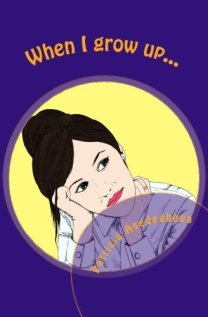
When I Grow Up

Having previously had the privilege of staying in with Patricia Asedegbega to discuss her book to the moon and back in a post you can read here, I’m thrilled to be participating in these celebrations for When I grow up, organised by Anne Cater at Random Things Tours. I have a fabulous giveaway for one lucky Linda’s Book Bag reader to win a signed copy of When I grow up that you can enter at the bottom of this blog post.

When I grow up is available for purchase here.

When I grow up

When I Grow Up

“You need a plan B,” said Alicia’s mother when at five years old she told her what she wanted to be when she grew up.

Thirty odd years later, Alicia is on plan D: sharing a flat, no tangible savings, and working for hateful Julia, whose sole purpose in life is to make her existence utterly miserable. Good thing she has Oscar and the girls to make the long hours at work bearable.

But when a series of events tears the close-knit group apart, putting friendships and motives under suspicion, will Alicia be able to restore balance and set things right? More importantly, will she ever be able to upgrade her life to at least plan C?

About Patricia Asedegbega

Patricia Asedegbega Author Pic

Author of I stand corrected…to the moon and backWhen I grow up… Rewind, Balou uncensored, Bienvenidos a gatos anónimos, Pasarse cuatro Pueblos and Sesenta segundos dan para mucho, Patricia Asedegbega Nieto was born to a Spanish mother and a Nigerian father in Madrid. As a child, she relocated with her family to Nigeria and later returned to Spain, where she acquired her BSc and master’s degree. She is currently living near Madrid with her family and her very stubborn cat, Merlin Mojito.

You can find Patricia on Facebook and visit her website. She’s also on Twitter @Patricias_Place.

Giveaway

For your chance to win a signed copy of When I grow up by Patricia Asedegbega, click here. Giveaway closes at UK midnight on Friday 16th March 2018 and is open internationally.

There’s also more with and about Patricia Asedegbega and When I grow up with these other bloggers:

when I grow up

Walking Home by Simon Armitage

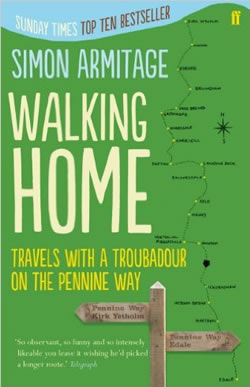
walking-home

It’s been a while since I’ve reviewed one of my Deepings U3A Monday Reading Group books on Linda’s Book Bag, so I thought it was time I rectified that. This month we will be discussing Simon Armitage’s Walking Home and I’m ashamed to say I hadn’t really thought about him as a prose writer, rather than a poet, but that situation is well and truly rectified now.

Walking Home is available for purchase here.

Walking Home

walking-home

In summer 2010 Simon Armitage decided to walk the Pennine Way. The challenging 256-mile route is usually approached from south to north, from Edale in the Peak District to Kirk Yetholm, the other side of the Scottish border. He resolved to tackle it the other way round: through beautiful and bleak terrain, across lonely fells and into the howling wind, he would be walking home, towards the Yorkshire village where he was born.

Travelling as a ‘modern troubadour’ without a penny in his pocket, he stopped along the way to give poetry readings in village halls, churches, pubs and living rooms. His audiences varied from the passionate to the indifferent, and his readings were accompanied by the clacking of pool balls, the drumming of rain and the bleating of sheep.

Walking Home describes this extraordinary, yet ordinary, journey. It’s a story about Britain’s remote and overlooked interior – the wildness of its landscape and the generosity of the locals who sustained him on his journey. It’s about facing emotional and physical challenges, and sometimes overcoming them. It’s nature writing, but with people at its heart. Contemplative, moving and droll, it is a unique narrative from one of our most beloved writers.

My Review of Walking Home

Setting out to walk the Pennine Way ‘the wrong way’ as a modern day troubadour, Simon Armitage occasionally finds he has bitten off more than he can chew!

I loved Walking Home. It completely took me by surprise and enchanted me. I haven’t been walking in the UK for a few years and I immediately want to dig out my walking boots and head to the hills. I don’t know if my enjoyment was enhanced by the fact that I have walked in many of the same places in similar weathers but I felt as if I were travelling along with Simon Armitage as he walked, seeing the same sights and encountering the same challenges, so vivid was the writing.

As one might expect from a renowned poet, the language in Walking Home is fluid, beautiful and gorgeously descriptive. However, I wasn’t expecting it to be hilariously funny and so self-effacing too. I think my husband thought I’d taken leave of my senses as I kept trying to read parts aloud to him but couldn’t finish because I was laughing so much. It’s not that Simon Armitage writes hilarious prose, but conversely that he has a pithy and dry wit that drops in with incisive precision via a couple of choice words after a lengthy prose passage so that the contrast has real impact. Usually this comes in the direct speech that is used so sparingly and so entertainingly. The contents of the sock passed round like a hat after the author’s poetry readings always provided high interest and entertainment too.

Each chapter in Walking Home is a different day on the journey and these make for self-contained narratives that can be enjoyed and dipped in to when a reader might be in that particular environment, so that I think Walking Home would be a wonderful text to read after a day spent walking the same route. That said, I read the book chronologically and kept thinking I’d just read one more day and one more day until I’d travelled the entire length of the walk through highly entertaining writing that I couldn’t put down.

Although this isn’t a narrative in the conventional sense of a novel, there is still a wonderful cast of characters to meet. I especially liked Slug. What Simon Armitage does so well is to leave the reader to fill in his opinions. He makes a factual statement about the people he has encountered which makes it obvious what he thinks of them without him saying so directly. I loved that approach as it made me feel conspiratorial and privileged as if I were privy to Armitages inner most thoughts.

I really enjoyed Walking Home as it is witty, entertaining and so well written. I would love to read more prose from poet Simon Armitage.

About Simon Armitage

simon armitage

Simon Armitage was born in West Yorkshire and is Professor of Poetry at the University of Sheffield. A recipient of numerous prizes and awards, he has published eleven collections of poetry, including Paper Aeroplane: Selected Poems 1989-2014. He also writes extensively for television and radio and is the author of two novels and the non-fiction bestsellers All Points North (1998), Walking Home (2012), and Walking Away (2015). His theatre works include The Last Days of Troy, performed at Shakespeare’s Globe in 2014. In 2010 he received the CBE for services to poetry and in 2015 was appointed Professor of Poetry at Oxford University.

For more information you can visit Simon’s website. You’ll also find him on Instagram.

Giveaway: All the Fun of the Fair by Lynda Page

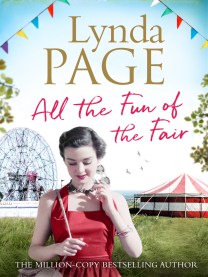
All The Fun of the Fair

What could be better to celebrate Mothering Sunday that a smashing e-book giveaway of All the Fun of the Fair by Lynda Page? I’m thrilled to have been given the chance to host this by lovely Bethan James at edpr.

All the Fun of the Fair was published by Canelo on 18th February 2018 and is available for purchase through the publisher links here.

All the Fun of the Fair

All The Fun of the Fair

It’s the 1950s and Grundy’s Travelling Fair arrives in town with a bang.

When night falls, the local town is drawn to the Fair. But when the fairgoers head home, the Grundys are left behind. Hours are long and the work back-breaking. But family and friends hold things together.

Gemma married into the lifestyle, her reliable husband Solomon making the work worthwhile. Solly’s Dad Samson is still the boss, but his other son, known as Sonny, is getting a reputation…

Times are changing. Can the family – and the fair – survive?

About Lynda Page

lyndacolour2.2e16d0ba.fill-300x300

Lynda Page was born and brought up in Leicester. The eldest of four daughters, she left home at seventeen and has had a wide variety of office jobs. She began her prolific writing career with her first novel during her 45 minute lunch hours at work. The book took 18 months to complete and was snapped up by a leading UK publisher who she went on to publish over 30 books with. She lives in a village in Leicestershire and is a full-time writer.

Best known for her Jolly’s Holiday Camp series, Lynda is writing a new series exploring life at a travelling fair in the 1950s for Canelo, with the first book, All the Fun of the Fair, out in February 2018.

You’ll find Lynda on Twitter @LyndaPage9Facebook and Goodreads.

Giveaway

All The Fun of the Fair

For your chance to win an e-copy of All the Fun of the Fair by Lynda Page, click here. Open internationally. Giveaway closes UK midnight on Sunday 18th March 2018.

Staying in with Tabitha Lord

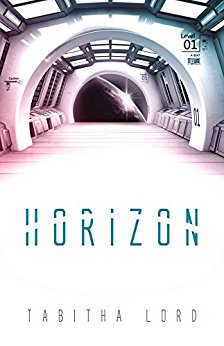
Horizon

I’ve very eclectic tastes in reading but I don’t read much science fiction so I thought it was about time to put that right on Linda’s Book Bag and invite science fiction writer Tabitha Lord to stay in with me and talk a bit about that very genre. Luckily she agreed!

If you’re an author who’d also like to stay in with me to tell me about one of your books, please click here for more details.

Staying in with Tabitha Lord

Welcome to Linda’s Book Bag, TabithaThank you for agreeing to stay in with me.

Tell me, which of your books have you brought along to share this evening and why have you chosen it?

I’ve brought HORIZON, the first book in my science fiction series. I chose this one because it’s a good idea to read them in order!

Horizon

(Brilliant because I know blog readers like to have a good series to get their reading teeth into.)

What can we expect from an evening in with HORIZON?

Well, it’s a space opera series. If you aren’t familiar with this sub-genre of sci-fi, loosely defined, a space opera has elements of warfare, adventure, romance, and generally an epic good vs. evil arc. Think Star Wars!

(Well, I’ve learnt something already. Never really thought about space opera before…)

When I start imagining a story, I usually begin with a question – some larger issue or ethical dilemma I want to explore. HORIZON began with a “what if” question. What if, on a remote planet with a small, isolated population, some of the people evolved differently from their neighbours and could do things like read minds and heal telepathically? What would that do to the fabric of the civilization? It was a great launching point. Naturally, those people who didn’t have the new gift felt very threatened by those who did and ended up nearly wiping out their peaceful neighbours. I also really wanted to explore the idea of what it means to be a hero. In the face of injustice and atrocities, who stands and fights? Who turns a blind eye? Anyway, in a nutshell, I like to say HORIZON is a WWII resistance story set in space!

(It sounds really interesting. I love the way writers like you explore the ‘what ifs’ of life Tabitha.)

My favourite review praised the book and said, “Bravo all around, Ms. Lord, for great prose, world-building, action/adventure, and for even-handedly dealing with themes of honour, friendship, and love throughout the story.” That’s really what I’d hoped to do.

(What a super review. I bet you were thrilled.)

What else have you brought along and why?

I brought a couple of photos that help sum up my writer’s life!

Sometimes when I need to clear my head, I wander on the beach. I’m blessed to live just a few miles from the ocean and it’s stunning in any season!

beach

(And that green glow you can see is my envy – I live about as far as you can get in the UK from any sea.)

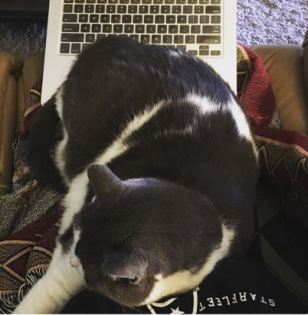
There are days when my cat thinks I need to snuggle him more than I need to hit my word count. He may be right…

cat

(I’m even more green now. I adore cats and miss having them around the house – though there are several cat related items as you can see.)

And some days, well, the picture says it all!

tears

Ha! I think there are several authors with a bottle or two of that about! Thanks so much for being on the blog and telling me about HORIZON, Tabitha. I’ve really enjoyed it.

Thanks for having me!

Horizon


Horizon

Caeli Crys isn’t living—she’s surviving. On the run after the genocide of her empathic people, she witnesses a spaceship crash near her hidden camp. When she feels the injured pilot suffering from miles away, she can’t help but risk discovery to save his life.

Commander Derek Markham awakens stranded on an uncharted planet. His co-pilot is dead, his ship is in ruins, and he’s only alive because a beautiful young woman is healing him with her mind.

As Derek recovers, Caeli shares the horror of her past and her fear for the future. When Derek’s command ship, Horizon, sends rescue, Derek convinces Caeli to leave with him. But his world is as treacherous as hers—full of spies, interplanetary terrorist plots, and political intrigue. Soon the Horizon team is racing to defend an outlying planet from a deadly enemy, and Caeli’s unique skills may just give them the edge they need to save it.

Published by Wise Ink, HORIZON is available for purchase here.

About Tabitha Lord

tabitha

Tabitha Lord currently lives in Rhode Island, a few towns away from where she grew up. She’s married, has four great kids, two spoiled cats, and lovable black lab. The house is noisy and the dinner table full! She holds a degree in Classics from College of the Holy Cross and taught Latin for years at an independent Waldorf school where she now serves on the Board of Trustees.

Her debut novel, HORIZON, won the Writer’s Digest Grand Prize for Self-Published fiction in 2016 and was named a finalist in the Next Generation Indie Book Awards and the Indie Excellence Awards.

You can visit her website, find Tabitha on Facebook and follow her on Twitter @tlordauthor. Tabitha is also on Instagram.

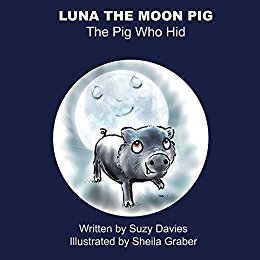
Luna the Moon Pig: The Pig Who Hid by Suzy Davies and illustrated by Sheila Graber

Luna the moon pig

My enormous thanks to the author Suzy Davies for a copy of Luna the Moon Pig: The Pig Who Hid in return for an honest review. I’m so grateful for all the wonderful children’s fiction I get to read now as there wasn’t a lot of money for books when I was a child.

Luna the Moon Pig: The Pig Who Hid is available for purchase here.

Luna the Moon Pig: The Pig Who Hid

Luna the moon pig

Luna Moon Pig is the cutest of pigs, with a moon face, chocolate-drop eyes, and the wiggliest of tails. The Millers adopt her, and give her to their daughter, Maria. But Moon Pig longs for her freedom, and she soon escapes!

A friendly cardinal bird, and a wise owl accompany her on her adventure – a magical journey to a wild wood, and beyond.

When Luna returns to her surrogate family, something is different! How has she changed? Who did she meet? She has made a discovery, and has a new philosophy about life! What she knows now will change her life, for good!

This is a fairy tale for all ages, that tells of a kind of magic – the magic of self-belief!

My Review of Luna the Moon Pig: The Pig Who Hid

Luna is the runt of the litter but that doesn’t prevent her having adventures!

What a glorious children’s book this is. Luna the Moon Pig is just delightful. Luna’s character is so well developed, being an insecure individual who learns to love herself through her adventures. She’s intelligent, appealing and I have a horrible feeling will make every child encountering this book want a pig as a pet, so parents – you have been warned!

There’s a fabulous plot that takes the reader from Luna’s birth through her new home and adventures to discovering her real value in life. All of this is told in excellent, straightforward language that not only conveys the narrative well and is interesting, but is accessible for slightly older children of around six to read independently so that their own literacy can be enhanced at the same time as they are being entertained.

The themes presented are so good for children to encounter and explore without feeling threatened personally. Luna lacks confidence in her appearance but comes to realise that beauty is on the inside too. She is aware of stranger danger and yet understands there is an exciting world to investigate but that family and home are important. I loved the blend of traditional fairy tale elements like wishes and magic alongside the more prosaic (and that’s not a criticism) aspects of simply having fun.

Alongside a smashing story of Luna’s adventures are wonderful illustrations by Sheila Graber that beautifully enhance the narrative. I loved the way the people in the book represent a wide range of ethnicities so that Luna the Moon Pig feels naturally inclusive and not contrived. Luna comes alive in these illustrations adding to the feeling that she is a very real character.

I think Luna the Moon Pig: The Pig Who Hid is a wonderful children’s book and cannot recommend it highly enough.

About Suzy Davies

suzy

Suzy Davies is a Children’s Author, Romance Novelist and Poet. Her new release, Luna The Moon Pig: The Pig Who Hid is illustrated by award-winning world-acclaimed illustrator and animator, Sheila Graber, famed for her work with Paddington Bear and family, Children’s Television and her illustration and animation of Rudyard Kipling’s Just So stories.

Suzy has also published Snugs The Snow Bear, a children’s book, and Johari’s Window, a romance novel.

Suzy has been a writer from an early age. She is a sociologist, and following her first degree at Leicester University, she read for an MA in English Literature at the University of Sussex, in England.

An educationist, Suzy was a Lead English Teacher and Literacy specialist. Suzy is passionate about nurturing future generations of writers, and to this end, she reviews books from time to time, and is an author contributor for The Young Writers’ Newsletter, an international online newsletter which is for young people who wish to write. She is also a regular contributor to The Writers’ newsletter online, where she posts her book reviews.

When Suzy isn’t behind a book, she likes the outdoors and enjoys communing with nature on the beach or by one of Florida’s lakes. She also likes to go to music concerts and enjoys visiting restaurants or mall shopping.

You can follow Suzy on Twitter @birdwriter7.

About Sheila Graber

sheila

Sheila Graber is a British animator and Visiting Professor to the University of Sunderland. She animated the children’s television series Paddington, has taught in schools and universities, and has won numerous awards.

You can follow Sheila on Twitter @sheilagraber.