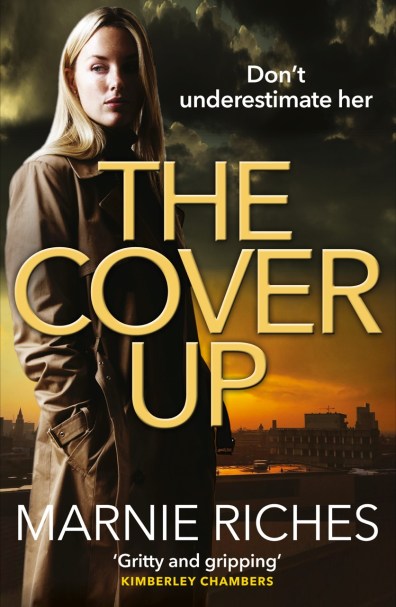
Crime Fiction – A Risk Free Walk on the Wild Side: A Publication Day Guest Post by Marnie Riches, Author of The Cover Up

Cover Up Jacket

I am utterly delighted that I have a copy of The Cover Up by Marnie Riches on my TBR and that Marnie is returning to Linda’s Book Bag today to celebrate today’s publication of The Cover Up.

I’ve been so lucky to feature Marnie before on the blog. When The Girl Who Had No Fear was published Marnie provided a brilliant post on heroines in crime fiction that you can read here. I was also privileged to help reveal Marnie’s Born Bad and you can find out more about that book here.

Published by Harper Collins’ imprint Avon Books, The Cover Up is available for purchase through these links.

The Cover Up
Cover Up Jacket

Watch your back. Everyone else will be.

How far would you go to protect your empire?

Manchester’s criminal underworld is reeling from the loss of its leader, Paddy O’Brien. In the wake of her husband’s death, Sheila O’Brien takes charge of the city, and for once, she’s doing things her way.

But she hasn’t reckoned with the fearsome Nigel Bancroft, a threat from Birmingham who is determined to conquer Manchester next.

As a power tussle begins, Sheila is determined to keep control of the empire she has won – even if it means she has to die trying…

Crime Fiction – A Risk Free Walk on the Wild Side

A Guest Post by Marnie Riches

Around the time that my debut crime-thriller – The Girl Who Wouldn’t Die – was published, it came as a surprise when my editor told me that women are overwhelmingly the largest consumers of crime-fiction. I was surprised because, when you consider the content of crime fiction – violence, criminality and abuse – it didn’t strike me as sitting well with the stereotypical interests of women. And yet I am a woman who both loves to read and write crime fiction. I have always adored the genre, ever since I was a child. I loved children’s mystery books just as much as fantasy tales. In adulthood, my taste remains the same. So, why was I so taken aback by the statistics?

Well, for a start, for many years, the chicklit market reigned supreme among women. When I began to write in earnest just over a decade ago, the covers that dominated in bookshops and on supermarket shelves were all pink. Bridget Jones and Love Actually were still everyone’s favourite films. Kathy Lette had paved the way with Mad Cows, writing in the late nineties about a female protagonist who walked through posh shops with frozen peas on her sore, post-natal boobies. Women seemed to need that in their lives. By the mid-late noughties, it was all Sophie Kinsella. Romance. Girly laughs. Nothing really gritty. Except, I was reading the Stieg Larsson Millennium Trilogy and I’m not a fan of girly. I had little love for a “post-feminist” literary landscape that was getting right on my emancipated tits. Seems I wasn’t alone!

The popularity of ultra-feminine, romantic women’s fiction has seen a decline over the past few years with readers migrating to psychological thrillers like Clare Mackintosh’s I Let You Go, CL Taylor’s books like The Lie and The Escape and, of course, Paula Hawkins’ The Girl on a Train. It seemed that women no longer wanted to read romance or about hot vampires in quite such huge numbers. They wanted domestic abuse, twisty dark tales…they wanted to be thrilled and challenged. And it isn’t just psychological thrillers that float women readers’ boats. We love good old fashioned police procedurals and it would seem we also love gangland thrillers. Martina Cole – the godmother of contemporary gangland fiction – has sold tens of millions of copies of her books worldwide. The likes of Kimberley Chambers and DS Mitchell follow in her wake. All female authors. All writing about gangsters and organised crime.

It was my publisher that suggested I write a series of gangland thrillers set in Manchester. The world of commercial fiction didn’t yet have a series set in the North West that would appeal to all those millions of Martina fans. I was delighted to take them up on their challenge, knowing that what readers and I would both enjoy was a walk on the wild side with absolutely no risk. This is why I think that the crime genre remains so popular and why readers – male and female – gravitate towards the sort of books I write. You can inhabit my protagonists’ bodies for a few hours and see what it’s like to live on a rough estate and work on the wrong side of the law. You can wield a gun to get what you want – in your imagination. You can drive that pimped up Porsche Panamera or the Mercedes 4 wheel drive and wear the Louboutins. You can be the boss! You can dole out death sentences and count the piles of cash, all the while, perhaps sitting in your kitchen in your pyjamas with a bag of frozen peas clutched to your chest!

(I think I’ll forego the frozen peas Marnie, but The Cover Up is something I’m definitely hanging on to!)

About Marnie Riches

Marnie - credit Phil Tragen

Marnie Riches grew up on a rough estate in Manchester. She learned her way out of the ghetto, all the way to Cambridge University, where she gained a Masters degree in German & Dutch. She has been a punk, a trainee rock star, a pretend artist, a property developer and professional fundraiser. Previously a children’s author, now, she writes crime and contemporary women’s fiction.

Marnie Riches is the author of The Girl Who Wouldn’t Die – the first installment of the George McKenzie crime thriller series, published by Maze and Avon at Harper Collins.
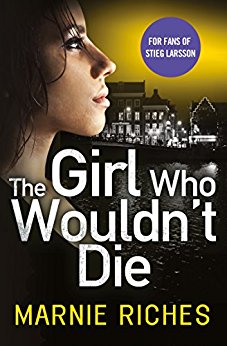
The girl who wouldn't die

In her spare time, Marnie likes to run (more of a long distance shuffle, really) travel, drink and eat all the things (especially if combined with travel) paint portraits, sniff expensive leather shoes (what woman doesn’t?) and renovate old houses. She also adores flowers.

You can follow Marnie on Twitter, visit her website and find her on Facebook.

There’s more with these other bloggers too:

Tour poster

Staying in with Kathryn Freeman

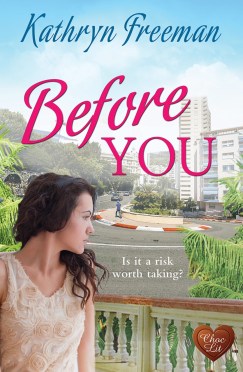
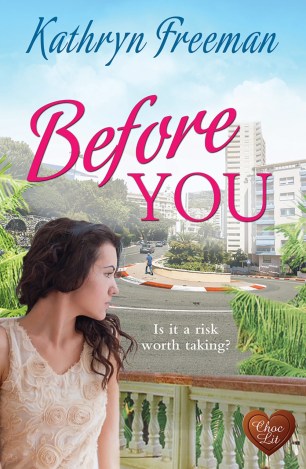
Before You

Some Linda’s Book Bag visitors feel like old friends and lovely Kathryn Freeman, author of Before You is one such visitor. Consequently, I’m delighted to be staying in with Kathryn today.

As well as reviewing Before You (here) I’ve been lucky enough to feature another of Kathryn’s books, Search for the Truth here, and to host a brilliant guest post from Kathryn all about the difficulty of making things up when you’re a writer. You can read that post here. In addition, when A Second Christmas Wish was released recently, Kathryn kindly told me about her Christmas wishes here.

If you’re an author who’d also like to stay in with me and tell me about one of your books, please click here for more details.

Staying in with Kathryn Freeman

Welcome back to Linda’s Book Bag Kathryn. Thank you for agreeing to stay in with me.

It’s not often I’m invited to stay in with an RNA media star winner, so believe me, the pleasure is all mine. Thank you for inviting me :-).

Ha! Thanks Kathryn. I still haven’t got used to the idea of being award winning! So tell me, which of your books have you brought along to share this evening and why have you chosen it?

I’ve brought Before You, because one of my favourite pasttimes is staying in with a racy romance – and the hero in Before You is a Formula One driver. I know, I know, that’s a terrible pun, but it is true. In fact give me a book to read (preferably a hot romance) and a glass of champagne (I brought some along, because you can’t read about Formula One without it) and I’m in heaven. Add some fish and chips, and you’ll never get rid of me…

(Books, champagne AND fish and chips! Love that combination.) 

What can we expect from an evening in with Before You?

Along with the romance (all my books are, at heart, a romance) you can expect a whirlwind tour of some glamorous places (Melbourne, Monte Carlo, Barcelona to name a few) and to learn how tough it is to be a racing driver. I thought they just drove a car, albeit a lot faster than I did. I didn’t realise that, because of g-forces and cockpit heat, each race is like running a marathon. But if life for my hero is tough on the track, it’s even harder off it. Especially when distractions come in the form of his smart-mouthed, very pretty, PR officer, and a troubled young boy. ‘Sexy, funny, romantic and glamorous’ is how one kind reader described it.

(Oh yes, I remember Aiden very well!)

What else have you brought along and why?

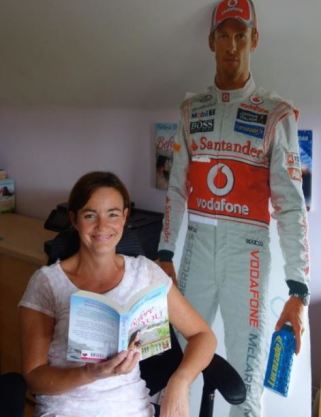
I’ve snuck in the cardboard cut out of Jenson Button that usually stands by my desk, because then we can say we had an amazing night in, drinking champagne with Jenson Button. And I confess, he was also the inspiration behind the book. it’s impossible to have JB’s handsome face looking down at you and not be inspired to write a romance featuring a racing driver!

JB3.JPG

I’ll let you have Jenson if I can have Bryan Ferry… Thanks so much for staying in with me (and Jenson) Kathryn!

Before You

Before You

When life in the fast lane threatens to implode …

Melanie Hunt’s job working for the Delta racing team means she is constantly rubbing shoulders with Formula One superstars in glamorous locations like Monte Carlo. But she has already learned that keeping a professional distance is crucial if she doesn’t want to get hurt.

New Delta team driver Aiden Foster lives his life like he drives his cars – fast and hard. But, no matter how successful he is, it seems he always falls short of his championship-winning father’s legacy. If he could just stay focused, he could finally make that win.

Resolve begins to slip as Melanie and Aiden find themselves drawn to each other –with nowhere to hide as racing season begins. But when a troubled young boy goes missing, everything is thrown into turmoil, including Aiden’s championship dream.

Before You was published by Choc Lit on 7th June 2016 and is available for purchase on Amazon UK and Amazon US.

About Kathryn Freeman

5707-2

Kathryn was born in Wallingford, England but has spent most of her life living in a village near Windsor. After studying pharmacy in Brighton she began her working life as a retail pharmacist. She quickly realised that trying to decipher doctor’s handwriting wasn’t for her and left to join the pharmaceutical industry where she spent twenty happy years working in medical communications. In 2011, backed by her family, she left the world of pharmaceutical science to begin life as a self-employed writer, juggling the two disciplines of medical writing and romance. Some days a racing heart is a medical condition, others it’s the reaction to a hunky hero…

With two teenage boys and a husband who asks every Valentine’s Day whether he has to bother buying a card again this year (yes, he does) the romance in her life is all in her head. Then again, her husband’s unstinting support of her career change goes to prove that love isn’t always about hearts and flowers – and heroes can come in many disguises.

You can follow Kathryn on Facebook, on Twitter @KathrynFreeman1 and visit her website.

Normal, Not Paranormal: A Guest Post by James Nally, Author of Games With The Dead

Games with the dead cover

It’s always exciting when there is an author and series to discover and I’m delighted to be part of the celebrations for James Nally’s Games With The Dead. I haven’t had chance to read Games With The Dead yet but am very much looking forward to doing so and it’s tucked away in my suitcase for an upcoming trip.

Games With The Dead is published by Avon Books, an imprint of Harper Collins, and is available for purchase through this link.

Games with the Dead

Games with the dead cover

Irish runaway. Insomniac. Functioning alcoholic.

Life is about to get complicated for DC Donal Lynch.

When a young woman is kidnapped, Donal is brought in to deliver the ransom money. But the tightly-planned drop off goes wrong, Julie Draper is discovered dead, and Donal finds his job on the line – a scapegoat for the officers in charge.

But when Donal is delivered a cryptic message in the night, he learns that Julie was killed long before the botched rescue mission. As he digs further into the murder in a bid to clear his own name, dark revelations make one thing certain: the police are chasing the wrong man, and the killer has far more blood on his hands than they could even imagine.

A gripping, brutal and addictive thriller, perfect for fans of Ian Rankin and James Oswald.

Normal, Not Paranormal

 A Guest Post by James Nally

Three books in and I’ve discovered that you lot, fans of crime fiction, can be a pragmatic and cynical bunch! Sure, your reviews to date have been mercifully kind, for which I’m eternally grateful. But there’s been one universal gripe, the sight of which threatens to snap my last functioning nerve. Typically, it goes something like this: ‘I love the characters / plots / humour, but not the paranormal stuff.’

You see, the hero of my series and latest novel, Games with the Dead, endures terrifying nocturnal encounters with dead people. More specifically, whenever DC Donal Lynch gets close to a recently-murdered body, that victim comes back to haunt and torment him until he finds their killer. It might sound ‘out there’ but I’ve got news for those who dismiss it as ‘hooky’: Donal Lynch’s surreal visions are not paranormal! In fact, there’s a good chance you’ve shared the same gruesome, hallucinatory phenomenon yourself, it’s just that your brain has consigned it to the recycle bin.

Donal suffers from a condition called Sleep Paralysis which afflicts a surprising amount of us. Indeed, one scientific study claims that over half of us experience at least one Sleep Paralysis episode during our lifetimes. So, what is it?

It all starts when we enter REM or dreaming sleep. Our bodies are hard-wired to go into paralysis so that we don’t act out those dreams and take someone’s eye out. When you wake, your dreams are supposed to snap off like a light, allowing normal bodily functions to return. But what if your dreaming brain doesn’t switch off? This is at the root of the sleep paralysis experience and where it all starts to get very weird…

What follows is an almost perfect neurological storm. You wake but you can’t move, so you panic. Your eyes are open, you can see the ceiling above you, but still you can’t move a muscle. You feel weight or pressure on your chest, convincing you that someone or something is climbing aboard! Your amygdala – the ‘fight or flight’ trigger in your brain that detects danger – is on high alert. In short, you’re awake, unable to move, terrified and convinced something is on top of your chest, intent on dispensing real harm.

Your brain grapples to justify the terror you feel, so it hallucinates your worst fear, typically a ghost, witch or, as depicted in Henry Fuseli’s famous 1781 painting “The Nightmare”, a demon.

nightmare

Indeed the ‘mare’ in the word ‘nightmare’ derives from the Norse word ‘mara’, which refers to a supernatural being – usually female – that lies on people’s chests at night suffocating them.

Every night, I leave my bedroom door open, but she never shows…

Anyway, historians now believe that victims of Sleep Paralysis triggered the hysteria that led to the infamous Salem Witch Trials of 1692. Accused witch Susan Martin had reportedly told Robert Downer that ‘some She-Devil would shortly fetch him away’. That night, Downer claimed ‘as he lay in his bed, there came in at the window, the likeness of a cat, which flew upon him, took fast hold of his throat, lay on him a considerable while, and almost killed him.’ Poor Susan and many other innocent women were executed because sufferers of sleep paralysis had woken to find a wizened old homicidal hag on their chests, for witches had become the bogeywomen of the day.

Studies have uncovered similar, localised tormentors. Two of the best-documented examples are Kanashibari in Japan, and the Old Hag of Newfoundland.

The term Kanashibari, meaning ‘to tie with an iron rope’, comes from the belief that ancient Buddhist monks could use a mystical restraint to paralyse others. The Old Hag phenomenon is recorded mostly in Newfoundland. Across the Caribbean, the local term for sleep paralysis is kokma, interpreted as the souls of unbaptised babies strangling victims in their sleep. Meanwhile, since the 1950s in the western world, alien abduction has become the latest culturally-influenced incarnation of sleep paralysis.

In his Sleep Paralysis episodes, Donal Lynch just happens to see people whose murders he’s investigating. And they’re always trying to tell him something. In book three, we finally found out why.

It turns out Donal has a gift, wrapped in a family curse, that only his mother can explain…

If she lives long enough…

(Crikey James. Having suffered from hallucinations last summer when I was ill, just reading your guest post has brought me out in goosebumps…)

About James Nally

james nally

James Nally was a journalist for 15 years, before leaving to become a producer and director of TV and film. This is his first novel, and is based on his experiences of his years writing about the murder victims of London.

You can follow James Nally on Twitter @jimnally.

There’s more with these other bloggers too:
GAMES with the DEAD blog tour banner FINAL

Coming Home to Island House by Erica James

island

It was last April when I was so excited to meet Erica James, author of Coming Home to Island House at the Deepings Literary Festival in my home town and to have afternoon tea with her. You can read about that event here. Having been privileged to help reveal the cover to Coming Home to Island House in July last year, I would like to thank Elaine Egan at Orion for sending me an advanced reader copy in return for an honest review.

I have also previously reviewed another of Erica’s books, The Dandelion Years here.

Coming Home to Island House will be published by Orion on 11th January 2018 and is available for pre-order here.

Coming Home to Island House

island

It’s the summer of 1939, and after touring an unsettled Europe to promote her latest book, Romily Temple returns home to Island House and the love of her life, the charismatic Jack Devereux.

But when Jack falls ill, his estranged family are called home and given seven days to find a way to bury their resentments and come together.

With war now declared, each member of the family is reluctantly forced to accept their new stepmother and confront their own shortcomings. But can the habits of a lifetime be changed in one week? And can Romily, a woman who thrives on adventure, cope with the life that has been so unexpectedly thrust upon her?

My Review of Coming Home to Island House

Marrying Jack Devereux will bring challenges for author Romily Temple that she can’t possibly anticipate.

I’ve always enjoyed Erica James’ writing, but I thought Coming Home to Island House was one of her best novels and I thoroughly, thoroughly enjoyed it. I felt the title was inspired as it made me think of John Donne’s ‘no man is an island’ because so much of the story is based around relationships. Erica James understands flawlessly how we interact with our families and within society, with an overall message that, indeed, no man or woman is an island. I found the exploration of how we become who we are, through the way we are treated by others, or we perceive we have been treated, was very thought provoking. Even the abominable Arthur was an understandable character (despite the fact I could quite cheerfully have throttled him with my bare hands).

And it is the people in Coming Home to Island House that make it such a compelling read. Arthur aside (whom I loathed without reservation even at the end of the book) I felt I could happily have spent time with any one of the people between the pages. Whilst some minor characters are slightly stereotypical, such as the pompous vicar, the protagonists are wonderfully drawn individuals. These are real, flawed, complex people with lives that are challenging, imperfect and captivating to the reader. I loved Romily and Florence in particular. They come from opposing ends of the social spectrum but have many similar qualities so that there is a very clear message that birth and money do not equal worth and value.

What I so enjoyed, was that whilst World War Two is so frequently a backdrop to what might be called women’s fiction, Erica James uses it as a catalyst for action so skilfully, providing a sensitive insight into the impact of those directly and indirectly affected by its events, giving the reader a wonderful understanding of the time and the people. There’s also a smashing depiction of village life and the way in which the mores of society evolved and changed at the time. I’d love to see this novel picked up for a television drama as I think it has all the elements of perfect Sunday evening viewing, exploring as it does social standing, adultery, illegitimacy, feminism and patriotism.

Coming Home to Island House has a cracking plot too. At times it is surprisingly almost brutal but always realistic so that whilst I began reading the story thinking smugly that I knew how it would all pan out, I found several surprises along the way, making for a highly entertaining and very satisfying read. It might sound trivial, but I also loved the way the chapters were constructed. In a busy life, a short chapter that really packs a punch, ends brilliantly and leads on the reader to the next part of the narrative, but is short enough to be read in its entirety in 10 minutes or so is just a delight.

Coming Home to Island House is Erica James at her very best. It has wonderful characters, an engaging plot and mature, thought-provoking themes making it a fulfilling, hugely enjoyable read. I really recommend it.

About Erica James

erica james

With an insatiable appetite for other people’s business, Erica James will readily strike up conversation with strangers in the hope of unearthing a useful gem for her writing. She finds it the best way to write authentic characters for her novels, although her two grown-up sons claim they will never recover from a childhood spent in a perpetual state of embarrassment at their mother’s compulsion.

The author of many bestselling novels, including Gardens of Delight, which won the Romantic Novel of the Year Award, and her Sunday Times top ten bestsellers, Summer At The Lake and The Dandelion Years, Erica now divides her time between Suffolk and Lake Como in Italy, where she strikes up conversation with unsuspecting Italians.

You can find Erica on Facebook, follow her on Twitter and visit her website.

Staying in with Holly Seddon

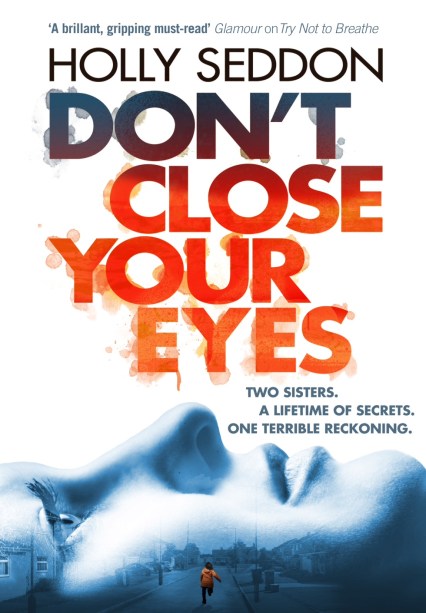
Don't Close Your Eyes_cover

I’m so thrilled to welcome back Holly Seddon, author of Don’t Close Your Eyes, to Linda’s Book Bag. Holly scared the living daylights out of me with a guest post entitled Closer to Home when Don’t Close Your Eyes was originally released and you can read that post here.

If you’re an author who’d also like to stay in with me and tell me about one of your books, please click here for more details.

Staying in with Holly Seddon

Welcome back to Linda’s Book Bag Holly. Thank you for agreeing to stay in with me. Tell me, which of your books have you brought along to share and why have you chosen it?

The book I’ve brought along is Don’t Close Your Eyes, my second novel. I’d describe it as a thriller wrapped in a family drama. It follows the lives of Robin and Sarah, non-identical twins who were separated as children and who are now broken in different ways. Once a successful musician, Robin is now a recluse living in a state of paranoia – with good reason. Sarah has been thrown out of her home, kept from her little girl and believes that her twin is the one person who can save her, whatever the cost.

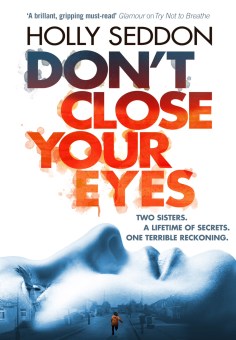
Don't Close Your Eyes_cover

What can we expect from an evening in with Don’t Close Your Eyes?

I thought I’d share some reader quotes:

“This book really was excellent. I loved the characters (except the ones I loved to hate!), the chapters set in the 90s were such a treat to read, and there were plenty of twists and turns that I did not see coming.” – NatalieBB on Amazon

“This is a novel about two sisters, twin sisters, Sarah and Robin. The novel alternates between Sarah’s first person narrative and Robin’s third person narrative. It also alternates between the present day and the past, starting in 1989 and then slowly moving forward year by year to trace the lives of the girls; gradually revealing the complex, dysfunctional family life of Sarah and Robin and gradually revealing why they are struggling so much in their present.” – Katherine Sunderland

“Don’t Close Your Eyes is the much anticipated second novel by Holly Seddon. If you’re going to start reading this one, you’re going to have to make sure that you don’t have any plans for the rest of the day, it’ll grab you from the first page and you literally won’t be able to put it down until you have finished, prepare to be hooked by Holly.” – Jacob Collins

(Those are wonderful responses Holly and as I know those particular reviewers are brilliant, you must be thrilled.)

What else have you brought along and why? 

Well, Robin from Don’t Close Your Eyes is a former rock guitarist and she and her close friend (no spoilers) spend a lot of time playing guitar as teenagers, channelling their adolescent rage into music as so many of us do. So I think the music would be classic rock, nothing too heavy for our cosy evening though!

So much of Don’t Close Your Eyes features the girls’ 90s childhoods and teen years, so I think we can have some 90s food and drink. Maybe some Tango for the non-drinkers, and I’m afraid – if we’re true to the era – probably some alcopops and Malibu and Coke for the rest. I’ll bring some wine anyway though!

Let’s have some Pop Tarts and Choco Dips for those with a sweet tooth, some Ferrero Rocher for the fancier among us. Definitely some Micro Chips. And whatever party food we have, you can be sure there’ll be some sour cream dip on the side. I feel like my whole 90s experience was dipped into sour cream.

(Crikey Holly. I’m not sure staying in with you is good for my waistline! Thanks so much for sharing Don’t Close Your Eyes with us.)

Don’t Close Your Eyes

Don't Close Your Eyes_cover

Robin and Sarah weren’t the closest of twins. They weren’t even that similar. But they loved each other dearly. Until, in the cruellest of domestic twists, they were taken from one another.

Now, in her early 30s, Robin lives alone. Agoraphobic and suffering from panic attacks, she spends her days pacing the rooms of her house. The rest of the time she watches – watches the street, the houses, the neighbours. Until one day, she sees something she shouldn’t…

And Sarah? Sarah got what she wanted – the good-looking man, the beautiful baby, the perfect home. But she’s just been accused of the most terrible thing of all. She can’t be around her new family until she has come to terms with something that happened a long time ago. And to do that, she needs to track down her twin sister.

But Sarah isn’t the only person looking for Robin. As their paths intersect, something dangerous is set in motion, leading Robin and Sarah to fight for much more than their relationship…

Don’t Close Your Eyes is available for purchase here.

About Holly Seddon

Holly Seddon bw

Holly Seddon is a full time writer, living slap bang in the middle of Amsterdam with her husband James and a house full of children and pets. Holly has written for newspapers, websites and magazines since her early 20s after growing up in the English countryside, obsessed with music and books.

Her first novel Try Not To Breathe was published worldwide in 2016 and became a national and international bestseller.

Try not to breathe

You can follow Holly on Twitter @hollyseddon, visit her website or find her on FacebookPinterest and Instagram.

Sports and Literacy: A Publication Day Guest Post by Jordan Lyons, Author of Crunch Time Cam

Crucnh time cam

When I was inspecting, consulting and advising on literacy and English I was a firm advocate of tying in sport and literacy as a means to involve as many children as possible. With this in mind, when I realised Jordan Lyons had a new sports based book, Crunch Time Cam, out for young readers I had to ask him onto Linda’s Book Bag to discuss his thoughts about sports and literacy and he has written a super guest post to share today.

Crunch Time Cam is published today, 9th January 2018, and is available for purchase here.

Crunch Time Cam

Crucnh time cam

Basketball is in Cameron Flint’s blood. His brothers are taking the state by storm with their play on the school’s varsity team. Cam hopes he can do the same one day, but he has a few years to go.

Now that he’s finally old enough to join the local league, Cam is eager to live up to the family legacy there. He has the talent, but there’s only one problem: Cam’s teammates have barely played basketball before. Can Cameron’s explosive play elevate his team to the level of league champions or will he fail to live up to the family name?

Crunch Time Cam is a fast-paced, action-packed sports novel for young readers that reminds us that basketball is a team sport.

Sports and Literacy

A Guest Post by Jordan Lyons

For kids (and all of us, really), life can be an aggregation of anxiety and stress. It’s full of social and academic pressures. Children and teens seek an oasis from this drudgery just like we do. Often they turn to tiny screens filled with social media, video games, or whatever their favorite apps happen to be. Those distractions aren’t necessarily bad things, but suggesting activities such as sports and literacy can have a big impact on how your child develops and create lifelong habits for them.

Strangely enough, it seems like sports and literacy are often pitted against one another. It’s the nerd versus jock stereotype, right? But in actuality, they can go hand in hand and help to build similar habits. The benefits of these two facets of life are numerous, but I’m going to detail some of my favorites:

Sports & Athletics

Social Skills

Sports can develop or round out many different social skills. Teamwork, participation, effort, practice, dedication, communication – I feel like I could go on and on. These skills won’t be limited to the playing field either. They will use them in school and in their careers.

Health

Exercise is an obvious one, but it is crucial to kid’s lives:

Higher activity rates in children are correlated with higher test scores.

Exercise lowers the risk of many diseases and obesity.

Frequent exercise decreases symptoms of depression and anxiety in children.

Life Lessons

Athletics are competitions and in competitions, there are usually winners and losers. Sports can help kids learn how to cope with the fact that life is not perfect and sometimes you might lose or fail. Often times, those moments are the ones where we learn the most and motivate us to improve.

Literacy & Reading

Walk In Someone Else’s Shoes

The world of literature is filled with characters with different stories and worldviews. Connecting with these characters who have different values or perspectives and seeing that these characters are just like the reader produces empathy for others that kids might not get otherwise. Often times these experiences might not come unless you can travel the globe. The good news is that going to your local library is more affordable than traveling the world.

Education

Reading outside of the formal classroom is a large boon to your child’s learning. It will boost their vocabulary and make them more comfortable with school texts. Research indicates that when children are reached with high quality early learning experiences, they are 40% less likely to fall behind in school and 70% more likely to graduate from high school.

Health

Health can be a key benefit of reading, too. But perhaps it is less obvious than in sports. Reading has been shown to improve memorization. Getting engrossed in a story also reduces stress or anxiety. Creating a bedtime ritual of reading will also aid in sleep.

The great thing about sports and literacy is that you can start building passion and habits for them right now. It is as easy as heading to your local library, turning off the TV, reading to your kids, or going outside to play kick a soccer ball as a family.

About Jordan Lyons

Jordan Lyons

Jordan Lyons is an author and podcaster based in Central Florida. His new book, Crunch Time Cam, following a young basketball player struggling to live up to the family name is available for as a paperback or an e-book.

To find out more about Jordan, visit his website, find him on Facebook or follow him on Twitter @lyonsjor.

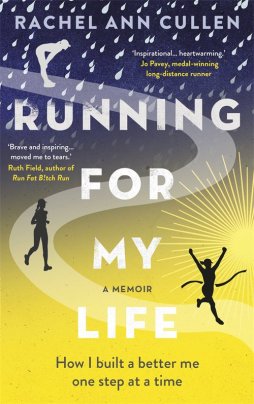
Running for My Life by Rachel Cullen

Running for my life

My grateful thanks to Beth Eynon at Blink for an advanced reader copy of Running For My Life: How I Built a Better Me One Step At A Time by Rachel Cullen in return for an honest review.

Running For My Life: How I Built a Better Me One Step At A Time will be published by Blink, the adult non-fiction imprint of Bonnier Zaffre on 11th January 2018 and is available for purchase here.

Running For My Life: How I Built a Better Me One Step At A Time

Running for my life

Suffering from depression but desperate for ‘normality’Rachel Cullen found herself in failing relationships, the wrong career and a reliance on alcohol and chocolate to get her through each day. Stuck in an endless cycle of mental misery, she put on a pair of old trainers.

She’d never been able to think of herself as a ‘runner’ before, and the first time she forced herself out the door, she knew it would hurt. Everywhere. She just didn’t realise how much it would heal her, too.

Interspersed with Rachel’s real diary entries, from teenage non-runner to London Marathon finisher (just months after giving birth), she questions if she really can outrun her demons.

My Review

of

Running For My Life: How I Built a Better Me One Step At A Time

With a history of depression and self-loathing Rachel Cullen knows all about how hard life can be, but she also knows how to get back on track.

I wasn’t sure what to expect from this book, fearing it might be too introspective and personal an account for me to relate to, but I thought Running For My Life was excellent. Although it is non-fiction, Rachel Cullen has a literary turn of phrase so that at times this felt more like a narrative than an exposition. Rachel Cullen is not afraid to tell it like it is, with a healthy smattering of judiciously used expletives and just the right balance of diary extract, explanation and a wonderful first person account that draws the reader along with her journey and engrosses them in what she has to say. I liked the way in which the diary entries were not in chronological order as they show the way in which Rachel’s personality vacillated and fluctuated over time. Their out of synch inclusion reflected her life and attitudes over the years perfectly.

Although I have absolutely no interest in running a marathon, readers don’t need to have any of the same ambitions or problems as Rachel has endured to enjoy this book immensely.  However, I did indeed find many echoes of my own life (I was that round child who was useless at sport) or of those I know (I have a bi-polar family member who suffers from social anxiety disorder). Even if other readers have none of the same experiences, I think we’ve all held some self-doubt at some point in our lives, and the raw honesty of this writing allows us to comprehend fully exactly what Rachel has gone through. I feel I have a far better understanding of Rachel, of myself and of humanity having read Running for My Life.

I thought Running for My Life was honest, interesting and encouraging without being glib or simplistic. I recommend it most highly to those with mental health issues themselves or in people they know and equally to those who simply want a fascinating, surprisingly entertaining and informative read. It’s a super book.

About Rachel Cullen

Rachel Cullen

Rachel Cullen has always loved to write. She graduated from Northwestern University with Honors in Religious Studies and then earned her MBA from the NYU Stern School of Business with a focus in marketing and finance.

Before Rachel started writing, she worked in brand strategy consulting and marketing for over ten years, moving between San Francisco, London and Manhattan.

You can follow Rachel on Twitter @writtenbyrach. Rachel also has a blog and you can find her on Facebook.

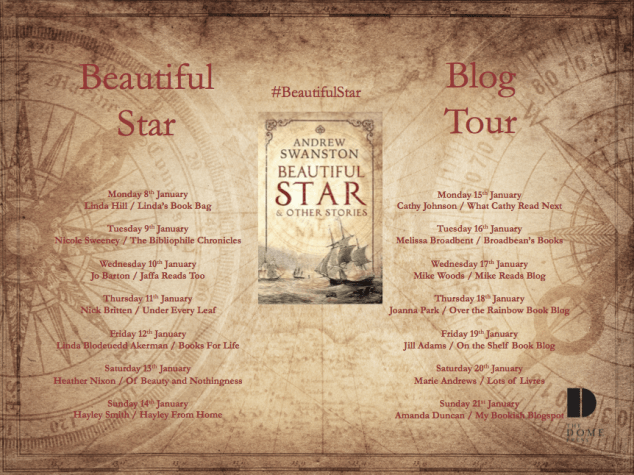
The Happy Lot of the Writer: A Guest Post by Andrew Swanston, Author of Beautiful Star

cover.jpg

From the very first moment I was introduced to the Beautiful Star and Other Stories collection of short stories by Andrew Swanston I was intrigued. Consequently, I’m delighted to be part of the launch celebrations for the collection with a fascinating guest post from Andrew into the inspiration for them.

Beautiful Star and Other Stories is published by The Dome Press on 11th January 2018 and is available for purchase here.

Beautiful Star

cover.jpg

History is brought alive by the people it affects, rather than those who created it. In Beautiful Star we meet Eilmer, a monk in 1010 with Icarus-like dreams; Charles I, hiding in 1651, and befriended by a small boy; the trial of Jane Wenham, witch of Walkern, seen through the eyes of her grand-daughter. This is a moving and affecting journey through time, bringing a new perspective to the defence of Corfe Castle, the battle of Waterloo, the siege of Toulon and, in the title story, the devastating dangers of the life of the sea in 1875.

The Happy Lot of the Writer

A Guest Post by Andrew Swanton

I am often asked where the ideas for my stories come from.  There is seldom a simple answer. I first learnt about the fate of Beautiful Star, a fishing ‘fifie’ on its maiden voyage, for example, from a newspaper cutting on the wall of the ancient church of the village of St Monans, thought  that it would reward further research, and was soon captivated by the way of life of the Scottish herring fishers and their families before the advent of steam.  It was my first story and of course I had no idea then that it would lead on to the other six in this collection and to five (so far) historical novels. What a stroke of good fortune that walk along the Fife coastal path and the visit to the little church turned out to be.

By contrast, I came across the stories of the English Button Seller and the French Drummer Boy while researching for Waterloo: The Bravest Man, a fictionalised account of the gallant defence of Hougoumont at the Battle of Waterloo, and the story of Jane Wenham in A Witch and a Bitch while researching the history of witchcraft.  The Castle, the story of Lady Mary Bankes’s extraordinary defence of Corfe Castle during the War of the Three Kingdoms resulted from a chance visit to Corfe, and The Flying Monk from a visit to Malmesbury.

Ideas and stories come from all manner of places and experiences, and I much enjoy keeping an eye out for promising material, just as I enjoy the research that inevitably follows. In this, the author’s lot is a happy one. Without exception, every expert, academic, librarian and local historian has proved generous with time and knowledge. I think of meeting and talking to them as a perk of the job.

I am most attracted by stories which are either interesting footnotes to major events – Waterloo, The War of the Three Kingdoms – or are driven by a strong or unusual character – Sir Cloudesley Shovell in HMS Association, Mary Bankes in The Castle – or simply deserve to be more widely known – Jane Wenham, Eilmer the Flying Monk.  And I like to write within the framework of real events. It creates a discipline.

Three of the stories in the collection are written in the first person, four in the third. The choice was driven simply by the demands of the narrative and I invented two of the narrators to enable this.  All seven include both real and fictitious characters. Making an interesting character up is just as much fun as researching a real one.

There is one story not mentioned above. It is the shortest and most whimsical, despite being based on a well-known event. The Tree is the Boscobel oak in which Charles II and William Careless hid after the Battle of Worcester.  It does not fit comfortably into any of the categories above, except perhaps by being a footnote to a major event, and I have included it for no other reason than it offers a light-hearted change of pace.

My Review of Beautiful Star and Other Stories

A collection of seven richly historical short stories.

I really enjoyed the Beautiful Star collection. I especially liked the way in which these historically accurate narratives are given added depth and warmth by the personal viewpoints, particularly those written in the first person. I felt as if I had a better understanding of the past through the eyes of these characters. So often history is the story of the rich, the influential and the famous and I appreciated that those less renowned were brought alive for me and given centre stage.

I also enjoyed the quality of the writing. Andrew Swanton writes with a tone that matches extremely well the eras of the stories. His use of the senses adds a realism and colour. Penny’s smelling like a ‘rotten haddock’ for example leaves the reader in no doubt about her! In fact, the descriptions in the opening story, Beautiful Star were my favourites because I could picture the boat building process so vividly. That said, it was Emily’s story in A Witch and A Bitch that I found most moving and disturbing. I think it’s because we don’t appear to have moved on very far in our treatment of those who seem ‘other’ since the 1700s when this narrative is set.

There’s an unsentimental reality, a harshness and a sadness behind so much in this collection that reading these stories made me grateful I am who I am living when I do.

This is quite an eclectic mix of stories and I think there is something in Beautiful Star and Other Stories for all readers to enjoy. Certainly they are historical in context, but they are about humanity and that’s what appeals most to me.

About Andrew Swanton

Andrew Swanston Headshot

Andrew read a little law and a lot of sport at Cambridge University, and held various positions in the book trade, including being a director of Waterstone & Co, and Chairman of Methven’s plc, before turning to writing.

Inspired by a lifelong interest in early modern history, his Thomas Hill novels are set during the English Civil Wars, and the early period of the Restoration.

Andrew’s novel, Incendium, was published in February 2017 and is the first of two thrillers featuring Dr. Christopher Radcliff, an intelligencer for the Earl of Leicester, and is set in 1572 at the time of the massacre of the Huguenots in France.

The Dome Press is publishing Beautiful Star, a collection of short stories documenting a journey through time, bringing a new perspective to the defence of Corfe Castle, the battle of Waterloo, the siege of Toulon and, in the title story, the devastating dangers of the life of the sea in 1875.

You can follow Andrew on Twitter @AndrewSwanston and visit his website. You’ll find him here on Facebook.

There’s more with these other bloggers too:
Beautiful star poster

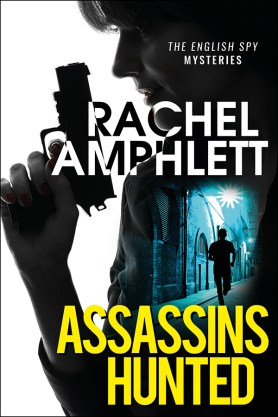
5 Things You Might Not Know About Rachel Amphlett, Author of Assassins Hunted

Assassins Hunted Cover MEDIUM WEB

I’m thrilled and a little bit star struck to welcome back Rachel Amphlett to Linda’s Book Bag today in celebration of her new release Assassins Hunted. Even better, Rachel has agreed to tell me some aspects about her that others might not know so I’m very excited to share those with you. Previously, Rachel wrote a brilliant post (here) about Living Locations when another of her books, Scared to Death was released.

Assassins Hunted is released today 7th January 2018 and is available for purchase here. Assassins Hunted is the first book in Rachel Amphlett’s new English Spy Mysteries in an ongoing story involving Eva Delacourt and will be followed by Assassins Vengeance on 14th January and Assassins Retribution on 21st January.


Assassins Hunted

Assassins Hunted Cover MEDIUM WEB

Mother. Widow. Spy.

Eva Delacourt has been in hiding for three years after her fiancée was assassinated in cold blood outside the British embassy in Prague.

She thought she was safe.

But someone in the mysterious Section has betrayed her, and now she’s on the run for her life, sworn to protect the six-year-old boy she adores.

Her enemies are closing in, and the odds are not in Eva’s favour. For Eva, the nightmare is just beginning…

5 Things You Might Not Know About Me

A Guest Post by Rachel Amphlett

With another new series published to kick off 2018, I thought it might be a good idea to let you know a little bit about me, as this might be the first time we’ve met. Here we go!

1. I have two passports

I emigrated to Australia from the UK 11 years ago, so now I have an EU passport and an Australian one. It makes it easier for travelling and I love having the EU one for getting around the UK and Europe – it makes things much simpler.

I had to take a citizenship test and attend a ceremony before I could apply for my Australian passport. It was so funny – there was a really dodgy singer providing the entertainment, and then every new citizen had to get up on stage, shake hands with the mayor of the local council, and be presented with our citizenship certificate and a grevillea sapling (a tree) to take home. My rescue greyhound ate the tree within three days of my being presented with it…

2. I love to travel

The moment I land back at Brisbane airport, I’m already planning the next trip away. I love everything about travelling – even the long-distance flying – there’s something enjoyable about setting out on a journey: people watching; catching up with films or a book while flying; and then landing somewhere completely different and soaking up the culture and meeting new people.

(Absolutely agree Rachel – I love travelling.)

3. I’m scared of horror films

You will never, ever find me watching a horror film!  I think it has something to do with the fact that I have an overactive imagination. The only true horror film I’ve ever watched was Halloween 3 when I was about 12 years old. Never, ever again – even the beginning of Poltergeist freaked me out!

Some TV shows can send chills down my spine, too. I recently got hold of the box set of the first three series of Luther and since then have heard about the episode with the killer under the bed – I don’t know if I can watch the rest of it!

(I’m a wimp too – I avoid horror books as I find them too scary.)

4. I’ve crashed a helicopter. Five times.

Okay, so it wasn’t a real helicopter, but the crashes were still pretty spectacular.

I’ve written two espionage series (the Dan Taylor series, and now the English Spy Mysteries series), and I’ve always been a stickler for research ­– more so if I can get away from the desk and the internet, because hands-on research is a lot more fun!

three lives down

I had a scene in one of my books, Three Lives Down, where a daring prison rescue is made using a helicopter landing right in the middle of the abandoned exercise yard. I’ve never attempted such a thing myself, and there’s a company in Brisbane that offers sessions in a Black Hawk helicopter simulator, so I thought “why not?”

Put it this way – be grateful I’m not a helicopter pilot. After five attempts at taking off only to ditch the aircraft in the dirt every time, the instructor eventually took pity on me and got me up in the air – after that, it was a ball. And I’m definitely better as a gunner – those enemy tanks didn’t stand a chance…

(I’ve only been in a helicopter once to view the Iguassu Falls, but I’m pretty glad you weren’t the pilot!)

5. I’ve studied forensic science and forensic psychology

I wanted my Kay Hunter series to be as realistic as possible, so apart from gathering information and guidance from both active and retired police officers this past year, I’ve also undertaken a couple of short courses to give me an understanding of the science behind the job.

FutureLearn is an online initiative that offers free courses from some of the best universities around. It started with offerings from UK universities, but now includes some international ones as well.

I first studied forensic psychology to gain more insight into police interviewing techniques, and have completed a forensic science course through the University of Strathclyde.

All of this has given me fresh insights into what my characters might have to deal with and, of course, my imagination has been working overtime with new story ideas!

(I love Futurelearn Rachel – I’ve done their creative writing course twice as well as others on Hadrian’s Wall and World War One. Thanks so much for telling us five things we might not have known. Good luck with this new series.)

About Rachel Amphlett

rachel 2016-2141.jpg

Rachel Amphlett is the bestselling author of the Dan Taylor espionage novels and the new Detective Kay Hunter crime thriller series, as well as a number of standalone crime thrillers.

Originally from the UK and currently based in Brisbane, Australia, Rachel’s novels appeal to a worldwide audience, and have been compared to Robert Ludlum, Lee Child and Michael Crichton.

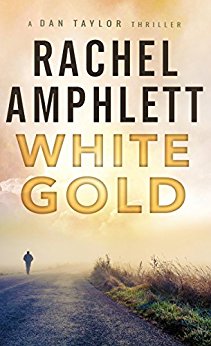
She is a member of International Thriller Writers and the Crime Writers Association, with the Italian foreign rights for her debut novel, White Gold, being sold to Fanucci Editore’s TIMECrime imprint in 2014.

white-gold

An advocate for knowledge within the publishing industry, Rachel is always happy to share her experiences to a wider audience through her blogging and speaking engagements.

You can visit Rachel’s website, find her on Facebook and follow her on Twitter @RachelAmphlett.

An Interview with Onder Deligoz, Author of Love After You Have Gone

Love After You Have Gone

One genre I don’t feature enough on Linda’s Book Bag is fiction in translation so I’m delighted to be putting that right today with an interview with Onder Deligoz, author of Love After You Have Gone. However, more importantly, Onder explains why his book is in translation.

Love After You Have Gone is available for purchase here.

Love After You Have Gone

Love After You Have Gone

In one of Istanbul’s most lively streets one night, a drunk, well-dressed young man slips in front of a closed store with its shutters pulled down. Although the body can not move, his mind was still alive. Everything he heard and everything he saw leads him to his past.

It was childhood love that had flourished in the midst of the social crises in the 90s… The emotional intimacy between the son of an ordinary family oppressed in a secular-religious struggle and the young daughter of a family who emigrated from the East due to the anti-terror unit’s pressure and fear of death.

Love After You Have Gone tells the story of the people oppressed under secular and religious radicalism’s ‘pressure alliance’. It introduces the lives that hatred and alienation have defeated in the back streets. It strikes the hypocrisy behind religiousness in the face with real-life examples. It tells us the riot of a teen who is struggling with the hypocrisy of being hit with love while trying to forget the pain of another one. It sheds light on the recent history of Turkey becoming a repressive regime.

An Interview with Onder Deligoz

Welcome to Linda’s Book Bag, Onder. Thank you so much for agreeing to answer some questions on my blog about your writing and Love After You Have Gone in particular. Firstly, please could you tell me a little about yourself?

Previously, I would define myself with only one word. Journalist. Now, I am defined with a few words. A journalist who is paying a price. If one desires to be an independent journalist in countries like Turkey, he/she must be aware of factors such as the antidemocratic pressure and the possible loss one might be in. In the newspaper and television companies I worked at, I prepared several newsletters and documentaries on the uprising political pressures that are causing social disorder. Chasing only the truth for news, I am just one of the many journalists who are deprived of their freedom of speech and press rights. For that reason, I am one of the journalists who is wanted to be silenced. The institution I worked for was forcefully shutdown, and nearly 200 of my coworkers were arrested. Hundreds of my other coworkers have abandoned the country and are living  in exile due to life and imprisonment threats. I am one of them as well. Around the globe, there are many evil leaders striving to silence journalists and writers so that the people would not be able to  retrieve accurate information. However, just like my coworkers, I will not give up and continue to write as a journalist. This is because writing our thoughts, beliefs, emotions, and dreams is no different than breathing.

(I can’t imagine how it must feel to be working under such pressure Onder.)

Without spoiling the plot, please could you tell us a bit about Love After You Have Gone?

Love After You Have Gone, describes love stories in the search for life, as families are influenced and bombarded with radicalism. As the 1990s are described in this story, there are kids and teenagers who have terrible lives due to radical religious rules, and there is their struggle as they try to keep straight. The hypocrisy and the unpardonable sins that hide behind Religion can be seen in real life examples. As a young man keeps his lost love in his heart with a bloody photograph, and looks for a new lover to forget the past, he is halted by the inexorable radicalism as he gives effort to fight against this hypocrisy.  Every sentence in this book, describes how lovers struggle in countries with strict religious and political enforcements, and how threat can lead to deaths, how families are broken down. And it also describes the ones who rejoice  in such mercilessness.

You’re a journalist by trade. How did writing fiction compare with journalism?

Journalism is a profession that is concentric with both life and society. As you do your job, you get to know different lives all around the globe as you analyze and observe them like sociologists or anthropologists. This experience expands your imaginary world to a point where it is larger than your reality. As I sought for the truth and gained experience as a journalist,  I realized that this painted my imagination with new colors and sounds. After a while, you want to have others hear these sounds that boil in your imagination. Every new color and sound seated in your conscience, turns into a secret that you cannot hold within you. And instead of whispering this secret to each individual’s ear, you want to shout out on the top of your lungs to a crowd. You want people to know the greening spring, shining sun, and the wild storm within you. These words become your companions. You shout out your secrets as you write them for such crowds. You gift your audience your imagination that you developed through your experiences, so that they can grow new dreams within themselves.

(What a beautiful way of describing the writing process.)

There are some challenging themes in Love After You Have Gone. Why was it important for you do explore oppression, love and  hypocrisy in this way?

Hypocrisy is the name of the lovers’ executioner. I am not only creating boundaries within love. Hypocrisy is the murderer of anything that is done through one’s heart and love. Hypocrisy is insidious. Loves and friendships continue as hypocrisy hides itself within them. It really can be senseless when it comes to love. However, it will show up one way or another even if it is on the death bed. It will transform loving hearts into a fire pit. It will only leave back ashes and disappointment. Love After You Have Gone  describes the hypocrisy in radical religionism and how lives and lovers are destroyed by the social pressure. There are stories of the struggles of those who rebel against this hypocrisy in Love After You Have Gone. And this struggle is the story of societies who have not yet been introduced to real democracy.

How involved were you in the translation of Love After You Have Gone from Turkish to English?

Love After You Have Gone was actually going to be introduced to the audience in Turkey, in the Turkish language. However, after the July 15, 2016 coup attempt, many journalists were threatened so I had to move out of the country. It would not be comparable to the hardships my coworkers have been through in prisons of course; however, living in exile is just another form of imprisonment. I didn’t want this novel that I wrote to be a victim of this punishment. I said to myself, “Even if my novel can’t be introduced in Turkish, as a journalist ready to fight for the truth, I will have to do the best I can.” It shouldn’t only be only Turks who hear my voice, it should be people from all around the globe. Because, now, shouting out the truth and the good is very crucial. For that reason, I translated my novel into the English language. Headquartered in London, my publisher, Bookcity.Co, prepared my novel for publication and allowed for it to be placed in amazon.com, barnesandnobles.com, and iTunes for further distribution. Love After You Have Gone now tells stories of the struggles lovers face with hypocrisy , to whole new world that exceeds the limits of  prison walls.

Love After You Have Gone has a cover that seems very intense. How did that image come about and what were you hoping to convey (without spoiling the plot please!)?

I would like to thank my publisher Bookcity.Co, who helped me with the cover. They executed a well done job. This cover represents the huge chaos in a big city, the social disorder that is uprooted with hate, the broken hearts, and the average lives contaminated with radicalism. At the same time, it represents the determination of youngsters who are trying to fight the dark truth of radicalism.

When you’re not writing, what do you like to read?

When I am not writing, I prefer to read. Lately, I have been reading novels about Nazi Germany. Books like Alone in Berlin describes the civil struggles against Hitler’s dictatorship, and I had the chance to read this again. These books that describe real events and stories from those time periods, are great sources to use when comparing to today’s world. These books are like school textbooks that describe methods of cruelty and oppression of different time periods. At the same time, graphic novels started to appeal me a little more. The graphics add a different richness and taste to the enjoyment that one has while reading. It also takes me back to the childhood comic books I read and the enthusiasm I had.

If you had 15 words to persuade a reader that Love After You Have Gone should be their next read, what would you say?

When you witness the struggle to fight against the religious hypocrisy, you would have a different perspective on life and love.

Thanks so much for enlightening us about your writing Onder.

About Onder Deligoz

onderdeligoz

Onder Deligoz ia a Turkish writer and journalist. He graduated from Istanbul University’s Department of Journalism and has worked as a reporter, editor and director in various newspapers and television since 2004. Love After You Have Gone is his first novel.

You can find out more via Onder’s website and on Facebook or by following him on Twitter @onderdeligoz.