Accidental Thriller, A Guest Post by Stephen May, Author of Stronger Than Skin

cover

When you’ve gone to the same university as an author, what could be better than to help celebrate their latest book? I’m delighted to be part of the launch celebrations for Stronger Than Skin by Stephen May. I asked Stephen to tell me a bit about how he wrote a story that became both a thriller and a love story and thankfully he agreed to do so!

Stronger Than Skin was published on 16th March 2017 by Sandstone Press and is available for purchase in e-book and paperback here.

Stronger Than Skin

cover

Mark Chadwick is cycling home from work, eager to get back to his pregnant wife Katy and two children, when he sees the police calling at his house. He knows exactly why they are there and he knows that the world he has carefully constructed over twenty very deliberately uneventful years is about to fall apart. He could lose everything.

A story of a toxic love gone wrong, with a setting that moves easily between present day London and 1990s Cambridge, Stronger Than Skin is compulsively readable, combining a gripping narrative with a keen eye for the absurdities of the way we live now.

Stronger Than Skin: Accidental Thriller, Accidental Love Story

A Guest Post by Stephen May

All books should be thrillers, shouldn’t they? Of a kind? Even the novels of Brontes. Even those of Jane Austen (Will they get all the daughters married off before penury overtakes them) I’m being a bit facetious, but only a bit. I do believe all decent books need to have some propulsion, some reason to keep turning the pages. ‘But what happens next?’ is the principal motivating question for every reader whether the book in front of them is the Bible or Jilly Cooper’s Riders. I would also argue that most good books should contain love, romance and desire too. It should be as hard and as painful to contemplate a book without these elements as it is to think of a life without them.

Having said that… I never set out to write a thriller. And I never set out to write a love story either. I actually wanted to write a book about growing older in contemporary Britain; a book about that uneasy period between the emphatic end of youth and the creeping numbness of middle age. A book about the time when you might be busy busy busy with the every day (children, work, life partners, aging parents) but a time when, sometimes, in the quiet pause when the wine is poured but before Netflix fires up, you find yourself wondering where your life went. Is this really what you had planned? When did you go from being ‘promising’ to being that tired guy whose face stares back from the mirror? When did all that potential morph into just about getting by and what were you doing while it happened?

I guess I wanted to explore answers to the question posed in that old Talking Heads song: ‘How did I get here? With my beautiful home and my beautiful wife? What is this highway made of?’

So I had a subject but I didn’t really have a story and, as I said at the top of this piece, I like a novel to have a story. Other writers seem to get by without one (Yes, I’m looking at you Donna Tartt) but I think books should have fierce forward motion. A bit of poke.

I wasn’t worried about not having the story however. I knew I’d find it. If you keep showing up for work, then your unconscious (which only listens to the things you do, not the things you say) will help you. If you procrastinate your unconscious will find seductive things for you to waste time on. It will think you want to fritter your time away. Keep writing – trying, failing – to write your novel and your unconscious will lead you to the things that you need. Or to put it another way, to put it Picasso’s way – ‘inspiration exists, but it’s got to find you working.’

So then, eventually, the unconscious led me to pick up a paper I don’t normally read, where I found the seed of the story that would allow me to dramatise the things I was interested in.

In an old copy of The Sun I read of a man who walked into a police station and confessed to a murder that had been filed as an accidental death. He also said that he hadn’t acted alone he named an accomplice – who denied it – and so the police, after some persuasion (all the flipping paperwork) eventually re-opened the case.

It wasn’t the details of the crime that interested me as much as the potential ramifications on the person not confessing. Those involved had led blameless exemplary lives since the crime. They had got away with it. And yet here they were, suddenly up to their necks in it.

So then I was immediately playing the game that all writers play. The game of What if? What if when the police went round to speak to the he took off and went to ground, hiding from the police while also trying to get to persuade their one-time friend to retract the confession? And what if that accomplice was a former lover? What if their affair had ended badly? What if the accusation was the most serious there could be and want if my protagonist was someone fundamentally ill-equipped for life on the run?

And that, in a nutshell, is Stronger Than Skin. (The title comes from the idea that scar tissue is tougher than undamaged skin. That the damage life deals out, makes you more robust – it’s not actually true by the way. In fact unwounded is 70% stronger than that which is scarred)

In each of my novels there are subjects I return to again and again. One is the emotional turmoil of adolescence, another is family life. The latter is often avoided by male novelists. I don’t know why. The conflict, the shifting alliances, the compromises, the small – and sometimes big – betrayals, the secrets, the power struggles. The difficulties and tensions of family life, Every ordinary family has enough drama for a dozen novels. Every family contains as much intrigue as the court of Henry 8th.

There is no point fighting my attraction to these subjects. As someone said ‘ignore your obsessions at your peril.’ There’s a sense in which you don’t choose your subject, it chooses you. For the same reason all more protagonists have been from small towns because for me, that’s where the UK is. It’s not in the big cities or the rolling countryside. It’s in the small or middling sized towns like Bedford (where I grew up) Colchester (where I went to University) or Burntisland (where my father comes from).

So in my novel we have two strands. We have the story of a working class kid –  trying to adjust to life at Cambridge University in 1990 and he is wondering why life amid the dreaming spires isn’t quite the glittering prize he imagined when he meets an enigmatic, sophisticated charming member of the upper classes who turns his life upside down (and yes, before you ask, I am a fan of Brideshead Revisited) and as they embark on a passionate affair my hero, Mark, gets sucked into events he can’t control and revelations about this time are drip fed through the narrative which is otherwise concerned with his efforts to stay away from the police long enough to contact his former lover and get her to withdraw her police statement.

Balancing these two stories was a bit a high-wire act, and like any circus performer I broke quite a few bones while learning how to manage it, but I think, finally, I nailed it. It took a while. I have the bruises (and yes, the scars) but in the end I hope the book has the propulsion of the best thrillers, the erotic tension of the best love stories and also explores what it means to be experiencing the gradual invisibility what seems to be the fate of the middle-aged. It also allowed me to write about pubs and, in passing, about the absurdities of the life we live now. Most good writing – whether ostensibly a thriller or a love story or a cookbook come to that – is about looking hard at what other people don’t bother to notice. It’s about paying attention.

About Stephen May

Stephen May

Stephen May’s first novel TAG was longlisted for Wales Book of The Year and won the Media Wales Reader’s Prize. His second, Life! Death! Prizes! was shortlisted for the 2012 Costa Novel Award and The Guardian Not The Booker Prize. He also collaborates on performance pieces with theatre-makers, artists, film-makers, musicians and dancers.

You can follow Stephen on Twitter and visit his website.

There’s more with these other bloggers too:

StS blog tour 2

Judging a Book by its Cover, A Guest Post by Michael J. Sahno, Author of Miles of Files

Miles of Files final Classic ebook version Front cover ml

A while ago I featured Michael J. Sahno on Linda’s Book Bag with a guest post all about setting that you can read here. Since then Michael has been rebranding Miles of Files and I’m very pleased to welcome him back to explain all about that process and how we can, sometimes wrongly, judge a book by its cover.

Miles of Files is available for purchase in e-book and paperback on Amazon US and Amazon UK.

Miles of Files

Miles of Files final Classic ebook version Front cover ml

When Paul Panepinto finds out that his boss is stealing from their Tampa company’s 401(k) plan, he has to make a decision: try to stop the criminal at the risk of losing his own job, or keep his mouth shut and try to live with himself…

How We Judge a Book By Its Cover

A Guest Post by Michael J. Sahno

I launched my first three novels simultaneously on the day I launched my company, Sahno Publishing, via press release. Crazy, right? What can I say? It seemed like a good (marketing) idea at the time.

Because I was starting a company and paying for everything out of my own pocket, I hired an editor to do all three books and a designer for all three as well. It was a lot of money.

These folks worked hard, and I’m not going to complain one bit. The graphic designer not only provided cover designs but also did the book interiors, even helping me with my website layout. For each of the three books, he delivered three designs from which to choose, for a total of nine choices. Fair enough, right?

My wonderful wife assisted with the selection process – she has a natural eye for design – and I was pleased with the outcome: three novels I could present to the world, and an iconic graphic showing them all together.

The only problem was that one of my covers didn’t thrill everyone – the cover for Miles of Files, which I happen to believe is my best novel so far. No one I know personally said anything bad, but when I approached one library, the acquisitions director said, “This cover is really not going to do your book any favors.” Ouch!

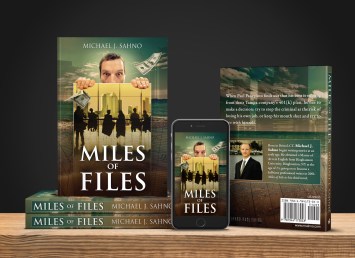
Miles of Files paperback mockup 2

Ultimately, that kind of valuable feedback led me to this week’s re-launch. When I won a contest from 99designs for a free book cover design, I immediately thought about that conversation and Miles of Files. Someone had judged my best book by its cover – judged it harshly – and had taken a pass. How many other books suffer the same fate?

Needless to say, I’m thrilled with the new cover. Twenty-four designers competed in this contest, and I received a total of 73 designs. I only hope that people now see the book for what it is even before they open it: a funny, fast-paced thriller.

And in the future, I won’t be so quick to dismiss the notion that even the most discerning readers judge a book by its cover.

About Michael J. Sahno

mike sahno

Michael J. Sahno was born in Bristol, CT. He earned his Bachelor’s from Lynchburg College and his Master’s in English from Binghamton University. Sahno has been a professional writer since 2001. His novels cater to an imaginative audience, particularly those who enjoy literary fiction with a twist of drama and plenty of humor. Sahno is a member of the Florida Writers Association and American Library Association, and the founder of Tampa Literary Authors.

You can follow Michael J. Sahno on Twitter, find him on Facebook and visit his website.

poster

The Healing Power of Art, A Guest Post by Robert Uttaro, Author of To The Survivors

to the survivors

One of the aspect of blogging I really enjoy is finding books that are out of the ordinary, even though I don’t necessarily have time to read them all. I think To The Survivors by Robert Uttaro is probably one such book, sharing as it does the experiences of those who’ve suffered sexual assault. I asked Robert what he thought about the arts as a means to help people heal after traumatic experiences and he shares his thoughts with us below.

To The Survivors is available for purchase through the links here.

To The Survivors

to the survivors

To The Survivors is about one man’s journey as a rape crisis counselor with true stories of sexual violence shared by survivors in their own words. Gently and beautifully constructed, To The Survivors is moving,tender, sharp, and piercingly true all at once.

Readers will encounter uncensored written stories, poems, and interviews from women and men who have experienced rape and sexual assault, plus the advocate-author voice that weaves their experiences together.

The survivors are diverse in age, gender, and ethnicity, yet each gives a similarity raw and heartfelt account of his or her victimisation and recovery. The authenticity and vulnerability with which survivors speak resonates profoundly. But this book is not just for survivors of sexual violence. Robert Uttaro believes anyone can benefit from the words in these pages, rape survivor or not.

The Healing Power of the Arts

A Guest Post by Robert Uttaro

Art is one of the most powerful gifts we can give and receive. Art moves our hearts and souls. It can inspire. It can teach. It can provide peace and comfort. It can make us question…It can help us to heal. It connects people from diverse and similar backgrounds. Art accomplishes so many things at various points throughout life that I cannot capture all of its beauty and purpose. I believe art helps us to communicate with God.

Every person can connect with some form of art. For me, music is the form of art that I connect with the most. I have had a deep love of music and musicians since I was a little kid. I listen to music throughout the day and night, especially when I write, cook, exercise, and even when I pray. If it weren’t for music, my book To the Survivors would have never been completed.

To The Survivors is about my journey as a rape crisis counselor with true stories of men, women, and one transgendered man who have been raped and sexually assaulted. Readers will encounter uncensored written stories, poems, and interviews from survivors in their own words. The survivors are diverse in age, gender, and ethnicity, yet each gives a similarity raw and heartfelt account of his or her victimization and recovery. The authenticity and vulnerability with which survivors speak resonates deeply. But this book is not just for survivors of sexual violence. I believe anyone can benefit from the words in these pages, rape survivor or not.

There are different paths of healing and different forms of expression. Some people would rather speak to share their truths and pain, while others prefer to write fiction or non-fiction. Some prefer to speak. For some, poetry is a profound way to express what may be difficult to express through the spoken word. Jenee is one woman in To the Survivors who shared her poetry and story with me. Her poems “March Fourteenth” and “March Twenty-Eighth” were so powerful to me that I knew I had to begin and end the book with them. I believe Jenee’s poetry allowed her to truly express her thoughts and prayers after such evil.

There is power in our words. One of the insightful aspects of To the Survivors is seeing people open up and speak about horrific crimes for both themselves and for the benefit of others. People can grow and heal; they do not have to be silenced and suffer with shame throughout their lives. I want to share two examples of this. Don is one man who was raped when he was a child. I had never met Don or known his story, but he agreed to come to my apartment and talk with me. He had never shared his story in full to anybody before that morning. His healing process continued to grow after our talk, and over time he began to talk more comfortably about the abuse he endured. Don later began sharing his story to high school and college students.

Jenee is another example of the benefit of sharing in To the Survivors. Jenee, like Don, had never shared her story with anyone. She was willing to share but did not want to use her real name in the book. After re-reading much of the book, it was Shira’s chapter in To the Survivors who inspired Jenee to use her real name. Jenee also began to speak to high school and college students throughout her healing process.

It is not for me to tell people how to live or act, but I do believe in the power of the arts and the power of God. Art is one of the tools we possess to overcome evil on this earth. Anyone out there who is reading this and may be struggling emotionally with anything at all, tap into a form of art you connect with and express yourself any way you choose to. As I write in the B.L.E.S.S. chapter in To the Survivors, “Always remember to take care of yourself no matter what, and never stop doing the things you love that bring peace and joy to your life. Whether it is music, art, exercise, cooking, reading, sports, prayer, nature, or any of the other amazing gifts life has to offer: Embrace them. Do what you love to do, embrace all the beauty that exists within yourself and the world around you, and take care of yourself.”

About Robert Uttaro

Robert Uttaro

Robert Uttaro is in his eighth year of working and volunteering as a rape crisis counselor, public speaker and community educator. Inspired by his undergraduate studies in Criminal Justice, he continues to embrace a life-long commitment to activism and advocacy for survivors of sexual violence. Serving as a counselor, Uttaro supports rape survivors and their significant others through various legal and case management issues. He also facilitates workshops aimed at education, prevention and exposure of the realities of sexual violence. Uttaro is currently touring many universities and high schools throughout Massachusetts.

You can follow Robert on Twitter, visit his website and find him on Facebook.

Fiction and Fear, A Guest Post by Tim Walker, Author of Ambrosius, Last of the Romans

ambrosius-final-kindle-cover

I’m very pleased to welcome Tim Walker, author of Ambrosius: Last of the Romans, to Linda’s Book Bag as I’m fascinated by that era of our history. Tim has kindly agreed to explain a little bit about why he thinks readers like me have that interest.

Ambrosius: Last of the Romans is available for purchase here.

Ambrosius: Last of the Romans

ambrosius-final-kindle-cover

A country shell-shocked by the end of Roman rule lies open to invasion from ruthless barbarians. Cruel tyrant Vortigern has seized control and chosen to employ Saxons in his mercenary army. But who is the master and who the puppet?

Enter Ambrosius Aurelianus, a Roman tribune on a secret mission to Britannia. He is returning to the land where, as a child, he witnessed the murder of his noble father and grew up under the watchful eyes of an adoptive family in the town of Calleva Atrebatum. He is thrown into the politics of the time, as tribal chiefs eye each other with suspicion whilst kept at heel by the high king.

Ambrosius finds that the influence of Rome is fast becoming a distant memory, as Britannia reverts to its Celtic tribal roots. He joins forces with his adoptive brother, Uther Pendragon, and they are guided by their shrewd father, Marcus, as he senses his destiny is to lead the Britons to a more secure future.

Ambrosius: Last of the Romans is an historical fiction novel set in the early Dark Ages, a time of myths and legends that builds to the greatest legend of all – King Arthur and his knights.

Historical Fiction Evokes Primal Fear

A Guest Post by Tim Walker

Fear of invasion is a primal anxiety, etched on our primitive, tribalistic consciousness. It’s about safeguarding precious resources from predatory ‘others’ – peoples unknown to us around whom a narrative of grotesque and fearsome attributes is spun by the leaders of our tribe to prepare us for war.

Sound familiar? Well it should, as it’s practically the history of human development in a nutshell. This notion of repelling invaders is part of the history of the British people; people who have at one time been the invaders themselves. Our island home has meant invading armies have had to brave the storms of the Channel to land and meet hostile locals – from Julius Caesar to the Normans.

But wedged between these two momentous events was one with more profound and far-reaching consequences. I’m talking about the coming of the Angles, Saxons and Jutes. We’re still talking their language, so deep-rooted was their influence, and they mapped-out the divisions between England, Wales and Scotland. The coming of Germanic tribes to fight as mercenaries for the Romans and then, following their departure, an early Briton high king, known as Vortigern (although this is deemed by some to be a title akin to ‘over-king’), is not seen as an invasion. They were invited in, saw what they liked, and sent for the friends and families.

This coming of waves of settlers – warrior tribes – from what is modern day Denmark and northern Germany, happened over a period of two hundred years, their numbers building to form formidable armies who in time swept away all Briton tribal resistance. They fought each other and developed kingdoms, claiming the land as their own and defending it from other invaders.

This period in history, known as the Dark Ages, is so called because the light of learning and record-keeping was extinguished by pagan barbarians in an orgy of destruction. Most Roman villas and settlements were plundered, as were the temples and early churches, as some of the wealthier Romano-Britons evacuated to northern Gaul and the ordinary folk remaining fled to the countryside or to old Iron Age hill forts that were once again occupied.

Little detail is known, save for the few surviving, and at times contradictory, records of monks such as Nennius, Gildas and Bede, of what actually happened during a three hundred year period up to the reign of King Alfred at the end of the ninth century. By then, Anglo-Saxon King Alfred was facing a whole new set of invaders – the Vikings.

This is the backdrop to my new historical fiction novel, Ambrosius: Last of the Romans. Ambrosius Aurelianus was the son of a murdered noble and possibly Briton’s first high king, Constantine. Tantalising glimpses are offered in the writings of Gildas, Nennius, Bede and Geoffrey of Monmouth, of a high king of the besieged Briton tribes who organised resistance to the westward march of successive waves of Saxon armies. He is the elder brother of Uther Pendragon in one account, who succeeds him and in turn is succeeded by Arthur.

kingarthur350

My story is a link between the departure of the Romans from Britannia and the coming of King Arthur, a legendary figure whom devoted archaeologists and historians are still trying to legitimise. It was a time of grim determination to cling onto a crumbling order, whilst faced with a fearsome and ruthless enemy. The Saxon wolf had been invited into the Briton sheep pen, and wool was about to start flying. I’ll leave with this haunting lament from Gildas, written barely one hundred years after these events:

The poor remnants of our nation… that they might not be brought to utter destruction, took arms under the conduct of Ambrosius Aurelianus, a modest man, who of all the Roman nation was then alone in the confusion of this troubled period by chance left alive.

Taken from On the Ruin of Britain (De Excidio Britanniae) by Gildas, c. AD550, translated by J.A. Giles.

About Tim Walker

tim-profile-picture

Tim has been writing fiction since 2013, following a career encompassing journalism, marketing, general management and business ownership.

After school, he worked as a trainee reporter, progressing to writing a music column and reviewing films.

He obtained an honours degree in Communication Studies, majoring in film studies, and added a Post-Graduate Diploma in Marketing two years later in Bristol.

After graduating, he worked for ten years in London in the newspaper publishing industry in market research and advertising sales support.

He followed this with two years as a voluntary worker with Voluntary Services Overseas (VSO) in Zambia, working in book publishing development.  Soon after, he set up and managed his own publishing, marketing and management consultancy company.

Tim now lives near Windsor in Berkshire where he blogs and writes creative fiction.

You can visit Tim’s website, find him on Facebook and follow him on Twitter.

Reblog: Dead Babies and Seaside Towns by Alice Jolly

dead babies 2

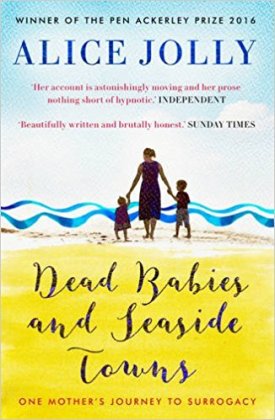
In November 2015 I read the moving and captivating Dead Babies and Seaside Towns by Alice Jolly. At the time I had no idea that just over four months later on 17th March 2016 my niece would sadly give birth to a still born full term daughter, Emma Faith. As today would have been Emma’s first birthday, I wanted to mark the occasion with a reminder of Alice’s wonderful book.

You can read my review of Dead Babies and Seaside Towns and my interview with Alice Jolly here.

Now with a brand new cover, Dead Babies and Seaside Towns will be published in paperback by Unbound, an imprint of Penguin, on 23rd March 2017 and is available for pre-order here.

Dead Babies and Seaside Towns

dead babies 2

When Alice Jolly’s second child was stillborn and all subsequent attempts to have another baby failed, she began to consider every possible option, no matter how unorthodox.

Shot through with humour and full of hope, Dead Babies and Seaside Towns is an intensely personal account of the search for an alternative way to create a family. As she battles through miscarriage, IVF and failed adoption attempts, Alice finds comfort in the faded charm of Britain’s crumbling seaside towns.

The journey ultimately leads her and her husband to a small town in Minnesota, and to two remarkable women who offer to make the impossible possible.

In this beautifully written book, Alice Jolly describes with a novelist’s skill the events that many others have lived through – even if they may feel compelled to keep them hidden. Her decision not to hide but to share them, without a trace of self-pity, turns Dead Babies and Seaside Towns into a universal story: one that begins in tragedy but ends in joy.

About Alice Jolly

alice jolly

Alice Jolly is a novelist and playwright.

She has published two novels with Simon and Schuster and has been commissioned four times by the Everyman Theatre in Cheltenham. She has also written for Paines Plough and her work has been performed at The Tristan Bates Theatre in Covent Garden and The Space, East London. Her memoir Dead Babies and Seaside Towns was published by Unbound in July 2015 and won the Pen/Ackerley Prize. In 2014 one of her short stories won The Royal Society of Literature’s V.S. Pritchett Memorial Prize.

She teaches creative writing on the Mst at Oxford University.

Find out more about Alice on her web site or follow her on Twitter. You can also find her on Facebook.

Introducing Hoopoe, A New Fiction Imprint

Hoopoe

It gives me great pleasure to introduce a brand new fiction imprint of The American University in Cairo Press, Hoopoe Fiction.

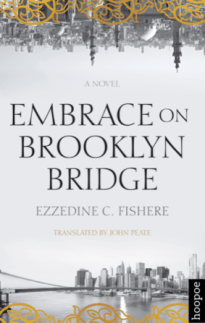
Hoopoe Fiction specialise in stories from the Middle East and as I’ve loved going to Egypt in the past and have lived and worked in New York, I thought I’d share an extract from one of the first books from Hoopoe Fiction that includes both those destinations, Embrace on Brooklyn Bridge by Ezzedine C. Fishere and translated by John Peate. Embrace on Brooklyn Bridge is published by Hoopoe in April 2017 and is available for pre-order here.

Not only do I have an extract, but you can enter to win a paperback copy of Embrace on Brooklyn Bridge at the bottom of this blog post.

About Hoopoe

Hoopoe

Hoopoe is an imprint for engaged, open-minded readers hungry for outstanding fction that challenges headlines, re-imagines histories, and celebrates original storytelling. Through elegant paperback and digital editions, Hoopoe champions bold, contemporary writers from across the Middle East alongside some of the finest, groundbreaking authors of earlier generations. On the Hoopoe website, curious and adventurous readers from around the world will fnd new writing, interviews, and criticism from our authors, translators, and editors.

As well as visiting Hoopoe’s website, you can follow them on Twitter and find them on Facebook and Instagram.

Embrace on Brooklyn Bridge

Embrace on Brooklyn Bridge

On the eve of Salma’s twenty-first birthday, scattered friends and family converge on New York for a celebration organized by Darwish, her obstinate grandfather. Each guest’s journey to this fated gathering takes on an unexpected significance, as they find themselves revisiting the choices they have made in life, and rethinking their relationships with one another and the country in which they live.

Traveling seamlessly between Egypt and the United States, Embrace on Brooklyn Bridge is a story about how we construct and shift our identities, and about a family’s search for home.

An Extract from Embrace on Brooklyn Bridge

He realized he wouldn’t leave much behind. He would die like everyone else did. Those who really loved him would remember him fondly; the rest would remember him the way they wanted. This didn’t matter to him. Darwish was seventy years old, and it actually felt like a blessing to know how much time he had left. It was a chance to put his affairs in order, with his own two hands, and to do what he had forgotten or been too lazy to do. From that time onward, he wouldn’t do anything he didn’t want to. He would flatter no one. He would spend no time on people he didn’t like. He wouldn’t make compromises or long-term plans. There was no long term anymore. He would do all the things he’d put off. He’d live in his remote log cabin on a lake in the woods or the mountains. He’d read books he’d never had time to pick up before. He’d write the book he’d always wanted to write: on the future of the Arabs. He’d spent his whole life studying Arab history. He had always dreamed of writing about their future, but his natural cautiousness prevented him. Now there was no point in being cautious. He would draft the book proposal and meet with the publisher early next week. Once he was in the cabin, he would begin writing.

Though he had spent five years in London writing up his doctoral thesis, he hadn’t met Jane there, but in Cairo, which surprised their small circle of friends. Jane was tall, slim, shapely, and beautiful, with long chestnut-brown hair, which she would either let hang around her shoulders or pin up with whatever was to hand, normally a pencil. She had come to Cairo for a year to learn Arabic, on some scholarship or another. She grew to love the city in all its chaos and ended up settling there. They gradually got to know each other, and grew closer until they ended up more or less living together in an apartment in Giza, behind the zoo.

Jane was a good-hearted, decent sort of person, but her relationship with Egypt was confused. She told Darwish when they first met how much she loved the Egyptian people’s good-naturedness, and their warmth and humanity. She found something in them that she had felt lacking from her life in Britain. He laughed to himself, being someone who actually loved the cool standoffishness of the British, finding in their respect for privacy something he lamented as sorely missing from Egyptian life. They found themselves in reversed positions, as he criticized she defended Egyptian life and people: “Yes, she is lying. From a legal point of view, she’s lying. But it’s not a real lie”; “This is not a weakness, it’s caution”; “No that’s not nepotism, it’s really just an expression of gratitude”; “It’s absolutely not a class thing; it’s a different view of roles and responsibilities.”

He never accepted any of her excuses, never accepted that different rules applied to Arabs. Arabs were not a corrupt offshoot of the rest of humanity. The same rules and moral standards applied to them as to anyone else in the world. Saying anything else was patronizing trash masquerading as sympathy. To accept a lie from an Arab but no one else meant you saw a fundamental weakness in them that the rest of humankind didn’t suffer from. It was treating them as if they were granted permission to be irrational. He told her this, time and time again. Her indulgence of Egyptians and their shortcomings began to aggravate him. He asked her to read their history to understand why they were just like any other people, and how they had ended up the way they had. She would then see that indulging their faults was not the solution. Treating them like responsible grown-ups was. She tolerated, even revelled in their backwardness. Jane said she didn’t have the time to immerse herself in Arab history like that. Enter Albert Hourani. When he gave her the book, she seemed pleased. She did start reading it, but soon gave up, saying it was boring and that she preferred to learn through mixing with people. But she didn’t learn through mixing with people.

In fact, she slid deeper into “idiotic tourist syndrome,” as Darwish diagnosed it. This was an ongoing argument between them, as she believed the real problem was that his way of thinking barred him from recognizing any of the complications unique to Egypt. He would protest that he was born of Egypt’s soil, but he could tell the difference between complications and plain old bad behaviour. In his view, Egyptians needed re-education. Whether it was because of their poverty or ignorance or poor education made no difference to him; the upshot was a deterioration in their moral codes. She would counter that he was the victim of his Western education, which had planted in him this naïve idea that people could be reformed through argument or appeals to conscience. That’s why he fought with everyone all the time: because he preached at them instead of trying to understand them. He would laugh and ask sarcastically whether that was an insult or a compliment, and her face would redden.

About Ezzedine C. Fishere

Ezzedine C. Fishere is an acclaimed Egyptian writer, academic, and diplomat. He has written numerous successful and bestselling novels and he also writes political articles for Arabic, English, and French news outlets. He currently teaches at Dartmouth College in the US, where he lives.

About John Peate

John Peate has studied Arabic in Algeria, Morocco, Egypt, Syria, and Oman, as well in the UK, and has a PhD in Arabic linguistics. He has translated numerous authors’ works, has been a university teacher and a BBC journalist, and now works for the US Embassy in London as a media analyst.

Giveaway

Embrace on Brooklyn Bridge

For your chance to win a paperback copy of Embrace on Brooklyn Bridge click here. Open internationally. Giveaway closes at UK midnight on Wednesday 22nd March 2017. Good luck!

Cover Reveal: The Darkness Within by Lisa Stone

the darkness within

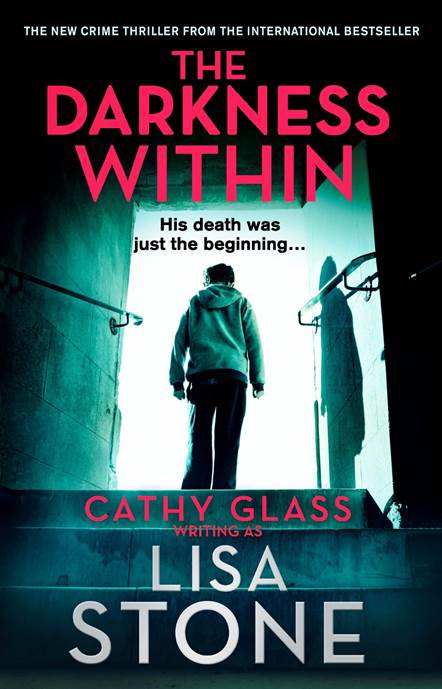
Regualr readers of Linda’s Book Bag know I have an impossibly large TBR but that doesn’t stop me wanting to get my hands on the brand new thriller from Cathy Glass writing as Lisa Stone, The Darkness Within, and I’m delighted to be helping to reveal the cover today.

The Darkness Within will be published in e-book and paperback on 13th July 2017 by Avon Books, an imprint of Harper Collins, and is available for pre-order here.

The Darkness Within

the darkness within

You know your son better than anyone. Don’t you?

When critically ill Jacob Wilson is given a life-saving heart transplant, his parents are relieved that their loving son has been saved.

However, before long, his family are forced to accept that something has changed in Jacob. Their once loving son is slowly being replaced by a violent man whose mood swings leave them terrified – but is it their fault?

Jacob’s girlfriend, Rosie, is convinced the man she loves is suffering from stress. But when his moods turn on her, she begins to doubt herself – and she can only hide the bruises for so long.

When a terrible crime is committed, Jacob’s family are forced to confront their darkest fears. Has the boy they raised become a monster? Or is someone else to blame?

This is a spellbinding crime novel with a dark heart from the worldwide bestseller Cathy Glass, writing as Lisa Stone.

An Interview with Lucy Jones, Author of Foxes Unearthed

Foxes unearthed

I’m a country girl at heart and so I’m delighted to be part of the paperback launch celebrations for Foxes Unearthed by Lucy Jones. Lucy agreed to answer some of my questions about her writing, about Foxes Unearthed and about her love of nature.

Published in paperback today, 16th March 2017, by Elliott and Thompson, Foxes Unearthed is available for purchase by following the publisher links here.

Foxes Unearthed

Foxes unearthed

As one of the largest predators left in Britain, the fox is captivating: a comfortably familiar figure in our country landscapes; an intriguing flash of bright-eyed wildness in our towns.

Yet no other animal attracts such controversy, has provoked more column inches or been so ambiguously woven into our culture over centuries, perceived variously as a beautiful animal, a cunning rogue, a vicious pest and a worthy foe. As well as being the most ubiquitous of wild animals, it is also the least understood.

In Foxes Unearthed Lucy Jones investigates the truth about foxes in a media landscape that often carries complex agendas. Delving into fact, fiction, folklore and her own family history, Lucy travels the length of Britain to find out first-hand why these animals incite such passionate emotions, revealing our rich and complex relationship with one of our most loved – and most vilified – wild animals. This compelling narrative adds much-needed depth to the debate on foxes, asking what our attitudes towards the red fox say about us and, ultimately, about our relationship with the natural world.

An Interview with Lucy Jones

Welcome to Linda’s Book Bag Lucy. Thank you so much for agreeing to answer some questions on my blog about your writing. Firstly, please could you tell me a little about yourself?

A pleasure. Thank you for featuring Foxes Unearthed. I’m a writer based in Hampshire. Foxes Unearthed is my first book. I was a journalist at the Daily Telegraph and then NME, writing about music and culture, but over the last few years I’ve started writing more about the environment, wildlife, nature and science, for BBC Earth, BBC Wildlife, The Guardian and others. I love words, moths, owls and nudibranchs.

(I didn’t know what nudibranchs were and had to look them up! They look fascinating creatures.)

Please could you tell us a bit about Foxes Unearthed too?

Foxes Unearthed is an investigation into the truth about foxes in Britain and why Vulpes vulpes is so passionately loved and loathed. I delve into fact, fiction, folklore and my own family history to find out what our attitudes towards the red fox say about us. I travelled across the country talking to scientists, farmers, activists, researchers and pest-controllers, and went out with hunt saboteurs and hunters, to see both sides. Personally, I was interested in human attitudes to foxes because I realised at a young age that they could incite strong passion in both directions.

When did you first realise you were going to be a writer?

I wanted to be a writer from the age of around eight and wrote stories, poems and diaries from then on (they are all awful). My father used to say “that’s a very interesting question” to me when I was little, which I loved, and it encouraged me to be be inquisitive and, eventually, choose a career in which I’m paid to ask questions. I got my first job as a journalist at a local paper out of university and then had a couple of other office journalism jobs in The Daily Telegraph and then NME. Even though writing books was always dream, I had low confidence about my writing until recently. I think I only realised when Foxes Unearthed was published last year that it was OK to call myself a writer. Now I feel thrilled and very lucky to say that I write for a living.

Which aspects of your writing do you find easiest and most difficult?

I find conducting and writing up interviews pretty easy, because I’m used to doing them now. I find translating scientific studies for a general audience challenging, because you so want to get it exactly accurate, and have to be so careful because simplifying someone’s research can alter the meaning.

What are your writing routines and where do you do most of your writing?

I am most alert between 7am and midday so I do my writing then. In the afternoons, I conduct less cerebral tasks such as interview transcriptions or emails. For Foxes, I made myself write 1,000 words every morning for 60 days. I typed out a page of Joan Didion’s non-fiction before I started writing because I love her sentences. I have a shed I’m doing up to write in, which is surrounded by a curly willow. I’m going to paint it the colours of the YSL garden in Marrakech. Or I write at a table next to my tortoise looking out at a couple of long-tailed tits, a clutter of starlings and a charm of goldfinches. Or in the library. Cafes don’t work for me; I hate noise when I’m working and can’t bear any music.

Of all the animals available for you to write about, why choose foxes?

Foxes are a flint for emotions and inspire so much debate. People either love foxes, or hate them, and I don’t believe there is another native animal to Britain which so divides people – and has done for years. Also, the fox is an intriguing prism through which you can view human activity through British history, in different stratas and socio-political groups, town and country, rich and poor.

How do you go about researching detail and ensuring your writing is realistic?

For Foxes Unearthed, I spent weeks in the British Library, poring over newspapers from the 20th century and lots of old texts. To counter all the sedentary research, I wanted to go out in the field, travelling around to interview people, going out with a pest-controller, visiting a huntsman on his farm, sabotaging a hunt. Meeting characters and people and trying to have as much empathy with their situation is always a motive.

Since researching this book, how have your own attitudes towards foxes altered?

I’ve always loved foxes but my research into their behaviour gave me a renewed sense of respect and awe at what is such a successful predator and carnivore. Foxes are brilliant.

To what extent do you think foxes make a good metaphor for humans?

I suppose the most well-known one is the ‘foxy vixen’, the women who can’t be trusted and uses her wiles to trick men. What sexist nonsense! I love Jimi Hendrix’s Foxy Lady but, really, it’s just a way of shaming and vilifying women for their sexuality – and foxes for their alleged craftiness.

I know you’re very interested in nature. How important is nature to our mental health and well-being do you think?

More important than we realise, I believe. As of 2010, more of us live in urban areas than not, and I fear we’re only starting to see how that might affect our mental health. Saying that, some people aren’t affected at all, mentally or emotionally, by nature, and I think that’s interesting, too. I support the calls for a Nature GCSE because I think, for psychological health, nature is essential for so many of us and education and access for the young is key.

You’ve recently had a baby, Evelyn. How has motherhood affected your writing and your view of the world and nature?

Well, she is six months now and I’m starting to get a bit more sleep so hopefully that will make writing easier! I recently wrote a piece about my experience of a 43-hour labour, and I found that very cathartic. I want my daughter to have the opportunity to experience as much joy from nature as I do – and I hope I can use my writing to draw attention to the natural world and environmental issues in some small way.

(Blog readers will find Lucy’s ‘labour’ post here.)

Do you have other interests that give you ideas for writing?

I’m interested in psychology, neuroscience and mental health, having experienced mental illness on and off over the years. I also did a year of training to be a psychotherapist. I’m interested and concerned about climate change. It’s mainly reading but I love documentary films and podcasts, which can often throw up ideas.

The fox on the cover of Foxes Unearthed has an ambiguous expression to me making it appear quite mysterious. How did that image come about and what were you hoping to convey?  

A fantastic designer and illustrator called Nathan Burton was the artist behind the cover, commissioned by the brilliant team at Elliott & Thompson. The objective of the design was for the fox to look quite neutral. I found the reaction to it very interesting, actually. My mother, who’d been brought up in a hunting family, thought the fox looked too benign! Others thought it looked too conniving. Again, it just shows our conflicting attitudes to foxes.

If you hadn’t become an author, what would you have done instead as a creative outlet?

Tough one. Words are really the thing I love so I can’t imagine not using those as my primary material. Maybe a stained glass window artist, I’d have liked to learn that. At the moment, I chill out by making cards for people with a growing collection of rubber stamps. I’ve always liked doing crafts, it switches my mind off for a bit.

When you’re not writing, what do you like to read?

I like American 20th century fiction most of all. Carson McCullers, Flannery O’Connor, Zora Neale Hurston, Thomas Pynchon, Hemingway. At the moment I’m reading Tove Jansson’s adult stuff; I love the Moomins. I like Annie Dillard, Jay Griffiths, Rebecca Solnit, Barry Lopez, Robert MacFarlane, Nell Zink and Nan Shepherd. I read only non-fiction for a while but since having my daughter I’ve a thirst for fiction again.

If you had 15 words to persuade a reader that Foxes Unearthed should be their next read, what would you say?

If you love foxes, I hope you’ll like this. If not, it’s also about humans, too.

Thank you so much, Lucy, for your time in answering my questions.

About Lucy Jones

Lucy Jones

Lucy Jones is a writer and journalist based in Hampshire, England. She previously worked at NME and The Daily Telegraph. Her writing on culture, science and nature has been published in BBC Earth, BBC Wildlife, the Guardian,TIME, Newsweek and the New Statesman. She runs the Wildlife Daily blog and is the recipient of the Society of Authors’ Roger Deakin Award for Foxes Unearthed.

You can follow Lucy on Twitter and visit her website. There’s more with these other bloggers too:

Foxes blog tour poster.indd

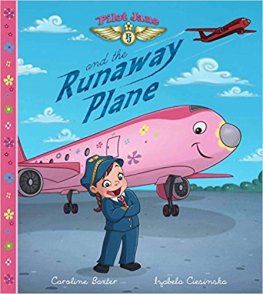
Pilot Jane and the Runaway Plane by Caroline Baxter and illustrated by Izabela Ciesinska

pilot jane

I’m delighted to be part of the launch celebrations for the children’s book Pilot Jane and the Runaway Plane written by Caroline Baxter and illustrated by Izabela Ciesinska. Not only do I have my review of Pilot Jane and The Runaway Plane, but I also have a guest post from Caroline, all about the importance of girl power.

Published by Big Sunshine Books on 8th March 2017, Pilot Jane and The Runaway Plane is available for purchase in paperback here.

Pilot Jane and The Runaway Plane

pilot jane

Join Pilot Jane, a fun and fearless airline captain, as she travels the world with her best friend Rose, a high-speed passenger jet. Together Jane and Rose have exciting adventures and form a perfect team, delivering their passengers safely to destinations as far afield as Alaska and Australia. But when disaster strikes and Rose falls ill, Jane is paired with ‘lean, mean flying machine’ Mighty Mitch. Can she still get the Queen to her party on time? Featuring a clever and courageous heroine, this action-packed rhyming story celebrates ‘Girl Power’ and shows what you can achieve if you work together. Fasten your seatbelt and get ready for take-off!

Why ‘Girl Power’ is Important

A Guest Post by Caroline Baxter

My new children’s picture book, Pilot Jane and the Runaway Plane, was published recently on International Women’s Day to mark the fact that it celebrates ‘girl power’. The story follows the adventures of Pilot Jane, a clever and courageous airline captain, who travels the world with her best friend Rose, a high-speed passenger jet. And while my aim was, first and foremost, to create a fun and entertaining book for young children, I was also eager to do so with a strong female lead.

Why?

Well, on a personal level, I have a young daughter and I was tired of reading the same old stories about princesses, fairies and witches (brilliantly written, though many are). There seemed to be very few interesting female protagonists, particularly for the preschool age. And while over the years I have even managed to grow fond of Peppa Pig, in mainstream books at least there seemed to be a notable absence of female adventurers, explorers, scientists, doctors, leaders – and girls with something to say.

My feelings were borne out by the statistics. A recent US study of almost 6,000 children’s books, all of which were published between 1900 and 2000, found that male characters far outnumber females. The research showed that males were central characters in 57% of children’s books published each year, but only 31% had female central characters. Similarly, in the same period, books with male animal characters were more than two-and-a-half times as common as those featuring female animals (Gender in 20th Century Children’s Books, 2011).

Across children’s media, more widely, less than a fifth of female characters were found to hold jobs or have career aspirations.

Some may argue that this doesn’t make a difference in the ‘real’ world. After all, women have come a very long way since International Women’s Day began back in 1911. The choices and opportunities available to us have increased beyond measure. Girls are now outperforming boys at school and, in many countries, including England, this continues at every level of education. We’re also pouring into a number of traditionally male-dominated occupations, such as law, medicine, finance and veterinary science. But there are also serious challenges. As we all know, across the world women are still paid less than men. Even in Britain today, the pay gap is almost 14% for full-time workers. Women are seriously under-represented in a range of professions and an Ofsted study (2011) confirms that girls continue to hold stereotypical views about the types of jobs available to them.

Even more worryingly, girls are losing confidence in their abilities early on. Recent research has shown that, by the time they are just six years old, girls start to see themselves as less innately talented than boys (BBC news article 27 January 2017 – Girls lose faith in their own talents by the age of six).

Clearly some things need to change . . .

So what does ‘girl power’ mean? To me, it means girls and women supporting, celebrating and empowering each other. It means promoting inspiring messages for young girls and a wide range of positive role models. It means instilling in them, as well as boys, real faith in their own abilities through the books they read, the movies they watch and the images they see. Among her many talents, Pilot Jane, for example, can surf, speak Chinese and practise tai chi, as well as, of course, being a (very young!) airline captain. And together, Jane and Rose are “an awesome pair” who pride themselves on their ability to deliver their passengers safely to destinations worldwide, whatever the weather. No man – or plane for that matter – could stand in the way of Pilot Jane!

Of course, these types of changes cannot happen overnight. But fortunately there are already some brilliant resources out there. I’d recommend Almighty Girl as a good starting point for anyone who wants to look for books, toys and movies intended to empower girls. As their website rightly states, “Girls do not have to be relegated to the role of sidekick or damsel in distress; they can be the leaders, the heroes, the champions that save the day, find the cure, and go on the adventure”.

Women already occupy so many of these roles in real life. Surely reflecting that in the books that we read to our young children, and the range of characters that we show them, should be the easy bit?

Is girl power important today? Absolutely.

To borrow a phrase from Christopher Robin in Winnie the Pooh, girls “You’re braver than you believe, stronger than you seem, and smarter than you think.”

So, Pilot Jane and the Runaway Plane was published on 8 March 2017, International Women’s Day. Thank you for hosting me on Linda’s Book Bag!

(My pleasure Caroline.)

My Review of Pilot Jane and The Runaway Plane

Pilot Jane flies a pink plane called Rose and they have many adventures together, but when Rose is ill, a new plane Mitch thinks he can outwit Jane.

I have one tiny criticism of this lovely book that I’m going to get out of the way first. I have a personal aversion to random font sizes in children’s books for emphasis because when we’re teaching children to write we want them to be consistent. That said, in Pilot Jane and The Runaway Plane different font sizes are used to emphasise events or proper nouns and they introduce more difficult vocabulary so they could be used as teaching or discussion points with children when reading the book together.

Pilot Jane and The Runaway Plane is a brilliant children’s book. The rhymes are flowing and not contrived so that there is a natural rhythm to the narrative. The places Jane and Rose visit are exciting and exotic, from Australia to China, introducing children to others and their countries.

The illustrations are absolutely glorious with such vibrant and attractive pictures that I can imagine parents, teachers and children discussing them for a long time after the story has been read.

But the best aspect of Pilot Jane and The Runaway Plane is the fabulous themes. Jane is promoted as a strong female and she is not at all fazed when Mitch tries to outwit her. He too learns a lesson about not judging people by appearances or gender that is important for children to learn and he changes for the better as a result. The concept of responsibility and not letting down other people is clear, as is the understanding that there is a world of possibility and opportunity to explore. These are worthy themes, with the potential to be stuffy, but they are presented in a lively and engaging way so that Pilot Jane and The Runaway Plane is a real joy.

About Caroline Baxter

caroline

Caroline Baxter lives in Oxford with her husband and two young children. From an early age she always had her nose in a book – and now does so for a living!

Caroline grew up in South Wales and, after graduating with a BA in English Literature from Cardiff University, held a variety of management roles at UK universities including, most recently, at the University of Oxford. The Bear Cub Bakers, her first book, was written while on maternity leave with her daughter. Her second book, Pilot Jane and the Runaway Plane, was published recently on International Women’s Day (8 March 2017). Caroline loves travelling, yoga, baking (and eating) cake, dogs, days out and snuggling up with a good story.

You can find out more about Caroline through Big Sun Books on Facebook, Twitter and the Big Sun Book website.

About Izabela Ciesinska

izzy

From her earliest days in the crib, Izabela spent most of her time looking at pictures and then attempting to draw them. As a child she absorbed every picture book she could get her hands on. She read them all, drew them all, and she smelled all the pages.

Soon enough she discovered the amazing world of animation. She even tried to animate her own scenes only to discover that tracing 24 frames per second was easier seen than done. Eventually her ambitions evolved into film and illustration, and many broken pencils and torn up pictures later, she went on to illustrate over 50 picture books, as well as direct her first short film, “NEDE”, which premiered at the 2010 Montreal World Film Festival. Currently Izzi is working on a number of illustration projects alongside some film projects in development.

You can follow Izabela on Twitter, find her on Facebook and visit her website.

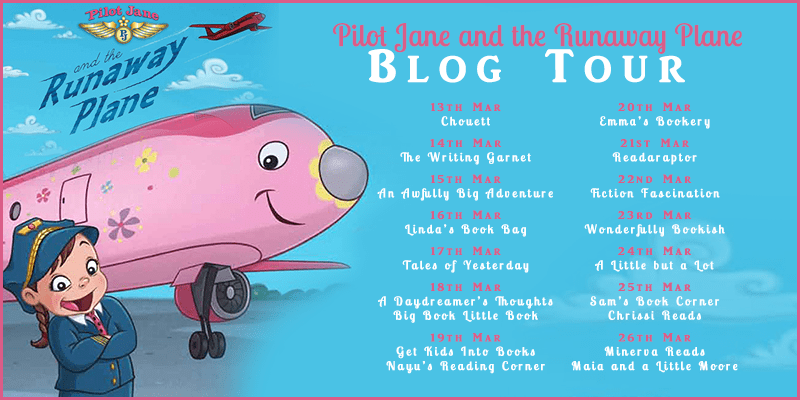
There’s more with these other bloggers too:

Pilot Banner2

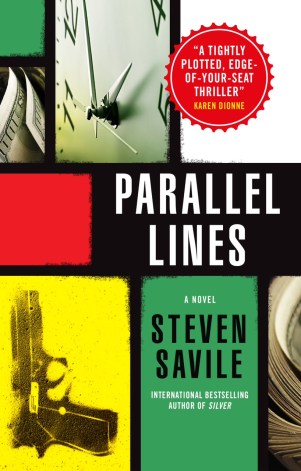
Margot Moore from Parallel Lines by Steven Savile

Parallel Lines_high res

I’m delighted to be part of the launch celebrations for Parallel Lines by Steven Savile with something slightly different today. In honour of Parallel Lines I have a character profile of Margot Moore who features in the book.

Published by Titan on 14th March 2017, Parallel Lines is available for purchase in e-book and paperback here and from Amazon.

Parallel Lines

Parallel Lines_high res

How far would you go to provide for your child?

Adam Shaw is dying, and knows he’ll leave his disabled son with nothing. His solution? Rob a bank. It’s no surprise that things go wrong. What is surprising is that when another customer is accidentally shot, no one in the bank is in a hurry to hand Adam over to the police. There’s the manager who’s desperate to avoid an audit, the security guard with a serious grudge, and the woman who knows exactly how bad the victim really was…

Eight people, twelve hours, one chance to cover up a murder. But it’s not just the police they have to fool. When many lives intersect, the results can be explosive.

Margot Moore

A Guest Post by Steven Savile

Margot Moore lost her husband last year. She thought she knew him. She didn’t. 

Margot Moore

Margot Moore had a secret. She was in love with a man she had never met, and almost certainly never would. The fact that she was in love was only the half of it. Who the object of her affections was and how he’d come into her life, that was the really interesting part. That was the part that made it a secret worth keeping.

He was her guardian angel.

He was her reason for getting up in the morning.

For a while it had been dark, really dark; then he had come into her life like some kind of caped superhero. He called himself Nero, but that wasn’t his real name. She didn’t know what his real name was.

Margot would be sixty-three on her next birthday, making her the oldest of the bank’s staff by almost a decade, and old enough to know better when it came to matters of the heart. But sometimes it was just a case of the heart wanting what the heart wanted however ridiculous that desire was.

They all thought she was so together, so ordinary. They had no idea what was going on inside her, or how it felt to have lost everything that mattered during six hellish months that had started out with confidence that together they’d beat it, that had become niggling arguments where she kept saying to Johnny she wished he’d put up more of a fight, that he’d just act like he wanted to live even though they both knew the non-Hodgkin lymphoma was eating him alive. It was already too late at that point. It had started out as an aching shoulder months before, then a raspy cough that he just couldn’t shift, and even the week before they got the news that his liver and spleen were riddled with aggressive tumors, Johnny Joe Moore had been given the all clear from the oncologist as they searched for the root cause of his symptoms. The CT scan only covered the area around his throat down to his armpits and thyroid, ruling out lymphoma. She’d tortured herself for months wondering if those lost days might have been the death of her husband, cursing a health-care system that valued saving a few dollars on a scan over saving a man’s life. Thinking like that was a killer. It led down very dark paths in the lonely hours of the night. For a month she hadn’t washed the sheets because they smelled of him. For two more months she hadn’t moved his sweater off the balustrade at the top of the staircase because that was where he always kept his sweaters and every time she walked past it she ran her fingers over the wool. It was the closest she came to prayer.

Everyone around her said the right things, asked the right questions and worried about her, but that didn’t help because they weren’t her; they weren’t inside her head living with that new-found emptiness. And instead of getting easier with time it just got harder. That was a truth no one ever talked about. At the start she’d just been numb trying to deal with all of the paperwork and red tape involved in closing out a man’s life; then there had been those long days of firsts: the first time she’d been to the farmer’s market without him, the first time she’d watched his favorite show without him, the first day she’d not gone to the mailbox to collect his newspaper, the first time she’d gone to bed alone, all of those little things that had been so much a part of their life together that had suddenly become little landmarks to the man she’d lost. That was so much worse than the finality of the registrar and the death certificate with the word “pneumonia” going down as the official cause of death.

Coming out on the other side of the firsts didn’t make living any easier. She’d been clinging to the notion that it would. All she could do was put on her bravest face and there was a limit to how long that particular trick would last—which was how she’d wound up taking the call from Nero that saved her life.

It was a culmination of so many small and seemingly unimportant events that led her up to the roof that night, the cold winds that earned the city its name blowing hard. She wasn’t dressed for killing herself. It was a crazy thing to think, but she remembered that moment vividly, even now. The flat roof of the apartment building was six stories from the ground. Standing on the edge, looking down, the drop was dizzying. There wasn’t a star in the sky. They didn’t get many stars, even on clear nights, because of the constant glow of the city. She missed the stars. She’d grown up with them there every night, and just like with her Johnny, taken for granted that they’d always be there. She wrapped her arms around herself, not looking down. She could hear the low engine rumble of a plane coming in to land at O’Hare. She didn’t want that to be the last thing she heard in this life, so she waited. It wouldn’t be long before the dawn chorus broke out. Dying to a soundtrack of birdsong wasn’t such a bad thing, was it? She could wait for that.

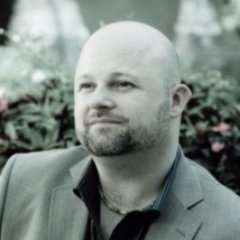
About Steven Savile

steven savile

Steven Savile has written for Doctor Who, Torchwood, Primeval, Stargate, Warhammer, Slaine, Fireborn, Pathfinder and other popular game and comic worlds. His novels have been published in a dozen languages to date, including the Italian bestseller L’eridita. He won the International Media Association of Tie-In Writers award for his Primeval novel, Shadow of the Jaguar, published by Titan, in 2010, and the inaugural Lifeboat to the Stars Award for the novel Tau Ceti co-written with Kevin J Anderson.

You can follow Steven on Twitter and find him on Facebook.

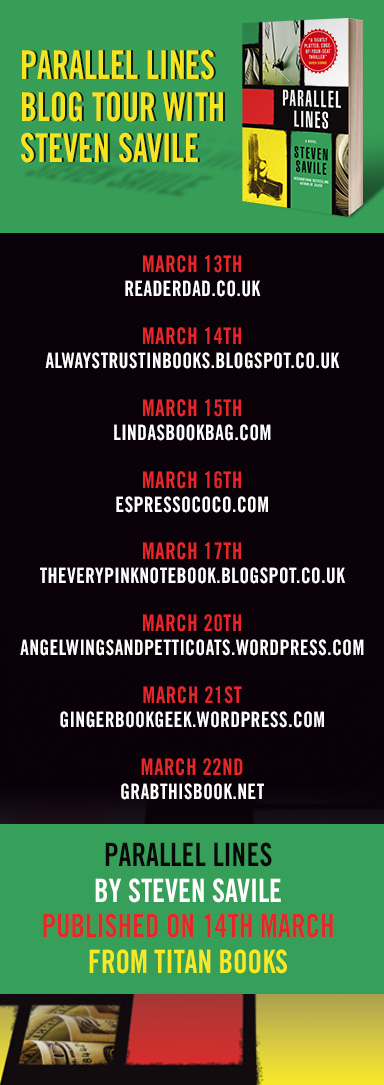
There’s more with these other bloggers too:
31865-Parallel-lines-blog-tour#3