The Girls in the High-Heeled Shoes by Michael Kurland

HighHeel

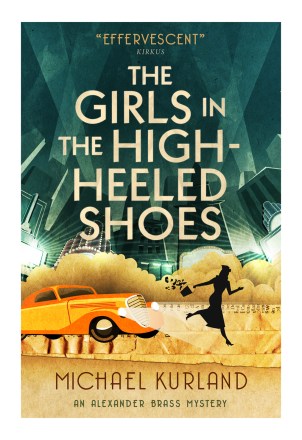
It’s my enormous pleasure to be hosting an extract from the latest Alexander Brass Mystery The Girls in the High-Heeled Shoes by Michael Kurland to celebrate publication today 23rd February 2016.

Published by Titan in paperback and e-book The Girls in the High-Heeled Shoes is available on Amazon UKAmazon US and directly from Titan Books.

About The Girls in the High-Heeled Shoes

“A brilliant period piece that fans of the classic thirties mystery will simply devour.”
Midwest Book Review

Newspaper columnist Alexander Brass is back in another captivating mystery. While New York enjoys the smooth sound of jazz and falls in love with swing, chorus girls and con artists are disappearing off the streets.

Two-Headed Mary, the philanthropic panhandler is missing. So is Billie Trask, who disappeared from the cashier’s office of hit show Lucky Lady with the weekend take. Could either of them have followed a third Broadway babe, chorus girl Lydia Laurent—whose dead body has been found in Central Park? It falls to New York World columnist Alexander Brass and his cheerfully wide-eyed sidekick Morgan DeWitt to dig up the truth.
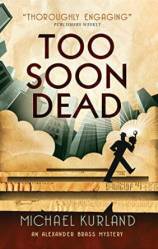
too soon dead

The second stand alone novel in the Alexander Brass series, The Girls in the High-Heeled Shoes follows hot on the heels of the spectacularly fun Too Soon Dead, with Kurland recreating the glamour of 1930s Broadway with celebrated wit and intrigue. Engagingly written and intricately plotted, readers old and new will become instantly immersed in this vintage mystery.

An extract from The Girls in the High-Heeled Shoes

The column appeared on Wednesday, September 11. By that afternoon we were fielding phone calls from actors, dancers, stage managers, and other people in “the business,” as the showbusiness folk call their occupation, as though it were the only business on the planet worth considering. And a few from those denizens of Broadway whose professions couldn’t be classified, at least not if they wanted to stay out of jail. None of them had any worthwhile information regarding Two-Headed Mary’s whereabouts, but they all wanted us to know that they thought well of her. By the next morning, we had several letters from chorus girls, and one from a chorus boy, detailing how Two-Headed Mary had helped them with money, advice, or a place to stay when they were in need. I gave the letters to Brass with a note clipped to them that read: “St. Mary of the Grift. Maybe we should pass the story on to Damon Runyon.” He walked by my cubical later and glowered at me and muttered “Runyon indeed,” under his breath.

The next day, which would make it Thursday, at noon I was in the outer office discussing with Gloria the sensitive question of the acquisition of office supplies when the slender, well-groomed scion of the aristocracy, K. Jeffrey Welton, appeared in the doorway. He sported a red and blue striped tie and a red carnation boutonniere in the lapel of his gray cashmere suit jacket. His shoes were glossy black patent leather. His was the sort of elegance that makes we mere mortal men identify with toads; and we envy him but we do not like him. Women, I believe, feel differently—although how a woman can like a man who is habitually prettier than she is, I do not understand.

There are those who claim that the United States of America has no aristocracy; they are misguided. The Weltons and the Vanderbilts and the Astors and the Rockefellers and one particular set of Adamses and some Dutch families whose ancestors were burghers in Nieuw Amsterdam, and some others whose families have been here so long that their names no longer reverberate in casual conversation, are the American aristocracy. Some of these families are social, and are high up in the society Four Hundred, some irrepressible souls make up a part of café society, some pay lawyers and other servants large retainers to see that their names do not come before the public at all.

The Weltons made their money manufacturing shoes in Massachusetts. Welton boots covered the feet of both Union and Confederate soldiers during the Civil War, and American, British, and, it has been alleged, German soldiers during the World War. There was a congressional investigation about the latter incident, but it came to naught.

“Ta, all,” K. Jeffrey said in his clipped, slightly nasal, aristocratic voice. He leaned on his walking stick and smiled into the room. “What’s the good word?” Welton’s father still made shoes, but K. Jeffrey had taken his pittance of the family fortune and shifted it from the shoe business to the show business. You can imagine how his family must have felt about that. But whatever they felt about his choice of profession, they couldn’t argue with his success. He had come straight from Yale to Broadway and started in the esoteric field of play production about the same time I came to New York and began working on the Great American Novel. I had never gotten past page sixty in any of my attempts. K. Jeffrey had already produced four plays: one flop, two that just eked out their nut before closing, and a reasonable success. The success, the musical Lucky Lady, was even now in its sixth month at the Monarch Theater.

“Mr. Welton,” Gloria said, smiling sweetly up at him as he approached her desk. “Mr. Brass supplies the words, we just work here. What can we do for you?”

“This bloody Mary business,” he said, leaning on the desk and smiling down at Gloria. “Has she turned up yet?”

“Two-Headed Mary?” I asked.

“That’s her,” he agreed. “Very clever calling her ‘Matinee Mary,’” he said judiciously, “but then your boss is a clever man.”

“If she has reappeared we have not been told,” Gloria said. “Would you like to speak to Mr. Brass?”

“Sure thing,” Welton agreed. “If the old man is in, I’d like to chew the fat with him.”

“I’ll see,” I said, rising from the chair I had deposited myself in upon Welton’s entry.

“Are you in?” I asked Brass, who was staring out his window at something in New Jersey. “K. Jeffrey Welton would speak with you.”

“What does he want?” He asked, swiveling around in his chair.

“He didn’t say,” I said. “Just that he wants to chew the fat with the old man. By which, of course, I knew immediately that he meant you. Sir.”

Brass grimaced thoughtfully. “I’ll come out,” he said. “It will be easier to get rid of him.”

Welton was leaning against Gloria’s desk when we emerged, watching her. His pose was artfully casual, but there was something about his look that suggested that Gloria was a piece of cheesecake and he had just realized he was hungry. Gloria, who was used to being a piece of cheesecake in men’s eyes, was smiling up at him with a smile of devastating innocence.

Brass took in the pose at a glance. “Welton,” he said. “There’s a biblical injunction against coveting thy neighbor’s employee.”

“He wants me to star in his next show,” Gloria said, batting her eyelids theatrically. “Little me! Imagine!”

“He wants me to star in his next show,” Gloria said, batting her eyelids theatrically. “Little me! Imagine!”

“Get it in writing,” Brass advised. “I’ll have Syd negotiate the deal for you.” Syd Lautman was Brass’s attorney, and a very good and thorough one he was.

Jeffrey grinned. “You people don’t let any grass grow under your palms,” he said. “A little friendly proposition between a man and a woman, and all of a sudden it’s a business deal.”

“Predatory, we are,” Brass said. “Ready to take advantage of the innocent Broadway producer. What can I do for you, Welton?”

“Mary,” Welton said. “I understand she hasn’t turned up yet.” “True,” Brass agreed.

“The girls in my show are worried about her. They suggested I put up a reward for finding her. The idea being if I can do it for someone who’s a thief, I can do it for someone who’s a good Samaritan. And from the stories the girls tell me, Mary is an angel in disguise.”

“A thief?” Brass paused. “Oh, that’s right. Lucky Lady is your show. You mean the Trask girl.”

“That’s right. Billie Trask. Nice kid—I thought. Stole a weekend’s worth of box-office receipts, among other things, and disappeared. I have posted—I guess that’s the word, although I didn’t actually post anything anywhere—a thousand-dollar reward for finding her and my money.”

“Were the receipts that much?” I asked.

“A little less,” he said. “Which means, if they find her with all the money, I won’t quite break even.”

Brass frowned. “Didn’t you have insurance?”

“Sure. It covers the theater rental and utilities for two days.

Paying the cast and crew and the investors, I’m on my own.”

“Do you really think she did it?” I asked.

Jeffrey thought that over for a moment. “I certainly hope she didn’t,” he said. “As I say, I liked her. But the police think she did it. Apparently she had a secret boyfriend, and they think she ran off with him.”

“Do you want me to put that in my column?” Brass asked. “About the reward for Mary?”

“What do you think?” Welton asked.

“Why don’t you wait a few days? Perhaps she’ll return on her own.”

“All right,” Welton agreed. “If you think so. We’ll give her the weekend to show up. Listen, keep me informed, will you?”

“And you,” Brass said. “If you hear anything about either of our two mysteries, let me know.”

Welton nodded. “Turnabout, and all that,” he said. “If it isn’t one thing, it’s another. Well, must be going. Ave atque vale, old amicus.” And with that, and a wave of his hand, he was out the door.

“It shows,” Brass said, “the advantages of a Yale education. One can say goodbye almost entirely in Latin.”

———-

About Michael Kurland

Michael Kurland is the author of more than thirty novels, but is best known for his Edgar-nominated mystery series featuring Professor Moriarty, including The Infernal Device and The Great Game. He has also edited several Sherlock Holmes anthologies and written non-fiction titles such as How to Solve a Murder: the Forensic Handbook.

He lives in Petaluma California.

You can find out more about Michael and his books on his web site.
Reflections by Eleanor Smythe

Reflections Tour Banner

Once again it’s my pleasure to join the fabulous Brook Cottage Books. Today we’re celebrating Reflections by Eleanor Smythe. Reflections is a contemporary fiction, whodunnit that was released on 1st December 2015. It is available to buy on Amazon UK and Amazon US.

As well as telling you all about Reflections, I am delighted to bring you an interview with Eleanor Smythe as well as the opportunity to win a £25 (or equivalent) Amazon gift voucher at the bottom of this blog post.

REFLECTIONS

Sally must deal with the grief of losing her father, a man she knew very little about. After the funeral she takes time out to be alone and reflect on her life.

To find out the truth about him, she first has to make amends with her estranged mother and half-sisters, whom she hasn’t spoken to for almost twenty years.

In the meantime, Mr Leriche from Interpol opens a fascinating old case file, about a stolen painting potentially worth millions. Before long Sally finds herself in the middle of a criminal investigation. Having discovered she is the sole beneficiary to her father’s estate, she must decide whether to develop the business or walk away.

Reflections is an emotional journey.

An Interview with Eleanor Smythe

ELEANOR2

Hi Eleanor. Thank you so much for agreeing to answer some questions on my blog about your book  ‘Reflections’. 

Thank you Linda for inviting me onto your blog and for your willingness to support my tour.

Firstly, please could you imagine we are on a one minute speed date and tell me a little about yourself?

It’s along time since I was on a date ha! ha!  Prior to writing I was an Occupational Therapist mostly working in the community. I raised a family of four sons (don’t think I’d say that if I were speed dating) and have an amazingly supportive husband. Ten years ago we decided to live abroad for a while. For several years we split our life between working in the UK and having fun in Portugal. Something more personal about me, I dislike toothpaste tubes being squeezed in the middle.

(I couldn’t agree more about that toothpaste tube!)

When did you first realise you were going to be a writer?

I think I must have felt the desire too write at an early age, not that I did anything about it.  At the age of eleven I told my mother that I intended to write a book one day, needless to say she didn’t take me seriously and the goal drifted into the back ground of my life. Once retired I decided it was time to have another adventure, to be honest retirement didn’t stimulate my mind enough. Thanks to the world of technology suddenly my dream to write a book seemed a possibility. I don’t think I ever truly believed it too be possible for me. Once I’d made the submission to Amazon and physically saw it for sale, that’s when I realised I was going to be writer. I’d actually achieved my goal.

It goes to show that dreams can come true.

If you hadn’t become an author, what would you have done instead as a creative outlet?

I think I would have taken up painting, not because I have talent in this area but I recognise that I have need for solitude and self expression from within. Although I write words I don’t always feel the need to talk. I can be perfectly happy in silence. I’m quite a deep thinker really.

How do you go about researching detail and ensuring your books are realistic?

A great deal comes form my runaway imagination. I begin with a character, as I write about that person I imagine I’m there with them or I am in fact them. What would they do or say in that situation? Then I ask a lot of questions of myself and others if need be. Is it possible, is it probable, is that location likely. Then I look at facts. With Reflections I had to find out where Interpol was located and the departments that dealt with art theft and the rate of success when dealing with art crime. Google map was used to follow the route that Mr Leriche would have taken from his home to his work, at the Interpol head quarters; and later the distance and time it took him to get from the shuttle to Herne Bay.  If I link areas I try to ensure that the motorways used would be accurate.

I get some facts and history from various other sites, like wikipedia or the good old fashioned library. The back ground to Sally’s mother was researched looking at cases documented and from films I’d seen on the subject matter of unmarried mothers in Ireland, around that time. I also had to check out the realistic sentencing for the crime committed because certain crimes have a standard sentence.

Which aspects of your writing do you find easiest and most difficult?

Well, I’m quite young as a writer, only having two books out. I’m sure I will find many pit falls in time to come. So far, for me the most difficult part of the whole process is the marketing and the technical aspects.I make no excuses for repeating myself when I say, if it wasn’t for my technical guru,  author Suzy Turner, I doubt I would have gotten this far. She has been and is a diamond in my life, (it’s not all book stuff we are also great friends). The other part of the process that is difficult for me is time. I’m often torn between other activities in my life and the time I need to sit and get on with it. I never realised how much time is needed, not just to write the book but also for the associated activities as mentioned.

(I think many authors find the marketing tricky, Eeanor.) 

The part that I love is creating the characters and the world that they live in. Unfolding a story and weaving lives together, I get excited when I can use humorous one-liners… that I think are funny. I can lose myself totally when it comes to dialogue between two or more characters, sometimes I have to stop myself and do a double check, to make sure I’m not waffling on. When I get into dialogue with my male characters I really go for it, they can be insulting and aggressive with each other at times and yet I hope I also bring some tenderness in a manly kind of way.       

What are your writing routines and where do you do most of your writing?

I wish you could hear me laughing about the routine question. I guess I could answer with one word WEAK. I don’t have a set routine as such. I’m not a get up and get to it person with my writing. Firstly because the whole point of retiring was not to be a slave to work any longer and secondly because I have a husband that fortunately likes to spend time with me. I also love coffee days out with my girly friends. However I do make an effort to write everyday even if it’s only a few lines and I do an awful lot of prep even when I’m not sitting at the computer. My mind is constantly turning things over. If something pops into my head out comes my phone and I make a note. I love to sit on my sofa with my feet up or at the dining table, I have lovely views from there. I’m fortunate to have a lovely room of my own to work from, if my husband is watching TV or being a bit loud. I prefer to work in silence so that I can hear my cogs turning. My very best day to write is when my husband goes fishing, I do encourage him to go at least twice a week then I have a full day at the computer… If I’m not distracted.

(Sounds perfect to me.)

When you’re not writing, what do you like to read?

I hadn’t thought about it much until this question kept popping up. I realised that I had spent many years, with the little spare time I had, mostly reading about work related subjects or subjects relating to whatever alternative therapy course I was on at the time. I also read a lot around various religious subjects and personal development programs… I’ve always been interested in techniques that people use to over come life difficulties. Now I’m much more relaxed about my reading. I tend to read for pleasure more than with a goal in mind. I really enjoy a variety of books. I’ve read some fantasy, Sci-fi, I’m currently reading a thriller, I enjoy something with a bit of mystery and romance. I guess I like to read a good book that captures me and it can be of any genre, although I must say I’m not a great fun of chic-lit.

Do you have other interests that give you ideas for writing?

Although I like my solitude I would say I’m a people person, I observe people… a part of my previous work was to observe and assess. The world around me and experience is where I find my inspiration. I love going out with friends be it for a meal, dancing or just sitting in a coffee bar. It’s amazing what we learn from other peoples experiences and habits… there are so many ways to eat a donut. If you get my point.

‘Reflections’ has a very striking cover. How did that image come about and what were you hoping to convey (without spoiling the plot please!)?

Suzy Turner helped greatly with the technical aspect of the cover (needless to say). We sat all day trying to find an image that would reflect (pardon the pun) the story. We looked for images of grieving women, funerals, art, paintings in fact anything that would relate to the storyline. At one point we even had the scales of justice. Suzy’s husband came home for lunch and said something about picture frames and mirrors, suddenly it all made sense. We found an appropriate image of a brunette women, who looked to be  in a reflective mode and popped her into our previously found frame. It can be seen as a mirror, indicating reflection or as a piece of art/painting, which is linked to the storyline and art theft. It took two women all day and a man’s logic during his lunch break.

If you could chose to be a character from ‘ Reflections’, who would you be and why?

I was for over a year all of these characters. When I think of them I want to say I would like to be Sally, because of her determination. However that’s  probably because I had previously written a book about her life, which I never published, so I know lots more about her than my readers will. I love Morag for her patience over the years and how she never gave up on her daughters. Aunt Kitty was also a strong  women. It’s a difficult one but I guess I’ll stay with Sally.  I love the courage she had to get out of a bad marriage and the way she stood by her son, who was rejected by his father for being gay. Sally’s an emotional wreck at times but a person who always gets up and fights on.

If ‘Reflections’ became a film, who would you like to play Sally?  

Somehow I knew someone would ask me this question. I’ve given this a lot of thought and come up with Emma Thompson… I know the hair’s all wrong but a good wig would solve that. She plays comedy really well, and having seen her in Love Actually I know she would be fantastic at the emotional scenes; there’s quite a few of them. She’s around the right age group and a strong character actor… Just imagine wouldn’t that be fantastic to see my book as a film. I’ll invite you to the premiere if that ever happens.

If you had 15 words to persuade a reader that ‘Reflections’ should be their next read, what would you say?

If you enjoy an emotional journey, romance, mystery, criminality and happy endings, it’s for you. 

(Ooh. 15 words exactly!)

Thank you so much for your time in answering my questions.

Thank you Linda for allowing me this time. I’m passionate about Reflections and it’s been great sharing that with you.

About Eleanor Smythe

ELEANOR SMYTHE

Eleanor Smythe was born in the east end of London but struggles to call it home as she moved away in her teens, and continued to live in various parts of the UK. After raising four sons, she went on to obtain a degree in Occupational Therapy. Although she took the opportunity to work in various medical settings, her greatest passion was working with clients within the community, where she claims real life takes place.

Now retired and living primarily in Portugal Eleanor has more time to pursue her love of writing. Always intrigued by the way in which individuals cope with life’s challenges and how they overcome the twists and turns of life, her stories embrace inner emotional turmoil that her characters might feel. They are brought to life by showing humour, tragedy, conflict, betrayal and emotions that many of us face daily.

Her debut book, The Other Side of Town continues to receive positive reviews while her second book, Reflections, was recently released.

Eleanor and her husband’s love of travel has led to the recent acquisition of ‘Dolly the Camper Van’. Dolly will enable them to pursue their individual hobbies of fishing and writing in new and exciting environments. Eleanor will be blogging about their adventures as well as inviting others to share their own.

You can find Eleanor on FacebookTwitterGoodreads and on her website.

Click here for the chance to enter to win a £25 (or equivalent) Amazon voucher.

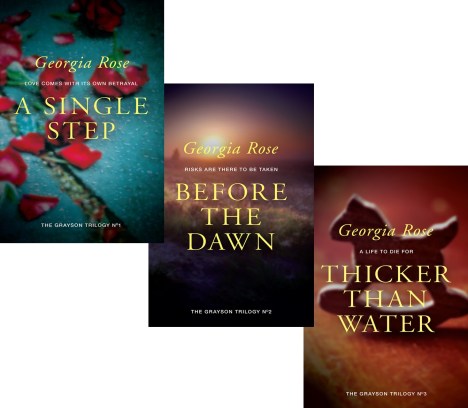
The Grayson Trilogy by Georgia Rose

Georgia-rose-the-grayson-trilogy resized

It’s my great pleasure today to welcome Georgia Rose to Linda’s Book Bag. Georgia Rose is the author of The Grayson Trilogy of books, A Single Step, Before The Dawn and Thicker Than Water.

Georgia Rose

Georgia’s background in countryside living, riding, instructing and working with horses has provided the knowledge needed for some of her storylines; the others are a product of her overactive imagination!

Following a long stint working in the law Georgia set up her own business providing administration services for other companies which she does to this day managing to entwine that work along with her writing.

Her busy life is set in a tranquil part of rural Cambridgeshire where she lives with her much neglected family of a husband, two grown up children and two dogs.

Today I’m delighted to host a guest post from Georgia Rose  – all about the virtue of patience for a writer!

Patience is a Virtue

Hen tomorrow egg today

Patience is a virtue. I was told this as a child, over and over again I seem to remember, which leads me to believe that it wasn’t a virtue I possessed.

I recall as a teenager there being an urge in me, as strong as any narcotic coursing through my veins, to get on. With what I wasn’t quite sure but I couldn’t wait to leave school and do whatever it was I was going to do with my life. I counted the days, hours and, with blessed relief, finally the minutes until I was at last free to leave and I can remember that feeling of exhilaration as clearly as if it were yesterday when I walked out of those gates with not so much as a backward glance.

I had such hopes, such ambitions for doing something big but I have as little idea now as I did back then about what this big thing was going to be because although filled with boundless energy I was missing that one vital ingredient, direction. I have always envied people who know what they want, who have a career plan. You see I didn’t have a clue what I wanted to do, or what my end goal was so it was tricky to plan steps along a pathway that was shrouded in mist. I’m sure I’m not alone in experiencing this but I find that while I can be absolutely driven with what I’m currently doing the bigger picture, the thing that I’m meant to aim for, has always remained a mystery, an elusive something out there beyond the hazy veil that guards the future.

Why is ‘patience’ a virtue? Why can’t ‘hurry the **** up’ be a virtue?

When I was a young woman I found I flitted from one thing to another, different activities were taken on with wild enthusiasm and then abandoned with such disinterest after a few months that I was seriously worried when the time came to a) get married, and b) have children. I was concerned that my lack of ability to stick at anything for very long was going to be seriously challenged by these two momentous and life changing happenings. Particularly the children bit, I mean it’s not as if you can put them back when you’ve had enough is it? I’d been through the guinea pig phase; I knew how interest could wane.

As it turns out I’m still happily married and my children have grown up into remarkable people that surprise and delight me every day so I have managed to stick at something. I suspect that this is what big means for me, nothing momentous that will go down in the history books, nothing that bears a plaque with my name on it but just normal stuff which is all good. I guess I settled down somewhere along the way as well and by necessity (children…say no more) learnt to have patience too.

At least that was what I thought until four years ago when I decided I might try my hand at writing something and found out that this business is all about having patience. In the first place it takes a long time to write a book – even if you are the sort of writer who gets down a decent word count of a few thousand a day, which I am not. I have found that once I have the idea I just want it written, right there, right then and it takes a lot to hold that in I can tell you.

I wish there was some way of just plucking the thoughts from my head and transforming them into words on the page without the annoyance of the typing process interrupting because everything that sounded so eloquent when it was in my head is never the same once it’s been mashed and mangled by the keystrokes into some muddle on the page. Imagine the joy of coming to look at your manuscript and finding all your perfect thoughts there ready and waiting for you.

I have always daydreamed (see last sentence for details!) and I had little bits of story bouncing around in my head for what seems like forever but in 2012 something clicked and the pieces came together to make one big whole. Thrilled, but at the same time terrified that I would forget the detail my head was filled with before I got to write it I was taken over by the same, if not higher, level of passion that I’d had when I was much younger. I was so desperate to get this first story down that it honestly felt like I was on something. I couldn’t sleep, I ate on the run and in the three months it took me to write the first draft I lost a glorious amount of weight (bonus!).

Patience and Procrastination

And then came the hard part, the not putting stuff off part. The part where I was going to have to knuckle down and call upon all of my reserves of patience to get on with to the seemingly endless editing, rewriting, editing cycle that followed. As well as all the other stuff – the book covers, the formatting, the proofing – and that’s before you ever even hit the publish button and then have to face the dreaded prospect of…I’ll whisper it…marketing.

It is very easy at this point to procrastinate, to do anything but what you are meant to be doing if you are ever going to succeed and finish the book. You often hear of authors who have put their novel aside for years before finally getting back to it. I’m sure that often there are very good reasons but I’m equally sure that sometimes it’s simply because they are delaying action. You have to keep going even if it feels like you are wading through treacle as you plod through the editing process – some forward movement is better than none as any takes you that little bit closer to completion.

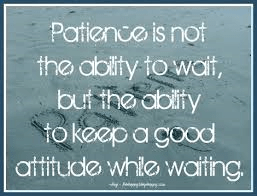
It took me another year to finish the first one. The frustration at having to do other things, like the day job, you know the one that actually pays the bills, can be irritating. But patience is all about the ability to accept delay, trouble or suffering without becoming angry or upset and I’m working on my attitude to try and give myself the time I need to do everything better next time around.

Patience attitide

This time as I start again, a start I suspect will sadly be unaccompanied by the adrenaline boosting weight loss achieved that first time around I’m hoping I’ve got a more balanced work life system in place to manage everything more successfully, which brings me on to this.

Edison patience quote

Because things have changed. Where once I was counting down the minutes, unbelievably wishing away time – what do the young know! Now I want to hang on to every day, ‘fill the unforgiving minute’ to quote Kipling so this is where my frustration currently lies. There is so much to do but the damned clock seems to spin ever faster, the days flying past as I patiently sit, tapping away, the word count slowly rising.

You can find out more about Georgia Rose on her web site and on Facebook. You can also follow her on Twitter. You’ll find all about Georgia on Amazon UK and Amazon US.

Georgia-rose-the-grayson-trilogy resized

There are lots of ways to buy The Grayson Trilogy Books

A SINGLE STEPAmazonSmashwords ,KoboNook

BEFORE THE DAWN:  AmazonSmashwordsKoboNook

THICKER THAN WATER: AmazonSmashwordsKoboNook


The Red Door by Rosa Fedele

cover

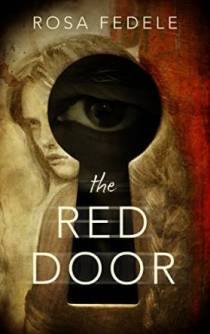
It gives me great pleasure to bring you a book with a difference today. The Red Door by Rosa Fedele was published on 1st October 2015 by MoshPit Publishing and as well as being a crime thriller, it is beautifully illustrated too. The Red Door is available on Amazon UK and Amazon US. I have a fascinating guest post from Rosa Fedele linking writing and art that I think will appeal to readers and artists alike.

About The Red Door

cover

What would you do if you began to suspect one of your tenants could be the perpetrator of a vicious double murder committed over thirty years ago?

It is 1983 and the new owner of the beautiful old Sydney mansion ‘Rosalind’ begins to believe she is being watched by the mysterious resident in Number Three, a reclusive man who happens to share his name with two teenage sisters, victims of a sinister and brutal murder. Her peace of mind slowly erodes as a fascination for the crime becomes obsession – consuming her life, shaking relationships with her new found friends and leaving a trail of devastation.

From Artist to Writer

A Guest Post by Rosa Fedele

The first reaction I encountered at the announcement of my first novel was: “Why? Why ever did you decide to write a book?” The question is usually accompanied, even now, by the scratching of heads, and incredulous or uncomprehending looks.

Well, really, is it such a leap from creating pictures with a pencil or brush, to conveying images with words?

“But, is this something you’ve always wanted to do?” they persist.

Funnily enough, when first I started to write, I had no idea what I was doing. In fact, I was so embarrassed that I started the project in secret, waiting until the house was empty and I was sure to be completely alone.

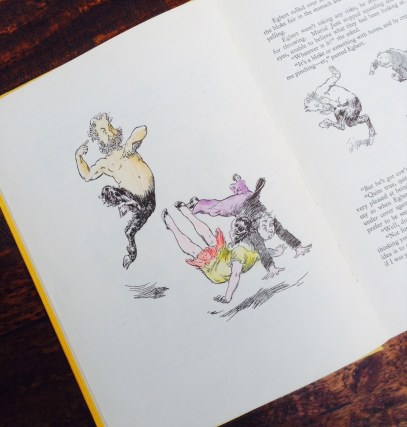
But, quite simply, yes. I have always known I would write and illustrate my own books; it was a natural progression. I grew up on a rich diet of illustrated stories – the works of C.S. Lewis, Tolkien, Beverley Nichols, Hauff’s Fairy Tales, E.C. Pedley’s Dot and The Kangaroo and this – newly rediscovered during our recent move – Norman Lindsay’s “The Flyaway Highway”. Lindsay, a master of portraiture not well-known outside our country, had a wonderfully silly side, unapologetically writing his own jolly and deliciously nonsensical stories, generously laced with illustrations and innuendo.

See how disrespectful I was as a child, wantonly defacing this lovely old book by colouring in Norman’s drawings!

NL Illustration

Now, the thing is: I love old houses. A lot.

Sometimes my heart aches profoundly at the sheer beauty of a building and I will stop and stare dumbly at the shimmering tarnished Gothic copper roof of a turret, the sun flashing off stained glass windows or the swirling ochres and russets of a Sydney sandstone wall, wishing desperately for the owner to appear at the door, smile and welcome me in for tea and biscuits.

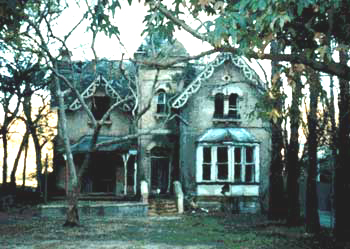
One day, I was strolling through Glebe (one of the oldest suburbs in Sydney), admiring the old mansions, and I happened upon one house in particular. But it was more than a house; the magnificent old building riveted and mesmerised me and in the following weeks I was drawn back to the site over and over. The mansion is fronted by a brightly painted door, a glossy façade, and I imagined what the door might mask and what it could have concealed over the last 150 years: nasty, shameful secrets, possibly a poor family’s misfortune and tragedy, rotten crimes and heaven knows what other unholy messes … and a story began to form.

I researched the origins of the house. I drafted thumbnail sketches of my main protagonist and her beautiful new home and, slowly, she came to life. Very soon, I was hosting a whole colony of characters in my head.

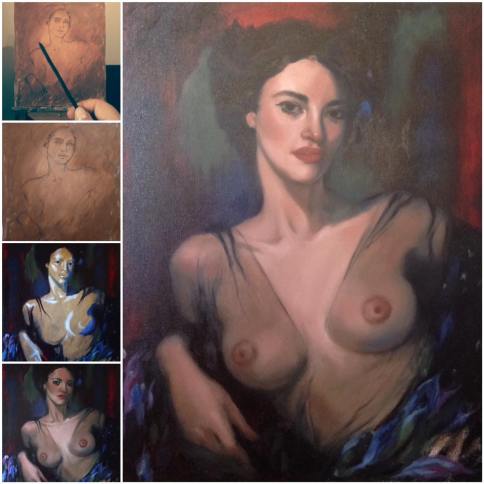
Rosalind Prelim Sketch

Set in 1983, The Red Door is about the new owner of an old Sydney mansion ‘Rosalind’, who begins to believe she is being watched by one of her tenants, the mysterious resident in Number Three, a reclusive man who happens to share his name with two teenage sisters, victims of a sinister and brutal murder which took place in the 50’s. Her peace of mind slowly erodes as a fascination with the unsolved crime becomes obsession – consuming her life, shaking relationships with her newfound friends and leaving a trail of devastation.

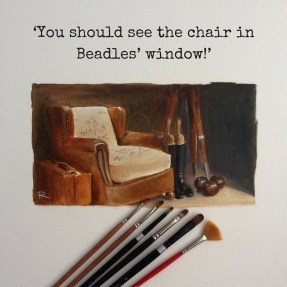
As the story unfolded, I’d paint a picture to illustrate exactly what the chair in Beadles’ window looked like or how the iconic old Balmain Garage used to look before developers tore it down.

Beadles Chair and Brushes

A reviewer recently said of The Red Door “… I found the observational style reminiscent of Henry James’ novels – fine detail and expertly written dialogue …” After I collected myself up off the floor and back into my chair, I thought: Wow! I’m glad I was able to successfully convey the language and landscape of inner city Sydney with words because, quite frankly, it’s far easier to turn to a No. 10 Filbert and a tube of paint when I’m struggling with commas, clichés and characterisation!

Does it help to observe with an artist’s eye? I think so. We are taught not just to look, but to see. Just as Amsterdam has its own pearly and intimate light, perfectly captured by Vermeer and de Hooch, and the English countryside its own gentle grey-blue drifting clouds, so masterfully interpreted by Constable, Sydney has a particular atmosphere of its own. The sky’s blue is so startling it can burn retinas, the edge of every leaf is knife-sharp, the heat can singe nostril hair and our birds don’t twitter or chirp – they screech.

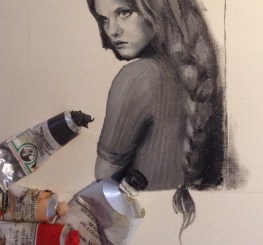
I suppose having a portraitist’s eye also helps: I watch how people integrate with their environment and each other, the inter-personal dynamics, mannerisms, the tilt of a head, a finger rubbed nervously across a philtrum. Another peculiar thing: characters will take on a life of their own – just when you’ve got the plot sorted, the little buggers wander off and do anything they bloody please! Halfway through the story, my main girl’s behaviour was infuriating me. So, I tore up all the old sketches and painted her as I preferred her – a no-nonsense woman with tenacity and resilience – and slowly she started to come around and see it my way …

MP Crop

It was a joy to write and illustrate The Red Door. Readers who also love the pictures can easily hop online and order their very own limited edition print or giclée.

Yes, there’s a sequel. Yes, it’s again based around an old house in Sydney. No, I won’t tell you much more, but here’s how I’m developing one of the characters on canvas:

Developing Lady Beatriz

I certainly hope one day someone will love my books well enough to handle them until dog-eared and tattered, or gleefully take to the illustrations with a packet of coloured Derwents.

And, lovely readers, if you ever see me lurking in front of your beautiful old mansion, please do invite me in for tea.

Rosa x

We certainly will Rosa!

About Rosa Fedele

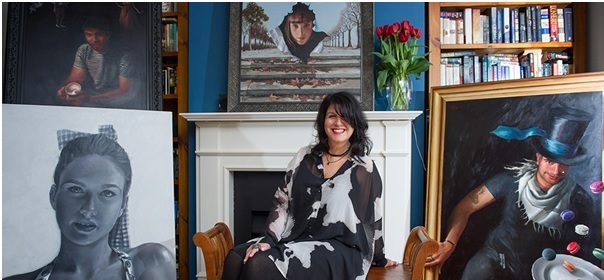
Rosa composite

‘For me, every painting and every book is a new adventure, started with a thrill of excitement and anticipation.’

Australian painter Rosa Fedele, known for her portrait and figurative work, was born in Sydney and studied at the prestigious Julian Ashton Art School. A member of Portrait Artists Australia, Australia’s largest industry association for professional portraitists, and a regular contributor to Australian Fine Art and Decorative Painting magazine, her work has been exhibited in NSW Parliament House and Parliament House Canberra, as well as numerous galleries and exhibitions in Australia and worldwide.

Rosa fell avidly in love with books at a very young age. Her favourites were those by C.S. Lewis and Tolkien, and later on Raymond E. Feist, David Eddings, Anne McCaffrey and Frank Herbert; in fact, anything with beautiful and spellbinding words and imagery that would allow her to escape into other worlds.

Her debut novel The Red Door is a fulfilment of her lifelong dream, to interweave a story with pictures … and draw the reader into her own bewitching, and slightly dark-edged, world.

You can follow Rosa on Twitter and if you’d like to order your very own limited edition print or giclée, see Rosa’s web site for more details.

Where the River Parts by Radhika Swarup

cover

I’m delighted to be taking part in the launch celebrations for Where the River Parts by Radhika Dogra Swarup. Where the River Parts was published in paperback on 18th February by Sandstone Press. It is available to buy here on Amazon UK.

Here you can find out all about the book and read my review of this lovely historical novel.

Where the River Parts

Half a century and half a world are not enough

Blood had begun to trickle down Asha’s starched cotton salwar, and once more she tried to will herself to stay calm. It was nothing. These things happened.

But these things haven’t happened before. It’s August 1947, the night before India’s independence. It is also the night before Pakistan’s creation and the brutal Partition of the two countries. Asha, a Hindu in a newly Muslim land, must flee to safety. She carries with her a secret she has kept even from Firoze, her Muslim lover, but Firoze must remain in Pakistan, and increasing tensions between the two countries mean the couple can never reunite. Fifty years later in New York, Asha’s Indian granddaughter falls in love with a Pakistani, and Asha and Firoze, meeting again at last, are faced with one more – final – choice.

My review of Where the River Parts 

Based around the events of Partition in India in 1947, Asha’s story takes her across decades until she is an old woman in a sweeping historical love story. I don’t usually make comparisons between writers but I think those who’ve loved Dinaah Jefferies’ books will love Where the River Parts too.

I have to confess that I knew very little about the violent times of Partition and wasn’t sure that I would enjoy Radhika Swarup’s novel, but it is wonderful.

In Where the River Parts there is an exquisite telling of the violence and heartbreak of political turmoil from an intimate perspective. In Asha, Radhika Swarup illustrates just how huge international events impact on the individual, so that I found it impossible not to feel fully engaged with what happened in another country a whole lifetime ago. The sadness for me in reading this book is that so much of the same horror is being inflicted on people today.

Radhika Swarup’s writing is so vivid. She appeals to all the senses so that the heat, smells and colours of India and Pakistan are beautifully conveyed. There is a real sense of place.

The plot races along and my only complaint is that the narrative does not end exactly how I would like but I can’t say more without spoiling the read for others. Let’s just say it reduced me to tears.

I think the title is fantastic. Action takes place physically where the river does indeed part, and Asha’s memories return to that part of her life when she is an old woman reflecting on her past, but also, the title represents the ways in which women carve out their lives like a river flowing across the earth.

I think I have learned so much from reading Where the River Parts. It has everything from history and politics to geography and culture, but more importantly, it shows love and the enduring spirit of humanity. I thoroughly enjoyed it.

About Radhika Swarup

Author

Radhika Swarup spent a nomadic childhood in India, Italy, Qatar, Pakistan, Romania and England, which gave her a keen sense for the dispossessed. She studied at Cambridge University and worked in investment banking before turning to writing. She has written opinion pieces for Indian broadsheets and the Huffington Post as well as short stories for publications including the Edinburgh Review.

You can follow Radhika on Twitter and visit her web site.
Between Friends by Jenny Harper

Between Friends Tour Banner 1 1

I’m delighted to be part of the Brook Cottage Books’ celebrations of Between Friends by Jenny Harper with a review and an international giveaway of the book. Between Friends is available for purchase on Amazon UK and Amazon US.

I have a review of this highly entertaining read as well as an international giveaway to win a brooch (and reading Between Friends will make that part of the prize clearer) as well as a paperback copy of the book as a first prize. There are also e-book copies to be won.

Between Friends

27995726

They thought he belonged safely in the past. His return threatens everything.

Marta, Carrie and Jane have been friends since they were at school in Edinburgh. Now one is bringing up her family, another is desperately trying for children of her own, and the third is focused on her career – and each takes the support of the others as a given.

But when generous Marta offers out-of-luck actor Tom temporary shelter, her act of kindness sets in motion a tsunami of destruction. Marta’s marriage comes under threat. Timid Jane is haunted by the secret she has been hiding since she last saw Tom. And ambitious Carrie finds herself at the mercy of a man who can ruin her career.

Only by pulling together can the friends rid themselves of this menace. But is Tom too clever at sowing mistrust?

My Review of Between Friends

When Marta invites aspiring actor and old friend Tom to stay for a week, little does she realise what an impact it will make on so many lives.

I really enjoyed reading Between Friends. I thought the characters were believable and well rounded, although I thoroughly detested Tom from the beginning and he brought out very negative reactions in me as a reader to the point where I would have liked to meet him and slap his face! I found the way Jenny Harper uncovered the back stories of Carrie, Jane and Marta very skilful so that I felt I knew them well and I cared about what happened to them.

The setting of Edinburgh worked extremely effectively so that while there was continuity of place for the action, there was also a variety of setting to engage the reader. Reading ‘Between Friends‘ has made me want to visit the city for myself.

The plot romps along and I enjoyed the twists and turns along the way. There are also some big themes entertainingly explored such as friendship, loyalty, love and relationships of all kinds, including those within families and marriages. It would spoil the plot to reveal too much more about some of the issues raised in reading Between Friends, but all three women have their own demons to face too.

Between Friends is a highly well written and thoroughly entertaining read.

ABOUT JENNY HARPER

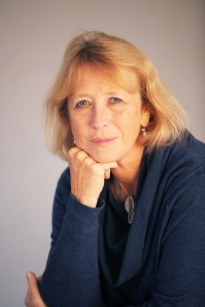
Jenny CC 6

Jenny Harper lives in Edinburgh, Scotland, though she was born in India and grew up in England. She has been a non-fiction editor, a journalist and a businesswoman and has written a children’s novel and several books about Scotland, as well as four full length novels and a novella in The Heartlands series (set in Hailesbank), and two short stories that have appeared in anthologies. Between Friends is her fifth full length novel.

Jenny writes contemporary women’s fiction with bite – complex characters facing serious issues.

Praise for Jenny Harper

‘An engaging and delightful read. Jenny Harper is a most gifted storyteller.’  Alexander McCall Smith

‘Page turning and thoroughly entertaining. I loved it!’ Katie Fforde

‘The most beautiful love story that I have read in a long while. Amazon review of People We Love

‘This was a fun, heart-warming but also emotional story that had me thinking about the characters long after I’d finished it.’ Amazon review of Maximum Exposure

‘Ms. Harper has created a fully populated, very human and recognizable world.’ Amazon review of Face the Wind and Fly

‘There is everything I like about a novel in her writing: family, relationships, current affairs … things the author seems well versed in. I loved the Scottish settings, and could visualise many of the locations in the book …’ Amazon review of Loving Susie

Find out more about Jenny through these links:

Webpage            

Twitter                

Facebook            

Google +             

Goodreads         

Riffle                     

Amazon Author Page 


GIVEAWAY

Brooch and paperback (1st prize)

2x ebooks (2ND PRIZE)

Click here to enter to win this fabulous prize.


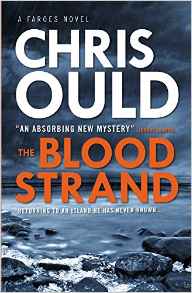
The Blood Strand by Chris Ould

Blood strand

With Chris Ould’s latest novel The Blood Strand published on 16th February 2016 by Titan, I am thrilled to bring you an anecdotal article by Chris telling us about his experience of a ‘ridealong’ with the Faroes police.

You can follow Chris on Twitter.

About The Blood Strand

Blood strand

Having left the Faroes as a child, Jan Reyna is now a British police detective, and the islands are foreign to him. But he is drawn back when his estranged father is found unconscious with a shotgun by his side and someone else’s blood at the scene. Then a man’s body is washed up on an isolated beach.

Is Reyna’s father responsible? Looking for answers, Reyna falls in with local detective Hjalti Hentze. But as the stakes get higher and Reyna learns more about his family and the truth behind his mother’s flight from the Faroes, he must decide whether to stay, or to forsake the strange, windswept islands for good.

You can buy The Blood Strand on Amazon UK and Amazon US as well as from Titan.

 On Patrol With The Faroe Islands’ Police

A Guest Post from Chris Ould

The southern end of the island of Streymoy has been shrouded in mist since I arrived. There is no breeze. Sometimes the pall seems about to thin out, but then it thickens again as if it’s changed its mind. Not the best conditions, perhaps, to be out in a patrol car with Jóannes, the Faroese police officer who’s let me tag along with him for his shift. We’re certainly not going to see much of Tórshavn and its surroundings.

Fog or mist isn’t a big deal if you live in the Faroe Islands. Nor is the rain or the wind, or snow in the winter. If you’re Faroese you just take what comes. Chances are it’ll be different in a couple of hours, or if you drive twenty kilometres in any direction.

“Let’s go to Kirkjubøur,” Jóannes says. “There might be sunshine.”

He searches for the turn off the ring road and the mist seems even thicker as we head out of town.

I’ve been on ridealongs with the police before, back in Britain and in Texas and Maine, and as a general rule I know nothing will happen. Of course, as a crime writer you hope there’ll be a call to an incident, but that’s not really the point of tagging along with working cops. What I most want is the opportunity to look and to listen; to ask questions like “How many channels on the radio do you use?” and “What do you call those markers on the roadside?”

For me the devil’s in the details I can pick up, but also in the inadvertent information you find out when you get coppers talking about their jobs and their lives. As an old copper once told me, the golden rule for finding things out is ears open, gob shut. You ask a question, then listen to whatever comes from it, because asking a simple question about shift patterns can lead to anything: anecdotes, insights into family life and even whole case histories on a murder.

Coppers, of course, have a degree of innate suspicion when you first start asking them questions, and it can take them a while to thaw out. Most will, though, if you’re open and honest about what you’re doing. They also respond well when I tell them I’m there because I want to get things right. If coppers have one bugbear above all it’s with books, films and TV series where the writers couldn’t be bothered to find out even the basic facts and just made stuff up.

So Jóannes drives on through the fog for a few kilometres and we talk about guns and firing ranges and new regulations. He tells me about his kids’ school hours and we compare British and Faroese attitudes to children being at home on their own.

There’s still no sign of sunshine but then Jóannes gets a call on the radio. It’s in Faroese, naturally, but I know it’s serious by the tone of the voice on the speaker, and from the fact that Jóannes pulls in on the verge. Then he’s off the radio and making a U turn.

“Did something happen?” I ask, although it’s redundant.

Jóannes nods as he switches on the siren and lights. “There’s a report of a man with an axe near a children’s playground,” he says in that unflappable Faroese way. “It may be a situation where I must ask you not to come close.”

“Sure, of course. No problem,” I say.

But all I’m really hoping is that ­– despite the mist – we can get there before everyone else. After all, despite asking questions, there’s no substitute for seeing an incident unfold at first hand.


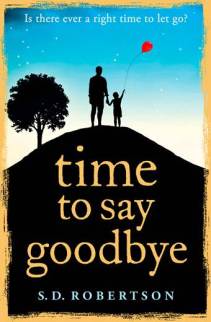
Time to Say Goodbye by S.D. Robertson

Time to say goodbye

I love emotional books and am delighted to be part of the launch celebrations for S.D. Robertson’s debut Time to Say Goodbye which was published by Avon, an imprint of Harper Collins, on 11th February 2016. Time to Say Goodbye is available in ebook and paperback from Amazon UKAmazon US, direct from the publisher and in all good bookshops.

It is my pleasure to share with you Stuart Robertson’s journey to publication in a guest post too.

Time to Say Goodbye

HOW DO YOU LEAVE THE PERSON YOU LOVE THE MOST?

Will Curtis’s six-year-old daughter, Ella, knows her father will never leave her. After all, he promised her so when her mother died. And he’s going to do everything he can to keep his word.

What Will doesn’t know is that the promise he made to his little girl might be harder to keep than he imagined. When he’s faced with an impossible decision, Will finds that the most obvious choice might not be the right one.

But the future is full of unexpected surprises. And father and daughter are about to embark on an unforgettable journey together . . .

My Journey to Publication

A Guest Post

by S.D. Robertson

It’s been a dream of mine to become a published author ever since I was a little boy reading Secret Seven books.

Losing myself in a good novel has always been one of my greatest pleasures. I knew one day I’d like to try creating one for myself.

When I went into newspaper journalism, it was mainly because I wanted to write professionally. I wasn’t ready at that stage, in my mid-20s, to construct a novel. I didn’t feel like I’d experienced enough. But I hoped that writing every day and interviewing people from all walks of life would set me on the right course.

Nine years later, after rising through the ranks and becoming an editor, my chance finally came.  Major cutbacks meant voluntary redundancy was on the table. Tired of long, unsociable hours and dwindling resources, I saw light at the end of the tunnel. Maybe this was my chance to have a go at writing that novel, while also spending more time with my young daughter.

First I had to convince my wife – then a stay-at-home mum – to swap roles. Somehow I got her to agree and, before I knew it, she’d returned to work; I was a stay-at-home dad and would-be writer.

Now if this was a fairy tale, I’d tell you I finished my first book in no time, found a literary agent, who in turn found me a publisher. But that’s not how it worked.

After a couple of false starts, I did manage to produce a novel. It was a romantic comedy set in a local newspaper office, loosely based on my early days as a reporter. I was even quite pleased with it. Unfortunately, I didn’t manage to find a literary agent or publisher willing to take it on.

Obviously I was gutted, but I took heart in the little-known fact that few authors get their first attempt published. So I returned to the drawing board – and what I came up with was Time to Say Goodbye. Inspired by the close relationship I’d developed with my daughter since quitting work, I chose to write about the unique bond between a father and child in the dramatic context of a worst nightmare come true.

The novel’s had several tweaks since then, but the essence of the story I first imagined has remained the same. After lots of writing and editing, the time came to send it out. A few knockbacks followed. Then I found an agent who loved it – and totally understood where I was coming from as a writer. She passed it on to a commissioning editor who also loved it. And the rest, as they say, is history.

My journey to publication took several years; an amazing, very understanding wife; the help and support of a great set of family and friends; a thick skin and bucket loads of determination. There were several times along the way when I doubted it was ever going to happen. But now I’m so glad I persevered. Being published is an amazing feeling. I’m so excited to think of people far and wide reading my story and hopefully getting lost in the world I’ve created.

———-

You can follow S.D. Robertson on Twitter, visit his web site and find him on Facebook.

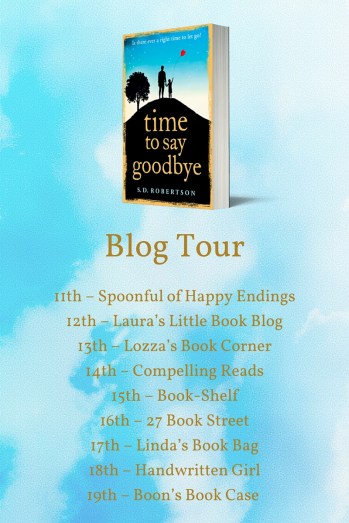
There’s much more about Time to Say Goodbye and S.D. Robertson with these other bloggers:

Blog Tour


Anne Goodwin Guest Post

51eP0N9du8L

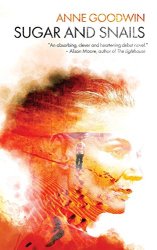
I’m delighted to be hosting a guest post from Anne Goodwin today. Anne Goodwin’s debut novel, Sugar and Snails, about a woman who has kept her past identity a secret for thirty years, was published in July 2015 by Inspired Quill. It is available to buy here in the UK and here in the US.

Anne’s second novel, Underneath, about a man who keeps a woman captive in his cellar, is scheduled for May 2017.

About Sugar and Snails

51eP0N9du8L

The past lingers on, etched beneath our skin …

At fifteen, Diana Dodsworth took the opportunity to radically alter the trajectory of her life, and escape the constraints of her small-town existence. Thirty years on, she can’t help scratching at her teenage decision like a scabbed wound.

To safeguard her secret, she’s kept other people at a distance … until Simon Jenkins sweeps in on a cloud of promise and possibility. But his work is taking him to Cairo, and he expects Di to fly out for a visit. She daren’t return to the city that changed her life; nor can she tell Simon the reason why.

Sugar and Snails takes the reader on a poignant journey from Diana’s misfit childhood, through tortured adolescence to a triumphant mid-life coming-of-age that challenges preconceptions about bridging the gap between who we are and who we feel we ought to be.

Shaped by the past: the events that make us in life and fiction

A Guest Post by Anne Goodwin

(Anne has included lots of interesting links for you to explore too)

One of several areas of common ground between novelists and therapists is the belief that we are shaped by our experiences. For novelists, that means giving our characters a convincing back story; for therapists, it entails exploring how the client’s upbringing impacts on how they view the world and themselves. But individual novelists, as is the case for individual therapists, will differ in the emphasis they give this and the extent to which they believe we’re moulded by our pasts. As a debut novelist, and former clinical psychologist with experience of both sides of therapy, it’s a topic that intrigues me in my reading and writing.

From Cinderella to The Ugly Duckling, stories of transformation, of rising above disadvantaged beginnings, speak to something deep within us all. Yet for many of us, our pleasure in those narratives is tinged with an anxiety that our shadow selves will come back to haunt us. This is one of the themes of my debut novel, Sugar and Snails. Having been advised as an adolescent to put the past behind her, Diana Dodsworth has avoided intimate relationships for fear of her secret leaking out. Romance aside, it’s her relationship with herself which is most stunted, and her inability to reconcile the person she is with the person she feels she should be results in the episode of self-harm with which the novel begins.

There are as many ways in which the past can affect us as there are people, but it helps me to think of them as three types. Firstly, our earliest experiences as infants form our assumptions about how relationships work. If our parents and other carers respond to our distress signals promptly and lovingly, we grow up confident of our place in the world. If, however, they respond erratically or punitively, we grow up anxious and insecure. Because these formative experiences occur before we can forge verbal memories, we are often unaware that we’ve been disadvantaged in this way, unless or until some other crisis drives us to seek help. There is a clue, however, in our earliest memories. In Sugar and Snails, Diana’s childhood memory of unselfconsciously dancing is overshadowed by a fear of her mother’s disapproval, suggesting a character who’s a stranger to compassion either from others or from herself. This makes her sometimes, as an adult, awkward and prickly in her interactions with others.

The events and the choices that change the course of our lives are the second way in which our pasts affect the present. These no-going-back points serve to anchor the plot in fiction and ratchet up the tension. Some of these are a cause for celebration – marriage, a new job, the birth of a child – while others are downright tragic or more of a mixed bag. The momentous life-changing decision Diana makes in adolescence is much wanted but, being made in haste, she hasn’t properly planned for the consequences and the adults around her don’t furnish much support. It was partly a major disjunction in my own early life that drove me to explore this theme.

The third category is loss, a feature of many novels and, since we, and those we love, will all die some time, every life. But even the highlights include an element of loss; for example, the loss of freedom that a new baby brings. So heavily focused on getting what she thought she wanted as a teenager, Diana never properly acknowledged what she’d lost. While she would see that as sensibly getting on with things, the psychologist in me perceives her failure to mourn as keeping her stuck in the past.

If we are shaped by our pasts, can we ever move forward? I believe we can but, perhaps somewhat paradoxically, we need to accept its influence first and grieve for what we’ve missed. Many of us, like Diana, think that we can escape the legacy of our problematic pasts by dismissing them, by trying to live as if they hadn’t happened. Or, we acknowledge the events but deny the pain, making reckless choices as if to triumph over our own frailty. We try to live the life we feel we should have had, rather than the life we’ve been given. Often, however, rather than making us strong, the false self we create renders us more vulnerable.

An insecure start in life, a radical change of trajectory in adolescence with unacknowledged loss, can Diana ever reconcile herself to her past? If she can bear to let her guard down long enough to experience the support of her friends, if she can trust the new man in her life to treat her kindly, if she can draw on her contacts in her work as an academic psychologist, she might just make it. But, of course, you’re going to have to read the book to find out!

Anne is also a book blogger and author of over 60 published short stories. Catch up on her website: annethology or on Twitter @Annecdotist.

Midsummer Dreams by Alison May

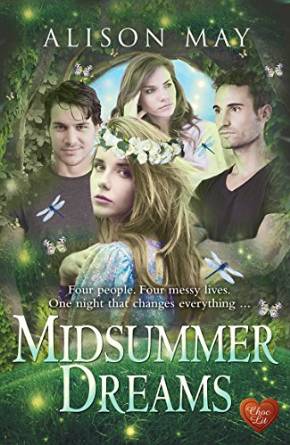
Cover

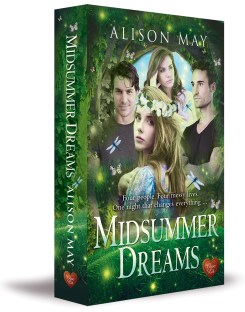
I’m delighted to be hosting Alison May on Linda’s Book Bag today. Alison’s latest novel Midsummer Dreams was published by Choc-Lit in paperback on 14th February 2016 and is also available in ebook. Midsummer dreams is available to buy on Amazon UKAmazon US, from all good bookshops and directly from Choc-Lit.

Alison May tells us all about the ultimate romance writer – Shakespeare!

CHOC

MIDSUMMER_hirespackshot 150dpi

Midsummer Dreams

Four people. Four messy lives. One night that changes everything …

Emily is obsessed with ending her father’s new relationship – but is blind to the fact that her own is far from perfect.

Dominic has spent so long making other people happy that he’s hardly noticed he’s not happy himself.

Helen has loved the same man, unrequitedly, for ten years. Now she may have to face up to the fact that he will never be hers.

Alex has always played the field – but when he finally meets a girl he wants to commit to, she is just out of his reach.

At a midsummer wedding party, the bonds that tie the four friends together begin to unravel and show them that, sometimes, the sensible choice is not always the right one.

A modern retelling of Shakespeare’s Midsummer Night’s Dream and second novel in the 21st Century Bard series.

The Ultimate Romance Writer

A Guest Post by Alison May

Shakespeare

When readers and writers discuss the greats of romantic fiction there are a few names that come up time and time again, names like Jane Austen, Charlotte Bronte and Georgette Heyer, but for me, there’s one name that tops them all – step forward William Shakespeare.

Now I’m sure that at the mention of Mr Shakespeare some of you want to run away screaming, having been traumatised by enforced exposure to his Titus Andronicus at a formative age, but, please, stick with me, because when it comes to matters of the heart William Shakespeare is very much The Man. Whatever those other romance authors might have done, Shakespeare did it hundreds of years earlier, in blank verse, frequently with cross-dressing. His romances range from the broad farce of twin-based confusion comedies like The Comedy of Errors, to the doomed infatuation of literature’s ultimate star-crossed lovers in Romeo and Juliet. He shows a relationship corrupted by lust for power in Macbeth and a relationship destroyed by jealousy, politics, war and, finally, a snake/sword suicide combo in Antony and Cleopatra. He plays with the difference between the romantic thrill of the chase and the serious commitment of true love in Love’s Labour’s Lost. If there’s a story about love to be told, then somewhere in his thirty-seven (ish) plays and one hundred and sixty (ish) poems, Shakespeare will have told that story.

I’ve written two contemporary novels that have their roots in Shakespeare’s romantic comedies, and I’ve been astounded both times by just how modern Shakespeare’s stories still feel. Beatrice in Much Ado About Nothing (aka Trix in Sweet Nothing) is a thoroughly modern romantic heroine. She’s stubborn, intelligent, funny, warm-hearted and absolutely adamant that she’s not going to do anything as daft as fall in love. You probably don’t need to have seen the play to guess how that works out!

Sweet nothing

In A Midsummer Night’s Dream, the inspiration behind Midsummer Dreams, there is love and romance all over the shop. Hermia loves Lysander. Lysander, rather handily, loves Hermia right back. So far, so simple. Unfortunately, Demetrius loves Hermia too, but she can’t stand the sight of him, unlike Helena, Hermia’s best mate, who is quite certain that Demetrius is perfection made flesh. Alongside them we also have Oberon and Titania. Now they probably do love each other, but right at the moment they’re slap in the middle of an almighty lover’s tiff, and as they’re both powerful fairies, their tiffs do a have a tendency to get the tiniest bit out of hand. In this case they end up with Lysander thinking he might love Helena instead of Hermia, and Titania herself getting frisky with a donkey. The play is a glorious riot of people falling in love with the wrong people and then finding the right person and then finding that the right person has gone right off them and then falling in love again and … and well, if that’s not enough excitement for you, there’s also a donkey. And the takeaway message from all of that is simply this:

You love who you love.

It might not be sensible. It might change sometimes of its own accord, but, however much you might want to, you can’t decide, you can’t even be bewitched, to truly love somebody else.

About Alison May

Alison Maynard_low res

Alison was born and raised in North Yorkshire, but now lives in Worcester. She is a History graduate from the University of York and has a Creative Writing degree from the University of Birmingham. Alison has worked as a waitress, a shop assistant, a learning adviser, an advice centre manager, and is now a creative writing tutor and freelance trainer for charities and voluntary organisations.

She is a member of the Romantic Novelists’ Association and won their Elizabeth Goudge trophy in 2012 for her short story Feel the Fear which was published in the RNA’s 2014 anthology.

Alison writes contemporary romantic comedies.

You can follow Alison on Twitter and visit her website. You’ll also find Alison on Facebook.