Island of the Red Mangroves by Sarah Lark

I’m thrilled to be able to host a question and answer session with Sarah Lark about her latest book ‘Island of the Red Mangroves’. Sarah kindly answered some questions about her writing below, but first, let’s find out a bit more about her and her books.
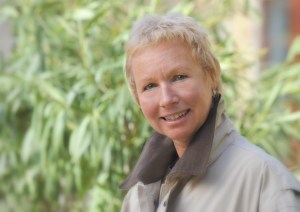
Sarah Lark (2)

Sarah Lark is an international bestselling author, famed for her captivating historical sagas with sales of 2.7 million in Germany alone. Her books ‘In The Land of the Long White Cloud’, ‘Song of the Spirits’ and ‘Call of the Kiwi’ have already been published in the UK and the first in the Caribbean saga ‘Island of a Thousand Springs’ was published last year. A captivating tale of love and hate, violence and kindness, family and romance, ‘Island of the Red Mangroves’ is the second book in the Caribbean saga. It is published 23rd July by Bastei Entertainment, price £3.99 in eBook.

‘Island of the Red Mangroves’

cover

Jamaica 1753. Doug and Nora Fortnam have raised Nora’s illegitimate, mixed-race daughter Deirdre, born from violence, but who has grown up to be a beautiful and headstrong young woman. Despite her past, the stunning Deirdre attracts men wherever she goes, but has turned them all away, finding them wanting. However, when she meets the handsome and kind Dr. Victor Dufresne, who sees beyond her history and heritage, they fall in love and marry, moving to Victor’s modest house in Hispaniola.

In Grand Cayman, Jefe, a young free black man, and Bonnie, an escaped slave, leave home on a pirate ship in search of wealth, freedom and power, renaming themselves Caesar and Bobbie. When Bonnie is injured in battle, she relies on Jefe to find a doctor to save her – without revealing that she is a woman. Their worlds collide when Victor treats Bonnie for her injuries, reluctantly allowing the two black pirates into his home. Deirdre however feels an irresistible and mutual attraction to Jefe, which she finds she cannot fight.

Meanwhile, racial tensions are growing across the island, as white families are being poisoned by their slaves. A rebellion is in motion, led by the mysterious but captivating François Macandal. The rebels are dangerous and brave, feeling angry and mistreated and they are ready for an uprising…

An Interview with Sarah

Hi Sarah. Thank you so much for agreeing to answer some questions on my blog as part of your tour for your new book  ‘Island of the Red Mangroves’.

Firstly, please could you imagine we are on a one minute speed date and tell me a little about yourself?

I am Sarah Lark, but my real name is Christiane Gohl – normally I’m called Christina or Chris. My job is to write landscape-novels, but I also love to work with horses. I live in Spain on a farm with a lot of animals – I look after abandoned and mistreated horses but I’ve also got a lot of cats and dogs. Caring for them definitely costs a lot of money, so I am glad that my novels are successful all over the world. So thanks to all my readers!

When did you first realise you were going to be a writer?

I always wanted to write, I wrote my first poem before knowing all the letters of the ABC. At school I wrote satiric texts about my teachers and romantic stories – and I told everybody that I would be a professional writer when I’m grown up. At last I studied to be a teacher, but I had not a little bit of talent for the job. So I gave it up and started to work as a texter for a public relations agency. I also wrote for reviews about horses – and that at last helped me to publication! An editor called me and asked me if I could write a riding manual for children. The book was a great success, I was asked to write more, and so I started with fiction and non-fiction for horsy girls, but also non-fiction for adults about looking after horses, breeding them, working with them and so on. I also wrote a biography of Ada Cole, the founder of the ILPH, and I always looked for a publisher for historic novels. The first ones, published under my real name, were not really successful – I was too famous as a ‘horse-expert’. So when we started with landscape-novels we changed my name to ‘Sarah Lark’, and everything went well.

If you hadn’t become an author, what would you have done instead?

Writing is my only talent. So if I couldn’t write novels I would write commercials or work for reviews. Or write speeches for politicians or anything else. If I need to, I can write whatever anybody asks for.

Your novels have a strong historical setting. How do you go about researching historical detail and ensuring your books are realistic?

I normally use the internet. I do the most important research before starting the book, and then, while I am writing, I have a second computer with the internet open to answer the questions which appear during the process of writing. The history of slave labor on the plantations in the Caribbean, the living situation of the slave holders and the Maroons of Granny Nanny were as well researched as possible. I also had to read as much as possible about Jamaica and its history, also, naturally all about fashion and etiquette of the 18th century. It was quite exciting and not very difficult. The research only became really complicated by the part of the story which plays out on Hispaniola – now modern day Haiti. The particulars of Haiti’s history aren’t well known – too much political upheaval and too many earthquakes to keep proper documentation.

Which aspects of your writing do you find easiest and most difficult?

I first write an exposé, so the plot is standing, before I start writing. But then I dive in, and sometimes I change a lot. Normally there aren’t any drafts. I write the story down, read it again to correct it, and then I have some test-readers, who tell me their opinion. I maybe make some changes, and that is it. I’ve never had the thing with the ‘writing blockade’ and I’ve never heard about a really good author who has had these problems. If you have got fantasy, you won’t ever lost it.

What are your top tips for writing?

My five top tips are:

1) You need discipline to write every day, but if you really like writing, it shouldn’t be too difficult. If writing is hard for you and each time you have to force yourself to start – find another profession.

2) Write about things, of which you know something.  For example: If you like sailing, but you are afraid of horses, your story should take place on a boat – not in a riding stable.

3) Try to keep your sentences short and write lively dialogues.

4) Always ask yourself: Are my characters acting like authentic living people? Could my story take place or have taken place in reality?

5) Be open to criticism. Find people who tell you their real opinion about your work. If your test-readers will not understand a part of the story, it will be the same with the people who have paid money for the book – and next time, they will spend their money on a different book!

What are your writing routines and where do you do most of your writing?

I usually write in the afternoon, as in the morning I care for my horses and ride. While I’m out with the horses I think about the book I am actually writing, and how the story will go on.  Then, at about three o’clock in the afternoon I switch the computer on, answer my e-mails and after that I start to write. Normally I do ten pages a day, which takes more or less until 8 o’clock.

When you’re not writing, what do you like to read?

My favourite authors are Stephen King, Marion Zimmer Bradley and F. Paul Wilson. I also like Deaver and Kellerman. My preferred books are the ones I would not like to write myself – that means horror and criminal stories.

Do you have other interests that give you ideas for writing?

I love my animals and spend half my day riding, so horse lovers may be interested in the Peruvian Pasos and Paso Finos on Hispaniola that play a small role in this book. Generally I care for the horses in the morning and work on my writing in the afternoon. However, I often think about how a book should develop when I’m on my morning ride. The horses are quite patient with me. Naturally, the dogs are always around me when I’m writing.

Your novels have very striking covers with women clearly illustrated as central to the plot. How important is it for you to portray strong women and how are your book covers chosen?

I’m not normally involved in creating the book covers. Covers are designed by specialists, working for the publishers. Certainly I’m asked if I agree, and I really like these covers, but I do not create it on my own. It’s defintiely important for me to portray strong women – but I think that is normal for writers of historic novels. The typical woman in the times we are writing about had a terribly boring life. She was married young, was obedient to her husband, had a few children, and she seldom lived long – often she died in childbirth. So for the novels we have to create special, strong personalities, who break this vicious circle. Certainly the story should stay authentic – I hate novels, that show for example medieval woman completely emancipated, fighting for women’s power. My heroines are exceptional women, but they stay daughters of their times.

If you could chose to be a character from Island of the Red Mangroves other than Deidre, who would you be and why?

Nora is one of my favourite characters. Not only in the Island of the Red Mangroves, but in all my books. Nora is very similar to me: we both are daydreamers, we both were born in the wrong country – Nora was freezing in London all her childhood and I did the same in Germany. So I can identify myself with her very well, and I also like Doug. I can imagine being married to him, living on a tropical island.

If ‘Island of the Red Mangroves’ became a film, who would you like to play Deidre?

I don’t know. I think I would give the role to a newcomer, a young actress who has read the book and came to the casting because she felt that she was exactly like Deirdre.

Thank you so much, Sarah, (or Chris) for your time in answering my questions.

You can buy ‘Island of the Red Mangroves’ here:

blogtour-sarahlark-quer

The Doctor’s Daughter by Vanessa Matthews

book cover

I’m delighted to have read and enjoyed ‘The Doctor’s Daughter’ by Vanessa Matthews.

THE DOCTOR’S DAUGHTER. A prominent psychiatrist’s daughter realises insanity can be found much closer to home when she unlocks secrets from the past that threaten to destroy her future. 

It’s 1927, women have the right to vote and morals are slackening, but 23 year old Marta Rosenblit is not a typical woman of her time. She has little connection with her elder sisters, her mother has been detained in an asylum since Marta was born and she has spent her life being shaped as her father Arnold’s protégé. She is lost, unsure of who she is and who she wants to be.

Primarily set in Vienna, this dark tale follows her journey of self-discovery as she tries to step out of her father’s shadow and find her identity in a man’s world. Her father’s friend Dr Leopold Kaposi is keen to help her make her name, but his interest is not purely professional and his motivations pose greater risks than she could possibly know.

Marta’s chance encounter in a café leads to a new friendship with young medical graduate Elise Saloman, but it soon turns out that Elise has some secrets of her own.

When Marta’s shock discovery about her family story coincides with her mother’s apparent suicide, Marta can’t take anymore. None of the people she has grown to love and trust are who they seem. Her professional plans unravel, her relationships are in tatters and her sanity is on the line – and one person is behind it all.

Review

I’m not entirely certain what I was expecting when I began reading ‘The Doctor’s Daughter’, but it certainly wasn’t the complex and androgynous Marta, who is as far removed from a simpering heroine of the chick lit style historical fiction I thought I was about to read as one can imagine. The daughter of a prominent psychiatrist, Marta has been manipulated and shaped by her father with far reaching consequences and this is an expertly researched and highly intelligent novel that explores how we become who we are.

I found many of the characters very dark and actually quite menacing. Marta is almost (although there are other contenders as readers will find out!) her own worst enemy and watching her mental state as a reader or observer can be quite uncomfortable whilst simultaneously utterly fascinating.

‘The Doctor’s Daughter’ is not an easy holiday pool side read, but it is a hugely satisfying narrative and an extremely affecting one. It’s quite hard to read it without looking a bit more closely at the influences on your own life. The plot does not shy away from difficult scenarios and this is what makes ‘The Doctor’s Daughter’ so fascinating. I found Marta’s life scarily possible and believable.

I found the writing style fitted the era perfectly and the attention to detail enabled me to understand totally what it was like to be a woman in Marta’s situation.

The whole novel is thoroughly absorbing and thought provoking. Indeed, after I’d read it I had a few questions and Vanessa kindly agreed to answer them for me.

Q: Much of the plot is set in Vienna. How familiar with it are you and did you refer to historical maps and documents to ensure authenticity?

A: I think authenticity is very important to any novel and I made use of as many resources as I could including historical maps, political and cultural documents from the period and other archive materials. Where possible I ensured that any landmarks, important buildings and street names existed, or were at least based on similar ones.

Q: How much research did you need to do, and where did you do it, to ensure such historical and medical accuracy?

A: Once I had the bones of the story written down, I spent a lot of time researching everything from fashion, literature, communication methods, and medicines through to the seasonal flora and fauna, the food and even the dining habits of people at that time. All vital if I were to create authentic scenes. Some writers might prefer to do less, and some prefer to do more. Though my story is largely driven by character, I still felt it was important to retain accuracy where possible to help keep readers engaged in the world I had created.

Q. Many, if not all, of your characters are deeply flawed. How difficult was it to create them and are any of them based on people you know?

A: They are flawed yes, and quite complex in their own individual ways. There is no direct comparison to anyone I know. My protagonist Marta grew from some research material I read about Anna Freud, a successful and intelligent woman but someone with a very dark and self destructive side too. I was curious about how two contrasting sides can coexist within one person and from that initial starting point I was able to build a full cast of characters and the world in which they existed. Having spent some time working as a relationship counsellor, I find human behaviour and personal motivation quite fascinating. So many people are layered and imperfect, and so many more seemingly intelligent and rational people make quite irrational and illogical choices or succumb to influences that make little sense to those around them. I can’t say they were difficult to create, once I got started they kind of developed themselves.

Q. Some of the themes and events you cover are quite dark and disturbing. How were you affected by your own writing?

A: I had no idea that the story would develop in the way that it did when I first started. I knew I was exploring some complex personalities and dysfunctional situations, but I think I almost became detached from it in the end. I guess the more I redrafted, edited and reread the story (and I did that a number of times!) the more desensitised I became, and so it has been interesting to find that some readers consider it so dark. As a counsellor I have heard many distressing stories and I know, whether we like it or not, that ordinary people can and do keep extraordinary secrets and hide parts of themselves. They can and do manipulate and lie, cheat and scheme. But with the right people around them they can also heal , change and grow. Sometimes it takes extreme circumstances to lead people to expect better for themselves. Our experiences and environment shape who we are and it takes time to undo the past and evolve. Marta’s transformation is gradual rather than revolutionary but I aimed to leave her at a point where she has hope for a much brighter future. There is a quote I like that I feel sums up the overall theme of the novel. ‘We don’t change until staying the same is more painful.’ – Rebecca T. Dickson

Q: If you had to live the life of one of the characters, which would you choose and why?

A: I think it would have to be Elise. She has her own issues to contend with, but she is powerful and independent in her own way. Whilst she does not always act out of kindness, she recognises her mistakes and seeks to put things right. As soon as she knows better, she does better.

I think readers of Vanessa’s book ‘The Doctor’s Daughter’ can tell from Vanessa’s responses what an intelligent and interesting read this is.

ABOUT VANESSA

Vanessa

Her debut poetry collection ‘Melodies of my Other Life’ was published by indie press Winter Goose Publishing in 2013. Since then Vanessa has been featured in several poetry publications, has won two poetry contests and has developed her fiction writing skills through training with the Arvon Foundation and mentorship from The Literary Consultancy. ‘The Doctor’s Daughter’ is her first novel. She works as a freelance copy writer and marketing consultant and lives in the South West of England with her husband and four children.

‘The Doctor’s Daughter’ is available here:

Kindle edition £2.54 http://www.amazon.co.uk/gp/product/B00Y165LRQ?*Version*=1&*entries*=0  (UK link but available worldwide)

Paperback edition £7.99 https://completelynovel.com/books/the-doctors-daughter–1 (A paperback edition will also be available on Amazon within 2-6 weeks but is available now on CompletelyNovel.)

You can find out more about Vanessa through these links:

Facebook.com/vanessamatthewswriter

Twitter @VanessaMatthews

Goodreads.com/goodreadscomVanessa_Matthews

Instagram.com/vanessamatthewswriter

Pinterest.com/nessamatthews

The Sunrise by Victoria Hislop

The sunrise

I was lucky enough to receive two copies of ‘The Sunrise’ by Victoria Hislop; one from Caitlin Raynor at Headline via Bookbridgr and the other from Joanne Finney through the Good Housekeeping Book Room on Facebook. https://www.facebook.com/groups/GoodHousekeepingBookRoom/

The story begins as Savvas and Aphrodite Papacosta are opening an opulent new hotel in the Cypriot town of Famagusta little realising the political turmoil that is about to put their wealth and lives at stake.

‘The Sunrise’ is a good book. Well written, it is thoroughly researched and blends the events of the 1970s with fiction to make an intelligent narrative as the invasion of Samagusta takes place. It is historically and geographically interesting and accurate.

However, I was disappointed. I loved Victoria Hislop’s previous books, especially ‘The Island’,  and ‘The Sunrise’ felt flat in comparison. The pace seemed pedestrian and slow so that I found my mind wandering a bit as I read.

Other than Frau Bruchmeyer, I found I didn’t empathise with many of the characters. I thought much of the writing was more like a non-fiction telling of the facts than a fictionalised narrative showing the reader the details, and it wasn’t until the latter part of the text that it felt like I was reading a novel as the writing became more cinematic and vibrant. In fact, the part of the book I enjoyed the most was the historical essay at the end of the novel where I really felt Victoria Hislop’s narrative voice had returned.

I am sure there will be many who thoroughly enjoy ‘The Sunrise’. I did enjoy it, but I had hoped to be enthralled and sadly this wasn’t the case.

Warning Cry by Kris Humphrey

Warning cry

I was delighted to receive a copy of the children’s book ‘Warning Cry’ from the author, Kris Humphrey, in return for an honest review of the book. It is published by Stripes Books on 6th July 2015.

Narlaw demons are over running the lands. Having been deemed a Whisperer at birth with the drop of a white feather on her doorstep, Nara is needed to fight the onslaught. She sets off with her panther, Flame, to try to rescue the kingdom of Meridina from the Narlaw invasion.

This is the second in a quartet of books under the umbrella title ‘Guardians of the Wild’. Although there are a few references to the first book, ‘A Whisper of Wolves’, and this one ends on a cliff hanger leading to the third in the series, it is hugely enjoyable as a stand alone read.

I was really surprised (and stereotypically stupid) to discover the author is male as I thought the strength of the female characters Nara, Dawn and Tuanne were so convincing. They almost give this a feminist aspect.

The plot romps along with huge pace so that I can see readers of 9 or 10 years old and above being utterly transfixed. As a middle aged adult I really enjoyed it too. There is danger and travel, telepathy and death – all themes that are universally attractive, not just to the target audience. There is quite a strong moral element underpinning the text as Nara decides who she can trust, what family and belonging mean and has to debate with her own conscience the rights and wrongs of killing. Nature also features as a powerful force.

Elements that make this such a satisfying book to read are the quality of writing and the illustrations. Kris Humphrey does not dumb down the vocabulary or the range of sentence structures and paragraphs so that there is a rhythm to the reading. The black and white illustrations by Chellie Carroll are absolutely fabulous. There is also a supportive website where readers can meet the land of Meridina and the characters in more detail and find their own Whisperer companion http://www.meridina.co.uk/ (I got a raven!)

I thoroughly recommend ‘Warning Cry’ to children and to adult readers alike.

Kadian Journal by Thomas Harding

kadian

I received a copy of ‘Kadian Journal’ from Windmill Books on Twitter #KadianKindness.

‘Kadian Journal’ is a book written in memory of Kadian Harding who was tragically killed in a road accident when riding his beloved bike. His father Thomas’s grief was understandably so all consuming that this journal became a way of dealing with it in a small way.

This is a short text and I thought I’d easily read it in two or three hours. It has taken me almost two full days because the depth of emotion portrayed by Thomas Harding, as he suffers Post Traumatic Shock Disorder having been present as his son died, is so overwhelming I found I needed frequent breaks to deal with my own feelings.

Structured with real time events and memories of family life focusing on when Kadian was alive, ‘Kadian Journal’ is brutally honest in portraying the rawness of grief that takes over a parent’s life when a child is killed. That is not to say that it is morbid or self-indulgent. I found the writing gave me a real insight into the vibrancy of Kadian’s character so that I felt a vicarious knowledge of a boy I would have liked to have known.

The book gives us a very firm lesson in making the most of life and recording our happy memories. ‘Kadian Journal’ is a moving and wonderful read for anyone but would be so supportive to those who are suffering their own grief.

You can find out more about Kadian and the memorial projects set up in his name here: http://www.kadianharding.com/

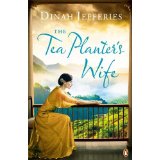
The Tea Planter’s Wife by Dinah Jefferies

Tea Planter

My enormous thanks to http://www.lovereading.co.uk @lovereadinguk for an Advanced Reader Copy of ‘The Tea Planter’s Wife’ by Dinah Jeffries.

When Gwen marries the slightly older Laurence, a widowed Ceylonese tea planter, she is excited at the prospect of a new life. However, Gwen’s ironically named sister-in-law Verity, Christina, a past lover of Laurence, and the mysterious artist Savi Ravasinghe seem to be contriving to scupper her plans so that adapting to a different climate and dealing with a house and servants become the least of her worries.

Set in Ceylon in the first part of the twentieth century, the book is incredibly well researched with all aspects of history, geography and politics absolutely convincing but subtly woven into the narrative so they serve to underpin an interesting and exciting story. An inherent racism and colonial snobbery contribute to a feeling of menace and change as a dramatic backdrop for the more prosaic elements of life.

The plot flies along as Gwen feels her way in her marriage to a man holding secrets from the past until she has secrets of her own. It is totally engaging. I really wanted to know what would happen next and there were twists, red herrings and shocks throughout – even until the last few pages.

I found the characters believable and human, and had a particular empathy for Gwen. They flirt, argue, love with a passion, sulk and hurt one another so that they feel real to the reader. There is a vivid sense of the difference between tea plantation owners and the staff who work for them, giving layers of authenticity to the narrative.

An aspect that made the novel so enjoyable a read was the attention to detail; the senses are fully explored through the scents of cinnamon, the steamy heat of the monsoon season, the whisper of silk, the colours of clothes and the sound of drums. Dinah Jefferies paints a startling and convincing picture of colonial Ceylon.

I thoroughly enjoyed ‘The Tea Planter’s Wife’. It’s recommended reading for those who love sweeping historical dramas that are totally entertaining.