The Sixth Lie by Sarah Ward

I’m delighted to share the latest of my My Weekly online reviews. Today I’m reviewing the second Mallory Dawson thriller, The Sixth Lie by Sarah Ward.

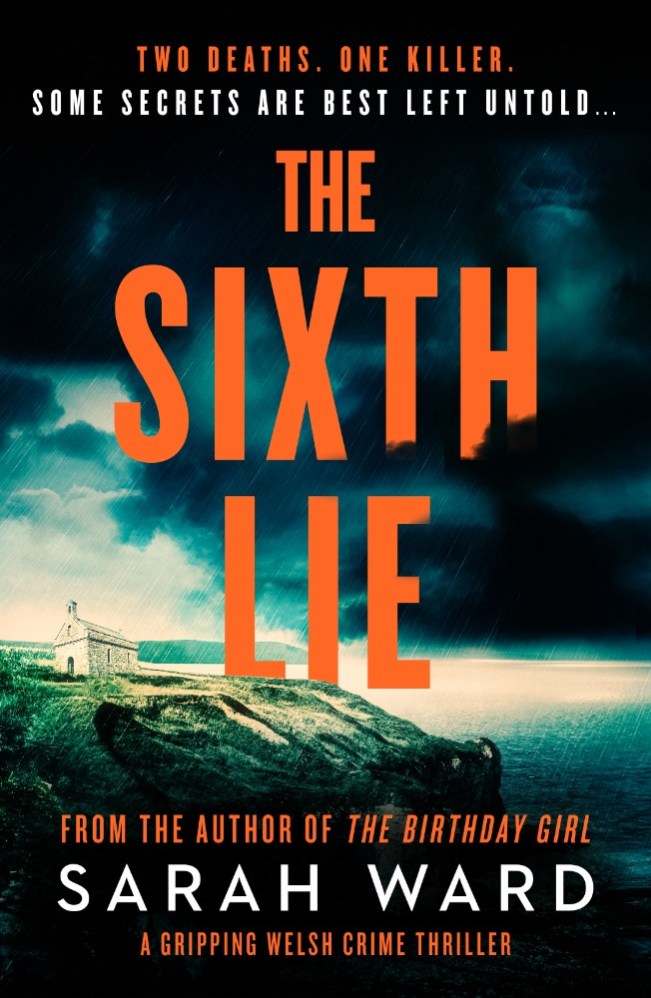
The Sixth Lie was published by Canelo Crime on 2nd November 2023 and is available for purchase through the links here.

The Sixth Lie

Six lies killed Huw Jones.

On New Year’s Eve 2010, Huw Jones disappeared from his bedroom while his father and five friends were downstairs. His body was later discovered on the nearby cliffs at St Non’s.

That night, all six friends lied in their statements to the police.

Over a decade later, Huw’s mother, Heledd is found dead.

Mallory Dawson must uncover the lies lurking in the tight-knit community of St Davids. But someone has kept their secrets for years, and they would kill to protect them…

My Review of The Sixth Lie

My full review of The Sixth Lie can be found on the My Weekly website here.

However, here I can say that The Sixth Lie is a compelling, engaging and thoroughly enjoyable thriller that made me want to find out more about Mallory Dawson. I really, really enjoyed this one!

Do visit My Weekly to read my full review here.

About Sarah Ward

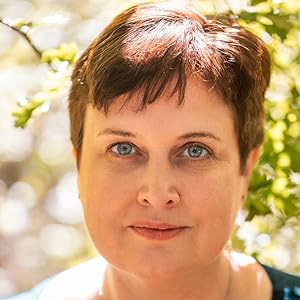
Sarah Ward is a crime novelist who writes gothic historical thrillers as Rhiannon Ward. The Shadowing, her most recent gothic novel, was a Daily Express book of the year. The Birthday Girl, the first book in her new Welsh based series, was published in April 2023 and was described in the FT as ‘channelling Christie-esque tropes’ . The second in the series, The Sixth Lie, is out now. She has also written Doctor Who audio dramas.

Sarah is Vice-Chair of the Crime Writers Association and Treasurer of Crime Cymru, the Welsh crime writing collective.

For further information, visit Sarah’s website, follow her on Twitter/X @sarahrward1 and find Sarah on Instagram and Facebook.

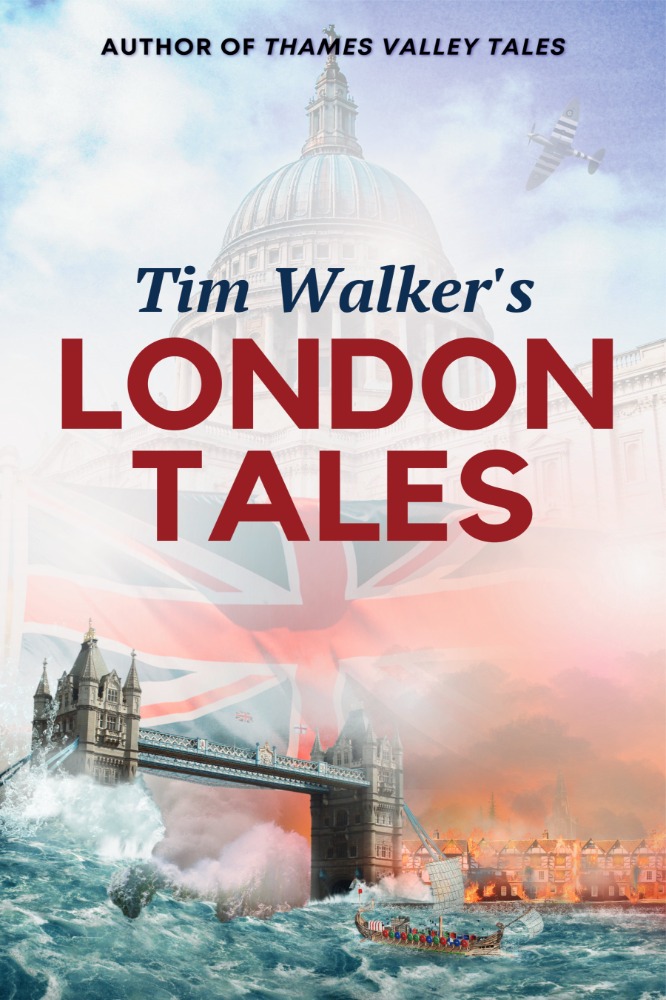
An Extract from London Tales by Tim Walker

Tim Walker has featured many times on Linda’s Book Bag in posts you’ll find here and today he’s back with an extract from his latest book London Tales.

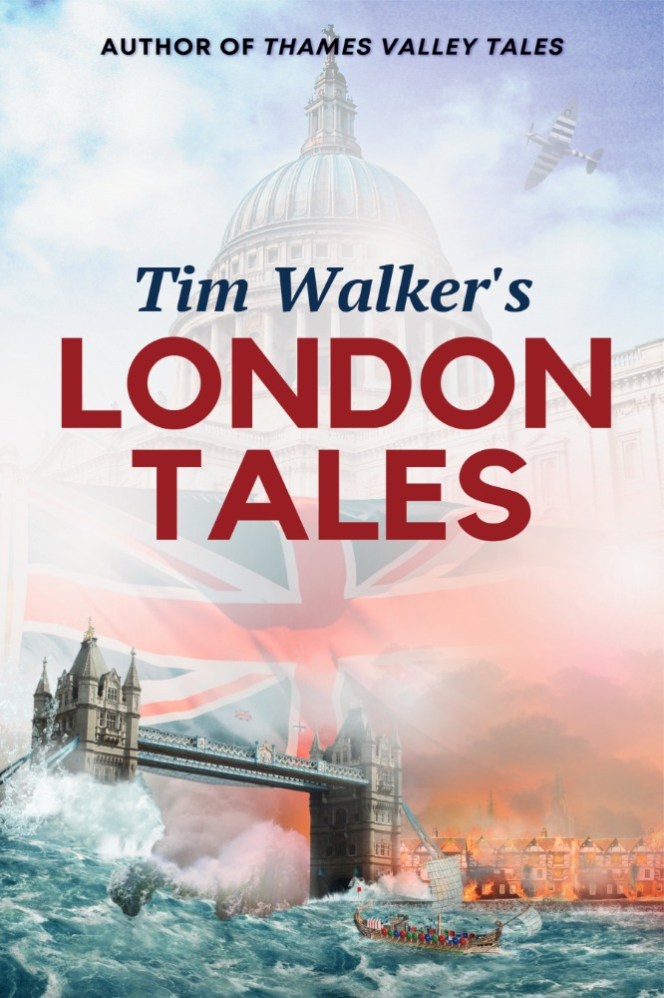
London Tales was published on 9th November 2023 and is available for purchase here.

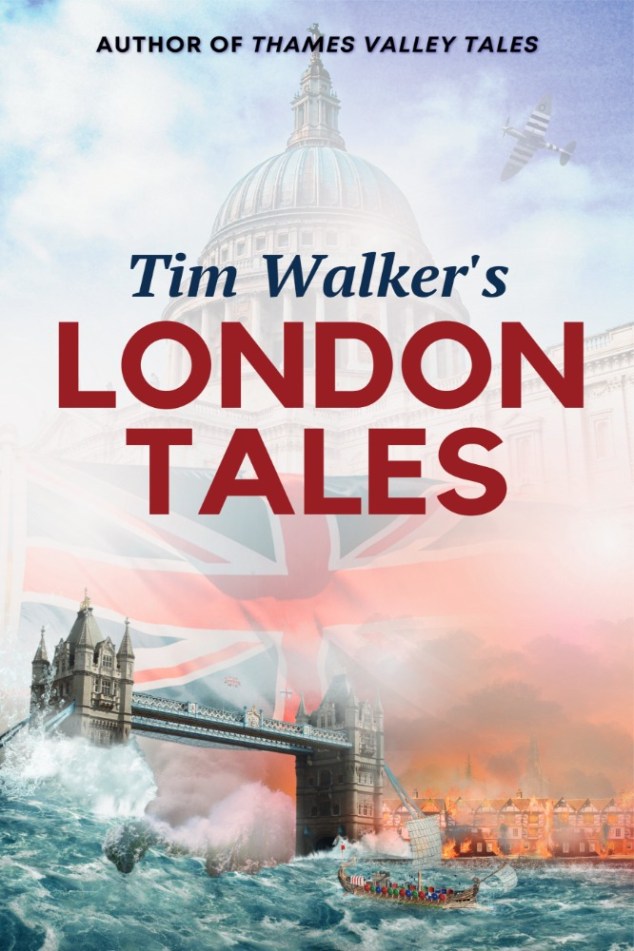
London Tales
This collection of eleven tales offers dramatic pinpricks in the rich tapestry of London’s timeline, a city with two thousand years of history. They are glimpses of imagined lives at key moments, starting with a prologue in verse from the point of view of a native Briton tribeswoman absorbing the shock of Roman invasion. The first story is a tense historical adventure set in Roman Londinium in 60 CE from the perspective of terrified legionaries and townsfolk facing the vengeful Iceni queen, Boudica, whose army burnt the fledgling city to the ground.

Further historical dramas take place in 1381 during the Peasant’s Revolt, the Great Fire of London in 1666 and the last ice fair on the frozen Thames in 1814. These are followed by a romance set during the Blitz in 1941, then the swinging Sixties and wide-flared seventies are remembered in the life story of fictional policeman, Brian Smith. Moving on, an East End family get a fright from copycat killings that are a throwback to the 1888 Jack the Ripper murders.

There’s a series of contemporary stories that reference recent events, including the London terrorist bombings of 2005, a literary pub crawl and a daring prison break, building to the imagined death throes of London in a chilling, dystopian vision. These stories are loosely inspired by the author’s personal experiences and reflections on his time living and working in London in the 1980’s and 90’s. Adaptability, resilience, conformity and resolve are recurring themes.

London Tales evokes the city’s rich history and the qualities that were needed by Londoners at various times to survive and prosper – from the base and brutal, devious and inspired, to the refined and civilized.

Available from Amazon in e-book, paperback, Kindle Unlimited and audiobook formats, London Tales is a companion volume to Thames Valley Tales.

An Extract from London Tales

Mac the Ripper

It’s 2016 and East End family, the MacMullens, react in different ways to the news that a copycat Jack the Ripper is on the loose in the streets off Brick Lane…

“Here, love, look at this in The Standard.” Tom’s dad, Billy, looked over the top of his upright tabloid.

“What is it?” Mel drawled, as she dished up the chicken Kievs with oven chips and baked beans.

“Look, there’s been a murder not far from here. ‘Woman Slain in Frenzied Knife Attack’ it says.”

She took the paper off him and read. “Oh yes, and right next to my hairdressers. Wonder if I knew her, poor cow.”

“There won’t be any details for a few days,” Billy offered, as if an expert in these matters.

“The police have got to do their forensics thing and interview any witnesses, and then tell the victim’s family before they go public. I’ll ask around down the bookies tomorrow.”

“Oh, you will, will you? Any excuse to throw our money away! You’d be better off going to the DIY place to buy some shelves and put them up in the spare bedroom. Do something useful on your day off…”

He lifted his newspaper again and tuned out from her nagging. She plonked the plates on the table and gazed out of the kitchen window to their brick-walled yard, as night descended on Whitechapel.

“Makes you wonder who’s out there,” she said as they settled down to eat.

The next morning, Tom went to school, Mel went to work, and Billy wandered off to find out what he could about the brutal murder so close to home. The man behind the counter in the corner shop said he’d heard that it was a young Bangladeshi woman, not from his community, mind, who’d had her throat slashed and body dismembered, in a recreation of the 1888 Jack the Ripper murders. Not only that, but it took place in the same courtyard where one of the original murders had taken place, over a hundred and thirty years ago. He told Billy that the most detailed report was in The Times and sold him a copy with a sly wink to the other man in the shop. Billy reluctantly parted with the money – he’d become used to picking up a free copy of The Standard from outside The Underground.

Billy MacMullen had lived in the East End all his life and had seen a lot of change. The new wave of immigrant settlers were Indians and Bangladeshis, the latter predominantly Muslims. An old Christian church had been converted into a mosque, with a neon-lit minaret now dominating Brick Lane. The Eastern European Jews and French Huguenots had dissipated into the grey, misty air over the years, to be replaced with Irish and Commonwealth settlers. He stopped to look at an estate agent window. The next stage, if the estate agents had their way, would be to gentrify the area and sell tiny flat conversions to eager City workers.

“Progress, they call it,” Billy muttered under his breath. “But with property prices creeping up, I could sell up and join my mates in Essex.” He pushed through the door of the White Hart and ordered his first pint of the day.

It was eleven o’clock and he was the first in. Spreading The Times on the counter, he thumbed straight to the murder story. Tomasz, the young Polish barman, came over to see what he was looking at.

“A young woman has been murdered near here,” Billy said, screwing up his eyes to read the small print size in the posh newspaper.

“Oh yes? Who was she?” Tomasz poured a pint of foaming ale and plonked it on the bar towel in front of him. It was happy hour for pensioners, and Mac Senior had previously shown his bus pass as proof of his qualification to the otherwise unfazed barman. He had stopped work early with bad feet and was sensitive to the fact that he looked a bit young to be retired, his brown hair only just showing signs of giving way to grey.

“It says she was a young woman from the Indian or Bangladeshi community, wearing a blue, patterned sari. Victim of a sustained and vicious knife attack that has the MO of the original Jack the Ripper murders.”

“What is MO?” Tomasz asked.

“Modus Opera… well, it means how it was done. It’s a copycat murder, in effect.” Billy took a mouthful of ale and wiped the froth from his mouth with the back of his hand.

“What have cats got to do with it?” Tomasz asked.

“It’s just a saying, you know, how we say things. “Copycat” means it’s been copied in the exact same way. You see, in Queen Victoria’s time, there were five horrific murders of women in the streets around here. Grisly murders.

Tomasz raised an eyebrow and asked, “When was that?”

Billy frowned at the small print again. “1888, it says here. In fact, one victim left this very pub just before she met her end in a dark alley.” Billy paused for dramatic effect, but Tomasz had his back to him. “The paper says this latest murder was done in exactly the same way. Get it? Somebody’s pretending to be Jack the Ripper. It could be someone who frequents this very pub.”

Tomasz busied himself, with a concerned look on his face now.

Billy went on, his eyes scrunched over the paper, “And some people think the original killer was a Polish immigrant called Aaron Kosminski, so you’d better get your alibi straight.”

“… Or the artist Walter Sickert.” A hand fell on Billy’s shoulder, which made him jump.

“Oh, it’s you, Don!” Billy said, turning to face his grey-haired friend.

“I saw a TV documentary on the Jack the Ripper suspects and there’s an American artist who painted a picture in 1888 called, Jack the Ripper’s Bedroom. Now there’s this famous novelist, a woman, saying she’s convinced he was yer man,” Don said, pointing to the pump handle of his favourite beer. The hovering barman nodded and proceeded to pull a frothy pint.

“Patricia Cornwell,” said another customer at the bar. “I watched that.”

Don took his place on a barstool next to Billy. “Sounds about right.”

“Well, whoever it was, it seems that his ghost is back and at it again. Have you read this?” Billy showed the newspaper report to his friend and ordered him a drink.

****

Author’s Note:

In 2017 I went on a Jack the Ripper walking tour around the side streets off Whitechapel in London’s East End. The sites of Jack the Ripper’s grisly 1888 murders can all be reached within an hour and a half’s tour. Although Brick Lane is now dominated by Indian and Bangladeshi restaurants, the side streets still have a Victorian feel with the terraced workers cottages lit by period street lamps (see my photo on the Mac the Ripper artwork). Popular with film crews, our guide quipped. Much has been written about the Ripper murders over the past 120-odd years, and there has been plenty of speculation as to the possible identity of ‘Jack’. It remains the most fascinating and high profile unsolved series of murders attributed to one killer in London’s history.

In the days following the tour I composed this short story. I decided to make it a contemporary tale centred on a white working-class family living there, adjusting to the revolving door of new waves of immigrants crowding into relatively low rent accommodation in the streets off Whitechapel and around Brick Lane.

About Tim Walker

Tim Walker is an independent author living near Windsor in the UK. Although born in Hong Kong in the sixties, he grew up in Liverpool where he began his working life as a trainee reporter on a local newspaper. After attaining a degree in Communication Studies he moved to London where he worked in the newspaper publishing industry for ten years before relocating to Zambia where, following a period of voluntary work with VSO, he set up his own marketing and publishing business. He returned to the UK in 2009.

His creative writing journey began in earnest in 2013, as a therapeutic activity whilst recovering from cancer treatment. He began writing an historical fiction series, A Light in the Dark Ages, in 2014, inspired by a visit to the part-excavated site of former Roman town Calleva Atrebatum at Silchester in Hampshire. The series connects the end of Roman Britain to elements of the Arthurian legend and is inspired by historical source material, presenting an imagined historical fiction of Britain in the fifth and early sixth centuries.

The last book in the series, Arthur, Rex Brittonum, was published in June 2020. This is a re-imagining of the story of King Arthur and follows on from 2019’s Arthur Dux Bellorum. Both titles are Coffee Pot Book Club recommended reads. The series starts with Abandoned (second edition, 2018); followed by Ambrosius: Last of the Romans (2017); and book three, Uther’s Destiny (2018). Series book covers are designed by Canadian graphic artist, Cathy Walker.

Tim has also written two books of short stories, Thames Valley Tales (second edition 2023), London Tales (2023); a book of verse, Perverse (2020); a dystopian thriller, Devil Gate Dawn (2016); and three children’s books, co-authored with his daughter, Cathy – The Adventures of Charly Holmes (2017), Charly & the Superheroes (2018) and Charly in Space (2020).

Tim took early retirement on medical grounds and now divides his time between writing and helping out at a Berkshire-based charity, Men’s Matters.

To find out more you can visit Tim’s website.  You can follow Tim on Twitter/X @timwalker1666 and you’ll find him on Instagram, Amazon and Facebook.

Two Two Hoots Children’s Books

Recently I had a lovely surprise pack of children’s books published by Pan Macmillan children’s imprint Two Hoots Books and it’s my pleasure to share my reviews of two of those books today.

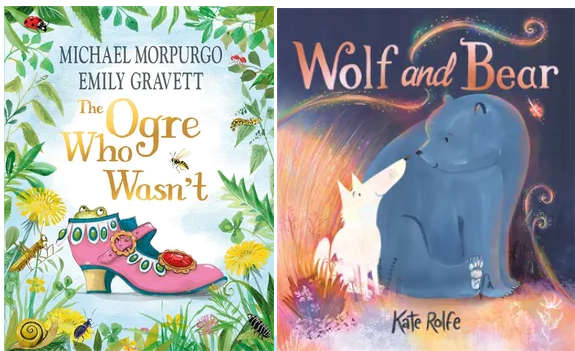
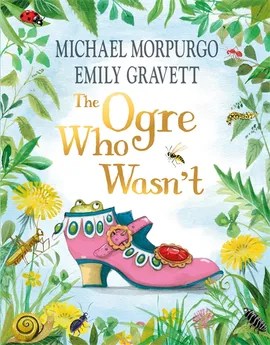
Firstly, I’m looking at The Ogre Who Wasn’t by Michael Morpurgo, illustrated by Emily Gravett which was published by Two Hoots on 5th October and is available for purchase through the links here.

The Ogre Who Wasn’t

The fresh and funny story of a little princess who hates the stuffy palace, but loves the creatures she meets in the garden, from the award-winning duo Sir Michael Morpurgo (Children’s Laureate 2003-4) and Emily Gravett.

Clara is a small, strong-willed princess who likes running wild, jumping ditches and climbing trees . . . but most of all, she loves collecting creepy-crawlies and making them her friends. That’s not easy with a bossy butler and a pernickety nanny always on your case. When Clara discovers that an ogre she keeps in her shoe under her bed isn’t an ogre at all, he offers her a way out of her predicament. There’s only one thing she needs to do . . .

The Ogre Who Wasn’t is a lesson in kindness and a celebration of the natural world written by one of Two Hoots’s most acclaimed authors and illustrated by the award-winning Emily Gravett: the marvellous partnership who also created the bestselling picture book, A Song of Gladness.

My Review of The Ogre Who Wasn’t

Clara keeps an ogre under the bed!

What a charming book. I loved this story. In The Ogre Who Wasn’t Michael Morpurgo acknowledges the traditional concept of a princess who is pretty and demure and turns it on its head with Princess Clara who is scruffy, always active and very determined. She’s a great character.

I thought the balance of text to the fantastic pictures from Emily Gravett was perfect. The story is wonderful for reading aloud, but the language is accessible for young readers whilst having a variety of sentence structure that enhances independent writing as well as reading.

I thought the themes were simply fabulous. Through The Ogre Who Wasn’t Michael Morpurgo affords the opportunity for young children to express and understand grief and loneliness, independence, happiness and love. The ending is poignant and I thought the fact that the illustration suggests Clara’s new Mum appears to be of a different ethnicity is so important in today’s society. It’s also so heartening that the ogre turns out to be a simple toad, which teachers children not to judge by appearances.

However, it’s the whole package of The Ogre Who Wasn’t that is so pleasing because there is a feisty girl who acts as a role model for young children. There is a child whose mum has died and a father who is often absent for work so that ordinary families are represented. There is an appreciation and respect of nature and the understanding that riches don’t equate to happiness. There’s the acceptance of who we are and how others can improve our lives. There’s a celebration of love and family too. It’s all just lovely and enhanced by the beautiful illustrations.

I thoroughly recommend The Ogre Who Wasn’t!

About Michael Morpurgo

michael morpurgo

Michael Morpurgo is one of Britain’s best-loved writers for children. He has written over 130 books including War Horse, which was adapted for a hugely successful stage production by the National Theatre and then, in 2011, for a film directed by Steven Spielberg. Michael was Children’s Laureate from 2003 to 2005. The charity Farms for City Children, which he founded thirty years ago with his wife Clare, has now enabled over 70,000 children to spend a week living and working down on the farm. His enormous success has continued with his novels Flamingo Boy and The Snowman, inspired by the classic story by Raymond Briggs. He was knighted in 2018 for services to literature and charity.

You can find out more by visiting Michael Morpurgo’s website.

About Emily Gravett

Emily Gravett has a rare talent for creating exceptional books for children. The winner of two CILIP Kate Greenaway Medals, her skill and wit are second to none. Emily first sprang into the limelight with the ground-breaking Wolves, which has been followed by such modern classics as Meerkat MailLittle Mouse’s Big Book of FearsMonkey and Me and Again! and the fabulous Bear and Hare series for younger readers, as well as the beautiful Tidy, Old Hat, Cyril and Pat and Meerkat Christmas. Each book is unique and different from the last – and each features endearing, beautifully drawn characters that touch the heart and tickle the funny bone. Emily lives in Brighton with her family.

For further information you can fine Emily on Facebook and Instagram.

****

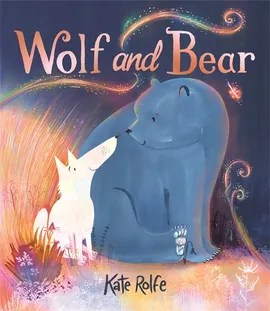
A second lovely children’s book that arrived was Wolf and Bear by Kate Rolfe.

Wolf and Bear was published on 14th September and is available for purchase through the links here.

Wolf and Bear

A heartfelt story about a playful young wolf and her best friend, Bear.

The two best friends always play together, whether it’s paddling in the stream, skidding in the snow, or tumbling in the falling leaves. But sometimes Bear feels sad and wants to be alone . . .

Wolf and Bear is a beautiful tale of kindness and hope, exploring the topic of depression. Authentic and sensitively illustrated, this picture book gently introduces young children to a topic which can often be difficult to discuss.

Written and illustrated by the hugely talented Kate Rolfe, winner of the V&A Student Illustrator of the Year Award 2022.

My Review of Wolf and Bear

Bear sometimes feels very sad.

Oh come off it! How can a simple children’s book aimed at 3-6 year olds reduce a middle aged woman in her 60s to tears? That’s exactly what Kate Rolfe’s Wolf and Bear did because it’s so emotional.

Beautifully illustrated in blueish tones that perfectly echo Bear’s sadness and depression Wolf and Bear is a wonderful book for children. Wolf and Bear have a close friendship but at times life is too much for Bear and he needs space to be alone. This makes Wolf sad, but she sings her sadness and gradually draws Bear back into the light from the darkness he is feeling. Importantly, this is not a quick fix and Bear still has times when he simply wants to sit rather than play.

I loved the way Wolf and Bear is a story that allows children to explore their own difficult emotions in a safe environment. At one point Bear roars his answer to Bear with terrible anger, but Kate Rolfe helps young children understand that anger can come from a feeling of sadness so that this is a book that supports and helps the mental health of young readers.

Simply written, with plenty of repetition to support young readers and emergent writers, Wolf and Bear is not only a lovely book, it’s an important one. Through the story of Wolf and Bear, young children can learn to accept their own feelings and to understand how friendship can help as they empathise with others. I thought Wolf and Bear was just brilliant. It’s beautifully written and illustrated with an important message at its heart. Don’t miss it.

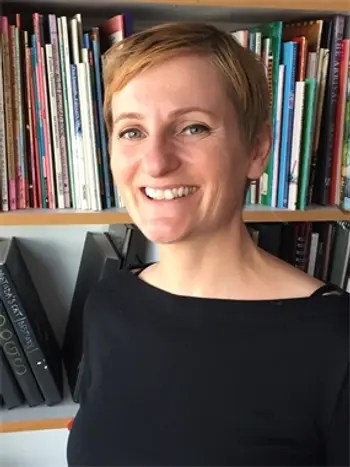
About Kate Rolfe

Kate Rolfe is an author and illustrator living in Suffolk who studied Animation at Plymouth College of Art, BA (Hons) Film Production at Northern Film School and graduated with an MA in Children’s Book Illustration at Cambridge School of Art in 2022. Aside from writing and illustrating her own ideas, she works in textile designs, teaches illustration and runs drawing and writing sessions online. Kate has won many awards including New Talent in Children’s Publishing at the World Illustration Awards 2022 and Student Illustrator of the Year 2022 at the V&A Illustration Awards. She has also received awards for her works Wiggling Words and Wolf and Bear, both of which are being published by Two Hoots under Macmillan Children’s Books.

For further information, visit Kate’s website and follow Kate on Twitter/X @KateRolfeArt. You’ll also find Kate on Facebook and Instagram.

Women Who Won by Ros Ball illustrated by Emmy Lupin

I have absolutely no idea how Women Who Won by Ros Ball illustrated by Emmy Lupin arrived in my post box or who sent it, but my huge thanks. I’ve had the book a couple of months, have been gradually reading each of the entries and am delighted to share my review today.

Women Who Won was published by Unbound on 7th September 2023 and is available for purchase here.

Women Who Won

Did you know that Sirimavo Bandaranaike of Sri Lanka was the first woman in the world to become a democratically elected prime minister? That Tina Anselmi was a wartime resistance fighter who became the first woman to serve as a cabinet minister in Italy? Or that Sylvie Kinigi of Burundi was the first woman to serve as a prime minister in Africa? It is high time these extraordinary women who helped shape our world became household names, and this book brings them at last to the fore.

Women Who Won is a celebration of 70 women from the last 100 years: politicians from around the globe who fought for election in a man’s world… and won. Beautifully illustrated by artist Emmy Lupin, it features well-known figures, including Kamala Harris, Benazir Bhutto, Ellen Johnson Sirleaf, Jacinda Ardern and Julia Gillard, alongside lesser-known women whose stories are ready to be heard:

  • Shidzue Katō, one of the first women elected to the Diet of Japan
  • Yulia Tymoshenko, the first woman prime minister of Ukraine
  • Shirley Chisholm, the first Black woman elected to the US Congress
  • Peri-Khan Sofieva, the first democratically elected Muslim woman
  • Ethel Blondin-Andrew, the first Indigenous woman elected to Canadian parliament

Women of the past, but also women of the present and future. Women who smashed the political glass ceiling. Women who fought to leave a positive legacy for future generations. Women who paved the way for girls of today to become women who won.

My Review of Women Who Won

A collection of biographies about inspirational women.

You know, one of the things about Women Who Won that struck me immediately was the sad fact that not only do we need a book with a focus on women in political situations, but that if I’m totally honest I hadn’t heard of the vast majority of the seventy women here. I was immediately moved by the reference to Jo Cox at the start of the book and by the time I had read each of the entries I felt humbled, uplifted, educated and informed. Women Who Won is an important book.

Each entry is accompanied by a glorious full colour portrait from Emmy Lupin that held a resonance of the work of Frieda Kahlo for me. They truly helped bring these amazing women to life.

Covering countries from across the world, each randomly organised entry begins with a summative sentence and includes footnotes and references that lead the reader to further research. Ros Ball manages to distil both detail and information into concise and accessible prose that is so informative and interesting. I’d defy anyone reading Women Who Won not to find someone whose personality, situation or beliefs resonates with them, so that it isn’t just geography, ethnicity and sexuality that’s inclusive here, but the opportunity to discover a like-minded individual. I also found reading the list of contributors who have helped crowd fund Women Who Won incredibly diverting and it meant that Women Who Won gave me more to discover, researching some of them after I’d finished reading about the seventy people included here.

It’s quite hard to explain the impact of Women Who Won. It’s fascinating. It’s informative. And, surprisingly, it’s quite emotional to discover these amazing women who have striven against all manner of adversity to be beacons for us all – regardless of gender. I thought Women Who Won was beautifully produced, enduring and absolutely needed in a world that sometimes feels dominated by men hell bent on destroying us all.

About Ros Ball

Ros Ball is an author and former BBC broadcast journalist, working for many years on politics in Westminster. In 2017 she published The Gender Agenda, a first-hand account of how boys and girls are treated differently. She currently works on equalities policy for women and girls.

For further information, follow Ros on Twitter/X @rosball or find Ros on Instagram.

  About Emmy Lupin

 Emmy Lupin is a freelance illustrator from Nottingham, based in London. Specialising in digital illustration that’s big on pattern and colour, Emmy’s work is inspired by looking at life through a female lens. She has been commissioned by the likes of Adidas, TikTok, Stylist Magazine and SEGA, to name a few.

For further information visit Emmy’s website and find her on Instagram and Facebook.
Solstice by Helen Steadman

I’m really trying hard not to take on blog tours at the moment in order to read some of the wonderful books I already have, but when Anne Cater of Random Things Tours invited me to participate in the tour for Solstice by Helen Steadman I simply couldn’t resist. You see, Solstice is book three in the Widdershins trilogy and I loved the first two books so I’m delighted to share my review of Solstice today. 

You will find my review of Widdershins here and of Sunwise here.

Published by Bell Jar, Solstice is available for purchase through the links here.

Solstice

England, 1673. Still a world of witches, witch trials and witchfinders.

When a new vicar arrives to take over the parish of Mutton Clog, the village finds itself in the grip of puritan fever, and suspicious eyes are turned on Rose Driver.

Rose’s mother, brother and grandmother were all put to death by the fanatical witchfinder, John Sharpe.

Almost quarter of a century after the Newcastle witch trials, Sharpe is no longer a threat. Rose should be safe in her quiet village, but is history about to repeat itself?

Find out in Solstice, the powerful conclusion to The Widdershins Trilogy, which tells the story of one woman’s struggle for survival in a hostile and superstitious world.

The Widdershins Trilogy was inspired by the little-known Newcastle witch trials, where fifteen women and one man were hanged for witchcraft on a single day in August 1650.

My Review of Solstice

The Leaton Family are moving parish.

Solstice might have the persecution of witches at the heart of the narrative, but Helen Steadman’s story-telling is bewitching in its own right. From the very first page it is as if the reader is being addressed directly, by their own personal storyteller, with the effect that it is impossible not to be drawn in instantly. The tone is perfect for the era so that every aspect of Solstice feels authentic and beautifully crafted. I thought it was wonderful.

The plot is fast paced, riveting and compelling. Whilst Solstice is the third book in a trilogy, it can be read as a stand alone story with no prior knowledge of the other books, because Helen Steadman weaves in any knowledge needed with such skill. It’s six years since I read Widdershins, but several hundred books read later, Solstice not only brought that earlier book flooding back, but was written in such a way that it is totally accessible, understandable and mesmerising, independently of anything else. I thought this quality of story telling was magnificent.

The characterisation is superb. By the time I was 50 pages into the story I was ready to climb into the pages and give Patience a violent and thorough shaking. She made my blood boil! Indeed, I’d defy anyone not to be thoroughly enraged by the injustice displayed by those supposedly superior in status to others. Steeped in history, Solstice is also a book about people, about unselfish love, family, betrayal and spite so that the characters become completely convincing. Indeed, considering Patience and her strong narrative voice I had to question whether my hatred of her was fair or whether she simply wasn’t in her right mind. Helen Steadman might entertain brilliantly, but she causes her readers to think too.

In contrast to my abhorrence of Patience, I adored Rose. She is by no means perfect, but she has a strength and integrity that I admired without reservation. What comes across so vividly through Rose is the ease with which an individual can be vilified and persecuted, but also how resilient we can be in the face of adversity. Solstice is historical fiction of the very best kind, being assiduously researched and accessibly presented, but the treatment of, and by, characters has resonance in today’s world of trial by social media. I found this element of the story so important and convincing. 

Solstice is one of those stories that gets under the reader’s skin. I thought about the people of Mutton Clog when I wasn’t reading about them. I pondered themes of religion, superstition, and family and I was totally immersed in history. In case you haven’t realised, I thought Solstice was brilliant. Don’t let this series pass you by.

About Helen Steadman

helen steadman

Helen Steadman’s first novel, Widdershins and its sequel, Sunwise were inspired by the 1650 Newcastle witch trials. Her third novel, The Running Wolf is about a group of master swordmakers who defected from Germany to England in 1687. As well as carrying out in-depth archive research and visiting forges in Solingen to bring her story to life, Helen also undertook blacksmith training, which culminated in making her own sword. Helen’s fourth novel, God of Fire, is a Greek myth retelling as seen through the eyes of Hephaestus, perhaps the least well known of all the Olympians. Helen is particularly interested in revealing hidden histories and she is a thorough researcher who goes to great lengths in pursuit of historical accuracy. To get under the skin of the cunning women in Widdershins and Sunwise, Helen trained in herbalism and learned how to identify, grow and harvest plants and then made herbal medicines from bark, seeds, flowers and berries.

You can follow Helen on Twitter @hsteadman1650 and visit her website. You’ll also find her on Instagram and Facebook.

There’s more with these other bloggers too:

Introducing Your Paper Quest

I’m delighted to welcome Ryan from Your Paper Quest to Linda’s Book Bag today. Ryan and Steve got in touch a couple of weeks ago to tell me about a brand new subscription service for readers who would love to discover independently published authors (who can sometimes be tricky to find).

I was so interested that I simply had to invite Ryan onto the blog to explain more about Your Paper Quest and I’m thrilled that I am able to tell you first hand about my experience of the subscription too. More about that later, but first let’s find out more about Your Paper Quest.

An interview with Your Paper Quest founder Ryan Haidar

Hi. Welcome to Linda’s Book Bag Ryan. Thanks for answering my questions. I was intrigued when you got in touch to introduce Your Paper Quest. Could you tell me a bit about it please?

Your Paper Quest is a UK-based, book of the month subscription box, exclusively featuring books from self-published authors. Our goal is to help self-published authors get more exposure whilst helping readers read a bit outside the box. We’ve been working on YPQ for over a year now but have been live since August, we just delivered our fourth subscription box and are currently preparing our fifth! Although we can only accept subscribers from within the UK, we accept submissions from anywhere in the world.

This is a different kind of book box service. What do readers and authors get out of it?

Readers get two self-published books a month, along with bookish bits, and an invitation to join our virtual book club where they can meet other subscribers and ask our authors questions.

Why self-published books?

The downside with self-published books is that there are a lot of them, and although this is also a strength, it’s remarkably overwhelming for someone to know where to start. Our goal is to find the best self-published stories and introduce them to our readers; this way they can not only experience new stories, but new authors as well to help find writing voices that truly work for them. One of the things that makes us unique as a subscription box is that our themes change every month, we focus on stories that are accessible and enjoyable regardless of genre. This serves as a taste-breaker for readers to be introduced to new genres.

I have sampled one of your subscription packs and I’d definitely never have found the books without it.

For our featured authors, we know how many scams target them, and we want to make a difference and show that it doesn’t have to be that way. Not only do we pay our authors to be featured, but we also print and distribute the books to our subscribers on their behalf (don’t worry contracts are in place to protect everybody’s IP). This greatly reduces their burden and makes for a seamless process. We also provide authors with an opportunity to engage with our subscribers through our monthly interviews. Every featured author participates in a 35ish minute interview about not only their featured story, but also about their experience as a writer and what else they have written. We then post these on YouTube and share them to our followers and beyond.

And very interesting those interviews are!

Your Paper Quest is run by you and Steve. Please could you introduce yourselves?

Hello! I’m Ryan and I am the founder of Your Paper Quest. I grew up in Oregon in the US, moved to London for my masters a few years ago, and have been working on YPQ ever since. For someone who hardly read growing up, I would have never imagined that I’d find myself here today, and I wouldn’t change it for the world. That being said, when I’m not reading or working on YPQ you can find me (hopefully) lost in the woods somewhere.

And Steve?

I’m Steve, curator at Your Paper Quest; I am also Steven William Hannah, indie author and semi-colon enthusiast. Ryan found me on Twitter posting these massive self-published culling threads where I’d take the first chapters of 300+ indie books and talk about the ones I really liked and why I dropped the others. That turned out to be exactly the kind of thing that YPQ needed and here we are!

I love the way partnerships and friendships can arise out of social media Steve.

Why is your focus on indie authors?

There are so many reasons as to why we’ve decided to focus on self-published and indie authors. For the past 150ish years, the traditional publishing industry has essentially not just had a monopoly on shelf-space in popular bookstores, but to a much greater extent, has had a remarkable influence on deciding the stories that have helped to shape human thought for generations. Through our experience, we know that there are a plethora of amazing stories out there that just don’t get the recognition that they deserve and our goal is to better connect these stories with readers interested in reading more than just the twenty most popular books on a table in Waterstones. Another reason is to help bring more credibility to the industry, the number of scams out there targeting self-published and indie authors is demoralizing to say the least. We’re growing a business where everybody wins, and want to show that self-published and indie authors bring a lot more to the table than what they’ve traditionally been given credit for.

I must say, I’ve encountered some fabulous books from indie authors. So, tell me Ryan, how do you select the books featured?

Sourcing the books is like many streams feeding into a big river. I find books in our submission box, on the internet, from competitions, and cover art threads all over the place. Then I randomly select books from an absolutely gigantic pile of indies and scour them for signs of promising stories. I look for unique voice, style, the kind of thing that generally appeals to readers regardless of genre. It’s a lot of fun, I still really enjoy finding great books. Also, I get to find some truly bizarre things amongst that pile, so I feel like I’m unearthing lost texts or something sometimes.

It sounds like being the Indiana Jones of the book world. How exciting!

Other than books, what else is in a subscription package?

Aside from two self-published books, our subscription box itself features bookmarks tailored to each story as well as an accompanying note from the author. A Your Paper Quest subscription also comes with an invitation to join our virtual book club. This is where readers can not only meet other subscribers and discuss the books, but can also ask questions for the authors, which we include in our monthly author interviews. Subscribers are not just receiving books; they’re being welcomed into our reading community.

How brilliant. Where can readers and writers find you?

The best place to reach us is directly through our website. This is where readers can subscribe and where authors can submit their stories to be featured. We are also on most social media platforms @yourpaperquest. Twitter/X is where you’ll find most of our day-to-day, and our Instagram is full of unboxing links and reviews. More than anything please don’t hesitate to reach out, we’re always looking forward to hearing from readers and writers alike!

Thanks. And is there anything else we should know about Your Paper Quest?

We’re a small business trying to find our way in an ever-growing oligopoly of a world. We want to help the little guy; we want to work towards getting rid of the stigma against self-publishing. Some of the best books we’ve ever read are self-published, and we hope that that will start to be the case for others too.

I couldn’t agree more. Thanks so much – both for being interviewed and for sending me November to sample. Let me share my experience:

Unboxing a Your Paper Quest Subscription Pack

Now, before I show you what I received in November’s subscription pack, I have to apologise for my useless photography and I really would suggest heading to the My Paper Quest Instagram page for a much more professional look at subscriptions!

Firstly, I had an envelope that had a hand written reverse.

When I opened the pack I found two paperback books by new to me authors, both of which were embossed inside with a gold Your Paper Quest seal of approval, with letters from the authors, book related bookmarks and an opportunity to join an online Bookclub with interviews with the authors and a chance to discuss the books with others.

The books were The Master of Demise by Nadija Mujagic and Safe and Sound by Rachel Bowdler. I hadn’t heard of either previously, but both sound terrific.

As I said, my photo skills are execrable, so here are more professional details about the books:

The Master of Demise by Nadija Mujagic

Mitch Wegner had it all: a prestigious career as a professor, a loving wife, and a reputation as a brilliant academic. But when a student takes his own life and Mitch is blamed, his life quickly spirals out of control. As his marriage falls apart and his job is put on the line, Mitch finds himself descending into a dark and dangerous world.

Haunted by his past and fuelled by his own narcissism, Mitch makes a series of increasingly desperate choices that lead him down a path of violence and betrayal. When another person on campus mysteriously dies, Mitch becomes the prime suspect, but the truth behind the killings is far more twisted than anyone could have imagined.

In this gripping psychological thriller, author Nadija Mujagic takes readers on a heart-pounding journey through the mind of a man consumed by his own ego and the dark secrets that he thought he had buried. With twists and turns that will keep you on the edge of your seat until the very end, The Master of Demise is a chilling tale of obsession, revenge, and the terrifying consequences of our actions.

Safe and Sound by Rachel Bowdler

As the lead singer of popular pop-rock band, Gen Y, Ruby Bright has always hidden her struggles with fame and oppressive management behind flashy outfits and feigned confidence for the sake of the fans, but when her tour bus crashes and her best friend, bandmate, and, according to the public, boyfriend, is killed, she loses her only pillar of support and everything is turned upside down. It’s only made worse when her security team believe that a crazed stalker who has been sending cryptic letters for over a year is at the root of it all. The elevated threat to a grief-stricken and recovering Ruby leaves them no choice but to send her to a secluded safe house in Cumbria, where she can be protected twenty-four hours a day until her best friend’s killer is brought to justice.

When entitled celebrity, Ruby Bright, walks through retired witness protection officer Shea O’Connor’s doors, though, Shea is less than impressed with the new guest seeking refuge in the farmhouse she now offers out to people in need of security – especially when cabin-fevered and traumatised Ruby proves a challenge in every aspect. As Ruby navigates her grief through reckless behaviour though, Shea begins to realise that she may have more in common with the pop star than she once thought. Nobody is more surprised than her, then, when an unexpected connection begins to develop between them.

All sense of security is broken when Ruby receives a new threat from her stalker. When Ruby is taken from the house by her security team, a chilling discovery is made. With Shea the only person Ruby can truly trust, the two embark on a thrilling game of cat and mouse with the people trying to take Ruby down — but can Shea fix past mistakes and protect Ruby, or are the people behind all of Ruby’s recent misfortunes too powerful to stop?

In the interests of honesty I also had a look at a well known online shop to see how much buying the books without the £18 monthly subscription to Your Paper Quest would be. It would have cost me £2.98 more without the extras like the bookmarks, author letters and access to author interviews and the online bookclub that Your Paper Quest provided. I’d call that a win!

Take a look at Your Paper Quest to see if it appeals to you too – here’s the website.

The French Chateau Escape by Gillian Harvey

My enormous thanks to Gillian Harvey for sending me a copy of her latest book The French Chateau Escape in return for an honest review and subsequently to Rachel of with Rachel’s Random Resources for inviting me to participate in the blog tour. I’m delighted to help close the tour by sharing my review today.

Gillian previously appeared here on Linda’s Book Bag with a super guest post.

The French Chateau Escape was published by Boldwood Books on 8th November 2023 and is available for purchase here.

The French Chateau Escape

Click: buy… a fifteen bedroom chateau

Condition: ‘may require improvement’

It seems like a good idea. Sell everything we own. Swap our modern little London flat for an entire chateau in the middle of France.

It’s always been our dream. And now it’s coming true. Because who wouldn’t want this?

As I use the rusty key to open the big, creaking wooden door of the fairytale chateau that’s officially our new home, I wonder: what could possibly go wrong?

Turns out my grasp of the language isn’t brilliant but I’d guess that the French for this is probably: L’EVERYTHING.

As the French sun blazes overhead, one thing’s for sure: it’s going to be a year to remember…

My Review of The French Chateau Escape

Emma’s life is about to change.

The French Chateau Escape took me rather by surprise. I had expected a frothy, easy to read, book but I had not reckoned with the mature depth of Gillian Harvey’s writing. The French Chateau Escape is still an effortless read but that is because there is a smooth, sophisticated quality to the writing which makes it a pleasure, rather than it being a book that is merely entertaining. As a result, I enjoyed The French Chateau Escape all the more.

Whilst there’s enough about house renovation, as Emma and Mark struggle to breathe life back into their decrepit chateau, to please any lover of television house programmes like me, the real interest and strength in the novel lies in Gillian Harvey’s exploration of a marriage with a sixteen year age gap and a desperate desire to begin a family. Similarly, she illustrates the dynamics between Emma and her sister Rachael with complete dexterity because she has created warm, flawed and realistic people who feel so much more than words on a page. 

I wasn’t always sure I liked Emma very much in the early part of the narrative because at times she seems blinkered, weak and rather self-obsessed, but I definitely cared about her. I wanted her life with Mark to weather the storms and be a success. However, as the story progresses, so does Emma’s understanding not just of others, but, more importantly, of herself. There’s depth and growth here as she realises she doesn’t need to be defined by her past and other people. 

The plot is so relatable. We might not all ditch our existing lives to take on a crumbling French chateau, but the events that befall Emma and Mark are ones that might occur in any life so that they feel completely realistic to the reader. Issues of marriage, family and relationships, the need to keep control over spending, insecurity, maintaining a home, starting a business, caring about older family members, accidents and illnesses all combine to make a highly engaging story where the reader is drawn in and hopes for a positive conclusion. The French Chateau Escape feels like a story told by someone who knows what real life can throw at us.

I found The French Chateau Escape a mature, intelligent and absorbing story and one that is skilfully written and surprisingly emotional. I recommend it highly. 

About Gillian Harvey

Gillian Harvey is a freelance journalist and the author of two well-reviewed women’s fiction novels published by Orion. She has lived in Limousin, France for the past twelve years, from where she derives the inspiration and settings for her books. Her first title for Boldwood, A Year at the French Farmhouse, was published in September 2022.

For further information, follow Gillian on Twitter/X @GillPlusFive or find her on Facebook and Instagram. Gillian has a super website too.

There’s more with these other bloggers:

Child of the Ruins by Kate Furnivall

Having loved everything I have ever read by Kate Furnivall I was delighted when Joanne Dickinson got in touch to ask if I might like a copy of Kate’s new novel Child of the Ruins. My enormous thanks to Kate for suggesting this and my huge thanks to Jo for sending me a copy of Child of the Ruins. I had hoped to read and review in time for publication, but there has been a bit too much life happening beyond my ability to deal with it of late! However, I’m delighted to share my review today.

Previously here on Linda’s Book Bag Kate and I stayed in together to chat about The Survivors and you can read my review of Kate’s The Betrayal here. My review of The Guardians is to be found here.

Published in hardback by Hodder & Stoughton on 7th November 2023, Child of the Ruins is available for purchase through the publisher links here.

Child of the Ruins

1948, Berlin. World War II has ended and there is supposed to be peace; but Russian troops have closed all access to the city. Roads, railway lines and waterways are blocked and two million people are trapped, relying on airlifts of food, water and medicine to survive. The sharp eyes of the Russian state police watch everything; no one can be trusted.

Anna and Ingrid are both searching for answers – and revenge – in the messy aftermath of war. They understand that survival comes only by knowing what to trade: food; medicine; heirlooms; secrets. Both are living in the shadows of a city where the line between right and wrong has become dangerously blurred.

But they cannot give up in the search for a lost child …

My Review of Child of the Ruins

1948 Berlin and the war is over…

Having long been a fan of Kate Furnivall’s writing, I anticipated an excellent read in Child of the Ruins, but I had rather forgotten what an evocative, vivid and spell-binding writer she is. Child of the Ruins thrums with authentic detail that gives the narrative such a filmic quality that it is like watching the events live, rather than merely reading about them. There’s a stark beauty to descriptions and every sense is catered for so that Child of the Ruins is immersive and affecting. 

The assiduous research that must have gone into the era and setting means that the narrative is sophisticated in its execution and brutal in its telling. At times I found the story almost overwhelming as Kate Furnivall gave me clear insight into the horrors of East Berlin. It took me some time to read this completely mesmerising and absorbing tale because, for all its horrors and authenticity, it felt painfully raw, emotional and realistic and I need to give myself a break to recover from the impact. Indeed, recent world events feel like a chilling reminder of man’s inhumanity to man that can be found in this brilliant book. 

Anna is a triumph. I have no idea if it was intended, but the fact her name is a palindrome made the plot all the more resonant, as if such events occur and recur time after time. Anna is rash and resilient, brave and foolhardy, compassionate and stubborn in a heady mix of compelling personality. Kate Furnivall made me cheer for her and weep for her, so powerful was the writing. Anna’s relationship with her mother is so sensitively portrayed and the psychological elements of the novel are written with humanity and understanding. I desperately wanted Anna to be reunited with Felix and Timur as I cared completely for Anna.

The plot is exciting and fast paced, but the real triumph of the story for me is the way in which the characters face moral dilemmas and the presentation of the concept that right and wrong are not clearly defined. Murder, theft and betrayal might actually be morally essential as well as reprehensible so that Child of the Ruins is thought-provoking, educational and multi-layered as well as thoroughly entertaining. Indeed, there are mature and philosophical themes about nature and nurture, national culture and identity, love and relationships and the underlying determination of humanity to survive that make Child of the Ruins a perfect read.

It’s difficult to express how much I loved this book. I found Child of the Ruins disturbing, absorbing, horrific, uplifting and totally wonderful. It really is historical fiction of the most perfect kind with love at its heart. Don’t miss it.

About Kate Furnivall

kate-furnival

Kate Furnivall didn’t set out to be a writer. It sort of grabbed her by the throat when she discovered the story of her grandmother – a White Russian refugee who fled from the Bolsheviks down into China. That extraordinary tale inspired her first book, The Russian Concubine. From then on, she was hooked.

Kate is also the author of The White Pearl and The Italian Wife. Her books have been translated into more than twenty languages and have been on the New York Times Bestseller list.

You can follow Kate on Twitter @KateFurnivall, visit her website and find her on Facebook.
Staying in with L. T. Shearer

Anyone who knows me will understand how excited I was to find a surprise copy of a book that has a cat as a protagonist in my post box! Sadly I haven’t had time to read it yet, but I am delighted to invite the author, L. T. Shearer, onto Linda’s Book Bag to tell me all about it. My huge thanks to Philippa Mc Ewan at Pan Macmillan for putting us in touch with one another.

Let’s find out more:

Staying in with  L. T. Shearer

Welcome to Linda’s Book Bag L.T. and thank you for agreeing to stay in with me.

It’s an absolute pleasure, I am so happy to be here. And I love what you’ve done with the place. I feel so at home here.

With all these cat ornaments I expect you do. 

Tell me, which of your books have you brought along to share this evening and why have you chosen it?

I have brought my second book – The Cat Who Solved Three Murders. It has only just been published, so it is hot off the presses. And I love the shade of green that the publishers have used for the cover. Green is my favourite colour. It’s so calming. I have used a lot of green in my bedroom. And in my bathroom.

I adore the cover. Tell me, what can we expect from an evening in with The Cat Who Solved Three Murders?

You can expect the unexpected!  The hero of The Cat Who Solved Three Murders is a calico cat called Conrad. That in itself is unexpected because the vast majority of calico cats are female and Conrad is very much male.

By the way, do you say calico?  I always do to describe a cat that is black orange and white but some people say that it’s an Americanism. Those people say that I should describe them as tortoiseshell and white, which is so clumsy. And I have never liked tortoiseshell as a description. It makes me think of tortoises, and they are nothing like cats. So I say calico and that’s the end of it!

I’m with you all the way L.T. A calico cat is most definitely NOT a tortoiseshell cat. I’ve had both (Candy and Muffin) and they were completely different.

But the biggest surprise about Conrad is that he talks!

Talks?

Yes, he talks, and quite eloquently. But the only person he talks to is Lulu Lewis, a retired police detective who lives on a narrowboat. Most of the time the narrowboat is moored in Little Venice in West London but she drives the boat around the canal system, and in The Cat Who Solved Three Murders the boat is moored in Oxford.

Intriguing!

I know, you’re wondering if ‘drive’ is the right word to describe how you move a narrowboat, and you can trust me, it is. But you don’t park them, you moor them. Just so you know!

That’s me told then!

Anyway, Lulu and Conrad have taken their boat – The Lark – to Oxford to attend the sixtieth birthday of an old friend of Lulu’s. But when she gets there they discover that there has been a robbery – and a murder.  The local police are investigating, but it’s Lulu and Conrad who crack the case. So yes, expect the unexpected!

A talking cat and a murder sounds the perfect combination to me. I’m so glad I have The Cat Who Solved Three Murders on my TBR.

What else have you brought along and why have you brought it?

I have brought one of my cats with me. Her name is Christmas, and she is black with white socks. There was quite a bit of competition among my cats as to who should escort me to your book bag, but Christmas doesn’t get out much so I chose her.

I have a feeling you might not be taking her home again… I miss my cats so much I’m sure Christmas would fit in purrfectly. How did you get her?

Like all my cats, Christmas is a rescue cat. I found her at the side of the road on Christmas Day last year. She was in a real state, weighed less than a couple of pounds, literally just fur and bones and covered in small cuts and lesions. I thought she had been in a fight but I managed to find a vet that was open and the vet said she had a severe fungal infection and a host of other issues. It was touch and go, but Christmas knew that we were trying to help her and she is a fighter.

She spent six weeks at the vets and he did a great job. She now weighs more than six pounds, has glossy fur and bright green eyes.

She’s completely beautiful.

Christmas sleeps on my bed, and follows me everywhere I go. When I take the car, she sits in the driveway until I come back. She is a lovely house cat, but still has her street cat ways. She sticks close to me, but doesn’t really like me picking her up. And I can stroke her, but she makes it clear I’m doing it for me, not for her. She gets the best of food, but still prefers to go rooting through the bins to find a chicken leg or a piece of meat. I do talk to her, but unlike Conrad, she never replies. Not so far, anyway!

Give her time L.T. – and you don’t know what she’s thinking! She might be off solving murders whilst you’re out.

Thank you so much for staying in with me to chat about The Cat Who Solved Three Murders. I really must get it to the top of my TBR as soon as possible. Now, whilst I give Linda’s Book Bag readers a few more details, let me see if I can persuade you to leave Christmas here with me!

The Cat Who Solved Three Murders

Conrad the cat detective and retired police detective Lulu Lewis travel to Oxford on their canal boat and investigate a case of art theft in a grand country manor house.

Retired police detective Lulu Lewis’s life changed forever when she met a street cat named Conrad. There’s something very special about Conrad, but it’s a secret she has to keep to herself.

When Lulu takes her narrowboat to Oxford, she is planning nothing more stressful than attending a friend’s birthday party. And drinking a few glasses of Chardonnay.

But a brutal murder and a daring art theft means her plans are shattered – instead she and Conrad find themselves on the trail of a killer. A killer who may well strike again.

The Cat Who Solved Three Murders was published by Macmillan on 26th October 2023 and is available for purchase through the links here.

About L.T. Shearer

L T Shearer has had a lifelong love of canal boats and calico cats, and both are combined in The Cat Who Caught a Killer, a one-of-a-kind debut crime novel which continues with The Cat Who Solved Three Murders.

For further information, find L.T. Shearer on Facebook.

Staying in with Rita Bradshaw

I find it so frustrating that life simply doesn’t afford me the time to read every fantastic sounding book. Today I am chatting with Rita Bradshaw about her brand new novel and I’m devastated I haven’t been able to add it to my TBR. My enormous thanks to Chloe Davies at Pan Macmillan for putting Rita and me in touch with one another once again as I previously got to interview Rita some six years ago when her book A Winter Love Song was published. You’ll find that post here.

Let’s find out more:

Staying in with Rita Bradshaw

Welcome to Linda’s Book Bag, Rita and thank you for agreeing to stay in with me.

Tell me, which of your books have you brought along to share this evening and why have you chosen it?

I’ve brought along A Woman of Courage to share this evening.

Apart from being my latest book the story is a favourite of mine. I got to research New York in the 1890s which was absolutely fascinating as the story is split between the North East of England and America, and on both sides of the Atlantic the divide between those who had and those who had not was massive. Central Park had only recently been built and the way that came about is a story in itself, as you’ll discover.

You’ve got me intrigued now as I worked in New York for a while.  I believe A Woman of Courage is out today in paperback so Happy Publication Day too! Tell me, what can we expect from an evening in with A Woman of Courage?

An evening in with A Woman of Courage means the reader will be taken back over a hundred years and more to where our heroine, Josie Grey, battles against dark circumstances including domestic abuse, prejudice and the fact that it’s very much a man’s world. It’s a gritty saga encompassing resilience against the unfairness of life, particularly for women in that era. We see Lower Manhattan with its separate ethnic groups and gang culture, and for a woman on her own with a young child it was a dangerous and inhospitable environment. But Josie is a northern lass and made of stern stuff; she refuses to bow down to the bigotry of the day that placed women in an inferior position and fights to carve a place for herself and her son in this hostile world, making enemies as well as friends.

That sounds brilliant Rita!

What else have you brought along and why have you brought it?

Personally, I don’t think there’s anything better than curling up with a good book that takes me to a different place with a glass or two of wine to compliment the process, so I’ve brought along a nice bottle of red to share. Of course, there has to be munchies too, so a selection of cheese and biscuits along with red and green seedless grapes (can’t stand the ones with pips in, far too much bother), are in my bag too for us to enjoy, and the naughty bit is a box of hazelnut pralines.

Who counts calories on an evening of indulgence? Anyway, everyone knows that reading and drinking wine and eating burns off more calories than a work-out at the gym!

Ha! If only that were true. Thanks so much for staying in to chat this evening.  Sadly wine doesn’t suit me, which leaves an extra celebratory publication day glass for you Rita, but I’ll certainly help you out with the cheese and chocolates! Now, you pour yourself a (large) glass of wine and I’ll give Linda’s Book Bag readers a few more details about A Woman of Courage.

A Woman of Courage

It’s 1890, and Josie Gray is an innocent and beautiful fifteen-year old when Adam McGuigan, the youngest son of a dangerous and influential crime family spots her singing in a Sunderland public house. Adam is handsome and charismatic, sweeping Josie off her feet with his beguiling lies and promises. He charms her into marrying him on her sixteenth birthday, but on her wedding night the fairy tale ends.

Josie finds herself trapped in a living nightmare and there’s no one to help her. Events spiral out of control, and when her life is put in danger she escapes with her baby son. Fleeing to a different country, Josie fights to make a good life for her child and then love beckons again.

But the McGuigan family’s power is far reaching. When the day of reckoning comes, can Josie survive it?

Out today, 9th November 2023 in paperback from Macmillan, A Woman of Courage is available for purchase here.

About Rita Bradshaw

Rita Bradshaw was born in Northamptonshire, where she lives today. At the age of sixteen she met her husband – whom she considers her soul mate – and they have two daughters, a son and six grandchildren. To her delight, Rita’s first novel was accepted for publication and she has gone on to write many more successful novels since, including the number one bestseller Dancing in the Moonlight.

As a committed Christian and passionate animal lover her life is full, but she loves walking her dog, reading, eating out and visiting the cinema and theatre, as well as being involved in her church and animal welfare.