A Sign of Her Own by Sarah Marsh

My enormous thanks to Caitlin Raynor for sending me a copy of A Sign of Her Own by Sarah Marsh all those months ago and to Anne Cater of Random Things Tours for inviting me to participate in the blog tour for the book. It’s my pleasure to share my review today.

A Sign of Her Own was published by Tinder Press on 1st February 2024 and is available for purchase through the publisher links here.

A Sign of Her Own

Ellen Lark is on the verge of marriage when she and her fiancé receive an unexpected visit from Alexander Graham Bell.

Ellen knows immediately what Bell really wants from her. Ellen is deaf, and for a time was Bell’s student in a technique called Visible Speech. As he instructed her in speaking, Bell also confided in her about his dream of producing a device which would transmit the human voice along a wire: the telephone. Now, on the cusp of wealth and renown, Bell wants Ellen to speak up in support of his claim to the patent to the telephone, which is being challenged by rivals.

But Ellen has a different story to tell: that of how Bell betrayed her, and other deaf pupils, in pursuit of ambition and personal gain, and cut Ellen off from a community in which she had come to feel truly at home. It is a story no one around Ellen seems to want to hear – but there may never be a more important time for her to tell it.

My Review of A Sign of Her Own

Ellen Lark is under pressure.

A Sign of Her Own is a remarkable story, steeped in history, that is beautifully written. I found Ellen’s profoundly deaf communications fascinating because Sarah Marsh’s style places the reader right inside Ellen’s head, making them part of her experience almost first hand. I don’t know if it is because the author is herself deaf, but her writing has such effective observation that it is somehow both poetic and accessible. I loved this style as it has a kind of filmic quality. 

Indeed, I found the structure of interspersing Ellen’s adult life with earlier glimpses into her childhood highly effective, because the reader slowly gains understanding of Ellen’s experiences and how they have shaped her, in the same way Ellen herself gains understanding of the world around her and how far she might trust others –  or not. Ellen’s auditory challenges and triumphs are echoed by the reader’s gradual learning about her life as the story unfolds. Her journey of self-discovery is profound, moving and engaging. 

Other than his connection to the invention of the telephone I had absolutely no knowledge of Alexander Graham Bell prior to reading A Sign of Her Own. This is one of the triumphs of Sarah Marsh’s characterisation. She has obviously researched her subject meticulously and blends fact and fiction skilfully throughout, making for a fascinating read. In Bell we have a flawed, complex man whom it isn’t always easy to like or admire. This makes him realistic and human. Through Bell’s strand there’s a convincing sense of history and the development of technology with the rivalries and corruption that process can engender woven into his part of the story that feels equally relevant to today’s society. 

However, the real triumph of the book for me was Sarah Marsh’s exploration of theme. Whilst helping the reader to gain some insight into deafness and the prejudice and difficulty deaf people have encountered, I found A Sign of Her Own a profoundly feminist read as Ellen takes control of her life, learning whom to trust and how to make her own decisions. I was enraged by the fact that it is not just men who attempt to manipulate her to their own ends so that betrayal felt very close to the surface throughout. Through Ellen and A Sign of Her Own the reader comes to understand others better, to give value to experiences that may not match the reader’s own and to appreciate the importance of communication.

I thought A Sign of Her Own was engaging, entertaining, convincing and thought-provoking and thoroughly enjoyed it.  

About Sarah Marsh

Sarah Marsh was shortlisted for the Lucy Cavendish prize in 2019 and selected for the London Library Emerging Writers programme in 2020. A Sign of Her Own is her first novel, inspired by her experiences of growing up deaf and her family’s history of deafness. She lives in London.

For further information about Sarah, you can follow her on Twitter/X @SarahCMarsh or find her on Instagram.

There’s more with these other bloggers too:

Cover Reveal: Love, Julie by Jamie Anderson

As you know, I love getting involved with books at the earliest possible moment, so I’m delighted to be part of the Rachel’s Random Resources cover reveal for Love, Julie by Jamie Anderson.

Let’s find out all about Love, Julie:

Love, Julie

A Poignant and Humorous Journey of Self-discovery, Resilience, and Redemption

Once, Julie dreamed of a life filled with love and laughter. Now, in her mid-forties, she faces a starkly different reality. She’s single, lonely, and reeling from breaking her hard-earned sobriety in front of her family and friends.

Opting for self-recovery over romance, Julie dives into planning her best friend Kate’s wedding. However, sharing this task with the irritatingly cheerful best man, single dad Luke, proves to be an unexpected challenge.

As Luke’s persistent kindness chips away at her icy exterior, a friendship forms, stirring a longing she’d sworn to suppress. But with self-forgiveness as her biggest hurdle, and her past ready to sabotage her future, can Julie confront the shame and trauma that have darkened so much of her life and find the courage to love again? Or will her demons shatter both her and Luke’s hearts in the process?

Jamie Anderson, author of the hilarious and heartwarming Someone to Kiss, is back with another witty, acerbic, and relatable story. Love, Julie is a richly emotional tale of recovery, forgiveness, and romance that readers have praised for “nailing the humor and snarky nature of our generation.”

Sign up to be the first to know when Love, Julie is available for pre-order, plus grab a FREE romance novella by Jamie instantly 📚🎁 by clicking here.

By signing up, you’ll get notified the moment Love, Julie is available for pre-order and receive a launch reminder. Plus, you’ll have the chance to win lots of great prizes and enjoy more freebies along the way!

Love, Julie will be published on 30th April 2024.

****

Doesn’t that sound perfect for popping in your handbag?

About Jamie Anderson

Jamie Anderson is based in Regina, Saskatchewan, Canada. A proud Canadian and Saskatchewanian, she wanted to set her first two novels in the place she was born and raised.

She’s been writing for as long as she can remember, and has been reading for longer than that. She lives happily with her mountain of books, her TV and her two plants.

You can read Jamie’s first novel Someone to Kiss here.

For all of Jamie’s social media links, click here. and don’t forget to follow her on Twitter/X @jandersonwrites.

An Extract from Vegan Recipes for New Age Men by Liz Treacher

I’m delighted to have a copy of Vegan Recipes for New Age Men by Liz Treacher on my TBR because I’ve heard such good things about it from fellow bloggers. My enormous thanks to Liz for sending me a copy and for allowing me to share an extract from Vegan Recipes for New Age Men with you today.

Liz previously featured on Linda’s Book Bag when we stayed in together here to chat about another of her books, The Wrong Envelope.

Vegan Recipes for New Age Men was published on 12th September 2023 and is available for purchase here.

Vegan Recipes for New Age Men

A fast-paced romcom about finding yourself.

Lauren really, really needs a break. There’s just one problem: a bearded bohemian is squatting in her Highland cottage by the sea, performing reiki on her plants and cluttering the fridge with strange ingredients. What on earth is aquafaba, anyway?

When her busybody granny turns up to crash her much-needed holiday, along with Lauren’s boyfriend Patrick – who really is perfect for her, by the way – things get even worse.

As her life begins to unravel, Lauren is forced to confront the ghosts lurking under the surface of her idyllic Scottish retreat. But with a skilled hand in the kitchen and a heartfelt recipe or two, she might discover that things are not always as they seem. And that maybe – just maybe – chickpeas aren’t so bad after all.

An Extract from Vegan Recipes for New Age Men

Lauren has arrived at her Highland holiday cottage to find Nash, a vegan chef, squatting there. As if that isn’t bad enough, Lauren’s Granny is on her way.

The next day dawns bright and sunny. Lauren gets up early, determined to squeeze in a long walk before her grandmother arrives. When Lauren goes into the kitchen, Nash is sitting outside on the decking. The cooker is gleaming and the worktops smell suspiciously clean.
‘Not bad,’ she calls, through the open French windows.
Nash looks round. ‘Why only not bad?’ he asks.
‘You left a teabag in the sink.’
‘Teabags are compostable, but you don’t have a compost.’
‘Surely you could have built one, Nash? After all, you’ve had plenty of time.’
‘There’s some scones in the tin,’ Nash replies, ignoring her dig.
‘No, thanks.’ Lauren silently orders her stomach not to grumble, fills the kettle and goes outside.
It’s one of those summer mornings that could have been lifted straight from a fairytale. Birds are flying in large arcs around the house. Swallows or house martins, Lauren can never tell the difference, swoop low over her head and then high into the blue sky above.
The tide is out, revealing a sandbank in the shape of a crescent, as if a slice of moon has fallen into the loch. On the sandbank, seals like oversized commas bask in the sun. Their moans and bellows are carried inland by the southerly wind.
‘What a noise,’ observes Nash. ‘It’s amazing here,’ he adds.
‘I’m going out for a walk,’ Lauren says.
‘Go, go!’ Nash replies, giving her an annoying sort of blessing.
The beach seems to have been taken over by birds. Arctic terns run past, leaving tiny footprints in the sand. Eider ducks fly along the shoreline, their long wings like floppy ears. They land on the loch and start making cooing calls, oohing and aahing like gossiping ladies.
Lauren spots two curlews picking their way across the shingly sand. They are instantly recognisable with their long, downward-curving bills, but she sees fewer and fewer of them these days.
She walks past the abandoned jetty where a pair of oystercatchers are nesting. They are furious with her and shriek their disapproval until she’s out of sight.
To avoid disturbing the oystercatchers again, Lauren cuts across the dunes and does a long loop home. Marram grasses swish against her legs and she has to watch her step over the uneven, boggy ground. Small Blue butterflies race ahead. Yellow Rockrose flowers light the way. In the distance, a Highland cow calls to its calf.
When Lauren gets back from her walk, the moss-covered gate is open, creaking uneasily on its hinges, and a car has driven in. The boot of the car yawns wide and the front door swings to and fro in the wind. From inside Lauren can hear two voices: one low and mumbling, the other high and insistent.
Lauren steels herself to go through the front door, but at the last moment she chickens out and creeps around the back.
Granny is standing beside the open French windows. Her suitcase, a pre-war leather one, is parked beside her. Nash has backed himself into a corner between the sink and the cooker.
‘Nash?’ Granny is shaking her head as if to imply that no one would have such a ridiculous name. ‘Nash who?’
Nash seems unsure what his second name is.
‘What’s your real name?’ Granny asks.
Nash opens his mouth, closes it again, bows his head and mutters: ‘Clifford Adderman.’
‘In that case, I shall call you Clifford,’ Granny announces. ‘Which room am I in?’
‘I’ll show you,’ says Nash. He picks up the suitcase and hobbles with it along the corridor. Granny follows.
          Clifford Adderman. Lauren adds this new information to what she already knows. Nash is, she decides, not a real person at all. He is a shimmering hologram that changes from one moment to another. First a tenant, then a squatter; first a hippy, then a baker. Initially bearded; subsequently beardless. Now even his name has changed.
A noise in the kitchen. Nash and Granny are back.
‘Would you like a scone with your tea?’ Nash is asking.
‘I would. And I would like it on the veranda. I know you young people call it the decking, but it used to be the veranda.’ Granny steps outside. ‘Lauren! There you are!’ Her eyes are dancing with life. ‘You must be livid this Clifford chap has invaded your holiday,’ she says. ‘And the one person you really want isn’t here.’ Granny sits down and gazes out over the view. ‘Nice teeth, though.’
‘Tea’s on its way!’ calls Nash.
It’s hard to pinpoint when exactly Granny starts approving of the squatter. Probably somewhere between the second and third scone. No obvious outward sign, except her hand starts to sway slightly as it approaches the proffered plate.
‘I probably shouldn’t,’ Granny says coyly.
‘They won’t keep till tomorrow,’ says Nash.
‘Well… if you’re sure, Clifford,’ smiles Granny, and her hand sways again, as if in ecstasy.
Lauren is relieved that Granny seems to be taking to Nash, but also bemused. She orbits carefully around them.
‘Do you bake?’ Nash asks.
Granny’s smile becomes more flirtatious. ‘Oh no! I mean, not really. Not anymore.’
‘So you used to?’
‘Well, yes. But nothing exotic.’
‘You can’t beat good old-fashioned British baking,’ Nash smiles. If buttering up grannies was a gameshow, Nash would win hundreds of prizes.
‘Clifford’s vegan,’ Lauren says mischievously.
Nash’s head whizzes round and he gives Lauren a look. Probably because she’s called him Clifford, but maybe also because she’s landed him in it.
‘Ve… Gun?’ Granny looks confused.
‘I don’t eat animals or their products,’ explains her baker.
Granny chews thoughtfully. ‘Tastes alright,’ she says. Another flirtatious smile: ‘What’s for supper?’

****

I don’t know about you, but I need to find out more!

About Liz Treacher

liz treacher

Liz is a writer and creative writing tutor. She lives in the Scottish Highlands by the sea.

Liz was drawn to writing after she discovered a tiny suitcase belonging to her grandmother. It was tied up with gingham ribbon and full of letters sent by two soldiers on their way to the First World War. The cheerful tone of the soldiers and the way their letters seemed to conceal more than they revealed inspired Liz’s first novel, The Wrong Envelope. She has since written a sequel, The Wrong Direction and a darker, contemporary novel, The Unravelling. Her latest novel, Vegan Recipes for New Age Men is a romantic comedy about a precise proofreader and a bearded bohemian.

To find out more, visit Liz’s website, follow her on Twitter @liztreacher or find Liz on Instagram and Facebook.

Giveaway: The Trials of Lila Dalton by L.J. Shepherd

I’m so fortunate to have a copy of The Trials of Lila Dalton by L.J. Shepherd on my TBR (indeed had life not been the trials of Linda Hill of late I’d have read it by now!) and am absolutely thrilled that Steven Cooper and Puskin Press have allowed me to give away a copy of this brand new thriller to a lucky UK reader.

Published yesterday, 1st February 2024, by Pushkin Vertigo, The Trials of Lila Dalton is available for purchase through the publisher links here.

Before we get to the giveaway, let me tell you about the book:

The Trials of Lila Dalton

You are standing in the middle of a courtroom.

The judge, jury and prosecution team are waiting for you to speak.

But you have no idea who you are.

Lila Dalton finds herself the lead defence for a man accused of a terrible crime, his fate in her hands. She doesn’t know how she got there, but is surprised to discover that she possesses legal knowledge, and that everyone else seems to know who she is.

Outside the courtroom, things are even more unnerving: the courthouse is on a peculiar island where the locals are hostile, threats are slipped beneath her door, and her phone calls are tapped. Hints from strange sources suggest that someone from her forgotten past is in very real danger — but are the threats genuine, or a warning from her missing memories?

As the trial progresses, Lila must decide who and what she can trust — and whether that includes herself…

****

I bet that, like me, you’re desperate to read The Trials of Lila Dalton now. Let’s have that giveaway.

Giveaway

A Hardback Copy of The Trials of Lila Dalton

For your chance to win a hardback copy of The Trials of Lila Dalton by L.J.Shepherd out from Pushkin Press, click HERE.

UK only and the randomly drawn winner will need to supply a UK address for receipt of their prize which will be sent directly from the publisher. Personal details will not be retained.

Entries close at 11.59PM UK time on Tuesday 6th February 2024.

Good luck!

About L.J. Shepherd

L.J. Shepherd lives in Cardiff with her rescue cat, Coral. She studied English Literature at Christ Church, Oxford. After graduating, she decided to pursue a career in law. Laura began practising as a barrister in 2017. Since then, she has prosecuted and defended in many jury trials in the Crown Court. She is now a Human Rights barrister instructed in high-profile public inquiries.

For further inf0rmation, visit L.J. Shepherd’s website, follow her on Twitter/X @LJShepherdwords, and find L.J. Shepherd on Facebook and Instagram.

The Philosophy of Love by Rebecca Ryan

As I love romantic fiction, and having studied philosophy as part of my first degree, how could I resist a book called The Philosophy of Love? Add in the fact that I adored Rebecca Ryan’s first novel, My (extra) Ordinary Life, reviewed here, and I’m delighted to take part in the blog tour for her second book. My huge thanks to Sara-Jade Virtue of Books and the City for inviting me to participate. I’m delighted to share my review today.

The Philosophy of Love is published by Simon and Schuster today, 1st February 2024, and is available for purchase through the links here.

The Philosophy of Love

What is love? Is it something spiritual or wholly physical? Can our feelings be explained and quantified? Or are we all actually two halves of a whole? 

Ask Alice and Luke and you’d receive vastly different answers. 

Despite her world having been recently dismantled by a messy break-up, Alice would tell you that love is the most important – albeit ineffable – human experiences. But when she once again crosses paths with her old school nemesis, Luke, he challenges this. Luke is a scientist and he’s certain love can be measured and explained – just like everything else. 

So the two decide to make a bet: they’ll each venture back into dating and if one of them falls in love, Alice wins, if not, then Luke does. 

But can anyone win when you’re playing with emotions?

My Review of The Philosophy of Love

Alice is having a bad hair day! 

I loved Rebecca Ryan’s My (extra) Ordinary Life, so it was with some trepidation that I read The Philosophy of Love. So often there’s a touch of second book syndrome that can be disappointing. Not so here. The Philosophy of Love is an absolute belter. It’s equally as fresh, absorbing and witty and I loved it.

I think what is so absolutely engaging is the fact that the events in The Philosophy of Love are completely believable and relatable. Small aspects, such as the way Alice has drifted away from old school friends, her embarrassment at returning to live with her parents after her relationship with Charles has ended, the claustrophobia of small communities where everyone knows everyone else’s business and has an opinion on it, are just some of the features that feel so true to life and draw in the reader. 

I thought the dynamics between Luke and Alice were perfect. I was desperate throughout for them to have a happy ending because they are so obviously the epitome of opposites attracting. I found the journey Alice goes on as she comes to recognise Luke’s positive attributes very touching and I loved their exploration of the philosophy and science of love. The way Alice realises what makes for a controlling and coercive relationship, and what, in contrast, is a relationship built on mutual respect and the quietness of love is perfectly handled by Rebecca Ryan. Alice also learns how to be comfortable in her own skin (without bright orange curls) and with Alice’s growing understanding that it’s never too late to start again Rebecca Ryan incorporates aspects that add layers of realism, hope and drama, so that The Philosophy of Love is a story of emotional development just as much as it is a highly entertaining romcom. I was so invested in Alice’s life because of the way Rebecca Ryan presents her through her lively first person, conversational style, that I truly resented real life getting in the way of my reading.

In amongst all that, The Philosophy of Love lifted my spirits too. It is so entertaining. I laughed aloud and fell in love with almost all the characters. Charles, in contrast, I could quite happily have shaken very hard indeed. Certainly he’s recognisable as typical of his type, but the manner with which he affects Alice even after he has rejected her is both plausible and disturbing.

The Philosophy of Love is one of those warm and engaging romantic stories that those who believe this kind of fiction to be all froth and no substance absolutely should read. Rebecca Ryan incorporates biological science and philosophy effortlessly. It doesn’t matter whether the reader has any background in either subject, because the story weaves in examples delightfully casually so that it is a real pleasure to read and the story educates even as it brings a smile to the reader’s face. 

However, whilst The Philosophy of Love considers some weighty themes, it does so with a lightness of touch that makes it a wonderfully diverting, absorbing and satisfying book. The Philosophy of Love is one of those books you close with a deep sigh and a smile on your face, feeling thoroughly happy and contented. It’s the kind of book we all need in our lives and I loved it. 

About Rebecca Ryan

Rebecca Ryan lives in Bradford with her husband and three young children. Although she always loved writing, it hadn’t really occurred to her that she could do it professionally. She recently left her job as a teacher to pursue writing full-time. She enjoys walking in the countryside and takeaways (if that counts as a hobby).

For further information, follow Rebecca on Twitter @WriteBecsWrite, find her on Instagram or visit her website.

There’s more with these other bloggers too:

Discussing One Last Song with Nathan Evans

My enormous thanks to Justin David at Inkandescent for sending me a copy of One Last Song by Nathan Evans in return for an honest review which I’ll be sharing later in this blog post and for putting me in touch with Nathan so that we could stay in and discuss One Last Song together.

Let’s have that chat before my review:

Staying in with Nathan Evans

Welcome to Linda’s Book Bag, Nathan. Thank you for agreeing to stay in with me.

Tell me, though I rather think I know, which of your books have you brought along to share this evening and why have you chosen it?

I’ve brought One Last Song as it’s my debut novella—it’s been some time in the making and I’m excited to finally get it into the hands of readers.

And what lucky readers they are. Congratulations on One Last Song. I loved it. But what would you say readers can expect from an evening in with One Last Song?

It’s a romantic comedy about queer elders—so you can expect a lot of laughs, and some tears; you should probably keep a box of tissues somewhere near.

I agree. You completely overwhelmed me with the ending Nathan!

It’s a bit like a Beautiful Thing for octogenarians: two older gentlemen—Joan and Jim—meet in a care home; at first, of course, they loathe each other, but then…

But then… indeed – and, being of a certain age, it was just wonderful to have older protagonists. This is your debut novella. How is it being received?

The TS Eliot and Polari Prize winner Joelle Taylor has described it as ‘a warm, joyful and ingenious tale of gay love from the UK’s Armstead Maupin’, which I don’t mind taking; the Polari First Book Prize winner Adam Smith has called it ‘a gem of a novella with characters to cherish,’ and I’m sure Joan and Jim would be delighted.

I’m sure they would – Joan in particular. And you must be delighted too.

What else have you brought along and why have you brought it?

I’ve brought along a vinyl copy of Jessye Norman’s recording of Strauss’ Four Last Songs, and a record player to spin it on. Joan worked as a costume maker in Covent Garden and is a lover over all things operatic—music, and these songs in particular, is used throughout the book as thematic counterpoint to this story of late-blossoming love.

It most certainly is – and it was the reference to the last song that did for me completely Nathan. You were right about needing tissues!

Thanks so much for chatting with me about One Last Song. I’ll share my review in a minute, but you put the record on and I’ll give readers a few more details about One Last Song:

One Last Song

When a gentleman called Joan lands up in a care home, Jim doesn’t know what’s hit him – everything about his new neighbour is triggering.

And Joan is a colourful, combustible cocktail-ticking.

Battle begins. May the best man win.

But beneath antics and antique armour plating, what are both hiding?

And maybe they just may be batting for the same team.

An uproarious and uplifting romantic comedy about grey liberation.

Published by Inkandescent tomorrow, 1st February 2024, One Last Song is available for purchase here.

My Review of One Last Song

Joan is going into an old person’s home. 

What a fabulous novella! Nathan Evan’s writes with warmth and incisive wit so that meeting Joan and Jim is a real pleasure. I just loved One Last Song.

I think what works so effectively is the concept that it doesn’t matter how we identify sexually, what we wear or how we behave, essentially what each and every one of us needs is a little human understanding, compassion, kindness and connection. And in One Last Song, writing with all those features, Nathan Evans illustrates that difference can actually be the glue that unites us. 

It is through Joan particularly that Nathan Evan’s explores humanity so evocatively and affectingly. Joan is sharp, sassy and more than able to deal with those who might be a threat to him. But under that acerbic wit is also a troubled mind as he thinks about those who have passed through his life, and a vulnerability that is, at times, heart-breaking. Joan’s developing relationship with Jim and both their past triumphs and regrets are achingly well presented. I thought the way they grew together and were able to anchor one another in the present and in positivity was a universal message we’d all benefit from embracing. Certainly Nathan Evans’s style can be occasionally explicit, but there is never a moment when compassion doesn’t underpin every description, every memory and every interaction between characters – even when they are battling one another.

I found Harry’s initial attitude so thought provoking. He illustrates the unthinking prejudice so many have towards others not conventionally fitting into society and through him I wondered how frequently I might have made ignorant assumptions about others – indeed, reading One Last Song made me consider how many of those in my life who are older and have lived through negative attitudes towards homosexuality and queerness might have had to live their whole lives as a lie. One Last Song might be witty, engaging and entertaining, but it also has a profound depth.

The plot is a relatively gentle one as Joan and Jim’s relationship develops over time in the care home, but that aspect underpins all the more perfectly the depth of emotion presented by Nathan Evans. I was completely affected by these two men, their memories, their dreams, regrets and triumphs. In fact, I was reduced to tears when one last song was played. 

I thought One Last Song was a beautiful book. It shows how far society has come in accepting others who do not necessarily conform to accepted expectations, but equally it illustrates how far we still have to go. It’s also a book that I keep returning to in my mind. One Last Song may be a short novella, but both Jean and Jim pack an emotional punch that has me thinking about them frequently and it’s not until the book is finished that these two men’s lives impact fully. One Last Song is a special book.

About Nathan Evans

Nathan Evans’ fiction has been anthologized by Muswell Press (Queer Life, Queer Love) and published in Queerlings magazine. His poetry has been published by Fourteen Poems, Broken Sleep, Dead Ink, Impossible Archetype, Manchester Metropolitan University and Royal Society of Literature. His collection Threads was long-listed for the Polari First Book Prize, his second collection CNUT is published by Inkandescent. He was long-listed for the 2020 Live Canon Poetry Competition and shortlisted for the Carlo Annoni Prize 2020. His work in theatre and film has been funded by Arts Council England, toured with the British Council, archived in the British Film Institute, broadcast on Channel 4 and presented at venues including Royal Festival Hall and Royal Vauxhall Tavern.

For further information follow Nathan on Twitter/X @nathanevansarts and find him on Instagram. You’ll also find Nathan on Facebook.
Extract and Giveaway: Moscow X by David McCloskey

It’s a real pleasure to join the blog tour for Moscow X by David McCloskey today and my thanks go to Rachel Nobilo for inviting me to participate. I’m thrilled to have an extract from Moscow X to share with you and, if you live in the UK, a giveaway for a hardback copy of the book.

Moscow X was published by Swift Press on 18th January 2024 and is available for purchase here.

Moscow X

A daring CIA operation threatens chaos in the Kremlin.
But can Langley trust the Russian at its center?

CIA operatives Sia and Max enter Russia to recruit Vladimir Putin’s moneyman. Sia works for a London firm that conceals the wealth of the super-rich. Max’s family business in Mexico – a CIA front since the 1960s – is a farm that breeds high-end racehorses. They pose as a couple, and their targets are Vadim, Putin’s private banker, and his wife Anna, who is both a banker and an intelligence officer herself…

****

And now that’s captured your imagination, here’s an extract for you to enjoy:

An Extract from Moscow X

Saint Petersburg

In the first hours of a wet Saint Petersburg evening, a man in a well-cut suit exited a black government Mercedes and entered the lobby of a bank. Though his business that evening was robbery, he carried neither knife nor gun. His weapon was instead a stack of official documents, which permitted him to move a large quantity of gold bullion from the bank’s reserves, held in a vault four stories below the street and minded at that hour by a well-armed team of guards and several clerks, only a few of whom were presently asleep.

The papers authorized the suited man, Lieutenant Colonel Konstantin Konstantinovich Chernov of the Federal’naya sluzhba bezopasnosti, the FSB, Russia’s Federal Security Service, to transfer two hundred and twenty-one bars of gold from the bank to a strategic reserve in the east.

Chernov’s black Ferragamos clacked over the lobby marble, their spotless heels trailed by a large crew of regular policemen pulling carts and crates. The police had been unhappily conscripted by the FSB for an evening of manual labor. The bullion, after all, was heavy: each bar weighed just over twelve kilos. Bank Rossiya’s head of security greeted Chernov in the lobby. The man had been a colonel in the army; he knew the game. The FSB had dozens of spies inside the bank. The FSB made the rules. Chernov would do whatever he wanted.

They exchanged icy greetings. Chernov was dead-eyed and firm but polite, the paperwork was drearily official, and though the mood
was tense there was neither  argument nor bickering, not a voice raised in anger. Chernov had once been soldier and priest, so he knew there was no law but God’s and that God spoke this law through Russia alone. His orders that night would have been considered arbitrary, even illegal, in many societies, but to Chernov they might well have been Godbreathed, no different from Holy Scripture or a Kremlin decree.

Chernov’s features were unremarkable except for his considerable height. He was pale, bald, and rosy-cheeked. His eyes were still and
contemplative. The black suit was Savile Row via the dip pouch and well-tailored to his massive frame. His words were often the first hints of madness, and that evening few had yet crossed his lips.

From the lobby Chernov trailed the head of security to a spacious office overlooking the square. There they rolled through the evening’s first protest: whether Andrei Agapov, the bank’s principal shareholder, should be phoned at that hour to learn of the state’s requisition of a pile of gold bullion valued at nearly two hundred million dollars. “He should at least know what is happening,” the head of security said to Chernov, desk phone clenched in his white hands. He was set to dial Agapov but hung there, awaiting permission. Chernov nodded.

The head of security spoke to Agapov for a few minutes. He read  high points from the papers. He gave Chernov’s name and rank and
department. He asked Agapov for instructions. Then he hung up.

“Are you to refuse us?” Chernov asked, eyes lit with curiosity.

“No,” the head of security said, “but I’m to make it a challenge.”

“Do you feel that is wise?” Chernov asked.

They agreed that it was not. That the head of security would do exactly nothing to delay or complicate the transfer, but if pressed Chernov would insist resistance had been irritating, even formidable. Then they descended into the vault, where Chernov walked the rows, fingers gliding along the cages holding the gold bars, one of the police officers trailing behind to check the serial numbers against the papers they carried to make this robbery legal. Once Chernov was satisfied, his men began packing.

They filled the bottom of each crate, spreading a thick cloth over the gold. They added two more layers until they feared that the gold might buckle the crates. Then they sealed on the tops with wood screws, affixing premade labels to note the run of serial numbers each crate contained. The bank’s security men did not draw their guns; no one touched radios or phones. They stood dumbly at attention. What is to be done when the police are robbing you?

The head of security watched the crates scud by with the forlorn expression of a man watching the burglary of his own home.

And then, unable to help himself, he muttered about Chernov stealing Andrei Agapov’s gold.

Chernov turned to him. “You say this is Agapov’s gold?” His voice was measured, though he could now feel his blood twisting and sloshing through him like mercury. A hint of salt and metal flickered on the tip of his tongue.

The head of security examined his reflection in his shoes, his hands on his hips in anger, but he held his tongue.

“I asked,” Chernov said, “if it is your position that this gold belongs to Andrei Agapov.”

The man raised his head but did not meet Chernov’s eyes. “The paperwork admits as much.”

“Then I ask you this,” Chernov said. “Who owns Andrei Agapov?”

The head of security fiddled with his tie. He was sniffling, Adam’s apple bobbing away.

Chernov sighed. Few understood. “The lawless power of Russia redeems God,” Chernov said. “A failed God becomes one with Russia
through this redemptive work. So it is God, ultimately, who owns this gold. Do you see?”

The man was swallowing harder now, fingers tugging at his tie knot. He did not reply. He did not meet Chernov’s gaze.

Crates slid past.

Chernov led the man by the shoulder toward an empty crate. A policeman was stapling a label onto the wood. Chernov told him to stop, give us a moment. The taste was thick now—had he bitten his tongue? He swabbed his mouth with a finger, but it glistened clean and clear.

“Ideas,” Chernov said, “are the only weapons capable of obliterating history, fact, and truth. As good Russians, you and I understand their power. In the last century millions of our compatriots nobly suffered under the banner of once-obscure ideas. I pray that many more will follow in the one to come.”

Still clutching the man’s shoulder, Chernov motioned to the empty crate. “Get inside.”

“What?”

Chernov’s grip tightened. He peered into the crate and down through the bottom into the dark hole in the Syrian countryside where
they’d stuffed him for months. And he knew that the black vine stretching through his body was what this banker must feel now.

Chernov emerged from Syria to watch another crate slide toward the vault’s freight elevators. “Get in.”

A thin line of sweat dappled the man’s hairline. Chernov’s massive hand softly brushed the man’s earlobe and slid gently onto his neck.

“Please,” the man said. “Please.”

“Get in.”

Chernov’s thumb moved just inside the man’s ear. They looked at each other for a moment.

The man stepped inside the crate.

“Sit down.”

He folded up his quivering legs and sat.

Chernov stooped over him. “My idea of Russia is that of a body. A perfect, God-born, virginal body. Made of cells, just like our own. And these cells have roles. Each its proper function. If a cell does not function, then it must be cut from the body.”

“Please,” the man said. “Don’t.”

“Lie down,” Chernov said, “so you are snug.”

The man did. Then he shut his eyes.

Chernov picked up the top and stood casting a shadow over the crate. He chewed on his cheek until blood at last spurted into his mouth. “I have a message for Agapov from my master: We are worried that your cell no longer functions. That it seeks sinful freedom. That the stubborn former KGB general, the scrappy industrialist, the proud landholder, has become convinced that his own person, family, and money are separable from the Russian state. That Agapov, as an individual with rights and protections under the law . . . well, the old fool imagines now that he can do what he likes. But the loss of this gold tonight should demonstrate that the law is nothing but ritual, it is a glorious gesture of subjugation to our leader. Power and violence trump the law, and violence is what
will come if Agapov continues to put his interests above those of Russia. Evil begins where the person begins. There is only the Russian nation, there are no people. There is no Agapov.”

Then Chernov slid on the top. He took a drill and brought it to full rev and drove the first screw into the wood.

“Oh God,” the man screamed, “oh God.”

****

I know that’s going to have gripped you, so let’s have that giveaway:

Giveaway

A Hardback Copy of Moscow X

For your chance to win a hardback copy of David McCloskey’s thrilling Moscow X, click HERE.

UK only and the randomly chosen winner must be able to provide a UK postal address to receive their prize.

Giveaway closes at 23.59 PM on Sunday 4th February 2024. Good luck!

About David McCloskey

David McCloskey is a former CIA analyst and consultant at McKinsey & Company. While at the CIA, he wrote regularly for the President’s Daily Brief, delivered classified testimony to Congressional oversight committees, and briefed senior White House officials, Ambassadors, military officials, and Arab royalty. He worked in CIA field stations across the Middle East. During his time at McKinsey, David advised national security, aerospace, and transportation clients on a range of strategic and operational issues. David holds an M.A. from the Johns Hopkins School for Advanced International Studies, where he specialized in energy policy and the Middle East. He lives in Texas with his wife and three children.

For further information about David, visit his website, follow him on Twitter/X @mccloskeybooks and find David on Instagram and Facebook.

There’s more with these other bloggers too:

Staying in with Claire Dyer

I’m beyond delighted to welcome back the hugely talented Claire Dyer to Linda’s Book Bag. You’ll find Claire’s other visits here. Claire is one of those writer whose work is exquisite and simply doesn’t get enough attention. With her latest book just published on 25th January, I simply had to invite Claire to stay in with me to chat all about it.

Let’s find out more:

Staying in with Claire Dyer

Welcome back to Linda’s Book Bag Claire and thank you for agreeing to stay in with me.

Thank you for having me. It’s a pleasure to be here!

I rather think I know, but tell me, which of your books have you brought along to share this evening and why have you chosen it?

I’ve brought along my latest novel, What We Thought We Knew, and I’ve chosen it because although it’s only just been published, it’s actually been a project close to my heart since I first wrote it twelve years ago, and one which has grown even closer during the rewriting process during lockdown and my parents’ last illnesses.

What can we expect from an evening in with What We Thought We Knew?

What I hope the book will bring with it a lively discussion on how honest couples and friends are with one another and whether it’s possible to keep someone else’s secret. I mean we all spend time with our friends and loved ones and think we know each other and they know us, but everyone has a secret or secrets buried somewhere inside them.

That sounds fascinating Claire. I think we never know quite what goes on in other people’s lives.

This novel explores what happens when a hidden truth is eventually revealed. As the very lovely author Clare Boyd has said, the book is ‘A beautifully observed novel about friendship and loss.’

You must be thrilled with that description.

It would also be fun to chat about the mad decision I made to write the novel from ten points of view!

Pardon? Ten? Now I HAVE to read What We Thought We Knew as soon as possible to see how that works…

What else have you brought along and why have you brought it?

I have obviously brought wine (I think my father should have given me a middle name of Chablis instead of Amanda!) as the three female leads in the book have their Friday nights in with wine and food while their husbands go to the pub!

Ah – well you can all have the wine as it always makes me ill. I might just crack open the cherry brandy tonight!

I’ve also brought along my Barry Manilow LP, Ultimate Manilow, in the hope you have a turntable and we can have a sing-along!

I think there’s an old one in the loft. I’ll send Dr H up to find it so we can belt out a few tunes in celebration of What We Thought We Knew.

I’d also love for my sister to come with me. She’s simply the best sister I could wish for and has been my biggest supporter during my writing life and is often, after my wonderful agent, my very first reader!

She sounds very special indeed Claire and is most welcome. It’s been lovely staying in with you.

Now, you get Barry out and pour yourself a glass of wine and I’ll give readers a few more details about What We Thought We Knew.

What We Thought We Knew

Four children, three marriages, two secrets, and one unfathomable tragedy: the families at numbers two, four and six Penwood Heights are connected by work, friendship, the loss of a child and a secret truth which has sat in the bedrock of their lives for years.

In the centre of this tight-knit group is Faith, who believes her job is to act as a paperweight, keeping them all safe. And she does this until someone from her past reappears and threatens to sabotage everything.

And, as the pieces fall, these families, these friends, realise that what they thought they knew about one another was nothing more than make-believe.

They also discover that trust is illusory and for Faith, at least, that keeping other people’s secrets can be more dangerous than keeping our own.

‘A beautifully observed novel about friendship and loss. I delighted in Dyer’s prose, which evokes the nuance and depth of the human experience with a light, poetic touch. The thread of sadness running through the characters’ stories broke my heart.’ Clare Boyd

Published by Vanguard Press on 25th January 2024, What We Thought We Knew is available for purchase here.

About Claire Dyer

Claire Dyer’s novels The Moment and The Perfect Affair, and her short story, Falling For Gatsby, are published by Quercus. The Last Day is published by The Dome Press.

Her poetry collections, Interference EffectsEleven Rooms and Yield are published by Two Rivers Press. Claire’s The Significant Others of Odie May was published by Matador and her forthcoming poetry collection, The Adjustments will be published by Two Rivers Press. She has an MA in Creative Writing from Royal Holloway, University of London.

You can follow Claire on Twitter/X @ClaireDyer1 and visit her website. You’ll also find Claire on Facebook and Instagram.

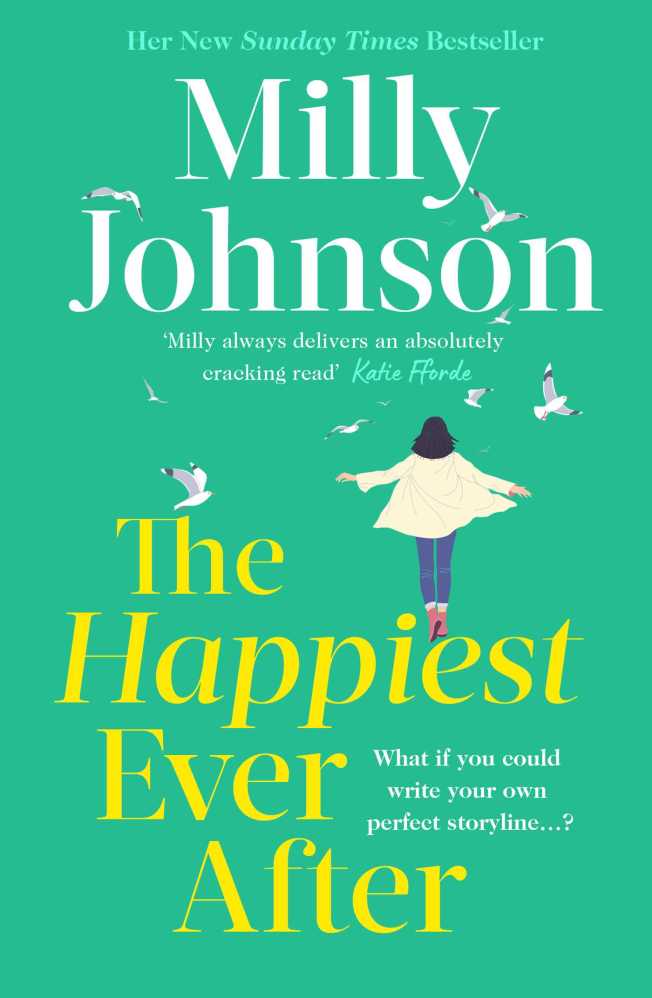
Giveaway: The Happiest Ever After by Milly Johnson

It’s my absolute pleasure to be part of the blog tour for Milly Johnson’s latest book The Happiest Ever After because not only do I adore Milly’s writing, I’m pretty darn fond of her as a person too! My enormous thanks to Sara-Jade Virtue of TeamBATC for inviting me to participate and for allowing me to give away a hard backed copy of The Happiest Ever After to a lucky UK reader.

If you click here, you’ll find one or two other times that Milly has appeared on Linda’s Book Bag!

The Happiest Ever After will be published by Simon and Schuster on 15th February 2024 and is available for pre-order through the links here.

The Happiest Ever After

Polly Potter is surviving, not thriving. She used to love her job – until her mentor died and her new boss decided to make her life hell. She used to love her partner Chris – until he cheated on her, and now she can’t forget. The only place where her life is working is on the pages of the novel she is writing – there she can create a feistier, bolder, more successful version of herself – as the ­fictional Sabrina Anderson.

But what if it was possible to start over again? To leave everything behind, forget all that went before, and live the life you’d always dreamed of?

After a set of unforeseen circumstances, Polly ends up believing she really IS Sabrina, living at the heart of a noisy Italian family restaurant by the sea. Run by Teddy, the son of her new landlady Marielle, it’s a much-loved place, facing threat of closure as a rival restaurant moves in next door. Sabrina can’t remember her life as Polly, but she knows she is living a different life from the one she used to have.

But what if this new life could belong to her after all?

****

Doesn’t that sound fabulous? I’ll be reviewing The Happiest Ever After over on the My Weekly website very soon (but I might just think it’s her best book yet) but here’s your chance to get your hands on a hardback copy:

Giveaway

A Hardback Copy of The Happiest Ever After

For your chance to win a hardback copy of The Happiest Ever After by Milly Johnson click HERE.

Please note that the randomly selected winner will need to provide a UK postal address which will not be retained once the prize is posted. Entries close at UK 11.59 PM on Tuesday 30th January 2024.

About Milly Johnson

Milly Johnson was born, raised and still lives in Barnsley, South Yorkshire.

Sunday Times bestseller, she is one of the Top 10 Female Fiction authors in the UK with millions of copies of her books sold across the world. In 2020, she was honoured with the Romantic Novelists’ Association’s Outstanding Achievement Award and was a featured author in the Reading Agency’s Quick Reads and World Book Night campaigns.

A writer who champions women and highlights the importance of friendship and community, Milly’s characters are celebrations of the strength of the human spirit.

You can follow Milly on Twitter @millyjohnson and Facebook, or you can visit her website for more information. You’ll also find Milly on Instagram.

There’s more with these other bloggers too:

The Bad Weather Friend by Dean Koontz

My enormous thanks to Antara Patel at FMcM for inviting me to participate in the blog tour for The Bad Weather Friend by Dean Koontz and for sending me a copy of the book in return for an honest review. It’s my absolute pleasure to share that review today.

The Bad Weather Friend will be published by Thomas & Mercer on 1st February 2024 and is available for purchase here.

The Bad Weather Friend

Benny is so nice they feel compelled to destroy him, but he has a friend who should scare the hell out of them in this breathtaking new kind of thriller by #1 New York Times bestselling master of suspense Dean Koontz.

Benny Catspaw’s perpetually sunny disposition is tested when he loses his job, his reputation, his fiancée, and his favourite chair. He’s not paranoid. Someone is out to get him. He just doesn’t know who or why. Then Benny receives an inheritance from an uncle he’s never heard of: a giant crate and a video message. All will be well in time.

How strange—though it’s a blessing, his uncle promises. Stranger yet is what’s inside the crate. He’s a seven-foot-tall self-described “bad weather friend” named Spike whose mission is to help people who are just too good for this world. Spike will take care of it. He’ll find Benny’s enemies. He’ll deal with them. This might be satisfying if Spike wasn’t such a menacing presence with terrifying techniques of intimidation.

In the company of Spike and a fascinated young waitress-cum-PI-in-training named Harper, Benny plunges into a perilous high-speed adventure, the likes of which never would have crossed the mind of a decent guy like him.

My Review of The Bad Weather Friend

There’s a mysterious package on the way to Benny Catspaw.

It’s such a long time since I read Dean Koontz that I had completely forgotten what a brilliant writer he is. There’s a simply fabulous iterative conceit of the author addressing the reader directly and reminding them that they are reading a story that drew me in like some kind of Faustian pact. It almost made me feel as if I were Benny himself rather than just a reader because Dean Koontz created an atmosphere as if The Bad Weather Friend had been written for me alone. 

Benny’s prosaic ordinariness is what makes him such a great character. His life experiences may have been somewhat surreal or horrific, but he retains an innocence and positivity that is admirable. I loved him (and the allegorical morality tale he finds himself in), because of his niceness and yet his wisdom. I loved Harper too because of her developing affection for Benny and her pragmatic approach when faced with something as startling as the brilliantly depicted Spike. As for Spike, it is impossible to categorise his impact. He’s a friend, he’s loyalty personified, he’s a guiding light. He’s both human at his very core and yet supernatural in his powers. He uses incontrovertible logic underpinned by intimidating threat and yet he’s the most moral of characters. I thought he was simply fantastic – even when he was removing his own eyeballs! 

I absolutely adored the humour in The Bad Weather Friend. At the darkest or most disturbing moments there’s a thread of the comedic so that the whole narrative has a surreal quality that it is impossible not to become mesmerised by. 

The plot is completely bonkers and yet completely believable. I was totally convinced by Spike and curiously slightly enamoured of him. Even when I wasn’t reading I felt the siren call of the book. To read The Bad Weather Friend is to be enormously entertained from start to finish. It’s completely captivating.

But scratch below the entertainment and there’s great depth here too. Using a scalpel sharp eye for observation and deceptive humour, Dean Koontz lays open the corrupt, the false and the self-serving social climbers. He interweaves themes of climate change, responsibility and power, loyalty and friendship, deceit and retribution so that the thin veneer of civilisation is stripped back in a powerful, affecting, and actually quite emotional manner, that shows the need for kindness in today’s world. I thought this aspect of the book made The Bad Weather Friend a kind of treatise by which we would all do well to live our lives – but with possibly less intimidation of others!

Occasionally horrifying and violent, often creepy and disturbing, always witty, clever and enormous fun, and with an altruistic sense of genuine equality and justice at its heart, The Bad Weather Friend is brilliant. It has made me want to return to everything Dean Koontz has ever written. I loved it.

About Dean Koontz

Dean Koontz, the author of many #1 New York Times bestsellers, lives in Southern California with his wife, Gerda, their golden retriever, Elsa, and the enduring spirits of their goldens, Trixie and Anna.

For further information, follow Dean on Twitter/X @deankoontz, visit his website, or find him on Instagram and Facebook.

There’s more with these other bloggers too: