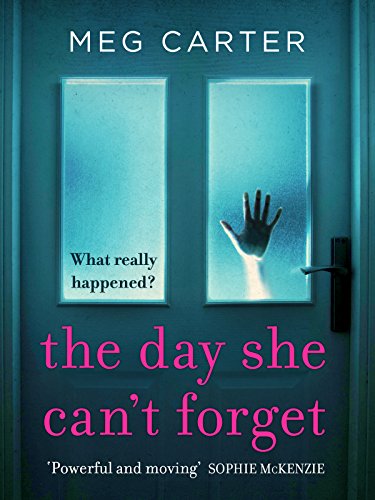
The Art of Writing, a Guest Post by Meg Carter, Author of The Day She Can’t Forget

cover

I’m thrilled to be part of the launch celebrations for The Day She Can’t Forget by Meg Carter. The Day She Can’t Forget was published by Canelo on 24th October 2016 and is available for purchase in e-book by following the publisher links here.

To celebrate publication of The Day She Can’t Forget I have a fabulous guest post from Meg all about the art of writing and how experience isn’t always necessary.

The Day She Can’t Forget

cover

It changed her life. But can she remember everything?

On a cold evening Zeb, a single mum in her thirties, is found wandering aimlessly on a remote road. She is dazed, confused and bloodied.

She doesn’t know where she is, or how she got there. She has travelled far from home and someone has attacked her.

Memory loss means she can trust no-one, and with her assailant unidentified, Zeb is desperate to be reunited with her son Matty, and to ensure their safety.

But what will her search for the truth uncover? Will it bring answers, or more questions? And what if the person she can rely on the least… is herself?

The Art Of Writing

A Guest Post by Meg Carter

The history of journalists who have turned their hand to writing novels is long and proud. But earning a living through factual writing is no guarantee your fiction will be a success. If anything, it can blinker you to the immensity of the task you have set yourself.

I started writing my first novel – The Lies We Tell, which was published last year – after working in journalism for just shy of 20 years. This, and the fact I studied English Literature at London University and have always been a voracious reader made me feel (and I wince now at the thought of it) confident that I could do it.

I soon realised my mistake.

Writing 100,000-plus words isn’t just writing a feature on a much bigger scale. It’s about creating from scratch a credible and compelling world, populating it with characters whose complexities engage and mastering the unfolding of a plot at pace. And while I did eventually get there – and find an agent, have that book published and embark on a second: The Day She Can’t Forget, which was published October 24th – the journey was long and arduous.

Certainly, there are advantages when as a journalist you write fiction. A working life-time spent observing, analysing an explaining for a start. I’ve always been a collector of stories – at first, factual and issues-based to inform my journalism; latterly, human stories from family, friends and features to trigger fictional ideas about character, plot and motivation. So I had no shortage of ideas and inspiration.

My starting point for The Day She Can’t Forget, for example, was an image I’ve had in my head since hearing a tea-time news report on Radio 4 when I was still living with my parents about a man found wandering along a remote Scottish highland road, coatless and bloodied, unable to recall his name, what had happened to him or why he was there. Other real life stories that fed into my thinking included the case of ‘Canoe Widow’ Anne Darwin and what happened to the former British nanny Louise Woodward.

The dramatic opener is another journalistic conceit and literary equivalent, I guess, of a newspaper headline. Then there’s dialogue. Having interviewed people and recorded answers word for word for years, the voices – and body language – of the characters I create play and re-play like a podcast inside my head.

A career as a journalist also helps you view writing as a task with an understanding of the need for forward momentum and regular self-imposed deadlines. The blank page has never scared me. But there’s a downside to this, even though it might sound like a plus. Because at times, writing the next sequence can almost be too easy. And the danger with this is that the wild horse of an idea you are trying to tame carries you away. What’s critical is to be able to acknowledge the need to develop and practice new, longer-form storytelling skills and this takes a quality not every journalist possess: humility.

Journalists used to quickly turning around short-form pieces of copy can also struggle to stick with a longer format – especially with the constant editing and re-editing required, in particular once an agent and then an editor step in. One friend of mine on hearing I’d completed a further re-drafting of my first novel after finding an agent exclaimed she couldn’t think of anything worse. She works for a news agency, and her preferred approach to writing is research, write, publish then – most importantly: quickly move on.

Even though I am a former magazine editor whose freelance career has also involved editing and re-writing factual copy written by others, editing my own copy has its challenges. While I can be cold and clinical about what’s working and what must change, the input of an agent and editor is invaluable. The process of responding to their feedback inevitably makes the final book all the better – even if you don’t always agree, as they push back with their Whys? and What ifs?

Without doubt, aspects of what it takes to be a journalist – curiosity, observation skills, the ability to explain, to name just three – are invaluable for writing fiction, along with empathy, skin thick enough for negative feedback, perseverance and drive. The good news, however, is that none of these qualities is restricted to any particular type of person or, indeed, members of a single profession.

About Meg Carter

meg

Meg Carter is an author and journalist.

She is the author of The Day She Can’t Forget, published by Canelo on October 24 2106, and The Lies We Tell, published in 2015.

Meg worked as a journalist for twenty years before turning her hand to fiction. Her features have appeared in many newspapers, magazines and online with contributions to titles including You magazine, Independent, Guardian, Financial Times, and Radio Times.

Now based in Bath, she recently relocated from west London with her husband and teenage son.

Meg is on the advisory committee of Women in Journalism and a member of writers collective 26.

The Day She Can’t Forget is Meg’s second novel. She is currently working on her third.

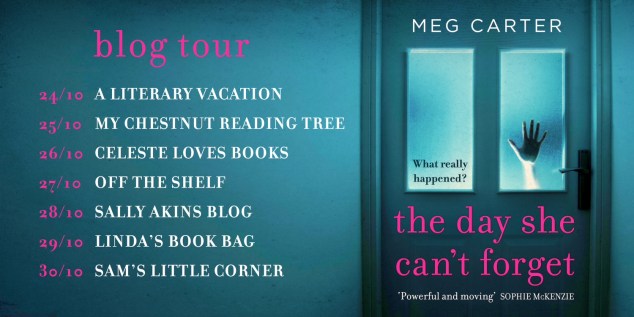
You can find out more about Meg on her website and by following her on Twitter. There’s more with these other bloggers too:

tdscf-blog-tour-2-1

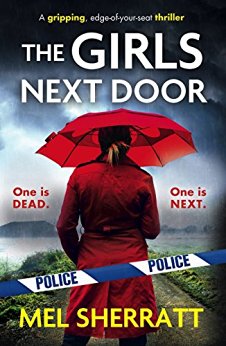
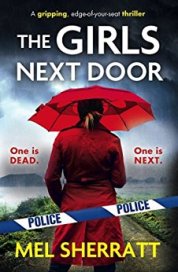
The Girls Next Door by Mel Sherratt

the-girls-next-door

I’m delighted to be part of the launch celebrations for The Girls Next Door by Mel Sherratt. The Girls Next Door was published by Bookouture on 27th October 2016 and is available for purchase in e-book here.

The Girls Next Door

the-girls-next-door

One warm spring evening, five teenagers meet in a local park. Only four will come out alive.

Six months after the stabbing of sixteen-year-old Deanna Barker, someone is coming after the teenagers of Stockleigh, as a spate of vicious assaults rocks this small community. Revenge for Deanna? Or something more?

Detective Eden Berrisford is locked into a race against time to catch the twisted individual behind the attacks – but when her own niece, Jess Mountford, goes missing, the case gets personal.

With the kidnapper threatening Jess’s life, can Eden bring back her niece to safety? Or will the people of Stockleigh be forced to mourn another daughter…?

My Review of The Girls Next Door

Katie feels under pressure to be Nathan’s so-called girlfriend, but events on the night she goes to meet him are going to rock her life and that of the whole community.

Good gracious. I know Mel Sharratt writes gritty, fast paced thrillers, but I really wasn’t expecting the break-neck speed of events in The Girls Next Door. Reading this book was somewhat akin to being on an aeroplane in turbulence. I felt jolted and my stomach dropped time after time and just when I though there might be a breather off we went again. The short chapter structure of the book also adds to this effect and although it took me a while to work out who was who with all the quick changes of character and scene to begin with, I soon had a real sense of who everyone was. Indeed I felt the cast of characters was highly realistic and reminded me very much of some people I used to teach in a very deprived area years ago. In fact, the depiction of those living in deprivation, and the various ways with which they deal with their situation, was extremely accurate.

I really enjoyed the interconnectedness of the plot and had to admire Mel Sherratt’s skill in keeping all the various threads so cleanly and clearly defined, whilst simultaneously so well drawn together and linked through the various characters.

What I hadn’t expected alongside the thriller pace was the underpinning theme of mental heath and how we are affected by grief and guilt. I thought Mel Sherratt handled these elements sensitively without detracting from the breakneck plot.

The Girls Next Door is a highly entertaining, fast paced and exciting read and I’m sure this book is going to be a huge hit with crime fans everywhere. I’m really looking forward to reading more about Eden in the future.

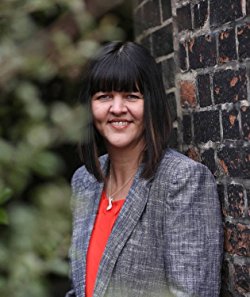
About Mel Sherratt

mel-sherratt

Mel writes gritty crime dramas, psychological suspense and fiction with a punch – or grit-lit, as she calls it. Shortlisted for the prestigious CWA (Crime Writer’s Association) Dagger in Library Award 2014, Mel’s inspiration comes from authors such as Martina Cole, Lynda la Plante, Mandasue Heller and Elizabeth Haynes. Since 2012, all eight of her crime novels have been bestsellers, each one climbing into the kindle UK top 20 and she has had several number ones. Mel has also had numerous Kindle All-star awards, for best read author and best titles.

Mel also writes contemporary fiction under the name of Marcie Steele – Stirred with Love was published in September 2015, The Little Market Stall of Hope and Heartbreak in December 2015 and The Second Chance Shoe Shop in April 2016.

(You can read my review of The Second Chance Shoe Shop here.)

Mel lives in Stoke-on-Trent, Staffordshire, with her husband and terrier, Dexter (named after the TV serial killer) and makes liberal use of her hometown as a backdrop for some of her books.

You can find out more on Facebook, by visiting Mel’s website and by following her on Twitter. You’ll find all Mel’s books for purchase here.

You can follow events for The Girls Next Door using the #HelpMe

help-me

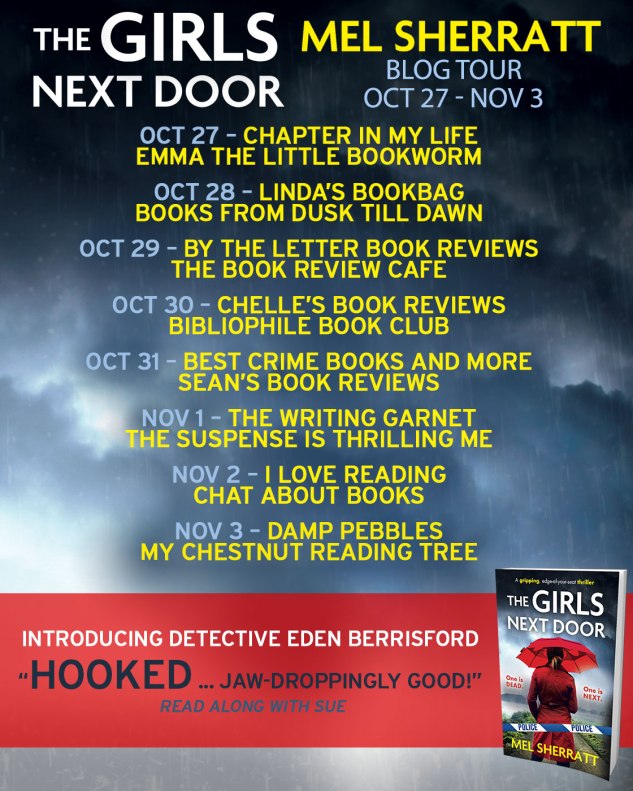
You will also find more with these other bloggers:

tour-poster

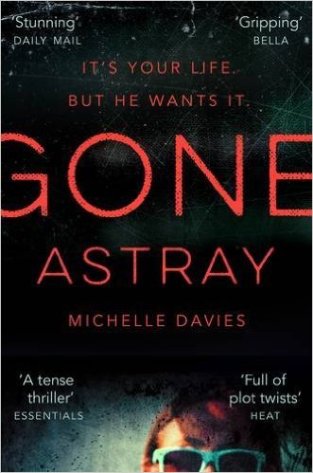
Writing a Series, a Guest Post by Michelle Davies, Author of Gone Astray

cover

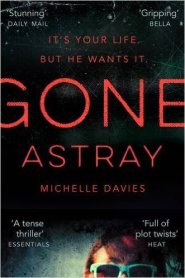
I’m delighted to be part of the paperback launch celebrations for Gone Astray by Michelle Davies. Gone Astray is published by Pan Macmillan and is available for purchase in e-book, hardback and paperback via the publisher links here.

Gone Astray

cover

Lesley and her husband Mack are the sudden winners of a £15 million EuroMillions jackpot. They move with their 15-year-old daughter Rosie to an exclusive gated estate in Buckinghamshire, leaving behind their ordinary lives – and friends – as they are catapulted into wealth beyond their wildest dreams.

But it soon turns into their darkest nightmare when, one beautiful spring afternoon, Lesley returns to their house to find it empty: their daughter Rosie is gone.

DC Maggie Neville is assigned to be Family Liaison Officer to Lesley and Mack, supporting them while quietly trying to investigate the family. And she has a crisis threatening her own life – a secret from the past that could shatter everything she’s worked so hard to build.

As Lesley and Maggie desperately try to find Rosie, their fates hurtle together on a collision course that threatens to end in tragedy . . .

Money can’t buy you happiness.
The truth could hurt more than a lie.
One moment really can change your life forever…

Why I Chose To Write A Series Over A Standalone

A Guest Post by Michelle Davies

Some of the nicest feedback I’ve had so far for Gone Astray is from readers say how much they like DC Maggie Neville, my central police character. This thrills me no end, because when I set out to write Gone Astray many moons ago I always envisaged it as the first in a series rather than a standalone and I hoped readers would become invested enough in Maggie to want to read subsequent books.

I set out to write a crime series because, as a reader, I enjoy them enormously. I like ending one book knowing another is coming soon, especially ones that cleverly draw out more of the main character’s personality and background while delivering a fresh and gripping new plot. My current favourites are Sarah Hilary’s Marnie Rome series, Robert Galbraith’s Cormoran Strike and Tana French’s Dublin Murder Squad.

I have already written the next instalment in Maggie’s story – it’s called Wrong Place and will be published first in hardback and e-book on 27 February next year. What I’ve learned so far while writing a series is that you have to pay attention to detail: while writing Wrong Place I kept a copy of Gone Astray next to my laptop at all times so I could make sure every detail of Maggie and her family were the same in both novels!

In Wrong Place Maggie finds herself at the mercy of the austerity budget cuts currently affecting real-life forces nationwide when she’s split between two cases as Family Liaison Officer. She and her colleagues at Mansell Force CID are already investigating a distraction burglary that’s left an elderly woman fighting for her life when she’s called to join a team looking into a husband’s attempted murder of his wife in another part of Buckinghamshire. When Maggie uncovers a startling connection between the two cases, she’s no longer torn between them but is in a race against time to piece them together before anyone else is seriously hurt. Can she do it? You’ll have to read Wrong Place to find out!

(We certainly will Michelle!)

Thank you for hosting me on my first ever blog tour and for supporting Gone Astray. I hope you enjoy the book.

My pleasure Michelle and good luck with both Gone Astray and Wrong Place.

About Michelle Davies

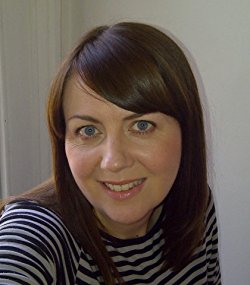
michelle

Michelle Davies has been writing for magazines for twenty years, including on the production desk at Elle, and as Features Editor of Heat. Her last staff position before going freelance was Editor-at-Large at Grazia magazine and she currently writes for a number of women’s magazines and newspaper supplements. Michelle has previously reviewed crime fiction for the Sunday Express‘s Books section.

Michelle lives in London with her partner and daughter and juggles writing crime fiction with her freelance journalism and motherhood. Gone Astray is her first novel, and the sequel is Wrong Place.

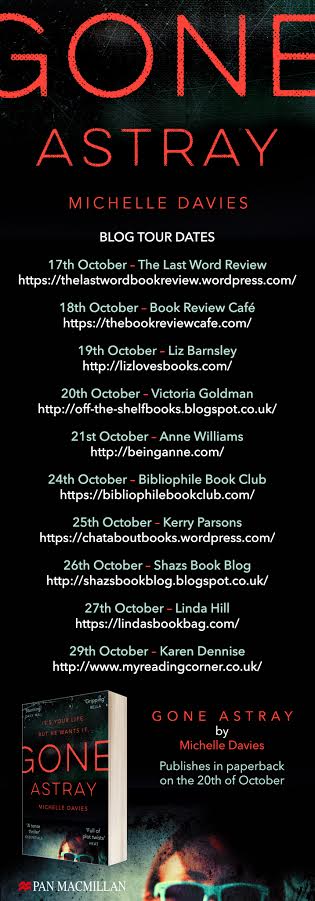
You can follow Michelle on Twitter, find her on Facebook or visit her website. There is more with these other bloggers too:

blog-banner

Advice for Aspiring Writers, a Guest Post by Joyce Schneider, author of Her Last Breath

her-last-breath

I’m thrilled to be helping to celebrate Her Last Breath, the second psychological thriller by J.A. Schneider, after Fear Dreams – featuring highly intuitive NYPD detective Kerri Blasco. Her Last Breath and is published in e-book and paperback and is available for purchase here.

You can read an extract from Her Last Breath here.

Her Last Breath

her-last-breath

A chilling psychological thriller about a woman caught between two men…

Mari Gill wakes to horror in a strange apartment next to a murdered man, and can’t remember the night before…

Accused of murder, she feels torn between her husband, a successful defense attorney, and a mysterious, kind man who wants to help.

Can she trust either of them – or even her friends? Detective Kerri Blasco battles her police bosses believing Mari is innocent…but is she?

Advice for Aspiring Writers

A Guest Post by J.A. Schneider

Never give up. Never stop writing. Life will do everything it can to throw you roadblocks and disappointment, but keep at it. It’s hard to maintain the passion in the face of constant rejection, but don’t forget what made you start writing in the first place. Also, avoid comparing your beginning to someone else’s middle. Those “oh-so-lucky best sellers” you see in the top slots on Amazon – 99% of them, anyway – went through decades of rejection and frustration.

Her Last Breath is my eighth book. Readers are finally starting to hear about me. Or maybe it began with my seventh book, Fear Dreams –  but before those two psychological thrillers I wrote the six-book Embryo medical thriller series, which had some success, acquired a small but loyal following, but didn’t resonate as Fear Dreams did. Which, again, was my seventh book. If I had given up after six…

fear-dreams

Often, the hardest part is not the writing at all, but keeping alive the will to keep going. For inspiration and encouragement, two of my favorite author quotes are David Baldacci’s “A writer is always terrified,” and E.L. Doctorow’s “Writing is like driving at night. You can only see as far as your headlights.” Other terrific quotes are Tess Gerritsen’s “Do you have the guts to stay with it?” and Stephen King’s “Just flail away at the g-damn thing.” I have a collection of those quotes on a Word doc which I keep open to the left of my writing draft, and those quotes are my crutch, like friends saying, “Hey, we’ve all been through the same thing!”

That collection of quotes is a comfort, and since those writers have more years of hair tearing and toil behind them than I do, I’d like to share a few of their helpful nuggets with you. Herewith, for inspiration and encouragement:

Hugh Howey: “Try to worry about the writing and nothing else. Also look at it as a marathon, not a sprint. My bestselling book was my eighth or ninth. As soon as it took off, the rest of my books took off with it. The idea that we can pub one title and it will catch on … your odds are better that you’ll rope a unicorn.”

Lisa Gardner: “It took a good ten years for me to become an overnight success. (Laughter).”

Bella Andre: “Seven years of frustration, my publisher dropped me…”

T.R. Ragan: After 20 years, I began to question my sanity and the whole perseverance thing. I knew this writing business wouldn’t be easy. If it were, everyone would be doing it. But I never thought it would be this hard. By the time I had signed with my second agent and worked with two editors, I decided to stop writing romance and start writing thrillers. I took my frustration with the industry and unleashed it as I wrote my first serial killer novel.”

[When sales of Abducted reached 300,000 (after 20 yrs of tears) Ms Ragan was approached by two of New York’s big five publishers—at long last. “I said, ‘Forget you,’” Ragan recalls, laughing. Instead, she signed with Thomas & Mercer…]

There’s also that wonderful passage from the Bible, Galatians 6:9: ”Do not give up, for in due season you shall reap if you do not tire.” You don’t have to be religious to appreciate that one. It’s pretty powerful.

As a final note I’d suggest that you not show your first draft to others until you’ve reached the end. That first draft is fragile, you’re in the earliest phase of finding your story from the sticky morass of characters and plot threads. Any comments, positive or negative, can affect the way you feel about your story before its elements have cleared for you, in their own time.

There can never be enough encouragement for you, so hang in there; keep those imagination wheels turning even if pushed to the back burner. No matter what the stress or distraction, it can also be helpful to keep an old-fashioned notebook, in hand, literally. It just feels good to hold. On bad days, get one sentence into it before the bleep hits the fan again. You’ll feel better. Keep the dream alive.

About Joyce Scneider

JoyceAuthor250.jpg

J.A. (Joyce Anne) Schneider is a former staffer at Newsweek Magazine, a wife, mom, and reading addict. She loves thrillers…which may seem odd, since she was once a major in French Literature – wonderful but sometimes heavy stuff. Now, for years, she has become increasingly fascinated with medicine, forensic science, and police procedure. Decades of being married to a physician who loves explaining medical concepts and reliving his experiences means there’ll often be medical angles even in “regular” thrillers that she writes. She lives with her family in Connecticut, USA.

You can find out more about J.A. Schneider on her website, on Goodreads, by following her on Twitter and on Facebook. All of Joyce’s books are available here.

You an find out more from and about Joyce with these other bloggers:

herlastbreath-poster_465x679px

Trick or Treat, a Guest Post by Helena Fairfax, Author of A Year of Light and Shadows

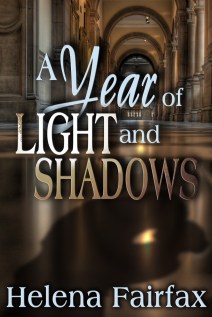
a-year-of-light-and-shadows-cover

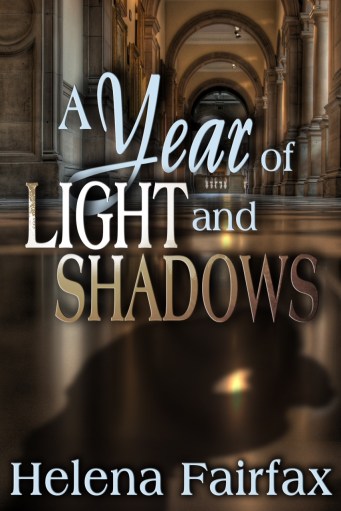
It gives me enormous pleasure to welcome Helena Fairfax to Linda’s Book Bag today with a guest post all about fairy tales and the trickery that has inspired A Year of Light and Shadows. Available in e-book with a paperback to follow soon, A Year of Light and Shadows is available on pre-order from major e-tailers including Amazon and Kobo.

A Year of Light and Shadows

a-year-of-light-and-shadows-cover

A Year of Light and Shadows contains three romantic mysteries in one volume.

Palace of Deception

From the heat of the Mediterranean….

When the Princess of Montverrier goes missing, Lizzie Smith takes on the acting job of her life. Alone and surrounded by intrigue in the Royal Palace, she relies on her quiet bodyguard, Léon. But who is he really protecting? Lizzie…or the Princess?

The Scottish Diamond

To the heart of Scotland…

Home in Scotland, Lizzie begins rehearsals for Macbeth, and finds danger stalking her through the streets of Edinburgh. She turns to her former bodyguard, Léon, for help – and discovers a secret he’d do anything not to reveal…

A Question by Torchlight

A story of mystery and romance…

The approach of Hogmanay in Edinburgh means a new year and new resolutions. Lizzie and Léon have put their year of danger behind them. But something is still troubling Léon, and Lizzie fears the worst…

Trick or Treat? Fairy Tales and Trickery

in

A Year of Light and Shadows

A Guest Post by Helena Fairfax

Ever since I was a child, I’ve always loved fairy tales that involve some sort of trickery or deception. There’s the big bad wolf, who dresses up as grandma, or the wicked stepmother, who tricks Snow White into biting into a poisoned apple. There’s something so appealing to children about characters who play wily tricks. One of the most enduring tricksters is Puss-in-Boots, who tells his master to take off his clothes and jump in the river, and then tricks the king by pretending their clothes have been stolen, and that they are both wealthy noblemen. It’s the start of a series of tricks and deceptions that make Puss-in-Boots wealthier and wealthier, and as a child I was riveted.

Sometimes I wonder if children love these stories so much because in the real world children lack physical strength and are powerless. Cunning can overcome strength, and so with these fairy tales perhaps children can feel empowered and that anything is possible if they use their intelligence and imagination.

A Year of Light and Shadows is a collection of two romantic suspense novellas and a short story in which trickery and deceit play a major role. It’s only recently that I’ve realised how much these stories follow in the fairy tale tradition. It would be giving away too much to reveal the deceptions that gradually come to light. I can say that they were great fun to write!

My heroine, actress Lizzie Smith, is also in the fairy tale tradition. She’s an ordinary young woman who is whisked out of her circumstances. The “handsome prince” of the story is Léon, who is a bodyguard for the royal family in the fictional country of Montverrier. Montverrier is only a small principality – about the size of Monaco – and so over the centuries its people have developed a wily cunning that makes up for their lack of strength. My hero, Léon, recounts fantastical tales of fabulous diamonds lost at cards through trickery, or an entire Roman fleet deceived into thinking their men were possessed. I loved writing these scenes, and I think it’s their fairy tale quality that appeals to me so much.

We’re coming up to the season of “Trick or Treat” – so what better time to release my collection!

Did you have any favourite fairy tales as a child? Why do you think children love these stories, and why do you think they’ve endured so long? If you’ve enjoyed my post, or have any comments at all, I’d love to hear from you.

Thanks so much for having me today, Linda. It’s been great fun revisiting the schemes and intrigues of my stories, and the fairy tales that inspired them.

My pleasure Helena. It has been fascinating reading your guest post.

About Helena Fairfax

helena-fairfax

Helena Fairfax writes engaging contemporary romances with sympathetic heroines and heroes she’s secretly in love with. Her first novel, The Silk Romance, was a contender for the UK’s Romantic Novelists’ Association New Writers’ Scheme Award and a runner-up in the Global Ebook Awards. The Scottish Diamond was a finalist in the I Heart Indie Awards. Helena Fairfax was shortlisted for the Exeter Novel Prize in 2014.

silk-romance

When not writing, Helena walks the Yorkshire moors near her home every day with her rescue dog, finding the romantic landscape the perfect place to dream up her heroes and her happy endings.

If you’d like to get in touch with Helena, or find out more about her books, writing, and photos of her settings or the Yorkshire moors where she lives, please follow her newsletter by subscribing here. All new subscribers to Helena’s newsletter will receive a free copy of Palace of Deceptionthe first book in the collection A Year of Light and Shadows.

 palace-of-deception

All of Helena’s lovely books can be found here.

You can find out more about Helena by visiting her website, finding her on Facebook, or following her on Twitter.

An Interview with Ron McMillan, Author of Bangkok Belle

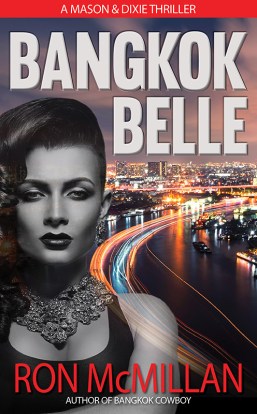
bangkok-belle-cover-web-handout

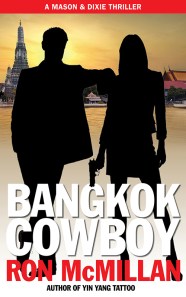
I love travel and found Bangkok a fascinating city so when I discovered Bangkok Belle by Ron McMillan I had to invite him on to Linda’s Book Bag to find out more about it. Bangkok Belle is the second in the Mason and Dixon Thrillers series after Bangkok Cowboy and is available for purchase in e-book here.

bangkok-cowboy-cover-web-handout

Bangkok Belle

bangkok-belle-cover-web-handout

Bangkok private eye duo Mason and Dixie are hired to provide protection to Australian soap opera star Belle Cooper, who came under vicious attack from the moment she announced her participation in a Bangkok pageant.

British Army veteran Mason and his transgender business partner Dixie already have their hands full with the disappearance of their colleague. Aom went missing while keeping watch on a night club owner called Chocolate, who is suspected of murdering her British husband, Robert Collingwood.

Mason and Dixie have to keep Belle safe while juggling threats posed by the corrupt police colonel who swept the Collingwood investigation under the carpet, the psychotic ex-IRA hit man who is Chocolate’s new boyfriend, and an ageing New Jersey mobster working for the Macau mafia.

Showdowns at an exclusive inner city resort and an abandoned fruit farm on the outskirts of the Thai capital take this fast-moving thriller to an explosive conclusion.

An Interview with Ron McMillan

Hi Ron. Thank you so much for agreeing to answer some questions on my blog about your writing. Firstly, please could you tell me a little about yourself?

I was brought up in Central Scotland in the 60’s and 70s, and after wasting three years studying accountancy at college, I bailed out. I wanted to travel, and starting in 1979, that’s pretty much what I did. I lived and worked in different parts of Europe for two years before spending six months on the backpacker trail from Sri Lanka to Australia. After two-and-a-half years in Australia and New Zealand, I returned to Asia and ended up living in Seoul, South Korea from 1983 to late 1988. Apart from a few years back in Scotland in the noughties, I’ve been in Asia ever since.

And tell us a little bit about your latest novel in the Mason and Dixie thriller series, Bangkok Belle.

Bangkok Belle is the second in the series, which is set mostly in the Thai capital, and features a private eye duo. Mason is an ex-British Army Afghan War veteran who suffers the effects of PTSD. Partnering him in his Private Investigations/Personal Protection firm is his Thai friend Dixie, who is a transgender woman. In Bangkok Belle they are hired by an Australian soap opera star who comes under attack when she announces her participation in a minor pageant in Bangkok. Belle Cooper arrives in Bangkok with troubles to spare, at a time when Mason and Dixie are already preoccupied with the disappearance of a junior colleague who was keeping an eye on a Thai woman, a night-club owner they suspect of murdering a young Englishman. Among others, the tale manages to involve a TV crew who arrive to film Belle’s involvement in the pageant, a Korean martial arts instructor with an obsession for transgender women, a corrupt Thai Police Colonel, a psychotic ex-IRA hitman and a diminutive New Jersey mobster in the employ of the Macau gambling mafia.

Crikey – this sounds fast paced and interesting!

When did you first realise you were going to be a writer?

When I was in Australia in 1982, I recall surprising myself when I told my then girlfriend’s mother that I wanted to be a writer. Until that point, the idea had barely entered my consciousness. It was another few years before I started to do freelance writing for business magazines in Asia, but I’ve now been writing in one medium or another for thirty years. Scary.

You studied accountancy and hated it. Have you got your revenge on that period of your life in your writing?

I don’t think I’ll ever not regret the years I wasted on a world that I would never set foot in again. If I could turn the clock back, I would have studied languages or geography or geology or all three. Commercial photography assignments in Hong Kong often took me to big accounting firms’ offices. I was always so glad that when I walked out at the end of a day’s photography, the only reason I would need to return would be to pick up a fat cheque.

I know that you spent some years as a professional photographer. How did that come about, and how, if at all, has that helped you develop the skills needed for writing fiction?

I broke into news magazine photography in Seoul in the mid-80s. The 1988 Seoul Olympics were coming up, Korea was riven with spectacular demonstrations against the military government, and there wasn’t a single western freelance photographer in the entire country. I went to Hong Kong with an expensive camera on my shoulder and talked my way into the offices of picture editors. At that point I had never sold a photo in my life, but with a bit of brass neck I managed to score photography assignments from decent magazines which normally would not have considered using me. Soon, as well as spending long days in the middle of huge, tear-gas-soaked student demonstrations, I was writing stories for travel and business magazines, stories that I illustrated with my photographs. So it’s fair to say that cockiness, self-confidence, even arrogance were always in my make-up. I think those characteristics help anyone take the leap into writing fiction. An over-developed sense of self-belief certainly helped me.

How do you go about researching detail and ensuring your books are realistic?

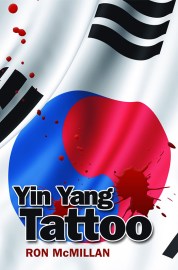
There is some truth in the old saw that urges us to write about what we know. My first published crime novel, Yin Yang Tattoo (Sandstone Press, 2010), was about a Scottish photographer who had lived in Korea in the 80s and studied Tae Kwon Do there. That was me. The rest of the book, which is of course wholly fictitious, came out of things I saw and heard during my five years in Korea, and aren’t to be confused with what I actually got up to in Seoul in my twenties. One prominent reviewer was disgusted by the book; she clearly assumed that the drunken Scottish protagonist who spent a lot of time in the arms of prostitutes was the author. Not so.

Document 1

Which aspects of your writing do you find easiest and most difficult?

I do almost all my writing at home in the countryside of North Thailand. Getting into any kind or rhythm is the most difficult thing for me. I don’t have a set routine, and suffer intense envy of writers who do. Once I get into the groove, it all becomes so much simpler, and I forever wonder why it has to be so difficult for me to get to that point.

Which element of writing is most important to you? The initial research, the writing or the editing and why do you say that?

It has to be the editing. First drafts might have most of the story in a sequence that will mostly remain intact when the book is published, but so much of the material in any draft is extensively revised during the editing process.

The Mason and Dixie books are fast paced thrillers. What techniques do you use when writing to convey such action?

Almost thirty years ago a journalist friend impressed me with the amount of time and effort he put into what American journalists call the ‘lede’, or the opening few words of a story. I try to follow that policy with the start of every chapter. I am careful to avoid long periods of descriptive exposition and try to push the story forwards using dialogue as much as possible. At the end of every chapter I do my best to make the reader want to move on to read just one more chapter before turning out the light.

I know that travel features heavily in your life. Why have you chosen Thailand as the setting for your Mason and Dixie series?

There was a period of ten years when I was a freelance photographer based in Hong Kong, travelling around the region on assignment. I did almost fifty assignments in China, including a week in Tiananmen Square in 1989. (My biggest single regret is leaving Beijing a few days before June 4th). During that decade I made it to everywhere from Afghanistan to Japan, and I wouldn’t trade a single day of those trips for anything. They surely made me who I am now, and the experiences and the people I encountered routinely turn up in my fiction. An anecdotal event in a narrative may paint a picture of a thug waving a gun in Thailand today, but could have its origins in a real experience twenty years ago in China or Pakistan or either of the Koreas. Thailand is a wonderful setting for crime fiction, a bottomless source of exotic, colourful backdrops and potential storylines.

Why did you decide to make Dixie transgender in Bangkok Belle?

I have lived in Thailand since 2007. Here, the ‘third gender’ is infinitely more accepted than in the west. Transgender women are everyday sights, very often in prominent customer service roles behind the counters of banks or department stores. But while they have it easier here than in the west, their lives are certainly not free of prejudice or ill-treatment. I thought it would be interesting to embrace a transgender central character, not despite her sexuality, but because of it. Mason treats her like a lady, and he and Dixie are the closest of friends, but not lovers. At least for now….

The cover of Bangkok Belle makes me think of glamour, speed and a vibrant city. How did that image come about and what were you hoping to convey (without spoiling the plot please!)?

I’m glad to hear that, because the cover took a long time to put together. The feminine character on the cover is strikingly beautiful, and at second glance it might become apparent that she is transgender. Bangkok Belle is a crime novel that involves a beautiful transgender woman in the big exciting city that is Bangkok. The cover was put together by my daughter, who as well as being a qualified architect, is a very talented practitioner of Photoshop.

When you’re not writing, what do you like to read?

My Dad was a somewhat unorthodox secondary school English teacher. One day when I was about fourteen we were at the library together, and he pushed a book at me. John D. MacDonald’s ‘A Purple Place for Dying’ was adult, at times graphically violent crime fiction starring MacDonald’s wonderful Travis McGee, a character credited by many top writers today (Lee Child included) as a major inspiration. Not many parents would give a Travis McGee novel to a fourteen-year-old, but I am so glad my Dad did, because it inspired a deep appreciation of quality crime fiction that I still exercise, almost daily. I have read all the Travis McGee books, some of them many times over, and delight in discovering new – to me, at least – crime writers. Online, I read a lot of news, especially Thai news, because fiction has nothing on what’s going on every day in the news here.

If you had 15 words to persuade a reader that Bangkok Belle should be their next read, what would you say?

It aspires to be exactly the kind of suspenseful, atmospheric crime fiction that I enjoy reading.

And finally, Ron, what can we expect next for Mason and Dixie?

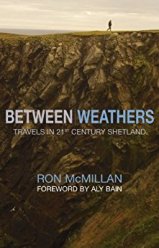
Book three is in the works. It takes place entirely in Bangkok, and involves a close friend of Mason, someone already known to readers of Bangkok Cowboy and Bangkok Belle, falling foul of American federal agencies and the Russian mob. I am also working on a screenplay about a Thai blues musician who gets stranded in Scotland after his Scottish girlfriend dumps him; I am involved in another film under development that was in part inspired by my Shetland Islands travel book (BETWEEN WEATHERS, Travels in 21st Century Shetland); and I am giving too much thought to embarking upon the ultimate literary conceit – writing something autobiographical.

 between-weathers

That all sounds very exciting. Good luck with it all and thanks for being on the blog.

 About Ron McMillan

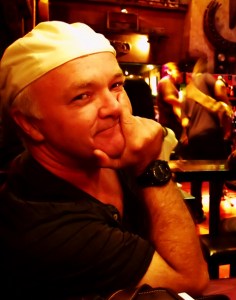
ron-portrait-web

Ron McMillan is a writer and photographer who has been based for most of the last thirty years in Asia. He worked from a Hongkong base for ten years between 1988 and 1998, visiting most parts of the region on multiple occasions, on photo assignments for magazines in the USA and Europe including Time, Newsweek, Businessweek, Fortune and L’Express. He now spends a large part of the year in Thailand.

Ron is a hugely colourful character, who writes both fiction and non-fiction. The best way to find out more about him is to visit his website and follow him on Twitter.

Lily’s House by Cassandra Parkin

lilys-house-cover

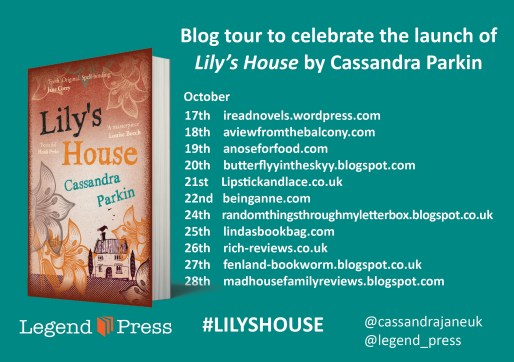
I’m delighted to be part of the launch celebrations for Lily’s House by Cassandra Parkin. Lily’s House was published by Legend Press on 15th October 2016 and is available for purchase in e-book and paperback from Amazon.

I’m thrilled to have an interview with Cassandra Parkin today as well as my review of Lily’s House.

Lily’s House
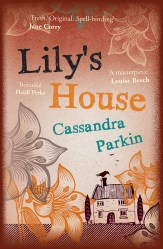
lilys-house-cover

When Jen goes to her grandmother’s house for the last time, she’s determined not to dwell on the past. As a child, Jen adored Lily and suspected she might be a witch; but the spell was broken long ago, and now her death means there won’t be any reconciliation.

Lily’s gone, but the enchantments she wove and the secrets she kept still remain. In Lily’s house, Jen and her daughter Marianne reluctantly confront the secrets of the past and present – and discover how dangerous we become when we’re trying to protect the ones we love.

An Interview with Cassandra Parkin

Hi Cassandra. Welcome to Linda’s Book Bag. Firstly, please could you tell me a little about yourself?

I live in the East Riding of Yorkshire with my husband, two children, and two cats. I grew up between Hull and Cornwall – my dad’s parents owned a hotel in Falmouth, and we used to spend every school holiday down there – and a lot of my writing is influenced by the memories of those amazing summers.

When did you first realise you were going to be a writer?

Most people who know me would say I cottoned on ridiculously late! I always loved to write when I was little, and I used to think I might write professionally one day. Then I grew up a bit and heard lots of stories about how tough it was, and thought, Nah. Never going to be good enough. Forget that one. So after university, I got a job in marketing, because it paid well and student loans are terrifying.

I spent the next ten or fifteen years writing in more or less in secret, occasionally giving my short stories or novels to friends or family as birthday presents, and pretending this wasn’t what I really wanted to do with my life. Meanwhile everyone who knew me best was saying, “Look, you do know you want to be a writer, yes? You are aware of this about yourself, right?” And to my shame, I completely ignored them. In hindsight, I can see this must have been annoying.

Then one year I wrote a series of short stories – each based on one person’s favourite fairy-tale – for six very dear friends, as Christmas presents. In the New Year they all ganged up on me and said I had to try and get them published. So I entered the collection for Salt Publishing’s Scott Prize, and was astounded and very honoured to win. The prize was a publishing contract. That was when I finally took a deep breath and said “Please don’t laugh but I think I want to be a writer I know it’s stupid but I do”, and my husband (and subsequently, everyone who knew me) “Well, DUH” and that was that.

If you hadn’t become an author, what would you have done instead as a creative outlet?

I would have carried on writing, just in private! I can’t imagine not writing. It would just feel wrong.

How do you go about researching detail and ensuring your books are realistic?

Lots and lots of reading and conversations! Of course, the internet has revolutionised how much information we can get hold of, so this isn’t anything like the mountainous chore it used to be. Blogs are the most amazing resource because they give you the chance to dip into the life experiences of lots of people.

Which aspects of your writing do you find easiest and most difficult?

The most difficult part is showing people my work in progress. Some writers thrive on sharing with others. I most definitely do not. I’d rather hide away in a cave and deny all knowledge until it’s finished. However, as my career’s progressed, I’m having to share books at an earlier stage. Sending an unpolished first draft to my editor makes me want to hide under a duvet. Sometimes I have to get a friend to press “send” for me.

The easiest parts are the beginnings, and the endings. I always know these two parts right from the start.

You’ve written both short stories and longer novels. Which do you feel is more challenging and rewarding?

I honestly couldn’t choose between them! I love short stories because they force you to distil what you want to say – a really important discipline for me, since my natural tendency is to ramble. And I love writing novels because of the challenge of holding the whole narrative together in my head, and keeping the pacing right throughout. I don’t think I could ever choose between them.

What are your writing routines and where do you do most of your writing?

I mostly write in the mornings, at the dining table. When I’m working on a first draft, I aim for at least 2,000 words a day, every day, with no days off and no stopping until it’s finished. Editing is always a separate process for me, and I don’t have a daily target for that – I just keep going until I can’t stand to spend another minute looking at the screen.

Your writing reflects a modern mysticism. What draws you to this type of narrative?

What a brilliant question! I think it’s because I find writing fiction such a strange process to undertake. Like a lot of writers, I have a very clear sense that I’m discovering rather than creating. I have a variety of mental images for it – excavating a fossil, fishing in a lake, my characters standing at my shoulder and speaking “through” me, walking into a sunlit room filled with shelves and “finding” my book, already written, on the shelf.

I feel these things absolutely, and yet I know they’re not true. There is no fossil. There is no lake. My characters are not guiding me. My book does not exist until I write it. It all comes out of complex nerve impulses happening in the three pounds of squishy stuff inside my skull – the product of billions of years of evolution. And that’s equally amazing to me! So amazing that I find it easier to believe in the fossil, the lake, the character guides and the pre-existing book.

So, yeah; I think I’m drawn to the fantastical in my writing because I’m in thrall to a belief that I know isn’t true, but that also feels true. I love exploring that tension between what I know and what I feel – what I think I understand, and what I can’t possibly explain. Writing is weird (man). The more I do it, the less I understand it.

Your style has been described as ‘dreamlike’, ‘haunting’ and ‘spell-binding’. How do you react to those descriptions?

I’m absolutely blown away! I couldn’t ask for a nicer, more beautiful compliment to my work. I’m absolutely honoured that people feel that way about my writing.

You seem very drawn to the past. If you could go back in time in your own past, where would you go to and why?

I’d go back to The Croft Hotel in Falmouth, in the last summer before my grandparents sold it and retired, to have a last look round and say goodbye to it. I last saw the inside of it when I was five years old, but I often visit it in my dreams. I’d love to have a clear picture of it, because it’s influenced everything I’ve written since.

I know you’re active in promoting writing in the community. Could you tell us a bit about that too please?

This year I was lucky enough to work with the Hull Freedom Festival, leading a series of workshops for local people to write to the prompt “Knowledge is Freedom”. It was the most incredible experience – I was blown away by the quality and clarity of the work that the participants created.

I’m also one of the co-editors for the National Flash Fiction Day (NFFD) project FlashFloodJournal, created by the brilliant Calum Kerr. Each year, we send out a call for entries – 500 word flashes, on any theme. On NFFD itself, we post a new story every fifteen minutes. The standard is going up every time we run it, and it’s an absolute privilege to help curate the amazing stories people share with us. It’s one of my favourite projects of the whole year.

When you’re not writing, what do you like to read?

Anything I can get my hands on. I did a degree in English Literature, so unsurprisingly I still often go back to the writers I studied – especially Jane Austen, Charlotte Bronte, Lewis Carroll and William Thackeray. I also have a huge passion for the great genre writers, past and present. I cherish every glorious, trashy, exciting word Virginia Andrews and Jacqueline Susann ever wrote, and Stephen King takes up an entire shelf in my library. And children’s books – I read them a lot, especially Tove Jansson’s Moomin books, which have a beautiful lyrical darkness about them.

The cover of Lily’s House has a feeling of age that I think links with the past in the book. How did that image come about and what were you hoping to convey (without spoiling the plot please!)?

The house that Lily’s home is part of is based on a real place – Grovehill House in Falmouth, which is just up the road from where my parents live. When it was time to talk about the cover, I sent some photos of the house over to Legend Press as inspiration for their designer. I think she must have liked the house as much as I do, because she used it as the central image of the final cover.

The other key visual element is, of course, the lilies. I think most people associate the name “Lily” with Calla lilies, but the designer chose tiger-lilies, which I absolutely loved. Jen’s grandmother is definitely a tigerish sort of person.

Lily’s House is written in the first person. Why did you choose that and do you feel yourself becoming your character or do you remain detached as you write?

I think I wanted the immediacy, and also the restrictiveness, of first-person narration. Nothing can happen “off-screen” – the reader discovers everything along with Jen, and if Jen doesn’t see something, we don’t get to know about it. I chose to write in the present tense for the same reason.

I also like the potential for unreliability and self-deception. I was absolutely 100% sucker-punched by Agatha Christie’s “The Murder Of Roger Ackroyd” when I first read it, and I’ve never forgotten the shock (or the delight) of realising the narrator of a book could lie to me.

If you could choose to be a character from Lily’s House, who would you be and why?

I think I would be Jen, because she’s much stronger than me but also much more amoral in many ways. I think it would be interesting to spend some time being her.

If Lily’s House became a film, who would you like to play Jen?  

I think it would have to be Sophie Lee Stone. Her performances are fantastic – strong and emotional – and she looks very much the way I imagined Jen to look. And of course, she speaks both English and Sign.

If you had 15 words to persuade a reader that Lily’s House should be their next read, what would you say?

Oh dear – I’m terrible at this! But I’ll have a go: It’s about the things we’ll do to protect the people we love the most.

Thanks so much for your really fascinating answers Cassandra.

My Review of Lily’s House

Returning to her estranged grandmother Lily’s house to arrange Lily’s funeral, Jen finds the past isn’t as far away as she thought.

I absolutely loved Lily’s House by Cassandra Parkin. I thought there was a lyrical, dreamlike quality to the writing underpinned by a touch of magic. The necromancy of Lily’s presence is never fully uncovered so that there is a layer of mystery that pervades both Jen and Marianne’s dreams and imaginations and draws in the reader like a spell of enchantment. There are recognisable elements of fairy tales that feel at once familiar and fresh. The cat, the herbs and flowers, all draw on a rich tradition and yet are represented in an utterly unique style. Cassandra Parkin’s prose is delightful.

I was so touched by the relationships as they ebbed and flowed along with the narrative, especially the one that develops between Jen, Marianne and James as it provided light and shade to the story. As Jen and Daniel communicated by text I thought that extra layer of distance and difficulty in communicating was perfect in underpinning their fragile marriage.

Cassandra Parkin has the ability to evoke such strong responses in me. I wanted to shake Daniel until his teeth rattled and hug James tightly. I would have liked to have met Lily in real life, but more than that I would have liked to BE Lily. She is a magnificent creation; witch-like, insightful, humane and utterly dangerous in protecting those she loves.

The story itself was brilliantly plotted. In the same way Lily’s photograph album reveals Jen’s past to Marianne, and Lily’s past to Jen, so Cassandra Parkin reveals that past, and the present, to the reader. A couple of times I had a real jolt in the reading, about which I can’t say more as I don’t want to spoil the story, but it felt as if I was opening opaque layers of tissue in a memory box so that I could better understand those I was reading about. Lily, Jen and Marianne were not characters in a story to me, but people I cared about and for whom my heart thudded as the denouement approached.

Lily’s House is a perfect book. I loved every word and simply want to go right back and read it all again.

About Cassandra Parkin
cass

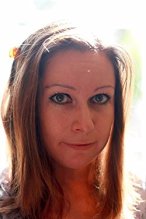
Cassandra Parkin grew up in Hull, and now lives in East Yorkshire. Her short story collection, New World Fairy Tales (Salt Publishing, 2011), won the 2011 Scott Prize for Short Stories. Her work has been published in numerous magazines and anthologies.
The Summer We All Ran Away (Legend Press, 2013) was Cassandra’s debut novel and nominated for the Amazon Rising Stars 2014. The Beach Hut (Legend Press, 2015) is her second novel.

You can find out more by following Cassandra on Twitter and visiting her website. There’s more with these other bloggers too:

lilys-house-blog-tour-banner

Photography and Writing, a Guest Post by Marie Jones, author of Into The Shadows

cover

Being married to a keen photographer, I’m fascinated by the way a photograph can evoke a memory or an emotional response, so I’m delighted to welcome Marie Jones to Linda’s Book Bag today as her novel Into The Shadows arose out of a photograph she took. In a guest post, Marie tells us all about how her writing and photography are linked.

Into The Shadows is available for purchase in e-book and paperback here.

Into The Shadows

cover

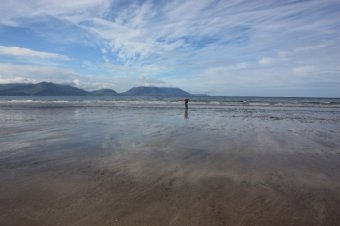
Arriving home from a short holiday in Dingle, Lily Crossways makes a staggering discovery – on one of her photos taken on ‘Inch Beach’, a woman’s desperate face is staring directly at her. Yet Lily knows she was alone that day on the beach. Who is she, is she even real, and why has she appeared to Lily? Unable to let the woman go, Lily makes the uncharacteristic decision to leave behind her safe world in England and return to Dingle to try and find her.

Her search eventually leads her to cafe owner David Carson, this woman’s brother, who hasn’t seen his ‘missing’ sister in five years. Lily must now convince him to trust in her, taking bold steps to prove herself to him, and together track down his sister before it’s too late. Yet are either prepared for the hidden secrets they are about to uncover in their earnest desire to find her, and the impact it will have on those they love?

On Writing and Photography

A Guest Post by Marie Jones

To me, writing and photography flow together, enriching the other.  They are both my passions, though if I had to chose between them, writing would (just) win the day.  Words are so powerful, beautiful, haunting. They can transport you into a world so unlike your own, even into a different realm, time or space. They can express your thoughts, dreams, desires, with such great depth and power.

But for me, when I take photos, my eye will be drawn immediate onto something. It’s a quick rush of feeling, different to what I experience when writing; which evolves over a longer timeframe. Clicking on an image captures that moment forever – whether it is a newborn’s first smile, a dolphin leaping into the air, the majesticness of a mountain, or the unexpected joy of seeing a rainbow.

inch-beach

So for me, the photos I take of this beautiful world we live in will always inspire me in my writing. For my debut novel, Into The Shadows, the photo I took on Inch beach had such a profound effect on me, literally taking my breath away, that once I’d returned home, the writer in me sparked into life and began to weave a story around this one photo, so much so I used the idea of a woman’s face on a photo to take my main character, Lily, on an extraordinary journey of her own. One image, one moment, one chance to take it.

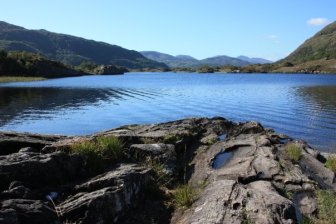
loch-water

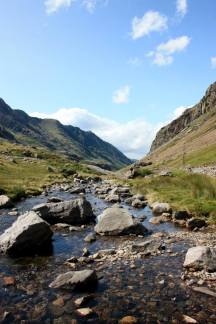
I’ve started writing a new novel, based around the highlands of Scotland.  Again, it was the beauty of these raw, wild mountains alongside the calm beauty of the clear waters of the lochs that first drew me in as a photographer.  I framed these images on my mind, and now setting to work on bringing a story to life around them.

mountains

Before writing Into The Shadows, I ran my own photography business.  I had the privilege of photographing some truly awesome people, often at their most vulnerable as they waited to get married, or just become a mum for the first time and all the emotions that brings.  I love people, I really do.  They continually stagger and overwhelm me with their capacity and strength of mind.  I see beauty in their faces they often can’t see themselves.  Now as a writer, I will always strive to capture in my own characters what I observed as a photographer.

We are amazing creations, we really are, and I feel honoured that I get to show this, through my photography, and now as a story teller.

About Marie Jones

marie

Around writing and family life, Marie also works part time as a Teaching Assistant at a local primary school, every day encouraging the budding talent of our future writers.

Marie is married, and has two gorgeous children. She’s loving being in her 40s and highly recommends it!

Marie’s other passions include photography, travelling and pencil drawing. She ran my own photography business for a few years and had her photos exhibited.

You can follow Marie on Twitter, visit her website and find her on Facebook.

The Be Careful – Home Books by Kriss Keller

With Christmas fast approaching and there being no better gift than a book for a child, I’m delighted to be featuring the Be Careful – Home books by Kriss Keller today.

The Be Careful Home books and their main characters, Pompy and Titany, become everyday guardians of your children. They teach them to beware of the dangers as well warn parents to not neglect the safety of children by leaving dangerous objects within their reach.

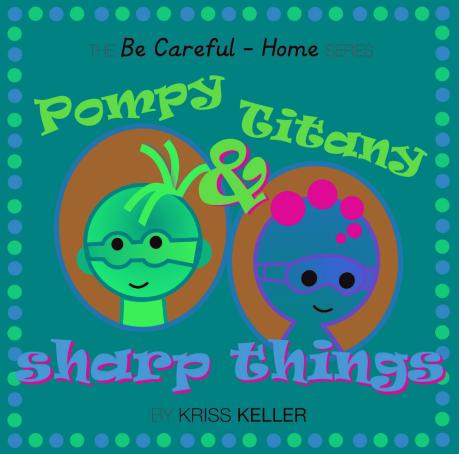
Sharp Things

Web

Sharp Things will be published by Clink Street on 25th October 2016.  Sharp Things is available in e-book and paperback on Amazon.

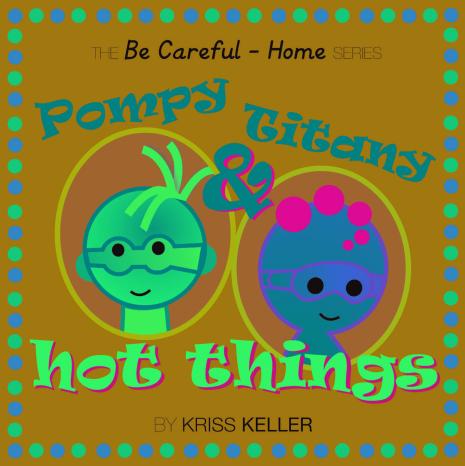
Hot Things

Web

Hot Things will be published by Clink Street on 25th October 2016. Hot Things is available in e-book and paperback on Amazon.

My Review of Sharp Things and Hot Things

I enjoyed the quirky characters of Pompy and Titany as they consider the possible dangers of everyday objects about the home. They reminded me in a way of Bleep and Booster that I so enjoyed as a child.

These two books deal with hot things and sharp objects so that there is a good safety element to them. Rhyme schemes add to the message although I found a couple of these rather contrived at times. I don’t imagine children will worry though!

There is sufficient new vocabulary to ensure literacy is developed as well as safety for children and the lovely illustrations give plenty to share and talk about with young children. The retro-styled wallpaper appealed to me as an adult!

I think it’s commendable that Kriss Keller is teaching safety through reading and sharing in her Be Careful – Home series.

About Kriss Keller

krisskeller

Kriss Keller is the art brand founded in 2014 by Kristina Kucerova. Kucerova studied teaching and Fine Art at the Comenius University in Bratislava. She went on to study graphic communications at St. Louis Community College in the United States. She has built a career working as a child care professional with clients around the world. Her writing is inspired by her work with children, and she combined her graphics skills with a desire to prevent childhood injuries. Kucerova lives and works currently at Zurich, Switzerland.

You can find out more by following Kris on Instagram, Facebook on her website and by following the BeCarefulHome Twitter account.

World War One As A Fictional Setting, a Guest Post by Mark Morris, author of The Wraiths Of War

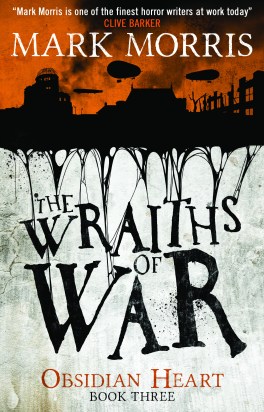
wraiths-cover

As a Dr Who fan and someone obsessed by the First World War, I’m absolutely delighted to be part of the celebrations of The Wraiths of War by Mark Morris. The Wraiths of War, the third and final part of the Obsidian Heart time-travel series was published on 14th October 2016 by Titan Books. The Wraiths of War is available in e-book and paperback for purchase here and on Amazon.

I have great pleasure in welcoming Mark to Linda’s Book Bag today with a guest post all about WW1 as a setting and how we must not forget or repeat the experiences of those involved.

The Wraiths of War

wraiths-cover

Alex Locke is desperately trying to hold onto the disparate threads of the complex web of time he has created.

He travels to the First World War, living through the horrors of trench warfare in order to befriend a young soldier crucial to his story; then to the 1930s to uncover the secrets of a mysterious stage magician.

He moves back and forth in time, always with the strange and terrifying Dark Man on his heels, gradually getting closer to uncovering the true nature of his destiny with the obsidian heart.

World War One As A Fictional Setting

We’ve all seen movies and TV dramas set in the trenches. We’ve all seen how muddy and miserable it was. We’ve all heard about the full-scale slaughter at the Battle of the Somme. We all know about the ‘lost generation’ of British youth who went off to fight for their country and never came back.

We’ve all thought how terrible and terrifying that time must have been.

But we really don’t know the half of it.

Awful as the trenches always appear onscreen, research for my new novel The Wraiths Of War has taught me that TV and movie depictions of one of the darkest periods in human history are almost anodyne when compared to the awful reality of the situation. Onscreen, soldiers might be shown in the trenches with muddy boots, even sometimes with mud-spattered uniforms and faces, but in truth they were coated in mud twenty-four hours a day; there was no respite from it. There was nowhere to wash it off, not even from their hands, because water was in limited supply and was needed for drinking, not washing. As a result, as one survivor says in his memoirs, the boys in the trenches lived in mud, slept in mud, and even ate mud. Their heavy uniforms were filthy and invariably wet right through to the skin twenty-four hours a day, and there were many occasions, due to lack of facilities, when they wouldn’t change their clothes or unlace their boots for weeks on end.

Their rations – consisting largely of army biscuits, cheese and tins of bully beef – were often eaten hurriedly, and held in hands that were gloved in mud. Because of transportation problems (supplies to the front line had to be hauled through miles of communication tunnels, which were often impassable due to heavy rain and subsidence), the food often went rotten – but the men ate it anyway, because they had no other choice.

Much of the time the trenches were also swarming with flies (and fleas) and crawling with rats, which were so bold they would scamper over the bodies of the men at night, and even nibble on them if they weren’t careful. This lack of hygiene meant that sickness was rife, which resulted in a fighting force not of highly trained warriors, but of young men suffering from almost perpetual colds and flu, from dysentery, starvation, and sheer exhaustion due to sleeplessness – not to mention the psychological effects of constant trauma.

First-hand reports claim that the stench too was unbelievable. Imagine the sulpherous smell of poison gas drifting constantly across the battlefield. Imagine sharing a small space with a couple of dozen unwashed men, many of them suffering from diarrhea in a place with no plumbing and inadequate toilet facilities. Imagine living right next to a wasteland of mud into which numerous bodies, many ripped apart by explosions or gunfire, were decomposing.

This was really was life in the trenches was like, and not only for the allies, but for the enemy too. In fact, many of the accounts written by ordinary Tommies who survived the war emphasise the fact that for much of the time the Germans in their trenches on the far side of the battlefield were a secondary, even distant, consideration. The real enemy was the weather, the deprivation, and the sheer grinding boredom and misery of trench life, all of it underpinned by a constant, low-level sense of sheer mortal terror.

What those boys endured in pursuit of peace and the maintenance of liberty was terrible, shameful and heroic. Reading their accounts has made me realise that we should never forget them, not simply because they deserve to be remembered, but also because by remembering we will hopefully be more determined to ensure that such a terrible thing can never happen again.

(I couldn’t agree more Mark. My own grandfather was only 19 when he was blinded in one eye during the Battle of the Somme and had shrapnel wounds in his leg and side. He suffered pain from these for the next 68 years until his death at 87, but was never able to discuss the horrors he’d seen.)

About Mark Morris

mark_morris_400x400

Mark Morris has written over twenty-five novels, including four books in the popular Doctor Who range. He is also the author of two short story collections and several novellas. His short fiction, articles and reviews have appeared in a wide variety of anthologies and magazines, and he is editor of Cinema Macabre, a book of horror movie essays for which he won the 2007 British Fantasy Award.

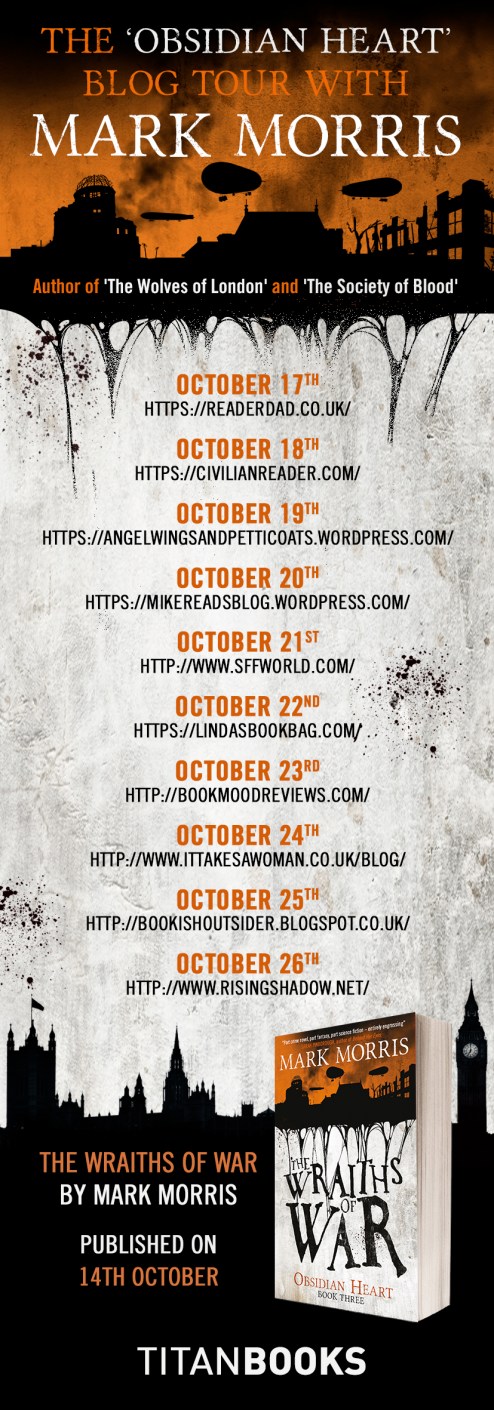
You an follow Mark on Twitter, visit his website and find him on Facebook. There’s more with these other bloggers too:

mark-morris-obsidian-blog-tour-1-1