An Extract from My Name is Leon by Kit de Waal

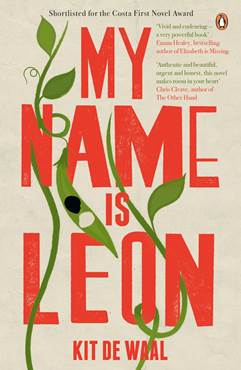
My Name is Leon cover

I’m thrilled to be starting off the paperback launch celebrations for My Name is Leon by Kit de Waal. My Name is Leon is a wonderful read and I’m delighted to be sharing the opening of the book with you today.

My Name is Leon will be released by Penguin in paperback on 6th April 2017 and is available for purchase through the links here.

My Name is Leon
My Name is Leon cover

A brother chosen. A brother left behind. And a family where you’d least expect to find one.

Leon is nine, and has a perfect baby brother called Jake. They have gone to live with Maureen, who has fuzzy red hair like a halo, and a belly like Father Christmas. But the adults are speaking in low voices, and wearing Pretend faces. They are threatening to give Jake to strangers. Since Jake is white and Leon is not.

As Leon struggles to cope with his anger, certain things can still make him smile – like Curly Wurlys, riding his bike fast downhill, burying his hands deep in the soil, hanging out with Tufty (who reminds him of his dad), and stealing enough coins so that one day he can rescue Jake and his mum.

Evoking a Britain of the early eighties, My Name is Leon is a heart-breaking story of love, identity and learning to overcome unbearable loss. Of the fierce bond between siblings. And how – just when we least expect it – we manage to find our way home.

An Extract from My Name is Leon

1

2 April  1980

No one has to tell Leon that this is a special moment. Everything else in the hospital seems to have gone quiet and disappeared. The nurse makes him wash his hands and sit up straight.

‘Careful, now,’ she says. ‘He’s very precious.’

But Leon already knows. The nurse places the brand-new baby in his arms with its face towards Leon so that they can look at each other.

‘You have a brother now,’ she says. ‘And you’ll be able to look after him. What are you? Ten?’

‘He’s nearly nine,’ says Leon’s mum, looking over. ‘Eight years and nine months. Nearly.’

Leon’s mum is talking to Tina about when the baby was coming out, about the hours and the minutes and the pain.

‘Well,’ says the nurse, adjusting the baby’s blanket, ‘you’re nice and big for your age. A right little man.’

She pats Leon on his head and brushes the side of his cheek with her finger. ‘He’s a beauty, isn’t he? Both of you are.’

She smiles at Leon and he knows that she’s kind and that she’ll look after the baby when he isn’t there. The baby has the smallest fingers Leon has ever seen. He looks like a doll with its eyes closed. He has silky white hair on the very top of his head and a tiny pair of lips that keep opening and closing. Through the holey blanket, Leon can feel baby warmth on his belly and his legs and then the baby begins to wriggle.

‘I hope you’re having a nice dream, baby,’ Leon whispers.

After a while, Leon’s arm begins to hurt and just when it gets really bad the nurse comes along. She picks the baby up and tries to give him to Leon’s mum.

‘He’ll need feeding soon,’ she says.

But Leon’s mum has her handbag on her lap.

‘Can I do it in a minute? Sorry, I was just going to the smoking room.’

She moves off the bed carefully, holding on to Tina’s arm, and shuffles away.

‘Leon, you watch him, love,’ she says, hobbling off.

Leon watches the nurse watching his mother walk away but when she looks at Leon she’s smiling again.

‘I tell you what we’ll do,’ she says, placing the baby in the crib next to the bed. ‘You stay here and have a little chat to your brother and tell him all about yourself. But when your mummy comes back it will be time for his feed and you’ll have to get off home. All right, sweetheart?’

Leon nods. ‘Shall I wash my hands again?’ he asks, showing her his palms.

‘I think you’ll be all right. You just stand here and if he starts crying, you come and fetch me. Okay?’

‘Yes.’

Leon makes a list in his head and then starts at the beginning.

‘My name is Leon and my birthday is on the fifth of July nine- teen seventy-one. Your birthday is today. School’s all right but you have to go nearly every day and Miss Sheldon won’t  let proper footballs in the playground. Nor bikes but I’m too tallfor mine anyway. I’ve got two Easter eggs and there’s toys inside one of them. I don’t think you can have chocolate yet. The best programme is The Dukes  of Hazzard   but there are baby pro- grammes as well. I don’t watch them any more. Mum says you can’t sleep in my room till you’re older, about three, she said. She’s bought you a shopping basket with a cloth in it for your bed. She says it’s the same basket Moses had but it looks new. My dad had a car with no roof and he took me for a drive in it once. But then he sold it.’

Leon doesn’t know what to say about the baby’s dad because he has never seen him so he talks about their mother.

‘You can call her Carol if you like, when you can talk. You probably don’t know but she’s beautiful.  Everyone’s always saying it. I think you look like her. I don’t. I look like my dad. Mum says he’s coloured but Dad says he’s black but they’re  both wrong because he’s dark brown and I’m light brown. I’ll teach you your colours and your numbers because I’m the cleverest in my class. You have to use your fingers in the beginning.’

Leon carefully feels the downy fluff on the baby’s head.

‘You’ve got blonde hair and she’s got blonde hair. We’ve both got thin eyebrows and we’ve both got long fingers. Look.’

Leon holds his hand up. And the baby opens his eyes. They are a dusty blue with a deep black centre, like a big full stop. The baby blinks slowly and makes little kissing noises with his mouth.

‘Sometimes she takes me to Auntie Tina up on the next landing. I can walk up to Auntie Tina’s on my own but if you come, I’ll have to carry you in the basket.’

The baby won’t be able to speak until it’s much bigger so Leon just carries on.

‘I won’t drop you,’ he says. ‘I’m big for my age.’

He watches the baby blowing him kisses and leans into the crib and touches the baby’s lips with his fingertip.

His mum and Tina and the nurse come back all at the same time. Leon’s mum comes straight over to the crib and puts her arm round Leon. She kisses his cheek and his forehead.

‘Two boys,’ she says. ‘I’ve got two beautiful, beautiful boys.’ Leon puts his arms round his mum’s waist. She’s still got a round

belly like the baby was still in there and she smells different. Or maybe it’s just the hospital. All the baby-ness made Leon’s mum puffed out and red in the face and now she’s near back to being herself again. Everything except the belly. He carefully touches his mother through her flowery nightie.

‘Are there any more in there?’ he says.

The nurse and Tina and his mum all laugh at the same time.

‘That’s men for you,’ says the nurse. ‘All charm.’

But Leon’s  mum bends down  and puts her  face close to

Leon.

‘No more,’ she says. ‘Just me and you and him. Always.’

Tina puts her coat on and leaves ten cigarettes on the bed for

Carol to have later.

‘Thanks, Tina,’ she says, ‘and thanks for having Leon again. Think I’ll be out on Tuesday by the sound of it.’

Carol shuffles up in the bed and the nurse puts the baby in her arms. He is making little breathing noises that sound like the beginning of  a cry. Leon’s  mum begins to  unfasten her cardigan.

‘Isn’t he lovely, Leon? You be good, all right?’ and she kisses him again.

The whole of the baby’s head fits into her hand.

‘Come to Mummy,’ she whispers and cradles him against her chest.

Tina’s flat is very different to Leon’s but it’s exactly the same as well. Both maisonettes have two  bedrooms and a bathroom upstairs and a kitchen and living room downstairs.

Leon’s house is on the ground floor of the first block by the dual carriageway and Tina’s house is up on the next landing. The dual carriageway has three rows of traffic on each side and the cars go so fast that they put a barrier up by the pavement. Now if Leon and Carol want to cross the road, they have to walk for ages to go to a crossing and press a button and wait until it starts to beep. The first time it was exciting but now it just makes it longer to get to school in the morning.

Tina lets Leon sleep in the same bedroom as her baby. She always makes a bouncy, comfortable bed when Leon stays. She takes two cushions off the sofa and then wraps them in a blanket and puts a little baby’s quilt over him. When he is lying down she throws some coats on top and covers everything over with a bed- spread. It’s like a nest or a den because no one would know he was there, like camouflage in the jungle. His bed looks like a pile of clothes in the corner but then ‘AAAGGGH’, there is a monster underneath and it jumps up and kills you. Tina always leaves the light on in the hall but tells him he has to be very quiet because of her baby.

Her baby is big and wobbly and his name suits him. Bobby. Wobbly Bobby. His head is too big for his body and when Leon plays with him, he always gets some of Bobby’s dribble on his hand. Bobby’s Wobbly Dribble. Leon’s brother won’t be like Bobby and just suck on his plastic toys all day and get his bib soak- ing wet. He won’t topple over on the sofa under the weight of his big head and just stay there till someone moves him. Leon always sits Bobby up but then Bobby thinks it’s a game and keeps on doing it.

Bobby loves Leon. He can’t talk and, anyway, he always has a dummy in his mouth but as soon as Leon walks in the door, Bobby wobbles across the carpet and holds Leon’s legs. Then he puts out his arms for Leon to pick him up. When Leon’s brother is older they’re going to play together, soldiers and Action Man. They’re going to both have machine guns and run all over the house shoot- ing at targets. Bobby can watch.

Tina’s house always has a window open and smells of baby lotion. Tina looks a bit like a baby herself because she’s got a round face with puffy cheeks and round eyes that bulge. She makes her hair different colours all the time but she’s never happy with it and Carol keeps telling her to go blonde.

Tina always says, ‘If I had your face, Carol, it wouldn’t matter so much,’ and Leon thinks she’s right.

Tina has a leather sofa that is cold and slippery on Leon’s legs and a sheepskin rug in front of the gas fire and a massive telly. She doesn’t let Leon call her ‘Tina’, like he calls his mum ‘Carol’. He has to call her ‘Auntie Tina’ and he has to call Carol ‘Mum’ because she says children have to have respect. And she doesn’t let Leon eat in front of the telly. He has to sit at a wooden table in the kitchen where there isn’t much room because she has a big fridge-freezer with ice cream in it. Bobby sits in his high chair smiling at Leon and Tina puts two scoops in Leon’s bowl and one for Bobby. Leon’s brother will probably only get half a scoop because he’ll be the smallest.

Sometimes, Tina’s boyfriend  comes, but when he sees Leon he always says, ‘Again?’ and Tina says, ‘I know.’

About Kit de Waal
kit

Kit de Waal was born in Birmingham to an Irish mother, who was a foster carer, and a Caribbean father. She worked for fifteen years in criminal and family law, was a magistrate for several years and sits on adoption panels. She used to advise Social Services on the care of foster children, and has written training manuals on adoption and foster care. Her writing has received numerous awards including the Bridport Flash Fiction Prize 2014 and 2015 and the SI Leeds Literary Reader’s Choice Prize 2014. My Name is Leon is her first novel. She has two children.

You can follow Kit on Twitter, find her on Facebook and visit her website.

There’s more with these other bloggers too:
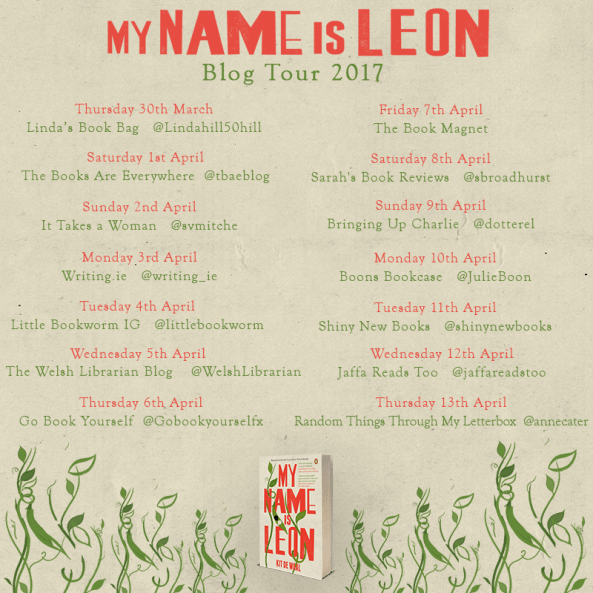
Blog-Tour-banner

Real Events, A Guest Post by Harriet Cummings, Author of We All Begin As Strangers

Begin As Strangers-large

As an aspiring writer I’m always interested in what sparks an author to write their novels. Today I’m delighted that Harriet Cummings, author of We All Begin As Strangers has agreed to tell me a bit about how her novel was inspired by real events.

We All Begin As Strangers will be published by Orion on the 20th of April 2017 and is available for pre-order by clicking here.

We All Begin As Strangers

Begin As Strangers-large

It’s 1984, and summer is scorching the ordinary English village of Heathcote.

What’s more, a mysterious figure is slipping into homes through back doors and open windows. Dubbed ‘the Fox’, he knows everything about everyone – leaving curious objects in their homes, or taking things from them.

When beloved Anna goes missing, the whole community believes the Fox is responsible.

But as the residents scramble to solve the mystery of Anna’s disappearance, little do they know it’s their darkest secrets the Fox is really after…

Inspired by a real 80s mystery, and with a brilliant cast of characters, We All Begin As Strangers is a beautiful debut novel you’ll want to recommend to everyone.

Real Events as a Starting Point For Stories

A Guest Post by Harriet Cummings

For most writers, it’s everyday life that feeds our imaginations. Even authors writing novels set in distant places or historic periods will – arguably – draw on the people and situations around them to make their stories come alive. This might be just the odd detail like a personality trait of a friend or a line overheard in a cafe. But it often provides a spark that warms up the writing.

In this way, for me, creating stories tends to feel like a conversation between my own life as I experience it every day, and what I put on the page. This is part of what makes storytelling so exciting; I find that crafting characters makes me more observant and appreciative of life around me – people are infinitely interesting and such rich fodder for fiction!

Of course this can occasionally make for an uncomfortable time. Friends and family members might be anxious about whether they’ll find themselves in a story. And as the author we might question the ethics of it all. How closely can we portray things we’ve witnessed? To what extent must we consider everyone’s feelings?

No doubt we shouldn’t shamelessly fill our pages with the ups and downs of our friends’ lives! We need to be tactful and sensitive. But I don’t think writers should be afraid of using real life and real events as a starting point for inspiration.

My own novel We All Begin As Strangers was inspired by something that happened in my parents’ village the summer I was born, in 1984. A man who came to be known as ‘The Fox’ was breaking into people’s homes across this village and others around the area of The Chilterns. He committed awful crimes including rape and shooting a gun, injuring someone’s hand. But he also, on various occasions, simply spent time in people’s houses, watching and listening to family life. Sometimes he could be there for hours without anyone hearing him. People would later find blankets where he’d made makeshift ‘dens’ and their photograph albums or possessions left out but not stolen.

It was this aspect of The Fox, his voyeurism, that inspired my story. In some ways the writing process was slightly anxiety-inducing because in no way did I want to lessen the crimes of The Fox or to distort the truth. The marketing needed to make clear that this wasn’t a historical book, retelling the events of that summer, but a fictional version that takes a true story as its starting point.

Maybe some people might argue it’s insensitive to use traumatic past events as a means to write books. But for me, fiction can provide a crucial way to explore and talk about difficult things. Books don’t always need to be logical or to make some moral point. Sometimes they are about trying to understand the darker elements of the world around us. As writers – and readers – we shouldn’t shy away from this.

About Harriet Cummings

Harriet

Harriet is a debut novelist with a background in history of art and gender studies. As a script writer, she’s had work performed at Edinburgh Fringe Festival, as well as independent venues around London.

While studying at Faber Academy, Harriet threw herself into her first novel and hasn’t looked back since. She is currently working on her second novel – another dark drama, set in Whitby.

She lives in Leamington Spa with her husband and springer spaniel.

You can follow Harriet on Twitter and visit her website.

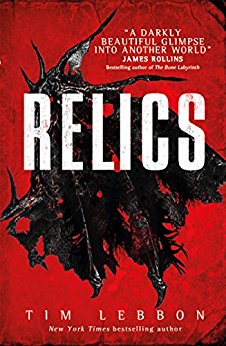
Rare and Fantastic, A Guest Post by Tim Lebbon, Author of Relics

Relics

I am passionate about animals and their protection and consequently, I am thrilled to host Relics author Tim Lebbon today. In celebration of the recent publication of Relics, Tim has written a highly thought provoking post all about how we exploit animals that resonates completely with my own thinking.

Relics was published by Titan on 21st March 2017 and is available for purchase in ebook and paperback here.

Relics

Relics

Beneath the surface of our world, mythological creatures and their artifacts still exist—corrupt people pay fortunes for a sliver of dragon bone, a basilisk’s scale, or an angel’s wing.

Angela Gough is an American criminology student in London whose fiancé Vince disappears, and her investigation leads her into a black market specializing in arcane relics. She meets Mary Rock, a criminal of mythic status who also wants to find Vince… to kill him.

Angela and a growing team of adventurers must stop this horrific trade, yet they face a growing menace as the hunted creatures begin to fight back.

Rare and Fantastic – The Trade In Endangered Species

A Guest Post by Tim Lebbon

‘Where do you get your ideas from?’

Sigh.  I can’t complain about people asking me this, but I’ll admit that my stomach often drops when I hear these words.  That’s because I usually have no idea.  My novel ideas rarely come to me in one big wallop.  They’re more like slow growers, starting from a seed, sprouting, blooming, different branches growing, and … enough with the metaphors, but you get my drift.  So my answer to that question is usually a vague wave of my hand, a shrug, and if I’m feeling flippant a comment about an old shop called ‘Ideas Are Us’ just down the road, past Tescos’s.  They closed down eight years ago and are now completely online of course, since the market in hard ideas faded away and concepts are now traded almost exclusively by electronic means.

However, with Relics my answer is quick, easy, and two words long: rhino horns.

I’ve never understood the mentality of people who’ll kill wonderful, rare creatures like elephants, tigers, and rhinos, just for their horns or pelts.  Now, I do eat meat.  I do wear leather.  But murdering such magnificient beasts so that you can grind up its horn on the off-chance it’ll help you have better sex … sorry, does not compute.  Even worse––if that’s possible––are the people who pay to ‘hunt’ and kill lions, giraffe, or other fantastic animals.  In the first place, it’s not a real hunt when animals are hobbled and contained in enclosures so that your payment of a kill-bonus is pretty much guaranteed.  And it’s also not a hunt if you’re using a high-powered rifle, it’s a murder.  Show me a picture of you huddled over the corpse of a lion that you’ve chased down, tackled to the ground, and killed with your bare hands and, yeah, you’ll get a nod of respect from me.  Go on.  Give it a go, ‘hunters’.  Entertain me.

Even in these troubled, divisive times, I still call myself an optimist.  I hate those social media posts where someone says, ‘People are crueller and nastier now than they ever have been,’ not only because I think it’s a misrepresentation of the majority of people, but because it’s also quite ignorant.  You think there weren’t cruel, nasty people a hundred years ago, or a thousand?  Nowadays we just hear about them more.  For my own sanity I have to believe that most people are, well, nice.  Go through life thinking anything else and you’ll end your years rocking in a corner somewhere, dribbling tea into your lap and with no one coming to visit you.

But.

I can’t help thinking that if fantastical mythological creatures suddenly appeared on the streets of London, there would be some people whose first thought would be, ‘How can I make money out of these things?’  If a unicorn suddenly appeared in Hyde Park, what would happen?  Big news story?  Scientific delight?  Yes … but there’d also be those eager to monopolise on the discovery.

A zoo, a collection, a hunt…  And imagine how much a rich collector would pay for a unicorn horn?

That’s where Relics comes from.  You’ll find those cruel and nasty people in this novel, for sure, the ones who would make the news.  But you’ll also find the good people, too.

About Tim Lebbon

Tim

Tim Lebbon is a New York Times-bestselling horror, thriller and fantasy writer from a little village in South Wales. He has written over 30 novels, including several in collaboration with Christopher Golden, as well as dozens of novellas and hundreds of short stories.

Tim Lebbon has won four British Fantasy Awards, a Bram Stoker Award and a Scribe, as well as being shortlisted for the prestigious World Fantasy and Shirley Jackson Awards. Tim loves running, biking and swimming, and often tries to put them all together in long-distance triathlons. He raced his first Ironman in 2013.

You can follow Tim on Twitter, visit his website and find him on Facebook.

There’s more with these other bloggers:

Relics-Blog-Tour-Banner

An Interview with Marjory Rae Lewis, Author of Mission Paradise

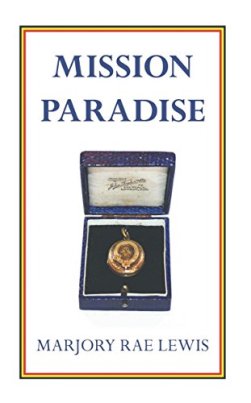
Mission Paradise

I haven’t featured many biographical writings or memoirs on Linda’s Book Bag so I’m delighted to welcome Marjory Rae Lewis today to tell me a little more about Mission Paradise, based on her own life.

Mission Paradise is available for purchase here.

Mission Paradise

Mission Paradise

At the beginning of the Second World War, Marjorie and her brother are invited to live with an elderly, childless couple in their grand house near Winchester.
Their mother, needing to earn her living remains in London. By chance, she finds herself working with the Belgian Resistance who are engaged in secret and dangerous work.

Christmas arrives and there is a lull in the bombing, Marjorie, now 15 years old comes to stay with her mother who decides to throw a party for her Belgian protégés. Marjorie is invited to dance by a young Belgian officer and the attraction for both of them is instant.

They spend a month together until Marjorie returns to school in Winchester. She wonders what will happen: will he write? Or was he just amusing himself with her?

This atmospheric and touching story reveals the outcome of a tender relationship…

An Interview with Marjory Rae Lewis

Welcome to Linda’s Book Bag Marjory. Thank you so much for agreeing to answer some questions on my blog about your writing. Firstly, please could you tell me a little about yourself? 

I am an elderly lady. I studied Art, I have five grown up children and am now a widow after a very happy marriage of 55 years.

Without spoiling the plot, please could you tell us a bit about Mission Paradise?

It is a wartime memoir of my girl-hood beginning with evacuation into the country and a first love affair with a Belgian espionage agent.

Mission Paradise is a memoir. Why did you decide to write it?

To tell an important story about those who were brave in the war and who are perhaps becoming forgotten.

What kind of a woman was your mother Letitia?

My mother had great charisma, she could be shocking but always wonderful company and extremely generous. I never felt influenced by her, I was always independent in making my own decisions.

The character Marjorie in Mission Paradise has a different spelling to your name. Why did you choose to change the spelling?

Because I was brought up as Marjorie and then at 58 years old had to get my birth certificate when my husband retired, I discovered the spelling was Marjory. On the advice of the bank manager I had to change everything from Marjorie to Marjory.

Love, in various forms, is at the centre of Mission Paradise. To what extent do you believe in love at first sight?

It wasn’t love at first sight, it was attraction. I fell for him because he gave me his full attention and was kind to me.

When you look back over the events of Mission Paradise how does it make you feel?

Nostalgic and very proud to have known such a brave man.

When you were writing Mission Paradise did it reignite emotions and thoughts that were difficult to deal with?

Yes, definitely, but told myself that was then, I had my very happy marriage, a husband I adored and my family.

Although we can’t alter history, would you like to have gone back and changed that meeting with Spider or would you leave it as it was?

No, I wouldn’t change anything, in the light of what has happened since. I was very proud to have known him.

When did you first realise you were going to write your story?

I decided to write the book, firstly because my mother died in 1969 – she was the only person who knew about Jean Cornez and me. Secondly  my husband and I went for a holiday in Belgium, I met up with Jean Cornez’s sister and we shared memories. My husband saw that the visit had affected me and he encouraged me to write my story in order to get it out.

If you hadn’t become an author, what would you have done instead as a creative outlet?

I am a very creative person, a trained fine artist mostly portraits and flowers.

When you’re not writing, what do you like to read?

Mostly, I enjoy biographies

Do you have other interests that give you ideas for writing?

Delving into my own life experiences.

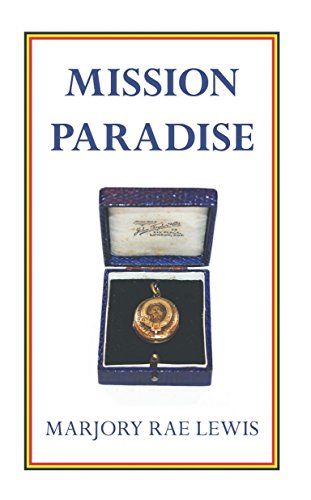
The cover to Mission Paradise shows a locket suggesting secrets to me. Is this a locket from your family and why was it used on the cover?

It was my grandmother’s locket. The closed locket on the front cover represents the story unread and the open locket on reverse represents the revealing of the memoir.

If Mission Paradise became a film, who would you like to play Spider and why would you choose them?

A mix of Robert Taylor, Robert Donat and Errol Flynn! Because of the attractiveness of their personality and physicality.

If you had 15 words to persuade a reader that Mission Paradise should be their next read, what would you say?

A true memoir, part social history, part poignant story of first love.

Thank you so much, Marjory, for your time in answering my questions.

About Marjory Rae Lewis

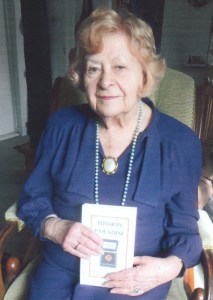
Marjory rae Lewis

An avid walker, Marjory Rae Lewis is considerably older than she looks! Mission Paradise was written after the death of Marjory’s mother in 1969 but it wasn’t until just before Marjory’s 90th year that she decided to have it published. Marjory lives in St Albans.

An Extract from The Bluebell Bunting Society by Poppy Dolan

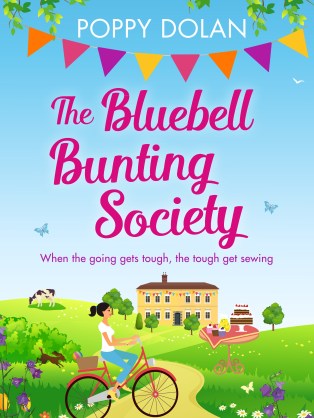
cover

It gives me great pleasure to be part of the launch celebrations for The Bluebell Bunting Society by Poppy Dolan with an extract today. The Bluebell Bunting Society was published yesterday, 27th March 2017, by Canelo and is available for purchase in e-book here.

I love a custard cream so I’m delighted that the extract I have for you today from The Bluebell Bunting Society features that very biscuit!

The Bluebell Bunting Society

cover

When the going gets tough, the tough get sewing…

Welcome to Bluebell Hall. Pull up a wonky chair, grab a cream bun and settle into a story about a little village, a determined caretaker – and bunting…

At twenty-nine, Connie isn’t quite where she thought she’d be. When her beloved gran died Connie returned to Hazelhurst, the village she grew up in, and took over her gran’s old job as caretaker at the village hall. It might not be the stuff of dreams, but Connie loves working at Bluebell Hall – the heart of the community.

So when Bluebell Hall is threatened with closure, Connie is determined not to let greedy property developers get their hands on it. She hatches a plan bonkers enough that it just might work. All it takes is a needle and thread, scraps of old material and willing hands. Can Connie convince the people of Hazelhurst that their village hall is worth saving? And will she save herself in the process…?

An Extract from The Bluebell Bunting Society

Kidnapping is a strong word. I mean, it’s a proper crime, I get that, but sometimes a bit of light kidnapping for a good cause isn’t so bad. That’s what I’ll tell my priest. Or possibly my barrister.

It was easy enough to crash the Village Committee meeting – they are open to locals, so we can all vote on the theme of this year’s Christmas lights and the May Day Queen election and such. What was trickier was politely cornering the chairman Brian Hicks and persuading him there was some appalling local graffiti that needed his attention, and to follow me straight away.

‘At the Hall?’ he’d spluttered. ‘That’s appalling! I mean, it’s not really my remit, but it says ‘Hazlehurst Sucks’ you say? It must be those Latimer scoundrels. Just because they had their village of the year 2009 rosette overturned by an anonymous source exposing their use of fake flowers!’ He pulled at his collar with one finger. Brian, I thought, you’re no stranger to an underhand tactic yourself.

I frog-marched him towards the Hall from the church, wringing my hands at what a tragedy it was, and whatever was I to do. If this caretaking lark did fall through, I could always take a run at Hollyoaks.

But Brian isn’t met by a wall of acid green scrawl and neighbourhood hate speech. When he pokes his red face into the Hall he sees a glorious web of freshly made bunting, strung back and forth from the rafters. Greens and yellows, soft purples and punchy reds. The crisp zigzag of the sheared fabric looks neat and precise, the playful, artful use of patterns and tones brings in energy and fun on top. If I didn’t know better I would have said it was a beautiful Liberty’s display or the launch of a new yacht. But I do know better: it’s Bluebell Hall in a whole new light.

‘Good gracious!’

‘Mr Hicks, do forgive my little pantomime there, but on behalf of the Bluebell Bunting Society, may I gift to your committee almost 550 metres of bespoke bunting for the May Day fete.’ At the last minute I pull myself back from a full on curtesy.

He lets out a wheeze of a breath. I’m not sure if he’s dead impressed or just nearly dead from the speed walking here. ‘Really? Is that a real thing, then? A bunting society.’

‘It is now!’ I breeze on. ‘Formed out of necessity – because Bluebell Hall is under threat from corporate development. I’m not sure what your stance is on big businesses coming into the village, erasing our history, Mr Hicks?’

‘Oof, yes, no. Awful. Worse than graffiti!’

‘Well, let me fill you in on the full story. Perhaps over a cup of tea and custard cream?’

About Poppy Dolan

author pic

Poppy Dolan lives in Berkshire with her husband. She’s a near-obsessive baker and a keen crafter, so on a typical weekend can be found moving between the haberdashery and kitchenware floors of a department store, adding to her birthday wish list. She has written three novels: The Bad Boyfriends Bootcamp, There’s More to Life than Cupcakes and most recently The Bluebell Bunting Society. The Bad Boyfriends Bootcamp made it into the Amazon top 100 bestseller chart, so clearly someone other than her mum must have read it. She’s currently working on her fourth novel – it’s about friends, siblings and crafty things – and drinking far too much tea.

You can follow Poppy on Twitter and find her on Facebook. There’s more with these other bloggers too:

Bluebell Bunting blog tour 4.jpg UPDATED BANNER

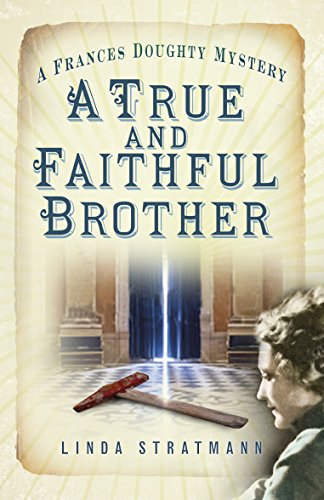
Extract and UK Giveaway: A True and Faithful Brother by Linda Stratmann

A true and faithful brother

When you love historical fiction as well as a good mystery, what could be better than the opportunity from the History Press to run a giveaway for a book, A True and Faithful Brother, by Linda Stratmann. I also have the very opening of the book for you to read.

Linda s books

A True and Faithful Brother is the latest in Linda’s Frances Doughty Mysteries and was published by the Mystery Press, an imprint of the History Press, on 1st March 2017. A True and Faithful Brother is available for purchase here.

You’ll find a giveaway for A True and Faithful Brother at the bottom of this blog post with grateful thanks to The History Press.

A True and Faithful Brother

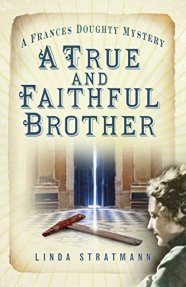
A true and faithful brother

London 1882: When a wealthy philanthropist disappears from a locked and guarded room, Frances Doughty is reluctantly drawn into a case that tears the veil of mystery from her own past. Can London’s very own Lady Detective solve this sinister new case before a murderer catches up with her and she becomes the next victim?

An Extract from A True and Faithful Brother

London

1882

Frances Doughty unfastened the top three buttons of her gown, thankful for the sake of decency that no more was required. She was comforted by the fact that the man who stood beside her, calm and solemn in his dark attire, had performed his duty many times before, and would be both her guide and support. Facing her was a closed door. In a few moments it would open, and once she had passed into the next room there could be no turning back.

Although she had been prepared, it was nevertheless a shock when the hood of white fabric was placed over her head. The world vanished as if in a fog and suddenly she felt alone, helpless and vulnerable. Aware that she had begun to tremble, she tried to conceal her apprehension and breathe as evenly as she was able, hoping to face the mystery to come humbly and without fear. Moments later came the descent of the hempen rope around her neck, its weight resting on her shoulders and tightened by the loop of the noose. Her throat was dry, her palms moist, and she could feel the deep pulsing of her heart.

There was the sound of the door opening. It was time. As she felt a steadying hand on her elbow, encouraging her to step forward, Frances could not help but cast her mind back over the remarkable train of events that had placed her in this very unusual situation.

About Linda Stratmann

Linda Stretman

Linda Stratmann was born in Leicester in 1948 and first started scribbling stories and poems at the age of six. She became interested in true crime when watching Edgar Lustgarten on TV in the 1950s. Linda attended Wyggeston Girls Grammar School, trained to be a chemist’s dispenser, and later studied at Newcastle University where she obtained a first in Psychology. She then spent 27 years in the civil service before leaving to devote her time to writing. Linda loves spending time in libraries and archives and really enjoys giving talks on her subject.

You can follow Linda on Twitter, visit her website and find her on Facebook.

Giveaway

A true and faithful brother

For your chance to win one of three paperback copies of A True and Faithful Friend by Linda Stratman, click here. UK only I’m afraid and the giveaway closes at UK midnight on Sunday 2nd April 2017.

Coming Soon: The Deepings Literary Festival

DEEPINGS-LITERARY-FESTIVAL

I’m absolutely thrilled that The Deepings villages where I live in south Lincolnshire are about to host their first ever literary festival at the end of April 2017. Under the leadership of local Councillor Judy Stevens there’s an exciting programme about to take place. Full details and booking can be found here, but I thought I’d just share a few of the events that I’m involved with on Linda’s Book Bag.

Thursday 27th April

festival launch

Although we have friends coming that day, I’m going to be sneaking out to attend the festival launch at the library. It’s not long since the library was under threat of closure but a team led by local campaigner Liz Waterland fought hard and now we have a vibrant and exciting venue for the whole community. If anyone would like to go too, just contact the library by 31st March.

Friday 28th April

Again, check here for full event details including Alison Weir and musicians Pennyless, but excitingly for me I shall be hosting Alison Bruce, author of Cambridge Black in a question and answer session from 2.30PM at Iron Horse Ranch. There will also be music from Rachel Eyre.

Cambridge Black

You can follow Alison on Twitter and visit her website, but why not come along to meet her in person?

Saturday 29th April

With events for children, authors galore and a black tie gala evening with author and broadcaster Gyles Brandreth, there’s so much happening on Saturday. I’ll be off to a morning with Karen Maitland, author of The Plague Charmer which is firmly on my TBR.

Plague Charmer

After that I’m thrilleed to be having lunch with a favourite author Erica James. You an follow Erica on Twitter and visit her website. My U3A latest read for April just happens to be one of Erica’s books: The Dandelion Years and I’m very much looking forward to reading it.

dandelion years

As soon as lunch is over I’m dashing off to the library again for a bit of read dating! Between 2 and 3.30 there will be 10 local authors for readers to meet in the style of a speed dating event! These include Ted Barnes, Carol Browne (click here to read her previous visit to Linda’s Book Bag), Darren Calpin, Michael Cayzer, Jane Isaac (I’ve met Jane several times and she’s lovely! Click here to read my review of one of her books, Beneath the Ashes), Cartlon King, Emma Lannigan, Richard Pike, Ros Rendle and Lizzie Steele.

Sunday 30th April

I haven’t quite decided which event to go to on Sunday, but am very tempted by afternoon tea with poet Stuart Henson in John Clare’s home village of Helpston.

Monday 1st May

Events continue with dance included too so do check out the website for more details. Many events are getting sold out so if you’d like to take part, you’d better get in quickly.

See you there!

An Interview with Martine McDonagh, Author of Narcissism for Beginners

NfB Hi Res Front Panel small

Narcissism for Beginners by Martine McDonagh is a book that really appeals to me but I just haven’t had time to read yet. However, I am lucky enough to have interviewed Martine all about it.

Published by Unbound on 9th March 2017, Narcissism for Beginners is available for purchase in e-book and paperback here.

Narcissism for Beginners

NfB Hi Res Front Panel small

Meet Sonny Anderson as he tips headlong into adulthood. Sonny doesn’t remember his mother’s face; he was kidnapped at age five by his father, Guru Bim, and taken to live in a commune in Brazil. Since the age of ten, Sonny has lived in Redondo Beach, California, with his guardian Thomas Hardiker. Brits think he’s an American, Americans think he’s a Brit.

When he turns 21, Sonny musters the courage to travel alone to the UK in an attempt to leave a troubled past behind, reunite with his mother and finally learn the truth about his childhood. With a list of people to visit, a whole lot of attitude and five mysterious letters from his guardian, Sonny sets out to learn the truth. But is it a truth he wants to hear?

Narcissism for Beginners is a fresh, witty and humane take on the struggle to make sense of growing up.

An Interview with Martine McDonagh

Welcome to Linda’s Book Bag Martine. Thank you so much for agreeing to answer some questions on my blog about your writing. Firstly, please could you tell me a little about yourself?

Thank you for having me! I live in West Yorkshire and work in West Sussex (not the easiest commute) and am naturally nomadic, fortunately. I love herons. Until a few years ago I worked as an artist manager in the music industry, managing the careers of a number of bands, including James and Fujiya & Miyagi. A couple of years ago, I designed and now run the MA Creative Writing & Publishing at West Dean College in Sussex.

Without spoiling the plot, please could you tell us a bit about Narcissism for Beginners?

The main character in Narcissism for Beginners is Sonny, a 21 year-old living in Redondo Beach, California, with his guardian, Thomas when the novel begins. Sonny was kidnapped at age five by his own father, a self-made guru, and taken to live on a commune in Brazil. He’s had no contact with his mother since and doesn’t even remember her face. When Thomas gives him a list of names and addresses on his birthday, of people who knew both his parents, Sonny plucks up the courage to go to the UK in search of his mother.

When did you first realise you were going to be a writer?

I knew when I was very young that I wanted to be a writer, but I didn’t really have any concept of what that meant besides just enjoying writing. I suppose I’ve always preferred writing to talking and have always written stuff down, although not always in a structured form, but I’ve had a go at everything: poetry, screenplays, short stories. I was in my mid thirties when I realised that if I didn’t start taking writing seriously then, I probably never would. Now I definitely prefer the long uphill climb of a novel.

Which aspects of your writing do you find easiest and most difficult?

I wouldn’t say I find any of it particularly easy. I love writing the first draft because I write that longhand and uncritically and there’s an aesthetically pleasing aspect to dragging a pen over smooth clean paper. Most enjoyable is that sense of being completely immersed in the story and those times away from it when it just runs riot in your head, but those are often just moments!

What are your writing routines and where do you do most of your writing?

I don’t have a fixed routine as I’m rarely in one place for longer than a week, but I do have an ideal that I managed to achieve a few times while writing NfB when I wrote in blocks of three months, first in California and then in France. The ideal is to start work around 9am and work undisturbed by anyone but myself until lunchtime. After lunch, I like to walk and think for 2-3 hours, after which, depending on where I’m at in the writing process, I might go back to my desk for another hour or two. I like to write about places I’ve been, but find it easier to write about them when I’m somewhere else.

You have an MA in creative writing and you also teach creative writing. How has that impacted on your style?

I wrote the first draft of my first novel while doing my MA at MMU in Manchester and believing (wrongly) that it would probably never be published, I allowed myself to be as indulgent as I pleased. As a result I think my style in that novel is more ‘overwritten’ and perhaps more opaque than I would allow myself now, but I still follow one rule that I set back then: only use an adverb as an absolute last resort. Teaching has made me tighten up on theory and read more critically again, but what’s been lost from my process is my precious thinking time.

Narcissism for Beginners is your third novel. How has your writing process evolved over time?

It’s been different each time, changing with my circumstances. I wrote my first novel, I Have Waited and You Have Come, as a single mother of a young child while also working as an artist manager in the music industry. My second, After Phoenix, was written in the blur of grief following my father’s death. Narcissism for Beginners was written during a three-year post-house-sale sabbatical travelling and focusing solely on writing. The one I’m writing now has so far been squeezed into free time when not running the MA and guess what, it’s not as good – yet.

Narcissism for Beginners has truth as one of its main themes. Why did you choose to explore that theme?

Truth wasn’t consciously one of the themes as I wrote, but more those flipsides of truth, delusion and deception. The central theme of the novel is the effect that extremely narcissistic characters have on the people around them, and in particular on their children, and by default those characters are manipulative and dishonest, using whatever means necessary to achieve the best outcomes for themselves regardless of the effect on others. My own dealings with such characters sparked my interest and a desire to explore further.

How did you go about researching detail to ensure Narcissism for Beginners was realistic?

Naturally I read a lot. Popular psychology books were a great help in understanding the basics and more specific studies of gurus such as Dr. Anthony Storr’s Feet of Clay and first hand accounts such as Deborah Layton’s Seductive Poison really helped to get deeper into the kind of experiences my characters might have had. I also spent some time in the places my main character, Sonny, has lived, mainly because it was important to pitch his voice correctly. My own son, who lived in LA at that time and the sons of friends I lived with in Redondo Beach were an incredible help.

Narcissism for Beginners has an intriguing cover, making me think that life doesn’t always pan out as we hope! How did that image come about and what were you hoping to convey (without spoiling the plot please)?

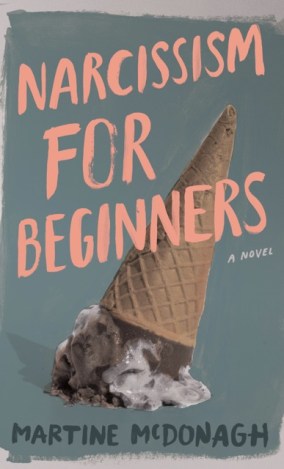
I had very little input into the cover design, other than to state a preference for simple, colourful and bold covers, so all the credit goes to the designer Tree Abraham, who I think did a fantastic job. So much is implied by that dropped ice cream! The cornetto image also relates to Sonny’s love for the film Shaun of the Dead, which has helped him make sense of his life.

If you could choose to be a character from Narcissism for Beginners, who would you be and why?

That’s a tricky one, not least because there’s probably something of me in all the characters, which probably goes without saying. But I think of all of them, it would have to be Thomas because he’s really lived through some extremes and come out the other end as a reformed character, albeit not entirely voluntarily.

If Narcissism for Beginners became a film, who would you like to play Sonny and why would you choose them?

Until a couple of days ago I wouldn’t have been able to answer this question, but then I saw Shia Laboeuf in American Honey and thought he portrayed the absolute perfect mix of vulnerability and cynicism. He’d be too old though, so whoever the next Shia Laboeuf is. Can’t believe I just wrote that.

When you’re not writing, what do you like to read?

I read a mix of fiction and non-fiction, mainly related in some way to what I’m writing about at the time, but I love those random finds in second-hand bookshops. I used to read poetry but now I hardly ever do and that’s something I need to remedy. I also used to read a lot of plays. Without meaning to sound pretentious (but probably sounding it anyway) I like to read French novels in French, partly to keep improving my French, but also because it challenges my writing brain in a way I don’t think reading in English does. French novels are often more experimental stylistically too, less genre-bound, which makes for more interesting and challenging reading in my opinion. And films are important too.

Do you have other interests that give you ideas for writing?

I’m a strong believer in the writer-as-magpie cliché – ideas can come from anywhere and it’s important to have curiosity switched on at all times. My main interest that produces ideas is my love of wandering around in strange and familiar places, especially at night. I’m not the first to say this, but there’s something in the rhythm of walking that seems to have a kind of peristaltic effect on the brain.

If you had 15 words to persuade a reader that Narcissism for Beginners should be their next read, what would you say?

Narcissism for Beginners is for anyone who’s ever been 21, a parent or a child.

Thank you so much for your time in answering my questions.

Thank you Linda, really interesting questions!

About Martine McDonagh

Martine McDonagh SQUARE ©CHRIS ISON_WEST DEAN COLLEGE

Martine McDonagh has published short fiction in Quick Fictions, The Brighton Book, The Cheeky Guide to Walks in Sussex and the Illustrated Brighton Moment and contributes occasionally to Writing magazine.

Martine has an MA in Creative Writing from MMU and currently runs the MA Creative Writing & Publishing programme at West Dean College, Chichester. She previously worked as an artist manager in the music industry.

You can follow Martine on Twitter and visit her website. You’ll also find her on Facebook.

Twitter for Authors, A Guest Post by Dane Cobain

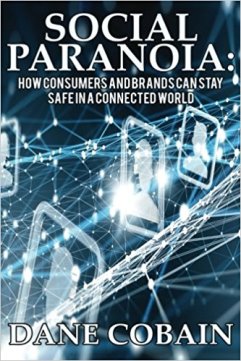
social paran

I’m very pleased to welcome Dane Cobain back to Linda’s book Bag today. Dane previously wrote about the relevance of poetry and you can read that post here. So often I have authors contact me for a slot on the blog to promote their books but when I ask what their Twitter handle is so that I can tag them they tell me they don’t use social media! Today, Dane is sharing his tips for authors in making the most of Twitter.

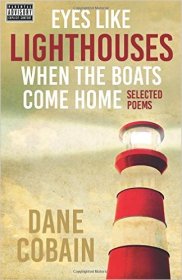
You’ll find Dane’s fiction, poetry and non-fiction books here.

Lighthouses

Twitter for Authors: Ten Top Tips

A Guest Post by Dane Cobain

For authors, Twitter is one of the best social networks around for reaching out to readers, engaging with fans and making an impact in the industry. Unlike many other social networks, Twitter is public by default, and its username-based system – as opposed to Facebook and LinkedIn, which use profiles and pages to add a degree of separation – makes it easy for authors to talk to both individuals and organisations.

Today, we take a look at ten ways for authors to make the most out of the social network.

Scheduling

Tools like Twuffer allow users to schedule tweets to go out on a date and at a time to suit them. While it’s a bad idea to automate too much, it can be useful for scheduling countdowns to cover reveals and new releases or to schedule the same tweet at different times to reach international audiences.

Twitter Lists

Twitter’s inbuilt list tool allows you to group users together in a single timeline. It’s a good idea to do this for any publishers that you’re interested in, as well as for journalists, reviewers and other influencers, so you can keep an eye on what they’re talking about.

Dashboards

Dashboards like Tweetdeck and Hootsuite allow you to view Twitter data in real-time so that you can respond to people accordingly. By saving searches for terms like “need new book” or “new fantasy”, authors can reach out to readers directly and offer free samples.

Follower Management

One of Twitter’s strengths is that it allows third-party developers to create their own tools using the network’s API. Some of them, like ManageFlitter, allow users to manually follow or unfollow other users based on certain criteria. For example, you could follow new bloggers or unfollow users who haven’t posted for thirty days.

Hashtags #

Hashtags # are one of the unique benefits that Twitter has to offer, and they allow you to reach a much wider audience. Look up hashtags that are already in use, or try a tool like DisplayPurposes which will offer up suggested tags to help you to reach people.

Live Chats

Live chats are great because you can chat to people in real time, and all of the posts are usually grouped together with a single hashtag. Many chats take place on a regular basis, or you can create your own as a way for your readers to get to know you.

Trending Topics

Due to the way that Twitter works, it’s much easier to participate in the global conversation around trending topics than it is on Facebook, LinkedIn and other platforms. Because of this, it’s a good idea to keep an eye on what people are talking about and to jump into the conversation when appropriate. You don’t need to relate it back to your work every time – just make your voice heard and you’ll be surprised at how many people start to interact with you.

Retweets

Never underestimate the power of a retweet. Go out of your way to retweet your most dedicated followers – it gives you extra content to share, and they’ll remember it when your next book goes on sale.

Vanity Searches

A vanity search is a search for your own name, and it’s particularly useful for authors because they can keep an eye out for people who are talking about their books but who haven’t necessarily tagged them by mentioning their username.

Real-Time Conversations

One of Twitter’s strengths is how easy it is to talk in real-time about current events. This ranges from events and conferences to the release days for books by other authors if you’re reading along with everyone else. Even tweeting throughout a day of writing can be entertaining. Be creative!

Your Turn

How do you use Twitter? Do you have any tips for how to make the most of it? Let us know what you think with a comment.

This post is written by Dane Cobain and sponsored by Publishing Addict, an organisation that specialises in building great author websites to help writers to establish a brand, connect with their readers and to sell more books.

About Dane Cobain

dane

Dane Cobain is an independent poet, musician and storyteller with a passion for language and learning. When he’s not in front of a screen writing stories and poetry, he can be found working on his book review blog or developing his website.

You can follow Dane on Twitter and find him on Facebook.

An Interview with Marilyn Bennett, Author of Granny With Benefits

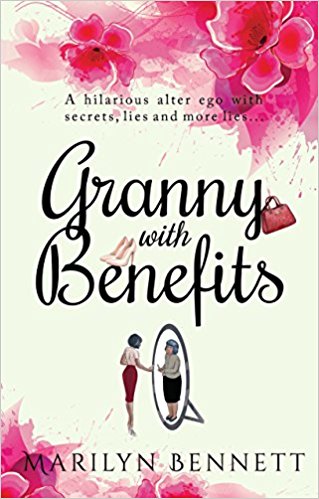
Granny with benefits

Having spent a considerable amount of time looking at care homes in recent months, it gives me great pleasure to welcome Marilyn Bennett, author of Granny with Benefits, to Linda’s Book Bag today. Granny with Benefits features sheltered accommodation!

Published by Matador, Granny With Benefits is available for purchase here.

Granny With Benefits

Granny with benefits

Grace is thirty-nine and not remotely convinced that life begins at forty.

When her grandmother dies she volunteers to pick up her belongings from the sheltered accommodation. It is the last place she expects to have a chance encounter with the first man she has been instantly attracted to in a very long time, particularly as she is dressed almost head to toe in her grandmother’s clothing and accessories.

Grace’s granny alter ego elicits a conversation with the man about love, death and the universe, which she is convinced would not have happened otherwise. This inspires her to throw caution to the wind and turn what should have been a simple case of mistaken identity into a dating introduction opportunity for the real her. A decision which sets Grace on a rollercoaster adventure of lies, secrets and lust, making her thirty ninth year one she won’t forget, but might well regret…

An Interview with Marilyn Bennett

Welcome to Linda’s Book Bag Marilyn. Thank you so much for agreeing to answer some questions on my blog about your writing. Firstly, please could you tell me a little about yourself?

Thank you very much for inviting me! I’ve worked in telly for the last 23 years and although it’s a very creative industry my role is very much about organising the logistics, so I wanted to do something that would explore my creative skills and it turned out to be writing.

Without spoiling the plot, please could you tell us a bit about Granny With Benefits?

Granny with Benefits is about a 39 year old single woman called Grace, who, when her grandmother dies, volunteers to clear out her belongings from Sheltered Accommodation. She has her eye on some coats and is playing adult dress up, wig and glasses included, when a very attractive man unexpectedly comes to the room to view it for his Dad.

Instead of this being a simple case of mistaken identity, Grace spontaneously uses the opportunity to try and engineer a date for the real her. The man has a similar idea, he thinks she might be a great date for his widowed Uncle, so things do not go remotely according to plan.

Which aspects of your writing do you find easiest and most difficult?

I find writing dialogue the easiest. I will come up with whole conversations in an instant and without the rest of the scene simply because it get’s to the heart of what I want to say.

I think plotting is the most difficult bit for me. I can’t start writing until I’ve plotted everything out. I need a structure. It tends to be quite skeletal, but it’s definitely how my brain works. It needs order.

How do you go about researching detail and ensuring your books are realistic?

For Granny with Benefits and the sequel I didn’t really have to do detailed research. These are very much slice of life stories. I suppose in some ways I have been doing the research most of my adult life, as the characters are a mash-up of lots of different people that I have encountered in my personal and professional life.

What are your writing routines and where do you do most of your writing?

I’m not one of these people who writes everyday. Sometime I just don’t fancy it. The way I work is I set myself date deadlines. There’s the date to finish plotting and one to finish the draft. That way it doesn’t matter if I don’t write today or tomorrow, but I have to hit that date.

Generally once I finished plotting and start writing I tend to aim to complete a chapter every time I write.

I only write at home and I need silence. I have this clock with a loud tick in the room I write in. I thought it was so nice when I bought it, but now that I write it slightly gets on my nerves.

You’ve worked in television production for a long time. How did this impact on your writing style? I wondered if it meant you were more aware of pace, setting or dialogue for example?

Working in television had a impact on my writing style because script writing is my natural go to regarding understanding the basics of writing. My plan was originally to write a short film, I just didn’t have the ending, so I started plotting and it instantly lent itself to being a novel.

Scriptwriting really informed the dialogue and pacing of the book. I wanted the dialogue to feel real, so that readers could relate to and believe the characters.It was also important to me that the pacing retained the interest of the reader even when they might not particularly like the characters.

The basic scriptwriting principle of a story having a clear beginning, middle and end was a key factor in how I plotted and structured the novel. I thought there might be a sequel to it, but I wanted to write the book, so it could standalone, so I tried not to drag things out or be repetitive.

You say Granny With Benefits broke a lifelong tradition of never finishing anything! What drove you to write and complete Granny With Benefits?

I’ve had lots of ideas over the years, but most of them have either been abandoned or not even started. I think I finished the novel because I set myself the task of completing something. I also really enjoyed the process of writing. I had no idea it would be such fun, but I really loved creating the characters, scenarios and relationships. I got a real kick out of it and they pretty much took on a life of their own. I also believed in the story, so for once, it wasn’t a half-hearted attempt at something.

I know that launching Granny With Benefits has been a steep learning curve for you. What have you learnt since publication day that might be helpful to other debut authors?

Steep learning curve is an understatement! It’s been like trying to climb Everest in my flip flops! I did expect this because I’m completely new to the industry and self-publishing, but it’s been way harder and equally as exciting, than I expected.

I’ve learnt that perseverance and patience is key. I’m happily taking the independent route, but it most certainly is not for everyone. If the book you’ve written is your life’s work or wish then I would suggest you need an agent.

Writing the book is only the very beginning. It took me three years, with time off for good behaviour, to finish Granny with Benefits. I would’ve finished it sooner if I knew the amount of work that would be required to promote the book. It’s really difficult to get the traditional media to take interest in you or your book if you have no track record, so the more you can build an understanding and relationships outside of the traditional media the better. If you have a great agent or/and publicist they are key to helping you do this, as they will already have those crucial contacts and networks on both sides of the fence.

Prepare to go out into the world starkers! By that I mean, you are your campaign and not the book.  I’ve had slight panic attacks around promoting this book because so much of it has been about me personally and not the book. For example, on Friday I did my very first radio interview (yayyyy!). The reason I got the interview is because one of my hobbies is recycling old furniture and antiques. Yes, you read it right. The majority of the interview was spent talking about recycling doors! But I got to mention the book at the end and that’s the end game.

Think of it this way, when Walkers want us to buy a packet of crisps, they don’t have potatoes in the ads, they have Gary Lineker! Nothing sells itself and right now I am by far the best person to sell my book.

Your blog (here) shows you as someone with a real sense of humour. Have you used this in Granny With Benefits and has it ever got you into trouble?

My sense of humour is what keeps me sane. I don’t take myself too seriously and I can laugh through most things as a result. Life is just too short! I think my sense of humour has actually got me out of trouble, so it’s been a very handy tool.

My sense of humour is one of the key drivers in Granny with Benefits. I don’t think it’s laugh out loud humour, more bittersweet comedic moments and it is threaded throughout the entire novel.

Granny With Benefits seems to have a message about making the most of opportunities, even if they don’t always work out. Why did you choose to write about this theme?

I think a lot of people suffer from the fear of trying. It can stifle you and result in you not living your life to the full. Over the past few years I have seen people that are very close to me suffer with very grave illnesses, yet they have a life affirming positivity as a result, which is so inspirational. They are taking life by the go-nads and living.

I just wanted to say if you want something in life then go for it! Don’t wait for circumstances to take those choices away from you, make your own choices.

When did you first realise you were going to be a writer?

When I finished the book. I did a final read-through and I thought “Huh, not bad”. Then I thought I better check if anyone else agrees, so I got an Editor.

If you hadn’t become an author, what would you have done instead as a creative outlet?

I would be a songwriter or music producer.   have been writing songs since I was a kid, but in my typical DNF character, 95% are only first verse and chorus.

When you’re not writing, what do you like to read?

I really like contemporary fiction, women’s fiction, romance and thrillers.

I like most types of genres, but the above are my favourites to read.

Do you have other interests that give you ideas for writing?

The next series of books is completely based on one of my other interests. I’m keeping it under wraps for the moment, but I’ve become obsessed with it over the passed 4 years. It informed everything about my writing. Not what I wrote in terms of the story arc, but the timing of it.It worked for me, so that has been my greenlight to pursue it as the subject for my next series of novels.

(Oh – sounds intriguing!)

If you could choose to be a character from Granny With Benefits, who would you be and why?

I would be Grace’s friend Cassie. She’s direct, brash and bold. She needs to keep her knickers on a bit more, but other than that I would be her. I would like to be more courageous and not give a monkeys, but its just part of my nature to care.

If Granny With Benefits became a film, who would you like to play Grace and why would you choose them?

Ooooooo, good question!  I’m going to have to come back to you on that one.  I’m going to compile a dream audition list and then from my imaginary casting chair make my decision.

If you had 15 words to persuade a reader that Granny With Benefits should be their next read, what would you say?

GwB is a must read unromantic love story on how to hijack your forties.

Did you see how I cheated by abbreviating!

I did, but I’ll let you off! Thank you so much for your time in answering my questions, Marilyn.

About Marilyn Bennett

marilyn

Marilyn Bennett has worked in television production for over 20 years. When she decided to write and produce a short film about an elderly woman who ran a dating agency the concept of Granny with Benefits was born. This debut novel Granny with Benefits has broken Marilyn’s life-long tradition of never actually completing anything!