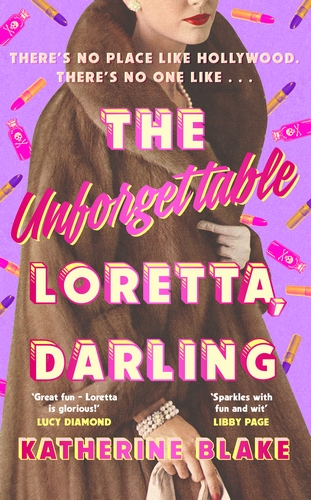
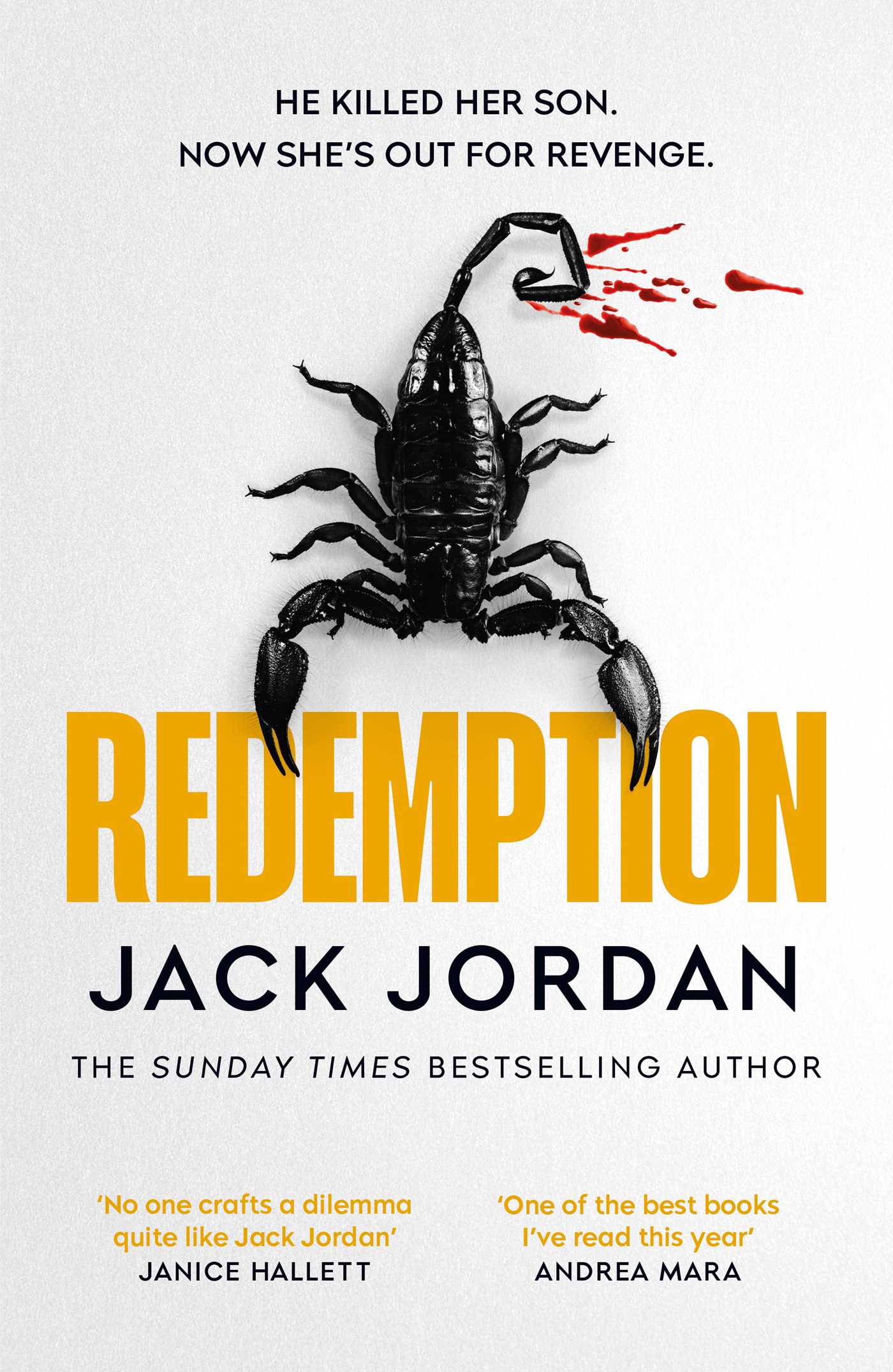
The Unforgettable Loretta, Darling by Katherine Blake

What a pleasure to announce that my latest My Weekly magazine online review is of The Unforgettable Loretta, Darling by Katherine Blake.

The Unforgettable Loretta, Darling was published by Penguin Viking on 20th June 2024 and is available for purchase through the links here.

The Unforgettable Loretta, Darling

You’re Loretta Darling now, welcome to your brand-new flipping life.

Dreams don’t come true for girls like Loretta but she won’t let that stop her. With her sights set on becoming a make-up artist to the stars, Loretta wangles her way from Lancashire to the bright lights of Golden Age Hollywood.

Only it turns out that Sunset Boulevard is less about dashing fellas and chilled martinis – more sticky floors and misbehaving men. The gift of the gab can only get her so far but she refuses to go quietly.

Hollywood has its secrets … and so does Loretta.

For a start, that’s not her real name, and much more than lipstick lurks inside her beauty case.

After all, revenge is a dish best served with a perfectly painted smile.

My Review of The Unforgettable Loretta, Darling

My full review of The Unforgettable Loretta can be found on the My Weekly website here.

However, here I can say that The Unforgettable Loretta is filled with venomous revenge, naked ambition and a good dose of feminist triumph. I loved it!

Do visit My Weekly to read my full review here.

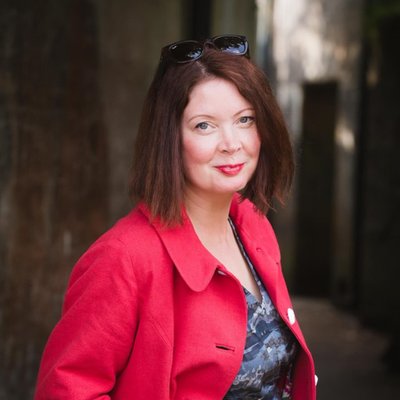
About Katherine Blake

Katherine Blake is a pseudonym for Karen Ball, an author who has written over twenty-five children’s books and was a Bookseller Rising Star thanks to her publishing consultancy, Speckled Pen. She regularly appears on podcasts, including The Bestseller Experiment and SJ Bennett’s PrePublished. She lives in London and runs a biweekly newsletter filled with fun news, book reviews, and regular updates about her miniature schnauzer.

For further information, visit Katherine’s website follow Katherine on Twitter/X @karenball and Instagram.

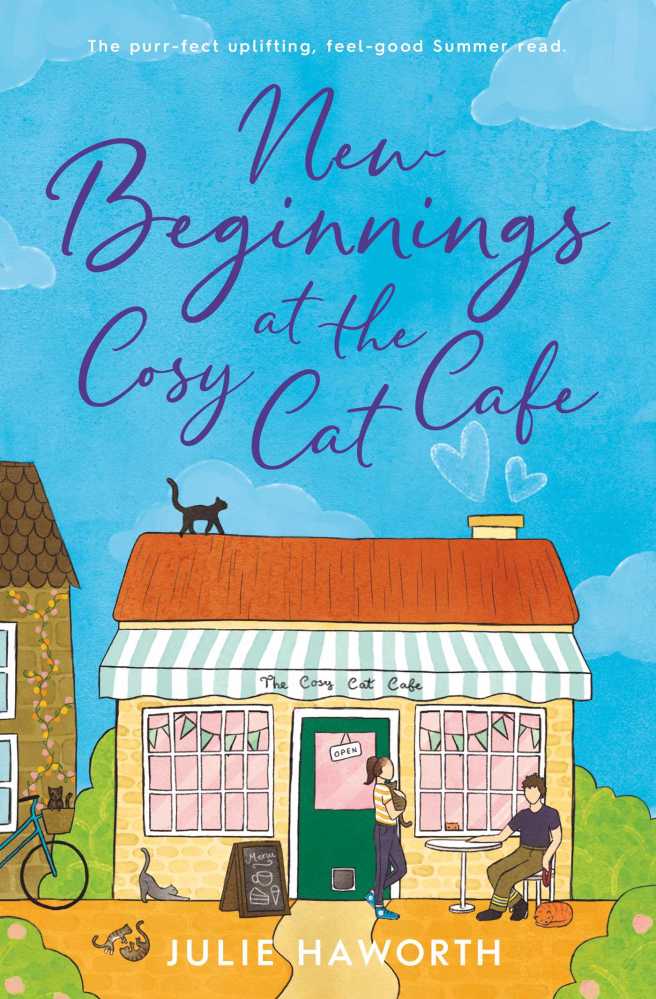
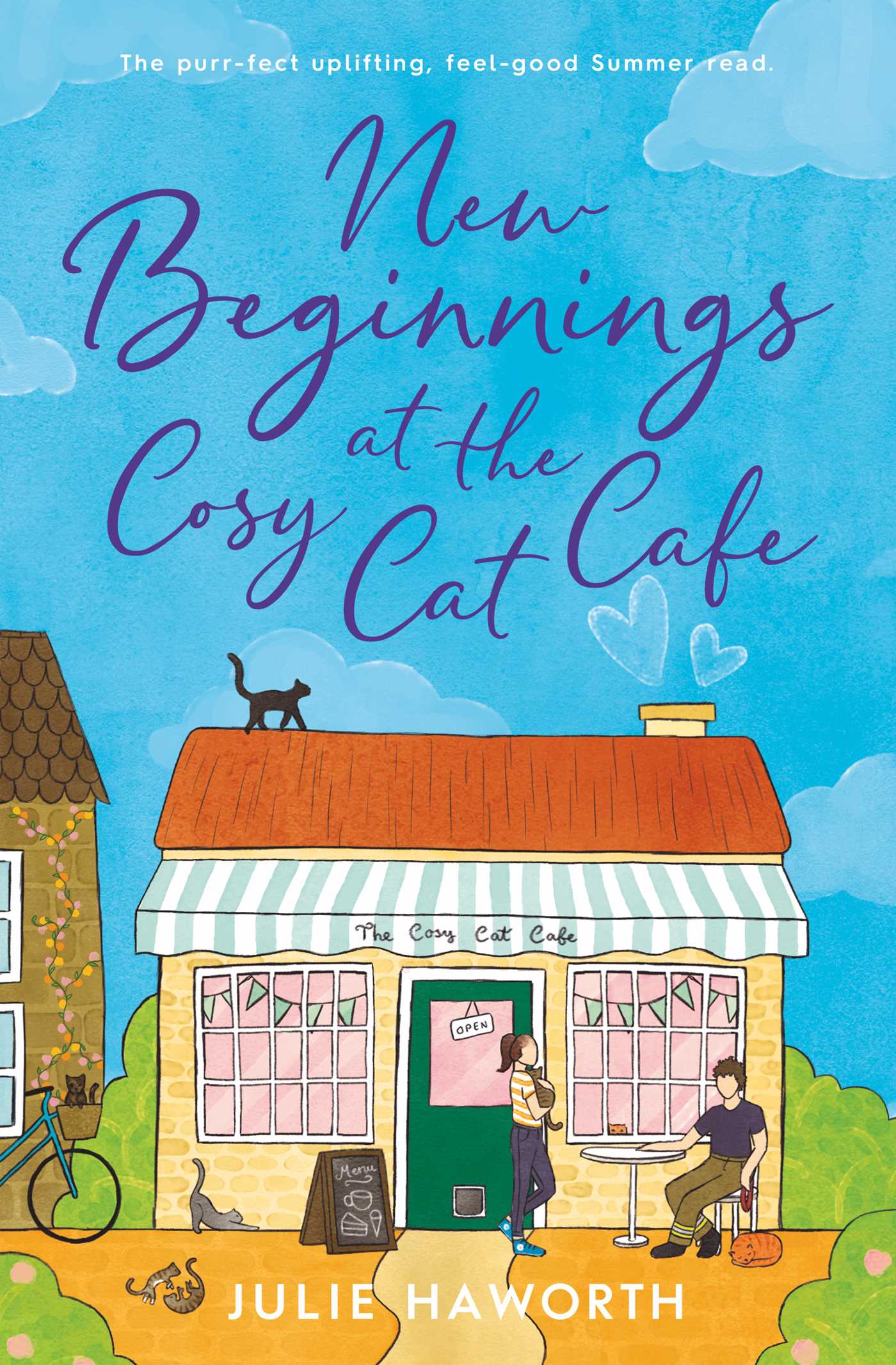
New Beginnings at the Cosy Cat Cafe by Julie Haworth

Many of you know that life has been a bit of a challenge of late and as a result I’ve been avoiding blog tours. However, as a passionate cat lover I simply couldn’t resist participating in the tour for New Beginnings at the Cosy Cat Cafe by Julie Haworth and would like to extend my huge thanks to the inimitable SJ of Simon and Schuster’s Books and the City for inviting me to take part. I’m delighted to share my review today.

Published by Simon and Schuster on 18th July 2024 New Beginnings at the Cosy Cat Cafe is available for purchase through the links here.

New Beginnings at the Cosy Cat Cafe

New Beginnings at The Cosy Cat Café tells the story of Tori who, after being dumped and left stranded by her long-term boyfriend Ryan on a trip of a lifetime to Asia, returns home to the sleepy Sussex village of Blossom Heath with her tail between her legs and her dreams shattered. Donning her frilly apron to help her Mum, Joyce, behind the counter at The Cosy Cup Café, Tori starts to believe – with the help of a hunky fireman and a clowder of rescue cats – that perhaps the secret to her future happiness might lie closer to home than she ever thought possible.

If you love your romance with a side order of cake, cats and cosy community dynamics, this is the purrfect uplifting, feel-good read from the winner of the RNA Katie Fforde Debut Novel of the Year 2023.

My Review of New Beginnings at the Cosy Cat Cafe

Tori has broken up with Ryan.

My goodness I needed this book. Is New Beginnings at the Cosy Cat Cafe most challenging book I’ve ever read? No. Is it the most literary book I’ve ever read? Also no. Is it utterly charming, being filled with romance and community with a wonderful story that allows the reader time away from the stress of real life? Absolutely. I so enjoyed escaping between its pages. 

The plot is relatively gentle, and although it has moments of drama and tension, what I enjoyed most was the way the story is entirely believable. What happens in Blossom Heath feels relatable, authentic and engaging. The petty rivalries between some of the villagers, the sense of community and place are pitch perfect, making the reader feel as if they live there too.

The characters are warm, vivid and relatable. New Beginnings at the Cosy Cat Cafe may have Tori as the focus, but I loved meeting all the villagers. They have their strengths, weaknesses and foibles, and there is a moment with Violet that I felt showed incredible humanity but you’ll need to read the book to discover that for yourself. As a result of reading this book I rather fell in love with Leo and thought the fact that his name is linked to large cats was inspired! The cats themselves are quite wonderful. As a cat lover, I felt New Beginnings at the Cosy Cat Cafe depicted them to purrfection! 

So many interesting themes are woven in to the story, as well as the romance one might expect. I really enjoyed the reality presented of creating a business plan, charity work, fund raising, the place of social media in our lives and so on. The concept of community and belonging is strong, but I think I enjoyed the idea of self knowledge the most. Several characters from Tori to Violet, Cora to Claire, and Leo to Ryan all discover something about themselves at so that there’s a real sense of growth as well as entertainment in the story.

New Beginnings at the Cosy Cat Cafe is a gentle, authentic, heart-warming story and one I very much enjoyed because it allowed me to escape the cares of the world and be entertained by an author who really seems to care about people and who writes with humanity. 

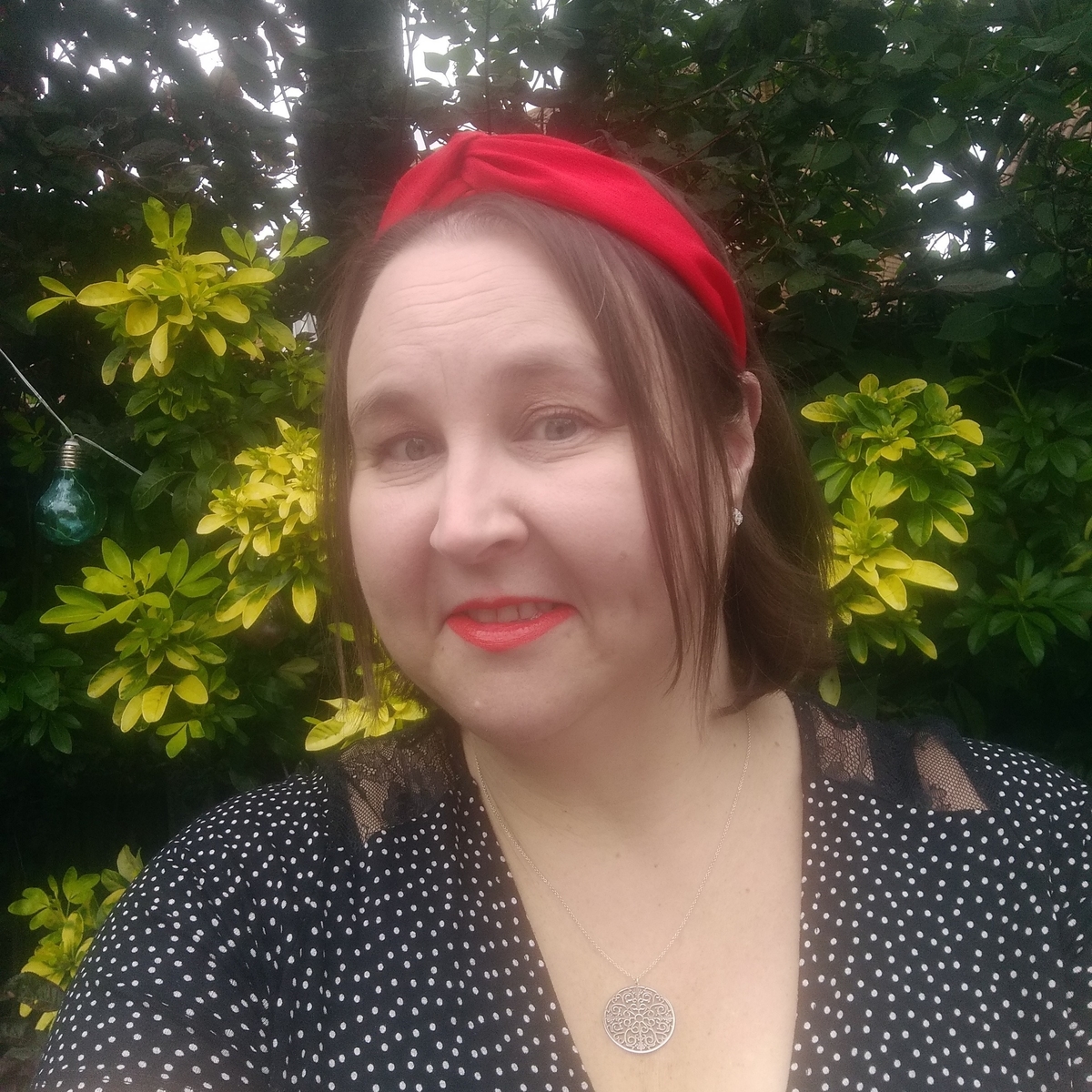
About Julie Haworth

With a degree in English and American Literature, Julie Haworth worked as an English teacher for a number of years, specialising in working with learners with literacy difficulties, before launching her own freelance copywriting business. She is  a member of the Romantic Novelists’ Association, and her debut novel, Always By Your Side, which she wrote whilst recovering from Covid in 2020, won the Katie Fforde Debut Romantic Novel Award in 2023.

For further information, follow Julie on Twitter/X @jhaworthauthor, or find her on Instagram.

There’s more with these other bloggers too:

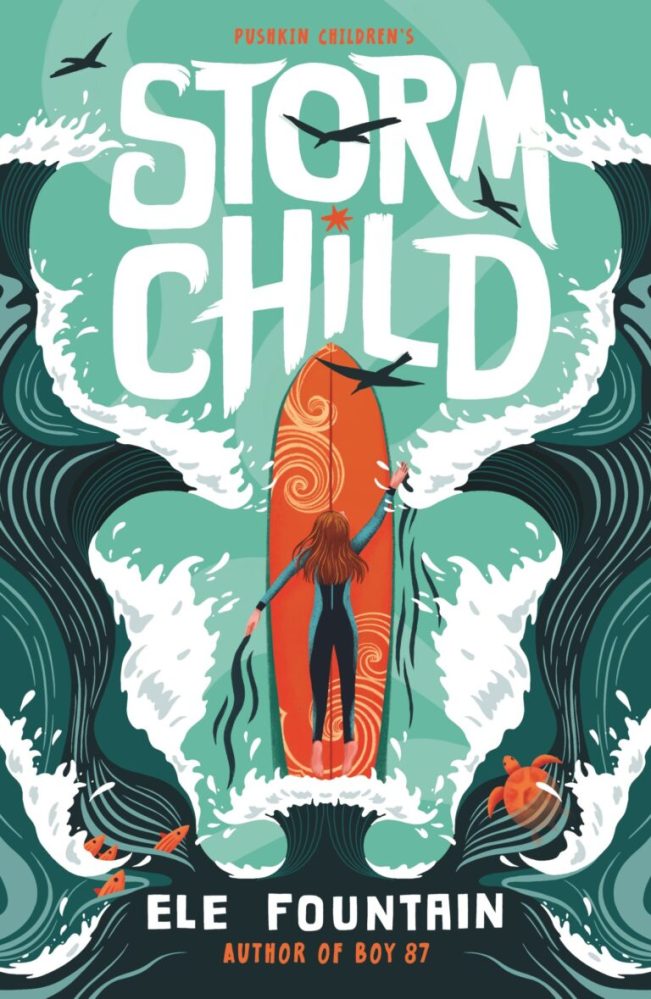
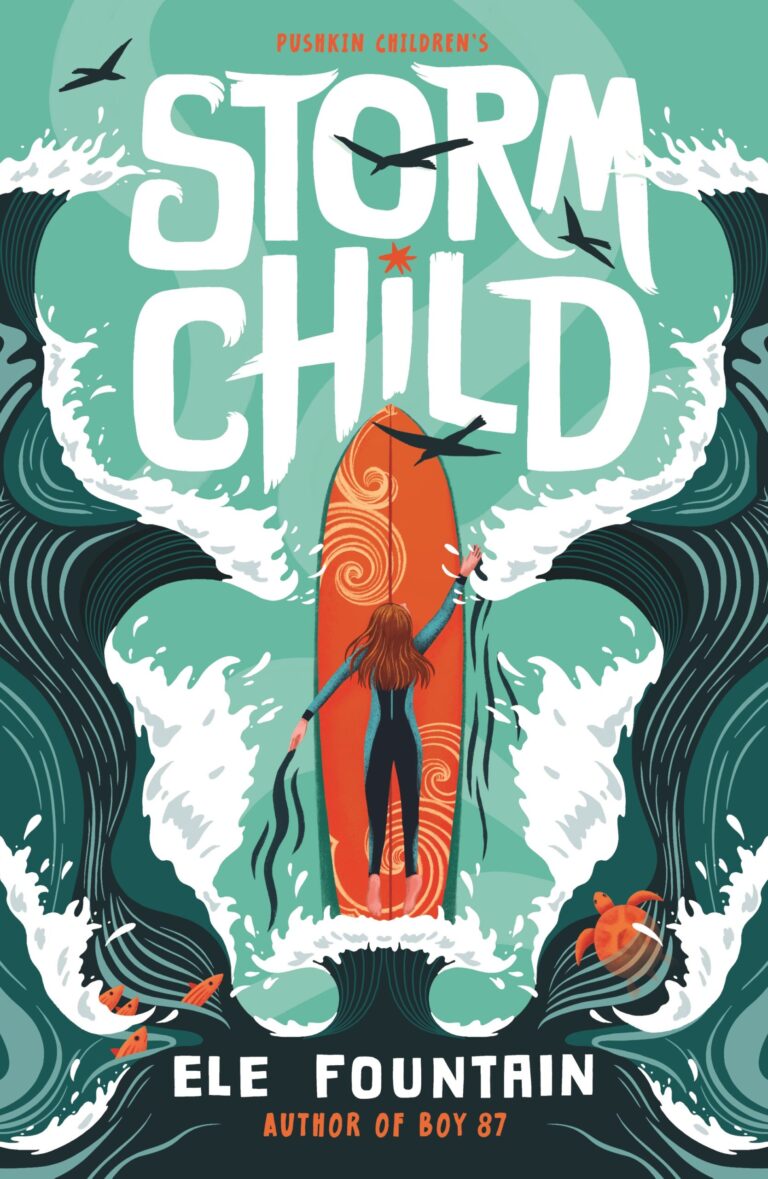
Storm Child by Ele Fountain

I was delighted when Vicki Berwick at Pushkin Press asked me if I’d like a copy of the children’s book Storm Child by Ele Fountain and sent it across. I’d like thank Vicki very much indeed and it’s my pleasure to share my review of Storm Child today.

Storm Child is published by Pushkin Press tomorrow, 4th July 2024 and is available for purchase through the links here.

Storm Child

Maya’s life is about to be upended. After her dad’s fishing boat is ravaged by a relentless storm, Maya’s parents make the decision to start over-by moving to a tropical island. But making a change doesn’t always make a difference. Far from her friends and her quiet seaside home where she spent all her time surfing, Maya is swept away by a storm much larger than herself. As Maya begins to realise that paradise is not always what it seems, can she bring her family back home again?

My Review of Storm Child

Maya’s family is in financial trouble.

Storm Child is a wonderful book. It opens in dramatic fashion and proceeds at a pace that captivates readers young and old.  

I love the way modern issues of climate change, sustainability and family debt are woven into the story, enabling young readers to comprehend adult issues in an appropriate manner, but without these aspects feeling contrived. Indeed, this might even be a story that enables an adult to have difficult conversations with children. It’s very clear in the story that grown ups don’t always have all the answers to life’s difficulties.

There’s a fast moving, frequently dramatic storyline that holds the reader’s full attention throughout, but it was the themes of the story that I found the most affecting. Through Maya’s experiences, Ele Fountain considers family and friendship, the difficulties of change and how best to weather the storms of life. The extended storm metaphor is brilliantly handled, from Maya’s tricky physical experience at the start and end of the book, through her father’s fishing boat accident, to the more intangible storms of starting a new life and making new friends. I thought this aspect was fantastic and incredibly emotional.

Maya herself is a wonderful character. She’s mature and sensitive in her outlook and yet very much a child who doesn’t always respond as well as she might to others, so young readers can relate to her completely. All the aspects that are familiar to youngsters are present in Maya’s life such as school and friendships, but there’s adventure and novelty in surfing, travel and a different culture too, making Storm Child a truly engaging story. 

Storm Child is beautifully written with descriptions that have a filmic, poetic quality and that feed the imagination. However, the most glorious aspect of the story telling is the way Ele Fountain conveys deep emotion through what she doesn’t write, every bit as skilfully as she does through her words. She provides such nuanced light and shade that Storm Child is profoundly moving as well as interesting and exciting. I confess there were several moments when I had a tear in my eye as I read. 

The ex-teacher in me wants to highlight all the learning opportunities Storm Child provides, from the potential for art or drama lessons in interpreting and illustrating the story, through geographical climate issues and astronomy to personal safety, but actually I think Storm Child deserves to be read for sheer pleasure. I loved Storm Child because it looks right into the heart of a child’s life and illustrates that true strength comes from family, friendship and being true to yourself. It’s a superb book that readers of all ages will enjoy and I thought it was fantastic.

About Ele Fountain

Ele Fountain worked as an editor in children’s publishing where she helped launch and nurture the careers of many prize-winning and bestselling authors. Ele’s debut novel, Boy 87, won four awards and was nominated for nine more, including the Waterstones Children’s Book Prize. She lives in Hampshire with her husband and two daughters.

For further information, visit Ele’s website, or follow her on Twitter/X @EleFountain.

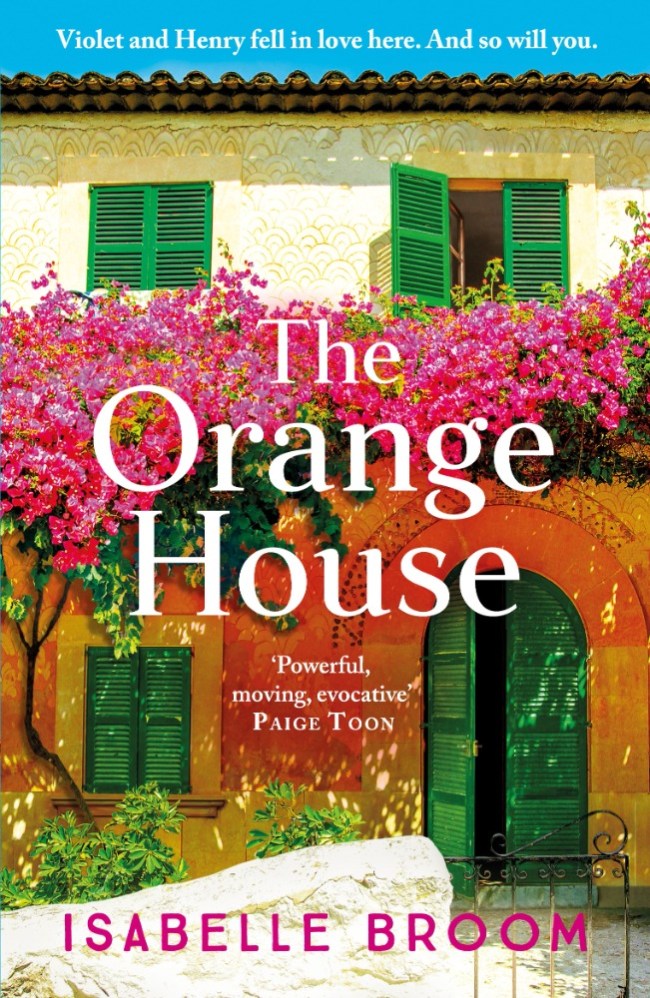
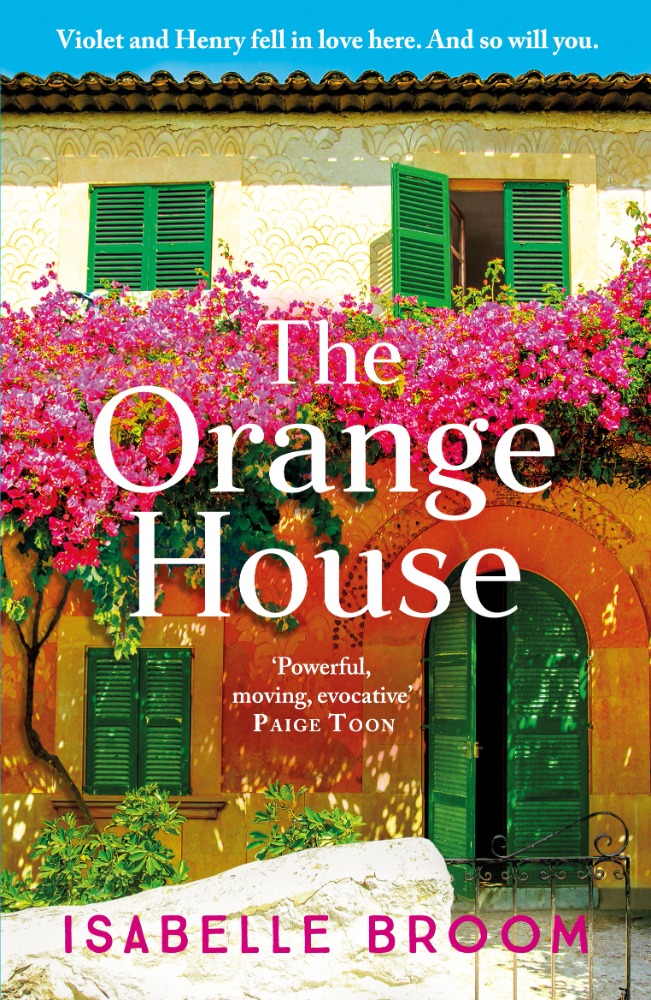
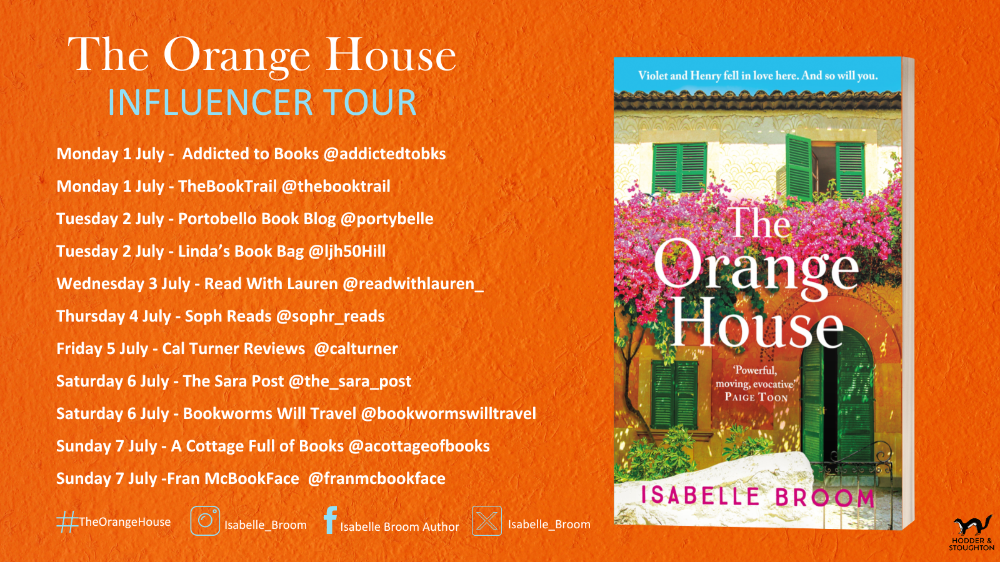
The Orange House by Isabelle Broom

I just love Isabelle Broom’s writing. You’ll find my reviews of her books here on Linda’s Book Bag. I was thrilled when a copy of her latest book, The Orange House was sent to me and delighted to be asked onto the blog tour by lovely Alainna Hadjigeorgiou. It’s my pleasure to share my review of The Orange House today.

Published by Hodder and Stoughton on 4th July 2024, The Orange House is available for purchase through the publisher links here.

The Orange House

Henry and Violet first met in the garden of The Orange House on the beautiful island of Mallorca.

They promised their lives to each other, poured their love into restoring the house and built the foundations of their marriage within its walls. First it was their private idyll, then a place to escape with their son, Luke – but now it has become a battleground.

As the years have passed, cracks have appeared and secrets have built barriers between them.

Finally, on the brink of divorce, they have come back to Mallorca to sell up. Will this final summer together be the end – or a new beginning?

Twenty years ago, The Orange House brought them together.
Now, will it be reason they part?

My Review of The Orange House

Henry and Violet are on the brink of divorce.

From the first page it is obvious that The Orange House is a very special book. It shimmers with tangible emotion so that the reader is ensnared immediately. 

Initially, The Orange House might appear to be a relatively simple story of a failed marriage, but my goodness, wonderful as that element is, that description is to do it an injustice. This is a mature, affecting and sensitively written exploration not just of marriage, but of family and the very essence of what makes us human. Isabelle Broom peels away the layers of identity and mental health so that I found the story emotionally stunning.

I confess that I found Violet hard to like at times. Her constant wariness around Luke, her self-deception and the secrets she keeps from others made me want to shake her, but by the end of The Orange House I could not have cared more for her. The reader goes on the journey of self-realisation with her, getting to know every aspect of her flawed, fragile and yet incredibly resilient personality. She’s one of the most well rounded characters I think I’ve encountered in fiction.

That said, both Luke and Henry are real triumphs too. With a family member of my own suffering the same kind of issues as Luke, The Orange House felt all the more authentic to me. My heart ached for Henry as he tried to find his role within the family unit, but he too has faults and stubbornness so that he contains true depth. I loved the way Eliza is a touchstone and pivot around whom the dysfunctional relationships between Violet, Henry and Luke revolve. She provides distance and perspective, despite her youth.

The plot is brilliantly constructed and whilst I’m not usually a huge fan of dual time lines, I loved the way Isabelle Broom gradually uncovered the past leading to the impasse Violet and Henry now find themselves in. There’s a touch of mystery too that heightens the tension so that the story is gripping and immersive.

Speaking of immersive, the Majorcan setting is quite perfect. Descriptions are vivid, and with everything from food to rooftops woven in with true dexterity, it is as if the reader is on the island. 

But it is the range of emotion and theme that makes The Orange House so mesmerising and moving. It’s a story resonating with the depths of despair and sadness, and yet it remains hopeful and uplifting so that it lifts the spirits even as it entertains. 

The Orange House is a profound book. It’s steeped in humanity. It’s mature and intelligent and I loved it.

About Isabelle Broom

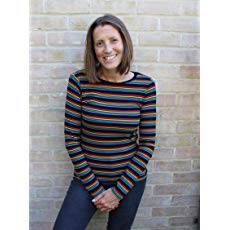
isabelle broom

Isabelle Broom was born in Cambridge nine days before the 1980s began and studied Media Arts at university in London before a 12-year stint at Heat magazine. When she is not travelling all over the world seeking out settings for her escapist novels, Isabelle can mostly be found in Suffolk, where she shares a home with her two dogs and more books than she could ever hope to read in a lifetime.

For more information, visit Isabelle’s website. You can also follow her on Twitter/X @Isabelle_Broom or Instagram and find her on Facebook.

There’s more with these other bloggers too:

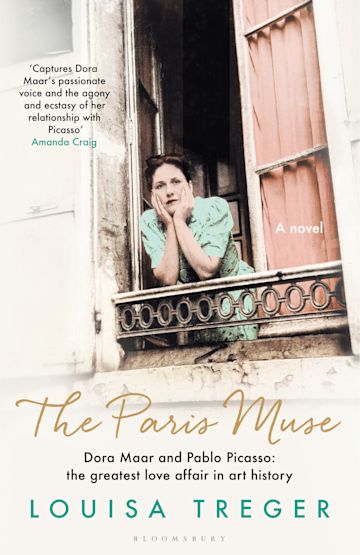
The Paris Muse by Louisa Treger

My enormous thanks to Louisa Treger for ensuring I received an early copy of her latest book The Paris Muse. I adored Louisa’s The Dragon Lady (reviewed here) and have Madwoman still waiting for me on my TBR. I’m delighted to share my review of The Paris Muse today.

Published by Bloomsbury on 4th July 2024, The Paris Muse is available for purchase in all the usual places including here.

The Paris Muse

‘Living with him was like living at the centre of the universe. It was electrifying and humbling, blissful and destructive, all at the same time.’

Paris, 1936. When Dora Maar, a talented French photographer, painter and poet, is introduced to Pablo Picasso, she is mesmerized by his dark and intense stare. Drawn to his volcanic creativity, it isn’t long before she embarks on a passionate relationship with the Spanish artist that sometimes includes sadism and masochism, and ultimately pushes her to the edge.

The Paris Muse is the fictionalized retelling of this disturbing love story, as we follow Dora on her journey of self-discovery and expression. Set in Paris and the French Riviera, where Dora and Pablo spent their holidays with their glamorous artist friends, it provides a fascinating insight into how Picasso was a genius who side-stepped the rules in his human relationships as he did in his art. Much to Dora’s torment, he refused to divorce his wife and conducted affairs with Dora’s friends. The Spanish Civil War made him depressed and violent, an angst that culminated in his acclaimed painting ‘Guernica’, which Dora documented as he painted.

As the encroaching darkness suffocates their relationship – a darkness that escalates once the Second World War begins and the Nazis invade the country – Dora has a nervous breakdown and is hospitalized.

Atmospheric, intense and moving, The Paris Muse is an astonishing read that ensures that this talented, often overlooked woman who gave her life to Picasso is no longer a footnote.

My Review of The Paris Muse

The fictionalised life of Dora Maar and her relationship with Pablo Picasso.

The Paris Muse is an intense, beautifully written and compulsive narrative. Louisa Treger’s prose is as artistic as those she is writing about so that she creates an almost painful relationship between the reader and the narrative. There were moments in this meticulously researched and convincingly conveyed story when I wanted to rage against Picasso and historical events and to yell my opinions at Dora to protect her, to berate her or comfort her. The plot is creatively embedded in historical events so that it feels thoroughly authentic. Reading The Paris Muse is to experience a dramatic era vicariously. It also sent me off researching people, artifacts and events because I found the story so stimulating. There’s nothing anodyne about Louisa Treger’s prose, but rather there’s a spellbinding intensity too powerful to break free from. 

I am entirely ignorant about art, and confess I didn’t even know of Dora Maar’s existence before reading The Paris Muse. Now she is a vivid, dynamic person whom I admire, respect and, had I known her in real life, a woman I may well have feared. Her first person voice is utterly convincing so that it feels as if one is reading her personal diaries rather than a work of fiction. There’s a stunning intimacy in how the book conveys Dora, who is such a mercurial individual that she created extremes of response in me as a reader. This is testament to the quality of Louisa Treger’s writing.

Picasso too is a rounded, complex and layered individual. The more I read, the more he took shape and the more negative my feelings towards him became. Within his relationship with Dora the lines between who is more sinned against than sinning become blurred and opaque. I thought Louisa Treger portrayed his explosive, bordering unhealthy, coercive and cruel relationship with Dora to perfection, but Dora is most certainly not just a victim of this toxic partnership and there are moments of great tenderness as well as selfishness from both characters. This is a portrait of a very real relationship.

If it doesn’t sound ridiculous, I wouldn’t classify The Paris Muse as a novel. It is more a living, breathing entity that has autonomy and life beyond the confines of its covers. I am not sure it’s accurate to say I always enjoyed it as it was so uncomfortably impactful. I was, however, both mesmerised and fascinated. At times it is exquisitely brutal and on occasion shocking and disturbing. It taught me so much about art, history, society, geography and, most importantly, about Dora Maar, and it lives on in my mind even now I’ve finished reading it. The Paris Muse is intelligent, interesting, intense and, often, unsettling. I thought it was itself a work of art every bit as valuable as one by Maar, Picasso or any other creative mentioned in the story. It’s a magnificent book, written with stunning skill and authority. Don’t miss it. 

About Louisa Treger

Louise Tregar

Louisa Treger is the acclaimed author of three novels, The Lodger(2014), The Dragon Lady(2019) and Madwoman (2022), which was a Book of the Month in the Independent and The Sunday Times. She has written for The TimesThe TelegraphTatlerBBC History Magazine and English Heritage. Louisa Treger has a First Class degree and a PhD in English Literature from UCL, and currently lives in London.

You can find out more by following Louisa on Twitter/X @louisatreger, or visiting her website. You’ll also find her on Facebook.

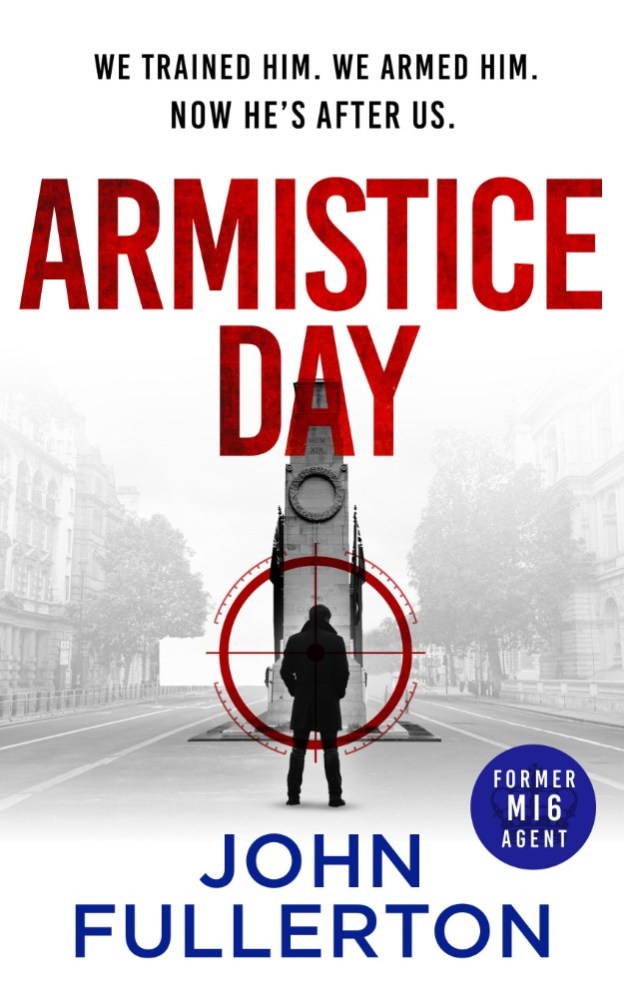
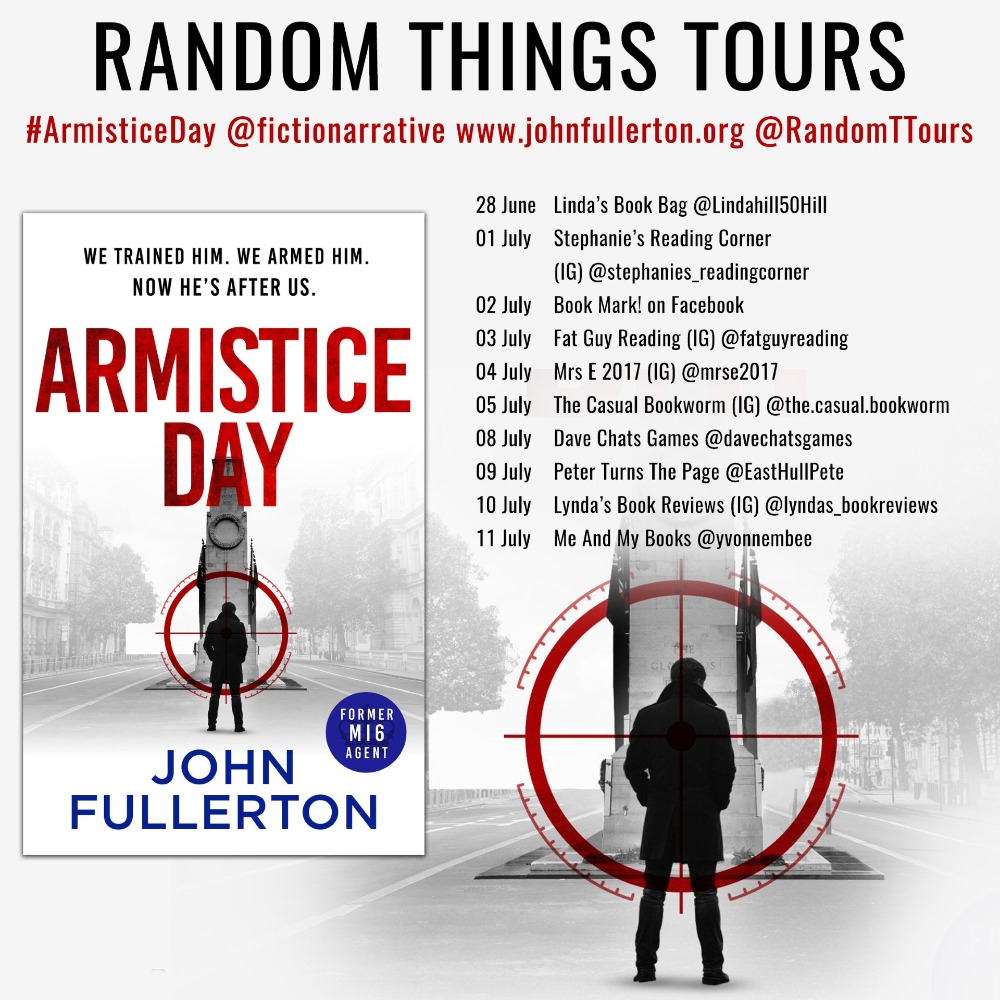
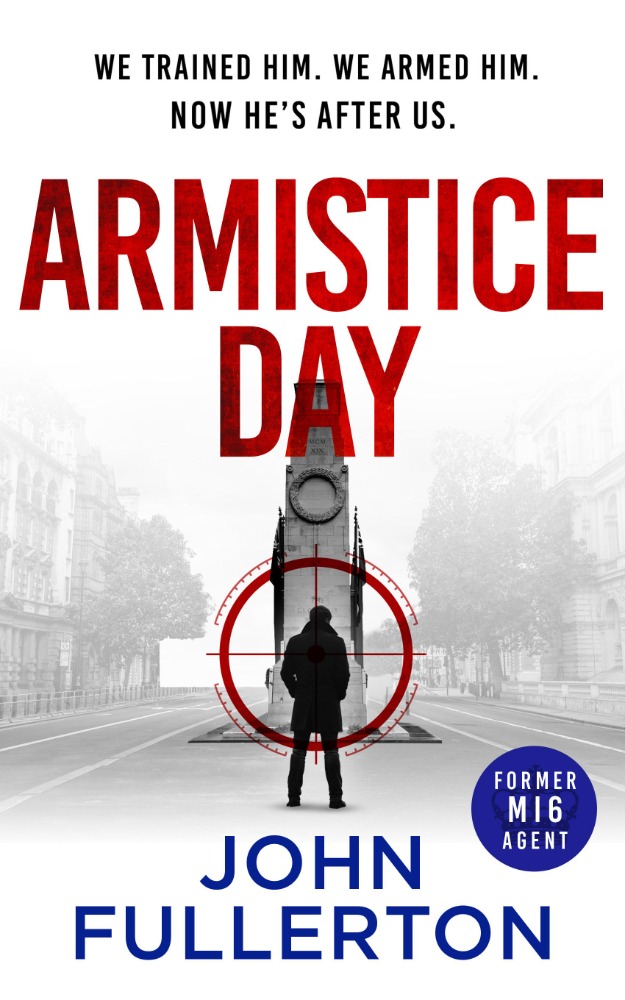
Discussing Armistice Day with John Fullerton on Publication Day

It’s my pleasure to welcome back John Fullerton to Linda’s Book Bag today to chat with me all about his new novel Armistice Day. I’m delighted to begin the blog tour and my thanks go to both John, and to Anne of Random Things Tours, for inviting me to take part.

You’ll find other posts featuring John here on the blog. Let’s find out what John told me about his new book:

Staying in with John Fullerton

Welcome back to Linda’s Book Bag John and thank you for agreeing to stay in with me once more.

Delighted to be invited.

Tell me (though I have a pretty good idea!) which of your books have you brought along to share this evening and why have you chosen it?

Armistice Day, my latest thriller. It’s a complete break from my earlier Cold War spy trilogy. It’s contemporary, with a new set of characters and issues. The ‘us’ versus ‘them’ isn’t quite what it was; issues of loyalty and duty have become more diffuse and complex.

Sounds fascinating and as it’s out today, Happy Publication Day. How did you choose the title?

The action begins at the Cenotaph in London on Armistice Day, which is always marked by two minutes’ silence at the 11th hour of the 11th day of the 11th month, commemorating the civilian and military dead of two world wars.

That makes sense. What gave you the idea for Armistice Day?

I suspect I’m not alone in beginning with a ‘what if?’ I have the digital equivalent of a drawer full of failed and incomplete ‘what if’ manuscripts. Sometimes it works, sometimes it doesn’t.

I think life is like that too John!

I don’t plan. If I know what’s going to happen, I get bored and stop. My ‘what if’ has to keep me engaged, let alone the readers. After all, like most writers of fiction, I write for myself.

So what triggers a ‘what if’ manuscript?

I might overhear a remark in a pub, or spot something odd on the streets. In this instance, it was a quick look at the newspapers, and a couple of photographs of last year’s Armistice Day parade. It showed politicians parading in black, with their Flanders poppies, trying to look serious and respectful towards the fallen. What a parcel of rogues, I thought. What if…?

Hmm. Given some recent commemorative events with rogues I have a feeling Armistice Day might be more pertinent than you originally envisaged!

What can we expect from an evening in with Armistice Day and who or what else have you brought along and why?

I’d like to introduce two friends of mine from Armistice Day. First, the laconic Bridie Connor, talented director of counterintelligence and security at the Secret Intelligence Service, a woman who’s broken through the ramparts protecting the ruling cabal of white, male, privately educated officers who have so long dominated her Service.

Second, Septimus Brass, senior investigator from the National Crime Agency. He’s no Jack Reacher, but an introvert, someone underpaid and overworked who chips away quietly but insistently at corruption and crime in high places without drawing attention to himself.

It sounds very much to me as if both those characters are much needed John! They are very welcome. I think Armistice Day sounds just the book we need in today’s world and I hope it’s a huge success. You get Bridie and Septimus settled and I’ll give readers a few more details:

Armistice Day

We trained him. We armed him. We sent him off to war.

Now he’s coming for us.

During the two minute silence on Armistice Day, a sniper hidden in a building opposite the Cenotaph guns down the prime minister, the leader of the opposition and two ministers. He escapes, disguised as a police officer.

In charge of the manhunt is Bridie Connor, laconic head of counter-intelligence at the Secret Intelligence Service. Reporting to her is Septimus Brass, National Crime Agency investigator.

Their adversary turns out to be neither terrorist nor foreign agent but a vengeful British ex-special forces soldier.

Septimus has just one question: why?

A compelling novel of love, betrayal and revenge.

Armistice Day is published today, 28th June 2024 and is available for purchase through the links here as well as from Amazon.

About John Fullerton

John Fullerton worked during the Cold War as a ‘contract labourer’ in the role of head agent for Britain’s Secret Intelligence Service, also known as MI6, an episode that triggered an interest in spy thrillers. As a newspaperman, freelance journalist and Reuters correspondent, he has lived or worked in 40 countries and covered a dozen wars. The latter have provided settings for his novels, including Beirut, Kandahar and Sarajevo. He lives in Scotland.

For more information, follow John on Twitter/X @fictionarrative or visit his website. You’ll also find John on Facebook.

There’s more with these other bloggers too:

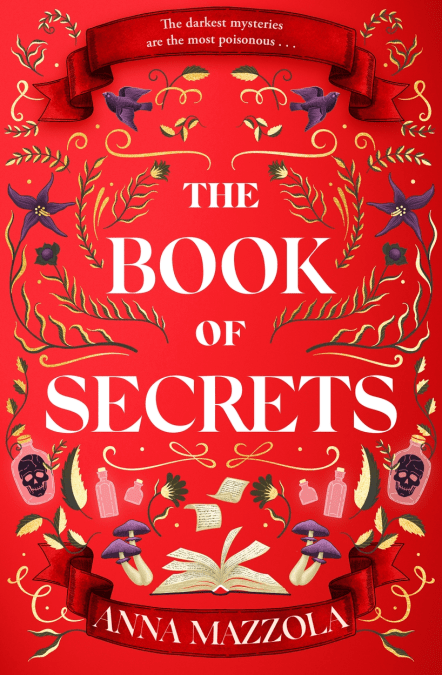
The Book of Secrets by Anna Mazzola

As I think Anna Mazzola is one of the best historical fiction writers around, I was thrilled to be sent a hardback copy (with the cover above) of her latest novel, The Book of Secrets. My enormous thanks to Frankie Banks (previously at Orion) for that copy. With paperback release day on 11th July fast approaching, it’s my absolute pleasure to share my review of The Book of Secrets today.

You’ll find my reviews of Anna’s The Clockwork Girls and The Story Keeper here.

The Book of Secrets is published by Orion and is available for purchase through the links here.

The Book of Secrets

Rome, 1659.

Some secrets are worth dying for…

Girolama Spana lives west of the river Tiber in a house marked by a lily and a garden full of herbs. Many women in Rome seek her help – although they would never admit it – eager for her mysterious balms, her love potions, and her ability to predict their futures.

Even against the splendour of the Eternal City, Giroloma’s secret recipes are the women’s most precious possessions – and their husbands’ most feared. So when men are reported dying in unnatural numbers, the gaze of Stefano Bracchi, prosecutor for the papal authorities, falls quickly on Girolama and her suspected sorcery.

Soon she will face the greatest danger she has ever known – but Girolama has always vowed that in life there are secrets we write down, secrets we pass on, and some that we carry to our deaths…

The Book of Secrets is inspired by real events that took place in 17th century Italy.

My Review of The Book of Secrets

Stefano Bracchi is investigating a series of deaths.

The Book of Secrets is brilliant. The quality of Anna Mazzola’s writing is incredibly impressive; partly due to the fact that her narrative is based in meticulously researched real events, partly because of the perfect plotting, short, gripping chapters and the mix of realism with possible witchcraft, and partly as a result of the faultless narrative tone which is accessible and yet just right for the 1600s era. Combined, these elements mean that The Book of Secrets becomes far greater than the sum of its parts and is a fascinating, mesmerising and enthralling story.

There are engaging and entertaining twists and turns in an exciting plot that is historical, magical and has mystery at its heart so that it appeals to lovers of many genres. However, it was the themes of the story that I found so fascinating. Anna Mazzola tells an eternal story of man’s inhumanity to women with a freshness that doesn’t moralise bluntly, but rather educates and informs with such clarity that I found myself enraged every bit as much as entertained. The role of women in society, the fine balance between right and wrong, the concept of the end justifying the means, and the way perception and self-delusion can distort our behaviour and morality are intelligent, compelling and relevant to the modern reader, every bit as much as they are to the characters of the story.

Indeed, the characterisation is complex and thought provoking. At the opposite ends of events, Stefano and Girolama have far more in common than they may imagine, though you need to read the book to understand why as I’m not going to spoil the story. The impact of gender and social class, and the reasons why we become what we become are aspects underpinning all the characters, and these are illustrated with sensitivity and conviction, making for such a fabulous story. I particularly loved the Shakespearean Marcello. He is the voice of reason, a kind of touchstone against whom we can measure and judge the likes of Baranzone. There’s quite a cast of characters and each is distinct, layered and believable – indeed some are all too authentic and elicit a range of violent and emotional responses in the reader because they are so impactful.

I absolutely loved The Book of Secrets. It’s so hard to review without giving away too much of the plot, but it’s hard to imagine a better depiction of the poison inquisition in Rome in 1656. It’s one of those books that calls to the reader when they aren’t actually reading it and it reverberates in the mind after it is finished because it is immersive, entertaining and completely superb. I cannot recommend it highly enough.

About Anna Mazzola

Anna Mazzola is an award-winning and critically acclaimed novelist. Her debut novel, The Unseeing, won an Edgar Allan Poe Award, and her third novel, The Clockwork Girl, was a Sunday Times historical fiction pick for 2022.

You can follow Anna on Twitter/X @Anna_Mazz and visit her website for more information. You’ll also find her on Instagram and Facebook.
Charlie Laidlaw introduces The Days of Our Birth

It’s my very great pleasure today to hand over Linda’s Book Bag to Charlie Laidlaw so that he can introduce his brand new novel The Days of Our Birth that I think sounds wonderful. I’m only sorry I haven’t been able to fit in reading it. Sadly life has been getting the better of me recently and reading has taken rather a back seat.

The Days of our Birth is published on 27th June 2024 by Rampart and is available for purchase here.

The Days of Our Life

Theirs was the most important relationship of their life…

It was a perfect relationship until time pulled them apart. A beautiful story sensitively told about how love and friendship can conquer everything, including time, to a point.

The Days of Our Birth delves into the intricate bond between Peter and Sarah as they navigate their formative years. Spanning from their sixth birthday through two decades, the narrative unfolds against the backdrop of Sarah’s placement on the autism spectrum. With a blend of humour and poignancy, the book intricately weaves together themes of love and friendship, unravelling the tale of two individuals who grapple with their emotions for each other, even though they remain unacknowledged.

Let’s allow Charlie to tell us a bit more:

Introducing The Days of Our Birth

A Guest Post by Charlie Laidlaw

My new novel, The Days of Our Birth, is a coming-of age and romantic book that, I hope, balances humour and poignancy in equal measure.

Peter and Sarah grow up living next door to one another in a small town in the east of Scotland.  They also share the same birthday.  He’s not so bright, but she’s formidably intelligent.  She’s also autistic, and can’t understand why nobody except Peter likes her.

The book begins on their sixth birthday.  Peter is having a birthday party in his back garden; she is having hers in her back garden.  One is a boys’ party; the other, a girls’ party and they agree that, maybe one day, they’ll have a joint party.

But, even then, Peter and Sarah are good friends.  He walks to and from school every day, and they hold hands.  He hangs around at her house until his parents get back from work.  She helps him with his homework.

Told in the first and third person, The Days of our Birth is an exploration of how people change, the things we could have said and done and, sometimes, how we can make things right again.

It’s not about autism spectrum disorder – about one in one hundred people are on the spectrum – but about the differences between us and how those differences can drive people apart or, sometimes, bring them closer together.

The book follows Peter and Sarah as they grow from childhood through adolescence to adulthood.  They’re still best friends and Peter wants it to stay that way, because only by staying just friends, he thinks, will they stay together.

But Peter and Sarah are forced apart.  Sarah’s grandmother falls ill, and Sarah’s mum moves to Brighton to look after her.  It’s a convenient move because her marriage is falling apart.  Sarah goes with her, and is enrolled in a boarding school for gifted autistic children.

Peter scrapes into university in Edinburgh while Sarah sails into university in London.  Now free to see her, Peter travels south to meet up with her for the first time in years.  It doesn’t go well because Sarah finally understands the depths of her feelings towards him.  It’s only when she waves him off does he realise that she’s saying goodbye.

The book ends as it began, with Sarah travelling by train from Clapham Junction into central London. Her phone pings and it’s a text message from Peter.  Now a journalist, he’s supposed to be covering a story in New York but he’s there, in London, waiting for her.

On their different journeys, they both have learned that the differences between them can also, finally, bring them together.

Like my other novels it’s mostly set in East Lothian near Edinburgh.  It’s where I live and, as my novels are character driven, why set them anywhere else?

****

Why indeed? I think The Days of Our Birth sounds such an emotive and affecting read Charlie. Thanks you for telling us more about it.

About Charlie Laidlaw

CL bandw

Charlie Laidlaw is a PR consultant, teaches creative writing, and lives in East Lothian. He is a graduate of the University of Edinburgh and was previously a national newspaper journalist and defence intelligence analyst. He has lived in London and Edinburgh, and has two children. His other novels are Everyday Magic, The Things We Learn When We’re Dead, The Time Between Space, Being Alert! and Love Potions and Other Calamities.

You can follow Charlie on Twitter/X @claidlawauthor and visit his website.  You’ll also find him on Instagram and  Facebook.

An Excerpt from The Garden of Memories by Amanda James

Lovely Amanda James has appeared here on Linda’s Book Bag on several occasions, most recently when I reviewed her gorgeous Wish Upon a Cornish Moon in a post you’ll find here. I had hoped that, as well as sharing an excerpt from Amanda’s latest book, The Garden of Memories, I’d have my review ready to share today too. Sadly of late there has been a bit too much life happening beyond my ability to deal with it and I simply ran out of time. I’m determined to get to it as soon as I can and when you read the information about it, you’ll understand why!

Published on 20th June 2024 by Harper Collins imprin’t One More Chapter, The Garden of Memories is available for purchase through the links here.

The Garden of Memories

With nothing but time on her hands, retired nurse Rose Lanyon finds herself drawn to the garden that had once been her husband’s pride and joy.

It may have started as a means of honouring her husband’s memory, but her little Cornish garden soon becomes so much more – a place where the lost and lonely can find solace, the forgotten can be remembered, and second chances take bloom. Because, as long as new life is growing, there will always be hope and new memories to make…

An Excerpt from The Garden of Memories

Apparently, forty years should seem longer. Before people speak about the passing of large measures of time, they shake their heads in bewilderment, click their tongue against the roof of their mouth and sigh. Shortly after that, they say things like, ‘I can’t believe it’s been forty years!’  Next, some repetition to emphasise their surprise, ‘Forty. I mean, who would have thought it?  Well, Rose would. Because when she started nursing, her eyes were bright, her skin was line-free and she had enough energy to power a hospital ward. Now her batteries are flat, and the majority of creases around her eyes aren’t made of laughter lines. They’ve mostly been created by exhaustion and burnout. Forty years of nursing will do that. Forty years of staying on past the end of your shift, caring, mending, lifting, guiding and healing. Forty years of carefully ironed uniforms, precisely tucked hospital corners, sensible shoes and quiet footsteps. A gentle smile, the touch of a hand, and a well-placed word.

The last shift. Forty years of a career that will end today.  To Rose, this ending is much harder to believe than the passage of all that time. Since the age of twenty-two, she’s known nothing else. Nursing is who she is. It defines her. Rose Lanyon, the nurse. After today, what will she be? Who will she be? The words, ‘I used to be a nurse’ will find their way into her conversation. She’s not sure she’s ready for that – a ‘used to be’. She tells herself she needn’t worry too much, because she’ll only have to explain to those who don’t know her. Most do know her in this little Cornish community of which she’s part. For the past thirty years Rose has been a nurse in the local GP practice. A drawer of blood, a shoulder to cry on, a dresser of wounds. Before that, she walked the wards of The Royal Cornwall Hospital, until she swapped that for walking the bedroom, her baby daughter falling asleep on her shoulder, just as the dawn rose over the ocean.

Rose’s uniform is hanging on the wardrobe door, ready. Unlike her. Though her long career has taken its toll, she’s no regrets. None. She’s loved being a nurse. Though not all of it, because some parts have broken her. Sometimes she lies awake at night, remembering the faces of those who passed before their time. Rose thinks about the kind words offered to her by grieving relatives. Little gifts on parting. Thank you. You were there for my loved one. We will always remember you… At the time, she watched them go, never imagining that she would also remember them, in the still, quiet of the night. But she does.

The uniform waits. Under her fingers the material is cool, navy, no-nonsense. The uniform represents professionalism, inspires respect, garners trust and confidence. And sometimes she’s been grateful for this uniform, this barrier between the personal and professional. Rose would hide behind it to protect herself, especially during the hard times, but much more often, there have been happy times. Joy, even. The maternity ward was full of it, new life spreading light, its echo in the ringing bells of the cancer clinic. The love of the job and the people she met carried her up, over and through – knitting a pattern, a pathway along a working life for her to follow.

Acknowledging all that happiness, Rose finds herself smiling as she slips the uniform free of the hanger. Acknowledging too, that she’s grateful for such a long and happy career. It registers like a thump in her gut that this is the last time she’ll wear this bit of cotton. This bit of cotton that’s so much more. On the dressing table, from a photo taken on their local beach, her husband, Glen smiles too. His grey curls ruffling in the wind, his eyes, blue chips, squinting in the sun. She has the fleeting impression that he’s about to say something. Probably get your uniform on, go to work and stop all this pondering, Rose. Glen always said pondering on things too much was no good for you. He might have been right. She takes a breath, slips the uniform on, touches her fingertips to her lips and then to his. ‘See you later, you old grump. Love you.’

****

Doesn’t that sound utterly wonderful? So relatable. I am thrilled that I have The Garden of Memories on my TBR.

About Amanda James

Amanda James has written since she was a child, and as an eight-year-old, she asked her parents for a typewriter for Christmas. She never imagined her words would ever be published however. Then in 2010, after many twists and turns, the dream of becoming a writer came true when she had her first short story published for a Born Free anthology. She left teaching in 2013 to pursue her dream full-time.
Originally from Sheffield, Amanda now lives in Cornwall and is inspired every day by the wild and beautiful coastline near her home. She loves writing uplifting books with a twist of magic, as she thinks the world needs more joy in it right now. Amanda can usually be found playing on the beach with her family, or walking the cliff paths planning her next book.

For more about Amanda, follow her on Twitter @amandajames61 and find her on Facebook and Instagram.

Staying in with Margot Shepherd

One of the pleasures of blogging is discovering new-to-me books and authors and today I’m delighted to discover another – Margot Shepherd, who has kindly agreed to stay in with me to chat about her debut novel.

Let’s find out more:

Staying in with Margot Shepherd

Welcome to Linda’s Book Bag Margot and thank you for staying in with me.

I’m delighted to be here. Thank you for inviting me.

Tell me, which of your books have you brought along to share this evening and why have you chosen it?

I’ve brought Never Closer because it’s my debut novel.

Congratulations on your debut! What can we expect from an evening in with Never Closer?

Two stories that are woven together. A story set in the 1940s about Alice who works on the development of penicillin and a story set in the present day about Jo whose daughter, Jessie, is hospitalised with bacterial meningitis. The two stories are linked by Alice’s diary which Jo finds in a vintage handbag in her friend’s vintage shop.

That sounds such an interesting premise. 

It’s a book about families, love, grief and above all resilience. It is also about two women striving to be who they want to be.

It was Editors’ choice in the May quarterly magazine of the Historical Novel Society where it was described as ‘a novel for our times.’

It certainly sounds as if it might well be Margot. Tell me more about Jo and Alice.

Jo is a mother of two daughters, both studying for degrees. She is married to an unreliable, insensitive and at times domineering husband. She became pregnant with Kate in her final year at university and abandoned training for her dream career, as a clinical biochemist, to be a full-time mother. Two years after Kate arrived, Jessie was born. Now her children have left home Jo desperately wants to do more with her life but is hindered by an unsupportive husband and a feeling that she has lost her way. The novel begins when Jo receives a phone call from the John Radcliffe Hospital in Oxford. Jessie, a student at Oxford University, is in a coma.

Alice is seventeen years old and working at the Dunn School of Pathology for Professor Howard Florey in Oxford. She was made to leave school at sixteen by her mother to contribute to the family income. Her ambition had been to be a teacher and she is angry that she has been thwarted in this goal. She is very intelligent and determined to learn as much as she can from her job so is forever asking questions. She often has to take penicillin to the hospital, an environment she has never encountered before. When she realises that nursing sisters have important and respected roles, she is determined to use the knowledge she has gained in the laboratory to pursue nursing as a career.

Both Jo and Alice sound hugely relatable.

How did you come to write Never Closer?

I read an article in a newspaper about the work of The Penicillin Girls in the 1940s and immediately thought how interesting to tell the story of penicillin from the point of view of one of those girls. Alice is fictional but all the other characters in the Oxford laboratory are based on real people. I did a lot of research about how penicillin was developed and the more I read the more I realised how important this story was. I thought it would be interesting to contrast the 1940’s story with the treatment of bacterial infections in the present day when antibacterial resistance is a growing problem and we are in danger of squandering the gift that the Oxford scientists gave the world.

I think Never Closer sounds fascinating. So, what have you brought along and why have you brought it?

It is a 1940s dress similar to the one that Alice makes in the novel. Alice is a very good dressmaker, something she learned from her mum. Because she plans to go to a dance with her friend, she wants to have a pretty dress to wear. In the novel we see Alice visit the drapers and choose the material and the pattern and then make it when she has the house to herself. It was just before clothes rationing (which included fabric) came in. Alice writes in her diary-

‘Mrs Foster said she had some new fabric just come in that she hadn’t unwrapped yet. She disappeared into the back room and I heard a rustling of paper. She reappeared with a bolt of rayon crêpe with a pattern of a scarlet rose, and grey hatching on a white background. It was beautiful and I knew at once that it was exactly right. I felt so lucky. Who knows when I’ll be able to buy such lovely material again. Mrs Foster measured out the yardage specified in the pattern then cut with her large scissors; the kerch-kerch sound of the scissors made me want to rush home and start making it.’

The dress is an important link between the two stories. It finds its way to the vintage shop owned by Jo’s friend. Jo loves 1940s clothes and is overjoyed when her friend gifts her the dress. At the time Jo doesn’t know the dress was made by Alice. She doesn’t find out until she reads Alice’s diary. The dress becomes very special to Jo. ‘It is as if the past is seeping into the present.’ It reminds her how she used to make clothes herself when she was a teenager. Like Alice she comes from a working-class family where there wasn’t a lot of money. Jo becomes totally absorbed in Alice’s diary and it inspires her to make some big changes in her life.

Did you bring anything else?

Some 1940s dance music, Joe Loss and his band playing ‘Oh Johnny’. This music features in both stories. Alice goes to a dance where this is played, and it is where she meets Frank, a young soldier who is about to be sent abroad. Alice knows all the dance steps as she has been taught by her father. Frank is also a good dancer as he was taught by his mother. There is an immediate connection between Alice and Frank. Their relationship develops via letters they send to each other.

In the present-day story Jo reads the diary to Jessie when she is convalescing. Jessie becomes fascinated by Alice. When Jo reads about the dance, she plays this music to Jessie on an old shellac record and record player. These had belonged to Jo’s grandmother who had been a clippie during the war in Barnsley where Jo comes from.

Jo pulls out a record in a brown paper sleeve. The red centre label reads His Master’s Voice: Joe Loss and his band playing ‘Oh Johnny’.

 After slotting the centre hole over the prong in the middle of the turntable she releases a switch and the record starts turning. Carefully she lowers the stylus onto the edge of the record. Within seconds the tinny noise of a big band fills the room.’

 Jo shows Jessie how to dance the foxtrot and it reminds her of how much she used to love dancing. Despite her unhappy marriage Jo has always thought she couldn’t cope without Rob, her husband. We see Jo become gradually stronger as the novel progresses until she decides to pursue a career she wants and to take up dancing again.

I think Never Closer sounds really immersive Margot. Thank you so much for staying in to tell me all about it. I think we’d better play some Joe Loss whilst I give readers a few more details about it. 

Never Closer

On an ordinary day in 2017 Jo is devastated by news that every mother dreads.

In 1940, Alice enters a laboratory to harvest a new drug, called penicillin. Made to leave school at sixteen and abandon her aspiration to be a teacher, she learns instead about microbes and miracles and how curing people may be her destiny.

The lives of the two women become entwined when Jo finds Alice’s diary in a vintage handbag. Past and present overlap and merge as life-changing events resonate across the gulf of time.

This is a story about a diary opening a door on the past, chronicling Alice’s fierce determination to succeed against all odds. It’s a story about how Jo emerges from darkness into light and discovers a strength she never knew she had.

Can Alice’s diary inspire her to step into a better life?

Never closer is available for purchase on Amazon, Kobo, Apple and Blackwells.

About Margot Shepherd

Margot Shepherd was born and spent her childhood in Yorkshire, in the north of England. She now lives in the south of England but still feels her roots are in the north. Margot is a scientist so when she started thinking about her first novel, she knew she wanted it to include some science and as a woman she wanted it told from a female point of view. There are so few books which do this.

Margot works part-time in medical research but is tapering this off as she wants more time to write. She is addicted to reading and always knew she wanted to write a novel when she had the time. Six years ago, Margot semi-retired, studied for an MA in Creative Writing and then started writing her novel. Her leisure time is spent gardening, walking in the countryside where she lives, accompanied by her Springer Spaniel, Genni, and of course reading! Margot also loves travelling to new places mainly in other European countries.

For further information visit Margot’s website, follow her on Twitter/X @MargotShepherdW and find Margot on Instagram.