A Publication Day Interview with John Jackson, Author of Heart of Stone

Heart of Stone

It’s no secret that I love featuring authors I’ve actually met on Linda’s Book Bag and today I’m delighted to welcome another of those authors, John Jackson. John and I met in September and I’m so pleased he agreed to tell me all about Heart of Stone.

Heart of Stone is published today, 24th October 2017, and is available for purchase here.

Heart of Stone

Heart of Stone

Dublin, 1730

When young and beautiful Mary Molesworth is forced to marry Robert Rochford, widowed heir to the earldom of Belfield, she finds that her idea of love is not returned. Jealous, cruel and manipulative, Robert ignores her after she has provided him with a male heir, preferring to spend his nights with his mistress. Power-hungry, Robert builds up a reputation that sees him reach for the highest positions in Ireland.

Caught in an unhappy marriage, Mary begins to grow closer to Robert’s younger brother, Arthur. Acknowledging their love for each other, they will risk everything to be together. But Robert’s revenge threatens their lives and tears them apart.

Will Mary and Arthur find a way to escape Robert’s clutches?

Based on real events, Heart of Stone is a tale of power, jealousy, imprisonment, and love, set in 1740s Ireland.

An Interview with John Jackson

Welcome to Linda’s Book Bag, John and congratulations on today’s publication of Heart of Stone. Thank you so much for agreeing to answer some questions on my blog about your writing and Heart of Stone in particular.

Tell me, why do you write?

Because I enjoy it! (although I don’t enjoy the struggles with writers block)

When did you realise you were going to be a writer?

When I realised that I had a story to tell, and that I could tell that story. What I had to learn was to tell it in a way that made it approachable for others.

Which aspects of your writing do you find easiest and most difficult?

If I can get the story fixed in my head, then I can rip out several thousand words a day. That’s the easy bit.

The hardest has been deciding exactly where you want to go with a story.

What are your writing routines and where do you do most of your writing?

I use a trolley table and type at my chair in the lounge. I am quite happy typing away with the TV on. Weird, isn’t it?

(Interesting as many authors tell me they need to be away from all distractions!)

In your previous working life you did quite a lot of technical writing. How difficult was it to turn your hand to fiction?

Ha ha ha!! Chalk and cheese in so many ways. My previous experience certainly helped in so far as I knew my way around a document, so the technical side was very familiar.

The more technical documentation I wrote, the more I realised that I was writing for the reader – in my previous life these were mostly ships officers who had English as a second language. In other words, simplicity and clarity are everything. That was a help when it came to writing fiction.

Without spoiling the plot, please could you tell us a bit about  Heart of Stone?

It is set in Ireland and is about a family of three brothers. One had all the advantages by way of position and money, while the middle brother had all the moral advantages. Add a third brother who’s only love is money, and a young girl pressured into marriage and you have some great ingredients.

I know you have an avid interest in family history and have used some of it as a basis for your writing. How did it feel to include elements about those from your own background?

Great! For me it personalised it, so in many ways writing it didn’t feel like work.

How did you go about researching detail and ensuring Heart of Stone was realistic?

I read all I could about the personalities involved, and visited the main sites for the story – initially on line and then in person. As Heart of Stone is set partly in a major building in Ireland, I contacted the managers of Belvedere who were also amazingly helpful.

Heart of Stone is set in Ireland. Why here particularly and how easy did you find it to create a sense of place in your writing?

I have been to Ireland a few times over the years, and researched the period and area as extensively as I could. A lot of the “first draft” had to be intelligent guesswork, but we went over to the location two years ago and just wandered around soaking up the atmosphere and “feel” of the place. As it happens, there was very little I needed to change, but it was extremely useful in giving me more confidence in what I had written. Even little but important details, like “Can you see over the local hedges lining the roads there”

You’re highly supportive of other authors on social media. What advice would you give to those authors who tell me they don’t use social media platforms?

If you have never used Twitter or Facebook before it can seem very daunting, especially when you see and read so many warnings about identity theft, etc. I found it a great place to meet people, and, over the years, to meet them in real life, where on-line friends turn in to real friends,

I would urge any writer to try Twitter and Facebook, and not to be afraid of them. It is, perhaps, the modern equivalent of a “chat across the garden fence”.

I know you belong to the Romantic Novelists Association and the Historic Novel Association and love attending conferences. What do you gain as a writer from such involvement?

Meeting friends!! I have lost count of the times that I have been approached by someone and told “Hi, John – I’m on your Friday twitter list,” or “We are friends on Facebook”

As a writer, it helps me get back in the groove. I have learnt a LOT from the various sessions, especially from Julie Cohen and from Emma Darwin.

As a writer, I would say I learn more about the “Craft” of writing at the RNA Conferences, and more about History and Historic Writing at the HNS Conference.

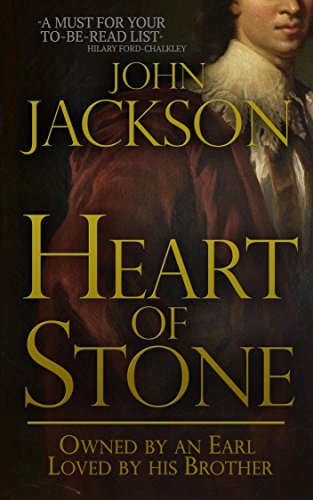
Heart of Stone has a cover that suggests murkiness and mystery to me. How did that image come about and what were you hoping to convey (without spoiling the plot please!)?

The cover uses a portrait of one of the main protagonists in the story. The original hangs in the house I mentioned, Belvedere. The management were unbelievably helpful in allowing me to use the image.

If you could choose to be a character from Heart of Stone, who would you be and why?

Very difficult. Probably either Stafford or Flynn.

If Heart of Stone became a film, who would you like to play Mary and why would you choose them?  

Keira Knightley.

When you’re not writing, what do you like to read?

I tend to read a lot of historical novels, esp. writers like Bernard Cornwell, Linsey Davis and Simon Scarrow.

If you had 15 words to persuade a reader that Heart of Stone should be their next read, what would you say?

It’s a story of jealousy, passion, privilege and suffering, but with love at its heart

Thank you so much for your time in answering my questions John.

And thank you for asking them.

About John Jackson

John Jackson

Following a lifetime at sea, John Jackson has now retired and lives in York. After thirty years of non-fiction writing, drafting safety procedures and the like, he has now turned his hand to writing fiction.

An avid genealogist, he found a rich vein of ancestors going back many generations. His forebears opened up Canada and Australia and fought at Waterloo.
A chance meeting with some authors, now increasingly successful, led him to try to turn some of his family history into historical novels.

John is a keen member of the Romantic Novelists Association and graduated through their New Writers Scheme. He is also a member of the Historic Novel Association and an enthusiastic conference-goer for both organizations.

He describes himself as being “Brought up on Georgette Heyer from an early age, and, like many of my age devoured R L Stevenson, Jane Austen, R M Ballantyne, and the like.”

You can find out more by following John on Twitter @jjackson42, visiting his blog and finding him on Facebook.

Why Mummy Drinks by Gill Simms

Why mummy drinks

My enormous thanks to Polly Osborn at Harper Collins for a copy of Why Mummy Drinks in return for an honest review.

Why Mummy Drinks was published on 19th October 2017 by Harper Collins and is available for purchase through the publisher links here.

Why Mummy Drinks

Why mummy drinks

It is Mummy’s 39th birthday. She is staring down the barrel of a future of people asking if she wants to come to their advanced yoga classes, and polite book clubs where everyone claims to be tiddly after a glass of Pinot Grigio and says things like ‘Oooh gosh, are you having another glass?’

But Mummy does not want to go quietly into that good night of women with sensible haircuts who ‘live for their children’ and stand in the playground trying to trump each other with their offspring’s extracurricular activities and achievements, and boasting about their latest holidays.

Instead, she clutches a large glass of wine, muttering ‘FML’ over and over again. Until she remembers the gem of an idea she’s had…

My review of Why Mummy Drinks

Ellen is fast approaching 40 and as her two children behave like tyrants and her husband Simon retreats in front of the TV she turns to drink!

Although I use them myself on occasion, I’m not usually particularly fond of books with loads of expletives and Why Mummy Drinks is peppered liberally with them from the euphemistic initials of FML to more outright examples. So, I think it says something about Why Mummy Drinks that I absolutely loved it!

It took me quite a long time to read Why Mummy Drinks because I literally couldn’t see through the tears of laughter running down my face. I had to read parts aloud to my husband and that took extra time as I couldn’t stop laughing long enough to do so properly. I found it utterly hilarious. For me, most of the humour came through Ellen thinking exactly what so many of us think too, but also through the carefully crafted writing. Gill Simms knows exactly where to use upper case letters or a judicial full stop for maximum impact. I found her writing flowed faultlessly.

I loved too, the family dynamics, especially as Peter and Jane confirmed everything I ever believed about children as a non-parent. Of course the characterisation is somewhat exaggerated in order to fit the genre, especially with Louisa, but that didn’t make the people in Why Mummy Drinks any less believable. Ellen is an absolute triumph of self deception, exasperation and realism.

Although the plot is slightly incidental as Why Mummy Drinks is a kind of monologue from Ellen, I thought the division into the months of the year so that ordinary family events like bonfire night, Easter and Christmas could be explored, worked brilliantly and when I’d finished reading and reflected I discovered there was actually quite a lot going on. Indeed, humour and fabulous entertainment aside, Why Mummy Drinks is also a witty and insightful insight into the modern world of middle class Britain – but don’t let that put you off, as it’s also a laugh out loud, fantastic read that I completely adored. Just brilliant.

About Gill Simms

Gill simms

Gill Sims is the author and illustrator of the hugely successful parenting blog and Facebook site ‘Peter and Jane’. She lives in Scotland with her husband, two children and a recalcitrant rescue Border Terrier, who rules the house. Gill’s interests include drinking wine, wasting time on social media, trying and failing to recapture her lost youth and looking for the dog when he decides to go on one of his regular jaunts.

You’ll find Why Mummy Drinks on Twitter, and can visit Gill’s Peter and Jane Facebook page or read her blog.

Why A Book Launch Matters: A Guest Post by Barbara Henderson, Author of Punch

PUNCH EBOOK COVER FINAL

I am absolutely delighted to welcome back Barbara Henderson, author of Punch to Linda’s Book Bag. Barbara is a wonderful person and a fantastic writer. You can find out what I thought of her novel Fir For Luck here. Fir For Luck was one of my books of the year in 2016 and I was thrilled when Barbara shared her previous publication day experience with me here.

Punch is published today, 23rd October 2017, by Pokey Hat, the children’s book imprint of Cranachan and is available for purchase here.

Punch

PUNCH EBOOK COVER FINAL

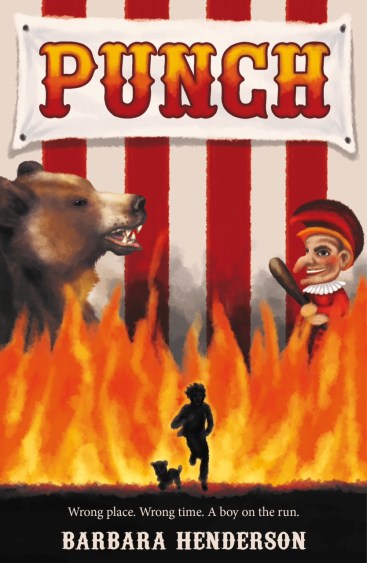
Wrong place. Wrong time. A boy on the run.
THE MARKET’S ON FIRE. FIRE! FIRE! THE BOY DID IT!

Smoke belches out through the market entrance.

And me?

I turn and run.

Inverness 1889.

When 12-year-old Phin is accused of a terrible crime, his only option is to flee. In the unlikely company of an escaped prisoner and a group of travelling entertainers, he enters a new world of Punch and Judy shows and dancing bears.

But will Phin clear his name?

And what can he do when memories of a darker, more terrible crime begin to haunt him?

Why a Book Launch Matters

A Guest Post by Barbara Henderson

IMG_6130

By the time you read this, my book Punch will be officially out in the big wide world – today is publication day, and I will be three days away from the beginning of my grandly named but probably actually not all that impressive launch tour.

I think every book deserves a proper launch – not to bother seems churlish, akin to denying an excited child a birthday party. When Fir for Luck, my debut novel for children, was launched last year, I put out a general invite to friends and family, chatted to my local Waterstones branch and that was that. Thankfully, to my immense relief, they came – many of them! Waterstones swiftly ran out of space, and then books – and I was euphoric! It’s that feeling when walking into the church at your own wedding. You know everyone (well, almost everyone), and they are on your side, willing you on to succeed. They listen, they smile, and – helpfully – they may even buy!

20160922_175803[1]

Of course, the thought of a launch event with an audience may seem daunting to some. I am by no means an introvert, but even I feel an onslaught of nervousness  just before.

So why should anyone bother?

  1. To forge links with local booksellers ! These people are part of your journey, and you are part of theirs. Your success is their success. Happy bookbuyers make their hearts sing, just as they do yours (and your publisher’s).
  2. To raise awareness of your book. True story: I had a knockback last week. A well-known radio show we had approached in the summer had asked for a copy of Punch. It sounded interesting. Yes, this may well be a fit for their show. When I hadn’t hear anything in response, I got in touch. Oh, they said. Didn’t you know that 500 books were published last week in the UK alone? No, we won’t be able to feature your book. Too crowded out there.

Do you see my point? A book, out there on its own, struggles to be noticed (especially if you are not a well-known author already). A book, with images of a well-attended launch event, on the other hand, makes for a more promising premise. Especially if you can think of something quirky.

  1. To be remembered! Coming back to my point of quirkiness, you have a better chance of online success if your images stand out from the crowd. Take Edinburgh writer Lesley Kelly. Her novel The Health of Strangers was launched a while ago. I have only met her fleetingly, her book is not usually my genre, but yet, I remember the title, the author and the publisher. Why?

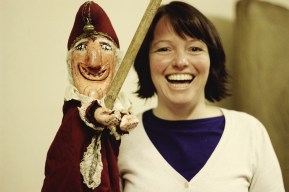
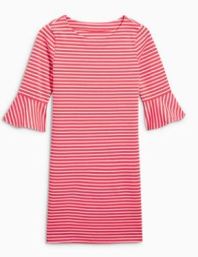
Because she had an awesome idea for her book launch!  What could be better for the launch of a virus-themed novel than wearing a bio-hazard suit, serving nibbles in syringes/petri dishes, and handing out protective face masks to the audience. The images continued to do the rounds online long after the launch had come and gone. And I remembered her book! Of course, my question is: What quirky thing might work for Punch? Puppetry will feature, naturally. For the children’s events, a bit of dressing up (I am customising  costumes as speak) and some props for audience participation tend to go down well in schools. I am going to basically wear a Punch and Judy tent (well, a dress with that type of pattern) – think bold red and white stripes, probably teamed up with red shoes. And there is a giant inflatable club – after all, the word slapstick came from Punch and Judy shows! Any new ideas welcome!

dress

  1. To attract a bit of media interest! An unusual venue might really help with this. In today’s visual world, anything that makes for a fab photo opportunity goes down well, and it may be as beneficial to the venue as it is to you. My Glasgow launch is going to take place with a school group, in the Scottish Mask and Puppet Centre. Provided the school is ok with this, there is nothing to say that we can’t invite the Glasgow papers’ journalists/ TV /radio crews, simply because it is different. And as I am, sadly, not all that interesting on my own, an unusual venue, I hope, may help. Let’s face it, I need all the help I can get! With 500 books published in a single week, we all do!
  2. To have fun! Most of us pass on having a party for any occasions, as if it was an ordeal to celebrate a success or an achievement with like-minded people. Come on! Let’s shed the British reserve, kick our figurative shoes off and let rip. You have a book out!

That is more than enough reason to revel! Wish me luck for my first launch events for Punch on the 26th! I can’t wait!

(We wish you all the (well-deserved) luck in the world Barbara.)

About Barbara Henderson

barbara-henderson

Barbara Henderson has lived in Scotland since 1991, somehow acquiring an MA in English Language and Literature, a husband, three children and a shaggy dog along the way. Having tried her hand at working as a puppeteer, relief librarian and receptionist, she now teaches Drama part-time at secondary school.

Writing predominantly for children, Barbara won the Nairn Festival Short Story Competition in 2012, the Creative Scotland Easter Monologue Competition in 2013 and was one of three writers shortlisted for the Kelpies Prize 2013. In 2015, wins include the US-based Pockets Magazine Fiction Contest and the Ballantrae Smuggler’s Story Competition.

You can find out more by following Barbara on Twitter and reading her blog. You’ll also find her author page on Facebook.

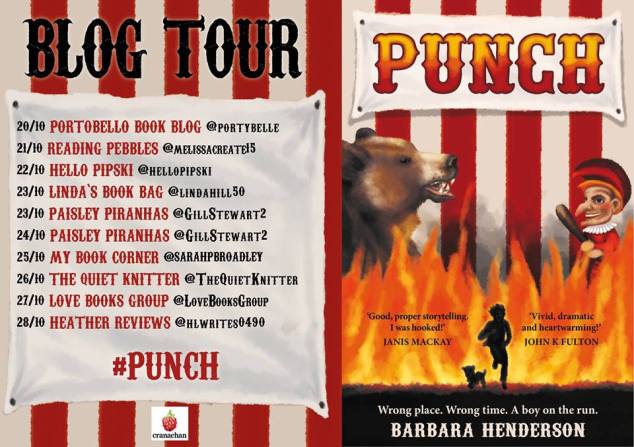
There’s more with these other bloggers too:

Punch tour poster

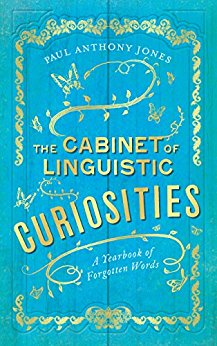
The Cabinet of Linguistic Curiosities by Paul Anthony Jones

Cabinet of linguistic curiosities

I had been coveting The Cabinet of Linguistic Curiosities: A Yearbook of Forgotten Words by Paul Anthony Jones so when a copy arrived on my door mat I was thrilled and I’m delighted to be part of the launch celebrations today. Not only do I have my review, but I have today’s entry so that you can get a flavour of the book.

The Cabinet of Linguistic Curiosities was published by Elliott and Thompson on 19th October 2017 and is available for purchase here.

The Cabinet of Linguistic Curiosities

Cabinet of linguistic curiosities

Who knows where each day will lead you?

Open The Cabinet of Linguistic Curiosities on any day of the year: you might leap back in time, learn about linguistic trivia, follow a curious thread or wonder at the web of connections brought to you by popular language blogger Paul Anthony Jones.

Within its pages you will discover a treasure trove of language, with etymological quirks and connections for every day of the year.

Today’s Entry in The Cabinet of Linguistic Curiosities

22 October

brolly-hop (n.) a parachute jump

On 22 October 1797, a French balloonist and daredevil named André-Jacques Garnerin performed the world’s first successful parachute jump.

Floating in a gondola hanging beneath a hot air balloon, Garnerin climbed to a height of 3,000 feet above the Parc Monceau in central Paris. He then cut the ties attaching his basket to the balloon, which floated skyward, and as he and the gondola began their descent, his homemade 23-foot canvas parachute unfurled above him. The descent was far from smooth, and the basket swung violently as it fell, but Garnerin managed to make a bumpy but nevertheless successful landing in the grounds of the park and stepped from the gondola uninjured.

Over the years that followed, Garnerin continued to improve his hot air balloon parachute designs, and gave regular demonstrations of his prototypes to ever larger crowds; in 1798, he courted controversy by asking a woman named Citoyenne Henri to accompany him on one of his flights.

Sadly, after a lifetime of surviving perilous falls, in 1823 Garnerin was struck by a falling beam while constructing a new balloon in his workshop and was killed. His place in history as the world’s first successful parachutist, however, was secured.

To British Royal Air Force parachutists in the first half of the twentieth century, parachuting became known as brollyhopping, while a brolly-hop was a parachute jump. First recorded in 1932, the term – alluding to the umbrella-like canopy of the parachute – grew in popularity during the Second World War but had largely disappeared by the 1950s.

My Review of The Cabinet of Linguistic Curiosities

With an entry for every day of the year, The Cabinet of Linguistic Curiosities takes the reader across centuries and continents as long forgotten terms are brought back to life.

Now here’s the thing. I never do this, but I’m actually going to review a book I haven’t actually completely read!

When I got my copy of The Cabinet of Linguistic Curiosities I dashed straight to my birthday where I discovered ‘crack-halter, a ‘gallows-bird’, someone liable one day to be hanged; a habitual troublemaker‘. Hmm! I then looked at my wedding anniversary to find ‘escarmouche, a brief skirmish or fit of anger‘! After that I flitted about from one significant date to another, thoroughly enjoying the brilliant discoveries I made. Then I stopped. And now I’m savouring each day as it arises in the calendar because I don’t want reading this delightful selection of entries to be over too soon.

You can read The Cabinet of Linguistic Curiosities on a daily basis as I am now doing, or you can turn to the Wordfinder at the back of the book and select a word that takes your fancy. Either way, the entries are hugely entertaining. As well as the linguistic interest there’s history, sociology, geography and so many wondrous things to discover. I am so impressed by the incredible devotion to research that has gone in to finding the words, and making them available to the reader through totally accessible prose and providing the background to the word’s etymology and usage.

I’m absolutely adoring this book and think it would make a fantastic gift for any reader or writer. There are three friends at least who will be receiving copies from me. In the meantime, having read some of The Cabinet of Linguistic Curiosities I may now have to become a word-grubber, but until then I’m off to scurryfunge the house!

About Paul Anthony Jones

Paul

Paul Anthony Jones is something of a linguistic phenomenon. He runs @HaggardHawks Twitter feed, blog and YouTube channel, revealing daily word facts to 39,000 engaged followers.  His books include Word Drops (2015) and The Accidental Dictionary (2016).  His etymological contributions appear regularly, from the Guardian to the Telegraph, Buzzfeed to Huffington Post and BBC Radio 4.

You can follow Paul Anthony Jones on Twitter @paulanthjones, and visit his website.

There’s more with these other bloggers too:

tour poster


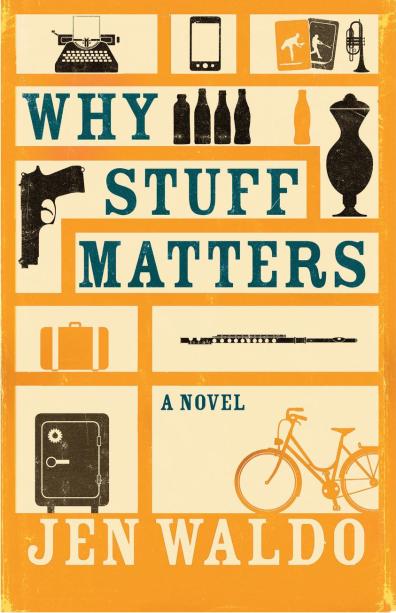
Three Belongings: A Guest Post by Jen Waldo, Author of Why Stuff Matters

Why Stuff Matters Jacket

I’m delighted to be part of the launch celebrations for Jem Waldo’s new book, Why Stuff Matters. I’m married to a terrible (or should that be expert) hoarder who never throws anything away. As we’ve aged we’re realising that material possessions aren’t important and there are only a few things with deep sentimental meaning that we’d really hate to be parted from. With that in mind I asked Jen Waldo what three things she’s save from her possessions in the event of a fire and she’s telling us today.

Why Stuff Matters was published on 19th October by Arcadia Books and is available for purchase here.

Why Stuff Matters

Why Stuff Matters Jacket

When Jessica, a grieving widow, inherits an antique mall from her mother she also inherits the stallholders, an elderly, amoral, acquisitive, and paranoid collection.

When one of the vendors, a wily ex-con named Roxy, shoots her ex-husband, she calls on Jessica to help bury the body and soon Jessica is embroiled in cover-ups, lies, and misdirection. Into this mix comes Lizzie, Jessica’s late husband’s twelve-year-old daughter by his first marriage, who’s been dumped on Jessica’s doorstep by the child’s self-absorbed mother and it soon becomes apparent that Lizzie is as obsessed with material possessions as Jessica’s elderly tenants.

Why Stuff Matters is a compelling ode to possession, why people like things and the curious lengths they will go to keep them. Returning to her fictional Caprock, Waldo turns her wry wit on the lives of those afraid to let go.

Three Belongings

A Guest Post by Jen Waldo

If I had to evacuate because of a fire, what three things would I save? Considering that my new novel, Why Stuff Matters, addresses a small community’s obsession with material possessions, this is a relevant question. Also, fires do occasionally sweep through this portion of Texas, so the possibility of this scenario coming true is a literal concern as well as a figurative one.

The first thing I’d grab would be my laptop, which goes with me every time I spend a night away from home. Over this one item, I’ll admit to obsession. I write every morning. It is invariably what I do. Even if I were evacuated to some stale hotel while my home burned down, I’d write.

The next thing I’d take with me is woefully unoriginal. I’d take the photo albums. Not that I ever spend time browsing through them, but as a family we’ve had adventures. I think our sons would want me to rescue pictures of them as children riding camels, hiking through the Scottish highlands, scrambling around the ruins of Petra, or strolling through the tulips at Keukenhof.

Lastly, I’d dump the little dishes that hold my jewelry into my leather jewelry box that’s meant for traveling. Necklaces, earrings, rings—the usual stuff, but it’s nice stuff and I wouldn’t want to lose it.

Now keep in mind that for us, a fire might become a reality. We live amongst a lot of splintery cedar trees and undergrowth, and when there’s been no rain for a couple of months, the area becomes frighteningly dry. But there would be warning. An evacuation notice would be given; we’d have ample time to gather some clothes, pack up, and get out.

It’s not like my husband and I haven’t discussed the likelihood and made a plan. The first thing in the truck will be the laptop. Then, while I gather the photo albums and jewelry, David would be freeing the art from the walls. We’ve collected some nice oils and batiks over the years, and each piece holds a memory—where we got it, how we haggled to get the price down, the endless discussion of where we’d hang it. In many cases, we know the artist.

After all this stuff is in the truck, we’d walk through and see what else we could save—probably a few small pieces of furniture. Together, we’d lift and carry the rosewood chest that reigns from the end of the hallway, purchased in Sorrento. And another chest; we bought it in Vietnam when we lived in Singapore and ended up paying the price again in duty to get it into the country. Live and learn. We’d slide both of these chests into the bed of the truck.

And that’s it. That’s all the truck will hold.

While I’ve written about the items I hold most dear, I’m also aware that it’s just stuff. However, having said that, a few months ago David and I loaded up the truck and went on a road trip. Four hours into it, we stopped for lunch. I walked around the back of the truck and saw that we’d driven that whole way with the tailgate open. Our luggage and David’s golf clubs were still there, but we lost a box of items that I’d put in at the last minute. The box held two new beach towels, laundry detergent, sunscreen, a bottle of Grey Goose, and two bottles of a really nice Malbec. I didn’t spare a thought about how this box, falling on the highway, could have caused an accident. I was upset over the loss of the stuff. I felt befuddled and incomplete until every one of those items had been replaced. It seems I have more in common with the acquisitive folk in Why Stuff Matters than I thought.

(I think perhaps we all do Jen!)

About Jen Waldo

Jen Waldo

Jen Waldo has lived in seven countries over a thirty-year period, and now lives in Marble Falls, Texas with her husband, David and small dog Trip. She first started writing in Cairo, where she struggled to find interesting things to read and decided to write something for herself. Finding pleasure and power in the process of creating, she has since earned a Masters of Fine Art, has been published in The European, and has been shortlisted in a competition by Traveler.

She is often asked why, with her knowledge of international cultures and settings, she places her novels in a stark dry town in North Texas. It’s because it’s the place she knows best – the dusty gusts, the flat earth, the square houses, the late-summer thunderstorms. The people are stocky, stubborn, religious, big-hearted, abhorrent toward change, and suspicious of success. She’s grateful to Amarillo for providing colourful characters and a background of relentless whistling wind.

To find out more you can visit Jen’s website.

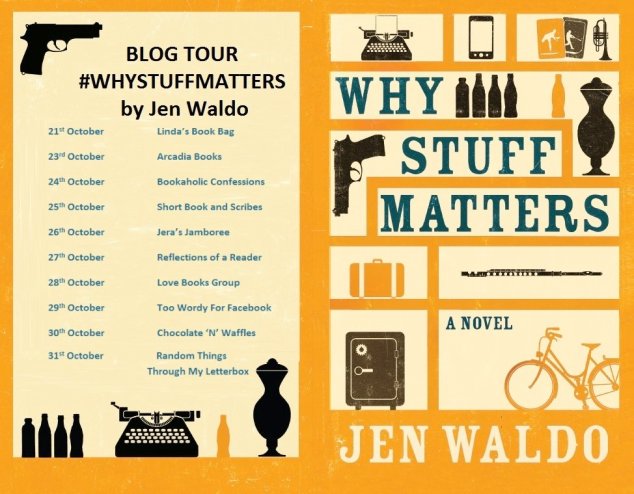
There’s more wwith these other bloggers too:

Why Stuff Matters poster

Sir Chocolate and the Condensed Milk River Story and Cookbook by Robbie and Michael Cheadle

sir chocolate

Now, when I heard that there is a book, Sir Chocolate and the Condensed Milk River Story and Cookbook, that features chocolate and happens to be written by Robbie Cheadle (with help from her son Michael), who has been a fabulous supporter of Linda’s Book Bag, I just had to feature it here.

Today, I’m reviewing Sir Chocolate and the Condensed Milk River Story and Cookbook and have a lovely post from Robbie giving insight into how the book came about.

Sir Chocolate and the Condensed Milk River Story and Cookbook is available for purchase here.

Sir Chocolate and the Condensed Milk River Story and Cookbook

sir chocolate

The Condensed Milk River where Sir Chocolate goes fishing has stopped flowing. The water creatures are losing their homes.

Can Sir Chocolate and Lady Sweet solve this problem?

Five lovely new recipes are also included.

The Writing of Sir Chocolate and the Condensed Milk River Story and Cookbook

A Guest Post by Robbie Cheadle

Michael and I like to bake and we have been reading together for most of his 11-year life. Michael likes to be read to but he is not as enthusiastic to read himself. To encourage him we now have a nightly habit of reading in tandem. I read one page and he reads the next. He usually only reads three or four complete pages but it is great practice for him and my reading helps move the story along at a quicker pace. If the book is good, I often read more to him.

The writing of Sir Chocolate was one of my endeavors to encourage Michael to read and write. Michael had this lovely idea about a little man made of chocolate who lives in Chocolate Land where you can eat everything. We started writing down various little stories together.

Our current book was a collaboration that included my niece, Emily. We were all on holiday at the coast together and the weather wasn’t great. One morning we were all sitting together drinking cocoa, made by my Dad with condensed milk, when the idea of a river of condensed milk popped up. The three of us sat down and wrote a story together about this idea and that became Sir Chocolate and the Condensed Milk River story and cookbook.

Michael loves the trolls from Book 1: Sir Chocolate and the Strawberry Cream Berries story and cook book and so the troll family made a reappearance in Book 4. Emily was most concerned about the creatures that lived in the river and she introduced the ideas of the struggles of the fish and other water creatures in the book.

Later, after we had all returned home, Michael and I were making the illustrations for the book from cake, fondant and biscuits. The topic of a lady troll came up. I didn’t think you got lady trolls but Michael was quite certain you did. Who would be the mother otherwise? A most important question in Michael’s world. I thought trolls just appeared; like the giants in Roald Dahl’s story The BFG but apparently not. Lady trolls do exist and both Michael and my versions of Ma Troll made their way into our new book.

(And Michael is quite right Robbie!)

My Review of Sir Chocolate and the Condensed Milk River Story and Cookbook

Books and chocolate – the perfect combination.

I wasn’t sure what to expect from Robbie Cheadle’s Sir Chocolate and the Condensed Milk River Story and Cookbook, but it still took me by surprise.

Firstly, the illustrations (made from fondant and cakes) are incredible and enhance the narrative so skilfully. I got quite hungry just looking at the photographs and that was before I even got to the recipes.

I thought the rhyme scheme was very well maintained making the book good for slightly older reluctant readers as well as enhancing the vocabulary of younger readers. I don’t know if it was deliberate, but I really liked the concept of trolls saving the day. They are usually seen as negative and violent creatures and I felt the underlying message of being helpful and not judging others by appearances was perfectly pitched.

I really enjoyed the whole creativity of this book, not just from the imaginative story set in a land where all things can be eaten, but I loved the accessible recipes and the poem It’s A Boy, which came as a surprise and a more adult element to the book, too.

Sir Chocolate and the Condensed Milk River Story and Cookbook is a feel good, creative book that can be enjoyed on many levels by both adults and children of all ages alike.

About Robbie Cheadle

robbie

Robbie Cheadle was born in London in the United Kingdom. Her father died when she was three months old and her mother emmigrated to South Africa with her tiny baby girl. Robbie has lived in Johannesburg, George and Cape Town in South Africa and attended fourteen different schools. This gave her lots of opportunities to meet new people and learn lots of social skills as she was frequently “the new girl”.

Robbie is a qualified Chartered Accountant and specialises in corporate finance with a specific interest in listed entities and stock markets. Robbie has written a number of publications on listing equities and debt instruments in Africa and foreign direct investment into Africa.

Robbie is married to Terence Cheadle and they have two lovely boys, Gregory and Michael. Michael (aged 11) is the co-author of the Sir Chocolate series of books and attends school in Johannesburg. Gregory (aged 14) is an avid reader and assists Robbie and Michael with filming and editing their YouTube videos and editing their books. Robbie is also the author of the new Silly Willy series the first of which, Silly Willy goes to Cape Town, is now available.

You can follow Robbie on Twitter @bakeandwrite and visit her blog.

You’ll find all Robbie’s books here.

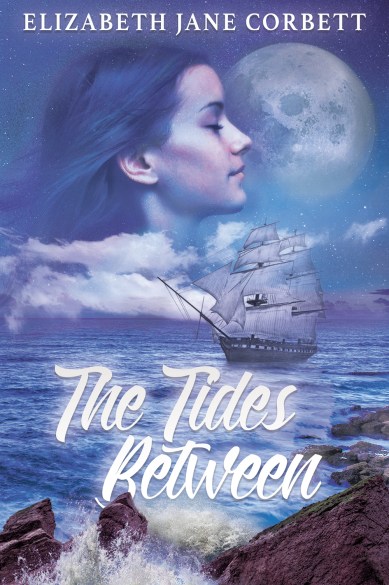
A Publication Day Interview with Elizabeth Jane Corbett, Author of The Tides Between

The-Tides-Between

I’m so pleased to be interviewing Elizabeth Jane Corbett on publication day for The Tides Between because Elizabeth has always been such a generous supporter of Linda’s Book Bag and it’s lovely to be able to do something for her in return.

The Tides Between is published by Odyssey, today, 20th October 2017, and is available for purchase in the usual online places including Amazon and through the publisher links here.

The Tides Between
The-Tides-Between

She fancied herself part of a timeless chain, without beginning or end, linked only by the silver strong words of its tellers.

In the year 1841, on the eve of her departure from London, Bridie Stewart’s mother demands she forget her dead father and prepare for a sensible, adult life in Port Phillip. Desperate to save her childhood memories, fifteen-year-old Bridie is determined to smuggle a notebook filled with her father’s fairy-tales to the far side of the world.

When Rhys Bevan, a soft-voiced young storyteller and fellow traveller realises Bridie is hiding something, a magical friendship is born. But Rhys has his own secrets and the words written in Bridie’s notebook carry a dark, double meaning.

As they inch towards their destination, Rhys’s past returns to haunt him. Bridie grapples with the implications of her dad’s final message. The pair take refuge in fairy tales, little expecting the trouble it will cause.

An Interview with Elizabeth Jane Corbett

Welcome to Linda’s Book Bag, Elizabeth. Thank you so much for agreeing to answer some questions on my blog about your writing and The Tides Between in particular.

Firstly, please could you tell me why you write?

I require a great deal of solitude to maintain my sense of equilibrium. Writing is a solitary activity in which I am able to become completely immersed. I journal as a form of meditation, I always write emails in preference to phone calls, I relate easily on written, social media platforms. Fictional words don’t always come easily. But if I persist I can sometimes write scenes that sing. That’s when I feel most alive.

When did you realise you were going to be a writer?

I grew up with stories of a writer in the family – John James a Welsh historical novelist back in the 1960s – and ever since I got lost on a lonely moor with the famous five, I’ve wanted to write a novel one day. I did, in fact, try once as a child. I decided to write a horse book. Trouble was, I didn’t know much about horses, so I didn’t get far (an early lesson on the importance of research).  I got serious again after my fortieth birthday – one of those what-have-I-done-with-my-life moments. I thought, If I’m going to write a novel, I’d better start, before it is too late. I’m still not sure if I’d call myself a ‘real’ writer – just a woman who had a mid-life crisis, wrote a few stories, and got lucky.

(Oh – you’re definitely a ‘real’ writer Elizabeth!)

What are your writing routines and where do you do most of your writing?

I started writing with a second-hand laptop and a desk we’d picked up off the side of the road and squeezed into the corner of our bedroom. Now, my husband and I live alone. I therefore have my own office. But when I am researching and plotting I like to sit at the dining room table. Generally, I start the day with social media in bed (around 8 am). I journal in my dressing gown and then read, plot, and write for the remainder of the day. My husband travels a great deal for work. When he is away, I work right through the day, eating on the job. When he is around, working from home, we always go out for coffee at lunch time. I stop to exercise around 5 pm. Then, I will often work on social media and administration in the early evening. I work casually as a librarian. So, I don’t follow this routine this every day. I could, though, given half a chance, quite easily.

The Tides Between is published today. How are you celebrating?

By blogging (as you do), having lunch with my husband and by repeating the words, my novel is published, over and over until they sink in.

(Yes indeed – your novel IS published!)

Without spoiling the plot, please could you tell us a bit about The Tides Between?

I am calling it an historical coming-of-age novel about fairy tales and facing the truth. Set almost entirely in the steerage compartment of a nineteenth century emigrant vessel, it tells the story of a young girl who has lost her father in tragic circumstances, a mysterious Welsh storyteller with dark secrets, and the ancient tales that will transform their journey.

I know that history is a large part of your life. Why are you so drawn to the past?

History was always my favourite in subject in school, perhaps it would have been, regardless of my life story. However, for me, my love of history has somehow become linked to my migrant experience.

I moved to Australia with my family when I was a five years old. My British parents knew little about their new home. They certainly didn’t know anything about Australian children’s literature. So, I read the books they’d read as children. Enid Blyton’s mysteries and school stories, Malcom Saville’s, Lone Pine Series, Arthur Ransome’s, Swallows and Amazon books. I also read classics like Black Beauty and Peter Pan and children’s versions of Dickens and Shakespeare. These became mixed up with tales of a place my parents called ‘home.’ A place that was somewhere in the past. I can still recall my jolt of shock upon learning that Anne of Green Gables was set in Canada and not the past-place my parents called ‘home.’ We returned to the UK just before I turned twelve and it was all real – the castles, the beautiful old villages, the traditions, the winding country lanes, the cream teas, the badgers, the woods, the wellington boots, the foxes, the bracken on the moors – everything I’d ever read about in books was real. I’ve never quite recovered.

Fairy tales are at the heart of The Tides Between. How important is narrative tradition in fiction do you think?

Fairy tales were not part of my original story conception. I actually started out to write an Aussie immigration saga. As I read books about the early immigration system, a young girl entered my mind. I called her Bridie. I knew she had lost her father in tragic circumstances. I had this idea that she would meet a creative young couple on the voyage to Australia and they would help her reconcile her grief. Initially, they were Irish. However, I was planning a trip to the UK (my first since childhood) and was relying on long, lost family accommodation (as we stingy Aussie’s are wont to do). I didn’t have any Irish relatives. But, mum was Welsh. Hmm…maybe my creative young couple could come from Wales?

I didn’t know anything about Wales – apart from Rugby and male voice choirs. Rugby wasn’t invented in 1841 and, even if I could have invented a scenario in which a whole male-voice choir emigrated en-masse. I didn’t think a young girl would find it inspiring. Some quick research told me that Wales had a strong bardic culture. Hmm…maybe my Welsh characters could be storytellers?

Fairy tales and myths are of course early forms of storytelling. They fulfil the same purposes as good modern writing does – to entertain, to enlighten, to warn, to break our hearts open. I have read dozens of Welsh fairy tales, in the name of research, and a good number of books about the Welsh storytelling tradition. The highlight was being a course on Y Pedair Canc y Mabinogion – the four branches of the Mabinogion – in Welsh, while living in North Wales. I am far from being a Welsh fairy tale expert, simply a lover of Welsh tales. But my character is a poor Welsh miner’s son, so I reasoned he wouldn’t be an expert either. I also reasoned his versions of familiar tales would have been shaped by his life experiences.

Here is an excerpt from The Tides Between after Rhys tells the story of Llyn y Fan Fach – The Lake of the Small Peak – the tale of a fairy woman who married a mortal but returned to the lake after the man struck her three causelessly blows:

Bridie didn’t know how long she sat there after the story finished. An age it seemed—with her chest heaving and her hanky sodden, thinking of babies called home before their time, her dad’s long and bitter illness, his strange, turbulent moods, Ma’s even-now bitterness. She became aware of Siân’s soft humming, Rhys’ dark, considered gaze, the knot of onlookers drifting away. She sniffed, dabbing at her eyes.

            ‘Sorry. I won’t cry every time.’

            ‘No need to apologise, Bridie Stewart. There is no greater compliment to a story teller.’

            ‘But…Rhys? Do you think she wanted to leave?’

             ‘I don’t know bach. The story doesn’t tell us. Only that the maiden loved Ianto enough to thrust her sandaled foot forward and that she bore him three fine sons.’

            ‘But, laughing at a funeral, sobbing at a wedding? She wouldn’t have done those things, if she’d loved him.’

            ‘We don’t know why the Fairy Woman laughed at the funeral bach. Or indeed, why she sobbed at a wedding. Maybe she mourned for the bride, seeing problems others could not perceive? Maybe she grieved for her first life, the ones she’d left behind? But that doesn’t mean she didn’t love Ianto. Or that she wanted to leave him.’

            ‘I think it does. I think she hated him.’

            ‘Indeed, that is why you feel the story so deeply. You are not alone in that, Bridie bach. No doubt, Ianto asked himself the same questions. For they are the questions of the ages—how we tell a true story from one fashioned merely for entertainment. For in the plight of each character, we confront our heart’s reasons. Do not fear those reasons, be they ever so painful. Only promise you’ll write about them in your own version of the story.

(Wonderful Elizabeth!)

You also teach Welsh. How does an understanding of another language help your fiction writing?

The Welsh language is another accidental side-effect of trying to write an Aussie immigration saga. In addition to learning that Wales has a rich bardic culture, I also remembered the Welsh had their own language. Mum was from South Wales and the language had been lost in her family but I grew up with a few Welsh words – Arglwydd Mawr! – Lord Almighty! Dere ’ma – come here. We also had a twt (small things) drawer in our kitchen. Once I decided to include a Welsh character in my novel, I knew I’d have to learn a little more about the language (in 1841 Welsh was still widely spoken in South Wales).

To my surprise, I found there were Welsh classes in Melbourne. I enrolled for what I thought would be one term. But I had no idea Welsh was so beautiful. One term became two terms, then three. Before long, I was totally smitten with language – the words, the sounds, the letters were like a soul-song to me. I wasn’t a particularly diligent student. I had four teenagers still living at home. I’d been rubbish at languages in school. It was enough to simply be in the presence of those ancient words.

We went through a difficult time with our youngest daughter. My writing ground to a halt. I found myself in a pretty dark place emotionally. My husband suggested, I need to get away for a while. We had lots of frequent flyer points. So, I decided to go to Wales. At some point, I came across a free online course called Say Something in Welsh. The tutor, Aran, was so encouraging. He told me I was doing well, that I would succeed, that I could become a Welsh speaker. His words were like rain on parched earth. I felt like an absolute failure in every other area of my life. So, I chose to believe him. And it worked. I now tell everyone I walked through that difficult time holding onto the tail of an ancient language.

So, Welsh has been a huge part of my personal journey. I have no doubt the cultural connection has given me a great empathy for my characters. But more importantly, I have found my way home. The Welsh speaking Elizabeth Jane Corbett is a different person to her English-speaking equivalent. She tells different jokes, has a different tone and perspective on life. She also understands the desperation of Welsh speaking communities whose world is slowly being eroded.

My four children have grown up and left home. I return to Wales often. On one occasion, I spent seven months working at Stiwdio Maelor, a writers’ and artists residence in North Wales. While living at Maelor, I came across the idea for my current project – a novel written from the point-of-view of Owain Glyn Dŵr’s wife. I wouldn’t have come across the story if I wasn’t immersed in Welsh language culture. I have since grappled with whether I, an outsider, have the right to tell such a precious national story. On a recent research trip, I made contact with Welsh academics. In some instances, I sense they too are wondering: what is an Aussie doing writing one of our stories? Then I start speaking Welsh and I see their scepticism dissolve before my eyes.

You’ve had considerable success with your short stories (Beyond the Blackout Curtain, won the Bristol Short Story Prize. Another, Silent Night, was short listed for the Allan Marshall Short Story Award). What were the similarities and differences in writing a full length novel this time?

I write very few short stories. Primarily because I don’t read them very often. I love the novel as a form and, if the book is part of a series, even better. My short story ideas have generally hit me hard in some way. For example, Beyond the Blackout Curtain was inspired by a World War Two memory of my mum’s. I had this oh-my-God-I have-to-write-that-story moment. His Own Man, was inspired by the tears prickling my eyes in an Easter parade in the country town of Beechworth. Silent Night was written while my daughter was living on the streets. I wondered what would be like to have a child run away, forever. How would that effect you emotionally? If I get that kind of visceral response, I am motived to invest time. But short stories are heaps of work, especially if they have an historical setting. So, mostly I save myself for the long form.

Given that The Tides Between is set in the 1840s, how did you go about researching detail and ensuring it was authentic?

I read books about the voyage to Australia and then combed their bibliographies for primary source material. Much of it has been digitised – diaries, letters, instructions for surgeons on emigrant ships, pamphlets on the immigrant experience. I spent loads of time in Covent Garden (my protagonist’s father was a theatre musician), slept on a sailing ship overnight, went underground in the Big-Pit Museum (my Welsh storyteller was a miner’s son), visited the sites of my Welsh fairy tales, learned a language… Did I mention I have a mildly (cough) obsessive personality? Research is the easy part for me. Getting the words down is tougher. I wrestle constantly with self-doubt and fall into a slough of despair every time I have a manuscript assessment. But once I hear those words sing, the thrill returns. I am also part of an extremely supportive writing group (I am, without doubt, the neediest member).

(I think many authors will recognise themselves in your answer there.)

The Tides Between has a cover that suggests the mystical pull of the moon to me. How did that image come about and what were you hoping to convey (without spoiling the plot please!)?

My publisher chose the cover images. However, the moon is apt. The title, The Tides Between, is a play on words. The characters are living between decks. They are also caught between their old life and their new life. Bridie the protagonist is hovering between childhood and womanhood. Tides as you know are related to the lunar cycle. Women’s menstrual cycles are also monthly. In addition, I hope the moon gives the cover a mystical feel. For there are ancient Welsh charms and folklore in the novel as well as fairy tales.

If you could choose to be a character from The Tides Between, who would you be and why?

I think I’d have to be Alf, Bridie’s stepfather. He is the sensible, unsung hero of the story. Added to which, I don’t make him suffer nearly as much as Rhys and Bridie. However temperamentally I am more closely attuned to the latter, who both feel life deeply. I definitely wouldn’t want to be Siȃn. But I can’t tell you why without spoiling the story.

If The Tides Between became a film, who would you like to play Bridie and Rhys and why would you choose them?

Rhys – a young Aiden Turner (if he could do a suitable Welsh accent), or Joseph Fiennes, or Rufus Sewel (all young and dark haired, Rhys is only twenty-one years old). But Wales is absolutely brimming with acting talent. So, I’d say, any young, slender, dark-haired, Welsh speaking actor would do nicely.

Bridie – Georgia Henley (from Chronicles of Narnia), or a young Emma Watson would work.

When you’re not writing, what do you like to read?

I mostly read historical fiction set in Britain. Edith Pargetter is a long-time favourite author, as are Sharon K Penman and Dorothy Dunnett. I love a bit of magic realism, such as that found in Joanne Harris’s, or Carol Lovekin’s books. Anything quirky, historical or mystical that is set in Wales. I also read some Australian historical fiction.

If you had 15 words to persuade a reader that The Tides Between should be their next read, what would you say?

A young girl, her forbidden notebook, a mysterious Welsh storyteller – no one will arrive unchanged.

Sounds briliant Elizabeth. Thank you so much for your time in answering my questions.

About Elizabeth Jane Corbett
untitled (65 of 66)-Edit-2 (1)

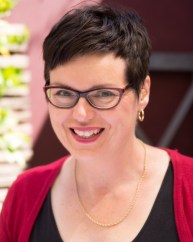
When Elizabeth Jane Corbett isn’t writing, she works as a librarian, teaches Welsh at the Melbourne Celtic Club, writes articles for the Historical Novel Review and blogs at elizabethjanecorbett.com. In 2009, her short-story, Beyond the Blackout Curtain, won the Bristol Short Story Prize. Another, Silent Night, was short listed for the Allan Marshall Short Story Award. An early draft of her debut novel, The Tides Between, was shortlisted for a HarperCollins Varuna Manuscript Development Award.

Elizabeth lives with her husband, in a renovated timber cottage in Melbourne’s inner-north. She likes red shoes, dark chocolate, commuter cycling, and reading quirky, character driven novels set once-upon-a-time in lands far away.

You can find out more by following Elizabeth on Twitter @lizziejane, visiting her blog and finding her on Facebook.

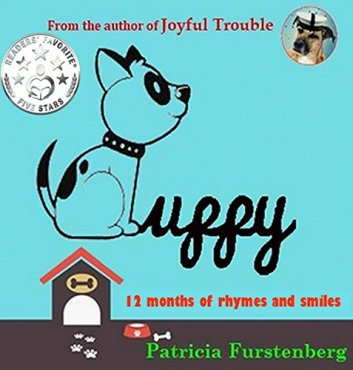
Puppy: 12 Months of Rhymes and Smiles by Patrica Furstenberg

Puppy

My grateful thanks to Patricia Furstenberg, author of Puppy: 12 Months of Rhymes and Smiles for sending me a copy of the book in return for an honest review. Patricia has featured on Linda’s Book Bag before with a super guest post that you can read here all about the importance of reading.

Published on 31st October 2017, Puppy: 12 Months of Rhymes and Smiles is available for purchase here.

Puppy: 12 Months of Rhymes and Smiles

Puppy

A puppy’s first year is filled with findings, wiggles and laughter.
Puppies squirm in all the odd places, sniff all the strange objects, lick everything they can and find something to splash into even when we don’t want them to!

This book of poems explores the first year of a puppy’s life, going through an adventure after the other, one month at a time.

Puppy’s first days, puppy’s first weeks in a new home, puppy’s encounters with snow and the school bag, puppy’s duty to protect… What happens when puppy is full of good intentions, yet his actions go wrong?

Read the rhymes and laugh with your little one.

Puppy: 12 Months of Rhymes and Smiles is an auditory feast for children, a fun read-aloud for parents, and treat for dog-lovers, young and old.

My Review of Puppy:12 Months of Rhymes and Smiles

The first year in Puppy’s life sees a great many adventures and a lot to learn.

What a charming book this is. I must first commend Patricia Furstenberg on the fabulous quality of the illustrations as Puppy: 12 Months of Rhymes and Smiles could be enjoyed through the pictures alone as there is so much to look at and discuss. It would be just right for pre-school children. Although there are rhymes as suggested by the title, not all the text conforms to this pattern and I liked that. It means that language can be enhanced and explored whilst the story is being enjoyed.

I really liked the way the book is divided into months for the first year of Puppy’s life so that I could see a month per bedtime as a story, making it excellent value for money. In each month there’s a subtle moral or principle behind the story so that it might be about the importance of family at Christmas in December or the fact that starting school means attending every day and not just once as in the September tale, or the challenges of trying new experiences like going to the beach in July. All these elements means there’s something to talk about with young children and afford them the opportunity to consider what could be challenging concepts in a safe environment.

Another element that I found really satisfying was the underpinning love throughout. I felt as emotional as Granny at Christmas! Here we have a book that exemplifies caring for your family and being together, making it a lovely book to share together.

One thing I would say is that I think Puppy would be fantastic for merchandising. Any child would adore a Puppy cuddly toy (and so would this adult!).

About Patricia Furstenberg

Author head

Patricia Furstenberg came to writing though reading. After completing her Medical Degree in Romania she moved to South Africa where she now lives with her husband, children and their dogs. Patricia became taking writing seriously  after becoming one of the WYO Christie winners. She enjoys writing for children  because she can take abstract, grown-up concepts and package them it in attractive, child-friendly ways while adding sensitivity and lots of love.

All of Patricia’s children’s books are available here.

You can follow Patricia on Twitter, find her on Facebook and visit her website. She’s also on Goodreads.

An Interview with R. V. Biggs, Author of Song of the Robin

Song of the robin

Having recently met R.V Biggs, author of Song of the Robin at a blogger and author event, I just had to invite him onto Linda’s Book Bag to tell me more about himself and his writing.

The first book in Robert’s Sarah Macintyre series, Song of the Robin is available for purchase here.

Song of the Robin

Song of the robin

It wasn’t the whispered voices, or the unsettling dreams that had begun to trouble Sarah Richards so much as the visions… visions of a man more ghostly than real.

In the space of a single day, her visitor appears several times, but is the spectre harmless or are his intentions malevolent.

Seeking the support of a friend, Sarah endeavours to identify her unknown stalker. But with each visitation she becomes ever more bewildered… and as her orderly life begins to unravel, she questions the reality of all that she knows, and with mounting horror, even her own sanity.

An Interview with R.V Biggs

Welcome to Linda’s Book Bag, Robert. Thank you so much for agreeing to answer some questions on my blog about your writing and Song of the Robin in particular. Firstly, please could you tell me a little about yourself?

Thanks Linda for inviting me, and it was a pleasure to meet you in Birmingham during September.

A little about me? Well I was born on a Monday in a leap year and my star sign is Leo… birthstone Peridot. Apparently in dog years I’m 427 years old!

I was very shy in my younger years, which probably explains why I was 32 before I met my soul mate (we were meant to be together and were heading along our own paths until the point where destiny played its part.)

I have a passion for mystery, or the fight between good and not so good. Among my favourite stories are The Lord of the Rings (the original books, read when I was in my early twenties), and also Afterwards and Sister, both by the wonderful Rosamund Lupton. One of my favourite films is ‘Signs’ by M Night Shyalaman. A spooky but destiny ridden film starring Mel Gibson that tests the hero’s faith until the touching end.

As for family, I have four step children and soon to be six grandchildren. Life has been busy, though I still work for a living. My wife now has most grand parenting duties!

Ten years ago, and fascinated by alternate therapies, I took a Reiki level 1 course. I think the experience may have guided my writing.

I love the outside world and sunshine (Leo remember), but though I love the Med, I’m happiest under sunny Scottish skies with the wind blowing fresh salt air into my soul.

Why do you write?

For me, and I think because it’s my time. It’s utterly absorbing. When I write, or edit… I’m focussed on the screen in front of me. I’m not thinking about the DIY that’s not finished (or started) or what I need to do at work. A friend once asked me if I thought I was being selfish and I admit I’d never thought of it that way. As couples most of what we do together is shared, but writing is different unless of course you are part of a writing couple. Writing lets me focus on my inner thoughts and imagination.

When did you realise you were going to be a writer?

I’m not sure there was a conscious realisation of this. The half awake dream I had and the song lyrics that triggered the dream, kick started Song of the Robin and that took place in the autumn of 2007 so I guess that would have been the start.  The first time I said anything aloud about writing a novel was to my wife a few weeks later while on holiday in the Dominican Republic. Telling someone else made it suddenly very real. After that, it almost became an obsession. Difficult to get off a zip wire once you’re on it. At the beginning I simply had a story to tell, as a challenge and for my own pleasure. But then the idea of publishing crossed my mind which of course brought a whole new set of challenges.

Which aspects of your writing do you find easiest and most difficult?

From what I’ve read I think most authors would say the actual writing is the easy part, not in the literal sense of course, and that’s my experience too. It’s hard work creating a consistent and flowing story line though. Many people have also said that editing is the hardest task but I’m not finding that at the moment. Its laborious for certain because whole sections sometimes have to be rewritten or recreated… moved around. To edit I use software to help spot proofing mistakes, check on writing style and diction along with overused words etc. It also suggests other improvements that you can choose to ignore. It’s an invaluable aid and I think has helped improve my writing. I may find it hard again when I restart the third novel. I have a timeline for it and key events but not much that stitches it all together…. yet.

What are your writing routines and where do you do most of your writing?

By far the majority of Song of the Robin and its sequel Re-Union were written while holidaying in remote Scottish cottages. Time, space, a clear head and a wife who loves walking the dog for a few hours then sitting by the fire knitting with a pot of tea and a wee dram helps enormously. Much of the storyline for Song of the Robin developed in my head while I was walking the dog. The dog never talked to me much… just roamed ahead sniffing under bushes.

Of course writing on holiday is a situation that occurs irregularly so is hardly a routine. I have however developed the habit of spending an hour after work editing. I’ve yet to find out if that habit will extend into the third novel when I pick it up again because I usually have to be in a quiet place… what I call the zone in order to create.

Without spoiling the plot, please could you tell us a bit about Song of the Robin?

Song of the Robin describes a young woman’s week long struggle with what she sees as encroaching madness as she tries to maintain control of her sanity. The main plot carries an air of mystery about it, until that mystery is revealed, but even afterwards the struggle continues with elements of spirituality threaded throughout.

It started as a simple fight for survival but became a romantic mystery as it focuses on themes of destiny and the deepest love between two people and their beliefs in the strength of family.

Song of the Robin doesn’t fit neatly into one particular genre. Why did you decide to write it this way? 

As a first time author, I perhaps have the luxury of ignorance when it comes to all things ‘authory’ so I confess I didn’t really plan for anything… no time line, no subplots, little in the way of arc and no genre. I had a concept but with no storyline at all, and hence no specific genre in mind. I think Song of the Robin, which was the last of several titles, started out as romantic drama but quickly became a psychological tale, though as you say it doesn’t quite fit into perhaps a standard genre and I’m happy with that. It’s certainly not a thriller though perhaps the reader is better placed to decide what thrills them. I’ve always liked stories that bring elements of mystery into them and these elements ‘appeared’ as the tale unfolded. I think that answers why I decided to write it that way… my own arc… it grew along with the story, or as Indiana Jones may have put it, I made it up as I went along.

Song of the Robin is partly set in Scotland which I know is a very important place to you. How did it feel to capture this setting in your writing?

Yes you are sooo right in that Scotland has a place in my heart. Living there for a year was ‘our great experiment’ but wrong time, wrong place and we took the decision to return home. It was hard to leave it behind… the dream of living in an old Crofters Cottage surrounded by fields instead of concrete and tarmac, but an easy decision to make in the end. Reality makes one adapt.

It was five years after leaving Scotland that the idea for Song of the Robin came into being and I soon learnt while developing the story that I was using my writing as an emotional download. I wanted my protagonist to fall in love with the country as I had done. I needed romantic events to take place there because Scotland is full of romance. I like to think I captured the mood well, and an early review on Amazon did comment with praise on my descriptive turn of phrase (something I learnt from Tolkien of all people… how to build a scene). I’ve copied below an extract. The scene is from a real beach in Ayrshire and one that I’ve visited many times though not often enough. This is looking back on an event ten years prior to the story:

On the last day of their stay, the weather had been stunning, bringing a lie to the popular belief amongst many of the English that Scotland was always cold and wet. Sarah wanted one last picnic, so John had gone into town on his own to pick up provisions, leaving Sarah to chat with his grandparents. It had been almost four o’clock when he returned and they headed off to the beach to find a quiet spot with sand dunes at their backs and a clear view of Arran, Ailsa Craig and Kintyre to the front. With only a few people wandering along the shore, walking dogs or taking children out after school, the afternoon was tranquil.

Laying out a blanket and making a fire in the sand, they made the most of their last meal. John had brought simple food that cooked easily and a sparkling wine that was cool and fruity. The evening held a calm and relaxing stillness.

When dusk had begun to settle and the shadows deepened, John grabbed an extra blanket and threw it around their shoulders, tugging it close. With only tee shirts to cover them, the waning of the sun had brought a cool bite to the air, and Sarah shuddered as she folded into his arms.

The light from the sun had weakened, and the sky turned from blue into shades of orange and red with high fluffy clouds blushing pink.

Apart from the occasional piping of small birds pecking the sand and wading in amongst the weed along the shoreline, not a sound disturbed the evening. As they’d sat huddled warm within their blanket, watching the rippling of tiny waves caressing the shore, occasional spouts of water left the calm surface of the sea as marauding Gannets dived like spears into the depths searching for their supper. The sharp, craggy peaks of the Mountains on Arran silhouetted against the fading light looked dramatic, wild and formidable.

The colour of the sea had turned to a bright orange, dazzling and glittering as it rippled on its silken surface. A myriad of tiny diamonds floated on the brighter golden path that travelled from their feet to the horizon where the huge and glowing ball of the setting sun melted into the water. The languid slap of tiny waves broke upon the shore but Sarah took no notice as John rose to his feet —-

I’ve left out the end for fear of spoiling the scene.

(That’s beautifully evocative Robert.)

Song of the Robin has a cover that I know you spent some time deciding upon. How did that image come about and what were you hoping to convey (without spoiling the plot please!)?

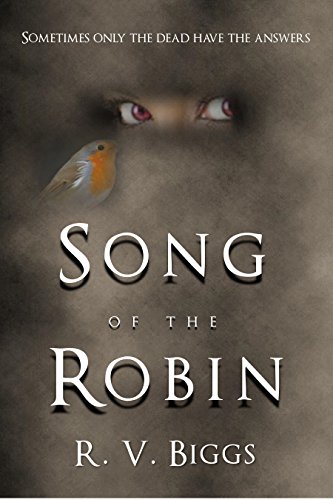
Deciding on a theme for a book cover I think is the hardest task of them all. We’re always told not to create our own book covers and to use professional services but you’re spot on in saying I spent a while choosing the imagery on  the existing  cover. It was taken from a scene in which Sarah is blundering about in a fog with only the Robin for company. In choosing the images, I wanted to convey an air of mystery and confusion hoping a potential buyer would think, ‘what is that Robin doing there and why the sidelong glance from the eyes’.

I browsed the shelves of Waterstones to see what others use in Psychological Drama novels. Eyes figure often as do landscape scenes with a character walking away into the distance. I’m still not sure I’m happy with what I have, and have other ideas from other scenes that may fit a more standard approach for Psychological Drama.

If you could choose to be a character from Song of the Robin, who would you be and why?

Other than the Robin, it would have to be John. He’s so much a part of Sarah that it is hard for him to be away from her. His life is nothing without her. Destiny played its part in bringing them together, which has parallels with how my wife and I met.

If Song of the Robin became a film, who would you like to play Sarah and why would you choose them?

Has to be an English actress.  My first thought was Michele Dockery of Downton Abbey Fame. I first saw her on TV in an episode of Waking the Dead and thought her portrayal of a 30 year old rape and trauma victim was exceptional, very moving. However, and being picky, her appearance doesn’t fit how I imagined Sarah. The actress who I’ve seen many times recently and seems perfect is Sophie Rundle of Dickensian, Happy Valley, Peaky Blinders, Brief Encounters fame.

When can we expect to see Re-Union, the sequel to Song of the Robin?

Re-Union is currently undergoing a penultimate edit. I say penultimate because the final stage for me is to turn on ‘text to speech’ in MsWord and have the whole thing read back to me. Surprising how many ‘invisible’ errors crop up when you use your ears instead of your eyes. After that, it’ll need a Beta Reader to provide feedback but I’m aiming for early in the new year for a release.

When you’re not writing, what do you like to read?

I guess mostly psychological or crime drama though I’ve mixed it up a bit. I recently finished the Chronicles of Thomas Covenant by Stephen Donaldson. That’s basically 12 novels of fantasy. It took me a long time since I usually only read at bedtime. When I finally finished I was stuck in his world and it took me a while to figure out what to read next. I’m currently reading Anne Cleaver’s The Crow Trap, one of the Vera series.

If you had 15 words to persuade a reader that Song of the Robin should be their next read, what would you say?

If you think you’re alone in this world then think again? Listen for the Robins!

Thank you so much for your time in answering my questions.

About R.V. Biggs

rob biggs

R. V. Biggs lives in a small ex-mining village near Wolverhampton, England, with his wife Julie, a cat and a dog. He has four grown up children and five grandchildren. Robert worked for a global communications company for thirty five years in a variety of roles before making a career change into health care. He now works for Birmingham Children’s Hospital where he helps to provide Mental Health Services for children and young people.

Along with his wife, Robert has a passion for Scotland and they both lived there for a year in a remote but modernised Crofters Cottage.

Walking with the dog is a favourite pastime and much of the story line for his first novel was developed during these lengthy outings.

Robert took a Level 1 Reiki introduction course several years ago and has been interested in spiritual health ever since.

You can follow R.V. Biggs on Twitter @RVBiggs. You’ll also find him on Facebook.

Turning Off The Killer Thoughts: A Guest Post by Ann Girdharry, Author of London Noir

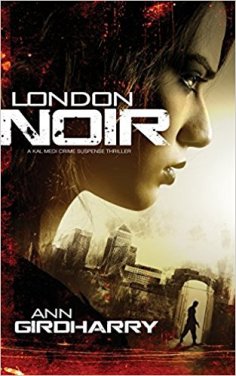
London Noir

Oo I love a thriller and am delighted to be featuring London Noir by Ann Girdharry today. Even better, Ann has agreed to write a guest post for Linda’s Book Bag all about how writers switch off from the writing process.

London Noir is available for purchase here.

London Noir

London Noir

Memory loss, nightmares, the urge to kill – Sophie has it all. Is it really Post Traumatic Stress Disorder? Or something more sinister? Kal is about to find out…

After a near-fatal road accident, Kal helps a young girl in trouble.

The girl’s friends are being murdered one by one. Why? And who by? Kal must kick start herself out of her downward spiral to save the young stranger. But Kal is in the grip of the London Cartel and is someone after the girl, or is the girl after someone?

Turning Off the Killer Thoughts

A Guest Post by Ann Girdharry

Do writers of suspense thrillers have to cut themselves off? How do they switch off from their noir creations?

Linda had a great idea for this guest post. She wondered if I could write about switching off from writing.

I’m going to give you an eyeball on how I do that, but first, it got me thinking about a couple of famous authors who are a lot more interesting than me.

Have you heard of Thomas Harris?

He’s a famous author – creator of the serial killer, Hannibal Lecter, (made into the film The Silence of the Lambs). Harris avoids publicity and hasn’t given an interview since 1976 (according to Wikipedia). Little is known about his private life, because it’s, well – private.

Is he a recluse? Harris’ agent says, “(Harris is)… reclusive, but is seldom morose, even though he is so often alone, working in an office separate from his house, in quite an isolated setting.”

Well, I can tell you that’s quite normal.

I sometimes can’t wait for the kids and my husband to quit the house in the morning. I have the whole day. Just me and my writing. And the cats. Yippee.

Harris is lucky – if I could have an isolated writing hut in some remote setting, believe me, I would.

Then, the late and wonderful Terry Pratchett. One of my favourite authors. He had an eccentric side to his personality. Later in life, he was out-spoken, for instance on Alzheimer’s disease and assisted death.

How did he switch off?

Apparently, Pratchett had a fascination with natural history and he owned a greenhouse full of carnivorous plants. (I think that must have been a lot of fun).

Pratchett was also a keen astronomer and had an observatory in his back garden.

These seem absorbing leisure activities. And ones that he did alone. Quite fitting for a man with such an extraordinary imagination.

And how about little me? I trained in psychotherapy. In direct client work, I learned how important it is to keep a professional distance.

The same is true with my writing. I write crime suspense thrillers. I delve into the minds of perpetrators and murderers. I talk about their motivations, their sadistic impulses. Gruesome stuff. But it’s only half the story, because the second part of the story is the person who’s going to track them, outwit them, and take them down.

To switch off, my favourite way is to go rollerblading. An hour rollerblading on a nice cycle path – surrounded by nature, working up a sweat. It clears my mind. Or swimming, that’s a good one too.

Sports get me out of my head and back into my body.

I also enjoy gardening.

Since we moved to France, I’ve had to adapt my gardening knowledge to the Mediterranean climate. Many of the plants and flowers I loved in England would die here. Gone are the days of my allotment in Brighton. I’ve come to know the native plants that thrive in this climate, where it’s so hot and dry during the summer. An hour weeding, pruning, or generally pottering amongst the flowers, clears my head like magic.

For me, the dark must always be balanced by the light, and by the mundane and the beautiful. That way, I can keep on writing and keep on delving deep into my fictional characters. And hopefully, spinning stories for many years to come.

(We hope so too Ann! And I’m with you all the way with gardening. I love it as a way to relax.)

About Ann Girdharry

Ann

Born and educated in the UK, Ann Girdharry is a trained psychotherapist and has worked as a manager in the not-for-profit sector for many years.

Today she lives in Montpellier, France with her husband and two children.

She writes suspense and thrillers, is a book reviewer and occasionally blogs for the Huffington Post UK.

You can follow Ann on Twitter @GirdharryAnn and visit her website to find out more. Ann is also on Facebook.