The World of David Walliams Book of Stuff by David Walliams

The World of David Walliams

I was delighted when Burak from Books2DoorUK asked if I would be willing to review some of their titles for them and when a selection arrived within less than 24 hours of my ordering them I was extremely impressed. Their service and pricing are excellent.

Today I’m starting off by reviewing The World of David Walliams Book of Stuff which is available for purchase from Books2Door here.

The World of David Walliams Book of Stuff

The World of David Walliams

A spectacularly funny feast of all things Walliams for super-fans, new fans and anyone who likes laughing out loud a lot. In glorious colour throughout!

Welcome to the World of David Walliams. This spectacularly funny book is bursting with Walliams wonderment!

Insider sneak peeks, brilliant character quizzes, fabulous fun facts, design your own Walliams book cover and meet Raj in a brand new comic book adventure never seen before. You even get exclusive access to behind-the-scenes content from David Walliams himself.

Hours of entertainment for all the family and the perfect companion to David’s novels. Featuring colour illustrations from the iconic Sir Quentin Blake and the artistic genius Tony Ross.

My Review

of

The World of David Walliams Book of Stuff

Everything you ever wanted to know about David Walliams and his books…

I have a confession. Although I’ve watched David Walliams’ books dramatised on television and thoroughly enjoyed those programmes, I have never actually read one, partly because I felt, quite erroneously, that their popularity was more to do with celebrity than quality. How wrong can you be? If The World of David Walliams Book of Stuff is representative, I’m going to have to buy them all and read them immediately, because I thought it was utterly brilliant!

Although I’m not familiar with the written work of David Walliams, my total enjoyment of The World of David Walliams Book of Stuff was unaffected. I was able to recognise and understand many of references and I’m certain that any fan of David Walliams’ work would adore every page of this vibrant and entertaining book. I so admired the effervescent style and pitch perfect tone for children.

Much of the humour is lavatorial and crude; exactly what children love and, as an adult rapidly approaching their 60th birthday, I found myself laughing aloud too. I genuinely think The World of David Walliams Book of Stuff is a book that can resonate with, and amuse, children of ALL ages. However, alongside the entertaining humour and frequent silliness, is actually a very perceptive and subtly poignant sub-text, such as in Joe Spud’s letter to Santa or a Day in the Life of the Grubb Twins, so that children could explore loneliness and bullying, for example, in a safe environment. It is this contrast between the humour and seriousness that works so well. After the Midnight Gang secret files section, the comment ‘And please, whatever you do, whoever you are, wherever you are… never stop dreaming! No one can take your dreams away from you‘ genuinely brought a tear to my eye.

The illustrations by Quentin Blake and Tony Ross are wonderful, transporting me back to those of the books I read as a child and stirring pleasurable memories as well as exemplifying this text so brilliantly. I loved the fact that children can learn to draw like Tony Ross. In fact, the interactivity of The World of David Walliams Book of Stuff is sheer genius. I now have a title of a book to write, Moody Hairdresser, and although I might well substitute suggested chocolate drops for rabbit droppings, I certainly fancy making Rabbit Dropping Roll from Mrs Trafe’s Cookery Book Range. There are quizzes, spot the difference pages, snakes and ladders, cover designs, memory challenges and loo roll modelling that will occupy and entertain children for hours.

I loved The World of David Walliams Book of Stuff. It’s amusing, entertaining and joyful so that I forgot I was a middle aged adult and felt transported back to the innocent pleasures of childhood. What I found incredibly effective was the acceptance of children, their dreams and aspirations and the credibility and guidance given to youngsters woven into the playful comedy.

The World of David Walliams Book of Stuff is glorious and I cannot recommend it highly enough.

About David Walliams

David Walliams

David Walliams is an actor, a judge on TV talent show Britain’s Got Talent and is currently the fastest growing children’s author in the UK.

Since beginning his publishing career in 2008, David Walliams has taken the children’s literary world by storm. His sixth book Demon Dentist was published in September 2013 and went straight to number one in the bestseller charts.

Previous bestsellers Ratburger and Gangsta Granny were also immediate number one hits, and the paperback of Gangsta Granny remained at number one for an incredible 22 weeks in the UK charts.

David is well known for his work with Matt Lucas. Together they created Little Britain, which has won numerous international awards including three BAFTAs and is now shown in over 100 countries. David and Matt followed Little Britain with the hugely popular spoof airport documentary series Come Fly With Me.

You can follow David on Twitter @davidwalliams and visit his website for more details. There is also a World of David Walliams Facebook page.
An Extract from Eye Can Write and an Interview with Jonathan Bryan

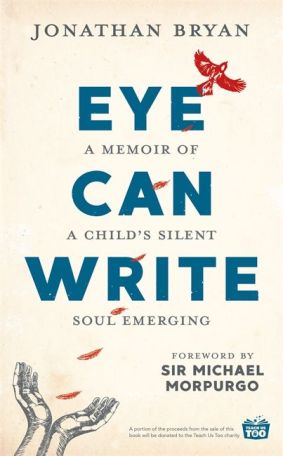
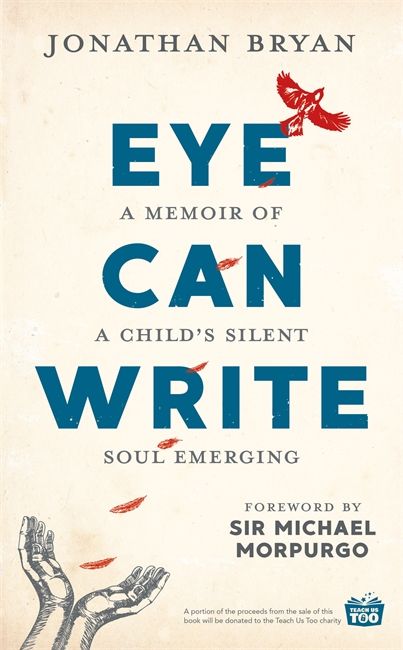
Eye Can Write

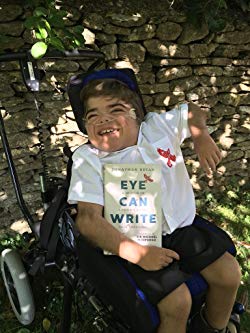
As you know, I’m not taking on anything new for Linda’s Book Bag for a while, but when Jonathan Bryan got in touch to ask me if I would be part of a blog tour for his book Eye Can Write, with proceeds from the book going to Jonathan’s charity Teach Us Too, I simply couldn’t refuse. I think when you find out a bit more about Eye Can Write you’ll understand why and I am delighted to have an extract to share with you today.

I have found the story behind Jonathan’s writing truly inspirational and am genuinely honoured to be part of this blog tour.

Published by Lagom, an imprint of Bonnier’s Blink Publishing, Eye Can Write is available for purchase here.

Eye Can Write

Eye Can Write

Can you imagine not being able to speak or communicate?

The silence, the loneliness, the pain.

But, inside you disappear to magical places, and even meet your best friend there.

However, most of the time you remain imprisoned within the isolation. Waiting, longing, hoping.

Until someone realises your potential and discovers your key, so your unlocking can begin.

Now you are free, flying like a wild bird in the open sky.

A voice for the voiceless.

An Extract from Eye Can Write

Song of Voice

As adept fingers point

My silent soul emerges,

Like the dawn blackbird’s song

Suddenly breaking the black.


Music buried in the mind

Sings melodies divine,

Of ancient tales yet untold

Unfurled to men astound.


Whose beauty hears my voice?

What depths saddened my pathway?

Soaring eagles spread wings

I fly to my destiny.


Can you imagine not being able to speak or communicate? The silence, the loneliness, the pain. Inside you disappear to magical places, but most of the time remain imprisoned within the isolation. Waiting, longing, hoping. Until someone realises your potential and discovers your key, so your unlocking can begin. Now you are free, flying like a wild bird in the open sky. A voice for the voiceless.

This is me, and this is my story.

For as long as I could remember, Mummy had read to me: Bible stories, funny stories, short stories, The Chronicles of Narnia. For days, weeks and months we had curled up in a hospital bed together and plunged ourselves into a novel. Immersing myself in a story is the most enjoyable, wonderful escapism; books have nourished my mind and prevented mental decay during my years of silence.Trapped in cerebral palsy I run within the pages:skipping, laughing, exploring. Plunging myself into the adventure of new tales, I have inhabited the scenes of authors’ pictures and woven them with my imagination. Words have been my portal to another world. And now the mantle was passing on to me.

During the nine years of being effectively locked in by my severe cerebral palsy, words and phrases had been banked while my mother read to me. Unable to develop the physical skills of my peers, maybe my mind had more room for academic learning.

Picking up the spelling board, Sarah’s finger pointed to where my eyes were looking. Sitting on Mummy’s lap, our bodies remained still as Sarah’s finger danced to the rhythm of my eyes.Following my lead, we slow-waltzed around the board, synchronised to the music of the word in my head. At first we were like clumsy teenagers trying to learn – stumbling, slow and stilted.

‘Jonathan, today you’ve written: “Tired from slaying the ships enemies they towed” – what do you want to write next?’ Mummy enquired. She had already been surprised by the word ‘slaying’,as it wasn’t even an option in the verb section of the big black folder.

As the duet continued I spelt out an ‘m’then a ‘y’. Because the process was so exacting and tiring, and because I wanted to draw out the suspense, I closed my eyes. After the usual cajoling to open them, I started to enjoy the ensuing conversation:

‘Did he put a space after the “y”?’ Mummy needed to know, as she was also typing what I wrote into the computer.

‘He hasn’t yet, but I expect he will when he opens up again. I can’t think what else he would want to write beginning “my”.’ Sarah obviously had no idea of the word I was crafting. Before they started chatting again about the fate of the near obsolete folder that brimmed with many hours of their dedicated input, I opened up –ready for play to recommence.

‘My… “r”… “i”… “a”… “d”… “s”.’ Mummy articulated each letter of the word rally, but Sarah was so engrossed in mirroring my eyes with her finger she had lost the word.‘Myriads.’ Mummy looked at Sarah, who stared back at her, stunned.

Their silence heralded the beginning of the end of mine.

It took Mummy one more day to realise that now I could spell everything I wanted to write, I could also spell everything I wanted to say.

Now it was my turn to be the custodian of the power of words. My challenge to capture delicately the image and bequeath it words that let it breathe. Like a bird let out of its cage, the picture that words can generate was free to fly in my reader’s mind and assume a new life of its own.

PMLD

We are not capable of learning

So do not tell me

There’s something going on behind the

disability.

Treated as useless handicaps

Minds with nothing in there, tragically

Stuck in a wheelchair,

Disabilities visibly crippling –

Just incontinent and dribbling,

We are not

Academically able.

You should make our minds

Stagnate in special education!

We cannot

Learn to read,

Learn to spell,

Learn to write,

Instead let us

Be constrained by a sensory curriculum.

It is not acceptable to say

We have the capacity to learn.

School should occupy us, entertain us; but

never teach us

You are deluded to believe that

Our education can be looked at another way!

NOW READ IT AGAIN BACKWARDS

Thank you, Jonathan, for sharing this extract from Eye Can Write with us. I found reading PMLD backwards quite tricky and understand your message that just because I couldn’t do it instantly, it doesn’t mean I’m stupid! (Blog readers can see the reverse poem here.)

I’ve found your story and your writing to be truly inspirational. Good luck with Teach Us Too and all your writing.

I know you’ve been influenced by Michael Murpurgo so could you tell us why you think children are so captivated by Michael Morpurgo’s writing?

When Michael writes he uses words like an artist, painting images and scenes on the mind of his reader.  As we read he moves the scene at just the right pace so that we remain immersed in the landscape as he introduces us to his very believable characters.  Getting the balance right between description and action is an art all writers aspire to.  Every story Michael has written leaves an indelible mark on the imaginations of the children who read them.

How has Michael Morpurgo influenced you as an author?

When I wrote Michael a fan letter a few years ago, I wasn’t sure I would get a reply, yet alone meet him, thanks to the Make a Wish charity.  Since then our friendship has continued to grow and his influence on me as a writer has grown with it.  Most recently Michael asked to check a short thought I was to share at a carol service – thankfully he told me not to change it, as his feedback arrived the morning after the event!

As a writer he is everything I aspire to be, and as a person he is the most genuine, kind man with whom I share thoughts on writing and banter in equal measure.

I imagine Michael would be delighted that you aspire to be like him Jonathan. I find you totally inspirational and am honoured to have been part of your Eye Can Write blog tour.

About Jonathan Bryan

Jonathan

Jonathan Bryan is the twelve-year-old author of Eye Can Write and founder of the charity, Teach Us Too (who are receiving all his proceeds from the book). Faith, family and friends sum up all that is important to him.  He also passionately campaigns for all children to be taught to read and write regardless of their educational label, for which he has been awarded a Diana Legacy Award and a Pearson Young Person of the Year Award.

You can find out more about Jonathan on his blog, follow Jonathan on Twitter @eyecantalk and find him on Facebook.

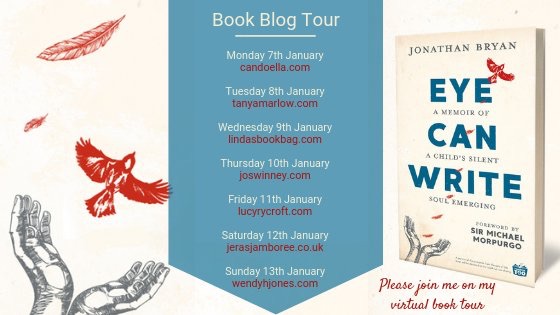
There’s more with these other bloggers too:

eye can write poster

Peach by Wayne Barton @WayneSBarton

Adobe Photoshop PDF

My grateful thanks to Jon Wilson at Fish Out of Water Books for sending me a copy of Peach by Wayne Barton in return for an honest review.

Peach will be published on 15th January 2019 and is available for pre-order here.

Peach

Following the untimely passing of a close friend, British songwriter and producer, Freddie Ward, arrives in Bliss, Idaho to work on a comeback album with beloved singer-songwriter, Hal Granger. Adrift and bereft, Freddie is looking to gain a sense of perspective after a series of bad decisions–decisions that cost him his relationship and life as he knows it. However, almost as soon as Freddie arrives in Idaho, Hal drops an unexpected and devastating bombshell.

Far from the hustle and bustle of his life in England, out in the stark isolation of the northwestern U.S., with time to think, to reflect, Freddie slowly begins to rebuild his life, haunted both by the events of the recent past and his reactions to them.

Through words of wisdom from Hal and a series of meandering, existential, and profound conversations, Peach explores themes such as love, loss, loyalty, and friendship; second chances and redemption; how to make the most of your time; and, last but not least, the meaning of home.

My Review of Peach

With difficult relationships and a death behind him, Freddie Ward heads off to Idaho to write songs with Hal Granger.

If you’re looking for a fast-paced novel with multiple twists and a high body count along the way, then Peach is not the book for you. If, however, you want an intelligent, thought-provoking and profound literary read that immerses the reader in what it is that makes us who we are, then look no further.

It took me a while to attune myself to the pace of Peach, but the more I read, the more I appreciated what a beautifully crafted book this is. There’s such a wise, aphoristic, quality to Wayne Barton’s writing that I felt my own feelings and emotions were clarified by reading this narrative. It’s not overstating my response to say that whilst there is deep sadness between the pages of Peach, there is also a truth and positivity that made me feel that even in my darkest moments I am not alone in experiencing doubts and negativity. I finished the story feeling I had learnt about humanity in general, and myself in particular, so that I felt the same kind of resolution Freddie experiences. It’s no coincidence that he is emotionally lost and writing under a pseudonym when the book opens and that it takes a trip to a small town aptly named Bliss for him to accept himself.

There’s not much in the way of plot in Peach, although there are a few events along the way. Rather, this is a read of conversations and Freddie’s thoughts and introspection. Although Freddie is the central character with the story told from his first person perspective, and I thoroughly enjoyed getting to know him, it is Hal who steals the show. Hal’s truths and pragmatism weave a spellbinding feeling of humanity that I found helpful as well as entertaining. I’d love so many I know to read Peach and learn from it.

It’s difficult to define Peach. I don’t think it’s a book that will suit all readers. I found it emotional and affecting. And I honestly think that although it is a measured and considered creative narrative, it’s as good as any non-fiction self-help book I’ve read too. It’s about love, loss, identity and grief. It’s about the kindness of strangers. Most of all, however, I think Peach is about humanity. I really enjoyed it.

About Wayne Barton

wayne

Wayne Barton is a best-selling author, ghost writer and producer.

In 2015 he was described by the Independent as ‘the leading writer on Manchester United’. He has ghost written a number of autobiographies of former footballers.

In 2018 his critically acclaimed biography of former United assistant manager Jimmy Murphy was a number one best seller; this was followed by the December 2018 release of ‘Too Good To Go Down’ which achieved the same accolade. ‘Too Good To Go Down’ is the book of the BT Sport film of the same name, which Wayne worked on in a producer capacity.

For more information, follow Wayne on Twitter @WayneSBarton or visit his website. You’ll also find him on Instagram, Goodreads and Facebook.

The Six Loves of Billy Binns by Richard Lumsden @lumsdenrich

six loves of Billy Binns

I’m enormously grateful to Caitlin Rayner of Headline and Tinder Press and to Team Bookends for each sending me a copy of The Six Loves of Billy Binns in return for an honest review.

Published by Headline imprint Tinder Press on 24th January 2019, The Six Loves of Billy Binns is available for purchase through these links.

The Six Loves of Billy Binns

six loves of Billy Binns

I remember my dreams but not where they start.
Further back, I recall some of yesterday and the day before that. Then everything goes into a haze.
Fragments of memories come looming back like red London buses in a pea-souper.
Time plays funny tricks these days.
I wait for the next memory. I wait and I wait.

At 117 years old, Billy Binns is the oldest man in Europe and he knows his time is almost up. But Billy has a final wish: he wants to remember what love feels like one last time. As he looks back at the relationships that have shaped his flawed life – and the events that shaped the century – he recalls a life full of hope, mistakes, heartbreak and, above all, love.

My review of The Six Loves of Billy Binns

An old man, Billy Binns looks back over his life and tries to write his memoir.

I’m going to get one negative out of the way in my review of The Six Loves of Billy Binns. I found some of the language rather crude, especially when associated with Clem or referring to parts of the female anatomy, and as I am very broad minded I feel that might be an issue for some readers. That said, this particular lexicon is era appropriate and so I can see how it is used to convey the past. It just didn’t always suit my reader preferences.

That small negative aside, there is, in contrast, frequently quite a poetic turn of phrase that I did love, especially through the descriptions of setting or appearance so that I could picture things very vividly. References to nature in particular had a beautiful quality. I also thought the variety of sentence structure was very well constructed. Single sentence paragraphs exemplify the speed of some thoughts and memories perfectly, whilst occasional ellipsis conveys the difficulty Billy sometimes has in grasping his past. I especially liked the structure of the book, almost as a traditional five act play with its five parts, and the blurring of lines between Billy’s memories and his present situation gave a chimerical feeling which reflected well the way Billy has to reinvent himself at times in his life.

From a slightly shaky start I ended up really enjoying The Six Loves of Billy Binns. I was expecting more humour, but not as much pathos and at times I found Billy’s story quite heartbreaking, particularly with regard to Evie. I thought the way Richard Lumsden showed how fate intervenes and our paths follow a direction we neither ask for nor want at times, was sensitively presented so that although Billy does make mistakes, very often he had far more of my sympathy than disapprobation. The more I read, the more Billy became a believable, human and empathetic character. The loves he describes felt completely believable to me.

Reading The Six Loves of Billy Binns made me feel quite melancholic as a result of the poignancy behind Billy’s memories. I wanted so much more for him than he appeared to achieve and yet the ending of the book has an encouragingly uplifting quality in spite of all Billy’s experiences and frequent errors of judgement.

Richard Lumsden weaves social history into The Six Loves of Billy Binns very effectively. I really enjoyed the backdrop of the two world wars, the swinging sixties and so on. I thought the themes of race and gender, domestic violence, war and class structure all added to the layers so that historical times leapt from the page.
I think The Six Loves of Billy Binns will polarise readers. I began not liking it at all and ended up thoroughly enjoying it and understanding why the early parts of the novel that made me so uncomfortable had to be there to give authenticity and integrity to the narrative. I think The Six Loves of Billy Binns needs to be read so that every individual reader can come to their own conclusion. Why not try it for yourself?

About Richard Lumsden

richard lumsden

Richard Lumsden has worked as an actor, writer and composer in television, film and theatre for 30 years. As an actor his films include Downhill, Sightseers, Sense and Sensibility and The Darkest Hour, as well as numerous television shows and theatre productions. The Six Loves of Billy Binns is his first novel.

You can follow Richard on Twitter @lumsdenrich and visit his website for more information.

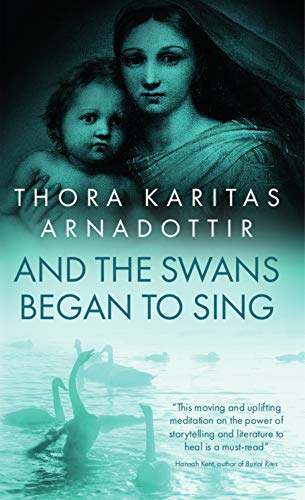
And the Swans Began to Sing by Thora Karitas Arnadottir

And the Swans

My grateful thanks to Tracey and Phil at Wild Pressed Books for a surprise copy of And the Swans Began to Sing in return for an honest review.

Out on 10th January 2019, And the Swans Began to Sing is available for pre-order here.

And the Swans Began to Sing

And the Swans

The swans on the lake began to sing. It was a singing so loud they were almost screaming, as if they were encouraging me to release what I had been keeping inside for so long.

Gudbjorg Thorisdottir has been hiding from the ghost of an ugly secret for most of her life. When she finally faces the truth of what happened in her childhood, the ghost floats away. Painting an evocative picture of life in Iceland, this is the story of a little girl who didn’t know how unnatural it was to experience both heaven and hell in the same house.

And the Swans Began to Sing is the English translation of her creative nonfiction Mörk – my mother’s story (published in Iceland by Forlagid), which was nominated for the Icelandic Women’s Literary prize in 2016.

My Review of And the Swans Began to Sing

A creative account of the true story of Gudbjorg Thorisdottir’s childhood abuse.

I was completely taken aback by And the Swans Began to Sing, not least because I hadn’t initially realised that this is a creative depiction of true events. I kept thinking that it read as if it were a person’s true account rather than a fiction and I felt as if I were listening in on an intimate and personal conversation. Once I realised the nature of the book, the style made perfect sense.

And the Swans Began to Sing is beautifully written. The language is poetic and affecting, aside from the shocking events that hold the reader spellbound almost against their will. I was struck by the eloquent manner with which Thora Karitas Arnadottir depicts how easily society can witness, and ignore, suspected abuse. It actually made me question the whole fabric of society. This book certainly shocks and startles and, as Gudbjorg herself might wish, it causes the reader to stand in someone else’s shoes with empathy and understanding, even when they have no personally similar experiences.

A personal history and an emotive illustration of how our childhood shapes us as adults, And the Swans Began to Sing is also a wonderful insight into Icelandic culture and lifestyle with a vivid sense of place. There’s also a slight undercurrent of mysticism that I found interesting too. The writing transported me to the places I have visited in Iceland so that it is almost a travelogue as well as a personal narrative.

In many ways And the Swans Began to Sing is bleak and dreadful, but ultimately it is reassuring to those who have suffered similarly as Gudbjorg processes, and finally comes to terms with, her past, her grandfather and her life in the present.

I felt And the Swans Began to Sing was very moving and haunting. It is literary, intense and shocking. It is, too, entirely human and reading it made me grateful to be who I am with the past I have.

About Thora Karitas Arnadottir

thora-headshot2016_1

Thora Karitas Arnadottir studied drama in Britain and is best known for the award winning TV series, Astridur, in her home country and for hosting Unique Iceland, a highly popular travel magazine show about Iceland.

Thora is currently working on her first novel, which will be released in Iceland in 2019.

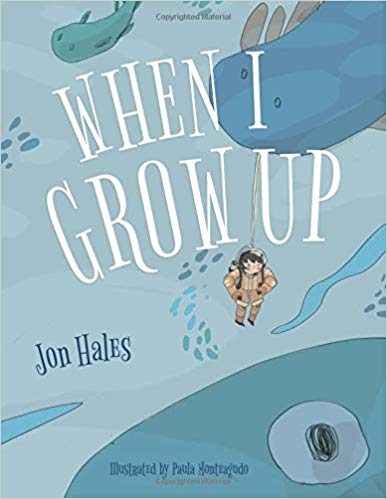
When I Grow Up by Jon Hales @jonhalesauthor

when I grow up

My enormous thanks to Jon Hales for sending me a copy of his latest children’s book, When I Grow Up in return for an honest review. It’s not quite a year since I read and reviewed another of Jon’s children’s books Mathimals in a post you can read here.

When I Grow Up was published on 17th December 2018 and is available for purchase here.

When I Grow Up

when I grow up

“What if there was something more, not found within a book?
I closed my eyes as tightly as I could and took a look…”

Mr Dove’s class is trying to decide what to be when they grow up but Annie has some ideas of her own. Alien Hunter? Master Ice Cream Taster? President of the Universe? With a little imagination, anything is possible…

Beautifully illustrated, expertly rhymed, with a powerful message about the importance of imagination and dreaming big dreams, this picture book will delight again and again. Perfect for ages 4-8.

My Review of When I Grow Up

Annie’s teacher sets the class a writing project but Annie isn’t sure what to write.

I loved everything about When I Grow Up from the dedications to the written content and the smashing illustrations – not least because these exemplify a range of ethnicities which I think is important in a children’s book so that children learn tolerance and friendship. Indeed, the illustrations were the perfect balance to the written text because it’s clear the class is not just Caucasian.

The ethos behind When I Grow Up is exactly what parents and teachers need when sharing a book with their children. Annie’s dreams of what she would like to be when she grows up are exciting, flexible and quite feminist. She isn’t constrained by her gender or ethnicity so that the message is that we can all have aspirations, but that we don’t have to stay as one thing in our lives. Annie thinks she could be everything from a traveller in space catching aliens to a deep sea diver, which conveys the idea that there is a big world out there for children to explore. I really liked the concept that being a teacher is only one element of Mr Dove’s life too, as I’m sure when I was teaching students somehow thought that I’d hang up in a school cupboard until the next time I taught them. I feel it’s important that figures of authority are also seen as human.

The language in When I Grow Up is deftly handled. The book would lend itself well to being read by adults to younger children but it is also accessible through its excellent rhyme scheme to older, more independent, readers with sufficient challenge to extend vocabulary and engage them. I thought it was a super idea to include a space where children can write their own rhyme about what they would like to be when they grow up after having seen Annie’s version. Modelling is one of the effective ways of helping children learn.

The style of When I Grow Up reminded me of Roald Dhal and Mr Dove’s language was occasionally reminiscent of Lewis Carroll so that I felt this book deserves its place amongst the very best children’s fiction. It made me smile and I thoroughly enjoyed reading it. Great stuff.

About Jon Hales

jon

Jon Hales is a British author, English literature graduate and former English teacher who learned first-hand the power of a great picture book while teaching in Taiwan, reading stories to his younger students. The capacity for a well crafted turn of phrase, captivating character or hilarious illustration to capture the imagination of its audience was fascinating to him. Jon dreamed of crafting stories that would bring joy to both children and adults, stories that could be read again and again without losing their charm. Jon lives in London with his wife Annie.

You can find Jon on Facebook and Goodreads or follow Jon on Twitter @jonhalesauthor.

ikigai and other Japanese words to live by Mari Fujimoto

ikigai

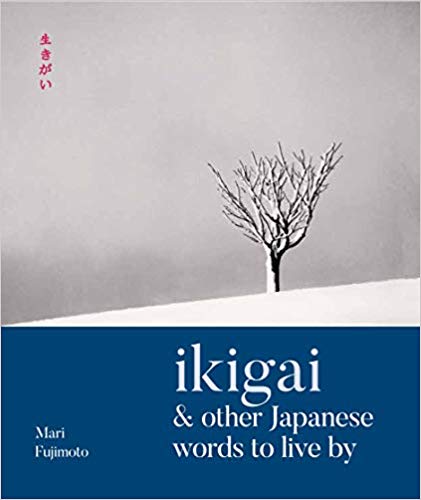
Having been to Japan and so enjoyed the wonderful balance in life there I am delighted to be reviewing ikigai & other Japanese words to live by by Mari Fujimoto. My enormous thanks to Alison Menzies and Modern Books for sending me a copy in return for an honest review.

Published on 24th January 2019 by Modern Books, ikigai is available for pre-order here.

ikigai & other Japanese words to live by

ikigai

Introducing and explaining some of the most poignant Japanese words, Ikigai is a lifestyle as well as a language book. From the wistful poetry of mono-no-aware, a word that asks us to recognize the bittersweet transience of all things, to the quiet harmony of wa, which knits together all of society’s structures, this book is an introduction to the intricacies and value of Japanese phrases and concepts. It hopes to inspire you to incorporate these words into your own lifestyle and adopt a more mindful attitude to life’s stresses, seeking meaning beyond materialism.

In addition to over 40 ‘words to live by’, Ikigai features musings on the place of beauty, community, time and nature in Japanese thought, teaching mindfulness by way of compelling haikus, and illustrated by Michael Kenna’s reflective photography throughout.

My Review of ikigai & other Japanese words to live by

An insight into Japanese words and culture.

Before I review ikigai & other Japanese words to live by properly, I must say something about the physical attributes of the book. Its robust covers and serene stone coloured endpapers enhance the contents beautifully, as does the smooth, flawless quality of the paper it is printed on. ikigai & other Japanese words to live by would make a lovely gift.

The contents of ikigai & other Japanese words to live by are equally beautifully presented, not just in the stunning black and white photographs that embody real tranquility, but also through the presentation of the words on the page. I adored the use of white space, the punctuation and different fonts that so perfectly mirrored the language, the meanings, the pauses and breaths in the opening sections of each chapter. This book could be dipped into at random, but it felt right to me to read it in order so that my response as a reader paid tribute to the balance and serenity of the Japanese meanings I was discovering. Alongside the wonderful images, this poetic presentation makes ikigai & other Japanese words to live by a beautiful book.
Each of the seven chapters begins with a haiku from Matsuo Basho which sets the tone for the chapter. I loved reading these, both silently to myself and aloud to see how they changed with my different approach and I think this illustrates the success of ikigai & other Japanese words to live by. It’s a book that so cleverly causes the reader to pause. To think. To contemplate. I truly felt it gave me time to breathe and appreciate not only the own life, but to want to give more focused attention to those around me too. A few of the Japanese words resonated with me particularly emotionally, especially shibui and shoganai. My advice would be to read this book straight through as I did, and then return to each of the seven chapters over the course of a week before dipping in to it in a more random way as I think it the more time a reader gives to it, the more they will gain from it.

ikigai & other Japanese words to live by is a beautifully presented oasis of calm in a frenetic world. I thought it represented katachi (the direct connection between the beauty in the creator’s soul and the object of their craft) flawlessly and I loved it.

About Mari Fujimoto

Mari Mujimoto

Mari Fujimoto is the Director of Japanese Studies at Queens College, New York and teaches all levels of Japanese language and linguistics. She believes that language learning is the first step towards the understanding of a culture.

About David Buchler

david buchler

David Buchler is a South African artist who lives and works in Tokyo. A photographer, illustrator and writer, his art takes inspiration from Japanese culture. is a South African artist who lives and works in Tokyo. A photographer, illustrator and writer, his art takes inspiration from Japanese culture.

You can follow David on Twitter @DavidBinJapan.

Linda’s Book Bag 2019 Change of Direction and New Year Giveaway

2019

Happy New Year!

Crikey! It’s been a bit of a year here on Linda’s Book Bag and as I publish this first post of 2019 and look back over 2018 I’m a little bit overwhelmed by it all.

I first began the blog in 2015 as a tentative means to share my reviews of the books I read, little believing that anyone would bother to look at it. It seems to have been a bit like Topsy since then and, having hit well over 11,000 followers on Twitter, in 2018 I decided to showcase as many authors as I could through a ‘staying in with’ idea; particularly those writers from small publishers, or authors independently published, who don’t have big teams behind them. I wanted to help as many writers as possible get noticed by as many readers as possible. I was inundated with requests and eventually had to turn away more people than I could accommodate, but 271 different authors came along to ‘stay in’ with me and showcase their books. I blogged 603 times in 2018 with only a handful of duplicate authors so I think I may have achieved what I set out to do!

In fact, I’ve been amazed at the seeming popularity of Linda’s Book Bag and I was certainly absolutely thrilled to win the Best Overall Blog in the Bloggers Blast Awards this year – so a huge thank you to whoever nominated me and to those who voted for me. I was overwhelmed.

award

However, all these blog posts have come at a cost. Over 2018 I’ve been struggling to keep on top of it all and fulfil promises I have made for blog slots, particularly with Mum being so unwell and needing my time and attention so often. Each of my blog posts takes a minimum of an hour to put together, including emails to and from the authors and publishers, tweeting and sharing in various groups on Facebook, setting up the post, researching authors, finding images, author links and so on. Of course, many posts take much longer, and that’s without any reading time for reviews too.

Linda and Steve Uganda Equator

I estimate that average working days are the equivalent of 9-5 with at least 30 minutes off for lunch. This means that, aside from the times when I didn’t blog at all when I was on holiday in Uganda, India, Bali and Indonesia, with the posts I have blogged in 2018, I have spent the equivalent of at least 75 to 80 days or 15 to 16 weeks blogging solidly as if I were still working full time!

gorilla

tiger

P1060237

I’m exhausted. I usually spend three to five hours a day on what is supposed to be my hobby and I have come to realise that whilst I’ve been trying to help others to get their books seen by as many people as possible, I have not given myself enough time to do the thing I enjoy most – read. I’ve tried to be all things to all people and I can’t maintain the pace!

Add in the time taken up by my elderly mother, my complete inability to type accurately, osteoarthritis in my fingers and sight problems (a tiny hole in my left retina, an epimacular membrane as a result of PVD, conflicting astigmatisms in each eye, myopia to -12.5 in my left eye and -12 in the right with cataracts now developing in both eyes), I have decided this level of commitment to blogging is unsustainable. And I know I keep saying this, but I really would like to have a go at some writing of my own and finish that languishing novel…

Therefore, I’ve decided to be selfishly kind to myself and I’m taking a bit of a blogging sabbatical in 2019. I did wonder if I might stop blogging altogether, but I love it too much to do so and I am enormously grateful for all the exciting opportunities it affords me, especially when I get to meet favourite authors. I had already agreed to participate in 14 tours and guest posts in 2019 before I made my decision and I’ll go ahead with them as planned and I am already suffering terrible FOMO as I keep declining some utterly wonderful books and tours.

However, I’m involved in what I hope will be a fabulous Literary Festival in the area where I live and I need to devote some time to that.

Lit fest cover

I’m also off to Sri Lanka, Singapore and Malaysia for almost a month, so for the first six months of 2019 it is my intention to step back a bit from blogging and concentrate on reading and reviewing at my own pace without the commitment to guest posts and blog tours that I’m currently finding quite stressful. I already have some cracking looking books for 2019.

I hope all the authors, publishers and tour organisers who’ve asked for slots in 2019 whom I’ve turned down will understand, and I’d like to thank them for their interest in appearing on the blog (except perhaps for the one who sent me an unsolicited e-copy of their book via email with a message that simply said, ‘Madam. Here’s my book for you to review immediately’ with no other salutation or message at all! I confess I put that straight in the trash without replying!).

I’m looking forward to sharing my reviews of some superb books in 2019 – and knowing me I won’t be able to keep up my intention not to take on anything else as I hate letting people down, but for the moment, my blogging new year resolution is to have some time to myself to read, read, read!

Happy New Year everyone and keeeeep reading!

Giveaway

Capture

To celebrate the love of reading that I am going to concentrate on here on Linda’s Book Bag in 2019, and to thank all of you who have been so brilliant in supporting the blog through sharing posts, taking part on the blog and providing books, I’m going to start the year by spreading some book love of my own.

If you would like to enter to win either a £20 or $20 Amazon voucher or a £20 National Book Token if, like me, you prefer to support a local bookshop, click here.

The giveaway is open internationally and closes at UK midnight on Tuesday 8th January 2019 after which time I will not retain your details under those pesky GDPR rules! Good luck and do take part – this is open to ALL.

Staying in with Little Bean Seeds

one century friendship

I have been amazed at how many authors I’ve had the chance to ‘meet’ through this Staying in with feature on Linda’s Book Bag. throughout the year. In my final post of 2018 I am meeting another new to me author, Little Bean Seeds.

Staying in with Little Bean Seeds

Hi Little Bean Seeds (LBS). Thank you for agreeing to stay in with me.

Tell me, which of your books have you brought along to share this evening and why have you chosen it?

one century friendship

I brought with me a book named One Century Friendship. One day while straightening up my bookshelf, I came upon a little story that I wrote during my teenage years.  It was the homework for a class for non-native English students, so you can imagine how “easy” it was for me to write.

As I flipped through the pages, grammatical mistakes were everywhere, word use was inaccurate, and the plot was a bit loose. However, reading from paragraph to paragraph, I could still remember the effort I put in to finish the book.

Yes, the teenage time is filled with trial and error. During that period, you may make many mistakes and have what adults call “unrealistic,” “impractical,” “totally unrelated to preparing to make a living” thoughts flashing across your mind every week. Oh! Those ideas may even hit you every second. And I was no exception!

(Actually, I don’t think those thoughts are confined to teenage years LBS!)

I was not aiming to be a writer, because I did not think I was good at putting my imagination into words. However, flipping through the self-written storybook was like talking to the teenage “me.” So, I decided to rewrite the story and dedicate it to the teenage me and let her know that it’s who she was in the past that has formed the present me.

(What a lovely idea!)

If you are a dad or mum now, share this book with your children and let them to have the courage to make friends and learn how to maintain friendship.

If you are in your teenage time now, I hope this book gives you a chance to think about your relationships with friends.

If you are an adult, I hope you enjoy reading the book and that it helps you to recapture some of your wild teenage experiences with your friends.

(Those are super suggestions LBS.)

What can we expect from an evening in with One Century Friendship?

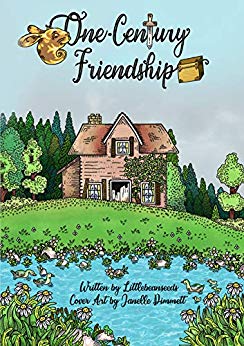
In One Century Friendship, Helen and her three friends scamper off from the main campsite towards the ruined cottage. Despite Miss J. Smith’s warnings, Shelly’s persuasive remarks make each of the four friends grow even more curious as they wonder what the house contains. As they near the place, their fear starts rising. A peek through the window is not enough and soon they are inside the house. On the inside, the cottage seems disappointing until things start happening and Mark goes missing. What started as playful fun turns to dread as the remaining three friends notice his absence. Worse still, they are afraid of confiding in Miss J. Smith since they disobeyed her instructions from the start.

(One Century Friendship sounds fascinating.)

What else have you brought along and why? 

music

I bring along with me Miguel – Remember Me that blog readers can listen to here.

It is one of my favorite songs. If you play this song when you read One Century Friendship, you will have much deeper feeling.

I just listened and it’s a lovely song LBS. Thanks so much for staying in with me to tell me all about One Century Friendship. I wish you all the best for it.

One Century Friendship

one century friendship

 You might be wondering, “How long does a friendship last?”

If you ask Helen Macland, she will tell you, “More than a person’s lifespan.”

You say, “Is that possible?”

“Yes, if you meet Hollace William,” she will reply.

One Century Friendship is available or pre-order through these links.

About Little Bean Seeds

Little Bean Seeds (LBS) is a Certified Public Accountant who lives in Hong Kong. She has known herself to be a bookworm ever since she was a primary school student. While most of the other children were running and jumping in the playground during break time, she would go to the library and stick her face in a book until the bell rang. She loves many different kinds of books—self-help, detective, romance, finance, health—and more.

In her eyes, books are one of the best channels for communicating messages. LBS perceives a writer’s role as like that of a farmer planting seeds. What she wants is for her readers to understand the book’s message and be helped in some way: have their mood changed, be pleased and entertained, or even encouraged to build a better self. The seeding job takes time, and it is better to start the seed earlier than later. That is why she chose to get her writing start with children’s stories, and also where the pen name “Little Bean Seeds” came from.

Writing is also about stepping out of one’s comfort zone. That is actually much easier to say than to do, especially when no one in your social network doing the same thing, saying, “It is just too difficult for me!” But most of the time, the difficulty comes from yourself more than those around you.

LBS would like to hear thoughts on this from others too. Share with her your story about stepping out of your comfort zone on “jump out of the comfort zone” in her website.

Staying in with Alexander Watson

RQ_frontcover_7-27-18

One of the joys of blogging is that I get to find out about all kinds of books from all kinds of authors and I love the way in which fiction can blur and challenge so-called ‘usual’ boundaries. Today I’m delighted to feature a slightly different book as I stay in with Alexander Watson.

Staying in with Alexander Watson

Welcome to Linda’s Book Bag Alexander and thank you for staying in with me. Tell me, which of your books have you brought along to share this evening and why have you chosen it?

RQ_frontcover_7-27-18

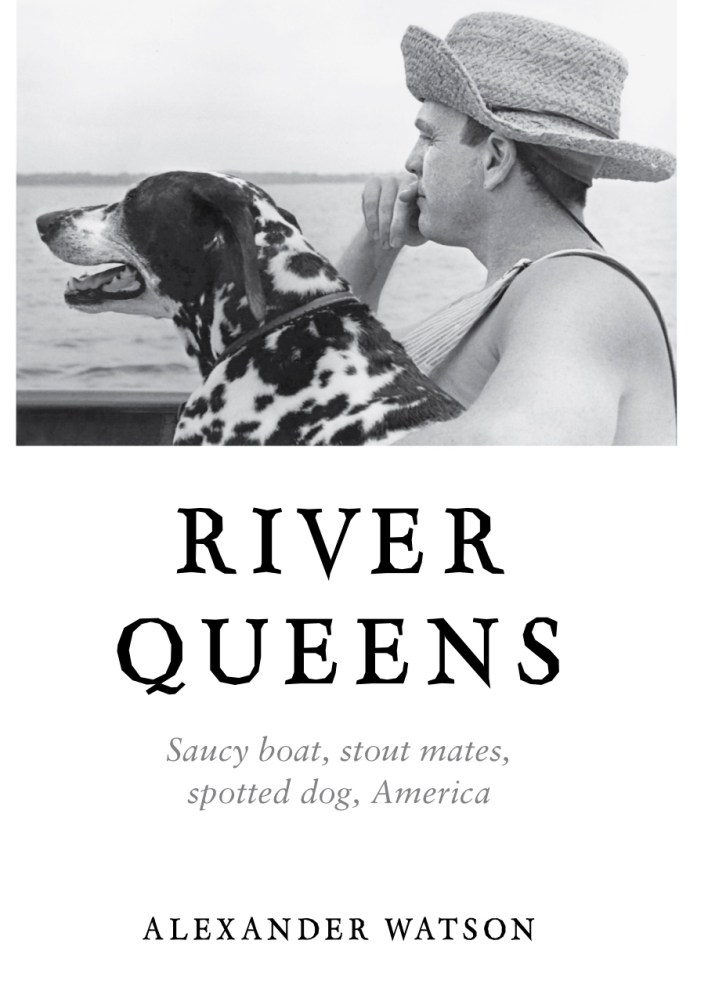
I brought River Queens: Saucy boat, stout mates, spotted dog, America because it represents two distinctive and unique journeys. It is an LGBTQIA+ travel memoir which follows two urbane and homosexual men, across the rural and conservative American Heartland from Texas to Ohio, the Buckle of the Bible Belt, in a vintage motor yacht. It is also my foray into self publishing—the result of a brilliant stroke of luck.

(Sounds intriguing. Tell me more…)

My draft read like those overly long captions people give to their holiday snaps: “We were here and we did this. We were there and we did that.”—hardly gripping stuff. I knew I needed help. I knew I needed a professional editor. And not knowing where to start, I asked everyone I could think for advice. One came up with this:

“Hire an agent. The agent will sell the book to a house. The house will supply the editor.” Then added, “But I gotta tell you. Self-publishing is eating our lunch.”

Traditional publishing, thusly stated, loses its luster.

Interviews with prospects numbered into the dozens before I emailed John Baskin at Orange Frazer Press: Wilmington, Ohio who said, “Send me some stuff.”

We started with the basics.

“Alexander,” Mr. Baskin said, “You have to write a line; then write another line; and the two have to have something to do with each other.”

(That sounds like pretty good advice to me!)

Had I not contracted Mr. Baskin, Bryan Mealer (The Boy Who Harnessed the Wind) would not have written the back-cover blurb; Melissa Fay Greene (The Temple Bombing, Praying for Sheetrock, The Underdogs) would not have written the foreword—both were beyond my reach. Orange Frazer would not have pressed my book, and Ms. Hawley, the publisher, would not have called and said, “River Queens is here. There’s a problem. Can you drive up?”

Wilmington is an hour away of my Cincinnati, Ohio home.

A greenhorn like me would never have seen that the dust jackets had been trimmed infinitesimally short; a bookie would spot it instantly. And, even though the launch was only days away, Ms. Hawley saw to it that I did have plenty of books with well-fitting jackets to sign.

It was a vanity press experience which defies the prevailing consensus.

(It all sounds rather exciting to me. I’m sure other writers will be envious of how it all worked out for you Alexander.)

What can we expect from an evening in with River Queens?

River Queens welcomes the reader on board a boat, Dale’s and my boat, a 1955 Chris-Craft Corsair named Betty Jane. Together with our dog, Doris Faye, we travel across an America few really know exists. The reader meets the people who live and work according to the seafarer’s code: “Always render aid.” It is my countrymen contradicting the persona we broadcast through our media and politics.

River Queens is also a bromance which candidly depicts the adaptations of our same-sex union made to accommodate conditions beyond homo-safe and familiar big-city Dallas, Texas. How we handle the ever changing conditions of the boat, the river, and landlubbing life beyond its banks drives the narrative.

What else have you brought along and why?

Doris Below cropped

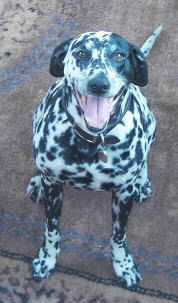
I brought Doris Faye.

(She’s utterly gorgeous.)

Sit. No, sit.

She can’t sit bless her heart, she’s Dalmatian. That tail never stops wagging either.

(I’ll just move a couple of breakables aside…)

Dale and I got her when we owned rental property. If I wasn’t working on our own units, I handymanned for other landlords of low-income, subsidized housing.

I hired—usually a resident, usually in exchange for cigarettes—someone to keep an eye on my truck. One day an addict said, “Man, I don’t wanna do some other guy out of a job, but you oughta get a dog. Junkies aren’t afraid of dirty needles, but we sure are afraid of dog bite. You oughta get yourself a dog, Man.”

(Doris Faye doesn’t look much of a guard dog to me Alexander. She looks as if she’s smiling.)

Doris Faye was ten pounds underweight, had kennel cough, inexpertly spayed, dumped and abandoned to her own devices because the cute little black and white puppy she was one Christmas morning after the re-release of One Hundred and One Dalmatians grew up to be a dog. She figures largely in River Queens as our morale officer on board and our goodwill ambassador in port—whatever Dale and I were; we had a good-looking dog.

betty jane bike nite501 004 (1)flip.jpg

I also moored Betty Jane out there just beyond your back stoop. I hope you don’t mind.

(Not at all, though I thought our pond was looking crowded!)

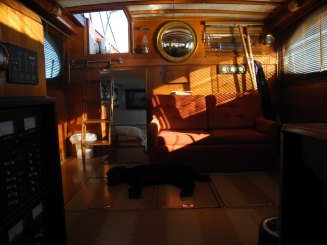
Even with the evening fog settling in over the river, you can make out her mid-century lines, the smoothed corners and bull-nosed edges. She’s forty-five feet long with twin Chevrolet 350s to push her about ten miles per hour depending on wind and current, of course. We found her sinking on a Texas lake one cold February night. What you see there is two years of hard restoration and sixteen years of meticulous maintenance.

Deckhouse in the Aftnoon

(She looks fantastic now.)

What is not apparent is how much joy and pleasure she has brought us. She has tempered us into almost one choreographed unit, capitalizing on our individual strengths. Dale is captain; I am the deckhand. We anticipate each other’s decisions and trace each other’s movements almost without speaking though moments of pique are in the book. Otherwise it would be a fairy tale (pardon the pun) rather than a story of two men whose appreciation of life comes from the people met while aboard a boat. That is the story of River Queens.

I really like the sound of River Queens Alexander. Thanks so much for staying in with me to tell me all about it. And thanks for bringing Doris Faye too.

River Queens

RQ_frontcover_7-27-18

The river – any river – is another planet, with its own language, rules, and culture.

River Queens is a story of the unlikeliest of fellows (and a dog) coming to the river-and what happens to them once they arrive.

At first glance, it seems to be a how-to manual for any adventuresome (but perhaps foolhardy) type who’s ever thought of restoring a wooden yacht and sailing it halfway across the country.

Second glance, however, shows that it’s a classic travel narrative in which two intrepid (but perhaps foolhardy) explorers head out to tour what is usually called “a distant, alien world.”

To Alexander Watson and his partner, Dale Harris, the river is as exotic as any foreign locale they’d previously traversed. There is danger, of course – unpredictable nature, lurking water hazards, quickly rising human squalls but the initial difficulty is language: can they become fluent in the argot of harbormasters, helmsmen, navigators, and the various deck hands, skippers, and swabbies? The language of river people is gloriously colorful and idiosyncratic, and Watson has a gift for capturing it. River talk is the animated essence of River Queens, in which these typically hard-working people are rendered so specifically, in all their salty humanity, that they become a kind of tribe, passing Watson and Harris along from outpost to outpost, encumbered by their hospitality.

This is the genius of River Queens, in which Watson’s sensibility is so adroit that he captures perfectly the two sides of America that seem elsewhere on permanent outs. Here on the river, though, they become assembled in a near-perfect unity, displaying a charity that seems to be missing on the inland geography. With happy authority and never a condescending glance (well, only where one is deserved), Captain Watson gives us a striking, often hilarious picture of river life, elevating its savvy inhabitants into the first rank of admirable Americans and showing us finally how little divided America actually can be.

River Queens is at once a romance of men and the river, a fantasy come to life, an unparalleled adventure story, one of the best travel journals around and a glad picture for our turbulent times.

River Queens is available for purchase through the links here.

About Alexander Watson

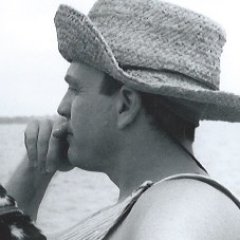
alex

Alexander Watson’s interest in writing came at an early age. His grandparents were world travelers, the Mame Dennis and Beauregard Burnside of their day. They sent postcards and letters from around the globe; but for young Alexander to receive, he had to give. Reading of their exploits and reciprocating with his own cultivated Alexander Watson’s ability to convey the color of places even as remote as a child’s imagination and render fascinating the petty businesses of the people who lived therein.
You can find out more through visiting the River Queens website, and following Alexander on Twitter @riverqueenbook and Goodreads. You’ll also find River Queens on Facebook.