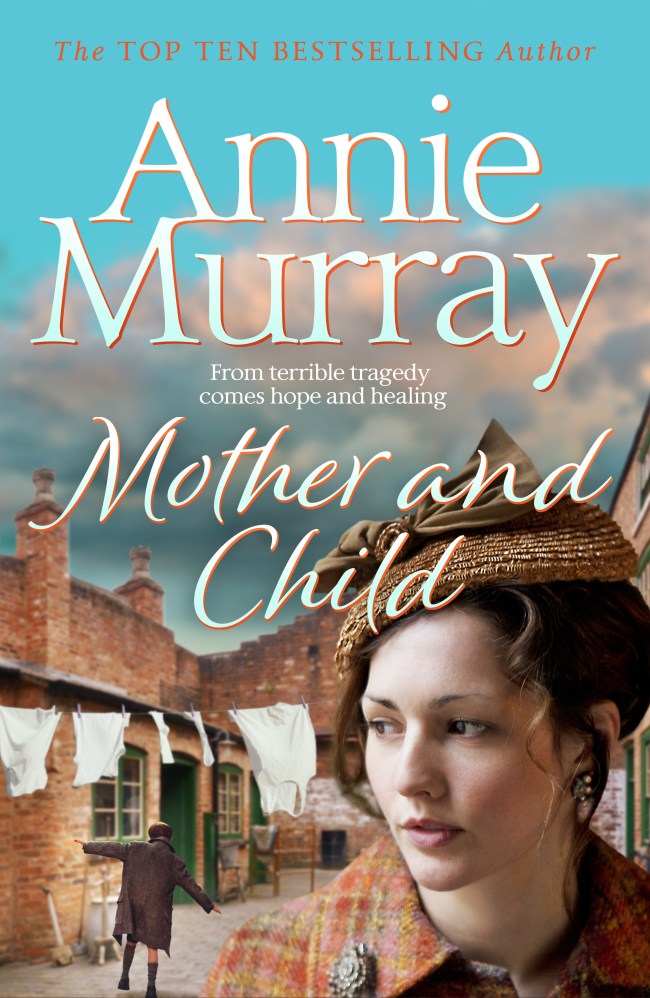
An Extract from Mother and Child by Annie Murray

Mother and Child

Although I’m still not taking on many blog tours, I had to support my lovely friend Kelly at Love Books Group with this tour for Mother and Child by Annie Murray for all kinds of reasons. Firstly, I have visited India where part of the book is set and love the country. Secondly, the proceeds of Mother and Child will be donated to charity, the Bhopal Medical Appeal, which is enough incentive anyway and thirdly, because I have a friend who had been at the Bhopal site not long before the disaster and who has never recovered from the guilt he feels at having escaped what happened there.

If you would like a fabulous read and be able to support the charity, Mother and Child, published by Pan Macmillan is available for purchase here.

Mother and Child
Mother and Child

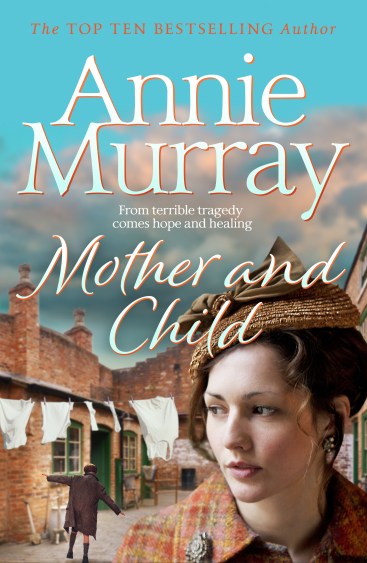
Mother and Child by Sunday Times bestseller Annie Murray is a moving story of loss, friendship and hope over two generations . . .

Jo and Ian’s marriage is hanging by a thread. One night almost two years ago, their only child, Paul, died in an accident that should never have happened. They have recently moved to a new area of Birmingham, to be near Ian’s mother Dorrie who is increasingly frail. As Jo spends more time with her mother-in-law, she suspects Dorrie wants to unburden herself of a secret that has cast a long shadow over her family.

Haunted by the death of her son, Jo catches a glimpse of a young boy in a magazine who resembles Paul. Reading the article, she learns of a tragedy in India . . . But it moves her so deeply, she is inspired to embark on a trip where she will learn about unimaginable pain and suffering.

As Jo learns more, she is determined to do her own small bit to help. With the help of new friends, Jo learns that from loss and grief, there is hope and healing in her future.

An Extract from Mother and Child

Eyes open in the dark, I’m listening for his feet on the stairs, the way I used to hear them in the other house,long after he was gone. There would be the tiny noise of the front door latch turning very quietly, Paul trying not to wake us after a shift, that pause as he pushed each of his trainers off with the toe of the other foot. The still laced shoes would be there in the morning. He might go into the kitchen for a drink before creeping up the stairs,his bedroom door closing almost silently. He was good like that, always sweet, considerate, even at his worst.

I feel bad if I don’t listen for him, guilty if I forget,even for a second, guilty if I smile – even the briefest of social smiles – which up until now I have not felt like doing, hardly for a second.‘Jo?’ Ian’s voice comes to me up the stairs the next morning as I’m cleaning my teeth. ‘I’m off now.’I look down at the basin so as not to see myself in the mirror in this bright white bathroom, this woman hearing a man calling to her from downstairs who is my husband of almost thirty years. Answer him, I command myself.

It seems to take an ocean of energy to force words past my lips.‘’K,’ I spit out. ‘Bye. Hope it goes well.’‘You going over to Mom’s?’ he calls.‘Yeah – course.’He’s taking the car. He doesn’t ask if I’m going to the cemetery. I went every day in the beginning. It’s two buses from here to Selly Oak, just as far as it was from Moseley.‘Great, thanks.’ A few seconds of quiet. ‘OK, bye.’ He pauses again. ‘See you later.’The front door closes. The latch sounds different from the old house with its dark- blue door and ancient Yale.

Here we have one of those clicky white jobs, the sort where you have to jam the handle up to lock it. The unfamiliar sound tilts me back into anguish. I’ll never hear that old lock turning again, the door opening, the creak of the stairs, each tread familiar. Everything has gone, been taken away …

Isn’t that wonderful? And now here’s a little more from Annie:

A Word from Annie Murray
a09b6957-0605-484f-91fa-09cef99a0538

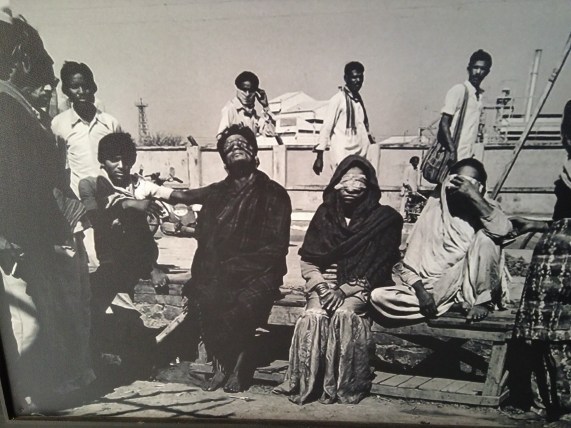
Soon after midnight on the morning of December 3rd, 1984, what is still recognized as the world’s worst ever industrial disaster took place in the city of Bhopal in central India.

A plant built to manufacture pesticide, owned by the American Union Carbide Corporation, leaked 40 tons of methyl-isocyanate gas, one of the most lethally toxic gases in the industry, over the surrounding neighbourhood. This was a poor area consisting mainly of slum housing, some of it leaning right up against the factory wall.

People woke, coughing and choking. Panic broke out as many tried to flee for their lives. As they ran, their bodies broke down with toxic poisoning, eyes burning, frothing at the mouth. Women miscarried pregnancies. Many people flung themselves in the river and by dawn, the streets were littered with thousands of bodies. It is estimated that 10,000 died that first night and the death toll continued, within weeks, to a total of about 25 000. Many more have died since. There are still reckoned to be 150 000 chronically ill survivors. Their plight was not helped by the fact that Union Carbide would not release the name of an antidote to a poison that they did not want to admit was as dangerous as it really was.

The plant, making less profit than had been hoped, was being run down for closure and was in poor condition. Not one of the safety systems was working satisfactorily. In addition, the original design of the factory had been ‘Indianized’ – in other words built more cheaply than would be expected of such a plant in a western country.

This was 35 years ago. In 1989, a paltry amount of compensation was eventually paid by Union Carbide who did everything a large corporation can do to evade taking responsibility. Their comment was “$500 is about enough for an Indian.” That was $500 to last for the rest of the life of a man who could no longer work to look after his family.

The sickness and suffering from ‘that night’ goes on in those who survived to this day. What is less well known about Bhopal however, is that even before the 1984 gas leak, the company had been dumping toxic waste in solar evaporation ponds. The lining used was about like you would use in a garden water feature. This in a country of heavy rains and floods. In the early 80s, people started to notice how bad their water supply tasted. Cows were dying.

Union Carbide closed the plant. They never cleared the site, which still stands in an area of highly toxic soil and water. The water supply in that area is so contaminated that water has to be brought in from outside. In 2001 Union Carbide was bought by the Dow Chemical Company, and is, from 2018, now DowDuPont. Despite having acquired all the assets of Union Carbide they are not prepared to accept its liabilities and clear up the site.

In the months after the gas leak in 1984, the nearby Hamidia hospital started to see children born with birth defects more horrific than any they had witnessed before. These days, because of gas- and also water-affected parents, the rate of birth defects is now reaching into a third, soon to be a fourth generation. The main parallel with the kind of extreme toxic effects would be with the children of Agent Orange in Vietnam.

The only free care in this impoverished neighbourhood for people suffering from the effects of gas poisoning, or to help with very severely handicapped children, is from the Bhopal Medical Appeal. It is to them that all the money from Mother and Child is going.

In the book, you can read more about what happened in Bhopal and about how the book itself came to be written.

About Annie Murray

annie

Annie Murray was born in Berkshire and read English at St John’s College, Oxford. Her first ‘Birmingham’ novel, Birmingham Rose, hit The Times bestseller list when it was published in 1995. She has subsequently written many other successful novels, including The Bells of Bournville Green, sequel to the bestselling Chocolate Girls, and A Hopscotch Summer. Annie has four children and lives near Reading.

You can follow Annie on Twitter @AMurrayWriter and visit her website for more details.

There’s more with these other bloggers too:
Mother and Child

The Photographer of the Lost by Caroline Scott

The Photographer of the lost

As my own grandfather was originally listed as missing, believed dead, following his involvement on day six of the Battle of the Somme, I have always been fascinated by the individual stories of the men and boys (my grandfather was 19 at the time) who fought, so when a surprise copy of Caroline Scott’s The Photographer of the Lost arrived from Sara-Jade Virtue at Simon and Schuster, I was delighted. I would like to thank S-J for sending it to me in return for an honest review. Then when blog tour organiser Anne Cater got in touch to say she would be running a Random Things tour for The Photographer of the Lost I knew I had to be involved.

(In case you were wondering, Granddad eventually turned up blinded in one eye and with shrapnel in his body for the rest of his life. He died when he was 87. Unfit for front line duties because of his injuries, after two weeks of recovery, he was placed in the Labour Corps for the rest of the war.)

Published by Simon and Schuster on 31st October, The Photographer of the Lost is available for pre-order through the links here.

The Photographer of the Lost

The Photographer of the lost

Until she knows her husband’s fate, she cannot decide her own…
An epic novel of forbidden love, loss, and the shattered hearts left behind in the wake of World War I

‘Beautiful, unflinching, elegiac: The Photographer of the Lost is going to be on an awful lot of Best Books of the Year lists, mine included . . . it’s unforgettable’ Iona Grey, bestselling author of The Glittering Hour.

1921. Families are desperately trying to piece together the fragments of their broken lives. While many survivors of the Great War have been reunited with their loved ones, Edie’s husband Francis has not come home. He is considered ‘missing in action’, but when Edie receives a mysterious photograph taken by Francis in the post, hope flares. And so she begins to search.

Harry, Francis’s brother, fought alongside him. He too longs for Francis to be alive, so they can forgive each other for the last things they ever said. Both brothers shared a love of photography and it is that which brings Harry back to the Western Front. Hired by grieving families to photograph gravesites, as he travels through battle-scarred France gathering news for British wives and mothers, Harry also searches for evidence of his brother.

And as Harry and Edie’s paths converge, they get closer to a startling truth.

An incredibly moving account of an often-forgotten moment in history, The Photographer of the Lost tells the story of the thousands of soldiers who were lost amid the chaos and ruins, and the even greater number of men and women desperate to find them again.

My Review of The Photographer of the Lost

The end of WW1 is just the beginning of the search for missing loved ones for so many families.

I’ve been sitting here some time wondering how to do justice to Caroline Scott’s wonderful, heartbreaking and unforgettable The Photographer of the Lost. I think I might find it impossible to convey what a beautifully written, moving and profound book it is. I had thought I might have had enough of reading about WW1, but The Photographer of the Lost transcends just about everything else I’ve read about the era because of its exquisite balance of focus on the war and the aftermath for those left behind.

Caroline Scott’s prose is stunning. At times poetic, at times stark, there isn’t an unnecessary syllable in this perfectly crafted narrative. That isn’t to say it feels unnaturally polished or contrived, but rather that Caroline Scott has given her very soul to her writing to ensure she conveys exactly what she needs so that the reader is completely mesmerised. I found reading The Photographer of the Lost such an intense experience I had to give myself short breaks to process the emotion, whilst simultaneously being unable to tear myself away from Harry and Edie’s story. The Photographer of the Lost was in my head the whole time, even when I was sleeping. There is little direct speech, but what is there thrums with emotion even when it is deceptively simple in appearance.

The story itself in The Photographer of the Lost is brilliantly wrought. The passages set during the war placed me so vividly there that I felt I was experiencing the same aspects as the men. The black humour and camaraderie between the soldiers ameliorates perfectly their situations and locations and their petty resentments and jibes illustrate exactly what life was like. The representations of France and Belgium both during the war and in 1921 are so evocative that there is a cimematic quality to Caroline Scott’s writing. Descriptions are fantastic, so that I could picture every setting perfectly. Indeed, if The Photographer of the Lost doesn’t become a feature film, there is no justice.

But for all that, it is the characterisation that is so fabulous and makes The Photographer of the Lost so emotive. Although he is ‘lost’ throughout the majority of the book, Francis has such presence that he represents every single one of those who were missing at the end of the war. The way in which fate and small items (which I can’t reveal because they would spoil the plot) alter his life and history, alongside the huge arena of war, is utterly heartbreaking. There’s a brittle quality to many of the characters, Edie especially, that creates an almost unbearable tension in the writing. My heart physically ached for these people. They were as real to me as anyone I know and Harry’s awful task of photographing graves and buildings for those back in England desperate for some kind of closure brought a new perspective to reading about WW1 that felt as terrible as any factual account ever has. I was touched, educated and saddened in equal measure.

The Photographer of the Lost is a beautiful, haunting and unforgettable story. At the end of the novel I wept for them all; for Francis, Edie, Harry, for the lost and the found, and all those whose lives were so affected by events during that terrible time. Caroline Scott has written a wonderful tribute in her absorbing, moving narrative. The Photographer of the Lost is a remarkable book and I adored every word.

photographer of the lost graphic

About Caroline Scott

Caroline Scott

Caroline completed a PhD in History at the University of Durham. She developed a particular interest in the impact of the First World War on the landscape of Belgium and France, and in the experience of women during the conflict – fascinations that she was able to pursue while she spent several years working as a researcher for a Belgian company. Caroline is originally from Lancashire, but now lives in southwest France.

You can follow Caroline on Twitter @CScottBooks.

There’s more with these other bloggers too:

Photographer of the Lost 2 BT Poster (1)

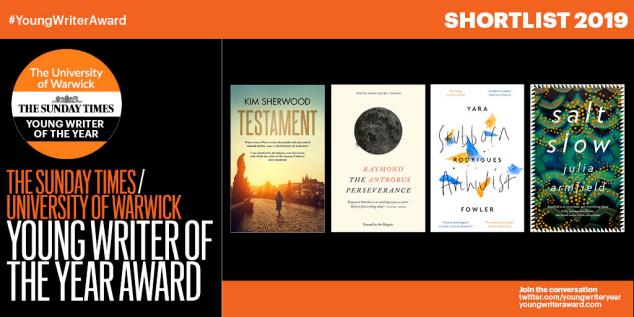
The Sunday Times/University of Warwick Young Writer of the Year Award Shortlist

young writer award logo 2019

A few days ago I was thrilled to share the news that I had been asked to be part of a blogger shadow judging panel for The Sunday Times/University of Warwick Young Writer of the Year Award in a post you can see here. All the details about the award can be found on The Sunday Times/University of Warwick Young Writer’s Award website.shadow panel

Today it gives me enormous pleasure to reveal the books I shall be reading and judging along with my fellow panel members. Congratulations to all the shortlisted authors.

The exceptional debuts of multi-award-winning British-Jamaican poet Raymond Antrobus, The White Review Short Story Prize winner Julia Armfield, British-Brazilian novelist Yara Rodrigues Fowler, and writer and Creative Writing teacher Kim Sherwood have been shortlisted for the 2019 Sunday Times / University of Warwick Young Writer of the Year Award. It is the first year the University of Warwick, home to the acclaimed Warwick Writing Programme, acts as the title sponsor of the prize, following two years as its associate partner.

The judges have chosen the shortlisted titles – two novels, a poetry and a short story collection; written by three women and one man – from a record number of submissions to the prize. Publishers submitted over 100 books this year – prompting The Sunday Times Literary Editor Andrew Holgate, Chair, to sign up two further judges: the writer, editor and bookseller Nick Rennison and the University of Warwick’s Gonzalo C. Garcia have joined the award-winning poet and writer Kate Clanchy and the bestselling author Victoria Hislop. The judges will announce their decision on December 5th with the shadow panel giving their result on the previous Sunday.

Let’s take a look at the shortlisted books:

Salt Slow by Julia Armfield

julia armfield instagram

In her brilliantly inventive and haunting debut collection of stories, Julia Armfield explores bodies and the bodily, mapping the skin and bones of her characters through their experiences of isolation, obsession, love and revenge.

Teenagers develop ungodly appetites, a city becomes insomniac overnight, and bodies are diligently picked apart to make up better ones. The mundane worlds of schools and sleepy sea-side towns are invaded and transformed, creating a landscape which is constantly shifting to hold on to its inhabitants. Blurring the mythic and the gothic with the everyday, Salt Slow considers characters in motion – turning away, turning back or simply turning into something new entirely.

Winner of The White Review Short Story Prize 2018, Armfield is a writer of sharp, lyrical prose and tilting dark humour – Salt Slow marks the arrival of an ambitious and singular new voice.

Salt Slow is available for purchase through the links here.

Stubborn Archivist by Yara Rodrigues Fowler

yara rodrigues fowler instagram

When your mother considers another country home, it’s hard to know where you belong. When the people you live among can’t pronounce your name, it’s hard to know exactly who you are. And when your body no longer feels like your own, it’s hard to understand your place in the world.

This is a novel of growing up between cultures, of finding your space within them and of learning to live in a traumatized body. Our stubborn archivist tells her story through history, through family conversations, through the eyes of her mother, her grandmother and her aunt and slowly she begins to emerge into the world, defining her own sense of identity.

Stubborn Archivist is available for purchase through the links here.

Testament by Kim Sherwood

kim sherwood instagram

Of everyone in her complicated family, Eva was closest to her grandfather: a charismatic painter – and a keeper of secrets. So when he dies, she’s hit by a greater loss – of the questions he never answered, and the past he never shared.

It’s then she finds the letter from the Jewish Museum in Berlin. They have uncovered the testimony he gave after his forced labour service in Hungary, which took him to the death camps and then to England as a refugee. This is how he survived.

But there is a deeper story that Eva will unravel – of how her grandfather learnt to live afterwards. As she confronts the lies that have haunted her family, their identity shifts and her own takes shape. The testament is in her hands.

Kim Sherwood’s extraordinary first novel is a powerful statement of intent. Beautifully written, moving and hopeful, it crosses the tidemark where the third generation meets the first, finding a new language to express love, legacy and our place within history.

Testament is available for purchase through the links here.

The Perseverance by Raymond Antrobus

raymond antrobus instagram (1)

Ranging across history and continents, these poems operate in the spaces in between, their haunting lyrics creating new, hybrid territories. The Perseverance is a book of loss, contested language and praise, where elegies for the poet’s father sit alongside meditations on the d/Deaf experience.

The Perseverance is available for purchase though the links here.

I’m so excited about reading all of these fabulous young writer and will be featuring each book on Linda’s Book Bag over the next three weeks. I wonder which book appeals to you most?

shortlist 2019 twitter

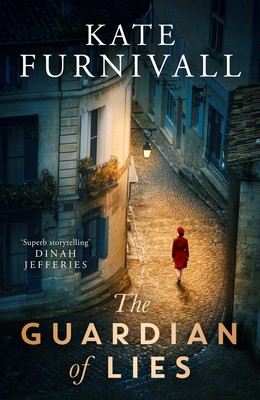
The Guardian of Lies by Kate Furnivall

Guardian of Lies

I am genuinely delighted to be part of the paperback launch for The Guardian of Lies by Kate Furnivall because I have been privileged to meet her on several occasions, the first being a blogger and author event that you can read about here, and I love Kate’s writing. My enormous thanks to Rubicka Kumari at EDPR for inviting me to participate. Kate was last here on Linda’s Book Bag when we stayed in together to chat about The Survivors and you can read my review of Kate’s The Betrayal here.

As well as my review of The Guardian of Lies today, I’m thrilled to be able to offer a paperback copy of the book to one lucky UK reader in a giveaway that you’ll find at the bottom of this blog post.

The Guardian of Lies is available for purchase in all formats through the links here.

The Guardian of Lies

Guardian of Lies

1953, the South of France. The fragile peace between the West and Soviet Russia hangs on a knife edge. And one family has been torn apart by secrets and conflicting allegiances.

Eloïse Caussade is a courageous young Frenchwoman, raised on a bull farm near Arles in the Camargue. She idolises her older brother, André, and when he leaves to become an Intelligence Officer working for the CIA in Paris to help protect France, she soon follows him. Having exchanged the strict confines of her father’s farm for a life of freedom in Paris, her world comes alive.

But everything changes when André is injured – a direct result of Eloise’s actions. Unable to work, André returns to his father’s farm, but Eloïse’s sense of guilt and responsibility for his injuries sets her on the trail of the person who attempted to kill him.

Eloïse finds her hometown in a state of unrest and conflict. Those who are angry at the construction of the American airbase nearby, with its lethal nuclear armaments, confront those who support it, and anger flares into violence, stirred up by Soviet agents. Throughout all this unrest, Eloïse is still relentlessly hunting down the man who betrayed her brother and his country, and she is learning to look at those she loves and at herself with different eyes. She no longer knows who she can trust. Who is working for Soviet Intelligence and who is not? And what side do her own family lie on?

My Review of The Guardian of Lies

Eloïse finds that all is not as it might appear in her life.

The Guardian of Lies opens with thrilling pace and action which Kate Furnivall maintains throughout the entire novel so that I was completely spellbound by her storytelling. This is a narrative that twists and turns and is as duplicitous as the spies and agents featured in its tale. I thought it was excellent, particularly because I was as manipulated and tricked as is Eloïse.

What Kate Furnivall does so well is to create a sense of time and place that utterly transports the reader. Her research is meticulous and I went off to investigate aspects of the text for myself to see which parts were fact and which fiction. I have learnt more about post-WW2 France than I ever knew before. That said, The Guardian of Lies is no dusty historical tract, but rather a heart-thumping thriller with a smattering of romance, deceit and national identity that is completely compelling. Add in the fabulous geographical detail that brings the Camargue vividly to life and The Guardian of Lies becomes a perfect read. The depiction of the landscape in The Guardian of Lies makes it feel as if this narrative couldn’t possibly have taken place anywhere else.

My total enjoyment in Kate Furnivall’s novels too, comes from her strong female lead characters. Eloïse is capable and determined, yet has a vulnerability that makes her completely convincing. Her feelings of guilt, her fears, her need to belong, to atone and to find peace touched me as well as entertained me. I don’t want to say too much about others in the story as I am afraid of giving away too much detail, but I will confess that I was as much in the dark about many of them as is Eloïse!

The Guardian of Lies is a thrilling read with a menacing atmosphere that Kate Furnivall creates without recourse to explicit visceral violence, although she is not afraid to present brutality appropriately. For me this is the perfect balance. I found my heart beating and my allegiances wavering as I read. When I finished The Guardian of Lies I felt I had been on a speeding roller coaster of events that were spellbinding. I loved this book unreservedly!

About Kate Furnivall

kate-furnival

Kate Furnivall didn’t set out to be a writer. It sort of grabbed her by the throat when she discovered the story of her grandmother – a White Russian refugee who fled from the Bolsheviks down into China. That extraordinary tale inspired her first book, The Russian Concubine. From then on, she was hooked.

Kate is also the author of The White Pearl and The Italian Wife. Her books have been translated into more than twenty languages and have been on the New York Times Bestseller list.

You can follow Kate on Twitter @KateFurnivall, visit her website and find her on Facebook.

There’s more with these other bloggers too:

The Guardian of Lies Blog Tour Banner

Giveaway A Paperback Copy of The Guardian of Lies

Guardian of Lies

For your chance to win a paperback copy of The Guardian of Lies by Kate Furnivall, click here.

UK only I’m afraid and the giveaway closes at UK midnight on Saturday 8th November.

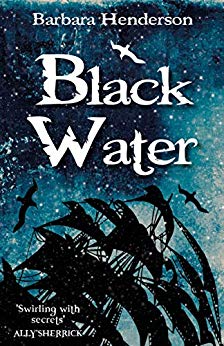
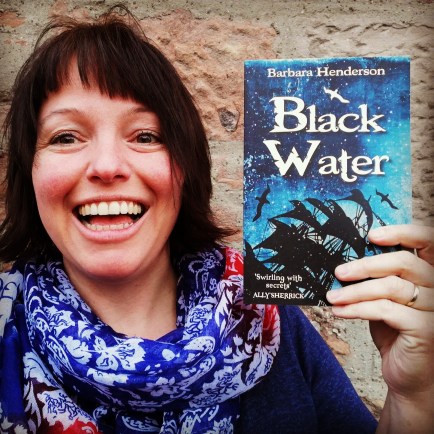
Black Water by Barbara Henderson

Black Water

Regular readers of Linda’s Book Bag will know that I have been trying not to take on blog tours this year. I have done some, of favourite authors, or when I knew life wouldn’t be too busy, or when I have been approached personally by an author. If I say that I actually offered to be part of the blog tour for Barbara Henderson’s latest work for young readers, Black Water, you’ll appreciate just how special a writer I think she is!

Today, as well as sharing my review I’m delighted that Barbara returns with a super guest post considering the Novel versus Novella!

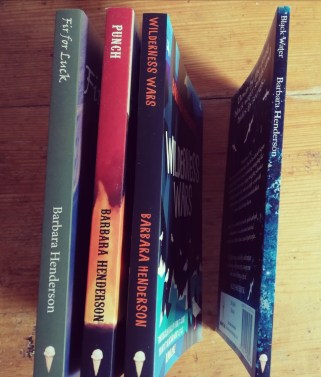
You can see the other occasions I’ve featured Barbara here on Linda’s Book Bag through the following links:

My review of Fir For Luck here (also one of my books of the year in 2016).

A smashing guest post from Barbara about Fir For Luck publication day here.

Another super post about why a book launch matters to celebrate Punch here.

A guest post about nature and my review of Wilderness Wars here.

Published on 31st October by Cranachan imprint, Pokey Hat, Black Water is available for purchase here.

Black Water

Black Water

Down by the coast, black water swirls and hides its secrets…

Dumfries, 1792. Henry may only be thirteen, but he has already begun his training in the Excise, combatting smuggling like his father does. But when a large smuggling schooner is stranded nearby, the stakes are high—even with reinforcements, and the newly recruited officer, a poet called Robert Burns.

Musket fire, obstructive locals, quicksand and cannonballs—it is a mission of survival. As it turns out: Henry has a crucial part to play…

Novel versus Novella

A Guest Post by Barbara Henderson

dav

I’m a writer. More specifically, I’m a writer of novels for young people. I thought that was fairly straightforward.

One thing I have in common with Linda is that I, too, worked as an English teacher in secondary schools where pupils studied poems, plays and yes, novels again.

So, imagine my surprise when I ran my new idea for an 18th century smuggling novel past my publishers, Cranachan (one of the many great things about this small independent wee publisher in Scotland is that Anne Glennie, the editor of my books, has considerable expertise in educational matters): ‘You don’t want a novel here, Barbara,’ she said.

Why ever not? The unspoken question hung in the air.

‘Think about it!’ she urged. ‘Schools come back after Christmas. They do projects on Burns until Burns’ Day on the 25th of January.’

I was always a bit slow on the uptake. As my brain’s cogs were turning, she spelled it out some more. ‘We need this book short, you see – so that schools can fit it in. Not a novel. More like a novella.’

Well, here was a challenge: condensing what I really wanted to say into a novella – not 40 000 words, more like 13 000, and preferably less. Well, I might as well make those words good ones! I set to work, and found that, actually, the core events I was describing only took place over a couple of days. This story, at its heart, had perhaps always been a novella, before I even attempted to make it one.

There are other brilliant short books out there. Neil Gaiman’s Coraline, Ted Hughes’ The Iron Man, and of course, Stig of the Dump – all fit the novella format. I was in good company as a novella writer – especially when you also consider Theodor Storm, the German master of the genre. I love his work, and his brooding and atmospheric coastal locations probably influenced Black Water more than I was aware of at the time.

I enjoyed writing the first draft immensely – half a month and I was nearly there. The editing and fixing took a little longer – but essentially, it was a much more achievable task than writing and researching a full-length novel.

So here I am, pushing Black Water out into the book trade surf. Sink or swim, little book – you’re about to sail alongside the big guys. Hold your own, wee book, don’t let anyone mess you about! Ride the wave and enjoy it!

I can assure you, Barbara, that Black Water will swim and swim. Here are my thoughts:

My Review of Black Water

Thirteen year old Henry shadows his father on Excise duty in the late 1700s.

Black Water may only be a short novella but it packs a powerful punch. Steeped in history, intrigue and fast-paced drama this is a story that thrills at every turn.

Barbara Henderson’s writing style is sheer perfection because it is authentic for the period, especially in direct speech, and yet it remains completely accessible to the target audience of 8 to 10 year olds. With a glossary at the end, any potentially unfamiliar vocabulary is simply explained, making Black Water an educational as well as an exciting book. Shamefully, I had no idea that the poet Robert Burns had been an Exciseman and the addition of some of his poetry, the author’s note and extracts from the real Crawford’s diary give Black Water added interest and potential. It makes me wish I were back teaching so that I could explore its historical elements, the poems of Burns and the art of diary writing with my young students.

Having acknowledged the educational potential of Black Water, however, I have to emphasise that its greatest attraction is in being a cracking story. I loved the fact that the Excisemen are the heroes rather than the traditional smugglers. The exploration of loyalty, friendship, family and truth give so much to think about even as the narrative is enjoyed simply as an exciting historical drama.

The descriptions are stunning so that I could place myself alongside Henry on the shoreline and I thought the illustrations that accompany the writing added wonderful atmosphere. Henry’s first person voice is clear and effective making him the true hero of the story despite his age and I’d love to read more about him in future.

Black Water confirms for me what I already knew. Barbara Henderson is a master storyteller and one of the best writers for youngsters around. Black Water is another winner of a book and I recommend it completely – to all ages!

About Barbara Henderson

IMG_20191015_201002_582

Barbara Henderson has lived in Scotland since 1991, somehow acquiring an MA in English Language and Literature, a husband, three children and a shaggy dog along the way. Having tried her hand at working as a puppeteer, relief librarian and receptionist, she now teaches Drama part-time at secondary school.

Writing predominantly for children, Barbara won the Nairn Festival Short Story Competition in 2012, the Creative Scotland Easter Monologue Competition in 2013 and was one of three writers shortlisted for the Kelpies Prize 2013. In 2015, wins include the US-based Pockets Magazine Fiction Contest and the Ballantrae Smuggler’s Story Competition.

Follow Barbara on Twitter @scattyscribbler for more information, or and read her blog. You’ll also find her author page on Facebook.

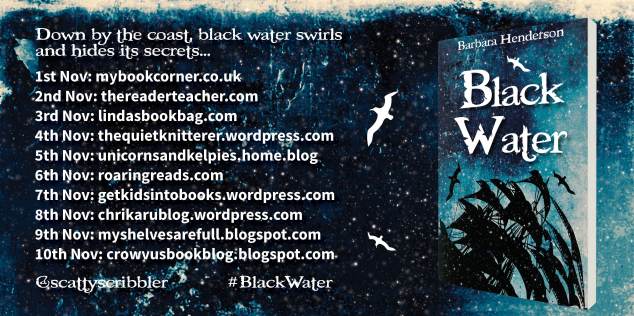
There’s more with these other bloggers too:

Black Water Blog Tour

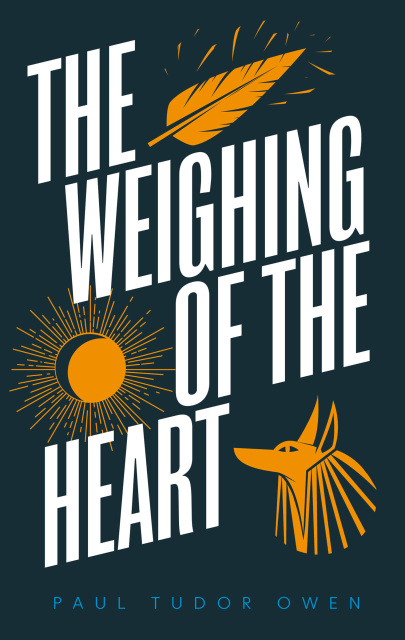
The Weighing of the Heart by Paul Tudor Owen

the weighing of the heart

My grateful thanks to Paul Tudor Owen for sending me a copy of The Weighing of the Heart in return for an honest review and for his patience in waiting for it to emerge from my TBR!

The Weighing of the Heart was published by Obliterati Press on 22nd March 2019 and is available for purchase here and on Amazon.

The Weighing of the Heart is a finalist in the Peoples Book Prize too.

The Weighing of the Heart

the weighing of the heart

Following a sudden break-up, Englishman in New York Nick Braeburn takes a room with the elderly Peacock sisters in their lavish Upper East Side apartment, and finds himself increasingly drawn to the priceless piece of Egyptian art on their study wall – and to Lydia, the beautiful Portuguese artist who lives across the roof garden.

But as Nick draws Lydia into a crime he hopes will bring them together, they both begin to unravel, and each find that the other is not quite who they seem.

Paul Tudor Owen’s intriguing debut novel brilliantly evokes the New York of Paul Auster and Joseph O’Neill.

My Review of The Weighing of the Heart

Moving in to the Peacock sisters’ apartment leads to more than Nick could imagine.

I hardly know where to begin in reviewing The Weighing of the Heart because, despite its brevity, it is a complex and fascinating story that left me with more questions than it answered, because of its superstitious and almost spiritual elements that I found so intriguing.

There’s a visual quality to Paul Tudor Owen’s writing that creates an almost film noir setting in New York. His prose feels timeless so that The Weighing of the Heart could have been based in almost any era from the early twentieth century to the present day. It made me think of an Orson Welles movie as I read, because of the creation of atmosphere and the sense of menace that underlies the romance and mystery of the story.

The combining of modern American life with the Egyptian fables, metaphors and traditions made The Weighing if the Heart deliciously mythological and disturbing. Images of danger and death swirl, appear and fade, only to reform until the reader is as mesmerised as is Nick. The whole time I was reading I found a line from Macbeth circling in my mind as increasingly Nick’s life appeared to be affected by ‘the heat-oppressed brain’. The reduced number of characters as well as the New York setting added to a feeling of claustrophobia that contributed to this atmosphere.

Curiously I found Nick a completely unlikeable protagonist until the final few pages of the novel when I felt I had come to understand him, and how the book had been structured, and yet he drew me in until I was almost as obsessed in knowing his likely fate in front of the Devourer as he was. I thought he was as self delusional in chasing the American dream as any Willy Lomax and so brilliantly drawn to the extent that Paul Tudor Owen almost makes the reader become Nick as they are absorbed into the action with him.

Alongside the themes of obsession, identity, greed, fear and imagination is a really good thriller too. I can’t say too much about the plot, for fear of spoiling the read for others, but I had no idea how it might end as Nick spiralled into situations of his own making. Paul Tudor Owen has somehow managed to balance opposites like deception and truth so finely that the structure of the book mirrors its title perfectly.

I found The Weighing of the Heart an intense and curious read that I thoroughly enjoyed. I loved the fact that it can be read on so many different levels and I doubt I have scratched the surface of what the book has to offer. I really recommend it.

About Paul Tudor Owen

paul tudor owen

Paul Tudor Owen was born in Manchester in 1978 and was educated at the University of Sheffield, the University of Pittsburgh, and the London School of Economics.

He began his career as a local newspaper reporter in north-west London, and currently works at The Guardian, where he spent three years as deputy head of US news at the paper’s New York office.

You can follow Paul on Twitter @PaulTOwen.

One Winter Morning by Isabelle Broom

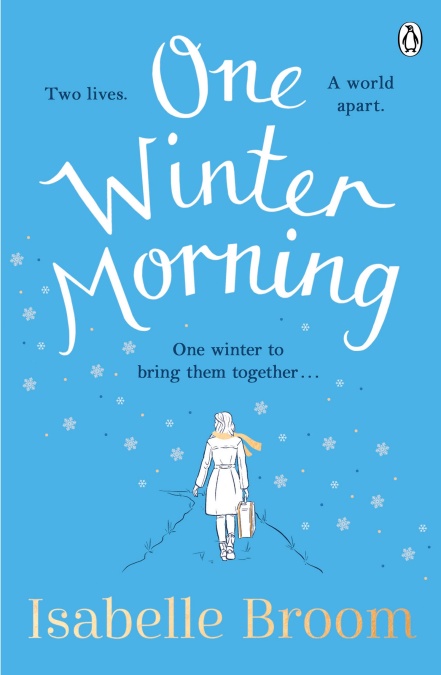
One Winter Morning

I absolutely adore Isabelle Broom’s writing and when a surprise copy of One Winter Morning arrived from the lovely Laura Nichol at Penguin in return for an honest review I genuinely gave a shriek of delight.

You’ll find out why I love Isabelle Broom’s writing if you read my review of My Map of You here, A Year and a Day here and The Place We Met here. Sadly I haven’t yet managed to get to One Thousand Stars and You, but I do have a lovely personally signed copy on my shelf!

Published by Penguin on 17th October 2019, One Winter Morning is available for purchase through the links here.

One Winter Morning

One Winter Morning

Genie isn’t feeling very festive this December.

The frosty mornings and twinkling fairy lights only remind her it’s been a whole year since she lost her adoptive mother, who took her in as a baby and raised her as her own.

She’s never felt more alone – until she discovers her birth mother’s identity.

And where to find her: New Zealand, half the world away.
Travelling there could be her one chance to meet the woman who gave her up.

But will she find the answers she has been looking for? Or something she could never have expected?

My Review of One Winter Morning

Evangeline is not looking forward to Christmas and the anniversary of her adoptive mother’s death.

I knew from the moment I began reading One Winter Morning that Isabelle Broom had created another beautiful, moving and transporting novel. However, there is something that feels extra special about One Winter Morning. I’m not sure quite why, whether it is the sad catalyst for the narrative, the exploration of a grief that feels all too familiar to me, or the first person of Genie’s parts of the story, but there feels as if there is an intangible extra to this book. It has an indefinable quality that felt as if it were wrapping me in invisible tendrils and drawing me in far more than simply just being a reader.

As ever when reading Isabelle Broom’s writing, the sense of place, the vivid and evocative descriptions and the attention to detail mean that the New Zealand setting in One Winter Morning is every bit as strong a character as Tui, Genie, Kit et al. There’s a layered and visual depth that comes from such a skilled writer that made me want to book my flight immediately, even though I’ve never had a desire to visit the country before.

The characters thrum with life and authenticity; Tui in particular. I loved the way she is different and yet placed so naturally and convincingly at the heart of much of the narrative. One Winter Morning may ostensibly be Genie’s story, but every one of the people between its covers is real and knowable. I think it’s the way Isabelle Broom peels back the layers of what makes us who we are and illustrates how we have to find ourselves before we can find others that I found so moving in the characters here. The plot is driven by these people, but in a totally natural manner. There’s nothing here that couldn’t have happened in real life and yet it is written about so warmly, so genuinely and so adeptly that I was entirely wrapped up in the events.

But for me, the main success of One Winter Morning comes not through the great plot, the fabulous people or the wonderful setting, but through the sensitive, honest and humane exploration of the themes. Identity, family, love, disability, grief, healing and so on all combine to make One Winter Morning a book that not only heals Genie, but the reader too. I ended the story feeling as if I’d been given hope and warmth. As if I had found a kind of home, just like Genie.

One Winter Morning is a lovely, lovely book. I adored it and cannot recommend it highly enough.

About Isabelle Broom

isabelle broom

Isabelle Broom was born in Cambridge nine days before the 1980s began and studied Media Arts in London before a 12-year stint at Heat magazine. Always happiest when she’s off on an adventure, Isabelle now travels all over the world seeking out settings for her escapist fiction novels, as well as making the annual pilgrimage to her second home – the Greek island of Zakynthos.

Currently based in Suffolk, where she shares a cottage with her two dogs and approximately 467 spiders, Isabelle fits her writing around a busy freelance career and tries her best not to be crushed to oblivion under her ever-growing pile of to-be-read books.

For more information, visit Isabelle’s website. You can also follow her on Twitter @Isabelle_Broom and find her on Facebook.

The Sunday Times/University of Warwick Young Writer of the Year Award Shadow Panel

SHADOW-JUDGE-WOB 2019

Imagine my surprise and delight when I was asked if I would like to be one of five UK bloggers to shadow The Sunday Times/University of Warwick Young Writer of the Year Award and decide on a blogger winner at the same time as the award is judged and decided by writers Kate Clancy, Victoria Hislop and The Sunday Times Literary Editor, Andrew Holgate. I was utterly thrilled to be asked.

The Sunday Times/University of Warwick Young Writer of the Year Award

young writer award logo 2019

The Sunday Times/University of Warwick Young Writer of the Year Award is awarded for a full-length published or self-published (in book or ebook formats) work of fiction, non-fiction or poetry, by an author aged 18 – 35 years. The winner receives £5,000, and there are three prizes of £500 each for runners-up. The winning book will be a work of outstanding literary merit.

You can find out all about The Sunday Times / University of Warwick Young Writer of the Year Award, including past winners, here.

Although I’m not allowed to tell you the shortlisted books yet I can say that they all look stunning and I think the shadow panel will have its work cut out to decide a winner! I’ll be featuring the books here on the blog over the next month.

The Shadow Panel

As well as me here on Linda’s Book Bag, the other shadow panelists include:

Anne Cater, of Random Things Through My Letter Box

David Harris of Blue Book Balloon

Clare Reynolds of Years Of Reading Selfishly

Phoebe Williams of The Brixton Bookworm

You can follow everything about the award on Twitter @youngwriteryear, or by using #YoungWriterAwardShadow to see what the shadow panel is up to! You’ll find us on the Award website too.

I can’t wait to begin reading the shortlisted books. You can join in too from Sunday 3rd November when the books and authors will be announced in The Sunday Times and on the website.

How exciting!

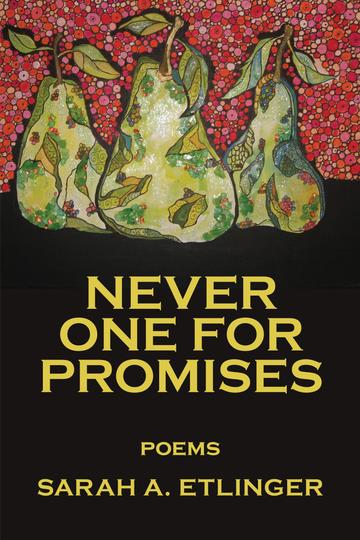
Never One For Promises by Sarah A. Etlinger

Never one for promises

My enormous thanks to Isabelle Kenyon for sending me a copy of Never One For Promises by Sarah A. Etlinger on behalf of Kelsay Books in return for an honest review.

Never One For Promises is available directly from the publisher here and on Amazon.

Never One For Promises

Never one for promises

Never One For Promises examines relationships at a critical moment and offers insight into the connection between relationships and spirituality.

My review of Never One For Promises

A collection of twenty poems.

I’m slightly at a loss to know how to review Never One For Promises by Sarah A. Elinger because the sinuous sophistication and beauty of her language is beyond my vocabulary to describe. I’ve read and reread the poems several times and I thought this collection was utterly outstanding.

Sarah A. Etlinger’s poetic eye is perfectly attuned to life and nature. Her descriptions are glorious, particularly when referring to heat and cold. I loved the way there are many references to various kinds of beats throughout so that I found my own heartbeat and pulse becoming attuned to the rhythm of the poetry. It seems ironic too, that one of the shortest and simplest poems, Moment Before The Storm, I found the most affecting emotionally. That said, without exception, the poems in Never One For Promises reverberate with life, emotion and, I suspect, undercurrents of the poets own beliefs, loves, joys and fears.

Themes of love and insecurity, infidelity, religion and patriarchal society are conveyed by both sensual and sensuous imagery so that I found the poems curiously surprising at the same time as being eerily familiar because they conveyed many of my own thoughts in ways I could never have imagined.  There’s often a wistfulness that I found so moving.

I have to make particular mention of Unpacking The Last Box After Moving In Together. Admittedly it’s one of the longer poems in Never One For Promises, but in just two and a half pages the poet encapsulates more drama and emotion than many a short story I’ve read. Sarah A. Etlinger has an amazing talent.

I loved Never One For Promises. I frequently read and review poetry but the work of Sarah A. Etlinger is amongst the best I’ve encountered. Just wonderful.

About Sarah A. Etlinger

sarah

Sarah A. Etlinger holds a Ph.D. in English and works as an English professor. She lives in Milwaukee, WI, with her family (a husband, young son, and cocker spaniel mix). Though she hails from New England, Milwaukee is her adopted home. Her work can be found in many journals and magazines including The Penwood Review, Cliterature, and Little Rose Magazine; and she can be found discussing her work in The Poetry Professors’ podcast (episode 107). Interests other than poetry include cooking, traveling, reading, and learning to play the piano.

You can follow Sarah on Twitter @drsaephd. Visit Sarah’s website for further information.

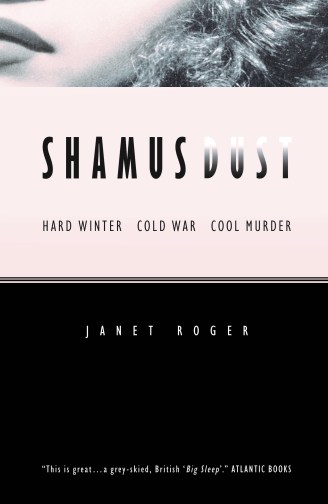
Staying in with Janet Roger on Shamus Dust Publication Day

SHAMUS DUST high-res. Oct 2019

I’m delighted that I have a copy of Shamus Dust by Janet Roger on my TBR as it looks exactly my kind of read. Although I haven’t been able to fit in a review by today’s publication date, I am thrilled to be staying in with Janet today to find out more about Shamus Dust.

Staying in with Janet Roger

Welcome to Linda’s Book Bag Janet. Thanks for staying in with me.

The pleasure’s mine! Thank you for the invitation.

I rather think I might know the answer to this, but what’s the book you’ve brought to tell us about?

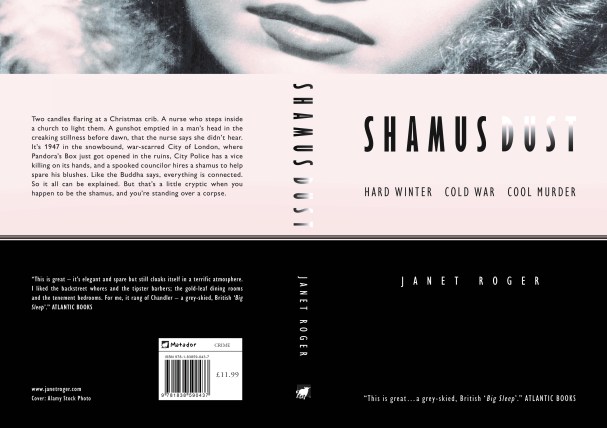
Full spread 2nd printing

Shamus Dust of course – it’s out today.

Happy publication day Janet!

And completely by coincidence, it turns out that October is going to be the 80th birthday of Raymond Chandler’s original Philip Marlowe novel, The Big Sleep. I’ll explain the connection later, but the birthday coincidence really delighted me. It’s been a huge thrill to see many of the early reviews compare Shamus Dust (and I’d better add, favourably) with Chandler.The first review to do that takes pride of place on the book’s back cover! Believe me, for my first attempt at a hardboiled mystery that’s been a rather overwhelming response. It feels as if the book has been autographed by Bogart and Bacall!

How exciting for you. This all sounds very intriguing. Tell me, what can we expect from an evening in with Shamus Dust?

A hardboiled mystery fest from the real noir period! But seriously, setting aside the marvellous Chandler comparisons, there’s a very neat description of Shamus Dust made by a reviewer who says, Imagine Polanski’s masterpiece, Chinatown played out against the bomb sites and grimy alleys of a freezing 1947 London. I really hadn’t thought about those parallels before, but on reflection I do think the reviewer nails it.

You must be delighted with that comment Janet.

Like Chinatown, Shamus Dust unfolds as a dark tale driven by the greed and invulnerability of the powerful. Both involve criminal sexuality. Both are stories of deviant wealth and civic corruption, and both descend into routine murder for the cover-up. Also, both are told as an intimate noir mystery that unravels through the eyes of the gumshoe who’s on the case. The movie, of course (Jack Nicholson, Faye Dunaway) is fabulous. I’ll mention one more connection. Chinatown’s terrific screenplay –it’s often voted the greatest ever! – is by Robert Towne, an Angeleno himself, who loves Chandler’s lazy, lyrical way with a narrative. So do I, and it was this lyric style above all that I wanted for Shamus Dust. It seemed such an obvious fit for a  story that, after all, is set exactly in those years when the Marlowe novels are at their best.

You have really made me want to get Shamus Dust to the top of my TBR Janet!

What else have you brought along and why have you brought it? 

 Osaka

I brought you some flowers!

How lovely. Thank you!

I’ve long been a confirmed itinerant and travel constantly. All  years are lived in hotel rooms and apartments, in sleeping cars on trains, cabins on ferries and freighters – you name it. And so I do get asked how I ever settle down to writing. The answer is, truly, that I write anywhere I have to. If there’s the luxury of a desk, I’ll pull up a chair. Sometimes my view is simply a blank wall. But there are other times when I get a great big window and a view in front of it that really is worth a photograph (I never ordinarily take photos). This one looks out over Osaka, Japan, and the tulips sitting in the coffee pot made the day just perfect. A lot of my writing spaces, I’d have to say, feature flowers in coffee pots. I’m a godsend for the nearest florist!

I thought that view looked familiar. I’ve been to Osaka and am heading back to Japan again next year. I love travel too!

geograph-765601-by-N-T-Stobbs

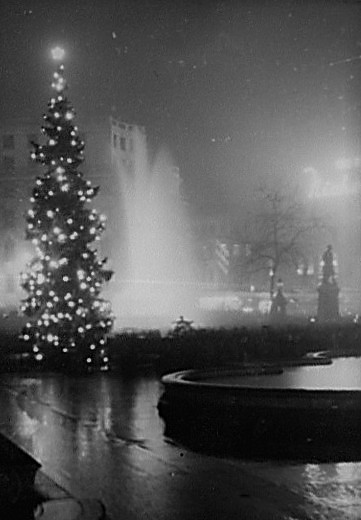
Now then, because the Christmas season is coming I brought this wonderfully atmospheric photo of Trafalgar Square at Christmastime 1948,taken by N. T. Stobbs. It bowled me over when I first came across it. I love the ghosting lights, and its feel of chill night rain glossing the pavement and hanging on the air. The fountains are familiar, of course, though nowadays that statue of General Gordon is on the Victoria Embankment of the Thames. (Down the road from where I’m writing this, there’s an identical version near Melbourne’s State Parliament House.) In Shamus Dust there’s a scene where the shamus stands under the lit-up tree on Christmas night, watching some GIs fooling in the snow with their girls. In fact, since we’re talking 1947 here, that Christmas tree was the first ever in Trafalgar Square. In that year the city of Oslo shipped a 20-metre Norway spruce to London, in gratitude for support given during the Second World War. It started a tradition that continues to this day. So here’s a thought. If you can’t be in Trafalgar Square one evening this Christmas, take a glass of something warming, settle in with Shamus Dust and stand under the tree lights with the shamus.

That’s a fabulous photograph. I can see why you’re so taken with it. I might just take your advice and read Shamus Dust over the Christmas break!

Roman-mosaic-Boxford (1)

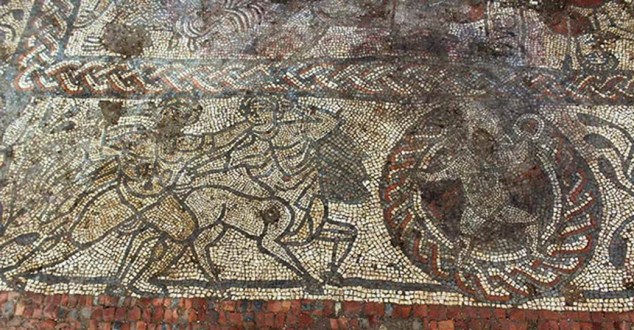
And lastly, something I came across only recently. Archaeology is guaranteed to fascinate me, and what you see is part of a truly unique Roman mosaic, recently discovered by accident in a farmer’s field in a tiny place called Boxford,sixty-two miles west of London. The full story is in a blog on my website. The payoff though, is that the farmer needs his field back; and immense as the discovery is, the museums can neither find the funds to remove it or the space to accommodate it (it’s huge). So the location remains secret and the mosaic has been reburied. No more than a handful of people have seen it!

Oo. I love archaeology Janet and am fascinated by the Romans. I have some Roman coins and my husband bought me a day’s archaeological dig for Christmas one year! I’d love to have seen this mosaic.

Now, this caught my eye because something similar was a constant problem in the postwar City of London. The City is that single square mile inside London’s ancient Roman walls, the financial heart of the capital – in effect, Wall Street across the pond. In 1947, the blitz had reduced much of it to rubble. But the blitz had also revealed monumental finds from the original Roman city – and they presented much the same sorts of problem as Boxford in 2019. The difference being that in Cold War London, fortunes were at stake, the real estate involved was some of the most valuable on the planet, and its owners included racketeers as well as City grandees. Cue the apparent vice killing that gets Shamus Dust under way.

My goodness. I’ve really enjoyed hearing about Shamus Dust Janet. Thanks so much for staying in with me to tell me all about it.

Shamus Dust

SHAMUS DUST high-res. Oct 2019

Two candles flaring at a Christmas crib. A nurse who steps inside a church to light them. A gunshot emptied in a man’s head in the creaking stillness before dawn, that the nurse says she didn’t hear. It’s 1947 in the snowbound, war-scarred City of London, where Pandora’s Box just got opened in the ruins, City Police has a vice killing on its hands, and a spooked councilor hires a shamus to help spare his blushes. Like the Buddha says, everything is connected. So it all can be explained. But that’s a little cryptic when you happen to be the shamus, and you’re standing over a corpse.

Published by Troubador, today 28th October 2019, Shamus Dust is available from Amazon UK and Amazon US.

About Janet Roger

01a BH - Copy

Janet Roger is an historical fiction author, writing literary crime. She’s published by Troubador Publishing in the UK and represented by JKS Communications Literary Publicity in the USA. She trained in archaeology, history and Eng. Lit. and has a special interest in the early Cold War. Her debut novel, Shamus Dust: Hard Winter, Cold War, Cool Murder is due 28 October and is currently attracting widespread media interest.

You can follow Janet on Twitter @shamusdust, find her on Facebook and visit her website for more information.