We’ve Come To Take You Home by Susan Gandar

We've come to take you home

My enormous thanks to Susan Gandar for a copy of We’ve Come to Take You Home in return for an honest review and for waiting almost a year for me to find time to read it! Previously on Linda’s Book Bag Susan told me a little about why she decided to explore difficult themes and concepts in We’ve Come To Take You Home and you can read that post here.

Published by Matador We’ve Come To Take You Home is available for purchase in e-book and paperback here.

We’ve Come To Take You Home

We've come to take you home

It is April 1916 and thousands of men have left home to fight in the war to end all wars. Jessica Brown’s father is about to be one of these men. A year later, he is still alive, but Jess has to steal to keep her family from starving. And then a telegram arrives – her father has been killed in action.

Four generations later, Sam Foster’s father is admitted to hospital with a suspected brain haemorrhage. A nurse asks if she would like to take her father’s hand. Sam refuses. All she wants is to get out of this place, stuck between the world of the living and the world of the dead, a place with no hope and no future, as quickly as possible.

As Sam’s father’s condition worsens, her dreams become more frequent – and more frightening. She realises that what she is experiencing is not a dream, but someone else’s living nightmare…

My Review of We’ve Come To Take You Home

Two young women, Jess and Sam, live a century apart and yet are joined in ways they can’t possibly imagine.

Although We’ve Come To Take You Home has been sitting on my TBR pile for about a year, I hadn’t had chance to look at it in detail so I wasn’t entirely sure what to expect. What I found was a time slip novel that had me entranced throughout. I don’t always enjoy this kind of structure but I found the overlaps, Sam’s hallucinatory visions and the echoes of the past all so well written that I thoroughly enjoyed the book.

I really enjoyed the characterisation and although I felt more empathy towards Jess, I thought both women were warm and realistic people whom I cared about.

Susan Gandar has an evocative turn of phrase so that it was easy to visualise the grand house Jess finds herself in, the hospital setting and the horrors of the First World War. I thought history was brought to life highly effectively and vividly so that We’ve Come To Take You Home would definitely appeal to lovers of historical fiction.

However, We’ve Come To Take You Home is so much more than just an historical novel. There are many layers so that there really is something for every reader through the sociological and spiritual elements, the family relationships and our perception of what is true or imagined. I found that not only was I presented with an intriguing plot, but with some challenging concepts that made me question my own views. I’m not especially spiritual but I was very entertained by those aspects in the novel and let’s just say that next time I’m at an airport I shall scrutinise the departure boards very carefully!

We’ve Come To Take You Home is a hugely satisfying read. It made me think, it entertained and educated me and it took me away from the writing I usually read. Ultimately, I found We’ve Come To Take You Home an uplifting read. Great stuff.

About Susan Gandar

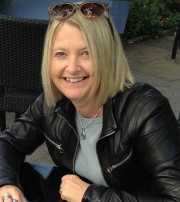
Susan Gandar holding book

Susan Gandar is the daughter of John Box, a film production designer who worked on ‘Lawrence of Arabia’, ‘Dr. Zhivago’, ‘The Great Gatsby’, ‘A Man For All Seasons’ and the musical ‘Oliver’.  Her house was always filled with people, usually eccentric, always talented, invariably stroppy, discussing stories and a major chunk of her childhood was spent loitering around on film sets.

Susan worked in television as a script editor and story consultant, and was part of the creative team responsible for setting up Casualty. She became known for going after the more ‘difficult’ stories at the same time successfully racking up viewing figures from 7 to 14 million. Susan went on to develop various projects for both the BBC and the independent sector.

You can find out more about Susan on her website, on Facebook and follow her on Twitter.

Days Without End by Sebastian Barry

days without end

My grateful thanks to Niriksha Bharadia at Faber for a copy of Days Without End by Sebastian Barry in return for an honest review.

Days Without End is available for purchase in e-book, hardback and paperback here.

Days Without End

days without end

‘I am thinking of the days without end of my life…’

After signing up for the US army in the 1850s, aged barely seventeen, Thomas McNulty and his brother-in-arms, John Cole, go on to fight in the Indian wars and, ultimately, the Civil War.

Having fled terrible hardships they find these days to be vivid and filled with wonder, despite the horrors they both see and are complicit in. Their lives are further enriched and imperilled when a young Indian girl crosses their path, and the possibility of lasting happiness emerges, if only they can survive.

Moving from the plains of the West to Tennessee, Sebastian Barry’s latest work is a masterpiece of atmosphere and language. Both an intensely poignant story of two men and the lives they are dealt, and a fresh look at some of the most fateful years in America’s past, Days Without End is a novel never to be forgotten.

My Review of Days Without End

Meeting John Cole under a hedge will have an impact on the life of young Thomas McNulty beyond his imaginings.

I am stunned by Days Without End. This is a book that will stay with me as a reader for a very long time and I don’t think I’ve read anything quite like it. I was completely immersed in the narrative and it felt much more like listening to an authentic voice and natural raconteur than reading. I genuinely forgot that Thomas was simply a character in a book as I became spellbound by his words.

I loved everything about Days Without End. It provided such a vivid picture in my mind of America in the middle 1800s because the quality of writing is so evocative. There’s such variety of sentence structure and innovative style with variable punctuation. The lack of direct speech meant it felt like I was listening to real conversation which appealed to my ear as well as my eye. There’s dry humour so that I laughed aloud and real emotion so that I was close to tears. There’s lyrical presentation of the prosaic, whereas the extraordinary is frequently presented in a matter of fact tone so that the impact is all the more resounding. I adored the imaginative similes and metaphors which lent poetry to harshness. I truly feel Sebastian Barry is a tour de force in writing.

The quality of detail meant that I have a vivid and disurbing understanding of America at the time. The treatment of Native Americans, the civil war, the weather, farming, shanty towns and poverty were all laid out before me in a raw, brutal and affecting read.

However, it is the characterisation that really had a grip on me. The relationship between the giant John Cole and the diminutive Thomas McNulty is just beautifully presented. Their love for one another as friends and lovers is sensitively and realistically portrayed. I could feel the emotion of longing leaping off the page when they were parted. I got to the point where I would have done almost anything to keep them together and had to remind myself I was actually reading a fictional story!

Days Without End is sheer genius. I feel my life has been enhanced by reading it and I won’t ever be the same as a reader again.

About Sebastian Barry

Barry-sebastian

Sebastian Barry was born in Dublin in 1955. His novels and plays have won, among other awards, the Kerry Group Irish Fiction Prize, the Costa Book of the Year award, the Irish Book Awards Best Novel, the Independent Booksellers Prize and the James Tait Black Memorial Prize. He also had two consecutive novels, A Long Long Way (2005) and The Secret Scripture (2008), shortlisted for the MAN Booker Prize. He lives in Wicklow with his wife and three children.

The Red Cobra by Rob Sinclair

the red cobra

My grateful thanks to the author, Rob Sinclair, for a copy of The Red Cobra in return for an honest review.

I’m lucky enough to have met Rob Sinclair and he’s lovely so I’m delighted that in my AWOL month of April when I’m avoiding blog tours I actually have had time to read Rob’s latest book The Red Cobra, especially as I also have three more of Rob’s books on my TBR awaiting review. Rob has previously appeared on the blog with a great guest post that you can read here.

The Red Cobra is the first in a new series from Rob and is published today, 4th April 2017, by Bloodhound. The Red Cobra is available for purchase in e-book and paperback here.

The Red Cobra

the red cobra

Carl Logan dedicated nearly twenty years of his life to the Joint Intelligence Agency. Now living in a secret location, under the new identify of James Ryker, he wants nothing more than to be left alone, the chance to start a new life away from chaos, violence, destruction and deceit.

It’s not long, however, before Ryker’s short-lived idyll is destroyed when he is tracked down by Peter Winter, his ex-boss at the JIA. Winter brings with him news of the murder of a woman in Spain, Kim Walker, whose fingerprints match those of one of Ryker’s former adversaries who’s been missing presumed dead for years – an infamous female assassin known as the Red Cobra.

A cyberattack at the JIA led to the Red Cobra’s profile being compromised, and Winter believes JIA agents may now be at risk too, Ryker included.

But Ryker knew the elusive Red Cobra better than anyone, and when he sees the grisly pictures of Kim Walker’s corpse, he has news for Winter – she isn’t the assassin at all …

So just who is the mystery dead woman? And where is the real Red Cobra?

My Review of The Red Cobra

James Ryker thinks he just wants to put his past behind him and live a peaceful life. The trouble is, we don’t always get, or know, what we want.

Crikey The Red Cobra opens with an action packed scene and it pretty well doesn’t let up for the rest of the novel. Short chapters with cliffhanger endings add a breathless pace so that The Red Cobra is a really exciting read. I genuinely found it heart-thumpingly exciting and the events even pervaded my dreams at night! There’s quite a bit of violence but Rob Sinclair also knows less is more so he is a master of suggestion as well as description making for an elevated pulse rate in his readers.

Speaking of description, I thought the details given were perfectly balanced so that I had a clear picture of people and places in my head without a single word of unnecessary padding so that I felt totally immersed in the narrative. I truly did exclaim aloud as I read as the imagery felt very visual, almost like watching a film, and I could easily envisage The Red Cobra as an exciting television series.

What I enjoyed so much was that this is not just a police procedural novel. Ryker has a past and he’s certainly not a policeman. There’s a psychological element that I found tightly plotted and intelligently written. There’s action, violence, pace and drama, but there’s relationships and reasoning too. I understood the motivations of the characters and loved the way Rob Sinclair uncovered the details as a drip feed so that I found out aspects at the same time as those in the book. This made me feel I was part of the action.

As I read the last paragraph I felt devastated that I didn’t have the next book in the series to leap into straight away. This is my first Rob Sinclair read, but what a book to begin with. The Red Cobra is exciting, well written and absorbing – definitely a ‘can’t put it down thriller’. I loved it.

About Rob Sinclair

rob-sinclair

Rob is the author of the critically acclaimed and bestselling Enemy series of espionage thrillers featuring embattled agent Carl Logan.

His explosive debut, Dance with the Enemy, was published in 2014 and introduced the world to the enigmatic Carl Logan. The second novel in the series, Rise of the Enemy, was released in April 2015, with the third, Hunt for the Enemy, being released in February 2016. The Enemy series has received widespread critical acclaim with many reviewers and readers having likened Rob’s work to authors at the very top of the genre, including Lee Child and Vince Flynn.

Rob’s pulsating psychological thriller Dark Fragments, released by Bloodhound Books in November 2016, has been described as ‘clever’ and ‘chilling’ and an ‘expertly crafted’ story.

Rob began writing in 2009 following a promise to his wife, an avid reader, that he could pen a ‘can’t put down’ thriller. He worked for nearly 13 years for a global accounting firm after graduating from The University of Nottingham in 2002, specialising in forensic fraud investigations at both national and international levels. Rob now writes full time.

Originally from the North East of England, Rob has lived and worked in a number of fast paced cities, including New York, and is now settled in the West Midlands with his wife and young sons.

You can follow Rob on Twitter, visit his website and find him on Facebook.

The Little Breton Bistro by Nina George

Little Breton Bistro

My grateful thanks to Hayley Camis at Little Brown for a copy of The Little Breton Bistro by Nina George in return for an honest review.

The Little Breton Bistro was published by Abacus, an imprint of Little Brown, on 2nd March 2017 and is available for purchase in e-book and paperback here.

The Little Breton Bistro

Little Breton Bistro

Marianne Messman, a housewife, wants to escape her loveless marriage and an uncaring and unfeeling husband of 35 years. Marianne and her husband (army sergeant major Lothar) take a trip to Paris, during which Marianne leaps off the Pont Neuf into the Seine, but she is saved from drowning by a homeless man. Angered by her behaviour, major Lothar takes a coach trip back home to Germany, expecting that a psychologist will escort Marianne home a few days later.

However, Marianne comes across a hand-painted scene of the tiny port of Kerdruc in Brittany, and becomes fixated with the place. Marianne decides to make her way to Kerdruc, and once there meets a host of colourful characters who all gravitate around the small restaurant of Ar Mor (The Sea).

It is this cast of true Bretons who become Marianne’s new family. She finds love and passion with Yann, an artist who becomes her guide to the secrets of Brittany. Before long, Marianne’s husband is back to retrieve her and Marianne feels pulled towards her old life by way of duty and guilt. She leaves Kerdruc and gets as far as Paris before she realises it’s now or never when it comes to building the life she really wants.

My Review of The Little Breton Bistro

When Marianne’s attempts at suicide are thwarted, a whole new life of possibility is revealed to her.

Never having read anything by Nina George and being slightly irritated by the use of the adjective ‘little’ in so many book titles of late I wasn’t particularly looking forward to reading The Little Breton Bistro as I thought it would be another lightweight formulaic read. I was completely wrong. If I’m honest, I didn’t really think that the title did justice to the book.

The Little Breton Bistro is an absorbing tale of what it means to live life to the full and not live down to others’ expectations. The marriage between Marianne and Lothar is, I suspect, typical of so many marriages and The Little Breton Bistro actually gives hope and life to those in similar circumstances. It is a salutary tale of making the most of life.

The plotting is extremely good with every character in Kerdruc earning their place in the story and weaving a colourful tapestry of life, love and relationships. I really enjoyed the fact that Marianne and Yann, for example, are in their 60s and presented as warm human beings with real needs, insecurities and desires, rather than the 30 somethings of so many novels.

But it was the overall quality of writing I really enjoyed. There’s a wry humour that balances perfectly the deeper aspects. All the senses are perfectly catered for from the crackle of stockings to the ozone taste of oysters so that the prose sizzles with life. Some of the phrasing was quite beautiful and made me think of Dylan Thomas, especially the descriptions of Kerdruc. I also loved the underlying mythology and art that came through the superstitions of the Breton community so that this is strong storytelling.

The themes that underpin the characterisation are apposite and satisfying. Life threatening illness, dementia, love, bitterness and so on all feature but in a way that doesn’t expect readers to respond like thoughtless puppets. Nina George says what she has to say and leaves the reader to make up their own mind. I found The Little Breton Bistro quite a feminist read in lots of ways.

So, quite differently from expectations, I really enjoyed reading The Little Breton Bistro. I could identify with the characters and themes and having read it felt my life had been enhanced. I highly recommend this uplifting tale of optimism, hope and love.

About Nina George

Nina George

Born in 1973, Nina George is a journalist and the author of numerous bestselling novels, which have been translated into several languages. The Little Paris Bookshop was a phenomenal top five bestseller in Germany and is set to be published around the world. She is married to the writer Jens J. Kramer and lives in Hamburg.

You can follow Nina George on Twitter and visit her website. You’ll also find her on Facebook.

The Cows by Dawn O’Porter

cows

My enormous thanks to Emilie Chambreyon for a copy of The Cows by Dawn O’Porter in return for an honest review and my apologies for declining the blog tour as I try to reduce my TBR in April (you can read more about that attempt here)!

The Cows will be published by Harper Collins on 6th April 2017 and is available for purchase through the publisher links here.

The Cows

cows

COW [n.]
/kaʊ/

A piece of meat; born to breed; past its sell-by-date; one of the herd.

Women don’t have to fall into a stereotype.

Tara, Cam and Stella are strangers living their own lives as best they can – though when society’s screaming you should live life one way, it can be hard to like what you see in the mirror.

When an extraordinary event ties invisible bonds of friendship between them, one woman’s catastrophe becomes another’s inspiration, and a life lesson to all.

Sometimes it’s ok not to follow the herd.

The Cows is a powerful novel about three women – judging each other, but also themselves. In all the noise of modern life, they need to find their own voice.

My Review of The Cows

Three very different women, Tara, Cam and Stella, all find life isn’t always under your own control!

The Cows is brilliant. I enjoyed every word. Dawn O’Porter’s writing is vibrant, sassy, sparky, sexy and funny as she explores what it means to be a woman in modern society where men still seem to have the upper hand and modern technology and social media can affect our lives devastatingly.

The plot is very entertaining but also quite disturbing. When Tara behaves in a way I found quite shocking, I thought the responses of the media and social media were even more disturbing because they are so plausible and true to life. There’s a definite suggestion of ‘there but for the grace of God…’ and I think we can all learn a considerable amount about how we present ourselves to society and how we respond to others.

The Cows is a feminist text in many ways, advocating that women can make their own lives, but cleverly, Dawn O’Porter presents men as having their own issues too. Jason and Mark in particular as as used by women as women are used by men. The Cows gives intelligent food for thought whilst it entertains and is actually about people, not just the three women of the narrative. Themes of grief and identity, family and friendship underpin much of the action that I found interesting as they challenged my own perceptions at times.

I am not a great fan of multiple narratives but in The Cows I found the different voices of Cam, Stella and Tara were totally distinct and worked very effectively. I thought it was a clever technique to present Cam more remotely in the third person, given that she is the most willingly public figure. I didn’t like Stella at all and found her actions, whilst the most understandable, the most reprehensible.

I know others have not enjoyed The Cows but I cannot recommend it highly enough. I think the themes are challenging and that some will find the sexual content unacceptable or unpalatable but I think they are missing the point of the book. Dawn O’Porter wants to challenge how we think and I feel she has been highly successful. Let’s just say that I will be scrutinising carefully the person sitting in the same carriage as me next time I take the train!

About Dawn O’Porter

Dawn o

Dawn O’Porter is a broadcaster, novelist and print journalist who lives with her husband Chris, cat Lilu and dog Potato. She has made numerous documentaries about all sorts of things including polygamy, childbirth, geishas, body image, breast cancer and even the movie Dirty Dancing.

Dawn founded Help Refugees in 2015 which is a charity that sends urgent care to refugees across Europe.

Dawn has written for various UK newspapers and magazines including Grazia and Stylist.

You can follow Dawn on Twitter or visit her website. You’ll also find her on Facebook.

Foxes Unearthed by Lucy Jones

Foxes unearthed

My grateful thanks to Alison at Elliott and Thompson for a copy of Foxes Unearthed by Lucy Jones in return for an honest review.

Published in paperback on 16th March 2017 Foxes Unearthed is available for purchase by following the publisher links here.

I was lucky enough to interview Lucy Jones about Foxes Unearthed before I’d had time to finish reading it and you can see that interview here.

Foxes Unearthed

Foxes unearthed

As one of the largest predators left in Britain, the fox is captivating: a comfortably familiar figure in our country landscapes; an intriguing flash of bright-eyed wildness in our towns.

Yet no other animal attracts such controversy, has provoked more column inches or been so ambiguously woven into our culture over centuries, perceived variously as a beautiful animal, a cunning rogue, a vicious pest and a worthy foe. As well as being the most ubiquitous of wild animals, it is also the least understood.

In Foxes Unearthed Lucy Jones investigates the truth about foxes in a media landscape that often carries complex agendas. Delving into fact, fiction, folklore and her own family history, Lucy travels the length of Britain to find out first-hand why these animals incite such passionate emotions, revealing our rich and complex relationship with one of our most loved – and most vilified – wild animals. This compelling narrative adds much-needed depth to the debate on foxes, asking what our attitudes towards the red fox say about us and, ultimately, about our relationship with the natural world.

My Review of Foxes Unearthed

Foxes Unearthed explores in detail the relationships we humans have with these fascinating creatures.

Let me say at the outset that Foxes Unearthed will not appeal to all readers. I will confess that I didn’t read the book all in one go, but returned to it over a couple of weeks. Those with a particular passion for or interest in foxes will, I think, devour it more rapidly. It is not a cosy celebration of the fox, but rather an erudite essay exploring our perceptions and responses so that it says as much about the human condition as it does about the fox. I thought the passage about the Alconbury incident was an apposite example and I’m not sure I always liked the truth about humanity I was forced to confront reading Foxes Unearthed; it wasn’t always a comfortable experience.

The writing is intricately researched and I appreciated the notes, bibliography and index so that Foxes Unearthed felt like a perfect lesson in presenting material in an accessible form to an audience. I must also just say a word about the chapter illustrations by Tim Oakenfull. They are just stunning.

There was so much to learn about the fox, from its Latin vulpes vulpes through its biblical references to our modern day attitudes. I thought that Lucy Jones presented her material in a very balanced way, often providing thought-provoking examples and comments and making sure the reader has a full picture. So often, as she herself says, attitudes to foxes and their control ‘does depend on who you ask’.

I definitely preferred the passages where Lucy Jones writes more personally and lyrically than factually, but that is personal preference as I’m not a great non-fiction reader. I’m honestly not sure if I enjoyed reading Foxes Unearthed or not but it is most definitely an important book. It made me question my own thought processes, it showed me how to reconsider my own very pro-fox stance and be more authoritative in my opinions and it taught me a very great deal about life in Britain, about foxes and about humans especially. I really recommend reading Foxes Unearthed whatever your usual genre preference.

About Lucy Jones

Lucy Jones

Lucy Jones is a writer and journalist based in Hampshire, England. She previously worked at NME and The Daily Telegraph. Her writing on culture, science and nature has been published in BBC Earth, BBC Wildlife, the Guardian,TIME, Newsweek and the New Statesman. She runs the Wildlife Daily blog and is the recipient of the Society of Authors’ Roger Deakin Award for Foxes Unearthed.

You can follow Lucy on Twitter and visit her website.

AWOL in April

AWOL

AWOL in April

I began blogging on 7th February 2015 and since then, including this post I have blogged 868 times, including reviews, blogging events, guest posts, extracts, spotlights, giveaways and interviews. I’ve attended book launches and events and met wonderful authors and other bloggers who have become real life friends. I absolutely love all these things about blogging.

However, I’m going AWOL in April and taking a sabbloggital!

Bloggers reading this will know just how much time it takes to set up a blog post, even if the content is provided by someone else. It needs adapting to the ‘house style’, links need checking, images are often not provided (thank goodness for the Snipping Tool!) and frequently extracts come as PDF files of up to 30 pages that need converting to text and then reformatting and a decision made as to which part to include before they can be used. All this takes hours.

An author interview, for example, takes me around an hour to research and compose relevant questions; then there is the time it takes to email backwards and forwards. Once I have the answers I spend around another 90 minutes or so setting up the blog post, checking it all and scheduling tweets (I use Hootsuite) and then on the day of publication it’s another 15-20 minutes posting in various Facebook groups. So, an average blog post uses between 3 and 4 hours of my time – I know I might be especially slow but I try to put out the best quality post I can for the authors, publicists and publishers. I could read a novel in about four or five hours.

I love to share what my fellow bloggers are doing too so another couple of hours per day can disappear in retweeting and sharing their hard work.

Whilst I truly do love all of this, I am taking April off.

I have so many books on my TBR that I’ll never catch up and I owe it to those who’ve sent me their books, especially the independent authors, to try to read as many as I can. Currently there are well over 850 hard copies on the pile and I daren’t even look on my Kindle! I’m going to spend those extra hours gained as I go AWOL in April reading as much as I can. I have a couple of reviews I promised before I decided to go AWOL, but other than that I’m going to spend blogging time reading!

The side effect of this is that I should be in less pain too as I have osteoarthritis in my joints and whilst it doesn’t look obvious, every key stroke, every mouse click is uncomfortable at best and painful at worst so a break will do my finger joints good. It’ll also give my eyes a break. My typing is appalling (I NEVER manage the word ‘the’ without it coming out as ‘teh’) so I have to keep going back to correct it, thereby exacerbating the pain in my joints. Partly I just can’t type and partly this is because I have difficulty seeing as a result of dry eye, a small hole in my left retina, an epimacular membrane (so that all my straight edges are actually wavy!), a complex prescription, astigmatism that can’t be corrected and short sightedness to -12.5… I could go on! I’ve found the blogging, much as I adore it, isn’t helping.

I’ll still be posting as many reviews as I can in April and I’ve been saving some up to post during this time, especially where I’ve turned down the blog tours for books. Each review can take a couple of hours to write to convey my thoughts accurately, find author links, schedule tweets and add to Facebook. I still want to support as many lovely writers and bloggers as I can, but I might not be sharing others’ posts quite as much as usual and I’m not taking on any blog tours, guest posts interviews and so on.

my sister and other liars

I’ll be back to my ‘normal’ blogging on 1st May with a publication day interview from Ruth Dugdall about My Sister and Other Liars and a guest post from Kate Dunn based on The Dragonfly.

the dragonfly

See you soon and happy reading!

An Interview with Kerensa Jennings, Author of Seas of Snow

Seas of Snow

I recently received a copy of Seas of Snow by Kerensa Jennings from Debbie Forster of Novel Design in return for an honest review. Once I started to find out about the book and to see some of the 5* reviews rolling in I had to ask the author of Seas of Snow, Kerensa Jennings, if she would be interviewed for Linda’s Book Bag. Luckily she agreed.

Seas of Snow was published by Unbound on 16th March 2017 and is available for purchase here and I can’t wait to read it.

Seas of Snow

Seas of Snow

1950s England. Five-year-old Gracie Scott lives with her Mam and next door to her best friend Billy. An only child, she has never known her Da. When her Uncle Joe moves in, his physical abuse of Gracie’s mother starts almost immediately. But when his attentions wander to Gracie, an even more sinister pattern of behaviour begins.

As Gracie grows older, she finds solace and liberation in books, poetry and her enduring friendship with Billy. Together they escape into the poetic fairy-tale worlds of their imaginations.

But will fairy tales be enough to save Gracie from Uncle Joe’s psychopathic behaviour – and how far will it go?

An Interview with Kerensa Jennings

Welcome to Linda’s Book Bag Kerensa. Thank you so much for agreeing to answer some questions on my blog about your writing. Firstly, please could you tell me a little about yourself?

Thank you so much Linda for giving me the opportunity to feature in your Book Bag! I was wondering how to introduce myself and landed on starting with some of the things that make me me. I’m quite shy and introvert by nature, which surprises people when they get to know me because I have to present outward confidence at work. I’m at my happiest somewhere beautiful, quiet and serene. I love writing at my dining room table looking out over my garden; and much of Seas of Snow was written deep in the mountains of southern Spain on a series of holidays staying at a self-catering villa in the back of beyond. Just the rustling of leaves and the circling bird of prey as a backdrop…

I’m someone who has always been a storyteller. Ever since I could hold a pencil, I started scribbling stories and poems – something I still do every day. I used to pretend to be an author when I was little. And can hardly believe that I can now call myself one. As a child I devoured books; and these days reading is my constant source of pleasure and escape in life.

Earlier in my career, I worked in the media as a TV producer. So although most people would have no idea who I am, my words have been read out to millions and millions of people over the years in a variety of TV programmes. I was Programme Editor of Breakfast with Frost with Sir David Frost, for example, and made other big BBC One shows like New Year Live and Ellen MacArthur – Sailing into History. I was also the BBC’s Election Results Editor and ran BBC News Specials before becoming the BBC’s Head of Strategic Delivery.

Over the years, I developed a specialism for digital enterprise and these days run The Duke of York Inspiring Digital Enterprise Award. I’m also a professor and a qualified and practicing Executive Coach. So you could say I wear a few different hats. The one that makes me me though is my passion for writing. No matter where I am in the world, whatever I am doing, whoever I am with, whatever else is going on, I always find time to write.

(Crikey – I’m amazed you’ve ever found time to pen a novel!)

Without spoiling the plot, please could you tell us a bit about Seas of Snow?

If I was going to try to entice you to read the book, I’d start with a question, which indeed is the question at the heart of the book. “Is evil born or made?”, I would ask.

Seas of Snow is a story of broken trust and shattered dreams. Of consequences. Of a life lifted and liberated by poetry. Of a life haunted by darkness and lived in fear.

It is the tale of a young girl who escapes the torment of her life through playtime with her best friend Billy; and through reading and writing poetry, delighting in words for guidance and succour.

The book dances through time, backwards and forwards between the literary reveries and physical abuses of the young girl; and the old woman of today, frail and isolated in a nursing home. Billy Harper, Gracie’s childhood friend, is the only solid presence in her life, and seemingly the only constant. Diaries and poetry books bind the story and the characters.

Set both today and around the time of the second world war in North Tyneside, Seas of Snow is a bleak psychological thriller which traces the motives and actions of Gracie’s Uncle Joe. He appears unexpectedly in Gracie’s life when she’s just five years old. And changes everything.

Seas of Snow is a story of trust and betrayal, of the worst kind.

(Seas of Snow is on my TBR (to be read) pile and you’ve just persuaded me to bump it up the 850+ books in the queue)

I know you’re interested in nature versus nurture. Have you come to any conclusion as to which is most affecting in our characters?

In my view, both nature and nurture play their part in shaping our characters. Having said that, there are some people who are, quite simply, born psychopaths. These people are unable to feel remorse, or experience empathy. They find lying easy and can manipulate people and situations to their own advantage. However, not all psychopaths go on to commit monstrous acts. So environmental factors play a vital role.

Through my studies in psychology I became fascinated to learn about the neuroplasticity of the mind. Put simply, it means for those of us who are not psychopaths, we have the capacity to change the way we think. This can be very helpful if we are scared about something, or think we’re not very good at something.

Many of us grow up through childhood bearing various scars which lead us to think we’re rubbish at this, or terrible at that, because of things we were told or lead to believe. This way of thinking can be described as having ‘limiting beliefs’. The sad thing is, thinking you are rubbish at this, or terrible at that, can often hold you back from going on to do something you would both love and be great at.

But the brain is plastic – and adaptable. So although you can’t stop a ‘hardwired’ neural pathway from existing, because chances are you have been building that road since you were little – you can effectively put the ‘road closed!’ sign up and create a new road to start travelling down – a new neural pathway which will help you feel more positive about what you are able to do. It’s almost like magic but it really works. I have done a lot of this sort of ‘re-framing’ with clients over the years in my executive coaching and it’s remarkable how much it helps people gain confidence and try things they would never have imagined they could do.

So I believe nurture can very much assist nature… and the various influences in our lives can be both positive and negative. Not everyone who commits crimes is a terrible human being. One of the poems Gracie returns to time and time again throughout the book is a lovely prose poem which says: ‘Perhaps everything terrible is in its deepest being something helpless, that wants help from us…’. I think there is something very thought provoking in this; a concept I find fascinating – and ultimately why the novel centres on themes of good and evil.

Without being too specific, Seas of Snow was partly written as a form of catharsis for you following your coverage of some terrible national events. Has it achieved what you hoped?

I was originally inspired to write Seas of Snow because I had been profoundly affected emotionally after leading the BBC News coverage of the Soham case. I was working very closely with Cambridgeshire Police over several months, and got to see first-hand a lot of the evidence uncovered during the investigation. It was heart breaking learning about what had happened. About what that man did. And I began to wonder about the mind and motives of a psychopath – the school caretaker Ian Huntley who murdered those two beautiful little girls. I went on to study psychology and take my learning further after training and qualifying as an Executive Coach to see what I could discover to help myself and hopefully others.

You are completely right – I wrote the book as a means of catharsis after working so closely on something so incredibly upsetting.  I have always used writing as a way to process my emotions. It’s how I make sense of the world. So it was natural for me to decide to use writing to try to gain some kind of closure and comfort.

In many ways it has achieved what I had hoped – through the book I explore themes I want to illuminate. Everything from the darkness of the human soul to different manifestations of maternal love to the capacity we have to lift ourselves sometimes against the odds. The book is also a love letter to literature in many ways – so through writing Seas of Snow, I also got to share some of my passions and inspirations, turning the process of writing about something so deeply unsettling into something which also had light and life.

Having said that, I still find myself very affected by what happened, and especially when I talk about it. I was at a Waterstones authors event a few weeks ago and telling a room full of readers and other authors about my inspirations for Seas of Snow. I couldn’t help myself choking up a little. I don’t think I will ever stop feeling emotional about it. And strange though it might seem to confess this – I still cry myself when I read certain passages of the book.

(I don’t think that’s strange at all. Literature really does have the power to move us.)

I know you’re interested in poetry and Seas of Snow has been described as poetic in style. How conscious were you of writing poetically and how far was it a natural style for you?

Poetry can be some of the best self-help you can possibly get. Diving into a poem can distract you, lift you, inspire you. But lots of people find poetry intimidating, or think it’s a bit pretentious. I’d say if you have ever been touched by the words of a song, be that a football anthem like You’ll Never Walk Alone (which funnily enough started life as a song from a musical); or a special song that reminds you of a person or a place – then that means whether you realise it or not, you are likely being affected by poetry. Words carry such power. They can make us laugh and cry.

What poets do is arrange those words in ways that have extra layers of meaning. Maybe they’re doing something clever with the way words sound; maybe they’re pulling images together in ways that spark the imagination. Maybe a bit of both – and more. Through Seas of Snow, I wanted to invite readers to come with me into a world where they could discover poetry in a completely unpretentious, natural way. Through the eyes of a child. And with that, as Gracie develops her passion and understanding of poetry, so do we.

I mentioned earlier that I write poems all the time – I also do poetry commissions for special occasions. I love both reading and writing poetry. For me, poetry is the greatest solace and escape – it offers me comfort and inspiration. I love reading it out loud, and I love listening to it read aloud.

I don’t consciously write prose in a poetic style, but I think in fiction writing I am naturally inclined to write in quite a lyric way. It’s how I see the world and in my writing it just sort of comes out that way.

Uncle Joe is a monstrous character. How did you create him?

It’s hard to describe my process. I had some very firm ideas about wanting Uncle Joe to be hiding in plain sight, as Ian Huntley had done. But I also wanted him to be irresistibly beautiful to look at, with attractive attributes such as a gorgeous voice; and a charm that people would find compelling. I wanted to create an unsettling counterpoint – a contradiction that would defy logic.

This stems from my fascination with fairy tales. Going back to my university days, I studied the psychoanalysis of fairy tales. I examined the archetypes in the Grimm’s stories for my thesis, which was titled ‘Persecution and Revenge of the Innocents’. In fairy tale land, there is a logic which works something like this – if a character is beautiful and light, then they are innocent and good. If a character is ugly and dark, then they are corrupt and evil. Even the Disneyfication of fairy tales notwithstanding, we are all familiar with the idea…

Real life can obviously be very different to this, but we all fall prey to certain assumptions and prejudices about people’s appearances. Unfortunately, it’s just a normal human trait for us to experience ‘unconscious bias’. When we see someone who is differently abled, for example – unable to walk or see – we make certain assumptions, even though we know nothing about that person. When someone has an unusual appearance, we make certain assumptions, again even though we know nothing about that person.

So in creating Joe, I wanted to bring to life an antagonist who people would fall in love with because of his outward appearance and charisma. Then make him evil to the core so our revulsion at him and what he is capable of makes us feel duped and horrified. I wanted that emotional disjuncture. That sense of not being able to trust our own eyes.

Ian Huntley was interviewed by the press and the media in the days after the girls went missing. He outwardly betrayed the appearance of someone who was a caring member of the community. All the while, as he lied and lied, he knew exactly what he had done. Hiding in plain sight.

How do you go about researching detail and ensuring your books are realistic?

Well, in common with many other people I suspect, I am a slave to Google! As I was setting the story in a different time and place, there was a lot of research to ensure I created an accurate sense of atmosphere, with historical details beautifully conveyed. I chose to set Seas of Snow in North Shields in Tyneside because my grandmother was a Geordie and grew up there. However, although I visited when I was younger, I needed to know what it would have been like back in the late 1940s and 1950s to give the right kind of look and feel to the narrative.

Researching accents was important – so the very small elements of dialect were checked meticulously.

Then I was blessed to have a wonderful copy-editor called Paul Fulton who went through the manuscript with a fine tooth comb and checked facts, timelines, historical nuances and continuity. I remember him noticing I called a piece of furniture a ‘console’ in one scene and a ‘sideboard’ in another. And I had accidentally originally had Joe drinking ale even though I was describing something more akin to Guinness. Various bits and pieces like that. So I had 42 queries from him to check, which I did and made amendments as required!

Which aspects of your writing do you find easiest and most difficult?

I absolutely love writing and I find the process of sitting down to write one of the most pleasurable things in my life. I just start typing and the words flow out. I wrote Seas of Snow in all my holidays between 2009 and 2013. I then polished my first submitted draft in 2014.

Last year I went through the rigour of the editing process and some aspects of that felt a bit like ‘homework’. I very much enjoyed the development edit however, even though I had been dreading it. I worked with Scott Pack who just asked very thoughtful, sensitive, intelligent questions. He made me think – and in no way did he try to make me change anything. It was all about extra things that could enhance things for the reader. He would always say it’s my book and it’s up to me. I loved that. Working with Unbound as my publishers has been such a joy because they are committed to allowing authors to retain the integrity of their own work. They wanted to support me bringing my vision, my creation to life. Scott’s questions were all about asking whether I was doing enough for my reader here or there. It was a wonderful experience.

I liked less the structural edit where the type setting process bunched up some of my fragmented sentences and paragraphs into bundles. My writing style tends to be sparse in fiction writing – and a bit like how the title of the book has a secret message – SOS; I was creating dissonance in the fragmenting quite deliberately to provoke unease in the reader which reflected the thematic development. The type setting process overruled what I had done. So I had to meticulously go through every line looking at the original manuscript on an iPad and the new version on Mac at the same time to compare and contrast which version I wanted to go with – my original fragmentary style or something which closed up some of the gaps. That was truly painful as I was then editing in gaps and line breaks depending on what was required.  Believe me, this took what felt like an infinity to do. Exhausting!

There was then the formatting edit and two rounds of proof reading. My parents joke that Seas of Snow is my ‘baby’. Well it certainly had a very long gestation!

What are your writing routines and where do you do most of your writing?

I write anytime I can, and importantly, whenever I am in the mood. I don’t force myself to write if I am not in the right ‘head space’. So when I do write, it’s always the most luxurious pleasure. I often write in the notes section of my phone to and from work on my commute; I sometimes wake in the middle of the night with an idea I have to scribble down; and often after work at home instead of watching TV or reading a book I sit and find myself writing. I don’t have what I would describe as a writing routine, but I was very committed to writing Seas of Snow in all my holidays so devoted huge amounts of time and energy into doing it when I knew I had plenty of time to do so.

You come from a journalistic background. Has this helped or hindered you when writing your first work of fiction, Seas of Snow?

That’s a really good question. I went into journalism because I am a very curious person. I love discovering things about the world, and sharing what I have found out with others. Writing is hard wired into who I am. I love communicating stuff.

When you write for television, the trick is to imagine you are writing for a very smart nine year old. Someone who is bright, clever – with good vocabulary. But who would get a bit muddled and lost if you veered off into lots of subordinate clauses or made your sentences long-winded. So simple, clear, precise – but not patronising.

When I write poetry or prose or in the case of Seas of Snow, fiction, I just let my imagination take flight. With the novel, I carefully mapped out the structure and planned the ‘scaffolding’ for the book before I wrote a single word. The writing bit was just an extraordinary pleasure, as I would sit at my computer and the words would flow out of me and onto the ‘page’ on my screen. I would delight in finding out what happened next – and characters would arrive fully formed in my head with names and attributes.

In journalistic writing, you have to fit a word count, develop a style to suit the audience, and in my case write in ‘the voice’ of whoever my presenter was… The central purpose is to report what happened, convey facts, or provide impartial analysis of a situation. It’s all about being clear and succinct, to provide a service where you are giving information and fact.

I like the discipline of journalistic writing – deadlines, targets and through my BBC work, public service.

In my other writing, I impose my own structures and I get to unwind into who I am. It’s like the real me gets to peek out and start dancing in the light. I slowly unfurl into a different sort of presence, and a more poetic soul begins to emerge.

It’s helpful to have mastered a sense of discipline – that comes from deadlines and journalism. And I also have an ability to be able to write anywhere, in any environment. I can always write, no matter what mayhem might be going on. That’s come from journalism – the capacity to focus and concentrate. Many’s the time in my TV days when – because of developments on a breaking news item – I was writing the opening words of a programme while the title music was still playing. The adrenalin that fires in you is incredible. You have just seconds to complete something that has to sound good, make sense, and be visible to the presenter in time to be read.

So I think being a disciplined person has hugely helped me as I develop my fiction writing career. My publisher would often joke they wished other authors would get things back on time as I always did. But the writing is very different.

(As an ex English teacher I think we can apply that principle of structure to enable creativity to many walks of life, including education.)

Seas of Snow is set in the 1950s. How far do you think life has improved for those in similar situations to Gracie and her mother?

I think domestic abuse is as old as time, and sadly there is much that goes on behind closed doors. I hope that these days, people have more access to help, support and ways to escape their situations. There are some wonderful groups out there who do so much to provide a lifeline to those who suffer abuse.

We shouldn’t underestimate though how very hard it is for victims to reach out, even today. It’s very common for people to feel scared about what might happen if they speak out; they can be frightened and intimidated into saying nothing. It’s also very common for people to feel a sense of shame, as if somehow what’s happening is all their fault, or they should have been able to stop it. One of the reasons both Gracie and Billy in Seas of Snow spend a lot of time questioning why certain things happen, is to hopefully help readers see that they are not alone if they find themselves sometimes subjected to difficult situations that seem so terribly unfair. It’s so easy to secretly worry that somehow it might all be happening because of something you did.

That sense of shame can also be a product of the physical and emotional pain of what someone has done to you. You can feel dirty, soiled, revolted. When you feel like that, you are not necessarily minded to tell anyone else. So the cycle of abuse continues, and the numbers of scarred, damaged people grows and grows. Often with dreadful impacts and consequences later in life, as in Seas of Snow.

Although I set the story in the 1950s, I believe the core themes and developments of the book could just as easily happen today. I wish I could say otherwise, but there does not seem to be an end to the dreadful scandals that emerge, with young people being betrayed, abused, hurt or in other ways damaged by the people who are tasked to look after them.

What I hope the book does is help the reader see that a person who is a victim of violence, abuse or harm can be completely blameless.

Other threads of the book help the reader see the darkness of humanity, and what the worst of humanity can be capable of.

And the reader is also exposed to the consequences of inaction. This is in tribute to all the children who have been failed by the people who are trusted to care for them, but for whatever reason are paralysed, and unable to act.

You also work to help young people fulfil their potential. Could you explain a bit about that please?

I am passionate about trying to help people fulfil their potential and I try to do this in many ways – whether that’s through my work with clients as an Executive Coach; my former role as a TV producer when I worked with presenters to help them be the best they could be; or the various things I do to support diversity and inclusion.

In my day job, I run The Duke of York Inspiring Digital Enterprise Award, a new programme that has just launched this year which is a bit like the digital and enterprise equivalent of The Duke of Edinburgh Award. Anyone can have a go and it’s all about empowering people to develop digital skills that will help them flourish in today’s digital world.

We’ve created an innovative Badge Store which has online bite-size modules (‘badges’) you can do anywhere you can get online on any modern device or browser. The resources are completely free and you can learn about a range of topics from cloud computing and the Internet of Things to e-safety, cyber security, video editing, animation, research, enterprise, and how to do some basic coding. We’ve just launched the Bronze Award and have started to develop Silver with Gold coming after that. Bronze is beginner (rather than for a specific age), Silver is intermediate, and Gold is advanced. Why not have a go – just Google ”idea.org.uk” or click here. It’s ideal for family learning or for anyone who feels they may have missed out on chances fully to participate in the digital world. Our hope is that through doing this, we’ll be helping create life-changing opportunities for people and empowering them to get jobs they wouldn’t otherwise be able to do.

(This sounds such a rewarding scheme to take part in.)

So, when you’re not writing, what do you like to read?

How long have you got?! I love poetry, short stories, plays…. Novels of course; and also biographies and non-fiction books on philosophy, art, business, coaching – any number of topics. I always have at least two poetry books and at least two or three other books on the go at any one time.

You seem incredibly busy. Do you have other interests that give you ideas for writing?

I think for anyone who wants to know a bit more about this, I would love them to read my professorial lecture which I have published in full on GoodReads. This was titled ‘Orchids were the repository of her dreams’ and it is a critical analysis of the creative process. I go into lots of detail here about my own creative process and how I get ideas for writing. Here’s an extract to give you a flavour:

“Take something and make it yours. I am an inveterate magpie, collecting bits and pieces and thoughts and phrases and trinkets to store in my mind. Sometimes I wilfully and deliberately rummage around in great lierature, films and music, snatching cadences and rhythms and poetic treasures. Interesting nuggets, facts, curios, keepsakes and brain food. I was trained as a journalist and in my view, the core qualification you need is simply curiosity. But I didn’t get trained in curiosity. It’s just something that drives me and fires me every day of my life. From the minute I get up in the morning, to the moment I go to bed, the world is a kinaesthetic tsunami of the senses. I often scribble down things I have noticed or overheard. Public transport is brilliant for inspiration. You never know when something you hear, read or see might prompt something in you. The author of His Dark Materials Philip Pullman said ‘I have stolen ideas from every book I have ever read’.”

Seas of Snow has an almost nightmarish cover to me, with the raven suggesting death and the flame like letter S indicating hellishness. How did that image come about and what were you hoping to convey (without spoiling the plot please!)?

I knew I wanted the black, menacing bird somewhere. The prologue sets a wintry, bleak scene and obliquely introduces the presence of the raven. Gracie’s fear of birds is a theme that develops in the book – she gradually begins to associate Joe with the avian predator as they both hunger for her and bore into her with a fierce intensity.

And I suggested possibly a bath. In the story, it is Gracie’s uncle Joe who carries the momentum of the story. He intrudes on her while she takes a bath – a tableau that gradually unfolds through intermittent, evolving scenes as the book progresses. The scent of lemons in the air from the bubble bath reprises the first sensory impact Gracie had on Joe – as he locks the door and refuses to leave.

Unbound and I worked on a creative brief for the cover illustrator. It was so exciting the day I got emailed three potential routes for the cover art – all of which were extremely different! Each had a bird but they all had very different atmospheres.

I emailed around fifty friends, both men and women, asking which of the three designs they liked the best. Overwhelmingly, most of the women chose the one that is most similar to what we now have. Overwhelmingly, most of the men chose a very snowy, ghostly scene with a faded photograph of a woman from the 1950s. Almost everybody hated the third one, which had a dead sparrow lying on some postcards – apart from I think it was three people who said that one was their favourite!

In the end I went for the design I thought would carry the most impact on a bookshelf in a bookshop. I could imagine people reading the one we chose on the commute – and I could imagine the poster art. The original version of it had a green background rather than blue… I requested we make it more wintry and I really loved the blue they came up with. Also, in the original version the raven was much smaller. To get the proportions right (ravens are huge), I requested we upsize the bird.

One of the most wonderful, special things about working with Unbound is that they really involve you, the author, in every step of the process. It’s a massive amount of work, but I feel personally invested in every important decision that was made about the book. And that is an unbelievable privilege.

(Having found a raven in my bedroom at university I can vouch for the size!)

If you could choose to be a character from Seas of Snow, who would you be and why?

Gracie! Because she is a combination of all the wonderful people I know and there is something very pure and good and lovely about her. She’s also very smart, thoughtful, kind and curious. And she loves literature! I think secretly everyone wants a friend a bit like Gracie.

If Seas of Snow became a film, who would you like to play Uncle Joe and why would you choose them?  

It would have to be someone incredibly handsome. Someone like Jamie Dornan or Tom Hardy would be brilliant.

And finally, Kerensa, If you had 15 words to persuade a reader that Seas of Snow should be their next read, what would you say?

Can Gracie escape? Will her mother protect her? Will the wing’s breath pass or linger?

About Kerensa Jennings

karensa

Kerensa Jennings is a storyteller, strategist, writer, producer and professor.

Kerensa’s TV work took her all over the world, covering everything from geo-politics to palaeontology, and her time as Programme Editor of Breakfast with Frost coincided with the life-changing events of 9/11.

The knowledge and experience she gained in psychology by qualifying and practising as an Executive Coach has only deepened her fascination with exploring the interplay between nature and nurture and with investigating whether evil is born or made – the question at the heart of Seas of Snow.

As a scholar at Oxford, her lifelong passion for poetry took flight. Kerensa lives in West London and over the last few years has developed a career in digital enterprise.

Seas of Snow is her first novel.

You can follow Karensa on Twitter, on her website and find her on Facebook.

An Extract from My Name is Leon by Kit de Waal

My Name is Leon cover

I’m thrilled to be starting off the paperback launch celebrations for My Name is Leon by Kit de Waal. My Name is Leon is a wonderful read and I’m delighted to be sharing the opening of the book with you today.

My Name is Leon will be released by Penguin in paperback on 6th April 2017 and is available for purchase through the links here.

My Name is Leon

My Name is Leon cover

A brother chosen. A brother left behind. And a family where you’d least expect to find one.

Leon is nine, and has a perfect baby brother called Jake. They have gone to live with Maureen, who has fuzzy red hair like a halo, and a belly like Father Christmas. But the adults are speaking in low voices, and wearing Pretend faces. They are threatening to give Jake to strangers. Since Jake is white and Leon is not.

As Leon struggles to cope with his anger, certain things can still make him smile – like Curly Wurlys, riding his bike fast downhill, burying his hands deep in the soil, hanging out with Tufty (who reminds him of his dad), and stealing enough coins so that one day he can rescue Jake and his mum.

Evoking a Britain of the early eighties, My Name is Leon is a heart-breaking story of love, identity and learning to overcome unbearable loss. Of the fierce bond between siblings. And how – just when we least expect it – we manage to find our way home.

An Extract from My Name is Leon

1

2 April  1980

No one has to tell Leon that this is a special moment. Everything else in the hospital seems to have gone quiet and disappeared. The nurse makes him wash his hands and sit up straight.

‘Careful, now,’ she says. ‘He’s very precious.’

But Leon already knows. The nurse places the brand-new baby in his arms with its face towards Leon so that they can look at each other.

‘You have a brother now,’ she says. ‘And you’ll be able to look after him. What are you? Ten?’

‘He’s nearly nine,’ says Leon’s mum, looking over. ‘Eight years and nine months. Nearly.’

Leon’s mum is talking to Tina about when the baby was coming out, about the hours and the minutes and the pain.

‘Well,’ says the nurse, adjusting the baby’s blanket, ‘you’re nice and big for your age. A right little man.’

She pats Leon on his head and brushes the side of his cheek with her finger. ‘He’s a beauty, isn’t he? Both of you are.’

She smiles at Leon and he knows that she’s kind and that she’ll look after the baby when he isn’t there. The baby has the smallest fingers Leon has ever seen. He looks like a doll with its eyes closed. He has silky white hair on the very top of his head and a tiny pair of lips that keep opening and closing. Through the holey blanket, Leon can feel baby warmth on his belly and his legs and then the baby begins to wriggle.

‘I hope you’re having a nice dream, baby,’ Leon whispers.

After a while, Leon’s arm begins to hurt and just when it gets really bad the nurse comes along. She picks the baby up and tries to give him to Leon’s mum.

‘He’ll need feeding soon,’ she says.

But Leon’s mum has her handbag on her lap.

‘Can I do it in a minute? Sorry, I was just going to the smoking room.’

She moves off the bed carefully, holding on to Tina’s arm, and shuffles away.

‘Leon, you watch him, love,’ she says, hobbling off.

Leon watches the nurse watching his mother walk away but when she looks at Leon she’s smiling again.

‘I tell you what we’ll do,’ she says, placing the baby in the crib next to the bed. ‘You stay here and have a little chat to your brother and tell him all about yourself. But when your mummy comes back it will be time for his feed and you’ll have to get off home. All right, sweetheart?’

Leon nods. ‘Shall I wash my hands again?’ he asks, showing her his palms.

‘I think you’ll be all right. You just stand here and if he starts crying, you come and fetch me. Okay?’

‘Yes.’

Leon makes a list in his head and then starts at the beginning.

‘My name is Leon and my birthday is on the fifth of July nine- teen seventy-one. Your birthday is today. School’s all right but you have to go nearly every day and Miss Sheldon won’t  let proper footballs in the playground. Nor bikes but I’m too tallfor mine anyway. I’ve got two Easter eggs and there’s toys inside one of them. I don’t think you can have chocolate yet. The best programme is The Dukes  of Hazzard   but there are baby pro- grammes as well. I don’t watch them any more. Mum says you can’t sleep in my room till you’re older, about three, she said. She’s bought you a shopping basket with a cloth in it for your bed. She says it’s the same basket Moses had but it looks new. My dad had a car with no roof and he took me for a drive in it once. But then he sold it.’

Leon doesn’t know what to say about the baby’s dad because he has never seen him so he talks about their mother.

‘You can call her Carol if you like, when you can talk. You probably don’t know but she’s beautiful.  Everyone’s always saying it. I think you look like her. I don’t. I look like my dad. Mum says he’s coloured but Dad says he’s black but they’re  both wrong because he’s dark brown and I’m light brown. I’ll teach you your colours and your numbers because I’m the cleverest in my class. You have to use your fingers in the beginning.’

Leon carefully feels the downy fluff on the baby’s head.

‘You’ve got blonde hair and she’s got blonde hair. We’ve both got thin eyebrows and we’ve both got long fingers. Look.’

Leon holds his hand up. And the baby opens his eyes. They are a dusty blue with a deep black centre, like a big full stop. The baby blinks slowly and makes little kissing noises with his mouth.

‘Sometimes she takes me to Auntie Tina up on the next landing. I can walk up to Auntie Tina’s on my own but if you come, I’ll have to carry you in the basket.’

The baby won’t be able to speak until it’s much bigger so Leon just carries on.

‘I won’t drop you,’ he says. ‘I’m big for my age.’

He watches the baby blowing him kisses and leans into the crib and touches the baby’s lips with his fingertip.

His mum and Tina and the nurse come back all at the same time. Leon’s mum comes straight over to the crib and puts her arm round Leon. She kisses his cheek and his forehead.

‘Two boys,’ she says. ‘I’ve got two beautiful, beautiful boys.’ Leon puts his arms round his mum’s waist. She’s still got a round

belly like the baby was still in there and she smells different. Or maybe it’s just the hospital. All the baby-ness made Leon’s mum puffed out and red in the face and now she’s near back to being herself again. Everything except the belly. He carefully touches his mother through her flowery nightie.

‘Are there any more in there?’ he says.

The nurse and Tina and his mum all laugh at the same time.

‘That’s men for you,’ says the nurse. ‘All charm.’

But Leon’s  mum bends down  and puts her  face close to

Leon.

‘No more,’ she says. ‘Just me and you and him. Always.’

Tina puts her coat on and leaves ten cigarettes on the bed for

Carol to have later.

‘Thanks, Tina,’ she says, ‘and thanks for having Leon again. Think I’ll be out on Tuesday by the sound of it.’

Carol shuffles up in the bed and the nurse puts the baby in her arms. He is making little breathing noises that sound like the beginning of  a cry. Leon’s  mum begins to  unfasten her cardigan.

‘Isn’t he lovely, Leon? You be good, all right?’ and she kisses him again.

The whole of the baby’s head fits into her hand.

‘Come to Mummy,’ she whispers and cradles him against her chest.

Tina’s flat is very different to Leon’s but it’s exactly the same as well. Both maisonettes have two  bedrooms and a bathroom upstairs and a kitchen and living room downstairs.

Leon’s house is on the ground floor of the first block by the dual carriageway and Tina’s house is up on the next landing. The dual carriageway has three rows of traffic on each side and the cars go so fast that they put a barrier up by the pavement. Now if Leon and Carol want to cross the road, they have to walk for ages to go to a crossing and press a button and wait until it starts to beep. The first time it was exciting but now it just makes it longer to get to school in the morning.

Tina lets Leon sleep in the same bedroom as her baby. She always makes a bouncy, comfortable bed when Leon stays. She takes two cushions off the sofa and then wraps them in a blanket and puts a little baby’s quilt over him. When he is lying down she throws some coats on top and covers everything over with a bed- spread. It’s like a nest or a den because no one would know he was there, like camouflage in the jungle. His bed looks like a pile of clothes in the corner but then ‘AAAGGGH’, there is a monster underneath and it jumps up and kills you. Tina always leaves the light on in the hall but tells him he has to be very quiet because of her baby.

Her baby is big and wobbly and his name suits him. Bobby. Wobbly Bobby. His head is too big for his body and when Leon plays with him, he always gets some of Bobby’s dribble on his hand. Bobby’s Wobbly Dribble. Leon’s brother won’t be like Bobby and just suck on his plastic toys all day and get his bib soak- ing wet. He won’t topple over on the sofa under the weight of his big head and just stay there till someone moves him. Leon always sits Bobby up but then Bobby thinks it’s a game and keeps on doing it.

Bobby loves Leon. He can’t talk and, anyway, he always has a dummy in his mouth but as soon as Leon walks in the door, Bobby wobbles across the carpet and holds Leon’s legs. Then he puts out his arms for Leon to pick him up. When Leon’s brother is older they’re going to play together, soldiers and Action Man. They’re going to both have machine guns and run all over the house shoot- ing at targets. Bobby can watch.

Tina’s house always has a window open and smells of baby lotion. Tina looks a bit like a baby herself because she’s got a round face with puffy cheeks and round eyes that bulge. She makes her hair different colours all the time but she’s never happy with it and Carol keeps telling her to go blonde.

Tina always says, ‘If I had your face, Carol, it wouldn’t matter so much,’ and Leon thinks she’s right.

Tina has a leather sofa that is cold and slippery on Leon’s legs and a sheepskin rug in front of the gas fire and a massive telly. She doesn’t let Leon call her ‘Tina’, like he calls his mum ‘Carol’. He has to call her ‘Auntie Tina’ and he has to call Carol ‘Mum’ because she says children have to have respect. And she doesn’t let Leon eat in front of the telly. He has to sit at a wooden table in the kitchen where there isn’t much room because she has a big fridge-freezer with ice cream in it. Bobby sits in his high chair smiling at Leon and Tina puts two scoops in Leon’s bowl and one for Bobby. Leon’s brother will probably only get half a scoop because he’ll be the smallest.

Sometimes, Tina’s boyfriend  comes, but when he sees Leon he always says, ‘Again?’ and Tina says, ‘I know.’

About Kit de Waal

kit

Kit de Waal was born in Birmingham to an Irish mother, who was a foster carer, and a Caribbean father. She worked for fifteen years in criminal and family law, was a magistrate for several years and sits on adoption panels. She used to advise Social Services on the care of foster children, and has written training manuals on adoption and foster care. Her writing has received numerous awards including the Bridport Flash Fiction Prize 2014 and 2015 and the SI Leeds Literary Reader’s Choice Prize 2014. My Name is Leon is her first novel. She has two children.

You can follow Kit on Twitter, find her on Facebook and visit her website.

There’s more with these other bloggers too:

Blog-Tour-banner

Real Events, A Guest Post by Harriet Cummings, Author of We All Begin As Strangers

Begin As Strangers-large

As an aspiring writer I’m always interested in what sparks an author to write their novels. Today I’m delighted that Harriet Cummings, author of We All Begin As Strangers has agreed to tell me a bit about how her novel was inspired by real events.

We All Begin As Strangers will be published by Orion on the 20th of April 2017 and is available for pre-order by clicking here.

We All Begin As Strangers

Begin As Strangers-large

It’s 1984, and summer is scorching the ordinary English village of Heathcote.

What’s more, a mysterious figure is slipping into homes through back doors and open windows. Dubbed ‘the Fox’, he knows everything about everyone – leaving curious objects in their homes, or taking things from them.

When beloved Anna goes missing, the whole community believes the Fox is responsible.

But as the residents scramble to solve the mystery of Anna’s disappearance, little do they know it’s their darkest secrets the Fox is really after…

Inspired by a real 80s mystery, and with a brilliant cast of characters, We All Begin As Strangers is a beautiful debut novel you’ll want to recommend to everyone.

Real Events as a Starting Point For Stories

A Guest Post by Harriet Cummings

For most writers, it’s everyday life that feeds our imaginations. Even authors writing novels set in distant places or historic periods will – arguably – draw on the people and situations around them to make their stories come alive. This might be just the odd detail like a personality trait of a friend or a line overheard in a cafe. But it often provides a spark that warms up the writing.

In this way, for me, creating stories tends to feel like a conversation between my own life as I experience it every day, and what I put on the page. This is part of what makes storytelling so exciting; I find that crafting characters makes me more observant and appreciative of life around me – people are infinitely interesting and such rich fodder for fiction!

Of course this can occasionally make for an uncomfortable time. Friends and family members might be anxious about whether they’ll find themselves in a story. And as the author we might question the ethics of it all. How closely can we portray things we’ve witnessed? To what extent must we consider everyone’s feelings?

No doubt we shouldn’t shamelessly fill our pages with the ups and downs of our friends’ lives! We need to be tactful and sensitive. But I don’t think writers should be afraid of using real life and real events as a starting point for inspiration.

My own novel We All Begin As Strangers was inspired by something that happened in my parents’ village the summer I was born, in 1984. A man who came to be known as ‘The Fox’ was breaking into people’s homes across this village and others around the area of The Chilterns. He committed awful crimes including rape and shooting a gun, injuring someone’s hand. But he also, on various occasions, simply spent time in people’s houses, watching and listening to family life. Sometimes he could be there for hours without anyone hearing him. People would later find blankets where he’d made makeshift ‘dens’ and their photograph albums or possessions left out but not stolen.

It was this aspect of The Fox, his voyeurism, that inspired my story. In some ways the writing process was slightly anxiety-inducing because in no way did I want to lessen the crimes of The Fox or to distort the truth. The marketing needed to make clear that this wasn’t a historical book, retelling the events of that summer, but a fictional version that takes a true story as its starting point.

Maybe some people might argue it’s insensitive to use traumatic past events as a means to write books. But for me, fiction can provide a crucial way to explore and talk about difficult things. Books don’t always need to be logical or to make some moral point. Sometimes they are about trying to understand the darker elements of the world around us. As writers – and readers – we shouldn’t shy away from this.

About Harriet Cummings

Harriet

Harriet is a debut novelist with a background in history of art and gender studies. As a script writer, she’s had work performed at Edinburgh Fringe Festival, as well as independent venues around London.

While studying at Faber Academy, Harriet threw herself into her first novel and hasn’t looked back since. She is currently working on her second novel – another dark drama, set in Whitby.

She lives in Leamington Spa with her husband and springer spaniel.

You can follow Harriet on Twitter and visit her website.