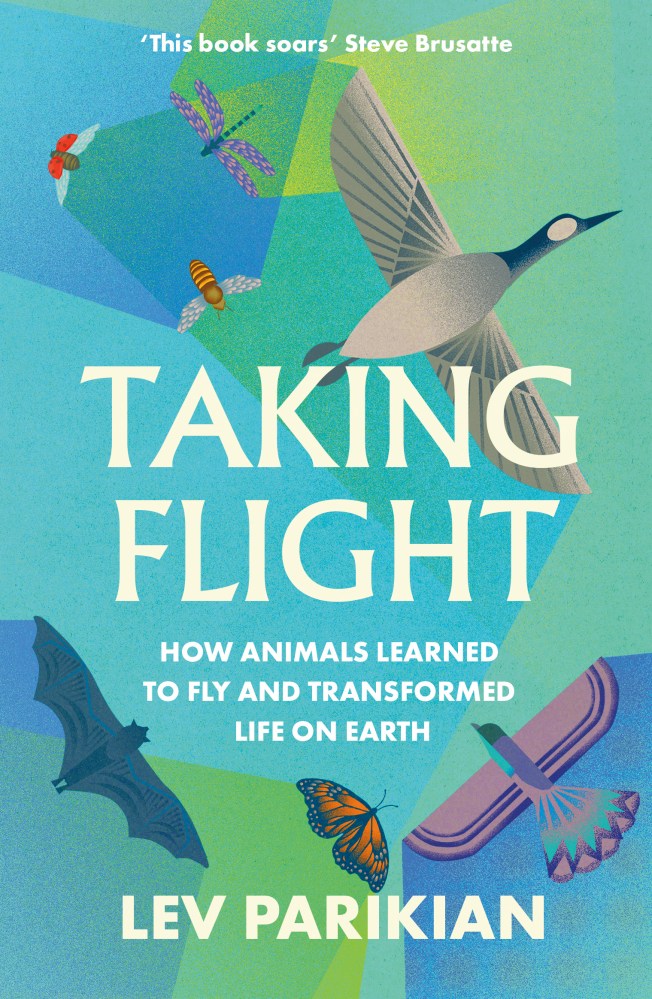
Taking Flight by Lev Parikian

I’m an idiot. Now I realise this will come as no surprise to many of you, but the reason I say so at the moment is because I have been sitting on this review of Taking Flight by Lev Parikian for 6 months. I actually read and reviewed Taking Flight in April ahead of my intended Deepings Literary Festival interview with Lev at the beginning of May. However, I went on a cruise, caught Covid, missed the festival, burnt myself horrendously with a hot water bottle leak (still not healed) had a whole litany of family issues, illnesses, operations and deaths and completely forgot all about it! 

So, with enormous apologies to Lev and to Amy Greaves of Elliott & Thompson who kindly sent me a copy of Taking Flight, today, at last, I’m sharing my review. You’ll find my review of Lev’s Into The Tangled Bank and our chat about Music to Eat Cake By through the links here.

Taking Flight was released in paperback by Elliott & Thompson on 16th May 2024 and us available for purchase through the publisher links here

Taking Flight

This is the miracle of flight as you’ve never seen it before: the evolutionary story of life on the wing.

A bird flits overhead. It’s an everyday occurrence, repeated hundreds, thousands, millions of times daily by creatures across the world. It’s something so normal, so entirely taken for granted, that sometimes we forget how extraordinary it is. But take that in for a moment. This animal flies. It. Flies. The miracle of flight has evolved in hugely diverse ways, with countless variations of flapping and gliding, hovering and diving, murmurating and migrating.

Conjuring lost worlds, ancient species and ever-shifting ecologies, this exhilarating new book is a mesmerising encounter with fourteen flying species: from the first fluttering insect of 300 million years ago to the crested pterosaurs of the Mesozoic Era, from hummingbirds that co-evolved with rainforest flowers to the wonders of dragonfly, albatross, pipistrelle and monarch butterfly with which we share the planet today.

Taking Flight is a mind-expanding feat of the imagination, a close encounter with flight in its myriad forms, urging us to look up and drink in the spectacle of these gravity-defying marvels that continue to shape life on Earth.

My Review of Taking Flight

A book exploring the evolution of flight in the natural world.

What I adore about Lev Parikian is his unerring ability to take a complex issue and present it with such good natured, accessible and frequently humorous prose, that the reader learns incredible facts effortlessly. So it is with Taking Flight. From the laugh out loud introduction through the 14 selected examples of flight to the scholarly notes and bibliography, this is Lev Parikian at his best: engaging, educating and entertaining in one brilliant book.

I loved the whole structure of Taking Flight because of the wonderfully crafted hooks that link the end of one chapter to the start of the next, and because of the surprises along the way. Not only was I totally unaware of a tinamous (a bird that can fly but mostly doesn’t often bother) before reading Taking Flight, but I hadn’t expected a chapter on flightless penguins. Of course, you’ll need to read Taking Flight for yourself to see if that chapter is justified.

Taking Flight is packed with information from the first ever bird to the name of the person who came up with the term echolocation, for example, all of which is presented with a lively, conversational tone so that it never feels like an academic text, but rather an entertaining jaunt through evolution, history, the natural world, aviation and science that leaves the reader totally mesmerised and satisfied.

However, for me the greatest enjoyment in reading Taking Flight came from the brilliant observational detail Lev Parikian paints on the page of our current environment and in the insight we gain into him as a person. What the author does is to make it feel as if the reader is standing right next to him and just having a chat. It’s as if you’re there at Bempton Cliffs, or lying on the grass with childhood nursery rhymes going through your head. The effect is that Taking Flight might be teaching us a thing or two, but it feels just like having an old friend at our side. I adored this aspect.

If, like me, you’re not a frequent reader of non-fiction, I think Taking Flight could be just the book to persuade you to read more. It’s elegant as well as accessibly prosaic, it’s beguiling and colourful, and it’s filled with fun and facts. Oh, and those wretched pigeons that wake me up shouting before 5 am are now viewed in an entirely different light thanks to Taking Flight. Cracking book!

About Lev Parikian

Lev Parikian is a writer, birdwatcher and conductor. His book Why Do Birds Suddenly Disappear? was published by Unbound in 2018. He lives in West London with his family, who are getting used to his increasing enthusiasm for nature. As a birdwatcher, his most prized sightings are a golden oriole in the Alpujarras and a black redstart at Dungeness Power Station.

For more information, follow Lev on Twitter/X @LevParikian or visit his website. You’ll also find him on Facebook and Instagram.

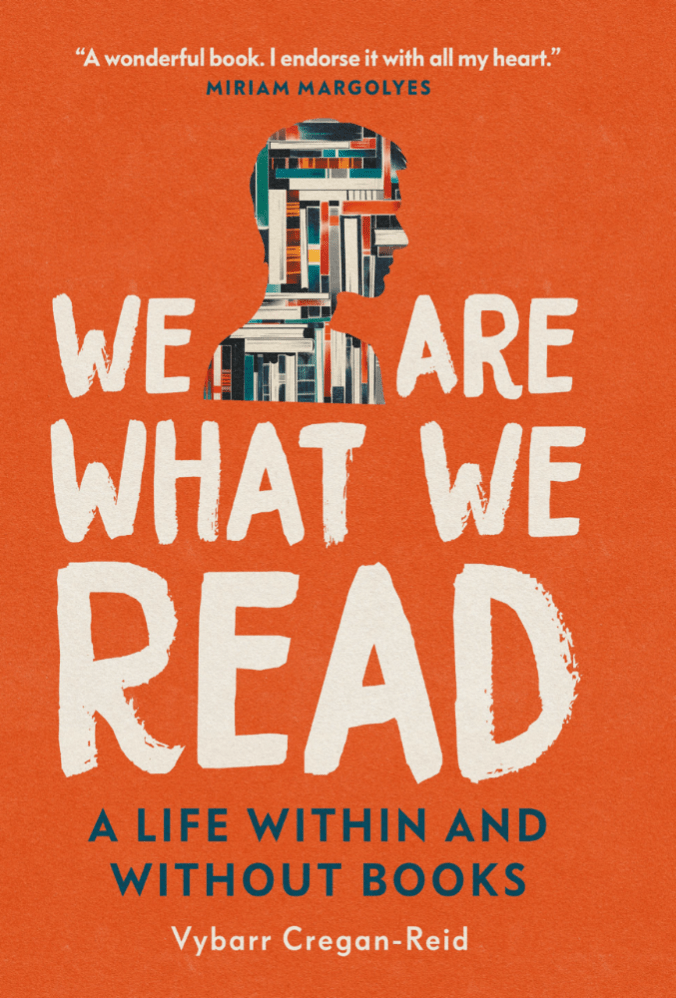
A ‘First’ Reading Experience – A Guest Post by Vybarr Cregan-Reid, Author of We Are What We Read: A Life Within and Without Books

I was a very late reader. Not least because, with a poor household with few books, both parents working full time and a sister 9 years older who could do everything for me as I attended a tiny village school of 15 with a series of supply teachers, no-one realised I couldn’t see well. It wasn’t until I was 8 and got glasses that I realised those indistinct marks on paper had shape and meaning. So, given that I ended up teaching English and becoming an educational consultant, I realise that it is possible to progress – but maybe not quite as far as my guest on Linda’s Book Bag today…

Not only does Vybarr Cregan-Reid have a book I’m desperate to read – We Are What We Read: A Life Within and Without Books – but his own personal story is fascinating. I’m thrilled he’s agreed to tell us a little bit about it in a wonderful guest post today.

Before that, let me give you a few details about We Are What We Read: A Life Within and Without Books

We Are What We Read: A Life Within and Without Books was published by Biteback on 11th July 2024 and is available for purchase directly from the publisher or on Amazon.

We Are What We Read

Vybarr Cregan-Reid is an unlikely academic. Someone who knows what it’s like to be written off, who left school with no qualifications, who desperately needed a second chance. He also understands better than anyone the power of literature to change a life.

From a turbulent start, through a disastrous education, truancy and petty crime, to a distinguished career as an English professor, We Are What We Read weaves Vybarr’s own unexpected life in books with a spirited history of the war on the humanities, uncovering the profound impact that books have in shaping our reality at a time when their value is under attack from governments around the world.

Part memoir, part manifesto, part history, We Are What We Read is not just about how education can place you back on the right side of the tracks. It is also a rallying cry for the importance of literature in a world where the arts are being squeezed out at every level and where book bans in schools and libraries have surged to record highs. It’s about the joys and the transformational power of reading and how our brains are rewired by books, exploring how literature offers a vital means of connection in a fractured world. Reading is not merely an escape – it’s an essential part of who we are.

A ‘First’ Reading Experience

A Guest Post by Vybarr Cregan-Reid

I don’t have a traditional background for an English professor. I don’t have a GCSE in English. In fact, I don’t have any GCSEs at all.

As a teenager I was a write-off. My dad had been in and out of prison and had left in his wake a trail of violence and chaos. I was also a gay kid, and the 80s weren’t an OK time to be a gay, northern, Irish-Catholic kid. Homophobia was rampant and such an allowable discourse that it would feature in tabloids and broadsheets, alike. You could be at a party playing Pass the Parcel and unfurl a headline like: ‘I’d Shoot My Son if he has AIDS, Says Vicar’, or ‘Burning is too good for them’.  The burden was too much. I stopped going to school and got into trouble.

After school, I tumbled into the kinds of jobs people with no qualifications do: pubs, burger joints, cinemas.

At the age of twenty, my father’s death prised me out of the closet, and I moved on to a new life, with a new boyfriend, in a new city. After a few weeks there, one of his friends came to visit with a pair of books as housewarming gifts. I’ve written about this in a great deal more detail in We Are What We Read: a life within and without books. One was a slightly dull-looking biography, the other was The Innocent by Ian McEwan – a book I’d seen advertised in bus shelters. I later discovered I’d hit the jackpot with the friend. She was a ‘temp’ and had stumbled into working for Tom Maschler. Maschler was a renowned publisher who, amongst other things, invented the Booker Prize.

Without many friends or steady work, I had a lot of time to fill, so a couple of weeks later, out desperation, I picked up the McEwan and began, for the first time, to read. It was a bit boring at first, but as I proceeded through the novel, that changed. The final  effect wasn’t so much impressive as concussive. It was if all of the bandwidth, of quelling and processing the trauma of a difficult childhood, of trying to be straight, to come to terms with a life dictated by a lack of options; it was as if all that was suddenly freed. Being yourself requires a lot less effort than trying to be someone and something else. On finishing that book (so electrifying was the experience I dropped it in shock at one point), I knew in an instant my life had changed.

From that day forwards, I never stopped reading. I read on my walk to work, weaving in and out of pedestrians, dodging manholes (I still do this). I’d read on the bus, on my tea breaks.

I sought help from a local bookshop, and they guided me through Hanif Kureshi, Iris Murdoch, or Jenny Diski. At work, I tucked Henry James, Vikram Seth, or A. S. Byatt under the counter so I could take them out between selling bus tickets to customers. (I’d even slide an Evelyn Waugh down the back of my trousers and slope off to the loo to read for a few minutes when it was quiet.) Then I’d read on the walk home, and when I got home, would read some more.

I had spent decades locked in my own head, and now suddenly, the world opened up to me. Instead of being huddled into myself, confronting hourly my worries about the future, reading allowed me to sample the lives and concerns of hundreds of others. Fiction has taught me more about the world than anything else in my life.

I was quickly reading hundreds of books a year, and a couple of years later I decided to try a little studying in my spare time, step by cautious step. After really struggling at school, it’s not that I found it easy, but I took to it. Later, I snuck into university and once there, I never left: BA, MA, then a DPhil. I’ve now been a Professor of English for five years.

I was motivated to write We Are What We Read because I felt keenly that the opportunities to change that were open to me, to return to education and to completely change my life, those opportunities are not there for young people now. Without education, I don’t know where I’d be today. I love education and the fact that it has permitted me the opportunity to help so many others find their way in the world. But I love books more. I owe them everything. They completely changed my life.

Reading has taught me that one of the miraculous things about the world is that there isn’t just one path, there are as many different ways through it as there are pages on the shelf of a library.

****

Thank you so much Vybarr, for a wonderful guest post. I couldn’t agree more about the value of education, certainly, but even more about the power of books. I can’t wait to read We Are What We Read: A Life Within and Without Books.

About Vybarr Cregan-Reid

Vybarr Cregan-Reid is an author, award-winning teacher, academic and sometimes broadcaster. He has taught at several universities and medical schools. He is currently Professor of Creative Non-Fiction at York St John University, where he runs Creative Writing, Media and Film. He has written widely about literature, nature and the environment for the BBC, The Guardian, The Independent, the Big Issue, the Daily Telegraph, the Daily Mail, the Washington Post, Literary Review and many others. He has made a number of programmes across the BBC radio network and has appeared on the BBC, ITV, Sky News and numerous outlets across the world.

For further information, visit Vybarr’s website, or follow him on Twitter/X @vybarr and Instagram.

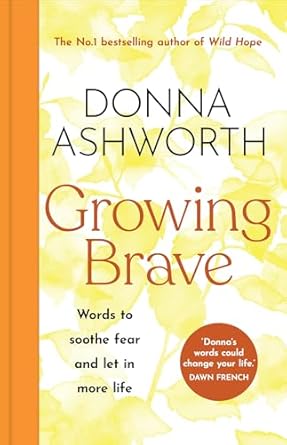
Growing Brave by Donna Ashworth

Just under year ago it was my pleasure to review Wild Hope by Donna Ashworth in a post you’ll find here. Imagine my delight, then, when a surprise copy of Donna’s latest book, Growing Brave appeared in my post box. It was so timely as I have found the last 12 months incredibly challenging and my heartfelt thanks go to Flora Willis (I think it was Flora!) at Bonnier Books for sending me a copy. I’m delighted to share my review of Growing Brave today.

Growing Brave was published by Bonnier imprint Black & White on 3rd September 2024 and is available for purchase here.

Growing Brave

In this powerful new collection of wisdom and poetry, Donna Ashworth helps us to find strength and courage on the days we feel lost, to pick ourselves up when times are hard, to soothe fear and self-doubt when we are in their grip, and to let in more life and love as we brave our challenges.

Every day we are bombarded by thoughts, feelings and information that make us feel anxious and afraid. We worry we don’t measure up, we are scared of failure and we find it hard to be ourselves. We also feel powerless watching the world getting messier. Fear is a limiting factor for many of us and if we don’t challenge it we can find ourselves keeping out more of the good stuff in life than the bad.

With poems such as ‘One Day You’ll See’, ‘Growing in Moonlight’, ‘The Comparing’ and ‘Always There’, bestselling author Donna Ashworth helps us to see that whatever we are facing, no matter how small or afraid we feel, we make the biggest difference in this world and to our own happiness when we are brave enough to show up as ourselves.

My Review of Growing Brave

If I’m honest, I had no intention of reading Growing Brave at the moment, but I couldn’t settle to a book. I’d begun and discarded several that normally I’d have immediately loved, but I couldn’t get into them. So I picked up Donna Ashworth’s Growing Brave and there, immediately, was just what I needed. 

I thought I’d read Growing Brave from page one in order, but as soon as I read Donna Ashworth’s recommendation to open a page at random I did just that and she was right. It took me straight to Warm Breeze which articulated how to accept the vagaries of life with equanimity, and immediately I found myself relaxing. Indeed, Growing Brave is a powerful book that truly does seem to have an innate power to guide and support the reader.

Part of the strength of Growing Brave comes from the author’s introductory note and her Afterword. Bookending the content as they do, these two aspects feel akin to a physical hug from Donna Ashworth. It is as if a friend is supporting the reader and giving them strength through a virtual hug. Add in the simple, organic line drawing accompanying the poetry and short prose pieces and there’s a calming effect that is surprisingly profound. 

That said, the true power in Growing Brave comes through the simple honesty underpinning the entries. Seeing life’s difficulties like the mud that helps us grow like a plant for example, is relatable and easy to grasp but is nonetheless encouraging and inspiring. I think what works so well is the balance between acknowledging our innermost frailties and providing solutions or advice without patronising the reader. Much of the poetry is written in the first person so that Donna Ashworth is prepared to lay herself bare and render herself vulnerable which has the effect of giving readers permission to be honest with themselves too. 

I think Growing Brave is one of those books where the author would be happy for us to forget about it. Donna Ashworth wants us to be emotionally independent and strong, but for those times when we need a little extra help, Growing Brave is supportive, inspirational and emotionally uplifting. It’s heartfelt, accessible and a friend waiting on your bookshelf. I absolutely loved it. It would make a wonderful gift for any reader. 

About Donna Ashworth

Donna Ashworth is a number one Sunday Times Bestselling Poet, whose words you will often find flying around the internet, widely shared daily, by her 1.7 million followers.

Donna’s writing came to spotlight during the lockdown period where she saw her purpose as building a place to find hope, calm and comfort, amidst the collective chaos. She quickly became an internet favourite with one viral post after another and a list of celebrity endorsements.

Having published eight books since; three successful self-published titles and five with Bonnier Books/Black & White publishing, her newest collection of words, Growing Brave is now available and set to be received just as warmly as the much-loved Wild Hope.

Priding herself on being ‘imperfectly human’ and ‘sharing the dark with the light to harness hope’, Donna engages constantly with her followers in a bid to find comfort in numbers as we ‘walk each other home’ on this journey of life.

For further information, find Donna on Instagram or Facebook and follow her on X/Twitter @Donna_ashworth.

Staying in with Lindsey Vernon-Lilley

As regular visitors to Linda’s Book Bag know, I get offered an awful lot of book and simply can’t accept them all. Today’s post is all about one of those books. It’s my pleasure to welcome Lindsey Vernon-Lilley to stay in with me and chat about her latest children’s book. Let’s find out more:

Staying in with Lindsey Vernon-Lilley

Welcome to Linda’s Book Bag Lindsey. Thank you for staying in with me. Tell me, which book have you brought this evening and why have you brought it.

I’ve brought my children’s book The Fairy Teller released on the 18th June 24 published by C.A.A.B publishing. People have said that the book is ‘a magical adventure’ for children and really highlights the importance of trusting friendships. 

That’s lovely! You must be very proud of it.

I am as I have also had lots of requests for a second book! Readers want to see the characters go on other adventures! 

What can we expect from an evening in with The Fairy Teller?

The Fairy Teller tells the story of Princess Isabella and her life long friend Evelyn. Princess Isabella has no idea the powers she possesses until she embarks on an amazing adventure which takes her to a land she never knew existed! 

That sounds so intriguing for young readers. What else have you brought this evening and why have you brought it?

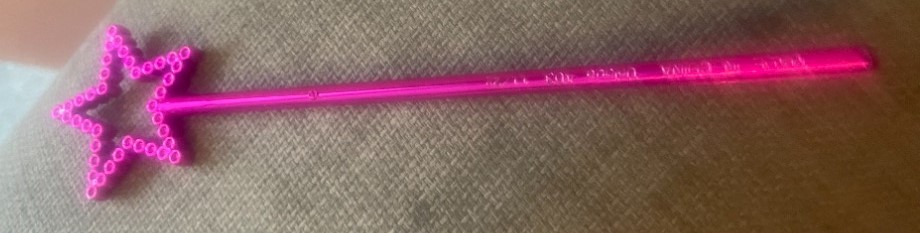
I have brought along with me a fairy wand. I do hope children read the book and know that they each have their own super power. I often wonder what I would do if I had a magically fairy wand. I would probably be a little like Mary Poppins and use it to magically tidy away! 

Can you lend it to my husband then as he’s terribly untidy! 

I’d love little readers to think about how they would use their wands. What would you do? What would you wish for? Working with children in a primary school and being an author, it is my mission to get more children reading for pleasure again. I was totally inspired by Enid Blyton books when I was at school and Roald Dahl’s Willy Wonka and the Chocolate Factory.

That’s a lovely thought. Reading is so empowering for learning and pleasure. Thanks so much for telling me all about The Fairy Teller Lindsey. Let’s give readers a few more details:

The Fairy Teller

The Fairy Teller tells the story of Isabella and her lifelong friend Evelyn. Together they unexpectedly embark on a life-changing adventure discovering the secrets of their village ‘Fairy Land’. A hidden world of powerful, beautiful fairies is revealed to them; and along with their new found friend Sam, the children meet the kind creator ‘King Amos’ known to many as ‘The Fairy Teller’. King Amos shows Princess Isabella that she is no ordinary girl but in fact, one with a very special gift yet to be revealed to her…

The Fairy Teller is published by CAAB and available for purchase here.

About Lindsey Vernon-Lilley

Lindsey Vernon-Lilley is a children’s writer from Doncaster, South Yorkshire. As a mother, wife and SEN teaching assistant, Lindsey loves creative writing and her debut children’s book The Fairy Teller was released on the 18th June and she is currently penning her second novel The Key.

For further information, follow Lindsey on Twitter/X @LVernonlilley. You’ll also find Lindsay on Facebook where she has special signed copies of her book.

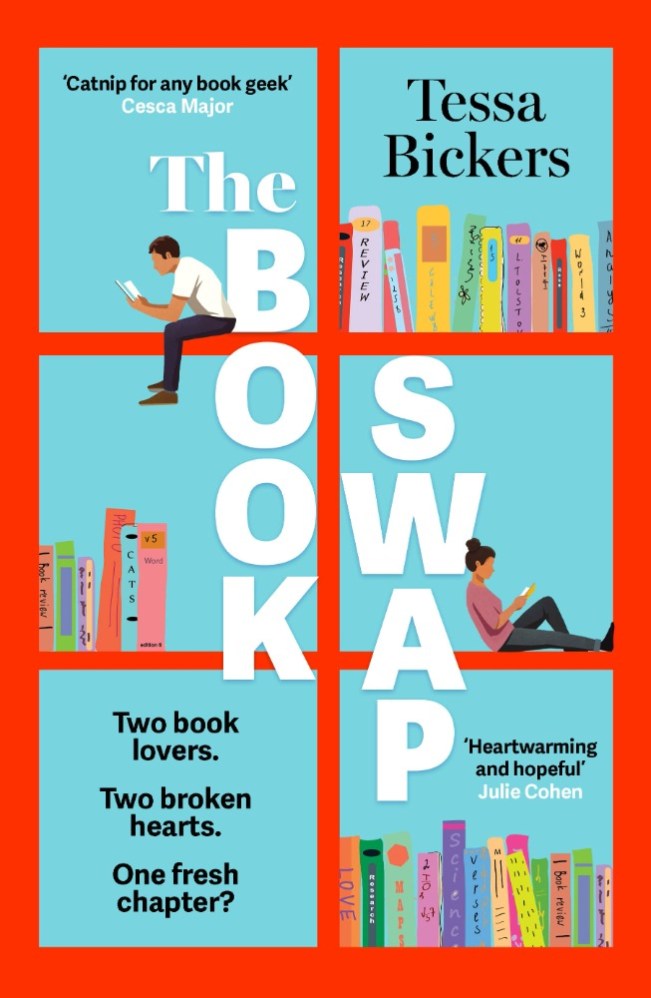
The Book Swap by Tessa Bickers

What a pleasure today to share my latest My Weekly magazine online review which is of The Book Swap by Tessa Bickers. My enormous thanks to Alainna Hadjigeorgiou  for sending me a copy some time ago.

Published by Hodder and Stoughton on 5th September 2024, The Book Swap is available for purchase through the links here.

The Book Swap

A REASON TO LIVE. 
Still grieving the death of her best friend, Erin knows she needs to start living – but has no idea how. Then she loses her favourite book, a heavily annotated and containing her friend’s final words to her.

A REASON TO LOVE.
When James finds Erin’s note-filled book in his local community library, it sparks a life-changing conversation. He writes his own message back, and soon they are locked in an anonymous book exchange, with no idea who the other person in the margins might be.

A REASON TO FORGIVE?
But Erin and James have a shared history that neither of them realise. How will Erin react when she discovers the other writer isn’t a stranger at all – but the person she once swore she’d never forgive?

A story of second chances and new beginnings, this is a love letter to books – and a love letter to love.

My Review of The Book Swap

My full review of The Book Swap can be found on the My Weekly website here.

However, here I can say that The Book Swap completely took me by surprise. I had anticipated a light and engaging romance with references to books, but hadn’t anticipated the depth of emotion, the range of themes and the fabulous awareness of who we are as humans that makes The Book Swap simply glorious to read.

Do visit My Weekly to read my full review here.

About Tessa Bickers

Tessa Bickers has always been fascinated by people. What makes them different and what makes them the same. Those universal experiences from grief and loneliness, to heartbreak and love. She’s always told stories, either through songs or the books she’s been writing since her teens. All those years of her brother telling her she was nosy, when he didn’t understand it was purely for research purposes!

Tessa lives in Brixton with her partner, their young but very loud daughter and their one-eyed ginger cat, Rocky, with his mean left hook.

For further information, follow Tessa on Twitter/X @TessaBickers, or find her on Instagram.

An interview with David Jarvis, Author of The Violin and Candlestick

It’s my pleasure to welcome the (extremely) patient David Jarvis to Linda’s Book Bag today. We’ve been meaning to stay in together and chat about one of David’s books for ages but life kept getting in the way. At last we’ve had a moment or two for me to find out more!

Staying in with David Jarvis

Welcome to Linda’s Book Bag David, and thank you for agreeing to stay in with me. 

Linda, thank you for asking me. I have been looking forward to this for some time.

Yes! You’ve been incredibly patient whilst there has been too much life happening beyond my ability to deal with it! Tell me, which of your books have you brought along to share this evening and why have you chosen it?

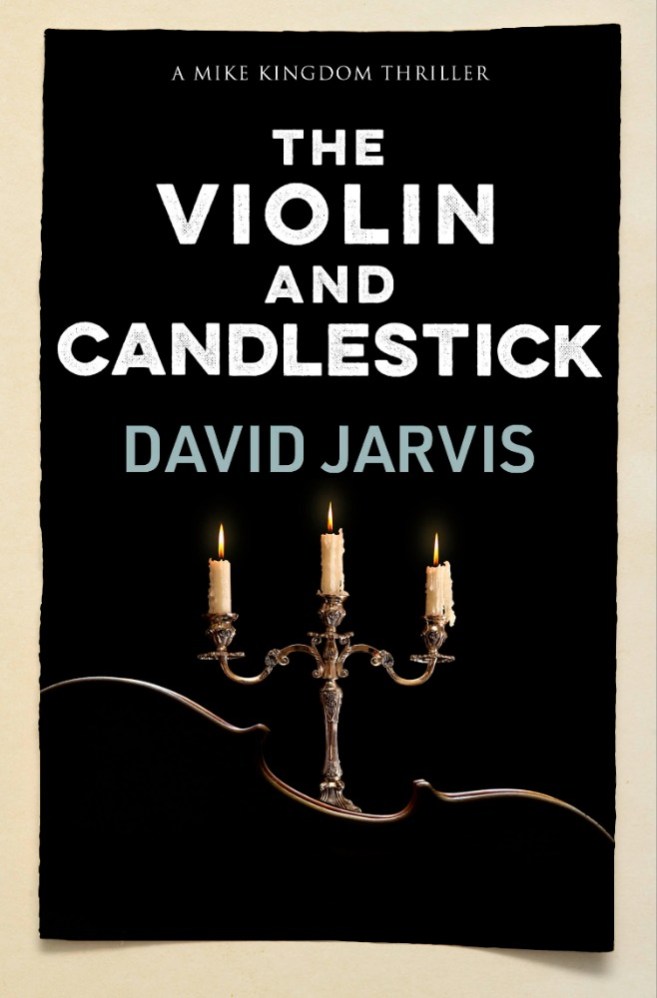
Tonight, I have brought along The Violin and Candlestick which was published on July 16th by Hobeck Books. It is the third Michaela ‘Mike’ Kingdom novel after The Tip of the Iceberg and This Is Not a Pipe. Obviously, I am excited by all of this and very pleased with the three covers by Jem Butcher which are so distinctive.

Those are really dramatic and engaging covers. 

Tell me a bit more about Mike.

I created Mike Kingdom in 1999, although in truth she appeared on my shoulder one day and has shouted in my ear ever since. I just type. I plot five or so chapters ahead but invariably she wanders off. Twenty-five years ago, I wrote nine chapters introducing Mike to my agent, Gerald Pollinger (who, with his father, was Graham Greene’s agent). He told me that she was a winner but sadly he never lived to see her in print.

What a shame.

To anyone who doesn’t know Mike, she was a CIA analyst who was seconded to the Five Eyes (the group of agencies from UK, USA, NZ, Australia and Canada) in London under her boss, Leonard de Vries. She was in an accident that killed her husband and damaged her leg; her hair also fell out. Mike is feisty, blunt and doesn’t seem to know her limits. She is an analyst not an operative, but this does not stop her getting involved.

She sounds totally brilliant.

Writing the dialogue between Mike and Leonard is one of the joys of my life. They have a love/hate, father/daughter relationship but at times it is hard to know who wears the trousers.

I imagine so. Would you say, then, that character is the most important element for you in writing?

While character and plot are important to me, so is backdrop. Each book is set against an important issue or issues. I am not writing a lecture, but I would be sad if anyone came away after reading The Tip of the Iceberg, for example, and was not in awe of the wonderful Antarctic Treaty which covers 11% of the Earth’s land surface. This Is Not a Pipe covers the relationship between, Algeria (one of the largest gas producers in the world), Morocco and Europe. So much of the EU’s gas comes through two pipelines across the Mediterranean.

I love a book that has a deeper message David. What will we find in The Violin and Candlestick?

The latest in this series of spy/geopolitical thrillers is The Violin and Candlestick which is set in the Middle East; it covers the West’s relationship with Iran, Bitcoin mining and the bids for the 2040 Olympics but these are merely the context.

I am lucky in my previous life to have worked in so many countries and to have been involved in places and off-the-beaten-track parts that most people don’t get a chance to visit. They give me the settings.

And it sounds as though they give readers a chance for a bit of vicarious travel too. How would you sum up your books?

All of my novels must be gripping, credible and have an unguessable ending that is obvious in retrospect. I don’t like contrived devices such as ‘it was all a dream’ or the introduction of the murderer on the penultimate page. Finally, my books must be witty and have some light relief while remaining taut and entrancing.

They sound brilliant. How have they been received by readers?

If I may quote from some respected reviewers?

Please do!

“It’s genuinely excellent storytelling that’s incredibly well researched and written with such a light touch and some wickedly black and cynical humour whilst full of sub-plots that all come together with great craft.
A writer at the top of his game…”

“’The writing was as always superb, with so many witty moments and that true British humour. Honestly can’t wait to see what is next for Mike Kingdom!”

“”David Jarvis is up there with the greats of le Carré, Forsyth and Clancy. The Violin and Candlestick is the best book in the series so far … with tension, drama and misdirection keeping you guessing to the very end. This book is unputdownable and I do not use that adjective lightly!”

“This is another cracker from the brilliant David Jarvis.”

“David has done it again and written a relevant, twisty and unputdownable thriller, that keeps you guessing until the very end.”

“”This is a well thought out, well plotted spy thriller … it’s great seeing how Mike has grown over the three books. I never saw the twist at the end coming that was a big surprise. I was suspecting some and got it completely wrong. This is an engrossing, engaging read that will have you turning the pages fast.”

“Intricately plotted, pacy & with a twist I didn’t see coming, The Violin and Candlestick is a great addition to a 5 star series”

“I read a lot of crime, and thoroughly enjoy it, but these are BRILLIANT … an absolute cracking series. If you’re a reader, read them in order and one after another, you won’t be disappointed.”

The Violin and Candlestick is a geopolitical thriller of the highest order, with fabulously drawn characters, a thought-provoking storyline and is written with some wit”

“Well, just when I thought this author couldn’t top his last book, he absolutely knocks it out of the park again.”

“The ending had me fooled, hadn’t seen that coming, for me that was down to the quality of the plotting and writing. One thing David Jarvis does make you do as you read the books is stop and think … I was drawn in from the opening page, a gripping and addictive read.”

Wow. You must be so thrilled with those comments David. I really need to catch up with the books don’t I?

You do Linda.

What else have you brought along and why have you brought it?

I’ve brought your chance to read a bit Linda! Here’s the start of The Violin and Candlestick

CHAPTER ONE

Leonard de Vries fell out of the taxi onto the gravel of the pub car park.

This was all the more embarrassing as he was arriving for lunch, not leaving. Fortunately for him, he suffered no real injury apart from a slight graze to his nose. In fact, the act of standing up posed a greater problem, and he arrived at the door of The Greedy Pelican out of breath and licking the blood from his podgy finger, which he had been using to test his face for any damage. The taxi driver pulled over to a shady corner under some trees to eat. He was thinking that, if some punter wanted to pay him to sit and wait while he ate his sandwiches, he was more than happy to comply.

The only other person who saw this dramatic entrance was Leonard’s ex-employee, Michaela Kingdom, who was sitting inside and looking out through a grubby window. Mike, as she was known, was almost embarrassed at the pleasure she was deriving from watching the short, overweight man attempt a forward roll across the gravel. She had never forgotten him telling her that he had the mind of an athlete.

“No chauffeur to open your door today?” she asked as he approached her table; the pub was virtually empty at midday on a Tuesday.

“No, this is unofficial. That’s why I chose here,” he replied, explaining why he had come in a taxi from Chiswick to some godforsaken eatery near the reservoirs under the flight path to London Heathrow. He seemed disorientated and, after looking around, said, “I thought that this was just called The Pelican?”

“You mean you’ve been here before and still decided to come back?”

“It’s handy, and they used to do big rib-eye steaks, if I remember correctly.”

“Well, it was The Pelican, but now it’s part of a chain and has been rebranded. I had to google it. If you’re interested, that carved beam up there is from HMS Pelican, one of Drake’s ships that went around the world in 1577. I’m guessing that any other link to Sir Francis is pretty much lost. It now does ‘a mixture of Indian and Chinese’, or ‘fusion’ as they call it. It’s basically anything with rice. It’s ironic that Drake brought the humble potato to England from Virginia. I hope you aren’t hungry?”

Immediately, she regretted saying this as his face displayed just how hungry he was; this being nothing new. He wore his dark-green tie loose at the collar, in the style of Sir Les Patterson, more because the knot had tightened to a small lump over the years from his greasy fingers trying to adjust it.

“Sir Francis must be spinning in his grave,” he said.

“He was buried at sea.”

When she’d arrived, Mike had no idea if Leonard had actually booked, so she asked the manager to turn around the reservations diary so she could read the names. There she spotted Sir Donald Reeve. “That’s him,” she said as the manager, who had been born locally in Poyle, gave her an old-fashioned look. Mike was getting accustomed to Leonard using anagrams of his name specifically to irritate her and to test her decoding skills. Continuing professional development, he called it. She had another phrase in mind.

Carlos, the manager – and indeed people within a radius of several miles – would never have guessed that Leonard, under any of his aliases, was actually the CIA director in London and head of Five Eyes, an intelligence-sharing mechanism between the USA, Canada, UK, Australia and New Zealand that was based in Chiswick. Any subterfuge was really unnecessary: nobody even vaguely took a bit of notice.

Mike and Leonard agreed that, before getting down to business, they would order food and drinks. This didn’t take long.

“Right, let’s lay down some rules. You aren’t going to ask me to do any fieldwork, are you?” Mike asked after twenty minutes of small talk. The previous three times he had sent her into the field, it hadn’t gone well. This shouldn’t have been surprising as she had been a CIA analyst and not trained to leave the office.

“No, I swear on my mother’s grave. This is desk-based analysis.” His soft Alabaman accent made this sound almost believable, although his mother – who was just having breakfast in the suburbs of Montgomery, the state capital – may have had something to say about that.

Mike was wearing her jet-black Cleopatra wig and motorcycle leathers. She looked at him with her very-dark-brown eyes, but she said nothing.

“What?” he asked, holding out his arms, his palms upwards. “I really need a freelancer for a small task. It will suit you down to the ground. I can’t use my team. You’ll understand why when I explain.”

She stretched out her damaged left leg under the table, unfolded a napkin and placed it on her lap. “The second I think it might lead to fieldwork, I’m right out of here.”

“I get that.” He was at his most appeasing. “I know you’re an analyst, which is why I’ve lined up an operative you can call on if it ever becomes necessary … which it won’t,” he added quickly. “We call him Crip.”

“Leonard!” She put her head in her hands. “Leonard, you’re so un-PC. You cannot call someone that.” She contemplated this for a few seconds, then said, “He doesn’t actually sound that suited to fieldwork. I mean, really?”

“It’s short for Crippen. Chris Crippen. He worked for me, like you. He’s now a freelancer, like you,” he emphasised. “We’ll make a great team.”

“Oh, sorry.” Mike was so used to Leonard having a casual disregard for rules, manners, political correctness and just about everything that she had jumped to her own conclusion.

The waiter turned up with a basket of bread and some butter. Leonard picked up a roll with a crust so hard and thin that it shattered into pieces across the table as he tried to break it. He brushed his palms against each other and took a folded piece of card from his jacket pocket. On it was a series of telephone numbers, codes, names and addresses. He handed it to her and explained some of them before getting down to the real reason for the lunch.

“You know that the coordinating role in Five Eyes rotates every two years. You may not have realised that my term has just ended, and now it’s the turn of Barbara Aumonier from Canada. I can’t stand the woman, but that’s probably not important; she doesn’t like me either. It is important, however, because the USA thinks someone in one of the five agencies has been compromised and is selling the family silver. Finding this person is going to be difficult because we’re searching among friends. The team in the Counterintelligence Department at Langley is checking as discreetly as possible, but they have to be careful not to leave a trail. Heck, let’s be straight: they’re just pussyfooting around.” He stopped as the waiter approached with a large, well-done steak, some rice and a jug of an odd-smelling Asian sauce. Leonard waited until Carlos had served Mike her plaice with capers and retreated out of earshot.

His plate was very hot, and the steak was almost stuck to it. “So, this is what they mean by fusion, is it?” he said before tucking into the meat with a wooden-handled steak knife.

“How can I help? You know I no longer have access to the five countries’ systems, and I’m more likely to leave a trail or tip off anyone interested.” Mike looked at the small fork and fish knife she had been given. “Unless you can get me some access?”

“That won’t be possible.”

“Why?”

“Because I’m currently behind the eight ball. This week, I’ll probably be suspended and sent back to head office. If I’m lucky, I might get the job of ordering light bulbs. If I’m unlucky, I might be in a cell staring up at one.”

Mike looked at her old boss with genuine surprise. “Really? What have you done?”

“Jeez, you know I don’t always follow the rules, but I get enough results that no one cares. Now they’ve started digging and are wondering if it’s me.”

“And you have no idea who it might be?”

“Personally, no … but they think it must be someone with my level of access. It’s some of my files that have mysteriously turned up in the wrong hands.”

“How do I contact you?”

“All the numbers and codes are on that card. I didn’t want anything on the system connected to you. Crip’s details are on there too, but you won’t need him. I may not be able to contact you, so I wanted you both to have each other’s details. Nobody else knows, and please don’t tell anyone. There’s one more thing: this came in the post the day before yesterday.” He took out of his pocket a brass key with the word ‘DUPLICATE’ written on the attached tag and handed it to her.

“What’s this and who sent it?”

“I’ve no idea. There was a piece of paper that said it was for safekeeping and that he would call very soon to meet up. There was no name.”

“What am I meant to do with it?”

“Keep it safe in case I’m suspended. I don’t want it in our office, especially if we’ve been compromised.”

“Where do I start? What do you want me to do?” She was suddenly excited but, at the same time, overwhelmed with the magnitude of the task.

“Before they began to suspect me, they told me they were looking at a senior Australian agency director who might have got involved in some construction fraud. His name’s on the card. You could start with him.”

“Leonard, we’ve had our differences, but I’m sorry – really sorry. I’ll do my best.”

“And I’ll try to let you know if I’m suspended. Are you leaving that rice?”

That’s cracking! I’m even more determined to catch up now! But what’s that you’ve got there?

I have also brought along a candlestick; it is a sculpture of Icarus and I love the irony. He is naked but feels that it is necessary to wear an old flying hat. Just the idea of Icarus being anywhere near naked flames makes me smile.

I suspect you have a wicked sense of humour… Is art and sculpture important to you generally?

Art features in all of my novels in different ways. This Is Not a Pipe is a painting by Magritte; in it, he questions whether it is or can be a pipe. This is so relevant to the plot of my story. The Violin and Candlestick is a painting by George Braque. It is in front of this painting that key interchanges take place in my third novel while it is in a travelling exhibition in a Doha gallery. Giacometti’s ‘Running Man’ sculpture also features in the book… but I won’t spoil the plot.

No don’t! We’ll have to read the books and find out for ourselves. Thank you so much, David, for staying in with me to chat about The Violin and Candlestick. It’s been such an interesting evening. I understand the fourth book in the Mike Kingdom series is in the pipeline too so I think readers are in for a treat. Let me give them a few more details about The Violin and Candlestick.

The Violin and Candlestick

A businessman flies by private jet for a half-hour lunch in Doha, Qatar. This would have been no big deal except that he is the CIA’s main asset in the Middle East and, six hours later, is found dead in his villa.

Michaela ‘Mike’ Kingdom was meant to be investigating something else for Leonard de Vries, her old CIA and Five Eyes boss, when he asked her to help him find the killers. She had been one of his analysts in London before the ‘accident’ that had killed her husband and damaged her leg.

She told everyone many times that she didn’t do fieldwork, but no one listened, not even Mike herself. Leonard told her not to worry as he had organised help in the form of another ex-CIA agent, now a Paralympian in the US basketball team

The Violin and Candlestick is published by Hobeck Books and available for purchase here or on Amazon.

About David Jarvis

David Jarvis went to art college in the 1970s before setting up an international planning practice, which he ran successfully for forty years. This took him around the world from Trinidad to Croatia and from France to Saudi Arabia.

His canvases just got bigger and bigger.

He has now retired to Wiltshire to write and drink wine, not necessarily in that order.

For further information about David, follow him on Twitter/X  as @David_Jarvis_ , Instagram and Bluesky.
Cornwall: riding a phantasmic wave – A Guest Post by Nicola Smith

I can’t believe it’s almost five years since Nicola Smith stayed in with me here to chat about her debut novel A Degree of Uncertainty. I’m delighted to welcome Nicola back today to celebrate 13 Cornish Ghost Stories that she has contributed to with a superb guest post.

I confess 13 Cornish Ghost Stories had completely passed me by until I was ‘chatting’ with another contributor, Liz Fenwick, about it recently. With the nights getting noticeably darker, it seems the perfect time to take a closer look.

13 Cornish Ghost Stories is available for purchase here.

13 Cornish Ghost Stories

Cornwall is the perfect setting for tales, myths, and legends. The wild moors, the granite, the clay, the rebellious sea, and flat calm coves make the county a vast and inspirational canvas. The starry nights, needle-sharp gorse, and windswept tors and carns provide perfect backdrops to eerie full moons and ghostly goings-on. Mischievous piskies dance across our landscape, while the spectres of the past, both real and imagined, haunt our memories and our dreams.

There are new stories to be told around every corner, across every ley line, behind every menhir, and in the rocks and caves that litter our shores. Another 13 are already emerging from the mists….

Cornwall: riding a phantasmic wave

A Guest Post by Nicola Smith

As Elfy Scott wrote in The Guardian in January this year, “It feels as if ghosts are suddenly having a moment, a strange little resurgence into the mainstream. I think ghosts may be in vogue.”[1] She cites Ghost Story, a “wildly compelling” seven-part series hosted on podcast platform, Wondery as an example of their current popularity.

But has this slightly unsettling genre ever gone out of fashion? As Susan Hill, author of The Woman in Black once said, “ghost stories are a way of exploring the boundaries between life and death, between the known and the unknown, between order and chaos”[2]. Surely such things will forever be a preoccupation of mankind?

Of course, there will always be doubters and sceptics, believers and evangelists (and even those who outwardly rubbish the notion yet inwardly wonder at strange noises in the night). And for this reason, there is a ghost story for every bent, yet many readers have preconceived ideas of what constitutes a ghost story. But there is no single definition.

Stories of such spirits can be enlightening, thought provoking and even amusing. Of course, they can also be spine-chilling. The new anthology I have been lucky enough to be a part of embodies all these adjectives. 13 Cornish Ghost Stories brings to life original ghostly tales from all over the county, from an ancient pub in the windblown far west of Cornwall to the desolate plains of Bodmin Moor and the capricious light of St Ives, not to mention a storm-lashed Penryn.

Cornwall, it seems, is a perfect setting for a ghost story. From the former inmate who haunts Bodmin Jail to the young woman who still roams the grounds of Falmouth’s Pendennis Castle, the county is synonymous with ‘true’ ghost stories. Its tumultuous history is alive with tales of pirates, smugglers and tragic historical events, while its dramatic, brooding and often isolated land and seascapes provide a fitting backdrop for many mysterious happenings.

Each original story in 13 Cornish Ghost Stories has been conceived by a writer either born in Cornwall or based in Cornwall, each one familiar with the county’s nuanced ways and changing moods, as well as its hidden paths and coves, its pockets of forgotten moorland; its concealed treasures.

Cornwall allows the writer’s imagination to run riot. It is an animating spirit that fuels the creative mind, giving rise to a profusion of colourful tales, legends, anecdotes and stories that live long in the memory. Done well, a Cornish ghost story puts the reader at the heart of its dramatic land and seascape, transporting them to another world…in every sense.

Ghost stories might well be having a moment, and I urge dubious readers to open their minds to otherworldy tales. As Scott says, “…for so many of us, stories of the paranormal can be a strange, exciting and decadent activity, like buying oysters to eat in your own house.”

What could be more Cornish than that?

[1] The Guardian

[2] Susan Hill

****

What indeed? Thanks so much Nicola. Not only does this make me want to read 13 Cornish Ghost Stories immediately, it also makes me want to jump in the motorhome and head to Cornwall!

About Nicola K. Smith

Nic-1

Nicola K Smith is a freelance journalist based in Cornwall. She contributes to a range of titles including The Times, guardian.co.uk, Coast magazine and BBC Countryfile. She has just written her first novel, inspired by life in her home town of Falmouth, and set in a fictional Cornish town…

To find out more about Nicola, visit her website, or follow her on Twitter/X @NicolaKSmith740 and on Instagram @nicolaksmith740. You’ll also find Nicola on Facebook.

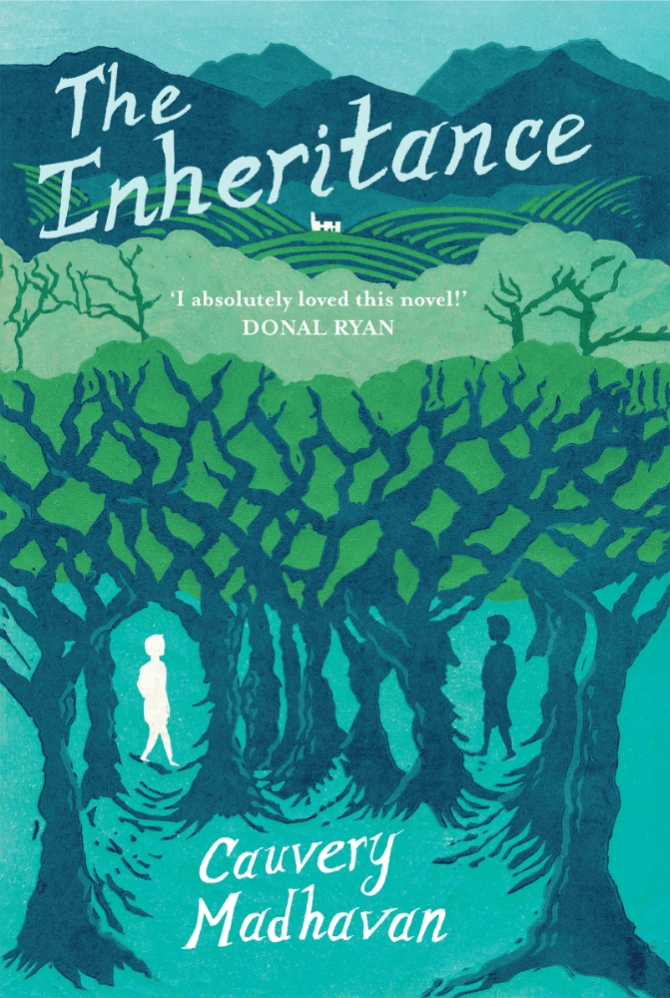
The Inheritance by Cauvery Madhavan

My enormous thanks to Lisa Shakespeare for sending me a surprise copy of The Inheritance by Cauvery Madhavan. I am delighted to share my review today.

Published by Hope Road on 19th September, The Inheritance is available in the usual places including directly from the publisher here.

The Inheritance

It’s 1986 and 29-year-old Marlo O’Sullivan of London-Irish stock has just found out that his sister is his mother. To steady his life, he moves to Glengarriff, to a cottage he has inherited, in the stunning Beara Peninsula. When a neighbour dies unexpectedly, Marlo takes over his minibus service to Cork. There is nothing regular about the regulars on the bus – especially Sully, a non-verbal 7 year old, who goes nowhere but does the journey back and forth every day, on his own. Marlo is landed with this a strange but compassionate arrangement, fashioned to give the child’s mother respite from his care. Sully’s obsession with an imaginary friend in the ancient oak forests of Glengarriff slowly unveils its terrible secrets – a 400-hundred-year-old tragedy revels itself.

My Review of The Inheritance

Marlo has inherited a cottage in Beara.

The Inheritance is a wonderful story that weaves the past and recent history into a tale of love, acceptance, forgiveness and belonging. I was completely captivated by it.

Cauvery Madhavan’s writing is beautiful. She depicts the wild attraction of Ireland to perfection so that she places her readers right in the heart of her settings. The Beara surroundings are every bit as much a character in The Inheritance as any of the people. The sound of Stevie bellowing, the colour of spilt blood, the touch of a hand and so on are simple, but carefully crafted, examples of how The Inheritance appeals to the senses and consequently becomes far more than the sum of its parts. It’s a magnificent book. I adored the naturalistic dialogue too, and the change in tone relating to the sections set in the early 1600s feels authentic and captivating.

The Inheritance is so difficult to categorise. There’s history steeped right into the landscape, and a sense of mystery with a touch of the supernatural through Sully that is realistic and totally believable. Religion, superstition and ritual all add layers of interest, and these aspects are frequently created with fond and gentle ribbing of the characters like Assumpta, so that The Inheritance feels written with, as well as about, love, tolerance and understanding. The brutality of the historical realism is balanced brilliantly by the humour and different forms of love in the more modern sections. Equally, this is a romance too. Consequently, The Inheritance appeals to a wide audience and is successful on every level. 

What is so completely engaging is the sense of community. The people here all know one another’s business, and the area is filled with long memories, petty rivalries and fierce loyalties so that I finished The Inheritance feeling, like Marlo, as if I’d been plunged head first into a real place with little to prepare me. Both Marlo and Kitty have strong reasons to find themselves on the edge of social acceptability, and yet they are also the heart of the narrative. The way in which the community is described means that every single character is unforgettable, vivid and absolutely true to life. I loved them all.

I loved, too, the echoing ripples of history and kinship that link past and present. Cauvery Madavan is literally giving voice to the mute, the ordinary and the forgotten in a powerful and affecting narrative. 

I completely lost my heart to The Inheritance because it is part of the rich, varied and engrossing culture of storytelling that those influenced by Ireland seem to achieve so effortlessly. I am delighted to find there are other Cauvery Madavan books to discover, because she is a writer with heart whose story held me transfixed and who demonstrates with warmth and understanding how letting go of the past enhances our present. Don’t miss this one. It’s glorious.

About Cauvery Madhavan

Cauvery Madhavan was born and educated in India. She worked as a copywriter in her hometown of Chennai (formerly Madras). Cauvery moved to Ireland over three decades years ago and has been in love with the country ever since. Her other books are: Paddy Indian, The Uncoupling and The Tainted

She lives with her husband and three children in beautiful County Kildare.

For further information, visit Cauvery’s website, follow her on Twitter/X @CauveryMadhavan and find her on Instagram.

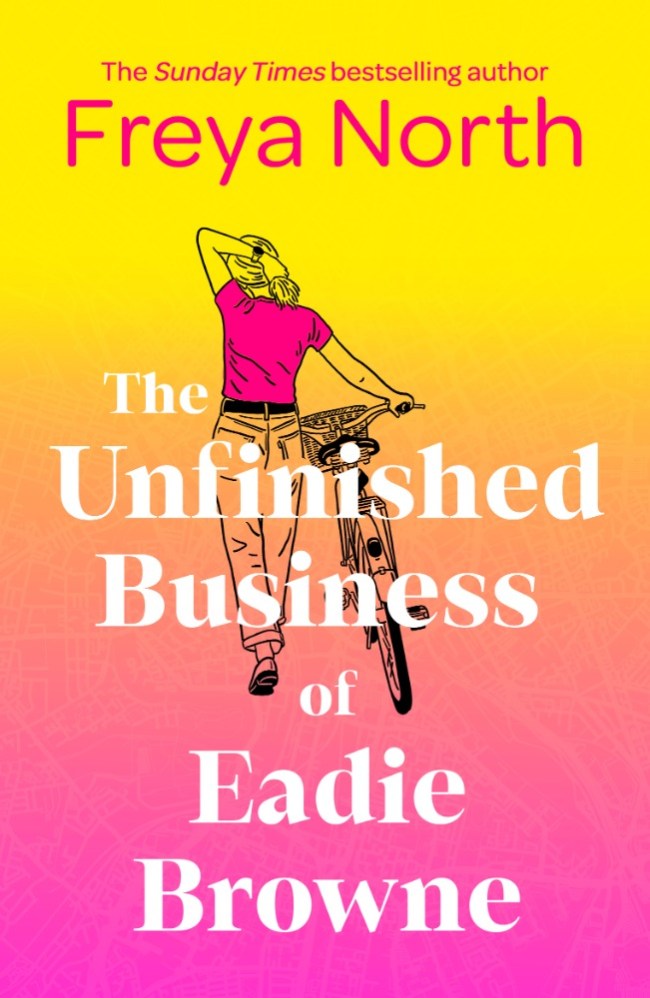
The Unfinished Business of Eadie Browne by Freya North

Having spectacularly failed to read and review The Unfinished Business of Eadie Browne by Freya North in time for the hardback release in February, I am delighted to share my review today well ahead of the paperback release. My enormous thanks to Emma Dowson at edpr for sending me a signed copy of The Unfinished Business of Eadie Browne all those months ago.

I cannot believe it’s nine years since I reviewed Freya’s The Turning Point and The Way Back Home when I very first began blogging. You’ll find those reviews here.

The Unfinished Business of Eadie Browne is available now in other formats and will be released in paperback on 12th September 2024. Published by Welbeck it is available for purchase through the links here.

The Unfinished Business of Eadie Browne

When your present meets your past, what do you take with you – and what do you leave behind?

Eadie Browne is a quirky kid living in a small town where nothing much happens. Bullied at school, she muddles her way through the teenage years with best friends Celeste and Josh until University takes them their separate ways.

Arriving in Manchester as a student in the late 1980s, Eadie experiences a novel freedom and it’s intoxicating. As the city embraces the dizzying euphoria of Rave counterculture, Eadie is swept along, ignoring danger and reality. Until, one night, her past comes hurtling at her with consequences she could never have imagined.

Now, as the new millennium approaches, Eadie is thirty with a marriage in tatters, travelling back to the town of her birth for a funeral she can’t quite comprehend. As she journeys from the North to the South, from the present to the past, Eadie contemplates all that was then and all that is now – and the loose ends that must be tied before her future can unfold.

My Review of The Unfinished Business of Eadie Browne

Eadie is growing up.

The Unfinished Business of Eadie Browne is just wonderful. It’s an absolute love song to who we are as humans, to our frailties, our hopes, our fears and our dreams. I loved it.

In essence, the plot is relatively gentle as the story travels through Eadie’s childhood memories whilst she’s on a journey with her husband in 1999. I loved the gradual unfurling of why Eadie is making that journey and how her past life has led her to this point. It adds a little mystery that is engaging and interesting. 

What is so utterly beautiful and moving about how Freya North writes is the way she manages to depict with absolute perfection the different stages of Eadie’s life. Eadie’s home might be somewhat unconventional, but her early childhood and teenage school years are absolutely those anyone can recognise. As a result it feels as if we’re reading about a much loved and missed friend from our own past. I thought the exploration of her marriage was emotionally exquisite. The depth of love, and the ease with which life can intervene and make us neglect those we care for most, is conveyed by Freya North with tenderness and reality. 

Eadie is intricately drawn. Her self-delusion, the selfishness and uncertainty of her youth, her gradual maturity and the realisation of what constitutes friendship, belonging and home, all combine into a character whose vivid personality leaps from the page. And through Eadie and her reactions we come to know and understand her parents Terry and Jill and her other friends. Each one feels true to life.

But this is a tale about more than just Eadie, marvellous as she is. It’s a warm, sensitive and totally absorbing example of life. The Patricks and Rosses of the world can be found in any location and through reading about them we learn humanity and compassion, even as we are entertained. Freya North weaves the strands that bind the characters together with themes of trust, family, education, friendship, crime, poverty and society in such a rich tapestry that it feels as if the people and events in The Unfinished Business of Eadie Browne could happen in any school, town, nightclub or university. And it isn’t just the imaginative aspects of the book that are so convincing. Also woven in are historical and geographical strands, from music to national and international events, that add reality, depth and authenticity.

I’ve long loved Freya North’s writing and it has been far too long since I read her. The Unfinished Business of Eadie Browne has proven just what I’ve been missing. I thought this narrative was utterly brilliant. It has earned a place on my list of books of the year because it is a book about Eadie Browne, but also one about you and me. Eadie might be looking for her place in the world but she helped me find my place too. Don’t miss this one.

About Freya North

Freya North is the author of 16 bestselling novels including Sally (1996), Pillow Talk (2008 – winner of the RNA award) The Turning Point (2016), Richard & Judy Bookclub selection Little Wing (2022) and The Unfinished Business of Eadie Browne (2024).

Freya founded and ran the Hertford Children’s Book Festival, has judged the Costa Book Awards and is a patron of the Society of Women Writers & Journalists. A proud Ambassador for Bowel Cancer UK and patron of Pointers In Need, Freya has degrees in Art History from the University of Manchester and the Courtauld Institute, London and loves teaching at writing workshops.

For more information, visit Freya’s website, follow her on Twitter/X @freya_north and find Freya on Instagram and Facebook.

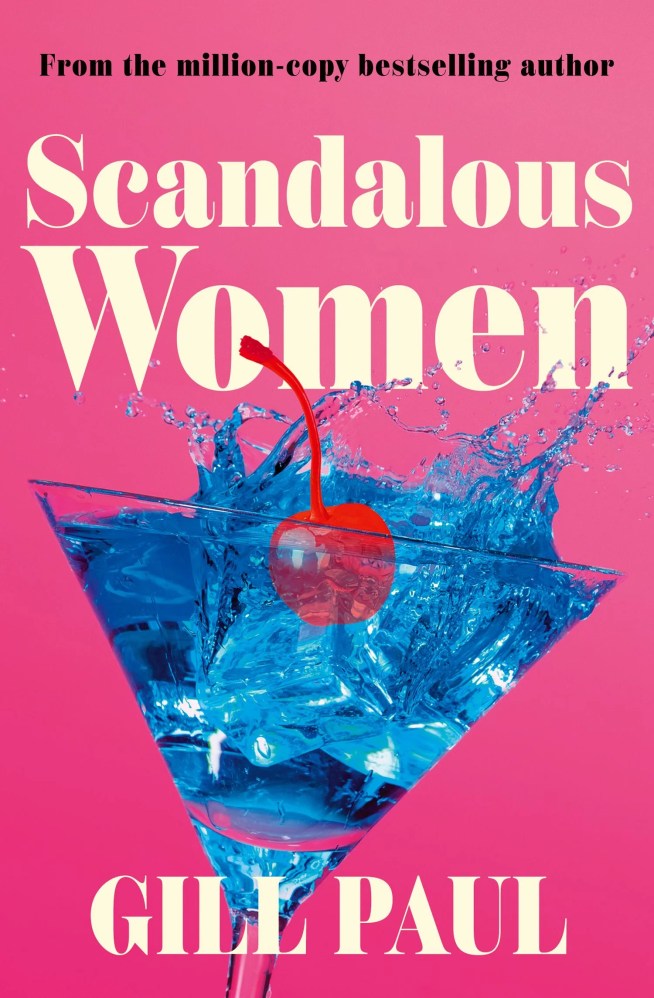
Scandalous Women by Gill Paul

I’m a huge fan of Gill Paul’s writing as you’ll see if you follow this link. Consequently, I’m thrilled that my latest My Weekly magazine online review which is of Gill’s latest book, Scandalous Women.

Scandalous Women was published by Harper Collins imprint Avon yesterday, 29th August 2024, and is available for purchase through the links here.

Scandalous Women

1966: In LondonJackie Collins‘s racy The World is Full of Married Men hits bookshops and launches her career. In New York, Jacqueline Susann‘s debut novel Valley of the Dolls is published, and she’s desperate for it to be a bestseller. But both are about to discover the price they will pay for being women who dare to write about sex.

Meanwhile, college graduate Nancy White is excited to take up her dream job at a Manhattan publishing house. But Nancy could never be prepared for the rampant sexism she is about to encounter.

When Nancy introduces the two Jackies, she fears they will become rivals in their race to top the charts. As she strives to achieve her ambition of becoming an editor, can all three women succeed despite the men determined to hold them back?

My Review of Scandalous Women

My full review of Scandalous Women can be found on the My Weekly website here.

However, here I can say that Scandalous Women is an absolute belter of a book and possibly my favourite Gill Paul to date. It’s interesting and compelling, filled with the most perfect blend of fact and imagination so that every moment is a real joy to read. I loved it.

Do visit My Weekly to read my full review here.

About Gill Paul

Gill Paul is an author of historical fiction, specialising in the twentieth century and often writing about the lives of real women. Her novels have topped bestseller lists in the US and Canada as well as the UK and have been translated into twenty languages. The Secret Wife has sold over half a million copies and is a book-club favourite worldwide.

You can follow Gill on Twitter/X @GillPaulAUTHOR, visit her website and find her on Instagram and Facebook for more information.