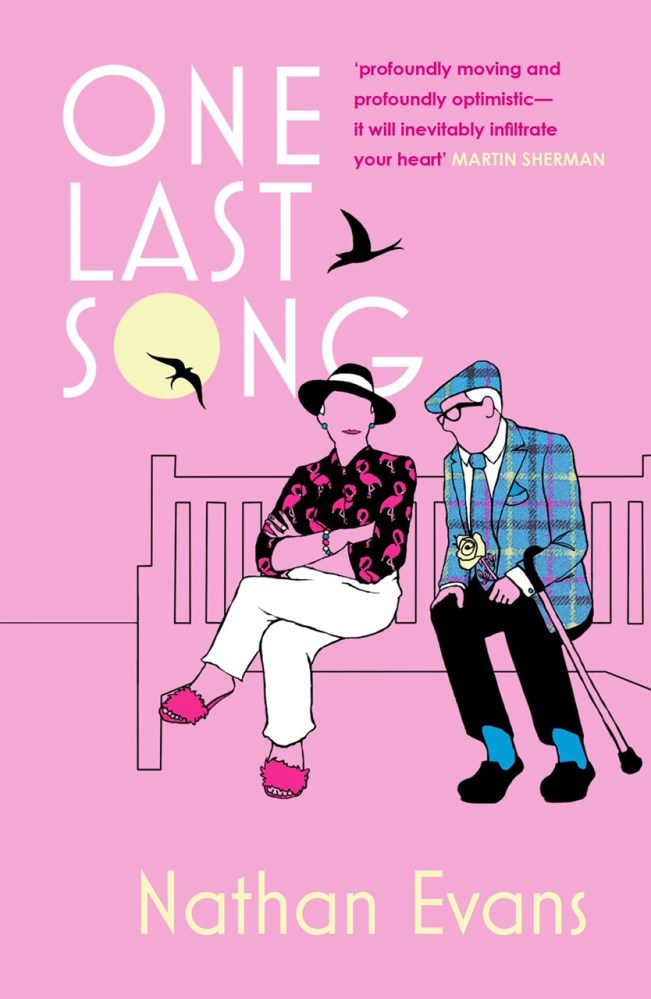
Discussing One Last Song with Nathan Evans

My enormous thanks to Justin David at Inkandescent for sending me a copy of One Last Song by Nathan Evans in return for an honest review which I’ll be sharing later in this blog post and for putting me in touch with Nathan so that we could stay in and discuss One Last Song together.

Let’s have that chat before my review:

Staying in with Nathan Evans

Welcome to Linda’s Book Bag, Nathan. Thank you for agreeing to stay in with me.

Tell me, though I rather think I know, which of your books have you brought along to share this evening and why have you chosen it?
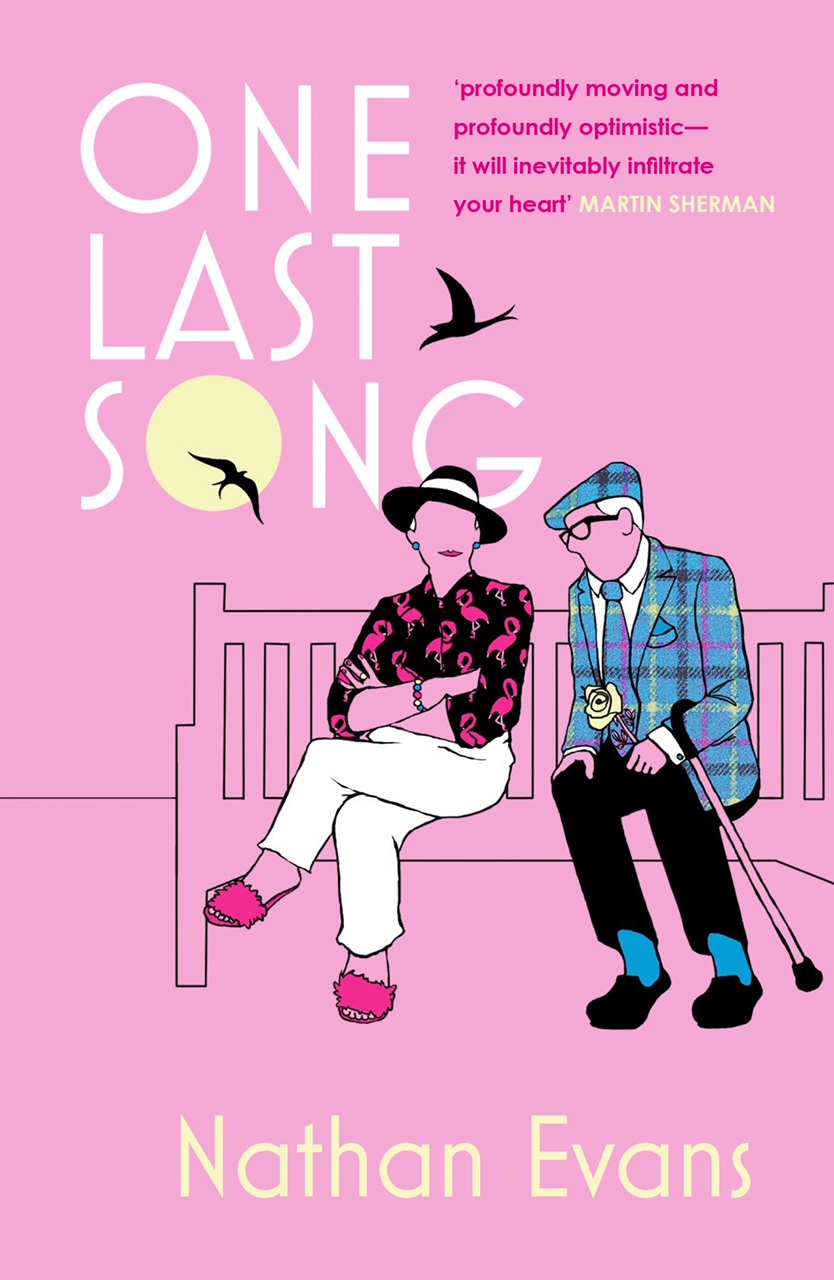
I’ve brought One Last Song as it’s my debut novella—it’s been some time in the making and I’m excited to finally get it into the hands of readers.

And what lucky readers they are. Congratulations on One Last Song. I loved it. But what would you say readers can expect from an evening in with One Last Song?

It’s a romantic comedy about queer elders—so you can expect a lot of laughs, and some tears; you should probably keep a box of tissues somewhere near.

I agree. You completely overwhelmed me with the ending Nathan!

It’s a bit like a Beautiful Thing for octogenarians: two older gentlemen—Joan and Jim—meet in a care home; at first, of course, they loathe each other, but then…

But then… indeed – and, being of a certain age, it was just wonderful to have older protagonists. This is your debut novella. How is it being received?

The TS Eliot and Polari Prize winner Joelle Taylor has described it as ‘a warm, joyful and ingenious tale of gay love from the UK’s Armstead Maupin’, which I don’t mind taking; the Polari First Book Prize winner Adam Smith has called it ‘a gem of a novella with characters to cherish,’ and I’m sure Joan and Jim would be delighted.

I’m sure they would – Joan in particular. And you must be delighted too.

What else have you brought along and why have you brought it?
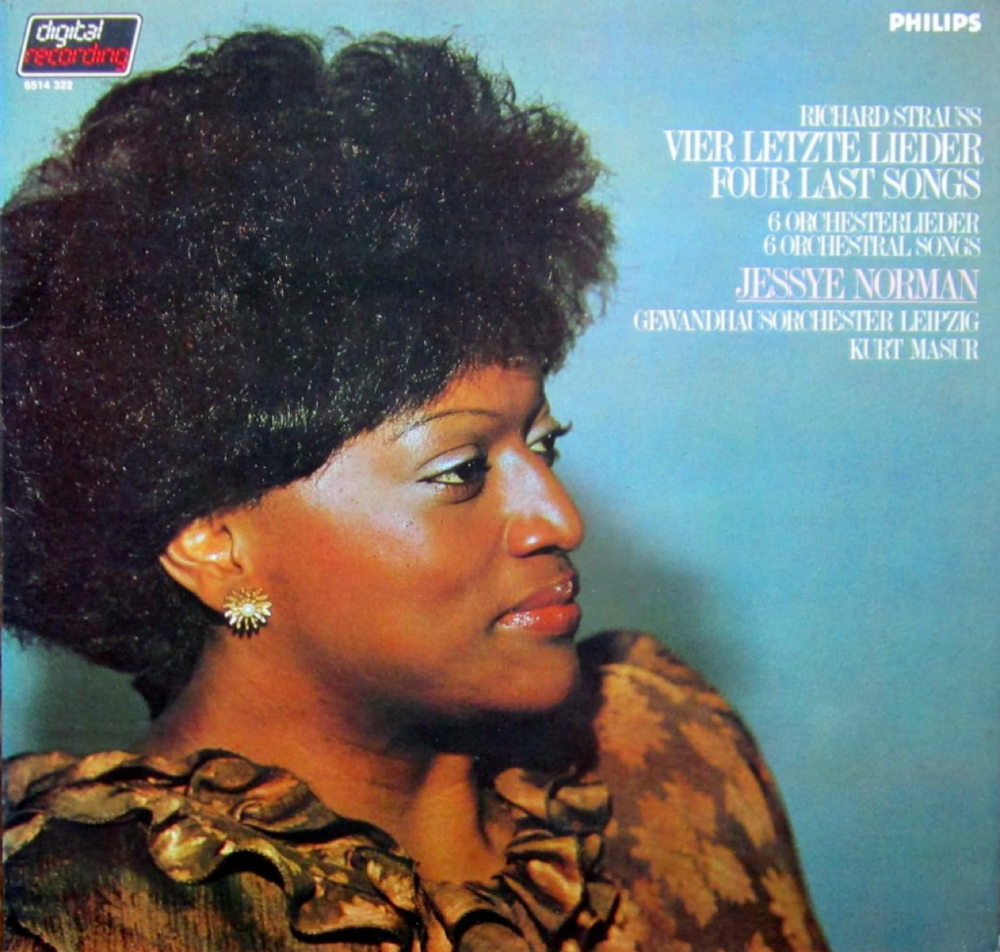
I’ve brought along a vinyl copy of Jessye Norman’s recording of Strauss’ Four Last Songs, and a record player to spin it on. Joan worked as a costume maker in Covent Garden and is a lover over all things operatic—music, and these songs in particular, is used throughout the book as thematic counterpoint to this story of late-blossoming love.

It most certainly is – and it was the reference to the last song that did for me completely Nathan. You were right about needing tissues!

Thanks so much for chatting with me about One Last Song. I’ll share my review in a minute, but you put the record on and I’ll give readers a few more details about One Last Song:

One Last Song

When a gentleman called Joan lands up in a care home, Jim doesn’t know what’s hit him – everything about his new neighbour is triggering.

And Joan is a colourful, combustible cocktail-ticking.

Battle begins. May the best man win.

But beneath antics and antique armour plating, what are both hiding?

And maybe they just may be batting for the same team.

An uproarious and uplifting romantic comedy about grey liberation.

Published by Inkandescent tomorrow, 1st February 2024, One Last Song is available for purchase here.

My Review of One Last Song

Joan is going into an old person’s home. 

What a fabulous novella! Nathan Evan’s writes with warmth and incisive wit so that meeting Joan and Jim is a real pleasure. I just loved One Last Song.

I think what works so effectively is the concept that it doesn’t matter how we identify sexually, what we wear or how we behave, essentially what each and every one of us needs is a little human understanding, compassion, kindness and connection. And in One Last Song, writing with all those features, Nathan Evans illustrates that difference can actually be the glue that unites us. 

It is through Joan particularly that Nathan Evan’s explores humanity so evocatively and affectingly. Joan is sharp, sassy and more than able to deal with those who might be a threat to him. But under that acerbic wit is also a troubled mind as he thinks about those who have passed through his life, and a vulnerability that is, at times, heart-breaking. Joan’s developing relationship with Jim and both their past triumphs and regrets are achingly well presented. I thought the way they grew together and were able to anchor one another in the present and in positivity was a universal message we’d all benefit from embracing. Certainly Nathan Evans’s style can be occasionally explicit, but there is never a moment when compassion doesn’t underpin every description, every memory and every interaction between characters – even when they are battling one another.

I found Harry’s initial attitude so thought provoking. He illustrates the unthinking prejudice so many have towards others not conventionally fitting into society and through him I wondered how frequently I might have made ignorant assumptions about others – indeed, reading One Last Song made me consider how many of those in my life who are older and have lived through negative attitudes towards homosexuality and queerness might have had to live their whole lives as a lie. One Last Song might be witty, engaging and entertaining, but it also has a profound depth.

The plot is a relatively gentle one as Joan and Jim’s relationship develops over time in the care home, but that aspect underpins all the more perfectly the depth of emotion presented by Nathan Evans. I was completely affected by these two men, their memories, their dreams, regrets and triumphs. In fact, I was reduced to tears when one last song was played. 

I thought One Last Song was a beautiful book. It shows how far society has come in accepting others who do not necessarily conform to accepted expectations, but equally it illustrates how far we still have to go. It’s also a book that I keep returning to in my mind. One Last Song may be a short novella, but both Jean and Jim pack an emotional punch that has me thinking about them frequently and it’s not until the book is finished that these two men’s lives impact fully. One Last Song is a special book.

About Nathan Evans

Nathan Evans’ fiction has been anthologized by Muswell Press (Queer Life, Queer Love) and published in Queerlings magazine. His poetry has been published by Fourteen Poems, Broken Sleep, Dead Ink, Impossible Archetype, Manchester Metropolitan University and Royal Society of Literature. His collection Threads was long-listed for the Polari First Book Prize, his second collection CNUT is published by Inkandescent. He was long-listed for the 2020 Live Canon Poetry Competition and shortlisted for the Carlo Annoni Prize 2020. His work in theatre and film has been funded by Arts Council England, toured with the British Council, archived in the British Film Institute, broadcast on Channel 4 and presented at venues including Royal Festival Hall and Royal Vauxhall Tavern.

For further information follow Nathan on Twitter/X @nathanevansarts and find him on Instagram. You’ll also find Nathan on Facebook.
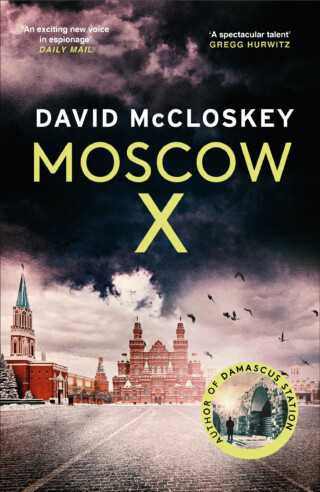
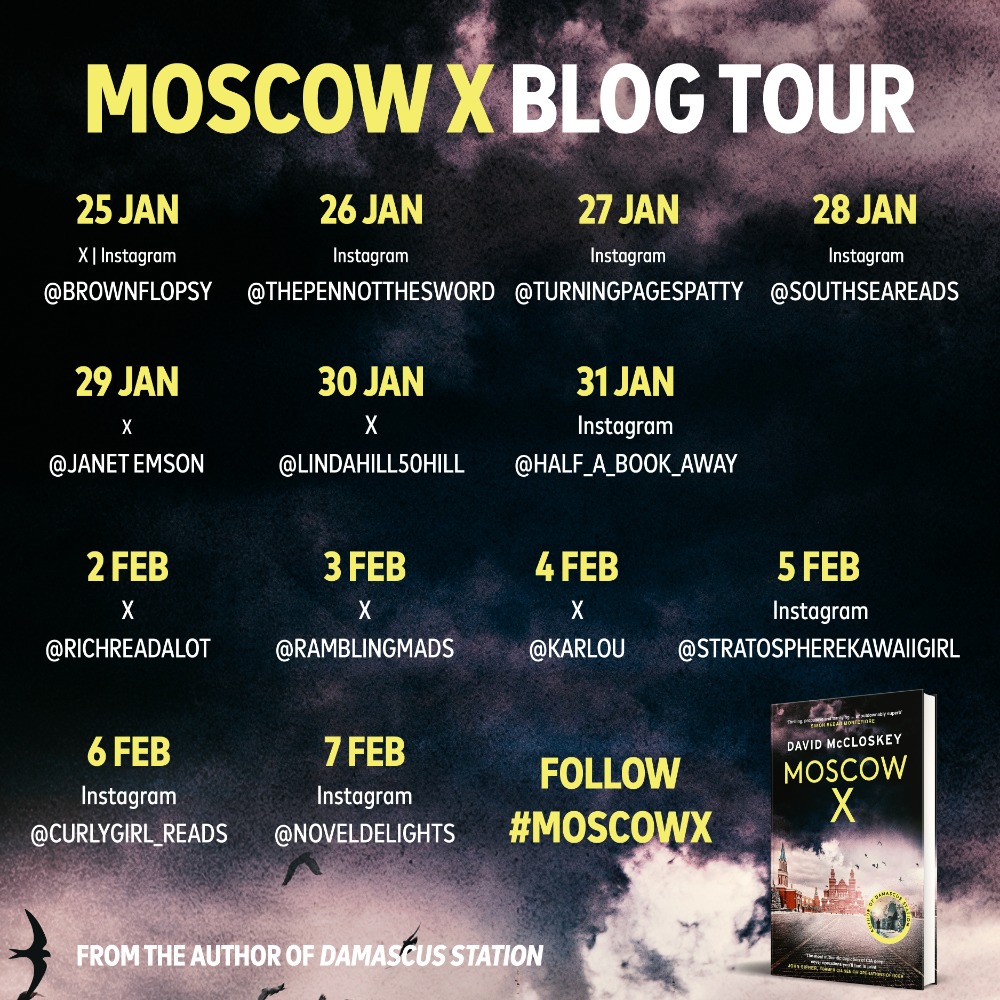
Extract and Giveaway: Moscow X by David McCloskey

It’s a real pleasure to join the blog tour for Moscow X by David McCloskey today and my thanks go to Rachel Nobilo for inviting me to participate. I’m thrilled to have an extract from Moscow X to share with you and, if you live in the UK, a giveaway for a hardback copy of the book.

Moscow X was published by Swift Press on 18th January 2024 and is available for purchase here.

Moscow X

A daring CIA operation threatens chaos in the Kremlin.
But can Langley trust the Russian at its center?

CIA operatives Sia and Max enter Russia to recruit Vladimir Putin’s moneyman. Sia works for a London firm that conceals the wealth of the super-rich. Max’s family business in Mexico – a CIA front since the 1960s – is a farm that breeds high-end racehorses. They pose as a couple, and their targets are Vadim, Putin’s private banker, and his wife Anna, who is both a banker and an intelligence officer herself…

****

And now that’s captured your imagination, here’s an extract for you to enjoy:

An Extract from Moscow X

Saint Petersburg

In the first hours of a wet Saint Petersburg evening, a man in a well-cut suit exited a black government Mercedes and entered the lobby of a bank. Though his business that evening was robbery, he carried neither knife nor gun. His weapon was instead a stack of official documents, which permitted him to move a large quantity of gold bullion from the bank’s reserves, held in a vault four stories below the street and minded at that hour by a well-armed team of guards and several clerks, only a few of whom were presently asleep.

The papers authorized the suited man, Lieutenant Colonel Konstantin Konstantinovich Chernov of the Federal’naya sluzhba bezopasnosti, the FSB, Russia’s Federal Security Service, to transfer two hundred and twenty-one bars of gold from the bank to a strategic reserve in the east.

Chernov’s black Ferragamos clacked over the lobby marble, their spotless heels trailed by a large crew of regular policemen pulling carts and crates. The police had been unhappily conscripted by the FSB for an evening of manual labor. The bullion, after all, was heavy: each bar weighed just over twelve kilos. Bank Rossiya’s head of security greeted Chernov in the lobby. The man had been a colonel in the army; he knew the game. The FSB had dozens of spies inside the bank. The FSB made the rules. Chernov would do whatever he wanted.

They exchanged icy greetings. Chernov was dead-eyed and firm but polite, the paperwork was drearily official, and though the mood
was tense there was neither  argument nor bickering, not a voice raised in anger. Chernov had once been soldier and priest, so he knew there was no law but God’s and that God spoke this law through Russia alone. His orders that night would have been considered arbitrary, even illegal, in many societies, but to Chernov they might well have been Godbreathed, no different from Holy Scripture or a Kremlin decree.

Chernov’s features were unremarkable except for his considerable height. He was pale, bald, and rosy-cheeked. His eyes were still and
contemplative. The black suit was Savile Row via the dip pouch and well-tailored to his massive frame. His words were often the first hints of madness, and that evening few had yet crossed his lips.

From the lobby Chernov trailed the head of security to a spacious office overlooking the square. There they rolled through the evening’s first protest: whether Andrei Agapov, the bank’s principal shareholder, should be phoned at that hour to learn of the state’s requisition of a pile of gold bullion valued at nearly two hundred million dollars. “He should at least know what is happening,” the head of security said to Chernov, desk phone clenched in his white hands. He was set to dial Agapov but hung there, awaiting permission. Chernov nodded.

The head of security spoke to Agapov for a few minutes. He read  high points from the papers. He gave Chernov’s name and rank and
department. He asked Agapov for instructions. Then he hung up.

“Are you to refuse us?” Chernov asked, eyes lit with curiosity.

“No,” the head of security said, “but I’m to make it a challenge.”

“Do you feel that is wise?” Chernov asked.

They agreed that it was not. That the head of security would do exactly nothing to delay or complicate the transfer, but if pressed Chernov would insist resistance had been irritating, even formidable. Then they descended into the vault, where Chernov walked the rows, fingers gliding along the cages holding the gold bars, one of the police officers trailing behind to check the serial numbers against the papers they carried to make this robbery legal. Once Chernov was satisfied, his men began packing.

They filled the bottom of each crate, spreading a thick cloth over the gold. They added two more layers until they feared that the gold might buckle the crates. Then they sealed on the tops with wood screws, affixing premade labels to note the run of serial numbers each crate contained. The bank’s security men did not draw their guns; no one touched radios or phones. They stood dumbly at attention. What is to be done when the police are robbing you?

The head of security watched the crates scud by with the forlorn expression of a man watching the burglary of his own home.

And then, unable to help himself, he muttered about Chernov stealing Andrei Agapov’s gold.

Chernov turned to him. “You say this is Agapov’s gold?” His voice was measured, though he could now feel his blood twisting and sloshing through him like mercury. A hint of salt and metal flickered on the tip of his tongue.

The head of security examined his reflection in his shoes, his hands on his hips in anger, but he held his tongue.

“I asked,” Chernov said, “if it is your position that this gold belongs to Andrei Agapov.”

The man raised his head but did not meet Chernov’s eyes. “The paperwork admits as much.”

“Then I ask you this,” Chernov said. “Who owns Andrei Agapov?”

The head of security fiddled with his tie. He was sniffling, Adam’s apple bobbing away.

Chernov sighed. Few understood. “The lawless power of Russia redeems God,” Chernov said. “A failed God becomes one with Russia
through this redemptive work. So it is God, ultimately, who owns this gold. Do you see?”

The man was swallowing harder now, fingers tugging at his tie knot. He did not reply. He did not meet Chernov’s gaze.

Crates slid past.

Chernov led the man by the shoulder toward an empty crate. A policeman was stapling a label onto the wood. Chernov told him to stop, give us a moment. The taste was thick now—had he bitten his tongue? He swabbed his mouth with a finger, but it glistened clean and clear.

“Ideas,” Chernov said, “are the only weapons capable of obliterating history, fact, and truth. As good Russians, you and I understand their power. In the last century millions of our compatriots nobly suffered under the banner of once-obscure ideas. I pray that many more will follow in the one to come.”

Still clutching the man’s shoulder, Chernov motioned to the empty crate. “Get inside.”

“What?”

Chernov’s grip tightened. He peered into the crate and down through the bottom into the dark hole in the Syrian countryside where
they’d stuffed him for months. And he knew that the black vine stretching through his body was what this banker must feel now.

Chernov emerged from Syria to watch another crate slide toward the vault’s freight elevators. “Get in.”

A thin line of sweat dappled the man’s hairline. Chernov’s massive hand softly brushed the man’s earlobe and slid gently onto his neck.

“Please,” the man said. “Please.”

“Get in.”

Chernov’s thumb moved just inside the man’s ear. They looked at each other for a moment.

The man stepped inside the crate.

“Sit down.”

He folded up his quivering legs and sat.

Chernov stooped over him. “My idea of Russia is that of a body. A perfect, God-born, virginal body. Made of cells, just like our own. And these cells have roles. Each its proper function. If a cell does not function, then it must be cut from the body.”

“Please,” the man said. “Don’t.”

“Lie down,” Chernov said, “so you are snug.”

The man did. Then he shut his eyes.

Chernov picked up the top and stood casting a shadow over the crate. He chewed on his cheek until blood at last spurted into his mouth. “I have a message for Agapov from my master: We are worried that your cell no longer functions. That it seeks sinful freedom. That the stubborn former KGB general, the scrappy industrialist, the proud landholder, has become convinced that his own person, family, and money are separable from the Russian state. That Agapov, as an individual with rights and protections under the law . . . well, the old fool imagines now that he can do what he likes. But the loss of this gold tonight should demonstrate that the law is nothing but ritual, it is a glorious gesture of subjugation to our leader. Power and violence trump the law, and violence is what
will come if Agapov continues to put his interests above those of Russia. Evil begins where the person begins. There is only the Russian nation, there are no people. There is no Agapov.”

Then Chernov slid on the top. He took a drill and brought it to full rev and drove the first screw into the wood.

“Oh God,” the man screamed, “oh God.”

****

I know that’s going to have gripped you, so let’s have that giveaway:

Giveaway

A Hardback Copy of Moscow X

For your chance to win a hardback copy of David McCloskey’s thrilling Moscow X, click HERE.

UK only and the randomly chosen winner must be able to provide a UK postal address to receive their prize.

Giveaway closes at 23.59 PM on Sunday 4th February 2024. Good luck!

About David McCloskey

David McCloskey is a former CIA analyst and consultant at McKinsey & Company. While at the CIA, he wrote regularly for the President’s Daily Brief, delivered classified testimony to Congressional oversight committees, and briefed senior White House officials, Ambassadors, military officials, and Arab royalty. He worked in CIA field stations across the Middle East. During his time at McKinsey, David advised national security, aerospace, and transportation clients on a range of strategic and operational issues. David holds an M.A. from the Johns Hopkins School for Advanced International Studies, where he specialized in energy policy and the Middle East. He lives in Texas with his wife and three children.

For further information about David, visit his website, follow him on Twitter/X @mccloskeybooks and find David on Instagram and Facebook.
There’s more with these other bloggers too:

Staying in with Claire Dyer

I’m beyond delighted to welcome back the hugely talented Claire Dyer to Linda’s Book Bag. You’ll find Claire’s other visits here. Claire is one of those writer whose work is exquisite and simply doesn’t get enough attention. With her latest book just published on 25th January, I simply had to invite Claire to stay in with me to chat all about it.

Let’s find out more:

Staying in with Claire Dyer

Welcome back to Linda’s Book Bag Claire and thank you for agreeing to stay in with me.

Thank you for having me. It’s a pleasure to be here!

I rather think I know, but tell me, which of your books have you brought along to share this evening and why have you chosen it?

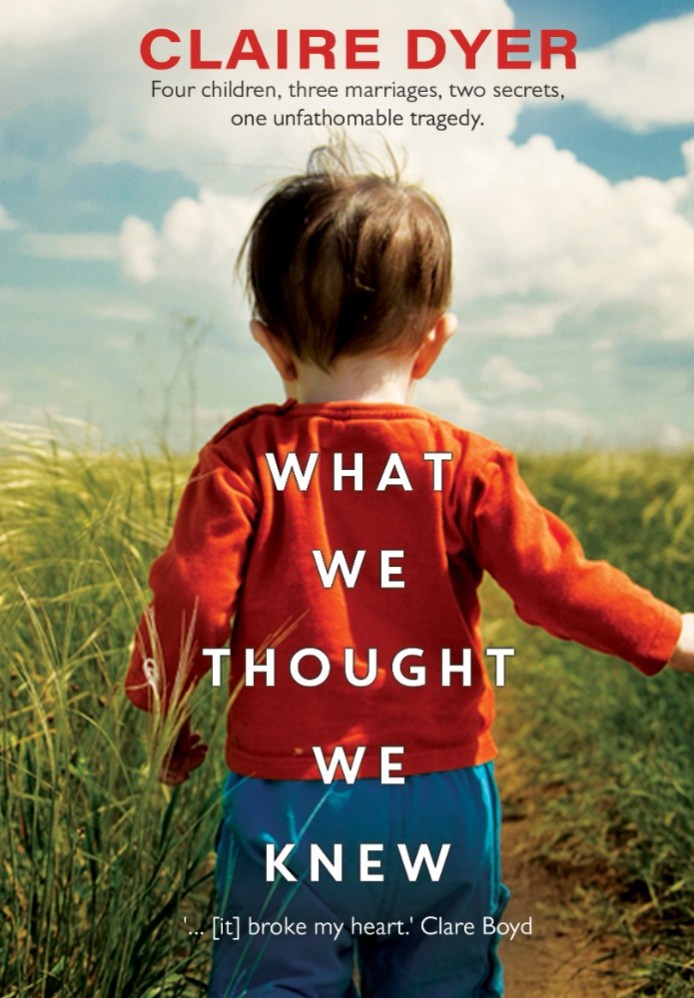
I’ve brought along my latest novel, What We Thought We Knew, and I’ve chosen it because although it’s only just been published, it’s actually been a project close to my heart since I first wrote it twelve years ago, and one which has grown even closer during the rewriting process during lockdown and my parents’ last illnesses.

What can we expect from an evening in with What We Thought We Knew?

What I hope the book will bring with it a lively discussion on how honest couples and friends are with one another and whether it’s possible to keep someone else’s secret. I mean we all spend time with our friends and loved ones and think we know each other and they know us, but everyone has a secret or secrets buried somewhere inside them.

That sounds fascinating Claire. I think we never know quite what goes on in other people’s lives.

This novel explores what happens when a hidden truth is eventually revealed. As the very lovely author Clare Boyd has said, the book is ‘A beautifully observed novel about friendship and loss.’

You must be thrilled with that description.

It would also be fun to chat about the mad decision I made to write the novel from ten points of view!

Pardon? Ten? Now I HAVE to read What We Thought We Knew as soon as possible to see how that works…

What else have you brought along and why have you brought it?

I have obviously brought wine (I think my father should have given me a middle name of Chablis instead of Amanda!) as the three female leads in the book have their Friday nights in with wine and food while their husbands go to the pub!

Ah – well you can all have the wine as it always makes me ill. I might just crack open the cherry brandy tonight!

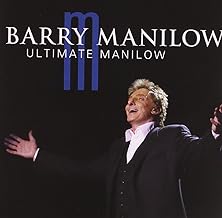
I’ve also brought along my Barry Manilow LP, Ultimate Manilow, in the hope you have a turntable and we can have a sing-along!

I think there’s an old one in the loft. I’ll send Dr H up to find it so we can belt out a few tunes in celebration of What We Thought We Knew.

I’d also love for my sister to come with me. She’s simply the best sister I could wish for and has been my biggest supporter during my writing life and is often, after my wonderful agent, my very first reader!

She sounds very special indeed Claire and is most welcome. It’s been lovely staying in with you.

Now, you get Barry out and pour yourself a glass of wine and I’ll give readers a few more details about What We Thought We Knew.

What We Thought We Knew

Four children, three marriages, two secrets, and one unfathomable tragedy: the families at numbers two, four and six Penwood Heights are connected by work, friendship, the loss of a child and a secret truth which has sat in the bedrock of their lives for years.

In the centre of this tight-knit group is Faith, who believes her job is to act as a paperweight, keeping them all safe. And she does this until someone from her past reappears and threatens to sabotage everything.

And, as the pieces fall, these families, these friends, realise that what they thought they knew about one another was nothing more than make-believe.

They also discover that trust is illusory and for Faith, at least, that keeping other people’s secrets can be more dangerous than keeping our own.

‘A beautifully observed novel about friendship and loss. I delighted in Dyer’s prose, which evokes the nuance and depth of the human experience with a light, poetic touch. The thread of sadness running through the characters’ stories broke my heart.’ Clare Boyd

Published by Vanguard Press on 25th January 2024, What We Thought We Knew is available for purchase here.

About Claire Dyer

Claire Dyer’s novels The Moment and The Perfect Affair, and her short story, Falling For Gatsby, are published by Quercus. The Last Day is published by The Dome Press.

Her poetry collections, Interference EffectsEleven Rooms and Yield are published by Two Rivers Press. Claire’s The Significant Others of Odie May was published by Matador and her forthcoming poetry collection, The Adjustments will be published by Two Rivers Press. She has an MA in Creative Writing from Royal Holloway, University of London.

You can follow Claire on Twitter/X @ClaireDyer1 and visit her website. You’ll also find Claire on Facebook and Instagram.

Giveaway: The Happiest Ever After by Milly Johnson

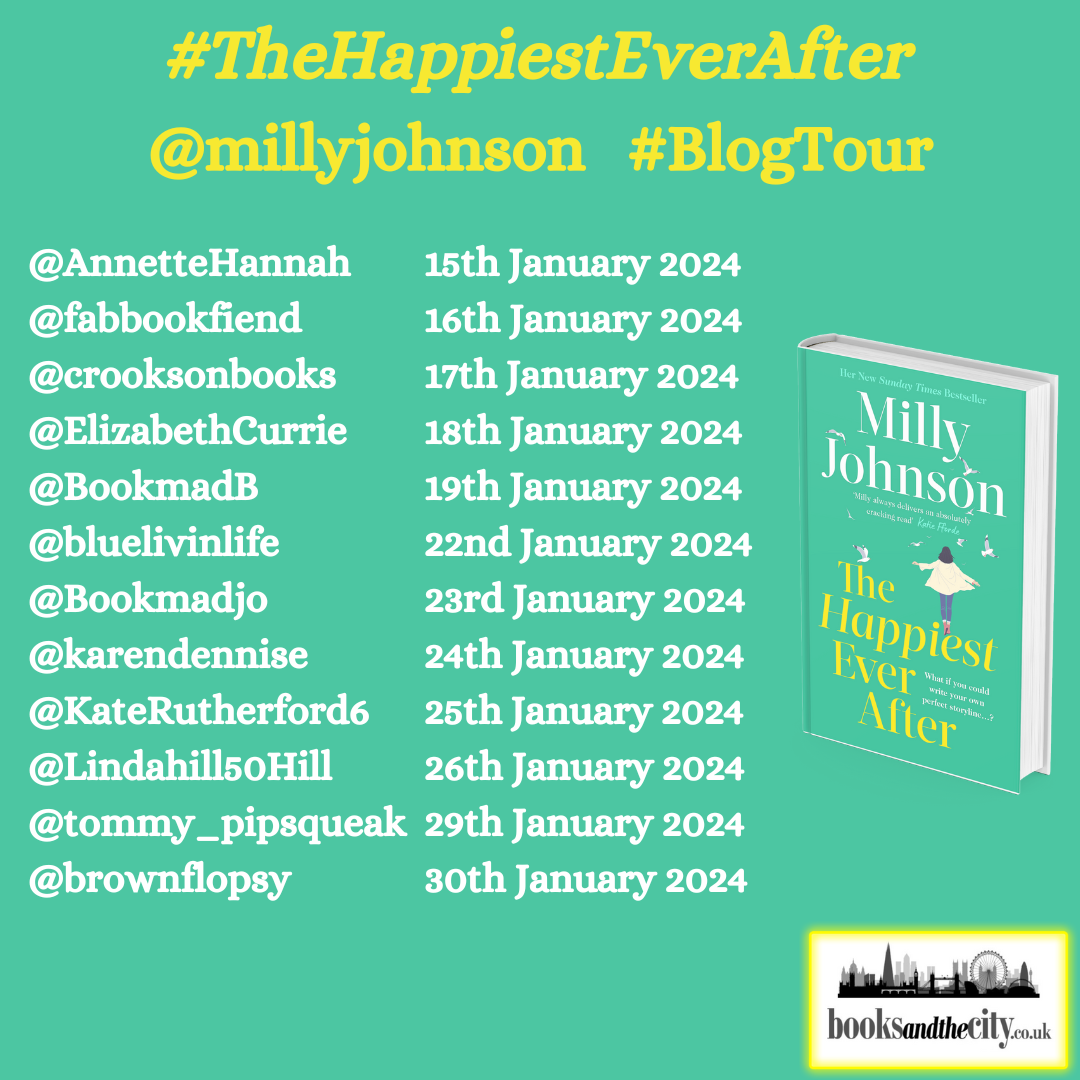
It’s my absolute pleasure to be part of the blog tour for Milly Johnson’s latest book The Happiest Ever After because not only do I adore Milly’s writing, I’m pretty darn fond of her as a person too! My enormous thanks to Sara-Jade Virtue of TeamBATC for inviting me to participate and for allowing me to give away a hard backed copy of The Happiest Ever After to a lucky UK reader.

If you click here, you’ll find one or two other times that Milly has appeared on Linda’s Book Bag!

The Happiest Ever After will be published by Simon and Schuster on 15th February 2024 and is available for pre-order through the links here.

The Happiest Ever After

Polly Potter is surviving, not thriving. She used to love her job – until her mentor died and her new boss decided to make her life hell. She used to love her partner Chris – until he cheated on her, and now she can’t forget. The only place where her life is working is on the pages of the novel she is writing – there she can create a feistier, bolder, more successful version of herself – as the ­fictional Sabrina Anderson.

But what if it was possible to start over again? To leave everything behind, forget all that went before, and live the life you’d always dreamed of?

After a set of unforeseen circumstances, Polly ends up believing she really IS Sabrina, living at the heart of a noisy Italian family restaurant by the sea. Run by Teddy, the son of her new landlady Marielle, it’s a much-loved place, facing threat of closure as a rival restaurant moves in next door. Sabrina can’t remember her life as Polly, but she knows she is living a different life from the one she used to have.

But what if this new life could belong to her after all?

****

Doesn’t that sound fabulous? I’ll be reviewing The Happiest Ever After over on the My Weekly website very soon (but I might just think it’s her best book yet) but here’s your chance to get your hands on a hardback copy:

Giveaway

A Hardback Copy of The Happiest Ever After

For your chance to win a hardback copy of The Happiest Ever After by Milly Johnson click HERE.

Please note that the randomly selected winner will need to provide a UK postal address which will not be retained once the prize is posted. Entries close at UK 11.59 PM on Tuesday 30th January 2024.

About Milly Johnson

Milly Johnson was born, raised and still lives in Barnsley, South Yorkshire.

Sunday Times bestseller, she is one of the Top 10 Female Fiction authors in the UK with millions of copies of her books sold across the world. In 2020, she was honoured with the Romantic Novelists’ Association’s Outstanding Achievement Award and was a featured author in the Reading Agency’s Quick Reads and World Book Night campaigns.

A writer who champions women and highlights the importance of friendship and community, Milly’s characters are celebrations of the strength of the human spirit.

You can follow Milly on Twitter @millyjohnson and Facebook, or you can visit her website for more information. You’ll also find Milly on Instagram.

There’s more with these other bloggers too:

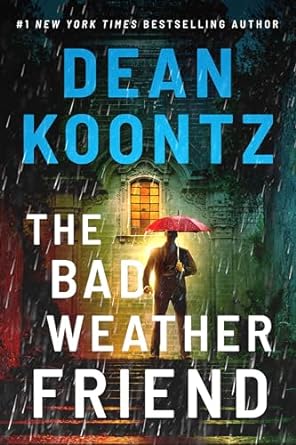
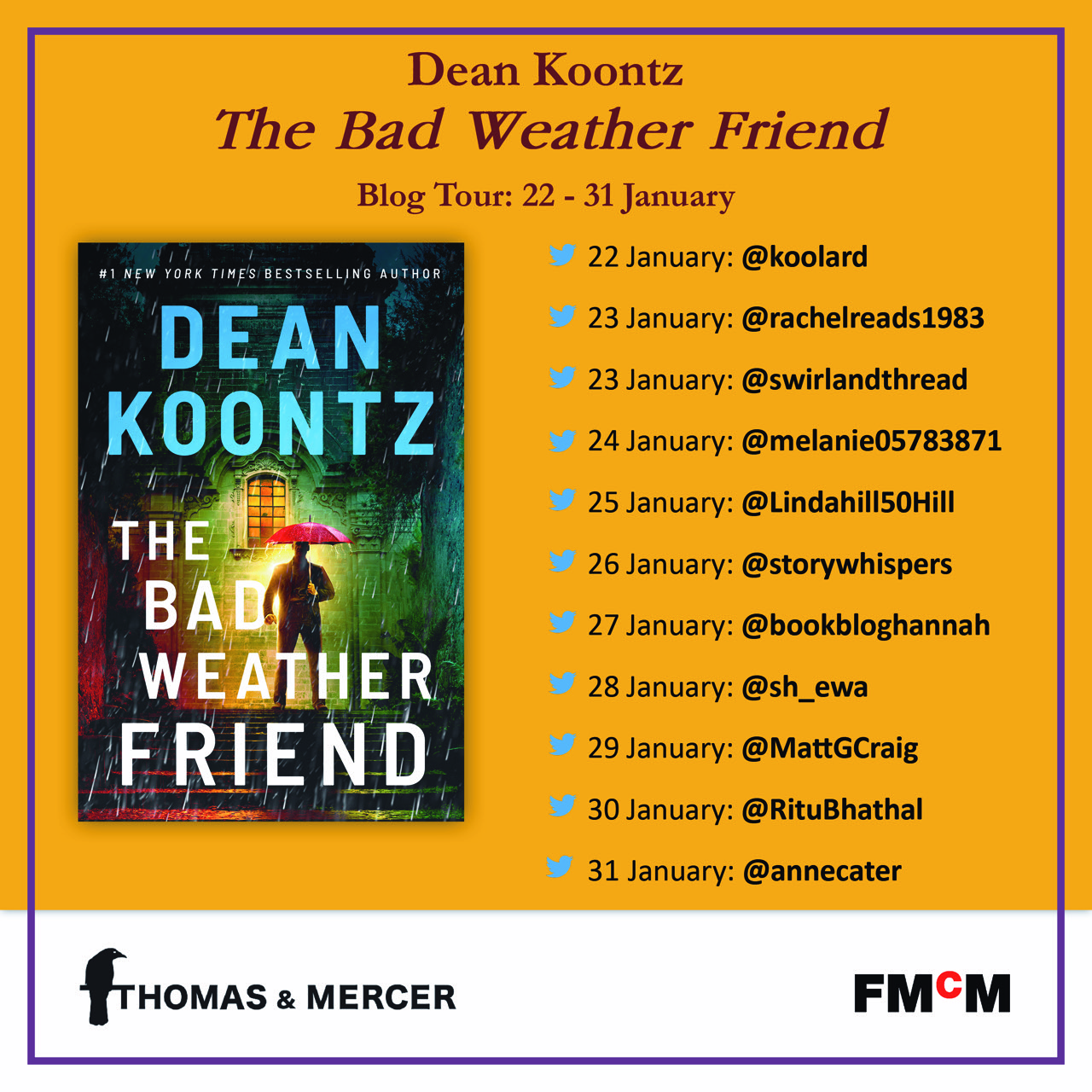
The Bad Weather Friend by Dean Koontz

My enormous thanks to Antara Patel at FMcM for inviting me to participate in the blog tour for The Bad Weather Friend by Dean Koontz and for sending me a copy of the book in return for an honest review. It’s my absolute pleasure to share that review today.

The Bad Weather Friend will be published by Thomas & Mercer on 1st February 2024 and is available for purchase here.

The Bad Weather Friend

Benny is so nice they feel compelled to destroy him, but he has a friend who should scare the hell out of them in this breathtaking new kind of thriller by #1 New York Times bestselling master of suspense Dean Koontz.

Benny Catspaw’s perpetually sunny disposition is tested when he loses his job, his reputation, his fiancée, and his favourite chair. He’s not paranoid. Someone is out to get him. He just doesn’t know who or why. Then Benny receives an inheritance from an uncle he’s never heard of: a giant crate and a video message. All will be well in time.

How strange—though it’s a blessing, his uncle promises. Stranger yet is what’s inside the crate. He’s a seven-foot-tall self-described “bad weather friend” named Spike whose mission is to help people who are just too good for this world. Spike will take care of it. He’ll find Benny’s enemies. He’ll deal with them. This might be satisfying if Spike wasn’t such a menacing presence with terrifying techniques of intimidation.

In the company of Spike and a fascinated young waitress-cum-PI-in-training named Harper, Benny plunges into a perilous high-speed adventure, the likes of which never would have crossed the mind of a decent guy like him.

My Review of The Bad Weather Friend

There’s a mysterious package on the way to Benny Catspaw.

It’s such a long time since I read Dean Koontz that I had completely forgotten what a brilliant writer he is. There’s a simply fabulous iterative conceit of the author addressing the reader directly and reminding them that they are reading a story that drew me in like some kind of Faustian pact. It almost made me feel as if I were Benny himself rather than just a reader because Dean Koontz created an atmosphere as if The Bad Weather Friend had been written for me alone. 

Benny’s prosaic ordinariness is what makes him such a great character. His life experiences may have been somewhat surreal or horrific, but he retains an innocence and positivity that is admirable. I loved him (and the allegorical morality tale he finds himself in), because of his niceness and yet his wisdom. I loved Harper too because of her developing affection for Benny and her pragmatic approach when faced with something as startling as the brilliantly depicted Spike. As for Spike, it is impossible to categorise his impact. He’s a friend, he’s loyalty personified, he’s a guiding light. He’s both human at his very core and yet supernatural in his powers. He uses incontrovertible logic underpinned by intimidating threat and yet he’s the most moral of characters. I thought he was simply fantastic – even when he was removing his own eyeballs! 

I absolutely adored the humour in The Bad Weather Friend. At the darkest or most disturbing moments there’s a thread of the comedic so that the whole narrative has a surreal quality that it is impossible not to become mesmerised by. 

The plot is completely bonkers and yet completely believable. I was totally convinced by Spike and curiously slightly enamoured of him. Even when I wasn’t reading I felt the siren call of the book. To read The Bad Weather Friend is to be enormously entertained from start to finish. It’s completely captivating.

But scratch below the entertainment and there’s great depth here too. Using a scalpel sharp eye for observation and deceptive humour, Dean Koontz lays open the corrupt, the false and the self-serving social climbers. He interweaves themes of climate change, responsibility and power, loyalty and friendship, deceit and retribution so that the thin veneer of civilisation is stripped back in a powerful, affecting, and actually quite emotional manner, that shows the need for kindness in today’s world. I thought this aspect of the book made The Bad Weather Friend a kind of treatise by which we would all do well to live our lives – but with possibly less intimidation of others!

Occasionally horrifying and violent, often creepy and disturbing, always witty, clever and enormous fun, and with an altruistic sense of genuine equality and justice at its heart, The Bad Weather Friend is brilliant. It has made me want to return to everything Dean Koontz has ever written. I loved it.

About Dean Koontz

Dean Koontz, the author of many #1 New York Times bestsellers, lives in Southern California with his wife, Gerda, their golden retriever, Elsa, and the enduring spirits of their goldens, Trixie and Anna.

For further information, follow Dean on Twitter/X @deankoontz, visit his website, or find him on Instagram and Facebook.
There’s more with these other bloggers too:

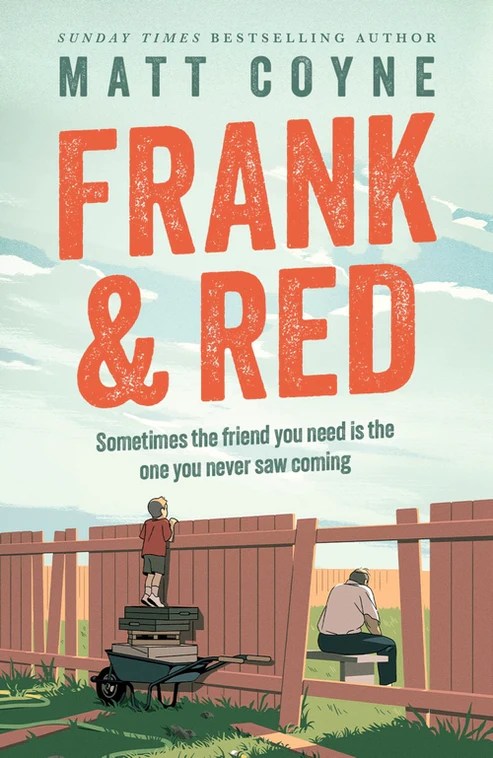
Frank and Red by Matt Coyne

My enormous thanks to Oliver Martin at Headline for sending me a surprise copy of Frank and Red by Matt Coyne in return for an honest review. It’s my absolute pleasure to share my (inadequate) review today.

Frank and Red is published by Headline’s imprint Wildfire on 1st February 2024 and is available for pre-order in all the usual places including here.

Frank and Red

Frank and Red are a mess.

Frank is a grumpy old curmudgeon. A recluse whose only company is the ‘ghost’ of his dead wife, Marcie. He is estranged from his friends, his son, and the ever-changing world beyond his front gate.

And then Red moves in next door.

Red is six. A boy struggling to adjust to the separation of his mum and dad, a new school, and the demonic school bully. Red is curious, smart, he never stops talking, and he’s got a trampoline.
From the moment Red’s blonde mop appears over the top of the fence that divides their two gardens, the unlikeliest of friendships is born.

. . . And it is a friendship that will change both of their lives forever.

My Review of Frank and Red

Frank has new neighbours.

I’m struggling to write a review of Frank and Red because I can’t find the words adequately to express how I feel about it. As Frank might say, ‘Just buy the bloody book.’

That doesn’t really explain why everyone needs Frank and Red in their lives, so I suppose I ought to try to articulate a little bit more.

There are some books that have no right to be as good as they are and Frank and Red is one of them. I thought the plot was wonderful. It’s relatively prosaic and that is its appeal. Anyone reading Frank and Red might find similar things happening in our own lives. Consequently it is impossible to read this story without being completely entertained, moved and mesmerised. It’s essentially just a tale about two people of different ages becoming friends, but my word it’s so much more than that. I absolutely adored every single word. Some narratives have the ability to make the reader laugh, some have the ability to make them cry and others do both at various points. In Frank and Red, however, Matt Coyne manages to do both simultaneously so that the story is both heart-breaking, uplifting and stunningly beautiful all at the same time as it touches the reader’s soul.

The developing relationship between Frank and Red is created with such dexterous insight into their respective worlds that Matt Coyne places the reader in their minds so that every one of their thoughts and emotions are experienced viscerally. I adored meeting both of them. Their direct speech in particular is joyous to read, even (or possibly especially) when Frank’s is littered with furious expletives and Red’s is filled with interminable questions, because they are both so natural and real. I have a feeling these two characters are going to live in my mind for a very long time. Indeed, closing the final page of the story left me bereft. I didn’t want to leave them behind.

Secondary characters are equally fabulous. I don’t know whether it is because we are a similar age, but I found Marcie exceptionally well drawn. She is the catalyst for so much of the story and although she has died before Frank and Red begins, without her there would be no narrative. 

Frank’s relationships with Marcie and his son Mikey embody such touching themes that reading Frank and Red is a physical experience. Love, grief, mental health and family are motifs that cast a spell over the reader. Red’s experiences as his parents split up and he begins a new school embody a reality that is both identifiable and engaging so that I truly found Frank and Red one of the most fabulous books I’ve read. Add in Frank’s spiral into grief and Matt Coyne writes with warmth, empathy and deep, deep understanding of our innermost fears and hopes.

As I said at the beginning, I can’t express clearly enough how much I love Frank and Red and I’m aware this review is vague and inadequate. Definitely one of the books going straight onto my list of favourite reads of 2024, I think it’s going to be hard to beat Frank and Red as THE book I have enjoyed the most. Filled with love, warmth and compassion, Frank and Red is just fantastic. Don’t miss it. 

About Matt Coyne

Man vs Baby’s Matt Coyne is from Sheffield, South Yorkshire.  In September 2015, Matt’s life was turned upside down by the arrival of his son Charlie. After three months of parenthood, he logged on to social media and wrote about his experience of having to live with ‘a furious, sleep-murdering, unstable and incontinent, breasts-obsessed midget lodger’. Within days, his post about surviving the first few months of parenthood was shared by millions all over the world.

Following this, Matt created his popular blog Man vs Baby, which now has over 370,000 followers on social media. And has written two Sunday Times bestselling books based on his parental triumphs and disasters, the first entitled: Dummy and the second Man vs Toddler.

He has also written for The Guardian, The Telegraph and GQ Magazine and is the current Vuelio Parenting Influencer of the Year and Blogosphere Parent Influencer of the Year.

Matt lives in Sheffield with his son Charlie, his partner Lyndsay and a Jack Russell terrier with ‘issues’ called Eddie.

For further information, visit Matt’s website, follow him on Twitter/X @mattcoyney and find Matt on Facebook and Instagram.

Death of a Lesser God by Vaseem Khan

I feel rather terrible because I’ve been sitting on this review of Vaseem Khan’s Death of a Lesser God since last August and I completely forgot to share it on Linda’s Book Bag. With the paperback edition coming out in a couple of months, I thought it was high time I redeemed myself! I’m delighted to share my review today.

I’m a huge fan of Vaseem Khan, both as a writer and a man, and you’ll find my review of his book The Lost Man of Bombay here.

Book four in the Malabar House series, Death of a Lesser God will be released in paperback on 14th March 2024 by Hodder and is available for pre-order through the links here.

Death of a Lesser God

Can a white man receive justice in post-colonial India?
Bombay, 1950

James Whitby, sentenced to death for the murder of prominent lawyer and former Quit India activist Fareed Mazumdar, is less than two weeks from a date with the gallows. In a last-ditch attempt to save his son, Whitby’s father, arch-colonialist, Charles Whitby, forces a new investigation into the killing.

The investigation leads Inspector Persis Wadia of the Bombay Police to the old colonial capital of Calcutta, where, with the help of Scotland Yard criminalist Archie Blackfinch, she uncovers a possible link to a second case, the brutal murder of an African-American G.I. during the Calcutta Killings of 1946.

How are the cases connected? If Whitby didn’t murder Mazumdar, then who did? And why?

My Review of Death of a Lesser God

Persis is given 11 days to reinvestigate a crime. 

It was so good to be back in the company of the feisty, intelligent and scrupulous Persis. She really is one of my favourite female characters in fiction. What is so wonderful in Death of a Lesser God is that it doesn’t matter if this is the first or fourth book in the Malabar House series you’ve read, because Persis’ personality is portrayed clearly by her actions and the responses others in the story have to her. However, that doesn’t mean that Persis loses the capacity to surprise or act with fallibility. It is her realistic, occasionally flawed and reckless persona, that makes her so captivating. I will confess that I read the ending with considerable anxiety regarding Persis, but you’ll need to read it for yourself to see why. 

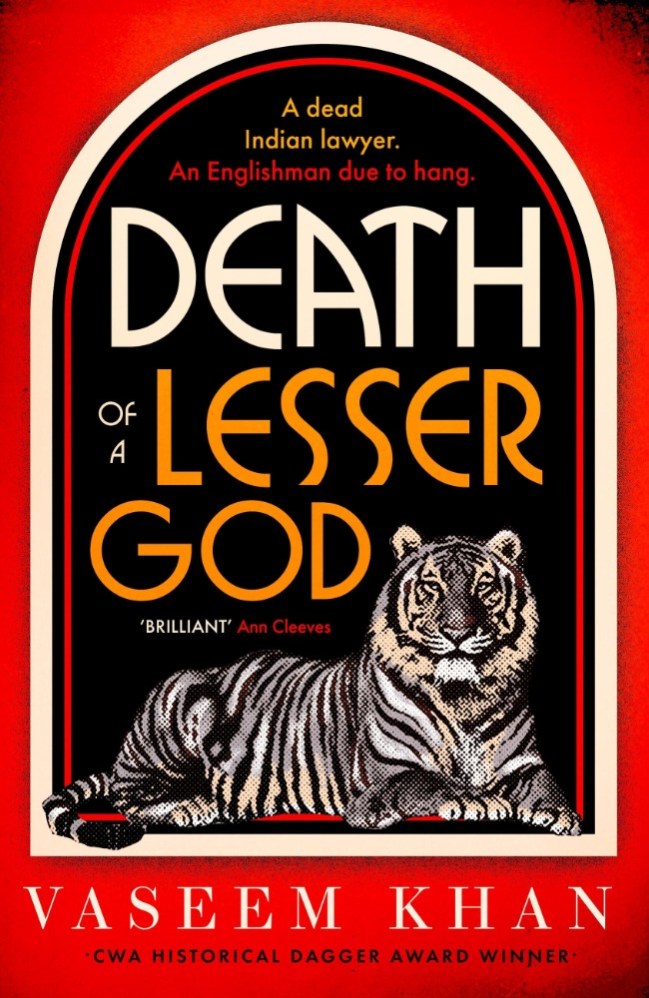
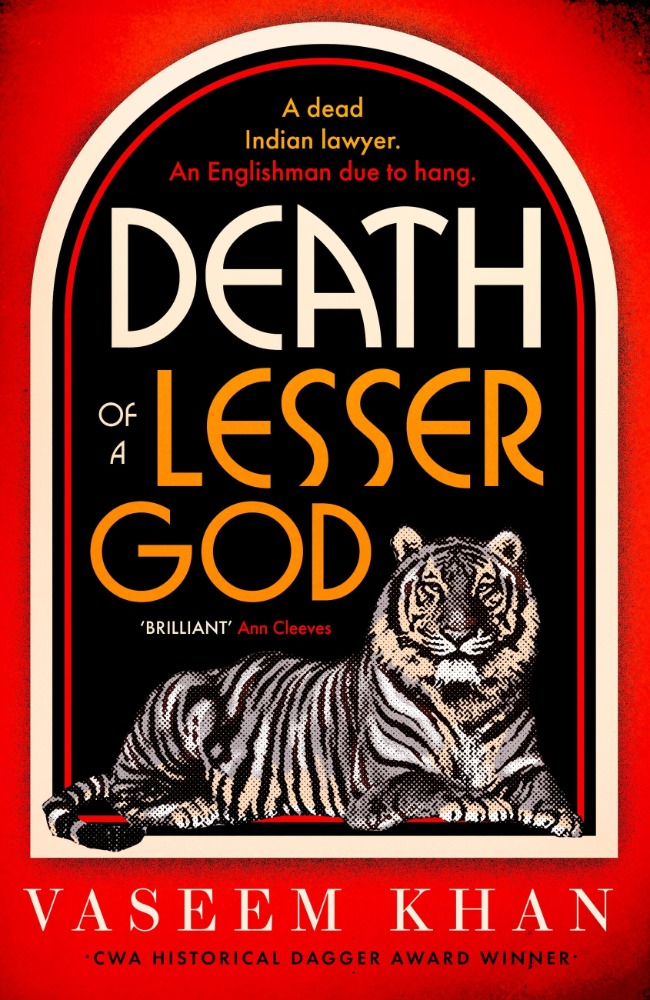
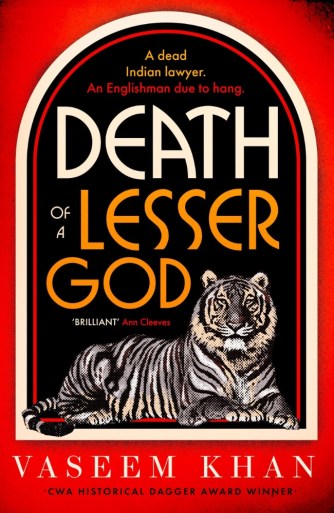
I have no idea whether I’m interpreting too much from it, and of course there are tiger references in the story, but I loved the animal on the cover because to me its stripes symbolised the wavering indistinct truths explored in the story. There might be a collective prejudice in people’s minds in the India of the setting, but equally Vaseem Khan explores the mercurial bending of truth, of perception and of race and culture with consummate skill so that he inverts many racial perceptions and prejudices and makes the reader truly contemplate the role of ethnicity, identity and race in society. I found that this theme added both exciting and emotional depth to the narrative and whilst Death of a Lesser God is historical crime fiction, the effect is to make it equally fresh and relevant to a modern reader. 

And it’s a cracking story. What is so effective is that Vaseem Khan places the reader alongside Persis so that it is as if you’re investigating the case with her. His descriptions are so vivid that every sense feels catered for with the crowded, heated and oppressive setting of India adding to the atmosphere. The short chapters give pace and make it impossible not to read just one more until Death of a Lesser God has been consumed in greedy gulps. It’s filled with historical accuracy, but in a manner that never detracts from the pace and action as if the author is some kind of magician, weaving a spell around the reader and educating even as he entertains. 

What really appealed to me is the fact that amongst the sweeping and major historical themes, at the heart of this mystery is humanity, and the everyday experiences of those living their lives, falling in love and simply trying to get by in a world that leaves them behind far too often, or makes them act in ways they themselves find surprising. It feels as if Death of a Lesser God has been created with compassion and understanding.

Steeped in history, peppered with dry humour and with a riveting, compelling plot, Death of a Lesser God is a story written by an author at the pinnacle of his craft. It’s a brilliant story. 

About Vaseem Khan

Vaseem Khan is the author of two crime series set in India, the Baby Ganesh Agency series set in modern Mumbai, and the Malabar House historical crime novels set in 1950s Bombay. His first book, The Unexpected Inheritance of Inspector Choprawas a Times bestseller, now translated into 15 languages. The second in the series won the Shamus Award in the US. In 2018, he was awarded the Eastern Eye Arts, Culture and Theatre Award for Literature. Vaseem was born in England, but spent a decade working in India.

Midnight at Malabar House, the first in his historical crime series, won the CWA Historical Dagger 2021, the pre-eminent prize for historical crime fiction in the worldHis book The Dying Day about the theft of one of the world’s great treasures, a 600 year old copy of Dante’s The Divine Comedy, stored at Bombay’s Asiatic Society.

For further information, visit Vaseem’s website, follow him on Twitter/X @VaseemKhanUK, or find him on Facebook and Instagram.

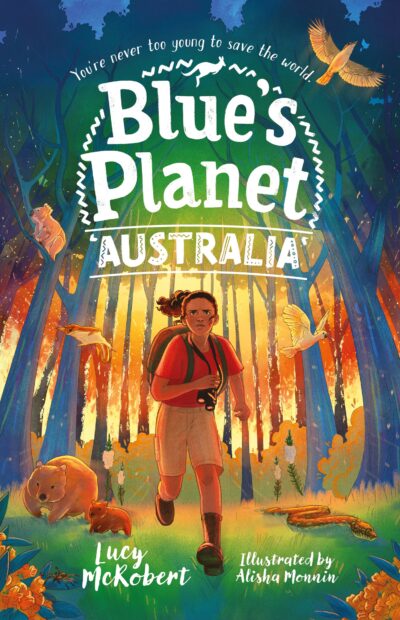
Blue’s Planet: Australia by Lucy McRobert illustrated by Alisha Monnin

My enormous thanks to Morgan Lloyd at Sweet Cherry Publishing for sending me a copy of the middle grade children’s book Blue’s Planet: Australia by Lucy McRobert, illustrated by Alisha Monnin and for inviting me to be part of the blog tour. It’s my pleasure to share my review today.

Out in the UK from Sweet Cherry on 15th February 2024, Blue’s Planet: Australia is available for purchase through the links here.

 Blue’s Planet: Australia

You’re never too young to save the word.

Blue has always dreamt of joining her parents as they document environmental issues around the world. Finally, she gets her wish.

A hot summer in Australia brings Blue face to face with the climate crisis. From volunteering at a wildlife hospital to joining a koala rescue mission, she’s determined to make a difference.

But with bushfires raging out of control, no animal is safe – and no human either.

About the Blue’s Planet Series:

Blue’s Planet is a globetrotting ecological adventure series, following a passionate 12-year-old animal lover called Blue and her quest to save the world. Whether its climate change and wildfires in Australia, or wildlife trafficking and palm oil deforestation in Borneo, nothing will stop Blue from making a difference and encouraging others to do the same. Perfect for budding young environmentalists and fans of Greta Thunberg.

My Review of Blue’s Planet: Australia

Animal lover Blue is moving across the world.

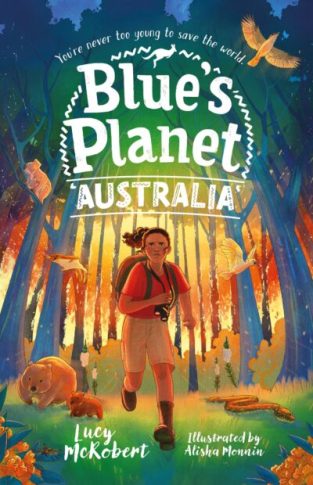
What a totally cracking children’s book! In Blue’s Planet: Australia Lucy McRobert includes a little bit of everything that nature loving children will adore, as well as everyday issues like friendships, so that this book really is more than the sum of its parts. Add in the brilliant illustrations from Alisha Monnin and Blue’s Planet: Australia is quite fabulous. 

I loved the physical presentation of text. It’s well spaced and sufficient to engage confident readers with new and interesting vocabulary, but it is also accessible and well supported by image to encourage more reluctant independent readers, especially as unfamiliar vocabulary is frequently explained skilfully and naturally in the story.

It’s a brilliant story too. There’s good pace with all kinds of things happening as Blue becomes embroiled in her new life in Australia. There’s excitement and danger, wildlife and friendship and so much to engage young readers in a totally fabulous plot. Whilst the Australian setting and storyline is the most exciting, I loved the inclusion of Hugh the hedgehog at the start of the story in Leicester as it shows children there is wildlife everywhere if only they knew to look. This makes the story all the more inclusive.

If Blue’s Planet: Australia were to be used in classrooms, its potential is amazing. There’s so much geography, ecology and science that I believe it would be a catalyst for further engagement in subjects beyond English where it would be brilliant for writing newspaper reports of the events Blue encounters. The use of ‘Natterjack’ social media would make a brilliant starting point for discussion about online presence and safety, for example.

However, the most wonderful aspect of Blue’s Planet: Australia is the status given to children. Through Blue, Archie and Katy, young people are presented so sensitively but without being patronised. Lucy McRobert makes it clear that children have intelligence and knowledge and that they have the power to make a profound and positive impact on the world. The author presents real world difficulties like climate change, bush fires, and disappearing flora and fauna without sentiment but in a way that engages readers of all ages and fills them with enthusiasm to want to do something to help. There are other realistic aspects too such as the power of social media, the impact of family and the exploration of bullying, for example, that make this a relevant, important and absorbing story. I think young readers will really take to the pragmatic Leo with his occasional use of ‘bloody’ in his speech too. 

I have a very strong feeling that Blue’s Planet: Australia is going to turn many young readers into wildlife advocates, climate activists or travellers – or all of those things. I would have adored this story as a child and I loved it as a middle aged grown up. If you’ve a young person in your life remotely interested in nature and animals, don’t miss Blue’s Planet: Australia. It’s quite brilliant. 

About Lucy McRobert

Lucy McRobert is a storyteller, writer and communicator, who has been working in UK wildlife conservation since she was 21-years-old.

Originally from Leicestershire, she has worked for a variety of UK organisations from Suffolk to Rutland, Dorset to the Isles of Scilly and more. She is passionate about encouraging young people to make nature part of their lives and empowering them to take action for the environment, which is why she founded a youth nature network called A Focus On Nature.

She has written extensively on nature and wildlife, including publishing her first book 365 Days Wild in 2019, as well as being a columnist for Birdwatch and writing for several magazines and newspapers including BBC WildlifeI NewsBritish Birds and the junior magazines for both the RSPB and The Wildlife Trusts. She has appeared several times on local and national television and radio, always talking about birds, wildlife and connecting people with nature.

She is also a Marine Mammal Medic, meaning that she is trained to rescue seals, whales and dolphins. A wildlife lover, she spends her spare time watching birds, whales and dolphins, and exploring wild places with her young daughter, Georgiana.

For further information, follow Lucy on Twitter/X @LucyMcRobert1. or find her on Instagram.

About Alisha Monnin

Alisha Monnin was born and raised in rural Ohio in a small village where distance is measured by cornfields. Growing up, she was a voracious reader and daydreamed about going on magical adventures. As an adult, she still spends her days daydreaming and reading, but now her imagination is funneled into her artwork. She graduated from the Savannah College of Art and Design, and now resides in Cincinnati, Ohio with her Manx cat named Beignet.

For further information, find Alisha on Instagram.

There’s more with these other bloggers too:

Publication Day Giveaway: Lost and Never Found by Simon Mason

Thanks to the lovely Elizabeth Masters at Quercus, not only do I have a copy of Lost and Never Found by Simon Mason on my TBR, but I’m thrilled to be able to offer a hardback copy of the book to a lucky UK reader. You can find out how to enter further down this blog post, but first, let me give you a few more details about the book.
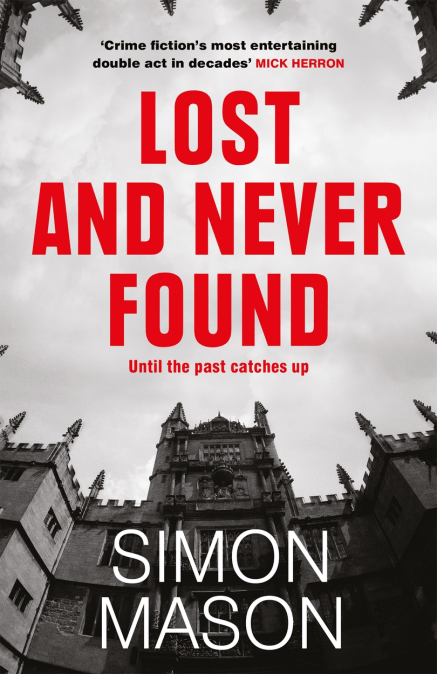
Lost and Never Found is the third book in Simon Mason’s highly praised DI Wilkins series and is published by Quercus imprint Riverrun today, 18th January 2024. Lost and Never Found is available for purchase through the links here.
Lost and Never Found

Oxford, city of rich and poor, where the homeless camp out in the shadows of the gorgeous buildings and monuments. A city of lost things – and buried crimes.

At three o’clock in the morning, Emergency Services receives a call. ‘This is Zara Fanshawe. Always lost and never found.’ An hour later, the wayward celebrity’s Rolls Royce Phantom is found abandoned in dingy Becket Street. The paparazzi go wild.

For some reason, news of Zara’s disappearance prompts homeless woman Lena Wójcik to search the camps, nervously, for the bad-tempered vagrant known as ‘Waitrose’, a familiar sight in Oxford pushing his trolley of possessions. But he’s nowhere to be found either.

Who will lead the investigation and cope with the media frenzy? Suave, prize-winning, Oxford-educated DI Ray Wilkins is passed over in favour of his partner, gobby, trailer-park educated DI Ryan Wilkins (no relation). You wouldn’t think Ray would be happy. He isn’t. You wouldn’t think Ryan would be any good at national press presentations. He isn’t.

And when legendary cop Chester Lynch takes a shine to Ray – and takes against Ryan – things are only going to get even messier.

****

Doesn’t that sound intriguing? Let’s have that giveaway!

Giveaway

A Hardback Copy of Lost and Never Found by Simon Mason

This is a UK only giveaway and the randomly selected winner will need to provide me with a UK address for their prize copy of Lost and Never Found to be sent directly from the publisher. Those details will not be retained.

For your chance to win a copy of Lost and Never Found, click HERE.

Entries close at UK 23.29 PM Sunday 21st January 2024. Good luck!

About Simon Mason

Simon Mason has pursued parallel careers as a publisher and an author, whose YA crime novels Running GirlKid Got Shot and Hey, Sherlock! feature the sixteen-year-old slacker genius Garvie Smith. A former Managing Director of David Fickling Books, where he worked with many wonderful writers, including Philip Pullman, he has also taught at Oxford Brookes University and is currently a Royal Literary Fund Fellow at Exeter College, Oxford. At first he wrote books for adults, then books for children, which grew up at roughly the same rate his own children grew up, and now he is back writing books for adults again. He has written a work of non-fiction, The Rough Guide to Classic Novels. His novels have been shortlisted for a number of awards, including the Branford Boase Prize for Best First Children’s Novel, the Guardian Children’s Fiction Prize, the Costa Prize for Best Children’s Book, and have won the Betty Trask for Best First Novel and the Crimefest Prize for Best YA Crime Novel.

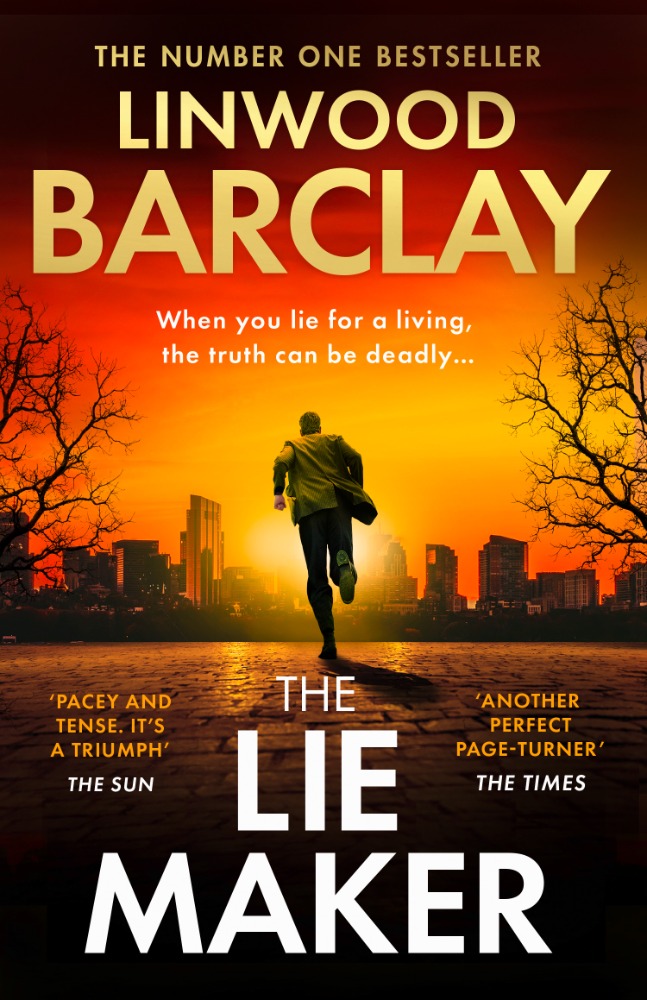
The Lie Maker by Linwood Barclay

It’s far too long since I read Linwood Barclay and you’ll find my review of Elevator Pitch here. Today it’s my pleasure to share my review of his latest book, The Like Maker. My enormous thanks to Sarah Lundy at Harper Collins for sending me a copy in return for an honest review.

It had been my intention to include The Lie Maker in one of my The People’s Friend monthly paperback columns, but sadly the deadlines changed and I wasn’t able to read in time.

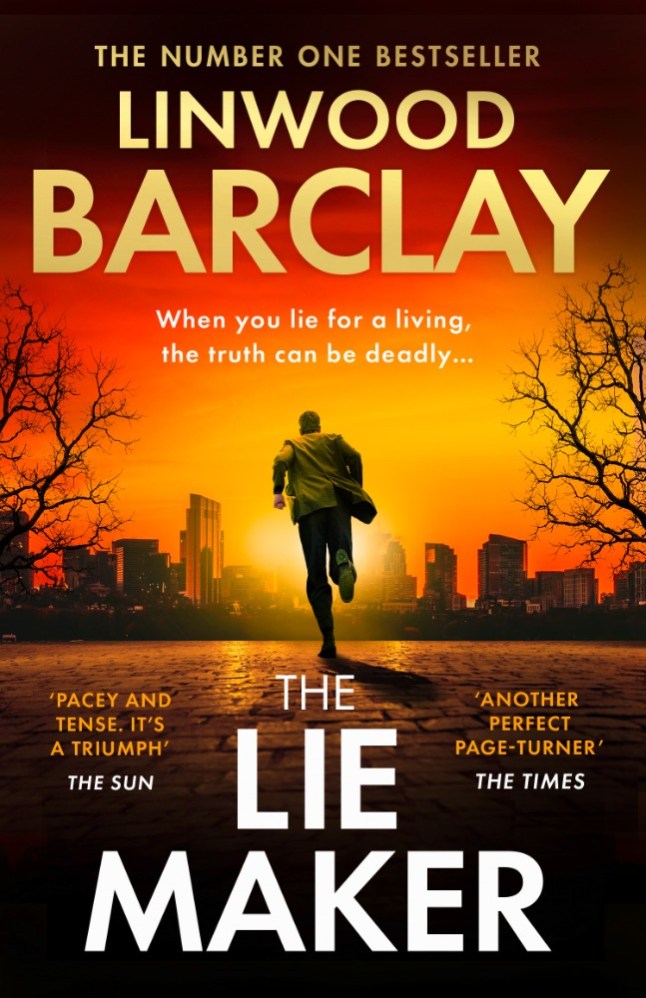
The Lie Maker is out in paperback tomorrow, 18th January 2024, from Harper Collins imprint HQ and is available for purchase through the links here.

The Lie Maker

In this twisty thriller from the Sunday Times bestselling author, a man desperately tries to track down his father in witness protection before his enemies can get to him.

Your dad’s not a good person. Your dad killed people, son.

These are some of the last words Jack Givins’s father spoke to him before he was whisked away by witness protection, leaving Jack and his mother to pick up the shattered pieces of their lives.

Years later, Jack is a struggling author, recruited by the U.S. Marshals to create false histories for people in witness protection. Jack realises this may be a chance to find his dad – but then he discovers he’s gone missing, and he could be in serious danger.

Jack knows he has to track him down. But how will he find a man he’s never truly known? And how will he evade his father’s deadly enemies – enemies who wouldn’t think twice about using his own son against him?

My Review of The Lie Maker

Jack has a new job.

The Lie Maker is fast paced and so cleverly written with Jack’s conversational style it is as if the story is being told for the individual reader alone, with the effect that it is impossible not to be completely invested in the story. Indeed, there were moments when I found myself speaking aloud to the characters, either admonishing them or warning them about events.

I loved the way this story is constructed. Jack’s present day life, told in the first person, is interspersed with present day action often associated with Earl, and Michael’s late 1990s life so that there is a feeling of absolute skill in the telling. Each strand is linked and woven together in a captivating narrative that is exciting, convincing and has surprises and shocks that I thought were fantastic. At no time was I able to predict how The Lie Maker might end. And when it did, I found that ending remarkably satisfying and emotional. 

In amongst all the pacy crime, murder and action there are themes that make The Lie Maker all the more affecting because they are entirely relatable. Family relationships, the desire to better ourselves and the basic need for human connection make this story feel humane in its telling. Here good people make poor choices and bad people prove they may have the odd shred of integrity too so that it’s difficult to know who to trust and who deserves more of the reader’s sympathy. With this extra layer of complexity The Lie Maker is so compelling. Add in the complexities of a witness protection scheme and here is a world where anything is possible that Linwood Barclay creates with breath-taking dexterity.

However, it is the people who truly make The Lie Maker such a success. Even the most conventionally negative or unbalanced individual is depicted with redeeming features so that the reader feels as if they could almost forgive them anything. Jack is, in many ways, relatively unremarkable so that he is very authentic. His past very much frames his present and I was drawn to him instantly. 

I thought The Lie Maker was excellent. It’s exciting, entertaining and dramatic so that I found myself desperate to read on whilst equally unwilling to have finished the story because I was enjoying it so much. When I had completed The Lie Maker, I felt as if I had been treated to the writing of a consummate craftsman. It’s a cracker of a thriller! 

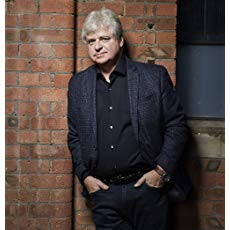
About Linwood Barclay

linwood

Linwood Barclay is an international bestselling crime and thriller author with over twenty critically acclaimed novels to his name, including the phenomenal number one bestseller No Time For Goodbye. Every Linwood Barclay book is a masterclass in characterisation, plot and the killer twist, and with sales of over 7 million copies globally, his books have been sold in more than 39 countries around the world and he can count Stephen King, Shari Lapena and Peter James among his many fans.

Many of his books have been optioned for film and TV, and Linwood wrote the screenplay for the film based on his bestselling novel Never Saw It Coming. Born in the US, his parents moved to Canada just as he was turning four, and he’s lived there ever since. He lives in Toronto with his wife, Neetha. They have two grown children.

You can follow Linwood on Twitter/X @linwood_barclay, visit his website and find him on Facebook for more information.