

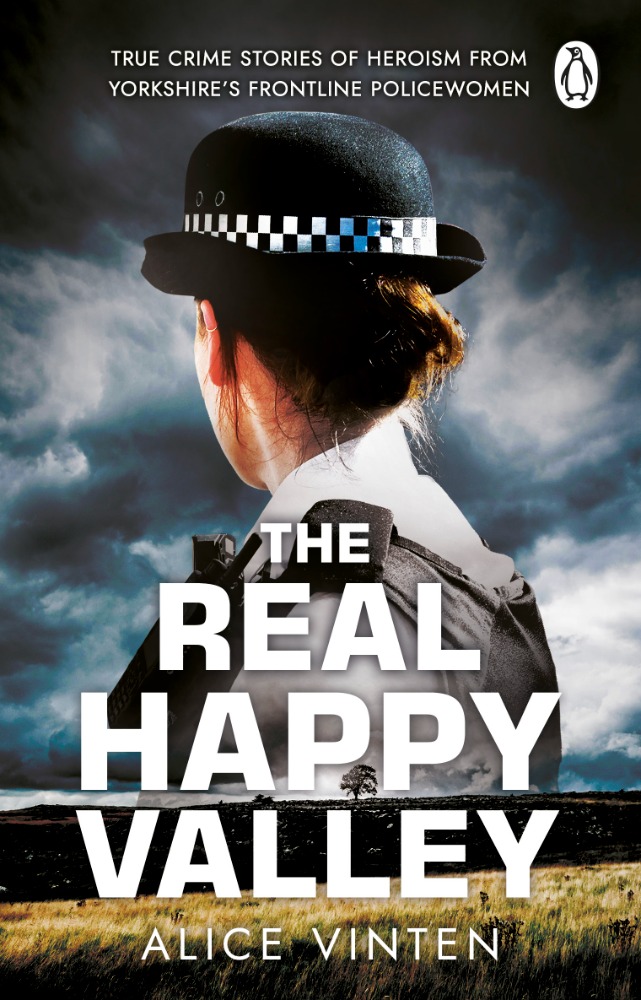
A little while ago, thanks to lovely Chloe Rose, I received a surprise copy of The Real Happy Valley by Alice Vinten and was so intrigued that I simply had to invite Alice onto the blog to tell me more about it. Luckily she agreed to be interviewed. Before I share that with you, let me tell you about The Real Happy Valley.
The Real Happy Valley by Alice Vinten was published by Penguin on 23rd November 2023 and is available for purchase through the links here.
The Real Happy valley
A collection of real-life cases showing the bravery of female police officers.
Former Police Constable Alice Vinten shares the stories of brave policewomen who spent their entire careers at the sharp end of crime-fighting.
The Real Happy Valley reveals what life on the beat is really like. From dealing with domestic abuse cases to facing personal assaults, gang crime and murder, these courageous women stop at nothing to bring criminals to justice, never failing to put others’ safety before their own.
Gripping and inspiring, The Real Happy Valley is a celebration of our finest policewomen’s extraordinary courage, and their peerless commitment to protect and serve.
An Interview with Alice Vinten, Author of The Real Happy Valley
Hi Alice. Welcome to Linda’s Book Bag. Congratulations on your recently released book, The Real Happy Valley. Could you tell me a bit about it please?
The Real Happy Valley is a collection of real-life stories from experienced Yorkshire policewomen. I’ve interviewed these women in depth, and really focused on bringing their thoughts, feelings and actions to life, so that reading The Real Happy Valley is like taking a walk in their boots. The stories include tough subjects like murder, domestic abuse and police assault, but this isn’t a ‘dark’ book – it’s a celebration of women in policing, and what they can achieve.
With women at the heart of The Real Happy Valley – the book is dedicated to those who’ve lost their lives in the course of police duty – why did you feel it important to share the experiences of police women particularly?
Despite improvement in recruitment, policing is still a male dominated profession, with women making up around a third of the ranks nationwide. I’d like to see the amount of women in policing increase to at least fifty percent. Women bring a unique skillset to the role, and are absolutely as capable as men. I am hoping that by sharing these inspirational stories, more young women will be encouraged to sign up. I’m also deeply inspired by Sally Wainwright’s writing, and her focus on women’s stories, and the women in The Real Happy Valley have remarkable stories to tell!
I imagine they do. The stories in The Real Happy Valley are anonymised versions of real events. What were the challenges of turning such events into accessible narratives?
The first challenge was anonymising the officers, victims and specific areas involved. This was extremely important to me, as I did not want the family members involved in these, often traumatising, incidents to recognise their loved ones in the book. I have merged the separate forces of West Yorkshire Police, South Yorkshire Police, North Yorkshire Police and Humberside Police into one force – Yorkshire Police Service. Locations were generalised, and some details of the crimes themselves were changed. It was critical for me to convey the real feelings of the police officers – their actions and reactions, in tough situations, had to remain authentic. It was a tricky balancing act to disguise the incidents whilst keeping the stories factual.
I can imagine this took incredible skill.
The stories are presented in the continuous present tense. Why did you choose this?
I wanted the reader to feel like they were, if not walking in the officer’s boots themselves, at least walking next to them. It’s important for me as a writer that my readers feel surrounded by the action of the scene, that true immersion is achieved. It’s also the way of writing I find most natural. I always start in the middle of the action, and work outwards from there. When someone picks up The Real Happy Valley, I’m hoping they won’t be able to put it down again.
I have a feeling you have succeeded in that brilliantly Alice!
You’ve worked on various police dramas and television documentaries. How far did that experience impact the writing of The Real Happy Valley?
I’ve found it really useful to be able to discuss policing with a wide range of professionals. Every person brings a different point of view, and life experience, to the discussion on law enforcement. I’ve learnt a lot about pacing, dialogue – balancing action-packed scenes with quieter, more reflective moments – particularly when working as a script advisor on television dramas. I’ve been able to take that knowledge into my interviews with real policewomen, and shape their real stories into compelling, authentic chapters in The Real Happy Valley.
We have become voracious consumers of crime fiction and television. How do you think that has affected public perception of real crime?
I absolutely love thrillers, crime novels and dramas. Whilst TV crime dramas make captivating viewing, they often portray the world of policing as more advanced and resourced than it is in reality. Detectives in fictional murder squads seem to have immediate access to every forensic investigation they need, sit in plush offices with top of the range IT equipment, and rush off to arrest their murder suspect in a fancy car with a spotless interior. Whereas real police cars are usually messy, real murder squad offices are often in dire need of redecoration, and real officers are often overworked and underappreciated. The Real Happy Valley gives readers not only the action, but also the real life challenges and lack of resources that officers often face.
Having been a lay visitor for Cambridgeshire Police Force Alice, I can vouch for the fact that custody suites are often far less appealing than shown on TV!
You previously worked in The Metropolitan Police Service as a constable. What was it like working in an institution that has since been subject to accusations of misogyny?
I enjoyed working for the Metropolitan Police Service. In my ten years there, I met many dedicated and kind officers, and I genuinely believe that the vast majority of police officers are good people, doing their best in an extremely difficult job. However, I did experience misogyny and I have spoken out about some of these experiences in the media. I do believe that there is a culture of sexism within UK police forces. I feel sad that the Met is still struggling to right these issues, but encouraged by their current efforts to expose all forms of sexism, racism and homophobia. I think women have an important role in shaping the future of policing, which is another reason that it was so important for me to write The Real Happy Valley – to encourage them to join the change.
I think you might be right. If we complain, we need to be prepared to help shape change too.
What challenges do you think still remain for the kind of women in the police force that you write about in The Real Happy Valley?
I think everyone, no matter what job they do, will at some point have to work with a colleague who is bad at their job or outwardly discriminatory. There are people like this in all walks of life, however, it is of enormous importance to make sure that these people are weeded out of policing. I think that having the courage to speak up about instances of inappropriate, unprofessional behaviour will always be challenging, but the officers I wrote about in The Real Happy Valley are no nonsense, strong women, who tell it as it is. They wouldn’t – and didn’t! – stand for anything but the best from their colleagues.
The Real Happy Valley illustrates the unselfish commitment to duty of police women. What traits do you feel such women possess?
The women I interviewed for The Real Happy Valley are not only inspirational, but strong – both mentally and physically – honest, and are determined to achieve justice for the victims they support. As well as all of these qualities – and perhaps more importantly – they seem to have an endless supply of kindness and compassion. Kindness is a strength that is often overlooked when we think about the traditional, tough police officer, but it is, in my opinion, a quality that every police officer must have.
I could not agree more. I have a vivid memory of interviewing an emaciated heroin addict in police cells who told me that ‘they always treat me nice when I’m in here. They know how many sugars I like in me tea’ and that has stayed with me ever since.
What advice would you give to a young woman thinking of joining the police force and becoming part of The Real Happy Valley of police work?
Go for it! It is an eye-opening, fun, challenging and rewarding career. When times get tough – and they will – remember why you joined – to help people. It is easy to become cynical when you deal with criminals day in and day out – guard your compassion, and keep it burning for those who need you.
That might just be a mantra for everyday life too Alice!
Finally, for those considering reading The Real Happy Valley what would be your elevator pitch to persuade them to do so?
The Real Happy Valley – gripping true stories of crime and heroism from Yorkshire’s frontline policewomen, including murder investigations, domestic crimes, an unofficial plan to save a woman’s life, and an officer who is forced to fight for her own.
Sounds fantastic. I’m so glad I have The Real Happy Valley on my TBR. Is there anything else you’d like to add about The Real Happy Valley?
The Real Happy Valley would be the perfect Christmas gift for lovers of crime TV dramas, as well as true crime readers, crime fiction addicts and memoir fans.
Thank you so much for answering my questions Alice. I think The Real Happy Valley sounds like a fascinating and inspiring read.
About Alice Vinten
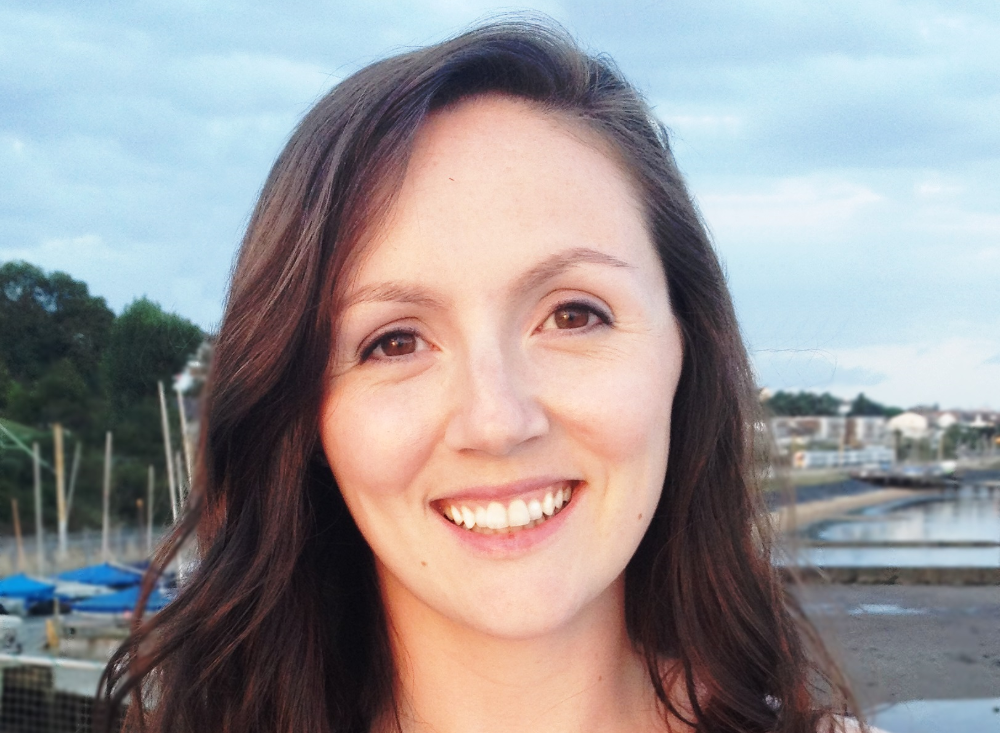
Alice spent over eleven years in the Metropolitan Police Service as a constable. Her memoir about life on the beat, On The Line: Life – and Death – In the Metropolitan Police (Two Roads), received excellent reviews and led her to becoming a crime and police commentator for national media, as well as working with the BBC and other television production companies on various police dramas and documentaries. She lives with her children near the sea in Essex.
For further information, follow Alice on Twitter/X @AVintenAuthor, or find her on Instagram and Facebook.
 Linda's Book Bag
Her memoir was great too.
LikeLiked by 1 person
So I hear. I must catch up 😊
LikeLike