Staying in with Alan Corcoran

It’s an absolute pleasure to welcome Alan Corcoran to Linda’s Book Bag today to tell me about an amazing sounding book.

Staying in with Alan Corcoran

Welcome to Linda’s Book Bag Alan. Thanks so much for staying in with me. Tell me, which of your books have you brought along to share this evening and why have you chosen it?

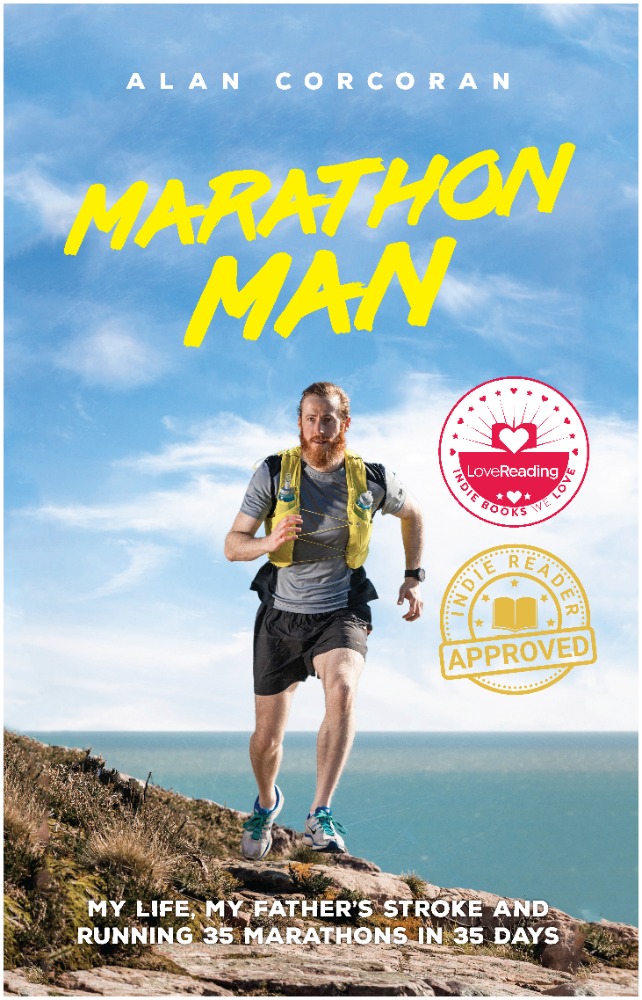
I’ve brought my debut book – Marathon Man: My Life, My Father’s Stroke and Running 35 Marathons in 35 Days. I chose to bring along Marathon Man because the critics (Kirkus, Reedsy, LoveReading and IndieReader) enjoyed my Irish yarn, and I hope your readers might like to give it a read too.

That’s an incredible title Alan. What can we expect from an evening in with Marathon Man: My Life, My Father’s Stroke and Running 35 Marathons in 35 Days?

Marathon Man is my memoir centred around family and sports. The story covers my formative years in Ireland, beginning in a traditional memoir format. As it’s my life story, there are some unpleasant topics – painful teenage acne, premature deaths and my dad’s stroke. Don’t let those severe subjects put you off. I’ve balanced the heavy with the light, sprinkling regular doses of humour. Laughter is necessary if you want to run long distances. Kirkus Reviews says, “Corcoran treads lightly, keeping his sense of humour throughout.” Canadian Running Magazine has said my story is “hilarious and painful, and the accounts of each daily marathon are written in a charming Irish vernacular, increasingly joyful as the project nears completion.”

It sounds as if the book has arisen out of some tricky times for you but that you’ve got the light and shade in the book just right.

It’s those challenging life moments that shaped my character and ultimately led me to dream of running a 1,500-kilometre lap of Ireland for charity.

Sorry! Did you say 1,500 kilometres? I need to pick up my jaw from the ground. Tell me more.

Many thought it impossible to run 35 consecutive marathons since I’d never run a marathon or even a half-marathon. I was out to test common sense thinking. I gave myself just eight months to execute the dream, the fear of a repeat stroke making the seconds tick as loud as a grandfather clock.

Wow!

I take the reader on my crash course – a rollercoaster of endurance running, health, adventure and charity fundraising.

I implode during my trial by fire, trying my first 42.2-kilometre marathon at the start of the process, without training. The Dublin City Marathon was a welcomed kick up the arse to show me what can happen if you don’t respect the challenging distance. With the blaze ignited, I was off to learn the trade, building from a fifty-kilometre training week to attempting five straight 300-kilometre weeks around Ireland’s coast.

I am in awe of you Alan. I used to find it hard driving that far in a week for work, never mind running 300 kilometres.

I was apprehensive about sharing my work at first, but I think it’s important. I’ve been encouraged to pursue my passions through reading books and watching documentaries. I wanted to be part of that. Thankfully, Reedsy rewarded my efforts with five stars. Kirkus Reviews featured Marathon Man in their January 2022 issue. Both LoveReading and IndieReader bestowed my book with their logos kept for their favourite books.

Now, I just need to get ‘Marathon Man’ to readers.

That’s just brilliant. Congratulations on the success you’ve had so far. I hope more readers find Marathon Man following our chat.

What else have you brought along and why have you brought it?

I’ve brought a photo of comedian Eddie Izzard. Eddie ran 43 marathons in 51 days, raising £250,000 for Sports Relief. This accomplishment was brought to my attention by a TV documentary series – ‘’Eddie Iz Running’. The achievement left me flabbergasted, and the story entertained and inspired me. It’s a pivotal part of my story. By publishing my tale, I hope to replicate Eddie, passing on the baton of inspiration and creating a few smiles along the way.

Isn’t Eddie an inspiration? I loved that documentary. I chose Eddie as one of my fantasy guests for a dinner party so perhaps next time all three of us can chat about Marathon Man. Thank you so much for staying in with me to tell me all about it. I think Marathon Man sounds a brilliant read. 

Marathon Man: My Life, My Father’s Stroke and Running 35 Marathons in 35 Days

Marathon Man is an uplifting story of an extraordinary achievement – all the more inspiring given that the author was an inexperienced long-distance runner and only 20 when embarking on his mission to run 35 marathons in 35 consecutive days. Alan Corcoran’s response to the shock of his dad’s stroke, was to get active, create positive from negative and raise money for charity.

Alan faced many obstacles along the road – beyond the sheer physical endurance challenge of running 1,500 kilometres around Ireland’s coast. He candidly submerges the reader into his world with an endearingly light touch, showing how through sheer perseverance, you can achieve your objectives. Alan’s Irish humour, positivity and pure determination shine through this new sports memoir.

Whatever your challenge, this motivational book will show you that you can succeed.

Marathon Man is available for purchase here.

About Alan Corcoran

Alan Corcoran is an Irish endurance adventure athlete. Competing as an Irish international track and field athlete as a juvenile, he switched to ultra-endurance at twenty, when his dad suffered a stroke. Alan has since fundraised €45,000 for stroke and cancer charities through his resilience challenges. Alan became the first person to run a lap of Ireland – 35 marathons in 35 consecutive days. On his second attempt, he became the first person to swim the length of Ireland – a 500-kilometre sea swim.

For more information about Alan, visit his website or follow him on Twitter @35MarathonMan, Facebook and Instagram.


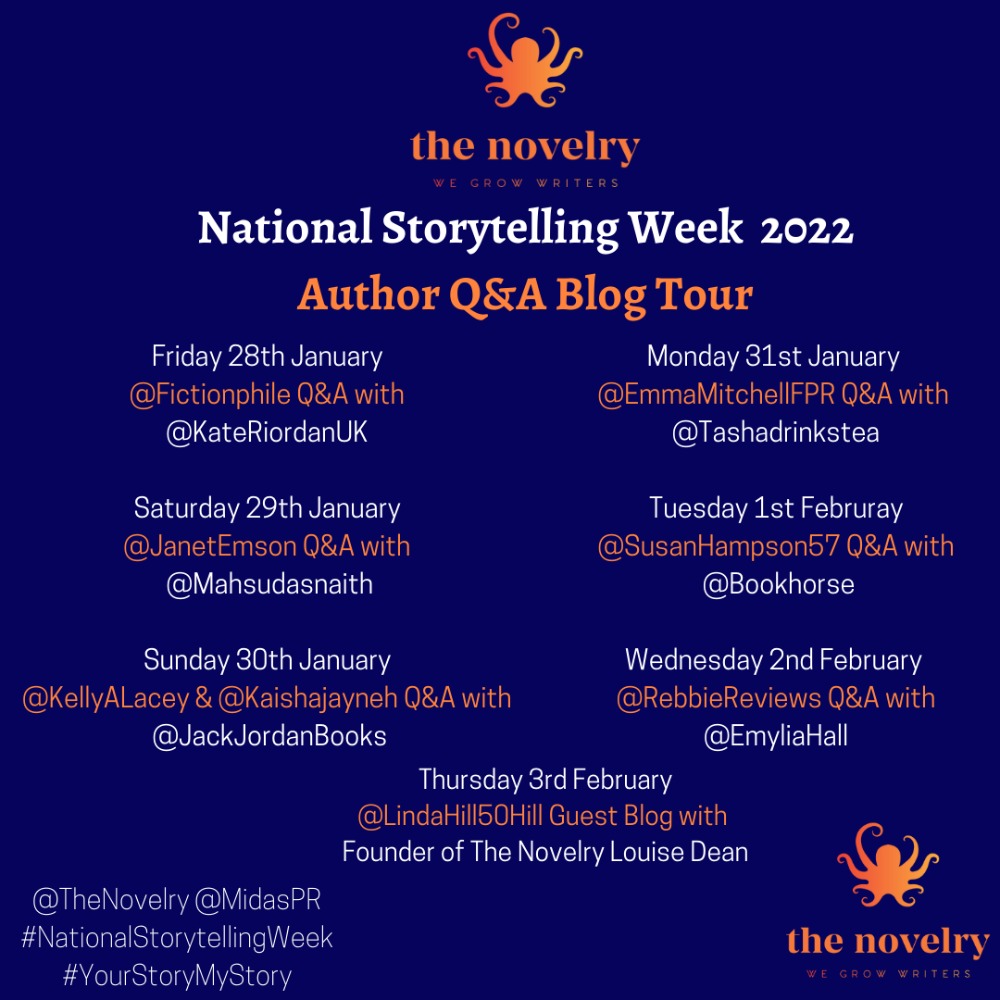
Celebrating National Story Telling Week with a Guest Post by Louise Dean, Founder of The Novelry

I confess that I had no idea about The Novelry until Gabriella Drinkald at Midas introduced me to them. Now I have heard about what The Novelry has on offer, I’m delighted to participate in the blog tour by sharing a guest post Louise Dean as part of this year’s National Storytelling Week. Louise is the Founder of The Novelry. Offering support for beginner and established authors at any stage of their writing career, The Novelry will take writers from the very kernel of an idea through to a polished manuscript ready for literary agent submission. With mentoring from bestselling authors and editorial advice from leading industry professionals, The Novelry is the writing school recommended by leading literary agents.

Let’s see what Louise has to tell us:

Your Story – My Story:

Find the inspiration to start telling your story.

A Guest Post by Louise Dean

The theme of this year’s National Storytelling Week is Your Story, My Story, and that’s something we at The Novelry can really get behind. We believe strongly that everyone has a story to tell – no matter their background, status, or education level. We take beginner authors all the way through from coming up with that initial idea to a finished novel that they are really proud of. We work with them on writing the first draft, then we dig deep for a rigorous edit, and when they are ready, we help authors to land that dream agent and publishing deal. We are supportive and encouraging, and believe that magic happens when authors work collaboratively. You can tell the story you want to – you story – even if that feels daunting at first.

Every person’s story is unique – it’s unique to you. Here, I hope to inspire you to start finding that story, and I’m going to give you a few tips to get you thinking. Whether it’s a short story you want to write, whether you’re feeling inspired to give the oral tradition of storytelling a go, or whether you want to make this year the year you write a novel, hopefully this will get your brain whirring, start the trickle of an idea, or leave you inspired to have a go at telling that story.

Below are seven ways ‘in’ to finding a story. Often, it will be a combination of a few different ways in that leads you to finding the story – the one that really feels worth telling.

  1. Dig deep into who you are. Ask yourself what you want, and what you fear – useful tools in crafting the perfect story. A storyteller works with the things that trouble them, to resolve their darkest predicament and put out a cry to the universe for help. Start with your fears and bring them to light.
  2. Take the time to stop and wonder. Every time you do so, you’re starting to create the beginning of a story. When you see someone looking sad as they walk down the street, take a moment to wonder why. When a couple are sniping at each other in the supermarket, try to wonder what led them to this – are they always like this, is this a bad day? When we look at other people, we look at ourselves too. Only differently. That’s what we do in stories, when we put a main character, a ‘hero’ in place, they are standing in for us. We can’t tell our own story straight, you see. We never see the back of ourselves, just like we never see how we really look to others truly. So we play possibilities out through the three dimensions of others. The less they’re like us, the more the magic of transformation happens. That’s how stories are born. Right there. By imagining the lives of others.
  3. Ask yourself ‘What If?’ What if X were to happen? What if Y were possible? Let’s take two examples. THE ONE: what if your DNA could match you with your one true love? THE LAST: what if you were the last survivors of the apocalypse – but discovered a murderer in your midst? Let your mind wander here – as your walking, driving, cooking dinner. Keep asking yourself what if and see where you get to.
  4. Don’t sweat originality. Often, new writers are worried that their idea isn’t ‘original’ enough, or that it has been ‘done before’. But here’s the thing – almost all stories have been ‘done before’, they just have not been told in the exact same way that you will tell it. In fact, readers don’t want They (along with publishers, if that’s your goal) want ‘the same thing, but different’. A twist on a story that already exists. So yes, you might need a sprinkling of something new, but true originality, that’s something not worth worrying about. So, when trying to come up with an idea for a story, take something familiar, popular and well-loved. A story you know well – fairy tales can be good inspiration here! Then add to it something very unexpected. Something that does not go with it at all. In fact the more opposed it is, the more startling or alarming, the more exciting your idea is.
  5. Character is key. Some storytellers like to come up with the premise or concept first (the ‘what if’), others like to build character first. Whichever way around you are, know that character is important. The protagonist – usually the main character in a story – is the reason someone will be interested. Whoever is engaging with your story will be doing so because they want to know what happens to the The main character should be someone the reader can identify with, in some way or another. They should also grow and change – whether from bad to good is up to you! – from the beginning to end of the story. So, take a character, and imagine what they are like as they pop into your head. What could be different about them? What could happen to them, to make them different? It’s ok to borrow people you know here! You can take elements of people that you know, as long as you change names and the odd detail. Sometimes, when starting out, it is easier to pull from real life to create a believable character. As Hans Christian Andersen said, ‘Most of what I have written is a reflection of myself. Every character is from life. I know and have known them all.’
  6. Or listen! If you want to be a novelist, then you need to read – and if you can read, then you can write. If you enjoy reading, you might very well find that you enjoy writing. And by that virtue, the type of stories you like will probably be the type of stories you like to tell. Read books that are inspiring and comforting. You need both things really because sometimes aspiring writers feel crippled by fear. No one starts writing like Chekhov. My own mother told me my writing was awful when I started, but I wanted to learn. If you read you can learn. At The Novelry, we offer an accelerated learning process, but no matter what stage you’re at, or whether you’ve decided to go this alone, it all starts with reading.
  7. Be you, only more so. Your individuality will make your story better. Your personality, your experience, the essence of your time on this earth, is the gift you give your story. So long as you give yourself candidly and wholeheartedly your writing will be a triumph.

Perhaps the last and most important thing to remember here is that you can do it. It might not be easy and you might hit bumps along the road, but if you feel you have a story in you, and you want to tell it, then stop doubting whether you have the ‘right’, the ability, the background, to tell it. Even if you don’t know, yet, what the story will be – if it’s something that calls to you, then you will find inspiration. Ideas don’t (always) happen by magic – we have to go looking for them.

****

Brilliant advice. Now all we need to do is get writing!

About The Novelry

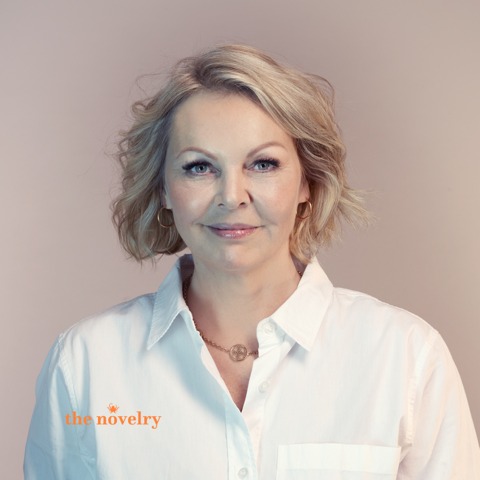
Image ©Andy Lo Po/ The Novelry

If you want to have a look at the story behind The Novelry – and how it all began – then do take a look here and if you’re interested in signing up for one of their courses, then do feel free to book a free, no obligation chat with one of their fabulous tutors here.

You can follow The Novelry on Twitter @thenovelry, Facebook and Instagram and visit their website for further information.

There’s more with these other bloggers too:

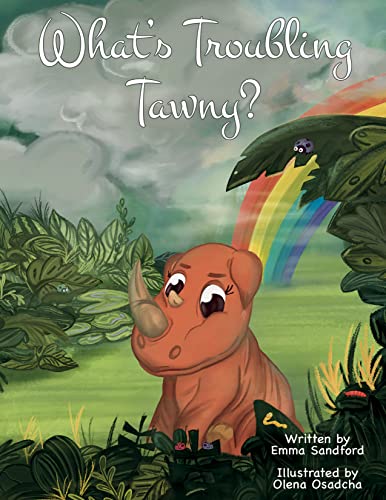
What’s Troubling Tawny by Emma Sandford, illustrated by Olena Osadcha

Regular blog visitors will know how impressed I am by Full Media children’s books. It gives me enormous pleasure, therefore, to share my review of another of their books today. This time it’s What’s Troubling Tawny? by Emma Sandford and illustrated by Olena Osadcha, the second book in the Sumatran Trilogy. You’ll find my review of the first book, The Problem with Poppy, here. My enormous thanks to Nick Jones for d=sending me a copy of What’s Troubling Tawny?.

Published by Full Media on 20th January 2022, What’s Troubling Tawny? is available for purchase here.

What’s Troubling Tawny?

The second book in the Sumatran Trilogy!

Tawny longs to make friends with another rhino, but her shyness holds her back.

When she meets a hornbill called Tallulah, she is surprised to learn that she has a lot in common with the beautiful bird.

Will Tawny find a way to overcome her shyness, and can Tallulah help her find a companion?

My Review of What’s Troubling Tawny?

Tawny is too shy to make friends.

Oh my goodness. What’s troubling Tawny? is just lovely. Not only is it a beautifully illustrated, high quality book of the kind I’ve come to expect from Full Media, but the balance of text to picture means it has the kind of depth that will enable it to be read time and again because there is so much to discover.

The language is challenging enough to develop literacy but is encompassed in a context that also makes it accessible. The Sumatran setting affords lots of opportunity for educational use, with the oils from Tallulah and the mud baths of Tawny and Rusty giving impetus to discover geography and the natural world. I can see primary school teachers rejoicing at What’s Troubling Tawny? if they were to use it in their classrooms.

All that said, however, the greatest success in What’s Troubling Tawny? comes through Emma Sandford’s exploration of body image, similarities and differences, and friendship. The greatest lesson Tawny learns is that she is fine as she is and whilst her shyness is preventing her from making friends, it is equally true that others might be feeling exactly the same way as she is. Through What’s Troubling Tawny? children can learn body confidence, emotional resilience, and empathy, so that this is a book that not only entertains young children, but helps them cope in the world too. I genuinely think What’s Troubling Tawny? is a powerful tool as well as a fun story.

Indeed, What’s Troubling Tawny? is the most gorgeous story of friendship, self-confidence and fun. I loved it.

About Emma Sandford

For many years, Emma had wanted to write a children’s book that draws on her own experiences and helps young children overcome certain emotional issues they may have. The Problem With Poppy is a fun way of teaching kids that while everybody has a natural defence mechanism, there is a time and a place to use it.

You can find out more on Emma’s website or find her on Instagram.

About Olena Osadcha

Olena Osadcha is a Ukranian digital artist / illustrator based in Kiev. She is passionate about design and has a particular interest and love for children’s book illustration.

You can find her on Instagram and Facebook.