Hush Little Baby by Jane Isaac

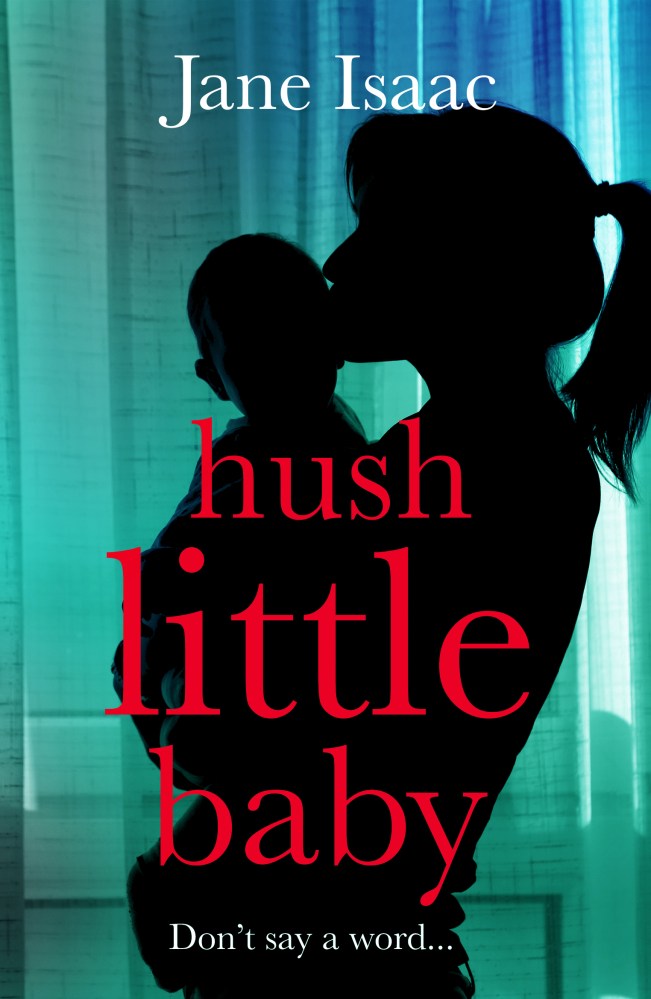
Book cover

Although I’m cutting right back on blog tours and am, with a few exceptions, taking as much of August off from blogging as I can, I simply had to support lovely Jane Isaac and her new thriller Hush Little Baby – not least because I still owe her a scone from our last meeting in real life! My thanks to Vicky Joss for inviting me to participate in the blog tour. As well as my review of Hush Little Baby, I have a fabulous, and slightly stomach turning, guest post from Jane today, all about research!

You’ll find other posts featuring Jane on the blog here.

Published by Aria on 23rd July 2020, Hush Little Baby is available for purchase here.

Hush Little Baby
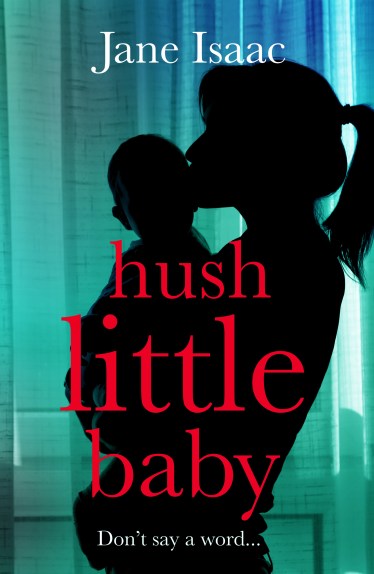
Book cover

Someone stole a baby…

One sunny day in July, someone took three-month-old Alicia Owen from her pram outside a supermarket. Her mother, Marie, was inside. No one saw who took Alicia. And no one could find her.

They silenced her cry…

Fifteen years later, a teenager on a construction site sees a tiny hand in the ground. When the police investigate, they find a baby buried and preserved in concrete. Could it be Alicia?

But the truth will always out.

When Alicia disappeared, the papers accused Marie of detachment and neglect. The Owens never got over the grief of their child’s disappearance and divorced not long after. By reopening the case, DC Beth Chamberlain must reopen old wounds. But the killer may be closer than anyone ever suspected…

An Experiment in the Name of Research

A Guest Post by Jane Isaac

I love research. It underpins the stories we write. I’ll admit I probably do far too much of it. Sometimes it’s only for an odd sentence, sometimes it’s a thread that runs through the entire book. Research comes in all shapes and sizes, but after eight novels, there is nothing for me that matches the personal experiment I carried out for my latest book.

In Hush Little Baby, I have a victim buried in concrete. Concrete holds some preserving properties – a delicious fact if you’re a crime writer because it opens upmany possibilities for the story. But it presents problems too. My body had been immersed in a concrete block for several years when the casing was disturbed on a building site, uncovering the person inside. What would it look like after all this time? What DNA evidence would be available for identification purposes? These are areas I neededto answer so that readers could follow the story through the eyes of Beth, my investigating detective.

Researching these points proved quite tricky. I tried all my current forensic and pathology contacts and, needless to say, they could speculate on the DNA and forensic front but had never dealt with this particular situation and couldn’t be exactly sure what it would look like. I read books and researched online, but there hasn’t been a huge amount of research done on bodies buried in concrete and the science was quite complex; I needed a lay person’s explanation. I was struggling and beginning to wonder if I should drop the idea. Then I decided to do my own experiment.

One Sunday afternoon, I eyed up the pig’s shoulder my daughter got out of the fridge, ready to roast for dinner. And it gave me an idea. Research has taught me that pig is similar to human skin. Depending on conditions, most bodies breakdown during the first six months after death. Why don’t I bury the pig’s shoulder in a bucket of concrete and leave it in my garden for a while?

So, much to the delight of my neighbours (and the disgust of my daughter – I won’t tell you what we ate for dinner that Sunday!), hubby and I took a little trip to the local DIY store, bought some concrete mix and did just that. The bucket sat in my garden for many months with a pot plant sitting on top. I knew it was completely sealed because the flies stayed away and my dogs showed no interest.

Fast forward to last May. Remember that beautiful hot bank holiday weekend? We were having quiet family time, catching up with jobs around the house while neighbours BBQ’d with friends and families in the surrounding gardens. I remember finishing my chores, sitting in the garden and eyeing up the bucket. The meat had been encased for almost a year; it was time to find out what it looked like inside.

The pot plant was moved. My hubby got his sledge hammer out of the shed and whacked the plastic bucket hard. The concrete smashed open. And for the first few seconds it was an extraordinary sight – the pig’s shoulder was exactly the same as when it was buried – the meat was pink and raw; even the skin hadn’t discoloured. What we didn’t realise was that as soon as it hit the air, it would go into rapid deterioration. By rapid, I mean super quick – the smell was putrid! And our neighbours were having these lovely BBQs with their loved ones only metres away…

Cue panic. Hubby broke up the concrete, burnt off the remnants of meat still attached to the stone, wrapped it in bags and disposed of it in the bin. I thought hard. What could I do with the joint to stop it smelling? I couldn’t put it in the wheelie bin like that. So, thinking on my toes, I wrapped it in a bag and put it in our freezer. Frozen meat doesn’t smell, right? I planned to put it out on refuse collection day.

When we’d finally finished clearing up, hubby and I came inside. But no matter how much we cleaned and showered and changed, the fetid odour still hung in the air. We thought it was in our noses, sprayed air freshener, lit candles. Eventually the smell faded and we went to bed.

The following morning, I came downstairs and could immediately smell rotting meat. We had friends coming for brunch, I needed to start cooking. But something wasn’t right. I opened the freezer and the stench slapped me in the face.

Brunch turned out to be takeaway of sorts eaten in the garden that day. Ten minutes before our guests were due to arrive my hubby was driving out of our village – the pig’s shoulder in a carrier bag hanging out of the driver window because he wouldn’t have it in the car – off to bury the rotting meat at the edge of a disused airfield nearby. And I was emptying my freezer in case the smell had infiltrated the other food in there!

I’ve since found a wonderful scientist and former crime scene manager who specialises in bodies buried in concrete and she has been wonderfully helpful with my research. But I’ll never forget that weekend we broke into our concrete. Needless to say, my expert was incredibly interested in our experiment!

Jane, that’s hilarious. I’m never coming to you for a BBQ or a roast dinner. Now I’ve read Hush Little Baby I can see why you needed to conduct this research!

My Review of Hush Little Baby

A cold case might only be the beginning!

I thoroughly enjoyed Hush Little Baby. Indeed, I had originally said I couldn’t review in time for today’s blog post but I began reading just to get a feel for the book following Jane Isaac’s guest post and before I knew it I was engrossed in the story!

Although Hush Little Baby is the third in the DC Beth Chamberlain series, it didn’t matter at all that I hadn’t read the previous book in the series because Jane Isaac’s plotting is so cleverly constructed there was enough information to give me all the detail I needed without adversely impacting on this narrative or slowing it down. There’s a wonderful sense of control in the writing that means it’s a pleasure simply to lose yourself in the plot. There’s a fast pace, partly achieved through short, impactful chapters, and partly through the twists and turns of the case so that Hush Little Baby is equally convincing and exciting and totally entertaining. I found the dialogue very realistic too.

Beth is a smashing character. She is all the more appealing to me because she doesn’t have the unrealistic baggage that so many female characters in police narrative seem to be overburdened with. Certainly she has a past and her vulnerabilities and anxieties, but these feel integral and natural making her someone I believe in completely.

As well as enjoying the story and characters, I found the underlying themes of Hush Little Baby compelling too. The impact of the past on the present, how we construct our own truths and memories, and how we judge others, are concepts that slip along underneath the plot so that there is a hugely satisfying depth to the story that made me think. Resolutions in life are not always neatly sewn up and choices are not always easy to make. Jane Isaac presents these ideas sensitively so that they have real impact.

I thoroughly enjoyed Hush Little Baby and am delighted that the book ends with potential for a future story with Beth Chamberlain. I shall look forward to reading it.

About Jane Isaac

jane

Jane Isaac is married to a serving detective and they live in rural Northamptonshire, UK with their daughter and dogs. Jane’s debut novel, An Unfamiliar Murder, introduces DCI Helen Lavery and was nominated as best mystery in the ‘eFestival of Words Best of the Independent eBook awards 2013.’

The Truth Will Out, the second in the DCI Helen Lavery series, was nominated as ‘Thriller of the Month – April 2014’ by E-thriller.com and winner of ‘Noveltunity book club selection – May 2014’.

Jane’s ninth novel, Hush Little Baby, is the third in the highly acclaimed DC Beth Chamberlain (Family Liaison Officer) series.

You can follow Jane Isaac on Twitter @JaneIsaacAuthor and visit her web site. Jane is also on Facebook.

There’s more with these other bloggers too:
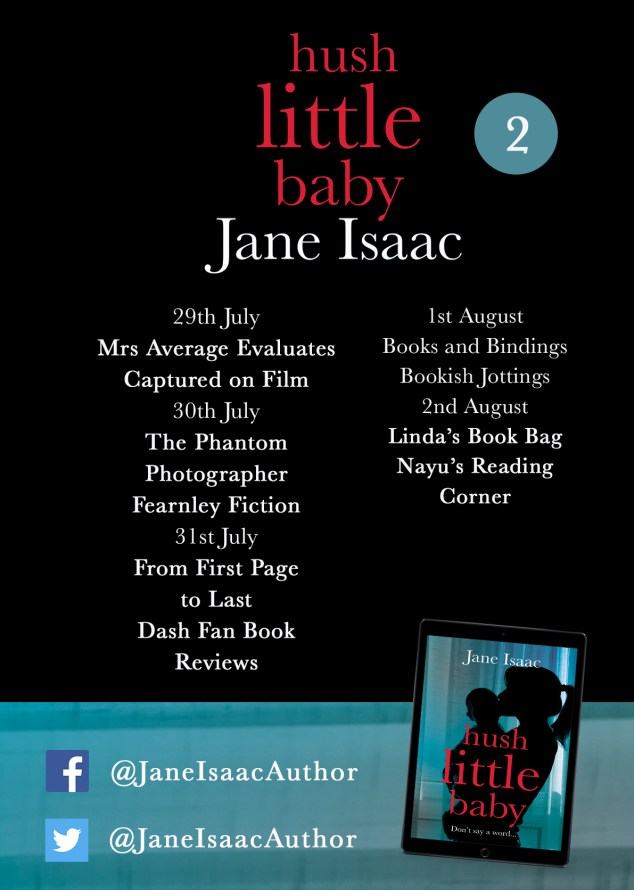
Isaac_Hush Little Baby_Blog tour poster 2

The Siege of Caerlaverock by Barbara Henderson

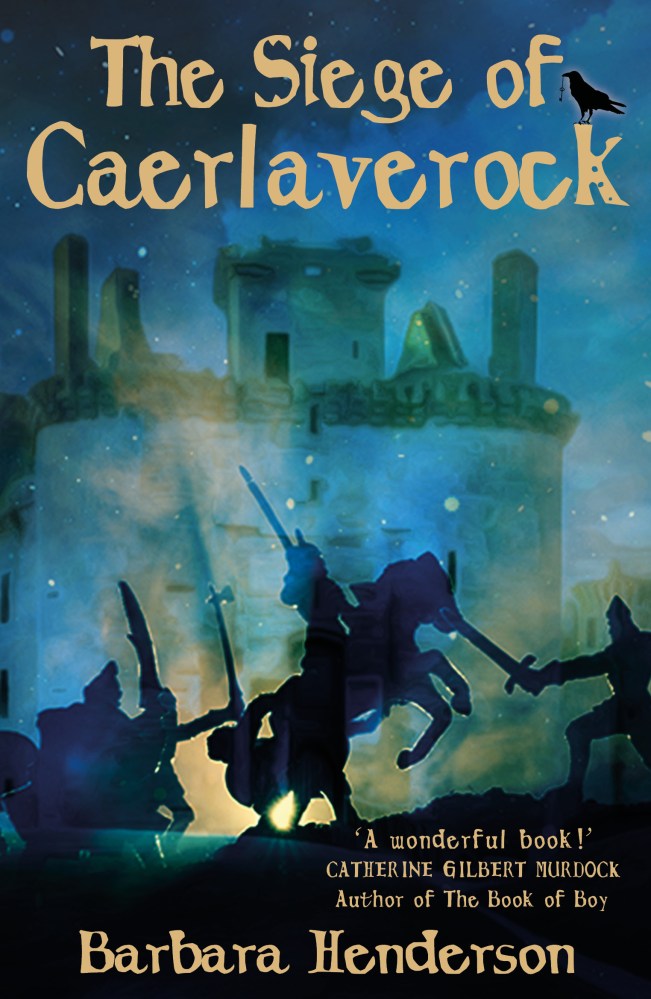
The Siege of Caerlaverock Paperback FOIL FINAL JUNE 20203 (2)

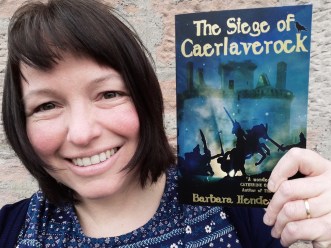
I adore Barbara Henderson’s children’s fiction and so I’m genuinely thrilled to be starting off the blog tour for her latest book The Siege of Caerlaverock by hosting a wonderful guest post and sharing my review.

In case you haven’t had the pleasure of reading Barbara’s children’s books before, I have featured several here on Linda’s Book Bag. You will find:

My review of Fir For Luck here (also one of my books of the year in 2016).

A smashing guest post from Barbara about Fir For Luck publication day here.

Another super post from Barbara about why a book launch matters to celebrate Punch here.

A guest post from Barbara about nature and my review of Wilderness Wars here.

A guest post about novels and novellas and my review of Black Water here.

The Siege of Caerlaverock will be published by Cranachan imprint Pokey Hat on 6th August 2020 and is available for pre-order here.

The Siege of Caerlaverock

The Siege of Caerlaverock Paperback FOIL FINAL JUNE 20203 (2)

Enemies within.

Enemies without.

Nowhere to hide.

12-year-old Ada is a laundress of little consequence, but the new castle commander Brian de Berclay has his evil eye on her. Perhaps she shouldn’t have secretly fed the young prisoner in the tower.

But when the King of England crosses the border with an army over 3000 strong, Ada, her friend Godfrey and all at Caerlaverock suddenly find themselves under attack, with only 60 men for protection.

Soon, rocks and flaming arrows rain from the sky over Castle Caerlaverock—and Ada has a dangerous choice to make.

Heraldic Poetry behind The Siege of Caerlaverock

A Guest Post by Barbara Henderson

0300172d

To tell you the truth, I have always been drawn to coats of arms. I walked past our family one, framed in the hallway of my parents’ house, every day of my childhood (I was born a ‘Haas’). It was displayed as an example of an old family crest at our nearest medieval castle, and I was a frequent visitor throughout my childhood and youth, particularly during the annual medieval festival with re-enactments – you got in free if you dressed up in medieval attire. Who could resist that?

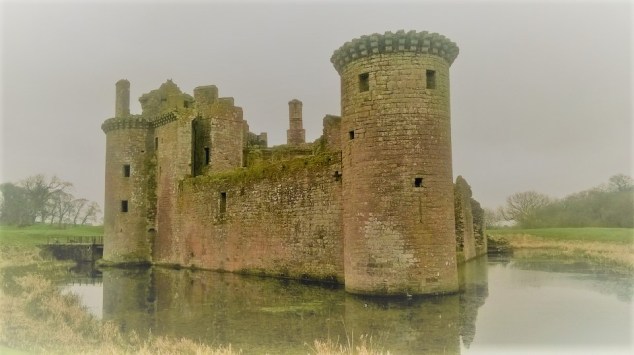
Caerlaverock photo Barbara Henderson

I do love a good castle ruin too – you know, the kind that leaves a lot to the imagination. But I was also fascinated by heraldry in general – the symbolism, the motto, the flattery in the poetry. You could think of heraldry as a precursor to PR – it managed how a family or clan was perceived.

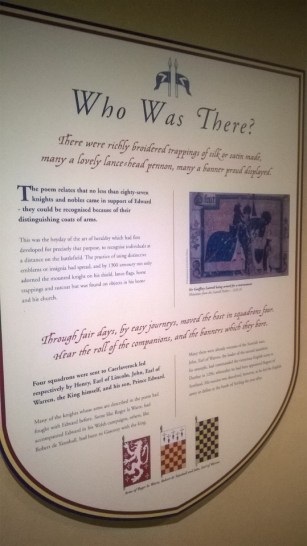
When I visited Caerlaverock Castle near Dumfries with my family, I had no idea that I was about to be assailed by a new story which would conquer my heart to the extent that I simply had to write it. I often see displays in museums and castles which interest me, but this exhibition on a medieval siege was utterly compelling – because it came with a story attached! A medieval heraldic poem about the siege survives to this day, and it gives us a unique insight into the events which took place exactly 720 years ago this summer.

IMG_20200717_092334

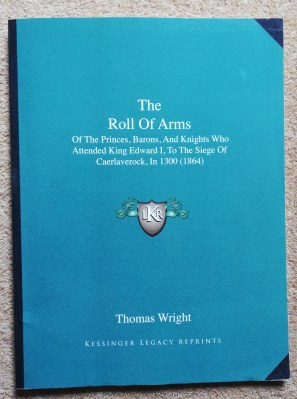
The poem was written in the fashionable French, most likely by a court poet to the King:

In chronicles of great monasteries
It is found that King Edward […]
In the year one thousand three hundred
Of grace, on the day of Saint John,
Was at Carlisle, and held a great court,
And commanded that in a short time
All his men should prepare themselves,
To go together with him
Against his enemies the Scots.
Before the appointed day
The whole host summoned was ready;
And the King with his great household
Immediately set forward against the Scots.

I found it so exciting to read the description of this great train of warriors, their horses and banners and tents. Each of the 87 knights travelling with the King is described separately, with their heraldic symbols and heroic deeds mentioned while the vast army of archers and soldiers remain unnamed.

It is likely that the author was a court poet due to the flattery he uses, portraying Edward as fierce but fair:

‘The King is dreadful, fierce and proud…nevertheless, he is soon reanimated with gentle kindness, if they seek his friendship and are willing to come to his peace.’ As a storyteller, I had to decide whether to ‘buy’ some of the more positive portrayals of the King’s actions, as a court poet may not always have told the truth. My story was from the point of view of the besieged, so I skipped through some of the poem detailing all the King’s most valued knights. One of the squadrons was led by the Crown Prince, so this campaign was a bit of a who’s-who of the royal elite. Once they get there, the description of the castle is striking (and I agree wholeheartedly with the last lines!):

Caerlaverock was a castle so strong

 that it did not fear siege…

It was formed like a shield,

for it had only three sides in circuit,

with a tower at each angle…

with a drawbridge, well made and strong.

It had also good walls and good ditches,

all filled to the edge with water;

and I believe you will never see 

a castle more beautifully situated than it.’

Nevertheless, over the next couple of days, the 60+ defenders of Caerlaverock were no match for the ‘three thousand brave men at arms’. The poet details the violent resistance from within the castle:

‘Huge stones showered upon them,

And quarrels and arrows

That with wounds and bruises

They were so wearied and exhausted

That it was with great difficulty they retired.’

But the greatest moment for me came when the poem mentioned the ‘Lady of the castle’! So many knight-stories focus on warfare, jousting and valour that the female characters all but disappear. I had already resolved to tell the story from the point of view of a female servant, but this was remarkable – the decision maker at Caerlaverock at the time may well have been a woman!

Caerlaverock eventually ‘begged for peace and put out a pennon’. According to the poet, the King ‘gave them life and limb, a to each a new robe.’ In other words, the King granted all the survivors mercy. Some medievalists do not believe this version of events, citing Edward I’s fearsome reputation for brutality, but according to an eminent medieval scholar, this is not an impossible version of events. Edward was at the very beginning of his campaign and may well have attempted to win over hearts and minds at this point.

IMG_20200717_092311

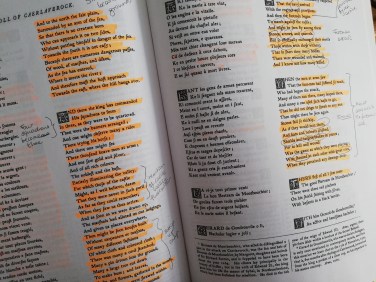
I remember being close to tears when I first read and annotated the poem. What a gift it was!

As I see it, historical fiction is like a washing line. There are certain fixed events and facts which hold the story in place – the pegs if you like. This heraldic poem gave me plenty of those! But in between those, the fabric can flutter whichever way the story takes it, bright and lively against the sky. I hope that The Siege of Caerlaverock captures some of the spectacle the castle dwellers would have witnessed all those centuries ago!

*

My goodness, yes it does Barbara!

My Review of The Siege of Caerlaverock

Ada may only be a kitchen maid but she is in the thick of adventure.

Wow. The Siege of Caerlaverock is absolutely brilliant. I cannot praise it enough.

Steeped in meticulously researched history, this is no dry reimagining of true events, but a living, vibrant story that held me spellbound. I’m beginning to wonder if Barbara Henderson is some kind of enchantress as she seems to have the ability to transport her readers so completely to whatever it is she is writing about. Her use of the senses is hugely evocative so that reading The Siege of Caerlaverock is an absolute delight. The inclusion of historical detail is done at such a human level that the past leaps from the page through Barbara Henderson’s skilled and dramatic writing.

The story is completely compelling. The pace of the plot, the realistic settings, the exciting narrative; indeed, every element of the book is totally pitch perfect. My heart was thumping at times because the level of peril, the danger and the excitement were so masterfully conveyed.

I loved meeting Ada and Godfrey. They are imbued with such life and friendship in spite of their social differences and the brief time they spend together, that they resonate long after the last page of the story has been read. I’m wondering now what has happened to Ada because she feels so real. I loved the balance between Ada and Godfrey too because young readers can see that gender doesn’t have to define or constrain  an individual. Brian de Berclay makes for the kind of villain that turns the blood cold and yet is so fascinating it’s impossible not to be riveted by his presence.

I genuinely think Barbara Henderson may be the most talented children’s writer in a generation. I am awestruck by her skill. Her books are, quite simply, fantastic and The Siege of Caerlaverock is the latest in a wonderful body of work. Whatever you do, whether you have children in your family or are reading for yourself, don’t miss this one. It’s an absolute cracker.

About Barbara Henderson

dav

Barbara Henderson has lived in Scotland since 1991, somehow acquiring an MA in English Language and Literature, a husband, three children and a shaggy dog along the way. Having tried her hand at working as a puppeteer, relief librarian and receptionist, she now teaches Drama part-time at secondary school.

Writing predominantly for children, Barbara won the Nairn Festival Short Story Competition in 2012, the Creative Scotland Easter Monologue Competition in 2013 and was one of three writers shortlisted for the Kelpies Prize 2013. In 2015, wins include the US-based Pockets Magazine Fiction Contest and the Ballantrae Smuggler’s Story Competition.

Follow Barbara on Twitter @scattyscribbler for more information, and read her blog. You’ll also find her author page on Facebook.

There’s more with these other bloggers too:
There’s more with these other bloggers too:
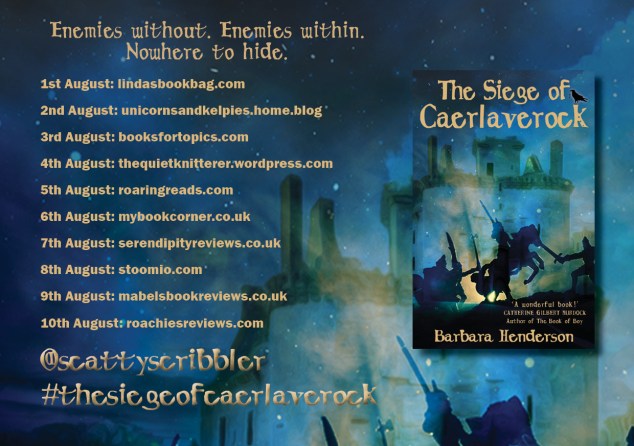
Siege of Caerlaverock BLOG TOUR POSTER