The Christmas Wish List by Heidi Swain

the-christmas-wish-list-9781471185687_lg

Regular Linda’s Book Bag readers will know how much I love Heidi Swain, both as an author and as a person, so it will come as no surprise that I am thrilled to be part of the launch celebrations for her latest book, The Christmas Wish List, by closing the blog tour with my review today. My enormous thanks to Harriett Collins at Simon and Schuster for inviting me to participate.

Recently I reviewed Heidi’s Poppy’s Recipe for Life here and hosted a guest post from Heidi here all about what Christmas means to her when Snowflakes and Cinnamon Swirls at the Winter Wonderland was published.  You can read what happened when we ‘stayed in’ together to discuss Sunshine and Sweet Peas in Nightingale Square here, and read my review of Heidi’s Mince Pies and Mistletoe at the Christmas Market here.

Published by Simon and Schuster on 3rd October 2019, The Christmas Wish List is available for purchase through these links.

The Christmas Wish List

the-christmas-wish-list-9781471185687_lg

After being let go from her job in a swanky hotel just weeks before Christmas, Hattie is feeling lost. Even more so when her high-flying boyfriend announces he’s landed his dream job in Abu Dhabi and asks her to move with him. Luckily, Hattie’s long-time friend Dolly is on hand to help and invites Hattie to spend one last holiday in the small, festive town of Wynbridge, determined to give her a Christmas to remember . . .

Upon Hattie’s arrival, holiday preparations are in full swing. But for Hattie, whose Christmas cheer has long since run out, it’ll take more than mince pies and mistletoe to open her heart to the season once more. Relishing the task of reigniting Hattie’s Christmas spirit, Dolly suggests they create a wish list of all the things the season can offer, and with the helpful hands of Wynbridge’s resident handyman, Beamish, Hattie finds her frosty exterior is starting to thaw.

As Wynbridge prepares for its most spectacular Christmas yet, will Hattie leave snowy England behind for life in a sunnier clime, or will she in fact realise that her heart’s desire lies much closer to home?

The Christmas Wish List is the perfect read this Christmas, promising snowfall, warm fires and breath-taking seasonal romance. Perfect for fans of Carole Matthews and Cathy Bramley.

My Review of The Christmas Wish List

A return to Wynbridge will provide more than just a rest for Hattie.

I think it’s wonderful to be able to open a book by an author and know you’re guaranteed a wonderful read and that’s exactly what happens with a Heidi Swain novel; The Christmas Wish List being no exception.

I love the way Heidi Swain creates a festive atmosphere. She manages to weave traditions and cosiness into her narrative without being saccharine or twee so that The Christmas Wish List provides a compelling and uplifting setting that feels perfect for a winter read. Smatterings of snow, carols, winter wonderlands and roaring fires transport the reader to a world of pleasure and positivity. However, The Christmas Wish List isn’t all sweetness and joy, and elements of the story that I don’t want to reveal because they will be spoilers, provide a perfect balance and reality that give even greater depth and enjoyment.

Whilst characters I’ve met before in Wynbridge make an appearance, there’s actually quite a reduced cast list at the heart of this story so that there is an intensity to their relationships that touches the reader highly effectively. I’m sure I was just as much in love with Beamish as any Wynbridge resident, but it was Dolly’s attitude of making the most of life through her actual wish list that resonated most with me. The positive message behind the narrative is simply flawlessly portrayed. I also thought Hattie was such a realistic character. She is stubborn and sometimes quite foolish and her actions often frustrated me because I cared about her. Her relationships with her family, Dolly and Jonathan in particular made her embody a microcosm of many a young woman in today’s society. I was desperate for he to have a happy resolution in The Christmas Wish List but you’ll need to read the book to see if that particular wish of mine was fulfilled.

As ever when I read Heidi Swain, although I adore the storytelling, it is the underpinning themes behind the story that I find most appealing. A sense of identity and appreciating what really matters in life form a tapestry with friendship, relationships, a sense of community and love so that in The Christmas Wish List I think there is something for every reader to identify with.

The Christmas Wish List is yet another triumph of a book from Heidi Swain. It truly does embody the festive spirit of Christmas, but more importantly, it conveys the message of making the most of the lives we have. I thoroughly enjoyed it.

About Heidi Swain

heidi-swain-576635598

Heidi Swain is the Sunday Times bestselling author of five novels: The Cherry Tree CafeSummer at Skylark FarmMince Pies and Mistletoe at the Christmas MarketComing Home to Cuckoo Cottage and most recently, Sleigh Rides and Silver Bells at the Christmas Fair. She lives in Norfolk with her husband and two teenage children.

You can follow Heidi on Twitter @Heidi_Swain and visit her blog or website. You’ll also find Heidi on Facebook and there’s more with these other bloggers too:

The Christmas Wish List Blog Tour Graphic (1)

Things That Art: A Graphic Menagerie of Enchanting Curiosity by Lochlann Jain

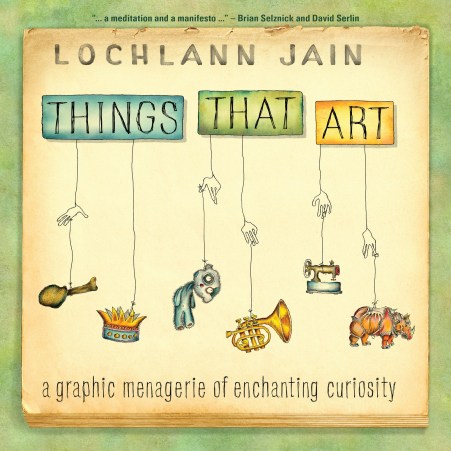
Things that art

My grateful thanks to Bei Guo at Midas PR for inviting me to participate in the launch celebrations for Things That Art: A Graphic Menagerie of Enchanting Curiosity by Lochlann Jain and for sending me a copy of the book in return for an honest review.

Published by the University of Toronto, Things that Art is available for purchase here and directly from the publisher.

Things That Art

Things that art

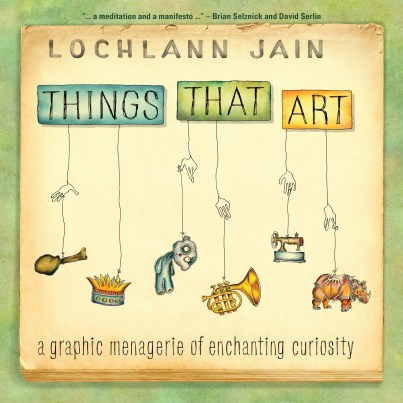
Lochlann Jain’s debut non-fiction graphic novel, Things That Art, playfully interrogates the order of things. Toying with the relationship between words and images, Jain’s whimsical compositions may seem straightforward. Upon closer inspection, however, the drawings reveal profound and startling paradoxes at the heart of how we make sense of the world.

Commentaries by architect and theorist Maria McVarish, poet and naturalist Elizabeth Bradfield, musician and English Professor Drew Daniel, and the author offer further insight into the drawings in this collection. A captivating look at the fundamental absurdities of everyday communication, Things That Art jolts us toward new forms of collation and collaboration.

My Review of Things That Art

A series of drawn images with commentaries.

My word – or should that be ‘my image’? I don’t think I have encountered a book quite like Things That Art before and I’m not quite sure how to review it. I actually ‘read’ this book three times before attempting to summarise my thoughts. I loved the title Things That Art. Whilst it describes the contents of the book perfectly, it also generates the question, ‘Things that art what?’ so that the reader is immediately drawn into a more inquisitive frame of mind.

Firstly I simply looked at all the images and pondered their links and meanings. Whilst some were obvious, many of Lochlann Jain’s associations are startling, innovative and clever so that they reward time spend looking and looking again. I confess I didn’t understand all of them, even after reading the commentaries and looking (or reading) again but this is by no means a criticism. I researched some things, expanded my vocabulary, knowledge and understanding and felt Things That Art had not only been fascinating to explore, it had enhanced who I am because I now have a more acute and questioning attitude to objects around me than before. For example, I found myself adding items to some of the concepts presented too because Lochlann Jain had made me think differently. By way of illustration, I mentally included racism and sexism to ‘things that are institutionalized’ and I think this is one of the joys of Things That Art – it is more than a picture book or graphic novel, it’s a catalyst for thought.

The artwork has a naive quality that belies the meanings and references it embodies, and adds to the overall effect of the book in taking the reader by surprise. The commentaries are fascinating essays that enlighten the reader and make them appreciate Things That Art still further. Again, I felt my ignorance challenged (I didn’t know what ‘koan’ meant for example. It’s ‘a paradoxical anecdote or riddle without a solution, used in Zen Buddhism to demonstrate the inadequacy of logical reasoning and provoke enlightenment’ and fits this book perfectly) and having read the commentaries and looked again at Lochlann Jain’s images it was akin to being given entry to an elusive and elite club. This felt quite special!

I am unsure how to encapsulate Things That Art in a summary. It is peculiar, disturbing, thought-provoking and hugely entertaining. Things That Art is totally unlike any other book I’ve encountered before – and all the better for it!

About Lochlann Jain

image011

Lochlann Jain is a non-binary British academic and Professor of Anthropology at Stanford University and Global Health and Social Medicine at King’ College London. Jain has studied art at the Slade (London) and the San Francisco Art Institute. Whether in art or scholarship, their work aims to disrupt ways of knowing. Jain’s work has been praised as “a remarkable achievement,” (TLS), “a whip-smart read” (Discover Magazine), “brilliant and disturbing,” (Nature Magazine), and having “the phenomenological nuance of James Joyce.” (Medical Humanities) Jain is the author of Injury (2006) and Malignant: How Cancer Becomes Us (2013).

Lochlann Jain has won numerous prizes for work in anthropology and medical journalism, including the Staley Prize, June Roth Memorial Award, Fleck Prize, Edelstein Prize, Victor Turner Prize, and the Diana Forsythe Prize. The work has been supported by Stanford Center for the Advanced Study of Behavioral Sciences, National Endowment for the Humanities Fellowship, and the National Humanities Center.

To find out more, follow Lochlan on Twitter @lochlannjain or visit Lochlan’s website.

There’s more with these other bloggers too:

Things That Art Blog Tour (1)

Sorry for the Dead by Nicola Upson

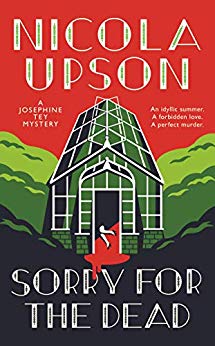
sorry for the dead

I’m delighted to be part of the launch celebrations for Sorry for the Dead by Nicola Upson and would like to thank Sophie Portas at Faber and Faber for inviting me to participate. Not only do I have my review to share, but I have an extract from the very beginning of Sorry for the Dead to whet your appetite.

Sorry for the Dead was published yesterday, 7th November 2019 and is available for purchase through the links here.

Sorry for the Dead

sorry for the dead

A compelling murder mystery in which events shift between a world on the brink of a devastating world was and the deadly aftermath of that war.

In the summer of 1915, the violent death of a young girl brings grief and notoriety to Charleston Farmhouse on the Sussex Downs.

Years later, Josephine Tey returns to the same house – now much changed – and remembers the two women with whom she once lodged as a young teacher during the Great War. As past and present collide, with murders decades apart, Josephine is forced to face the possibility that the scandal which threatened to destroy those women’s lives hid a much darker secret.

Sorry for the Dead is the eighth book in the Josephine Tey series, at once a compelling murder mystery and a moving exploration of love and grief.

An Extract from Sorry for the Dead

She waited on the step until Josephine was out of sight, then closed the front door behind her. The house seemed unnaturally quiet, and it took her a few moments to accept that she was finally alone. The book – a present she would never read – still lay on the table in the hallway. She unwrapped it and folded the brown paper neatly into a square, then went through to the sitting room to put it on the bookshelf with the others. Out of habit, she straightened the picture above the fireplace, wondering why she had lived for so long with something that she didn’t really like. In a moment of defiance, she lifted the canvas from its hook and put it face down on the floor.

The pointlessness of her days stared back at her from the tidy room: the vacuumed carpet and dusted shelves, everything pathetically in its place; only the coffee table showed any sign of dissent. She stacked the plates and cups carefully onto a tray and cleared away the remains of a fruit cake made the week before. It was past its best, stale and tasteless in her mouth, but it had served its purpose and the rest could be thrown away. She took it outside and crumbled it onto the low red-brick wall that separated her cottage from the one next door, smiling to herself when she imagined her neighbours’ indignation at the thought of a week’s dried fruit and sugar going to the birds. Already they thought her selfish and unfriendly, but she had been called much worse, and no doubt would be again.

April was barely a week old, but the heat could have passed for early June. She sat down on a sun-bleached wooden bench which stood just outside the back door, trying not to disturb the cat who invariably got there before her. It had taken her a long time to get used to such a small garden – just a plain, unimaginative rectangle in a terrace of the same – but she had planted it with all the things she loved most, nurturing a tiny wilderness of flowers and shrubs which had no purpose other than their beauty. A succession of warm days and spring showers had obliged her by bringing everything out before its time, and she was pleased to see the unexpected joy of early tulips. The promise of summer was everywhere, and the knowledge gave her comfort as well as pain; the rose that meant so much to her would be magnificent this year. Distracted by her thoughts, she stroked Percy’s head as he lay stretched out in the sun, thin and arthritic in his old age. He had been with her for years, a handsome white and black hunter who arrived on her doorstep on the day she moved in and stubbornly refused to leave. She had thought him a burden at the time, something else to care for and lose, but his company soon won her over; now, she couldn’t bear the thought of being parted from him.

In the distance, the clock at St John’s struck the hour with its customary lack of urgency, and she went inside to collect her purse and shopping basket. Her front door opened straight onto the pavement, and she walked out into the narrow, leafy lane and headed for the high street, taking the most direct route to make sure of reaching the butcher’s before he lowered his blinds for the weekend. She obviously wasn’t the only one to be waylaid by a fine afternoon: the last-minute queue for meat stretched out of the shop door and round the corner, and she took her place in it, nodding to one or two of the customers. Whenever she found herself in a crowd these days, she was increasingly struck by the emptiness in people’s faces, by a flat, going-through-the-motions air which she had never been conscious of before, not even in the depths of war.
It was as if this fragile peace, no matter how longed-for, lacked the exhilaration of wartime, the shared sense of purpose that had helped people forget their fear and their grief. The danger had passed, but gone too was the laughing in the street, the instinctive kindnesses from one neighbour to another – and it was these small, commonplace things that mattered to most people. Now, everyone looked so tired and worn down that she wondered if the world would ever recover.

Inside, the shop smelled faintly of blood and sawdust. ‘Two ounces of ham, please,’ she said, requesting the full ration when her turn came.

The butcher nodded, and she watched as he cut thick slices from the bone and weighed them. ‘What else can I get you?’

‘Nothing, thank you.’

He looked at her in surprise. ‘That’s all you want? I’ve got some of that stewing beef you like, fresh in yesterday. It’ll save you queuing again if you take it now.’

She looked at the meat and the nausea rose in her throat. ‘Just the ham,’ she snapped, feeling the eyes of the queue on her. ‘I really don’t need anything else.’

He shrugged and took her money, raising his eyes at the woman next in line, and she left the shop without another word. Across the street, a dress in the window of Jones’s caught her eye and she went over to look at it, drawn to the startling shade of green. Its tight-fitting waist and extravagantly flared skirts were so unlike anything she owned that, on a whim, she pushed the door open and went inside, conscious of her conservative shoes and the dull, shabby skirt that had seen too many summers. The counter was piled high with the new season’s accessories, a flashback to the time before all the beautiful, feminine things disappeared, and a young girl wearing too much rouge came over to greet her. ‘The dress in the window—’ she began, but was interrupted before she could finish her sentence.

‘Ah yes, madam. It’s only just come in, and I think you’ll find the fabric is—’

‘I’ll take it.’

‘You don’t want to try it on?’

The girl looked doubtful, and she wondered how many more people that day would question the fact that she knew her own mind; strange, because she had never felt more deliberate or more certain. ‘There’s no need,’ she insisted. ‘I know it will fit.’

With a shrug, the assistant went over to the window to set about undressing the mannequin, and five minutes later the dress was hers. Rather than retracing her steps, she decided to walk back via the castle. The steep climb through Castle Gate and into the Precincts beyond made her feel every year of her age, and she paused at the top to catch her breath. Beyond the outskirts of Lewes, the soft green downs spread out before her under a Wedgwood sky. It was a view she had always loved, a reminder of both the happiest and saddest times of her life, but today it was too much; she turned her back on it and headed for home.

She shook out the dress and hung it on her wardrobe door, then went back downstairs to the kitchen. Percy answered her call immediately, apparently oblivious to the strain in her voice, and she chopped the ham into a dish while he rubbed round her legs, making the small, familiar noises of appreciation that still seemed so out of place in a cat his size. The meat was as salty as brine and less tasty than it looked, and she felt a sudden surge of anger with herself for buying the wrong thing on this of all days. She picked him up and held him, and his ears flicked with irritation as he felt her tears on his fur. ‘I’m sorry,’ she said softly, choking back a sob. ‘I’m so sorry.’ He wriggled in her arms to be released and she let him have his way, then prepared the last of the milk and put both dishes down in the sunlight just outside the back door, making sure that he had the ham first. His enjoyment was little comfort to her, and, when he turned so innocently to the milk, she had to walk away.

As a distraction, she tidied the already tidy kitchen. Perhaps it was her mood, but the room seemed cheerless and neglected. When everything was as she wanted it, she found the Vim and scoured the oven until it was spotless, then climbed the stairs to change. She washed at the tiny sink in her bedroom, annoyed by the dripping tap which she had never got round to having fixed, and wondered what else had been left undone. As she took the dress from its hanger and put it on, the unfamiliar fabric felt dangerous against her skin and she smiled to herself. She had been right to trust her instinct: the dress could have been made for her, and for a fleeting moment in the mirror she caught a glimpse of the woman she had once been. The knowledge tormented her and she put it from her mind. ‘How do I look?’ she asked, but the only answer was a heavy, oppressive silence.

Back downstairs, she forced herself to go outside. Percy lay in the sunshine; she could have convinced herself that he was merely sleeping were it not for the shallowness of his breath. The tears came again, more forceful than ever, and this time she made no effort to stop them. She owed him that, at least. Gently, she picked him up and clutched him to her, then set him down in the chair that he had always made his own, talking all the time to him while she made her preparations. She closed the window on the spring day and laid a wet tea towel carefully along the sill where she knew the draughts came in, then did the same at the back door and the door into the hallway. When everything was ready, she left the note where it couldn’t be missed and sat by her cat while he took his final breath, then picked up the cushion from the other chair and walked over to the cooker. Astonished by how calm she felt, she turned the gas on and set the cushion in place, then put her head inside, as far as she could bear.

This time, there must be no mistake.

My Review of Sorry for the Dead

Returning to the past brings more than just memories for Josephine Tey.

Having previously read and enjoyed writing by Josephine Tey, I was intrigued by Sorry for the Dead by Nicola Upson as it features Josephine Tey as the protagonist. What immediately struck me was the authentic voice Nicola Upson has. Sorry for the Dead is perfectly attuned to its era and yet is completely accessible and familiar to a modern reader. There’s a sophisticated ease to the style, especially through direct speech and the natural descriptions, that makes the narrative a pleasure to read. I feel I have missed out by not finding this series of books sooner.

I confess that initially I was dismayed to find three different time periods in the early part of the book as I don’t usually enjoy that plotting approach, but in Sorry for the Dead, Nicola Upson manages it superbly and convinced me completely that I was mis-guided in my opinion. What is so brilliant is that the threads through the plot writhe along in a complex but completely believable manner so that I finished the book feeling quite stunned, surprisingly emotional and completely satisfied. Nicola Upson is a master storyteller.

I loved the intensity of the characterisation too. Josephine Tey may be the protagonist, but all the women involved in the story represent a microcosm of society at the time of the book. Through these women, Nicola Upson explores themes that are still pertinent to today’s society too. With sexuality, belonging, family, identity, loyalty, friendship and guilt all woven throughout the story, Sorry for the Dead has resonance for any reader. I was somewhat taken aback by the level of emotional involvement I felt as I finished reading, although to say more about why will spoil the read.

Sorry for the Dead is a perfect example of how a modern writer can draw upon the Golden Age of crime fiction and make it perfect for a modern reader. Although this story can be enjoyed simply as a crime novel, it has much more depth that I had imagined. I thoroughly enjoyed it.

About Nicola Upson
nicola upson

Nicola Upson was born in Suffolk and read English at Downing College, Cambridge. She has worked in theatre and as a freelance journalist, and is the author of two non-fiction works and the recipient of an Escalator Award from the Arts Council England.

Her debut novel, An Expert in Murder, was the first in a series of crime novels whose main character is Josephine Tey – one of the leading authors of Britain’s Golden Age of crime writing.

She lives with her partner in Cambridge and spends much of her time in Cornwall, which was the setting for her second novel, Angel with Two FacesTwo for Sorrow is the third book in the Josephine Tey series, followed by Fear in the Sunlight.

You can follow Nicola on Twitter @nicolaupsonbook. You’ll also find her on Facebook.

There’s more with these other bloggers too:

Nicola Upson Sorry For The Dead poster

The Perseverance by Raymond Antrobus

perseverance_reprint_frontcover_highres

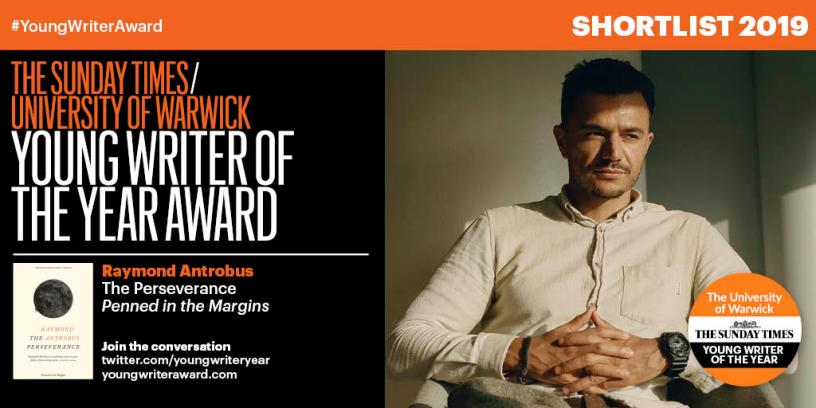
As you may know, I’m thrilled to be one of five UK bloggers acting as shadow judge for The Sunday Times/University of Warwick Young Writer of the Year Award this year. You’ll find more about the award here on Linda’s Book Bag and on The Sunday Times/University of Warwick Young Writer’s Award website.

Today it gives me enormous pleasure to feature one of those shortlisted authors, Raymond Antrobus and his poetry collection The Perseverance.

raymond antrobus instagram (1)

Published by Penned in the Margins, The Perseverance is available for purchase though the links here.

The Perseverance

perseverance_reprint_frontcover_highres

An extraordinary debut from a young British-Jamaican poet, The Perseverance is a book of loss, language and praise. One of the most crucial new voices to emerge from Britain, Raymond Antrobus explores the d/Deaf experience, the death of his father and the failure to communicate. Ranging across history, time zones and continents, The Perseverance operates in the in betweens of dual heritages, of form and expression emerging to show us what it means to exist, and to flourish.

My Review of The Perseverance

An anthology of writing on the theme of d/Deaf.

The Perseverance is an eclectic collection that truly took me by surprise. I wasn’t expecting quite such a perfectly poised balance of personal experience and international cultural and historical references. This style lodges the writing within both familiar and unknown eras and events for the reader, making it an immersive experience. I thoroughly appreciated the illustrations that accompany some of the work because they give a credence to another form of language than the written words on the page.

A times, Raymond Antrobus made me feel quite uncomfortable as he uncovered my ignorance and he sent me scurrying off to investigate some of the references I hadn’t known about. The murder of three deaf women in Haiti explored in For Jesula Gelin, Vanessa Previl and Monique Vincent, for example, simply hadn’t crossed my consciousness before and I rather feel I may have had a similar attitude to deaf youngsters illustrated in Ted Hughes’ redacted poem that Antrobus counters so movingly in After Reading ‘Deaf School’ by the Mississippi. In The Perseverance Raymond Antrobus forces the reader to contemplate themselves as well as read the poetry and frequently I was found wanting.

The writing is elegantly crafted and yet at times is raw with anger, loss and grief so that the more I read of The Perseverance the more it touched me. Frequently techniques illustrate the content of the writing, from the sibilance in Echo, as if indeed echoing the sounds a person might experience in their ears or on their lips as they attempt to speak, to the broken text of Samantha’s mother’s dementia, giving an extra depth that ensnared me as I read. The one sided conversation in Miami Airport stirred a rage in me that helped me understand and appreciate not just the work in The Perseverance, but the writer himself. It made me glad to be me and taught me to appreciate what I have. Indeed, I experienced a range of emotions as a result of reading The Perseverance, and almost felt a sense of relief when the final poem Happy Birthday Moon because it concluded the anthology with greater possitivity than I had encountered in some of the other poems.

I was curious about the many references to water, wondering if they represented birth fluids or the possibility of suicidal death, or indeed both, in Raymond Antrobus’s complex and occasionally disturbing verse. The author’s poignant desire for acknowledged identity and belonging underpins so much of this collection. Feeling neither Jamaican nor British, he longs for acceptance from society, but more importantly, for recognition from his father whose time is so often spent in The Perseverance pub. There’s a brittle honesty here that insinuates itself into the reader’s mind and makes them empathise with the writer.

The Perseverance is more than just an anthology. It is a eulogy to the deaf, the dead, the disappeared, the silent and the invisible members of society who deserve more than so many of us have afforded them in the past. Reading The Perseverance has altered my perceptions and my attitudes and I have to thank Raymond Antrobus for the beauty of his writing and the depth of his enlightenment. This is a thought provoking, provocative and intriguing anthology.

About Raymond Antrobus

raymondantrobus_creditcalebfemi_preferred

Raymond Antrobus was born in Hackney to an English mother and Jamaican father. He is the recipient of fellowships from Cave Canem, Complete Works III and Jerwood Compton Poetry. He is one of the world’s first recipients of an MA in Spoken Word Education from Goldsmiths, University of London. Raymond is a founding member of Chill Pill and Keats House Poets Forum. He has had multiple residencies in deaf and hearing schools around London, as well as Pupil Referral Units. In 2018 he was awarded the Geoffrey Dearmer Award by the Poetry Society (judged by Ocean Vuong).

The Perseverance (Penned in the Margins, 2018), was a Poetry Book Society Choice, the winner of the Rathbones Folio Prize and the Ted Hughes Award, and was shortlisted for the Griffin Poetry Prize and Forward Prize for Best First Collection.

For more information visit Raymond’s website. You’ll also find him on Facebook and Instagram.

An Evening with @4thEstateBooks

IMG_3183

I’m always thrilled when an invitation arrives in my inbox to attend a bookish event and was delighted to find myself asked to 4th Estate LIVE – an exclusive showcase of some of 2020’s biggest books. I’d like to thank Liv Mardsen of Harper Collins and 4th Estate Books for inviting me.

IMG_0172

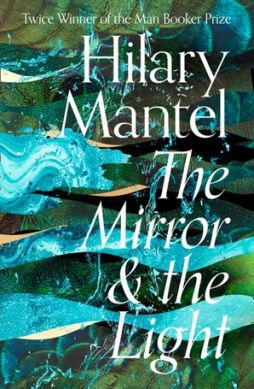
It was so good to meet up with other bloggers and bookstagrammers and find out about new books coming in 2020. After a chance to mingle, eat and drink, we were treated to an exclusive reading from The Mirror and the Light, the conclusion to Hilary Mantel’s Wolf Hall trilogy and I came away with a fabulous #TheMirrorandtheLight goody bag stuffed with books.

The Mirror and the Light

The Mirror and the Light will be published on 5th March 2020 and is available for pre-order here.

IMG_3189

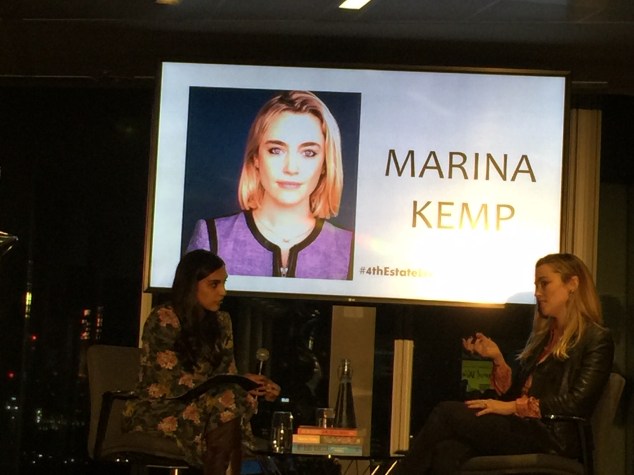
We were then afforded the opportunity to hear four authors speak about their forthcoming books. First to be interviewed was Marina Kemp who spoke so movingly about Nightingale that it is going straight to the top of my TBR.

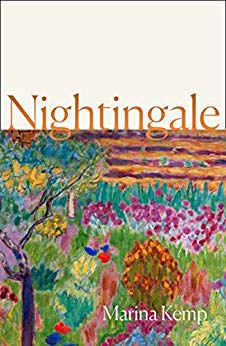
Nightingale

Nightingale

A moving and masterful novel about sex, death, passion and prejudice in a sleepy village in the south of France

Marguerite Demers is twenty-four when she leaves Paris for the sleepy southern village of Saint-Sulpice, to take up a job as a live-in nurse. Her charge is Jerome Lanvier, once one of the most powerful men in the village, and now dying alone in his large and secluded house, surrounded by rambling gardens. Manipulative and tyrannical, Jerome has scared away all his previous nurses.

It’s not long before the villagers have formed opinions of Marguerite. Brigitte Brochon, pillar of the community and local busybody, finds her arrogant and mysterious and is desperate to find a reason to have her fired. Glamorous outsider Suki Lacourse sees Marguerite as an ally in a sea of small-minded provincialism. Local farmer Henri Brochon, husband of Brigitte, feels concern for her and wants to protect her from the villagers’ intrusive gossip and speculation – but Henri has a secret of his own that would intrigue and disturb his neighbours just as much as the truth about Marguerite, if only they knew …

Set among the lush fields and quiet olive groves of southern France, and written in clear prose of crystalline beauty, Nightingale is a masterful, moving novel about death, sexuality, compassion, prejudice and freedom.

Nightingale is available for pre-order here.

IMG_3191

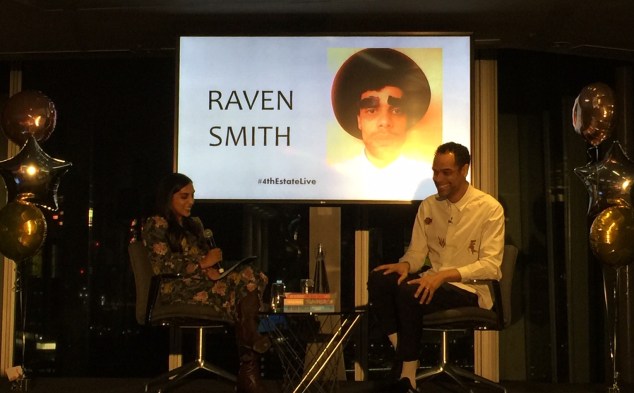
In complete contrast, our next interviewee was the hilarious Raven Smith who had us crying with laughter as he spoke about his Trivial Pursuits.

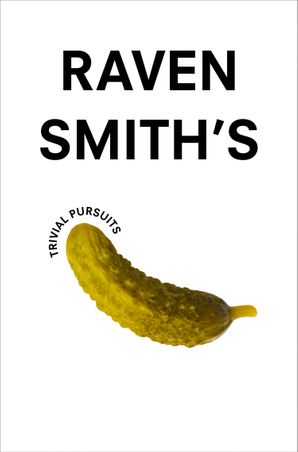
Raven Smith’s Trivial Pursuits

trvial pusuits

A hilarious, smart and incredibly singular debut from the ‘unofficial spokesperson of the modern millennial’ (SUNDAY TIMES ‘STYLE’ MAGAZINE) whose exploration of the minutiae of everyday modern life and culture is totally unique and painfully relatable.

From what goes through his head in a yoga class, to being tall, to Theresa May needing to be Queer Eye-d, Smith doesn’t leave any ‘trivial’ stone unturned. He also discusses his single-parent upbringing, his struggles as a lonely teenager and his personal experience of coming out, all with brilliant humour, great tenderness and lingering pathos.

This book is for fans of David Sedaris, Joel Golby, Dolly Alderton and Lena Dunham – as well as making you crack up with laughter – it sears with the sharpest prose and the most intelligent insights. It’s a timely and brilliant debut from an exciting new voice.

Raven Smith’s Trivial Pursuits is available for pre-order here.

IMG_3192

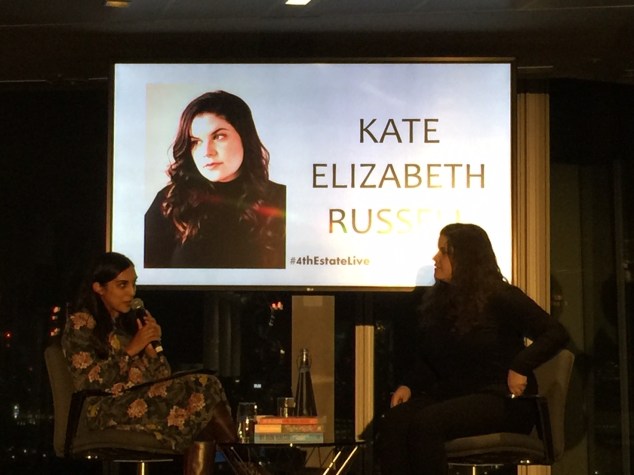
We returned to a much more somber subject as Kate Elizabeth Russell spoke about My Dark Vanessa and the amazing (and fortuitous) links she’d found after writing the book.

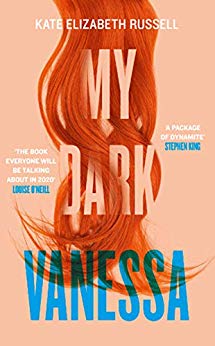
My Dark Vanessa

My Dark Vanessa

An era-defining novel about the relationship between a fifteen-year-old girl and her teacher

ALL HE DID WAS FALL IN LOVE WITH ME AND THE WORLD TURNED HIM INTO A MONSTER

Vanessa Wye was fifteen-years-old when she first had sex with her English teacher.

She is now thirty-two and in the storm of allegations against powerful men in 2017, the teacher, Jacob Strane, has just been accused of sexual abuse by another former student.

Vanessa is horrified by this news, because she is quite certain that the relationship she had with Strane wasn’t abuse. It was love. She’s sure of that.

Forced to rethink her past, to revisit everything that happened, Vanessa has to redefine the great love story of her life – her great sexual awakening – as rape. Now she must deal with the possibility that she might be a victim, and just one of many.

Nuanced, uncomfortable, bold and powerful, My Dark Vanessa goes straight to the heart of some of the most complex issues our age.

My Dark Vanessa is available for pre-order here.

IMG_3193.jpg

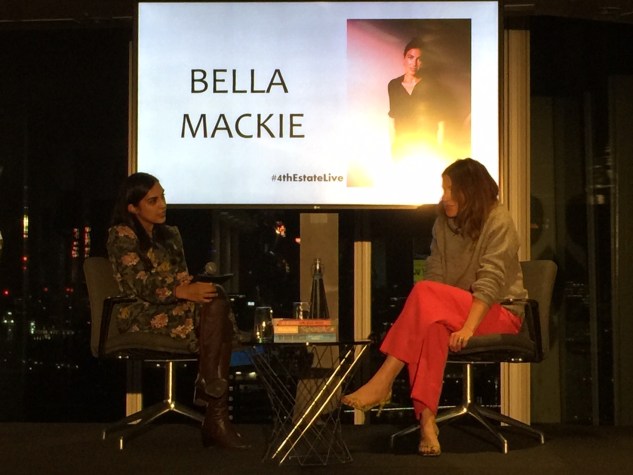
Our final speaker was Bella Mackie whose honest and humorous approach to discussing her mental health and running in her Jog On Journal was completely refreshing.

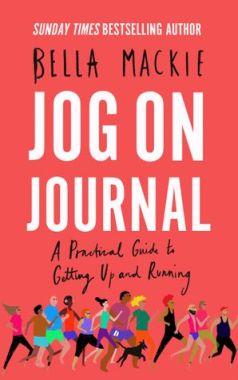
Jog On Journal

jog on

The essential companion to the Sunday Times bestselling Jog On – a funny, practical guide to managing your mental health through exercise.

Bella Mackie isn’t your average coach – she’s much swearier, and she’s never going to give you a nutrition plan or join you on a marathon. But through her inspiring personal story and realistic approach she’s already inspired thousands of men and women to manage their mental health through exercise. In this journal, Bella takes you on a journey from the sofa to the open road, helping you to:

• Gain a new awareness of mental health problems such as anxiety and depression
• Cope with side effects such as panic attacks and intrusive thoughts
• Learn and memorise calming strategies such as breathing exercises
• Build a checklist of everything you need to start running
• Develop a regular running schedule, with realistic targets
• Use exercise to gain confidence and manage mental health problems

Packed with insights from athletes and psychologists and step-by-step achievable goals, The Jog On Journalhas everything you need to get you up and running.

Out next week on November 14th, Jog On Journal is available for pre-order here.

Sadly, with the time at 8.27 and my train home leaving from London Bridge at 8.31 I didn’t have the opportunity to stay and speak with these talented authors directly. Instead I ran – yes really – across to the station and made it to my train on time simply because it was 4 minutes late!

I’d like to thank everyone involved in making this such a brilliant evening. I’m really looking forward to some brilliant reading as a result.

Coming Home to Winter Island by Jo Thomas

Coming Home to Winter Island

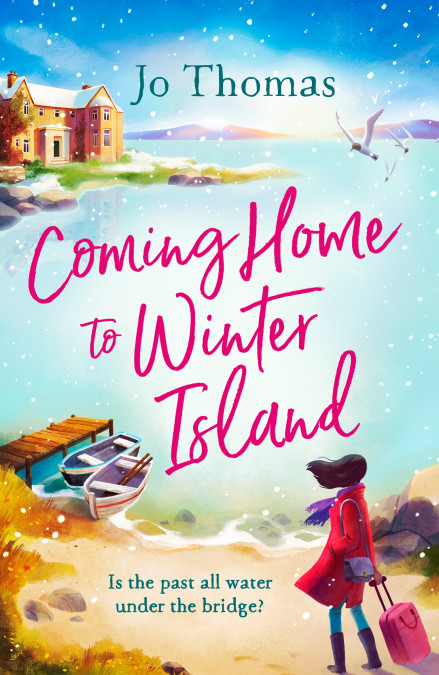
I’m a firm fan of Jo Thomas’s writing and I couldn’t resist breaking my blog tour sabbatical to feature her latest book, Coming Home to Winter Island. My enormous thanks to Anne at Random Things Tours for inviting me to participate.

You can read my reviews of Jo’s books A Winter Beneath The Stars hereSunset Over the Cherry Orchard hereThe Olive Branch here and Late Summer in the Vineyard here. I also have a smashing post about Jo’s top 5 holiday destinations that you can read here.

Coming Home to Winter Island is published by Headline Review and is available for purchase through these links.

Coming Home to Winter Island

Coming Home to Winter Island

Do you need to find out where you’ve come from before you can know what the future holds?

Ruby’s singing career is on the verge of hitting the big time, when her voice breaks. Fearing her career is over, she signs up for a retreat in Tenerife to recover.

But an unexpected call from a stranger on a remote Scottish island takes her on a short trip to sort out some family business. It’s time to go and see the grandfather she’s never met.

City girl Ruby knows she will be happy to leave the windswept beaches behind as quickly as she can, especially as a years-old family rift means she knows she won’t be welcome at Teach Mhor.

But as she arrives at the big house overlooking the bay, she finds things are not as straightforward as she might have thought.

There’s an unexpected guest in the house and he’s not planning on going anywhere any time soon …

My Review of Coming Home to Winter Island

Ruby’s singing career is about to take off – if only she could sing!

I’ve long been a fan of Jo Thomas’s writing and so it was with some trepidation that I began Coming Home to Winter Island because I didn’t want to be disappointed. I most certainly wasn’t. In fact, I think Coming Home to Winter Island is one of the author’s most perfect books and I adored it.

It almost goes without saying that Jo Thomas transports her reader to what ever setting she has chosen. This time it is the gorgeous Scottish Island setting where Teach Mhor house is situated and where the author’s descriptions of weather, flora and fauna give such a vivid sense of place. Those wonderfully created moments with the stags or streams and on the beach, for example, add both warmth and depth to the story as well as a glorious sense of place.

I loved the quality of research that has gone into the gin making aspects of the book. I think it’s because it feels comfortable knowing that there won’t be any glaring errors in the methodology to distract from the enjoyment of the read.

I found all the characters so real in Coming Home to Winter Island and although Ruby may not initially agree, I was in love with Lachlan from the very first moment I met him. However, it was Hector’s predicament that really touched me. The concept of ageing and what is best physically and emotionally for a person are considerations that resonated so deeply that I found Coming Home to Winter Island quite an emotional reading experience. Indeed, the themes of identity as Ruby finds out what is truly important to her, community, love and friendship are beautifully presented here so that Coming Home to Winter Island affords an opportunity for reflection at the same time as being a wonderfully entertaining story.

All the hallmarks of a Jo Thomas book are present in Coming Home to Winter Island, from warm, flawed and believable characters through a captivating plot in a brilliantly described setting, encompassing romance and challenge. I loved every word. It’s a glorious book to savour.

About Jo Thomas

jo thomas

Jo Thomas worked for many years as a reporter and producer, first for BBC Radio 5, before moving on to Radio 4’s Woman’s Hour and Radio 2’s The Steve Wright Show. In 2013 Jo won the RNA Katie Fforde Bursary. Her debut novel, The Oyster Catcher, was a runaway bestseller in ebook and was awarded the 2014 RNA Joan Hessayon Award and the 2014 Festival of Romance Best Ebook Award. Jo lives in the Vale of Glamorgan with her husband and three children.

You can visit Jo’s website, find her on Facebook and follow her on Twitter @jo_thomas01.

There’s more with these other bloggers too:

Coming Home BT Poster

An Extract from Mother and Child by Annie Murray

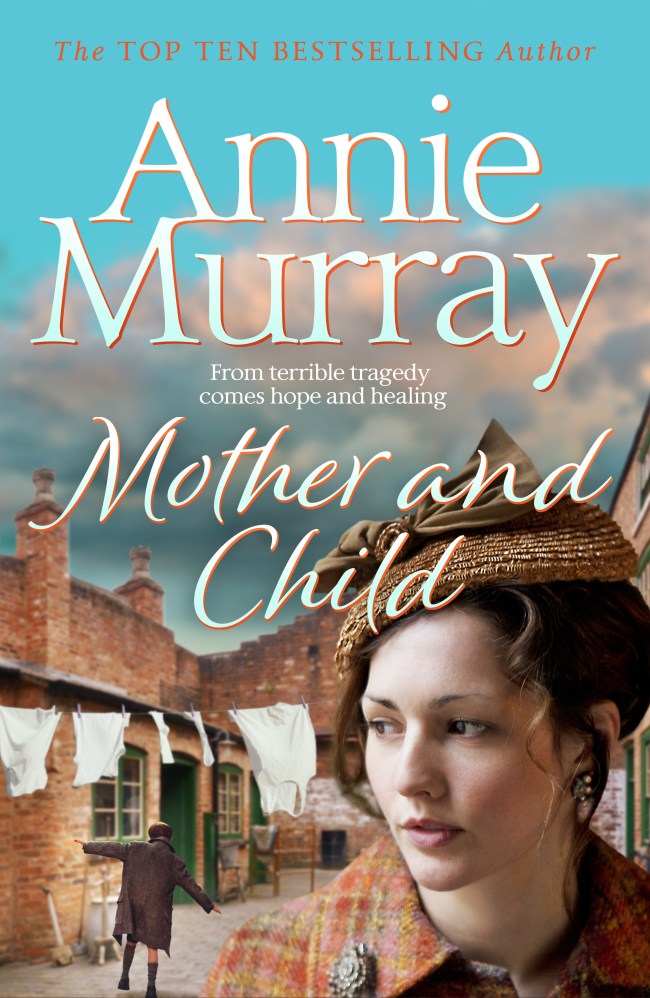
Mother and Child

Although I’m still not taking on many blog tours, I had to support my lovely friend Kelly at Love Books Group with this tour for Mother and Child by Annie Murray for all kinds of reasons. Firstly, I have visited India where part of the book is set and love the country. Secondly, the proceeds of Mother and Child will be donated to charity, the Bhopal Medical Appeal, which is enough incentive anyway and thirdly, because I have a friend who had been at the Bhopal site not long before the disaster and who has never recovered from the guilt he feels at having escaped what happened there.

If you would like a fabulous read and be able to support the charity, Mother and Child, published by Pan Macmillan is available for purchase here.

Mother and Child

Mother and Child

Mother and Child by Sunday Times bestseller Annie Murray is a moving story of loss, friendship and hope over two generations . . .

Jo and Ian’s marriage is hanging by a thread. One night almost two years ago, their only child, Paul, died in an accident that should never have happened. They have recently moved to a new area of Birmingham, to be near Ian’s mother Dorrie who is increasingly frail. As Jo spends more time with her mother-in-law, she suspects Dorrie wants to unburden herself of a secret that has cast a long shadow over her family.

Haunted by the death of her son, Jo catches a glimpse of a young boy in a magazine who resembles Paul. Reading the article, she learns of a tragedy in India . . . But it moves her so deeply, she is inspired to embark on a trip where she will learn about unimaginable pain and suffering.

As Jo learns more, she is determined to do her own small bit to help. With the help of new friends, Jo learns that from loss and grief, there is hope and healing in her future.

An Extract from Mother and Child

Eyes open in the dark, I’m listening for his feet on the stairs, the way I used to hear them in the other house,long after he was gone. There would be the tiny noise of the front door latch turning very quietly, Paul trying not to wake us after a shift, that pause as he pushed each of his trainers off with the toe of the other foot. The still laced shoes would be there in the morning. He might go into the kitchen for a drink before creeping up the stairs,his bedroom door closing almost silently. He was good like that, always sweet, considerate, even at his worst.

I feel bad if I don’t listen for him, guilty if I forget,even for a second, guilty if I smile – even the briefest of social smiles – which up until now I have not felt like doing, hardly for a second.‘Jo?’ Ian’s voice comes to me up the stairs the next morning as I’m cleaning my teeth. ‘I’m off now.’I look down at the basin so as not to see myself in the mirror in this bright white bathroom, this woman hearing a man calling to her from downstairs who is my husband of almost thirty years. Answer him, I command myself.

It seems to take an ocean of energy to force words past my lips.‘’K,’ I spit out. ‘Bye. Hope it goes well.’‘You going over to Mom’s?’ he calls.‘Yeah – course.’He’s taking the car. He doesn’t ask if I’m going to the cemetery. I went every day in the beginning. It’s two buses from here to Selly Oak, just as far as it was from Moseley.‘Great, thanks.’ A few seconds of quiet. ‘OK, bye.’ He pauses again. ‘See you later.’The front door closes. The latch sounds different from the old house with its dark- blue door and ancient Yale.

Here we have one of those clicky white jobs, the sort where you have to jam the handle up to lock it. The unfamiliar sound tilts me back into anguish. I’ll never hear that old lock turning again, the door opening, the creak of the stairs, each tread familiar. Everything has gone, been taken away …

Isn’t that wonderful? And now here’s a little more from Annie:

A Word from Annie Murray

a09b6957-0605-484f-91fa-09cef99a0538

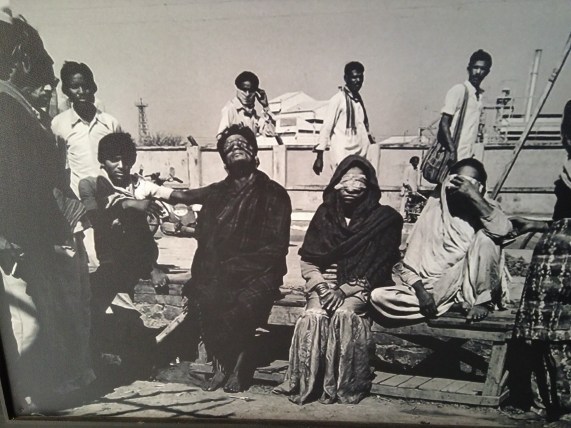
Soon after midnight on the morning of December 3rd, 1984, what is still recognized as the world’s worst ever industrial disaster took place in the city of Bhopal in central India.

A plant built to manufacture pesticide, owned by the American Union Carbide Corporation, leaked 40 tons of methyl-isocyanate gas, one of the most lethally toxic gases in the industry, over the surrounding neighbourhood. This was a poor area consisting mainly of slum housing, some of it leaning right up against the factory wall.

People woke, coughing and choking. Panic broke out as many tried to flee for their lives. As they ran, their bodies broke down with toxic poisoning, eyes burning, frothing at the mouth. Women miscarried pregnancies. Many people flung themselves in the river and by dawn, the streets were littered with thousands of bodies. It is estimated that 10,000 died that first night and the death toll continued, within weeks, to a total of about 25 000. Many more have died since. There are still reckoned to be 150 000 chronically ill survivors. Their plight was not helped by the fact that Union Carbide would not release the name of an antidote to a poison that they did not want to admit was as dangerous as it really was.

The plant, making less profit than had been hoped, was being run down for closure and was in poor condition. Not one of the safety systems was working satisfactorily. In addition, the original design of the factory had been ‘Indianized’ – in other words built more cheaply than would be expected of such a plant in a western country.

This was 35 years ago. In 1989, a paltry amount of compensation was eventually paid by Union Carbide who did everything a large corporation can do to evade taking responsibility. Their comment was “$500 is about enough for an Indian.” That was $500 to last for the rest of the life of a man who could no longer work to look after his family.

The sickness and suffering from ‘that night’ goes on in those who survived to this day. What is less well known about Bhopal however, is that even before the 1984 gas leak, the company had been dumping toxic waste in solar evaporation ponds. The lining used was about like you would use in a garden water feature. This in a country of heavy rains and floods. In the early 80s, people started to notice how bad their water supply tasted. Cows were dying.

Union Carbide closed the plant. They never cleared the site, which still stands in an area of highly toxic soil and water. The water supply in that area is so contaminated that water has to be brought in from outside. In 2001 Union Carbide was bought by the Dow Chemical Company, and is, from 2018, now DowDuPont. Despite having acquired all the assets of Union Carbide they are not prepared to accept its liabilities and clear up the site.

In the months after the gas leak in 1984, the nearby Hamidia hospital started to see children born with birth defects more horrific than any they had witnessed before. These days, because of gas- and also water-affected parents, the rate of birth defects is now reaching into a third, soon to be a fourth generation. The main parallel with the kind of extreme toxic effects would be with the children of Agent Orange in Vietnam.

The only free care in this impoverished neighbourhood for people suffering from the effects of gas poisoning, or to help with very severely handicapped children, is from the Bhopal Medical Appeal. It is to them that all the money from Mother and Child is going.

In the book, you can read more about what happened in Bhopal and about how the book itself came to be written.

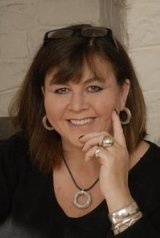
About Annie Murray

annie

Annie Murray was born in Berkshire and read English at St John’s College, Oxford. Her first ‘Birmingham’ novel, Birmingham Rose, hit The Times bestseller list when it was published in 1995. She has subsequently written many other successful novels, including The Bells of Bournville Green, sequel to the bestselling Chocolate Girls, and A Hopscotch Summer. Annie has four children and lives near Reading.

You can follow Annie on Twitter @AMurrayWriter and visit her website for more details.

There’s more with these other bloggers too:

Mother and Child

The Photographer of the Lost by Caroline Scott

The Photographer of the lost

As my own grandfather was originally listed as missing, believed dead, following his involvement on day six of the Battle of the Somme, I have always been fascinated by the individual stories of the men and boys (my grandfather was 19 at the time) who fought, so when a surprise copy of Caroline Scott’s The Photographer of the Lost arrived from Sara-Jade Virtue at Simon and Schuster, I was delighted. I would like to thank S-J for sending it to me in return for an honest review. Then when blog tour organiser Anne Cater got in touch to say she would be running a Random Things tour for The Photographer of the Lost I knew I had to be involved.

(In case you were wondering, Granddad eventually turned up blinded in one eye and with shrapnel in his body for the rest of his life. He died when he was 87. Unfit for front line duties because of his injuries, after two weeks of recovery, he was placed in the Labour Corps for the rest of the war.)

Published by Simon and Schuster on 31st October, The Photographer of the Lost is available for pre-order through the links here.

The Photographer of the Lost

The Photographer of the lost

Until she knows her husband’s fate, she cannot decide her own…
An epic novel of forbidden love, loss, and the shattered hearts left behind in the wake of World War I

‘Beautiful, unflinching, elegiac: The Photographer of the Lost is going to be on an awful lot of Best Books of the Year lists, mine included . . . it’s unforgettable’ Iona Grey, bestselling author of The Glittering Hour.

1921. Families are desperately trying to piece together the fragments of their broken lives. While many survivors of the Great War have been reunited with their loved ones, Edie’s husband Francis has not come home. He is considered ‘missing in action’, but when Edie receives a mysterious photograph taken by Francis in the post, hope flares. And so she begins to search.

Harry, Francis’s brother, fought alongside him. He too longs for Francis to be alive, so they can forgive each other for the last things they ever said. Both brothers shared a love of photography and it is that which brings Harry back to the Western Front. Hired by grieving families to photograph gravesites, as he travels through battle-scarred France gathering news for British wives and mothers, Harry also searches for evidence of his brother.

And as Harry and Edie’s paths converge, they get closer to a startling truth.

An incredibly moving account of an often-forgotten moment in history, The Photographer of the Lost tells the story of the thousands of soldiers who were lost amid the chaos and ruins, and the even greater number of men and women desperate to find them again.

My Review of The Photographer of the Lost

The end of WW1 is just the beginning of the search for missing loved ones for so many families.

I’ve been sitting here some time wondering how to do justice to Caroline Scott’s wonderful, heartbreaking and unforgettable The Photographer of the Lost. I think I might find it impossible to convey what a beautifully written, moving and profound book it is. I had thought I might have had enough of reading about WW1, but The Photographer of the Lost transcends just about everything else I’ve read about the era because of its exquisite balance of focus on the war and the aftermath for those left behind.

Caroline Scott’s prose is stunning. At times poetic, at times stark, there isn’t an unnecessary syllable in this perfectly crafted narrative. That isn’t to say it feels unnaturally polished or contrived, but rather that Caroline Scott has given her very soul to her writing to ensure she conveys exactly what she needs so that the reader is completely mesmerised. I found reading The Photographer of the Lost such an intense experience I had to give myself short breaks to process the emotion, whilst simultaneously being unable to tear myself away from Harry and Edie’s story. The Photographer of the Lost was in my head the whole time, even when I was sleeping. There is little direct speech, but what is there thrums with emotion even when it is deceptively simple in appearance.

The story itself in The Photographer of the Lost is brilliantly wrought. The passages set during the war placed me so vividly there that I felt I was experiencing the same aspects as the men. The black humour and camaraderie between the soldiers ameliorates perfectly their situations and locations and their petty resentments and jibes illustrate exactly what life was like. The representations of France and Belgium both during the war and in 1921 are so evocative that there is a cimematic quality to Caroline Scott’s writing. Descriptions are fantastic, so that I could picture every setting perfectly. Indeed, if The Photographer of the Lost doesn’t become a feature film, there is no justice.

But for all that, it is the characterisation that is so fabulous and makes The Photographer of the Lost so emotive. Although he is ‘lost’ throughout the majority of the book, Francis has such presence that he represents every single one of those who were missing at the end of the war. The way in which fate and small items (which I can’t reveal because they would spoil the plot) alter his life and history, alongside the huge arena of war, is utterly heartbreaking. There’s a brittle quality to many of the characters, Edie especially, that creates an almost unbearable tension in the writing. My heart physically ached for these people. They were as real to me as anyone I know and Harry’s awful task of photographing graves and buildings for those back in England desperate for some kind of closure brought a new perspective to reading about WW1 that felt as terrible as any factual account ever has. I was touched, educated and saddened in equal measure.

The Photographer of the Lost is a beautiful, haunting and unforgettable story. At the end of the novel I wept for them all; for Francis, Edie, Harry, for the lost and the found, and all those whose lives were so affected by events during that terrible time. Caroline Scott has written a wonderful tribute in her absorbing, moving narrative. The Photographer of the Lost is a remarkable book and I adored every word.

photographer of the lost graphic

About Caroline Scott

Caroline Scott

Caroline completed a PhD in History at the University of Durham. She developed a particular interest in the impact of the First World War on the landscape of Belgium and France, and in the experience of women during the conflict – fascinations that she was able to pursue while she spent several years working as a researcher for a Belgian company. Caroline is originally from Lancashire, but now lives in southwest France.

You can follow Caroline on Twitter @CScottBooks.

There’s more with these other bloggers too:

Photographer of the Lost 2 BT Poster (1)

The Sunday Times/University of Warwick Young Writer of the Year Award Shortlist

young writer award logo 2019

A few days ago I was thrilled to share the news that I had been asked to be part of a blogger shadow judging panel for The Sunday Times/University of Warwick Young Writer of the Year Award in a post you can see here. All the details about the award can be found on The Sunday Times/University of Warwick Young Writer’s Award website.shadow panel

Today it gives me enormous pleasure to reveal the books I shall be reading and judging along with my fellow panel members. Congratulations to all the shortlisted authors.

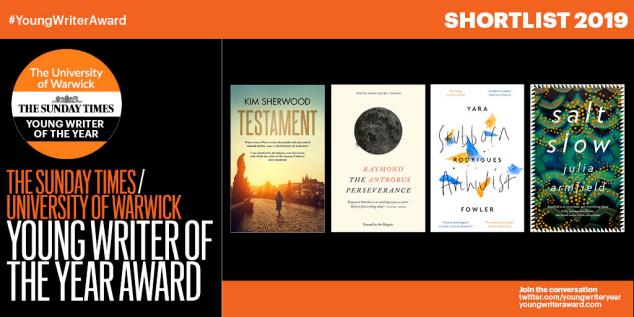
The exceptional debuts of multi-award-winning British-Jamaican poet Raymond Antrobus, The White Review Short Story Prize winner Julia Armfield, British-Brazilian novelist Yara Rodrigues Fowler, and writer and Creative Writing teacher Kim Sherwood have been shortlisted for the 2019 Sunday Times / University of Warwick Young Writer of the Year Award. It is the first year the University of Warwick, home to the acclaimed Warwick Writing Programme, acts as the title sponsor of the prize, following two years as its associate partner.

The judges have chosen the shortlisted titles – two novels, a poetry and a short story collection; written by three women and one man – from a record number of submissions to the prize. Publishers submitted over 100 books this year – prompting The Sunday Times Literary Editor Andrew Holgate, Chair, to sign up two further judges: the writer, editor and bookseller Nick Rennison and the University of Warwick’s Gonzalo C. Garcia have joined the award-winning poet and writer Kate Clanchy and the bestselling author Victoria Hislop. The judges will announce their decision on December 5th with the shadow panel giving their result on the previous Sunday.

Let’s take a look at the shortlisted books:

Salt Slow by Julia Armfield

julia armfield instagram

In her brilliantly inventive and haunting debut collection of stories, Julia Armfield explores bodies and the bodily, mapping the skin and bones of her characters through their experiences of isolation, obsession, love and revenge.

Teenagers develop ungodly appetites, a city becomes insomniac overnight, and bodies are diligently picked apart to make up better ones. The mundane worlds of schools and sleepy sea-side towns are invaded and transformed, creating a landscape which is constantly shifting to hold on to its inhabitants. Blurring the mythic and the gothic with the everyday, Salt Slow considers characters in motion – turning away, turning back or simply turning into something new entirely.

Winner of The White Review Short Story Prize 2018, Armfield is a writer of sharp, lyrical prose and tilting dark humour – Salt Slow marks the arrival of an ambitious and singular new voice.

Salt Slow is available for purchase through the links here.

Stubborn Archivist by Yara Rodrigues Fowler

yara rodrigues fowler instagram

When your mother considers another country home, it’s hard to know where you belong. When the people you live among can’t pronounce your name, it’s hard to know exactly who you are. And when your body no longer feels like your own, it’s hard to understand your place in the world.

This is a novel of growing up between cultures, of finding your space within them and of learning to live in a traumatized body. Our stubborn archivist tells her story through history, through family conversations, through the eyes of her mother, her grandmother and her aunt and slowly she begins to emerge into the world, defining her own sense of identity.

Stubborn Archivist is available for purchase through the links here.

Testament by Kim Sherwood

kim sherwood instagram

Of everyone in her complicated family, Eva was closest to her grandfather: a charismatic painter – and a keeper of secrets. So when he dies, she’s hit by a greater loss – of the questions he never answered, and the past he never shared.

It’s then she finds the letter from the Jewish Museum in Berlin. They have uncovered the testimony he gave after his forced labour service in Hungary, which took him to the death camps and then to England as a refugee. This is how he survived.

But there is a deeper story that Eva will unravel – of how her grandfather learnt to live afterwards. As she confronts the lies that have haunted her family, their identity shifts and her own takes shape. The testament is in her hands.

Kim Sherwood’s extraordinary first novel is a powerful statement of intent. Beautifully written, moving and hopeful, it crosses the tidemark where the third generation meets the first, finding a new language to express love, legacy and our place within history.

Testament is available for purchase through the links here.

The Perseverance by Raymond Antrobus

raymond antrobus instagram (1)

Ranging across history and continents, these poems operate in the spaces in between, their haunting lyrics creating new, hybrid territories. The Perseverance is a book of loss, contested language and praise, where elegies for the poet’s father sit alongside meditations on the d/Deaf experience.

The Perseverance is available for purchase though the links here.

I’m so excited about reading all of these fabulous young writer and will be featuring each book on Linda’s Book Bag over the next three weeks. I wonder which book appeals to you most?

shortlist 2019 twitter

The Guardian of Lies by Kate Furnivall

Guardian of Lies

I am genuinely delighted to be part of the paperback launch for The Guardian of Lies by Kate Furnivall because I have been privileged to meet her on several occasions, the first being a blogger and author event that you can read about here, and I love Kate’s writing. My enormous thanks to Rubicka Kumari at EDPR for inviting me to participate. Kate was last here on Linda’s Book Bag when we stayed in together to chat about The Survivors and you can read my review of Kate’s The Betrayal here.

As well as my review of The Guardian of Lies today, I’m thrilled to be able to offer a paperback copy of the book to one lucky UK reader in a giveaway that you’ll find at the bottom of this blog post.

The Guardian of Lies is available for purchase in all formats through the links here.

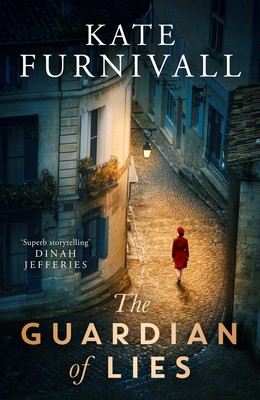
The Guardian of Lies

Guardian of Lies

1953, the South of France. The fragile peace between the West and Soviet Russia hangs on a knife edge. And one family has been torn apart by secrets and conflicting allegiances.

Eloïse Caussade is a courageous young Frenchwoman, raised on a bull farm near Arles in the Camargue. She idolises her older brother, André, and when he leaves to become an Intelligence Officer working for the CIA in Paris to help protect France, she soon follows him. Having exchanged the strict confines of her father’s farm for a life of freedom in Paris, her world comes alive.

But everything changes when André is injured – a direct result of Eloise’s actions. Unable to work, André returns to his father’s farm, but Eloïse’s sense of guilt and responsibility for his injuries sets her on the trail of the person who attempted to kill him.

Eloïse finds her hometown in a state of unrest and conflict. Those who are angry at the construction of the American airbase nearby, with its lethal nuclear armaments, confront those who support it, and anger flares into violence, stirred up by Soviet agents. Throughout all this unrest, Eloïse is still relentlessly hunting down the man who betrayed her brother and his country, and she is learning to look at those she loves and at herself with different eyes. She no longer knows who she can trust. Who is working for Soviet Intelligence and who is not? And what side do her own family lie on?

My Review of The Guardian of Lies

Eloïse finds that all is not as it might appear in her life.

The Guardian of Lies opens with thrilling pace and action which Kate Furnivall maintains throughout the entire novel so that I was completely spellbound by her storytelling. This is a narrative that twists and turns and is as duplicitous as the spies and agents featured in its tale. I thought it was excellent, particularly because I was as manipulated and tricked as is Eloïse.

What Kate Furnivall does so well is to create a sense of time and place that utterly transports the reader. Her research is meticulous and I went off to investigate aspects of the text for myself to see which parts were fact and which fiction. I have learnt more about post-WW2 France than I ever knew before. That said, The Guardian of Lies is no dusty historical tract, but rather a heart-thumping thriller with a smattering of romance, deceit and national identity that is completely compelling. Add in the fabulous geographical detail that brings the Camargue vividly to life and The Guardian of Lies becomes a perfect read. The depiction of the landscape in The Guardian of Lies makes it feel as if this narrative couldn’t possibly have taken place anywhere else.

My total enjoyment in Kate Furnivall’s novels too, comes from her strong female lead characters. Eloïse is capable and determined, yet has a vulnerability that makes her completely convincing. Her feelings of guilt, her fears, her need to belong, to atone and to find peace touched me as well as entertained me. I don’t want to say too much about others in the story as I am afraid of giving away too much detail, but I will confess that I was as much in the dark about many of them as is Eloïse!

The Guardian of Lies is a thrilling read with a menacing atmosphere that Kate Furnivall creates without recourse to explicit visceral violence, although she is not afraid to present brutality appropriately. For me this is the perfect balance. I found my heart beating and my allegiances wavering as I read. When I finished The Guardian of Lies I felt I had been on a speeding roller coaster of events that were spellbinding. I loved this book unreservedly!

About Kate Furnivall

kate-furnival

Kate Furnivall didn’t set out to be a writer. It sort of grabbed her by the throat when she discovered the story of her grandmother – a White Russian refugee who fled from the Bolsheviks down into China. That extraordinary tale inspired her first book, The Russian Concubine. From then on, she was hooked.

Kate is also the author of The White Pearl and The Italian Wife. Her books have been translated into more than twenty languages and have been on the New York Times Bestseller list.

You can follow Kate on Twitter @KateFurnivall, visit her website and find her on Facebook.

There’s more with these other bloggers too:

The Guardian of Lies Blog Tour Banner

Giveaway A Paperback Copy of The Guardian of Lies

Guardian of Lies

For your chance to win a paperback copy of The Guardian of Lies by Kate Furnivall, click here.

UK only I’m afraid and the giveaway closes at UK midnight on Saturday 8th November.