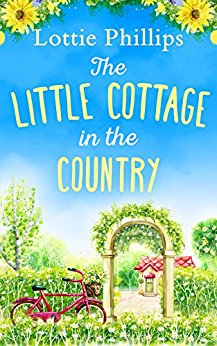
Three Pros and Cons of Dating in the Countryside: A Guest Post by Lottie Phillips, Author of The Little Cottage in the Country

51Eu10jnAZL._SY346_

I really love the look of The Little Cottage in the Country by Lottie Phillips and only wish my TBR wasn’t so huge that I haven’t had chance to read it. However, I am thrilled to be part of the launch celebrations and host a smashing guest post from Lottie all about the pros and cons of dating in the countryside. Having grown up in the countryside I can relate to them completely!

The Little Cottage in the Country was published by HQ Digital, an imprint of Harper Collins, on 3rd July 2017 and is available for purchase through the links here.

The Little Cottage in the Country
51Eu10jnAZL._SY346_

Escape to the country!

Anna Compton thought that moving to the countryside, leaving London and her past firmly behind her was the perfect solution. Goodbye life of thirty-something, crazed single mum of two, hello country glamour queen, domestic goddess and yummy-mummy extraordinaire.

But her new life at Primrose Cottage isn’t quite what she expected! Very soon she’s chasing pork pies down hills, disguising her shop-bought cakes at the school bake sale – and trying to resist oh-so-handsome Horatio Spencerville, who just so happens to be the Lord of the Manor…

Could moving to the country be the biggest mistake she’s ever made?

Three Pros and Cons of Dating in the Countryside

A Guest Post by Lottie Phillips

Location. Location. Location.

There are often many miles between eateries. So, you’ve agreed to go on a date with the local farmer. I warn you now that, unlike in a town or city, quite often you will be stuck at said eatery. He might choose to take you, for example, to the Five Bulls. Oh, you think excitedly, how romantic, how authentically country. You’re thinking quaint, cosy pub with roaring fire and epic Michelin-quality food. Only, you get there and it’s filthy with a fire chugging out enough soot and smoke to cause the Kyoto Protocol to fall down and your dog, Alfie, sees better food at home. On the other hand, you might strike lucky and end up at a gastro-pub sipping on Prosecco and looking up at the stars. The point is you can’t easily roll onto the next place, so if he’s in for the long haul, you might be too.

Outfit.

It’s a minefield. You want to impress, look sexy but remember those heels might not make it through that muddy field. That’s not to say, the countryside is uncivilised. We do have tarmac. It’s just it might be dark or the car might be parked down a track. However, I have seen heeled wellies. Just saying.

Choice of tipple.

Quite often, you will be picked up and can drink the night away, not worrying about driving later on. Bonus. Only, then you find out he is the most self-indulgent bore of a man and you are desperate for him to take you home. So it depends on the man and if you want to impress. Like any date, this will quickly become apparent. For example, say you go on a date with Lord such and such, you may want to go for your classic dry white wine, at which point he may offer to buy you champagne. If he’s boring the pants off you, start ordering Snake Bites. Works every time. Let’s say, instead, you’ve opted for the handsome stable hand who drinks Guinness like it’s his lifeline. If you like him, maybe try a pint of the Black Nectar, if you don’t, order a bottle of Taittinger and he’ll soon get you home.

About Lottie Phillips
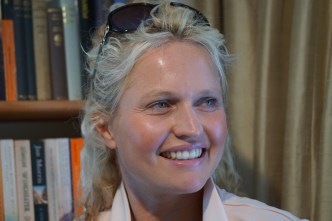
Lottie Phillips in her office by her bookcase.JPG

Charlie Phillips, writing under the pseudonym Lottie Phillips, worked as a teacher before turning her hand to fiction. She was brought up in Africa and the Middle East and then – as an adult – travelled extensively before moving to London and finally settling in the Cotswolds with her partner and toddler. When she’s not writing, you will find her scouring interior design magazines and shops, striving toward the distant dream of being a domestic goddess or having a glass of wine with country music turned up loud. As a child, she always had her nose in a book and, in particular, Nancy Drew.

The Little Cottage in the Country is Charlie’s debut romantic comedy. She is very excited to be sharing Anna Compton’s hilarious story with you! She also writes psychological thrillers under the pseudonym Louise Stone, including the best selling novel, S is for Stranger.

You can follow Charlie Phillips on Twitter or find out more on her website. You’ll also find her on Facebook.

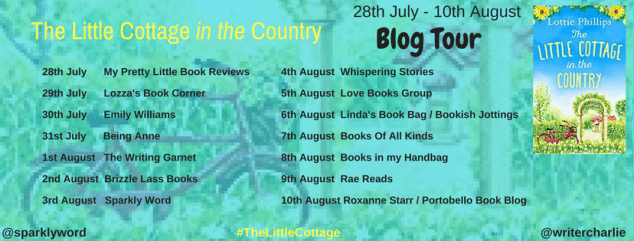
There’s more with these other bloggers too:
The LittleCottage Tour Banner

An Extract from The Unquiet Dead by Ausma Zehanat Khan

The Unquiet Dead Cover.jpg

I’m delighted to be part of the UK launch celebrations for The Unquiet Dead by Asuma Zehanat Khan. The Unquiet Dead is part of the Detective Esa Khattak and Rachel Getty Mysteries.

The Unquiet Dead was published by No Exit Press on 19th July 2017 and is available for purchase here.

The Unquiet Dead

The Unquiet Dead Cover.jpg

One man is dead.

But thousands were his victims.

Can a single murder avenge that of many?

Scarborough Bluffs, Toronto: the body of Christopher Drayton is found at the foot of the cliffs. Muslim Detective Esa Khattak, head of the Community Policing Unit, and his partner Rachel Getty are called in to investigate. As the secrets of Drayton’s role in the 1995 Srebrenica genocide of Bosnian Muslims surface, the harrowing significance of his death makes it difficult to remain objective. In a community haunted by the atrocities of war, anyone could be a suspect. And when the victim is a man with so many deaths to his name, could it be that justice has at long last been served?

In this important debut novel, Ausma Zehanat Khan has written a compelling and provocative mystery exploring the complexities of identity, loss, and redemption.

An Extract from The Unquiet Dead

CPS, the Community Policing Section that Khattak headed, was still fragile, barely a year into its existence. The ambit was deliberately vague because CPS was a fig leaf for the most problematic community relations issue of all – Islam. A steady shift to the right in Canadian politics, coupled with the spectacular bungling of the Maher Arar terrorism case in 2002, had birthed a generation of activist lawyers who pushed back vigorously against what they called tainted multiculturalism. Maher Arar’s saga of extraordinary rendition and torture had mobilized them, making front-page news for months and costing the federal government millions in compensation when Arar had been cleared of all links to terrorism. A hastily concocted Community Policing Section had been the federal government’s response, and who better than Esa Khattak to head it? A second-generation Canadian Muslim, his career had seen him transition seamlessly from Toronto’s homicide squad to national counterintelligence work at INSET, one of the Integrated National Security Enforcement Teams. CPS called on both skill sets. Khattak was a rising star with an inbuilt understanding of the city of Toronto’s shifting demographic landscape. At CPS, he was asked to lend his expertise to sensitive police investigations throughout the country at the request of senior investigating officers from any branch of government.

The job had been offered to Khattak as a promotion, his acceptance of it touted as a public relations victory. Khattak had taken it because of the freedom it represented: the chance to appoint his own team, and as with INSET, the opportunity to work with partners at all levels of government to bring nuance and consideration to increasingly complex cases.

And for other reasons he had never offered up for public scrutiny.

His mandate was couched in generic terms: sensitivity training for police services, community support, and an alternative viewpoint in cases involving minorities, particularly Muslim minorities. Both he and his superiors understood the unspoken rationale behind the choice of a decorated INSET officer to head up CPS. If Khattak performed well, then greater glory to the city, province, and nation. If he ran into barriers from within the community as he pursued his coreligionists, no one could accuse the CPS of bias. Everyone’s hands were clean.

It didn’t matter to Khattak that this was how he had been lured into the job by his former superintendent, Robert Palmer.  He loved police work. It suited an analytical nature tempered by a long-simmering hunger for justice. And if he was being used, as indisputably he was, he was also prepared to enact his own vision for CPS.

What flame-fanning bigots across the border would doubtlessly call community pandering, a fig-leaf jihad. Take anything a Muslim touched, add the word jihad to it, and immediately you produced something ugly and divisive.

But Tom wasn’t one of these. Chief historian at the Department of Justice, he was a gifted academic whose fatherly demeanor masked a passion for the truth as sharp and relentless as Khattak’s own.

He had called to ask Khattak to investigate the death of a Scarborough man named Christopher Drayton. There was no reason that CPS should have an interest in the man’s death. He had fallen from a section of the Scarborough Bluffs known as the Cathedral. His death had been swift and certain with no evidence of outside interference.

Khattak had pointed this out to his friend in measured tones, and Tom had let him. When he’d finished, Tom gave him the real reason for his call and the reason it encroached upon Khattak’s jurisdiction.

Khattak heard the worry and fear beneath Tom Paley’s words.

And into the remnants of Khattak’s prayer intruded a series of recollections from his youth. Of news reports, hurriedly organized meetings and volunteer drives, followed too slowly by action. He saw himself as a young man joining others in a circle around the flame at Parliament Hill. He absorbed the thick, despairing heat of that summer into his skin. His dark hair flattened against his head; he felt in that moment his own impotence.

He listened to Tom’s labored explanation, not liking the hitch in his friend’s breath. When Tom came to the nature of his request, Khattak agreed. But his words were slow, weighted by the years that had passed since that summer. Still, he would do as asked.

‘Don’t go alone,’ Tom said. ‘You’ll need to look objective.’

Khattak took no offense at the phrasing. He knew the unspoken truth as well as Tom did.

Because you can’t be.

About Ausma Zehenat

Azuma

Photo courtesy of Atif Khan

Ausma Zehanat Khan is the author of The Unquiet Dead and winner of the Barry Award, the Arthur Ellis Award and the Romantic Times Reviewers Choice Award for Best First Novel.  She was Editor in Chief of Muslim Girl magazine. The first North American magazine to address a target audience of young Muslim women.

Married and living in Colorado, Ausma has a Ph.D. in International Human Rights Law with a research specialization in military intervention and war crimes in the Balkans.

You can follow Ausma on Twitter @AusmaZehanat and visit her website. You’ll also find her on Facebook.

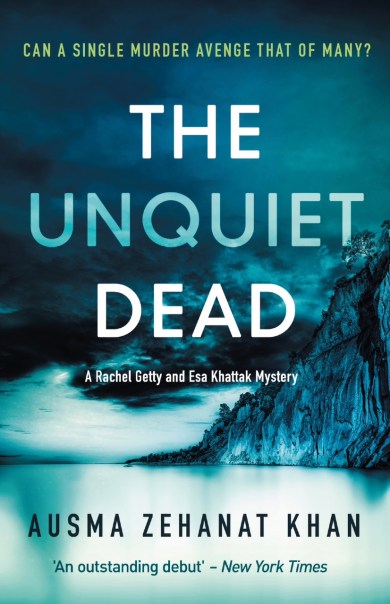
There’s more with these other bloggers too:
Unquiet Dead Blog Tour Poster

Ravelled and Other Stories by Sue Hampton

ravelled

It was back in January when Sue Hampton kindly sent me her book of short stories, Ravelled and Other Stories, for review but I have only now been able to get to it to read. Having previously featured Sue’s husband Leslie Tate on Linda’s Book Bag here, I feel it’s only right to redress the balance!

Ravelled and Other Stories is published by TSL Publications and is available for purchase in e-book and paperback here.  Sue also has a follow up collection Woken available here.

Ravelled and Other Stories

ravelled

In these vivid explorations of love, loss and longing, novelist Sue Hampton uses humour as well as poetry, but character always leads.

Varied and distinctive, these stories range from sharp to poignant and contemporary to lyrical and fable-like.  It’s a collection full of humanity.

My Review of Ravelled and Other Stories

Ravelled is a mix of stories from the allegorical The Goddess, through the more prosaic Away For Christmas to the reworking of a fairy story in The Brute and the Beast.

I don’t often read short stories so I thought I’d just dip in to Ravelled and read the first one as I had just finished another book. Before I knew where I was, an entire block of time had vanished and I had devoured every one! I was immediately gripped by the first in the collection, The Boarder, as there is a husband called Steve. My husband is called Steve. The protagonist, Kate, is grieving her recently deceased father. I’m grieving my recently deceased father. Kate’s father had been unhappy at boarding school. My father-in-law had been unhappy in boarding school. In Away for Christmas, I felt Gerry was exactly the kind of woman I could become and she was the character I liked most in all of the tales. In If, Tess is the same age as me. There are Lindas in Ravelled and Susan wants to be known as Sue, just like my own sister Sue. It felt as if Sue Hampton was writing something that I could immediately relate to and that she was also prepared to lay bare her own soul in the telling. I wonder whether being a woman of a certain age means that this collection appeals so much?

In fact I loved all Sue Hampton’s writing. Sometimes her meaning is ever so slightly obscure so that the reader can bring their own interpretation to the story and extract a meaning that makes it entirely personal to them. She creates poetry with her words and people in whom the reader can instantly believe and with whom they can empathise. I encountered more emotion and better drawn people in each short story that I often find in lengthy novels.

I loved the themes of love, loss, loneliness, forgiveness, youth, age and relationships that form the basis of every story. There is an intensity of passion, hope and love that shines through even the most adverse moments in the stories. There is also great humour. Read where Tess needs to keep her handkie in If!

From rarely reading short stories, Sue Hampton has persuaded me that I must read more. Ravelled is a gorgeous collection; beautifully written and touching so that I recommend it most highly.

About Sue Hampton

Sue hampton

Sue Hampton writes for adults as well as children and teenagers, and across genres. An ex-teacher, she was inspired by the stories of Michael Morpurgo, because she witnessed their emotional power over young readers. Sue aims to write deep, compelling novels that will make people think and feel. Now a full-time author, Sue visits schools of all kinds and works with young people of all ages.

Many of her passions can be detected in her novels, which are all different, (some historical, one futuristic, one magical and funny) but have in common themes like love, courage, freedom and our right to be different.

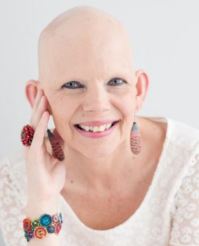
Sue herself looks a little different from most women because she has alopecia, having lost all her hair in 1981. After writing The Waterhouse Girl about a girl with alopecia, she began going bareheaded and feels strangely liberated even though it isn’t easy. As an Ambassador for Alopecia UK she supports others with hair loss and led a team on Eggheads, winning £25K for the charity. Sue also lectures on the importance of fiction in school.

You can find out more about Sue on her website, on Facebook and by following her on Twitter.

An Interview with Helen Keeling-Marston, Author of Two Hundred Very Short Stories

200 very short stories

Many visitors to Linda’s Book Bag will bewail the lack of time to read. We have such busy lives, frequently dropping off to sleep in bed, after rereading the same paragraph several nights in a row and never getting anywhere. When Helen Keeling-Marston asked me if I’d like to review her Two Hundred Very Short Stories I thought there might be a solution! I enjoyed them so much I asked Helen if she would agree to an interview about them and luckily she would.

Two Hundred Very Short Stories is available for purchase in e-book and paperback here.

Two Hundred Very Short Stories

200 very short stories

Two Hundred Very Short Stories is a collection of stories each so short that the reader can start … and finish … a whole one in one night – some even in a minute! Recognising that many people don’t have enough time for regular reading – and thus can easily lose the thread of a novel – Helen Keeling-Marston set about writing a collection of short stories.

Two Hundred Very Short Stories – Helen’s first book – features an eclectic mix of short stories and flash fiction: flash fiction being works of extreme brevity. Similar to a musical mix tape, the collection of stories aims to elicit a range of different emotions from the reader: joy, sadness, amusement, befuddlement, intrigue and fear. Be warned, however, that you’ll need to have your wits about you when reading this book, as Two Hundred Very Short Stories isn’t always a passive experience!

An Interview with Helen Keeling-Marston

Welcome to Linda’s Book Bag, Helen. Thank you so much for agreeing to answer some questions on my blog about your writing and Two Hundred Very Short Stories in particular. Firstly, please could you tell me a little about yourself?

I sure can. My name’s Helen, I’m from Hampshire, England, and I work as an analyst. When I’m not analysing things, I like to tap into my creative side and I do this by writing fiction and composing music. The other big passion in my life is sport and I run a charity in my evenings and weekends (Support through Sport UK) that is trying to both smash down the barriers that prohibit sport for all and use sport for good. When not analysing, creating or working on my charity, I like nothing better than to wind down with my husband on a mountain bike ride, walk or run. Reading this back, it occurs to me that I’m clearly someone who likes to be very busy!

(I’d say so!)

Without spoiling the read, please could you tell us a bit about Two Hundred Very Short Stories?

Two Hundred Very Short Stories is a collection of very short stories (and some really are very short – i.e. just a few words) that explores life, really. The intention was to create a mix of stories that would elicit a range of different responses from the reader: joy, amusement, sadness, fear, deep thought, befuddlement etc. which, I suppose, is very similar to the feelings that people fluctuate between in their day-to-day lives (although hopefully they mostly experience joy and amusement). I wrote the book as I got frustrated when reading in the evening as, tired from the day, I’d fall asleep five or ten minutes into a book and would really lose the thread of the story – so I wanted to create a book where the reader could read a whole story in one night and then fall asleep (and not, hopefully, because of my book).

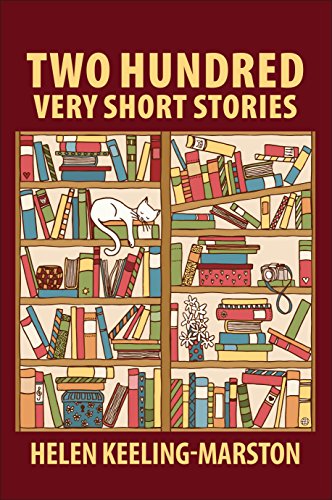
Two Hundred Very Short Stories has a cover that suggests quite a chaotic reader to me, but one that could pick up a book at any time. What message were you hoping to convey through the book’s cover?

Just that really. This is a book that covers all sorts of topics and is written in all sorts of styles (some a bit wacky!). It’s something that I was hoping that people could dip into for a few minutes here or there: just like you could quickly dip into the various books on the cover’s bookcase.

I found quite a devilish sense of humour behind many of your pieces in Two Hundred Very Short Stories. How far is that true of you as a person as well as a writer?

This question made me laugh out loud as the people who know me best would definitely say that I have a devilish sense of humour! I don’t think I can over-state how important I think humour and laughing is.

Several of your pieces in Two Hundred Very Short Stories relate to education in various forms. Why is this a recurring theme?

That’s an interesting observation and I think it stems from a real belief I have in not discouraging children (I’ve worked with children in the past). I think that children are very impressionable and that a ‘put-down’ at a young age can lead to a knock in confidence that can sometimes stop them from going on to do great things. At the risk of getting too deep, I sort of think that about society as a whole really. If you ever dip into social media, you come across so much negativity and I think that it would be great if we could live in a world that was more positive and encouraging.

(I agree completely Helen.)

Similarly, you seem to contemplate death quite frequently too. How far do you think this type of contemplation is an essential part of the human condition.

Yes, there are a few stories about death in the book. For me, though, it’s more about pondering why we’re all here. My mind often goes off at tangents and I wonder things such as: “What if Earthlings are just counters in a big game played by aliens” (story 108!).

How did you decide the order to present your Two Hundred Very Short Stories?

I tried to mix it up as much as possible so that if, say, there was a very sad story, it would immediately be followed by a light-hearted or amusing tale.

I found I had to think quite hard for some of your pieces and I needed a mirror too on occasion. How far was it your intention to challenge as well as entertain your reader?

Yes, I really wanted to challenge people because the sorts of books that I most enjoy reading are the ones that really make me stop and think. I wanted most of the stories to be comprehensible after a bit of thought – but I wanted some to be so abstract and left field that they would leave the engaged reader pondering for a good few days. I was also really seduced by the idea of getting the reader to have to ‘participate’ in some of the stories, such as the mirror one!

If you had 15 words to persuade a reader that Two Hundred Very Short Stories should be their next read, what would you say?

This is a book that makes you think and, in places, hopefully makes you smile

Thank you so much for your time in answering my questions Helen.

My Review of Two Hundred Very Short Stories

When we only have 30 seconds to spare, wouldn’t it be lovely to read a whole story? Now we can.

Two Hundred Very Short Stories is a brilliant idea and I really enjoyed the eclectic mix of writing and the level of engagement I found. I’ve never needed a mirror to read a story before!

Helen Keeling-Marston manages to pack quite a punch and I found the themes of education, love, relationships, death and so on all explored with considerable depth despite the brevity of the stories. Many have quite a surprising twist and there is so much underlying humour to that I laughed aloud frequently. I won’t be using my shopping trolley quite so thoughtlessly any more!

My favourite story I think was 33, about Dafydd and the Lego because of the level of compassion displayed by Dr Praesh. I’m not sure how Helen Keeling-Marston manages to convey character and emotion so convincingly in such a brief two page story, but my heart went out to Dafydd.

Although I read Two Hundred Very Short Stories in the order they were presented, I think there would be enormous pleasure in simply dipping in and out as a story caught the eye.

Two Hundred Very Short Stories is quirky, emotional, fun and entertaining. I highly recommend it. 

About Helen Keeling-Marston

Helen

Having previously worked with numbers, Helen is a sports writer and launched a sports charity, Support Through Sport. In fact, Helen loves all things sport – whether it’s writing about it, playing it or encouraging others to participate.

You can find out more about Helen and her work on Twitter, or on @helenkeeling, Helen’s website and the Support Through Sport Website and on Facebook.

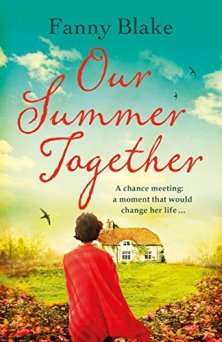
Our Summer Together by Fanny Blake

Our summer together

My enormous thanks to Elaine Egan at Orion for sending me a surprise copy of Our Summer Together by Fanny Blake in return for an honest review.

Our Summer Together was published by Orion on 13th July 2017 and is available for purchase here.

Our Summer Together

Our summer together

Our Summer Together is an uplifting story about family, friendship and the happy surprise of finding love later in life.

Caro knows how to be a mother – advising her grown-up daughters on career and relationship worries. She knows how to be a grandmother – enjoying the hectic energy of her three-year-old grandson. She knows how to be a daughter – helping her aging mother retain her independence.

She thought she knew everything about being a wife, but when her husband suddenly leaves her for another woman, everything is thrown in the air. So, when a chance meeting introduces her to Damir – younger, intriguing and attentive – she realises that opening up to a man so different from everyone else in her life, might also mean getting to know who she really is…

My Review of Our Summer Together

Caro is at crossroads in her life as her husband leaves her for a much younger woman, but a chance encounter on a train could impact more than she imagines.

Our Summer Together is a glorious celebration of womanhood in middle life. I don’t know whether it’s because I’m not far off the age Caro is at in her early sixties, but I absolutely adored this read. I thought Caro’s strengths and insecurities, her sense of self and identity, were those any woman would encounter at some point in their lives. It was so wonderful to have a female protagonist who retains her sensuality beyond the age of sixty without being a vamp. She is such a realistic character so that I felt every one of her emotions as if I were her. Indeed, all Fanny Blake’s characters felt like real people to me to the extent that I could quite cheerfully have slapped Lauren because I despised her so much at one point. It says something too about the quality of Fanny Blake’s writing, that she made me change my views later.

I loved the overall style. Dialogue is natural and descriptions so finely balanced that they add to the settings without a single extraneous word. This is beautiful writing that manages at once to be both charming and realistic, making for a hugely satisfying read.

I loved the plot of Our Summer Together too and the essential message that we should live in the moment and make the most of every precious day. There is intense passion, fear, loneliness and contentment woven into the narrative so that I felt totally immersed in an experience rather than just a read. The concept of identity is so well explored and it made such a change to have a realistic middle aged woman at the centre of the action. I thought Our Summer Together was a grown up, realistic story and I absolutely devoured it in less than 24 hours because once I’d started I HAD to know what happened to them all, even Chris and Lauren whom I didn’t much like. Added depth comes from the background to Damir’s story too so that I felt I had understood the impact of recent history on the individual, taking me beyond the vague memories of news stories in the past.

Our Summer Together celebrates the pain and joy of living, of being a woman, of making the most of life, including when it challenges us. I loved it.

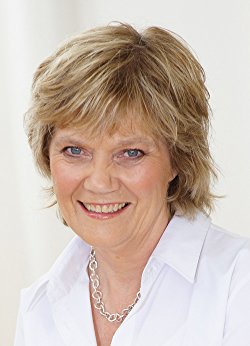
About Fanny Blake

fanny blake

Fanny Blake was a publisher for many years, editing both fiction and non-fiction before becoming a freelance journalist and writer. She has written various non-fiction titles, acted as ghost writer for a number of celebrities, and is also Books Editor of Woman & Home magazine. She has written seven novels, including House of Dreams and Our Summer Together.

You can follow Fanny on Twitter @FannyBlake1, find her on Facebook or visit her website.

Why Read Dystopian Fiction? – A Guest Post by Dylan Callens, Author of Interpretation

Interpretation200px

I’m sure other bloggers understand when I say I have literally scores of requests to read books for review each week. One of the genres that I almost never read is dystopian fiction and when I told author of Interpretation, Dylan Callens, this he was horrified. So, I asked him onto Linda’s Book Bag to try to persuade me otherwise!

Interpretation is published today 1st August 2017 by Cosmic Teapot and is available from all online stores, including here.

Interpretation

Interpretation200px

Carl Winston awakens to find his son, Liam, screaming with fear. Trying to understand why, Carl tries to soothe him. Neighbors gather in front of Carl’s apartment to help – until they see him. The crowd cowers back, afraid of this monster.

Carl runs. His life of luxury is ripped away. Forced beyond the city limits, Carl sees a land bereft of life. Traveling in search of answers, his quest comes to a sudden halt when he collapses. As darkness shrouds him, a figure hovers from above.

Traveling along the same route, Eva Thomspon finds Carl and nurtures him back to life. Together, they continue the journey, finding out that their lives have too much in common to be a coincidence. As their affection for each other deepens, an unknown nemesis attempts to remove their only source of happiness – their love for each other.

Interpretation is a dystopian fiction that explores hope and happiness in the bleakest of conditions and what happens when it’s torn away.

Why Read Dystopian Fiction?

A Guest Post by Dylan Callens

Now, you have to understand, I was shocked when Linda didn’t want to read my novel because, and I quote, “I don’t read dystopian fiction if I can avoid it!”  So, I have taken it upon myself to explain why this is so wrong.  Maybe you agree with Linda.  And why wouldn’t you?  Dystopian novels are depressing, aren’t they?

But dystopian novels serve as a reminder about why we need to be vigilant.  In Orwell’s classic, Nineteen Eighty-Four, we are warned to think for ourselves and keep examining the big issues.  We have to keep the government accountable for their doings.  Truth needs to be uncovered.  In Fahrenheit 451 we are told to preserve knowledge and hold dear our right to free speech.  In The Road, we are taught about the importance of holding on to love in the most desperate of times.

Brave New World also serves as a reminder about why love is important.  In Huxley’s world, attachment to one person is outlawed.  Sex is used to pacify, not for procreation.  Relationships are vapid and no one holds a strong emotional attachment to other people.  This is clearly not a future most people want to see.

In this way, I think that dystopian novels are the most important ones to read.  On the surface they appear to be depressing, but they aren’t.  They encourage us to look for the best in humanity right now.  They warn us about what might happen if we let go to the things that make us human.  If we give up our freedoms to any authority, we begin to lose control of our lives, collectively.  If we look for easy answers through computers and technology, then perhaps we become enslaved by them in some ways, such is the case in my novel, Interpretation.

All of these stories encourage us to be better.  To be more vigilant.  To be more… human.

That’s why I have written a dystopian novel.  I wanted to examine what is best about humanity and think about what would happen if we let that go, even if it is by accident.  Although it may seem like I have written a novel that warns against technology, this is not entirely true.  I embrace technology but we have to always keep it in check.  We certainly don’t want to lose ourselves in making life a little easier.

What I have written, and I think many dystopian novels hint at, is a hope for humanity.  We all hope for a better future.  Dystopian novels just have a funny way of showing this hope.

(Ironically, Dylan, not only do I completely agree with you, but I have read all the other novels you mention in your post, except The Road, too so maybe I do read dystopian fiction! I think others should have the chance to decide for themselves so let’s have an extract from Interpretation.)

An Extract from Interpretation

Carl closed his eyes and tried to laugh at himself.  Barely a squeak left his mouth.  What was he thinking, trying to enter this godforsaken wasteland by himself with no supplies?  Still on his back, he dreamed about opening a bottle of Ocean Surge.  Wet bubbles danced against his tongue, bathing his taste buds with refreshing fruit-infusion – small bursts of happiness made his lips sing an ode to joy.

But forget that fantasy; sulfur-ridden tap water would be just as good.  Carl knew the taste would not equate, but its effect would invigorate.  Carl smiled, his eyes wide open, staring into the dimming sky, into the nothingness that surrounded him.  Gulp after glorious gulp of imaginary liquid until he couldn’t keep up, showering his face with it until a puddle formed around him.  That puddle turned into an ocean and Carl sank to the bottom, his faint breath weakening further.  The light grew dimmer.  He tried to reach up, to reach out of the depths of his hallucination, but his arms felt too heavy, as if the pressure at this depth couldn’t be overcome.

A shadow hovered over him.  Carl tried to speak to it, but words didn’t make sense.  The shadow spoke back with a meaningless, muffled slur.  Water entered Carl’s mouth, nearly choking him.  Nonetheless, the delicious wet felt so good, like ocean refreshment in every bottle.  That was the slogan, right?  Carl laughed or cried, he couldn’t tell.  For all he knew, he was dead.  The shadow grew, saying something that he couldn’t work his mind around.  Darker. Darker.  Clock, what the hell was that clock song?  Darker. The shadow drew nearer.  Or maybe it was the darkness.  It was bought on the morn of the day that he was born, And was always his treasure and pride… Ah yes, there it is.  But it stopped short – never to go again – When the old man died.  That’s the one.  Darkness.

About Dylan Callens

smallerprofilepicdylancallens

Dylan Callens lands cleanly. That would be the headline of a newspaper built with an anagram generator. And although Dylan is a Welsh name meaning god or hero of the sea, he is not particularly fond of large bodies of water. His last name, Callens, might be Gaelic. If it is, his last name means rock. Rocks sink in the sea. Interestingly, he is neither Welsh nor Gaelic, but rather, French and German. The inherent contradictions and internal conflict in his life are obvious.

You can follow Dylan on Twitter @TheNitzsch, find him on Facebook and Goodreads and visit his website.