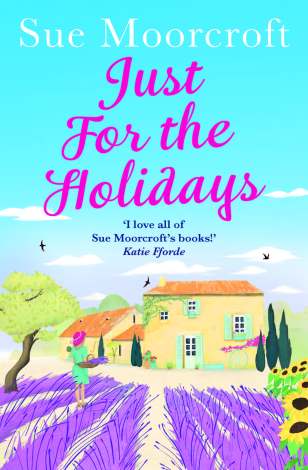
Just for the Holidays by Sue Moorcroft

Just for the Holidays

It’s such a pleasure to be reviewing Just for the Holidays by Sue Moorcroft and I’m very grateful to Avon books for my copy in exchange for an honest review. Another of Sue’s books, The Christmas Promise, was one of my books of the year in 2016 and you can read my review here.

I’ve also been privileged to host Sue Moorcroft in interview on the blog and here’s where you can read that post and in celebration of Just for the Holidays Sue told me all about her fantasy holiday companions. You can find out what she said here.

Just for the Holidays was published in e-book and paperback by Avon Books, an imprint of Harper Collins, on 18th May 2017 and is available for purchase here.

Just for the Holidays
Just for the Holidays

In theory, nothing could be better than a summer spent basking in the French sun. That is, until you add in three teenagers, two love interests, one divorcing couple, and a very unexpected pregnancy.

Admittedly, this isn’t exactly the relaxing holiday Leah Beaumont was hoping for – but it’s the one she’s got. With her sister Michele’s family falling apart at the seams, it’s up to Leah to pick up the pieces and try to hold them all together.

But with a handsome helicopter pilot staying next door, Leah can’t help but think she might have a few distractions of her own to deal with…

A glorious summer read, for you to devour in one sitting – perfect for fans of Katie Fforde, Carole Matthews and Trisha Ashley.

My Review of Just for the Holidays

With her sister Michele’s family in meltdown, Leah agrees to go with them to France, little realising just what she’s letting herself in for.

Just for the Holidays is a smashing summer read – just right for taking on your own holiday, although I think it should come with a warning. Sue Moorcroft describes food so impeccably that I found myself drooling and hungry for quite a lot of the time I was reading!

Like Leah, I don’t have a lot of time for children and could so readily relate to her feelings and exasperations as the holiday becomes hellish and complicated. There is such a fast paced plot that lurches from one disaster to another I really felt for poor Leah. I thought Leah was a glorious creation because she’s feisty and flawed, enjoying elements of life most stereotypically associated with men such as fast cars, so that Sue Moorcroft injects a pleasing layer of feminism into the romantic elements too. Ronan is the unattainable perfect hero and I found so much to dislike in Michele and Selina, neither of whom gained my sympathy despite their circumstances, that in Just for the Holidays there is a varied cast that will appeal to all readers.

However, what struck me most about Just for the Holidays was the quality of Sue Moorcroft’s writing. She has created three teenagers in Natasha, Jordan and Curtis that I know I couldn’t tolerate like Leah has to even though I felt sorry for their circumstances. They were horrendously real to me. The medical, culinary, romantic and sexual scenes were perfectly portrayed with just the right balance of detail and action. I could so easily picture myself in France too because Sue Moorcroft conveys place so convincingly. Whilst this is a romance at heart, Sue Moorcroft does not shy away from big themes too with betrayal, infidelity, finance, careers and parenthood very thoroughly explored to add layers of interest for all readers.

Just for the Holidays is an action packed portrayal of complicated family life with romance and relationships in a wonderful summer read. I really recommend it.

About Sue Moorcroft

DSC_3507

Award winning author Sue Moorcroft writes contemporary women’s fiction with occasionally unexpected themes. The Wedding Proposal, Dream a Little Dream and Is This Love? were all nominated for Readers’ Best Romantic Read Awards. Love & Freedom won the Best Romantic Read Award 2011 and Dream a Little Dream was nominated for a RoNA in 2013. Sue’s a Katie Fforde Bursary Award winner, a past vice chair of the RNA and editor of its two anthologies.
The Christmas Promise was a Kindle No.1 Best Seller and held the No.1 slot at Christmas!
Sue also writes short stories, serials, articles, writing ‘how to’ and is a creative writing tutor.

You can follow Sue on Twitter @SueMoorcroft, find her on Facebook and visit her website.
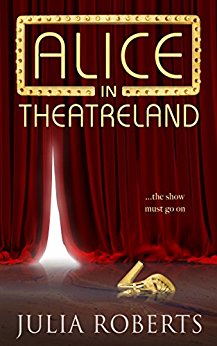
Guest Post and Giveaway: Alice in Theatreland by Julia Roberts

Alice in theatreland

I’m so pleased to welcome back Julia Roberts, author of Alice in Theatreland to Linda’s Book Bag today. Julia has previously provided a lovely guest piece on how she came to writing here, and I have been fortunate to read and review two of Julia’s other works, Life’s A Beach and Then… which I reviewed here as well as Time for a Short Story, reviewed here.

Today I have a lovely giveaway for a lucky UK reader to win a paperback copy of Alice in Theatreland. Not only that, but Julia has told me all about writing what she knows for Alice in Theatreland and it makes for fascinating reading!

Alice in Theatreland is available for purchase here.

Alice in Theatreland

Alice in theatreland

It’s 1976; a summer of soaring temperatures and the year nineteen-year-old Alice Abbott’s life changed irrevocably…

Alice’s childhood dream of seeing her name up in lights seems close to fulfilment when she attends an audition for a new West End show but first she must impress theatre impresario, Richard, a man with an unhealthy penchant for innocent young dancers.

Befriended by Gina, an experienced dancer who is determined to protect her new friend from the sleaze behind the glamour, and attracting attention from the male lead in the show, Peter, a former pop star who she’s had a crush on for years, Alice’s star seems to be ascending until she accepts Richard’s impromptu dinner invitation.

Alice’s apparent naivety places her in peril, but is she really as innocent as she appears, and just how far will Richard go to protect his guilty secret?

Writing What You Know

A Guest Post by Julia Roberts

Thanks very much, Linda, for inviting me on to your blog as part of the tour for Alice in Theatreland. The book is set in the West End of London in the mid 1970’s and I have been asked how much research I had to do on the era and the world of the professional dancer. The answer is, ‘not a lot really’ – let me explain.

I left school in 1972 with dreams of becoming a professional dancer. Mentioned several times in the book is The Stage newspaper which I used to take weekly to scan the adverts at the back of the paper for suitable auditions. Young dancers starting out were only able to go for jobs which did not require full membership of the Equity Union. Once you had signed a contract, you could apply for provisional membership but you then had to complete forty weeks of working in the industry before you were issued with your ‘blue’ card.

I was very lucky as I managed to get myself a twenty-week summer season in Guernsey, followed by another twenty-week engagement performing in the pantomime at the City Varieties theatre in Leeds. Most pantos these days are lucky if they have a four or five week run, and even in 1973 it was highly unusual to run for more than ten weeks. We were still performing Snow White and the Seven Dwarves at Easter and occasionally to fewer people in the audience than there were cast members! Although it was a long old slog, I was able to apply for my Full Equity membership in under a year and this widened the field in terms of jobs I could audition for although there were still lots of restrictions, particularly in terms of height. There is a sequence in ‘Alice’ where a girl is turned away from an audition without dancing a step because she couldn’t produce her blue card, as the rule was pretty strictly enforced in those days, and others are turned away for not meeting the height criteria.

When I was writing the audition chapters, I became Alice and all the memories of disappointment and elation came flooding back to me. It is a tough business and you have to grow a thick skin pretty quickly and learn not to take things personally – a bit like writers receiving rejection letters from agents and publishers really. It’s not necessarily that you are not good enough, just not what someone is looking for at that particular time.

At the audition for Theatreland, Alice meets experienced dancer, Gina, who takes Alice under her wing. As the book progressed, I gradually fell in love with Gina. She has had a tough upbringing, with an absent father and drug addict mother, but is a kind-hearted person despite some of her decisions being questionable. Gina is ‘doubling’ which means as well as Theatreland, she is also working as a hostess at a nightclub called the Ostrich. Again, this sequence is based on true life although I was doubling as a dancer rather than a hostess.

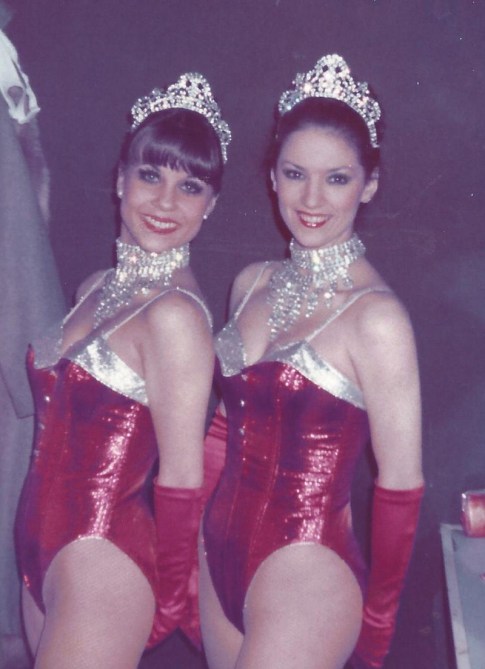
I had come back from a second summer in Guernsey in 1977 and was finding living in London a little expensive. I had auditioned and got a job in pantomime in Croydon where, like Alice, I was the understudy for one of the lead roles, although my services were never called on. I then auditioned for a floorshow at a club off Regent Street called The Stork Room… Stork/Ostrich, they say you should write about what you know! This picture is of me and the other girl dancer, Karen, in one of our show costumes. I was twenty-one and it was while I was doing these two jobs that I met my ‘other half’ of over thirty-nine years.

Julia and Karen at the Stork Room 1970's

So, as you can tell, quite a lot of the research for Alice in Theatreland was my personal experience although I’m pleased to say that none of the darker elements of the plot ever happened to me. I did have to check on when the date-rape drug, Rohypnol, was first available and also the various methods used to induce a miscarriage… I hope no-one ever checks the ‘history’ on my computer, it would make for very interesting reading.

If you lived through the era and I’ve whet your appetite, Alice in Theatreland is now available in paperback as well as on Kindle. Thanks again, Linda, for hosting me.

My pleasure Julia. What a fascinating insight into the background to Alice in Theatreland.

About Julia Roberts

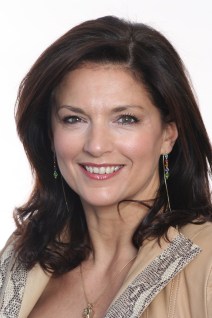
Julia Roberts author pic

Julia Roberts’ passion for writing began when, at the age of ten, after winning second prize in a short story-writing competition, she announced that she wanted to write a book. After a small gap of forty-seven years, and a career in the entertainment industry, Julia finally fulfilled her dream in 2013 when her first book, a memoir entitled One Hundred Lengths of the Pool, was published by Preface Publishing. Two weeks later she had the idea for her first novel, Life’s a Beach and Then…, book one in the Liberty Sands Trilogy, which was released in May 2015.

Julia still works full-time as a Presenter for the TV channel QVC, where she has recently celebrated her twenty-third anniversary.

She now lives in Ascot with her partner of thirty-nine years and occasionally one or other of her adult children and their respective cats.

You can follow Julia on Twitter @JuliaRobertsTV and visit her website. You’ll also find her on Facebook.

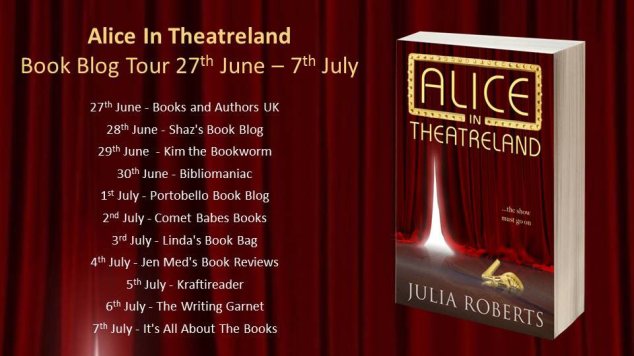
There’s more with these other bloggers too:

Alice in theatrelandposter

Giveaway

Alice in theatreland

UK only I’m afraid. For your chance to win a paperback copy of Alice in Theatreland by Julia Roberts, click here. Giveaway closes UK midnight on Sunday 9th July 2017.

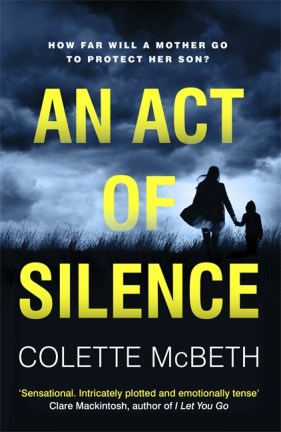
An Extract from An Act of Silence by Colette McBeth

An Act of Silence

Having so loved An Act of Silence by Colette McBeth, my review of which you can read here, I’m thrilled to be starting launch celebrations for such a brilliant book. I have a super extract from An Act of Silence for you to read today.

An Act of Silence was published by Wildfire, an imprint of Headline, on 29th June 2017 and is available for purchase through the links here.

An Act of Silence

An Act of Silence

These are the facts I collect. My son Gabriel met a woman called Mariela in a bar. She went home with him. They next morning she was found in an allotment. Mariela is dead. Gabriel has been asked to report to Camden Police station in six hours for questioning.

Linda Moscow loves her son; it’s her biological instinct to keep him safe. But if she’s not sure of his innocence, how can she stand by him? Should she go against everything she believes in to protect him? She’s done it before, and the guilt nearly killed her.

Now, the past is catching up with them. As old secrets resurface, Lind is faced with another impossible choice. Only this time, it’s her life on the line…

An Extract from An Act Of Silence

Monday, 17 November 2014

Linda

Say yes.

One word, all he wants to hear.

Yes, I believe you. Yes, I will help you.

That look of his, brimful of need, stirs in me the biological instinct to protect, make safe, put things right.

I am hardwired to give him what he wants. That is love, I suppose.

But here’s a thought: what if I had resisted, left him to deal with his own mistakes, learn his lessons the hard way; would he be the same man, sitting here recounting this story?

The truth is I’ll never know.

We are where we are.

It is early, night is fading but dawn has yet to crack open the day. These are what I call the never hours. Suspended between dark and light when the world’s eyes are firmly shut and only the few night owls and early birds among us get to glimpse secrets unfolding. Five minutes ago I woke with a jolt; a noise, a movement, an overactive imagination tore through my sleep. I descended the stairs, fearful there was a secret waiting for me in the shadows, behind a door or hidden in a cupboard. I reached the kitchen, flicked on the light and his voice shattered the morning silence with a simple request.

‘Milk, one sugar, please.’

The fright found an echo in my heartbeat, galloped through my body. Another break-in, that was my first fear. My second? That it was me they wanted this time, not simply an old laptop. I swung around to match the voice to a face and found him.

I waited for relief to flood me. It didn’t arrive. Instead, my fear was replaced by dread.

It wasn’t him.

He could have been a stranger, this man. The familiar gloss of wealth and success and fame scoured away to reveal a bleaker version, one with a film of dirt thick on his skin, dark oily eyes that hadn’t found sleep in a long time. He was broken, that much was obvious. Something had happened and seeing him like this broke me too.

‘What have you done?’ I asked.

He caught me in a stare. The swell of tears in his eyes quickly rubbed away with the back of his hand.

‘Oh, Gabriel.’ I held my son as tightly as I did when he was a baby. ‘Tell me,’ I said. ‘There’s nothing that can’t be fixed.’

Now we sit at my kitchen table where he used to inhale one, two, three Weetabix as a boy each morning. And he tells me.

A woman.

She is called Mariela. Pretty name. About mid-twenties he thinks but apparently it’s hard to tell these days.

‘Was she your girlfriend?’

‘It was just sex.’

I don’t bite. Gabriel’s casual approach to intimacy has long been the cause of my disapproval. Now is not the time for lectures.

‘I see. And when was this encounter?’

‘Two days ago. Not last night, the night before.’

‘At your house?’

He nods, rolls his eyes at his own stupidity.

‘And then what?’

He covers his mouth with his hand, the words sting as they come out.

‘Then they found her.’

These are the facts I collect.

My son Gabriel met a woman called Mariela in a sushi bar two nights ago. She went home with him where they had sex. The next morning she was found in an allotment.

Mariela is dead.

The allotments back on to his house.

Gabriel has been asked to report to Camden police station in six hours for questioning.

‘You believe me, don’t you?’

‘I . . .’

I’m not fast enough and he can’t slow down now he has started. He races on with his monologue. My mind is stuck, terrified of following him because it knows where this ends.

He wants me to help him. Give him some time to get his head straight. Provide my car, that’s all really, not a lot to ask, and cash too. And if anyone asks if I have seen him, the answer is no. He’s not running away, just giving himself a bit of space.

There’s an intensity to his argument that is impossible to ignore. Wasn’t it always the way? My boy is nothing if not persuasive; one of his many qualities, but dangerous at times too. ‘Someone is trying to frame me,’ he says. I want this to be true but it doesn’t stack up, all I can think of is, Why, why, why would they do that?

‘You’re my mother. You know I couldn’t have done this. And you know how it looks, it’ll be all over the papers by the morning. They’ll be judge and jury and I’ll . . . I’ll be fucked. I’ve never begged you for anything before but I’m begging now.’

His desperation spins out a fierce, kinetic energy that drags me along. He is falling apart and it is agony to witness. I need to hold him together, I have to do something to help. He is right about the press, they’ll crucify him. He won’t be treated fairly. He is well known, a famous face, all the better to sell newspapers. They’ll rake over every detail of his life, cook up a dark side. And my name will be dragged in to damn him further: disgraced politician’s son. He’s in for a public mauling, no doubt, and having been there myself I wouldn’t wish it on anyone, least of all my son.

I have to do the right thing, but it wears many guises and at the moment I can’t tell it apart from wrong.

Time. He’s not the only one who needs time to think. The world has slipped out of sync, sent me freefalling into a terrifying darkness. I close my eyes, praying that when I open them again, order will be restored.

‘Mum, please.’

His words go to my core, to who he is, who I am. He is a baby in my arms again, the midwife handing him to me for the first time, a tiny wet being writhing against my skin. And me, his mother, drunk on fear of the past, hope for the future.

‘Gabriel,’ I said. My very first word to him, to his father. ‘We’ll call him Gabriel, like the angel.’

Yes, I’ll help you. I’m about to give him what he wants

because what else can I do, he’s all I have. He needs me and above everything else I know this: my son is not capable of murder.

But.

I open my eyes and I see it, a red line gouged out of his neck like a warning.

‘What is that?’

He runs his index finger along its trail. Surprised. Hesitates long enough for me to catch the lie that flashes on his face.

‘Oh that. I did it on a branch.’

It is only a scratch but it rips through my belief. It is doubt and fear and dread.

‘Don’t do that,’ he says.

‘What?’

No answer. He’s stopped making sense now.

‘If you haven’t done anything wrong,’ I say, ‘you have nothing to worry about.’

‘If ?’

‘What?’

‘You said, if I haven’t done anything wrong.’

‘Did I?’

‘You think I could have done this?’

About Colette McBeth

Colette-McBeth

Colette McBeth is the critically acclaimed author of psychological thrillers Precious Thing and The Life I Left Behind.

Colette was a BBC TV News television correspondent for ten years, during which time she covered many major crime stories and worked out of Westminster as a political reporter.

She lives on the South Coast with her husband and three children.

You can follow Colette on Twitter, find her on Facebook and visit her website.
There’s more with these other bloggers too:

An Act of Silence Blog Tour banner

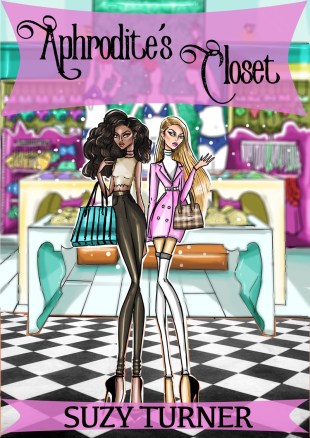
An Interview with Suzy Turner, Author of Aphrodite’s Closet

Aphrodites Closet Tour Banner(1)

I’m delighted to be working with Brook Cottage Books in welcoming Suzy Turner to Linda’s Book Bag to celebrate her latest novel Aphrodite’s Closet.

Published on 6th May, Aphrodite’s Closet is available for purchase in e-book on Amazon UK and Amazon US. I’m thrilled to bring you an extract from Aphrodite’s Closet and an interview with Suzy. There’s also a fantastic giveaway run through Brook Cottage Books to win an e-copy of the book and a £20 or $20 Amazon Gift Voucher. You can enter at the bottom of this blog post.

Aphrodite’s Closet

Aphrodite's Closet small

Agatha Trout didn’t even know she had a Great Aunt Petunia, so imagine her surprise when she finds Petunia left her a corner shop in her will. But it’s not just any old corner shop—it’s a corner shop that needs something unique, something the town of Frambleberry has never seen before. Influenced by her confident best friend, Coco, Agatha is soon convinced that there’s only one way to go: an adults-only sex shop.

While some of the townspeople are clutching their pearls in horror, others are open to the new experiences this shop offers. But not everyone in Frambleberry is convinced. Will the women soldier on in the face of violent threats or will their fears get the best of them—and their new venture—before it even gets off the ground?

An Interview with Suzy Turner

Welcome to Linda’s Book Bag, Suzy. Thank you so much for agreeing to answer some questions on my blog about your writing and Aphrodite’s Closet in particular. Firstly, please could you tell me a little about yourself?

Hi Linda! Thank you. It’s a pleasure to be here. I’m a British expat living in Portugal for the past 31 years (I was ten when we moved). I live with my husband, Michael, who has also lived here 31 years. I’m a former magazine editor and now full time author/blogger/yoga instructor.

Why do you write?

Usually because I have an idea that won’t leave me alone until I’ve gotten it down on paper!

When did you realise you were going to be a writer?

In my early 20s I was already a writer for a newspaper, but after reading an interview with Jenny Colgan, I was so inspired that I knew I would have to write novels as well.

So, which aspects of your writing do you find easiest and most difficult?

The easiest part is coming up with ideas – my head is always full to bursting with wacky stories. The most difficult (and least fun) is probably the editing process.

What are your writing routines and where do you do most of your writing?

When I am writing a book, I start typing at 10am, stop at midday and then start again at 1pm until about 4pm. I never write in the evening because I enjoy nights in watching TV with hubby (we’ve literally just binge watched the entire Downton Abbey series and I’m so sad it’s over!). I write wherever is comfortable at the time. The kitchen island, the dining table, on my knee on the sofa. I did have a dedicated office in the summer house but that’s now become my tiny yoga studio.

Although you’re Yorkshire born, you live in Portugal. To what extent do you think location has influenced you as a writer?

I think living in Portugal has had a huge impact on my writing. I think pretty much all of my books do feature Portugal in it to some extent – if not the country, then I usually introduce a Portuguese character. I think it’s also made me more keen to write about travel, which features a lot in my writing.

Without spoiling the plot, please could you tell us a bit about Aphrodite’s Closet?

Aphrodite’s Closet is about a woman named Agatha who inherits a beautiful old building in the fictitious town of Frambleberry and is encouraged by her mad best friend, Coco, to open a sex shop.

Aphrodite’s Closet is clearly chick-lit, but you also write for young adults as well as penning chick lit for the adult market. What are the challenges and benefits in writing in different genres do you think?

I actually don’t think it’s too challenging in my situation, because I tend to write in a similar way in both genres. With the exception of my book, And Then There Was You, I avoid writing anything that wouldn’t be appropriate for a slightly younger audience. Even Aphrodite’s Closet would be okay for 14+ readers. And Then There Was You, however, is not!

(And now I want to read And Then There Was You!)

Of all the possible settings open to you for Aphrodite’s Closet what made you decide on a sex-shop?

I think it’s because many years ago I actually pondered the idea of opening a sex shop myself. I guess it stuck with me all this time! I’ve been wanting to write Aphrodite’s Closet for years but it’s only this year that I finally got down to it. Plus, just think of all the situations that could happen in a sex shop!?

(I’m thinking – maybe I need a lie down now!)

I know you’re a yoga instructor as well as a lifestyle blogger and writer. Can yoga help in the writing process?

It’s funny that you should ask me this because I’m actually in the process of creating yoga classes specifically designed for authors. I’ll be sharing some of them on Youtube over the next few months (as well as creating some for download too). But one of the reasons I became a yoga instructor in the first place is because of the horrendous back pain I used to suffer with. All because I spent so much time sitting down and typing at the computer. I really want to help others ease their pain too – and also to help inspire them using breathing techniques.

(I think bloggers could benefit from those too!)

How did you go about researching detail and ensuring Aphrodite’s Closet was realistic?

When I’m writing I spend a lot of time on Google and Google Earth!! I also use my own travel experiences in my books.

If you could choose to be a character from Aphrodite’s Closet, who would you be and why?

I think it would be fun to be Great Aunt Petunia – although she had died when the book starts, there are scenes that feature her and she was a total hoot!

If Aphrodite’s Closet became a film, who would you like to play Agatha and why would you choose them?

That’s actually a tough question because when I wrote it, I don’t think I had  anyone specific in mind. I guess I’d like to see someone like Emilia Clarke (from Game of Thrones) play the role. It should be someone who can be a plain Jane before revealing herself as a true beauty.

When you’re not writing, what do you like to read?

I love reading chick lit – the fun, light-hearted aspect of this genre always leaves me feeling happy and what’s better than that? I also love to read young adult urban fantasy and anything about the power of positivity.

Finally Suzy, if you had 15 words to persuade a reader that Aphrodite’s Closet should be their next read, what would you say?

If you loved the humour and pathos of Bridget Jones, then you’ll love Aphrodite’s Closet.

Thank you so much for your time in answering my questions.

My pleasure!

An Extract from Aphrodite’s Closet

“What about wool?” Aggie suggested.

“What about wool?”

“A wool shop?”

“A wool shop?”

“Are you just going to repeat after me all morning?”

Coco shook her head and put her hand on top of Aggie’s. “Aggie, honey. You’re twenty-eight years old, not seventy-eight. Why, oh why would you want to sell wool to all the old biddies of Frambleberry all day long?”

Aggie shrugged, “It wouldn’t be so bad. Some of those old biddies are quite lovely.”

“Oh yeah, I forgot they’re some of your neighbours. You really need to find yourself another house. Living in a bungalow is for retired people,” she mouthed as an old lady walked past and scowled at her.

Coco raised her eyebrows and returned her attention to Aggie.

“Come on, there must be an alternative business opportunity needed in this town. Oh my God. I mean, seriously O-M-G,”

“What? What Coco?”

Coco began to grin at her best friend as she sat up straight. “I’ve got it. It’s bloody brilliant. I can’t believe I didn’t think of it earlier. It’s perfect and it’s a proper money earner, Aggie. There’s potential to earn squillions here. Oh my God…I’m so excited. I could so help with the decor. I’ve got ideas swimming about in my head already. We must get on to suppliers right away. I know a few people who might be able to help, come to think of it. Dickie from Saffron Walden, for example, he owes me a favour. And there’s Selena from Frome. Oh and I must ring Alison, although I think she’s in Edinburgh at the moment. I’ll wait ‘til the weekend. Oh this is going to be so much fun. Drink up, Agg. We need to get going. We’ve got masses to do. Come on, let’s…”

Coco stopped short and stared at her friend. “What?”

Aggie closed her eyes for a moment and shook her head.

“What’s up, honey?”

“Have you listened to yourself? You’re getting so carried away. But there’s just one little something you haven’t mentioned yet.”

“Oh really, what’s that?” Coco replied innocently.

“What kind of shop are you talking about?”

Coco slapped her own forehead and started to chuckle, “Oh right. Sorry…Aggie. You’re going to open the town’s first…sex shop!”

About Suzy Turner

Suzy Turner February 2016

Born in England and raised in Portugal, Suzy lives with her childhood sweetheart Michael, two crazy dogs and a cat.

Shortly after completing her studies, Suzy worked as a trainee journalist for a local newspaper. Her love of writing developed and a few years later she took the job of assistant editor for the region’s largest English language publisher before becoming editor of a monthly lifestyle magazine. Early in 2010 however, Suzy became a full time author. She has since written several books: RavenDecember MoonThe Lost Soul(The Raven Saga), Daisy Madigan’s ParadiseThe Ghost of Josiah GrimshawThe Temporal StoneLooking for Lucy JoWe Stand Against Evil (The Morgan Sisters), Forever Fredless,  And Then There Was YouStormy Summer and her latest, Aphrodite’s Closet.

In 2015 she launched her popular 40+ lifestyle blog which continues to go from strength to strength, while just over a year later, she trained to become a yoga instructor. Suzy continues to write, blog and teach yoga in one of Portugal’s loveliest settings – the Algarve.

You can follow Suzy on Twitter, find her on GoodreadsInstagram and Facebook and visit her book blog.

Giveaway

Aphrodite's Closet small

For your chance to win an e-copy of the Aphrodite’s Closet PLUS a £20 / $20 Amazon Gift Voucher click here.

The Power of Fiction: A Guest Post by Taryn Leigh, Author of Perfect Imperfections

perfect imperfections

It’s an absolute pleasure to welcome Taryn Leigh, author of Perfect Imperfections to Linda’s Book Bag today. Like me, Taryn is convinced about the importance of books in people’s lives and she’s here to persuade us all about the importance of fiction.

Published by Olympia in e-book and paperback, Perfect Imperfections is available for purchase here.

Perfect Imperfections

perfect imperfections

Sarah Lewis desires nothing more than to begin again after a failed marriage and a tragedy so terrifying, it forces her to leave her life in London to stay with her best friend a world apart in South Africa.

Despite immediate success in her business, she struggles to understand who she really is and where she belongs in the world. So begins a journey of discovery as Sarah re-unites with Katy in the land where she was born, where the air is lavender scented, and weekends are spent cycling on the beach.

Until the day when she has to return to London to face the ghosts of her past and confront a situation that has grown more complicated in her absence.

Perfect Imperfections is an intriguing tale which hints at wrongdoings and deceit without giving too much away. The author cleverly weaves a tale around fragile yet strong Sarah as she tries to reconcile her past with her future, engaging the reader to the point where we simply want the best for her and for happiness finally to come her way.

The Power of Fiction

A Guest Post by Taryn Leigh

Fiction may be seen to some as a way of escaping reality. Journalists or Political Activists might feel that an Author writing fiction has no power to influence society, culture, and an individual.

That however is vastly untrue.

For centuries books have been a source of knowledge, the gateway to understanding, and a platform for debate. Fiction novels, have been at the forefront of these in many instances.

Lady Chatterley’s Lover by DH Lawrence is a book about an aristocratic woman who commits adultery with a working-class man. This book was subsequently banned in the UK due to its sexual content and language. However, it brought to light the plight of censorship and helped to overthrow it.

Uncle Tom’s Cabin by Harriet Beacher Stowe is given credit for transforming American views about slavery.

Animal Farm by George Orwell strongly affected readers’ views of government and politics.

The question stands that how could a story, primarily brought together by the Author, have such a profound effect on society, and how we view things?

The answer is found in how these stories have a way to cause the reader to:

  • Have empathy for the lead character
  • Feel the pain of what they may be going through
  • View painful circumstances through the eyes of someone else
  • Go through the suffering from a distant yet involved view
  • Share in the frustration of societal problems and dysfunctions, and explore possible solutions.

These stories have a way to connect the reader emotionally to a fictitious stranger. It causes people to empathise with a stranger, where they might not empathise with someone they know. It causes them to tap into their emotions and review their stance on real issues.

As an Author of Fiction myself, I have made it my mission to write books that can bring a change to someone else’s life. Whether it’s showing them the power of forgiveness or allowing them to have empathy for someone else who is going through the hardest moments in their life.

For me, it’s important, to not just write beautiful stories, but to have a lasting impact on the very person whose hands grace the pages of my books.

About Taryn Leigh

Taryn Leigh

Taryn Leigh is the Author of Perfect Imperfections, which is currently available worldwide. She spent her childhood with her nose buried in books, which transpired into her ambition to become a writer. She first tried her hand at blogging, which eventually led to her writing her first novel. She lives in South Africa, with her husband, son and two cocker spaniels.

You can follow Taryn on Twitter @tarynleighbook or visit her blog.

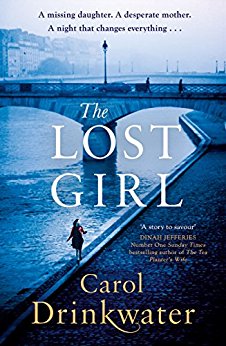
The Lost Girl by Carol Drinkwater

the lost girl

It has been far too long since I’ve read a book by Carol Drinkwater. You can read my review of her lovely The Forgotten Summer here. Consequently, I was thrilled to be asked to be part of the launch celebrations for The Lost Girl which is just fabulous. I have my review for you and a very special extract from the book too.

The Lost Girl was published on 29th June 2017 by Michael Joseph, an imprint of Penguin, and is available for purchase via the links here.

The Lost Girl

the lost girl

Her daughter disappeared four years ago. . .

Since her daughter went missing four years earlier, celebrated photographer Kurtiz Ross has been a woman alone. Her only companion her camera. Since Lizzie disappeared, she has blamed and isolated herself, given up hope. Until, out of the blue, an unexpected sighting of Lizzie is made in Paris.

Could this lead to the reconciliation she has dreamed of?

Within hours of Kurtiz arriving in Paris, the City of Light is plunged into a night of hell when a series of terrorist attacks bring the city to a standstill. Amid the fear and chaos, a hand reaches out. A sympathetic stranger in a café offers to help Kurtiz find her daughter.

A stranger’s guiding light

Neither knows what this harrowing night will deliver, but the other woman’s kindness – and her stories of her own love and loss in post-war Provence – shine light into the shadows, restoring hope, bringing the unexpected. Out of darkness and despair, new life rises. New beginnings unfold.

Dare she believe in a miracle?

Set during a time of bloodshed and chaos in one of the most beautiful cities on earth and along the warm fragrant shores of the Mediterranean, Kurtiz discovers that miracles really can happen . . .

An extract from The Lost Girl

Prologue

Charlie, Paris, March 1947

Charles Gilliard was whistling as he strolled the Parisian avenue, heading in an easterly direction. Glancing to and fro, enjoying all that was going on around him on that fine spring morning, he was relishing the day that lay ahead of him to do with as he pleased. He was suffering no headache; he had risen early after sleeping soundly, which was to say relatively peacefully and without his recurrent nightmares. No reason, then, not to be in an optimistic frame of mind. The city was pulsing with life: the boulevards were busy; the chestnuts were coming into bud; a merry‑go‑round of automobiles was tooting and turning as though the engines themselves were in song. Although he was grateful for what had come out of the war – he had done well for himself during those years of silence, of wartime emptiness and repression – it lifted his spirits to witness the capital’s renaissance. Paris reawakening. Peace time. The jazz clubs, the gaiety, the night life. Dancing be‑bop at the Caveau de la Huchette over on the Left Bank; drinking with the Americans who had brought a light-­heartedness and latitude to the liberated city. The pretty girls, the free and easy lifestyle. Life was becoming cool. An excellent description, thought Charlie, who had sweated it out for too long now.

He was marvelling, too, at the continuance of his own good fortune, even beyond those years of occupation. Surely, though, such luck could not continue for ever. His opportunities for making money were slowing down. The black-­market possibilities for income had been drying up in his field since the end of the war. In any case, he had long ago grown tired of such a fly‑by‑night existence. And, more to the point, the money he had stashed away could not be eked out for more than another year or two. It was unwise of him to fritter it away on all-­night boogying. He should invest in some fresh clothes, give some serious thought to his future, find gainful employment. The grey suit he was wearing was beginning to look shabby, threadbare about the cuffs. It would not serve him for much longer. Fortunately, he still had access to the apartment he had installed himself in and made his home. Its owner was a woman – that much he had gleaned – a Jewess, Madame Friedlander. Where she had fled to, he had failed to discover. There were no clues, or none that he had found left lying about in the high-­ceilinged dusty rooms. Or, most importantly, any information about when she might return to reclaim her home and pick up the threads of her life. Of course, there was always the possibility that she was dead, killed in a raid as she fled the city, or from natural causes, or had been arrested and imprisoned in one of those atrocious camps everyone was reading and talking about. Judging by the photographs hanging on her walls, she was well into middle age. Might there be offspring, relatives with an interest in her estate? He must remain alert, and look to the future.

My Review of The Lost Girl

Searching for lost daughter Lizzie will bring Kurtiz much more than she could have imagined or, perhaps, have wanted.

When I saw the premise for The Lost Girl I had my doubts as I thought it might be too close to recent events and I was concerned it might be exploitative. I couldn’t have been more wrong. In The Lost Girl Carol Drinkwater sensitively uses the settings of the terrorist attack in Paris, the Second Word War and various other conflicts shown through Kurtiz’s photographic work, to illustrate with compassion and sensitivity the impact of global events on the ordinary person. This is a book with total heart.

The use of the senses to create place and atmosphere is sublime. The attention to detail is such that reading parts of The Lost Girl is more like looking at one of Kurtiz’s photographs than reading a book. I also found the creation of atmosphere so convincing that my heart was thumping at times and my stomach rumbling at others. I was genuinely transported to the scenes described.

The plot is so compelling because of the level of reality within it. Carol Drinkwater has crafted a spell-binding narrative and every word adds depth and understanding to the situations in which the characters find themselves so that The Lost Girl is writing of the very highest standard.

The characters are vibrant, realistic and convincing. At one point I found myself wanting to Google them to find out more and had to remind myself that these are fictional people. I didn’t always agree with their behaviour and actions, but I understood them completely. The Lost Girl is such a clever title because Kurtiz, Marguerite and Lizzie are all physically, emotionally or psychologically lost in their own way.

The sense of personal loss In The Lost Girl against a backdrop of national and international events is palpable so that there was a real intensity that I felt physically as I read. The Lost Girl is about loss, terrorism, love, war, identity, culture and ambition but most of all it is about humanity, about the lives of so many that hang in the balance on the phrase of ‘What if…’ and about a world that we all inhabit and that can change in an instant. I absolutely adored it.

About Carol Drinkwater

Carol Drinkwater c Michel Noll

Carol Drinkwater is a multi-award-winning actress who is best known for her portrayal of Helen Herriot in the BBC television series All Creatures Great and Small. She is also the author of over twenty books, both fiction and non-fiction. Her quartet of memoirs set on her olive farm in the south of France have sold over a million copies worldwide and her solo journey round the Mediterranean in search of the Olive tree’s mythical secrets inspired a five-part documentary film series, The Olive Route.

You can follow Carol on Twitter and visit her website. You’ll find Carol on Facebook and there’s more with these other bloggers:

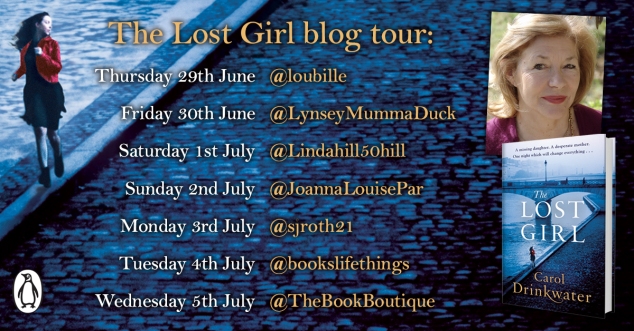
The Lost Girl Blog Tour Poster


The Detriment by David Videcette

the detriment

My grateful thanks to the author, David Videcette, for a copy of The Detriment in return for an honest review.

I was thrilled when David asked me if I would like to read The Detriment as he kindly provided a guest post for me all about reality in Crime Fiction that you can read here, when I first began blogging in 2015.

The Detriment is the second book by David to feature Jake Flannagan after The Theseus Paradox and is available for purchase here.

The Detriment

the detriment

“The truth costs nothing, but a lie can cost you everything…”

June 2007: a barbaric nail bomb is planted outside a London nightclub, a spy is found dead in his garden, and a blazing Jeep is driven into Glasgow airport. Three events bound by an earth-shattering connection that should have remained buried forever.

From the author of The Theseus Paradox, the smash-hit 7/7 thriller based on true events, comes the sequel about a real-life mystery that threatens to destroy a nation. Detective Inspector Jake Flannagan must uncover how a series of astonishing events are inextricably linked, before the past closes in on him.

We all have secrets we say we’ll never tell…

My Review of The Detriment

Jake Flannagan is back at work, but he’s still not entirely ready to play by the rules.

I really enjoyed The Detriment, finding it intelligently written, intriguing and interesting.  There is no need to have read the first book in the series, Theseus Paradox (although I would recommend it) because The Detriment works really well as a stand alone and I was hooked from the very first page. The book starts at a cracking pace and doesn’t let up from the first page to the last.

David Videcette has quite an urbane style of writing. I really liked the sense of immediacy from the date, time and place information at the start of each chapter and the way in which some information is slightly withheld so that the reader experiences the discoveries in the same way as the characters. I kept thinking I’d just read one more chapter to see what happened next and before I knew it, a whole day had disappeared. I really couldn’t put down The Detriment. The level of detail was pitch perfect; enough to give a real sense of atmosphere so that the story came alive without extraneous padding, creating a heart-thumpingly good read.

The book is a truly disturbing insight into the murky underworld of the police and the powers that be so that I was left wondering just which side of the law is the right side at times. As The Detriment is brilliantly based around real events it is impossible to know what is fact and what is fiction and I found this aspect very intriguing and thought-provoking. I was completely absorbed in the events.

There’s a cracking pace to the plot so that I can really visualise The Detriment as a film or television series. In fact, it felt more like I was watching events than reading about them, so realistic was the writing.

I found the factual and source detail at the end of the book particularly fascinating and not a little disturbing. Reading The Detriment has left me feeling naive, previously duped and newly informed as well as hugely entertained. The Detriment is a brilliant book and I can’t wait for the next book in the series.

About David Videcette

Hi Res - David_Videcette_Charlie_FB_034 (1)

David Videcette is a former Scotland Yard investigator who specialises in terrorism and organised crime. As a Metropolitan Police Detective he worked on a wealth of infamous cases and was a lead investigator in the London 7/7 bombings in 2005. He supports the work of the Police Dependants’ Trust through his writing.

You can find out more about David on his website, by following him on Twitter and on Facebook.