Come Sundown by Nora Roberts

come sundown

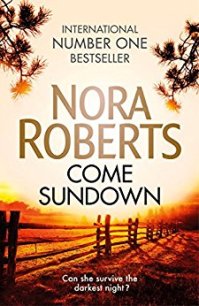
It gives me very great pleasure to be part of the launch celebrations for international bestselling author, Nora Roberts’, latest novel Come Sundown.

Come Sundown was published on 30th May by Piatkus, an imprint of Little Brown and is available for purchase in e-book and hardback here.

Come Sundown

 come sundown

Love. Lies. Murder. A lot can happen… Come Sundown.

Bodine Longbow loves to rise with the dawn. As the manager of her family’s resort in Western Montana, there just aren’t enough hours in the day – for life, for work, for loved ones. She certainly doesn’t have time for love, not even in the gorgeous shape of her childhood crush Callen Skinner, all grown up and returned to the ranch. Then again, maybe Callen can change her mind, given time…

But when a young woman’s body is discovered on resort land, everything changes. Callen falls under the suspicion of a deputy sheriff with a grudge. And for Bodine’s family, the murder is a shocking reminder of an old loss. Twenty-five years ago, Bodine’s Aunt Alice vanished, never to be heard of again. Could this new tragedy be connected to Alice’s mysterious disappearance?

As events take a dramatic and deadly turn, Bodine and Callen must race to uncover the truth – before the sun sets on their future together.

My Review of Come Sundown

When Alice is abducted on her way home there are reverberations for years to come in the Bodine household.

If you’re not a Nora Roberts fan there’s every danger that Come Sundown will appear formulaic and predictable. If, like me, Nora Roberts is your guilty pleasure then Come Sundown contains every element you could possibly hope to see and more.

Firstly there are tall attractive men in jeans, especially Callen. Mixed with the strong feisty women like Bodine, there’s a sexual chemistry with love and romance guaranteed.

There’s great drama in the plot of Come Sundown, with vulnerable women abducted, abused and killed so that no-one is really safe and every one is a suspect, making for an entertaining and exciting read as you try to work out who’s next and who dunnit! Nora Roberts has that Christie-esque technique of making the perpetrator someone seemingly innocuous who was hidden in plain sight all along and I love that element to her stories.

Come Sundown contains all those themes I expect too. Nora Roberts covers friendship and rivalry, love and passion, feminism and relationships, childhood and adulthood, family and home with genuine warmth. However, in Come Sundown, there are more controversial issues raised so that added depth occurs too. ‘Sir’ is a white supremacist uncovering uncomfortable attitudes of sexism, racism and religious fanaticism that, as an outsider to America, have a horrible fascination. I believed in his character totally so that the passages where he appeared genuinely made my flesh crawl.

I really, really, enjoyed reading Come Sundown. I loved the pun in the title as events unfold when Callen returns to the Bodine establishment on his horse, Sundown (who is also a character in his own right), but the denouement of the story is when sundown arrives too. I enjoyed every aspect of Come Sundown as sheer, reliable, Nora Roberts escapism. A highly entertaining read.

About Nora Roberts

nora roberts

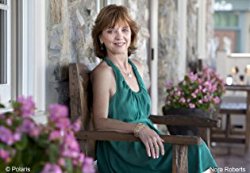
Nora Roberts is the New York Times bestselling author of more than 190 novels and there are 300 million copies of her books in print. Under the pen name J. D. Robb, she is author of the New York Times bestselling futuristic suspense series, which features Lieutenant Eve Dallas and Roarke.

You can visit Nora Roberts on Facebook and find out more on her website.

There’s more with these other bloggers too:

poster final

Single for the Summer by Mandy Baggot

Single for the summer

My grateful thanks to Ebury, an imprint of Penguin Random House, and Netgalley for an advanced reader copy of Single for the Summer by Mandy Baggot in return for an honest review. I have previously read and thoroughly enjoyed another of Mandy’s books, One Christmas in Paris, my review of which you can read here.

Single for the Summer will be published by Ebury on 27th July 2017 and is available for pre-order here.

Single for the Summer

Single for the summer

Tess Parks has made up her mind: love isn’t for her.

When it comes to dating she has one rule: after six weeks with a guy, she ends it. So when her heartbroken best friend invites her for a girly getaway in Corfu, Tess is sure she can stick to their pact to stay single for the summer.

But then she meets the gorgeous restaurateur Andras…

To keep his overbearing mother off his back, Tess agrees to pretend to date him. But as the two spend time together, Tess begins to realise that this fake relationship is starting to feel like the best one she’s ever had…

My Review of Single for the Summer

Tess Parks only ever dates men for six weeks having been jilted at the altar, so she can’t see any problem in staying single when she heads on holiday to Corfu with Sonya.

Single for the Summer is the perfect summer beach read with wonderful evocative settings. Moreover, Mandy Baggot conveys the allure of Corfu so brilliantly that I want to be on a Greek beach right now. She weaves elements relating to the senses so effortlessly that I could taste sweet baklava, smell the lavender in the pots next to the taverna and feel the sand beneath my feet. I even told my husband I would have to book a holiday there.

The plot hinges around a throw away remark from Andras, and his brother Spiro’s wedding. I learnt a great deal about Greek traditions and the closeness of Greek families with strong matriarchs at the helm so that as well as enjoying a super romantic read, I felt as if I had a cultural experience too.

Alongside a panoply of vivid and credible characters that provide humour and Greek authenticity are stand out performances from Tess and Andras. Whilst this is a light hearted read with all the elements one would expect from a chick-lit style book, there is also real depth to their personalities as both deal with emotional hurt from the past. It was impossible not to believe in them completely.

What I so enjoy about Mandy Baggot’s writing is her vivacious style. She can drop in a product or cultural reference like Strictly Come Dancing and make her reader know instantly exactly what she means. She has a wicked sense of humour and a deft hand at writing sex scenes too so that reading Single for the Summer is a lovely, life affirming book that lifts the spirits and puts the reader in the right mood for summer – and maybe a little romance of their own. I loved it.

About Mandy Baggot

mandy-baggot

Mandy Baggot is an award-winning writer of romantic comedies, chick-lit and contemporary romance.

In February 2016 her romantic comedy novel, One Wish in Manhattan, was shortlisted for the Romantic Novelists’ Association Romantic Novel of the Year award.

Mandy loves mashed potato, white wine, country music, World’s Strongest Man, travel and handbags. She has appeared on ITV1’s Who Dares Sings and auditioned for The X-Factor.

Mandy is a member of the Romantic Novelists’ Association and the Society of Authors and lives near Salisbury, Wiltshire, UK with her husband, two daughters and cats, Kravitz and Springsteen.

Find out more about Mandy by visiting her website. You can follow her on Twitter and find her on Facebook. You’ll find all Mandy’s lovely books here.

Broken Branches by M.Jonathan Lee

broken branches

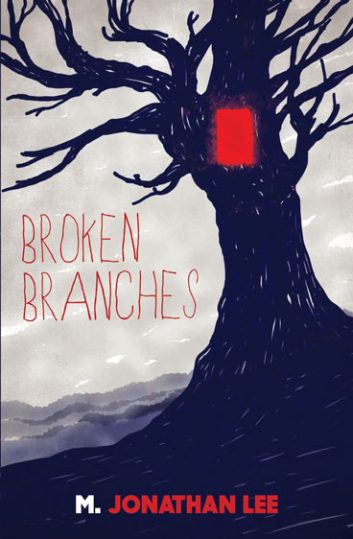
My grateful thanks to Hideaway Fall, a brand new publisher, for an advanced reader copy of Broken Branches by M. Jonathan Lee in return for an honest review.

Broken Branches will be released by Hideaway Fall on 27th July 2017 and is available for pre-order through the publisher links here.

Broken Branches

broken branches

Family curses don’t exist. Sure, some families seem to suffer more pain than others, but a curse? An actual curse? I don’t think so.

A family tragedy was the catalyst for Ian Perkins to return to the isolated cottage with his wife and young son. But now they are back, it seems yet more grief might befall the family.

There is still time to act, but that means Ian must face the uncomfortable truth about his past. And in doing so, he must uncover the truth behind the supposed family curse.

My Review of Broken Branches

Following a family tragedy, Ian Perkins is back in his childhood home with the menacing sycamore tree lowering over his whole life.

I don’t usually read books with any form of supernatural element and I wasn’t sure if a book about a curse would appeal to me. However, I was drawn in to Broken Branches immediately. Certainly there are supernatural elements if Broken Branches is accepted at face value, with Gothic style nursing homes, mysterious noises, ethereal shapes and ghostly people, and it is a cracking read at that level, but I wasn’t convinced that this was what we were entirely meant to believe in as readers.

As the plot unfolds, with the structure linking back in time to reveal more about the curse, so Ian becomes increasingly manic in his need to uncover the truth behind that curse. The reason for his desire to do so is gradually uncovered so that the reader finds it hard to decide if this is a straightforward narrative, or the unsettled workings of a man suffering mental health issues. I really enjoyed this fascinating element of the book. It was as if there were several layers to unpick and I found myself ensnared in the story. Even at the end, I wasn’t entirely sure what I believed so that Broken Branches will stay with me for some time as I think back over its contents.

Ian is a character who becomes increasingly real as the story unfolds. The more I read about him, the more intrigued I was about what was happening in his life and his mind.

I also loved the way the text was presented. M. Jonathan Lee introduces the metaphorical image of broken branches of family and society as well as the seemingly dead branch belonging to the tree so that Broken Branches is a highly thought provoking read. The way in which the text is fragmented with a variety of sentence lengths to reflect the action and Ian’s thoughts works so well, as does the iterative image of red and blood from the tree house door on the cover to more dramatic elements within.

The themes of family, grief, relationships and rivalry that underpin the fast paced narrative of Broken Branches are written so that there is always a feeling of quiet menace beneath the surface. The relationship between Ian and his father I found completely heartbreaking.

Broken Branches is a bit of an enigma. It is also beautifully written and absorbing as it tackles taboo issues of suicide, mental health and emotional cruelty so that reading Broken Branches has a deep effect on the reader. I highly recommend it.

About M. Jonathan Lee

m jonathan lee

M. Jonathan Lee (also known as Jonathan Lee) is an award-winning novelist who has had two novels in the top 10 Amazon charts. He was born in Yorkshire, northern England where he still lives today.

His first novel, the critically-acclaimed The Radio was shortlisted for The Novel Prize 2012 and is the first in the loosely titled The ‘The’ trilogy.

M. Jonathan Lee works closely with Rethink and Mind Charities to raise awareness of mental health issues, and is a regular commentator on the BBC.

His latest novel, Broken Branches, is due out in July 2017, published by Hideaway Fall.

You can follow M. Jonathan Lee on Twitter, visit his website and find him on Facebook.

Family Dynamics: A Guest Post by Anne Goodwin, Author of Underneath

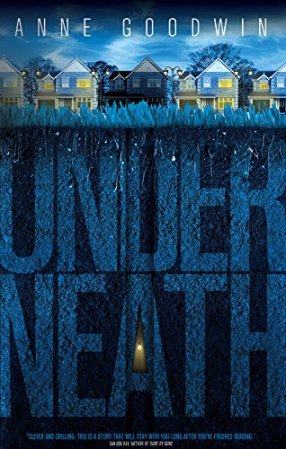
Underneath

I’m delighted that Anne Goodwin, author of Underneath, makes a welcome return to Linda’s Book Bag today. Anne previously wrote a smashing guest post all about how we are shaped by the events in our lives that you can read here. Today, Anne is exploring the role of family dynamics in Underneath.

Published by Inspired Quill on 25th May 2017, Underneath is available for purchse in e-book and paperback here.

Underneath

Underneath

He never intended to be a jailer …

After years of travelling, responsible to no-one but himself, Steve has resolved to settle down. He gets a job, buys a house and persuades Liesel to move in with him.

Life’s perfect, until Liesel delivers her ultimatum: if he won’t agree to start a family, she’ll have to leave. He can’t bear to lose her, but how can he face the prospect of fatherhood when he has no idea what being a father means? If he could somehow make her stay, he wouldn’t have to choose … and it would be a shame not to make use of the cellar.

Will this be the solution to his problems, or the catalyst for his own unravelling?

Steve’s Mother and Sisters in Underneath

A Guest Post by Anne Goodwin

One of the themes I like to explore in my fiction is how the dynamics of our families of origin shape the adults we become. Families are fascinating, particularly when each member’s memories and interpretation of events is different, rendering the truth an enigma.

Growing up with a mother, older twin sisters and no dad, it’s little wonder my narrator, Steve, perceives girls as more powerful than boys. Grieving for her husband – the father who died before Steve was born – his mother is emotionally absent, leaving him in the custody of his sisters while she retreats to her room (p58-9):

The twins are supposed to watch me, but they’re outside playing a skipping game. I can hear their chanting through the kitchen window.

Miss Fothergill says that if another child hurts you, you should tell a grown-up. It’s not snitching, especially if they’re bigger than you and ought to know better. I get down from the table and go out into the hallway.

Our stair-carpet is dark blue with pale blue discs and rings. I like to count them when I go up and down but the number comes out different every time. I tell Mummy they’re pictures of Saturn, but Celia and Polly say they’re nothing at all.

There are four doors at the top of the stairs, all painted light brown: my room; Mummy’s room; the bathroom; the twins’ room with its stick-on No Boys Allowed sign. I sit cross-legged on the floor outside Mummy’s room and listen. Someone’s crying inside.

I push back my sleeve and examine my arm. It still prickles, but the marks have gone from where Celia jabbed me with the pin of my Sheriff’s badge. I think of when Mrs Hetherington says, You’re the man of the house or when Mummy calls me My Little Man.

I hear the bedsprings creaking, but Mummy doesn’t come out. I picture her lying on top of her continental quilt that’s sprigged with lavender. She’s clutching her hankie, her eyes rimmed with red.

When my legs go dead, I shuffle downstairs on my bottom. I get up to two hundred and fifty-seven Saturns, and still Mummy doesn’t leave her room.

Neglected themselves, the twins, although six years older, don’t want to be burdened by their younger brother and bully him relentlessly, albeit in ways they’re unlikely to be found out. They’re like “a two-headed monster” and it’s not until late in the novel, when the siblings are middle-aged, that Steve can begin to perceive his sisters as individuals. Unfortunately, by then, it’s too late. Imprisoning a woman in a cellar is far worse than anything Steve suffered as a child.

The novel being narrated from Steve’s point of view, the reader has only his interpretation of events to draw on. Nevertheless, there are strong indications that his sisters don’t perceive the past as negatively as he does. When, along with Steve’s new girlfriend, Liesel, they meet for an evening meal, they tell her (p101):

“It’s like he’s blotted out his childhood.”

Liesel grinned: “Was it so gruesome?”

“Not a bit of it,” said Polly. “He was spoilt rotten.”

Celia leant in closer: “Imagine it! The only boy. Never had to lift a …”

“Finger,” Polly continued. “We’re six years older. It’s like he’s had …”

“Three mothers,” said Celia. “Waited on hand and …”

“Foot,” said Polly. “We were …”

“Besotted with him, of course,” said Celia.

His mother, in contrast, appears to have no need to airbrush the past, although the twins, as well as the staff of the care home where she now lives, attribute her hostility to dementia. Not having seen her for some time, on his first visit, she fails to recognise him and, when he introduces her to Liesel, she sends him off, as if he’s a waiter, to make the tea. On his next visit, when he’s in need of advice about Liesel’s sudden insistence they start a family, she seems particularly lucid, although far from friendly (p138):

Spittle gathered in the corners of Mum’s mouth. Pulling away … and pushing against the arms of the chair, she shuddered to her feet. The stringy sinews stood out on her forearm as she raised her fist. “I never wanted that baby,” she screamed. “Horrid little squirt killed my husband!”

To Steve, this is the most honest thing he’s ever heard, but there’s no chance of a rational conversation about it. After years of denying his own vulnerability, while he might be open to discussion, others aren’t. Even when his sister acknowledges the bullying, she’s no interest in hearing his perspective (p246):

Celia took a tissue from her bag. “It’s better if you don’t interrupt. We should’ve had this conversation years ago. We gave you hell, Polly and me, and it wasn’t your fault.”

His childhood hasn’t made Steve a criminal, but it has contributed to the particular pattern of pathology that allows him to act immorally when the occasion arises. If you’re interested in this theme, there’s more in some of my other guest posts:

The Child in the Clothes of the Criminal

Victims, villains and vulnerability

Compassion for the Criminal, Condemnation of the Crime

Child, lover, jailer: The three faces of Steve

Fictionalising the Mentally Disordered Offender

Or, of course, you can read the book!

(We can indeed Anne!)

About Anne Goodwin

Anne goodwwin

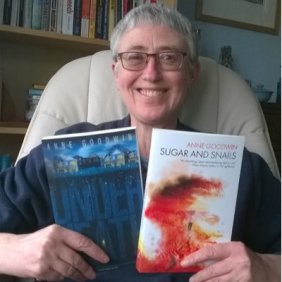
Like Steve, Anne Goodwin used to like to travel, but now she prefers to stay at home and do her travelling in her head. Like Liesel, she’s worked in mental health services, where her focus, as a clinical psychologist, was on helping people tell their neglected stories to themselves. Now that her short fiction publication count has overtaken her age, her ambition is to write and publish enough novels to match her shoe size. Underneath is her second novel; her first, Sugar and Snails, was shortlisted for the Polari First Book Prize. Anne lives in the East Midlands and is a member of Nottingham Writers’ Studio.

You can find out more about Anne on her website and follow her on Twitter.

There’s more with these other bloggers too:

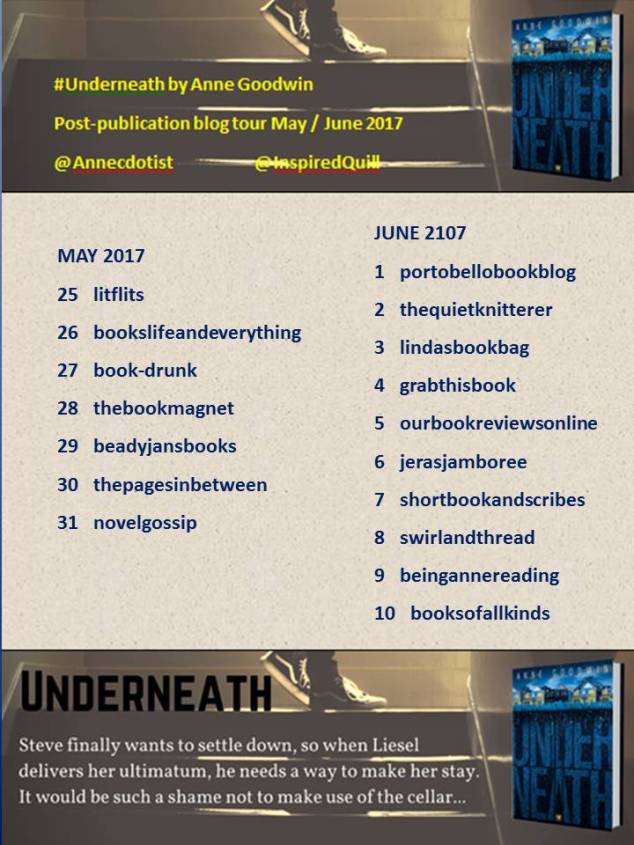
blog tour 25 May to 10 June

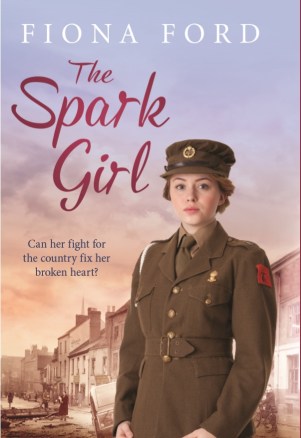
Loving the Past: A Guest Post by Fiona Ford, Author of The Spark Girl

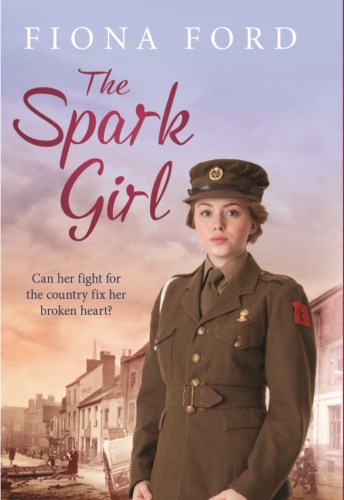
saprkgirlhr

I’ve been secretly hoarding books for August when I’m disappearing from guest posts and blog tours to concentrate on reading books that are calling to me from my TBR pile. The Spark Girl by Fiona Ford is one of those books and I’m thrilled that Fiona has agreed to write a guest blog for Linda’s Book Bag today, all about the allure of the past.

The Spark Girl was published yesterday, 1st June 2017, by Orion and is available for purchase here.

The Spark Girl

saprkgirlhr

A knock on the door early one morning wouldn’t normally be cause for concern but it is 1941, Britain is at war, and Kitty Williams’s fiancé Joe is far from home fighting Hitler with the Navy. As Kitty’s heart is shattered into pieces hearing the news she had been dreading, resolve kicks in and she becomes more determined than ever to do her bit for the war effort.

Signing up to the Women’s Army is just the sort of challenge Kitty needs and on meeting new recruits Mary, Di and Peggy, she is happy to learn that the challenge won’t be a lonely one. But it also won’t be easy and when bombs start to fall on her home town of Coventry, and supposed allies turn against her, Kitty must find the strength she never knew she had to save her family, fix her broken heart and help her country to victory.

Why do we love to live in the past?

A Guest Post by Fiona Ford

If I had a penny every time I heard a cliche I would be a very rich woman by now. Thanks to the joy of social media, platitudes such as ‘Don’t look back, that’s not the way you’re going’, or my own personal favourite, ‘the future is forward’, litter my personal news feeds, and I bet they clog up yours as well.

It begs the question, with so much life advice on looking  to the future rather than the past why are we all so obsessed with times gone-by?

Whether we’re revelling in Downton Abbey, reliving our heritage in The Crown, rooting for Ross and Demelza in Poldark or simply enjoying life’s simpler times in Call the Midwife, there’s no getting away from the fact that although we’re supposed to be moving forwards, a lot of us want to hang back.

It’s certainly something I’ve been pondering of late, as my very first historical novel, The Spark Girl hits bookshelves from 1 June. For the past three years I have been living, breathing, researching and writing the life and times of World War Two and I have to say I have been extremely happy in the 1940s.

Its strange isn’t it? After all, in the 21st century we have more say in our world than ever before. New technology is being invented all the time along with better quality food, instant fashion and improved healthcare, to quote Winston Churchill, we’ve never had it so good.

So why as I lock myself away in a world more than seventy years old, do I feel so at home here? After all, World War Two was not exactly known as a time of peace, certainly not when 495,000 were killed in the UK alone and we were left with over £40 million in debt to repay.

With WWII leaving us with so much terror and heartache on our very streets, I have often wondered over the past three years just why I feel so at home in the 1940s and I think the answer is this – security.

Yes, that’s right security. Because even though almost everything of any use was rationed, bombs fell like confetti from the sky and people lived in daily terror for their lives, we know with the comfort of 21st century hindsight that everything worked out in the end. Good triumphed over evil, right won out over wrong and we as a society moved forwards and learned from the tragedies we had witnessed.

And that’s the great thing about living in the past; curled up with a book, or a decent boxset, we know as we relive the drama of those times that everything is going to be all right in the end.  It might be difficult, it will often be painful but things will work out. With so much uncertainty around us at the moment, I think that’s the beauty of reminding ourselves of times gone by. We can take stock and think, goodness people survived all of that, we will too.

(I’d never thought of it like that, Fiona. Well said!)

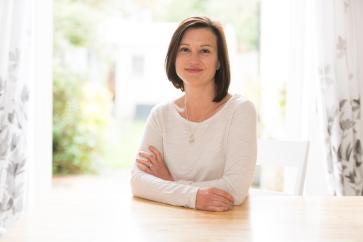
About Fiona Ford

fiona1

Fiona Ford is a freelance journalist. She has spent the last 15 years writing gritty real-life stories, news and a smidgeon of celebrity tittle-tattle for national newspapers and magazines. Following a stint as a ghost writer, Fiona plucked up the courage to combine her love of writing and history to write a novel in her own name. The Spark Girl, is her first saga.

Originally from Bath, Fiona now lives in Berkshire and is married with two cats. Thankfully, both her husband and pets have all mastered the art of pretending to listen patiently as she begins yet another anecdote with the words, ‘during the war’. When she is not writing or researching World War 2, Fiona can be found running along the Thames Path, training for a half marathon of some kind and wishing she was sat on the sofa eating chocolate instead.

You can follow Fiona on Twitter and visit her website.

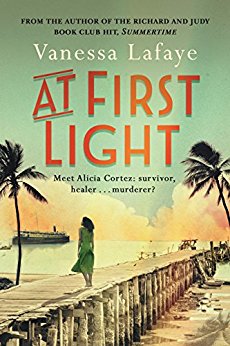
Vanessa Lafaye in Conversation with Jason Hewitt on At First Light Publication Day

at first light

I can’t begin to tell you how excited I am to be hosting this blog post. In a departure from anything I have done before I’m handing over the blog to author Jason Hewitt so that he can interview Vanessa Lafaye all about her new novel At First Light. Both Vanessa and Jason are writers for whom I have the utmost respect and I am genuinely thrilled to welcome them both to Linda’s Book Bag.

You can read my review of Jason’s Devastation Road here and my review of Vanessa’s At First Light here.

At First Light is published by Orion today, 1st June 2017, and is available for purchase through the publisher links here.

At First Light

at first light

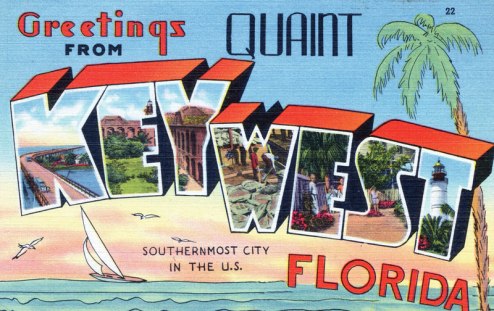
1993, Key West, Florida. When a Ku Klux Klan official is shot in broad daylight, all eyes turn to the person holding the gun: a 96-year-old Cuban woman who will say nothing except to admit her guilt.

1919. Mixed-race Alicia Cortez arrives in Key West exiled in disgrace from her family in Havana. At the same time, damaged war hero John Morales returns home on the last US troop ship from Europe. As love draws them closer in this time of racial segregation, people are watching, including Dwayne Campbell, poised on the brink of manhood and struggling to do what’s right. And then the Ku Klux Klan comes to town…

Inspired by real events, At First Light weaves together a decades-old grievance and the consequences of a promise made as the sun rose on a dark day in American history.

You can watch the trailer video for At First Light here.

Vanessa Lafaye in Conversation with Jason Hewitt

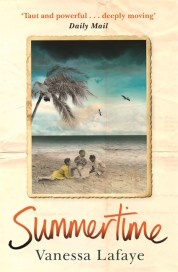
Jason Hewitt, author of The Dynamite Room and Devastation Road (both Simon & Schuster) interviews Vanessa Lafaye about her second novel, At First Light (Orion 1 June).  Set in 1919 Key West, Florida, it dramatizes the true story of a violent episode involving a mixed-race couple when the Ku Klux Klan installed themselves in the town.  Her debut novel, Summertime, was published by Orion in 2015.
FL-Postcard

Good morning, Vanessa. I’m so excited to be chatting to you about At First Light, which, as you know, I loved. I’ve got a whole heap of questions that I’m dying to ask about it. Firstly though, the main narrative is based on the real life story of Manuel Cabeza and his mixed race lover, Angela. Tell me, how did you come across their story, and how much of it did you end up using in the novel? 

Great question.  I really enjoy dramatizing real events, but they need to have several elements: drama, interesting people, and relevance to today.  It’s also important that the events have been mostly forgotten.  Such events are very, very rare, and difficult to find, because the most exciting stories have become part of our collective memory.  Sometimes I feel as much like an archaeologist or a treasure hunter as a novelist!  So when I come across an event which ticks all the boxes, I get very excited.  Still, it can’t just be a retelling, it has to have more than that.  I was actively looking for another true story to follow Summertime, ideally set in Florida’s history. I didn’t want to go forward into the 1940s or later, because there have been so many books about those decades.

This helped me narrow my search.  I came across the story of Manuel and Angela about a year before I decided to take it on.  It ostensibly had all the right elements, but I couldn’t see how to bring it to life, and make it more than just a retelling.  Then I learned that the last KKK rally in Key West took place in 1993, far more recently than I realized.  This made me wonder what Angela might do, if she were still living in the town when that rally occurred, which gave me the missing piece that allowed me to take the story forward.  At First Light follows what is known about Manuel and Angela’s story closely, in terms of their relationship, how they came to the notice of the Klan, and what happened to them as a result.  Where it differs is in their back stories, how I have imagined Manuel’s childhood, and Alicia’s Cuban background.  Almost nothing is known of the real Angela, which left me free to create her former life.  All the events surrounding the Klan’s arrival are based on research.  Even the demise of the ‘walking dairy’ came from a real event.  It’s interesting that readers sometimes find the passages based on real events more difficult to credit than those which I invent.

Ha, yes! That always makes me laugh. Quite frankly some of the small details I include in my novels I simply don’t have the imagination to make up, and yet, you are right, they’re the ones that readers question! You, of course, mention the KKK which forms an important and quite terrifying thread to the novel. Some of the characteristics of the Klan have always seemed totally ridiculous to me, playground nonsense even, and yet they were a terrifying force at the time. Why do you think they took such a hold on American society in the first half of the twentieth century?

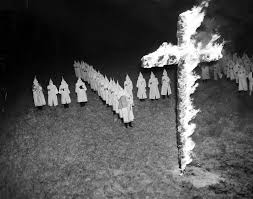
Their mixture of buffoonery and murderous efficiency is very odd, isn’t it?  It’s quite astonishing to think that they had 850,000 members at their height, which included many law enforcement and public officials.  Their message resonated with a lot of disaffected whites, who suffered enormously during the reconstruction period after the Civil War of 1861-65.  (Interestingly, these same disaffected whites have much in common with Trump’s core support base—different geography, similar grievances.)  The Klan’s message was ‘Take America Back for the Real Americans’.  Sound familiar?  Americans have a high tolerance for buffoonery if it’s combined with policies which appear serve their interests.  The early 20th century was a period of enormous upheaval in the US—mass migration to the cities, and WWI which gave blacks their first taste of equality.  White Americans were terrified of them returning home, and the Klan promised to act as guardians for white, Protestant America.  Of course, the public didn’t see inside the Klan organization, or witness all the ridiculous rituals and arcane lore.  They only saw pictures of bodies hanging from trees, and hundreds of white-robed men marching with burning crosses.  Stetson Kennedy, whose books I used for research, infiltrated the organization and exposed its bizarre, laughable inner workings.  The Klan, like the current President, was very sensitive to ridicule.  It started to hemorrhage support after Kennedy shared their secret password with the makers of the ‘Superman’ radio program in the 1940s, and the show mocked them mercilessly in several episodes.
download (1)

The Key West portrayed in the novel was actually quite slow to welcome the Klan and was in fact more tolerable of blacks than other parts of the US. Why do you think that was? And what finally prompted the city fathers to invite the KKK to the Keys in 1921?

Yes, you’re right, Key West was very different to the rest of Florida, and the American South, in its tolerance of, well, just about everything.  Since it was first discovered by the Spanish in the 16th century, it’s been a haven for every type of eccentric, including pirates, bootleggers, and people traffickers, with a proud tradition of ignoring official controls that don’t suit the lifestyle.  The town retained much of this tolerance as it grew, with a few exceptions, such as when the Jewish peddlers were taxed out of business. Key West calls itself The Conch Republic, as there were moves long ago to make it a sovereign territory.  Even today, the people who live there are the ones who want to get on with their lives without interference.  This mostly involves drinking and fishing, preferably at the same time.  Anything that interferes with either is quickly despatched.  The island is the end of the chain, closer to Cuba than Miami.  It’s very much the end of the line in other respects.  I don’t know what prompted the invitation to the Klan, but the organization was strong elsewhere in Florida at this time, and Key West’s tolerance would have been abhorrent to them.  The original Klan of the Keys Charter carries the signatures of the local officials who sponsored it.

Wow, that’s fascinating. I love the Key West mentality. It sounds very relaxed. And, actually, talking about dodgy dealings, in the novel John smuggles in alcohol for his bar The Last Stand. This is, of course, against the backdrop of Prohibition being introduced in 1920. I’m assuming that the Prohibition laws weren’t particularly adhered to in Key West either given the laid-back attitude of most of its inhabitants. Was this something that you were keen to include in the story as well? Also, I have no idea how Prohibition worked. Was it well policed and did it actually have much affect on life in Key West, or was it just a mild inconvenience that in reality did little to lessen consumption?

I think you would love it there.  If you ever want to visit, I’ll be happy to be your guide!  The cemetery alone is worth a trip, it’s like a city in itself, with named streets and its own guidebook to some of the more colourful residents.  Key West still has lots of bars that remind me of John’s bar, The Last Resort.  You’re correct that Prohibition did not have much impact in Key West, unlike the rest of the country.  Elsewhere, it was strictly enforced, but the authorities were so corrupt that there was a healthy black market trade.  Did you see the series, ‘Boardwalk Empire’?  That’s set during the period.  Key West got away with ignoring a lot of statutes by virtue of its remote location.  The federal authorities did try to enforce Prohibition down there. Everyone paid lip service to it, then bribed or intimidated their way around it.  Bootlegging such as I describe in the book was rampant, using any containers available.  Suitcases and, yes, coffins went empty to Havana and came back sloshing.  The smuggling tradition goes back centuries, as does the tradition of ignoring the government. Key West is a party town; it runs on alcohol and always has.

Oh, it sounds wonderful. I’m going! And consider yourself booked as my local guide! Actually, I loved all the little details you include in the novel about the more colourful characters and activities that were going on there at the time, not just the bootlegging, but the walking dairy farm and Percy the gorilla who works on the dock. Can you tell us a little bit about how you researched everyday life in Key West? I presume you know the area pretty well but did you carry out some ‘essential’ research trips there as well?

Unfortunately, I did all my research from my armchair in Marlborough.  I know the area well enough to make a research trip hard to justify.  I found all the details of daily life in the books that I’ve referenced in the Further Reading in the back of the novel.  Some of it is probably legend, of course, but that doesn’t really matter.  It’s the kind of place where so many outlandish things have happened  – like the town siding with the Union in the Civil War, when the rest of Florida was with the Confederacy—that anything seems possible.  There was a lot of wonderful material that I had to leave out for reasons of space, like the local doctor who preserved the corpse of his beloved when she died of TB and kept her in the house for years.  As a keen scuba diver, I’d love to write a novel about the sunken treasure that still lies off the coast.

Oo, yes, that sounds amazing. And there aren’t enough novels about diving in my opinion. You could clean up! Of course, you’re originally from Florida. Do you think that is what drew you to write about it in both Summertime and now At First Light? Do you think you’re writing gains something by having some distance to the location you are setting the story? And would you ever consider writing a novel set in Marlborough where you now live, or is that a little too close to home?

Well I’ve never heard anyone say that before! I think that you may be my target reader for any diving-related novels.  Ironically, I didn’t learn to dive until I had been living in the UK for a long time.  Living here opened my eyes to a lot of things, including the history of WWI.  It has been forgotten in the US. I wouldn’t have written either book if I had not left the country and come to live here.  For one thing, I had to be educated about the war, which happened through reading fiction by Sebastian Faulks, Pat Barker and others.  Second, as you say, the distance and perspective gained from living here was necessary for me to write about my home country.  I would not have had the interest in the WWI veterans, or the background to write about them.  In future books, I am planning to move around, in terms of settings and periods, which will include England at some point.  Not sure about Marlborough itself, although the research certainly would be easy!

I bet if you peeped behind a few doors in Marlborough you’d find all sorts of stories to base a novel around. These pretty little market towns are usually rife with intrigue and polite skullduggery! 

I’m sure that’s true.  The town got its charter in 1204, and Cromwell stopped here during the Civil War.  All around us in the countryside are much older monuments, long barrows and mounds and stone circles and henges of various types.  Wiltshire is more mystical than many people realise!

One of the things I particularly loved about At First Light is the characterisation. Alicia Cortez, in particular, is a fantastic creation – someone who is vibrant and rich and that readers can really root for. Have you got a favourite character in the novel and do you have any secret techniques you could share about how you get under their skin and bring them to so vividly to life?

I’m so glad that you liked Alicia.  I really enjoy writing gutsy female characters, and it gave me a reason to visit Cuba!  She’s based on a real Cuban faith healer, Maria de los Reyes Castillo Bueno, known as Reyita.  She married a white man to give her children a better future, and encouraged her children to do the same.  She practiced ‘Santeria’, the ancient religion/healing arts outlawed by the government but prevalent throughout the country, and was a very fiery person.  My favourite character is young Dwayne, and the same was true in ‘Summertime’, because it gives me the challenge of making him sympathetic although he does very bad things in both books.  That complexity really appeals to me as a writer, exploring how basically good people can lose their way, whether through their upbringing, or prejudice, or traumas they have suffered.  I don’t believe that there are many genuinely evil people in the world.  It was my first time writing a teenage male character’s POV, but it was great fun – all those hormones, all those conflicted loyalties.

Ah, yes, there’s nothing like writing about the complexity of teenage years! Did you know when you first came up with the idea for At First Light that Dwayne would be in it again? You must have enjoyed revisiting him in his youth. I never want to let my characters go when I’ve finished a novel, I always go into mourning for them, but have never found a way of resurrecting any of them. Did the way you had already portrayed Dwayne in Summertime throw up any challenges in writing this one?

No, I didn’t know that I would be revisiting Dwayne again, although I’m like you, I find it hard to let go of my characters.  I had in mind that At First Light could work partly as a prequel to Summertime, but hadn’t decided which character(s) from that book could be included.  I also needed a catalyst for the events which engulf Alicia and John, and a vulnerable, impressionable boy fit the brief.  I worked out that the timeline fit Dwayne’s life, and that he could have grown up in Key West, but I hadn’t imagined his back story in much detail, beyond that he had an abusive father.  Then I came across the story of the shoe shop delivery boy, who took his wares to all the business, including the brothels, and benefited from a glimpse or two of ‘girlishness’.  For me, that put Dwayne in the scene.  In Summertime, Dwayne’s wife gives birth to a mixed-race baby boy, who has grown into the police chief in the opening of At First Light.  This seemed like a nice way of linking the two books, and showing the roots of a very conflicted character.  I really enjoyed this ‘reverse engineering’; however, I wish I had thought of it when writing ‘Summertime’, as I could have made things easier for myself!  Luckily, Summertime was still in production when I decided to use Dwayne again, so I was able to make a few little changes right before it went to press, but I could have done some things differently if I had planned it.  In book 3, I plan to re-use another character from Summertime, but that will be the last one in the set.
Summertime

Well, I don’t think you have anything to be worried about. Although, of course, you will worry, because you’re a writer and writers, in my experience, are very good at worrying about their work. It shows that we care. So, can I ask, are you working on something new now, or are you having a well-earned breather? Is it going to be that diving novel?

I agree.  And we’re such needy creatures, because we care.  The exceptions are the icons who write for themselves, or for their art.  I can’t see myself like that, can you?

Oh I’d so love to set a novel around diving!  But I’m not sure that the British reading public would really go for it.  I had no idea that you and I shared this interest, but I fear that we’re not very representative.  Maybe I’ll do it some day just for fun.  In the meantime, I’m working on dramatizing another set of historical events.  Although I’ve focused on 20th century US history in these first two books, I’m keen to cover other places and periods.  It all depends on finding the right stories, buried in the past.

Ooo, intriguing! I can’t wait! It all seems very organised. In the novel itself you cleverly craft all the pieces of the story together so well, with nothing wasted and every action impacting another. Are you a planner or do you discover the story as you write it? And, research aside, what do you do to prepare before you start writing your first draft?

Ha! Well, I’m glad that it came across as crafted, because it was a matter of fitting lots of pieces together, whose shapes I only had moderate license to alter.  You know what that’s like, when history doesn’t provide you with the most convenient elements for your story?  I am somewhere towards the middle of the plotter-pantser spectrum.  I have a set of 4-5 milestone events in the story when I start, what Chuck Wendig calls ‘tent poles’, but very little idea of how I will join them up.  I wouldn’t be able to plan every chapter, every scene in advance, because I do discover a lot of the story as I write it, and as I get to know the characters.  They say and do things that I didn’t expect, and this can change my plan.  Sometimes beta readers will get really interested in a minor character, which can persuade me to develop them further.  So I have to stay flexible, and for me that means having a skeleton plot, which is partly dictated by the real events, which only gets fleshed out when I reach the end of the first draft.  To prepare for writing, I turn to the oracle of Google to track down the primary sources that I need, and trawl the internet for articles, interviews, and images.  Once I feel that I have a grasp of the setting/period/story/characters, I compile in a notebook all the best points from the research materials, to remind me what I want to weave into the narrative.  As I write, I tick off the items in the notebook.  The problem with At First Light was deciding what to leave out, which is probably one of the hardest jobs when you’re really passionate about your subject.  You want the reader to know EVERYTHING, and that’s not fair or feasible. Sometimes it feels like curating an exhibition, choosing which scenes will grab the reader, and how to make them work together.

I love that metaphor. It’s so true. I often think every novel should have a supplementary book of cut scenes, just as you get with films. Although I guess, there’s always a good reason why some things are not included. And, actually, thinking about it, I’m not sure that I’d want any one reading some of the dross that gets cut from my first drafts!

People love the out-takes from films, the scenes that didn’t quite work, the lines that got fluffed.  Maybe there’s place for our out-takes?  Or maybe we can find a use for them?  I always do character sketches before I start writing, first-person accounts of their lives.  One of these became the short story, Fire on the Water, which won the top prize from the Historical Novel Society.  So I never throw anything away!

(Linda – Readers can find out more about Fire on the Water here.)

We’ve mentioned your debut Summertime quite a lot, which, of course, was a big success. It was selected for the Richard & Judy Book Club and shortlisted for the Historical Writers’ Association’s Debut Crown award. Having had one book out already are you feeling a bit more relaxed about At First Light being published or are you more nervous now that you know what to expect? Do you think writing gets any easier?

The second novel, as you know, is vastly different from the first, especially in terms of expectations.  People are generous towards debut novelists, because we still have our training wheels on, but by the second book we should know the job.  It all adds up to a lot of anxiety, especially if the first had any success.  Although I do know the job now, that hasn’t done anything to lessen the anxiety.  With Summertime, I was just so thrilled to see it published, I had no anxiety, just happiness.  Now the stakes are higher, because this is my career.  I’m a bag of nerves filled with hyperactive butterflies right now. The writing does get easier, as your craft improves, but the rest gets harder, from what I hear.  Every book is a risk, every book means exposing yourself to criticism.  That’s the deal.

Finally, I’m always looking for a good read. What’s the best book you’ve read this year? And if we were still teenagers (but rather geeky ones) which author would you have on a poster on your bedroom wall?  

As you know, the problem with being an author is that reading becomes part of the job, and it’s difficult to switch off the editorial analysis.  So far this year, I have enjoyed The Essex Serpent by Sarah Perry, which has had a lot of attention, and The Hiding Places, by Katherine Webb, which has not.  I love Katherine’s writing, and her new one is based around a crime in a Wiltshire village in the late 19th century, like a fictional version of The Suspicions of Mr Wicher, which I loved.  I also really enjoyed Essie Fox’s The Last Days of Leda Grey—so rich in atmosphere and period detail.

On my bedroom wall would be a poster of Kurt Vonnegut.  He’s my hero, in so many ways.

(Linda – My enormous thanks to both Vanessa and Jason for such a fascinating insight into the writing process and At First Light in particular.)

About Vanessa Lafaye

VL_0060

Vanessa Lafaye was born in Tallahassee and raised in Tampa, Florida, where there were hurricanes most years. She first came to the UK in 1987 looking for adventure, and found it. After spells of living in Paris and Oxford, she now lives in Marlborough, Wiltshire, with her husband and three furry children. Vanessa leads the local community choir, and music and writing are big parts of her life.

You can follow Vanessa on Twitter, visit her website and find her on Facebook. Vanessa’s books are available through the publisher links here.

About Jason Hewitt
jason-img_2552-1200-pixels

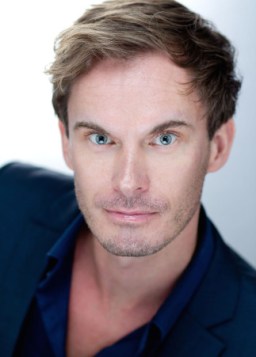
Jason Hewitt was born in Oxford and lives in London. He has a Bachelor of Arts degree in History and English and an MA in Creative Writing from Bath Spa University.

After completing his degree he spent a number of years working in a bookshop before eventually succumbing to the publishing industry and moving to London.

He is also a playwright and actor. His play, Claustrophobia, premiered at Edinburgh Fringe in August 2014 and was previewed at the St James Theatre, London.

As an actor he has performed major roles in a number of plays in London including Pericles, A Christmas Carol, The Last Days of Judas Iscariot, The Merchant of Venice and King Lear.
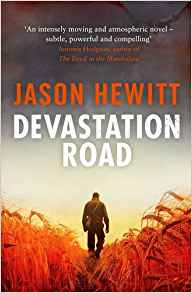
Devastation RoadPB

You can follow Jason on Twitter, visit his website and find him on Facebook. Jason’s books are available for purchase through his publisher links here.
Sisterhood in Modern Times: A Guest Post by Emma Claire Sweeney and Emily Midorikawa, Authors of A Secret Sisterhood

Secret Sisterhood revised cover

I am just delighted to be featuring A Secret Sisterhood: The hidden friendships of Austen, Bronte, Eliot and Woolf by Emily Midorikawa and Emma Claire Sweeney.

I have been lucky enough to read Emma Claire Sweeney’s novel Owl Song at Dawn and you can read my review here.

Having taught each of the authors mentioned in A Secret Sisterhood: The hidden friendships of Austen, Bronte, Eliot and Woolf, and I even did my university dissertation on Bronte, I’m ashamed to say I never really considered more about them as women other than the established commentaries provided. Consequently, I’m thrilled to have a guest post from Emma and Emily today that shakes up my complacency and really makes me think.

Published today, 1st June 2017, by Aurum Press, an imprint of the Quarto Group, A Secret Sisterhood: The hidden friendships of Austen, Bronte, Eliot and Woolf is available for purchase in e-book, audio and hardback here.

A Secret Sisterhood

Secret Sisterhood revised cover

A Secret Sisterhood uncovers the hidden literary friendships of the world’s most respected female authors.

Drawing on letters and diaries, some of which have never been published before, this book will reveal Jane Austen’s bond with a family servant, the amateur playwright Anne Sharp; how Charlotte Brontë was inspired by the daring feminist Mary Taylor; the transatlantic relationship between George Eliot and the author of Uncle Tom’s Cabin, Harriet Beecher Stowe; and the underlying erotic charge that lit the friendship of Virginia Woolf and Katherine Mansfield – a pair too often dismissed as bitter foes.

In their first book together, Midorikawa and Sweeney resurrect these literary collaborations, which were sometimes illicit, scandalous and volatile; sometimes supportive, radical or inspiring; but always, until now, tantalisingly consigned to the shadows.

Sisterhood in Modern Times

A Guest Post by Emily Midorikawa and Emma Claire Sweeney

We met sixteen years ago, right at the beginning of our writing journeys. On the long road to publication, we have helped each other with all the uphill struggles and shared in each small moment of triumph.

It struck us as strange, therefore, that we knew all about the friendships of male authors like Byron and Shelley or Hemingway and Fitzgerald, but little of the bonds that celebrated female writers from the past might have enjoyed.

Did Jane Austen forge a friendship with another female writer? Was there another woman to whom George Eliot turned to for literary support?

When we began writing A Secret Sisterhood: The hidden friendships of Austen, Brontë, Eliot and Woolf, we set out to answer such questions.

We discovered that Jane Austen benefitted from an unlikely friendship with a family servant, the amateur playwright Anne Sharp; Charlotte Brontë was inspired by the daring feminist Mary Taylor; George Eliot shared her experience of stratospheric literary fame with Harriet Beecher Stowe, the author of internationally bestselling anti-slavery novel Uncle Tom’s Cabin; and Virginia Woolf was spurred on to produce her best work by her rivalrous friendship with fellow modernist Katherine Mansfield.

The more we researched the friendships of these great authors of the past, the more we began to wonder why these stories of female solidarity had been written out.

Perhaps a community of creative women was threatening to patriarchal norms, and this led to female writers becoming mythologised as solitary eccentrics or isolated geniuses.

The more we looked into these issues, the more we came to appreciate the importance of literary sisterhood today.

Women may have invented the novel but, in may ways, male voices still dominate our intellectual and cultural lives. The annual VIDA count demonstrates that the most prestigious literary magazines and newspaper books pages in the UK and the US include far fewer bylines and reviews of books by women than by men. The gender pay gap penalizes female writers to an even greater extent than that suffered by women in most other areas of working life. And women are far more likely to boost their earnings by winning prestigious prizes if they write books about men.

This doesn’t just affect the literary world, it impacts on us all. When women’s experiences are not valued as highly as those of men, all our lives are diminished.

Friendships between female writers and readers, we’ve come to realise, aren’t simply pleasant aspects of our lives. They can prove fundamental to making inroads into the persistent inequalities we all face.

Together with the friends we have made during the process of writing A Secret Sisterhood, we have come up with a list of strategies to help us make the most of literary sisterhood today.

Readers

  • Start with our own bookshelves. Do we read at least as many books by women as men?
  • Take a look at the VIDA counts and consider subscribing to those magazines whose statistics show a commitment to gender parity. We might also want to think about cancelling subscriptions to magazines whose statistics have been consistently poor in this regard, and writing to the editor to explain why we’re turning away.
  • Encourage our friends to read more diversely.
  • Read stories to children that explode gender stereotypes.

Writers

  • Start with our own writing. Do we explode gender stereotypes in our own work?
  • Champion the excellent work of overlooked female writers. We can do this through reviewing, blogging, writing endorsements, nominating for prizes, mentioning fellow authors in talks, holding firm in prize panel negotiations etc.
  • Mentor emerging writers who might struggle to get their voices heard.
  • Keep submitting our stereotype-exploding work to competitions and magazines.
  • Edit a collection of work by writers whose voices are traditionally suppressed.
  • Find a project we admire and ask those who run it what we might do to help.

Literary Industry Professionals

  • Solicit work from an equal number of men and women.
  • Ask our colleagues to be equally accountable.
  • Keep reviewing our statistics, and asking how we might seek to improve them.
  • Think hard about what we prize in writing, and whether any of this is based on prejudice.
  • Is the academic at the highest level of the hierarchy necessarily the best person to write this review? Has privilege contributed to their rise up the ranks?
  • Fight for information about pay to be freely available.
  • Consider whether a temporary quota might help.
  • Ensure that literary events showcase the talents of an equal number of men and women.
  • Be brave!

About Emily Midorikawa and Emma Claire Sweeney

DSC_6363-Edit1-Edit1

Writer friends Emily Midorikawa and Emma Claire Sweeney are the authors of A Secret Sisterhood: The hidden friendships of Austen, Brontë, Eliot and Woolf. They also co-run SomethingRhymed.com, a website that celebrates female literary friendship. They have written for the likes of the Guardian, the Independent on Sunday and The Times. Emily is a winner of the Lucy Cavendish Fiction Prize, Emma is author of the award-winning novel Owl Song at Dawn, and they both teach at New York University London.

You can follow them on Twitter via @emilymidorikawa and @emmacsweeney, and Emma has an author page on Facebook.

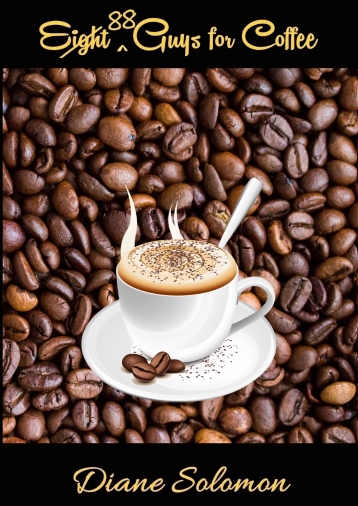
Publication Day Interview with Diane Solomon, Author of 88 Guys for Coffee

88 guys cover front promo

I’m so pleased to welcome back Diane Solomon, author of 88 Guys for Coffee, to Linda’s Book Bag today. Diane previously wrote a smashing guest post about the rewards of creativity that you can read here.

88 Guys for Coffee is published today, 1st June 2017, by Eloquent Rascals and is available for purchase in e-book and paperback here

88 Guys for Coffee

88 guys cover front promo

Abandoned and feeling lost, her self-worth in tatters, Laura decides to try online dating sites. What an education. And what a long, five years she has ahead.

Hilarious and heartbreaking, soul-searching and spiritual, 88 Guys for Coffee shares Laura’s roller-coaster ride of experience searching for her soul mate, for her true partner in life. No matter how crazy it gets, no matter how
disillusioned she becomes, she can’t give up. She won’t give up.

Laura learns all there is to know about online dating, but she learns the most about herself.

An Interview with Diane Solomon

Welcome back to Linda’s Book Bag, Diane. Thank you so much for agreeing to answer some questions on my blog about your writing and your latest book 88 Guys for Coffee. Without spoiling the plot, please could you tell us a bit about the book?

This book is a fictional memoir taken from my own experience with online dating. My protagonist, 45-year-old Laura, is suddenly and shockingly abandoned by her husband. With her self-worth shaken and her confidence shattered, she creeps hesitantly onto online dating sites. The next five years are a roller coaster of hilarious, bizarre, hard-to-believe coffee dates with men she meets from these sites. These stories are true, word for word, except with identities masked, of course.

She searches tenaciously for her true partner in life and as crazy as it gets, she will not give up. This, too, is true, and paid off for me. I met my wonderful husband, Mark, on Match.com.

I hope readers will love Laura, whose big heart is broken, yet she keeps laughing, running, working, and pondering the reasons why human beings do what we do. Why we make such a mess of things, sometimes. Why we hurt so much. What it all means….

As I described my funny experiences to friends, several said, “You just have to write this down for a book!” So I did.

And please could you tell me a little about yourself?

I was fortunate to enjoy a successful singing career in England, with my own BBC TV variety show and many other TV appearances over the subsequent 15 years. Then, my career was destroyed by the infamous Chronic Fatigue Syndrome, which left me bed-ridden for close to eight years.  I suffered through a fog of pain and exhaustion that was just like living with the flu.

A homeopathic remedy was the cure, which launched me into a new career as homeopath and nutritionist. However, I’ve always wanted to write, as long as I can remember, and somehow knew that it would be my third career. (I think we should all have two or three careers – so much more interesting, perhaps!) Now I am retired from practicing, and fulfilling that dream.

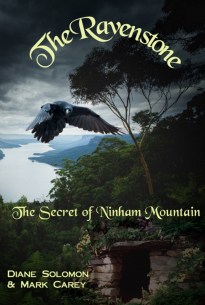
I live in New Hampshire, with my husband Mark Carey, who is a brilliant, funny, insightful man. And I get to write with him! How great is that? We wrote a middle grade book called The Ravenstone: The Secret of Ninham Mountain, which we published in October 2016. Mark is a retired biologist, naturalist, and accomplished voice-over artist. We live on acres of woods, meadows and streams, and when not writing, we design gardens, sing, write, and watch wildlife. And play with our two English Setters!

(Readers can find out more about The Ravenstone: The Secret of Ninham Mountain here.)

the-ravenstone-cover

Online dating is a minefield for many. Why did you choose to use it as the basis for your writing?

I took notes from the bizarre coffee dates I had over five years and realized it would make people laugh.  How I love to make people laugh! Also, I knew many women would relate; I have heard from my beta readers that they have had similar experiences.

What is your view of the online world in general then?

I have a rather mixed view of the online world.  While it has given a potential voice to everyone and has made the world a tiny place, considering the way we can now connect with souls all over the planet, it has also created a place of lies, cons, and mistrust. Look at the political situation, the doubt about the validity of our press, the very question of what is true or not. What is real. Or not. It worries me.

The online platform also seems to lower the level of discourse across the board. It allows unkindness, foul-mouthed antagonism, and lack of respect and dignity between people. Those who would never say anything nasty to another person in person feel free to drop those inhibitions online.

As for the online dating world, I think it really can work, and has been a gift to busy people who would otherwise have a hard time finding each other.

What advice would you give to those about to try online dating?

Be very patient, take your time, and lower your expectations. Most of the time, what you see is not what you get. People fudge the truth with regard to their age, weight, etc.  Of course! It is a sales medium.

And just as you would meet a stranger anywhere, be careful!  But also know that you CAN meet someone wonderful, someone perfect for you. I did! And married him.

(That’s a fabulous outcome – congratulations!)

88 Guys for Coffee marks a slight departure in your writing. Why is this?

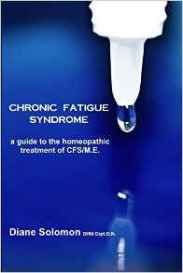
I know! After ghost-writing and editing eight books for other people, my first book was Chronic Fatigue Syndrome: a guide to the homeopathic treatment of CFS/M.E.  Non-fiction, it was well researched and referenced, yet written from the heart, since I hoped to offer to help others suffering this dreadful scourge. The next book was the wonderfully fun and magical The Ravenstone, a middle-grade mystery fantasy. What fun that was! And now a beach-read, a chick lit, a light, humor book for women. Go figure.

cover-2

Agents have advised me to pick a genre and stick to it. I am contrary, I guess, since am not doing that. I write what inspires me and isn’t that what the creative path is? I had no desire to limit myself to books in the same genre or to treat writing as a business. Writing is not a business to me. It is art, creativity, entertainment, and spiritual and philosophical provocation. The joy of the creative moment to me is all-important.

(I think many authors will find that a breath of fresh air and it seems to me it’s why many are choosing to self-publish – so that they have the freedom to write what feels appropriate to them.)

How do you go about researching detail and ensuring your books are realistic?

Another advantage of the internet, the ease of researching! When Mark and I wrote The Ravenstone: The Secret of Ninham Mountain, we read all we could about the Stone Chambers of Putnam County, New York, which feature greatly in the book. We travelled there, and to American Stonehenge in New Hampshire. We read other books dealing with time travel. We studied and read up on the American Indian tribes present in pre-Columbian Hudson Valley, to be able to describe that lifestyle correctly. I love this sort of research, as I learn so much I didn’t know. For example, I learned all about Passenger Pigeons, which we featured in the book as well. Beautiful birds, hunted into extinction.

Which aspects of your writing do you find easiest and most difficult?

Easiest: researching, planning, laying it out, handling all the outline and pages, etc. Actually doing it doesn’t seem an issue for me, and I don’t struggle much with writer’s block.

Hardest: character development. I really work at this, to try to make a character feel real.

Also, I find it hard, as a writer, to believe I might be good enough. I keep wondering when someone will catch me out as a fraud! I read so many other authors’ books, am so blown away by their talent and wit, that I sometimes feel I’m a lightweight by comparison. Perhaps all artists, all writers, feel this from time to time.

(Oh I think they definitely do!)

If you could choose to be a character from 88 Guys for Coffee, who would you be and why?

Francesca. She is feisty, beautiful, warm, kind, practical, wise, all the characteristics I work hard at being or becoming. So I wrote my role model.

Finally, Diane, if you had 15 words to persuade a reader that 88 Guys for Coffee should be their next read, what would you say?

It will make you laugh, bring tears to your eyes, and make you think.

Thanks so much for taking the time to answer my questions.

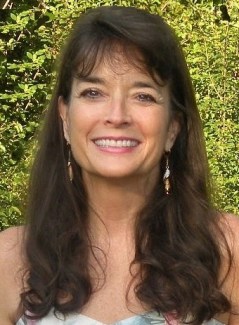
About Diane Solomon

diane-solomon-promo

Diane Solomon, author, enjoyed a wonderfully diverse career path that included her own variety show on BBC TV in England. As a performing artist, she opened for both Glen Campbell and Kenny Rogers during major tours of England, Europe and Africa. Her highly successful singing career was destroyed by Chronic Fatigue Syndrome and the story of her recovery via a homeopathic remedy is a book in itself!

Fully recovered, she is fulfilling her lifelong dream of being a writer. She has ghostwritten and/or edited many books in the last decade.

You can find out more about Diane on Goodreads and by following her on Twitter. You can also visit her website.