Escapism Through Fiction, A Guest Post by Mollie Blake, Author of The The Secret At Arnford Hall

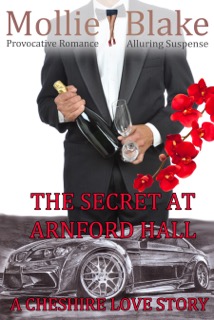
front cover

I’m very pleased to welcome Mollie Blake to Linda’s Book Bag to celebrate The Secret At Arnford Hall. Mollie has kindly agreed to write a guest post all about escapism through fiction.

The Secret At Arnford Hall was published by Black Opal Books in February 2017 and is available for purchase through the links here.

The Secret At Arnford Hall

front cover

A Cheshire Love Story

He lived in a nightmare. His son brought him daylight. Can this woman be his breaking dawn?

Gabriel Black didn’t give a damn about the world. Until, that is, his seven-year-old son enters his life for the first time. The young boy brings daylight into the darkness of Gabriel’s world. But a single parent needs a distraction. And this single parent has no limits when it comes to getting what he wants…

She’s built a new life for herself on the ruins of the old, but this man can destroy everything she’s worked so hard to gain…

Grace McGuire lives with a dark secret—one that, if revealed, will destroy her new life. Then her world collides with that of forceful Gabriel Black, a multi-millionaire with a secret of his own—a secret Grace is determined to uncover, for her sanity and all she holds dear.

Escapism Through Fiction

A Guest Post by Mollie Blake

First of all I would like to thank Linda for giving me this opportunity to be a part of her blog. In another life as a finance director, I wrote board reports about numbers and performances, with confidence. However, as an author who has written five books in as many years, I am still nervous when it comes to writing guest posts to be read by people I don’t know.

I think the reason for that can be summed up in the topic – Escapism Through Fiction. Writing romantic thrillers laced with sexy scenes for readers I don’t know, doesn’t bother me at all.

Having always been a reader of fiction, stories consumed me from an early age. I can hear my dad telling me to get my head out of a book when, as a young girl, I would shut out the world to the extent of ignoring my mum calling me to dinner. I wasn’t in the bedroom I shared with my sister in our small terraced house. I was at the private boarding school in Enid Blyton’s Mallory Towers where girls slept in dormitories and went pony riding, and were chauffeur-driven in Rolls Royces. The books of my childhood didn’t inspire me. They didn’t even leave me desperate to write a story of my own. They simply took me away from my simple little home to a world of excitement. It was torture to shut the book and eat my Sunday lunch.

Perhaps you want a diversion from all that’s going on around you, be it the stresses of a job or the monotony of life in the home. Or you’re looking for something new, but you can’t put your everyday life on hold and run away for a while – and let’s face it, who can? Then a book is the perfect substitute. I’ve been on a donkey around Cameroon, I shared the rise in society of Pierre Bezukhov in War and Peace, I’ve lived through dangers with Jack Reacher, I blushed at the “naughtiness” in Shirley Conran’s Lace, and I cried for Jane Eyre. And these “diversions” are only a drop in the vast ocean of literary vessels which carry you to some place wonderful, or simply some place else. Some stories can even make you feel glad you’re you and not one of the hapless characters.

My journey of “escapism through fiction” didn’t happen overnight, but it did happen in a way that led to more than just reading a book. I left the world of finance, not to escape it, but to enter whole-heartedly into the world of a full time mum. However, after a few years, that world wasn’t enough. I needed another challenge in my life. I wasn’t cut out for full-time motherhood but I wanted the flexibility to be at home for my child when he needed me.

Instead of merely reading to escape some of the boredom of doing the housework, again, I decided to create my own stories to lose myself in.

I create characters I cherish, dangers I’m frightened of, emotions I want to share, and sexy scenes I…well, I like.

When I attend book readings I always tell my audience that I want to provide escapism for the reader, pure and simple. I’m not giving advice or offering help, although I’m always happy to connect with wannabe authors. But I do hope to inspire women. For example here’s one of the strap lines I use on my website:

shoes

Stories about confident women, who stand out in a crowd, not afraid to be different. Women who get what they want.

My aim is to take the reader to another place and hopefully grip them right to the end of the book. One reviewer of The Secret At Arnford Hall wrote

“I … really didn’t like Gabriel Black at all, to the point of feeling I didn’t want to read about him anymore … Even though I considered giving up on the book in the first few chapters something kept drawing me back to it … I did actually want to know what the big secret was. I’m so glad I did stick with it … By the end I could not put it down …”

So wherever you choose to escape to, indulge yourself in a great book and come back to reality refreshed. Maybe even inspired to try something new…

About Mollie Blake

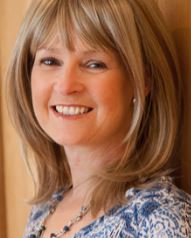
mollie

Mollie Blake is the happily married mother of one son and lives in the UK.
Having left a former life as finance director of a privately owned multi-national in order to look after her son, Mollie has gone on to develop a passion for writing romance laced with danger and spiced with steamy scenes.

She is a creative and explorative writer, and has a strong desire to make her readers eager to meet her characters and unravel plots to discover their secrets.

With a love of romance, an enjoyment of the thrill of danger, and an intense desire for scenes of passion and sensuality, Mollie has written five books so far, all under contract with her American publisher Black Opal Books.

You can follow Mollie on Twitter, visit her website and find her on Facebook.

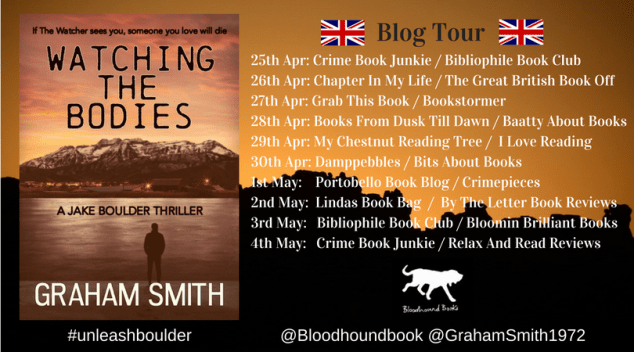
Watching the Bodies by Graham Smith

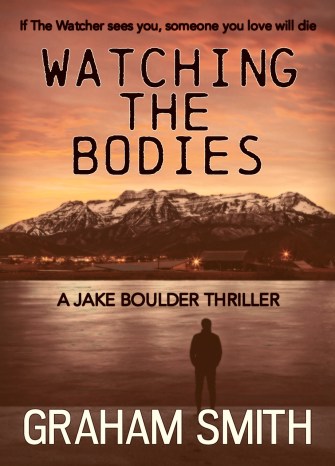
Watching the Bodies cover

I’m so pleased to be part of the launch celebrations for Watching the Bodies by Graham Smith as I’ve met Graham and have never got round to reading one of his books before. Graham has previously written a guest post for Linda’s Book Bag all about torturing and tormenting his characters that you can read here. In addition, when I very first began blogging, Graham was one of my first interviewees and you can see that interview (and how the blog has evolved) here.

Watching the Bodies was published by Bloodhound Books on 25th April 2017 and is available for purchase here.

Watching the Bodies

Watching the Bodies cover

When Jake Boulder is asked by his PI friend to help investigate the vicious murder of Kira Niemeyer, he soon finds himself tracking a serial killer who selects his next victim in a most unusual manner. As the body count rises, Boulder has to work with the police to identify the heinous killer before more lives are taken.

What ensues is a twisted game of cat and mouse, that only Boulder or the Watcher can survive. But who will it be?

My Review of Watching the Bodies

Helping to investigate Kira Niemeyer’s death will lead to far more than Jake Boulder could possibly imagine.

Watching the Bodies is a fast paced thriller with a body count that increases by the page so that the reader wonders just who will be next. It is extremely well plotted with a satisfying conclusion that leaves the heart racing.

I liked the premise of having a Scot, Jake Boulder, in America as there is just enough of his heritage and background to give added depth and credibility to his character and the first person narrative enables the reader to feel they really get to know him well. I would have liked a little more of the Watcher’s perspective in the earlier part of the novel as he is a complex and interesting character whom I wanted to understand more, but I appreciate that the plot might have been less exciting had I had that detail.

I found Graham Smith’s attention to detail gave just the right amount of information to bring the story alive so that I could appreciate setting and character very well. Along with believable violence there are mini reveals and cliff hangers throughout that maintain tension brilliantly and keep the reader guessing so that Watching the Bodies is a very entertaining read. I can easily imagine it as a film or television series as the episodic nature of the plot is fast paced and captivating. I genuinely had an increased pulse rate as I read.

Although Watching the Bodies is the first book from Graham Smith I’ve read, it most certainly won’t be the last. Great stuff.

About Graham Smith

Graham Smith is married with a son. A time served joiner he has built bridges, houses, dug drains and slated roofs to make ends meet. Since Christmas 2000 he has been manager of a busy hotel and wedding venue near Gretna Green, Scotland.

An avid fan of crime fiction since being given one of Enid Blyton’s Famous Five books at the age of eight, he has also been a regular reviewer and interviewer for the well-respected website Crimesquad.com since 2009.

He is the author of four books featuring DI Harry Evans and the Cumbrian Major Crimes Team, all of which can be found here.

You will find Graham on Facebook, and on Twitter. You can also visit his website.

There is more from and about Graham with these other bloggers:

#unleashtheboulder

Hush Little Baby by Joanna Barnard

Hush little baby

My grateful thanks to Becky Hibbert at Penguin Random House for a copy of Hush Little Baby by Joanna Barnard in return for an honest review.

Hush Little Baby was released in e-book by Ebury Press yesterday, 1st May 2017, and is available for purchase and paperback pre-order here.

Hush Little Baby

Hush little baby

When baby Oliver breaks his arm, no-one can (or will) say how it happened.

His mother is exhausted.

His father is angry.

His older sister is resentful.

And they all have something to hide.

My Review of Hush Little Baby

Ten month old Oliver has a broken arm and no-one is able, or willing, to say what happened.

Firstly let me say that Hush Little Baby is a cracking domestic thriller that keeps the reader guessing throughout. I definitely suspected every character who had access to Oliver on the day of the injury. I was desperate to know what had happened.

However, what struck me so much about Hush Little Baby was the exploration of the characters, what makes us human and the eye opening information about what happens and could happen when physical abuse is suspected. The reactions of those outside the family made for uncomfortable reading as I felt my own attitude was being highlighted quite unfavourably. I think I’ve probably fallen into the ‘no smoke without fire’ opinion in the past and now I feel quite ashamed. The themes in Hush Little Baby are brilliantly handled. We frequently don’t know what goes on behind closed doors and Hush Little Baby illustrates just how easily an ‘ordinary’ family can implode.

Hush Little Baby is a masterclass in character driven plotting. Whilst Oliver’s injury is the catalyst for the action, it is almost incidental as Joanna Barnard peels back the layers of Sally, Richard and Martha. I went through the complete range of emotions about each of these characters. At times I hated, loved and pitied each one. They are so vivid and real that it was difficult not to believe that they are not living people. The first person perspectives add to this feeling so effectively. Joanna Barnard is able to create a fifteen year old girl and an adult man with equal skill and realism.

Each character has a past that helps the reader gain full insight into why they are as they are and I really felt as if Joanna Barnard was manipulating me thoroughly as she controlled how I felt about each one. Several times I exclaimed aloud ‘Oh!’ I had a busy time when I began reading Hush Little Baby and couldn’t devote sustained periods to reading it. I think it says something about the quality of the book that I wondered how the characters were faring when I wasn’t reading.

I thought Hush Little Baby was intelligent, skilful and absorbing and I really recommend it.

About Joanna Barnard

joanna barnard

An English Literature graduate, Joanna Barnard has experience in marketing and as a counsellor. In 2014, she won the inaugural Bath Novel Award. A Northerner currently exiled in the South of England, Joanna misses flat vowels, friendly bus drivers and chips and gravy.

She is the author of Precocious and Hush Little Baby.

You can follow Joanna on Twitter and visit her blog where you’ll find a list of events featuring Joanna.

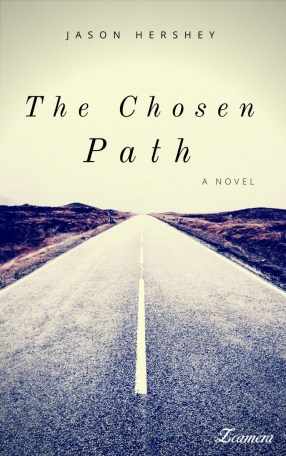
An Extract from The Chosen Path by Jason Hershey

The Chosen Path

I’m very pleased to be part of the launch celebrations of The Chosen Path by Jason Hershey. The Chosen Path is the second book to feature Thelonious “Theo” Mitchell following To Die To Live and I’m delighted to have an extract to share with you today. The Chosen Path will be published tomorrow, 3rd May 2017, and is available for purchase here.

The Chosen Path

The Chosen Path

From the author of the emotional To Die To Live, comes the next riveting chapter of one man’s search to find his purpose in life.

Thelonious “Theo” Mitchell, now a college freshman, is eager to put the death of his friend, Draven, behind him. Devoting himself to school and sports, he meets Sabrinna, a beautiful co-ed who sweeps him off his feet. Untrusting and hidden behind a wall, he allows himself to fall for her.

Will he find his soulmate and someone who can restore his faith and trust in people? Or will she leave him reeling and continuing his search for a purpose in life?

An Extract from The Chosen Path

To be rejected when you give your heart, your whole heart, hurts. What was it inside me that allowed me to get hurt? Was I too nice? Was I too trusting? The questions kept replaying themselves over and over in my head. I felt like a victim of my own thoughts, beat down and weak, with no discernable way out. I just wanted someone for me. Someone who had my back and was down to love me.

I stood up off of the park bench and started to walk. I wasn’t sure where I was headed, but I needed a change. A change of heart, of outlook on life, of friends and future. I needed to straighten my life out, and fast. I walked slowly, taking my time to admire the quiet of the street. One thing about college in Kansas, it was quiet in the little town. I was able to reflect. I knew what I needed to do. It was doing it that was going to be hard. I didn’t know when I would tell people. The team had become my family. I loved those guys. They were a part of me and I was a part of them.

I couldn’t be around her, though. There was too much pain and hurt there for me. I was crushed every time I saw her. Every thought broke me down a bit more. I needed to remove myself from the situation before I forgot who I was.

I picked up a rock and threw it into the bushes, listening to it crash through the branches and leaves. When I was a child, I would stand in my backyard and throw rocks into the alley for hours on end. There was something therapeutic about it. The flight of the rock, free in the air, never knowing where it would land. I was the only person around and my footsteps echoed on the empty sidewalk. I knew that after tonight, my whole life would be different. I was ready for the change.

About Jason Hershey

Jason Hershey

Jason Hershey was originally from Phoenix, Arizona, but currently resides in Cuyahoga Falls, Ohio with his wonderful family. He is a graduate of Bethel College in North Newton, Kansas with a BS in Elementary Education. Jason has always been a writer, but gave it up to work on his teaching career.

You can find Jason on Facebook and follow him on Twitter.

An Interview with Kate Dunn, Author of The Dragonfly

the dragonfly

Having spent a month AWOL in April with no interviews or guest posts on Linda’s Book Bag, I’m delighted to be back to my normal blogging today with an interview with Kate Dunn, author of The Dragonfly.

The Dragonfly was published by Aurora Metro on 27th April 2017 and is available for purchase here.

The Dragonfly

the dragonfly

When Colin discovers his son is on a murder charge in France, he trails his small boat, The Dragonfly, across the channel to stay in Paris to try and help him. There he meets his grand-daughter the irrepressible Delphine for the first time. They embark on an exciting boat journey through the picturesque French canals, heading south through Burgundy, until the butter melts.

Along the way, they catch up with Tyler, a spirited American, and through various mishaps and misunderstandings, they land big fish, cultivate new loves and uncover a burning secret.

But can Colin finally help his son get off the hook?

Shortlisted for the 4th Virginia Prize for Fiction, The Dragonfly is the new novel by Kate Dunn: ‘a charming family drama set on the waterways (and in the prisons!) of France.’ (Claire King, author of The Night Rainbow and Everything Love Is). A beautifully written and expertly plotted adventure: ‘Quirky and warm-hearted, with darker undertones that keep you gripped. Kate Dunn is a fine storyteller.’ (Ben Elton)

An Interview with Kate Dunn

Hello Kate and welcome to Linda’s Book Bag. Thanks so much for agreeing to tell me about your latest book, The Dragonfly.

Tell me, what was the inspiration for your new novel The Dragonfly

My husband and I have done a lot of racketing around the French waterways and we once saw, tied up next to us in a marina, a tiny little boat only about four metres long and we got chatting to the owner and he and his granddaughter had been on an epic journey lasting 36 days and counting!  They were an extraordinary couple and I was fascinated by the challenges for such an ill-assorted pair living in an incredibly confined space and having to cope with the havoc that boating on the canals and rivers can sometimes wreak.  So that was the starting point for my novel, which is an account of the relationship between a middle-aged Englishman, Colin and his French granddaughter, Delphine, who are thrown together when her mother is killed.  To keep her out of harm’s way and offer some kind of diversion, he takes her on holiday on his tiny day boat The Dragonfly, and they have numerous adventures together as they sail south from Paris.

Did writing The Dragonfly help you relive places you’ve visited and things you’ve seen?

It certainly did.  The novel has sprung directly from my own experience, so most of the mistakes that Colin makes are ones that my husband and I have made ourselves, and a number of their adventures are in fact our adventures, or ones we have been told about by other boaters (there’s a real community on the waterways, with a great sense of pooled resources and information).  And the location is incredibly important to me in my writing – I think it’s a vital anchor to any story, so I go to a good deal of trouble to make it as vivid, real and accurate as I can.

Was description easier because you could see the reality in your mind’s eye?

I’m not sure about that.  I think you need to have an incredibly vivid image in your mind’s eye of anything that you are writing about, whether it’s real or imagined.  Sometimes it can be a bit restrictive, having to adhere slavishly to something real – I think you can run the risk of ending up with a kind of literal transcription, rather than something you have creatively taken ownership of – if that makes sense.

(It certainly does – and I hadn’t thought of it quite like that.)

Was it actually quite difficult to capture the essence of what you’d experienced and turn it into part of a fictional work?

Some of the waterways in France are just so staggeringly beautiful that any kind of description is inevitably going to fall short – so that is always a challenge.  When I’m drawing on my own experiences (which I don’t often do, The Dragonfly was rather a steep learning curve in that respect) I think that the emotional truth of what has happened and the impact that it has had on you is as important as any concrete details about the experience itself. It’s a balancing act as you do need some of these details to help make the story specific rather than generalised.  I think a few individual insights are always more telling than a wash of too much information.

(I agree that it is the emotional pull that really makes a novel.)

Were there places you hadn’t been and had to research vicariously or by visiting them?

Every place that features in The Dragonfly is somewhere that we have sailed to ourselves, although my husband recently reminded me (rather sorely it must be said) that I made him go back miles and miles to a particular lock to check whether it had chestnut or beech trees growing beside it.  And the Internet is a wonderful tool for research – I did find myself checking things on Google Earth / the French tourist board / whatever  as I was writing to make sure that the background information was as accurate as possible.

What were you hoping to achieve by drawing on your own experience?

I have a passionate love for France so I wanted the novel to be a hymn of affectionate (and sometimes irritable) praise to a country that I really love and admire.  I wrote it at a difficult time in my life, following the sudden death of my father and my son leaving home to go to college, so writing about Colin and the sadness that he feels about being estranged from his son Michael was a way of addressing my own grief and sense of dislocation. Although it is quite a light and amusing story, what underpins it is something a little darker.  Maybe I wanted to show to myself that by working through my own feelings I could develop resilience and find a kind of resolution.  It’s a book about reconciliation – perhaps the actual journey that my characters undertake mirrors my own journey through bereavement and out the other side – I hadn’t thought of that before!

After a year like I had last year Kate, I can totally empathise with those sentiments. Thanks so much for sharing some of the background to The Dragonfly with us today.

About Kate Dunn

Kate-Dunn-writer-author

Kate Dunn comes from a long line of writers and actors: her great-great-grandfather Hugh Williams was a Welsh chartist who published revolutionary poetry, her grandfather, another Hugh Williams, was a celebrated  film star and playwright and she is the niece of the poet Hugo Williams and the actor Simon Williams.

Kate has acted in repertory, toured around Britain, the Far and Middle East and appeared in three West End plays, as well as a number of television productions. She has a PhD in Drama from Manchester University.

Following the birth of her son Jack she turned to writing and has had four books published including Rebecca’s Children, Always and Always – the Wartime Letters of Hugh and Margaret Williams, Exit Through the Fireplace – The Great Days of Rep
and Do Not Adjust Your Set – The Early Days of Live Television.

The Dragonfly was short listed for the Virginia Prize awarded to encourage fresh women’s voices in fiction.

You can visit Kate’s website and follow her on Twitter.

My Sister and Other Liars Publication Day Interview with Ruth Dugdall

my sister and other liars

Having met lovely Rugh Dugdall and heard her read from her novel Humber Boy (you can find out more about that here) I’m thrilled to welcome her on Linda’s Book Bag today to celebrate her latest novel My Sister and Other Liars.

My Sister and Other Liars is published today, 1st May 2017 by Thomas and Mercer and is available for purchase here. You can read my review of My Sister and Other Liars here.

My Sister and Other Liars
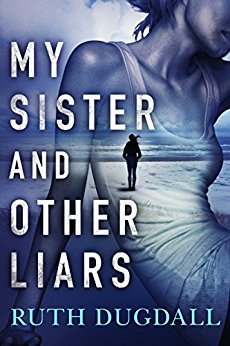
my sister and other liars

Sam is seventeen, starving herself and longing for oblivion. Her sister, Jena, is mentally scarred and desperate to remember. Between them, they share secrets too terrible to recall.

Eighteen months earlier, Sam was still full of hope: hope that she could piece together Jena’s fragmented memory after the vicious attack that changed their family forever. But digging into the past unearthed long-hidden lies and betrayals, and left Sam feeling helpless and alone in a world designed to deceive her.

Now, in a last bid to save her from self-imposed shutdown, Sam’s therapist is helping her confront her memories. But the road to recovery is a dangerous one. Because Sam has not only been lying to her doctors: she’s been hiding dark secrets from herself.

An Interview with Ruth Dugdall

Welcome to Linda’s Book Bag Ruth. Thank you so much for agreeing to answer some questions on my blog about your writing and congratulations on today’s publication of My Sister and Other Liars. Firstly, please could you tell me a little about yourself?

Hi Linda, I’m Ruth Dugdall and I write crime novels. Sounds like the beginning of an addicts meeting, which just about sums it up. In fact, crime is all I’ve ever known about; I first entered a prison when I was 18, and I started working with criminals straight after graduation, aged 21. When I qualified as a probation officer I thought I was in it for the long haul, like a stick or rock if you broke me in half I’d have had `probation officer` written through my core. But the writing was always there, just as a hobby, all along. When The Woman Before Me won the CWA Debut Dagger in 2005 I decided to see if I could make a go of writing. It’s been a long, difficult, journey but I’ll never regret that decision.

the woman before me

Without spoiling the plot, please could you tell us a bit about My Sister and Other Liars?

Like all of my novels, the story is inspired by real events. It is set in Ipswich, where I grew up, and also on a hospital ward for women with eating disorders.

Sam is a teenage anorexic living on a council estate in Suffolk. Her sister, Jena, was attacked and left brain damaged on Sam’s 16th birthday, and the police have made no arrests. Frustrated, Sam decides that if the police can’t bring Jena’s attacker to justice then she will. Even if it kills her.

My Sister and Other Liars opens with a couple of quotations about memory. Why do you think writers are seemingly so obsessed with memory and identity?

`Memory is the diary we all carry with us`, and yet it is completely unreliable and so subjective. I am fascinated that siblings can talk about their childhood and find themselves completely disagreeing on the same experiences. We can remember things that haven’t happened, simply because we were told about them, and we lose other things completely.

When I was interviewing criminals I was always struck by their `story` of the crime, and how it was at odds with the victim’s story, but they believed it totally. My job was to shift that belief, and I came to understand that `memory` and our sense of `self` is a fragile, malleable thing. Which makes it perfect fodder for writers, especially crime writers.

The `unreliable narrator` is often someone whose memories cannot be trusted, often because they are mentally unstable or are substance abusers. In this case, Jena’s memory is fractured because of the attack, which caused brain damage, so she only partly remembers. Sam, who witnessed the attack but cannot describe the attacker, is unable to trust her memory because she is young, it was dark and raining, and yet she digs deeper, unable to rest until she can remember everything.

Often it is best not to remember.

You say your books are about ordinary people who behave in extraordinary ways. How far do you think we all have the capacity to behave like the characters you present?

For me, the evil killer waiting in the shadows is simply not interesting, or realistic. After working with so many criminals I’ve had this belief re-enforced again and again: people can behave monstrously, but they are usually not monsters. This is a far more terrifying idea, because it means any of us, given the right toxic mix of environment and opportunity, could do something bad. This idea is a central one for me, and I keep returning to it with my characters. I describe people who seem and look ordinary, and then lift their skin to see what lies beneath.

Your novels are very gritty and showcase workers such as probation officers within the justice system that other books tend to ignore. Why do you choose to write about these characters?

Fact: probation officers have more direct contact with criminals than any other profession.

Yet they are (almost) invisible in crime novels and films, replaced by journalists and psychologists who, in reality, would have limited access. After I won the Debut Dagger it took 5 years to find a publishing deal, and one reason was that publishers didn’t believe the public would be interested in the role. I think that’s very sad, as these workers are really the backbone of the criminal justice system and deserve to be represented.

humber-boy

Humber Boy was set in Hull, your home town, but you now live in Suffolk and have lived in Luxembourg. How does location affect a writer do you think?

Location is important, but even when I lived in the rather refined and rarefied Luxembourg, I still sought out its gritty corners. Apart from Nowhere Girl (set in Luxembourg) my books are set in Suffolk. The county is east of everything, and the town where I live is at the end of a motorway which only leads here. Any further, and you end up in the North Sea. So the town is a bit like a `closed room mystery`, where people know each other and if something happens one of them had to have done it. Here we are, in a small town, under a wide sky, with the sea stopping us from dropping off the side…I love it and there’s no shortage of inspiration.

You’ve honed your writing technique through short stories as well as your novels. How has your writing developed to the point of writing My Sister and Other Liars?

Novel writing is a marathon, it requires time every day, building up the right muscles and the stamina to see it through to the end. Short stories are more like a sprint, and I love having that contrast. My short stories are very different to my novels, much lighter and more comic, and are published in magazines such as Women’s Weekly.

Unlike running a marathon, though, there’s never really an end point with novel writing, instead there are a series of deadlines. Even publication doesn’t feel like the finish line because it’s then about how the book is received and how it sells. This certainly keeps me on my toes, and there are often times when I wonder why I put myself through such a masochistic process, but then I lose myself in a scene and forget my doubts. That’s the magical part, the addictive part.

When I heard you speak at an event, you said that writers write because they feel compelled to do so. How do you feel when you’re not actually writing?

When I’m not writing I’m not a writer, I’m other things. But I never feel more `myself` than when I’m lost in a story.

How do you go about researching detail and ensuring your books are realistic?

I enjoy research, and take it very seriously. I’m currently working on a novel called Innocence Lane and Suffolk Constabulary have allocated me a Detective Sergeant to act as an advisor, which makes me one lucky writer. My detective has synaesthesia, and so I’m in contact with the President of the Synaesthesia Association and I’ve also liaised with a professor who specialises in the subject. Next week I’m going to a shooting range to learn how to use a rifle…

Which aspects of your writing do you find easiest and most difficult?

That’s a good question. I love the editing process, when the novel exists in a rough form but needs honing, as I feel a bit like a sculptor with a block of marble, trying to get the shape right. I’m good at working with feedback, and always enjoy working with editors. The hardest part has to be dealing with rejections, which does come with the territory, but is still tough to handle. Every book I’ve published, with the exception of Nowhere Girl (which was sold as an idea) has accrued many rejections before finally being published.

What are your writing routines and where do you do most of your writing?

I have a study, but I’m just as likely to be found in the lounge, sat on the sofa with a laptop balanced on my knee! A writer can write anywhere, in fact other locations are good for the imagination, so I always have a pen and notebook with me. Nowhere Girl was written as I explored Luxembourg’s neighbouring countries so was mostly written in cafes.

I know you are always willing to speak to audiences about your writing. How important is it for authors to connect either virtually or in real life with the people who read their books do you think?

I don’t think it would be possible, these days, to have a successful novel if the author wasn’t willing to promote it. A bold statement, I know, but I think readers have expectations that they can know more about the author or the process, we live in a time when book groups are on every corner so readers are sophisticated and critical, and they want answers. I never turn down any invite, I travel far and wide to speak to people. The Women’s Institute is my favourite organisation, I have about 30 WI talks booked for this year, and they are always vibrant and characterful meetings.

You run workshops in schools on occasion. Why do you do that?

I have visited schools where the pupils have studied my novels, and I also like to run creative writing courses to inspire kids. I went to a failing comprehensive, and when I was fourteen a poet came in – I wish I could remember his name, but I can recall his face perfectly. He took a group of us and we did poetry for a week, and it was probably one of the most important weeks of my school life because it opened a door, showed me something was possible that I hadn’t considered before. To go into a school and do the same thing, is my way of paying back.

And, when you’re not writing, what do you like to read?

I read widely, and will read several books at once. I’ve just read Roanoke Girl and loved it, very powerful, and focused on similar themes to My Sister & Other Liars. I finished The Handmaid’s Tale yesterday, for the zillionth time. I have a select list of books that I re-read yearly, as a way to remind myself of what can be achieved in a novel and this is one of them, along with The Secret History and Sharp Objects.  

My Sister and Other Liars has a cover that suggests another identity inside the person to me. How did that image come about and what were you hoping to convey (without spoiling the plot please)?

The cover was designed by Thomas Mercer, and I loved it from first sight. I think they got the vibe just right.

If you could choose to be a character from My Sister and Other Liars who would you be and why?

I don’t really do appealing characters, so that’s a tough one. I think I’d be Monica, the spunky drama student, as she’s making the best with what she’d been given and she’s not going to take any nonsense.

If My Sister and Other Liars became a film, who would you like to play Sam and why would you choose them?  

Andrea Riseborough is an actress I admire and she always chooses intense roles. At 35 she’s too old for Sam, but she’d be great for Jena and I think she’d be up for it.

If you had 15 words to persuade a reader that My Sister and Other Liars should be their next read, what would you say?

Girl, Interrupted meets We Were Liars. Domestic noir, from the perspective of a teenage anorexic.

Thank you so much, Ruth, for your time in answering my questions and congratulations on My Sister and Other Liars.

About Ruth Dugdall
ruth dugdall

Ruth studied English at university and then took an MA is Social Work. Following this she worked in the Criminal Justice System as a social worker then as a probation officer. Part of this time was spent seconded to a prison housing serious offenders. She continues to work within the Criminal Justice System, most recently in Luxembourg.
Ruth’s novels are informed by her experience and are “authentic and credible”.

You can follow Ruth on Twitter, visit her website and find all her books here.