An Extract from The Honey Trap by Mary Jayne Baker

cover

I’m delighted to be part of the paperback launch celebrations for The Honey Trap by Mary Jayne Baker. I have a special extract from The Honey Trap for you today.

The Honey Trap is published by Harper Impulse and is available for purchase in e-book and paperback here.

The Honey Trap

cover

The trap is set – but which one of them is the bait?

Journalist Angel Blackthorne is looking for her next big scoop. When her sleazy editor asks her to use her charms on super successful – and married – film director Sebastian Wilchester for a juicy exposé, Angel thinks what the hell? There’s a staff job on the horizon, and, let’s be honest, no one can make a cheater cheat if they don’t want to, right?

After the scandal breaks, Angel tries to put the story – and Seb – behind her, but fate seems to have other ideas. A near miss at a premiere after-party and a shared love of vintage film brings the honey closer to the trap.

But what happens when pretence leads to passion, and a ‘kiss and tell’ becomes something real?

An Extract from The Honey Trap

Chapter 20 – The Hippodrome

‘This is it. Anywhere round here,’ Seb said to the cabbie as they pulled up into what looked like a row of old terraces in some dark backwater of the city. Just a few empty shops, houses whose occupants were long in bed and some big, decaying old buildings.

Angel squinted through the car window. Why would he bring her to this place? There wasn’t much nightlife here unless you enjoyed getting mugged, by the look of it.

‘Don’t worry,’ he said, smiling at her expression while he held the door open for her to get out. ‘I’ve not brought you to spend the night in a crack den or anything.’

He fumbled in his pocket, pulled out a small key and led her towards one of the rotting buildings, its dirty white-tiled façade tinted orange in the streetlight glow. There was a large arched porch over a red door. Seb unlocked it and she followed him along a corridor with exposed brick walls, feeling like someone in a dream. Everything seemed too big, overexposed and a ringing sound like an old GPO telephone was assaulting her brain via her ears.

He ushered her through another door and flicked a switch by the side to illuminate the room they’d just entered.

‘Jesus, Seb!’

She was in a high-ceilinged, teal auditorium. Five rows of velvet-upholstered seats were laid out in front of a cinema screen, with an old-style projector window set into the top of the tall wall. There was even a pit at the front for an organ. The back half of the room and a balcony area above were still in a state of near-decay, but the front looked just as it must have done before the war.

‘Is it… yours?’ she asked.

‘Yes. The Hippodrome. Built in 1926, just in time to bring The Jazz Singer to London audiences. I bought it last year when it was in danger of demolition. Thought it would be something ReelKids could use in future, if I could get it in a decent enough state. But for now it’s just a bit of a den, really. I come here to screen rushes sometimes, and when I want to get out of the house.’

‘Bloody hell, Seb,’ Angel muttered, looking around the old cinema. ‘You know, other men have garden sheds…’

‘You like it, don’t you? I knew you would.’

‘How did you know I would?’ she asked, smiling.

‘I don’t know. Maybe because I do.’

He turned away from her, tanned cheeks flushing when he realised what he’d said.

‘Hey. Come see this.’ He nodded towards a door above the balcony, to the right of the projector window.

‘What is it?’ she asked, following him up an old, recently restored staircase to the second level.

‘The projection room,’ he said, eyes shining with boyish enthusiasm. ‘Can’t wait to see your face.’

He showed her into a small tiled room where a large 1940s two-reel projector peeped through the window, ready to show the latest John Wayne or Judy Garland blockbuster. Against the back wall were shelves upon shelves of old film reels in aluminium cases, each labelled with the name of a different movie – from the 1920s through to the ’80s.

‘Oh my God!’ She touched a reel gently with one finger. ‘Oh my God, Seb! These are old… some aren’t even in print any more.’ Drawing her hand back, she lowered her voice to a reverent whisper. ‘They must be worth a fortune. Are they really all yours?’

‘They are now. Some I’ve collected myself, and some that belonged to Abigail. She was a collector too, before… well, you know, before.’

‘This is amazing,’ she muttered, scanning the rows of silver cases. She smiled as she thought of something. ‘Reminds me of that bit in Beauty and the Beast.’

‘What, Cocteau?’ Seb looked impressed.

Angel gave an embarrassed laugh. ‘Er, no. Disney.’

‘The cartoon? With the dog-bear thing?’

‘Beast.’

‘Beast. Right.’ One corner of his mouth twitched into a half-smile. ‘And that’s me, is it?’

She looked at the bare board floor, trying not to laugh. ‘I can’t help thinking of it. It’s just there’s this library, with all the books Belle could ever imagine. It’s incredible. The beast shows it to her and she’s sort of…’

‘…blown away. I know, Angel. I love that bit.’

She let out a dizzy giggle. ‘Really, Mr Director? A kids’ film? Surely not.’

‘A classic. A masterpiece of its genre.’ He grinned. ‘And one of the finest talking teapots this side of an LSD trip.’

He came over to her, ran his fingertips over a row of reels. ‘Now come on, Miss Blackthorne. What’s it to be? Take your pick.’

‘You don’t watch them, do you?’ She looked up at him in horror, making him smile.

‘Not the originals. I had them all digitised. Here.’ He gestured upwards and she noticed a modern ceiling-mounted LCD projector with a small hard drive attached. ‘The old reel projector’s just here for atmosphere, really.’

‘Oh. Right. So… you want to watch a film?’

‘Since you don’t want to go home. It’s the only entertainment I can offer you, I’m afraid. I admit it’s no Queen tribute band.’

The only entertainment allowed anyway, Angel thought through the woozy numbness in her brain. Her headache was gone but she still felt pretty out of it from the champagne.

She ran her fingers along the titles printed on the spines of the film cases, resting on one that struck her. Some Like It Hot. It reminded her of Savannah in her slinky black Marilyn dress.

‘Good choice,’ Seb said, casting an approving glance at the case. ‘I knew you were a Wilder fan.’ He squinted one eye, puzzled. ‘How did I know that? Did you tell me?’

‘It was at the after-party for Milkman,’ she said, pleased he’d remembered, embarrassed she had to refer to it. ‘I mentioned Wilder… in the interview. You know. That night.’

‘So you did. Told me I was a derivative hack, didn’t you?’ he said with a grin. ‘Any other filmmaker and I might have been offended. But Wilder? Fair comment. Everyone’s a hack compared to Wilder.’

‘Oh God, don’t remind me what I said then. That’s not what I think at all. Well, you know that now, you read my review. I don’t know what I was trying to prove, really. Once I was sitting there with you glaring at me like something you’d wiped off your shoe, I wondered why I’d tried so hard to get you to see me.’ She flushed as she met his gaze. ‘I… hadn’t even prepared any questions.’

‘Really?’ She’d expected him to be offended, but he sounded impressed. ‘You did that whole interview just off the top of your head?’

‘Pretty much. God, Seb, I was so rude to you! I suppose I wanted to show you I wasn’t just another bimbo.’

‘You certainly did that.’ His voice was suddenly deeper, more intense, in a way that made Angel feel afraid and excited in equal measure. She fixed her eyes on the ground, hoping he’d move the conversation on.

He took the hint. ‘Or how about this one?’ She looked up to see which case he was pointing at.

‘The Apartment? Oh, I love that film!’ she breathed in what, to her disgusted ears, sounded like an almost Savannah-esque gush. ‘It’s the one I always watch when I need cheering up. My mum and me, that used to be our favourite.’

‘Really? I always think it’s quite sad, for a comedy.’

‘That’s why I like it,’ she said. ‘Feeling sad can be soothing sometimes, don’t you think? And at least there’s a happily-ever-after. Well, sort of.

‘“Shut up and deal.” True. There is that.’ He pulled his keen gaze away from her face and turned to the ceiling-mounted projector. ‘So how about it, then? Haven’t seen it recently, have you? I can queue it up if you like.’

Angel blinked, remembering the last time she’d watched it to cheer herself up just a few months ago. It was with Emily at the flat, the night after the she’d been with Seb at the hotel. The night she’d sobbed, upset at the thought of never seeing him again. The night before the story broke and everything in her life changed.

‘No, not for ages. I’d love to watch it with you.’

About Mary Jayne Baker

mj

Mary Jayne Baker grew up in rural West Yorkshire, right in the heart of Brontë country… and she’s still there. After graduating from Durham University with a degree in English Literature in 2003, she dallied with living in cities including London, but eventually came back with her own romantic hero in tow to her beloved Dales.

She lives with him in a little house with four little cats and a little rabbit, writing stories about girls with flaws and the men who love them. You can usually find her there with either a pen, some knitting needles or a glass of wine in hand. She goes to work every day as a graphic designer for a magazine publisher, but secretly dreams of being a lighthouse keeper.

You can find out more about Mary Jayne Baker on her website, follow her on Twitter, and find her on Facebook.

There’s more with these other bloggers too:
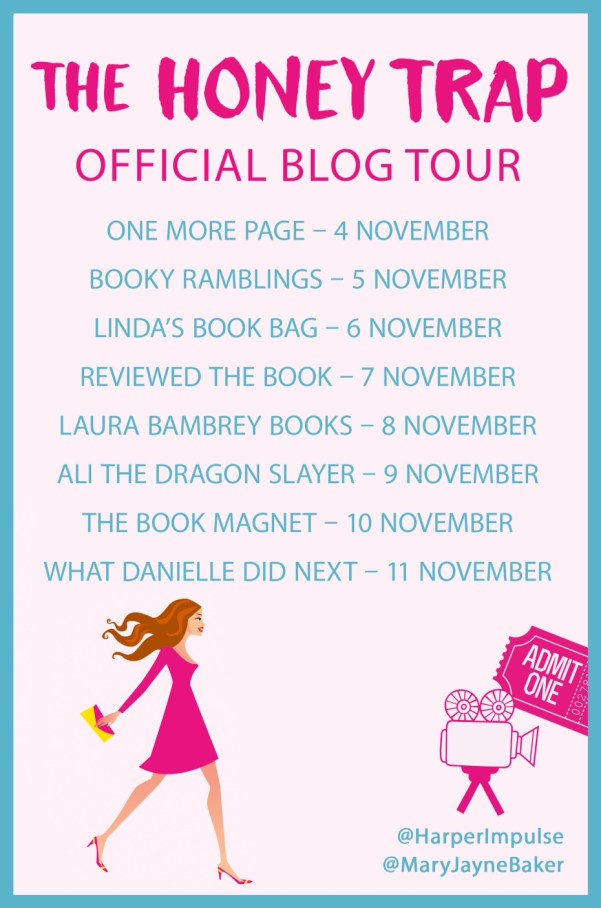
honeytrapblogtour

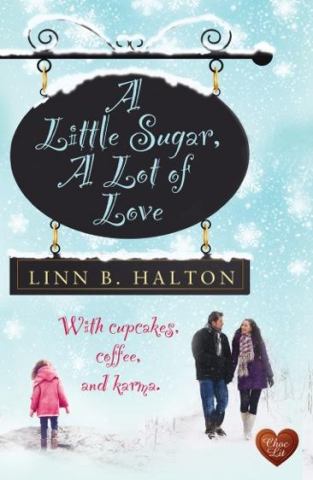
Paperback Love, a Guest Post by Linn B. Halton, author of A Little Sugar, A Lot of Love

ALSALOL

I’m so pleased to welcome ChocLit author Linn B. Halton to Linda’s Book Bag today as Linn’s book A Little Sugar, A Lot of Love is firmly on my TBR!

To celebrate the recent paperback publication of A Little Sugar, A Lot of Love Linn considers the difference between an e-copy and a real book in a fascinating guest post- and I’m with her every word!

A Little Sugar, A Lot of Love was published by Choc Lit and is available for purchase in e-book and paperback here.

A Little Sugar, A Lot of Love

ALSALOL

Life isn’t all love and cupcakes …

Katie has had her fair share of bad luck, but when she finally realises her dream of opening a bakery it seems things can only get better.

But the reality of running a business hits Katie hard and whilst her partner, Steve, tries to help she begins to sense that the situation is driving them further apart. Could Katie be set to lose her relationship and her dream job?

Then, one winter’s day, a man walks into her shop – and, in the space of that moment, the course of Katie’s life is changed.

But nobody finds happiness in the blink of an eye. Sometimes it takes two Christmases, three birthdays and a whole lot of cake to get there …

A Little Sugar, A Lot of Love – feeling that paperback love!

A Guest Post by Linn B. Halton

OK – I’m the first to admit that before I owned a Kindle I did, actually, say “never”. In the words of the legendary Sean Connery – “Never Say Never Again”. So now my Kindle is always in reach and my constant companion – can you feel the “but” coming?

But sometimes a reading experience has to involve holding a paperback in your hands and smelling those pages. Yes, you know the moment. Like a familiar old perfume that wafts up the nostrils and evokes memories stretching way back. Every book experience you had that began in early childhood when Kindle and eReaders were unimaginable. In an age when we are used to surfing the net, hitting a web page and clicking away in seconds if the content isn’t for us, we’ve become impatient clickers. The same applies to the TV remote control – click, click, click. It can be with same with our eReaders and a part of that is, I believe, because (despite the convenience) there’s a little something MISSING.

Of course, as an author I’m overjoyed when a new book is available in eformat. But when the postman knocks and delivers a parcel of books  it’s pure, unadulterated book love. Cuddling your Kindle/eReader is like cuddling a brick; cuddling a paperback makes you want to sink straight down onto the nearest sofa and read. Now. Not in a minute, or later this evening, but NOW.

Chocolate, biscuits, popcorn, coffee, wine … yes, there will be accessories required to complete that perfect experience. But let’s be honest here – for many of us it’s a decadent, indulgent, can’t-live-without experience and that’s why the paperback will never die.

Even selecting a paperback from the bookstore shelves is more of a ritual than the surf, click and checkout experience. Like savouring a fine wine, or eating a gourmet meal, it shouldn’t be rushed. You pick it up, you touch the cover, you read the blurb on the back and you know that what you hold in your hands is magical. You will be spirited away into another time and place, walking alongside characters to inspire a range of emotions in you. Sympathy, empathy, hope, anger, love …

And now A Little Sugar, A Lot of Love is in print and I’ve had my eyes closed, touchy-feely moment that never fails to send a thrill up my spine.

Linn x

About Linn B. Halton

LBH author photo

“I’m a hopeless romantic, self-confessed chocaholic, and lover of coffee. For me, life is about family, friends, and writing. Oh, and the occasional glass of White Grenache…”

An Amazon UK Top 100 best-selling author with A Cottage in the Country in November 2015, Linn’s novels have been short-listed in the UK’s Festival of Romance and the eFestival of Words Book Awards. Linn won the 2013 UK Festival of Romance: Innovation in Romantic Fiction award. Linn writes chick lit, women’s contemporary fiction and psychic romance for Choc Lit, Harper Impulse and Endeavour Press.

You can find out more about Linn on her website/blog, on Amazon or by following her on Twitter and Facebook.

Strange and Curious Inspirations, a Guest Post by Sandra Ireland, Author of Beneath the Skin

beneath-the-skin

I absolutely love a psychological thriller and am looking forward immensely to reading Beneath the Skin, by Sandra Ireland. Whilst Beneath the Skin is working its way up my TBR pile, I invited Sandra onto Linda’s Book Bag and luckily she agreed to write a guest post all about her writing inspirations.

Beneath the Skin was published by Polygon, an Imprint of Birlinn Limited, in September 2016 and is available for purchase in e-book and paperback here.

Beneath the Skin

beneath-the-skin

Taking a job in the studio of an Edinburgh taxidermist probably isn’t Walt’s wisest decision. Suffering from combat stress and struggling to outrun the demons from his past, he now finds himself confronted by the undead on a daily basis.

His enigmatic boss, Alys, and her sister, Mouse, have their own uneasy relationship with the past. Someone doesn’t want to let them go. Can Walt save Mouse’s eight-year-old son, William, from becoming the next victim? And can he save himself?

Deliciously disturbing, this psychological thriller peels back the skin of one modern family to reveal the wounds no one wants to see. It deals with the effects of trauma and how facing up to vulnerability is sometimes the only way to let go of the past.

My Strange and Curious Inspirations

A Guest Post by Sandra Ireland

On a recent trip to Edinburgh, I got off the train at Waverly Station and joined the throng of passengers heading for the exit. Head down, shuffling my tickets and anticipating the perils of the automated ticket barrier, I almost missed a very curious sight.

About to board a train on the adjacent platform was a man not to be missed. Tall and elegant, he had long black hair and a bushy beard, a top hat and the most impressive Victorian frock coat. He was in conversation with the guard. There seemed to be some problem with the transportation of his luggage- a battered Gladstone bag and a very large, hinged cabinet which was strapped to a trolley.

This briefest of encounters was enough to spark my imagination. A hundred questions and scenarios sprang to mind. Was he an actor, an undertaker? A street performer? Was he a tour guide at the Edinburgh Dungeon, or simply en route to a Halloween party? And what on earth was in the cabinet? I’ll never know, but not knowing is the handiest prompt in the writer’s toolkit!

I have a notebook which contains detailed descriptions of many such episodes. Station platforms are, unsurprisingly, a hotbed of inspiration. Hotels are useful too, or city streets late at night. Here’s a sighting from a recent book festival: Two little girls in green pinafore dresses, one with red hair and purple top hat, the other in a straw boater. They were accompanied by a young woman who didn’t seem to be their mother. Was she an au-pair? Did these children have a very chaotic/Bohemian/privileged home life? I immediately saw them as quirky characters in a children’s adventure story.

I suppose inspiration is no more than that- a colourful image, a fleeting impression. I see it as playdoh for the imagination! You can twist and shape these little incidents until you have the makings of a story. My debut novel Beneath the Skin began life as a chance soundbite from a BBC documentary: a taxidermy artist revealing that every time she meets someone knew, she imagines what’s going on beneath their skin. The idea was both fascinating and repulsive, and I knew immediately that these were the feelings I wanted to exploit in my novel. So rather than attempting to come up with a fully-formed storyline, I let the characters and the narrative evolve from that single curious source of inspiration.

And the man on the station platform? Well, he might just find his way into my next book!

About Sandra Ireland 

sandra-ireland

Sandra Ireland is an award-winning writer, poet and artist. Born in Yorkshire, she was brought up in the North East and lived for many years in Éire. Her work has appeared in various women’s magazines and publications such as New Writing Dundee, Dundee Writes and ‘Furies’, an anthology of women’s poetry. Beneath the Skin is her first novel and was inspired by a love of all things curious and unseen.

You can find out more about Sandra by visiting her website and following her on Twitter.

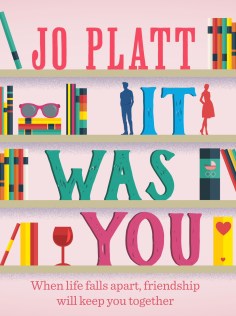
Friendship, a Guest Post by Jo Platt, author of It Was You

cover

I’m delighted to welcome Jo Platt to Linda’s Book Bag today as part of the launch celebrations for her latest novel It Was You. It Was You was published by Canelo on 31st October 2016 and is available for purchase in e-book here.

Today Jo is telling us all about friendship which is at the heart of It Was You.

It Was You

cover

When life falls apart, friendship will keep you together

Alice Waites has been happily single for almost two years.

But when her close friends in The Short Book Group gently question her current distinct lack of interest in men, she accepts that maybe it is time to deal with the past and open herself up to new possibilities.

Oh yes, the time has come to go dating again.

However, things soon unravel for Alice as she uncovers the secret heartache and hopes of those around her. And her most surprising discovery is the life-changing truth which she has kept hidden, even from herself…

Friendship

A Guest Post by Jo Platt

Friendship, and what makes someone a good friend, isn’t the easiest of topics to dissect. Not only are generalisations difficult to apply – because we are not, thank goodness, all drawn to the same kind of people – the whole subject is also a bit of a moving target for us as individuals too.

If you’d asked me when I was six years old, what qualities I looked for in a friend, I would have answered, ‘A Raleigh Chopper, a bag of Quavers and a willingness to share.’  By the time I hit my late teens, I had deepened a little and whilst transportation, namely access to a car, was admittedly still quite high on my friendship wish list, it was at least now sitting alongside ‘kindness to others’ and ‘a listening ear’.  Entering the workplace after university, further shaped and broadened my view of friendship.  Suddenly, integrity ie ‘not selling me down the river in order to get promoted’ shot up the rankings in terms of who I most wanted to spend my wine bar evenings with.  And as I stumbled into my thirties and motherhood, a shared approach to parenting, coupled with empathy over sleep deprivation and painful boobs, gained in importance.

So what follows is a very personal snapshot of my middle-aged take on friendship, homing-in on just a few of the qualities which, as I career towards fifty, I value most in my friends.

Tolerance

I’m going kick things off with a very grateful nod towards the tolerance and inclusivity of my friends.  I love that they choose to embrace and celebrate not only our similarities, but also our differences.  And, most importantly of all, that they are completely non-judgmental over my sorry lack of culinary skills.

Equanimity

And my friends are laid-back about a lot more than my inability to cook. I don’t mean they couldn’t care less because, in fact, they couldn’t care more.  But they are very busy people – midwives, carers, small-business owners – and, as such, they retain a sense of proportion and they don’t sweat the small things.  They are a day-to-day reality check for me.

Patience

I can’t think of one close friend whom I could describe as lacking in patience, so it’s clearly a character trait to which I am drawn.  It’s an enormously calming quality and has proved particularly important when friends are explaining issues which I have a need to grasp, but in which I have little or no interest.  One of my most patient friends, for example, is determined that I should know how to operate, and appreciate the benefits of, my home network.  He talks me through it, slowly and in depth, whenever the need arises, and despite my repeated failure to retain the information, or to feel the love, he never loses his rag.

Honesty

I rate honesty, as you might expect, as an essential constituent of all my friendships.  But I’m not in denial about the degree to which it is required.  I do not want total, unedited honesty about absolutely everything.  And my longstanding friends understand that. For example, they will tell me I look better in the over-the-knee dress than the mini skirt.  But they’ll make the choice an issue of fabric, or colour, rather than crushing me with references to my orange peel thighs and Pilsbury Doughboy knees.

Communication

reading-upside-down

And finally, communication is, without doubt, key to my closest friendships and a factor perhaps best illustrated by the friends who were the inspiration for both of my novels – my book group.  They are the intelligent, discerning readers I always kept in mind when writing my first novel, Reading Upside Down, and they are the reason It Was You centres on a book group.  However, unlike the small book group of six in It Was You, seventeen of us make up the Bristol group.  It’s an unwieldy number but, as I said earlier, we’re fans of inclusivity and we didn’t want to turn anyone away.  We used to have a gong, which we passed around and banged loudly whenever we wanted to make a point.  But everyone got tired of having to put down their wine to pick up the gong, so now we just shout a lot, often starting our literary observations with waving arms and the word ‘Oi!’.  And what has made the book group such a happy and successful one for over seven years, and what has helped to keep us together as an eclectic, and perhaps even unlikely, group of friends for even longer, is a shared and equal determination not only to be heard but, more importantly, to listen.  And that, together with tolerance, equanimity, patience and honesty is, for me, at this moment in time, what friendship is all about*.

*Footnote: Plus an across-the-board willingness to share knickers when I forgot to pack any underwear for a mums’ weekend away (Exmoor 2014). Thank you, ladies.

 About Jo Platt

jo_platt

Jo Platt was born in Liverpool in 1968 and, via the extremely winding route of rural Wiltshire, London, Seattle and St Albans, is now settled, with a husband and two children, in Bristol.

After studying English at King’s College London, her first paid employment was as a besuited office worker in a large City institution. After ten years in the City, Jo escaped into motherhood and part-time employment, first as an assistant teacher in a Seattle pre-school and, more latterly, as a Bristol-based secretary.

You can follow Jo on Twitter and

You can find out more with these other bloggers too:
it-was-you-blog-tour-9

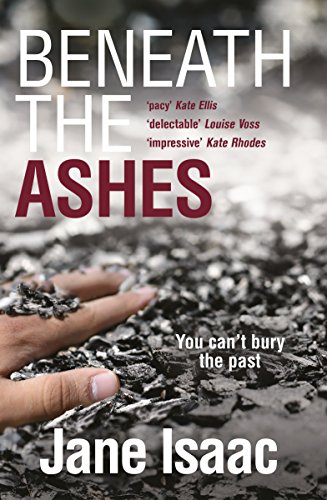
Beneath the Ashes by Jane Isaac

beneath-the-ashes

I’m delighted to be part of the launch celebrations for Jane Isaac’s Beneath the Ashes. Beneath the Ashes was published on 1st November 2016 by Legend Press and is available for purchase in e-book and paperback here.

Beneath the Ashes

beneath-the-ashes

The floor felt hard beneath her face. Nancy opened her eyes. Blinked several times. A pain seared through her head. She could feel fluid. No. She was lying in fluid.

When a body is discovered in a burnt-out barn in the Warwickshire countryside, DI Will Jackman is called to investigate.

Nancy Faraday wakes up on the kitchen floor. The house has been broken into and her boyfriend is missing. As the case unravels, DI Jackman realises that nothing is quite as it appears and everyone, it seems, has a secret.

Can he discover the truth behind the body in the fire, and track down the killer before Nancy becomes the next victim?

My Review of Beneath the Ashes

When DI Will Jackman is assigned to an arson attack and a murder what he uncovers will have ramifications for the whole community.

I thoroughly enjoyed Beneath the Ashes by Jane Isaac. It reminded me in a way of a Shakespearean plot with all the intrigues, twists and turns we might expect from Hamlet or Lear. I found the plot hugely engaging so that I kept thinking I’d just read a little bit more and before I knew it, I’d consumed the whole book, I was so engaged by the narrative. Beneath the Ashes has a pace that defies the reader. With the mini cliff hangers at the end of the short chapters it’s impossible not to want to read on! What really impressed me was the way the different threads pulled together to make a coherent and convincing whole. Sometimes I find police procedural fiction a little contrived but this was unassailably well constructed, making for a perfect read. I think Beneath the Ashes would make a fantastic film or television series too.

I loved the depth behind the story. Characters, especially Jackman, are human, distinctive and well rounded so that they feel like real people. I’m definitely going back to read the first book with Will Jackman, Before It’s Too Late, as I so want to find out more and I can’t wait for the next book in the series.

Beneath the Ashes also deals naturally and sensitively with how crimes affect more than the immediate victim. I think this is what made it such a brilliant read for me. I could understand motives and deceptions and found myself wondering how I might have behaved in similar circumstances. There’s a humanity behind the writing, rather than a series of shock tactics that some crime writers employ, making Beneath the Ashes a mature and sophisticated read.

I must also mention the overall quality of the prose. I found Jane Isaac’s attention to detail that enhanced the narrative, particularly through the use of the senses, so skilful. However, at the same time, there isn’t an extraneous word to be found so the writing remains exciting and enthralling.

Beneath the Ashes is a seriously good read. I can’t praise it highly enough.

About Jane Isaac

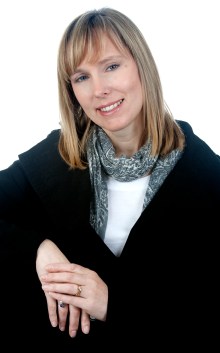
jane-isaac-photo

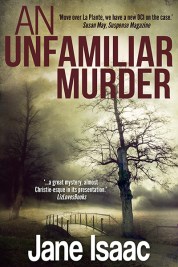
Jane Isaac lives with her husband and daughter in rural Northamptonshire, UK where she can often be found trudging over the fields with her Labrador, Bollo. Her first novel, An Unfamiliar Murder, available here, was nominated as best mystery in the ‘eFestival of Words Best of the Independent eBook awards 2013.’ The sequel, The Truth Will Out, available here, was selected as a ‘Thriller of the Month –April 2014’ by E-Thriller.com. Her latest book, Before It’s Too Late, available here, was published by Legend Press on 1st June 2015.

an-unfamiliar-murder

Jane was runner up ‘Writers Bureau Writer of the Year 2013’ and her short stories have appeared in several anthologies. When she is not writing, Jane loves to travel and spend time with her family. She believes life should be an adventure.

You can find Jane Isaac on Facebook, follow her on Twitter and visit her web site.

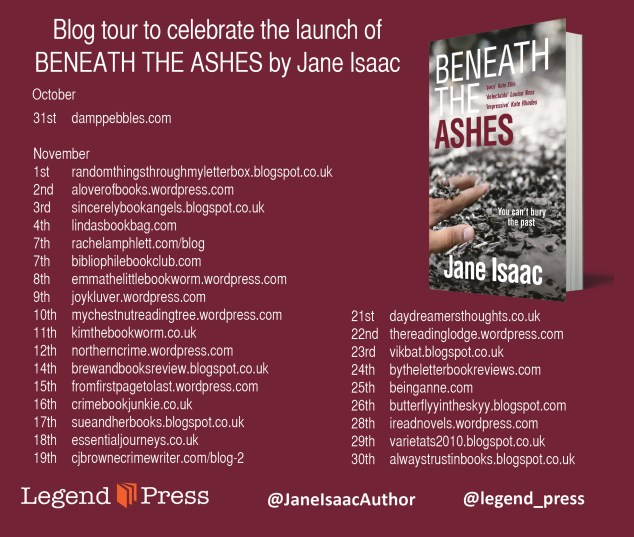
You can find out more with these other bloggers too:

beneath-the-ashes-blog-tour-banner

A Publication Day Interview with Lesley Downer, author of The Shogun’s Queen

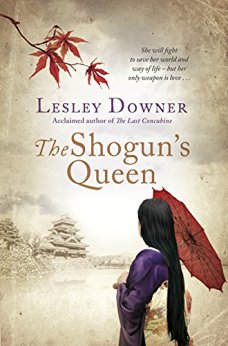
shoguns-queen

Having visited Japan in May this year I’m utterly thrilled to be interviewing Lesley Downer about her latest novel set in that country, The Shogun’s Queen. The Shogun’s Queen is published in e-book and hardback today, 3rd November 2016, by Bantam Press, an imprint of Penguin. The Shogun’s Queen is available from all good booksellers including Waterstones and also from Amazon.

I’m also excited to be able to offer a hard backed copy of The Shogun’s Queen to one lucky UK winner who enters the giveaway at the bottom of this blog post.

The Shogun’s Queen

shoguns-queen

Only one woman can save her world from barbarian invasion but to do so will mean sacrificing everything she holds dear – love, loyalty and maybe life itself . . .

Japan, and the year is 1853. Growing up among the samurai of the Satsuma Clan, in Japan’s deep south, the fiery, beautiful and headstrong Okatsu has – like all the clan’s women – been encouraged to be bold, taught to wield the halberd, and to ride a horse.

But when she is just seventeen, four black ships appear. Bristling with cannon and manned by strangers who to the Japanese eyes are barbarians, their appearance threatens Japan’s very existence. And turns Okatsu’s world upside down.

Chosen by her feudal lord, she has been given a very special role to play. Given a new name – Princess Atsu – and a new destiny, she is the only one who can save the realm. Her journey takes her to Edo Castle, a place so secret that it cannot be marked on any map. There, sequestered in the Women’s Palace – home to three thousand women, and where only one man may enter: the shogun – she seems doomed to live out her days.

But beneath the palace’s immaculate facade, there are whispers of murders and ghosts. It is here that Atsu must complete her mission and discover one last secret – the secret of the man whose fate is irrevocably linked to hers: the shogun himself . . .

An Interview with Lesley Downer

Hi Lesley. Thank you so much for agreeing to answer some questions on my blog about your writing and today’s published book, The Shogun’s Queen, in particular.

When did you first realise you were going to be a writer?

Hello, Linda. Firstly I would like to thank you for inviting me to post on your blog today. I much appreciate it.

(My pleasure!)

I’ve always written but, as Tom Wolfe said, it’s not enough to have a facility with words. You need to have a subject you’re burning to write about. I found mine in Japan. When I came back I discovered that British people knew very little about this country I’d come to love and I wanted to tell them what it was really all about. That was when I started writing in earnest.

Which aspects of your writing do you find easiest and most difficult?

I started out as a travel writer and I love to describe. I have to keep reminding myself to keep the descriptions short. The wonderful moment is when the characters take over and I find the story going off in an entirely new and unplanned direction.

Speaking of travel, I’ve recently visited Japan myself and found it a fascinating country. I know you come from a Chinese background so what drew you to Japan for your setting of The Shogun’s Queen?

You’re quite right. My mother was Chinese and my father was Professor of Chinese at SOAS, the School of Oriental and African Studies at London University. I grew up surrounded by Chinese books and we had friends whom I called Uncle Lao and Uncle Liu, whom I only realised in my teens were Chinese.

But my father loved all of Asia, not just China. He’d been to Japan and told me about it. In his bookcase he had a book of Hiroshige’s prints of Mount Fuji which always fascinated me. When I got older I became interested in Japanese literature, its art, its theatre, its pottery, its food. Everything seemed to point towards Japan. And when the chance came to go travelling, that was where I chose to go. It was nothing to do with my roots at all.

fuji

I ended up living there for five years and fell entirely in love with the place. Partly it just felt like home. I loved the delicacy of the culture, the precision, the beauty, the temples, the shrines, the passionate history and legends that were retold in poetry and the kabuki and Noh theatres and the unfailing gentleness and kindness of the people. I know you understand that fascination, Linda!

(I certainly do. It’s an amazing country. I loved the precise balance of refinement and passion I saw everywhere.)

The Shogun’s Queen is a prequel in your Shogun Quartet. Why did you decide to write a prequel?

last-concubine

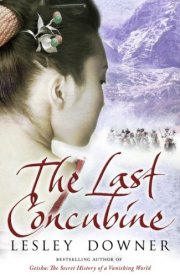
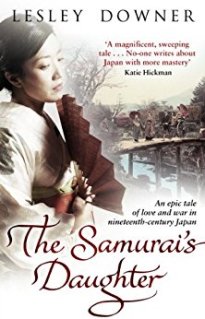
I’d come across the story of Atsu and been very moved by it. But it preceded the stories I’d told in my previous novels – The Last Concubine, The Courtesan and the Samurai and The Samurai’s Daughter, which move from 1860s to 1870s Japan. Then I realised that Atsu’s story was the cornerstone. It’s where everything begins.

courtesan

The Shogun Quartet is set in the watershed years when Japan changed virtually overnight from a feudal country ruled by the shogun, the military overlord, to a modern western one. In my earlier novels I hadn’t mentioned the event that set the whole thing into motion – the arrival of the American Commodore Perry with his Black Ships. That entirely transformed Atsu’s life and she herself played a key role in everything that happened after that. I really wanted to tell her story and take my readers back to that fascinating period when Japan was hovering between old and new. And the more I found out about her the more I realised what an extraordinary woman she must have been.

samurai

I’d also become quite obsessed about the Women’s Palace – the shogun’s harem, where three thousand women lived and only one man, the shogun, could enter. Atsu disappeared into the Women’s Palace and I wanted to take my readers deep inside that dark intrigue-filled world.

How did you ensure The Shogun’s Queen had an authentic C19th setting yet was accessible to a C21st reader?

There’s a much bigger gap between Japan and England than between the 19th and 21st centuries. The gulf I had to cross was more between the two cultures than a time gap. I felt my readers could cross that gap.

Having written three books set in nineteenth century Japan I was already completely immersed in it. I lived and breathed it. I’d read wonderful books written by western travellers who went there at that time. It was alive for me, which made it easy to take my readers along with me.

I very much wanted to make The Shogun’s Queen as authentic as possible, to make sure my characters behave as they really would have done. To me historical fiction is time travel, like science fiction. It wouldn’t be believable to go back in time and find people behaving exactly as you do. What’s interesting is when they do something you would never have thought of doing but that’s entirely consistent and believable. I think readers are happy to step into all sorts of different worlds – back in time to the past and across the globe to a country they’ve never visited in reality. I felt if I could bring the place alive in my readers’ minds then they would happily step through the looking glass into the land I’d created for them.

The Shogun’s Queen has a very evocative cover. How did that image come about and what were you hoping to convey (without spoiling the plot please!)?

I love the wistful, sad way the woman on the cover is looking at the castle and away from us.  I thought it conveyed the mood of my story beautifully.

If The Shogun’s Queen became a film, who would you like to play Okatsu? 

Someone beautiful yet feisty, delicate yet strong, and Asian – maybe Ziyi Zhang who played Sayuri in the film of Memoirs of a Geisha.

I know you teach creative writing. How far are you affected in your own writing by this role?

I didn’t study creative writing myself. In my day one just learnt on the job. I feel that at this point I have a great deal of experience to pass on to my students. My main concern would be that creative writing tends to lay down rules whereas I think the best writing transcends the rules.

Your husband is also a writer (Arthur I Miller whose website can be found here). How far do you critique one another’s writing or do you avoid sharing what you write at home?

We always read each other’s work – he is always my first reader.  And as a result I know a lot more than you’d imagine about physics and he knows a lot about Japan!

Although you appear obsessed by Japan, where else would you like to set any future novels and why?

I studied Anglo-Saxon at university and love that culture, which is astonishingly rather akin to samurai culture. I’ve also thought of writing my own family history, which is to do with China, or about my father’s travels in South East Asia or my own travels around Asia. But I’m keeping my best idea of all secret at the moment!

(Oh! Sounds intriguing – I hope you’ll come back and tell us all about it when you’re ready!)

If you hadn’t become an author, what would you have done instead as a creative outlet?

I’m a language obsessive. I love words and love learning foreign languages. Whenever I go abroad I start trying to learn the language and chattering away to people. I’ve always painted and drawn; I learnt ink painting and calligraphy in Japan. I also used to be a potter. That was actually the very first thing that drew me to Japan.

If you had 15 words to persuade a reader that The Shogun’s Queen should be their next read, what would you say?

It’s the true story of Atsu, beautiful yet feisty, delicate yet strong – a love story that immerses you in kimonos, intrigues and murder.

(And I’ll be reading her story very soon – I can’t wait!)

Thank you so much, Lesley, for your time in answering my questions.

About Lesley Downer

lesley-downer-colour2x

Lesley Downer’s mother was Chinese and her father a professor of Chinese. She ended up almost by accident in Japan and became fascinated by the country and its culture and people. It has been an ongoing love affair.

She is the author of The Shogun Quartet, a series of four historical novels set in Japan, beginning with the best-selling The Last Concubine, shortlisted for Romantic Novel of the Year and translated into thirty languages. The Shogun’s Queen, out in November 2016, is a prequel and the last in the series. Her non-fiction includes Geisha: The Secret History of a Vanishing World and Madame Sadayakko: The Geisha who Seduced the West.

You can follow Lesley on Twitter, find her on Facebook and visit her website.

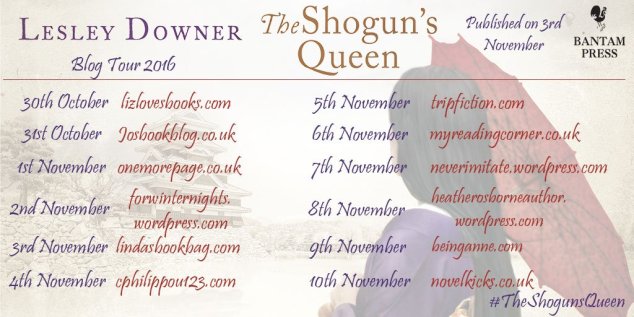
There’s more from and about Lesley with these other bloggers too:
shoguns-queen-blog-poster

For your (UK only sorry) chance to enter to win a hardbacked copy of The Shogun’s Queen, please click here. Entry closes at midnight on 10th November 2016.

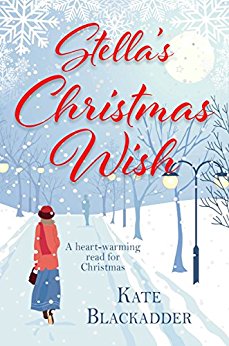
Three Wishes, a Guest Post by Kate Blackadder, author of Stella’s Christmas Wish

stellas-christmas-wish

I’m delighted to welcome Kate Blackadder to Linda’s Book Bag as Kate’s novel Stella’s Christmas Wish is published today, 3rd November 2016, by Black and White Publishing. Stella’s Christmas Wish is available for purchase here.

To celebrate publication day of Stella’s Christmas Wish, I asked Kate what her three wishes might be!

Stella’s Christmas Wish

stellas-christmas-wish

One phone call can change everything…

Six days before Christmas, Stella could never have anticipated the impact on her life when the phone rings in her London office.

The phone call is from a friend of the family informing Stella that her grandmother has been hurt in a fall at her home in the Scottish borders and is in hospital. Torn between her responsibilities at work and the need to be with her grandmother she decides she must return to Scotland immediately.

However, on her return to where she grew up, it becomes apparent that her grandmother’s health is not her only concern. Relationships which have lain dormant for years are re-kindled and fresh opportunities present themselves – if she will only dare to take them…

My Christmas Wish

A Guest Post by Kate Blackadder

There’s a (probably) apocryphal story about a radio programme presenter asking three Ambassadors what they wanted for Christmas. One wanted world peace, another wished for an end to famine. The British Ambassador said he’d like a new pair of slippers.

Unfortunately, he was the only one who was likely to find what he wished for at the end of his bed on Christmas morning.

My wish since I was a child was to be a published writer. And eventually Santa – in the shape of various women’s magazines and competition anthologies – granted the wish and wrapped it up in tinsel and other very sparkly stuff. I gave him a big hug and lots of mince pies.

This year though he gets hugs, mince pies, a whole Christmas cake to himself and a massive sack of carrots for Rudolph because my first full-length novel, Stella’s Christmas Wish, set in Edinburgh and the Scottish Borders, is published by Black and White Publishing today, 3 November.

So what’s left to (selfishly) ask Santa for?

  1. Talking of slippers … my old sheepskin ones are moulting.
  2. Ha, Santa – number 1 was too easy! Number 2 is that Stella’s Christmas Wish attracts readers from all over the world and I am invited to do book tours everywhere I’ve ever wanted to visit – Canada (coast to coast), New Zealand (north to south), and the Faroe Islands, just for starters.
  3. Perhaps for these very northerly and very southerly trips one of those huge glamorous (fake) fur hats?

Thank you and Merry Christmas, Kate x

I hope you get your wishes granted Kate!

About Kate Blackadder

kate

Kate Blackadder was born in the Scottish Highlands but now lives in Edinburgh. She has had stories published in The People’s Friend, Woman’s Weekly, The Weekly News, Writers’ Forum, New Writing Scotland and elsewhere. In 2008 she won the Muriel Spark Short Story Prize, judged by Maggie O’Farrell, and she’s been long-listed for the Jane Austen Short Story Award.

Wearing her other ‘hat’ she works two days a week for a museum publishing house, and in her spare time she likes reading, going to the cinema, history, and crying over the television programme Long Lost Family.

You can find out more about Kate by visiting her blog, following her on Twitter and finding her on Facebook.

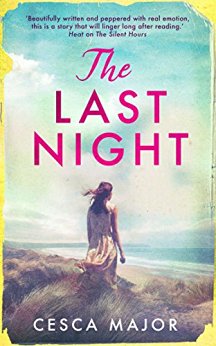
A Publication Day Interview with Cesca Major, Author of The Last Night

the-last-night

I’m beside myself with excitement to be interviewing Cesca Major today, as her latest novel The Last Night is published, because Cesca’s book The Silent Hours was one of the best narratives I read last year. You can read my review of The Silent Hours here. The Last Night is published today, 3rd November 2016, by Corvus, an imprint of Atlantic books and is available for purchase from all good booksellers including here.

I’m also reviewing The Last Night below.

The Last Night

the-last-night

In a quiet coastal village, Irina spends her days restoring furniture, passing the time in peace and hiding away from the world. A family secret, long held and never discussed, casts a dark shadow and Irina chooses to withdraw into her work. When an antique bureau is sent to her workshop, the owner anonymous, Irina senses a history to the object that makes her uneasy. As Irina begins to investigate the origins of the piece, she unearths the secrets it holds within…

Decades earlier in the 1950s, another young woman kept secrets. Her name was Abigail. Over the course of one summer, she fell in love, and dreamed of the future. But Abigail could not know that a catastrophe loomed, and this event would change the course of many lives for ever…

An Interview with Cesca Major

Cesca, I’m thrilled to interview you on Linda’s Book Bag. Firstly, please could you tell me a little about yourself please?

I’ve been writing for a number of years and The Last Night is my second novel. I live in Pangbourne, Berkshire with my husband and our son. I used to teach History and take the inspiration for my books from real life events. I have always been curious about the characters in history, the normal people that get swept up in extraordinary moments, and I try to bring them to life in my books.

When did you first realise you were going to be a writer?

I got the bug about ten years ago when I wrote my first novel and found I couldn’t stop. It’s an addictive process as you always believe you can learn more and get better so you just keep going. And then you realise you have written a number of novels and I suppose you are then calling yourself a writer!

If you hadn’t become an author, what would you have done instead as a creative outlet?

Before I became a teacher I was an actress and a TV presenter. I loved performing and think a background in acting can really help your writing as you can use those skills (blocking a scene, dialogue, how people express themselves) in your books.

(That’s really interesting as many of the writers who’ve featured on Linda’s Book Bag have a similar background. There must be a link between the different creativities.)

How do you go about researching detail and ensuring your books are realistic?

I try to do a lot of my research face to face. There is nothing better than hearing people’s stories and experiences first hand. I was so lucky to be helped during The Last Night by a wonderful group of people in Lynmouth, Devon. After The Silent Hours it was a relief that all the research was in English not French..!

 The silent hours

Which aspects of your writing do you find easiest and most difficult?

For me the most challenging part is the structural edit. You have your story down and then you need to look at it as a whole and see what is there, what is missing and how you are going to fix that. It’s exhilarating but seriously difficult.

(An awful lot of authors tell me the editing process is the most tricky time for them.)

What are your writing routines and where do you do most of your writing?

Now that I have a son my routines are based around my lovely babysitter and his nap time. I always wrote in short chunks and did a lot of planning and research around these sessions so it works well. I work in a shed in my back garden which is lovely as it is completely private and has an LP player for my Classical Music (nothing with lyrics as I sing along).

I would find it hard to define your genre. It’s contemporary fiction, it’s historical, it’s mystery to some extent and it’s women’s fiction. What is your view of being categorised and do you think it matters where writers are placed? 

A great question, it is so tricky. I think historical fiction can be such a turn off to some people. Particularly if they loathed the subject at school. I often describe my books as ‘Book club’ reads as the aim is you want to discuss them afterwards. It is a very controversial topic!

(I can sympathise with that TBR!)

Both The Silent Hours and The Last Night have very evocative covers. How did the images come about and what were you hoping to convey (without spoiling the plots please!)?

I can’t take any credit for the covers, Anna Morrison is enormously talented and has come up with two gorgeous covers. I wanted the books to have a nostalgic feel and she has completely nailed the brief.

I find your narratives very visual. How do you manage this element of your writing? (Do you visit the places you describe? Use the Internet? Look at photographs etc?)

I do all of the above! I visit places as much as I can, so I made several trips to Devon for The Last Night. I take photographs, read books, see old newspaper clippings and use the Internet too.

When you’re writing, which is more important to you – a depiction of an historical event or the characters involved and why do you say this?

Definitely the characters. I am not writing non-fiction I am simply setting a story about people in another time. It is vital that people want to read their story and no one wants history rammed down their throat.

If you could choose to be a character from either The Silent Hours or The Last Night, who would you be and why?

I think I would choose to be Tristan from The Silent Hours. I loved writing his chapters – he was such a scamp..! In The Last Night I was always rooting for Irina, wishing her well.

Sometimes, as a reader, I find the emotions you convey almost too great to bear. How are you affected when you’re writing?

It can be quite upsetting to write about things that did affect real people. At times in my research I was quite shocked by what I uncovered but I hope I can channel the emotion into the books. I want people to be shocked and care, just because these things happened a long time ago does not mean they weren’t terrible.

If you had 15 words to persuade a reader that The Last Night should be their next read, what would you say?

Based on real events follow Irina as she uncovers the truth about The Last Night.

When you’re not writing, what do you like to read?

LOTS and I am never close to getting down to the bottom of my TBR pile. I love Book Club reads, really humorous fiction and thrillers. I am always keen to hear book recommendations too. It is so wonderful to fall in love with a new writer and then read their entire back list.

What can we expect next from your writing?

I am extremely excited about the book I am currently working on. I can’t share an enormous amount with you but I am currently researching a fascinating event in New Zealand in the 20th century. Any excuse to travel there..!

Oh, great choice! Thank you so much, Cesca, for your time in answering my questions.

My Review of The Last Night

A body is washed into the rocks and the secrets surrounding it will reverberate across the years.

I don’t think I can write a review of The Last Night. Occasionally there’s a book that so appeals that it is nigh on impossible to find the vocabulary to express how I feel about it and The Last Night is one such book. I absolutely loved it.

The Last Night is similar in style to The Silent Hours, but is also subtly different and the suggestion of the supernatural came as a delightful and brilliantly evoked surprise. I think the way a real event, the flood in 1952 Lynmouth, is taken as a starting point and then a captivating story is built around it is totally fascinating.

Cesca Major writes with a lyricism that hypnotises the reader. The quality of descriptions is incredibly evocative. The iterative image of water is very much a presence and as much a character as any of the people. It’s there in all its manifestations from drizzle to flood, from benevolence to malevolence, and the quality of description means each depiction is pitch perfect. The writing is magnificent. As the book comes to its climax, the style matches it with more complex sentences that reflect perfectly the dynamism of events. It’s so impressive and satisfying to read.

The characterisation was incredible. From the loathesome Larry to the physically and mentally scarred Irina each is vivid and captivating. It was as if I became both Abigail and Irina as I read, and experienced their lives first hand rather than just as a reader. I thought about them both constantly when I wasn’t reading the book.

I loved the way secrets and half truths weave through the narrative and relationships so that there is mystery as well as emotion throughout. There are so many layers in the story that I think The Last Night would reward many, many readings. I know I will be returning to it over and over again. If you haven’t discovered Cesca Major as a writer yet, I urge you to do so.

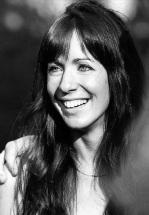
About Cesca Major

cesca-major-headshot

After studying History at Bristol University Cesca Major went on to work as a television presenter for four years on various pre-recorded and live shows. She also taught History for seven years.  Cesca was Runner Up in the 2005 annual Daily Mail Writing Competition and has continued to be successful in prestigious competitions ever since. She has written two novels based on real events. Her debut The Silent Hours was published by Atlantic Books in 2015 and The Last Night is out today, 3rd November 2016.

You can follow Cesca on Twitter and visit her website .

An Interview with Catherine M Byrne, author of Isa’s Daughter

katrina66-72dpi-1500x2000

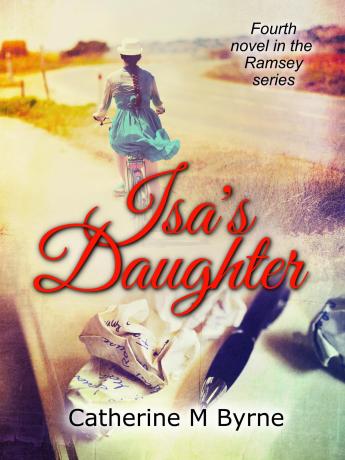
I’m pleased to welcome Catherine M Byrne to Linda’s Book Bag today. Catherine’s latest novel Isa’s Daughter is the fourth in Catherine’s Raumsey Series (all of which can be found here and directly from the publisher here) and today Catherine has kindly agreed to answer some questions about her writing and Isa’s Daughter in particular.

Isa’s Daughter

katrina66-72dpi-1500x2000

The Great War is over, and the inhabitants of Raumsey Island struggle to regain their livelihood. Seventeen-year-old Annie Reid is a spirited, ambitious girl, determined not to end up a herring gutter or go into service.

Annie befriends a young schoolteacher, Alexander Garcia, who promises to help her further her education but, after tragedy strikes, Annie pursues a nursing career amidst the political complexity of Glasgow. Garcia dreams of a return to his Spanish roots, but Spain is also in political turmoil.

Annie’s love for the teacher remains through the years, but will love overcome the barriers and prejudice of race, religion, beliefs and distance?

An Interview with Catherine M Byrne

Hello Catherine. Thank you so much for agreeing to answer some questions on my blog about your writing and Isa’s Daughter in particular.

Firstly, please could you tell readers a little about yourself?

I was born on the Island of Stroma, and was brought up hearing stories from my parents and grandparents about the island life of a different generation. An interest in geology, history and my strong ties to the island have influenced the choice of genre for my first series.

I have had some success as a landscape artist and I worked as a glass engraver with Caithness Glass until I left to become administrator for my husband’s two businesses. I always wanted to write, however.

Since first attending the AGM of the Scottish Association of Writers in 1999, I have won several prizes, commendations and have been short-listed both for short stories and chapters of my novel. In 2009, I won second prize in the general novel category for Follow The Dove.

My main ambition was to write novels and since the death of my husband in 2005, I have retired in order to write full time.

dove

When did you first realise you were going to be a writer?

When I was at school, maybe aged about eight, my teacher asked us if we had any little poem in a book at home that we could recite for the Christmas Treat.  I found one, and I also wrote one. The teacher very kindly said they were both very good, ‘but you can only have one,’ she said. No surprise that she did not choose the one written by me.  Since I also loved to draw, I began to draw comic strips and wrote stories to go with them. In my teens, I wrote song lyrics and rhyming poems, so I guess the urge was always there.

If you hadn’t become an author, what would you have done instead as a creative outlet?

An artist. I’ve sold many of my landscapes. I haven’t been painting much since I started writing seriously.

How do you carry out the research for your novels?

Internet, reading, visiting the places I write about (where possible) and speaking to historians.

Which aspects of your writing do you find easiest and most difficult?

I love writing descriptions. I see the place in my mind’s eye, I transport myself there, ask myself what am I feeling, what am I smelling, who is walking around me? I also like writing dialogue. I become my character, get into the conversation, become angry, sad, happy as the scene dictates.  The most difficult aspect is marketing. I find it very difficult to put myself out there. My fan base is steadily growing, and I sell a lot of books locally, but I need to get further afield.

I met some tourists from America recently who bought a box of my books to take home with them. Can’t imagine the weight of their luggage.

(I think an awful lot of writers will empathise with that marketing dilemma Catherine!)

What are your writing routines and where do you do most of your writing?

Since I now live alone, my computer is in the corner of my dining room. I write as the muse dictates. I do try to write a bit every day, sometimes just one sentence, but I’m thinking about my story most of the time.

When you’re not writing, what do you like to read?

Apart from what I read for research, I read most genres. Right now I’m into psychological thrillers or murder mysteries. I do like to read factual books as well. Sometimes I just want something beautiful.

Do you have other interests that give you ideas for writing?

I enjoy travel, gardening, my computer and walking the dogs. Ideas come to me while walking in the countryside or along the beach. My contemporary novella, Song for an Eagle, was prompted by a photograph of my granddaughter and an eagle.

eagle

Why did you choose the Orkney’s and Spain as your settings for Isa’s Daughter?

I chose Orkney as I was born on the island of Stroma myself, although Stroma is not technically one of the Orkney islands, it has close connections.The character of Isa Reid features strongly in the first book of the series, Follow the Dove, and she is very loosely based on a real person. The Spanish Armada was shipwrecked off the north coast of Scotland, so the story goes, and many of the sailors survived to settle and live there. So you could say we do have Spanish blood in our veins!

(How romantic!)

You explore big themes such as love and lust, truth and deceit, family relationships and the place of women in society in Isa’s Daughter. How far did you plan for these and how far did they arise naturally out of your writing?

All my novels explore love, lust, truth and deceit, and family relationships. I think they arise naturally from human nature. The place of women in society arose from Annie’s spirit and the period in which the novel is set. I wrote about the world through Annie’s eyes, and the things she encountered.

I know you are marketing Isa’s Daughter yourself. What advice would you give to others who are self-publishing and trying to get their book noticed? 

It’s difficult to get your book notice when marketing yourself. Social media is a great tool. Apart from that I give talks to women’s groups, set up a stall at fayres and offer my books to several outlets on a sale or return basis. Although it’s very slow, if your book is good, word of mouth is one of the best ways to get your book noticed.

What plans do you have next for your writing?

When I finished Isa’s Daughter, I felt almost bereft. So much so, that I immediately started another in the saga of the same family. However, I am also working on a psychological thriller, my favourite genre.

Which of your characters would you most like to be and why?

I think I’d be Isa. She’s strong and feisty. Of course she’s not featured so much in my new novel as it’s all about her daughter, Annie.

If one of your books  became a film, which would you choose and why?

It would have to be the first, Follow the Dove. That would leave the way open for the others.

(Ha ha – good point!)

How important do you think social media is to authors in today’s society?

It appears to be very important in getting your name out there. For someone like myself who doesn’t do much else in the way of marketing, it’s a must.

If you had 15 words to persuade a reader that a Catherine M Byrne book should be their next read, what would you say?

A good read that’ll turn out to be a lot different to what you expect.

Is there anything else you would have liked to be asked?

Where am I going next? Well I miss my characters so much I’m staying with them. Number five in the series will take us up to and through the second world war. Let me say that each book is stand alone. But, hey, in between times, I’m working on another novella, a psychological thriller.

Thank you so much for your time, Catherine, in answering my questions.

And thank you for allow me to.

Pleasure!

About Catherine M Byrne

author

You can find out more about Catherine and her books by visiting her website, finding her on Facebook and by following her on Twitter.

Introducing Blue by Leslie Tate

front180

I’m delighted to welcome Leslie Tate to Linda’s Book Bag today. Leslie is introducing Blue, the second in his Lavender Blues: Three Shades of Love, trilogy. Blue is  published today, 1st November 2016, and is available for purchase directly from Leslie by clicking here and from your local Amazon site.

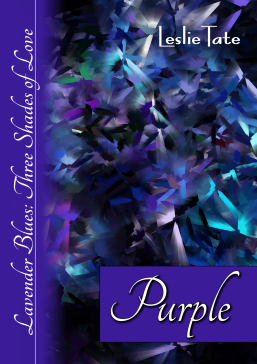
Purple

Purple, the first book in the Lavender Blues: Three Shades of Love trilogy is available here.

front_300.png

Purple is a coming-of-age novel, a portrait of modern love and a family saga. Set in the North of England, it follows the story of shy ingénue Matthew Lavender living through the wildness of the 60s and his grandmother Mary, born into a traditional working-class family. Both are innocents who have to learn more about long-term love and commitment, earning their independence through a series of revealing and closely-observed relationships.

Heaven’s Rage

Leslie also has a wonderful collection of lyrical essays, Heaven’s Rage, coming out on December 1st 2016.  You can message him from his website if you want more details, but I have been lucky enough to review part of that collection below. Heaven’s Rage is an imaginative autobiography. Reporting on feelings people don’t usually own up to, Leslie Tate explores addiction, cross-dressing and the hidden sides of families. Writing lyrically, he brings together stories of bullying, childhood dreams, thwarted creativity and late-life illness, discovering at their core the transformative power of words to rewire the brain and reconnect with life. A Robin Red breast in a Cage / Puts all Heaven in a Rage – William Blake.

You can pre-order Heaven’s Rage here.

And Then There Was Blue

A Guest Post by Leslie Tate

front180

Blue, the second in the Lavender Blues trilogy, was based on my experiences in the 80s as a member of a feminist-led collective – but shaped and adapted to fit the logic of fiction. The words and the characters were my main guide, taking me to places I hadn’t expected. The themes were feminism, marriage and open relationships, but only as they developed in their own sweet way. What I had to establish was the ebb and flow of feelings as an authentic experience, and this meant that the beginning was seminal. Like the first few bars in a symphony, the opening paragraph signposted the key, tempo and mood.

So what did I hear at the start?

Blue begins with a quiet, observational figure – with moments of unease and the word ‘enough’ running through the mind of my protagonist, Richard Lavender. By contrast, my second subject, his wife Vanessa, sails in noisily with a messy exchange with her children and her close friend Ruth. Then the narrative voice kicks in, taking us back through the first ten years of Richard and Vanessa’s relationship. The emerging pattern is: intro – smooth exposition – back to theme, using the word ‘enough’ as leitmotif.

With Blue I’d already decided that I wanted to explore a different type of beginning from my first novel. In Purple the reader is transported by the first sentence back to the 60s. With Blue the process is more close-up and gradual, showing Richard and Vanessa living in the 90s – flashing back to the 80s – with less overview. So it’s a controlled outing, a walk in the park if you like, with enough time to look around. The reader is taken into the lives of the warring couple through pacing and changes in voice. And because I wanted to fully explore the action, each incident has an element of arrest, a tableau-like dimension, as it extends itself, stretching time and space. Of course I also had to move the story on. So I repeatedly rewrote the start to each chapter, searching for shortcuts, ways of jumping through time and space without sounding false. And in that search I found that a ‘go for it’ mind-set helped. Anything was possible as long as I wrote with freedom and didn’t get too hemmed in by ‘writing school’ conventions. So my story moved according to feel, switching between characters out there in the world doing surprising things and the dispassionate study of a couple beneath the microscope.

To write Blue I needed a strong, flexible authorial voice. Rereading my first attempts I identified a register – a combination of formal and informal, in third person, dipping in and out of my two main characters’ heads – so my first draft was composed around a series of variations on that style. But when I revisited the story later, new expressive registers appeared. For instance a new beginning, with Richard’s cousin Matthew, the main character in Purple and now a professor, lecturing about relationships. His voice was witty and erudite, offering indirect comments on Vanessa and Richard’s marital struggles. It added an element of humour and a connection between the books. Other styles appeared, helping to vary the narrative, including articles, dialogues and programme notes for an exhibition. What I’d put together by the end was a collection of voices, all bearing on the same question: will Vanessa and Richard manage to save their relationship?

To do my subject justice I needed to include a consciousness-raising meeting and a counselling session, contrasting them with romantic getaways – which called for a switch between irony and poetic prose. With the counselling I had to ‘pack it in’, foreshortening hours of talk into a few concentrated exchanges before moving on to practical, slightly wacky exercises. A counselling scene could be very static, so I squeezed several sessions into one, making it possible for Richard and Vanessa to achieve tangible progress. As an author I often overlay the actual with the generic, striking a balance between the documentary and the imaginary. The process, as Susan Sontag says, makes the writer: ‘Love words, agonize over sentences. And pay attention to the world.’

In the world I’d belonged to, the feminist-led group had set out to overturn monogamy, but jealousy got the better of us. So in the book the open relationships have similar problems, but not before Richard and his ‘secondary partner’ Ginny have a wild love affair. Their romance is told largely in terms of crazy night walks in forgotten parts of the city. The normal rules don’t apply in the darkness of the park or the abandoned railway line, but the relationship does follow the well-established pattern that romantic love can be a fleeting thing.

So Blue tells a quasi-historical tale, but in the form of a satirical-romantic-adventure. It covers that time in life when couples struggle to ‘stay alive’ against the pressures of jobs and bringing up children. It’s also an investigation into modern love.

In the words of my blurb: ‘Blue tells the story of Richard and Vanessa Lavender, who join a 90s feminist collective sharing childcare, political activism and open relationships. Boosted by their ‘wider network’ they take secondary partners, throw parties and observe the dance of relationships amongst their friends. But finding a balance between power and restraint, and handling shared love, proves difficult…’

My Review of Cross-Dressing from Heaven’s Rage

How Leslie began cross-dressing and the impact on his life is explored in this essay.

My goodness this is such good writing. What Leslie Tate does is lay himself emotionally open and honest in a manner that cannot fail to touch the heart of the reader in his autobiographical writing.

If I’m honest, I’m not usually especially interested in autobiographical writing, but Leslie Tate has inspired me to read more if it is to be of this quality. Heaven’s Rage and the chapter I read, Cross-Dressing, is raw, beautifully written and utterly compelling reading. When I’d finished reading Cross-Dressing I wanted to reach out my arms to Leslie Tate and hold him close.

Anyone who has struggled with their sexual and personal identity will find so much that resonates here and for those of us who have always been conventional, Leslie Tate illustrates what others have had to contend with. That’s not to say that this is a sympathy requesting piece. Far from it. It is a true, moving and fascinating account of how Leslie began cross-dressing and how he was viewed, and viewed himself, as a result. It explores the way the media treats those who appear other, the way society expects certain norms for acceptance and how hard so many of us find it to be easy in our own skin.

What I enjoyed most about this piece was the eloquence of the writing. Leslie Tate has a beautiful turn of phrase that conveys perfectly the emotions of the moment. He presented me with concepts that had never really reached my consciousness and made me think in a manner I found hugely skilful.

No matter what your own personal viewpoint and perspective, Cross-Dressing cannot fail to move and impress the reader. It’s magnificent.

About Leslie Tate

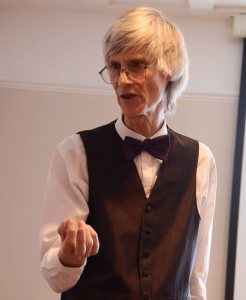
leslie-at-slough-writers-close-up

Leslie wrote his Lavender Blues trilogy while attending a University of East Anglia Creative Writing Course. He is a novelist, poet and teacher, with an MA in Creative Writing, whose stories are driven by language and character. Leslie admires Virginia Woolf, James Joyce, Carol Shields, Marilynne Robinson and Michael Ondaatje.

He runs mixed-arts shows, a poetry reading group and a comedy club, and has led writing workshops at universities, libraries and festivals. He uses music and art as part of his performances which offer surprising insights into prose and how authors ‘reread the world’. He often performs with his wife, author Sue Hampton. Calling themselves ‘Authors in Love’, they live together in Hertfordshire.

Leslie has been shortlisted for the Bridport, Geoff Stevens and Wivenhoe Poetry Prizes.

To find out more about Leslie Tate, visit his website, find him on Facebook and follow him on Twitter.  On Leslie’s website you will also find weekly interviews and guest blogs by writers, artists and musicians, as well as Leslie’s own writings.