Writing a 1960s Novel, a Guest Post by Andrew Smith, author of The Speech

the-speech

I’m a 60’s baby, so the decade has a fascination that can never quite be shaken. When I discovered one of my favourite publishers, Urbane, had published The Speech by Andrew Smith which is set in the 1960s, I had to invite Andrew onto Linda’s Book Bag to tell me more.

The Speech is available in e-book and paperback from all good booksellers, here and directly from Urbane.

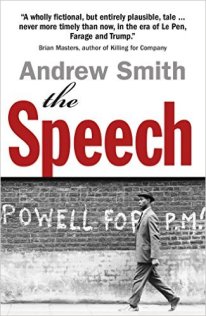
The Speech
the-speech

His words threatened rivers of blood…and they fought him with hope….

On April 20th, 1968 Enoch Powell, Member of Parliament in the English town of Wolverhampton, made a speech that shook Britain to its core. The ramifications of what some labelled a ‘racist diatribe’ changed forever the way in which race was viewed and discussed in the United Kingdom.

The Speech follows the lives of a group of characters – including Powell himself – living in Wolverhampton over a ten-day period before and after his speech.

Mrs. Georgina Verington-Delaunay is a volunteer working in the Conservative riding office of Enoch Powell. It is through her interaction with Powell, now at a critical point in his political career, that we get to know him intimately. Frank and Christine are art students inadvertently caught in an undercurrent of intolerance. Nelson and his aunt, Irene, are Jamaican immigrants striving to make a life for themselves in an atmosphere of turbulent emotions and polarised opinions concerning Britain’s immigration policies.

A violent crime brings these disparate characters together as they struggle to find their places in the swiftly changing society of 1960s Britain. Set against a background of ‘subversive’ music, radical fashions, and profound change in ‘moral values’, they attempt against all odds to bring a fair conclusion to an unjust investigation. As they work together against murky elements of self-interest and bigotry, they’re forced to confront their own consciences and prejudices.

The Speech: Writing A 1960s Novel

A Guest Post by Andrew Smith

It’s said that “if you remember the ’60s you weren’t there.” The implication being that those who were truly immersed in the decade’s counter culture, were too stoned and/or blissed out to remember the social and political revolution raging around them. “Write what you know” is another often quoted maxim for authors. I was indeed present throughout the 1960s, but too young for most of the decade to partake in any mind-altering substances or strident demonstrations. During the earlier years I hovered on the sidelines from the unwanted safety of my parents’ suburban, drug-free house. But I watched, avidly and longingly, the shenanigans happening in the world outside. It was only for the latter couple of years of the decade, when I moved into a grungy flat with student pals, that I was able to throw myself wholeheartedly into the action. Even then my euphoria came from my new-found freedom rather than from any artificial stimulant. So I do remember the era … vividly. As a consequence it was relatively easy, and hugely enjoyable, to write large sections of my socio-political novel, The Speech, set in 1968 — I already “knew” a lot of what I was writing.

The remarkable thing about the 1960s was that everything visual — clothes, furniture, cars, anything that involved design — was distinctive and quite specific to the decade. It was easy and fun for me to recall and describe my characters’ clothes. Here’s a description of art student Christine:

With one deft tug she pulled off the black cape she habitually wore. When her copious honey-coloured hair fell languidly back into place over the shoulders of a body-hugging sweater, Frank’s gut fluttered. His eyes glided over knees caught in fishnet tights. His stare slid between shapely thighs to a tantalizing shadow cast from the hem of a black leather mini-skirt.

And here Frank is eyeing an advert for kitchen appliances:

In the coloured photograph a hip young housewife lifted the lid of a red-enamelled casserole while a bevy of her friends, all dressed in the latest fashions, stood around a canary yellow Formica countertop. The women wore mini dresses, the men sported satin shirts with gargantuan collars, some with ruffles.

These descriptions of coloured kitchen utensils, plastic furniture, and outrageous clothes may seem like small fry in a full-length novel but they’re the kind of details that, peppered throughout the book, add atmosphere and— most importantly — absolutely pinpoint the era.

The political scene in the 1960s was almost as fraught as it is at present. The huge difference being that the population in general, the young in particular, were far more vociferous. Demonstrations and marches were daily events in the 1960s — especially for students. I have to admit I was too busy enjoying my newfound freedom to be particularly proactive. Some of us were more like Frank as I describe his lack of commitment to any particular cause.

The issue of the day could be racial injustice, the war in Vietnam, or the price of beans on toast in the college cafeteria — Frank couldn’t give a toss.

But I observed others who were much more typical of the times, people deeply passionate about expressing their outrage. And then, in my research, I came across a photograph of a 1960s student demo where hand-made placards were being angrily brandished. From that I created this scene — doubtless typical of colleges and universities of the period — where Frank watches a fellow student prepare placards for a demonstration against Enoch Powell in protest over his racist and extremely controversial speech given in April, 1968, and from which the title of my novel springs.

Frank was sitting on the stairs watching a young woman mop red paint off the black-and-white-tiled floor in the hallway when Christine arrived. A dozen placards were stacked up against one wall. A large black and white photo of Enoch Powell, obviously ripped from an old campaign poster, had been mounted onto one of the placards. Earlier Frank had watched as the girl with the mop had daubed a toothbrush moustache and fringe in black paint onto the photo. Then she’d drawn an armband featuring a bright red swastika. The likeness to Hitler was startling and the armband stood out like a beacon.

Atmosphere is key to adding veracity to any novel, but when the story is set in a period as unique and distinctive as the 1960s I count myself lucky that I had such a rich bank of remembered as well as researched details on which to draw.

About Andrew Smith

andrew-smith

Andrew Smith was born in Liverpool, but was too young to gain admittance to the Cavern Club to witness the birth of the Beatles. A year or so later he couldn’t  forgive his father for taking a job in the British Midlands and moving the family at the height of the Mersey Sound era to Wolverhampton, where there was no sound at all, Slade being still in short trousers. But Smith did witness the local reaction to Wolverhampton MP Enoch Powell’s Rivers of Blood speech and, apart from the occasional ‘lost weekend,’ he remembers most of the brouhaha during that time.

Smith has published numerous short stories, some of which won awards. His novel Edith’s War won a gold medal for fiction at the Independent Book Publishers’ Awards. His latest novel, The Speech, was published in October, 2016 by Urbane Publications. Examples of Smith’s short fiction and other writing can be found on his website. You can also follow Andrew Smith on Twitter.
An Interview with K R Murray, author of The Christmas Heatwave

the-christmas-heatwave

With so many Christmas books on the market, it’s good to find one that isn’t only all about snow. K.R Murray’s novella The Christmas Heatwave avoids this with an unusual premise! The Christmas Heatwave was published on 25th October 2016 and is available in e-book here.

Today I’m interviewing K.R. Murray to celebrate a change in the genre.

The Christmas Heatwave

the-christmas-heatwave

“On the radio today someone was saying this is the end of the world.”
“Well, this wouldn’t be a bad last day on earth would it?”

On Christmas day, Tom, Jessie and Olive each wake up alone. But they’re not too distracted by their own problems to overlook that there is something a bit different about this Christmas.

While the rest of the country reels at the news of a severe heatwave hitting the UK, the change in season brings a change in fortune for these three outcasts…

An Interview with K.R. Murray

Thank you so much for agreeing to answer some questions on my blog about your writing and your novel The Christmas Heatwave.

Firstly, please could you tell me a little about yourself?

I’m in my twenties and I live in London. I moved here about six years ago. I know it’s cliché to say but it’s quite a unique place, so I don’t think you ever really get used to it! Which means it provides lots of fodder for writing – lots to see and lots to do for inspiration.

Tell us a bit about The Christmas Heatwave too.

I had the idea for this story over two years ago and have been developing it very slowly – mainly because it is the first full(ish) length thing I’ve ever written. The whole idea started with an image that appears a couple of times throughout the book. I won’t give anything away but it involves a Christmas wreath…

The main idea was to flip the usual ideas and images we have of Christmas on its head – part of this was just a fun ‘what if’, but the real aim was to strip away the ‘decoration’ and see what the sort of ‘essence’ of the season is. Like all Christmas stories really.

When did you first realise you were going to be a writer?

I think telling this story has been a turning point for me because it made me realise that all the little day dreams I had, notes I made, symbols and patterns I noticed in life that caught my imagination could be harnessed by writing. Which is a really nice feeling. I wouldn’t say writing is always a comfortable thing but I definitely feel like I’ve found something that fits me – or that I fit.

What are your writing routines and where do you do most of your writing?

I often write in my lunch breaks at my day job, in bustling cafes. I find it helps keep procrastination at bay – writing in little bursts with people around stops me being too intimidated by silence on top of the blank page in front of me.

When you’re not writing, what do you like to read?

It’s a real mix. I’m making a conscious effort to read female writers, or at the very least stories that have a female lead. It helps me to find my voice and visualise my place in the world, and the world of writing in particular.

The last book(s) I devoured were the Neopolitan series by Elena Ferrante. They were on a whole other level of storytelling, I felt. At the moment I’m reading The Muse by Jessie Burton, and I’m also battling with Tess of the D’Urbervilles. I have to take little breaks from it because I find it hard to read, not just for the rape scene near the beginning, but all of the forms that coercion and a lack of agency you see Tess experience. Despite it being set so long ago it feels depressingly familiar still.

Oh, and I also have a Barabara Pym on the go. She is hilarious.

(You must keep going with Tess – it’s my favourite classic book of all time!)

Do you have other interests that give you ideas for writing?

I occasionally do life drawing, which gives me that same feeling of concentration and creativity but also a strange relaxedness that writing does. In my day job I work in the charity sector, which I love, and it inspires me: sometimes in sad ways, learning about struggles people face day-to-day, but also the in good ways, because of the people that work so hard to get themselves or others out of difficulty. It’s a very human area to work in in many ways.

So, why did you decide to shy away from snow and log fires to set your Christmas novel in a heatwave?

I think the idea came before I had a real awareness of the Christmas book as a sort of sub-genre. It was just an idea I had. I was reflecting a lot on the sort of bittersweet feelings I get around Christmas. I love the season but I do think it brings out extremes: part of me dreams that it will snow, and the other part thinks of people sleeping rough or without proper heating and thinking ‘No! Please, please don’t snow.’ And that was sort of the kernel for the story.

I wanted the heat to be a sort of ‘gift’ to the people whose needs and wishes at Christmas deviate from the set narrative. That includes people facing difficult circumstances at the time, like the main characters. But also for everyone to a certain extent – I think for most people our realities don’t match up to the Christmas ‘ideal’. I believe the key function of stories is to help people feel less alone, and that’s what I hope this one does that for anyone reading it.

Problems form the heart of The Christmas Heatwave. How far do you think problems are a traditional part of Christmas?

I think they’re an enormous part of it, for most people – if not everyone to varying degrees. Christmas magnifies everything. For some people it can really bring your problems or sadness to the fore, while for others it can be a way to distract from or put them to one side for the sake of the season. Either way, I think our problems are quite a significant driver for how we experience Christmas. And of course it’s a very particular time of year, so each year it will remind you of other Christmases you’ve had, good or bad – that’s something I touch on in the book.

Which aspects of your writing do you find easiest and most difficult?

I think the easiest – or most fun – thing is walking around in someone else’s shoes. Sometimes it can be tough to bring that person to life, but I think when you work at it you hit on ideas or insights and you think ‘Wow, where did that come from? How can I possible know what it feels like to be that person?’ But it feels true somehow.

The hardest thing, I think, is battling with doubt. I read something the other day (I’ve no idea who said it or in what context I’m afraid) but it was something along the lines of ‘To write you will have to fight yourself.’ And I find that’s really true. It’s doubt in my abilities.

But there’s a more tricky voice to work with that I suppose is a sort of political correctness. It’s the voice that imagines how someone may feel offended or misrepresented by your writing or characterisation. This may be that I am a product of my generation, who – thanks to the internet – have access to so many more opinions and perspectives, ones they may not even have imagined existed (which I think is a good thing). And I certainly feel this voice has its place: I believe writers have to write responsibly, and that a crucial part of the work is doing justice to the intricacies of the human experience and people’s identities. But I’m working to keep that voice in check so it doesn’t completely paralyse me with fear. I think if you really tried you could take offence at anything anyone writes!

How then did you manage juggling a narrative from three perspectives in The Christmas Heatwave?

The thing I struggled with was giving them their own ‘voice’, or at least a unique atmosphere to each of the three different strands. I didn’t want the voices to vary drastically because these characters do have an affinity with one another, so they are similar in some ways. But I wanted the reader to be able to ‘feel’ they were with Tom or ‘feel’ that they were with Olive. I have no idea if I’ve succeeded! I hope I have.

The cover of The Christmas Heatwave isn’t what we usually expect for a Christmas read. How did that image come about and what were you hoping to convey (without spoiling the plot please!)?

That’s a great question. The reality is that this book isn’t the usual Christmas Novel in that there’s not much snow in it, for obvious reasons! In some ways, looking at all of the gorgeous festive book covers that are out there, I feel a little sad about that. But I didn’t want to miss-sell the book, and for people to be disappointed because it doesn’t match their expectations.

The second practical reason is that, because I designed and made the cover myself there was a limit to what I could do. I wanted to make use of the wreath image I mentioned elsewhere but just didn’t have the skills.

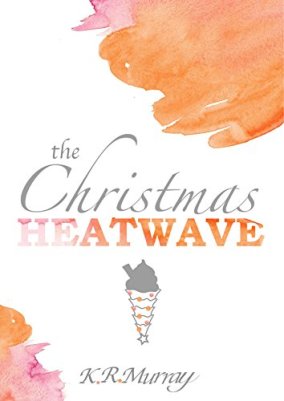
One thing I wanted to convey in the story is that the heat is this agent of benevolent mischief. I studied Ancient Greek civilisations, so I like this idea of forces working behind the scenes to bring about a twist in the fates. The cheeky splashes of orange and pink (hot colours) were meant to capture that.

And of course there’s the Christmas tree ice cream. The story is about Christmas turned on it’s head (literally in the image!) but if you look hard enough, the Christmas aspect is still there – just less obviously recognisable.

If The Christmas Heatwave became a film, who would you like to play Tom, Jessie and Olive? 

Another great question! I actually thought about this as part of my method for writing, as I find that sometimes the physicality of my characters shifted slightly depending on the parts of my imagination I was tapping into, a little like happens when you’re dreaming.

They obviously aren’t exactly the characters as I imagined, but who would best represent them? I would say:

Tom: Sam Caflin
Jessie: Anna Shaffer
Olive: Somewhere between Eileen Atkins and Julia McKenzie.

Great choices! Thank you so much for your time in answering my questions today and good luck with The Christmas Heatwave.

You can follow K.R. Murray on Twitter.

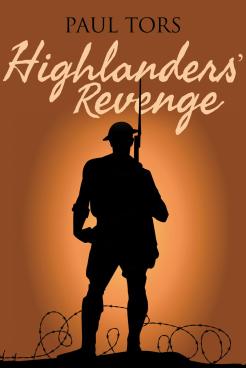
Collaborative Writing, a Guest Post by Paul Tors, authors of Highlanders’ Revenge

highlanders-revenge-high-res-cover

As an aspiring author I’m fascinated by the writing process, so I’m delighted to be welcoming collaborative writers uncle, Paul, and niece, Tors (Victoria) to Linda’s Book Bag today to tell us a little about their unusual partnership and how they came to write Highlanders’ Revenge.

Highlanders’ Revenge was published by Matador on 27th July 2016 and is available for purchase in paperback here.

Highlanders Revenge

highlanders-revenge-high-res-cover

Highlanders’ Revenge tells the story of Mash, the nickname Highland soldiers give to an Englishman in their ranks.

Scarred both from the retreat before the Blitzkrieg advance across France and from the murder of his first love, Mash has to integrate himself into a new section that is wary of the sullen and secretive ‘Mash Man’ – an outsider in their midst. Together they journey to Egypt where they encounter a way of life that tests them to their limits. Scorched by day, frozen by night and plagued by insects, they have to learn how to live and fight in the desert as they prepare for one of the greatest battles of the Second World War. They are then cast into the thick of the fighting at El Alamein and the Allies’ tumultuous battle to break through the Axis defenses…

Highlanders’ Revenge combines the fast-paced action and intrigue of a military novel with the real-life exploits of the 5th Camerons, an extraordinary unit that saw action in most of the major battles in North Africa and Western Europe. As a result, the book is both a riotous story of battle and life, and also an insight into the world of this little-known, but fierce, fighting unit. It will appeal to fans of military fiction who also appreciate historical accuracy.

Collaborative Writing

A Guest Post by Paul Tors

Beginning

Paul: I had this idea for a book about World War II, but, though I have a passion for military history, I had no idea how to write a book? Fast forward to a family wedding; my niece, Victoria (Tors), tells me she’s working as a journalist but sees her future as an author. Perfect! An agreement is reached to start work quickly and I need to provide a storyline and an outline for the book.

I start by looking at the major battles in World War Two. A name keeps coming up, the 5th Camerons, who seem to have been in every major engagement in Europe and North Africa and who have a history that is better than fiction.

The storyline and research is sent over to Tors and she likes it. We hold a brainstorming session where we come up with lots of good ideas. The next stage is for me to flesh out the military side and research various ideas. Tors is going to work on the characters and write a draft chapter.

Tors (Victoria): Paul’s suggestion to write a book came out of the blue, but I jumped at the chance. However, I wasn’t entirely sure how some aspects would work. We live a few hours away from each other, so couldn’t meet regularly. But, after one weekend of planning together, we then communicated by email and phone, which worked perfectly.

I was a bit worried about writing from a male perspective, and about a subject which is generally thought of as male interest. My favourite genres to read are crime and historical fiction, and, although military fiction is an area I’m not as familiar with, putting a character in a difficult and tense situation was something I could do. Also, I don’t believe in splitting books into male and female interests; if this were real then I’d only read Chick Lit (my least favourite genre) and the occasional celebrity biography.

Paul suggested that I base the main characters on people I knew. I drew on a group of my male friends and how they interacted; once I had them in my mind I was away.

Writing Process

Paul: We divided chapters into three groups: I’d write history or battles while Tors would take on characters and relationships. For those that had both elements, I’d have first go to give the structure and then Tors would cast some of her magic touch.

There were no arguments; if we had different ideas we’d agree to try it one way and if that didn’t work then we’d try it the other.

Tors: After writing a section it would be sent to the other to read and edit, and vice versa. This broke the writing process into more manageable pieces. We each played to our strengths; I tended to check for spelling mistakes and Paul checked the historical accuracy, but we both found that we could read through and see where parts weren’t working or needed more editing.

Editing

Paul: Then came the editing process; reading and re-reading drafts, endless editing and checking. Whilst Tors took on the bulk of it, the process took months and was undoubtedly the low part for me.

Tors: Poor Paul, I don’t think he realised how big a job editing would be! This was my area of expertise so Paul had to wait while I went through chapter after chapter and then sent him my changes. It can be time consuming and disconcerting, especially when you’re also trying to plan a wedding which I was at the time (I would take writing a novel over planning a wedding any day!), but working with the system we’d set up, we finally completed Highlanders’ Revenge.

The Finish

Tors: Completing a whole book is an amazing feeling. When the project felt too huge or difficult, I persevered as I knew Paul was relying on me and it was something that we had undertaken together. All our work was rewarded when we received our books from the printer.

Paul: Our story started with a wedding and, for now, it ends with a wedding; Tors’ wedding. I stood in the sun, champagne in hand, talking to a relative who had read the book. Even though she didn’t think it would be her sort of thing she really loved Highlanders’ Revenge. When I first thought of the book I imagined it would be for a mainly male audience; but this kind lady was repeating a message that I’ve been hearing a lot – the book appeals to a wide range of people – male and female, young and old.

About Paul Tors

Version 2

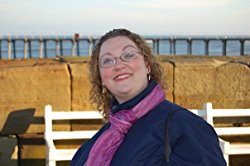
Paul Tors is the pen name of uncle and niece team Paul and Victoria Richman, who combined their skills and expertise to create Highlanders’ Revenge. Paul is a retired successful businessman whose passion is military history. Victoria is a Creative Writing graduate who works as a freelance journalist.

You can find out more by following Paul Tors on Twitter and visiting their website. You’ll also find them on Facebook.

Cross-Genre Writing, a Guest Post by Sheree Smith, author of Darkest Obsessions

darkest-obsessions

I’m delighted to welcome a new to me author, Sheree Smith, to Linda’s Book Bag today. Sheree is telling me all about her cross-genre romance thriller Dark Obsessions.

Darkest Obsessions is available for purchase in e-book and paperback from Amazon UK and Amazon US.

Darkest Obsessions

darkest-obsessions

All Sadie wanted was a normal life and when her ex-boyfriend, Matthew, was finally sent to jail she thought she could start that normal life in a little village on the Scottish Borders.

Tom, a small county veterinary had spent the last five years just surviving. A tragic accident had left him riddled with guilt. But when the beautiful Sadie Buchanan waltzed into her parents cafe, his meaning for life is questioned. Now he has to overcome his demons before he can start living again.

But Matthew has already hurt Sadie before, would he allow Sadie to have the happiness she always longed for…….

Cross-Genre Writing

A Guest Post by Sheree Smith

My name is Sheree Smith and I am the author of Darkest Obsessions, a romantic suspense set in the Scottish Borders.  Firstly a little about myself, I spent my childhood in Doncaster, UK, and then after meeting my husband in 2000 I moved to Nottingham (Robin Hood Country).  Last year, we both decided that our lives were far too stressful and so we decided to leave our jobs, sell our house in Nottingham and move to the North East of England, to a village in Northumberland with only a few hundred inhabitants – compared to the big city of Nottingham! During this time, I thought it would be the ideal opportunity to do what I’ve always dreamed of – writing a novel.

I have always loved romance novels along with the odd thriller and so Darkest Obsessions came into fruition.  It is a romance story between two people who meet up in the fictional Scottish Border village of Pelancy.  Both of them have their own issues.  Sadie has recently gone through a traumatic time with her ex-boyfriend/stalker touching on how this affects a woman and mental abuse.  Tom has feelings of guilt for the sudden death of his wife and so both of them reach for each other in their time of need.  However, things always do not go to plan and when Sadie’s past comes back to haunt her in the form of her ex, Tom and Sadie have to start to reassess what they have together.

This is my first novel and so I wanted to create a scene whereby the characters are both equally challenging yet also have some depth and humour to them.  I did not want to write a novel which would be dark and gloomy and so I’ve tried to add in a little light humour here and there and I hope you find some of their antics quite amusing.  Something which I feel always makes the story and characters more realistic. We all go through good and bad, sad and funny moments and so I tried to put this across in the story and with each of the characters.

Even so, I tried to mingle the story with enough intrigue to keep the reader guessing how the story will end.  In my book, Sadie’s ex (Matthew) returns and even though he has gone through his own torment, he is still fixated in his lost love for Sadie.  I found writing Matthew’s story the easiest; I especially liked the bitterness he portrays and the conflict he has inside.  I also particularly liked entwining the love story of Tom and Sadie, trying to make their characters as true to life as possible yet trying to make the reader also feel for them eventually bringing the love triangle to an exhilarating conclusion.

I hope you enjoy reading my book as much as I enjoyed writing it. I am currently writing my next romance novel also set around Northumberland which will be out in 2017.

About Sheree Smith

sheree-smith

Sheree Smith was born in Doncaster and lived in a small mining village called Harworth until she was 22 years old. She married her husband, Dean and moved to Nottingham where she lived for a further 15 years. They both now live in a beautiful part of Northumberland where Sheree enjoys walking, reading and of course, writing books. You can find out more by visiting Sheree’s YouTube page. You’ll also find her on Facebook.

The Importance of Place, a Guest Post by Mary Grand, author of Hidden Chapters

hidden-chapters

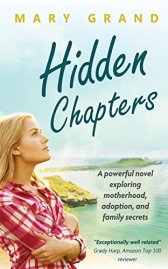
Being married to a Welshman who hails from Neath, not far from the Gower Peninsular, I’m delighted to be celebrating Wales in a guest post by Mary Grand, author of Hidden Chapters.

Hidden Chapters was published on 24th August 2016 and is available for purchase in e-book and paperback here.

Hidden Chapters

hidden-chapters

Whoever said time heals all wounds is a liar…

Haunted by the death of Aled at Worm’s Head, his sister Catrin returns to prepare the family home for sale, accompanied by her adopted Deaf daughter, Bethan. A web of lies and secrets spun by Catrin’s father slowly starts to unravel. Catrin, facing a crisis in her marriage, discovers that she must face this past if she is to heal and take control of her future.

Nobody expects to meet Bethan’s birth mother, Elizabeth, who they think is dead. Her arrival at a memorial for Aled sends shock waves through the family.

This is the beautifully told story of a family struggling with ghosts from the past.

The Importance of Place

A Guest Post by Mary Grand

“..A secret that people hug to themselves” Wynford Vaughan Thomas

This is a quote about The Gower Peninsula, the setting of my novel Hidden Chapters. It could be said of many places in Wales.

The setting of my novels is not simply a backdrop but is like an essential character, the story weaves itself around it. Wales is where I was brought up and although I now live on the Isle of Wight, it is in me, part of my DNA. It was natural for me to set my novels there.

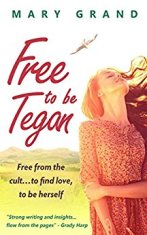
tegan

My first novel Free to Be Tegan is the story of a woman recovering from her upbringing in a psychologically abusive cult in London. The setting is the amazing Cambrian Mountains. I created a fictitious village here and the place, as much as the people, become part of her healing. This is Tegan’s initial reaction on arriving at the cottage in the mountains.

“Tegan turned and looked into the distance at the mountains painted with white gloss snow. She stepped off the track on to the grass, which felt soft and springy under her feet, and stood spellbound. Out here nature ran riot: no fences, and no boundaries. Nature adapted to survive: the daffodils were short, the trees all bent in the same direction, sculpted by the wind. In the London parks people were in control, with organised paths and borders, each tree and flower planted and preserved for a purpose.

As Tegan looked she felt an inexplicable deep feeling of sadness. It was too much freedom, too much beauty. She didn’t know what to do with it. “

Hidden Chapters, my new novel is set on Rhossili Bay, a place of stunning beauty and packed with so many myths, legends and history.  On the beach wrecks tell stories of love lorn sailors, smugglers, pirates. The name of Worm’s Head, the tidal island off the bay, originates from ‘wurm’ a Viking word meaning dragon. In my story the island is the site of the death of Aled, the brother of the central character Catrin. It becomes a symbol of the past, the hidden chapters in Catrin’s life that she wants to forget.

For the novel I created a fictitious village hidden in the downs. When she arrives Catrin has such mixed feeling about the place.

“Catrin  … turned and looked up for the first time since she had arrived… The sea air stroked her face and the sea reflected the brilliant blue sky, the sun glistening on its surface like stars. She closed her eyes, and the stifling heat of the car and her father’s harsh words were briefly blown away. She could smell the salt, the gorse, the heather. The air was filled with an undercurrent of sound, the shushing of the waves washing the line of pebbles and shells at the water’s edge way down on the beach.

 For a brief, wonderful, spellbinding, moment the place hugged her. It became real; she saw it in colour…But then she looked further into the distance, and saw it. Stretching out, cold and solitary: ‘the dragon’. She shuddered. It would always be there, silently haunting her. “

Wales has places of extraordinary beauty and a rich heritage of stories, myths and legends. I love the way people speak: even when they are speaking English their voices sing. As for the Welsh language, where else would you find words like cariad, (love, darling, sweetheart) cwtch (cuddle)?  Wales is a place where people can be chatty, intrusive and where emotions are close to the surface. It is a privilege, a gift, to set stories there.

About Mary Grand

mary-grand2

Mary Grand was born in Cardiff UK and has retained a deep love for her Welsh roots. She worked as a nursery teacher in London and later taught deaf children in Croydon and Hastings. Mary now lives on the beautiful Isle of Wight with her husband, where she walks her cocker spaniel Pepper and writes. She has two grown up children.

Free to Be Tegan (available here) was her debut novel. The second Hidden Chapters is set on the spectacular Gower Peninsula. Mary has also published a book of short stories Catching the Light (available here).

catching-the-light

You can find out more about Mary by following her on Twitter and finding her on Facebook.

Unlocking Shakespeare, a Guest Post by James Hartley, author of The Invisible Hand

book-cover

As an ex-English teacher I’m delighted to welcome James Hartley to Linda’s Book Bag today to tell me more about his brand new series of fiction for youngsters, Shakespeare’s Moon, based on Shakespeare’s plays. The first book in the series The Invisible Hand will be released in paperback by Lodestone Books on 24th February 2016 and is available for pre-order here.

The Invisible Hand

book-cover

The Invisible Hand is about a boy, Sam, who has just started life at a boarding school and finds himself able to travel back in time to medieval Scotland. There he meets a girl, Leana, who can travel to the future, and the two of them become wrapped up in events in Macbeth, the Shakespeare play, and in the daily life of the school.

The book is the first part of a series called Shakespeare´s Moon. Each book is set in the same boarding school but focuses on a different Shakespeare play.

Unlocking Shakespeare

A Guest Post by James Hartley

Just the name can be enough to make people´s eyes roll back in their heads.

Shakespeare.

Thee, thou, doth, to be or not to be, Romeo and Juliet, Macbeth, Hamlet and a weird one set in summer about a bloke with a horse´s head.

Then there are long speeches only rendered bearable by paying close attention to an actor or actress´s facial expressions and intonation. Cramped theatres. Bored teachers. Double English in stuffy rooms, praying your name isn´t called to read. Crib notes and The Globe and the plague – the list goes on.

Although many people do get Shakespeare I´ve always known there were a great number more, mostly young, forced to read the plays for exam purposes, who gave up early. The texts were too daunting, it all seemed irrelevant and, frankly, boring. Who needs that hassle?

I learned to love Shakespeare – Macbeth in particular – at school. I was taught by an enthusiastic teacher who pulled us all into the world of the play, like it or not. As this was my first experience learning Shakespeare – I was about 15 or 16, coming up to my GCSE exams – I took it for granted that´s how it would be. It wasn´t until I was taught Hamlet and King Lear at A-level that I realised how lucky I´d been to have had the teacher I´d had.

I´ve always wanted to try and pass on that energy and passion my Macbeth teacher transmitted to me all those years ago. I saw how everyone in the class, even those who scoffed and messed about until the end of the year, got a taste of what Shakespeare was serving up.

We all learned the “Come seeling night…” speech. We all acted out a scene. We all wondered what we would do if we were promised things by a seer and then, as if by magic, these things started to come true. Would we take it all in our stride or would we try and push things forwards a little? Make those dreams come true at any cost?

Magic, superstition, prophecy, murder – all these are as real now as they were over four hundred years ago. Footballers wag fingers at the sky. People feel they are destined to be together. We touch wood, we don´t like black cats crossing our paths, or walking under ladders or breaking mirrors. We have lucky clothes or routines. We visit fortune tellers. We see our lottery numbers in buses and clouds. Holy wars scar the earth.

So how could I transmit all these things I felt about the relevance of Shakespeare, and most specifically about Macbeth, to someone who might be my age, sitting in a classroom at sixteen, staring down at this strange text, wondering how he or she was ever going to understand it, let alone answer a question about it?

The answer, I decided, would be to take them inside the play. And when I´d got this idea clear, the rest fell into place. There was a boy at a school, an enchanted school where everyone, the teachers, the students and the places, had names linked to literature. There was magic connected with writing and Shakespeare. A young boy, yes, a callow youth of fifteen (who could he be based on?) was at the school and somehow became transported back to medieval Scotland. There was talk of Macbeth and Macduff. A girl appeared there and, somehow, reappeared at the modern school. Prophecies were fulfilled; Macbeth´s and the childrens´.

The response from teachers and educators to the book has been excellent and if there is one thing I wish for The Invisible Hand is that it might fall into the mitts of someone starting out on that same, slightly daunting path which everyone who opens a Shakespeare play encounters, and that it might somehow better light the way for them.

The book might be like a full moon, perhaps. A full moon above a cold, misty heath where three weird sisters appear dancing in the gloaming…

About James Hartley

dsc_4792

James was born on the Wirral, England, in 1973 on a rainy Thursday. He shares his birthday with Bono, Sid Vicious and two even nastier pieces of work, John Wilkes Booth and Mark David Chapman.

James studied journalism in London and later travelled through Ireland, France, Germany and India generally having a good time, before finally settling in Madrid, Spain, where he now lives with his wife and two young children.

James loves writing and reading – the former a compulsion, the latter a pleasure – as well as running, boxing, eating, drinking and trying to see, and enjoy, the good things in life.

You can find out more by following James on Twitter and visiting his website.

Happy Endings, a Guest Post by Portia MacIntosh, author of It’s Not You, It’s Them

its-not-you-its-them-cover

I’m thrilled to be part of the launch celebrations of It’s Not You, It’s Them by Portia MacIntosh. It’s Not You, It’s Them was published on 4th November 2016 by Harper Collins and is available for purchase here.

To celebrate It’s Not You, It’s Them I have a fabulous guest post about real life happy endings from Portia MacIntosh and a super extract from the book.

It’s Not You, It’s Them

its-not-you-its-them-cover

First comes love. Then comes family…

After a lifetime of kissing frogs, Roxie Pratt has given up on finding her own fairytale romance. That is, until she meets her very own Prince Charming, Mark Wright, and he sweeps Roxie off her feet!

So when Mark finally gets down on one knee and pops the question, there’s only one thing left to do: meet the family! And when everything has been picture-perfect so far, what could possibly go wrong…?

An Extract From It’s Not You, It’s Them

When I met my boyfriend one year ago, I couldn’t believe my luck.

You’re probably not going to believe me when I tell you this, but the way we met was like a fairy tale.

I was covering an event for work: a big, fancy-dress ball hosted by a children’s charity. I’m not much of a comic-book nerd, but the second I saw Margot Robbie dressed as Harley Quinn in the Suicide Squad movie, I knew that was who I wanted to dress up as. I pulled my long, blonde hair into pigtails before temporarily spraying the ends blue on one side, pink on the other. I watched hours of make-up tutorials so that my face was just right and then I slipped on a tight-fitting T-shirt, some hot pants and some Converse and was ready to go. I grabbed my baseball bat, brandishing it at myself in the mirror as I got ready to leave the flat, just as my flatmate Gil walked by me.

‘You’re showing your arse at a children’s charity ball?’ he said, laughing.

‘There won’t actually be any children there,’ I replied casually, making a pouty face as I snapped a photo in the mirror. But as I headed to the ball, I did worry that maybe Gil was right. Funny really, considering what a hot mess he is for a forty-something man. That’s actors for you, though.

Thankfully, when I arrived, there wasn’t a minor in sight – unless you count a guy I recognised from Game of Thrones who had, bizarrely, turned up dressed as a baby. The huge ballroom was packed with celebrities, journalists and people who worked for the charity… and then there was Mark. Mark Wright, head of PR for the charity, was the brain behind this fundraising ball, and very much the man of the hour. People were crowding around him – mostly women, I couldn’t help but notice – just to talk to him, get a quote from him, buy him a drink – or just anything, really, that would capture his attention for a few seconds.

Amid the chaos, our eyes met across a crowded room – I know, that old one – but they did. My body not having quite the same proportions as Margot’s, I was just starting to feel self-conscious in my hot pants, awkwardly pulling at them – like that was going to make them any longer – when I spotted Mark, sitting at the bar, facing out into the room, people all around him, trying to get a piece of him. He was dressed as The Joker (Heath Ledger’s portrayal, not Jared Leto’s – but that’s not important) so I smiled at him. His reaction was to applaud me, tilting his head down a little and narrowing his eyes, perfectly replicating Heath’s sarcastic clap in The Dark Knight, before turning his attention back to his audience.

Despite Mark’s temporarily messy green hair, that ghostly white face, black eyes and red, twisted smile, I could tell he was gorgeous. I don’t even think it was the usual characteristics that attracted me to him physically; it was the fact he had a smile on his face every time I looked at him (a real one, not the one painted on so he could tell everyone to ask him ‘how he got those scars’). He had kind eyes and, when he gave people his attention, I saw them light up – that’s Mark, though. With his good looks, charm and kind nature, he makes you feel like the most important person in the world when he talks to you.

Twenty seconds of attention from him and I was smitten, so I spent the rest of the night subtly following this unconventional Prince Charming around the ball, just trying to find a way to get his attention, but feeling like an unworthy Cinderella and chickening out.

Can I Have A Happy Ending?

A Guest Post by Portia MacIntosh

When I started writing It’s Not You, It’s Them, it got me thinking about a lot of things in my real life – mostly, what it means to love someone. I don’t just mean like someone a lot, I mean really, truly, cannot-live-without-them love.

In the story, Roxie finally meets her future in-laws and not only does she not get along with them, but she realises that maybe she and her fiancé want different things in life.

As I wondered how I could possibly give them a happy ending, I started to wonder if anything can actually be done to fix a situation like this.

If you love someone, but you want different things, do you need to break up?

All things considered, I decided that the answer was: no. To find someone you love, who loves you too, is such an incredible gift. Whatever problems you have, you figure them out. If my boyfriend really wanted something, I would do whatever I needed to so that I could give him whatever it took to make him happy, and I know he’d do exactly the same for me. If I didn’t get on with his family (although fortunately, I do), it would be hard luck, because if I want to be with him forever, then his family will be my family too – and you can’t choose your family, right?

I know that, no matter what the issue is, while I love my boyfriend and he loves me too, it doesn’t matter what problems we face, we’ll overcome them and we’ll make it work –  we’ll do whatever it takes to make each other happy.

That’s why, when I was writing the story, and worrying about whether or not it could have a happy ending, I realised that of course it could, because when you love someone, you make it work.

About Portia MacIntosh

Portia MacIntosh has been ‘making stuff up’ for as long as she can remember – or so she says. Whether it was blaming her siblings for that broken vase when she was growing up, blagging her way backstage during her rock chick phase or, most recently, whatever justification she can fabricate to explain away those lunchtime cocktails, Portia just loves telling tales. After years working as a music journalist, Portia decided it was time to use her powers for good and started writing novels. Taking inspiration from her experiences on tour with bands, the real struggle of dating in your twenties and just trying to survive as an adult human female generally, Portia writes about what it’s really like for women who don’t find this life stuff as easy as it seems.

You can find out more by visiting Portia’s website and finding her on Facebook and Goodreads. You can also follow her on Twitter.

its-not-you-tour-banner

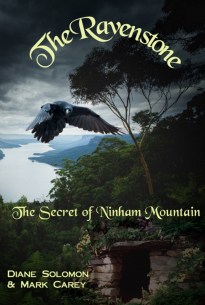
Creativity Is Its Own Reward, a Guest post by Diane Solomon, author of The Ravenstone: The Secret of Ninham Mountain

the-ravenstone-cover

When I was teaching English I was always on the look out for great books for youngsters so I’m delighted to welcome Diane Solomon to Linda’s Book Bag today to tell us about her writing, as she and Mark Carey have written a book I think those youngsters would have enjoyed – The Ravenstone: The Secret of Ninham Mountain.

The Ravenstone: The Secret of Ninham Mountain is available for purchase in e-book and paperback from your local Amazon, Barnes and Noble and Smashwords.

The Ravenstone: The Secret of Ninham Mountain

the-ravenstone-cover

Imagine a raven appearing out of thin air and guiding you to an exquisitely carved icon that glows with ancient light and pulses with shamanic power.  This is how the adventure begins for Nadia and Aidan Shaw, 13-year-old twins, who live in idyllic Cold Spring, New York. Armed with the power of the Ravenstone and their own special gifts, they embark on a harrowing quest across centuries, at the bidding of a mysterious old shaman. They must depend on their courage, their faith in their friends, and luck… or is it destiny?

If they succeed, what they bring back could change the course of human existence.

Creativity Is Its Own Reward

A Guest Post by Diane Solomon

Ah, writing fiction. Recently, I was blessed with an enchanting experience: my husband, Mark Carey, and I co-wrote and published a middle-grade fantasy/mystery entitled, The Ravenstone: The Secret of Ninham Mountain. The fiction-writing path is full of magical discovery. There are surprises, even revelations, as you let your characters drive the story, and say what they will. It is the utmost fun.

The joy of creativity drives me. It always has! I’ve been in the creative world for a long time, first singing and performing on stage and TV in the UK. Songwriting. Then screenwriting. Then non-fiction books. Now middle-grade fiction. Each genre is a learning curve; each is entirely, completely, absolutely different.

What is creativity, exactly?

Creativity is the act of innovation and imagination. When you are creative, you are able to see the world in new ways, leaving traditional ideas or patterns behind. You’re not ruled by the usual interpretations of ideas. You think outside the box.

Is that off-putting? You don’t think you can come up with something new? It has all been done? But wait – it is how things are put together that can be new. And, here is the kicker: there is only one you, so no one will do things quite as you do. You are unique, as is your way of doing things.

Being creative is often a calling. Are you compelled to create, be it art, music, poetry, fiction? Then you must do it. You must do it to fulfill your passion in life.  Without it you may feel dead, unfulfilled, trudging through the three-foot mudslog of life, day by day, without experiencing the joy of your own heart.

But, I hear you ask:“Will someone else like my artistic endeavor?” My answer: Who cares? Seriously. WHO CARES?

A few tips for artists and writers everywhere:

1) Dare to Suck – (or Dare to Fail, for those of you appalled by the vulgarity.) As a singer/songwriter, I learned early (after an ego struggle) to trust the creative process and dive deeply into it. You have to dare to be criticized, dare to be silly, dare to be crazy, to be wild. You have to Dare to Suck.

2) Give up Being a Perfectionist  – Or you will never show anyone anything. Now I know I said Who Cares, but you still want to let someone else see it! Don’t you? Maybe not… now there’s a thought.

Forget going for perfect. Go for excellent, instead.

3) Allow Your Passion to Grow and Drive You – “The more extreme and the more expressed that passion is, the more unbearable does life seem without it. It reminds us that if passion dies or is denied, we are partly dead and that soon, come what may, we will be wholly so.”  ~John Boorman (English film-maker known for feature films such as Point Blank, Deliverance, Excalibur, The Emerald Forest, Hope and Glory, and more.)

My husband calls my passion, “extreme heart.” My heart must be involved in my writing. By that, I mean the work holds powerful elements of honor, integrity, caring for others, meaning, courage, and love. The protagonists, the main characters in my fiction need to be real, to be human, with flaws, certainly, but with good hearts. (Ok, ok, yes, I am Pollyanna.)

Creative passion is that energy that pours out from your very essence, from your soul.  And, since passion gives us energy, the greater the passion, the greater the creativity.

Let it flow!

4) Do it for the Bliss of it, Nothing More – There are moments during writing where I forget myself entirely. I lose track of time and look up after a couple of hours realizing I am cold, or starving, or some other bodily demand is hollering at me.

But, what a feeling! Pure meditational creativity. The writing seems to have taken over. Sometimes you look down and are surprised by what you read, as if you didn’t, in fact, write it.  I can only describe this experience as somehow verging on transcendent, in that it feels beyond the limits of experience, or independent of this world. It is exciting, inspiring, and rewarding.

So go for it; lose yourself. And remember the old maxim: It’s the journey, not the destination.

Creativity truly is its own reward.

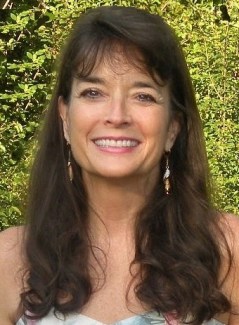
 About Diane Solomon

diane-solomon-promo

Diane Solomon, author, enjoyed a wonderfully diverse career path that included her own variety show on BBC TV in England. As a performing artist, she opened for both Glen Campbell and Kenny Rogers during major tours of England, Europe and Africa. Her highly successful singing career was destroyed by Chronic Fatigue Syndrome and the story of her recovery via a homeopathic remedy is a book in itself!

Fully recovered, she is fulfilling her lifelong dream of being a writer. She has ghostwritten and/or edited many books in the last decade.

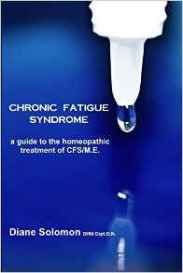
cover-2

Eloquent Rascals Publishing released Diane’s first book, Chronic Fatigue Syndrome: A guide to the homeopathic treatment of CFS/M.E., in November of 2015. This book is a best seller in Amazon’s homeopathic section. Diane is also the author of two screenplays, one of which was made in to a film in 2001, entitled Touched by a Killer.

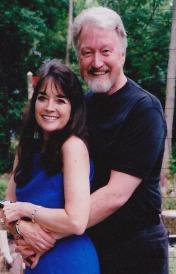
diand-solomon-mark-carey

The Ravenstone is her first novel written with Mark Carey, a retired biologist, naturalist, and accomplished voice-over artist.

You can find out more about Diane on Goodreads and by following her on Twitter. There’s more about Diane and Mark on their website.

Full Time Writer or Full Time Dad, a Guest Post by Rob Sinclair, author of Dark Fragments

dark-fragments

I love featuring authors I’ve actually met so I’m delighted to be part of the launch celebrations for Dark Fragments by Rob Sinclair as I have so enjoyed chatting with him in person. Dark Fragments is published tomorrow, 8th November 2016, by Bloodhound Books and is available for purchase in e-book and paperback here.

Today, Rob has kindly provided a guest post all about what it is like to be both a full time writer and a full time Dad and the challenges and benefits those two roles bring.

Dark Fragments

dark-fragments

Murder. Money. Revenge.

Outwardly, Ben Stephens appears to be a normal, hard-working family man. In reality, his life has been in turmoil since the murder of his wife, Alice, seven years ago. The killer was never caught.

Now re-married – to the woman he was having an affair with while still married to Alice – Ben’s life is once again spiralling out of control, and he’s become heavily indebted to an unscrupulous criminal who is baying for Ben’s blood.

When Ben’s estranged twin sister, a police detective, unexpectedly returns to his life, asking too many questions for comfort, it becomes clear that without action, Ben’s life will soon reach a crisis point from which there will be no return.

In order to avoid falling further into the mire, Ben must examine the past if he is to survive the present – but just how much pressure can one man take before he breaks?

Full Time Writer or Full Time Dad?

A Guest Post by Rob Sinclair

I often wonder to myself whether I have two full time jobs or two part time ones. Writing is certainly the only job I have which pays money, but as a stay-at-home Dad with two young sons (aged 5 and 3), it feels at times that writing is just something which fills that short period of time in between weekends and school holidays and the twice daily school runs.

Now, I’d like to make it absolutely clear that I’m not complaining about our family set-up. I feel incredibly privileged that I now get paid a very decent amount for what is essentially a hobby, and I feel even more privileged knowing how hard it was to get to this position in the first place, and how much many writers struggle to make ends meet. That’s not to say that we have an easy life, though.

Wind back just a few short years and everything was very different in the Sinclair house. My wife and I were both working full time in demanding roles for a global accountancy firm (and my wife still is). With the birth of our first, and then our second son, it was becoming increasingly difficult to manage both our workloads while also being parents. Something had to give. Luckily for me, I had a secret life, which I’d only recently revealed to my parents some time after my first son was born. My secret was that I was also a budding writer. I’d kept this only to myself and my wife for a number of years through fear of being ridiculed, and because I’d had such a hard time properly finishing my first book (Dance with the Enemy) and getting it published. Despite years of rejection from agents and publishers, knowing that my wife and I couldn’t both go on working as we were (at least not without us both sacrificing time with our children), we collectively made the decision that I’d move to part time working, mainly in order to reduce the childcare burden, but also to see if I could ignite my writing career.
dance-with-the-enemy

Whether mainly through luck or hard work or pure destiny, or a combination of all of those, my career did take off shortly after publication of my second book (Rise of the Enemy), and in summer last year I walked away from my accountancy career for good. At first I think many people felt the decision was rash, but I’d fully committed to writing in my own mind and was determined to make it work. And I think I have. My wife is now freed from having to worry about school drop-offs and pick-ups. She can work the hours she needs to, and stay away when she has an international trip without having to painstakingly check and re-arrange calendars. She can push on with her career however she chooses, without mine getting in the way.

rise-of-the-enemy

And, most importantly, I get to do what I want to do, which is write (and spend more time with the boys).

Is it perfect? No, of course not. Being a writer isn’t easy, even though I do really enjoy the craft itself. But it’s not just about writing, it’s about editing and publishing and marketing and everything else that goes into making books sell. Most importantly I treat writing as my business. It’s a real job and I sit down and work full days (during school times at least!), and many evenings too. I still put a lot of time and effort into marketing and social media and everything else that is needed, I keep my own accounts and budgets etc etc. I think its been a huge benefit that I have a business and accounting and project management background as I’ve transferred a lot of those skills into my writing career.

hunt-for-the-enemy

But, inevitably, I do get taken advantage of still, and at times it can feel like I’m only a part time writer and full-time dad and house-husband. I guess it’s only natural for house-based burdens to fall to me. I do, after all, spend the lion’s share of the week in the house! During the lengthy school holidays and on the numerous teacher training days, it’s just assumed I’ll be looking after the kids, no questions asked. When my wife’s parents can’t get over on a Wednesday to look after our youngest son (the only day he doesn’t go to pre-school), it’s again just assumed I can drop my writing and whatever else I had planned and look after him, however impromptu it may be, and regardless of what writing I would otherwise have been doing.

On the flip side, though, I’m my own boss, which is perfect for a control freak like me. I hate being answerable to other people, and there’s nothing to stop me from taking time off whenever I want. If I’m feeling tired or just not in the mood, I’ll have a day watching movies, or go and play golf, or do a spot of gardening, or read a book, and I never feel bad about that because I always make sure I don’t let my writing slip. There aren’t many jobs where you could get away with doing that. Yes the competing demands I face can be tiresome, but for the sheer flexibility of it, I’m really not sure there’s another job out there that’s more suited for me. And you know what? Having been on the other side, stuck in offices day in, day out, I know now that writing is the only job I ever want.

About Rob Sinclair

rob-sinclair

Rob is the author of the critically acclaimed and bestselling Enemy series of espionage thrillers featuring embattled agent Carl Logan.

His explosive debut, Dance with the Enemy, was published in 2014 and introduced the world to the enigmatic Carl Logan. The second novel in the series, Rise of the Enemy, was released in April 2015, with the third, Hunt for the Enemy, being released in February 2016. The Enemy series has received widespread critical acclaim with many reviewers and readers having likened Rob’s work to authors at the very top of the genre, including Lee Child and Vince Flynn.

Rob’s latest novel, the pulsating psychological thriller Dark Fragments, released by Bloodhound Books in November 2016, has been described as ‘clever’ and ‘chilling’ and an ‘expertly crafted’ story.

Rob began writing in 2009 following a promise to his wife, an avid reader, that he could pen a ‘can’t put down’ thriller. He worked for nearly 13 years for a global accounting firm after graduating from The University of Nottingham in 2002, specialising in forensic fraud investigations at both national and international levels. Rob now writes full time.

Originally from the North East of England, Rob has lived and worked in a number of fast paced cities, including New York, and is now settled in the West Midlands with his wife and young sons.

You can follow Rob on Twitter, visit his website and find him on Facebook.

dark-frag-flyer

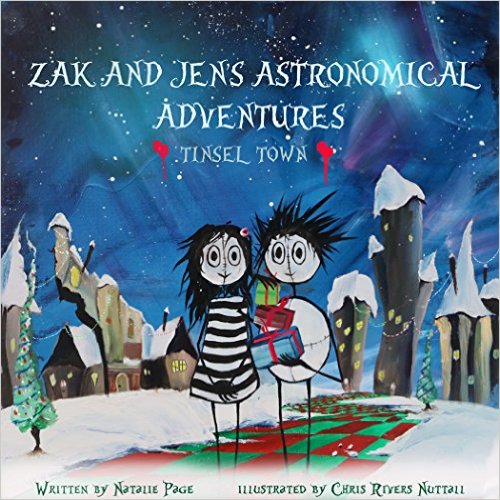
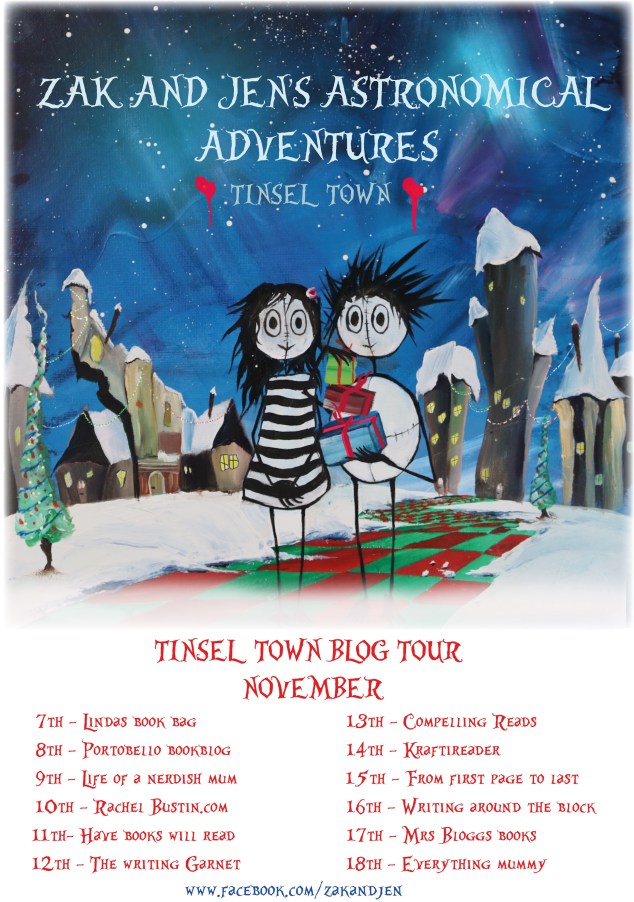
Zak and Jen’s Astronomical Adventure, Tinsel Town, by Natalie Page and illustrated by Chris Rivers Nuttall

cover

Having loved the first of Zak and Jen’s Astronomical Adventures, The Petal Planet by Natalie Page with illustrations by Chris Rivers Nuttall (my review of which you can read here), I’m delighted to be starting off the launch celebrations of the second book in the series Zak and Jen’s Astronomical Adventures, Tinsel Town. Zak and Jen’s Astronomical Adventures, Tinsel Town is available for purchase in paperback here.

Today I have a lovely guest post from Natalie all about her favourite Christmas stories and I have my review of Zak and Jen’s Astronomical Adventures, Tinsel Town too.

Zak and Jen’s Astronomical Adventures, Tinsel Town

cover

Best friends Zak and Jen love exploring space using their magic umbrellas.

This time, they find a Christmas themed planet, but there is one thing missing, the inhabitants!

Join the characters as they make some festive friends, and realise how important it is to appreciate every day. Tinsel Town is written for children over five years old, however, younger children will also enjoy the rhythm of the story and its festive theme.

My Favourite Christmas Story

A Guest Post by Natalie Page

I am so delighted to have the chance to write a piece for Linda’s Book Bag. Linda was kind enough to review my debut children’s book and I am so pleased that she agreed to review my second!

So, in the spirit of Christmas, I wanted to take some time to share my favourite Christmas stories with you. Aside from the original nativity story, I have two favourite Christmas stories. The first is A Christmas Carol by the great Charles Dickens and the second is Little Women by Louisa May Alcott.

The reason I love both these tales is because I am a bit of a traditionalist at heart and both choices also stem from childhood memories. When I was a young girl, I read Little Women and I instantly fell in love with the coming of age story. I always saw myself as a combination of the responsible Meg and the feisty Jo. Then, when I was older, my family and I used to watch a film adaptation of the book starring Elizabeth Taylor and Janet Leigh. It was perfect comfort viewing and I often went back to the book as a result. In fact, now is probably the first time in years that I don’t actually own a copy!

There are several reasons why I love this story so much, and if you haven’t had the chance to read it, I strongly recommend you do so. The book is set in America at the time of the civil war and tells the story of four sisters and their progression into adulthood.  The strong family bond that exists within the March family is the thing that attracted me to the story initially as it was something I share with my own family. Similarly, the closeness of the sisters was something I shared with my own sister although at the time I do recall thinking that 3 sisters would have been a couple too many! Finally, I loved the characters. In particular, I really related to Jo’s desire to be a writer. Jo was so full of determination and guts, she struck out on her own and I really admired her for doing that. Fast forward a few years and I would never have thought I would be able to say I had published two books, but there you go!

My second choice, A Christmas Carol, is a Christmas classic. Who doesn’t love a little Christmas ghost story? I am a big fan of Dickens in general, but I particularly love how the ghosts of Christmas past, present and future coach Ebenezer Scrooge into a softer existence. I think it does us all good now and again to take a little time to reflect on our actions and how what we do affects others. I have often wondered what I would be shown if the three ghosts came to visit me, which is an intriguing and yet also slightly unnerving idea!

So there you go, these are my favourite Christmas stories, perhaps a little traditional, but for that reason they will always have a special place in my memory and they are certainly ones I will be sharing with my daughter as she grows!

My Review of Zak and Jen’s Astronomical Adventures, Tinsel Town

11-jpeg-small

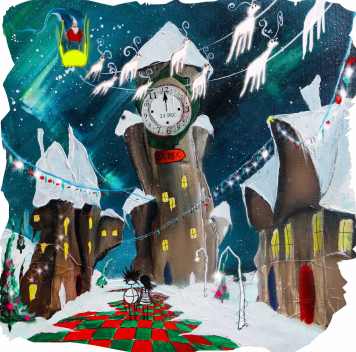
It’s Christmas Eve night and Zak and Jen are off on an adventure, but the town they find is empty.

It’s always a nervous moment when you’ve loved a book and a second comes along from the same author. Will you love it just as much? I don’t. I like it more!

Natalie Page seems to have settled into a glorious relationship with Zak and Jen so that there’s a natural feel to the story. As with the first book, The Petal Planet, Tinsel Town has a clever and organic rhyme scheme and some lovely new words like ‘befuddled’ for children to increase their vocabulary, but at the heart of the book is a sense of adventure and wonderment at Christmas time which makes it a glorious story to share with a child.

The importance of friends and family at Christmas is explored so that children can appreciate what they have, and the importance of that appreciation is stressed in the ending of the story.

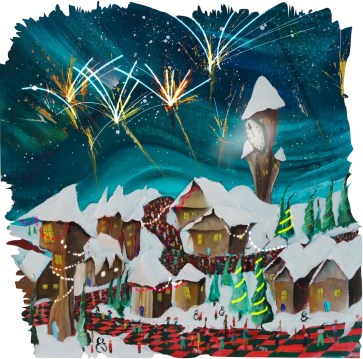
A further element that I find so fabulous about the Zak and Jen books is the quality of the illustration. I can imagine discussing the images with children, looking for clues about Christmas, thinking about time, wondering what’s happening in the sky and generally enjoying the artwork. It complements the narrative perfectly.

12-jpeg-small

If you haven’t discovered Zak and Jen with your younger relatives yet, I’d urge you to do so. I’m sharing my copy with my 5 year old great-nephew very soon and I know he’ll love it.

About Natalie Page

Natalie lives in the New Forest with her husband and daughter. She loves the freedom and creativity that comes with writing and enjoys nothing more than penning short stories and poems to entertain friends and family.

You can follow Natalie Page on Twitter and there is a Zak and Jen Twitter account too here. You can also visit the Zak and Jen Facebook page here.

About Chris Rivers Nuttall

Chris Rivers Nuttall is a professional drummer for the rock band Heavens Basement. He started painting while travelling the world with the band, needing something to do on the long journeys. He now paints from his home studio in a variety of styles, which often have a surrealistic theme.

There’s more with these other bloggers too:

blog-tour-advert