Norway, An Authentic Setting, a Guest Post by Adrian Hyde, author of Kingmaker

kingmaker-cover

It gives me great pleasure to welcome Adrian Hyde to Linda’s Book Bag today. Adrian’s novel Kingmaker was published by Three Assassins Press on 27th September 2016 and is available for purchase in e-book and paperback here. Kingmaker is set in Norway, a country I’m desperate to visit, so I asked Adrian to tell me more about why he chose this particular setting for his writing.

Kingmaker

kingmaker-cover

Kingmaker: A Harry King Thriller

Wealth. Power. Glory. Revenge.

When the world is against you, who do you trust?

April 1940. Norway has fallen under the Nazi Blitzkrieg. Only a small British force now stands between Hitler’s SS and the ultimate prize…

Lieutenant Harry King is in trouble again. Haunted by his past and consumed by alcohol, he is saved from his fate by a mysterious senior officer. When he is sent on a seemingly simple errand, he stumbles into a conspiracy that could change the course of the war.

Dragged into a hair-raising world of murder, mystery and betrayal, King must choose between his duty, love and revenge. In a heart-pounding race across the frozen tundra, mountains and fjords, can he survive against the odds and uncover the traitor at the heart of his world?

Norway, An Authentic Setting

A Guest Post by Adrian Hyde

When I started to write my book, Kingmaker: A Harry King Thriller, I wanted to write a mainstream thriller (as that is what I mostly love reading at the moment), but as a new author I knew that I needed something different so I decided to set it in Norway at the start of World War 2. I was unsure about this at first as I know that the typical “military” books reader is very different from the more mainstream thriller reader, so I had to make sure that the background supported the main plot, rather than the other way around. It must have worked because lots of readers have already said how much they enjoyed reading Kingmaker and were surprised at how unlike a traditional “war story” it is. I think the landscape really helped me to achieve my target.

So why did I choose Nazi-controlled Norway in 1940? Well, firstly, I have always been fascinated by the war – as were most boys of my age, growing up in the nineteen-eighties surrounded by war movies on the television at Christmas, and this was increased by tales of my father’s own military experience in the fifties. As a result of this, history has always been a passion of mine, so over the years I started to read more about both World Wars in order to better understand what happened. I was particularly drawn to those events that didn’t go as planned and were consequently swept under the carpet by history and establishment alike. The British failure to stop Hitler’s invasion of Norway was largely ignored and overlooked by Britain at the time, desperate to focus instead on the miracle of Dunkirk and the success of the Battle of Britain. Despite this, I felt it was a fascinating story of bravery and plucky resistance against overwhelming odds, and I decided to use this reflection of my similarly confused, misunderstood and underestimated protagonist. Harry King is a British Lieutenant with a haunted past and a drinking problem despite his responsibility. He is falling to pieces but nobody wants to listen, mainly because the world was far less understanding of mental health issues at that time and King’s torment is lost in a sea of old-school authority and the British stiff upper lip. As part of the joy of discovering and developing King, I wanted to see how he coped under pressure by placing him out of his depth in a foreign country, and then throwing him in at the deep-end by dragging him into a world of conspiracy, murder and treason. Despite his many problems and imperfections, King is surprisingly resilient and heroic, and wins through in the end by forgiving himself and gaining redemption. The frozen landscape helped cleanse him of his past and give him a clearer vista of his future.

Secondly, the stark, barren winter landscape of Norway in the early spring has a mythical, surreal quality to it that offers a stark contrast to the usual depictions of the chaos of war. It felt refreshing to use the snow-covered valleys, mountains and fjords as a character of their own, no less deadly than the man-made weapons carried by King’s enemies. He feels isolated at first, a theme echoed in the silent landscape, and his own pain begins to thaw as the snows also finally start to recede and he uncovers his past. There was also a timeless purity of the still wintry landscape that even the horrors of war couldn’t sully, and I found that King had much in common with this as he initially seems as hard as the mountains themselves, but then he shows a hidden warmth and humanity that is only unlocked as his feisty local companion Anja helps him to face his demons and find love again. I felt that it was important to include a strong female character, as too many books set in this period tend to forget that the vital role that women played in winning the war.

And finally, I also loved the landscape because it conjures-up another, almost magical dimension with its mythology of ancient kings, lost treasure and dark secrets that nicely overlapped the background narrative of the later war. The more that I read about the Norwegian side of the story, the more I just fell in love with the country and I knew that had to try to write something worthy of those unlucky few who were there at the time and faced death in Norway’s magical scenery. I hope that people will enjoy reading Kingmaker as much as I enjoyed writing it.

About Adrian Hyde

adrian-hyde

Adrian Hyde is a thriller writer, history nut and citizen of the world. He was born in the city of Derby, England in 1975, the son of an ex-soldier. He grew up on the doorstep of the beautiful Derbyshire Peak District, and his father’s military service and an interest in local history inspired him to write from an early age.

Educated in Derby and Heanor, he studied Politics at the University of Reading, Berkshire. Adrian then had a successful career in sales, marketing and product management, mainly in heavy engineering and construction equipment companies, where he travelled extensively throughout the world.

All this was to change when his wife was diagnosed with dementia, and Adrian became a full-time single parent and carer, however the experience spurred him on to return to writing full-time. He still loves Derbyshire but now lives in Burbage in neighbouring Leicestershire with his two children and Ben the Labrador. His first novel – Kingmaker: A Harry King Thriller – was published by Three Assassins Press in September 2016. He is currently working on the sequel.

You’ll find Adrian on Facebook. You can follow him on Twitter and visit his website.

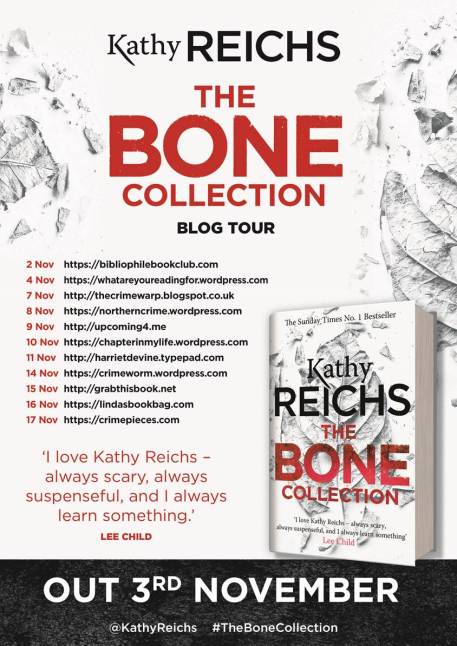
UK Giveaway of The Bone Collection by Kathy Reichs

kr1

I’m thrilled to be part of the launch celebrations of The Bone Collection by Kathy Reichs. The Bone Collection was published on 3rd November 2016 by William Heinemann, an imprint of Penguin, and draws together four novellas featuring Temperance Brennan. The Bone Collection is available for purchase in e-book and hardback by following the links here.

To celebrate this month’s publication I have three hardbacked copies of The Bone Collection to give away to UK readers lower down this blog post.

The Bone Collection

kr1

A collection of chilling tales featuring forensic anthropologist Temperance Brennan – including the untold story of her first case.

The No.1 Sunday Times bestselling author Kathy Reichs is renowned for suspense and fascinating forensic detail. Now she brings that same artistry to her first volume of collected short stories.

In First Bones, a prequel to Reichs’s very first novel, Déjà Dead, she at last reveals how Tempe became a forensic anthropologist. In this never-before-published story, Tempe recalls the case that lured her from a promising career in academia into the grim but addictive world of criminal investigation.

Three more stories take Tempe from the low country of the Florida Everglades, where she makes a grisly discovery in the stomach of an eighteen-foot Burmese python, to the heights of Mount Everest, where a frozen corpse is unearthed.

Giveaway

kr1

(Open in the UK only. Giveaway closes at UK midnight on Wednesday 23rd November 2016.)

For your chance to enter to win one of three hard-backed copies of The Bone Collection by Kathy Reichs, click here.

About Kathy Reichs

kathy

From teaching FBI agents how to detect and recover human remains, to separating and identifying commingled body parts in her Montreal lab, as one of only seventy-seven forensic anthropologists ever certified by the American Board of Forensic Anthropology, Dr Kathy Reichs has brought her own dramatic work experience to her mesmerising forensic thrillers. For years she consulted to the Office of the Chief Medical Examiner in North Carolina, and continues to do so for the Laboratoire de Sciences Judiciaires et de Médecine Légale for the province of Québec.

Kathy Reichs has travelled to Rwanda to testify at the UN Tribunal on Genocide, and helped exhume a mass grave in Guatemala. As part of her work at JPAC she aided in the identification of war dead from World War II, Korea, and Southeast Asia. Kathy Reichs has served on the Board of Directors and as Vice President of the American Academy of Forensic Sciences, and is currently a member of the National Police Services Advisory Board in Canada. She is a Professor in the Department of Anthropology at the University of North Carolina at Charlotte.

A native of Chicago, she now divides her time between Charlotte and Montreal. Kathy Reichs’s first novel Déjà Dead catapulted her to fame when it became a New York Times bestseller, a Sunday Times bestseller and won the 1997 Ellis Award for Best First Novel. All eleven of her novels have been international bestsellers. She is also a producer of the chilling hit TV series Bones. 206 Bones is her twelfth novel featuring Dr Temperance Brennan.

You can follow Kathy on Twitter, visit her website and find her on Facebook.

There’s more with these other bloggers too:

blog-tour-poster

Tall Oaks by Chris Whitaker

tall-oaks

My enormous thanks to Emily Burns at Twenty7, an imprint of Bonnier Zaffre Publishing, for a copy of Tall Oaks by Chris Whitaker in return for an honest review. Tall Oaks was published on 8th September 2016 and is available for purchase in e-book and paperback here.

Tall Oaks

tall-oaks

When three-year-old Harry goes missing, the whole of America turns its attention to one small town.

Everyone is eager to help. Everyone is a suspect.

Desperate mother Jess, whose grief is driving her to extreme measures.

Newcomer Jared, with an easy charm and a string of broken hearts in his wake.

Photographer Jerry, who’s determined to break away from his controlling mother once and for all.

And, investigating them all, a police chief with a hidden obsession of his own . . .

In Chris Whitaker’s brilliant and original debut novel, missing persons, secret identities and dangerous lies abound in a town as idiosyncratic as its inhabitants.

My Review of Tall Oaks

Three year old Harry has been abducted and the Tall Oaks community will never be the same again as the search for him continues.

Difficult times recently mean I’m way behind with my reviews and I’m extremely late to the Tall Oaks party. However, it was certainly worth the wait.

I’m always sceptical of the publicity claims about debut novels and when Tall Oaks was proclaimed to be for fans of Twin Peaks and Fargo, both of which I loved, my initial reaction was ‘Yeah, right!’ How wrong could I be? Tall Oaks is indeed the perfect literary embodiment of quirkiness, humour and emotion in a dynamic and entertaining read. I thought it was brilliant.

Firstly, the iterative image of heat and pressure, that runs throughout the text, impressively builds to the climax so that the reader experiences the oppression and tension that so many of the characters endure. I thought Chris Whitaker’s writing style was masterful. The balance of longer paragraphs with utterly shocking short sentences gave an impact I won’t forget in a hurry. I found myself laughing aloud, gasping and even crying as I read.

There’s also quite a cinematic feeling to the narrative. Lots of sharp changes of scene with fabulous dialogue mean I can easily see Tall Oaks as a gripping television series.

I thought the characterisation was a triumph. I was surprised by some of the fabulously handled revelations about many of the people who inhabit the small American town of Tall Oaks. Teenager Manny, in particular, is sensational and he provides the perfect foil to some of the darker passages. Be warned, though, if you don’t like profanities, as Manny loves them! Every emotion, every obsession, every secret possible lurks beneath the characters of Chris Whitaker’s intense tapestry of life. I can’t think of a single person in Tall Oaks who didn’t add depth and enjoyment to the experience of reading the book – and it is an experience and not just an entertaining read. I’ve finished it feeling I know a little more about humanity as a result. Tall Oaks has everything – wit, empathy, mystery and a cast of people so real I feel I know each one in person.

There’s only one negative about reading Tall Oaks and that is that I feel my understanding of it probably hasn’t done it justice. I need to go back and read it again, looking for more clues and appreciating the wonderful quality of the writing still further. It’s a fantastic read and I feel privileged to have had the experience.

About Chris Whitaker

chris

Chris Whitaker was born in London and spent ten years working as a financial trader in the city. When not writing he enjoys football, boxing, and anything else that distracts him from his wife and two young sons. Tall Oaks is his first novel.

You can find Chris on Twitter.

Out of Season, a Guest Post by Maxine Morrey, author of The Christmas Project

the-christmas-project_final

I recently took part in a discussion about Christmas books where some readers thought they shouldn’t be read before December as it isn’t Christmas season. I don’t agree – I don’t avoid settings in a country because I haven’t visited them, books with murders because I’m not a murderer or books with male protagonists because I’m not a man so why would I avoid reading books about Christmas simply because it isn’t the season? As Maxine Morrey’s latest novel is The Christmas Project, I invited Maxine onto Linda’s Book Bag to tell me her opinions of reading out of season and you can see what she thinks below.

The Christmas Project was published on 14th November 2016 and is available for purchase in e-book here.

The Christmas Project

the-christmas-project_final

Christmas in the city has never been more magical!

Professional organiser Kate Stone has never – NEVER – been tempted to hit a client over the head with a snow shovel, but Michael O’Farrell is the most obnoxious – and heart-stoppingly gorgeous – man she has ever met. If he weren’t her best friend’s brother, she would not have waited on his doorstep in the freezing cold for five minutes, let alone an hour.

Kate knows, however, that her job isn’t just about tidying up, sometimes she needs to be part therapist too, and Michael clearly needs her help to declutter his heart as well as his home.

But with the festive season just around the corner there isn’t much time to get Michael’s house ready for the O’Farrell family celebrations, but everyone knows that at Christmas anything can happen…

Out of Season

A Guest Post by Maxine Morrey

Like it or not, Christmas is coming, and with it a whole host of books that feature the festive season. Christmas in publishing tends to start making itself known around September and this seems to cause a mix of reactions; on one side of the fence there are those who literally cannot wait to dive into the literary equivalent of the biggest tub of Cadbury’s Roses you ever did see, and on the other are the readers who can’t even entertain the idea of reading a ‘Christmas’ book outside a certain time period, say – the month of December.

Both of these views are, of course, absolutely valid. Reading is a pursuit that is supposed to bring joy and relaxation and there are no rules. It’s totally up to you – that’s the great thing about it. But, as both my books with Carina/HQ have been set around Christmas, I’ve been asked to put forward the case for reading festive fiction at any time.

When it comes to it, the main reason we read a book is for the story. We want to be pulled in and connect with the characters, feel what they’re feeling, and see – in our mind’s eye – what they’re seeing, even if it is a fully bedecked Christmas tree whilst we’re sat in the garden on a warm summer’s eve.

What’s good to remember is that, for many books that fall into this category, Christmas itself might literally only be a few pages so it’s not like you’re always being hit over the head with roast turkey and all the trimmings. It’s just a backdrop. A wintery backdrop, I grant you. But it’s the people in front of that backdrop that we get wrapped up in – pun fully intended – not the decoration.

Having said that, there are some books that are full on glitter cannons of Christmassy goodness and if you are someone who’s currently reluctant to step into the festive world before the first of December, these could at first glance, seem a little overwhelming when you’re just making your first tentative steps into this new and exciting reading way of life. And if that’s the case, do not worry! Just build up to these and surround yourself with their loveliness once you’ve got the tree up and are closer to full Christmas immersion. Alternatively, you could do the equivalent of cannonballing into a freezing cold swimming pool and just launch yourself in with one of these from the start!

The fact is, we don’t tend to avoid ‘summer’ books in the winter, or books set in a country other than the one we’re reading it in, and we still enjoy them. It’s also a fact that there are a whole bunch of wonderful ‘Christmas’ books published every year and it’s pretty much impossible to devour as many as one would like to if the reading period is a relatively short one, not to mention that it’s a period that often has plenty of other time demands upon it.

So this year, be brave and dive in early! You won’t regret it!

About Maxine Morrey

maxine-morrey-bio-pic-bw

Maxine has wanted to be a writer for as long as she can remember and wrote her first (very short) book for school when she was ten. Coming in first, she won a handful of book tokens – perfect for a bookworm!

As years went by, she continued to write, but ‘normal’ work often got in the way. She has written articles on a variety of subjects, as well as a book on Brighton for a Local History publisher. However, novels are what she loves writing the most. After self publishing her first novel when a contract fell through, thanks to the recession, she continued to look for opportunities.

winter

In August 2015, she won Harper Collins/Carina UK’s ‘Write Christmas’ competition with her romantic comedy, Winter’s Fairytale.

Maxine lives on the south coast of England, and when not wrangling with words, can be found tackling her To Be Read pile, sewing, listening to podcasts, and walking.

You can find Maxine on Twitter, Facebook, Instagram and Pinterest. You can also visit her website.
Adult Themes and Humour in Fiction, a Publication Day Guest Post by Sharn Hutton, author of It’s Killing Jerry

its-killing-jerry-cover

One genre I don’t often read is the comedy thriller so I am delighted to be finding out a bit more about it today from Sharn Hutton, author of It’s Killing Jerry. It’s Killing Jerry is published today, 15th November 2016 and is available for purchase in e-book here.

It’s Killing Jerry

its-killing-jerry-cover

Fantasist, push-over and all-round crap father: Jeremy Adler’s an inspiration. For scandal, treachery and blackmail.

Fleeced by his ex-wife, oppressed by a narcissist boss and ridden over rough-shod by a two month old infant, Jerry might have thought he’d been keeping the peace but, the tide of resentment is turning against him.

Fighting for his job, control of the bank statement and, ultimately, his life, Jerry’s got problems and they’re about to get a whole lot worse.

Breakdowns and break-ups, manipulation and thievery, green-eyed phoneys and unscrupulous deals. Pretending to be someone else just won’t cut it this time and featuring on the late evening news as: missing, presumed murdered, is just the beginning.

With adult themes, It’s Killing Jerry is the head-hopping tale of Jerry’s desperately funny demise.

Adult Themes and Humour in Fiction:

the Challenge of a Comedy Thriller

A Guest Post by Sharn Hutton

One of the great things about Amazon is that you can drill down through the thousands upon thousands of books to find just the kind you enjoy. Your virtual bookshelf can be narrowed down to paranormal meets Jane Austin in a matter of two clicks, if your heart desires. That kind of niche might take some time to find in a real world bookstore. The genre pigeon-holes are undoubtedly a time saving boon, but sometimes a novel just won’t fit into one spot so easily.

This I discovered when trying to decide upon the right ‘shelf’ for my first novel It’s Killing Jerry. In the end I went for ‘Comedy Thriller’, which seems like an odd pairing when you first hear it but, the more I think about it the more those two terms sit happily together.

Consider when your hilarious spouse jumps out on you from behind the bedroom door – terror and shock are quickly replaced with laughter (along with a punch in the chops for the husband) and when the passengers of a rollercoaster disembark, wobbly on their feet with adrenalin, there’s no shortage of laughter while hands are clutched to wildly beating hearts. Thrills and laughter go hand in hand.

Who’s funny now?

Humour can be elusive and often it’s the ‘Cringe Factor’ or the vicarious ‘You’ve been Framed’ style delight in another’s misfortune that tickles the funny bone. I’ll give you a real life example.

A summer or two ago I remember watching the husband create a teetering pile from our wheel barrow, grow-bags and a selection of odds and sods at the bottom of the garden, which he then proceeded to climbed on top of. He was attempting to get himself up onto the fence to capture some toy or another that had been tossed high in a tree by a now crying child.

I saw him doing this from afar and thought to myself: This is should be interesting, there’s no way that’s going to hold. Might be worth a touch of recording...

And with that in mind I pulled my phone from my pocket to point at said hapless husband, waiting for the inevitable and thinking of the two hundred and fifty quid which was all but mine. That’s when I noticed that my Mother-in-law was also watching. Not the husband, but me and from the look on her face it was fairly obvious that she felt I should have been down the garden, warning him against the perils of what he was attempting, rather than trying to capture it for my own hilarity and possible financial gain. Ah yes, quite so. That’s the cringe moment right there. The humour wasn’t where I’d expected it to be at all – it was in me getting caught and shamed. BAD wife. Oh dear.

Thrilled or Horrified?

To my mind, a reader who likes a bit of comedy in their stories is unlikely to also want extreme horror, which can be the way some thrillers lean. An adult book has other possibilities for thrills: sex, drugs, power struggles and dirty dealing. And I’m not talking ‘Dallas’ style drama here (giving away my age a bit there with an 80’s reference) but genuine real life stuff. After all, it’s difficult to relate to JR’s disappointment in a short lived oil strike, whilst the mind numbing drudgery of early parenthood is much easier to grasp for most of us.

Scenarios from real life provide great opportunities for humour because we recognise them and have experienced something similar ourselves. You can feel the characters pain, so that’s how I’ve tried to write, with the experience of being an ordinary person in mind. The story of a comedy thriller, to me, is driven by the characters themselves. It hinges upon the choices they make, acting for what seems to be the best at the time, only to discover later that their decision had dire consequences.

About Sharn Hutton

sharn-hutton-selfie

Sharn Hutton scuttled along in the rat race with everyone else, until the advent of babies provided an excellent excuse not to go back to the office. It turned out that ‘giving up work’ wasn’t really that at all. In fact, career motherhood had just as many challenges and disappointments as the corporate world, only the pay was much, much worse. That’s when the idea for a story was born.

Now writing from home in Hertfordshire, she wouldn’t trade her tiny writing room at the back of the house for the fanciest of corner offices. Apart from anything else, where would the dog’s bed go?

It’s Killing Jerry is her first novel and she’s expecting many more to come. (Books that is, not babies. Definitely not babies.)

You can find out more by following Sharn on Twitter and visiting her website.

Isabella’s Adventures in Numberland by Peta Rainford

cover

I’m incredibly grateful to Peta Rainford for a copy of Isabella’s Adventures in Numberland in return for an honest review. Isabella’s Adventures in Numberland is published today, 14th November 2016, and is available for purchase from all good book sellers and from Amazon.

Isabella’s Adventures in Numberland

cover

Isabella is back for her second adventure!

In this colourful, rhyming picture book, the accident-prone little witch falls through a hole in the ground and lands in Numberland – a place where nothing quite adds up (because all the numbers have disappeared!)

She makes new friends, encounters an old enemy and, though the odds are against her, finally saves the day. YOU CAN COUNT ON ISABELLA!

Readers of Lewis Carroll’s Alice’s Adventures in Wonderland will see some parallels between Isabella’s Adventures in Numberland and that wonderful, crazy children’s classic.

Fans of Isabella, Rotten Speller will also love Isabella’s Adventures in Numberland. Peta Rainford has created a book that buzzes with vibrant, amusing pictures and interesting, funny, rhyming words. This book will encourage young children to think about the importance of numbers and how numbers are used in our everyday lives, while at the same time being very, very silly! A useful tool for parents and teachers and a fun story for early readers and younger children who enjoy being read to.

My Review of Isabella’s Adventures in Numberland

When Isabella falls into Numberand, something isn’t quite right – all the numbers have disappeared.

What a smashing children’s book Isabella’s Adventures in Numberland is.

I have to comment immediately on the quality of the illustrations. They are actually quite childlike and naive in style so that I think they will appeal to children instantly. There is plenty of colour and a lovely range of creatures from bugs to a dodo, giving lots of discussion points for parents and teachers to share with youngsters.

I really liked the way in which Isabella is a strong female and able to look after herself whilst making new friends – such important messages for children. Similarly, the story has a great plot with Isabella encountering evil that is outwitted by thinking, rather than force, so that children receive their happy ending, and positivity is rewarded.

The focus on rhyme within the narrative, and number as a central point to the plot, gives huge potential to enhance children’s literacy and numeracy whilst enjoying a super story in its own right. I also really liked the nods to Lewis Carroll through the white rabbit, playing cards, the tea party and the idea of being late and even to Macbeth with the cauldron and spells. This would be a lovely way in to sharing classic stories with children later. Similarly, other aspects could be developed beyond the simple enjoyment of a story well told. Cooking and measuring could be turned into games as a result of reading Isabella’s Adventures in Numberland and I think it’s a super book for children aged around 3-6. I really recommend it.

About Peta Rainford

peta-2

Peta grew up on the Isle of Wight so long ago she can remember buying crisps from the school  tuck shop for 2½p. As a child she loved words, and loved drawing too, but she had no idea what she wanted to do when she grew up. She studied English at York University and then worked in London as a business journalist and editor for 14 years. She went to art classes and even studied fine art at St Martins, but she still had no idea what she wanted to do when she grew up.

Peta moved back to the Isle of Wight in 2006, and it was here that Peta, now balancing the roles of freelance writer and mum, decided to write and illustrate her first book for children. It was a revelation: a way of combining picture making with her love of words – not to mention an outlet for her awful jokes. It may have taken more than four decades, but finally, Peta knows what she wants to do when she grows up.

You can find out more by following Peta on Twitter and visiting her website.

A South African Setting by Miranda Sherry, author of Bone Meal for Roses

bone-meal-for-roses

Regular readers of Linda’s Book Bag know how much I love travel and Africa in particular fascinates me. Just over a year ago I visited South Africa so I’m delighted to welcome Miranda Sherry to the blog today as her book, Bone Meal for Roses, is set there.

Bone Meal for Roses was published by Head of Zeus on 8th September 2016 and is available for purchase in e-book and hardback here.

Bone Meal for Roses

bone-meal-for-roses

A bittersweet, gorgeously written novel about a young girl with an abusive past growing up in the majestic landscape of South Africa.

Her mother destroyed her. The garden saved her.

Poppy was six years old when she was rescued from her abusive mother and taken to her grandparents’ farm to recover. There, under a wide South African sky, Poppy succumbs to the magic of their garden. Slowly, her memories fade and her wounds begin to heal.

But as Poppy grows up into a strange, fierce and beautiful young woman, her childhood memories start to surface. And then a love affair with a troubled older man explodes her world…

This is a lush, lyrical, bittersweet story about growing up, finding peace, and laying your ghosts to rest.

Setting A Story In South Africa

A Guest Post by Miranda Sherry

South Africa is a BIG country. For a kickoff, it’s geographically big. You can fit the UK inside it. Five times. As a result, it’s also pretty big in terms of climate: we have tropical, humid jungle-y stuff on one coast, arid desert and icy seas on the other, and a varied collection of mountains, gorges, forests, cities, farmlands and savannahs all hanging about in the middle (complete with some pretty big animals loping around and munching on the scenery).

South Africa, too, of course, is big in history (most of it ugly), big in controversy and political upheaval, and big in heart – its massive pulse driven by the hope of its human inhabitants, all trying to do the best they can.

With all this banging on about how ‘big’ the place is, it might strike you as odd that the story I’ve recently set here is really rather small. Bone Meal for Roses is an intimate tale, a gradual, sensual exploration of what it means to feel small in a big world, and how impossible it is to remain small when circumstances force you to find your strength.

Despite there being so many rich and diverse South African locations to pick from, so many moods and weathers to contain the story I wanted to tell, picking the spot was a no-brainer…

The Breede Valley, in South Africa’s Western Cape, is the perfect setting for a story about a child who is half-wild with neglect when the book begins, and then grows up with little real understanding of the world beyond the mountains. This story required isolation in terms of its setting. It wasn’t a tale about big important issues, or political complexities (although, of course, no South African story exists without those threads running deep throughout), it was about a small person and her inner world. It also required a bit of enchantment, and the Breede River Valley has that in spades. Named for the river that runs through it, and known for its prolific wine-production, the valley is beautiful, but it’s also a place of fierce opposites. Picture-book pretty vineyards and espaliered fruit orchards rub up against dry Karoo scrub bristling with scorpions and snakes, and where these worlds collide, something very special happens.

And so, I set Bone Meal for Roses in this valley, and as I worked on the book, this little corner of the country became so important to the story that, to me, it went from being merely a place, to a character. In its own right.

Perhaps it’s this very quality that makes South Africa such a complex place to set a novel. The environment is so intense, so all-encompassing, that it cannot but colour the lives and stories that happens within it, regardless of whether you want it to or not. But whilst all this can make things pretty complicated for a writer, the setting is also endlessly rich and moody and interesting. Just like the country itself.

About Miranda Sherry

miranda-sherry

Miranda Sherry was seven when she began writing stories. She then spent time as a puppeteer, a bartender and a musician before becoming a full-time writer.

black-dog-summer

Her first novel, Black Dog Summer, was published in 2014 and highly acclaimed. She lives in Johannesburg with her partner. You can follow Miranda on Twitter and find out more on her website.

There’s more with these other bloggers too:

bone-meal-tour-poster

Celebrating the Macmillan Collector’s Library

macmillan

My enormous thanks to Diana Morgan at Ruth Killick PR for introducing me to the Macmillan’s Collector’s Library and arranging for two books, Ross Poldark and Demelza to be sent to me for review.

Launched on July 13th 2016, more details about the Macmillan’s Collectors Library and a variety of purchase links can be found here.

Macmillan Collector’s Library

macmillan-2

Macmillan revives the tradition of beautifully crafted books with the launch of Macmillan Collector’s Library, a highly-collectable selection of some of the best-loved titles in the literary canon.

Not just beautiful to look at, but also to hold and to read

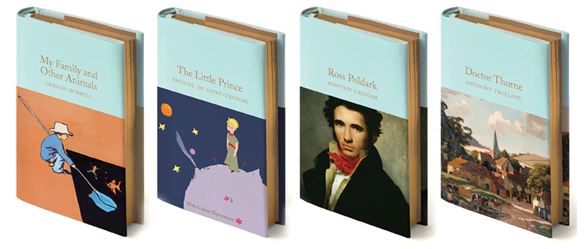
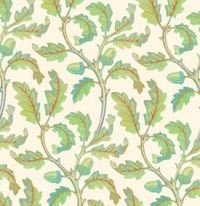
Publisher Harriet Sanders set out to create editions that would ‘feel special and do justice to the stories you treasure’, and the books do both look and feel beautiful, with gilt edges, sumptuous cloth bindings, ribbon bookmarks, and arts-and-crafts-style endpapers. At the same time the durable pocket-sized format ensures they are as handy and easy-to-read as paperbacks, because the editorial team were adamant they didn’t want them to be ‘just for on shelves, we want them to also be the books you’d choose to carry around with you to actually read, and look forward to seeing on your bedside table when you wake up.’

Not just admired classics, but classics to be cherished

Alongside many of the usual stalwarts of the literary canon, the final list also included plenty of titles not traditionally labelled ‘classics’, such as Bridget Jones, The Thorn Birds, and Clan of the Cave Bear.  So choosing titles for inclusion in Macmillan Collector’s Library was a daunting responsibility. Harriet was keen to include titles ‘people want to collect and own not just because they are admired classics, but because they mean something special to them, perhaps because they loved it as child, or simply that it made them laugh or cry at an important moment in their lives’, so favourites such as Chitty Chitty Bang Bang and Poldark appear alongside David Copperfield and Emma.  This eclectic approach will continue over the years to ensure that Macmillan Collector’s Library truly reflects the nation’s favourite reads.

The books writers love to read

As an extra bonus, each book in the collection has its own introduction or afterword, each specially commissioned from a well-known writer, including writers such as Christina Hardyment, Liz Fenwick, Sara Paretsky, Paul Bailey, and Val McDermid.

Titles to be published in hardback including:

  • Dairy of a Provincial Lady by E M Delafield
  • My Family and Other Animals by Gerald Durrell
  • Peter Pan by J M Barrie
  • The Little Prince by Antoine de Saint-Exupery
  • Ross Poldark by Winston Graham
  • Demelza by Winston Graham
  • A Farewell to Arms by Ernest Hemingway
  • For Whom the Bell Tolls by Ernest Hemingway
  • Doctor Thorne by Anthony Trollope
  • Classic Locked Room Mysteries
  • Chitty, Chitty Bang Bang by Ian Fleming
  • Mansfield Park by Jane Austen
  • Pride and Prejudice by Jane Austen
  • Northanger Abbey by Jane Austen
  • Emma by Jane Austen
  • Persuasion by Jane Austen
  • Sense and Sensibility by Jane Austen
  • Sanditon, Lady Susan, & The History of England by Jane Austen
  • Collected Poems by W B Yeats
  • The Water Babies by Charles Kingsley
  • Alice’s Adventures in Wonderland and Through the Looking Glass by Lewis Carroll
  • Alice in Wonderland Everlasting Diary
  • The Hunchback of Notre Dame by Victor Hugo
  • Dracula by Bram Stoker

My Review of Ross Poldark and Demelza

ross

I can’t believe I’m about to do this in a so-called review, but apart from the afterwords by Liz Fenwick, I haven’t actually read Ross Poldark and Demelza yet. However, I am so enraptured by these gorgeous editions that I had to share them with you – especially with Christmas coming up as they would make the most fabulous gifts for any book lover. I know I’ll be putting several on my wishlist (especially the Thomas Hardy editions) to family and friends as well as buying them as gifts for others. I always read Dickens’ A Christmas Carol at Christmas every year so that’s going to be my first purchase.

christmas-carol

Despite the desires of the publishing team that these are editions to be read, I really just want to stroke my copies. They are so beautiful. The slip covers feel silky to the touch and the gold writing and slip flaps convey quality and opulence. I love the William Morris style end papers and gilt page edges. It’s like holding a jewel in the hand. The addition of a ribbon bookmark takes the reader back to a time when books were to be cherished and not just bought as cheaply as possible to lie unread on an e-reader.

end-paper

And these are indeed books to be read. Usually hard backed copies are bulky and heavy so that they are not especially portable. Not so with the Macmillan Collector’s Library. Each is a perfect size for a pocket or a bag so that it would be easy to take them on a commute or trip for example.

demelza

So, to the part I actually have read – the Afterwords by Liz Fenwick. Liz evokes the passion of Winston Graham’s writing, explaining the geographical, political, historical and literary links to the books with a wonderful dexterity so that, in  a few short pages, I felt I had a depth of understanding and had learnt more about the author and the books than the previous 55 years of my life had afforded. Having watched the original television series of Poldark as well as the more recent version, I had no idea that in the 1970s vicars were known to move their evening services to accommodate viewers!

I’m in love with these editions of Ross Poldark and Demelza and having browsed the books in the Macmillan Collector’s Library I want them all. I’m sure you’ll find something there to cherish too.

About Winston Graham

You can find out more on the official Winston Graham and Poldark website.
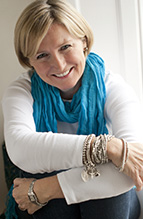
About Liz Fenwick

liz-fenwick

Writer, ex-pat expert, wife, mother of three, and dreamer turned doer….

Award winning author of The Cornish House, A Cornish Affair, A Cornish Stranger and Under A Cornish Sky. After nine international moves, Liz is a bit of a global nomad. It’s no wonder her heart remains in Cornwall.

Liz Fenwick’s novels can be found for purchase here.

You can follow Liz on Twitter, find her on Facebook and visit her website.

A Mini Interview with Karen King, author of I do?…or do I?

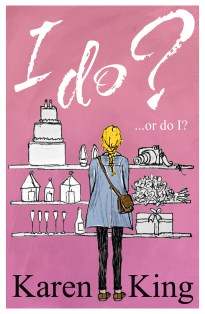
i-do

I’m delighted to welcome Karen King, author of I do?…or do I? to Linda’s Book Bag today. I do?…or do I? was published by Accent Press on 12th May 2016 and is available for purchase on Amazon, by following the links on Accent Press, from Waterstones, Book Depository and W H Smith.

Karen and I were discussing the merits of writing for both children and adults and before we knew where we were we had a guest post!

I Do?…Or Do I?

i-do

Local journalist Cassie is getting married to hot-shot lawyer, reliable Timothy, and his mother Sylvia, who Cassie has nicknamed ‘Monster-in-Law’, wants to plan the entire wedding. When Sylvia books the exclusive ID Images to take photographs of the extravagant do, Cassie has no idea what she’s walking into.

The elusive JM, ID Images’ newest photographer, just so happens to be Jared, Cassie’s first love and ex-fiancé, who broke off their engagement to travel and take photos of far-reaching wonders. He’s back to pay for his next wild adventure.

Cassie decides it’s best to pretend not to know him, but when she’s asked to write an article for her newspaper, she’s tasked with a column surrounding all things wedding related. When Cassie jokingly writes a column meant for herself depicting her situation, a co-worker submits it in place of the real article and it’s soon making headlines, with readers asking the age old question – Who Will She Choose?

A Mini Interview with Karen King

Hi Karen. Welcome to Linda’s Book Bag to chat about writing for adults and children.

Hi Linda. Thank you for inviting me on your blog to talk about the difference between writing for adults and children. This is an interesting topic for me, as you know I spent the first twenty years of my writing career writing for children but now write for adults too.

Who do you prefer to write for?

I love writing for children because they are happy to immerse themselves in a story and willing to suspend belief. For them, anything is possible. Providing your characters are realistic and the plotline credible you’ve got them hooked so you can give your imagination free reign. But I love writing for adults too, because I love exploring adult relationships and dealing with contemporary issues. The Millionaire Plan and ‘I do…or do I?’ feature heroines who are marrying for the wrong reasons then meet someone who makes them rethink so they have a tough decision to make. Whereas Never Say Forever and my next two novels (my next one will be published next Spring) feature heroines who don’t want to settle down in a serious relationship then along comes a guy they just can’t resist so they have this big emotional battle. That’s sort of what happened to me when I met my second husband a few years ago!

Do you think adult readers are more cynical than children?

I think adults are far more cynical and can find it difficult to suspend belief, not surprising as we’ve had more experience of the world than children. Whilst a child will happily believe in fairies, monsters under the bed and magical cars that fly you to the moon an adult obviously won’t. A lot of adults don’t believe in true love never mind magic! However, children have sharper eyes! If you have something in your story that’s wrong, a child will spot it, write to you and point it out. Even something as random as your T Rex dinosaur having too many toes!

Do children and adults read for different reasons?

I think that both children and adults read for the same reasons. Most readers choose a book either for escapism or because they relate to the main character and plot. Children whose parents have got divorced might like to read a story about a character whose parents are divorced/getting divorced so they can see how they cope with it. Similarly, we adults like to read about characters going through the same sort of stuff as we are. But we also like to escape from reality sometimes and read about characters in far-away exotic places, or a psychological thriller that keeps us hooked to the end.

Absolutely right Karen. As adults we can travel and experience life vicariously in pure escapism!

Is it more important to have a happy resolution for children than adults?

For young children, it’s important to have a happy ending, they need to feel that all’s safe with the world. Older children know that bad stuff happens, that things don’t always work out okay but you still need a ‘feel good’ ending, so that even if things don’t pan out your character is stronger and can now cope with what life deals with them. For all children, I think your story needs to end with hope. For adults, it’s different. I write romances so readers expect a ‘happy ever after’ ending to these but for other genres anything can happen at the end. Look at the end of Gone Girl and my favourite book of all time Gone with the Wind. For adult readers it’s all about the ride.

Who do you think gets the most joy from reading, children or adults?

It’s difficult to say. Children, once they learn to read, will devour books. I can remember reading as a child, so immersed in the story that I was oblivious to my surroundings. I used to literally laugh out loud at the Just William books. I don’t think adults immerse themselves so deeply but we still enjoy reading. It’s time out from our normal everyday life. For me reading is a treat to myself. When I’ve worked hard all day, curling up with a book for a couple of hours in the evening is payback. And if I’ve got a bar of chocolate too even better.

That sounds perfect to me! Thanks for being on Linda’s Book Bag Karen.

Thank you for having me Linda.

About Karen King

kk-head-and-shoulders

A member of the Romantic Novelists’ Association, the Society of Authors and the Society of Women Writers and Journalists, Karen King writes sassy, contemporary romance just right for reading on the beach. ‘I do – or do I?‘ is her first chick-lit for Accent Press and has recently been nominated for the RONA. She has been contracted for two more chick-lit novels. In addition, Accent Press have republished her earlier romance novels, The Millionaire Plan and Never Say Forever.

Karen has also written several short stories for women’s magazine and had 120 children’s books published, many of which can be found here.

When she isn’t writing, Karen likes travelling, watching the ‘soaps’ and reading. Give her a good book and a box of chocolates and she thinks she’s in Heaven.

You can find more about Karen on her website, on Pinterest, Instagram and by following her on Twitter. Karen has a Facebook page for her children’s fiction here and one for her romances here.

Considering YA Fiction with Sherry Mayes, author of Stop the World

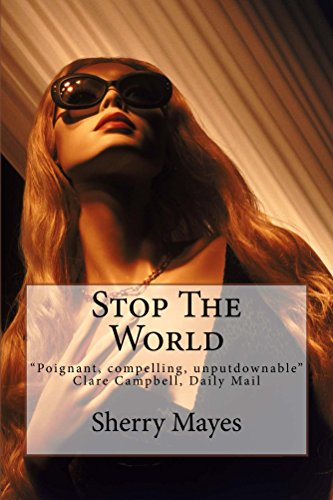
stop-the-world

One genre I really haven’t read enough of late is Young Adult (YA) fiction and I believe I’m missing out on some wonderful books. As a result I’ve invited Sherry Mayes onto Linda’s Book Bag to tell me a little about her YA novel Stop the World. Stop the World is available for purchase in e-book and paperback here.

Stop the World

 stop-the-world

She thought her life was over… but it was just beginning

Jody Angel Taylor believes her life is all mapped out: Glamorous, clever and popular, and due to marry her handsome boyfriend, she has it all. Until one night she has a devastating car crash, ending up paralyzed — and her perfect world collapses.

Committing media suicide and publicly blamed for her own accident, everything around her falls apart. She becomes a lonely recluse, feeling she’s lost everything including her legs — her boyfriend to her best friend, her father to an affair, her mother to depression — but above all she fears losing her mind. What she doesn’t know is that someone across the globe is about to throw her a lifeline. Can she find the courage to take it? Determined to love again and clear her name, she embarks on a new adventure that will transform her life beyond all expectations.

A Mini Interview with Sherry Mayes

Sherry, thank you so much for agreeing to tell me a little about Stop the World. Tell me,  why did you choose to write for a YA audience?

I never intended to write YA, but light bulb moments comes in many forms, and as a former journalist, I was inspired by a young girl called Jenny, who I interviewed over a decade ago for a magazine. She crashed her car driving home after meeting up with a friend, and ended up quadriplegic, paralysed from the neck down. I have a teenage daughter and couldn’t imagine how someone of that age would cope in devastating circumstances where many of us would assume any kind of normal life was over. But what intrigued me was her strength of character and that she still remained determined and feisty despite her circumstances – and she certainly became a catalyst for my novel.

How did you create Jody’s character given she is inspired by a real person?

I created a very different kind of character from the British girl I interviewed, imagining a sun-kissed, blonde Californian girl who has everything going for her – she’s gets top grades at school, and has a handsome boyfriend and rich parents. She’s also self-obsessed and vain. The kind of girl that would be very annoying to be around, because I really wanted to show transformation – how someone like that would respond to being in a wheelchair, thinking of herself as a ‘gimp’ or a ‘retard’, and losing the adoration she took for granted. I wanted to dismantle the mask and see what lay underneath when everything you rely on falls apart.

Why did you choose such a difficult subject matter?

I love to hear about feel-good stories; people that achieve happiness against the odds, because it reminds you that the hurdles of life can be overcome, and it raised many questions for me: How life can blow up in your face and change everything you think you stand for. What it’s like to be popular and pretty and then find you’re in wheelchair with a response perhaps of pity or sympathy instead of attraction. How do friends and family now perceive you, and how do your values and perceptions then change? I wanted to focus on how challenging events can deconstruct us, force us to reflect on who we are – and we all go through tragedy in our lives even if it’s experiencing the death of a loved one. Jenny’s story reminded me that we all a choice, to fall apart or focus on what can be achieved and writing this was cathartic in many ways.

(Having just experienced the death of a loved one I can fully empathise with this concept.)

What were the challenges and benefits of presenting such an emotional subject to this audience?

The challenges were really about getting under the skin of a teenager, understanding what a young girl would feel going through something so traumatising. Many girls of that age are so preoccupied with appearance, popularity and social media, so there was a lot of research involved. I had Jenny’s interview to draw from and a teenage daughter, but I also researched many case studies on the internet. The novel is written in first person, from my character, Jody’s perspective and I wanted to ensure that teens related to her as well as adults. I actually found getting her voice easier than I thought, despite the fact that I made her American. I wanted the story to reflect the prejudices many disabled people are faced with and also how important it is to develop resilience to difficult circumstances given the amount of depression amongst teenagers – so I tested the book on many teenage and adult beta readers who gave their feedback to ensure Jody’s voice felt right.

Do you think there are ethical aspects to consider when fictionalising a true event?

Certainly in fictionalising true events you would have to get signed agreement from the subject and ensure your facts are correct, but I didn’t fictionalise Jenny’s life through Stop the World as a true life biography – this is a fictionalised story, and like many stories there is always someone or something that inspires you to write it. Jenny was a British teenager with a loving family who supported her throughout her recovery. After eight months of rehab and with time to kill being stuck at home feeling trapped, she went back into an online chat room that she’d been on previously, and got talking to a guy on the other side of the world – and quite simply within weeks they fell in love, despite her disability, and went on to form a relationship and have a baby.  Novels, though, do need cycles of conflict and resolution to work, and so I created a different kind of story about Pageant Queen, Jody Angel Taylor who lives in Cedarville, a remote desert town in the North-East corner of California. Her family life falls apart and her boyfriend runs off with her best friend, so it’s very different. You might ask why I chose the US as a location, but I wanted to set the story there simply because that’s where the ideals of beauty are paramount – school pageants and regional beauty contents are the norm. My protagonist is the spoilt only child of wealthy parents who lives and breathes social media, constantly uploading selfies and checking her thousands of followers. We all know someone like that, and I wanted to understand what happens when someone is enmeshed in that social media world and then has a crises. Do the thousands of friends they think they might have on social media really care or get in touch?   

So, how has your journalistic background affected and impacted your fictional writing?

I focused on human interest stories writing for national newspapers and magazines – everything from a woman whose husband disappeared to someone who adopted a Roman orphan.  They were emotional mini-biographies and I got to witness so many events where people found inner strength and overcame challenges. So that kind of writing really helped me to get inside a characters mind when writing fiction. The truth is crazy things happen in everyday life – painful events – betrayal, adversity, grief and murder – and we are fascinated to read about them because every human being feels pain. We can live vicariously through those characters, perhaps even empathise, and get another insight of life.

Do you believe that life is ultimately positive despite what it throws at us at times?

I do believe that life is what you make it and that you can’t help what happens to you but you can decide how to react to it. Stop the World is about so much more than a teenage girl who becomes disabled; it’s about showing how we can find inner strength, accept ourselves, and still love and be loved regardless of what we look like or what circumstances we are in.

Thank you so much Sherry. These are fascinating insights into how Stop the World came about.

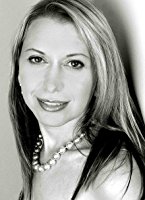
About Sherry Mayes

sherry

Sherron, also known by her nickname, Sherry, has worked as a journalist for over twenty years. She has also written two self-help books, which were both published as paperbacks in January 2003 and 2004 by Hodder & Stoughton.

Her first YA novel, Stop the World was inspired by a true story.

Originally from Somerset, she currently lives in Berkshire, United Kingdom.

You can find Sherry Mayes on Facebook and follow her on Twitter.