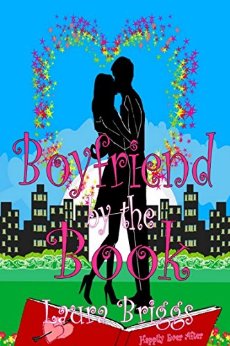
The Influence of Jane Austen, a Guest Post by Laura Briggs, author of Boyfriend in the Book

boyfriend in the book

As an ex-English teacher I’m always interested in the enduring power of classic writers and when I discovered that Laura Briggs was influenced by Jane Austen in her novel Boyfriend in the Book, I just had to invite her onto Linda’s Book Bag to tell me a bit more. Laura’s Boyfriend in the Book is published in e-book and is available for purchase on your local Amazon site.

With Poldark returning to British television this evening, readers might also like Laura’s novella A Wedding in Cornwall which is available here.

Boyfriend in the Book
boyfriend in the book

Can Jodi find true love with help from the likes of Lizzie Bennet and Jane Eyre? Her friends think she can and push her to use a relationship guide that claims women can find their perfect match by channeling the wisdom of famous storybook heroines. Jodi thinks it sounds crazy—no way is she acting like some character in a book to find a man! Besides, she already has a crush on Levi, the cute and friendly deliveryman for the hotel where she works. But when Levi suddenly grows distant and Jodi’s chances with him seem to fizzle before her eyes, she wonders if her friends might have a point after all. Disheartened and lonely, she decides to give the so-called relationship guide a whirl, with unexpected consequences.

Before you can say ‘Pride and Prejudice’, Jodi is up to her neck in handsome, brooding men that seem too much like fictional heroes to be true. Her attempts to think like the greatest heroines in romance lead her to meet everything from a modern Mr. Rochester to an angsty Heathcliff, and even a Darcy-esque novelist. But when a former crush re-enters her life in the form of a modern day Romeo, Jodi wonders if there might be something to this ‘inner heroine’ thing after all. Now, if she could just stop thinking about Levi, then maybe her happy-ever-after will fall into place…or is something still missing from Jodi’s storybook romance?

Boyfriend by the Book is a perfect feel good read for curling up with on a rainy day or a summer afternoon, with lots of laughs and surprises to keep the reader turning pages!

A Wedding in Cornwall
Wedding in Cornwall

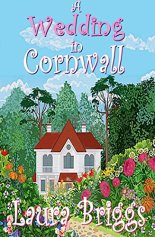
It’s the career move of a lifetime, and Julianne can’t believe it’s hers: a position as an event planner at a country house in Cornwall, England, beginning with the wedding of a celebrity! If her old firm’s senior planner back in the States hadn’t fallen suddenly sick with the chicken pox, Julianne would never have found herself chosen for a life in one of England’s most beautiful coastal counties, surrounded by rugged shores, quaint cottages, elegant gardens and a house to die for.

But life in Cornwall isn’t exactly as Julianne imagined it. Her first bride-to-be is a resentful, petted snob, the groom is immature and bored, and the Cornish staff of Cliffs House has a difficult time believing that an event planner from a mid-level position can handle a wedding this big. And then there’s a personal matter — the handsome, sometimes charming, sometimes standoffish gardener Matthew Rose. He and Julianne have a strangely complicated relationship somewhere between friendship and attraction. But with a secret in his past, and a scheming bridesmaid plotting to have Matthew all to herself, will Julianne find a way to untangle her feelings and the problems of planning a perfect Cornish wedding?

The Inspiration of Jane Austen

A Guest Post by Laura Briggs

jane austen

First of all, thank you to Linda for inviting me to share with all of her lovely readers on the topic of Jane Austen’s work and why it still inspires us today.

It’s true that Jane Austen’s stories seem to pop up everywhere, from BBC adaptations, to modern retellings on The Hallmark Channel, and Hollywood blockbusters that have Lizzie and Darcy battling a zombie invasion in Regency England (that one I still can’t get used to!).

Austen is certainly a source of inspiration for the romance novel industry as well. Retellings, continuations, and variations on her work are published monthly it seems. But what is it exactly that keeps us fascinated with the world that Jane Austen created over two hundred years ago? Why do romance authors and readers go back to its various themes again and again? I can only guess, of course, but a few reasons come to mind immediately.

The Appeal of the Underdog: This may not be true of all of Austen’s heroines—such as Emma Woodhouse, for instance—but it applies to the majority, I would say. Lizzie Bennet is repeatedly snubbed by members of the upper class in Pride and Prejudice, while Eleanor and Marianne are suddenly impoverished in Sense and Sensibility, and poor Fanny Price is overlooked and undervalued by her snobbish relatives in Mansfield Park. Class distinction is an issue no matter what era you’re from, and the strength Austen’s heroines display in the face of such prejudice makes it easy to root for them and hope their happiness wins out against the odds.

The Tortured Hero: There seems to be a fascination in the romance novel world with angst-ridden heroes, from the vampire in Twilight to that guy in Fifty Shades of Grey. Mr. Darcy is a little like a forerunner to these modern favorites. His stoic appearance is just a front for the emotional turmoil he feels over Lizzie’s rejection of his love, and readers have gobbled up various retellings that spin the story from Mr. Darcy’s wounded perspective.

The Love/Hate dynamic: This is still a favorite scenario for romance readers today, and Lizzie and Darcy have it in spades. I mean, how much worse could their first meeting be? Darcy insults Lizzie’s appearance and comes off as a snob to most of her neighbors and Lizzie, well…she doesn’t exactly make it easy for him to make amends later on. They seem to bring out the worst in each other, which is exactly what makes it so satisfying to see their relationship evolve into one of admiration and respect.

Of course, there are many more reasons that Jane Austen’s work has a timeless appeal. I’m sure that all of you who are reading this now may have different reasons for enjoying her novels time and again. Maybe it’s the old fashioned world of Regency era ladies and gentlemen that draws you, or the witty, insightful narrative on romantic relationships. Whatever the reason—and there are probably too many to count—it seems apparent that Jane Austen’s stories and characters are here to stay.

About Laura Briggs

Laura

Laura Briggs’ first stories were written in crayon about a rooster named Henry—but she was pretty young at the time, so it’s understandable. She eventually graduated to writing more complex plotlines and characters and writing her stories on a laptop. She tends to write stories with a romance edge, including several wedding-themed novels and a few Jane Austen-inspired works. As a reader, she has a soft spot for mysteries, as well as novels by Anne Tyler and Amy Tan. In her free time, she likes to experiment with new recipes and tries to landscape her yard (a never-ending project).

You can follow Laura on Twitter, find her on Facebook, visit her blog and see all her lovely books here.
Saints and Sinners, a Guest Post by Jackie Baldwin, author of Dead Man’s Prayer

Dead Man's Prayer

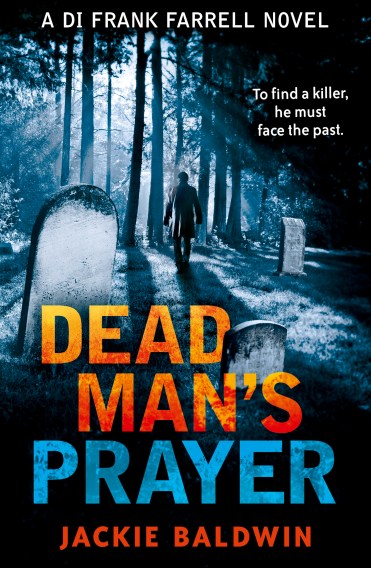
I’m delighted to be welcoming Jackie Baldwin to Linda’s Book Bag today. Jackie’s debut novel Dead Man’s Prayer was published yesterday, 2nd September 2016 by Killer Reads. Dead Man’s Prayer is the first in the DI Frank Farrell series and is available for purchase here.

In celebration of yesterday’s publication, Jackie kindly agreed to explain how her childhood has influenced her writing of Dead Man’s Prayer.

Dead Man’s Prayer

Dead Man's Prayer

Ex-priest DI Frank Farrell has returned to his roots in Dumfries, only to be landed with a disturbing murder case. Even worse, Farrell knows the victim: Father Boyd, the man who forced him out of the priesthood fifteen years earlier.

With no leads, Farrell must delve into the old priest’s past, one that is inextricably linked with his own. But his attention is diverted when twin boys go missing. One twin is recovered in an abandoned church, unharmed. But where is his brother?

As Farrell investigates the two cases he can’t help but feel targeted. Is someone playing a sinister game, or is he seeing patterns that don’t exist? Either way, it’s a game Farrell needs to win before he loses his grip on his sanity, or someone else turns up dead.

Saints and Sinners

A Guest Post by Jackie Baldwin

I went to the local Benedictine Convent School from the age of 5 to 18. The nuns were kind, though way back then, before the Church began to modernise, the teachings left a deep impact on an imaginative and impressionable child and have definitely fuelled my writing as well as my fascination with psychology. There were no grey areas, no room for doubt, things were good or they were evil. You went to Heaven or you went to Hell and burned for all eternity.  There was a third Purgatory option, like the Scottish verdict of Not Proven, but I won’t muddy the waters.

I made my first Holy Communion at the age of 7 dressed all in white and enjoyed the celebration breakfast afterwards with the priest and the nuns but remember worrying about transubstantiation and how receiving the body of Christ in communion must surely be cannibalism?

We were told the grisly tales of the sainted martyrs who met their ends in a ways that would make the most grizzled Noir crime writer flinch and run for a bucket. Every now and then the box of religious relics would be brought out and we would gaze in awe at a bone from a saint, a jewel or the actual splinter of the cross.

One night, as an 8 year old, I had a Eureka moment. I would get God and the Devil to make up and sort all this worldly mess out. I called God down to one corner of my room and the Devil to the other and earnestly sought to broker a peace deal. Well, it clearly didn’t work!

Confession loomed large in my young life. It felt horrible and squirmy at the time but it made you feel brand new afterwards. The slate had been wiped clean and you had a squeaky clean soul…until the next transgression. One of the priests took a very dim view of our innocent sins. I recall kneeling in the chapel with the rest of my class speed reciting my penance so my pals wouldn’t think I was really bad. Cheating wasn’t an option. That omniscient thing was really annoying. I paid careful mind to the formalities lest someone drop down dying in front of me in Dumfries High Street and need to relieve himself of his sins with his dying breath, leaving me as the only thing that stood between him and Hell. A bit like the way Doctor’s must feel as they go on a plane, go to the theatre or anywhere, really…

I suppose, looking back it was almost inevitable that all this internal youthful angst would bubble up like lava through a crater and create a character such as DI Farrell one day. A former RC priest with a strong moral compass who strives to subdue his failings, conquer his demons and become a better man. It has also informed the themes of forgiveness, guilt and redemption that tend to run like fault lines through my work.

About Jackie Baldwin

Jackie_01_by_Kim_Ayres.jpg

Jackie Baldwin is a Scottish crime writer and former criminal lawyer. Dead Man’s Prayer is her debut novel.

You can follow Jackie on Twitter and find out more with these other bloggers:

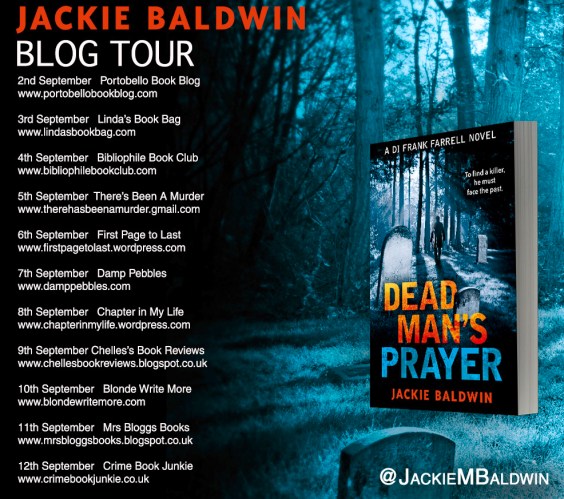
DMP_blogtour-2

The Constant Soldier by William Ryan

Constant Soldier

From the moment I saw the evocative cover of The Constant Soldier by William Ryan I couldn’t wait until I could get my hands on it so I am indebted to Sophie Goodfellow at EDPR for a copy in return for an honest review. The Constant Soldier was published in e-book and hardback on 25th August 2016 by Mantle, an imprint of Pan Macmillan, and is available for purchase from all good book sellers and by following the links here

The Constant Soldier

Constant Soldier

1944. Paul Brandt, a soldier in the German army, returns wounded and ashamed from the bloody chaos of the Eastern front to find his village home much changed and existing in the dark shadow of an SS rest hut – a luxurious retreat for those who manage the concentration camps, run with the help of a small group of female prisoners who – against all odds – have so far survived the war.

When, by chance, Brandt glimpses one of these prisoners, he realizes that he must find a way to access the hut. For inside is the woman to whom his fate has been tied since their arrest five years before, and now he must do all he can to protect her.

But as the Russian offensive moves ever closer, the days of this rest hut and its SS inhabitants are numbered. And while hope – for Brandt and the female prisoners – grows tantalizingly close, the danger too is now greater than ever.

And, in a forest to the east, a young female Soviet tank driver awaits her orders to advance . . .

My Review of The Constant Soldier

Returning a physically disabled man to his home village in 1944, Paul Brandt little realises that the war will still affect his life quite so profoundly.

Let me say at the outset, that I am always grateful for the review copies I receive but that I don’t always buy them too. They have to affect me emotionally for that. I will be buying The Constant Soldier. William Ryan’s book is devastatingly good.

The title, The Constant Soldier, is inspired. So many characters continue in their roles, either real or assumed, as soldiers in spite of events. Paul Brandt himself soldiers on in the face of adversity. But, importantly, the book explores what it is to be a constant, unwavering and frequently unquestioning, soldier. William Ryan made me think about collective guilt and the part even the smallest individual plays in it, doing so in a style of writing that was at times almost unbearable to read and utterly compelling in equal measure. Anyone not affected by reading The Constant Soldier simply has no soul.

William Ryan’s writing is, quite literally, breathtaking. The short chapters not only add pace to an already captivating narrative, but I was glad of them because the underlying suspense and menace was so forceful I found I was frequently holding my breath with the same kind of tension Paul Brandt was feeling. I didn’t always want to read what was in front of me but I couldn’t stop either. A longer chapter and I was in danger of keeling over as even relative normality has a quiet menace in the life of these characters. I was completely rapt by the prose. A brutal truth underpins an epic narrative in The Constant Soldier in a totally compelling read. I so want to quote from the book to illustrate but because every word is perfectly attuned I can’t for fear of spoiling the read for others.

The sense of setting is cinematic, and if The Constant Soldier isn’t made into a film there is no justice (as we frequently find in the story) in this world. Equally, I found the characters so lifelike, that when events delayed me reading the final 35 pages I found myself wondering what was happening to them all, so real had they become to me.

I’m finding I don’t have sufficient vocabulary to explain what a fantastically well written, powerful and sometimes uncomfortably moving book The Constant Soldier is. Suffice to say it is one of my top reads this year.

About William Ryan

William Ryan

William Ryan is an Irish writer, living in London. William’s first novel, The Holy Thief, was shortlisted for a Crime Writer’s Association New Blood Dagger, a Barry Award, The Kerry Group Irish Fiction Award and The Theakstons Old Peculier Crime Novel of the Year. His second novel, The Bloody Meadow was shortlisted for the Ireland AM Crime Novel of the Year and his third, The Twelfth Department, was also shortlisted for the Ireland AM Crime Novel of the Year as well as the CWA’s Historical Fiction Dagger.

You can follow William Ryan on Twitter, find him on Facebook  and visit William’s website. All William Ryan’s books are available here.

Spotlight on Undertow by Elizabeth Heathcote

Undertow cover

I’m pleased to be spotlighting Undertow by Elizabeth Heathcote today. Undertow will be published by in hardback by Quercus on 22nd September 2016 and is available for purchase from Amazon, Foyles, Waterstones and WH Smith.

Thanks to Quercus I have a hardback copy of Undertow to give away to one lucky UK reader. Just click the link at the bottom of this blog to enter.

Undertow

Undertow cover

My husband’s lover. They said her death was a tragic accident. And I believed them . . . until now.
Carmen is happily married to Tom, a successful London lawyer and divorcé with three children. She is content to absorb the stresses of being a stepmother to teenagers and the stain of ‘second wife’. She knows she’ll always live in the shadow of another woman – not Tom’s first wife Laura, who is resolutely polite and determinedly respectable, but the lover that ended his first marriage: Zena. Zena who was shockingly beautiful. Zena who drowned swimming late one night. But Carmen can overlook her husband’s dead mistress . . . until she starts to suspect that he might have been the person who killed her.

About Elizabeth Heathcote

Author

Elizabeth Heathcote has worked as a feature writer and editor on newspapers and magazines for many years. Her jobs have included women’s editor and deputy features editor at the Independent on Sunday, as well as freelance feature writing for publications such as the Independent, Observer, Guardian, Marie Claire and Red. She is presently associate editor at Psychologies magazine. Elizabeth’s home is southeast London, where she lives with her partner and two children.

You can follow Elizabeth on Twitter and find out more with these other bloggers:

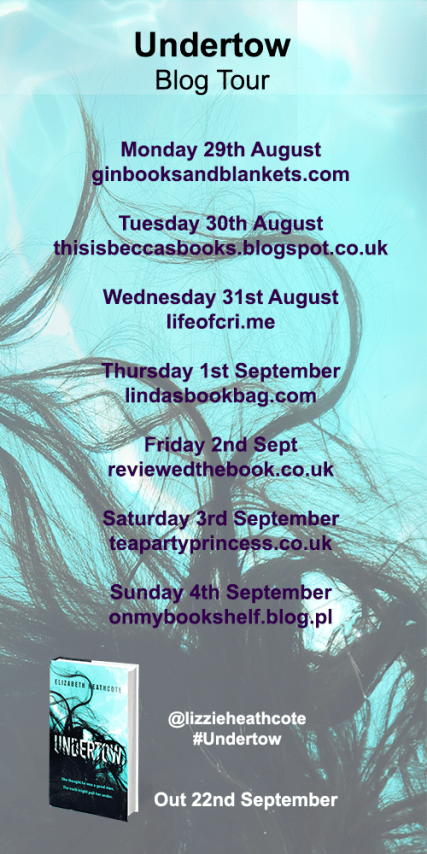
Undertow Blog Tour Poster.png

UK readers can click here for the chance to win a hardback copy of Undertow by Elizabeth Heathcote.