Maestra by L.S. Hilton

Maestra

My grateful thanks to the publishers Zaffre, an imprint of Bonnier, for an advanced reader copy of Maestra by L.S.Hilton in return for an honest review. Maestra was released in e-book and hardcover on 10th March 2016 and is available on Amazon, from Waterstones, WH Smith and all good bookshops.

Judith is a general dogsbody for a London art house, dissatisfied with her life and wanting more. Maestra shows just how she gets it!

There have been mixed reviews for Maestra and because of the highly explicit sexual content I am sure some readers would be offended by the book. Judith is addicted to sex as a means of physical and emotional gratification and the passages depicting those events leave little to the imagination. I felt, however, that they helped explain the complex character that is Judith although I did find the ease with which she frequently engaged in a variety of activities with an equal variety of people quite surprising and possibly unrealistic at times.

The plot of Maestra is dramatic and twisting with several surprising events that I simply wasn’t expecting. Judith is not quite what she seems and those she encounters often have to find this out the hard way. She inhabits a world of metamorphism, changing to adapt to circumstances and I think this is one of the successes of the novel for me – Judith’s experiences are way beyond my own so that I had a glimpse of a decadent, violent and money driven world I wouldn’t otherwise encounter, but that the quality of the writing brought alive for me.

Another aspect that I thought was very good was the art world depicted. L.S. Hilton certainly knows her stuff. I looked up several of the artists and paintings mentioned and have been introduced to new artwork as a result of reading Maestra. This authenticity of background gives a credibility to the plot and characters too. The title is a stroke of genius. Maestra means teacher and I felt Judith learnt a lot about herself and I learnt an awful lot about art, understanding why she is called Judith – though to say more would be to spoil the plot. Judith also teaches the reader not to trust her and to look more closely for clues in both art and writing.

There is a well-depicted sense of place in Maestra. From glamorous yachts to Parisian streets, I found myself transported into other places by the writing. I know that the book has been optioned for a film and there is certainly a cinematic feel to the writing. L.S. Hilton has quite a unique style of narrative and I loved the variety of sentence structure that gave a rhythm and pace to the story and uncovered glimpses of the real Judith.

I thoroughly enjoyed Maestra. It will offend some, titillate others and entertain many. I think comparisons with a female James Bond or with 50 Shades of Gray are unfair. Maestra is a narrative in its own right and should be judged on its individual merit. I found it unusual, occasionally unrealistic and frequently exciting and absorbing.

You can follow Zaffe Publishing on Twitter. L.S. Hilton can be found on Twitter and there is a website dedicated to Maestra.

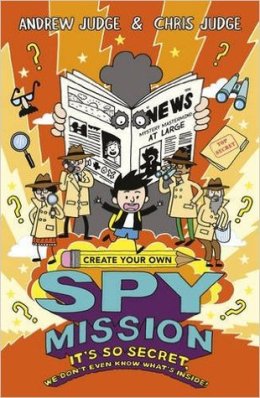
Create Your Own Spy Mission by Andrew Judge and Chris Judge

29753260

The ex-teacher in me still assesses children’s books for their interaction and educational value so I’m pleased to be part of the launch celebrations for Create Your Own Spy Mission by Andrew Judge and Chris Judge. Create Your Own Spy Mission is a Create Your Own Doodle book aimed at Middle Grade children and is published in paperback on 7th April 2016 by Scholastic Press. You can buy Create Your Own Spy Mission on Amazon and find out more about it on Goodreads and the Doodle Town web site.

Especially for publication I interviewed Andrew and Chris and you can read that interview below.

29753260

DOODLE YOUR OWN ADVENTURE!

Welcome to Doodle…where you draw the story. Help finish characters, build up the town and design a GIANT ICE CREAM POWERED robot to fight off…the SUPER villains that you doodle! Doodles get into LOTS of trouble. Watch out, it is up to you to doodle them out of it!

An Interview with Andrew and Chris Judge

Hello Chris and Andrew. Thank you so much for agreeing to answer some questions on my blog about your latest book Create Your Own Spy Mission.

Firstly, please could you tell readers a little about yourselves? Are you very similar?

Chris: Yes, we are identical twins.

Andrew: Except I’m five years older.

C: We like the same books and comics.

A: That’s true. In fact you have all my books and comics.

C: I was hoping you didn’t remember that.

How do you go about producing a book together?

C: We start with a brainstorm and come up with a title and some characters.

A: Then I right up a plot outline and send it to our editor, David Maybury. When he’s happy with it I write the story and the page descriptions.

C: I storyboard that, and do all the illustrations. Then the design team at Scholastic, our publisher, do their magic, and turn it into a finished book.

A: It takes about a year from the initial idea to the book arriving on the shelves in shops.

You obviously like art as well as writing. Which is more important to you and why?

C: We both like drawing and writing. We’ve made lots of comics together over the years.

A: Chris writes his own story books too, like The Lonely Beast, and I do cartoons occasionally.

C: Yeah, it helps that we can both draw. If I don’t get something in the book script, Andrew is able to do a quick sketch to show me what he was thinking.

A: I just got too lazy to draw and decided to get Chris to do all my drawings for me.

Did you ever get in to trouble for doodling at school?

C: Pretty much every day. How about you?

Linda: No I was always good at school!

A: I sometimes got OUT of trouble for doodling in school.

C: That’s true! No body messed with me in school because of the threat of a cartoon of them with a huge nose appearing on the notice board the next day.

A: Ha Ha! My teacher once confiscated my copybook to the staff room to show all the other teachers the cartoons I’d done of them.

How do you decide themes of your books?

A: We make a big long list of themes and send them to our editor, David.

C: And he’s goes through it and says “No” to them all, and then emails us and tells us what the book will be about.

A: See? It’s easy!

Which aspects of your writing and illustrations do you find easiest and most difficult?

A: Coming up with the ideas is easy, because that’s where the fun is. Turning those into 144 pages is the more difficult part. But it’s all fun, relatively speaking.

C: The most difficult part is coming up with the characters. But once you get to know the characters, it becomes a lot easier. That usually happens about a third of the way into the book.

 Do you ever argue when you’re producing a new book?

A: No, of course not. We’re brothers. Brothers never argue.

C: If we were making them when we were eight, we would probably have argued.

A: Ha Ha! True. But we’re very grown up and mature now.

What are your writing routines and where do you do most of your writing?

A: I do my writing whenever I can, in between my day job as an architect, and bringing my kids to football and swimming. So it’s a half hour here, and a half hour there. I write early in the morning, or on the bus. And I go for long walks at lunchtime to think up ideas. That’s 50% of the writing.

Would either of you like to be a spy in real life?

C: How do you know we’re not?

A: Sshh.

When you’re not writing, what do you like to read?

A: I like to read science books. I’m reading a book about the Space Shuttle at the moment called Into the Black by Rowland White. It’s brilliant. I also like comics. 2000AD is my favourite.

C: I read a lot of science fiction. Well, about a quarter of it is actually reading. The rest is audio books that I listen to while I’m working.

If you had 15 words to persuade a reader that Create Your Own Spy Mission should be their next read, what would you say?

C: If. You. Like. Exciting. Books. That. You. Can. Draw. In. And. Rip. And Fold. And.

A: That’s fifteen words.

Is there anything else you would have liked to be asked?

A: “Would you like this cheque for one million euros?”

C: Yes, you can ask me that question too.

Linda: No chance! Thanks, both, for entertaining us with your answers.

About Chris and Andrew

Chris Judge is an award winning picture book author/illustrator (THE LONELY BEAST, TIN) and co-author, with comedian David O’Doherty, of DANGER IS EVERYWHERE. Chris’s work continues to feature in advertising, newspapers, magazines and exhibitions in the UK and Ireland.

See Chris’s Website and follow him on Twitter.

Andrew Judge has written and illustrated countless short stories and comics with his brother Chris, including regular features for arts and culture magazines Mongrel and Totally Dublin. Andrew lives and works as an architect in Ireland.

See Andrew’s Website and follow him on Twitter.

You can find out more with these other bloggers too:

SPY-MISSION-01 (002)

Luna Tree Guest Post by Maya Berger

LunaTree-Cover-FRONT

As I know from personal experience recently, we all have to face some tough times in our lives. Maya Berger knows all about it too, but she has turned her experiences into a debut novel Luna Tree: The Baby Project and today she’s telling us all about it. Luna Tree was published by Create Space on 16th December 2015 and is available on Amazon.

Luna Tree

FB ad

Maya is kicking up her heels, living the fabulous and mostly carefree life of a twenty-something young woman. However, in the back of her mind continuous longing for a good marriage and family lingers. How do you find the right man, the one who sticks through thick and thin? Will he provide you with the things you find essential in a relationship?

Maya kissed a few frogs before finding her Prince Charming, but what followed was of higher importance. She started feeling chronic pain in her lower back, the pain that wouldn’t let her neither sit nor stand. Thus Maya began her relentless quest for diagnosis and healing, which she ended after discovering Energy healing. She travels the globe to receive and raise her own stored Energy, the one that changes everything. Her ultimate desires come true.

Luna Tree: The Baby Project Inspiration

A Guest Post from Maya Berger

Hi, my name is Maya Berger, a 41-year-old woman from Croatia and the author of my first book, Luna Tree: The Baby Project.

My humble opinion is that anybody who has a story to write should definitely write one. With a little help from friends, family, and a good editor, I believe it could really help many people.

I was freshly married to my husband whom I decided to have a baby with, when I got diagnosed with Ankylosing Spondylitis. You might think Awful, right? Well, it came as a relief to me, and let me tell you why.

Three years prior to my diagnosis, doctors couldn’t figure out what was wrong with me. They were telling me it might be disc protrusion, scoliosis, rheumatoid arthritis… In that period of my life I tried all kinds of treatments: Classical, Western medicine; Eastern medicine; even some Native American medicine – at one point I was lying in this coffin with some sort of holly Native American stick in my hand (life is funny that way, I mean I grew up with physician parents who claimed ‘there is a pill for every illness’, and although I was taking all kinds of pills, this didn’t turn out to be true).

Finally, I was introduced to Energy healing which helped me heal emotionally and physically. I had some deep discoveries about myself and the way I function, insights I wasn’t aware of previously, and I was placed on the path of changing myself inside-out.

It was a miraculous experience that I needed to share with all the hopeless people in the world: People with health, relationship or business issues. I traveled the world in search of my cure, my stored Energy, and shared it with other Energy sources. Writing a book about it helped me center myself, go over all the experiences, really soak in and define what happened. I now only want one thing, and that is for my daughter to be proud of me when she reads our story one day.

The book I wrote is a mixed-genre memoir, something between chick-lit and self-help. I personally don’t like reading books with serious issues that leave me feeling depressed and drained, so I tried to write a humorous guide to recovery. I hope I managed – you tell me 🙂

Maya Berger

You can also find out all about the book on its dedicated website.

About Maya Berger

maya

Maya Berger is a middle-aged, first-time mother born in Croatia, at the crossroads of Central and Eastern Europe. She is also a survivor of a rare autoimmune disease that affects the spine and bigger joints.

The daughter of two physicians, Maya grew up feeling she should follow their footsteps and become a pediatrician.

However, Maya did not think much of the school system, and didn’t feel it was good enough to support that choice. As a child, she doubted herself a lot, and chose getting the Economics Degree at the University instead, probably because it was the natural thing to do.

Maya worked in big corporations’ sales and marketing teams for ten years, but decided to become her own boss and started a pilates studio. Today, she coaches energy relaxations sessions, promotes Croatian tourism, and writes books.

You can follow Maya on Twitter.

Shtum with Jem Lester

9781409166511 (1)

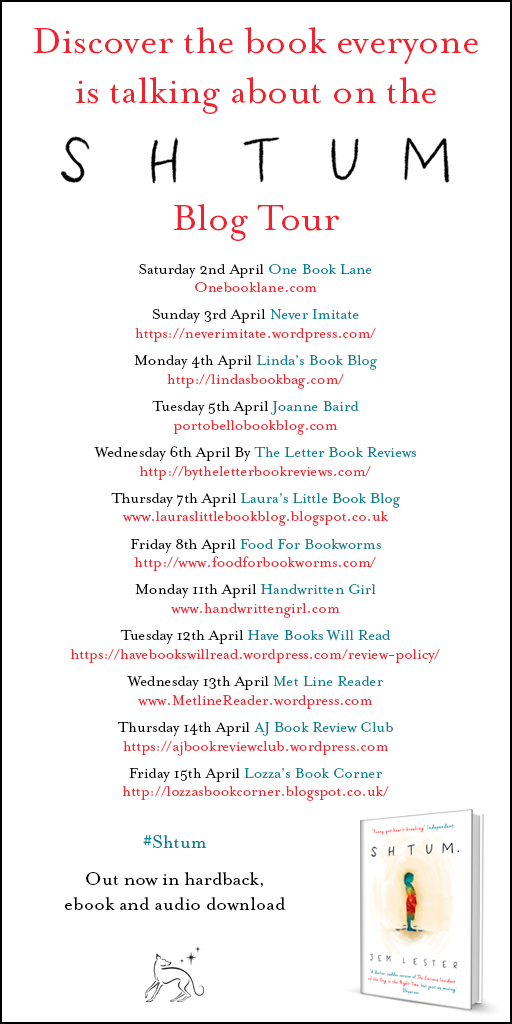
I loved Shtum by Jem Lester and you can read my review here, but today I’m thrilled to be part of the launch celebrations for this wonderful book. Shtum is published on 7th April 2016 in e-book and hardback by Orion. It is available on Amazon, from the publisher, Waterstones, W H Smith and all good bookshops. I’m thrilled that Jem Lester has written all about the inspiration for Shtum in a special guest post.

9781409166511 (1)

A must-read for fans of David Nicholls, THE SHOCK OF THE FALL and THE CURIOUS INCIDENT OF THE DOG IN THE NIGHT-TIME.

Ben Jewell has hit breaking point.

His ten-year-old son, Jonah, has never spoken. So when Ben and Jonah are forced to move in with Ben’s elderly father, three generations of men – one who can’t talk; two who won’t – are thrown together.

As Ben battles single fatherhood, a string of well-meaning social workers and his own demons, he learns some difficult home truths.

Jonah, blissful in his ignorance, becomes the prism through which all the complicated strands of personal identity, family history and misunderstanding are finally untangled.

Funny and heart-breaking in equal measure, Shtum is a story about families, forgiveness and finding a light in the darkest days.

The Inspiration for Shtum

A Guest Post by Jem Lester

My inspiration for Shtum was not purely that my own son is profoundly autistic; but more a realization that despite his lack of language, he was far better at communicating his needs and wants than I was. That, I think, forms the core of the story. I thought it was imperative to provide readers with an honest account of the day-to-day struggles and joys of living with a child such as Jonah, but I didn’t want to focus entirely on that particular narrative thread. I thought that to place it in a wider context would enable a far wider readership to find something to identify with.

To a greater, or lesser extent, all of us have some difficulty communicating – that is why we lie. But autistic children do not have the guile to lie and part of the joy of being around them is the knowledge that they say – or act out – what they mean. It may not always be pleasant, but it’s always honest.

This is something to value and celebrate in any individual and, hopefully, something that can be taken away from Shtum.

I have to admit (in this spirit of honesty!) that writing about autism was not at the top of my agenda when I began in 2011. My family and I had just been through the exhausting process of an educational tribunal on behalf of my son, Noah, when I joined the MA in Creative Writing at City University. We had won and finally took him to his school the day before the course started. When it was first suggested to me that I write about autism in my novel, I baulked. I was tired, raw and feeling a bit lonely and didn’t feel as if I had the mental energy to do it. It was too close, I said, maybe in the future.

All that weekend, I turned it over in my mind, and by the following week I’d come to the decision that, if I could make it funny and honest, I would have a go. There was also a nagging doubt in my head about somebody else writing my story. How would I feel if someone got there first? I have to say that the thought didn’t please me.

When I started, I wasn’t certain what kind of book would emerge; and like many attempting a debut work of fiction, I assumed it would be rubbish and no one would read it at all.

The outcome is Shtum. It is more than I expected it to be and the reactions so far, so early on in its life have been overwhelming.

I’m a bit pleased.

Jem

About Jem Lester

 Jem Lester c. Catherine Ercilla

Jem Lester was a journalist for nine years and saw the Berlin Wall fall in 1989 – and though there, he denies personal responsibility. He was also the last journalist to interview the legendary Fred Zinnemann, before the director died. He denies responsibility for that too. He taught English and Media studies at secondary schools for nine years. Jem has two children, one of whom is profoundly autistic, and for them he accepts total responsibility. He lives in London with his partner and her two children.  On his inspiration for the book he says: “I think, initially, the idea for Shtum came from the realisation that my own non-verbal, autistic son was more forthright in expressing his wants and needs than I was. Of course, I wanted to dismantle the stereotype of the ‘gifted’ autistic child but at the same time I thought it imperative that the joy and humour of these wonderful, innocent children was recognised and celebrated.”

You can follow Jem Lester on Twitter. There are more posts all about Shtum with these other bloggers too:

Shtum Blog Tour Banner

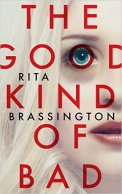
The Good Kind of Bad by Rita Brassington

cover

Regular readers of Linda’s Book Bag will know I love to feature authors I’ve actually met and today I’m delighted to be welcoming Rita Brassington whom I met at a recent author and blogger event. Lovely Rita agreed to write a guest post for the blog which you can read below, but first I’d like to tell you more about Rita’s psychological thriller The Good Kind of Bad.

The Good Kind of Bad

The Good Kind of Bad is available on Amazon UK and Amazon US.

cover

Secrets don’t stay secret for long…

She spent her whole life being the perfect daughter, the perfect girlfriend, and was all ready to become the perfect wife. But after ditching her fiancé at the altar and escaping to Chicago, she marries smouldering stranger Joe Petrozzi three weeks after meeting him in a bar. At least this time, there’s no chance of cold feet. Married life starts out great: there’s the new job, a gorgeous, enigmatic husband and money’s not an issue.

So what if she’s kept a few secrets from Joe – like where all her money came from. Joe’s been keeping secrets from her, too.

But his might just get her killed.

The Good Kind of Bad has just been selected as one of Heat Magazine’s Top Five Reads too!

Heat

The Art of Letting Go

A Guest Post by Rita Brassington

rita and book

When I started writing, I knew I was going to finish the book. Though I wasn’t so sure it would ever go further than my laptop screen. Last year, it did, and The Good Kind of Bad, my psychological thriller/crime novel, was launched into the world – ten years after I first put pen to paper. Yes, the road to letting go was a long one.

I first had the idea for the book in 2004, when I was in America’s Mid-West at St. Louis airport. I’d been visiting friends I’d made while studying abroad, and distinctly remember the feeling of being in an alien environment but surrounded by familiar faces. This idea of the other, or the age-old fish-out-of-water scenario popped into my head. I looked up at the airport departure boards, the people queuing for flights or sleeping in chairs and I wondered about their stories, what led them to be there. I saw a flight leaving for Chicago, wondered about who was on it, and I thought ‘what would happen if you left your whole life behind and started again?’

When I arrived home, I started formulating ideas though only began writing the year after, once finishing my degree. That summer I began to write, with a loose plot in my head, and thought I’d let the writing take me in whatever direction felt right. I’ve never suffered with writer’s block, not that it means whatever flows from my fingers is liquid gold, far from it. When I did start writing the book in 2005, it took nine months to finish it. Great, I thought. I’ve done it. I’ve written a book. The hard part came next. Editing. My great hurdle in the art of letting go.

Editing is the reason it took ten years to get the book out. In a way, I’m glad I waited. The literary landscape during that time changed beyond recognition. With the advent of social media, self-publishing, eBooks, bloggers etc. it has widened the scope and possibility for writers of all genres. My procrastination did have an upside.

Many times over the ten years I tried to let go. I sent it to a few agents, re-edited time and again, but it never felt like the right time. Life got in the way. I was never totally happy with the manuscript, and that was the key. In every draft it was always missing something. I went back to the drawing board and thought about what the story was about. Did it make sense? Did the characters make sense? Was I ever going to let go?

Then in 2013, I uploaded the book to Wattpad, the story sharing website with ten million users or so. In the space of a few months, I clocked up two million reads. People liked it. They gave me usable feedback. I changed things. Added sections. Though what it truly gave me was the authority to say, ‘the book is good. People like it.’

What had been missing from my book before wasn’t necessarily the words, but the permission I wouldn’t give myself, to believe I had written something someone else would want to read – to take it seriously.

I hired an editor, who also tore the book to pieces, but holding the book in my hand was becoming more real. I hired a cover designer, Jamie Keenan (who’s an award-winner, no less). For me, it was always about the finished, polished version of what had once started as an idea, almost a challenge to myself to see if I could do it – to see if my twenty-year-old self could write a book. All that time, I was waiting for the book to be finished, where I could reconcile with myself and truly say I was done. The book was finally perfect.

That day never came. It still isn’t finished. There’re still bits I’d love to change, even though I can now pick my own book off my bookshelf, nestled between Joyce Maynard and Paula Hawkins (ha!). Though I don’t think any book will ever be finished. There will always be new readers to carry on the story, to think up new scenarios for when the words run out.

That’s the best thing about letting go. There’s always someone to bring it back.

You can follow Rita on Twitter and find out more about her on her web site.

Saved by Scandal’s Heir by Janice Preston

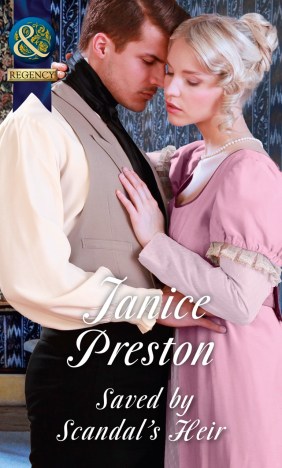
Saved by Scandal's Heir

Knowing how popular Harlequin Mills and Boon (HMB) books are with so many readers and having read a few myself, I am fascinated by the writing process for this romance genre. It is with great pleasure that I have a really interesting guest piece from Janice Preston telling us all about the writing process for Harlequin Mills and Boon and about Regency romance in particular.

Janice’s new book Saved by Scandal’s Heir was published yesterday 1st. April 2016. It is her fourth Regency romance for HMB, and it features one of her favourite characters as heroine: Harriet, Lady Brierley, who first appeared in Janice’s second Regency From Wallflower to Countess (recently shortlisted for the RoNA Rose award) as the former mistress of the hero. You can read an extract below.
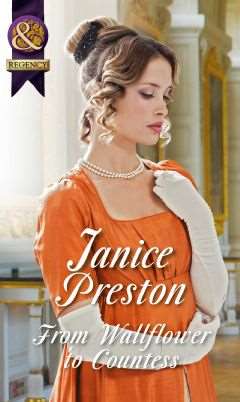
wallflower

About Saved by Scandal’s Heir

Harriet, Lady Brierley, is a respectable widow, determined to keep the secrets of her broken heart deeply buried. But when Benedict Poole—the very man who deserted her—returns, Harriet’s safe world threatens to unravel.

Believing Harriet left him for a wealthy lord, Benedict must fight to uncover the true consequence and tragedy of their affair years before. But with his family’s name now synonymous with scandal, can he hope to win back the trust of the woman he has always loved?
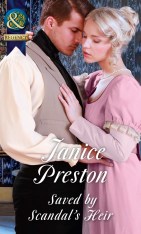
Saved by Scandal's Heir

All Janice’s HMB book are available here and you’ll find many of them on Amazon UK and Amazon US.

Writing Regency Romance for Harlequin Mills & Boon

A Guest Post from Janice Preston

Thank you, Linda, for inviting me onto your blog.

You asked me about the challenges of writing Regency romance for Harlequin Mills & Boon (HMB), and I’d like to answer that in three parts.

The challenge of writing is universal. Ultimately, you just have to get on and do it, or forget it and go clean the oven (insert your own least favourite chore here!)

The challenge of writing romance (also known as series or category romance), as opposed to romantic fiction, is the ability to focus almost entirely on the developing relationship between the hero and heroine (or hero/hero, heroine/heroine if you are writing same-sex romance). The plot is driven by the protagonists’ inner conflicts (ie the emotional or mental obstacles within the character). It is the resolution of those inner conflicts (and not exterior obstacles such as other people) that results in the characters changing and leads ultimately to their happy-ever-after. With a shorter word count (in the case of HMB it is 50000 words for contemporary, 75000 words for historical) there simply isn’t the luxury to stray too far from the central romance.

Nora Roberts once said that writing series romance is akin to “performing Swan Lake in a phone booth”. That describes it perfectly.

The challenge of writing Regency romance is the same as writing about any historical period. Fortunately there are numerous contemporary resources from the Regency era in existence, and the internet is a blessing in providing access to all kinds of information. It must be harder to research, say, Medievals or the ancient civilisations, where fewer contemporary sources exist. On the other hand, with fewer ‘facts’, there is more scope for the imagination.

Google is brilliant for research but it can be unreliable and the advice is to try and find at least three original sources for any fact—sometimes easier said than done. I am slowly building a collection of Regency reference books, often using them in preference to the internet. And my reference books have to be physical books. I simply cannot get on with having reference books on my kindle—I like something to flick through!

I use the internet, old maps and Google maps to research settings, and both the internet and my books to research clothing, interiors, travel etc. It is important not to get carried away with the research, however. Readers buy romances for the developing relationship between the hero and heroine, not to read pages of regurgitated facts, no matter how fascinating.

I like to imagine my stories as a stage play, with the Regency world providing the backdrop but the focus firmly on the interaction of the actors on stage. The world must be authentic, but it is the backdrop. I am writing from my protagonists’ points of view so I try to describe only the details that they might realistically notice which means I don’t describe every single detail of, say, the décor of a room or the clothes a character is wearing unless it is pertinent to the story.

Dialogue is a constant challenge. I bear in mind I am writing for the readers of today, not those of the Regency, or even those of the 1960s or 1970s. I therefore try to suggest the era, with the occasional use of a word or a turn of phrase that will remind the reader they are in the Regency era. It’s a bit like the advice given for writing dialects: use it sparingly and it works; use it throughout and the flow of the story suffers. I hope I get the balance right. I don’t use obviously modern terms, however, and one of my most-used reference books is English Through the Ages (William Brohaugh), which gives the earliest-recorded use of most common words.

I do push the boundary with regard to the formality with which characters address one another, but I do that deliberately in the hope of making the story more readable and, I hope, to win a younger readership over to the genre. Husbands and wives in the Regency appeared to address one another formally as, for instance, Mr Bennet and Mrs Bennet (although whether they continued that formality in the throes of passion is a moot point!) My characters do conform to the customs of the time in social settings but as their relationship deepens they do graduate to first name terms when they are private and in their inner thoughts. I also have friends address one another by their Christian names, even though I doubt that would be the case in real life, unless they had been friends from childhood. I just find too many Lady this and Miss that peppering the story becomes clunky.

So, that is it. The challenges—to me—of writing Regency romance.

Thank you once again, Linda, for inviting me onto your blog.

Janice, thanks so much for this. I thought I knew about fiction but had no idea that there was a distinction between romance and romantic fiction. Fascinating.

An Excerpt from Saved by Scandal’s Heir

(Harriet, Lady Brierley—a respectable widow—has travelled to Kent. In this excerpt she meets, for the first time in 11 years, her former childhood sweetheart, Benedict Poole.)

‘Lady Brierley. To what do we owe this pleasure?’

Harriet froze. It could not be. Had she conjured him up in the flesh, just by allowing her thoughts one tiny peek at those memories? Moisture prickled her palms even as her mouth dried. She drew a calming breath, gathered her years of experience in hiding her feelings, and turned.

He was framed in the open doorway.

Benedict.

After all this time.

He had the same long, lean legs and wide shoulders, but this was a man, not the youth she’d once known. His chin was just as determined but the high forehead under the familiar fox-red hair now sported faint creases. His lips were set in an uncompromising line and his leaf-green eyes pierced Harriet as he stared into her face, his gaze unwavering. A cat stalking its prey could not be more focused.

Harriet swallowed past the jagged glass that appeared to have lodged in her throat.

‘Good afternoon, Mr Poole.’ Had those composed words really come from her lips? She took courage. She had faced worse than this. ‘I apologise for calling uninvited. I did not realise your…’ What was his relationship to Sir Malcolm again? All she could recall was that he had been Benedict’s guardian. ‘… Sir Malcolm was so very ill. I had hoped for a few words with him.’

‘He is my second cousin. I’m the only other Poole left now.’

‘I’m sorry.’

The platitude slid readily from her tongue. She wasn’t sorry. The world would be well rid of the Pooles. But she would remain polite. Let nothing of her bitterness show. Sir Malcolm had spent his life in pursuit of his own pleasures, a dissolute rake with not a care for the ruined lives he left in his wake. Felicity’s poor sister had been just one of his victims. And Benedict had proved himself equally as contemptible, equally as careless of the heartbreak he had left behind. Hardly surprising with Sir Malcolm as his only role model since childhood.

Benedict prowled into the centre of the room, nearing Harriet. The very air seemed to vibrate between them. She stood her ground, although she could not prevent a swift glance at her maid, Janet, who had accompanied her, sitting quietly on a chair near the beautifully carved stone fireplace. Benedict followed her gaze.

At least I am not alone.

‘Why are you here?’ The words were softly spoken. Benedict’s green eyes bored into Harriet’s. ‘Did you think to wed another wealthy man on his deathbed?’

‘Brierley was not on his deathbed! And I had no ch—’ Harriet shut her mouth with a snap. She’d endured over seven years with that lecher. Seven years of misery and disgust, empty arms and a broken heart, all because of Benedict Poole.

She had not in a million years thought to meet him here. He had gone overseas—right to the other side of the world. And even that was not far enough away for Harriet. Hatred for this man rose as the long-suppressed memories cascaded through her thoughts.

His lying words. His false promises. All of it.

She concealed any hint of her feelings. He must never know how her heart still ached for what might have been.

———

If you would like to read more, the first chapter is free to read on Janice’s website.

About Janice Preston
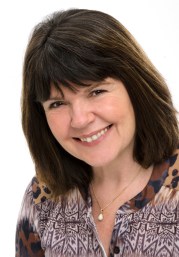
_JKP3233a

Janice Preston grew up in Wembley, North London, with a love of reading, writing stories and animals. In the past she has worked as a farmer, a police call-handler and a university administrator. She now lives in the West Midlands with her husband and two cats and has a part-time job with a weight management counsellor (vainly trying to control her own weight despite her love of chocolate!)

You can follow Janice on Twitter and find her on Facebook.

What Happens in the Alps by TA Williams

TAWilliams-Alps-BlogTourBanner

TA (Trevor) Williams is one of the most gentlemanly authors I’ve come across so I’m thrilled to be starting the launch celebrations for his latest book What Happens in the Alps which was published on 21st March 2016 by Harlequin/Carina UK and is available on Amazon USAmazon UKiTunes and Barnes & Noble.

I have a smashing guest post from Trevor and at the very bottom of this post you can enter for the chance to win an e-copy of What Happens in the Alps, but first, find out about this lovely read.

What Happens in the Alps

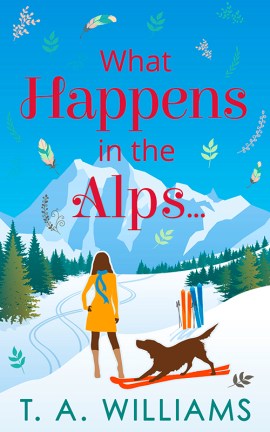
TAWilliams-Alps-Cover

Up in the magical, snow kissed mountains…

Two years ago, Annie Brewer’s life was turned upside down when her adrenaline-junkie husband died in a tragic climbing accident. So she’s hoping that moving to the beautiful village of Santorso in the Italian Alps will finally put her life back on track!

…anything can happen!

She might be going into business with her oldest friend – notorious lady-charmer Matt Brown – but men are definitely out of the question for Annie! That is, until she bumps into tall, dark and delicious Alessandro Lago on the ski slopes…and spontaneously says ‘Yes’ to a date! It must be the crisp mountain air but suddenly, anything seems possible. The only trouble is, chivalrous Matt is looking more gorgeous than ever…

A sparkling romantic comedy guaranteed to beat the winter blues, What Happens in the Alps…is one story you don’t want miss in 2016!

How much of me goes into my books? 

A Guest Post by TA Williams

Well, they say you should write about what you know. And I suppose I should know lots about me. So it’s pretty inevitable that I’m going to transpose stuff from my life onto my characters. Let’s take a look at What Happens in the Alps…,  my seventh book for publishers Carina UK. Where does Trevor Williams rear his bald and wrinkly head?

For starters, like with my previous books, I didn’t make it easy for myself. I chose to write this one from the standpoint of the main character, Annie. Annie is a woman. I’m not. So not much chance of overlap there, I hear you say. Well, that’s not strictly correct.

You see, first of all, Annie falls in love with a black Labrador called Leo. He speaks Italian (or at least he understands it). My old Lab definitely slotted in straight after my wife and daughter in my affections (outstripping both of them on occasions, but don’t tell them I said that). Leo is also directly responsible for introducing Annie to the handsome Alessandro.

So, we’ve established that Annie has inherited my love of big black dogs.

Second, Annie goes off to live in Santorso, in the beautiful Italian Alps. Well, many, many years ago, I lived and worked there. Santorso, my invented town, is very closely modelled on Aosta, situated in a mountain valley just south of the Mont Blanc tunnel. Annie shares my love of that wonderful place. I hope my description of it manages to do justice to somewhere that will always be very dear to me. If I wasn’t married to the only Italian in the world who prefers to live in England rather than in Italy, I would, without doubt, be writing this in a little house somewhere in Italy.

So that’s the dog and the place. Now, what about the story? Annie sets up her own English Language School. That’s what I did. In fact, I spent eight years of my life working in TEFL in Italy and then came back to the UK when our daughter was born and continued here in Devon for many years. In consequence, I know a lot about language schools so it was, as they say, a no-brainer to write about this particular field of activity.

The other characters? The local people working in and around the school are based on people I knew when I lived there. All the characters in the book love good wine and good food, and that’s me all over.

Looking back over my previous books, I find numerous other examples of how experiences and people in my life appear in my work. In When Alice Met Danny  Alice buys a house to develop and finds it full of poo. That is exactly what I did when I first started doing a bit of property developing. Her work colleague, Danny, loves windsurfing. So did I for years until I knackered my back. In What Happens in Tuscany…, the enigmatic Paul Taylor loves fritto misto. I’m with him a far as that’s concerned. Not familiar with fritto misto? Read the book and I guarantee you’ll be salivating by the end! In What Happens in the Alps… Annie’s crazy about skiing. I was lucky enough to be given a full season lift pass each year by one of my (very wealthy) students when I lived in Aosta/Santorso, and I used it every week from November to April. I hope my love of the mountains and skiing comes through on the pages of What Happens in the Alps… .

So, one way or another, I’m afraid you’ll find out quite a bit about me in my books. I hope you enjoy my latest offering.

And here’s more information about Trevor!

TAWilliams

Firstly, my name isn’t T A. It’s Trevor. I write under the androgynous name T A Williams because 65% of books are read by women. In my first book, Dirty Minds one of the (female) characters suggests the imbalance is due to the fact that men spend too much time getting drunk and watching football. I couldn’t possibly comment. Ask my wife…

I’ve written all sorts: thrillers, historical novels, short stories and now I’m enjoying myself hugely writing humour and romance. Romantic comedies are what we all need from time to time. Life isn’t always very fair. It isn’t always a lot of fun, but when it is, we need to embrace it. If my books can put a smile on your face and maybe give your heartstrings a tug, then I know I’ve done my job.

I‘ve lived all over Europe, but now I live in a little village in sleepy Devon, tucked away in south west England. I love the place. That’s why you’ll find leafy lanes and thatched cottages in most of my books. Oh, yes, and a black Labrador.

I’ve been writing since I was 14 and that is half a century ago. However, underneath this bald, wrinkly exterior, there beats the heart of a youngster. My wife is convinced I will never grow up. I hope she’s right.

You can find out more about Trevor on his website, on FacebookGoodreads and Amazon. You can also follow him on Twitter

Giveaway

TAWilliams-Alps-Cover

Enter to win an e-copy of What Happens in the Alps by clicking here.

Homecoming by Tanya Bullock

Homecoming

I’m delighted to be introducing Tanya Bullock’s wonderful new novella Homecoming, published today, 1st April 2016 by Blackbird Books. You can buy Homecoming on Amazon UKAmazon US and from Waterstones. There is the chance to win Homecoming in an international giveaway at the bottom of this blog post and so that you can see what a wonderful prize this is, I’m reviewing Homecoming in a no spoilers piece below.

Homecoming

Quite possibly the strangest romance ever told

Homecoming

Rosie and Tom belong together.
For too long, war and its devastating aftermath have kept them apart.
Now that Tom has finally returned home, Rosie hopes that they will be able to put the past behind them.
But when a mysterious sequence of events unfolds, their love is put to the test once more.
With a shocking secret hanging heavily over their relationship…
With circumstances conspiring against them at every turn…
Rosie and Tom find themselves caught up in the biggest battle of their lives.
Will their demons ultimately consume them?
Or will love conquer all in the end?

My Review of Homecoming

I read the first few pages of Homecoming thinking I knew exactly what to expect, only to find my expectations confounded and surpassed almost immediately. Tanya Bullock is a cracking story teller. The plot is compelling, being frequently surprising with complex social and personal issues for readers to contemplate along the way.

Homecoming is an exquisite read. Tanya Bullock’s understanding of human nature is outstanding. In just a few pages she creates a cast list worthy of the weightiest tracts so that readers have someone to love, to empathise with, to hate and to pity in a roller-coaster read of emotions. Managing such an affecting read in so few pages takes consummate skill and Tanya Bullock has that skill in spades.

I thought it was incredibly effective to write of Rosie’s past life in the present tense, and her current life in the past tense, to convey the state of her life and her mind so well. Both she and Tom come alive on the page making their story realistic and with the potential to be the story for so many of us in the future.

There is a wide range of emotions presented to, and instilled in, the reader by Homecoming. It is an accomplished and engaging story that I think will resonate with all of us – especially as we got older. Most of all, however, Homecoming is a wonderful story of love.

If you have an hour or so to spare Homecoming is the perfect way to fill it.

About Tanya Bullock

Tanya Bullock

Tanya Bullock is a college lecturer, writer and award-winning filmmaker. She lives in the West Midlands with her husband and two young children. She has a passion for foreign culture and languages (inherited from her French mother) and, in her youth, travelled extensively throughout Australia, America, Asia and Europe. As a filmmaker, she has gained local recognition, including funding and regional television broadcast, through ITV’s First Cut scheme; two nominations for a Royal Television Society Midlands Award, and, in 2010, a Royal Television Society Award in the category of best promotional film. In 2008, she directed a short drama, Second Honeymoon, which was screened at the Cannes Film Festival. On maternity leave in 2011 and in need of a creative outlet, Tanya began to write That Special Someone, the story of a mother’s quest to help her learning-disabled daughter find love. It has been longlisted for The People’s Book Prize and The Beryl Bainbridge First Time Author Award 2015/16.

That special Someone

Click here to read a publisher interview with Tanya.

You can follow Tanya on Twitter and find her on Facebook.
To enter for the chance to win one of two e-copies of Homecoming click here.