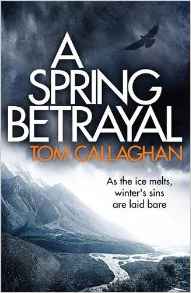
A Spring Betrayal by Tom Callaghan

A Spring Betrayal

My grateful thanks to Alainna Hajigeorgiou at Quercus Books for an advanced reader copy of A Spring Betrayal in return for an honest review. A Spring Betrayal was published in e-book and hardback on 21st April 2016 and is available on Amazon, from Quercus, Waterstones, WH Smith and from all good book shops.

A Spring Betrayal

Inspector AkylBorubaev of Bishkek Murder Squad has been exiled to the far corner of Kyrgystan, but death still haunts him at every turn. Borubaev soon finds himself caught up in a mysterious and gruesome new case: several children’s bodies have been found buried together – all tagged with name bands. In his search for the truth behind the brutal killings, Borubaev hits a wall of silence, with no one to turn to outside his sometime lover, the beautiful undercover agent Saltanat Umarova.

When Borubaev himself framed for his involvement in the production of blood-soaked child pornography, it looks as though things couldn’t get any worse. With the investigation at a dangerous standstill, Borubaev sets out to save his own integrity, and to deliver his own savage justice on behalf of the many dead who can’t speak for themselves . . .

A Spring Betrayal

My Review of A Spring Betrayal

When several children’s corpses are found in a shallow grave, Inspector Akly Borubaev finds himself drawn ever further into the corrupt world of Kyrgyzstan as he attempts to discover how they were murdered and by whom.

A Spring Betrayal is the second in Tom Callaghan’s Inspector Akyl Borubaev thrillers after A Killing Winter which I have not read. Although I may have missed the significance of a few references, A Spring Betrayal works perfectly well as a stand alone read and the back story is well enough outlined to ensure the reader understands Borubaev’s motivations and attitudes.

Let me say at the off that A Spring Betrayal is far outside my comfort zone of reading as it is violent and quite disturbing and had it not been sent for review I’m not sure I’d have read it. I found the subject matter – child pornography and murder- quite distasteful and not something I would readily choose to read about. I ended by feeling slightly contaminated by the book which possibly shows just how well written it is.

However, that said, A Spring Betrayal is a fast paced, action packed and thrilling read with a plot that twists and turns with breakneck speed. There’s a feeling of James Bond about it in places with spies, political intrigue, bribery and corruption all rife. One or twice I felt the plot was somewhat unrealistic but that might be more my own naivety in not appreciating that some of the events are likely in this particular setting.

I’m not sure how accurate a picture of Kyrgyzstan Tom Callaghan paints, but the social corruption and willingness to kill within the story I found horrifying and scarily plausible. Indeed, there is a real sense of place and I certainly felt I had a better understanding of the area and the politics of the recent past.

The character of Borubaev is rounded and interesting and I found fascinating the blurring of the lines of morality within his thought processes as the story progressed. He carries a burden of guilt that is fully understood by the reader. The character of Saltanat Umarova is less well defined, but this is not a criticism as she remains an enigma to Borubaev and, therefore, to the reader, as the narrative is presented from his first person point of view.

The writing is assured and convincing, and I liked the way in which there were several mini cliffhangers at the ends of chapters so that I wanted to read on in spite of myself.

Did I enjoy reading A Spring Betrayal? I’m not sure. Did I find it compelling and exciting? Undoubtedly. Those who like this fast paced, quite violent writing will love A Spring Betrayal. It was just a bit too explicitly violent for my taste.

An Interview with Sue Moorcroft

wedding proposal

Today I’m delighted to be featuring an interview with another author I’ve met in person, the lovely Sue Moorcroft. Sue is a prolific and award winning writer and an absolute delight to spend time with.

An Interview with Sue Moorcroft

Hi Sue. Thank you so much for agreeing to answer some questions on my blog about your writing.

Firstly, please could you tell readers a little about yourself?

I write commercial women’s fiction on sometimes unexpected themes – and also short stories, serials, novellas, columns and courses (I like to keep busy and I’m a creative writing tutor, too). Apart from writing, my chief pleasures are reading, watching Formula 1, Zumba, yoga, FitStep, and hanging out with friends. I was born in Germany into an army family and lived in Cyprus and Malta when growing up.

When did you first realise you were going to be a writer?

Because of a bit of a false start I was a while coming to reading and writing but once I realised I could a) lose myself in reading b) get good marks for making stuff up, I embraced the world of fiction. However, people didn’t seem to see ‘novelist’ as a credible goal and I was too easily dissuaded from journalism so, although I never stopped writing, I only tried to make it into a career when I became a mum and could write while the children were at school. I wrote two novels, which I’m happy to say ended up in the bin, then I took a course with a view to writing short stories for magazines, which proved a successful stepping stone to writing novels.

If you hadn’t become an author, what would you have done instead as a creative outlet? Would you have become a Formula One driver?

I wish! That’s a career that takes a lot of commitment, talent, strength, luck and funding. I used to fancy that I could make a living as a commercial artist but I don’t think I was good enough.

You’re assiduous in researching your novels. Which was the most challenging to research and why?

The condition of narcolepsy, for Dream a Little Dream. It’s a complex, fascinating neurological condition, much misunderstood and even mocked. It infiltrates every aspect of the lives of those affected. I gave narcolepsy to Dominic Christy almost on a whim and there were times when I heartily wished I’d given him something else. All the information I found seemed superficial. It wasn’t until I went onto the message board of Narcolepsy UK that I connected with a man, also called Dominic, who made the book possible by giving untold hours to educating me on the condition and reading the manuscript twice, for which I’m profoundly grateful.

dream

Which aspects of your writing do you find easiest and most difficult?

The editing is easiest (and most enjoyable), especially when I’ve had a bit of a break from a book and gained objectivity. I also like the first ten thousand words because I feel it’s like a Formula 1 race – I’m on the starting grid but haven’t crashed into anything yet. The first draft, generally, is difficult, as I have to keep giving my best for lap after lap and even a small mistake can have a large consequence.

I know you do a lot of planning before you write. What format does this take? Do you use Pinterest, Post-it notes, spreadsheets or some other means to plot your novels?

A bit of everything. I tend to begin with character and I handwrite bios, look at major characters from the viewpoint of several of the other characters, establish conflicts and goals, secret desires, unconscious desires, and backstories. If I can link the conflicts/goals of the major characters then I feel this helps the narrative drive. For example, in The Christmas Promise, one of Ava’s conflicts is that her couture millinery business is struggling. One of Sam’s conflicts is that his mum, Wendy, is in the elapse between surgery and chemotherapy. Intent on giving Wendy the best Christmas he can, he hits on the idea of giving her a frivolous and expensive present and commissions Ava to make her a hat. This single incident leads to other ways of Ava keeping her business afloat until she has the potential to make it big. Although I then make her realise that success comes at a price, there are many other ways I keep Sam and Ava together, including another of Ava’s conflicts, being threatened with revenge porn by her ex-boyfriend. As I link the ideas, I staple bits of paper together in a logical (but not pretty) way. As I work through dynamics between various characters I have a lot of paper by the time I begin writing. (I call this ‘the compost heap method’.)

2015-05-27 17.33.00

Sue’s Compost Heap!

I create a timeline as I write (more stapled pieces of paper), a spreadsheet of character names/dates of birth and marriage etc, and when I get stuck in my plotting I either create a mind map or I use sticky notes on a wall. I also make notes on my phone and send them to myself so I can add them to a document of thoughts and ideas that’s in the same computer folder as my manuscript. As a book progresses, I regularly reassess my compost heap to see what I still need.

I don’t know why I plan by hand and write on a computer but it works for me.

What are your writing routines and where do you do most of your writing?

I like to work in my small and overcrowded study with my back to the door and window. I start about 07.30 and finish about 18.00 but I usually have a couple of hours off for an activity – Monday is piano lesson, Tuesday Zumba, Wednesday Yoga, Thursday FitStep, Friday Zumba again. However, when I go away from home for meetings, conferences and courses, I work wherever I can: trains, aeroplanes, hotels or coffee shops. Then I use my iPad and keyboard.

When you’re not writing, what do you like to read?

I read a lot in the area I write – authors such as Katie Fforde, Jill Mansell, Sarah Morgan – and enjoy many US authors, too, especially those who write romantic suspense (Linda Howard, Suzanne Brockmann, Brenda Novak) or small-town series (Jill Shalvis). I throw in the occasional biography or chiller but, on the whole, I like my reading diet to be ‘feel good’. There’s enough bad stuff in real life.

Do you have other interests that give you ideas for writing?

I think it’s more the other way around: once I have an idea, I interest myself in the subject. Or I happen across something I think I can use, as when I met milliner Abigail Crampton. We were both guests on BBC Radio Cambridgeshire and I thought millinery would be a cool occupation for a heroine so shamelessly hit up Abigail for help. Now I notice hats everywhere and when someone shows me a hat shop I tell them how mass-produced hats differ from handmade hats (whether they want to know or not).

I know that Ratty from ‘Starting Over’ is one of your favourite characters from your writing. Why is this?

starting over

I never quite fell out of love with Ratty. He’s been my most successful hero, judging from reader feedback (and even fanmail) and I’ve just snuck him into The Christmas Promise, as it turns out he’s a childhood friend of Sam’s. I would say he’s my most quirky hero and the least PC. Make of that what you will! I conceived him after watching Kevin Kline as the pirate king in Pirates of Penzance (though I shaved the moustache and changed the colour of his eyes). Like the pirate king, Ratty’s the leader of a motley crew, has a slightly flexible personal code but would risk everything if a friend needed him.

If one of your books became a film, which would you choose and why?

The Christmas Promise because quite a lot is set in London so would have broad appeal and deals with current themes, such as revenge porn, and contemporary settings such a communications agency. Sam lives in one of those all-glass buildings in the Olympic district and with that and Ava’s hats I think it would be satisfying visually. The story has enough twists and turns to satisfy cinematic requirements and loads of emotion and tension, too.

You have a reader street team. How important do you think social media is to authors in today’s society?

It depends upon the author. It’s important to me and I enjoy chatting on Facebook or Twitter, which are my major channels. It’s such a privilege when I receive nice messages from readers! Social media’s perfect for discovering what current schools rules are about teenagers dying their hair blue or how people feel about Christmas. I love the feeling of being connected and I’ve gained work via social media contacts. I’ve written at length about my views on social media on my own blog which can be found here.

Team Sue Moorcroft is a joy to me. I’m honoured and humbled that people like my work enough to advocate it whenever they get the chance and to want to chat to me on the Facebook group. People can join via my website.

If you had 15 words to persuade a reader that a Sue Moorcroft book should be their next read, what would you say?

Lose yourself in witty stories of characters you care about and their contemporary, intriguing issues.

Oo – 15 words exactly!

Tell us more about the book that’s scheduled for release later this year, ‘The Christmas Promise’.

Set mainly in London (although with an excursion to Middledip village for those readers who have asked for more Middledip novels!), The Christmas Promise sees Ava struggling for money, disliking Christmas, and being threatened by her ex-boyfriend, Harvey. Her best friends, Izz and Tod, are both working for Sam Jermyn at his communications agency and Ava finds herself ready to dismiss him as a ‘golden boy’. She realises there’s more to him when she gets a glimpse into his feelings about his mum’s illness and how he’s trying to give his mum the best Christmas he possibly can. It’s a book that contrasts pretty hats, animated Christmas cards, parties and a WAG called Booby Ruby with revenge, cancer and betrayal.

It sounds great! The Christmas Promise is available for pre-order here.

Thank you so much, Sue, for your time in answering my questions.

Thank you for having me on your blog!

More About Sue Moorcroft

DSC_3507

Award winning author Sue Moorcroft writes contemporary women’s fiction with occasionally unexpected themes. The Wedding Proposal, Dream a Little Dream and Is This Love? were all nominated for Readers’ Best Romantic Read Awards. Love & Freedom won the Best Romantic Read Award 2011 and Dream a Little Dream was nominated for a RoNA in 2013. Sue’s a Katie Fforde Bursary Award winner, a past vice chair of the RNA and editor of its two anthologies.

Sue also writes short stories, serials, articles, writing ‘how to’ and is a creative writing tutor.

Sue’s next book is The Christmas Promise.

You can find out more about Sue on her website, blog, Google+LinkedIn, GoodreadsTake Five AuthorsFacebook and her Facebook author page. You can also follow Sue on Twitter.

An Interview with Judith Barrow

Layout 1

I’m a big fan of women’s historical fiction and I first read and loved Judith Barrow’s Pattern of Shadows years before I began blogging and reviewing, so I’m slightly star struck to have an interview with Judith on Linda’s Book Bag today.

Pattern of Shadows

Mary is a nurse at a Lancashire POW camp. Life at work is difficult but fulfilling. Soon, she meets Frank, a guard who has been watching her for weeks. But Frank is difficult to love and it’s not long before Mary decides to break it off. Matters come to a head when Frank puts two and two together and realises that Mary is about to embark on an affair with one of the camp’s German doctors. Frank is not the kind of man who will take no for an answer and pretty soon, Mary’s secret threatens to destroy not just her happiness, but her life itself.

Pattern of Shadows is available on Amazon UK, Amazon US and your local Amazon site.

Changing Patterns

Layout 1

The war is over, but for Mary the danger isn’t…1950: Mary is living in mid Wales with Peter, a German ex-POW, and working as a nurse, though she knows her job is in danger if they find out about Peter. When her brother Tom is killed, Mary is devastated, especially as nobody will believe that it wasn’t an accident. Her best friend Jean is doing her best to get Mary to leave Peter and come back to Lancashire. Mary is sure this will never happen, but she has no idea of the secret Peter is keeping from her.

Changing Patterns is available on Amazon UK, Amazon US and your local Amazon site.

Living in the Shadows

51CLk1CvWvL._SX327_BO1,204,203,200_ (1)living in the shadows

It’s 1969 and Mary Schormann is living quietly in Wales with her ex-POW husband, Peter, and her teenage twins, Richard and Victoria.
Her niece, Linda Booth, is a nurse – following in Mary’s footsteps – and works in the maternity ward of her local hospital in Lancashire.
At the end of a long night shift, a bullying new father visits the maternity ward and brings back Linda’s darkest nightmares, her terror of being locked in. Who is this man, and why does he scare her so?

Living in the Shadows is available from Amazon UK, Amazon US and your local Amazon site.

An Interview With Judith Barrow

Hello Judith. Thank you so much for agreeing to answer some questions on my blog about your writing.

Hello, Linda, thank you so much for inviting me here.

Firstly, please could you tell readers a little about yourself?

I live in Pembrokeshire, West Wales; we moved here almost thirty-eight years ago from a village in Saddleworth, at the foot of the Pennines. So we went from the moors to the coast – both have glorious scenery.

I have an MA in Creative Writing, a B.A. (Hons.) in Literature, and a Diploma in Drama and Script Writing. I am also a Creative Writing tutor and run workshops on all genres.

When I’m not writing I’m researching for my writing or reading (I’m on Rosie Amber’s Review Team, #RBRT), or walking the Pembrokeshire coastline. I also organise the letting of our holiday apartment Saddleworth House.

When did you first realise you were going to be a writer?

I don’t think I ever thought of myself as a writer, it was just something I always did but I never shared it with anyone for years. Even when I had poems and short stories published I treated it as a hobby. It was after I had breast cancer and decided to get the degree and MA that I knew I wanted to be a ‘real’ writer.

How do you carry out the research for your novels?

Initially, for the trilogy, it was in the Oldham Archive and History Library. After that, it’s always libraries locally, the internet and reading books on the particular era I’m researching.

Three of your novels (Pattern of Shadows, Changing Patterns and Living in the Shadows) focus on WW2 and its aftermath in the next couple of decades. Why does this era hold such an attraction for you?

I find recent history fascinating, there have been so many changes over the last hundred years; it’s history but it’s still– just–within living memory. But how these books started is a pure coincidence. I was researching for another novel when I came across some information on Glen Mill, the first POW camp for Germans in WW2; a disused cotton mill in Oldham. I’ve spoken often about my memories of my mother being a winder in a cotton mill when I was very young and Glen Mill caught my interest.  I wondered how those prisoners would feel; what would their lives be like, how would they interact with the locals, if indeed they did. One thing led to another and, before I knew where I was I was researching the whole of that era.  I wanted to write about that time and of a similar place. I knew there had always to be a hospital in every camp and I wanted there to be a female protagonist.

At first I was told there wouldn’t be a civilian nurse there but I went to the Imperial War Museum and found out there was one. And so Mary Howarth came to life and I was hooked on her, on her family and their story.  Pattern of Shadows was the result. The sequel, Changing Patterns, seemed a natural follow-on. But then I knew that the next generation would also be affected by the actions of their elders in one way or another, so Living in the Shadows, set in 1969, came out in 2015. But this family won’t leave me alone and my WIP is the prequel, set between 1910-1922, the story of Mary Howarth’s mother and father.

(Oh, brilliant – I can’t wait for the prequel to come out.)

Which aspects of your writing do you find easiest and most difficult?

I think the easiest is the plotting and then planning the time line of the story. The most difficult is when the story refuses to fit the timeline and I have to do a massive juggling around of where the characters should be – and when.

How has being a creative writing tutor impacted on your own writing?

I love tutoring and I seem to be doing more and more of it as the years go by.  I’ve just signed up to tutor five weekend workshops at a local guesthouse which holds craft and Interest holidays.  The only downside, these days is the lack of time for my own writing. But sometimes I come away from the classes buzzing with enthusiasm and start to write as soon as I get home.

What are your writing routines and where do you do most of your writing?

I’m lucky enough to have a study. It’s an L-shaped room and the shorter side is where I paint and the longer length is where I keep all my files for my tutoring. And books- lots and lots of books. I’m usually up at five in the morning to write; it’s when my brain works best. But, often, I wake up in the early hours and write then.

When you’re not writing, what do you like to read?

I’ll have a go at most genres. But, if a book bores me or the writing is particularly bad, unless I’m reviewing a book for #RBRT I’ll only read for the first fifty pages – or around thirty percent if I’m reading on kindle

If you hadn’t become an author, what would you have done instead as a creative outlet? 

I paint. I probably would paint more.

Do you have other interests that give you ideas for writing?

Walking. Walking the Pembrokeshire coastline is so glorious and it’s inspiring for a lot of my poems. And watching people walking by gives me ideas for characters and plots.

Which of your characters would you most like to be and why?

Mary Howarth. I love her strength, her belief in herself, her loyalty.

If one of your books became a film, which would you choose and why?

I would love to see Pattern of Shadows as a film. Or maybe a TV drama. Oh, if only someone could see this too!

You have your own blog and you’re on Twitter and Facebook. How important do you think social media is to authors in today’s society?

I think it’s a necessity.

If you had 15 words to persuade a reader that one of your books should be their next read, what would you say?

‘Please believe me, this is a book that will change the way you think about …’ Hmm, is that cheating?

(Possibly, but it’s also intriguing!)

Is there anything else you would have liked to be asked?

No, I don’t think so; these have been brilliant questions

Thank you so much for your time, Judith, in answering my questions.

Thank you for your time, and for this opportunity to appear on your blog.

My pleasure Judith.

About Judith Barrow

judith headshot

Judith Barrow, originally from Saddleworth, near Oldham,has lived in Pembrokeshire, Wales, for thirty four years. She has BA (Hons) in Literature with the Open University, a Diploma in Drama from Swansea University and a MA in Creative Writing with the University of Wales Trinity St David’s College, Carmarthen. She has had short stories, plays, reviews and articles, published throughout the British Isles and has won several poetry competitions. She has completed three children’s books. She is also a Creative Writing tutor.

You can find out more about Judith on her blog/web site, on Pinterest and on Facebook. You can also follow her on Twitter.


The Wacky Man by Lyn G. Farrell

wacky man

My grateful thanks to Lucy Chamberlain at Legend Press for an advanced reader copy of The Wacky Man by Lyn G. Farrell in return for an honest review. Published on 2nd May 2016, The Wacky Man is available for purchase here.

My Review

Amanda sits isolated in the detritus of her room, self harming and pulling out her hair one strand at a time.

I don’t want to write a review of this remarkable book. I just want to repeat the word ‘stunning’ several times. Stunning, stunning, stunning.

I have no idea whether Lyn G. Farrell is writing from her own experiences, but her background in psychology certainly adds depth, credibility and authenticity to this outstanding read.

The narrative is split into Amanda’s first person dialogue with the reader that is set in the present day and a third person, chronological, present historic that describes her life so that the reader understands completely and harrowingly why and how Amanda behaves as she does. This is a study in mental health, domestic abuse, identity and utterly heartbreaking realism.

Those of us who have had the luxury of a stable and happy childhood and who haven’t suffered mental health problems will be educated by The Wacky Man. Lyn G. Farrell lays bare the suffering and consequences for those living in abusive and violent households in a way that defies the reader’s escape. Although much of the story is uncomfortable to read as Seamus rules the home with fear and hatred, it is impossible to put down The Wacky Man. My life was on hold while I read it, totally enthralled. The quality of the writing is breathtaking. Amanda’s self loathing is so well described that I felt I understood better the whole of humanity and not just a character in a book.

I must also mention the title which ostensibly refers to a colloquial term for the truant officer, but obviously refers also to the physical violence of Amanda’s father Seamus (and that of his extended family and personal experience too) as well as Seamus’ own mental health issues. To describe him as wacky is generous, but again the reader can understand how he behaves as he does. Other references include the psychiatrists Amanda is presented to who universally fail to help her.

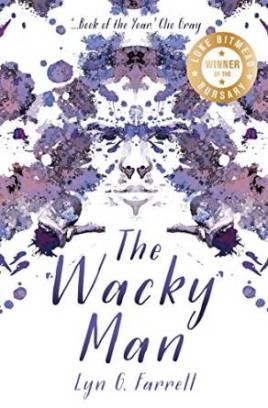
The cover image too reflects the overall quality of the book. The image reminds me of Rorschach tests used in psychological assessment as well as suggesting that Amanda has blotted her copy book in her unsympathetic schools. It also put me in mind of the mould and dirt she describes in her home as she and her mother fall apart emotionally.

The Wacky Man is not going to be a comfortable read for all, but it is a book that deserves the highest possible praise. I can see it being one of my books of the year in 2016. I thought it was superb.

 The Wacky Man

wacky man

The Wacky Man was winner of the Luke Bitmead Bursary.

My new shrink asks me, ‘What things do you remember about being very young?’ It’s like looking into a murky river, I say. Memories flash near the surface like fish coming up for flies. The past peeps out, startles me, and then is gone…

Amanda secludes herself in her bedroom, no longer willing to face the outside world. Gradually, she pieces together the story of her life: her brothers have had to abandon her, her mother scarcely talks to her, and the Wacky Man could return any day to burn the house down. Just like he promised.

As her family disintegrates, Amanda hopes for a better future, a way out from the violence and fear that has consumed her childhood. But can she cling to her sanity, before insanity itself is her only means of escape?

About Lyn G. Farrell

Lyn G. Farrell is the winner of the 2015 Luke Bitmead Bursary and The Wacky Man is her debut novel.
Lyn grew up in Lancashire where she would have gone to school if life had been different. She spent most of her teenage years reading anything she could get her hands on.
She studied Psychology at the University of Leeds and now works in the School of Education at Leeds Beckett University.

You can follow Lyn on Twitter and find her on Facebook.

A Lad-Litfest with Steven Scaffardi

It’s a new experience on Linda’s Book Bag today as I interview a lad-lit character, Dan Hilles, for the very first time. I wasn’t sure what to expect but Dan turned out to be a very interesting character – in more ways than one!

As we’re celebrating Dan’s move into the world of dating, readers might like to know they can soon read about him for free.

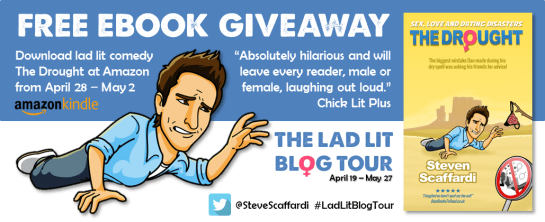
eBook Giveaway

Download Sex, Love & Dating Disasters: The Drought by Steven Scaffardi for FREE on April 28-May 2 at Amazon and pre-order The Flood eBook for just 99p before it is released on April 30.

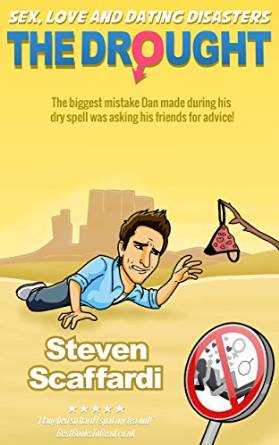
The Drought

Drought

Steven Scaffardi’s The Drought is the laugh-out-loud tale of one man’s quest to overcome the throes of a sexual drought. After the stormy break-up with his girlfriend of three years, Dan Hilles is faced with the daunting task of throwing himself back into the life of a single man. With the help of his three best pals, Dan is desperate and determined to get his leg-over with hilarious consequences!

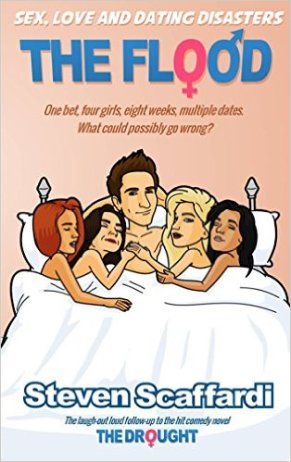
The Flood

Flood

One bet, four girls, eight weeks, multiple dates. What could possibly go wrong?

Following his traumatic eight month dry spell, Dan Hilles is back in the driving seat and ready to put his dating disasters behind him.

But if only it were that simple.

After a drunken afternoon in the pub, fuelled by the confidence of alcohol, Dan makes a bet with his three best pals that will complicate his love-life more than ever when he brazenly declares that he could juggle multiple women all at the same time.

With just eight weeks to prove his point, Dan is about to find out how hard it is to date a flood of women without them all finding out about each other, especially when they come in the shape of an ex-girlfriend, a stalker, the office ice queen and the one that got away.

An Interview with Dan Hilles – Leading Man!

Dan

This week I am delighted to be joined by Dan Hilles – star of the Sex, Love and Dating Disaster series of lad lit novels by Steven Scaffardi. Welcome to Linda’s Book Bag Dan. Please tell our readers a little bit about yourself.

Thanks Linda, it’s great to be here. What can I tell you about myself? I’m a pretty regular kind of guy – regular job, regular bunch of mates, regular male aversion to shopping. I appear in both The Drought and The Flood in lead roles, which isn’t as good as it sounds.

Indeed. Let’s start with your escapades – or lack of escapades I should say – in The Drought. The story starts off with you breaking up with your girlfriend, Stacey, of three years in what can only be explained as a rather terrifying ordeal. What do you remember about that day?

It was New Year’s Day. I’d had another pointless argument with Stacey the night before and woke up to 47 rather irate messages from her. It was the final straw. Some relationships just run their course, but I wanted to do the right thing so I went around to Stacey’s flat to talk to her. However, Stacey being Stacey didn’t quite see eye to eye with me on a few things, and before you knew it things get out of control and then her best friend Sophie appears out of nowhere and all hell breaks loose! I ended up having to leg it home before Sophie could do any real damage to. That girl has a screw loose!

So after three years you find yourself single again. How did that work out for you?

Not great. After being in a relationship for three years I had completely forgotten the rules of the dating game. It wasn’t too bad to begin with; I just thought I needed to get back into the swing of things. But as the days rolled into weeks and the weeks rolled into months I started to get anxious. It was as though every girl I met knew I was on this sexual drought, like I was giving off some sort of awful scent. Women like Obsession by Calvin Klein, but Desperation by Dan Hilles makes them run a mile.

You certainly suffered your fair share of dating disasters in The Drought. Can you share any of those stories without giving anything away to anyone who has yet to read the book?

It’s not something I look back fondly on. Put it this way – I learned a lot about what not to do! For example, don’t get steaming drunk on a first date and attempt to dance in an RnB club. White men can’t dance very well at the best of times, but throw in copious amounts of alcohol and some Usher, and before you know it you’ll end up like I did. Waving your arms around on the dancefloor like an octopus that only has two tentacles and is trying to compensate for the missing six is not a good look.

Sounds like you had it pretty tough. Luckily you had your friends and their male pearls of wisdom to help you get through it then?

Characters

If that’s what you call it! On one hand you have my best friend Rob who is so good looking that he only needs to look at a girl to get her excited, so trying to take on his techniques was a non-starter. Ollie is a nice guy, but I was hardly going to take advice from a man who thinks Kama Sutra was a foreign exchange student we went to school with. And don’t even get me started on Jack. That little idiot said he was going to help me improve what he called my ‘man moves’ and the less said about that, the better! You can read the book if you want to find out what happened because I can’t even bring myself to talk about anymore.

Oh dear, well let’s move on to a different subject then. Tell me about the new book The Flood. This time you find yourself with the opposite problem of having too many girls. How did this happen.

Everything was going brilliantly. I had a new job, I had just moved into a new place in Clapham and I’d been doing okay with the ladies. Life was good. Until we went to the pub one Sunday afternoon and the boys started to tease me; telling me I was too nice a guy to be able to juggle more than one girl once. Well, after one beer too many I’d had enough of their goading and I made a rather stupid bet that I could date four girls at the same time over the course of eight weeks. Big mistake. It complicated my life worse than the drought did!

Sounds like you let yourself in for a spot of bother! That pretty much brings our interview to a close. Thank you for joining me Dan. I’ll let you have the last word. Why should people read about your life in The Drought and The Flood?

Honestly, I’d rather they didn’t! But if they do want to read the books, then at least men will be able to find out what not to do when it comes to the opposite sex, and women can find out what really goes on in the male mind.

There are lots of ways to read more about Steven Scaffardi, his books and his role as a stand-up comedian by following these links:

The Drought blurb & trailer          The Drought sample chapter

The Drought characters                 The Flood blurb & trailer

The Flood sample chapter            The Flood characters

Steve’s author bio                          Steve’s stand-up comedian and video bio 

Goodreads                                        Facebook

Twitter                                              YouTube

Amazon                                           Google+

Instagram

If you’d like to find out more about Steven (and Dan) then see these other bloggers and follow the #LadLitBlogTour:

The Lad Lit Blog Tour

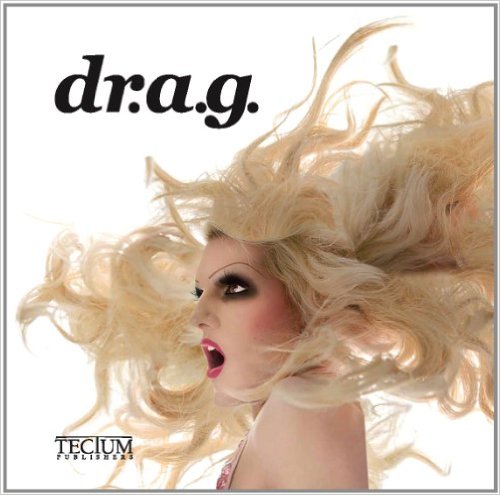
Dr.a.g by Christopher Logan

drag

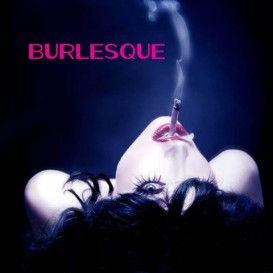
dr.a.g is the second coffee table book edited by actor Christopher Logan that I’ve reviewed. You can see what I thought of Burlesque here.

Burlesque

Christopher Logan creates these glorious books to help fund independent film projects. Both dr.a.g and Burlesque can be purchased directly from the Book the Film website.

There’s the full gamut of drag in dr.a.g. From traditional pantomime dames to representations of recognisable actresses and singers like Cher, Madonna and Tina Turner, the men in this book embody the tradition and glamour of theatre and film perfectly. Indeed, the premise of the book is this: ‘In the early days of theatre, male actors played both the male and female roles. They were either dr.a.g. (dressed as girl) or dr.a.b. (dressed as boy).’ This reminder took me back to my days of studying and teaching Shakespeare and helped me appreciate the quality of dr.a.g even more.

On a surface level I really enjoyed spotting the famous faces portrayed, but I gained more satisfaction in trying to identify the more subtle references to theatre and film such as the black and white make up and costumes of a Pierrot type from the commedia dell’arte tradition or in identifying a Julie Andrews from The Sound of Music. 

The images are not just about a man putting on women’s clothes and wearing make up. There’s so much that rewards closer inspection. The arch of a brow, the curl of a lip or the engagement with the photographer all help to build a story behind the portrait. There might be a vamp, a prostitute or a royal princess for example. There are parodies such as those men dressed as 50’s housewives or as punks as well as more glamorous Betty Davies types. A few of the colourful and beautifully photographed images are obviously men in drag, but mostly looking through these pages I forgot the drag element and enjoyed the portraits as ones of people in their own right. I particularly enjoyed the range of ethnicities presented as I know some cultures find drag an uncomfortable concept and dr.a.g helps alleviate such difficulty.

dr.a.g is a colourful celebration of beauty which just happens to be exemplified by men dressed as girls. It is well worth a look, especially if you’re interested in art, theatre, photography or sexuality.

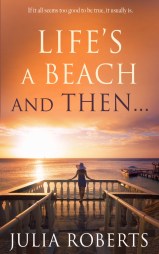
Life’s A Beach And Then… By Julia Roberts

Life's a Beach COVER Final

A little while ago I was lucky enough to have a guest post from writer and television presenter Julia Roberts as she celebrated the launch of her second novel If He Really Loved Me… You can read that post here. I was so intrigued I thought I’d read the first of Julia’s novels Life’s A Beach And Then…

My Review of Life’s A Beach And Then…

Single mum Holly Wilson is also Liberty Sands the travel blogger and protecting her identity is all part of the job, but when she meets Robert and Rosemary and their attractive friend Philippe, maintaining her secret and her equilibrium is not easy.

I have to be honest and say I was not expecting to enjoy Life’s A Beach And Then… as much as I did. I have no idea why, but I wrongly assumed it would be lightweight, formulaic chick-lit that would be an enjoyable read but little else. I was wrong. Life’s A Beach And Then… is so much more.

Firstly, it is well written with a fast pace that grips the reader and there are believable characters that I wanted to know more about, the more I read. Many are facing their own demons, either coming to terms with past lives or struggling with the one they have at present. I can’t say too much more without spoiling the plot but there are so many important themes and issues, including parenthood, relationships, illness and trust, explored by Julia Roberts, alongside the romantic elements of the story, that this is a book to make the reader think and count their blessings as well as enjoy as an entertaining read. The author’s personal experiences have contributed to making this an authentic and often moving read.

The plot itself is exciting and entertaining. I loved the twists and turns and the dramatic events that took place. The ending sets up the next book in the trilogy, If He Really Loved Me…, extremely well and I am very keen to read on to find out more about Holly, though I think some readers might find the ending of Life’s A Beach And Then… a little frustrating. It certainly took me by surprise.

I thought Julia Roberts conveyed the luxury and attraction of the Mauritian setting so effectively. I really wanted to be there alongside the characters. The writing also has just the right touch of detail to bring alive the story and to present a visual image in the reader’s mind’s eye. I really liked the concept of Ripped publishing playing a part in the novel as well as actually publishing the book.

Life’s A Beach And Then… is a smashing read that transports the reader away from their own life into the lives of Holly and her friends. It would be perfect for a holiday read – especially if you’re off to Mauritius. I thoroughly enjoyed it.

Life’s A Beach And Then…

Life's a Beach COVER Final

Holly Wilson has landed a dream job but there is one proviso… she must keep it secret, and that means telling lies. Holly hates telling lies.
Her latest assignment has brought her to the paradise island of Mauritius where she meets a British couple, Robert and Rosemary, who share a tragic secret of their own.
The moment they introduce Holly to handsome writer, Philippe, she begins to fall in love, something she hasn’t allowed herself to do for twenty years.
But Philippe has not been completely honest and when Holly stumbles across the truth, she feels totally betrayed.

Life’s A Beach And Then… was published by Ripped on 18th May 2015. It is available for purchase here.

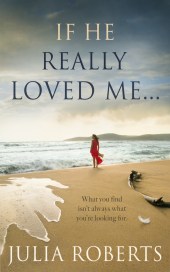
If He Really Loved Me…

If He Really Loved Me Front Cover

An enthralling story of love and romance, heartache and betrayal, set against the exotic backdrop of Barbados and the stunning Gower peninsula. If Holly can’t trust her own son, who can she trust?
Single mum, Holly Wilson, and her twenty-year-old son Harry have an enviably close relationship but when Harry finds out that she is pregnant and, for reasons unknown to all but herself, intends to raise the baby alone again, he begins to question her decision not to tell him about his own father, who abandoned them before his birth.
Upon discovering his father’s name, Harry secretly embarks on his search for the truth, a search which takes him to Los Angeles where he uncovers a tragic story. Still reeling from what he has learned, an extraordinary twist of fate brings Harry and Philippe, the father of Holly’s unborn child, face to face. Should Harry tell him about the baby and risk damaging his relationship with his mum forever? If he does, will Philippe want to be a husband and father? And will Holly be prepared to give Philippe a second chance?

If He Really Loved Me… was published by Ripped on 25th November 2015 and is available for purchase here.

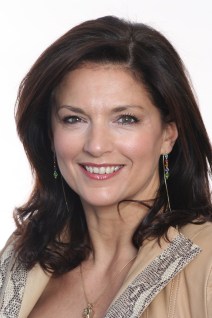
Julia Roberts author pic

You can follow Julia on Twitter and visit her website. You’ll also find her on Facebook.

An Interview with Luccia Gray

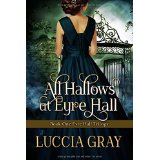
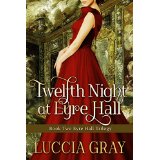
All hallowstwelfth night at eyre hall

midsummer

As an ex-English teacher and lover of classic literature, it’s always a delight when a series comes along that enhances my reading experience. I’ve loved Luccia Gray’s follow up to Charlotte Bronte’s Jane Eyre and am so pleased that Luccia has agreed to be interviewed for Linda’s Book Bag today. What could be better on the 200th anniversary of Charlotte Bronte’s birth?

You can read my review of All Hallows at Eyre Hall here and of Twelfth Night at Eyre Hall here (although the giveaway associated with that post is now finished, read on for some exciting news from Luccia!)

Hello Luccia. Thank you so much for agreeing to answer some questions on my blog about your Eyre Hall Trilogy.

Hi Linda, thank you for this opportunity to tell your readers about myself and my books.

Firstly, please could you tell readers a little about yourself?

I was born and brought up in London and graduated in modern foreign languages from London University. I speak Spanish, French and Italian. I live in the south of Spain with my husband and I have three children and three grandchildren. When I’m not reading or writing, I teach English at an Adult Education Centre and the Spanish Distance University.

Please would you introduce your Eyre Hall Trilogy to those who haven’t read any of the books yet?

The Eyre Hall Trilogy is the sequel to Charlotte Bronte’s Jane Eyre. I have picked up the story twenty-two years after Jane’s marriage to Mr. Rochester, while he is on his deathbed. They are living at Eyre Hall, which Jane built with her uncle’s inheritance, on the same spot Thornfield Hall had stood, before it was burnt down. Richard Mason, Mr. Rochester’s brother-in-law, who interrupted Mr. Rochester’s first bigamous marriage attempt, returns once more from Jamaica, to reveal more of Rochester’s secrets and turn Jane’s world upside down.

What was it about Charlotte Bronte’s Jane Eyre that so compelled you to write a sequel?

I fell in love with Mr. Rochester, as most readers did, when I first read Jane Eyre as a teenager. It soon became my favourite novel.

About thirty years later, I read the prequel, Wide Sargasso Sea, by Jean Rhys. This short, but intense novel, which was written in the 1960s, tells the story of Bertha Mason in three parts: her childhood, before she met Mr. Rochester, their first meeting and arranged marriage and first four years of matrimony, and finally her death at Thornfield Hall. After reading Wide Sargasso Sea, it’s impossible not to reread Jane Eyre with new insight and perspective.

Finally, when I taught Postcolonial Literature at the University of Córdoba, one of the topics on the syllabus was a comparison of Jane Eyre and Wide Sargasso Sea, and that really sparked classroom discussion and my imagination. I later gave a talk at the University of Málaga on ‘Sexuality and Gender Relations in Jane Eyre and Wide Sargasso Sea’, which has been published in 2015 by Lexington Books.

The idea of reinstating the first Mrs. Rochester, Bertha Mason, had been nagging at me for a long time. I had jotted lots of ideas, but it wasn’t until the summer of 2013 that I decided to put pen to paper and give Bertha back her place by bringing her daughter to life.

Are you as interested in the Brontes in general as you are in Jane Eyre?

I’m interested in all Victorian writers, especially the Bronte’s, Dickens and Wilkie Collins. Many of them, as well as their literary creations, appear as characters in my novels.
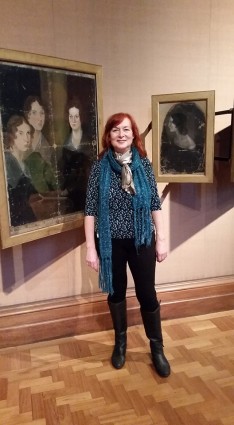
Lucy and the Brontes

How has your role as a teacher impacted on how you’ve written the Eyre Hall Trilogy?

I don’t think I would have written the Eyre Hall Trilogy if I hadn’t taught Postcolonial Literature to Undergraduates. I had wanted to write a novel for many years, and I’d even dabbled at writing fiction, but analysing Bertha Mason and Jane Eyre in greater detail, discussing it with my students and colleagues, and writing a research paper, gave me the final push.

You don’t always present Rochester or Jane in a favourable light. How have readers responded to this?

Funny you should ask. I was recently asked by friends if I got ‘hate mail’. Fortunately, I don’t, but it wouldn’t bother me. I’ve been a teacher for over thirty years, most of them teaching adolescents, so I can cope with criticism, even if its ‘unreasonable’ or ‘exaggerated’! I have received a few negative reviews due to my supposedly unfair treatment of Mr. Rochester, and that’s fair enough. I have my views, which are based on literary analysis, and careful thought. I don’t expect everyone to agree with me or like my creative reinterpretation of Jane Eyre.  You can’t please everyone, and quite honestly, there’s no point in trying or worrying about it.

What has been the most challenging element of writing a sequel to one of the world’s most popular novels?

I’m an independent author. No publisher or agent has officially backed me, so when I published my first novel, I felt very insecure. I was terrified of my novel not being professional enough. It took me almost a year after finishing it before I published. I spent this time learning about indie publishing, finding beta readers, a book designer, an editor, dong some marketing on social media, etc. I’m now confident that my novel is as professional as any other which is available for purchase, of course that doesn’t mean everyone has to like it.

I take criticism humbly, fully aware that I’m not in the same league as Charlotte Bronte. I’m using her characters and part of her plots to write a sequel, which I hope will be appealing to read for modern audiences.

I consider my novels as a tribute to Charlotte Bronte and many other Victorian writers, who have inspired me with their literary mastery.
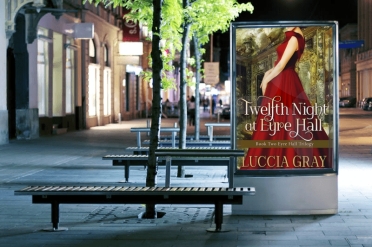
Twelfth Night Billboard

How did you ensure period authenticity whilst still appealing to the modern reader?

I think most modern readers don’t have the time or the patience to read authentic Victorian Literature. There’s too much telling, too much description, too much detail, it’s fixed in a specific historical time-frame, and it’s aimed at a specific mind-set. That doesn’t mean it’s irrelevant to contemporary readers, but it does need to be adapted. I don’t think this adaptation is a question of language, but of style and content.

Modern readers need more and faster action, and more conciseness in the prose. They read novels in fewer sittings, so they don’t forget plot or characters between readings (many Victorian novels were read in weekly instalments over months).

Modern readers also need to be immersed and understand things that Victorians took for granted. Victorian readers knew things about their own lives that contemporary readers don’t know or have forgotten. For example a horse and carriage could only ride about 40-50 miles a day, lack of indoor plumbing, use of candles instead of electric lights, layers of clothing, etc. This type of detail has to come across subtly in the narrative for a modern audience.

I know the third novel in the Eyre Hall Trilogy is due out soon. Without spoiling the plot, can you give us a hint of what is to come?
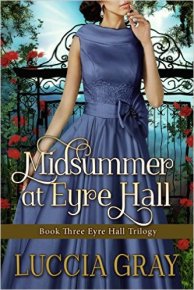
midsummer

Yes, Midsummer at Eyre Hall, the final part of The Eyre Hall Trilogy is now in the beta reading and editing stage. It is now available for pre-order on kindle. It will be published on 21st June, Midsummer’s Day.

The first part of Midsummer at Eyre Hall is very dramatic and action-packed. Jane will find herself in completely unexpected and dreadful circumstances, which neither she, nor the reader would ever imagine, so I can’t say much more! The second part begins to show some improvement in her situation and contains more surprises, including two new characters, who will drastically change Jane’s life forever. The third part will disclose one more final and unexpected twist, which will restore stability to her life. I hope the reader will find the end is satisfactory, although it’s happier for some characters than for others…

There have been so many adaptations of Jane Eyre for stage and screen, who would you choose to portray Jane if your trilogy were to be turned into a film and why would you choose them?

I love this question! I hate it when Jane is portrayed as excessively meek and naïve. I believe she had much more character than most film producers and directors imagine. Readers sometimes forget she was top of her class at Lowood, excelling in all subjects. She was independent, hard-working, honest, reliable, and very principled. She’d had a very hard life and had managed to overcome all the obstacles without self-pity. She was only 19 when she married Mr. Rochester. I’m sure she would have become a self-assured, attractive and imposing lady, in spite of her tiny height!

My favourite actress to play my mature Jane Eyre is Rachel Weisz, because she’s striking, but not too beautiful, she looks intelligent, kind, caring, strong-willed, and confident.
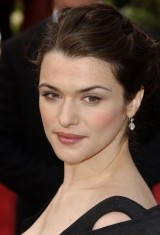
Rachel+Weisz+78th+Annual+Academy+Awards+sRe4GhQudfgl

Do you have your eye on any other classic novels for a continuation? 

I’d love to write a prequel to Rebecca. I’ve already started it actually, but it’s a bit of a secret right now! I may finish it, but I’m not sure at the moment. I’d like to write some contemporary fiction first.

Which of your characters would you most like to be and why?

I wouldn’t like to be any of my characters. I purposefully wrote about a place, time and people I don’t feel personally identified with. However, I dream about them, talk to them, and love them all, even the villains! I try to walk in their shoes, which is why I write using the rotating first person narrative.

If you had 15 words to persuade a reader that the Eyre Hall Trilogy should be their next read, what would you say?

It’s a well-written historical romance. The characters are absorbing, and the plot is suspenseful and exciting.

By the way they’re both on Kindle Countdown Deals this week at 0.99!

(Click here for All Hallows at Eyre Hall and here for Twelfth Night at Eyre Hall)

Thanks so much for being on Linda’s Book Bag today Luccia. I’ve really enjoyed interviewing you about your Eyre Hall trilogy.

Thank you so much for this interview, Linda. It’s been a pleasure visiting your literary blog, which is so helpful for readers, who can find their next favourite book, and writers, who can spread the news about their novels.

Thanks Luccia! And a final word from you:

If anyone is interested in reading an ARCs of Midsummer at Eyre Hall, please let me know in the comments or email me at luccia.gray@gmail.com

*** I’d also like to gift a paperback of All Hallows at Eyre Hall and Twelfth Night at Eyre Hall to two readers of Linda’s blog. Please email me, telling me which of the two you’d like to receive and why you’d like to read the novel. ***

About Luccia Gray
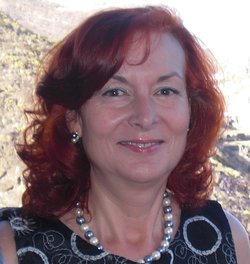
Luccia Gray Author

Luccia Gray was born in London and now lives in the south of Spain with her husband. She has three children and three grandchildren. When she’s not reading or writing, she teaches English at an Adult Education Centre and at the Spanish National University.

If you’d like to find out more about Luccia Gray and this wonderful series, here are the author links you need:

Facebook

Twitter

Goodreads 

Google+ 

Pinterest

Blog Rereading Jane Eyre 
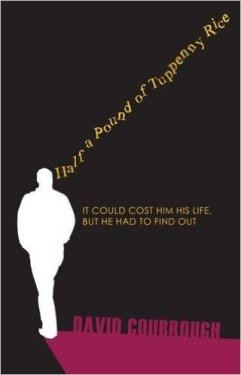
An Interview with David Coubrough, author of Half a Pound of Tuppeny Rice

Tuppeny

Today, 21st April 2016, is the publication day for David Coubrough’s debut novel Half a Pound of Tuppenny Rice and I’m delighted to be bringing you an interview with David. Half a Pound of Tuppenny Rice is available from all good book shops as well as from Amazon.

Half a Pound of Tuppenny Rice

Each summer a group of families holiday together in St Ives, Cornwall.  The parents eat, drink, play sport, shop and frequently argue, while their teenage children hang out and enjoy the odd holiday romance. Then, in 1972 their lives are shattered and they never meet up again.

In a lane near the village a night porter is found fatally poisoned. Later that day the body of a man is washed ashore under mysterious circumstances, apparently drowned.  All five fathers are questioned but released, and no-one was ever charged.

For Grant Morrison, then aged seventeen, it was the last family holiday, the last golden summer.  The devastating events troubled him for decades and finally, nearly forty years later, he decides it’s time to find out the truth, revisiting the Cornish places of his youth.

It could cost him his life, but he had to find out…

Tuppeny

An Interview with David Coubrough

Welcome to Linda’s Book Bag David. Firstly, please could you tell readers a little about yourself?

After 35 years in the commercial world, chasing money, conforming to routines and being walked like a dog on a lead to endless meetings, I decided I had drunk enough coffee, looked at too many balance sheets, sat through too many meetings and was more interested in writing.

When did you first realise you were going to be a writer?

I always knew one day I would write, it was more about creating time and developing ideas to such an extent that a proper plot had formed.

If you hadn’t become an author, what would you have done instead as a creative outlet?

Journalism.

How do you carry out the research for your novels?

A lifetime of studying people and their behaviours, allied to a love of places, such as Cornwall; researching the locations there for my novel was a labour of love.

Which aspects of your writing do you find easiest and most difficult?

Conversational interaction I find the easiest, describing what people are wearing I find the hardest.

What are your writing routines and where do you do most of your writing?

In the early hours, from about 3am to 6am! The kitchen table has seen many hours of duty.

When you’re not writing, what do you like to read?

Contemporary fiction, such as Jon Canter, in addition to the Classics, re-visiting Dickens, Hardy and Virginia Woolf in particular.

Do you have other interests that give you ideas for writing?

Yes; theatre and travel primarily, but also observing people from all sorts of contexts.  This can include sitting on my own in a busy bar watching people’s facial expressions.

Which of your characters would you most like to be and why?

Justyn Silver, he is unconventional, a little mercurial but basically a very decent guy.

How important do you think social media is to authors in today’s society?

Increasingly so unfortunately.

If you had 15 words to persuade a reader that your book should be their next read, what would you say?

‘People need to be stimulated and entertained, to be feeling good and satisfied simultaneously.

Is there anything else you would have liked to be asked?

Yes; we all should constantly challenge ourselves, reach beyond confines of how our lives have been historically and in the words of Jools Holland, ‘Enjoy yourselves, it’s later than you think’.

That’s great advice David!

About David Coubrough

David

David Coubrough David spent 35 years in the hospitality industry so a hotel in St Ives was the natural location for his first crime novel.  After starting as a trainee manager at the Goring Hotel in London, he founded the specialist hospitality firm Portfolio Recruitment in partnership with two others in the 1980s, where he became chief executive, and has been company director and member of the Board of Governors of the Royal Academy of Culinary Arts and chairman of Bespoke Hotels. He has also been a director at Maldon Sea Salt and is on the board of Bloomsbury Properties. He is co-owner of the Beehive pub and restaurant in Berkshire and is now working on his second novel.

You can follow David on Twitter and find his author page on Facebook.

Ascension by Jeannie van Rompaey

Oasis Ascension Front Final

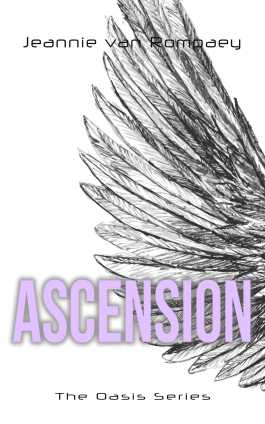
I’m pleased to be part of the launch celebrations for Ascension, by Jeannie van Rompaey. Ascension was published by Clink Street on 12th April 2016 and is the first in the Oasis Series. Ascension is available for purchase from Amazon UK and Amazon US. I have a fascinating guest blog from Jeannie about dystopian fiction below.

Ascension

Meet the MUTANT HUMANOIDS. They may look a little different from us, but inside they’re much the same as you and me. Left on a diseased Earth, they live in windowless compounds, safe from the contaminated wilderness outside. Safe, yes, but their lives are restricted. When the mutant humanoids discover that some complete human beings, COMPLETES, have also survived and are living greatly improved lives on satellites, they determine to rectify this imbalance and claim their share of Earth’s heritage. Three-headed RA rules the humanoids with ruthless precision, but others are involved in a power struggle to depose him. Who will succeed in being the next CEO of Planet Earth? Sixteen -year-old MERCURY plans to start a new life on Oasis. Will it prove the Utopia he expects it to be?

Oasis Ascension Front Final

ASCENSION, the first novel in Jeannie van Rompaey’s Oasis Series, explores with humour and compassion the way humans respond to change. The future worlds of Earth and Oasis mirror our contemporary society. The division between the haves and have-nots widens and the lust for power leads to corruption. But there are idealists determined to build a fairer, more egalitarian society.

And now for something completely different…

A Guest Post from Jeannie van Rompaey

Writing Ascension was an exciting departure for me. I was creating an imaginary future world, entering the genre of science fiction and dystopian fiction for the first time. Before that my novels tended to be classed as general fiction, fixed securely in time and place and peopled by realistic characters. For this new venture I flexed my creative muscles to invent a world and characters that were a little different. I found the change invigorating. Refreshing.

Oddly enough I don’t read a lot of science fiction. The books in this genre that did inspire me were by literary authors who do not write exclusively in this field. Margaret Atwood’s The Handmaid’s Tale (1985) is a terrifying portrayal of a future world designed by men to keep women in their place while her trilogy, Oryx and Crake (2003) The Year of the Flood (2009) and MaddAdam (2013) is an indictment of scientific experiments gone wrong. The books are not all doom and gloom. Atwood shows the capacity of human beings to rise above what happens to them. As an optimist myself, this confidence in human nature is something I find important to express in my work. Kazuo Ishiguru’s Never Let Me Go describes a dystopian world in which cloning and genetic engineering have been taken to the extreme. Although a very different future is envisaged from that in Atwood’s novels, the resilience of the victims is once again highlighted. Ishiguru is such a consummate storyteller that I was gripped from beginning to end. Unlike many writers in the science fiction genre, the work of these two authors is not formatted, nor is it dependent on gratuitous action to stimulate readers. The characters and their response to the world they find themselves in are sufficient to hold our interest. These were the kind of books I wanted to write. I only wish my writing could be as good as theirs and my novels as popular.

One reason I’m interested in utopian/dystopian fiction is that it explores social and political structures. As I read or watch the news on TV, like most people, I often think about the kind of world we’re living in. The problems are easy enough to see, but not so easy to solve. The activist in me seeks change. Artists use their tools to explore possibilities for change. Ai Weiwei through sculpture, writers through words. Through writing dystopian fiction I can imagine what might happen if we don’t correct the mistakes being made in our society.  By placing my imaginary world in the future I can look at our current world from a different perspective. And so can my readers.

As Keith M. Booker notes, “dystopian fiction is used to provide fresh perspectives on problematic and political practices that might otherwise be taken for granted or considered natural and inevitable.” For example, when my novel, Ascension, begins, it describes an Earth two hundred years into the future. Some of its inhabitants, mutant humanoids, have developed extra limbs or heads or only have one eye. They tend to move awkwardly and speak jerkily. They are shut up in windowless compounds and don’t venture outside for fear of further contamination from the plague that caused the mutations and the barren Earth. But what is this plague that has caused these disasters? Did it occur because we didn’t take enough care of our planet? Instead of writing a political non-fiction book, I weave these ideas into a story and let my readers make the connection themselves. The last thing I want to be is didactic and preachy. Oh, the power of fiction.

It’s not just a case of looking back and wondering what went wrong. In Ascension, apart from the mutant humanoids shut up in compounds on Earth there are completes, humans without mutations, who escaped from polluted Earth and live on Oasis, a manmade satellite in the sky. These privileged people set out to make a new world, a utopia. But human beings, even completes, are fallible and Oasis soon falls short of its ideals.

Once I’d created these two groups and began to think fictionally I saw that my novel must be about the bringing together of these two disparate groups. Prejudice, envy, anger and ambition will impede progress. Every story needs conflict. But I am determined to keep the ending of each novel upbeat. If I tell you that the third book in the series is called Renaissance it should give you a clue that this optimism for the future continues. I should just like to add there is quite a bit of humour in the books too.

It’s not only writers that sometimes feel the need to change direction and try a different genre, but readers too. If you decide you’re ready for a change, I hope you’ll try my books.

About Jeannie van Rompaey

Jeannie-Van-Rompaey-668x1024

Award-winning author, Jeannie van Rompaey, MA in Modern Literature, has enjoyed a varied career as lecturer, theatre-director, actress and performance poet. As Jeannie Russell, she is a senior member of the Guild of Drama Adjudicators and adjudicates at drama festivals in Britain and Europe. Originally from London, she has lived in various countries including America and Spain. She now resides in Maspalomas, Gran Canaria, with her historian husband, Tony. She spends her time writing novels, short stories, plays and poems. When not writing she enjoys painting, and has had several art exhibitions on the island, and runs poetry and theatrical events at The British Club in Las Palmas. She has written eight novels including After (CreateSpace 2014) and Devil Face (Create Space 2013), as well as a number of short stories, two books of poetry –Straight Talk and On the Move- and a series of plays.

You can find more about Jeannie on her website and with these other bloggers:

JeannieVanRompaey_Final Banner